From Surf Wiki (app.surf) — the open knowledge base
Mid-Atlantic (United States)
Region of the United States
Region of the United States
| Field | Value | |
|---|---|---|
| name | Mid-Atlantic | |
| image_skyline | {{Photo montage | |
| photo1a | Lower Manhattan skyline - June 2017.jpg | |
| photo2a | 2015 Independence Hall - Philadelphia 01.JPG | |
| photo2b | Assateague Wetlands.jpg | |
| photo3a | Philadelphia skyline from South Street Bridge January 2020 (rotate 2 degrees perspective correction crop 4-1).jpg | |
| photo4a | Catskills beyond Hudson.jpg | |
| spacing | 1 | |
| color | Transparent | |
| border | 0 | |
| foot_montage | Left to right from top: The Lower Manhattan skyline in New York City, Independence Hall in Philadelphia, Assateague Island, the Philadelphia skyline, and the Catskills seen from the Hudson River | |
| image_map | USA Mid-Atlantic location map.svg | |
| coordinates | ||
| subdivision_type | Composition | |
| subdivision_name | {{Horizontal list | list_style=line-height: inherit; |
| subdivision_type1 | Metropolitan areas | |
| subdivision_type2 | Largest city | |
| subdivision_name1 | {{Horizontal list | list_style=line-height: inherit; |
| subdivision_name2 | New York City | |
| unit_pref | US | |
| area_total_sq_mi | 191,299.86 | |
| area_land_sq_mi | 174,468.45 | |
| area_water_sq_mi | 16,831.41 | |
| area_water_percent | 8.80 | |
| area_rank | ||
| population_total | 60,783,913 | |
| population_as_of | 2020 | |
| population_footnotes | ||
| population_density_sq_mi | auto | |
| demographics_type1 | GDP (nominal) | |
| demographics1_footnotes | ||
| demographics1_title1 | Q3 2022 | |
| demographics1_info1 | $5.233 trillion |
| photo4b
| New York| New Jersey| Maryland| Pennsylvania| Delaware| Virginia| West Virginia| Washington, D.C. | Buffalo–Niagara Falls | Albany–Schenectady–Troy | Philadelphia–Camden–Wilmington | New York–Newark–Jersey City | Allentown–Bethlehem–Easton | Pittsburgh | Rochester| Richmond | Syracuse | Utica-Rome | Washington | Scranton–Wilkes-Barre | Harrisburg–York–Lebanon| Virginia Beach–Norfolk–Newport News | Baltimore–Columbia–Towson}} tags --| area_footnotes = The Mid-Atlantic is a region of the United States located in the eastern part of the country. Traditional definitions include seven U.S. states: New York, New Jersey, Pennsylvania, Delaware, Maryland, Virginia, West Virginia, and the national capital of Washington, D.C.
Depending on various factors, different regional divisions exist however: the U.S. Bureau of Labor Statistics in its newest regional division excludes New York from the region; the U.S. Census Bureau excludes Delaware, Maryland, Virginia and West Virginia from the region; USGS defines the region by watersheds thus additionally including North Carolina; the EPA excludes both New York and New Jersey; the U.S. Maritime Administration excludes upper New Jersey and New York; the Office of Small Business Programs of the U.S. Department of Defense excludes New York. When discussing climate, Connecticut is sometimes included, since its climate is closer to the Mid-Atlantic than the rest of the New England region.
The region was known in the 17th century as the "Middle Colonies" during the colonial era, initially including four colonial provinces, the Delaware Colony and the provinces of New Jersey, New York, and Pennsylvania, each of which were among the Thirteen Colonies in pre-revolutionary British America. Afterwards, the area was recognized geographically as the "Middle States", with Maryland, Virginia and in some instances North Carolina included, as well as the Ohio Territory.
As of the 2020 census, the region had a population of 60,783,913, representing slightly over 18% of the nation's population. The Mid-Atlantic is a relatively affluent region of the nation; nearly half of the nation's 100 highest-income counties based on median household income are located in the Mid-Atlantic, and 33 of the nation's top 100 counties based on per capita income are in the region. Most of the Mid-Atlantic states rank among the 15 highest-income states in the nation by both median household income and per capita income.
The Mid-Atlantic region played an instrumental and historic role in the nation's founding and the development of the nation. Six of the seven states were members of the Thirteen Colonies that sent delegates to the Second Continental Congress, which assembled in Philadelphia and unanimously adopted the Declaration of Independence, and formalized the Continental Army under George Washington's command during the American Revolutionary War. Following independence, the states again gathered in Philadelphia at the Constitutional Convention, in 1788, where they ratified the United States Constitution, which remains the oldest and longest-standing written and codified national constitution in force in the world.
The Mid-Atlantic region was settled during the colonial era between the early 17th century and the conclusion of the American Revolutionary War in 1783 by European Americans of primarily Dutch, German, Swedish, English, and other Western European ethnicities. Religious pluralism and freedoms existed in the original Thirteen Colonies and were particularly prevalent in Province of Pennsylvania and the geographic region that ultimately broke from Pennsylvania to form the Delaware Colony. Among the 13 colonies, the Province of Maryland was the only colony with a substantial Catholic population.
Following the American Revolutionary War, the Mid-Atlantic region hosted each of the historic capitals of the United States. The nation's capital was constructed in Washington, D.C. in the late 18th century and relocated there from Philadelphia in 1800.
In the early part of the 19th century, New York and Pennsylvania overtook Virginia as the nation's two most populous states, and the Mid-Atlantic region overtook New England as the most important trading and industrial center in the nation. During this period, large numbers of German, Irish, Italian, Jewish, Polish, and other immigrants arrived in the region's coastal cities, including Baltimore, Newark, New York City, Philadelphia, and interior cities such as Pittsburgh, and Rochester, Albany, and Buffalo, the latter of which is also included in the Great Lakes region, with their skyscrapers and subways, which emerged as icons of modernity and American economic and cultural power in the 20th century.
In the late 19th century, the region played a vital and historic role in the development of American culture, commerce, trade, and industry sectors.
The Northeast Corridor and Interstate 95 in the region link an almost contiguous urban region, which includes large and small cities and their respective suburbs and forms the Northeast megalopolis, one of the world's most important concentrations of finance, media, communications, education, medicine, and technology.
The region is home to eight of the top 25 ranked universities in the nation: Cornell University in Ithaca, New York; Columbia University in New York City; Princeton University in Princeton, New Jersey; the University of Pennsylvania in Philadelphia; Carnegie Mellon University in Pittsburgh; Johns Hopkins University in Baltimore, Georgetown University in Washington, D.C.; and the University of Virginia in Charlottesville, Virginia according to U.S. News & World Report Best Colleges Ranking.
Composition
Definitions of the geographic components of the Mid-Atlantic region differ slightly among sources. Generally speaking, the region is inclusive of the states of Delaware, Maryland, New Jersey, New York, Pennsylvania, Virginia, and West Virginia, and the federal district of the District of Columbia, with some additional sources including or excluding other areas in parts of the Northeast region and the South Atlantic states, for practical reasons.
The United States Census Bureau defines the Mid-Atlantic as a sub-region of the Northeast and only includes New Jersey, New York, and Pennsylvania. The Bureau of Labor Statistics excludes New York; the Environmental Protection Agency excludes New York and New Jersey; and the U.S. Department of Transportation - United States Maritime Administration includes North Carolina. In 2004, the United States Geological Survey within the context of Ground-Water Vulnerability to Nitrate Contamination, defined the region as including Delaware, Maryland, Pennsylvania, Virginia, and Washington, D.C., and parts of New Jersey, New York, and North Carolina.
West Virginia and Virginia are atypical of this region in a few ways. These states both primarily lie within the Southern American dialect region, and the major religious tradition is largely Evangelical Christian, with 30% in Virginia and 39% in West Virginia identifying as evangelicals. Although a few of West Virginia's eastern panhandle counties may be considered part of the Washington metropolitan area, the state is largely rural and there are no major or even large cities.
File:Mid-Atlantic Region location map.gif|A USGS fact sheet on the Mid-Atlantic region's groundwater File:Middle Atlantic States - 1883 Monteith map.jpg|An 1897 map displaying a broad definition of the Mid-Atlantic region File:Middle Atlantic States.jpg|An 1886 Harper's School Geography map showing the region, which excludes Virginia and West Virginia File:Census Regions and Division of the United States.svg|The U.S. Census Bureau's geographic definition of the Mid-Atlantic includes three states, New Jersey, New York, and Pennsylvania
History
Shipping and trade have been important to the Mid-Atlantic economy since the beginning of the colonial era. The explorer Giovanni da Verrazzano was the first European to see the region in 1524. Henry Hudson later extensively explored that region in 1611 and claimed it for the Dutch, who then created a fur-trading post in Albany in 1614. Jamestown, Virginia was the first permanent English colony in North America, it was established seven years earlier in 1607.
From early colonial times, the Mid-Atlantic region was settled by a wider range of European people than in New England or the South. The Dutch New Netherland settlement along the Hudson River in New York City and New Jersey, and for a time, New Sweden along the Delaware River in Delaware, divided the two great bulwarks of English settlement from each other. The original English settlements in the region notably provided refuge to religious minorities, Maryland to Roman Catholics and Pennsylvania to Quakers and Anabaptist Pennsylvania Dutch. In time, all these settlements fell under English colonial control, but the region continued to be a magnet for people of diverse nationalities.
The area that came to be known as the Middle Colonies served as a strategic bridge between the North and South. The New York and New Jersey campaign during the American Revolutionary War saw more battles than any other theater of the conflict. Philadelphia, midway between the northern and southern colonies, was home to the Continental Congress, the convention of delegates who organized the American Revolution. Philadelphia also was the birthplace of the Declaration of Independence in 1776 and the United States Constitution in 1787, while the United States Bill of Rights was drafted and ratified and the first Supreme Court of the United States sat for the first time, in the first capital under the Constitution of New York.
While early settlers were mostly farmers, traders, and fishermen, the Mid-Atlantic states provided the young United States with heavy industry and served as the "melting pot" of new immigrants from Europe. Cities grew along major ports, shipping routes, and waterways, including New York City and Newark on opposite sides of the Hudson River, Philadelphia on the Delaware River, Allentown on the Lehigh River, and Baltimore on the Chesapeake Bay.
Major states, cities, and urban areas
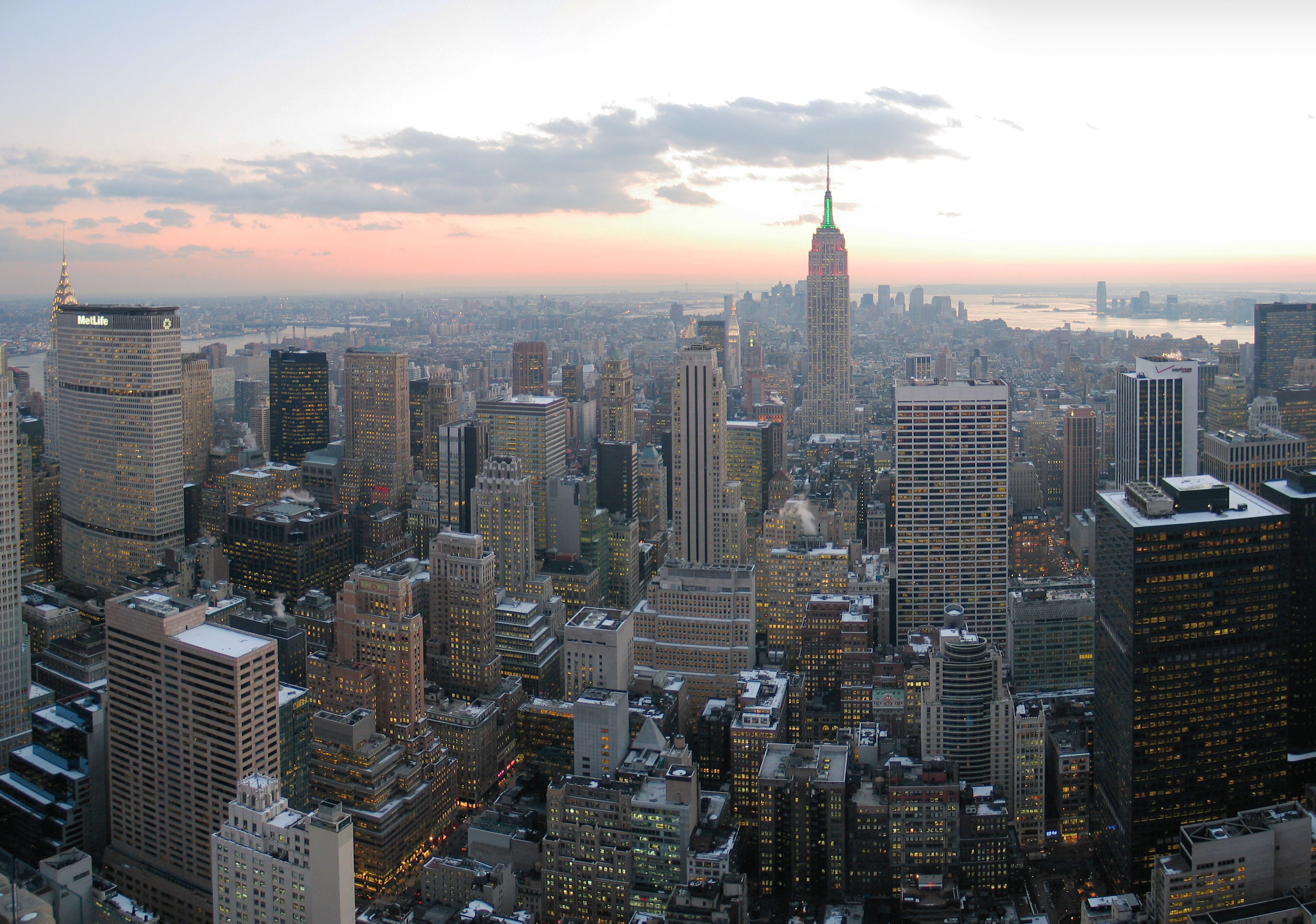
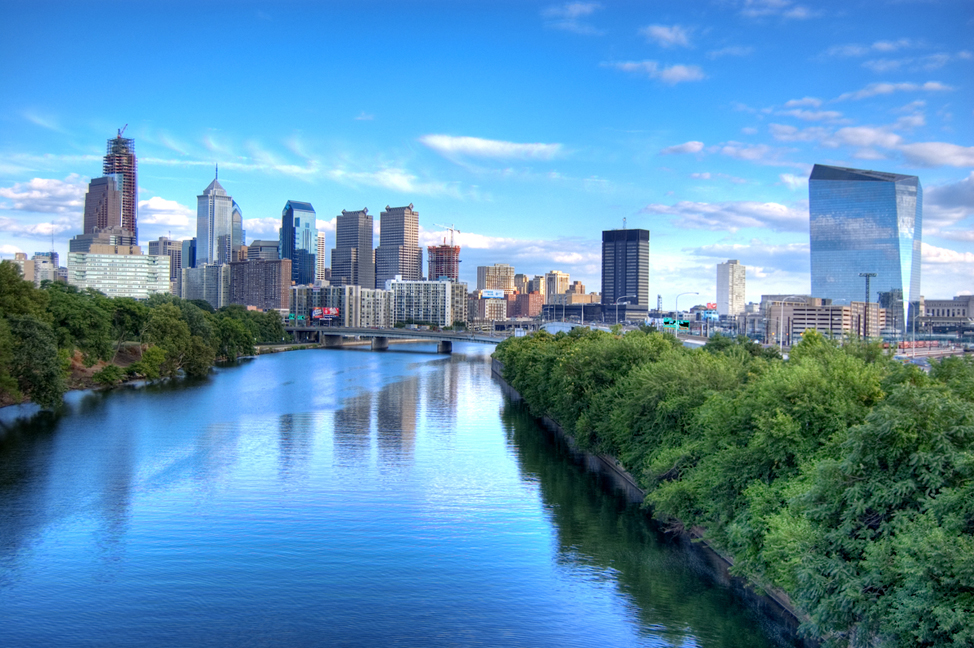


Metropolitan areas
| MSA | 2020 census | 2010 census |
|---|---|---|
| 1 | New York-Newark-Jersey City, NY-NJ-PA | 20,140,470 |
| 2 | Washington-Arlington-Alexandria, DC-VA-MD-WV | 6,385,162 |
| 3 | Philadelphia-Camden-Wilmington, PA-NJ-DE-MD | 6,245,051 |
| 4 | Baltimore-Columbia-Towson, MD | 2,844,510 |
| 5 | Pittsburgh, PA | 2,370,930 |
| 6 | Virginia Beach-Norfolk-Newport News, VA-NC | 1,799,674 |
| 7 | Richmond, VA | 1,314,434 |
| 8 | Buffalo-Cheektowaga, NY | 1,166,902 |
| 9 | Rochester, NY | 1,090,135 |
| 10 | Albany-Schenectady-Troy, NY | 899,262 |
| City | 2020 census | Total area |
|---|---|---|
| 1 | New York, NY | 8,804,190 |
| 2 | Philadelphia, PA | 1,603,797 |
| 3 | Washington, D.C. | 689,545 |
| 4 | Baltimore, MD | 585,708 |
| 5 | Virginia Beach, VA | 459,470 |
| 6 | Newark, NJ | 311,549 |
| 7 | Pittsburgh, PA | 302,971 |
| 8 | Jersey City, NJ | 292,449 |
| 9 | Buffalo, NY | 278,349 |
| 10 | Chesapeake, VA | 249,422 |
| Township | 2020 census |
|---|---|
| 1. | Hempstead, NY |
| 2. | Brookhaven, NY |
| 3. | Islip, NY |
| 4. | Oyster Bay, NY |
| 5. | North Hempstead, NY |
| 6. | Babylon, NY |
| 7 | Huntington, NY |
| 8 | Ramapo, NY |
| 9 | Lakewood, NJ |
| 10. | Amherst, NY |
States and federal district
| State or federal district | 2020 census | Total area |
|---|---|---|
| 1 | New York | 20,201,249 |
| 2 | Pennsylvania | 13,002,700 |
| 3 | New Jersey | 9,288,994 |
| 4 | Virginia | 8,631,393 |
| 5 | Maryland | 6,177,224 |
| 6 | West Virginia | 1,793,716 |
| 7 | Delaware | 989,948 |
| 8 | District of Columbia | 689,545 |
State capitals and federal district
| Capital | 2020 census | Total area |
|---|---|---|
| 1 | Washington, D.C. | 689,545 |
| 2 | Richmond, Virginia | 226,610 |
| 3 | Albany, New York | 99,224 |
| 4 | Trenton, New Jersey | 90,871 |
| 5 | Harrisburg, Pennsylvania | 50,099 |
| 6 | Charleston, West Virginia | 48,864 |
| 7 | Annapolis, Maryland | 40,812 |
| 8 | Dover, Delaware | 39,403 |
Note: The Mid-Atlantic region is also home to the nation's capital, Washington, D.C.
In presidential elections
| Nonpartisan | Federalist | Democratic-Republican | National Republican | Democratic | Whig | Know Nothing | Republican | Constitutional Union | Progressive |
|---|
- Bold denotes election winner.
| Year | Delaware | District of Columbia | Maryland | New Jersey | New York | Pennsylvania | Virginia | West Virginia | Year | Delaware | District of Columbia | Maryland | New Jersey | New York | Pennsylvania | Virginia | West Virginia | ||||||||
|---|---|---|---|---|---|---|---|---|---|---|---|---|---|---|---|---|---|---|---|---|---|---|---|---|---|
| 1789 | Washington | No election | Washington | Washington | Gridlocked | Washington | Washington | No election | |||||||||||||||||
| 1792 | Washington | No election | Washington | Washington | Washington | Washington | Washington | No election | |||||||||||||||||
| 1796 | Adams | No election | Adams | Adams | Adams | Jefferson | Jefferson | No election | |||||||||||||||||
| 1800 | Adams | No election | Jefferson | Adams | Jefferson | Jefferson | Jefferson | No election | |||||||||||||||||
| 1804 | Pinckney | No election | Jefferson | Jefferson | Jefferson | Jefferson | Jefferson | No election | |||||||||||||||||
| 1808 | Pinckney | No election | Madison | Madison | Madison | Madison | Madison | No election | |||||||||||||||||
| 1812 | Clinton | No election | Madison | Clinton | Clinton | Madison | Madison | No election | |||||||||||||||||
| 1816 | King | No election | Monroe | Monroe | Monroe | Monroe | Monroe | No election | |||||||||||||||||
| 1820 | Monroe | No election | Monroe | Monroe | Monroe | Monroe | Monroe | No election | |||||||||||||||||
| 1824 | Crawford | No election | Jackson | Jackson | Adams | Jackson | Crawford | No election | |||||||||||||||||
| 1828 | Adams | No election | Adams | Adams | Jackson | Jackson | Jackson | No election | |||||||||||||||||
| 1832 | Clay | No election | Clay | Jackson | Jackson | Jackson | Jackson | No election | |||||||||||||||||
| 1836 | Harrison | No election | Harrison | Harrison | Van Buren | Van Buren | Van Buren | No election | |||||||||||||||||
| 1840 | Harrison | No election | Harrison | Harrison | Harrison | Harrison | Van Buren | No election | |||||||||||||||||
| 1844 | Clay | No election | Clay | Clay | Polk | Polk | Polk | No election | |||||||||||||||||
| 1848 | Taylor | No election | Taylor | Taylor | Taylor | Taylor | Cass | No election | |||||||||||||||||
| 1852 | Pierce | No election | Pierce | Pierce | Pierce | Pierce | Pierce | No election | |||||||||||||||||
| 1856 | Buchanan | No election | Fillmore | Buchanan | Frémont | Buchanan | Buchanan | No election | |||||||||||||||||
| 1860 | Breckinridge | No election | Breckinridge | Lincoln | Lincoln | Lincoln | Bell | No election | |||||||||||||||||
| 1864 | McClellan | No election | Lincoln | McClellan | Lincoln | Lincoln | No election | Lincoln | |||||||||||||||||
| 1868 | Seymour | No election | Seymour | Seymour | Seymour | Grant | No election | Grant | |||||||||||||||||
| 1872 | Grant | No election | Hendricks | Grant | Grant | Grant | Grant | Grant | |||||||||||||||||
| 1876 | Tilden | No election | Tilden | Tilden | Tilden | Hayes | Tilden | Tilden | |||||||||||||||||
| 1880 | Hancock | No election | Hancock | Hancock | Garfield | Garfield | Hancock | Hancock | |||||||||||||||||
| 1884 | Cleveland | No election | Cleveland | Cleveland | Cleveland | Blaine | Cleveland | Cleveland | |||||||||||||||||
| 1888 | Cleveland | No election | Cleveland | Cleveland | Harrison | Harrison | Cleveland | Cleveland | |||||||||||||||||
| 1892 | Cleveland | No election | Cleveland | Cleveland | Cleveland | Harrison | Cleveland | Cleveland | |||||||||||||||||
| 1896 | McKinley | No election | McKinley | McKinley | McKinley | McKinley | Bryan | McKinley | |||||||||||||||||
| 1900 | McKinley | No election | McKinley | McKinley | McKinley | McKinley | Bryan | McKinley | |||||||||||||||||
| 1904 | Roosevelt | No election | Parker | Roosevelt | Roosevelt | Roosevelt | Parker | Roosevelt | |||||||||||||||||
| 1908 | Taft | No election | Bryan | Taft | Taft | Taft | Bryan | Taft | |||||||||||||||||
| 1912 | Wilson | No election | Wilson | Wilson | Wilson | Roosevelt | Wilson | Wilson | |||||||||||||||||
| 1916 | Hughes | No election | Wilson | Hughes | Hughes | Hughes | Wilson | Hughes | |||||||||||||||||
| 1920 | Harding | No election | Harding | Harding | Harding | Harding | Cox | Harding | |||||||||||||||||
| 1924 | Coolidge | No election | Coolidge | Coolidge | Coolidge | Coolidge | Davis | Coolidge | |||||||||||||||||
| 1928 | Hoover | No election | Hoover | Hoover | Hoover | Hoover | Hoover | Hoover | |||||||||||||||||
| 1932 | Hoover | No election | Roosevelt | Roosevelt | Roosevelt | Hoover | Roosevelt | Roosevelt | |||||||||||||||||
| 1936 | Roosevelt | No election | Roosevelt | Roosevelt | Roosevelt | Roosevelt | Roosevelt | Roosevelt | |||||||||||||||||
| 1940 | Roosevelt | No election | Roosevelt | Roosevelt | Roosevelt | Roosevelt | Roosevelt | Roosevelt | |||||||||||||||||
| 1944 | Roosevelt | No election | Roosevelt | Roosevelt | Roosevelt | Roosevelt | Roosevelt | Roosevelt | |||||||||||||||||
| 1948 | Dewey | No election | Dewey | Dewey | Dewey | Dewey | Truman | Truman | |||||||||||||||||
| 1952 | Eisenhower | No election | Eisenhower | Eisenhower | Eisenhower | Eisenhower | Eisenhower | Stevenson | |||||||||||||||||
| 1956 | Eisenhower | No election | Eisenhower | Eisenhower | Eisenhower | Eisenhower | Eisenhower | Eisenhower | |||||||||||||||||
| 1960 | Kennedy | No election | Kennedy | Kennedy | Kennedy | Kennedy | Nixon | Kennedy | |||||||||||||||||
| 1964 | Johnson | Johnson | Johnson | Johnson | Johnson | Johnson | Johnson | Johnson | |||||||||||||||||
| 1968 | Nixon | Humphrey | Humphrey | Nixon | Humphrey | Humphrey | Nixon | Humphrey | |||||||||||||||||
| 1972 | Nixon | McGovern | Nixon | Nixon | Nixon | Nixon | Nixon | Nixon | |||||||||||||||||
| 1976 | Carter | Carter | Carter | Ford | Carter | Carter | Ford | Carter | |||||||||||||||||
| 1980 | Reagan | Carter | Carter | Reagan | Reagan | Reagan | Reagan | Carter | |||||||||||||||||
| 1984 | Reagan | Mondale | Reagan | Reagan | Reagan | Reagan | Reagan | Reagan | |||||||||||||||||
| 1988 | Bush | Dukakis | Bush | Bush | Dukakis | Bush | Bush | Dukakis | |||||||||||||||||
| 1992 | Clinton | Clinton | Clinton | Clinton | Clinton | Clinton | Bush | Clinton | |||||||||||||||||
| 1996 | Clinton | Clinton | Clinton | Clinton | Clinton | Clinton | Dole | Clinton | |||||||||||||||||
| 2000 | Gore | Gore | Gore | Gore | Gore | Gore | Bush | Bush | |||||||||||||||||
| 2004 | Kerry | Kerry | Kerry | Kerry | Kerry | Kerry | Bush | Bush | |||||||||||||||||
| 2008 | Obama | Obama | Obama | Obama | Obama | Obama | Obama | McCain | |||||||||||||||||
| 2012 | Obama | Obama | Obama | Obama | Obama | Obama | Obama | Romney | |||||||||||||||||
| 2016 | Clinton | Clinton | Clinton | Clinton | Clinton | Trump | Clinton | Trump | |||||||||||||||||
| 2020 | Biden | Biden | Biden | Biden | Biden | Biden | Biden | Trump | |||||||||||||||||
| 2024 | Harris | Harris | Harris | Harris | Harris | Trump | Harris | Trump |
Culture
Cuisine
Main article: Cuisine of the Mid-Atlantic states
The cuisine of this region is deeply shaped by indigenous cultures as well as the cultures of immigrants from around the world.
Film and Television
Main article: List of films set in New York City
Main article: List of television shows set in New York City
New York City is a major center for Cinema of the United States and Television in the United States.
Literature
New York City and Philadelphia are a major centers for American literature. Notably, the Harlem Renaissance took place in Harlem, a neighborhood in Manhattan, New York.
Notable authors from the region include: James Baldwin, James Fenimore Cooper, Junot Díaz, Michael Chabon, Allen Ginsberg, Louise Glück, Washington Irving, Herman Melville, Ezra Pound, Philip Roth, Susan Sontag, John Updike, Edith Wharton, Colson Whitehead, Walt Whitman, and William Carlos Williams.
Music
Main article: Music of Baltimore
Main article: Music of New York City
Main article: Music of Philadelphia
Baltimore, New York City, and Philadelphia are major centers for Music of the United States.
Sports
The Mid-Atlantic is home to 33 professional sports franchises in the five major leagues and the two most prominent women's professional leagues:
Column order: Descending number of teams in column. NFL before NHL because it has teams in all 6 cities. Row order: Descending number of teams in row. Team order within cell: Ascending alpha by short team name as shown. --
| NFL | NHL | MLB | NBA | MLS | WNBA | NWSL | |
|---|---|---|---|---|---|---|---|
| New York/New Jersey | Giants | ||||||
| Jets | Devils | ||||||
| Islanders | |||||||
| Rangers | Mets | ||||||
| Yankees | Knicks | ||||||
| Nets | NYC FC | ||||||
| Red Bulls | |||||||
| Washington | Commanders | Capitals | Nationals | Wizards | United | ||
| Philadelphia | Eagles | Flyers | Phillies | 76ers | Union | ||
| Pittsburgh | Steelers | Penguins | Pirates | ||||
| Baltimore | Ravens | Orioles | |||||
| Buffalo | Bills | Sabres |
Notable golf tournaments in the Mid-Atlantic include the Barclays, Quicken Loans National and Atlantic City LPGA Classic.
Two high-level professional tennis tournaments are held in the region. The US Open, held in New York, is one of the four Grand Slam tennis tournaments, whereas the Washington Open is part of the ATP Tour 500 series and WTA 250 series.
Notable motorsports tracks include Watkins Glen International, Dover Motor Speedway and Pocono Raceway, which have hosted Formula One, IndyCar, NASCAR, World Sportscar Championship and IMSA races. Also, the Englishtown and Reading drag strips such have hosted NHRA national events. Pimlico Race Course at Baltimore and Belmont Park at New York host the Preakness Stakes and Belmont Stakes horse races, which are part of the Triple Crown of Thoroughbred Racing.
Economy
With a GDP nominal of over $5.2 trillion, the Mid-Atlantic economy would be third-largest in the world if calculated separately, only behind the remaining United States and China and nearly $1 trillion larger than next place Japan. This economic prosperity is buoyed by a significant financial services and banking sector, healthcare and chemicals industry, and telecommunications and entertainment conglomerates.
According to the Global Financial Centres Index, the Mid-Atlantic region is home to the leading financial center in the world (New York) at #1, with Washington also present at #15.
Notable companies (over $100 billion market cap) headquartered in the region include:
| Company | Headquarters | Market cap ($ billions) | Global rank |
|---|---|---|---|
| Chase | New York, New York | $447.91 | 13 |
| Johnson and Johnson | New Brunswick, New Jersey | $430.06 | 15 |
| Mastercard | Harrison, New York | $364.48 | 22 |
| Pfizer | New York, New York | $272.39 | 29 |
| PepsiCo | Harrison, New York | $232.01 | 40 |
| Verizon Communications | New York, New York | $225.96 | 45 |
| Comcast-NBC | Philadelphia, Pennsylvania | $211.42 | 50 |
| Merck | Kenilworth, New Jersey | $192.90 | 60 |
| Danaher | Washington, District of Columbia | $190.74 | 61 |
| Morgan Stanley | New York, New York | $169.08 | 73 |
| American Express | New York, New York | $147.98 | 89 |
| Bristol Myers Squibb | New York, New York | $147.23 | 91 |
| Citigroup | New York, New York | $127.27 | 105 |
| Goldman Sachs | New York, New York | $115.43 | 118 |
| BlackRock | New York, New York | $114.67 | 120 |
| International Business Machines | North Castle, New York | $111.45 | 124 |
| Estee Lauder | New York, New York | $108.67 | 130 |
| Lockheed Martin | Bethesda, Maryland | $105.24 | 137 |
References
Bibliography
- Bodle, Wayne, "The Mid-Atlantic and the American Revolution", Pennsylvania History 82 (Summer 2015), 282–99.
- Heineman, Kenneth J., "The Only Things You Will Find in the Middle of the Road are Double Yellow Lines, Dead Frogs, and Electoral Leverage: Mid-Atlantic Political Culture and Influence across the Centuries", Pennsylvania History, 82 (Summer 2015), 300–13.
- Landsman, Ned C. Crossroads of Empire: The Middle Colonies in British North America (2010)
- Longhurst, James. Typically American': Trends in the History of Environmental Politics and Policy in the Mid-Atlantic Region". Pennsylvania History: A Journal of Mid-Atlantic Studies 79.4 (2012): 409–427.
- Magoc, Chris J., "In Search of a Useable—and Hopeful—Environmental Narrative in the Mid-Atlantic", Pennsylvania History, 82 (Summer 2015), 314–28.
- Mancall, Peter C., Joshua L. Rosenbloom, and Thomas Weiss. "Exports from the Colonies and States of the Middle Atlantic Region 1720–1800". Research in Economic History 29 (2013): 257–305.
- Marzec, Robert. The Mid-Atlantic Region: The Greenwood Encyclopedia of American Regional Cultures (2004)
- Richter, Daniel K, "Mid-Atlantic Colonies, R.I.P.", Pennsylvania History, 82 (Summer 2015), 257–81.
- Rosenbloom, Joshua L., and Thomas Weiss. "Economic growth in the Mid-Atlantic region: Conjectural estimates for 1720 to 1800". Explorations in Economic History 51 (2014): 41–59.
References
- "2020 Census Apportionment Results".
- "GDP by State | U.S. Bureau of Economic Analysis (BEA)".
- Schultz, Alex. "7 Beautiful Mid-Atlantic States".
- "Mid-Atlantic Home : Mid–Atlantic Information Office : U.S. Bureau of Labor Statistics".
- Earl A. Greene et al. [https://pubs.usgs.gov/fs/old.2004/3067/ "Ground-Water Vulnerability to Nitrate Contamination in the Mid-Atlantic Region".] {{Webarchive. link. (November 17, 2017 [[United States Geological Survey). USGS]] Fact Sheet FS 2004-3067. 2005. Retrieved April 25, 2013. Note: Although the locator map appears to exclude part of northwestern Pennsylvania, other more detailed maps in this article include all of the state. Often, when discussing climate, southern Connecticut is included with the Middle Atlantic.
- ''EPA Region 3 (Mid-Atlantic). Serving Delaware, District of Columbia, Maryland, Pennsylvania, Virginia, West Virginia and 7 federally recognized tribes''. U.S. Environmental Protection Agency (EPA). (n.d.). https://www.epa.gov/aboutepa/epa-region-3-mid-atlantic
- ''Mid-Atlantic Gateway (Washington, DC)''. Mid-Atlantic Gateway (Washington, DC). MARAD. (n.d.). https://www.maritime.dot.gov/about-us/gateway-offices/mid-atlantic-gateway-office-washington-dc
- U.S. Department of Defense - Office of Small Business Programs. "Mid-Atlantic Regional Council".
- Gorman, Sean. "Goodlatte says U.S. has the oldest working national constitution".
- (2009). "United States".
- "National University Rankings".
- "Best Global Universities Rankings".
- "U.S. News & World Report Best Colleges Ranking".
- "Merriam-Webster".
- "Census Regions and Divisions of the United States". [[United States Department of Commerce]], [[Economics and Statistics Administration]], [[United States Census Bureau]], Geography Division.
- Labov, William, Sharon Ash and Charles Boberg, ''Atlas of North American English: Phonetics, Phonology and Sound Change'', Mouton de Gruyter, 2005 [http://www.ling.upenn.edu/phono_atlas/maps/MapsS/Map1S.html Southern Regional Map] {{Webarchive. link. (June 5, 2017)
- (May 11, 2015). "Religious Landscape Study".
- "U.S. Census 2000 Report".
- Earl A. Greene et al. [https://pubs.usgs.gov/fs/old.2004/3067/ "Ground-Water Vulnerability to Nitrate Contamination in the Mid-Atlantic Region"] {{Webarchive. link. (2017-11-17 . [[United States Geological Survey). USGS]] Fact Sheet FS 2004-3067. 2005. Retrieved 25 April 2013. Note: Although the locator map appears to exclude part of northwestern Pennsylvania, other more detailed maps in this article include all of the state.
- "The Demographic Statistical Atlas of the United States - Statistical Atlas".
- "Historical Population Change Data (1910–2020)". United States Census Bureau.
- "The Global Financial Centres Index 30".
This article was imported from Wikipedia and is available under the Creative Commons Attribution-ShareAlike 4.0 License. Content has been adapted to SurfDoc format. Original contributors can be found on the article history page.
Ask Mako anything about Mid-Atlantic (United States) — get instant answers, deeper analysis, and related topics.
Research with MakoFree with your Surf account
Create a free account to save articles, ask Mako questions, and organize your research.
Sign up freeThis content may have been generated or modified by AI. CloudSurf Software LLC is not responsible for the accuracy, completeness, or reliability of AI-generated content. Always verify important information from primary sources.
Report