From Surf Wiki (app.surf) — the open knowledge base
Uruguay national football team
Men's association football team

Men's association football team
| Field | Value | |||||||||
|---|---|---|---|---|---|---|---|---|---|---|
| Name | Uruguay | |||||||||
| Nickname | *La Celeste* (The Sky Blue) | |||||||||
| *Los Charrúas* (The Charrúas) | ||||||||||
| Badge | Uruguay national football team seal.svg | |||||||||
| Badge_size | 115 | |||||||||
| Association | Asociación Uruguaya de Fútbol (AUF) | |||||||||
| Confederation | CONMEBOL (South America) | |||||||||
| Coach | Marcelo Bielsa | |||||||||
| Captain | José María Giménez | |||||||||
| Most caps | Diego Godín (161) | |||||||||
| Top scorer | Luis Suárez (69) | |||||||||
| Home Stadium | Estadio Centenario | |||||||||
| FIFA Trigramme | URU | |||||||||
| FIFA Rank | ||||||||||
| FIFA max | 2 | |||||||||
| FIFA max date | June 2012 | |||||||||
| FIFA min | 76 | |||||||||
| FIFA min date | December 1998 | |||||||||
| Elo Rank | ||||||||||
| Elo max | 1 | |||||||||
| Elo max date | Various dates 1920–29 | |||||||||
| Elo min | 48 | |||||||||
| Elo min date | 5 September 1979 | |||||||||
| pattern_la1 | _uru2425h | |||||||||
| pattern_b1 | _uru2425h | |||||||||
| pattern_ra1 | _uru2425h | |||||||||
| pattern_sh1 | _nikevapor5b | |||||||||
| body1 | 80BBFF | |||||||||
| shorts1 | 000000 | |||||||||
| socks1 | 000000 | |||||||||
| pattern_la2 | _uru2425a | |||||||||
| pattern_b2 | _uru2425a | |||||||||
| pattern_ra2 | _uru2425a | |||||||||
| pattern_sh2 | _uru2425a | |||||||||
| leftarm2 | FFFFFF | |||||||||
| body2 | FFFFFF | |||||||||
| rightarm2 | FFFFFF | |||||||||
| shorts2 | 80BBFF | |||||||||
| socks2 | FFFFFF | |||||||||
| First game | [0–6](1902-uruguay-v-argentina-football-match) | |||||||||
| (Montevideo, Uruguay; 20 July 1902) | ||||||||||
| Largest win | 9–0 | |||||||||
| (Lima, Peru; 6 November 1927) | ||||||||||
| Largest loss | 0–6 | |||||||||
| (Montevideo, Uruguay; 20 July 1902) | ||||||||||
| World cup apps | 14 | |||||||||
| World cup first | 1930 | |||||||||
| World cup best | **Champions** ([1930](1930-fifa-world-cup), [1950](1950-fifa-world-cup)) | |||||||||
| Regional name | [World Champions’ Gold Cup](1980-mundialito) | |||||||||
| Regional cup apps | 1 | |||||||||
| Regional cup first | [1980](1980-mundialito) | |||||||||
| Regional cup best | **Champions** ([1980](1980-mundialito)) | |||||||||
| 2ndRegional name | CONMEBOL Copa América | |||||||||
| 2ndRegional cup apps | 46 | |||||||||
| 2ndRegional cup first | [1916](1916-south-american-championship) | |||||||||
| 2ndRegional cup best | **Champions** ([1916](1916-south-american-championship), [1917](1917-south-american-championship), [1920](1920-south-american-championship), [1923](1923-south-american-championship), [1924](1924-south-american-championship), [1926](1926-south-american-championship), [1935](1935-south-american-championship), [1942](1942-south-american-championship), [1956](1956-south-american-championship), [1959](1959-south-american-championship-ecuador), [1967](1967-south-american-championship), [1983](1983-copa-america), [1987](1987-copa-america), [1995](1995-copa-america), [2011](2011-copa-america)) | |||||||||
| Confederations cup apps | 2 | |||||||||
| Confederations cup first | [1997](1997-fifa-confederations-cup) | |||||||||
| Confederations cup best | Fourth place ([1997](1997-fifa-confederations-cup), [2013](2013-fifa-confederations-cup)) | |||||||||
| 3rdRegional name | CONMEBOL–UEFA Cup of Champions | |||||||||
| 3rdRegional cup apps | 1 | |||||||||
| 3rdRegional cup first | [1985](1985-artemio-franchi-cup) | |||||||||
| 3rdRegional cup best | Runners-up ([1985](1985-artemio-franchi-cup)) | |||||||||
| {{MedalCompetition | Olympic Games{{refn | Only the 1924 and 1928 editions are senior world titles equivalent to a World Cup.<ref>{{Cite web | title | Official FIFA World Cup Origin document | url=http://www.fifa.com/mm/document/fifafacts/mcwc/ip-201_02e_fwc-origin_8816.pdf | website=fifa.com (archive) | archive-url=https://web.archive.org/web/20140405000621/http://www.fifa.com/mm/document/fifafacts/mcwc/ip-201_02e_fwc-origin_8816.pdf | archive-date=5 April 2014 | language=en}} After the World Cup was established, football at the Olympics returned to amateur players only , like it was prior to 1924. Since the 1992 edition, the tournament was restricted to squads with no more than 3 players over the age of 23, and these matches are not regarded as part of the senior national team's record, nor are senior national team caps awarded, it’s part of the Uruguay U23. | group=note}}}} |
| website |
the men's team
Los Charrúas (The Charrúas) (Montevideo, Uruguay; 20 July 1902) (Lima, Peru; 6 November 1927) (Montevideo, Uruguay; 20 July 1902)
The Uruguay national football team (), nicknamed La Celeste ("The Sky Blue") and Los Charrúas ("The Charrúas"), have represented Uruguay in international men's football since their first international match in 1902 and is administered by the Asociación Uruguaya de Fútbol (), the governing body of football in Uruguay, which is a founding member of CONMEBOL since 1916 and a member of FIFA since 1923. It was also a member of PFC, which was the attempt at a unified confederation of the Americas from 1946 to 1961. Uruguay's home stadium is the Estadio Centenario, and they have been coached by Marcelo Bielsa since 2023.
Considered one of the most successful national teams in international competitions and by FIFA as "football's first global powerhouse," Uruguay has won four world FIFA–organized championships, two Olympic titles and two FIFA World Cups. Their first two senior world titles came at the Olympic tournaments of Paris 1924 and Amsterdam 1928, two events that were directly organized by FIFA as open tournaments that included professionals. In the former, Uruguay beat Switzerland 3–0 in the final, whereas in the latter, Uruguay defeated Argentina 2–1. They then secured a third consecutive title at the inaugural FIFA World Cup in Montevideo, where they beat Argentina 4–2 in the decisive match. Uruguay's fourth title came in 1950 after beating hosts Brazil in the final match 2–1, a match that still holds the record for the highest official attendance for a football match ever (173,850 people at the gate). On account of these achievements, the Uruguayan national team displays four five-pointed stars approved by FIFA on its football crest. Uruguay were unbeaten in world championship matches from the 1924 Olympics until their semi-final loss in the 1954 World Cup marking a 30-year unbeaten streak and winning four consecutive world titles in tournaments they participated in, having chosen to opt out of the 1934 and 1938 World Cups. In regional competitions, Uruguay has won the Copa América 15 times, having also won the inaugural edition in 1916, second only to Argentina for the most titles in the tournament's history, with their most recent title in 2011. As of 2025, based on international senior official titles, Uruguay have won the second most major trophies, behind Argentina.
Uruguay has consistently performed well in global football rankings throughout their history, achieving their highest FIFA World Ranking of 2nd place in June 2012. In the World Football Elo Ratings, they have also reached the top spot on multiple occasions. Uruguay has also developed many rivalries through the years, with the most notable ones being with neighboring countries Argentina, known as the Clásico del Río de la Plata based on their geographical location and cultural similarities, and Brazil, known as the Clásico del Río Negro in reference to the 1950 FIFA World Cup final known to football fans as the Maracanazo. Additionally, FIFA officially recognizes Uruguay as Champions of World Champions, following their victory in the 1980 World Champions' Gold Cup (also known as the 1980 Mundialito). This unique designation makes Uruguay the only national team in football history to be formally acknowledged by FIFA with that title.
History
Beginnings (1900–1916)
Historically, football has been a fundamental element in the consolidation of Uruguayan nationality and in projecting Uruguay’s image internationally at the beginning of the 20th century.
Uruguay is one of the most successful teams in the world, having won nineteen official competitions recognized by FIFA, a world record at senior national team level. These include two editions of the FIFA World Cup, two editions of the Olympic Games when they were contested by senior national teams and organized by FIFA (at that time, the only global-level football competition), and fifteen editions of the Copa América. Uruguay was the first national team, along with Argentina, to play an international match outside the British Isles, on 16 May 1901 in Montevideo, with Argentina winning 3–2. However, because the sides were combined teams rather than national selections, the match is considered unofficial. In that game, Frank Chevallier Boutell, president of the Argentine Association Football League, served as a linesman.
Uruguay was the first national team, along with Argentina, to play an international match outside the British Isles, on 16 May 1901 in Montevideo, with Argentina winning 3–2. However, because the sides were combined teams rather than national selections, the match is considered unofficial. In that game, Frank Chevallier Boutell, president of the Argentine Association Football League, served as a linesman.
A precedent suggests there was an even earlier match, though not between the two countries’ national teams, but between representative teams of their capitals, Buenos Aires and Montevideo, on 15 August 1889. Two representative sides from the two capitals faced each other in commemoration of the seventieth anniversary of Queen Victoria of the United Kingdom. Supposedly, the match took place at the so-called New Ground in La Blanqueada and ended with a 3-0 victory for the Buenos Aires team over the Montevideo team.
The first official match between the national teams of Uruguay and Argentina was played on 20 July 1902 at the Albion ground, with Argentina winning 6–0 (to this day the heaviest away win in the derby) . Of Uruguay’s starting eleven, 8 were from Club Nacional de Football . Uruguay’s lineup was: Enrique Sardeson (Albion), Carlos Carve Urioste (Nacional), Germán Arímalo (Nacional), Miguel Nebel (capt.) (Nacional), Alberto Peixoto (Albion), Luis Carbone (Nacional), Bolívar Céspedes (Nacional), Gonzalo Rincón (Nacional), Juan Sardeson (Albion), Ernesto Boutón Reyes (Nacional), and Carlos Céspedes (Nacional). Goalscorers were Bolívar Céspedes and William Poole.
On 13 September 1903, Uruguay won its first match, defeating Argentina in Buenos Aires 3-2 with a team made up entirely of Nacional players.
Their nickname, La Celeste (“the Sky Blue”), dates back to its first international victory in Montevideo on 15 August 1910, when it beat Argentina 3-1 in the first match in which it wore its sky-blue jersey. This kit was adopted as a national emblem in recognition of the triumph shortly before by River Plate Football Club over the powerful Alumni Athletic Club of Buenos Aires, 2-1, using those same colors.
First International Successes (1916–1924)
Uruguay won the first two editions of the South American Championship: the first held in Buenos Aires in 1916 and the second in 1917, in Montevideo.
The Uruguayan national team became the first continental champion, finishing ahead of Argentina in the 1916 Copa América, played in Buenos Aires. The tournament had a round-robin format: a 0–0 draw against Argentina on the final match-day gave the title to La Celeste.
Uruguay also won the following 1917 Copa América, this time as hosts. Once again, the title was decided in the last round against Argentina, and Uruguay prevailed 1-0 to become champions of South America for the second consecutive time.
In the 1919 Copa América held in Brazil, Uruguay again reached the decisive match. After drawing 2-2 against the hosts, both teams finished level on points, forcing a playoff. The playoff was won 1-0 by Brazil, who claimed their first continental title, with Uruguay finishing as runner-up.
In the 1920 Copa América held in Chile, Uruguay once again arrived at the final match on top of the standings, and defeated the hosts 2-1 to claim their third championship. Argentina’s win over Brazil on the same day proved insufficient, leaving the Argentines in second place.
In the tournaments of 1921 (Argentina) and 1922 (Brazil), Uruguay could not secure the title, finishing third in both editions: first behind champions Argentina and then behind hosts Brazil.

The Copa América returned to Uruguay in 1923 and 1924. In the 1923 edition, Uruguay and Argentina were level at the top entering the final round. Uruguay defeated their rivals 2–0 at the Gran Parque Central to take the title. In 1924, a 0-0 draw with Argentina on the last match-day was enough for Uruguay to be crowned champions once again, thanks to having more wins in the tournament.
Golden Era: Olympic Games and the First World Cup (1924–1930)

Uruguay was the first South American country to participate in the Olympic football tournaments. Their debut was at the 1924 Summer Olympics in Paris, where they defeated Switzerland 3-0 in the final to claim FIFA's first recognized non-amateur world championship. Uruguay returned in 1928, this time alongside Argentina (winners of the 1927 Copa América). Both reached the final, with Uruguay prevailing 2-1 in a replay after drawing the initial match 1-1. The expectation for this final was so high that reportedly over 500,000 tickets were demanded across Europe.
The Uruguayan national team dazzled Europe with its Olympic performances, earning admiration and respect worldwide. These triumphs elevated South American football to global prominence at a time when the continent was still largely ignored in international sport. The Olympic tournaments of 1924 and 1928 were the only editions officially recognized by FIFA as world championships. This is why Uruguay is allowed to display four stars on its football crest, despite having won the FIFA World Cup twice (in 1930 and 1950).
In terms of continental success during this period, Uruguay won the 1926 Copa América in Chile. They did not participate in the 1925 Copa América in Argentina (won by the hosts), finished as runners-up behind Argentina in 1927, and placed third in 1929.
Inaugural 1930 World Cup
Uruguay proposed hosting the first FIFA World Cup in 1930, and FIFA granted the country the right to organize it in commemoration of the centenary of the Jura de la Constitución (Uruguayan Constitution), in addition to its world titles at the Olympics. In Europe, this decision was met with disapproval, with arguments that the tournament should be held there, particularly in England, the birthplace of football and its subsequent development. There were also complaints about the long journey and high costs involved in traveling to South America.
However, despite the Uruguayan government offering to cover all expenses, many European nations still declined to participate. FIFA ignored these complaints, reasoning that the continent was still reeling from World War I, while Uruguay enjoyed peace and economic stability. Thus, the first World Cup was held in Uruguay.
The opening matches of the tournament were France vs. Mexico and United States vs. Belgium, both played on July 13 at 15:00. In the France–Mexico game, Lucien Laurent scored after 19 minutes, recording the first goal in World Cup history.

Uruguay, considered the strongest team due to its Olympic titles in 1924 and 1928, made its debut on July 18 at the new Estadio Centenario before about 50,000 spectators against Peru. In a lackluster performance, Uruguay won 1-0 with a goal from Héctor Castro, drawing some criticism from the press.
In its next match on July 21, Uruguay defeated Romania 4-0, with goals from Pablo Dorado, Héctor Scarone, Pedro Cea, and Santos Iriarte, advancing to the semi-finals.
There, the Celeste faced Yugoslavia (a nation that no longer exists) and won convincingly 6-1, with a hat-trick from Cea, a brace from Santos Anselmo, and one from Iriarte, securing their place in the final.
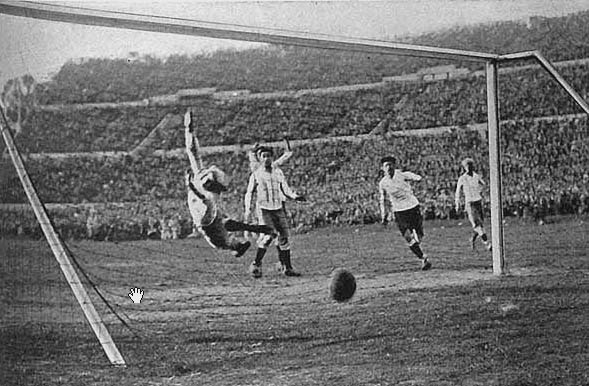
In the decisive match, played on July 30 before 70,000 spectators, Uruguay once again met their great rivals, Argentina, who were also considered favourites. Leading up to the match, tensions were high, with reports that Uruguayans disrupted Argentina’s training sessions throughout the tournament.
In the final itself, Dorado gave Uruguay the lead after 12 minutes, but Argentina responded with goals from Carlos Peucelle (20’) and Guillermo Stábile (37’), taking a 2-1 advantage into halftime. In the second half, Uruguay came out determined: Cea equalized at 57’, Iriarte put them ahead at 68’, and Castro sealed the 4-2 victory at 89’.
.jpg)
With that result, Uruguay became the first ever World Cup champion in history, and claimed their third consecutive title.
1940s–1960s
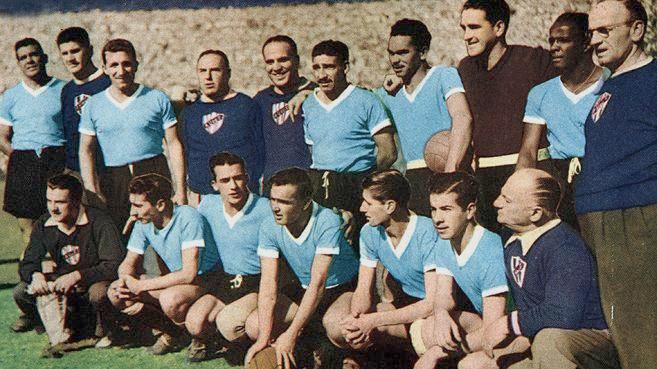
In the 1940s, Uruguay achieved early success in a decade largely dominated by Argentina by winning their eighth South American championship in 1942. As the World Cup was not being played, this championship became the priority.
.jpg)
In 1950, Uruguay re-entered the World Cup for the first time since 1930. This time, La Celeste would enter a final-group where they would draw Spain 2–2 and beat Sweden 3–2 en route to the final match against hosts Brazil. On 16 July 1950, Uruguay claimed their second FIFA World Cup and fourth senior world title when they beat Brazil 2–1 from behind in an iconic match known as the Maracanazo in front of a record crowd of 173,850. Historical estimates indicate that the crowd reached well over 200,000. This feat became an integral part of Uruguay's football identity and a source of inspiration for upcoming footballers with each passing generation.
_01.jpg)
In the 1954 World Cup, Uruguay reached the semi-finals for the fourth time after defeating Czechoslovakia, Scotland and England. The semi-final against Hungary is considered one of the best matches in World Cup history, as La Celeste dramatically equalised 2–2 late after trailing 2–0 at halftime. Uruguay would eventually lose 4–2 in extra-time in what was their first-ever loss at the global stage, a thirty year record that started in 1924.
Afterwards, Uruguay would fail to qualify to the World Cup for the first time in the 1958 CONMEBOL qualifiers after losing 5–0 to Paraguay in Asunción. From there, Uruguay maintained a competitive generation through the 1960s and into the early 1970s with players from Nacional and Peñarol, who had won several continental and club world titles during that time. In 1962, Uruguay had a relatively poor World Cup, being eliminated in the group stage after a dramatic last match against the Soviet Union. Four years later, Uruguay reached the last eight after drawing hosts England beating France in the group stage. A controversial quarter-final loss against West Germany marred what had been seen as a positive campaign. La Celeste would end the decade winning their 11th South American championship in 1967 by beating Argentina 1–0 in Montevideo.
1970s–1980s

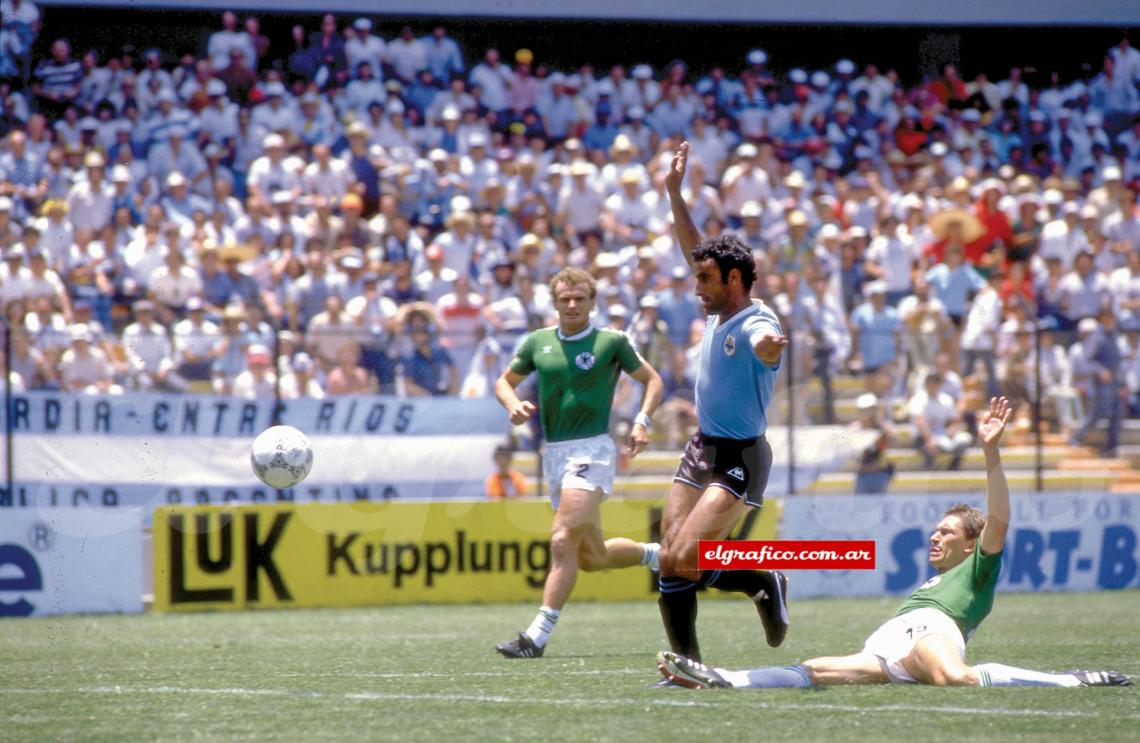
In 1970, Uruguay advanced to their fourth World Cup semi-final in Mexico, losing to eventual winners Brazil. They would eventually be eliminated in the group stage at the 1974 World Cup, and failed to qualify for Argentina 1978.
Uruguayan football would then see a resurgence as the U-20 team won four consecutive South American titles from 1975 to 1981, as well as reaching the U-20 World Cup semi-final in 1979. The success of this young generation would bear fruit in the 1980s, which began with Uruguay winning the 1980 World Champions' Gold Cup, a tournament that pitted past World Cup winners together in celebration of the tournament's 50th anniversary. Afterwards, La Celeste went on to win the 1983 and 1987 Copas America back-to-back, before losing 1–0 to hosts Brazil in 1989's decisive title match. After failing to qualify for the 1982 World Cup, in 1986, Uruguay were eliminated in the Round of 16 against eventual champions Argentina after a group stage that included West Germany, Denmark and Scotland.
1990s–2000s

In the 1990 World Cup in Italy, Uruguay were eliminated in the round of 16 against the hosts 2–0 in Rome. Afterwards, Uruguay would fail to qualify for 1994 after losing 2–0 to eventual winners Brazil at the Maracanã Stadium. La Celeste would then defeated the world champions to win the 1995 Copa América in Montevideo. Later, Uruguay were eliminated from the 1998 World Cup as they finished in seventh place the first time qualifying was a round-robin tournament.
For the 2002 World Cup qualifiers, Uruguay managed to advance to a final playoff round against Australia to reach the finals. La Celeste would win the decisive match 3–0 in Montevideo to qualify to their first World Cup since 1990. The campaign itself proved a frustrating affair, as Uruguay were narrowly eliminated in the last group match against Senegal after drawing them 3–3, after being down 3–0 at half-time.
The 2006 World Cup qualifying campaign saw another international playoff against Australia. This time, La Celeste were eliminated on penalties in Sydney. This loss led to a profound paradigm shift with the hiring of Oscar Tabarez as manager. From there, Uruguay would reach the semi-finals of the 2007 Copa América, and successfully qualified for the 2010 World Cup in South Africa.

2010s–2022
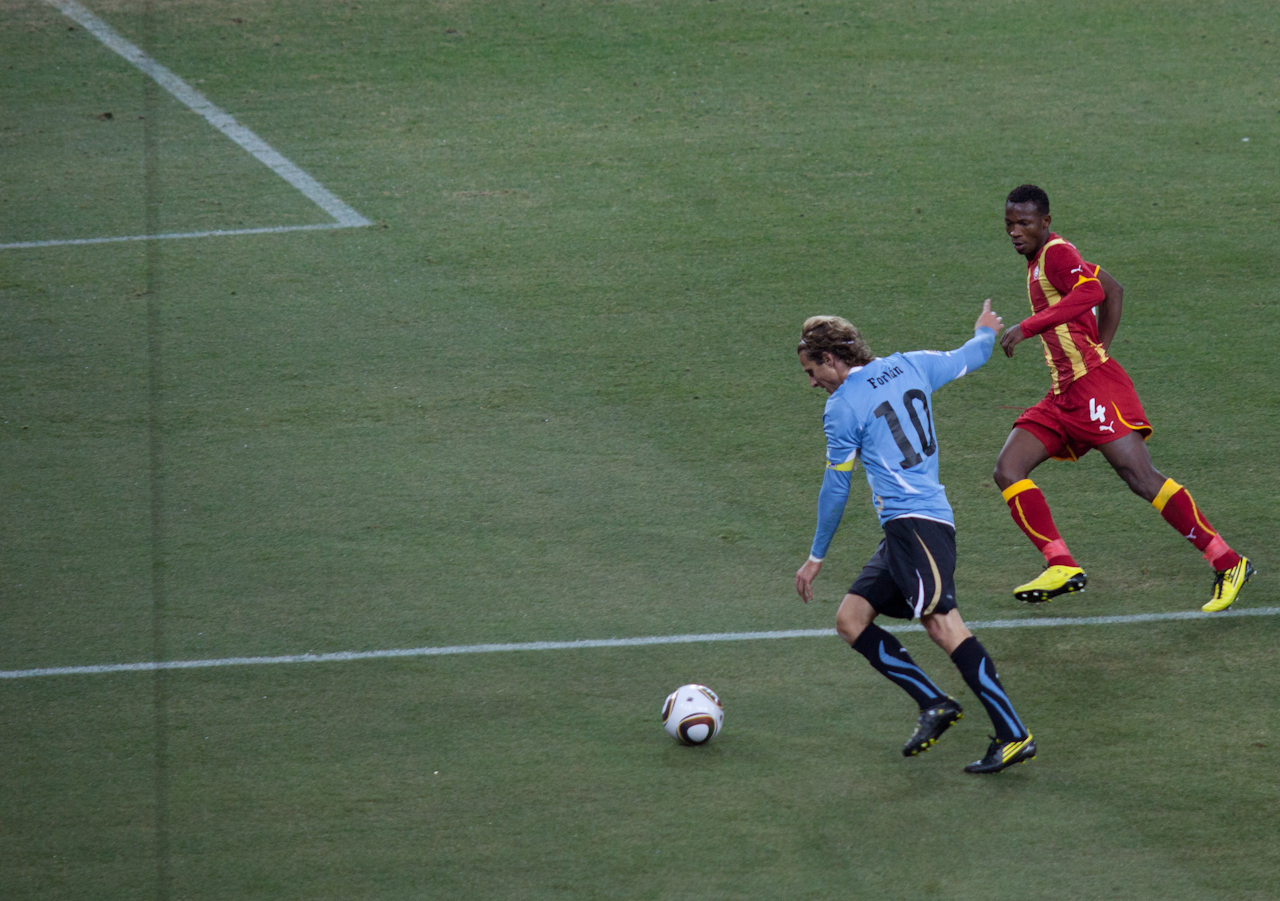
In 2010, a new generation of footballers, led by Luis Suárez, Diego Forlán and Edinson Cavani, formed a team that finished fourth at the World Cup. Uruguay opened the tournament with a goalless draw against France, followed by wins against South Africa (3–0) and Mexico (1–0) respectively, finishing at the top of their group with seven points. In the second round, they played South Korea, defeating them 2–1 with Suárez scoring a brace, as Uruguay sealed a spot in the quarter-finals for the first time since 1970. Against Ghana, the match finished 1–1, forcing the game into extra-time. Both sides had their chances at extra time but Suárez blocked the ball with his hand in the penalty area, earning himself a red card. Ghana striker Asamoah Gyan missed the subsequent penalty, forcing the game to go into penalties where Uruguay would win 4–2, sending them into the last four. They played the Netherlands in the semi-finals but were beaten 3–2. In the third-place match, they played Germany, again losing 3–2. This placed Uruguay in fourth place for the tournament, their best result in 40 years. Forlán was awarded Player of the Tournament.
A year later, they won the Copa América for the first time in 16 years and broke the record for the most successful team in South America. Luis Suárez ended up as Player of the Tournament.
Uruguay was placed in Group D at the 2014 World Cup alongside Costa Rica, England, and Italy. They were upset by Costa Rica in the opening match, losing 3–1 after taking the lead in the first half. They rebounded with a 2–1 victory over England, in which Suárez scored a brace right after coming back from an injury, and a 1–0 victory over Italy, placing them second in their group and earning a spot in the last 16. During the match against Italy, forward Luis Suárez bit Italian defender Giorgio Chiellini on his left shoulder. Two days after the match, the FIFA Disciplinary Committee banned Suárez for nine international matches, the longest such ban in World Cup history, exceeding the eight-match ban handed to Italy's Mauro Tassotti for breaking the nose of Spain's Luis Enrique in 1994. Suárez was also banned from taking part in any football-related activity (including entering any stadium) for four months and fined CHF100,000 (approximately £65,700/€82,000/US$119,000). In the round of 16, Uruguay played Colombia but were beaten 2–0, eliminating them from the tournament.

At the 2015 and 2016 Copa América, Uruguay, missing banned striker Luis Suárez, were eliminated in the quarter-finals and group stage respectively.
Uruguay then finished second in their qualifying campaign to qualify for the 2018 World Cup in Russia. There, they won their group after three victories, and advanced to the quarter-finals after a 2–1 win over Portugal. However, they were eliminated 2–0 in the quarter-finals by the eventual champions France.


.jpg)
At the 2022 World Cup, Uruguay was drawn into Group H with Portugal, Ghana and South Korea. They started the tournament with a 0–0 draw against South Korea, before they fell to a 2–0 defeat to Portugal. Despite a 2–0 victory against Ghana in their final group game, Uruguay was knocked out of the tournament in the group stages for the first time since 2002, on goals scored following South Korea’s shock 2–1 win against Portugal.
In 2023, Uruguay hired Marcelo Bielsa as manager. In 2024, Uruguay eliminated Brazil on route to a 3rd place finish at the Copa America hosted in the United States.
Team image
Kits and crest
Between 1901 and 1910, Uruguay wore a variety of different shirts during its matches. The first shirt worn was Albion F.C.'s kit, in the unofficial debut of the national team against Argentina in 1901. It was followed by a variety of shirts, including a solid green one and even a shirt with the colours of the Artigas flag.
On 10 April 1910, now-defunct club River Plate defeated Argentine side Alumni 2–1. That day River Plate wore its alternate jersey, a light blue one due to the home jersey was similar to Alumni's. The light blue (Celeste) jersey debuted in a Copa Lipton match against Argentina on 15 August 1910.
The red shirt that was used in some previous away strips was first used at the 1935 South American championship, held in Santa Beatriz in Peru, which Uruguay won. It was not worn again (except for a 1962 FIFA World Cup match, against Colombia) until 1991, when it was officially adopted as the away jersey.
.jpg)
.jpg)
Uruguay displays four stars in its emblem. This is unique in world football as two of the stars represent the gold medals received at the 1924 and 1928 Summer Olympics, which are the only editions recognised by FIFA as senior world championships. In 2021, after a FIFA employee contacted PUMA about modifying the team's crest, FIFA reconfirmed and approved once again the use of all four stars on the shirt.
| {{Football kit box | pattern_la = | pattern_b = _redhalf | pattern_ra = | leftarm = 000099 | body = 000099 | rightarm = 000099 | shorts = ffffff | socks = 000000 | group="note" | Albion F.C. shirt worn in the first match (unofficial) vs. Argentina due to the most part of the players were from that club.}} | {{Football kit box | pattern_la = | pattern_b = _whiteleftsash | pattern_ra = | leftarm = 0099ff | body = 0099ff | rightarm = 0099ff | shorts = 000000 | socks = 000000 | group="note" | Shirt worn in the first official match ever, vs. Argentina in Montevideo in 1902, also worn in a second game in Buenos Aires, 1903.}} | {{Football kit box | pattern_la = | pattern_b = _blueredleftsash | pattern_ra = | leftarm = ffffff | body = ffffff | rightarm = ffffff | shorts = ffffff | socks = 000000 | group="note" | Model based on the Artigas flag. This uniform was worn (at least) by a Uruguay representatives (Liga Uruguaya v South Africa}} | {{Football kit box | pattern_la = | pattern_b = | pattern_ra = | leftarm = FFFFFF | body = FFFFFF | rightarm = FFFFFF | shorts = 000000 | socks = 000000 | group="note" | Worn (at least) in the Copa Centenario Revolución de Mayo in 1910.}} | {{Football kit box | pattern_la = _whiteborder | pattern_b = _vneckwhite | pattern_ra = _whiteborder | pattern_so = | leftarm = 87CEFA | body = 87CEFA | rightarm = 87CEFA | shorts = 000000 | socks = 000000 | group="note" | Worn by first time in a Copa Lipton match on 15 August 1910.}} |
|---|
Kit sponsorship
| Kit supplier | Period |
|---|---|
| West Germany Adidas | 1974–1982 |
| France Le Coq Sportif | 1983–1986 |
| Germany Puma | 1987–1991 |
| Italy Ennerre | 1992–1998 |
| Uruguay Tenfield | 1999–2001 |
| Italy L-Sporto | 2002–2004 |
| Germany Uhlsport | 2004–2006 |
| Germany Jako | 2006–2007 |
| Germany Puma | 2007–2023 |
| Uruguay MGR Sport | 2024 |
| USA Nike | 2024– |
Home stadium
Since 1930, Uruguay have played their home games at the Estadio Centenario in the Uruguayan capital Montevideo. The stadium was built as a celebration of the centenary of Uruguay's first constitution, and had a capacity of 90,000 when first fully opened. The stadium hosted several matches in the 1930 World Cup, including the final, which was watched by a crowd of 93,000.
Rivalries
Argentina
Main article: Argentina–Uruguay football rivalry
First played in 1902, the "Clasico de Rio de la Plata" with Argentina is the oldest international derby in world football outside of the UK. Both teams have played in historically significant matches, such as the 1928 Olympic football final and the inaugural World Cup final in 1930.
Brazil
Main article: Brazil–Uruguay football rivalry
The rivalry with Brazil dates back to the 1916 South American Championship. Both teams have since competed in several Copa America finals and the iconic 1950 FIFA World Cup final match, where Uruguay lifted their second World Cup in front of a world record crowd at the Maracanã. The only other time they met at the World Cup was the 1970 semi-final where Brazil won 3–1 in Guadalajara. Since the 1980s, the two sides met in several title deciders, such as the 1980 World Champions' Gold Cup final (won by Uruguay), and the 1983, 1989, 1995 and 1999 Copa América finals. Uruguay would win the 1983 and 1995 editions, while Brazil won in 1989 and 1999. Brazil eliminated Uruguay at the Maracanã from qualifying for the 1994 World Cup. Since the 2000s, they have met mostly in the Copa América, as well as the regularly scheduled World Cup qualifiers.
Results and fixtures
Main article: Uruguay national football team results (2020–present)
The following is a list of match results in the last 12 months, as well as any future matches that have been scheduled.
2025
- Almada
- Galarza
- Enciso
- Aguirre
- De Arrascaeta
- Aguirre
- De Arrascaeta
- Viñas
- Laquintana
- Jiyanov
- Torres
- Sanabria
- Berhalter
- Freeman
- Luna
- Tessmann
- De Arrascaeta
2026
Coaching staff
Current personnel
- URU Juan López (1946–1955, 1957–1959)
- URU Juan Carlos Corazzo (1955, 1959–1961, 1962–1964)
- URU Hugo Bagnulo (1955–1957)
- URU Héctor Castro (1959)
- URU Enrique Fernández (1961–1962, 1967–1969)
- URU Rafael Milans (1964–1965)
- URU Ondino Viera (1965–1967)
- URU Juan Hohberg (1969–1970, 1977)
- URU Hugo Bagnulo (1970–1973)
- URU Roberto Porta (1974)
- URU Juan Alberto Schiaffino (1974–1975)
- URU José María Rodríguez (1975–1977)
- URU Raúl Bentancor (1977–1979)
- URU Roque Máspoli (1979–1982, 1997–1998)
- URU Omar Borrás (1982–1987)
- URU Roberto Fleitas (1987–1988)
- URU Óscar Tabárez (1988–1990, 2006–2021)
- URU Luis Cubilla (1990–1993)
- URU Ildo Maneiro (1993–1994)
- URU Héctor Núñez (1994–1996)
- URU Juan Ahuntchaín (1996–1997)
- URU Víctor Púa (1998–2000, 2001–2003)
- ARG Daniel Passarella (2000–2001)
- URU Gustavo Ferrín (2003, 2006)
- URU Juan Ramón Carrasco (2003–2004)
- URU Jorge Fossati (2004–2006)
- URU Gustavo Ferrín (2006)
- URU Diego Alonso (2021–2023)
- URU Marcelo Broli (2023)
- ARG Marcelo Bielsa (2023–present)
Players
Current squad
The following 28 players were called up for [[Exhibition game|friendly matches] against Mexico and the United States, respectively on 15 and 18 November 2025.
Caps and goals correct as of 18 November 2025, after the match against United States.
Recent call-ups
The following players have also been called up to the Uruguay squad in the past twelve months. ;Notes
- INJ = Withdrew due to injury
- PRE = Preliminary squad
- RET = Retired from the national team
- SUS = Serving suspension
- WD = Player withdrew from the squad due to non-injury issue.
Individual records
Main article: List of Uruguay international footballers
|- |4 ||align=left|Héctor Scarone || 31 || 51 || || 1917–1930 |- |5 ||align=left|Ángel Romano || 28 || 69 || || 1913–1927 |- |6 ||align=left|Óscar Míguez || 27 || 39 || || 1950–1958 |- |7 ||align=left|Sebastián Abreu || 26 || 70 || || 1996–2012 |- |8 ||align=left|Pedro Petrone || 24 || 28 || || 1923–1930
| - |
|---|
| } |
Competitive record
Main article: Uruguay national football team records and statistics
FIFA World Cup
Main article: Uruguay at the FIFA World Cup
Champions Runners-up Third place Fourth place Tournament played fully or partially on home soil
| FIFA World Cup record | Qualification record | Year | Round | Position | Pld | W | D* | L | GF | GA | Squad | Pos | Pld | W | D | L | GF | GA | Total | 2 Titles | 15/23 | 59 | 26 | 13 | 20 | 91 | 74 | — | — | 190 | 84 | 53 | 53 | 262 | 198 |
|---|---|---|---|---|---|---|---|---|---|---|---|---|---|---|---|---|---|---|---|---|---|---|---|---|---|---|---|---|---|---|---|---|---|---|---|
| Uruguay [1930](1930-fifa-world-cup) | **[Champions](1930-fifa-world-cup-final)** | **1st** | **4** | **4** | **0** | **0** | **15** | **3** | **[Squad](1930-fifa-world-cup-squads-uruguay)** | *Qualified as hosts* | |||||||||||||||||||||||||
| Italy [1934](1934-fifa-world-cup) | *Refused to participate* | *Qualified as defending champions* | |||||||||||||||||||||||||||||||||
| France [1938](1938-fifa-world-cup) | *Refused to participate* | ||||||||||||||||||||||||||||||||||
| Brazil [1950](1950-fifa-world-cup) | **[Champions](1950-fifa-world-cup-final)** | **1st** | **4** | **3** | **1** | **0** | **15** | **5** | **[Squad](1950-fifa-world-cup-squads-uruguay)** | *Qualified automatically* | |||||||||||||||||||||||||
| Switzerland [1954](1954-fifa-world-cup) | Third place | 3rd | 5 | 4 | 0 | 1 | 18 | 7 | [Squad](1954-fifa-world-cup-squads-uruguay) | *Qualified as defending champions* | |||||||||||||||||||||||||
| Sweden [1958](1958-fifa-world-cup) | *Did not qualify* | 2nd | 4 | 2 | 1 | 1 | 4 | 6 | |||||||||||||||||||||||||||
| Chile [1962](1962-fifa-world-cup) | Group stage | 13th | 3 | 1 | 0 | 2 | 4 | 6 | [Squad](1962-fifa-world-cup-squads-uruguay) | 1st | 2 | 1 | 1 | 0 | 3 | 2 | |||||||||||||||||||
| England [1966](1966-fifa-world-cup) | Quarter-finals | 7th | 4 | 1 | 2 | 1 | 2 | 5 | [Squad](1966-fifa-world-cup-squads-uruguay) | 1st | 4 | 4 | 0 | 0 | 11 | 2 | |||||||||||||||||||
| Mexico [1970](1970-fifa-world-cup) | Fourth place | 4th | 6 | 2 | 1 | 3 | 4 | 5 | [Squad](1970-fifa-world-cup-squads-uruguay) | 1st | 4 | 3 | 1 | 0 | 5 | 0 | |||||||||||||||||||
| West Germany [1974](1974-fifa-world-cup) | Group stage | 13th | 3 | 0 | 1 | 2 | 1 | 6 | [Squad](1974-fifa-world-cup-squads-uruguay) | 1st | 4 | 2 | 1 | 1 | 6 | 2 | |||||||||||||||||||
| Argentina [1978](1978-fifa-world-cup) | *Did not qualify* | 2nd | 4 | 1 | 2 | 1 | 5 | 4 | |||||||||||||||||||||||||||
| Spain [1982](1982-fifa-world-cup) | 2nd | 4 | 1 | 2 | 1 | 5 | 5 | ||||||||||||||||||||||||||||
| Mexico [1986](1986-fifa-world-cup) | Round of 16 | 16th | 4 | 0 | 2 | 2 | 2 | 8 | [Squad](1986-fifa-world-cup-squads-uruguay) | 1st | 4 | 3 | 0 | 1 | 6 | 4 | |||||||||||||||||||
| Italy [1990](1990-fifa-world-cup) | 16th | 4 | 1 | 1 | 2 | 2 | 5 | [Squad](1990-fifa-world-cup-squads-uruguay) | 1st | 4 | 3 | 0 | 1 | 7 | 2 | ||||||||||||||||||||
| United States [1994](1994-fifa-world-cup) | *Did not qualify* | 3rd | 8 | 4 | 2 | 2 | 10 | 7 | |||||||||||||||||||||||||||
| France [1998](1998-fifa-world-cup) | 7th | 16 | 6 | 3 | 7 | 18 | 21 | ||||||||||||||||||||||||||||
| South Korea Japan [2002](2002-fifa-world-cup) | Group stage | 26th | 3 | 0 | 2 | 1 | 4 | 5 | [Squad](2002-fifa-world-cup-squads-uruguay) | 5th | 20 | 8 | 6 | 6 | 22 | 14 | |||||||||||||||||||
| Germany [2006](2006-fifa-world-cup) | *Did not qualify* | 5th | 20 | 7 | 7 | 6 | 24 | 29 | |||||||||||||||||||||||||||
| South Africa [2010](2010-fifa-world-cup) | Fourth place | 4th | 7 | 3 | 2 | 2 | 11 | 8 | [Squad](2010-fifa-world-cup-squads-uruguay) | 5th | 20 | 7 | 7 | 6 | 30 | 21 | |||||||||||||||||||
| Brazil [2014](2014-fifa-world-cup) | Round of 16 | 12th | 4 | 2 | 0 | 2 | 4 | 6 | [Squad](2014-fifa-world-cup-squads-uruguay) | 5th | 18 | 8 | 5 | 5 | 30 | 25 | |||||||||||||||||||
| Russia [2018](2018-fifa-world-cup) | Quarter-finals | 5th | 5 | 4 | 0 | 1 | 7 | 3 | [Squad](2018-fifa-world-cup-squads-uruguay) | 2nd | 18 | 9 | 4 | 5 | 32 | 20 | |||||||||||||||||||
| Qatar [2022](2022-fifa-world-cup) | Group stage | 20th | 3 | 1 | 1 | 1 | 2 | 2 | [Squad](2022-fifa-world-cup-squads-uruguay) | 3rd | 18 | 8 | 4 | 6 | 22 | 22 | |||||||||||||||||||
| Canada Mexico United States [2026](2026-fifa-world-cup) | *Qualified* | 4th | 18 | 7 | 7 | 4 | 22 | 12 | |||||||||||||||||||||||||||
| Morocco Portugal Spain [2030](2030-fifa-world-cup) | *Qualified as commemorative match hosts* | *Qualified as commemorative match hosts* | |||||||||||||||||||||||||||||||||
| Saudi Arabia [2034](2034-fifa-world-cup) | *To be determined* | *To be determined* |
:*Draws include knockout matches decided via penalty shoot-out.
Copa América
Main article: Uruguay at the Copa América
| South American Championship / Copa América record | Year | Round | Position | Pld | W | D* | L | GF | GA | Squad | Total | 15 Title | 46/48 | 212 | 115 | 40 | 57 | 421 | 226 | — | |||||||||
|---|---|---|---|---|---|---|---|---|---|---|---|---|---|---|---|---|---|---|---|---|---|---|---|---|---|---|---|---|---|
| Argentina [1916](1916-south-american-championship) | **Champions** | **1st** | **3** | **2** | **1** | **0** | **6** | **1** | **[Squad](1916-south-american-championship-squads-uruguay)** | ||||||||||||||||||||
| Uruguay [1917](1917-south-american-championship) | **Champions** | **1st** | **3** | **3** | **0** | **0** | **9** | **0** | **[Squad](1917-south-american-championship-squads-uruguay)** | ||||||||||||||||||||
| Brazil [1919](1919-south-american-championship) | **Runners-up** | **2nd** | **4** | **2** | **1** | **1** | **7** | **5** | **[Squad](1919-south-american-championship-squads-uruguay)** | ||||||||||||||||||||
| Chile [1920](1920-south-american-championship) | **Champions** | **1st** | **3** | **2** | **1** | **0** | **9** | **2** | **[Squad](1920-south-american-championship-squads-uruguay)** | ||||||||||||||||||||
| Argentina [1921](1921-south-american-championship) | Third place | 3rd | 3 | 1 | 0 | 2 | 3 | 4 | [Squad](1921-south-american-championship-squads-uruguay) | ||||||||||||||||||||
| Brazil [1922](1922-south-american-championship) | Third place | 3rd | 4 | 2 | 1 | 1 | 3 | 1 | [Squad](1922-south-american-championship-squads-uruguay) | ||||||||||||||||||||
| Uruguay [1923](1923-south-american-championship) | **Champions** | **1st** | **3** | **3** | **0** | **0** | **6** | **1** | **[Squad](1923-south-american-championship-squads-uruguay)** | ||||||||||||||||||||
| Uruguay [1924](1924-south-american-championship) | **Champions** | **1st** | **3** | **2** | **1** | **0** | **8** | **1** | **[Squad](1924-south-american-championship-squads-uruguay)** | ||||||||||||||||||||
| Argentina [1925](1925-south-american-championship) | *Withdrew* | ||||||||||||||||||||||||||||
| Chile [1926](1926-south-american-championship) | **Champions** | **1st** | **4** | **4** | **0** | **0** | **17** | **2** | **[Squad](1926-south-american-championship-squads-uruguay)** | ||||||||||||||||||||
| Peru [1927](1927-south-american-championship) | **Runners-up** | **2nd** | **3** | **2** | **0** | **1** | **15** | **3** | **[Squad](1927-south-american-championship-squads-uruguay)** | ||||||||||||||||||||
| Argentina [1929](1929-south-american-championship) | Third place | 3rd | 3 | 1 | 0 | 2 | 4 | 6 | [Squad](1929-south-american-championship-squads-uruguay) | ||||||||||||||||||||
| Peru [1935](1935-south-american-championship) | **Champions** | **1st** | **3** | **3** | **0** | **0** | **6** | **1** | **[Squad](1935-south-american-championship-squads-uruguay)** | ||||||||||||||||||||
| Argentina [1937](1937-south-american-championship) | Third place | 3rd | 5 | 2 | 0 | 3 | 11 | 14 | [Squad](1937-south-american-championship-squads-uruguay) | ||||||||||||||||||||
| Peru [1939](1939-south-american-championship) | **Runners-up** | **2nd** | **4** | **3** | **0** | **1** | **13** | **5** | **[Squad](1939-south-american-championship-squads-uruguay)** | ||||||||||||||||||||
| Chile [1941](1941-south-american-championship) | **Runners-up** | **2nd** | **4** | **3** | **0** | **1** | **10** | **1** | **[Squad](1941-south-american-championship-squads-uruguay)** | ||||||||||||||||||||
| Uruguay [1942](1942-south-american-championship) | **Champions** | **1st** | **6** | **6** | **0** | **0** | **21** | **2** | **[Squad](1942-south-american-championship-squads-uruguay)** | ||||||||||||||||||||
| Chile [1945](1945-south-american-championship) | Fourth place | 4th | 6 | 3 | 0 | 3 | 14 | 6 | [Squad](1945-south-american-championship-squads-uruguay) | ||||||||||||||||||||
| Argentina [1946](1946-south-american-championship) | Fourth place | 4th | 5 | 2 | 0 | 3 | 11 | 9 | [Squad](1946-south-american-championship-squads-uruguay) | ||||||||||||||||||||
| Ecuador [1947](1947-south-american-championship) | Third place | 3rd | 7 | 5 | 0 | 2 | 21 | 8 | [Squad](1947-south-american-championship-squads-uruguay) | ||||||||||||||||||||
| Brazil [1949](1949-south-american-championship) | Sixth place | 6th | 7 | 2 | 1 | 4 | 14 | 20 | [Squad](1949-south-american-championship-squads-uruguay) | ||||||||||||||||||||
| Peru [1953](1953-south-american-championship) | Third place | 3rd | 6 | 3 | 1 | 2 | 15 | 6 | [Squad](1953-south-american-championship-squads-uruguay) | ||||||||||||||||||||
| Chile [1955](1955-south-american-championship) | Fourth place | 4th | 5 | 2 | 1 | 2 | 12 | 12 | [Squad](1955-south-american-championship-squads-uruguay) | ||||||||||||||||||||
| Uruguay [1956](1956-south-american-championship) | **Champions** | **1st** | **5** | **4** | **1** | **0** | **9** | **3** | **[Squad](1956-south-american-championship-squads-uruguay)** | ||||||||||||||||||||
| Peru [1957](1957-south-american-championship) | Third place | 3rd | 6 | 4 | 0 | 2 | 15 | 12 | [Squad](1957-south-american-championship-squads-uruguay) | ||||||||||||||||||||
| Argentina [1959](1959-south-american-championship-argentina) | Sixth place | 6th | 6 | 2 | 0 | 4 | 15 | 14 | [Squad](1959-south-american-championship-argentina-squads-uruguay) | ||||||||||||||||||||
| Ecuador [1959](1959-south-american-championship-ecuador) | **Champions** | **1st** | **4** | **3** | **1** | **0** | **13** | **1** | **[Squad](1959-south-american-championship-ecuador-squads-uruguay)** | ||||||||||||||||||||
| Bolivia [1963](1963-south-american-championship) | *Withdrew* | ||||||||||||||||||||||||||||
| Uruguay [1967](1967-south-american-championship) | **Champions** | **1st** | **5** | **4** | **1** | **0** | **13** | **2** | **[Squad](1967-south-american-championship-squads-uruguay)** | ||||||||||||||||||||
| [1975](1975-copa-america) | Semifinals | 3rd | 2 | 1 | 0 | 1 | 1 | 3 | [Squad](1975-copa-america-squads-uruguay) | ||||||||||||||||||||
| [1979](1979-copa-america) | Group stage | 6th | 4 | 1 | 2 | 1 | 5 | 5 | [Squad](1979-copa-america-squads-uruguay) | ||||||||||||||||||||
| [1983](1983-copa-america) | **[Champions](1983-copa-america-final)** | **1st** | **8** | **5** | **2** | **1** | **12** | **6** | **[Squad](1983-copa-america-squads-uruguay)** | ||||||||||||||||||||
| ARG [1987](1987-copa-america) | **[Champions](1987-copa-america-final)** | **1st** | **2** | **2** | **0** | **0** | **2** | **0** | **[Squad](1987-copa-america-squads-uruguay)** | ||||||||||||||||||||
| Brazil [1989](1989-copa-america) | **Runners-up** | **2nd** | **7** | **4** | **0** | **3** | **11** | **3** | **[Squad](1989-copa-america-squads-uruguay)** | ||||||||||||||||||||
| Chile [1991](1991-copa-america) | Group stage | 5th | 4 | 1 | 3 | 0 | 4 | 3 | [Squad](1991-copa-america-squads-uruguay) | ||||||||||||||||||||
| Ecuador [1993](1993-copa-america) | Quarter-finals | 6th | 4 | 1 | 2 | 1 | 5 | 5 | [Squad](1993-copa-america-squads-uruguay) | ||||||||||||||||||||
| Uruguay [1995](1995-copa-america) | **[Champions](1995-copa-america-final)** | **1st** | **6** | **4** | **2** | **0** | **11** | **4** | **[Squad](1995-copa-america-squads-uruguay)** | ||||||||||||||||||||
| Bolivia [1997](1997-copa-america) | Group stage | 9th | 3 | 1 | 0 | 2 | 2 | 2 | [Squad](1997-copa-america-squads-uruguay) | ||||||||||||||||||||
| Paraguay [1999](1999-copa-america) | **[Runners-up](1999-copa-america-final)** | **2nd** | **6** | **1** | **2** | **3** | **4** | **9** | **[Squad](1999-copa-america-squads-uruguay)** | ||||||||||||||||||||
| Colombia [2001](2001-copa-america) | Fourth place | 4th | 6 | 2 | 2 | 2 | 7 | 7 | [Squad](2001-copa-america-squads-uruguay) | ||||||||||||||||||||
| Peru [2004](2004-copa-america) | Third place | 3rd | 6 | 3 | 2 | 1 | 12 | 10 | [Squad](2004-copa-america-squads-uruguay) | ||||||||||||||||||||
| Venezuela [2007](2007-copa-america) | Fourth place | 4th | 6 | 2 | 2 | 2 | 8 | 9 | [Squad](2007-copa-america-squads-uruguay) | ||||||||||||||||||||
| Argentina [2011](2011-copa-america) | **[Champions](2011-copa-america-final)** | **1st** | **6** | **3** | **3** | **0** | **9** | **3** | **[Squad](2011-copa-america-squads-uruguay)** | ||||||||||||||||||||
| Chile [2015](2015-copa-america) | Quarter-finals | 7th | 4 | 1 | 1 | 2 | 2 | 3 | [Squad](2015-copa-america-squads-uruguay) | ||||||||||||||||||||
| United States 2016 | Group stage | 11th | 3 | 1 | 0 | 2 | 4 | 4 | Squad | ||||||||||||||||||||
| Brazil [2019](2019-copa-america) | Quarter-finals | 6th | 4 | 2 | 2 | 0 | 7 | 2 | [Squad](2019-copa-america-squads-uruguay) | ||||||||||||||||||||
| Brazil [2021](2021-copa-america) | 5th | 5 | 2 | 2 | 1 | 4 | 2 | [Squad](2021-copa-america-squads-uruguay) | |||||||||||||||||||||
| United States [2024](2024-copa-america) | Third place | 3rd | 6 | 3 | 2 | 1 | 11 | 4 | [Squad](2024-copa-america-squads-uruguay) |
CONMEBOL–UEFA Cup of Champions
| CONMEBOL–UEFA Cup of Champions record | Year | Round | Position | Pld | W | D* | L | GF | GA | Total | Runners-up | 1/3 | 1 | 0 | 0 | 1 | 0 | 2 | ||||||||
|---|---|---|---|---|---|---|---|---|---|---|---|---|---|---|---|---|---|---|---|---|---|---|---|---|---|---|
| France [1985](1985-artemio-franchi-cup) | **Runners-up** | **2nd** | **1** | **0** | **0** | **1** | **0** | **2** | ||||||||||||||||||
| Argentina [1993](1993-artemio-franchi-cup) | *Did not qualify* | |||||||||||||||||||||||||
| England [2022](2022-finalissima) |
FIFA Confederations Cup
| FIFA Confederations Cup record | Year | Round | Position | Pld | W | D* | L | GF | GA | Squad | Total | Fourth place | 2/10 | 10 | 5 | 1 | 4 | 22 | 13 | — |
|---|---|---|---|---|---|---|---|---|---|---|---|---|---|---|---|---|---|---|---|---|
| Saudi Arabia [1992](1992-king-fahd-cup) | *Did not qualify* | |||||||||||||||||||
| Saudi Arabia [1995](1995-king-fahd-cup) | ||||||||||||||||||||
| Saudi Arabia [1997](1997-fifa-confederations-cup) | Fourth place | 4th | 5 | 3 | 0 | 2 | 8 | 6 | [Squad](1997-fifa-confederations-cup-squads-uruguay) | |||||||||||
| Mexico [1999](1999-fifa-confederations-cup) | *Did not qualify* | |||||||||||||||||||
| South Korea Japan [2001](2001-fifa-confederations-cup) | ||||||||||||||||||||
| France [2003](2003-fifa-confederations-cup) | ||||||||||||||||||||
| Germany [2005](2005-fifa-confederations-cup) | ||||||||||||||||||||
| South Africa [2009](2009-fifa-confederations-cup) | ||||||||||||||||||||
| Brazil [2013](2013-fifa-confederations-cup) | Fourth place | 4th | 5 | 2 | 1 | 2 | 14 | 7 | [Squad](2013-fifa-confederations-cup-squads-uruguay) | |||||||||||
| Russia [2017](2017-fifa-confederations-cup) | *Did not qualify* |
Olympic Games
| Olympic Games record | Year | Round | Position | Pld | W | D* | L | GF | GA | Squad | Total | 2 Gold medals | 2/14 | 10 | 9 | 1 | 0 | 32 | 7 | — | |||||||||
|---|---|---|---|---|---|---|---|---|---|---|---|---|---|---|---|---|---|---|---|---|---|---|---|---|---|---|---|---|---|
| France 1900 | *Only club teams participated* | ||||||||||||||||||||||||||||
| United States 1904 | |||||||||||||||||||||||||||||
| United Kingdom 1908 | *Not an IOC member* | ||||||||||||||||||||||||||||
| Sweden 1912 | |||||||||||||||||||||||||||||
| Belgium 1920 | |||||||||||||||||||||||||||||
| France 1924 | **Gold medal** | **1st** | **5** | **5** | **0** | **0** | **20** | **2** | **Squad** | ||||||||||||||||||||
| Netherlands 1928 | **Gold medal** | **1st** | **5** | **4** | **1** | **0** | **12** | **5** | **Squad** | ||||||||||||||||||||
| Nazi Germany 1936 | *Withdrew* | ||||||||||||||||||||||||||||
| United Kingdom 1948 | *Did not participate* | ||||||||||||||||||||||||||||
| Finland 1952 | |||||||||||||||||||||||||||||
| Australia 1956 | |||||||||||||||||||||||||||||
| Italy 1960 | *Did not qualify* | ||||||||||||||||||||||||||||
| Japan 1964 | |||||||||||||||||||||||||||||
| Mexico 1968 | |||||||||||||||||||||||||||||
| West Germany 1972 | |||||||||||||||||||||||||||||
| Canada 1976 | *Withdrew* | ||||||||||||||||||||||||||||
| Soviet Union 1980 | *Did not qualify* | ||||||||||||||||||||||||||||
| United States 1984 | |||||||||||||||||||||||||||||
| South Korea 1988 | |||||||||||||||||||||||||||||
| Since 1992 | *See Uruguay national under-23 football team* |
Pan American Games
| Pan American Games record | Year | Round | Position | Pld | W | D* | L | GF | GA | Total | 1 Gold medal | 3/12 | 10 | 5 | 1 | 4 | 10 | 9 | ||||||||
|---|---|---|---|---|---|---|---|---|---|---|---|---|---|---|---|---|---|---|---|---|---|---|---|---|---|---|
| Argentina 1951 | *Did not participate* | |||||||||||||||||||||||||
| Mexico 1955 | ||||||||||||||||||||||||||
| United States 1959 | ||||||||||||||||||||||||||
| Brazil 1963 | Fourth place | 4th | 4 | 1 | 0 | 3 | 4 | 6 | ||||||||||||||||||
| Canada 1967 | *Did not participate* | |||||||||||||||||||||||||
| Colombia 1971 | ||||||||||||||||||||||||||
| Mexico 1975 | Preliminary round | 11th | 2 | 0 | 1 | 1 | 1 | 2 | ||||||||||||||||||
| Puerto Rico 1979 | *Did not enter* | |||||||||||||||||||||||||
| Venezuela 1983 | **Gold medal** | **1st** | **4** | **4** | **0** | **0** | **5** | **1** | ||||||||||||||||||
| United States 1987 | *Did not participate* | |||||||||||||||||||||||||
| Cuba 1991 | ||||||||||||||||||||||||||
| Argentina 1995 | ||||||||||||||||||||||||||
| Since 1999 | *See Uruguay national under-23 football team* |
Head-to-head record
Below is a list of all matches Uruguay have played against FIFA recognised teams. Updated as of 18 November 2025.
| Team | Pld | W | D | L | GF | GA | GD | Best result | Total (88) | 1010 | 450 | 245 | 315 | 1571 | 1219 | +352 | 9–0 | ||||||||
|---|---|---|---|---|---|---|---|---|---|---|---|---|---|---|---|---|---|---|---|---|---|---|---|---|---|
| (Lima, Peru; 6 November 1927) | |||||||||||||||||||||||||
| 1 | 0 | 0 | 1 | 0 | 1 | −1 | 1–0 | ||||||||||||||||||
| (Algiers, Algeria; 12 August 2009) | |||||||||||||||||||||||||
| 1 | 1 | 0 | 0 | 2 | 0 | +2 | 0–2 | ||||||||||||||||||
| (Lisbon, Portugal; 11 August 2010) | |||||||||||||||||||||||||
| 204 | 60 | 49 | 95 | 236 | 326 | −90 | 5–0 | ||||||||||||||||||
| (Guayaquil, Ecuador; 16 December 1959) | |||||||||||||||||||||||||
| 9 | 4 | 1 | 4 | 8 | 6 | +2 | 3–0 | ||||||||||||||||||
| (Montevideo, Uruguay; 25 November 2001) | |||||||||||||||||||||||||
| 4 | 2 | 1 | 1 | 7 | 4 | 3 | 0–2 | ||||||||||||||||||
| (Vienna, Austria; 14 May 1964) | |||||||||||||||||||||||||
| 2 | 0 | 0 | 2 | 1 | 5 | −4 | 3–1 | ||||||||||||||||||
| (Verona, Italy; 17 June 1990) | |||||||||||||||||||||||||
| 49 | 32 | 9 | 8 | 118 | 35 | +83 | 9–0 | ||||||||||||||||||
| (Lima, Peru; 6 November 1927) | |||||||||||||||||||||||||
| 1 | 0 | 0 | 1 | 2 | 3 | −1 | 3–2 | ||||||||||||||||||
| (Cochin, India; 18 January 2001) | |||||||||||||||||||||||||
| 81 | 21 | 22 | 38 | 101 | 143 | −42 | 6–0 | ||||||||||||||||||
| (Valparaíso, Chile; 18 September 1920) | |||||||||||||||||||||||||
| 1 | 0 | 1 | 0 | 1 | 1 | 0 | 1–1 | ||||||||||||||||||
| (Hanover, West Germany; 19 June 1974) | |||||||||||||||||||||||||
| 1 | 0 | 0 | 1 | 1 | 2 | −1 | 2–1 | ||||||||||||||||||
| (Lens, France; 26 March 2024) | |||||||||||||||||||||||||
| 1 | 1 | 0 | 0 | 4 | 0 | +4 | 4–0 | ||||||||||||||||||
| (Tehran, Iran; 13 August 2003) | |||||||||||||||||||||||||
| 3 | 2 | 1 | 0 | 7 | 3 | +4 | 1–3 | ||||||||||||||||||
| (Miami, United States; 2 February 1986) | |||||||||||||||||||||||||
| 87 | 49 | 20 | 18 | 150 | 87 | +63 | 6–0 | ||||||||||||||||||
| (Guayaquil, Ecuador; 6 December 1947) | |||||||||||||||||||||||||
| 6 | 3 | 2 | 1 | 9 | 2 | +7 | 0–4 | ||||||||||||||||||
| (Wuhan, China; 12 October 2010) | |||||||||||||||||||||||||
| 47 | 21 | 13 | 13 | 67 | 52 | +15 | 7–0 | ||||||||||||||||||
| (Santiago, Chile; 28 January 1945) | |||||||||||||||||||||||||
| 14 | 8 | 4 | 2 | 25 | 19 | +6 | 2–0 | ||||||||||||||||||
| (Miami, United States; 4 February 1990) | |||||||||||||||||||||||||
| 1 | 1 | 0 | 0 | 2 | 0 | +2 | 2–0 | ||||||||||||||||||
| (Montevideo, Uruguay; 20 June 2023) | |||||||||||||||||||||||||
| 6 | 4 | 0 | 2 | 9 | 6 | +3 | 0–2 | ||||||||||||||||||
| (Bern, Switzerland; 16 June 1954) | |||||||||||||||||||||||||
| (Nanning, China; 23 March 2018) | |||||||||||||||||||||||||
| 2 | 0 | 0 | 2 | 2 | 8 | −6 | 1–2 | ||||||||||||||||||
| (Ulsan, South Korea; 1 June 2002) | |||||||||||||||||||||||||
| 1 | 1 | 0 | 0 | 1 | 0 | +1 | 1–0 | ||||||||||||||||||
| (Kuala Lumpur, Malaysia; 10 October 2025) | |||||||||||||||||||||||||
| ** | 6 | 1 | 2 | 3 | 4 | 7 | −3 | 3–0 | |||||||||||||||||
| (Montevideo, Uruguay; 29 January 1985) | |||||||||||||||||||||||||
| 50 | 31 | 11 | 8 | 115 | 46 | +69 | 7–0 | ||||||||||||||||||
| (Montevideo, Uruguay; 18 January 1942) | |||||||||||||||||||||||||
| 2 | 2 | 0 | 0 | 3 | 0 | +3 | 0–2 | ||||||||||||||||||
| (Cairo, Egypt; 16 August 2006) | |||||||||||||||||||||||||
| 11 | 5 | 3 | 3 | 15 | 11 | +4 | 4–2 | ||||||||||||||||||
| (Basel, Switzerland; 26 June 1954) | |||||||||||||||||||||||||
| 2 | 1 | 0 | 1 | 3 | 2 | +1 | 3–0 | ||||||||||||||||||
| (Rivera, Uruguay; 23 June 2011) | |||||||||||||||||||||||||
| 10 | 3 | 4 | 3 | 8 | 7 | +1 | 1–5 | ||||||||||||||||||
| (Colombes, France; 1 June 1924) | |||||||||||||||||||||||||
| 2 | 2 | 0 | 0 | 8 | 1 | +7 | 6–0 | ||||||||||||||||||
| (Montevideo, Uruguay; 8 December 1984) | |||||||||||||||||||||||||
| 1 | 0 | 0 | 1 | 0 | 2 | −2 | 2–0 | ||||||||||||||||||
| (Tbilisi, Georgia; 15 November 2006) | |||||||||||||||||||||||||
| 11 | 1 | 2 | 8 | 12 | 29 | −17 | 1–4 | ||||||||||||||||||
| (Amsterdam, Netherlands; 3 June 1928) | |||||||||||||||||||||||||
| 2 | 1 | 1 | 0 | 3 | 1 | +2 | 0–2 | ||||||||||||||||||
| (Al Wakrah, Qatar; 2 December 2022) | |||||||||||||||||||||||||
| 3 | 2 | 1 | 0 | 8 | 3 | +5 | 5–1 | ||||||||||||||||||
| (Montevideo, Uruguay; 6 June 2015) | |||||||||||||||||||||||||
| 3 | 1 | 2 | 0 | 1 | 0 | +1 | 0–1 | ||||||||||||||||||
| (Port-au-Prince, Haiti; 23 March 1974) | |||||||||||||||||||||||||
| 2 | 0 | 1 | 1 | 2 | 3 | −1 | 2–2 | ||||||||||||||||||
| (Bogotá, Colombia; 29 July 2001) | |||||||||||||||||||||||||
| 2 | 2 | 0 | 0 | 4 | 1 | +3 | 1–3 | ||||||||||||||||||
| (Hong Kong; 9 January 2000) | |||||||||||||||||||||||||
| 6 | 3 | 2 | 1 | 10 | 8 | +2 | 2–0 | ||||||||||||||||||
| (Maldonado, Uruguay; 17 February 2000) | |||||||||||||||||||||||||
| 1 | 1 | 0 | 0 | 3 | 1 | +2 | 1–3 | ||||||||||||||||||
| (Kolkata, India; 25 February 1982) | |||||||||||||||||||||||||
| 3 | 2 | 0 | 1 | 11 | 5 | +6 | 1–7 | ||||||||||||||||||
| (Jakarta, Indonesia; 8 October 2010) | |||||||||||||||||||||||||
| 2 | 0 | 1 | 1 | 1 | 2 | −1 | 1–1 | ||||||||||||||||||
| (Hong Kong; 4 February 2003) | |||||||||||||||||||||||||
| 1 | 1 | 0 | 0 | 5 | 2 | +3 | 2–5 | ||||||||||||||||||
| (Tehran, Iran; 15 August 2003) | |||||||||||||||||||||||||
| 6 | 4 | 1 | 1 | 15 | 6 | +9 | 4–1 | ||||||||||||||||||
| (Montevideo, Uruguay; 26 May 2010) | |||||||||||||||||||||||||
| 11 | 4 | 4 | 3 | 11 | 12 | −1 | 2–0 | ||||||||||||||||||
| (Montevideo, Uruguay; 3 January 1981) | |||||||||||||||||||||||||
| 5 | 4 | 0 | 1 | 9 | 2 | +7 | 0–3 | ||||||||||||||||||
| (Kingston, Jamaica; 28 March 1974) | |||||||||||||||||||||||||
| 9 | 4 | 3 | 2 | 24 | 18 | +6 | 1–4 | ||||||||||||||||||
| (Tokyo, Japan; 26 May 1985) | |||||||||||||||||||||||||
| 2 | 1 | 1 | 0 | 5 | 0 | +5 | 0–5 | ||||||||||||||||||
| (Amman, Jordan; 13 November 2011) | |||||||||||||||||||||||||
| 2 | 2 | 0 | 0 | 5 | 3 | +2 | 2–3 | ||||||||||||||||||
| (Tripoli, Libya; 11 February 2009) | |||||||||||||||||||||||||
| 1 | 1 | 0 | 0 | 1 | 0 | +1 | 0–1 | ||||||||||||||||||
| (Esch-sur-Alzette, Luxembourg; 26 March 1980) | |||||||||||||||||||||||||
| 1 | 1 | 0 | 0 | 6 | 0 | +6 | 0–6 | ||||||||||||||||||
| (Osaka, Japan; 1 June 1985) | |||||||||||||||||||||||||
| 24 | 8 | 8 | 8 | 35 | 29 | +6 | 0–4 | ||||||||||||||||||
| (Denver, United States; 5 June 2024) | |||||||||||||||||||||||||
| 2 | 2 | 0 | 0 | 2 | 0 | +2 | 0–1 | ||||||||||||||||||
| (Casablanca, Morocco; 25 April 1964) | |||||||||||||||||||||||||
| 6 | 3 | 1 | 2 | 9 | 7 | +2 | 2–0 | ||||||||||||||||||
| (Amsterdam, Netherlands; 30 May 1928) | |||||||||||||||||||||||||
| (Montevideo, Uruguay; 30 December 1980) | |||||||||||||||||||||||||
| 2 | 1 | 1 | 0 | 9 | 2 | +7 | 7–0 | ||||||||||||||||||
| (Paysandú, Uruguay; 25 June 1995) | |||||||||||||||||||||||||
| 1 | 1 | 0 | 0 | 4 | 1 | +3 | 4–1 | ||||||||||||||||||
| (Montevideo, Uruguay; 14 June 2023) | |||||||||||||||||||||||||
| 1 | 1 | 0 | 0 | 2 | 1 | +1 | 1–2 | ||||||||||||||||||
| (Salvador, Brazil; 20 June 2013) | |||||||||||||||||||||||||
| 4 | 2 | 0 | 2 | 2 | 4 | −2 | 0–1 | ||||||||||||||||||
| (East Rutherford, New Jersey, United States; 21 May 2006) | |||||||||||||||||||||||||
| 2 | 1 | 1 | 0 | 3 | 2 | +1 | 0–1 | ||||||||||||||||||
| (Oslo, Norway; 14 June 1972) | |||||||||||||||||||||||||
| 1 | 1 | 0 | 0 | 3 | 0 | +3 | 0–3 | ||||||||||||||||||
| (Muscat, Oman; 13 October 2014) | |||||||||||||||||||||||||
| 5 | 5 | 0 | 0 | 18 | 2 | +16 | 6–1 | ||||||||||||||||||
| (Santiago, Chile; 6 April 1952) | |||||||||||||||||||||||||
| 79 | 33 | 20 | 26 | 116 | 96 | +20 | 6–1 | ||||||||||||||||||
| (Santiago, Chile; 1 November 1926) | |||||||||||||||||||||||||
| 72 | 39 | 16 | 17 | 116 | 65 | +51 | 6–0 | ||||||||||||||||||
| (Montevideo, Uruguay; 18 June 2008) | |||||||||||||||||||||||||
| 4 | 1 | 2 | 1 | 5 | 4 | +1 | 1–3 | ||||||||||||||||||
| (Gdańsk, Poland; 14 November 2012) | |||||||||||||||||||||||||
| 4 | 1 | 1 | 2 | 3 | 7 | −4 | 1–2 | ||||||||||||||||||
| (Sochi, Russia; 30 June 2018) | |||||||||||||||||||||||||
| 4 | 2 | 1 | 1 | 7 | 6 | +1 | 2–0 | ||||||||||||||||||
| (Montevideo, Uruguay; 8 May 1974) | |||||||||||||||||||||||||
| 5 | 2 | 2 | 1 | 8 | 3 | +5 | 4–0 | ||||||||||||||||||
| (Montevideo, Uruguay; 21 July 1930) | |||||||||||||||||||||||||
| 9 | 2 | 1 | 6 | 8 | 15 | −7 | 3–0 | ||||||||||||||||||
| (Samara, Russia; 25 June 2018) | |||||||||||||||||||||||||
| ** | 1 | 1 | 0 | 0 | 7 | 1 | +6 | 1–7 | |||||||||||||||||
| (Saarbrücken, Saarland; 5 June 1954) | |||||||||||||||||||||||||
| 3 | 1 | 1 | 1 | 4 | 4 | 0 | 0–1 | ||||||||||||||||||
| (Rostov, Russia; 20 June 2018) | |||||||||||||||||||||||||
| 4 | 2 | 1 | 1 | 10 | 4 | +6 | 7–0 | ||||||||||||||||||
| (Basel, Switzerland; 19 June 1954) | |||||||||||||||||||||||||
| 1 | 0 | 1 | 0 | 3 | 3 | 0 | 3–3 | ||||||||||||||||||
| (Suwon, South Korea; 11 June 2002) | |||||||||||||||||||||||||
| 7 | 3 | 1 | 3 | 17 | 8 | +9 | 0–7 | ||||||||||||||||||
| (Colombes, France; 26 May 1924) | |||||||||||||||||||||||||
| 1 | 1 | 0 | 0 | 2 | 1 | +1 | 1–2 | ||||||||||||||||||
| (Kallang, Singapore; 21 May 2002) | |||||||||||||||||||||||||
| 2 | 2 | 0 | 0 | 4 | 0 | +4 | 0–2 | ||||||||||||||||||
| (Koper, Slovenia; 28 February 2001) | |||||||||||||||||||||||||
| 3 | 2 | 1 | 0 | 7 | 3 | +4 | 0–3 | ||||||||||||||||||
| (Pretoria, South Africa; 16 June 2010) | |||||||||||||||||||||||||
| 10 | 7 | 2 | 1 | 15 | 7 | +8 | 0–2 | ||||||||||||||||||
| (Seoul, South Korea; 24 March 2007) | |||||||||||||||||||||||||
| 10 | 0 | 5 | 5 | 8 | 16 | −8 | 2–2 | ||||||||||||||||||
| (São Paulo, Brazil; 9 July 1950) | |||||||||||||||||||||||||
| 3 | 1 | 0 | 2 | 3 | 6 | −3 | 3–2 | ||||||||||||||||||
| (São Paulo, Brazil; 13 July 1950) | |||||||||||||||||||||||||
| 4 | 3 | 1 | 0 | 13 | 4 | +9 | 4–0 | ||||||||||||||||||
| (Montevideo, Uruguay; 18 December 1980) | |||||||||||||||||||||||||
| 1 | 1 | 0 | 0 | 8 | 0 | +8 | 0–8 | ||||||||||||||||||
| (Recife, Brazil; 23 June 2013) | |||||||||||||||||||||||||
| 1 | 1 | 0 | 0 | 4 | 0 | +4 | 4–0 | ||||||||||||||||||
| (Nanning, China; 25 March 2019) | |||||||||||||||||||||||||
| 1 | 1 | 0 | 0 | 3 | 1 | +2 | 3–1 | ||||||||||||||||||
| (Montevideo, Uruguay; 28 May 2016) | |||||||||||||||||||||||||
| 1 | 0 | 1 | 0 | 0 | 0 | 0 | 0–0 | ||||||||||||||||||
| (Radès, Tunisia; 2 June 2006) | |||||||||||||||||||||||||
| 1 | 1 | 0 | 0 | 3 | 2 | +1 | 2–3 | ||||||||||||||||||
| (Bochum, Germany; 25 May 2008) | |||||||||||||||||||||||||
| 1 | 1 | 0 | 0 | 3 | 2 | +1 | 2–3 | ||||||||||||||||||
| (Kharkiv, Ukraine; 2 September 2011) | |||||||||||||||||||||||||
| 1 | 1 | 0 | 0 | 2 | 0 | +2 | 0–2 | ||||||||||||||||||
| (Riyadh, Saudi Arabia; 13 December 1997) | |||||||||||||||||||||||||
| 10 | 3 | 4 | 3 | 11 | 12 | −1 | 3–0 | ||||||||||||||||||
| (Colombes, France; 29 May 1924) | |||||||||||||||||||||||||
| 3 | 3 | 0 | 0 | 8 | 1 | +7 | 3–0 | ||||||||||||||||||
| (Montevideo, Uruguay; 7 June 2018) | |||||||||||||||||||||||||
| (Nanning, China; 22 March 2019) | |||||||||||||||||||||||||
| 35 | 20 | 10 | 5 | 66 | 23 | +43 | 5–0 | ||||||||||||||||||
| (Montevideo, Uruguay; 23 May 1975) | |||||||||||||||||||||||||
| 2 | 1 | 1 | 0 | 1 | 0 | +1 | 1–0 | ||||||||||||||||||
| (Nanning, China; 26 March 2018) |
Honours
Global
Intercontinental
- CONMEBOL–UEFA Cup of Champions
- Runners-up (1): 1985
Continental
- South American Championship / Copa América
- Panamerican Championship
- Third place (1): 1952
Friendly
- Copa Lipton (12): 1905, 1910, 1911, 1912, 1919, 1922, 1923, 1924, 1927, 1929, 1957, 1973
- Copa Premier Honor Argentino (3): 1908, 1910, 1912
- Copa Premier Honor Uruguayo (8): 1911, 1912, 1913, 1914, 1918, 1919, 1920, 1922
- Copa Newton (11): 1912, 1913, 1915, 1917, 1919, 1920, 1922, 1923, 1929, 1930, 1968
- Copa Círculo de la Prensa (1): 1919
- Copa Ministro de Relaciones Exteriores (1): 1923
- Copa Confraternidad Rioplatense (1): 1924
- Copa Héctor Rivadavia Gómez (2): 1936, 1940
- Copa Río Branco (3): 1940, 1946, 1967
- Copa Juan Pinto Durán (5): 1963, 1975, 1979, 1981, 1988
- Copa Artigas (6): 1965, 1966, 1975, 1977, 1983, 1985
- World Champions' Gold Cup (1): 1980
- Nehru Cup (1): 1982
- Copa William Poole (1): 1984
- Miami Cup (1): 1986
- Marlboro Cup (1): 1990
- Copa Parra del Riego (1): 1994
- Copa Ministerio de Vivienda (1): 1998
- Tiger Beer Challenge Trophy (1): 2002
- Lunar New Year Cup (1): 2003
- LG Cup (2): 2003, 2006
- Copa Confraternidad Antel (1): 2011
- Copa 100 Años del Banco de Seguros del Estado (1): 2011
- Kirin Challenge Cup (1): 2014
- China Cup (2): 2018, 2019
Awards
- Copa America Fair Play Award (1): 2011
Summary
| Competition | Total | Total | 19 | 7 | 11 | 37 |
|---|---|---|---|---|---|---|
| FIFA World Cup | 2 | 0 | 0 | 2 | ||
| Olympic Games | 2 | 0 | 0 | 2 | ||
| CONMEBOL Copa América | 15 | 6 | 10 | 31 | ||
| Panamerican Championship**1** | 0 | 0 | 1 | 1 | ||
| CONMEBOL–UEFA Cup of Champions | 0 | 1 | 0 | 1 |
;Notes:
- Official continental competition organized by PFC. It was a unified confederation of the Americas, which was formed by NAFC, CCCF and CONMEBOL.
- Shared titles.
Notes
References
References
- ""Historia del Fútbol Uruguayo" at Deportes en Uruguay".
- [https://www.elgrafico.com.ar/articulo/0/4330/historias-curiosidades-y-estadisticas-de-la-seleccion-tras-sus-primeros-900-partidos Historias, curiosidades y estadísticas de la Selección, tras sus "primeros" 900 partidos] {{Webarchive. link. (16 April 2021 , ''El Gráfico'', 4 July 2012)
- [https://www.rsssf.org/tablesa/arg-intres.html Argentina national team archive] {{Webarchive. link. (20 August 2012 on the RSSSF)
- [https://www.rsssf.org/tablesu/uru-intres.html Uruguay - international results] {{Webarchive. link. (30 April 2004 on the RSSSF)
- "Official FIFA World Cup Origin document".
- "Football at the 1936 Berlin Summer Games".
- "FIFA describes each Olympic Football tournament".
- "How Uruguay became football's first global powerhouse".
- "Official FIFA World Cup Origin document".
- Mehrish, Akshat. (12 February 2023). "The stars that adorn La Celeste: Why Uruguay display four flourishes on their crest".
- [https://www.espn.com.ar/olimpicos/nota/_/id/13927952/polemica-olimpica-mundial-por-que-uruguay-tiene-cuatro-estrellas-camiseta Polémica olímpica y mundial: ¿por qué Uruguay tiene cuatro estrellas en su camiseta?] on ESPN.com.ar, 19 Jul 2024
- "Uruguay's 4 Stars".
- [https://www.elgrafico.com.ar/articulo/las-fotos-de-el-grafico/11629/1928-plata-en-futbol Plata en el fútbol] on ''El Gráfico''
- [https://www.elgrafico.com.ar/articulo/%C2%A1habla-memoria!/31808/la-primera-final-de-la-copa-del-mundo La primera final de la Copa del Mundo], ''El Gráfico'', 30 Jul 2022
- Ritchie, Calum. (2024-06-01). "The 10 most successful nations in football history ranked by major trophies won".
- "Uruguay national football team: FIFA ranking".
- "Elo ratings table".
- "FIFA U-20 World Cup 2015 – News – Brazil & Uruguay, a rivalry with history – FIFA.com".
- "FIFA President Joao Havelange on the 1980-81 World Champions Gold Cup {{!}} 4 Stars - Media Archive".
- (2019-07-16). "A 69 años del Maracanazo, la hazaña que nunca más será igualada".
- De Menezes, Jack. (26 June 2014). "Luis Suarez banned: Fifa hand striker record nine-game ban AND a four month football ban for biting Giorgio Chiellini in biggest ever World Cup suspension". The Independent.
- (26 June 2014). "Luis Suárez banned for four months for biting in World Cup game". The Guardian.
- (26 June 2014). "FIFA Suspends and Fines Suarez for 9 Games and 4 Months After Biting Player". [[ABC News (United States).
- (26 June 2014). "Luis Suárez suspended for nine matches and banned for four months from any football-related activity". [[FIFA]].
- "Uruguay beat ten-man Russia to win Group A".
- (30 June 2018). "Uruguay beats Portugal to end Cristiano Ronaldo's World Cup run".
- (2 December 2022). "Uruguay beats Ghana in grudge rematch but is eliminated from World Cup after South Korea shocks Portugal".
- [http://www.marketingregistrado.com.ar/uy/futbol/2018/04/20635_con-117-anos-de-historia-asi-ha-evolucionado-la-camiseta-de-la-seleccion-uruguaya/ Así ha evolucionado la camiseta de la Selección Uruguaya] {{Webarchive. link. (13 July 2019 on MKT Registrado, 11 April 2018)
- link. (8 October 2014 on Montevideo Wanderers website)
- [http://montevideoantiguo.net/index.php/futbol/origen-camiseta-celeste.html Origen de la camiseta celeste] {{Webarchive. link. (13 July 2019 on Montevideo Antiguo)
- ""Historical football kits: 1962 World Cup" at Historical Kits website".
- ""Camisetas alternativas", La Selección website".
- "No doubts exist. Uruguay are four time FIFA World Champions.".
- "FIFA InfoPlus: Early years 1924 - 1930". FIFA.
- "Orígenes de la Copa Mundial de la FIFA".
- (30 September 2021). "FIFA confirms the use of all 4 stars".
- [http://www.elgrafico.com.ar/2012/07/04/C-4330-historias-curiosidades-y-estadisticas-de-la-seleccion-tras-sus-primeros-900-partidos.php "Historias, curiosidades y estadísticas de la Selección, tras sus "primeros" 900 partidos"] {{Webarchive. link. (29 May 2018 , ''El Gráfico'', 4 July 2012)
- link. (13 July 2019 on Viejos Estadios website)
- link. (13 July 2019 on ''El Observador'', 11 April 2011)
- "La selección uruguaya vestirá Nike en la CONMEBOL Copa América 2024 - AUF".
- David Goldblatt. (2008). "The Ball Is Round: A Global History of Soccer". Penguin.
- [http://fifaworldcup.yahoo.com/releases/en/fwc_origin_en.pdf FIFA World Cup Origin] {{Webarchive. link. (25 March 2007 , FIFA Media Release. Retrieved on 16 October 2006.)
- "Más información del plantel que tendrá a disposición Bielsa frente a Uzbekistán hoy".
- (22 November 2016). "Oscar Tabárez Uruguay's national team manager achieves world record". Marcapais Uruguay.
- (10 November 2025). "Selección uruguaya: Homenchenko es la sorpresa en la lista de convocados por Bielsa".
- "Uruguay – Record International Players".
- (23 November 2007). "Southamerican Championship 1935".
- "Games of the XXI. Olympiad – Football Qualifying Tournament".
- "World Football Elo Ratings: Uruguay".
- "Copa Círculo de la Prensa".
- "Copa Ministro de Relaciones Exteriores".
- "Copa Confraternidad Rioplatense".
- "Copa Juan Pinto Durán".
- "Copa Artigas".
- Roy, Abhishek. (14 August 2007). "Revisiting some of the memorable moments of the Nehru Cup". IANS.
- "Uruguay 2 vs 0 Inglaterra". AUF Sitio Web Oficial.
- "Miami Cup 1986".
- (31 May 2004). "La Copa Juan Parra del Riego". LaRed21.
- "Copa Ministerio de Vivienda".
- "Uruguay national football team 'A' international record: Tiger Beer Challenge Trophy 2002". 11v11.com.
- "Fútbol: Uruguay alza Copa 'Confraternidad Antel' ante Holanda". UPI Español.
This article was imported from Wikipedia and is available under the Creative Commons Attribution-ShareAlike 4.0 License. Content has been adapted to SurfDoc format. Original contributors can be found on the article history page.
Ask Mako anything about Uruguay national football team — get instant answers, deeper analysis, and related topics.
Research with MakoFree with your Surf account
Create a free account to save articles, ask Mako questions, and organize your research.
Sign up freeThis content may have been generated or modified by AI. CloudSurf Software LLC is not responsible for the accuracy, completeness, or reliability of AI-generated content. Always verify important information from primary sources.
Report