From Surf Wiki (app.surf) — the open knowledge base
1966 FIFA World Cup
Association football tournament in England
Association football tournament in England
| Field | Value |
|---|---|
| tourney_name | FIFA World Cup |
| other_titles | World Championship Jules Rimet Cup England 1966 |
| year | 1966 |
| image | 1966 FIFA World Cup.png |
| country | England |
| dates | 11–30 July |
| confederations | 4 |
| num_teams | 16 |
| venues | 8 |
| cities | 7 |
| champion | England |
| count | 1 |
| second | West Germany |
| third | Portugal |
| fourth | Soviet Union |
| fourth-flagvar | 1955 |
| matches | 32 |
| goals | 89 |
| attendance | 1563135 |
| top_scorer | Eusébio (9 goals) |
| prevseason | [1962](1962-fifa-world-cup) |
| nextseason | [1970](1970-fifa-world-cup) |
| fourth-flagvar = 1955
The 1966 FIFA World Cup was the eighth FIFA World Cup, a quadrennial football tournament for men's senior national teams. It was played in England from 11 to 30 July 1966. England defeated West Germany 4–2 in the final to win their first ever World Cup title. The final was level at 2–2 after 90 minutes and went to extra time, when Geoff Hurst scored two goals to complete his hat-trick, the first to be scored in a men's World Cup final. Portuguese striker Eusébio was the tournament's top scorer, with nine goals clinching the golden boot with three goals more than second placed Helmut Haller. It was the first FIFA World Cup held in the English-speaking world.
England were the fifth nation to win the event, and the third host nation to win after Uruguay in 1930 and Italy in 1934. Two time reigning champions Brazil failed to get past the group stages as they were defeated by Hungary and Portugal. It was the second time that defending champions were eliminated in the group stages after Italy in 1950. This would not occur again until 36 years later. The two debut teams performed well at the competition – North Korea beat Italy 1–0 on the way to reaching the quarter-finals, where they lost to Portugal 5–3 after leading 3–0. Portugal themselves finished third, beating Soviet Union 2–1 in the bronze-match.
During the qualifying, FIFA, citing competitive and logistical issues, decided that there would be no direct qualifying place for an African team: all 15 African nations who had entered immediately boycotted the competition in protest. Matches were played at eight stadiums across England, foremost Wembley Stadium, which had a capacity of 98,600. Here England played all its matches, here the tournament was opened by Queen Elizabeth II and here the final was held as well.
Prior to the tournament, the Jules Rimet trophy was stolen, but was recovered by a dog named Pickles four months before the tournament began. It was the first World Cup to have selected matches broadcast via satellite to countries on other continents. The final, which was broadcast locally by the BBC, was the last to be shown entirely in black and white. This was also the only World Cup in history that did not have matches on Sundays, due to religious laws at the time, which were only repealed ten years after in 1976.
Background
Main article: FIFA World Cup hosts
England was chosen as host of the 1966 World Cup in Rome, Italy, on 22 August 1960, over rival bids from West Germany and Spain. This was the first tournament to be held in a country that was affected directly by World War II, as the four previous tournaments were either held in countries out of war theatres or in neutral countries.
Qualification
Main article: 1966 FIFA World Cup qualification
Despite the Africans' absence, there was another new record number of entries for the qualifying tournament, with 70 nations taking part. FIFA determined that ten teams from Europe would qualify, along with four from South America, one from Asia and one from North and Central America.
Portugal and North Korea qualified for the first time.
Qualified teams
The following 16 teams qualified for the final tournament. AFC (1)
CONMEBOL (4)
UEFA (10)
- (hosts)
- (debut)
Mascot and match ball
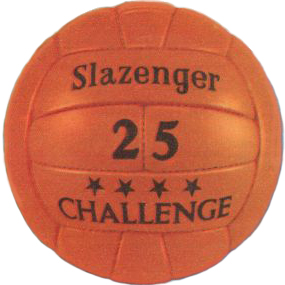
The mascot for the 1966 competition was "World Cup Willie", a lion wearing a Union Jack jersey emblazoned with the words "WORLD CUP". This was the first World Cup mascot, and one of the first mascots to be associated with a major sporting competition. Willie was designed by freelance children's book illustrator Reg Hoye. The official match ball was produced by Slazenger for the tournament.
Controversies
African boycott
All fifteen entered African nations boycotted the tournament to protest against a 1964 FIFA ruling that required the three second-round winners from the African zone to enter a play-off round against the winners of the Asian zone in order to qualify for the World Cup: they felt winning their zone was enough in itself to merit qualification.
The Confederation of African Football (CAF) felt that the lack of direct representation of African nations in the World Cup was unfair, and demanded that FIFA guarantee at least one African nation a spot in the finals of the following tournament. They also protested against the readmission of South Africa to FIFA in 1963, despite their expulsion from CAF due to the country's apartheid regime in 1958.
As a result of this boycott, FIFA fined CAF 5,000 Swiss francs. Yidnekatchew Tessema, then president of the CAF, responded to this punishment by saying, "FIFA has adopted a relentless attitude against the African Associations and its decisions resemble methods of intimidation and repression designed to discourage any further impulses of a similar nature. In our opinion, the African National Associations ... really deserved a gesture of respect rather than a fine."
South Africa was subsequently assigned to the Asia and Oceania qualifying group, before being disqualified after being suspended again due to pressure from other African nations in October 1964. Despite this, FIFA refused to change the qualifying format, citing competitive and logistical issues, and the African teams withdrew in protest.
CAF subsequently informed FIFA that they would refuse to participate in World Cup qualifying for 1970 unless at least one African team had an automatic place assured in the World Cup: this was put in place for the 1970 FIFA World Cup, and all subsequent World Cup finals. Players from the Portuguese African colonies of Angola and Mozambique participated for Portugal.
North Korea–United Kingdom relations
The United Kingdom, which had fought for South Korea in the Korean War, was concerned over the entry of North Korea in the tournament. The UK did not recognise North Korea and feared that its presence would strain relations with South Korea and the United States. FIFA told England's Football Association that the tournament would be moved if any qualified team were to be refused entry.
On the suggestion of the British Foreign Office, the playing of national anthems, and meetings between players and state figures such as Queen Elizabeth II, would only take place in two games: the opener and the final. North Korea was not scheduled for the former, and was considered unlikely to reach the latter. A Foreign Office suggestion for flags outside stadiums to be removed after each team's elimination, in the expectation of an early North Korean exit, was vetoed by the Department of Education and Science.
Trophy incident
The 1966 World Cup had a rather unusual hero off the field, a dog called Pickles. In the build-up to the tournament, the Jules Rimet trophy was stolen from an exhibition display. A nationwide hunt for the icon ensued. It was later discovered wrapped in newspaper as the dog sniffed under some bushes in London. The FA commissioned a replica cup in case the original cup was not found in time. This replica, as well as Pickles' collar, is held at the National Football Museum in Manchester, where it is on display.
Doping
West Germany encouraged and covered up a culture of doping across many sports for decades. A 2013 report by researchers at Berlin's Humboldt University on behalf of the German Olympic Sports Confederation, titled "Doping in Germany from 1950 to today", linked the West Germany national team of 1966, which reached the World Cup final, with doping.
Officiating issues and subsequent reforms
While refereeing controversies are common in World Cup history, the 1966 tournament stands out because of the structural reforms it provoked. A series of violent matches and contentious dismissals led FIFA to introduce major changes to the Laws of the Game in the following tournament.
The tournament was marked by persistently rough play and inconsistent officiating. In their opening match, Brazilian star Pelé was repeatedly fouled and left the pitch injured after a strong tackle to the knee, forcing him to miss the subsequent match against Hungary. Upon returning for the final group stage clash with Portugal, Pelé suffered two heavy challenges from Portuguese defenders, most notably João Morais, that ended his tournament. Pelé departed on a stretcher, and Brazil exited the competition 3–1. Morais was allowed to remain on the pitch. No players were sent off in any of those games.
Further tension unfolded in the quarter-final between England and Argentina, when captain Antonio Rattín was controversially sent off by referee Rudolf Kreitlein for allegedly "violence of the tongue." Rattín's refusal to immediately exit the field prompted a delay and police intervention, fuelling accusations of arbitrary officiating. In another quarter-final opposing West Germany to Uruguay, shortly after halftime, Uruguayan players Horacio Troche and Héctor Silva were both dismissed by English referee Jim Finney during their match against West Germany. Uruguay conceded 3 goals when reduced to nine men, and South American media decried a pattern of European referee bias.
In light of these high-profile incidents, FIFA recognised the need for clearer disciplinary procedures and greater consistency in officiating. Ahead of the 1970 World Cup, the yellow and red card system was introduced, alongside the allowance of two substitutions per team and new efforts to standardise referee training and interpretations of the Laws of the Game.
Format
The format of the 1966 competition remained the same as 1962: 16 qualified teams were divided into four groups of four. Each group played a round-robin format. Two points were awarded for a win and one point for a draw, with goal average and eventually drawing lots used to separate teams equal on points. The top two teams in each group advanced to the knockout stage.
In the knockout games, if the teams were tied after 90 minutes, 30 minutes of extra time were played. For any match other than the final, if the teams were still tied after extra time, lots would be drawn to determine the winner. The final would have been replayed if tied after extra time; but if still tied after the replay, the champion would have been decided by drawing lots. In the event, no replays or drawing of lots were necessary.
The draw for the final tournament, taking place on 6 January 1966 at the Royal Garden Hotel in London was the first ever to be televised, with England, West Germany, Brazil and Italy as seeds.
Venues
Eight venues were used for this World Cup. The newest and biggest venue used was Wembley Stadium in north west London, which was 43 years old in 1966. As was often the case in the World Cup, group matches were played in two venues close to each other. Group 1 matches (which included the hosts) were all played in London: five at Wembley, which was England's national stadium and was considered to be the most important football venue in the world; and one at White City Stadium in west London, which was used as a temporary replacement for nearby Wembley. The group stage match between Uruguay and France played at White City Stadium (originally built for the 1908 Summer Olympics) was scheduled for a Friday, the same day as regularly scheduled greyhound racing at Wembley. Because Wembley's owner refused to cancel this, the game had to be moved to the alternative venue in London. Group 2's matches were played at Hillsborough Stadium in Sheffield and Villa Park in Birmingham; Group 3's matches were played at Old Trafford in Manchester and Goodison Park in Liverpool; and Group 4's matches were played at Ayresome Park in Middlesbrough and Roker Park in Sunderland. The stadium construction cost are estimated to be today's equivalent of £9.2 million, additional to £36.22 million for tournament organisation.
The most used venue was Wembley, which was used for nine matches, including all six featuring England, the final and the third-place match. Goodison Park was used for five matches, Roker Park and Hillsborough both hosted four, while Old Trafford, Villa Park and Ayresome Park each hosted three matches and did not host any knockout round matches.
| London | {{Location map+ | Greater London | width=350 | caption= | places= | London | Manchester | Birmingham | {{Location map+ | England | width=350 | caption= | places= | Liverpool | Sheffield | Sunderland | Middlesbrough |
|---|---|---|---|---|---|---|---|---|---|---|---|---|---|---|---|---|---|
| float=center}} | |||||||||||||||||
| Wembley Stadium | White City Stadium | ||||||||||||||||
| Capacity: **98,600** | Capacity: **76,567** | ||||||||||||||||
| [[File:The old Wembley Stadium (cropped).jpg | 220px]] | [[File:Le White City Stadium de Londres, pour les JO de 1908.jpg | alt= | frameless | 220x220px]] | ||||||||||||
| Old Trafford | Villa Park | ||||||||||||||||
| Capacity: **58,000** | float=center}} | Capacity: **52,000** | |||||||||||||||
| [[File:Stretford end 1992.JPG | 220px]] | [[File:Holt End in 1983.jpg | 220px]] | ||||||||||||||
| Goodison Park | Hillsborough Stadium | ||||||||||||||||
| Capacity: **50,151** | Capacity: **42,730** | ||||||||||||||||
| [[File:Goodisonview1.JPG | 220px]] | [[File:Hillsborough Stadium in 1991 - geograph.org.uk - 2807213.jpg | 220px]] | ||||||||||||||
| Roker Park | Ayresome Park | ||||||||||||||||
| Capacity: **40,310** | Capacity: **40,000** | ||||||||||||||||
| [[File:Roker Park August 1976.jpg | 220px]] | [[File:Ayresome Park in 1991 - geograph.org.uk - 2796728.jpg | 220px]] |
Tournament summary
The opening match took place on Monday, 11 July, which made it the second World Cup after 1930 to not begin on May or June. Before the tournament began, eventual winners England were 9/2 second favourites with bookmakers behind Brazil (9/4), while beaten finalists West Germany were 25/1 outsiders. The final took place on Saturday, 30 July 1966, the 36th anniversary of the first final. Until 2022, this was the latest date that any tournament had concluded. The reason for the unusually late scheduling of the tournament appears to lie with the outside broadcast commitments of the BBC, which also had commitments to cover Wimbledon (which ran between 20 June and 2 July) and the Open Golf Championship (6 to 9 July).
Group stage

1966 was a World Cup with few goals as the teams began to play much more tactically and defensively. This was exemplified by Alf Ramsey's England as they finished top of Group 1 with only four goals, but having none scored against them. They also became the first World Cup winning team not to win its first game in the tournament. Uruguay were the other team to qualify from that group at the expense of both Mexico and France. All the group's matches were played at Wembley Stadium apart from the match between Uruguay and France which took place at White City Stadium.
In Group 2, West Germany and Argentina qualified with ease as they both finished the group with 5 points, Spain managed 2, while Switzerland left the competition after losing all three group matches. FIFA cautioned Argentina for its violent style in the group games, particularly in the scoreless draw with West Germany, which saw Argentinean Rafael Albrecht get sent off and suspended for the next match.
In the northwest of England, Old Trafford and Goodison Park played host to Group 3 which saw the two-time defending champions Brazil finish in third place behind Portugal and Hungary, and be eliminated along with Bulgaria. Brazil were defeated 3–1 by Hungary in a classic encounter before falling by the same scoreline to Portugal in a controversial game. Portugal appeared in the finals for the first time, and made quite an impact. They won all three of their games in the group stage, with a lot of help from their outstanding striker Eusébio, whose nine goals made him the tournament's top scorer.
Group 4, however, provided the biggest upset when North Korea beat Italy 1–0 at Ayresome Park, Middlesbrough and finished above them, thus earning qualification to the next round along with the Soviet Union. This was the first time that a nation from outside Europe or the Americas had progressed from the first stage of a World Cup: the next would be Morocco in 1986.
Knock-out stages
The quarter-finals provided a controversial victory for West Germany as they cruised past Uruguay 4–0; the South Americans claimed that this occurred only after the referee (who was Jim Finney from England) had not recognised a handball by Schnellinger on the goal line and then had sent off two players from Uruguay: Horacio Troche and Héctor Silva. It appeared as if the surprise package North Korea would claim another major upset in their match against Portugal at Goodison Park: they led 3–0 after 22 minutes. It fell to one of the greatest stars of the tournament, Eusébio, to change that. He scored four goals in the game and José Augusto added a fifth goal in the 78th minute to earn Portugal a 5–3 victory.
Meanwhile, in the other two games, Ferenc Bene's late goal for Hungary against the Soviet Union, who were led by Lev Yashin's stellar goalkeeping, proved little more than a consolation as they crashed out 2–1, and the only goal between Argentina and England came courtesy of England's Geoff Hurst. During that controversial game (for more details see Argentina and England football rivalry), Argentina's Antonio Rattín became the first player to be sent off in a senior international football match at Wembley. Rattín at first refused to leave the field and eventually had to be escorted by several policemen. Scoreless when Rattin was dismissed, the game was decided by Hurst's headed goal twelve minutes from the end of normal time. This game is called el robo del siglo () in Argentina.
All semi-finalists were from Europe. Bobby Charlton scored both goals in England's win, with Portugal's goal coming from a penalty in the 82nd minute after a handball by Jack Charlton on the goal line. The other semi-final also finished 2–1: Franz Beckenbauer scoring the winning goal with a left foot shot from the edge of the area for West Germany as they beat the Soviet Union.
Portugal went on to beat the Soviet Union 2–1 to take third place. Portugal's third place was the best finish by a team making its World Cup debut since 1934. It was equalled by Croatia in 1998.
Final
Main article: 1966 FIFA World Cup Final
London's Wembley Stadium was the venue for the final, and 98,000 people attended. After 12 minutes 32 seconds Helmut Haller put West Germany ahead, but the score was levelled by Geoff Hurst four minutes later. Martin Peters put England in the lead in the 78th minute; England looked set to claim the title when the referee awarded a free kick to West Germany with one minute left. The ball was launched goalward and Wolfgang Weber scored, with England appealing in vain for handball as the ball came through the crowded penalty area.
With the score level at 2–2 at the end of 90 minutes, the game went to extra time. In the 98th minute, Hurst found himself on the scoresheet again; his shot hit the crossbar, bounced down onto the goal line, and was awarded as a goal. Debate has long raged over whether the ball crossed the line, with the goal becoming part of World Cup history. England's final goal was scored by Hurst again, as a celebratory pitch invasion began. This made Geoff Hurst the first player to have scored three times in a single World Cup final.
England's total of eleven goals scored in six games set a new record low for average goals per game scored by a World Cup winning team. The record stood until 1982, when it was surpassed by Italy's 12 goals in seven games; in 2010 this record was lowered again by Spain, winning the Cup with eight goals in seven games. England's total of three goals conceded also constituted a record low for average goals per game conceded by a World Cup winning team. That record stood until 1994, when it was surpassed by Brazil's three goals in seven games. France again lowered the record to two goals in seven during the 1998 tournament, a record that has since been equalled by Italy at the 2006 tournament and by Spain's two goals conceded during the 2010 tournament.
England received the recovered Jules Rimet trophy from Queen Elizabeth II and were crowned World Cup winners for the first time.
In this World Cup, the national anthems were played only in the final. They were not played in the earlier matches because the organisers (FIFA and the FA) feared that North Korea's presence – a socialist country that was not recognised by the United Kingdom – in the World Cup would cause problems with South Korea. A memo from the Foreign Office months before the finals began stated that the solution would be "denying the visas to North Korean players".
Match officials
A total of 26 match referees and other officials featured at the event. Despite the event being a worldwide tournament, the majority of the officials were from Europe. Gottfried Dienst refereed the final between England and West Germany.
Africa
- Ali Kandil Asia
- Menachem Ashkenazi South America
- José María Codesal
- Roberto Goicoechea
- Armando Marques
- Arturo Yamasaki Europe
- John Adair
- Tofiq Bahramov
- Leo Callaghan
- Joaquim Campos
- Ken Dagnall
- Gottfried Dienst
- Jim Finney
- Karol Galba
- Juan Gardeazábal Garay
- Rudolf Kreitlein
- Concetto Lo Bello
- Bertil Lööw
- George McCabe
- Hugh Phillips
- Dimitar Rumentchev
- Pierre Schwinte
- Kurt Tschenscher
- Konstantin Zečević
- István Zsolt
Draw
| Pot 1: South American | Pot 2: European | Pot 3: Latin European | Pot 4: Rest of the World |
|---|
Squads
Main article: 1966 FIFA World Cup squads
Group stage
Group 1
Main article: 1966 FIFA World Cup Group 1
Group 2
Main article: 1966 FIFA World Cup Group 2
Group 3
Main article: 1966 FIFA World Cup Group 3
Group 4
Main article: 1966 FIFA World Cup Group 4
Knockout stage
Main article: 1966 FIFA World Cup knockout stage
Bracket
Quarter-finals
Semi-finals
Third place play-off
Final
Main article: 1966 FIFA World Cup final
Goalscorers
With nine goals, Eusébio was the top scorer in the tournament. In total, 89 goals were scored by 47 players, with two of them credited as own goals.
9 goals
- POR Eusébio
6 goals
- FRG Helmut Haller
4 goals
- ENG Geoff Hurst
- HPR Ferenc Bene
- URS Valeriy Porkujan
- FRG Franz Beckenbauer
3 goals
- ARG Luis Artime
- ENG Bobby Charlton
- ENG Roger Hunt
- POR José Augusto
- POR José Torres
- URS Eduard Malofeyev
2 goals
- CHI Rubén Marcos
- HPR Kálmán Mészöly
- PRK Pak Seung-zin
- URS Igor Chislenko
- FRG Uwe Seeler
1 goal
- ARG Ermindo Onega
- BRA Garrincha
- BRA Pelé
- BRA Rildo
- BRA Tostão
- BUL Georgi Asparuhov
- ENG Martin Peters
- FRA Héctor De Bourgoing
- FRA Gérard Hausser
- HPR János Farkas
- ITA Paolo Barison
- ITA Sandro Mazzola
- MEX Enrique Borja
- PRK Li Dong-woon
- PRK Pak Doo-ik
- PRK Yang Seung-kook
- POR António Simões
- URS Anatoliy Banishevskiy
- ESP Amancio
- ESP Josep Maria Fusté
- ESP Pirri
- ESP Manuel Sanchís
- SUI René-Pierre Quentin
- URU Julio César Cortés
- URU Pedro Rocha
- FRG Lothar Emmerich
- FRG Sigfried Held
- FRG Wolfgang Weber
1 own goal
- BUL Ivan Davidov (playing against Hungary)
- BUL Ivan Vutsov (playing against Portugal)
FIFA retrospective ranking
Angola and Mozambique represented Portugal.}} In 1986, FIFA published a report that ranked all teams in each World Cup up to and including 1986, based on progress in the competition, overall results and quality of the opposition. The rankings for the 1966 tournament were as follows:
| R | Team | G | P | W | D | L | GF | GA | GD | Pts. |
|---|---|---|---|---|---|---|---|---|---|---|
| 1 | 1 | 6 | 5 | 1 | 0 | 11 | 3 | +8 | 11 | |
| 2 | 2 | 6 | 4 | 1 | 1 | 15 | 6 | +9 | 9 | |
| 3 | 3 | 6 | 5 | 0 | 1 | 17 | 8 | +9 | 10 | |
| 4 | 4 | 6 | 4 | 0 | 2 | 10 | 6 | +4 | 8 | |
| **Eliminated in the quarter-finals** | ||||||||||
| 5 | 2 | 4 | 2 | 1 | 1 | 4 | 2 | +2 | 5 | |
| 6 | 3 | 4 | 2 | 0 | 2 | 8 | 7 | +1 | 4 | |
| 7 | 1 | 4 | 1 | 2 | 1 | 2 | 5 | −3 | 4 | |
| 8 | 4 | 4 | 1 | 1 | 2 | 5 | 9 | −4 | 3 | |
| **Eliminated in the group stage** | ||||||||||
| 9 | 4 | 3 | 1 | 0 | 2 | 2 | 2 | 0 | 2 | |
| 10 | 2 | 3 | 1 | 0 | 2 | 4 | 5 | −1 | 2 | |
| 11 | 3 | 3 | 1 | 0 | 2 | 4 | 6 | −2 | 2 | |
| 12 | 1 | 3 | 0 | 2 | 1 | 1 | 3 | −2 | 2 | |
| 13 | 4 | 3 | 0 | 1 | 2 | 2 | 5 | −3 | 1 | |
| 1 | 3 | 0 | 1 | 2 | 2 | 5 | −3 | 1 | ||
| 15 | 3 | 3 | 0 | 0 | 3 | 1 | 8 | −7 | 0 | |
| 16 | 2 | 3 | 0 | 0 | 3 | 1 | 9 | −8 | 0 |
References
Bibliography
References
- (8 September 2022). "Football mourns the loss of Her Majesty Queen Elizabeth II".
- "World Cup 1966".
- Belam, Martin. (28 July 2016). "9 surprising facts about the 1966 World Cup in England". The Mirror.
- ""1966 and all that..." - Contrasting England's 1966 and 2018 World Cup bids". currybetdotnet.
- (27 July 2007). "History of the FIFA World Cup Preliminary Competition (by year)".
- "UEFA Qualifiers for the World Cup 1966".
- Kasprzak, Emma. (15 June 2012). "World Cup Willie's sporting mascot legacy".
- (2007–2014). "World Cup Willie". footballandmusic.co.uk.
- "The Footballs during the FIFA World Cup". [[FIFA]].
- (10 June 2014). "This Time for Africa: The 1966 World Cup Boycott". Pundit Arena.
- Alegi, Peter. (2010). "African Soccerscapes: How a Continent Changed the World's Game". Ohio University Press.
- (12 July 2016). "Why Africa boycotted the 1966 World Cup".
- (13 June 2010). "World Cup fears over North Korea in 1966". BBC News.
- (29 July 2016). "They Think it's all Diplomacy: North Korea, the Foreign Office and the 1966 World Cup". gov.uk.
- (20 March 1966). "1966: Football's World Cup stolen". BBC.
- [[The Sunday Times]] ''Illustrated History of Football'' Reed International Books Limited. 1996. p.133 {{ISBN. 1-85613-341-9
- Atherton, Martin. (2008). "The Theft of the Jules Rimet Trophy: The Hidden History of the 1966 World Cup". Meyer & Meyer Verlag.
- (5 August 2013). "Report exposes decades of West German doping". France 24.
- (3 August 2013). "Report: West Germany systematically doped athletes". USA Today.
- (25 July 2016). "1966 World Cup: Gripping tales and inspirational traffic lights". FIFA.
- (24 July 2016). "Why not everyone remembers the 1966 World Cup as fondly as England". The Guardian.
- (31 October 2022). "Pele and 1970: How the greatest player of all time cemented his legend". BBC.
- "Cards by Player in the 1966 Soccer World Cup". thesoccerworldcups.com.
- (2 July 2010). "The Joy of Six: World Cup refereeing controversies". The Guardian.
- "West Germany vs Uruguay". planetworldcup.com.
- (2 September 1966). "The World Cup".
- (15 November 2022). "Events Changed the Rules of Football". alkassenglish.net.
- (15 November 2022). "3 Ways the 1970 World Cup changed football". premierfootballuk.com.
- "1966 FIFA World Cup England - Groups". FIFA.com.
- "History of the World Cup Final Draw".
- "FIFA World Cup stadiums that no longer exist".
- Fett, Matthias. (2020-07-02). "The game has changed – a systematic approach to classify FIFA World Cups". International Journal of Sport Policy and Politics.
- . ["1966 World Cup Scores & Fixtures"](https://fbref.com/en/comps/1/1966/schedule/1966-World-Cup-Scores-and-Fixtures). *Sports Reference*.
- (3 December 2020). "WORLD CUP 1966 Odds". Instagram.
- "History of the World Cup". fifaworldcup.webspace.virginmedia.com.
- Alsos, Jan. "1966 – Story of England '66". Planet World Cup.
- "Mundial de Inglaterra 1966 – Siguen Los Choreos a Sudamérica".
- Hackett, Robin. (7 April 2011). "Blue is the colour". ESPN.
- "Mundial de Inglaterra 1966 – El Robo de Siglo".
- (27 July 1966). "England's 2–1 win brings first final". Montreal Gazette.
- (27 December 2007). "England Portugal 1/2 Final World Cup 1966". Google, Inc..
- (26 July 1966). "West Germany Nips 10 Russians 2–1". Montreal Gazette.
- "Goal-directed Video Metrology". University of Oxford.
- (27 March 2002). "Kenneth Wolstenholme". The Daily Telegraph.
- McIlvanney, Hugh. (30 July 2008). "From the Vault: Hurst's hat-trick wins the World Cup". The Guardian.
- The final, held at [[Wembley Stadium (1923)
- "1966 FIFA World Cup England - Matches - England-Germany FR". FIFA.com.
- "World Cup 1966 England – Top Scorer". worldfootball.net.
- "Permanent Table".
- (26 March 2013). "FIFA World Cup: Milestones, facts & figures. Statistical Kit 7". [[FIFA]].
This article was imported from Wikipedia and is available under the Creative Commons Attribution-ShareAlike 4.0 License. Content has been adapted to SurfDoc format. Original contributors can be found on the article history page.
Ask Mako anything about 1966 FIFA World Cup — get instant answers, deeper analysis, and related topics.
Research with MakoFree with your Surf account
Create a free account to save articles, ask Mako questions, and organize your research.
Sign up freeThis content may have been generated or modified by AI. CloudSurf Software LLC is not responsible for the accuracy, completeness, or reliability of AI-generated content. Always verify important information from primary sources.
Report