From Surf Wiki (app.surf) — the open knowledge base
Mexico national football team
Men's association football team

Men's association football team
| Field | Value | |
|---|---|---|
| Name | Mexico | |
| Badge | Mexico national football team crest.svg | |
| Badge_size | 165px | |
| Nickname | El Tri | |
| El Tricolor | ||
| Association | Federación Mexicana de Fútbol (FMF) | |
| Confederation | CONCACAF (North America) | |
| Sub-confederation | NAFU (North America) | |
| Coach | Javier Aguirre | |
| Captain | Edson Álvarez | |
| Most caps | Andrés Guardado (180) | |
| Top scorer | Javier Hernández (52) | |
| Home Stadium | Estadio Azteca | |
| FIFA Trigramme | MEX | |
| FIFA Rank | ||
| FIFA max | 4 | |
| FIFA max date | February–June 1998, August 2003, April 2004, June 2004, May–June 2006 | |
| FIFA min | 40 | |
| FIFA min date | July 2015 | |
| Elo Rank | ||
| Elo max | 4 | |
| Elo max date | June 2016 | |
| Elo min | 47 | |
| Elo min date | February 1979 | |
| pattern_la1 | _mex26h | |
| pattern_b1 | _mex26h | |
| pattern_ra1 | _mex26h | |
| pattern_sh1 | _mex26h | |
| pattern_so1 | _mex26h | |
| leftarm1 | 400000 | |
| body1 | 400000 | |
| rightarm1 | 400000 | |
| shorts1 | 400000 | |
| socks1 | DE0000 | |
| pattern_la2 | _mex24a | |
| pattern_b2 | _mex24a | |
| pattern_ra2 | _mex24a | |
| pattern_sh2 | _mex24a | |
| pattern_so2 | _mex24al | |
| leftarm2 | ABD4CB | |
| body2 | ABD4CB | |
| rightarm2 | ABD4CB | |
| shorts2 | ABD4CB | |
| socks2 | D9FF87 | |
| pattern_name3 | Gold Cup | |
| pattern_la3 | _mex25h | |
| pattern_b3 | _mex25h | |
| pattern_ra3 | _mex25h | |
| pattern_sh3 | _mex25h | |
| pattern_so3 | _mex25hl | |
| leftarm3 | 000000 | |
| body3 | 000000 | |
| rightarm3 | 000000 | |
| shorts3 | 000000 | |
| socks3 | 000000 | |
| First game | 2–1 | |
| (Mexico City, Mexico; 9 December 1923) | ||
| Largest win | 13–0 | |
| (Toluca, Mexico; 28 April 1987) | ||
| Largest loss | 8–0 | |
| (London, England; 10 May 1961) | ||
| World cup apps | 16 | |
| World cup first | 1930 | |
| World cup best | Quarter-finals (1970, 1986) | |
| Regional name | CONCACAF Championship / Gold Cup | |
| Regional cup apps | 26 | |
| Regional cup first | 1963 | |
| Regional cup best | Champions (1965, 1971, 1977, 1993, 1996, 1998, 2003, 2009, 2011, 2015, 2019, 2023, 2025) | |
| 2ndRegional name | CONCACAF Nations League | |
| 2ndRegional cup apps | 4 | |
| 2ndRegional cup first | 2019–20 | |
| 2ndRegional cup best | Champions (2025) | |
| 3rdRegional name | CONCACAF Cup | |
| 3rdRegional cup apps | 1 | |
| 3rdRegional cup first | 2015 | |
| 3rdRegional cup best | Champions (2015) | Confederations cup apps = 7 |
| Confederations cup first | 1995 | |
| Confederations cup best | Champions (1999) | |
| 4thRegional name | Copa América | |
| 4thRegional cup apps | 11 | |
| 4thRegional cup first | 1993 | |
| 4thRegional cup best | Runners-up (1993, 2001) | |
| medaltemplates | ||
| website |
the men's team
El Tricolor | Sub-confederation = NAFU (North America) (Mexico City, Mexico; 9 December 1923) (Toluca, Mexico; 28 April 1987) (London, England; 10 May 1961)
The Mexico national football team () represents Mexico in men's international football, which is governed by the Federación Mexicana de Fútbol () founded in 1927. It has been an affiliate member of FIFA since 1929 and a founding affiliate member of CONCACAF since 1961. Regionally, it is an affiliate member of NAFU in the North American Zone. From 1946 to 1961, it was a member of NAFC, the former governing body of football in North America and a predecessor confederation of CONCACAF, and also a member of PFC, the former unified confederation of the Americas.
Mexico has qualified for the FIFA World Cup seventeen times and has qualified consecutively since 1994, making it one of six countries to do so. It is one of four CONCACAF teams to have advanced to the knockout stage, reaching the quarter-finals twice (1970 and 1986) both as hosts, and also reaching the round of 16 in seven editions. On 13 July 1930, Mexico played with France in the first match in World Cup history in Uruguay 1930. In 2026, Mexico will host the World Cup for the third time. It has qualified for the FIFA Confederations Cup seven times, being the only CONCACAF team and the only non-European or South American team to have won a FIFA global competition, winning the 1999 FIFA Confederations Cup as hosts, defeating Brazil 4–3.
Mexico has participated twenty-six times in CONCACAF's premier continental competition, it is the most successful team in its confederation, winning 15 CONCACAF continental titles (10 CONCACAF Gold Cup titles, 3 CONCACAF Championship titles, one CONCACAF Nations League and one CONCACAF Cup). It has participated eleven times in the Copa América, finishing as runners-up twice (1993 and 2001) and finishing in third place three times. It also participated three times in the Panamerican Championship, finishing in third place in 1960.
Regionally, the team won two NAFC Championship titles, one North American Nations Cup, and two gold medals at the Central American and Caribbean Games.
It is one of eight nations to have won two of the three most important global football competitions that are recognized and endorsed by FIFA (World Cup, Confederations Cup, and Olympic football tournament), winning the 1999 Confederations Cup with the senior team and the 2012 Olympic football tournament with the under-23 team.
History
Early years
Football in Mexico was first organized in the early 20th century by European immigrant groups, notably miners from Cornwall, England, and in later years Spanish exiles fleeing the Spanish Civil War.
The team's first match was played on 9 December 1923 at Parque España in Mexico City, beating Guatemala 2–1, which was the first match of a series of international friendlies played against Guatemala. The second match played on 12 December was won by Mexico 2–0, and the final match of the series, played on 16 December, ended in a 3–3 draw. The manager for this team was Rafael Garza Gutiérrez.
It would be another four years before the national team would be represented in international friendlies. Mexico faced Spain, drawing 3–3 on 19 June 1927. During this series, the team also played against Nacional de Montevideo, losing 1–3.
Formation
In 1927, the first official governing football body in Mexico was founded. The 1928 Olympic Football Tournament was Mexico's first official international competition, where Mexico lost to Spain 1–7 in the round of 16.
Mexico participated in the inaugural 1930 FIFA World Cup in Uruguay, grouped with Argentina, Chile, and France. Mexico took part in the first World Cup match ever, a 4–1 loss to France, with Mexico's first World Cup goal scored by Juan Carreño. In their second match, Mexico fell to Chile 3–0. Mexico's third match, against Argentina, featured the first penalty of the tournament, scored by Mexico's Manuel Rosas, although Mexico would go on to lose this match by a score of 6–3.
Post-WWII
.jpg)
Mexico did not appear in another World Cup tournament until 1950. Despite being the strongest team in the North American Football Confederation and its successor, CONCACAF, Mexico struggled to make much of an impact in the World Cup before 1970, and found it difficult to compete against European and South American teams. However, goalkeeper Antonio Carbajal has the distinction of being the first player ever to appear in five consecutive World Cups.
In 1965, Mexico won the 1965 CONCACAF Championship to become continental champions for the first time.
Mexico hosted the 1970 World Cup and kicked off their campaign with a scoreless draw against the Soviet Union, followed by a 4–0 win over El Salvador. Mexico advanced to the next round with a victory against Belgium, and in the quarter-finals, Mexico was eliminated by Italy, losing 4–1.
Mexico failed to qualify for the 1974 World Cup in West Germany, but did make it into the 1978 finals, as they suffered an early exit after three defeats: 0–6 against the 1974 hosts, 1–3 against Tunisia, and 1–3 to Poland. Mexico failed to qualify for the 1982 World Cup.
In 1986, Mexico again hosted the World Cup. Coached by Bora Milutinović, Mexico was placed in Group B where they defeated Belgium 2–1, drew 1–1 with Paraguay, and defeated Iraq 1–0. El Tri topped their group, and advanced to the next round where they defeated Bulgaria 2–0. In the quarter-finals, Mexico lost to West Germany 1–4 in a penalty shootout after the match finished 0–0.
1990s
Mexico was disqualified from the 1990 FIFA World Cup (and other international competitions) after using players over the age limit in the qualifying round for the 1989 FIFA World Youth Championship, known as the "Cachirules" scandal. The punishment was applied to all Mexico national representatives of all FIFA-sanctioned tournaments.
In the 1990s, after hiring coach César Luis Menotti, Mexican football began experiencing greater international success. In the 1993 Copa América they finished second, losing to Argentina 2–1 in the final. At the 1994 FIFA World Cup in the United States, Mexico won its group on tiebreakers, emerging from a group composed of Italy, Ireland, and Norway. However, Mexico lost in the round of 16 to Bulgaria on penalty kicks.
At the 1998 FIFA World Cup, Mexico was placed in a group with the Netherlands, South Korea and Belgium. Mexico won their opening fixture 3–1 against South Korea, drew Belgium 2–2, and against the Netherlands with the same score, qualifying for the round of 16. In that round, Mexico lost 2–1 to Germany.
In 1999, Mexico won its first official FIFA tournament by becoming the first host nation to win the FIFA Confederations Cup. Mexico defeated the United States 1–0 in the semifinals, and 1998 World Cup runners-up Brazil 4–3 in the final.
21st century
2000s
Mexico was placed in Group G at the 2002 World Cup alongside Italy, Croatia, and Ecuador. Mexico started with a 1–0 win over Croatia. In the second match, Mexico earned a 2–1 win over Ecuador. Mexico then achieved a 1–1 draw against Italy. In the round of 16, Mexico played rivals United States, losing 2–0.
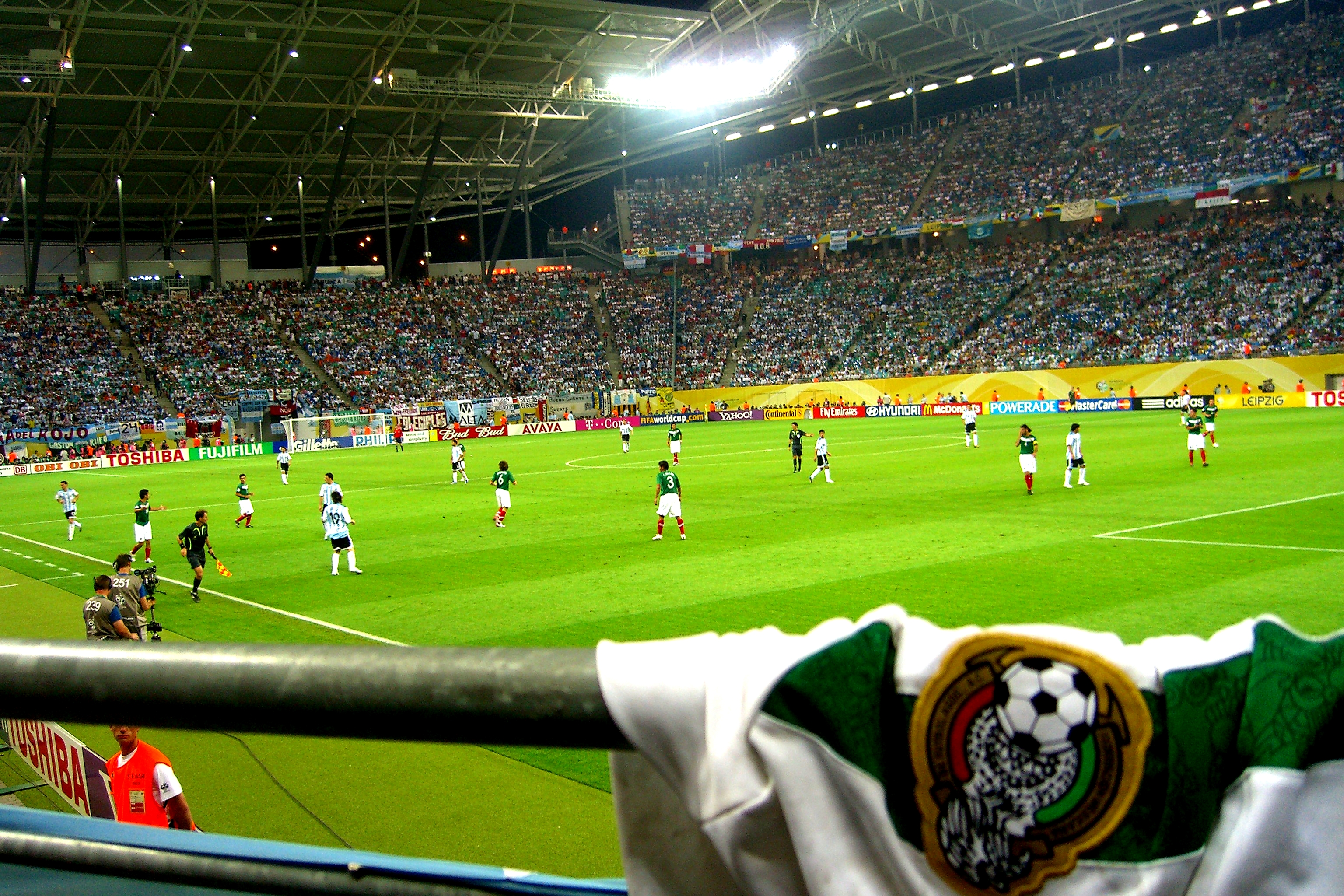
Mexico was one of eight seeded teams at the 2006 World Cup in Germany, and entered Group D, being drawn with Iran, Angola and Portugal. Mexico won their opening match 3–1 against Iran. In their second match, Mexico played to a 0–0 draw against Angola. After losing to Portugal 2–1, Mexico reached the round of 16, where they would be eliminated again, this time to Argentina, 2–1. Mexico's coach Ricardo Lavolpe stepped down after the tournament, and was succeeded by Hugo Sánchez.
After losing the final match of the 2007 CONCACAF Gold Cup 1–2 against the United States, Mexico successfully rebounded at the 2007 Copa América. Beginning by beating Brazil 2–0, they then defeated Ecuador and tied with Chile to come first in Group B. In the quarter-finals, Mexico beat Paraguay 6–0, but lost in the semi-finals 3–0 to Argentina. Mexico secured third place against Uruguay, winning 3–1.
In July 2009, Mexico won their fifth Gold Cup, and eighth CONCACAF Championship overall, after beating the United States 5–0 in the final.
2010s
Mexico qualified for the 2010 FIFA World Cup, where they were drawn into Group A alongside host South Africa, France and Uruguay. They drew 1–1 against South Africa, defeated France 2–0, and lost 1–0 to Uruguay, and advanced to the round of 16, where they were eliminated following another defeat to Argentina, 1–3.
The 2011 CONCACAF Gold Cup saw Mexico win their group with three wins and no losses. During the tournament, however, five players tested positive for the banned substance clenbuterol and were suspended from the competition. Mexico beat Guatemala in the quarter-finals 2–1, and Honduras 2–0 in the semi-finals. For the third-straight year, the final would be contested between Mexico and the United States; Mexico won the match 4–2, and qualified for the 2013 FIFA Confederations Cup in Brazil, where they were eliminated at the group stage.
Mexico placed second in their group at the 2013 CONCACAF Gold Cup, and advanced to the semifinals and faced Panama. Mexico lost the match 2–1, their second defeat to Panama in the competition after losing to them in the group stage. The two losses to Panama were the first two times Panama had ever defeated Mexico in a Gold Cup match.
Mexico won only two of ten matches during the fourth round of 2014 World Cup qualifying, but qualified for an intercontinental play-off as the fourth-highest placed team in the CONCACAF region. They defeated New Zealand 9–3 on aggregate to qualify for a sixth consecutive World Cup.
At the 2015 CONCACAF Gold Cup, Mexico was drawn into Group C along with Trinidad and Tobago, Cuba and Guatemala. The team placed second in the group, and won the quarterfinal match against Costa Rica and semifinal against Panama, both under controversial circumstances. Mexico won the Gold Cup after defeating Jamaica 3–1 in the final. Two days after the final, Miguel Herrera was released as coach of the national team after an alleged physical altercation with TV Azteca announcer Christian Martinoli. On 10 October, Mexico defeated the United States 3–2 to win the inaugural edition of the CONCACAF Cup, thus earning qualification to the 2017 FIFA Confederations Cup in Russia. The following month, Juan Carlos Osorio was hired as Mexico's 16th manager, replacing interim manager Ricardo Ferretti.
Mexico entered the Copa América Centenario, hosted in the United States, on a 19-match unbeaten streak that began in June 2015. El Tri placed first in Group C, winning 3–1 over Uruguay and 2–0 over Jamaica, and drawing 1–1 with Venezuela. In the quarter-final against Chile in Santa Clara, California, the team lost 7–0, ending the unbeaten streak at 22 after nearly a year. After the match, manager Osorio apologized to Mexico's fans for what he described as an "embarrassment, an accident of football".
At the 2017 Confederations Cup, Mexico was drawn into Group A along with Portugal, New Zealand, and hosts Russia. El Tri advanced as runners-up of the group, and lost 4–1 to Germany in the semi-finals. Mexico finished fourth in the tournament, losing 2–1 to Portugal in the third-place match.
In their opening match of the 2018 FIFA World Cup, Mexico defeated defending champion Germany, thanks to a sole goal from Hirving Lozano, for the first time in a World Cup match. They would go on to defeat South Korea 2–1 in their next match, with goals from Carlos Vela and Javier Hernández, before falling 3–0 to Sweden in the last group stage match. Despite the loss, Mexico qualified to the round of 16 for the seventh-consecutive tournament. In the round of 16, Mexico was defeated 2–0 by Brazil; the defeat meant that for the seventh tournament in a row, Mexico failed to reach the quarterfinals since they last hosted the World Cup in 1986. On 28 July, Juan Carlos Osorio left as head coach on the expiry of his contract.
In January 2019, Gerardo Martino was appointed as Mexico's new head coach, becoming the third Argentine to coach the national team. In that year's Gold Cup tournament, they won all three group stage matches, defeated Costa Rica in penalties 5–4 following a 1–1 draw in the quarter-final and won against Haiti in the semi-final. Mexico won the Gold Cup after defeating the United States 1–0 in the final.
2020s
Mexico finished runners-up in the 2021 CONCACAF Nations League Final and the 2021 CONCACAF Gold Cup, both in losses to the United States. At the 2022 FIFA World Cup in Qatar, Mexico finished third in Group C behind Argentina and Poland (due to goal difference), making it the first time since 1978 that Mexico were eliminated in the group stage (the 1982 and 1990 World Cup tournaments, in which Mexico did not participate, notwithstanding). This led to the end of Mexico's streak of reaching the round of 16 (which it had done in the previous seven World Cups), and as a result head coach Gerardo Martino stepped down immediately after the elimination.
In February 2023, Diego Cocca was appointed as the new head coach, the fourth Argentine to take the job. The same month, Mexico automatically qualified for the 2026 World Cup as co-host. In the 2023 CONCACAF Nations League semi-finals, Mexico suffered a 0–3 defeat to the United States, which caused even more widespread outrage in Mexico. They defeated Panama 1–0 in the third place match that was largely boycotted by Mexican fans; the following day, Cocca was dismissed from his post, with Jaime Lozano appointed on an interim basis to take charge for the forthcoming Gold Cup. Mexico won the tournament, defeating Panama 1–0 in the final. After the win, Lozano was appointed as head coach on a permanent basis. However, following an underwhelming group stage exit from the 2024 Copa América, on 16 July, Lozano was dismissed from his position.{{cite web|url=https://www.espn.com/soccer/story/_/id/40566753/mexico-lozano-part-ways-early-copa-america-exit|title=Mexico, Lozano part ways after early Copa América exit
Home stadium
Main article: Estadio Azteca
The Estadio Azteca, also known in Spanish as "El Coloso de Santa Úrsula", was built in 1966. It is the official home stadium of the Mexico national team, as well as the Mexican club team Club América. It has an official capacity of 87,523, making it the largest football-specific stadium in the Americas and the third largest football stadium in the world. The stadium hosted the FIFA World Cup Final in 1970 and 1986, and the stadium will host the tournament again in 2026.
Friendly matches hosted by the Mexico national team often take place in stadiums across the United States, which are marketed under the branding MEXTOUR by FMF. From 2000 to 2019, the national team played 110 friendlies in the United States, which were criticized as "cash grabs" by fans. In 2022, the team played 15 matches in the United States and averaged over 52,000 in attendance at each of them; several were played at AT&T Stadium in Dallas, which El Tri head coach Jaime Lozano labeled as "the second home of the Mexican national team". Additional friendlies under the MEXTOUR brand are also played in Mexico, including at the Azteca for special occasions.
Team image
Kit
The Mexico national team traditionally utilizes a tricolor system, composed of green shirts, white shorts and red socks, which originate from the national flag of Mexico, known as the tricolor. Until the mid-1950s, Mexico wore a predominantly maroon kit, with black or dark blue shorts.
In 2015, Adidas released a new all-black color scheme for Mexico's home kit. Green, white and red remain as accent colors.
In 2017, the Mexico national team's jerseys were updated to reflect their Spanish names correctly spelled, with the accent diacritic mark.
Kit suppliers
| Kit supplier | Period | |
|---|---|---|
| USA [[File:Levis-logo-quer.svg | 20px]] Levi's | 1978–1979 |
| USA [[File:Pony sports logo.png | 20px]] Pony | 1980–1983 |
| FRG [[File:Original Adidas logo.svg | 20px]] Adidas | 1983–1990 |
| ENG [[File:Umbro logo (current).svg | 20px]] Umbro | 1991–1994 |
| MEX [[File:Logotipo Actual ABA SPORT.png | 20px]] Aba Sport | 1995–1998 |
| MEX [[File:Logo Garcis.png | 20px]] Garcis | 1999–2000 |
| MEX Atletica | 2000–2002 | |
| USA [[File:Logo NIKE.svg | 20px]] Nike | 2003–2006 |
| FRG [[File:Adidas 2022 logo.svg | 20px]] Adidas | 2007–present |
Media coverage
All of Mexico's matches are shown live on over-the-air networks Televisa and TV Azteca in Mexico. In the United States all of Mexico's international friendlies and home World Cup qualifiers are shown on Spanish language network Univision while away World Cup qualifiers are shown on Telemundo. On 30 January 2013, English language network ESPN and Univision announced an agreement to telecast the Mexico national team home World Cup qualifiers and international friendly matches in English in the United States.
Supporters
"¡Eh, puto!"
Mexico's fans are infamously known for the vulgar chant "¡Eh, puto!", which is typically said when an opponent's goalkeeper is about to perform a goal kick.
Origins
The origins of the chant is thought to have had developed in the 1980s in Monterrey where in little league American football games, fans would chant "¡Eh, pum!" during the opening kickoff. This chant was not disparagingly used as the word pum is attributed to an impact of some sort. Though the current incarnation of the chant is widely thought to have originated sometime between 2000 and 2003 by supporters of Atlas to former Atlas goalkeeper, Oswaldo Sánchez, no primary sources exist that support this claim and is an urban legend. The earliest documented usage of puto being chanted by fans in this manner occurred on 22 May 2004, during the second leg of the 2004 Clausura repechage match between Cruz Azul and Pachuca. Fans of Pachuca repeatedly chanted puto every time Óscar Pérez performed a goal kick.
Sanctions
Due to the homophobic meaning of the word puto in Mexican Spanish (a vulgar term for a male prostitute), the chant received negative attention in the 2014 FIFA World Cup. Mexico's fans defended it as being traditionally used in the Liga MX. On 23 June 2014, FIFA dropped an investigation, concluding that the chant "was not considered insulting in the specific context". Football Against Racism in Europe, an anti-discrimination organization, criticized the ruling as "disappointing". In 2017, in advance of the 2018 World Cup, FIFA fined the Mexico football federation over fans' use of the chant and introduced escalating sanctions, which were first applied in Liga MX games in 2019. In 2021, three Mexico international matches in the United States were halted because of fan behaviour, including the CONCACAF Nations League final against the United States, in which fans also threw things onto the pitch and Giovanni Reyna was hit in the face by a heavy object. On 18 June 2021, FIFA announced that as a penalty for the use of the chant in a pre-Olympics tournament in Guadalajara, spectators would be barred from Mexico's first two qualifying matches for the 2022 World Cup. During the semifinals, the match between Mexico and the United States was stopped at the 90th minute and eventually ended early due to the chants.
Rivalries
Brazil
The rivalry between Mexico and Brazil is a major football rivalry characterized by frequent, high-stakes matches in tournaments like the FIFA World Cup, FIFA Confederations Cup, Copa América, Olympics, and the CONCACAF Gold Cup with Mexico achieving notable upsets against the traditionally dominant Brazilian team. Mexico is one of the few non-South American powers that consistently challenge Brazil creating the rivalry of the two largest countries in Latin America.
Argentina
Main article: Argentina–Mexico football rivalry
Mexico has a rivalry with Argentina, given these two nations are among the most renowned Hispanic nations in the world. The rivalry is abnormal by the fact it is intercontinental, with Argentina part of CONMEBOL and Mexico part of CONCACAF. This rivalry is more keenly felt by Mexican supporters than Argentines, who typically view Brazil, Uruguay, England and Germany as bigger rivals. In fact, a number of Argentines do not consider Mexico as rivals. Mexico has historically not fared well against Argentina, recording only 4 wins, 16 losses and 12 draws.
United States
Main article: Mexico–United States soccer rivalry
Mexico and the United States are widely considered as the two top teams in CONCACAF. Matches between the two nations often attract media attention, public interest and discourse in both countries. Although the first match was played in 1934, their rivalry was not considered major until the late 20th century, when the U.S. emerged as a solid international side.
Mexico met the United States in the round of 16 of the 2002 World Cup, losing 2–0. Ten years later, on 15 August 2012, the United States defeated Mexico at Estadio Azteca in the first victory for the U.S. against Mexico on Mexican soil in 75 years. On 11 November 2016, El Tri achieved their second consecutive victory on U.S. soil, in qualification for the 2018 World Cup, by defeating the U.S. in Columbus, Ohio.
Since their first meeting in 1934, the two teams have met 78 times, with Mexico leading at 37 wins, 17 draws, and 24 losses, 147 goals scored, and 92 conceded. Mexico dominated in early years, with a 27–9–5 record through 1990. However, since that time the series has become much more competitive, largely due to growth of soccer in the United States; since 2000, the series has favored the U.S. 18–8–9, with Mexico outscored 48–33. But in the 2010s, the rivalry has been marked by Mexican success, with Mexico defeating the United States in the Gold Cup final in 2011 and 2019, and the CONCACAF Cup in 2015. In 2021, however, Mexico lost to the United States in both the CONCACAF Nations League final and the Gold Cup final. Still, Mexico remains undefeated to the United States at home soil in competitive matches, with all 19 meetings at home soil being either a win (15) or a draw (4).
Costa Rica
Main article: Costa Rica–Mexico football rivalry
Mexico has a growing rivalry with Costa Rica, as Costa Rica is the first country in CONCACAF to beat Mexico on Mexican soil in FIFA World Cup qualification, known as Aztecazo. Costa Rica is also widely recognised as the only Central American national team to have sufficient quality to compete at the global stage, which increased the importance of the rivalry. Mexico holds a dominant record against Costa Rica with 32 wins, 20 draws and only 6 losses.
Results and fixtures
Main article: Mexico national football team results (2020–present), Mexico national football team results
The following is a list of match results in the last 12 months, as well as any future matches that have been scheduled.
2025
- Jiménez
- Giménez
- Sepúlveda
- Embolo
- Amdouni
- Ndoye
- Rieder
- Pineda
- Ed. Álvarez
- Jiménez
- Montes
- Federico
- Azcona
- Montes
- Vega
- Madu
- Jiménez
- Jiménez
- Ed. Álvarez
- Jiménez
- Giménez
- Son
- Oh
- Lucumí
- Díaz
- Lerma
- Carbonero
- Berterame
- Alcívar
- Jiménez
- Sanabria
- Bobadilla
2026
Coaching staff
| Position | Name |
|---|---|
| Head coach | MEX Javier Aguirre |
| Assistant coach | MEX Rafael Márquez |
| Assistant coach | ESP Toni Amor |
| Goalkeeping coach | ESP Joseba Ituarte |
| Fitness coach | ESP Pol Lorente |
| Physiotherapist | BRA Carlos Peçanha |
| Team doctor | MEX José Luis Serrano |
Players
Current squad
The following players were called up for the friendly matches against Panama and Bolivia on 22 and 25 January 2026, respectively.
Caps and goals correct as of 25 January 2026, after the match against Bolivia.
Recent call-ups
The following players have also been called up within the last twelve months. ;Notes
- INJ = Not part of the current squad due to injury
- PRE = Preliminary squad/standby
- SUS = Serving suspension
- WD = The player withdrew from the current squad due to non-injury issue
Player records
|- |2 |176 |7
| 1992–2006 |
|---|
| 3 |
| 151 |
| 0 |
| 2005–present |
| - |
| 4 |
| 147 |
| 17 |
| 1997–2018 |
| - |
| 5 |
| 145 |
| 9 |
| 1996–2009 |
| - |
| 6 |
| 143 |
| 5 |
| 1999–2013 |
| - |
| 7 |
| 132 |
| 5 |
| 2007–2023 |
| - |
| 8 |
| 129 |
| 0 |
| 1991–2003 |
| - |
| 9 |
| 123 |
| 10 |
| 2004–2014 |
| - |
| 10 |
| 121 |
| 44 |
| 2013–present |
| - |
| } |
Top goalscorers
.jpg)
| Rank | Player | Goals | Caps | Average | Career |
|---|---|---|---|---|---|
| 1 | Javier Hernández (list) | 52 | 109 | 2009–2019 | |
| 2 | Jared Borgetti (list) | 46 | 89 | 1997–2008 | |
| 3 | Raúl Jiménez | 44 | 121 | 2013–present | |
| 4 | Cuauhtémoc Blanco | 38 | 118 | 1995–2014 | |
| 5 | Luis Hernández | 35 | 85 | 1995–2002 | |
| 6 | Carlos Hermosillo | 34 | 89 | 1984–1997 | |
| 7 | Enrique Borja | 31 | 65 | 1966–1975 | |
| 8 | Hugo Sánchez | 29 | 58 | 1977–1998 | |
| 9 | Luis García | 28 | 77 | 1991–1999 | |
| Andrés Guardado | 28 | 180 | 2005–2024 |
Competitive record
Main article: Mexico national football team records and statistics
FIFA World Cup
Main article: Mexico at the FIFA World Cup
| FIFA World Cup record | Qualification record | Year | Round | Position | Pld | W | D* | L | F | A | Squad | Pld | W | D | L | F | A | Total | Quarter-finals | 18/23 | 60 | 17 | 15 | 28 | 62 | 101 | — | 189 | 121 | 41 | 27 | 453 | 134 |
|---|---|---|---|---|---|---|---|---|---|---|---|---|---|---|---|---|---|---|---|---|---|---|---|---|---|---|---|---|---|---|---|---|---|
| Uruguay 1930 | Group stage | 13th | 3 | 0 | 0 | 3 | 4 | 13 | Squad | Qualified as invitees | |||||||||||||||||||||||
| Italy 1934 | Did not qualify | 4 | 3 | 0 | 1 | 14 | 7 | ||||||||||||||||||||||||||
| France 1938 | Withdrew | Withdrew | |||||||||||||||||||||||||||||||
| Brazil 1950 | Group stage | 12th | 3 | 0 | 0 | 3 | 2 | 10 | Squad | 4 | 4 | 0 | 0 | 17 | 2 | ||||||||||||||||||
| Switzerland 1954 | 13th | 2 | 0 | 0 | 2 | 2 | 8 | Squad | 4 | 4 | 0 | 0 | 19 | 1 | |||||||||||||||||||
| Sweden 1958 | 16th | 3 | 0 | 1 | 2 | 1 | 8 | Squad | 6 | 5 | 1 | 0 | 21 | 3 | |||||||||||||||||||
| Chile 1962 | 11th | 3 | 1 | 0 | 2 | 3 | 4 | Squad | 8 | 4 | 3 | 1 | 18 | 5 | |||||||||||||||||||
| England 1966 | 12th | 3 | 0 | 2 | 1 | 1 | 3 | Squad | 8 | 6 | 2 | 0 | 20 | 4 | |||||||||||||||||||
| Mexico 1970 | Quarter-finals | 6th | 4 | 2 | 1 | 1 | 6 | 4 | Squad | Qualified as hosts | |||||||||||||||||||||||
| West Germany 1974 | Did not qualify | 9 | 6 | 2 | 1 | 18 | 8 | ||||||||||||||||||||||||||
| Argentina 1978 | Group stage | 16th | 3 | 0 | 0 | 3 | 2 | 12 | Squad | 9 | 6 | 2 | 1 | 23 | 6 | ||||||||||||||||||
| Spain 1982 | Did not qualify | 9 | 2 | 5 | 2 | 14 | 8 | ||||||||||||||||||||||||||
| Mexico 1986 | Quarter-finals | 6th | 5 | 3 | 2 | 0 | 6 | 2 | Squad | Qualified as hosts | |||||||||||||||||||||||
| Italy 1990 | Banned | Disqualified | |||||||||||||||||||||||||||||||
| United States 1994 | Round of 16 | 13th | 4 | 1 | 2 | 1 | 4 | 4 | Squad | 12 | 9 | 1 | 2 | 39 | 8 | ||||||||||||||||||
| France 1998 | 13th | 4 | 1 | 2 | 1 | 8 | 7 | Squad | 16 | 8 | 6 | 2 | 37 | 13 | |||||||||||||||||||
| South Korea Japan 2002 | 11th | 4 | 2 | 1 | 1 | 4 | 4 | Squad | 16 | 9 | 3 | 4 | 33 | 11 | |||||||||||||||||||
| Germany 2006 | 15th | 4 | 1 | 1 | 2 | 5 | 5 | Squad | 18 | 15 | 1 | 2 | 67 | 10 | |||||||||||||||||||
| South Africa 2010 | 14th | 4 | 1 | 1 | 2 | 4 | 5 | Squad | 18 | 11 | 2 | 5 | 36 | 18 | |||||||||||||||||||
| Brazil 2014 | 10th | 4 | 2 | 1 | 1 | 5 | 3 | Squad | 18 | 10 | 5 | 3 | 31 | 14 | |||||||||||||||||||
| Russia 2018 | 12th | 4 | 2 | 0 | 2 | 3 | 6 | Squad | 16 | 11 | 4 | 1 | 29 | 8 | |||||||||||||||||||
| Qatar 2022 | Group stage | 22nd | 3 | 1 | 1 | 1 | 2 | 3 | Squad | 14 | 8 | 4 | 2 | 17 | 8 | ||||||||||||||||||
| Canada Mexico United States 2026 | Qualified as co-hosts | Qualified as co-hosts | |||||||||||||||||||||||||||||||
| Morocco Portugal Spain 2030 | To be determined | To be determined | |||||||||||||||||||||||||||||||
| Saudi Arabia 2034 |
CONCACAF Gold Cup
Main article: Mexico at the CONCACAF Gold Cup
| CONCACAF Championship / Gold Cup record | Qualification record | Year | Round | Position | Pld | W | D* | L | GF | GA | Squad | Pld | W | D | L | GF | GA | Total | 13 Titles | 26/28 | 129 | 90 | 22 | 17 | 281 | 76 | — | 28 | 18 | 6 | 4 | 58 | 20 |
|---|---|---|---|---|---|---|---|---|---|---|---|---|---|---|---|---|---|---|---|---|---|---|---|---|---|---|---|---|---|---|---|---|---|
| SLV 1963 | Group stage | 7th | 3 | 1 | 1 | 1 | 9 | 2 | Squad | Qualified automatically | |||||||||||||||||||||||
| Guatemala 1965 | Champions | 1st | 5 | 4 | 1 | 0 | 13 | 2 | **Squad** | ||||||||||||||||||||||||
| Honduras 1967 | Runners-up | 2nd | 5 | 4 | 0 | 1 | 10 | 1 | **Squad** | Qualified as defending champions | |||||||||||||||||||||||
| CRC 1969 | Fourth place | 4th | 5 | 1 | 2 | 2 | 4 | 5 | — | 2 | 1 | 0 | 1 | 4 | 2 | ||||||||||||||||||
| TRI 1971 | Champions | 1st | 5 | 4 | 1 | 0 | 6 | 1 | — | 2 | 2 | 0 | 0 | 6 | 0 | ||||||||||||||||||
| Haiti 1973 | Third place | 3rd | 5 | 2 | 2 | 1 | 10 | 5 | — | 4 | 4 | 0 | 0 | 8 | 3 | ||||||||||||||||||
| MEX 1977 | Champions | 1st | 5 | 5 | 0 | 0 | 20 | 5 | — | 4 | 1 | 2 | 1 | 3 | 1 | ||||||||||||||||||
| Honduras 1981 | Third place | 3rd | 5 | 1 | 3 | 1 | 6 | 3 | — | 4 | 1 | 2 | 1 | 8 | 5 | ||||||||||||||||||
| 1985 | Did not participate, it hosted the 1986 FIFA World Cup | — | |||||||||||||||||||||||||||||||
| 1989 | Banned | Banned | |||||||||||||||||||||||||||||||
| USA 1991 | Third place | 3rd | 5 | 3 | 1 | 1 | 10 | 5 | **Squad** | Qualified automatically | |||||||||||||||||||||||
| Mexico USA 1993 | **Champions** | 1st | 5 | 4 | 1 | 0 | 28 | 2 | **Squad** | ||||||||||||||||||||||||
| USA 1996 | **Champions** | 1st | 4 | 4 | 0 | 0 | 9 | 0 | **Squad** | ||||||||||||||||||||||||
| USA 1998 | **Champions** | 1st | 4 | 4 | 0 | 0 | 8 | 2 | **Squad** | ||||||||||||||||||||||||
| USA 2000 | Quarter-finals | 7th | 3 | 1 | 1 | 1 | 6 | 3 | Squad | ||||||||||||||||||||||||
| USA 2002 | 5th | 3 | 2 | 1 | 0 | 4 | 1 | Squad | |||||||||||||||||||||||||
| Mexico USA 2003 | **Champions** | 1st | 5 | 4 | 1 | 0 | 9 | 0 | **Squad** | ||||||||||||||||||||||||
| USA 2005 | Quarter-finals | 6th | 4 | 2 | 0 | 2 | 7 | 4 | Squad | ||||||||||||||||||||||||
| USA 2007 | **Runners-up** | 2nd | 6 | 4 | 0 | 2 | 7 | 5 | **Squad** | ||||||||||||||||||||||||
| USA 2009 | **Champions** | 1st | 6 | 5 | 1 | 0 | 15 | 2 | **Squad** | ||||||||||||||||||||||||
| USA 2011 | **Champions** | 1st | 6 | 6 | 0 | 0 | 22 | 4 | **Squad** | ||||||||||||||||||||||||
| USA 2013 | Semi-finals | 3rd | 5 | 3 | 0 | 2 | 8 | 5 | **Squad** | ||||||||||||||||||||||||
| CAN USA 2015 | **Champions** | 1st | 6 | 4 | 2 | 0 | 16 | 6 | **Squad** | ||||||||||||||||||||||||
| USA 2017 | Semi-finals | 3rd | 5 | 3 | 1 | 1 | 6 | 2 | **Squad** | ||||||||||||||||||||||||
| USA CRC JAM 2019 | **Champions** | 1st | 6 | 5 | 1 | 0 | 16 | 4 | **Squad** | ||||||||||||||||||||||||
| United States 2021 | **Runners-up** | 2nd | 6 | 4 | 1 | 1 | 9 | 2 | **Squad** | 4 | 4 | 0 | 0 | 13 | 3 | ||||||||||||||||||
| Canada United States 2023 | **Champions** | 1st | 6 | 5 | 0 | 1 | 13 | 2 | **Squad** | 4 | 2 | 2 | 0 | 8 | 3 | ||||||||||||||||||
| Canada United States 2025 | **Champions** | 1st | 6 | 5 | 1 | 0 | 10 | 3 | **Squad** | 4 | 3 | 0 | 1 | 8 | 3 |
CONCACAF Nations League
Main article: Mexico at the CONCACAF Nations League
| CONCACAF Nations League record | League phase | Final phase | Season | Division | Group | Seed | Pld | W | D | L | GF | GA | P/R | Finals | Result | Pld | W | D | L | GF | GA | Squads | Total | 8 | 6 | 2 | 0 | 21 | 6 | — | Total | 1 Title | 12 | 6 | 1 | 5 | 16 | 13 | — |
|---|---|---|---|---|---|---|---|---|---|---|---|---|---|---|---|---|---|---|---|---|---|---|---|---|---|---|---|---|---|---|---|---|---|---|---|---|---|---|---|
| 2019–20 | A | B | 1st | 4 | 4 | 0 | 0 | 13 | 3 | USA 2021 | **Runners-up** | 2 | 0 | 1 | 1 | 2 | 3 | **Squad** | |||||||||||||||||||||
| 2022–23 | A | A | 4th | 4 | 2 | 2 | 0 | 8 | 3 | USA 2023 | Third place | 2 | 1 | 0 | 1 | 1 | 3 | **Squad** | |||||||||||||||||||||
| 2023–24 | Bye | 1st | N/A | USA 2024 | **Runners-up** | 4 | 2 | 0 | 2 | 5 | 4 | **Squad** | |||||||||||||||||||||||||||
| 2024–25 | Bye | 1st | N/A | USA 2025 | **Champions** | 4 | 3 | 0 | 1 | 8 | 3 | **Squad** |
Copa América
Main article: Mexico at the Copa América
| Copa América record | Year | Round | Position | Pld | W | D* | L | GF | GA | Squad | Total | Runners-up | Invitation (11) | 51 | 20 | 14 | 17 | 67 | 63 | — |
|---|---|---|---|---|---|---|---|---|---|---|---|---|---|---|---|---|---|---|---|---|
| Ecuador 1993 | **Runners-up** | 2nd | 6 | 2 | 2 | 2 | 9 | 7 | **Squad** | |||||||||||
| Uruguay 1995 | Quarter-finals | 7th | 4 | 1 | 2 | 1 | 5 | 4 | Squad | |||||||||||
| Bolivia 1997 | Third place | 3rd | 6 | 2 | 2 | 2 | 8 | 9 | **Squad** | |||||||||||
| Paraguay 1999 | Third place | 3rd | 6 | 3 | 1 | 2 | 10 | 9 | **Squad** | |||||||||||
| Colombia 2001 | **Runners-up** | 2nd | 6 | 3 | 1 | 2 | 5 | 3 | **Squad** | |||||||||||
| Peru 2004 | Quarter-finals | 6th | 4 | 2 | 1 | 1 | 5 | 7 | Squad | |||||||||||
| Venezuela 2007 | Third place | 3rd | 6 | 4 | 1 | 1 | 13 | 5 | **Squad** | |||||||||||
| Argentina 2011 | Group stage | 12th | 3 | 0 | 0 | 3 | 1 | 4 | Squad | |||||||||||
| Chile 2015 | 11th | 3 | 0 | 2 | 1 | 4 | 5 | Squad | ||||||||||||
| United States 2016 | Quarter-finals | 7th | 4 | 2 | 1 | 1 | 6 | 9 | Squad | |||||||||||
| United States 2024 | Group stage | 9th | 3 | 1 | 1 | 1 | 1 | 1 | Squad |
FIFA Confederations Cup
| FIFA Confederations Cup record | Year | Round | Position | Pld | W | D* | L | GF | GA | Squad | Total | 1 Title | 7/10 | 27 | 11 | 6 | 10 | 44 | 43 | — |
|---|---|---|---|---|---|---|---|---|---|---|---|---|---|---|---|---|---|---|---|---|
| Saudi Arabia 1992 | Did not qualify | |||||||||||||||||||
| Saudi Arabia 1995 | Third place | 3rd | 3 | 1 | 2 | 0 | 4 | 2 | **Squad** | |||||||||||
| Saudi Arabia 1997 | Group stage | 5th | 3 | 1 | 0 | 2 | 8 | 6 | Squad | |||||||||||
| Mexico 1999 | **Champions** | 1st | 5 | 4 | 1 | 0 | 13 | 6 | **Squad** | |||||||||||
| South KoreaJapan 2001 | Group stage | 8th | 3 | 0 | 0 | 3 | 1 | 8 | Squad | |||||||||||
| France 2003 | Did not qualify | |||||||||||||||||||
| Germany 2005 | Fourth place | 4th | 5 | 2 | 2 | 1 | 7 | 6 | **Squad** | |||||||||||
| South Africa 2009 | Did not qualify | |||||||||||||||||||
| Brazil 2013 | Group stage | 6th | 3 | 1 | 0 | 2 | 3 | 5 | Squad | |||||||||||
| Russia 2017 | Fourth place | 4th | 5 | 2 | 1 | 2 | 8 | 10 | **Squad** |
Olympic Games
| Olympic Games record | Year | Round | Position | Pld | W | D* | L | GF | GA | Squad | Total | Round of 16 | 2/13 | 3 | 0 | 0 | 3 | 5 | 15 | — | |||||||||
|---|---|---|---|---|---|---|---|---|---|---|---|---|---|---|---|---|---|---|---|---|---|---|---|---|---|---|---|---|---|
| GBR 1908 | The national team did not exist | ||||||||||||||||||||||||||||
| SWE 1912 | |||||||||||||||||||||||||||||
| BEL 1920 | |||||||||||||||||||||||||||||
| FRA 1924 | Did not participate | ||||||||||||||||||||||||||||
| NED 1928 | Round of 16 | 14th | 2 | 0 | 0 | 2 | 2 | 10 | Squad | ||||||||||||||||||||
| Germany 1936 | Did not participate | ||||||||||||||||||||||||||||
| UK 1948 | Round of 16 | 11th | 1 | 0 | 0 | 1 | 3 | 5 | Squad | ||||||||||||||||||||
| Finland 1952 | Did not qualify | ||||||||||||||||||||||||||||
| AUS 1956 | |||||||||||||||||||||||||||||
| Italy 1960 | |||||||||||||||||||||||||||||
| Japan 1964 | The olympic team participated | ||||||||||||||||||||||||||||
| Mexico 1968 | |||||||||||||||||||||||||||||
| FRG 1972 | |||||||||||||||||||||||||||||
| Canada 1976 | |||||||||||||||||||||||||||||
| USSR 1980 | Did not qualify | ||||||||||||||||||||||||||||
| US 1984 | |||||||||||||||||||||||||||||
| KOR 1988 | Banned | ||||||||||||||||||||||||||||
| Since 1992 | The under-23 team participated |
Panamerican Championship
| Panamerican Championship record | Year | Round | Position | Pld | W | D | L | GF | GA | Squad | Total | Third place | 3/3 | 16 | 3 | 4 | 9 | 18 | 30 | — |
|---|---|---|---|---|---|---|---|---|---|---|---|---|---|---|---|---|---|---|---|---|
| CHI 1952 | Round-robin | 5th | 5 | 1 | 0 | 4 | 5 | 14 | Squad | |||||||||||
| MEX 1956 | Round-robin | 5th | 5 | 1 | 2 | 2 | 4 | 6 | Squad | |||||||||||
| CRC 1960 | Third place | 3rd | 5 | 1 | 2 | 3 | 9 | 10 | **Squad** |
NAFC Championship
Head-to-head record
Main article: Mexico national football team records and statistics#Head-to-head record
Honours
Global
Continental
- CONCACAF Championship / Gold Cup
- CONCACAF Nations League
- CONCACAF Cup
- [[File:CONCACAF Cup.png|14px]] Champions (1): 2015
- CONMEBOL Copa América
- Panamerican Championship
- Third place (1): 1960
Subregional
- NAFC Championship
- North American Nations Cup
- Central American and Caribbean Games
- Gold medal (2): 1935, 1938
Friendly
- Torneo Internacional de Chile (1): 1966
- Copa Ciudad de México (1): 1975
- Azteca 2000 Tournament (1): 1985
- Marlboro Cup (1): 1989
- U.S. Cup (3): 1996, 1997, 1999
- Lunar New Year Cup (1): 1999
- Copa Reebok (1): 1999
Summary
Only official honours are included, according to FIFA statutes (competitions organized/recognized by FIFA or an affiliated confederation).
| Competition | Total | Total | 18 | 7 | 9 | 34 |
|---|---|---|---|---|---|---|
| FIFA Confederations Cup | 1 | 0 | 1 | 2 | ||
| CONCACAF Championship / Gold Cup | 13 | 3 | 3 | 18 | ||
| CONCACAF Nations League | 1 | 2 | 1 | 4 | ||
| CONCACAF Cup | 1 | 0 | 0 | 1 | ||
| CONMEBOL Copa América | 0 | 2 | 3 | 5 | ||
| Panamerican Championship | 0 | 0 | 1 | 1 | ||
| NAFC Championship | 2 | 0 | 0 | 2 |
;Notes
- Official continental competition organized by PFC, the former unified confederation of the Americas, formed by NAFC, CCCF and CONMEBOL (1946–1961).
- Official subregional competition organized by NAFC, direct predecessor confederation of CONCACAF and the former governing body of football in North America (1946–1961).
Notes
References
References
- "Mexico's World Cup Soccer History".
- "Mexico 1999".
- (11 August 2012). "Mexico Has Its Moment in Upset Over Brazil". The New York Times.
- "History of the National football team". [[Mexican Football Federation]].
- "The Start; El Comienzo". [[Televisa]].
- "The First Olympics". [[Televisa]].
- "Mexico-France Match Report". FIFA.
- "Six countries entered bidding for first World Cup. Hello.". The Times of India.
- (26 October 2004). "Antonio Carbajal, el eterno Cinco Copas". FIFA.
- (1 July 1988). "Mexico Given Ban In Soccer". The New York Times.
- "Mexico stun Brazil in thrilling Azteca final". FIFA.
- Longman, Jeré. (26 July 2009). "Mexico Thumps U.S. to Win Gold Cup". [[The New York Times]].
- [http://goal.blogs.nytimes.com/2011/06/09/five-mexico-players-suspended-for-failed-drug-test/ "Five Mexico players suspended for failed drug test"]. ''The New York Times''. Retrieved 9 June 2011.
- (26 June 2011). "In an Early 2-0 Hole, Mexico Storms Back to Win the Gold Cup". [[The New York Times]].
- "Fox Soccer Gold Cup Schedules".
- Rudnansky, Ryan. (25 July 2013). "Gold Cup 2013 Results: Scores and Highlights from Mexico vs. Panama".
- (20 November 2014). "Mexico beat New Zealand for 2014 World Cup place". BBC Sport.
- (30 June 2014). "Holland come from behind to snatch last-gasp victory against Mexico". The Guardian.
- Schwartz, Nick. (19 July 2015). "Costa Rica loses to Mexico in heartbreaking fashion after awful penalty call in extra time". USA Today.
- McCarthy, Kyle. (22 July 2015). "Mexico advance to Gold Cup final amid controversial calls vs. Panama". FoxSports.
- Longman, Jeré. (23 July 2015). "Messy Mexico-Panama Semifinal Leaves a Stain on Concacaf". The New York Times.
- (25 July 2015). "Mexico 3 Jamaica 1". BBC Sport.
- Hill, Tim. (28 July 2015). "Mexico coach Miguel Herrera fired after fight with journalist". The Guardian.
- (11 October 2015). "Mexico claim CONCACAF's spot at Confederations Cup".
- Parker, Graham. (10 October 2015). "Uncertainty prevails on both sides as USA host Mexico at Rose Bowl". The Guardian.
- Arnold, Jon. (3 June 2016). "Both Mexico, Uruguay dismiss El Tri streak as factor". Goal.com.
- (13 June 2016). "Copa América: Mexico through as group winners after draw with Venezuela". The Guardian.
- Tucker, Duncan. (19 June 2016). "Chile humiliate Mexico in 7–0 thrashing to advance to Copa América semi-final". The Guardian.
- Arnold, Jon. (19 June 2016). "Osorio, Mexico players apologize to Mexican fans after defeat". Goal.com.
- (29 June 2017). "Juan Carlos Osorio: Germany's 4-1 victory 'unfair' scoreline to Mexico". [[ESPN]].
- (2 July 2017). "Portugal earn comeback win vs. Mexico in controversy-filled third-place game". ESPN.
- (17 June 2018). "Lozano the hero as Mexico stun Germany". ESPN.
- AP. (25 June 2018). "Mexico defeats South Korea 2-1, leads Group F in World Cup". [[ABC Inc.]].
- Bates, Steve. (23 June 2018). "South Korea 1-2 Mexico REPORT: Arsenal flop Carlos Vela sets World Cup 2018 Group F leaders on their way to victory". [[The Daily Mirror]].
- (23 June 2018). "Carlos Vela, Javier Hernandez score in Mexico's 2-1 win over South Korea". [[Business Standard]].
- (27 June 2018). "Mexico Loses to Sweden. Mexico Advances. Celebrate?". [[New York Times]].
- Lawrence, Amy. (27 June 2018). "Sweden cruise to victory over Mexico as both qualify for World Cup last 16". [[Guardian News and Media Limited]].
- Macrae, Alexander. (2 July 2018). "Brazil defeat Mexico 2-0, advance to quarterfinals". [[Euronews]].
- Gonzalez, Roger. (2 July 2018). "Brazil vs. Mexico final score, recap: Neymar scores, Brazil knocks El Tri out of World Cup". [[CBS]].
- McMahon, Bobby. (2 July 2018). "2018 World Cup: Mexico Fails To Crack The Round Of 16 Glass Ceiling For Seventh Time In A Row". [[Forbes]].
- "Juan Carlos Osorio: Mexico manager quits after three years". BBC Sport.
- "Tata Martino Is Named Mexico's National Team Coach". [[New York Times]].
- Straus, Brian. (7 July 2019). "Mexico Turns Tide, Wins Gold Cup Title Again vs. Wasteful USMNT".
- (November 30, 2022). "Mexico Coach Tata Martino Out After World Cup Elimination".
- (10 February 2023). "Diego Cocca confirmed as new Mexico coach". ESPN.
- (16 June 2023). "USMNT defeats Mexico to advance to CONCACAF Nations League final, Christian Pulisic scores 2 goals". The Athletic.
- Brennan, Joe. (2023-06-18). "Mexico fans boycott third-place game against Panama after USMNT defeat".
- "Diego Cocca dismissed as Mexico manager after just four months in charge following Nations League rout by USMNT". [[Goal (website).
- (16 July 2023). "Mexico beats Panama in Gold Cup final with late Gimenez goal". ESPN.
- (11 August 2023). "Jaime Lozano named permanent men's coach for Mexico". ESPN.
- (22 July 2024). "Mexico names Javier Aguirre head coach, Rafa Marquez assistant". ESPN.
- (24 March 2025). "Mexico beat Panama with stoppage-time penalty for CONCACAF Nations League title". Reuters.
- "2026 FIFA World Cup Bid Book".
- (4 April 2016). "Mexico: Azteca to lose capacity again".
- Marshall, Tom. (October 27, 2020). "FMF chief defends Mexico friendlies in U.S.: 'I will always support these matches'". ESPN.
- Nudelstejer, Abraham. (March 20, 2024). "USA prepares for pro-Mexico crowds on home soil, at El Tri's 'second home' AT&T Stadium". [[Dallas Morning News]].
- (21 May 2010). "Adidas Releases Mexico's 2010 World Cup Kit - Mexico".
- (30 January 2015). "Mexico unveil new kits, will not wear green shirts". [[SB Nation]].
- Archibold, Randal C.. (23 June 2018). "World Cup Soccer's Spanish Accent Mark: For Mexico and a Times Editor, It's a Win-Win". The New York Times.
- (10 May 2010). "Univision es la nueva sede de la Selección Nacional de Fútbol de México". [[Univision]].
- (21 March 2011). "Telemundo Extends Exclusive Rights to Broadcast Mexican National Team World Cup Qualifying Away Matches Through 2013". TVBytheNumbers.com.
- (30 January 2013). "Univision Deportes and ESPN Announce Agreement to Increase Reach of Mexican Soccer in the U.S.". TVBytheNumbers.com.
- Baxter, Kevin. (18 June 2021). "Mexico to play two World Cup qualifiers without fans due to use of homophobic chant". Los Angeles Times.
- Linthicum, Kate. (23 June 2017). "Mexican soccer fans are reluctant to give up a favorite chant — an anti-gay slur". Los Angeles Times.
- (June 2019). ""Eeeeeeeh puto": Una mirada periodística del presunto grito homofóbico en el estadio del Santos Laguna". Verano de la Ciencia de la Región Centro.
- (9 November 2017). "Mexico's "Puto" Chant Won't Ever Go Away, No Matter What FIFA Does". Remezcla.
- (16 July 2019). "Potential Progress Against Homophobic Chant at Mexico Soccer Games?". The Sports Bank.
- (23 May 2004). "Matan al rey; van por líder". Reforma.
- (19 June 2014). "FIFA investiga a hinchas mexicanos por conducta inapropiada en el Mundial". CNN Mexico.
- (23 June 2014). "Fifa drops 'gay chants' case of Mexico World Cup fans". BBC News.
- (6 June 2021). "USMNT-Mexico Nations League final halted for anti-gay chant, fans throwing objects". ESPN.
- (June 16, 2023). "US 3-0 win over Mexico cut short by homophobic chants on night of 4 red cards". [[Associated Press]].
- (26 November 2022). "Argentina and Mexico fans' rivalry rocks Qatar".
- (24 November 2022). "Mexico vs. Argentina: three days before the game, the war began, but with a fight between fans". marca.com.
- (26 November 2022). "El partido de México y Argentina revive una vieja rivalidad deportiva". [[The New York Times]].
- (23 November 2022). ""Al grito de Guerra", la pambolera rivalidad de México y Argentina llega a ViX+". informador.com.mx.
- "USA 2-0 Mexico (Jun 17, 2002) Final Score - ESPN".
- (16 August 2012). "Mexico's first loss to U.S. at home, on a Mexican American's goal". [[Los Angeles Times]].
- (12 March 2021). "Game Details".
- "Mexico national football team: Record v USA".
- (11 October 2018). "How Costa Rica has become Mexico's 'noisy neighbor'".
- "Mexico national football team: Record v Costa%20Rica".
- (15 January 2026). "Convocatoria: La lista de la SNM para enfrentar a Panamá y Bolivia".
- (20 January 2026). "Gilberto Mora causa baja de la concentración de la SNM".
- "Mexico - Record International Players".
- (17 November 2022). "José Andrés Guardado - Century of International Appearances".
- "Copa Reebok".
This article was imported from Wikipedia and is available under the Creative Commons Attribution-ShareAlike 4.0 License. Content has been adapted to SurfDoc format. Original contributors can be found on the article history page.
Ask Mako anything about Mexico national football team — get instant answers, deeper analysis, and related topics.
Research with MakoFree with your Surf account
Create a free account to save articles, ask Mako questions, and organize your research.
Sign up freeThis content may have been generated or modified by AI. CloudSurf Software LLC is not responsible for the accuracy, completeness, or reliability of AI-generated content. Always verify important information from primary sources.
Report