From Surf Wiki (app.surf) — the open knowledge base
Brazil national football team
Men's association football team
Men's association football team
| Field | Value |
|---|---|
| Name | Brazil |
| Badge | Brazilian Football Confederation logo.svg |
| Badge_size | 180 |
| FIFA Trigramme | BRA |
| Nickname | Seleção (The Selection) |
| Canarinho (Little Canary) | |
| Amarelinha (Little Yellow) | |
| Verde-Amarela (Green-Yellow) | |
| A maior do mundo (The biggest in the world) | |
| Association | Confederação Brasileira de Futebol (CBF) |
| Confederation | CONMEBOL (South America) |
| Coach | Carlo Ancelotti |
| Captain | Marquinhos |
| Most caps | Cafu (142) |
| Top scorer | Neymar (79) |
| FIFA Rank | |
| FIFA max | 1 |
| FIFA max year | 23 September 1993 |
| FIFA min | 22 |
| FIFA min date | 6 June 2013 |
| Elo Rank | |
| Elo max | 1 |
| Elo max year | 8,640 days on 40 occasions |
| Elo min | 20 |
| Elo min date | 7 November 2001 |
| Home Stadium | Various |
| pattern_la1 | _bra24h |
| pattern_b1 | _bra24h |
| pattern_ra1 | _bra24h |
| pattern_sh1 | _bra24h |
| pattern_so1 | _bra24hl |
| leftarm1 | FCFC00 |
| body1 | FCFC00 |
| rightarm1 | FCFC00 |
| shorts1 | 0038A4 |
| socks1 | FFFFFF |
| pattern_la2 | _bra24a |
| pattern_b2 | _bra24a |
| pattern_ra2 | _bra24a |
| pattern_sh2 | _bra24a |
| pattern_so2 | _bra24al |
| leftarm2 | 002864 |
| body2 | 002864 |
| rightarm2 | 002864 |
| shorts2 | FFFFFF |
| First game | 3–0 |
| (Buenos Aires, Argentina; 20 September 1914) | |
| Largest win | 10–1 |
| (São Paulo, Brazil; 10 April 1949) | |
| 9–0 | |
| (Lima, Peru; 24 March 1957) | |
| Largest loss | 6−0 |
| (Viña del Mar, Chile; 18 September 1920) | |
| 1−7 | |
| (Belo Horizonte, Brazil; 8 July 2014) | |
| World cup apps | 22 |
| World cup first | 1930 |
| World cup best | **Champions** ([1958](1958-fifa-world-cup), [1962](1962-fifa-world-cup), [1970](1970-fifa-world-cup), [1994](1994-fifa-world-cup), [2002](2002-fifa-world-cup)) |
| Confederations cup apps | 7 |
| Confederations cup first | [1997](1997-fifa-confederations-cup) |
| Confederations cup best | **Champions** ([1997](1997-fifa-confederations-cup), [2005](2005-fifa-confederations-cup), [2009](2009-fifa-confederations-cup), [2013](2013-fifa-confederations-cup)) |
| Regional name | Copa América |
| Regional cup apps | 38 |
| Regional cup first | [1916](1916-south-american-championship) |
| Regional cup best | **Champions** ([1919](1919-south-american-championship), [1922](1922-south-american-championship), [1949](1949-south-american-championship), [1989](1989-copa-america), [1997](1997-copa-america), [1999](1999-copa-america), [2004](2004-copa-america), [2007](2007-copa-america), [2019](2019-copa-america)) |
| 2ndRegional name | Panamerican Championship |
| 2ndRegional cup apps | 3 |
| 2ndRegional cup first | [1952](1952-panamerican-championship) |
| 2ndRegional cup best | **Champions** ([1952](1952-panamerican-championship), [1956](1956-panamerican-championship)) |
| 3rdRegional name | CONCACAF Gold Cup |
| 3rdRegional cup apps | 3 |
| 3rdRegional cup first | [1996](1996-concacaf-gold-cup) |
| 3rdRegional cup best | Runners-up ([1996](1996-concacaf-gold-cup), [2003](2003-concacaf-gold-cup)) |
| website |
the men's team
Canarinho (Little Canary) Amarelinha (Little Yellow) Verde-Amarela (Green-Yellow) A maior do mundo (The biggest in the world) (Buenos Aires, Argentina; 20 September 1914) (São Paulo, Brazil; 10 April 1949) 9–0 (Lima, Peru; 24 March 1957) (Viña del Mar, Chile; 18 September 1920) 1−7 (Belo Horizonte, Brazil; 8 July 2014)
The Brazil national football team (; ), nicknamed Seleção Canarinho ("Canary Squad", after their bright yellow jersey), represents Brazil in men's international football and is administered by the Confederação Brasileira de Futebol (), the governing body of football in Brazil. It has been a member of FIFA since 1923 and a founding member of CONMEBOL since 1916. It was also a member of PFC, the unified confederation of the Americas from 1946 to 1961.
Brazil is the most successful national team in the FIFA World Cup, winning the tournament five times: 1958, 1962, 1970, 1994 and 2002. The Seleção also has average overall performance in the World Cup competition, both in proportional and absolute terms, with a record of 76 victories in 114 matches played, 129 goal difference, 247 points, and 19 losses. It is the only national team to have played in all World Cup editions without any absence nor need for playoffs, and the only team to have won the World Cup in four different continents: once in Europe (the 1958 edition in Sweden), once in South America (the 1962 edition in Chile), twice in North America (the 1970 edition in Mexico and the 1994 tournament in the United States), and once in Asia (the 2002 edition co-hosted by South Korea and Japan). Brazil was also the most successful team in the now-defunct FIFA Confederations Cup, winning it four times, in 1997, 2005, 2009, and 2013. With the capture of the gold medal at the 2016 Summer Olympics and the 2020 Summer Olympics. Brazil is one of only two countries, the other being France, to have won all men's FIFA 11-player competitions at all age levels.
Brazil has the highest average Elo football rating over time, and the fourth all-time peak football Elo rating, established in 2022. In FIFA's ranking system Brazil holds the record for most Team of the Year first ranking wins with 13. Many commentators, experts, and former players have considered the Brazil team of 1970 to be the greatest team of all time. Other Brazilian teams are also highly esteemed and regularly appear listed among the best teams of all time, such as the Brazil teams of 1958–62 and the squads of the 1994–02 period, with honorary mentions for the gifted 1982 side. In 1996, the Brazil national team achieved 35 consecutive matches undefeated, a feat which they held as a world record for 25 years.
Brazil has developed many rivalries through the years, with the most notable ones being with Argentina—known as the Superclássico das Américas in Portuguese, Italy—known as the Clássico Mundial in Portuguese or the World Derby in English, Uruguay—known as the Clássico do Rio Negro, due to the traumatic Maracanazo, and the Netherlands due to several important meetings between the two teams at several World Cups.
History
Main article: History of the Brazil national football team
Early history (1914–1929)
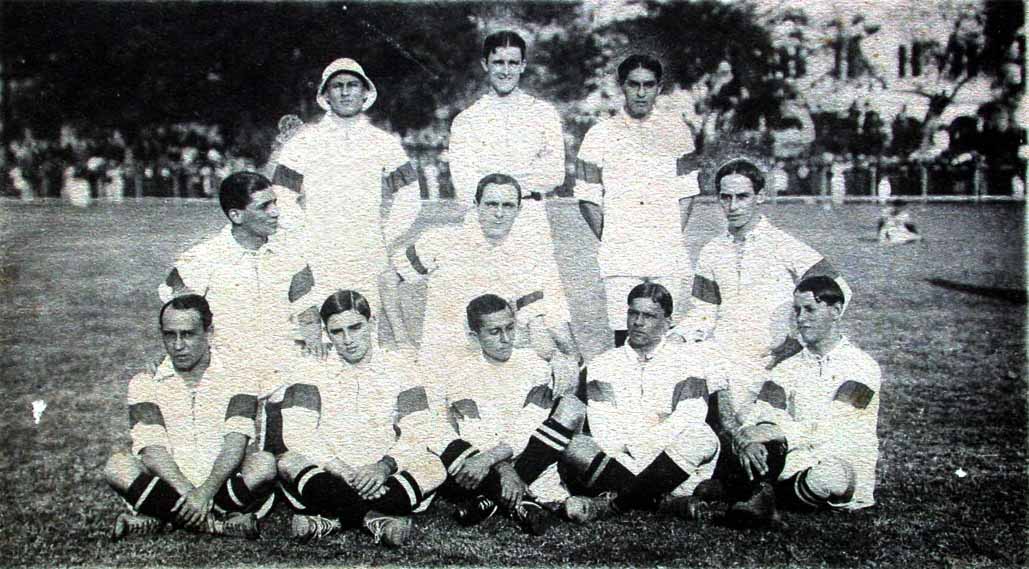
It is generally believed that the inaugural game of the Brazil national football team was a 1914 match between a Rio de Janeiro and São Paulo select team and the English club Exeter City, held in Fluminense's stadium. Brazil won 2–0 with goals by Oswaldo Gomes and Osman, though it is claimed that the match was a 3–3 draw.
In contrast to its future success, the national team's early appearances were not brilliant. Other early matches played during that time include several friendly games against Argentina (being defeated 3–0), Chile (first in 1916) and Uruguay (first on 12 July 1916), all nations to which football had been introduced decades earlier.
Brazil participated in the first edition of the South American Championship (which would later become the Copa América) in Argentina in 1916, finishing third place, and the 1917 edition in Uruguay, also finishing third. However, led by the goalscoring abilities of Arthur Friedenreich, they were champions on home soil in the 1919 edition. Brazil finished third at the 1920 tournament held in Chile and runners-up at the 1921 edition in Argentina. Brazil won the second title at home in 1922, the 100th anniversary of Brazilian independence.
Brazil finished fourth place at the 1923 edition held in Uruguay, did not participate in the 1924 edition also held in Uruguay, and finished second at the 1925 tournament held in Argentina. Brazil did not take part in the 1926 (hosted by Chile), 1927 (held in Peru) and 1929 (hosted by Argentina) editions.
First World Cup appearance and title drought (1930–1949)
In 1930, Brazil played in the first FIFA World Cup, held in Uruguay. The squad lost 2–1 to Yugoslavia and defeated Bolivia 4–0, being eliminated from the competition in the group stage. Four years later, Brazil lost in the first round to Spain in the all-knockout 1934 World Cup, held in Italy.
After not taking part in the 1935 South American Championship held in Peru and finishing runners up at the 1937 South American Championship held in Argentina, Brazil reached the semi-finals in the 1938 edition held in France, knocking out Poland 6–5, Czechoslovakia in the quarterfinals after a replay, before being defeated 2–1 by defending and eventual champions Italy. Brazil won third place after defeating Sweden 4–2. Brazil were the only South American team to participate in this competition after other teams boycotted due to the fact that a European nation was hosting. After that, Brazil did not take part at the 1939 South American Championship held in Peru.
Three South American Championship editions took place during World War II: 1941 (held in Chile, where Brazil didn't take part), 1942 (hosted by Uruguay, and Brazil finished third), and 1945 (again held in Chile, where Brazil were runners-up).
After the war ended, Brazil participated in the 1946 South American Championship held in Argentina, finishing runners-up, and didn't take part in the 1947 edition hosted by Ecuador. At the 1949 South American Championship held in Brazil, the team won their third title, ending a 27-year streak without a South American title.
The 1950 World Cup at home and the ''Maracanazo''
After World War II left Europe in ruins, Brazil hosted the 1950 FIFA World Cup unopposed.
At the tournament's group stage, Brazil defeated Mexico 4–0 at the Maracanã in Rio de Janeiro (then the Brazilian capital), tied with Switzerland 2–2 at the Pacaembu in São Paulo, and returned to the Maracanã to defeat Yugoslavia 2–0.
Unlike the other tournaments before and after, this edition had a final group stage to decide the champions. At this stage, Brazil defeated Sweden 7-1 and Spain 6–1, both at the Maracanã.
The team went into the last game of the final round, against Uruguay at the Maracanã needing only a draw to win the World Cup. Brazil opened the score, but Uruguay made a comeback and won the match 2–1 with a goal by Alcides Ghiggia deciding the match, and Uruguay won the World Cup in a game known as the Maracanazo. The match led to a period of national mourning and Brazil stopping wearing white as the main uniform.
1951–1957
After the disappointment at the World Cup held at home, Brazil competed and finished runners up at the 1953 South American Championship held in Peru.
For the 1954 World Cup in Switzerland, Brazil was then almost completely renovated, with the team's uniform changed to yellow shirts with green details, blue shorts and white socks. The uniform was designed by Aldyr Schlee and is still used today. Brazil wanted to forget the Maracanazo, and still had a group of star players. Brazil defeated Mexico 5-0 and tied with Yugoslavia 1–1 at the group stage. France was also in the group, but Brazil didn't play them as the tournament only held two matched at the group stage. In the quarterfinals, Brazil were beaten 4–2 by tournament favourites Hungary in one of the ugliest matches in football history, known as the "Battle of Berne".
Brazil didn't take part at the 1955 South American Championship held in Chile, but finished fourth at the 1956 edition held in Uruguay and the 1957 tournament hosted by Peru.
Pelé and the First Golden Era (1958–1970)

For the 1958 World Cup held in Sweden, Brazil were drawn in a group with England, the Soviet Union and Austria. They beat Austria 3–0 in their first match, then drew 0–0 with England. Before the match, coach Vicente Feola made three substitutions that were crucial for Brazil to defeat the Soviets: Zito, Garrincha and Pelé. From the kick-off, they kept up the pressure relentlessly, and after three minutes, which were later described as "the greatest three minutes in the history of football", Vavá gave Brazil the lead, and they won the match 2–0. Pelé scored the only goal of their quarter-final match against Wales, and they beat France 5–2 in the semi-final. Brazil then also beat Sweden 5–2 in the final, winning their first World Cup and becoming the first nation to win a World Cup title outside of its own continent. Pelé described it tearfully as a nation coming of age.
Brazil then competed in two South American championships held in 1959. The first was hosted by Argentina and Brazil finished runners-up. The second was held in Ecuador and Brazil finished third place.
In the 1962 World Cup held in Chile, Brazil was drawn with Mexico, Czechoslovakia and Spain. Brazil defeated Mexico 2–0 at the first match. The second was a goalless draw with Czechoslovakia, but Pelé got injured at this match and was unable to play for the rest of the tournament. So the protagonist became Garrincha as the star player, a mantle and responsibility laid upon him. Brazil then defeated Spain 2–1 at the final group stage match. Brazil knocked out England 3–1 in the quarterfinals, defeated hosts Chile 4–2 in the semifinals, and defended the World Cup title with a 3-1 win in the final against Czechoslovakia.
The team then finished runners-up at the 1963 South American Championship held in Bolivia.
In the 1966 World Cup held in England, Brazil had their worst performance in a World Cup. Brazil defeated Bulgaria 2–0, but lost to Hungary 3–1. The tournament was remembered for its excessively physical play, and Pelé was one of the players most affected. Against Portugal, several violent tackles by the Portuguese defenders caused forward player Pelé to leave the match and the tournament. Brazil lost this match 3-1 and was eliminated in the first round of the World Cup for the first time since 1934. They have not failed to reach the knockout stages of the competition since. Brazil became the second defending champion to be eliminated in the first round after Italy in 1950. France in 2002 (without scoring a single goal and drawing a match), Italy in 2010, Spain in 2014 and Germany 2018 also repeated the unglorious feat. After the tournament, Pelé declared that he did not wish to play in the World Cup again. Nonetheless, he returned in 1970.
After the early exit at the World Cup in 1966, Brazil did not take part in the 1967 South American Championship held in Uruguay. This was the last time Brazil did not take part at the tournament, and that would be the last edition before the tournament was renamed as the Copa América.
At the 1970 World Cup held in Mexico, the first World Cup held in North America and the first held outside Europe or South America, Brazil fielded what has been widely considered the best World Cup football squad ever, led by Pelé in his last World Cup finals, captain Carlos Alberto Torres, Jairzinho, Tostão, Gérson and Rivellino. Even though Garrincha had retired, this team was still a force to be reckoned with. They won all six of their games, starting with a 4–1 against Czechoslovakia, then a 1–0 against England, despite a spectacular save by Gordon Banks, and then a 3–2 against Romania during group play. Brazil then won 4–2 against Peru in the quarterfinals, then defeated Uruguay 3–1 in the semifinals and Italy 4–1 in the final. Jairzinho was the second top scorer with seven goals, and is the only player to score in every match in a World Cup; Pelé finished with four goals. Brazil lifted the Jules Rimet trophy for the third time (the first nation to do so), which meant that they were allowed to keep it. A replacement was then commissioned, though it would be 24 years before Brazil won it again. The Jules Rimet trophy was stolen from the CBF in 1983, and never recovered. CBF then was awarded a replica.
The first dry spell (1971–1993)
After the international retirement of Pelé and other stars from the 1970 squad, Brazil played at the 1974 World Cup hosted by West Germany. Goalless draws with Yugoslavia and Scotland were followed by a 3–0 win over Zaire at the first group stage, finishing second in the group. At the second group stage, Brazil defeated East Germany 1-0 and Argentina 2–1, but was not able to overcome the Netherlands, being defeated 2–0, and then Brazil finished in fourth place after losing the third place game 1–0 to Poland.
Brazil finished third place at the 1975 Copa América, the first with no fixed hosts.
Then, at the 1978 World Cup held in Argentina, Brazil tied Sweden 1-1, tied Spain 0-0 and defeated Austria 1–0 at the first group stage. Brazil finished second, the last time Brazil failed to win their group on the first stage. In the second group stage, Brazil defeated Peru 3–0, tied with tournament hosts Argentina 0-0, and defeated Poland 3–1. However, Argentina defeated Peru 6–0 in a match held later the same day, and thus Argentina qualified for the final in a match accused of ultimately-unproven match fixing at the expense of Brazil. Brazil subsequently beat Italy 2–1 in the third place play-off, and were the only team to remain unbeaten in the tournament.
Brazil then ended at third place at the 1979 Copa América, also without a single host country.
At the 1982 World Cup, held in Spain, Brazil were the tournament favorites, and easily moved through the first group stage, with a 2–1 win against the Soviet Union, a 4–1 victory against Scotland and a 4–0 thrashing of New Zealand. In the second group stage, Brazil defeated Argentina 3–1, but a 3–2 defeat in Barcelona to Italy, in a classic World Cup match, eliminated them from the tournament in the match that they refer to as "Sarriá's Tragedy", referencing the stadium's name. The 1982 team, with a midfield of Sócrates, Zico, Falcão and Toninho Cerezo, is remembered as perhaps the greatest team never to win a World Cup.
At the 1983 Copa América, the third and final tournament without a fixed host, Brazil lost the title to Uruguay and finished runners-up.
Several players, including Sócrates and Zico, from 1982 returned to play at the 1986 World Cup in Mexico. Brazil, still a very good team and more disciplined defensively than four years earlier, won the three group stage matches (1–0 against Spain, 1–0 against Algeria, and 3–0 against Northern Ireland), without conceding a goal. Then Brazil defeated Poland 4–0 in the round of 16, and in the quarterfinals Brazil faced the Michel Platini-led France in a classic of Total Football. The game played to a 1–1 draw in regulation time where Zico missed a penalty kick, and after a goalless extra time, it all came down to a penalty shoot-out, where Brazil was defeated 4–3.
Brazil finished fifth place at the 1987 Copa América held in Argentina, and in 1989, Brazil hosted and won the 1989 Copa América, thus ending Brazil's 19-year streak without an official title.
At the 1990 World Cup in Italy, Brazil was coached by Sebastião Lazaroni, who had been the coach in the 1989 Copa América. With a defensive scheme, whose main symbol was midfielder Dunga, forward Careca and three centre-backs, the team lacked creativity but made it to the second round after defeating Sweden 2–1, Costa Rica 1–0, and Scotland 1–0. Brazil was eliminated by Diego Maradona-led Argentina in the round of 16 in Turin, losing to their South American archrivals 1–0 thanks to a goal by Claudio Caniggia.
Brazil would struggle in the next cycle, as they finished runners-up at the 1991 Copa América held in Chile, losing the title to Argentina. In the 1993 Copa América held in Ecuador, Brazil was knocked out by Argentina on the quarterfinals on penalties. In the qualifiers for the 1994 World Cup, Brazil lost a qualifying match for the first time when Bolivia defeated the team 2–0 in La Paz. Brazil qualified for the tournament after defeating Uruguay at Maracanã with two Romário goals.
The Second Golden Era (1994–2005)
Brazil went 24 years without winning a World Cup or even participating in a final. Their struggles ended at the 1994 tournament held in the United States, where a solid side headed by Romário and Bebeto in attack, captain Dunga in midfield, goalkeeper Cláudio Taffarel and defender Jorginho, won the World Cup for a then-record fourth time. Brazil started by defeating Russia 2–0, then winning 3–0 against Cameroon and tying with Sweden 1-1. Their campaign proceeded a 1–0 victory over the United States in the round of 16 at Stanford Stadium on the 4th of July, a 3–2 win over the Netherlands in the quarter-finals in Dallas, and a 1–0 victory over Sweden in a rematch of the group stage match at the semi-finals at Pasadena's Rose Bowl. This set up Brazil–Italy in the final in Pasadena. A game played in searing heat ended as a goalless draw, with Italy's defence led by Franco Baresi keeping out Romário, penalty kicks loomed, and Brazil became champions with Roberto Baggio missing Italy's last penalty. Despite the triumph, the 1994 World Cup winning team is not held in the same high esteem in Brazil as their other World Cup winning teams. FourFourTwo magazine labelled the 1994 team "unloved" in Brazil due to their pragmatic, defensive style over the more typical Brazilian style of attacking flair, in spite of the players' individual status as idols (mainly Romário, who was known as a clinical striker and whose contributions to the team are widely regarded as responsible both for allowing the team to qualify following a rocky start and for winning the tournament).
In the meantime, Brazil lost the 1995 Copa América to hosts Uruguay on penalties, followed by victory in the 1997 tournament against Bolivia, the host of the latter tournament, after a 3–1 win, the first time Brazil won the Copa América held outside of Brazil. That same year, Brazil won the Confederations Cup in Saudi Arabia with a 6-0 win against Australia.
Entering the 1998 World Cup as defending champions, Brazil finished runner-up. Having topped their group after beating Scotland 2–1, defeating Morocco 3-0 and losing 2–1 to Norway, Brazil thrashed Chile 4–1 in the round of 16, defeated Denmark 3–2 in the quarterfinals, and then Brazil beat the Netherlands on penalties in the semi-final following a 1–1 draw. Player of the tournament Ronaldo scored four goals and made three assists en route to the final. The build up to the final itself was overshadowed by Ronaldo suffering a convulsive fit only hours before kick off. The starting line up without Ronaldo was released to a shocked world media, but after pleading that he felt fine and requested to play, Ronaldo was reinstated by the coach, before giving a below par performance as France, led by Zidane, won 3-0.
Brazil won the 1999 Copa América held in Paraguay with a 3–0 win over Uruguay in the final, but lost the 1999 Confederations Cup final to hosts Mexico, before being eliminated from the 2001 Copa América held in Colombia in the quarterfinals with a 2–0 loss to Honduras. The team would also struggle in the 2002 World Cup qualifiers, only securing a spot on the final matchday with a 3–0 victory over Venezuela.
However, the 2002 World Cup, co-hosted by South Korea and Japan, would be different, as Brazil topped their group with nine points and three wins. Brazil played the group stage in South Korea, and their first match was against Turkey, in Ulsan. In that match, Rivaldo fell to the ground clutching his face after Turkey's Hakan Ünsal had kicked the ball at his legs. Rivaldo escaped suspension but was fined £5,180 for play-acting, and became the first player ever to be punished in FIFA's crackdown on diving. Brazil came from behind to defeat the Turks 2–1. This was followed by a 4–0 win over China and a 5–2 victory against Costa Rica. For the knockout round matches, Brazil traveled to Japan, continuing their campaign by defeating Belgium 2–0 in Kobe. They then proceeded to defeat England 2–1 in the quarter-finals in Shizuoka, with the winning goal coming from a free-kick by Ronaldinho from 40 yards out, but Ronaldinho was also sent off that match. The semi-final was against Turkey in Saitama, a rematch of the group stage, with Brazil winning 1–0 to advance to their third consecutive final. The final was against Germany in Yokohama, where Ronaldo scored both goals in Brazil's 2–0 triumph. Ronaldo also won the Golden Shoe as the tournament's leading scorer with eight goals. Among the highlights of the campaign were the "Three R's" (Ronaldo, Rivaldo and Ronaldinho). 2002 was Brazil's fifth world championship, their last to date, with the success seeing them receive the Laureus World Sports Award for Team of the Year.
The second dry spell (2006–present)
After their World Cup victory in Asia, Brazil won the 2004 Copa América in Peru, defeating Argentina on penalties after a 2–2 draw in the final, with a late goal by Adriano forcing the shootout. That was their third win in four competitions since 1997. They also won the FIFA Confederations Cup for the second time in 2005, with a 4–1 thumping of Argentina. Manager Carlos Alberto Parreira built his side through a 4–2–2–2 formation. Nicknamed the "Magic Quartet", the attack was built around four players: Ronaldo, Adriano, Kaká and Ronaldinho.[[File:WM2006 BRA-JPN2.JPG|thumb|left|Brazil and Japan entering the [[Signal Iduna Park]] field at the [[2006 FIFA World Cup]]]] In the 2006 World Cup held in Germany, Brazil won their three group games against Croatia (1–0), Australia (2–0) and Japan (4–1). Ronaldo scored twice and equalled the record for the most goals scored across all World Cups. In the round of 16, Brazil beat Ghana 3–0. Ronaldo's goal was his 15th in World Cup history, breaking the record, which would later be broken by Miroslav Klose in 2014. Brazil, however, were eliminated in the quarter-finals against France, losing 1–0 to a Thierry Henry goal.
Dunga was appointed as Brazil's new team manager in 2006. Brazil then won the 2007 Copa América held in Venezuela, with a 3-0 win against Argentina in the final. Two years later, Brazil won the 2009 FIFA Confederations Cup, defeating the United States 3–2 in the final, to seal their third Confederations Cup title.
At the 2010 World Cup in South Africa, Brazil won their first two matches against North Korea (2–1) and the Ivory Coast (3–1), respectively. Their last match, against Portugal, ended in a 0–0 draw. They faced Chile in the round of 16, winning 3–0, although in the quarter-final they fell to the Netherlands 2–1.
In July 2010, Mano Menezes was named as Brazil's new coach. At the 2011 Copa América held in Argentina, Brazil lost against Paraguay on penalties and was eliminated in the quarter-finals. Brazil failed to score any penalty in the shootout. In November 2012, coach Mano Menezes was sacked and replaced by Luiz Felipe Scolari.
On 6 June 2013, Brazil was ranked 22nd in the FIFA World Rankings, their lowest ever. At the 2013 Confederations Cup, Brazil defended their title, beating Spain in the final, winning 3–0 and sealing their fourth Confederations Cup title.
2014 FIFA World Cup
Main article: Brazil at the 2014 FIFA World Cup
In the opening match of the 2014 World Cup on home soil against Croatia, two goals from Neymar and one from Oscar sealed a 3–1 comeback win after a Marcelo own goal. The team then drew 0–0 with Mexico, before confirming qualification to the knockout stage by defeating Cameroon 4–1. Brazil faced Chile in the round of 16, needing penalties to prevail to the next round following a 1–1 draw.
The team again faced South American opposition in the quarter-final, defeating Colombia 2–1. However, late in the match, Neymar was stretchered off after a horrible challenge by Zuniga, which led to the Brazilian suffering a fractured vertebra, ruling him out for the remainder of the tournament.
The Seleção went on to lose 7–1 to the Germans, their biggest ever defeat at the World Cup and first home loss in a competitive match since 1975. The match has been nicknamed the Mineirazo, making reference to the nation's previous World Cup defeat on home soil, the Maracanazo against Uruguay in 1950, and the Mineirão stadium where the match took place. In that match, Miroslav Klose scored, making him the top goalscorer at the FIFA World Cup with 16 goals. Curiously, Ronaldo Fenômeno was at the stadium as a commentator for Rede Globo.
Brazil subsequently lost 3–0 to the Netherlands in the third-place play-off match. Following the tournament, Scolari announced his resignation.
After the 2014 FIFA World Cup (2014–2022)
On 22 July 2014, Dunga was announced as the new manager of Brazil, returning to the position for his second stint leading the national team.
At the 2015 Copa América held in Chile, Brazil finished first in Group C to advance to the knockout stages. However, they were eliminated in the next round, again losing on penalties to Paraguay.
At the 2016 Copa América Centenario held in the United States, Brazil began the tournament with a goalless draw with Ecuador before beating Haiti 7–1 in the next match. Needing only a draw to progress to the knockout stage of the tournament, Brazil suffered a controversial 1–0 loss to Peru, with Raúl Ruidíaz scoring in the 75th minute. This defeat saw Brazil eliminated from the tournament in the group stage for the first time since 1987., and also resulted in Dunga being fired from the national team.[[File:Bra-Cos (2).jpg|thumb|Brazil team prior to their group game against Costa Rica at the [[2018 FIFA World Cup]] in Russia]]
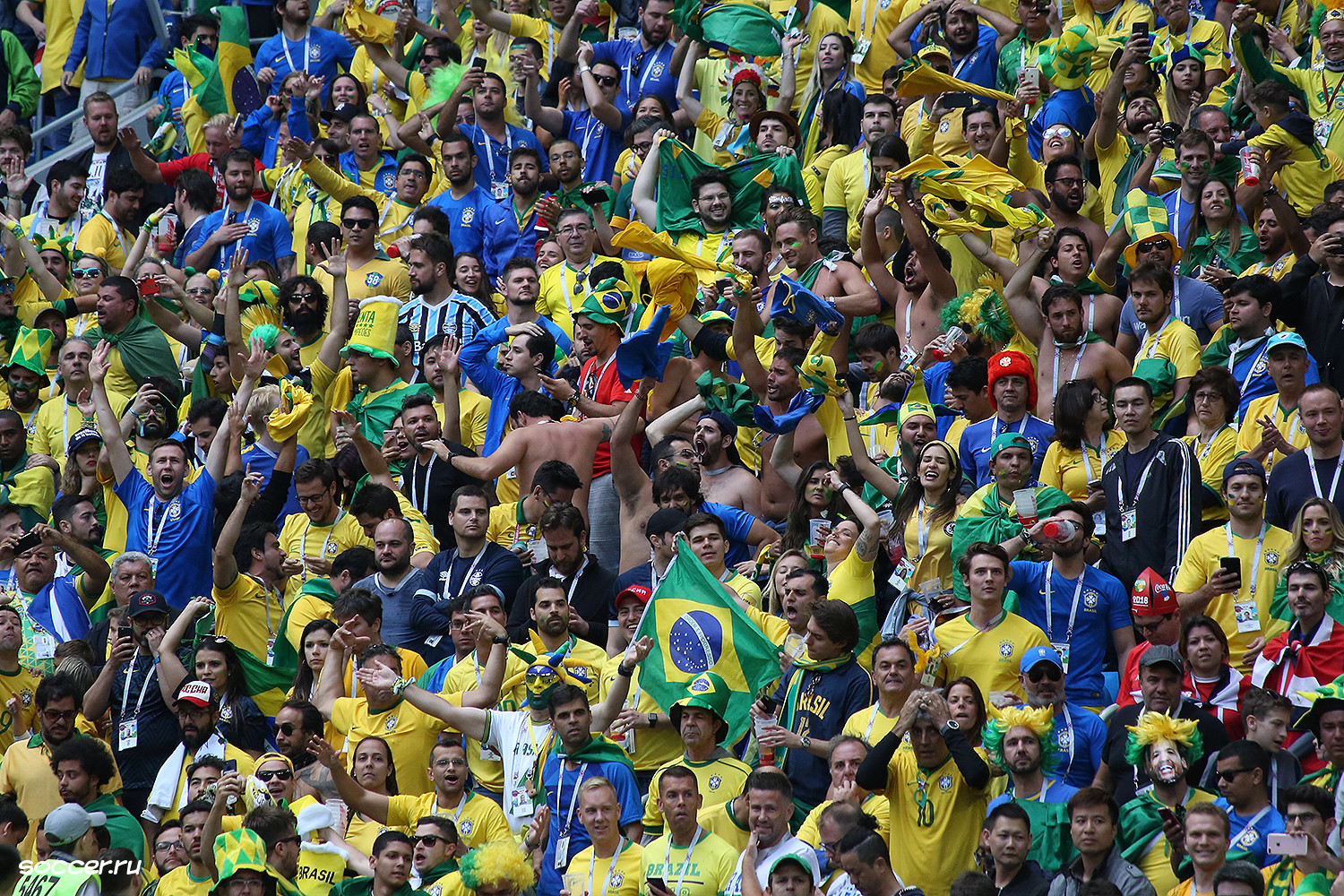
On 14 June 2016, Tite replaced Dunga as manager of Brazil. At the 2018 FIFA World Cup, Brazil finished top of their group, tying with Switzerland 1-1, defeating Costa Rica 2-0 and Serbia 2–0. After defeating Mexico 2–0 in the round of 16, Brazil were eliminated in the quarter-finals by Belgium, losing 2–1. Despite elimination from the tournament, Tite remained as head coach.
The 2019 Copa América was held on home soil, with the team beginning the campaign with a 3–0 win against Bolivia, where the Brazilians notoriously wore a white uniform. Then Brazil had a goalless draw with Venezuela, and thumped Peru 5–0. In the quarterfinals, Brazil defeated Paraguay on penalties after another goalless draw. After beating rivals Argentina 2–0 in the semi-finals, Brazil beat Peru 3–1 in the final to win their ninth Copa América title, and their first since 2007. The team only conceded once during the tournament, during the final from a penalty kick. The next Copa América was originally scheduled to be played the following year, but due to the COVID-19 pandemic, the competition was postponed to 2021. As a result, Colombia and Argentina resigned as co-hosts, and Brazil was selected to host the tournament. The hosts reached the final once again, this time being defeated by Argentina 1–0 in the Maracanã Stadium; this was the first time Brazil failed to win the Copa América on home soil.
At the 2022 World Cup, Brazil finished first in their group, with the team defeating Serbia 2–0, Switzerland 1-0 and losing to Cameroon 1–0. The team then faced South Korea in the round of 16, winning by 4–1, and progressed to the quarter-finals where they lost on penalties to Croatia after a 1–1 draw. Following their exit from the World Cup, Tite resigned as head coach.
Recent years (2023–present)
After Tite left, Ramon Menezes served as manager from March to July 2023, before being replaced by Fernando Diniz until the end of the year. Diniz's tenure ended after Brazil lost to Argentina 1–0 at the Maracanã, with this defeat being their first home loss in FIFA World Cup qualifiers.
The CBF then appointed Dorival Júnior as manager. At the 2024 Copa América held in the United States, Brazil tied 0–0 with Costa Rica, thrashed Paraguay 4-1 and tied 1–1 with Colombia. Brazil was eliminated on penalties by Uruguay in the quarter-finals following a 0–0 draw. Dorival was fired after losing 4–1 to Argentina at the Monumental de Nuñez, and in his place the federation appointed Italian manager Carlo Ancelotti as a replacement.
Brazil qualified for the 2026 FIFA World Cup after a 1–0 victory against Paraguay on 10 June 2025.
Team image
Uniforms
Brazil's first team colors were white with blue collars, but following the defeat at Maracanã in the 1950 World Cup, the colors were criticized for lacking patriotism. With permission from the Brazilian Sports Confederation, the newspaper Correio da Manhã held a competition to design a new kit incorporating the four colors of the Brazilian flag. The winning design was a yellow jersey with green trim and blue shorts with white trim drawn by Aldyr Garcia Schlee, a nineteen-year-old from Pelotas. The new colors were first used in March 1954 in a match against Chile, and have been used ever since. Topper were the manufacturers of Brazil's kit up to and including the match against Wales on 11 September 1991; Umbro took over before the next match, versus Yugoslavia in October 1991. Nike began making the kits for Brazil in late 1996, in time for the 1997 Copa América and the 1998 FIFA World Cup.
The use of blue and white as the second kit colors owes its origins to the defunct latter-day Portuguese monarchy and dates from the 1930s, but it became the permanent second choice accidentally in the 1958 FIFA World Cup final. Brazil's opponents were Sweden, who also wore yellow, and a draw gave the home team, Sweden, the right to play in yellow. Brazil, who traveled with no second kit, hurriedly purchased a set of blue shirts and sewed the badges taken from their yellow shirts on them.
Kit sponsorship
| Kit supplier | Period | Contract | |||
|---|---|---|---|---|---|
| announcement | Contract | ||||
| duration | Value | Ref. | |||
| *None* | 1908–1954 | ||||
| JPN Athleta | 1954–1977 | 1954–1977 | None | ||
| GER Adidas | 1977–1981 | 1977–1981 | |||
| BRA Topper | 1981–1991 | 1981–1991 | |||
| ENG Umbro | 1991–1996 | 1991–1996 | |||
| USA Nike | 1997–present | December 1996 | 1997–2007 | Total $200 million~$250 million | |
| Unknown | 2008–2024 | €69.5 million per year | |||
| December 2024 | 2024–2038 | $100 million per year |
Nicknames
The Brazil national team is known by different names in various parts of the world. Nicknames for the squad in Brazil include:
- Canarinho, meaning 'Little Canary', a reference to a species of bird commonly found in Brazil that has a vivid yellow color, this phrase was popularized by the late cartoonist Fernando "Mangabeira" Pieruccetti during the 1950 World Cup despite the team not wearing the color yet back then
- Amarelinha (Little Yellow One)
- Seleção (The National Squad)
- Verde-amarela (The Green and Yellow)
- Pentacampeão (Five-time Champions)
- Esquadrão de Ouro (The Golden Squad)
Some Latin American commentators often refer to the Brazil team as El Scratch or Scratch du Oro (The Scratch), among others. In the 2022 World Cup, FIFA's YouTube channel referred to the team as Samba Boys.
Training camp
Brazil's training camp is the Granja Comary in Teresópolis, located 90 km from Rio de Janeiro. Granja Comary was opened in 1987, and underwent significant renovations in 2013 and 2014.
Results and fixtures
Main article: Brazil national football team results (2010–present)
The following is a list of match results in the last 12 months, as well as any future matches that have been scheduled.
2025
- Raphinha
- Vinícius
- Díaz
- Alvarez
- Fernández
- Mac Allister
- Simeone
- Cunha
- Vinícius
- Estêvão
- Paquetá
- Bruno Guimarães
- Terceros
- Estêvão
- Rodrygo
- Vinícius
- Minamino
- Nakamura
- Ueda
- Paulo Henrique
- Martinelli
- Estêvão
- Casemiro
- Estêvão
- Mastouri
2026
Coaching staff
Main article: List of Brazil national football team managers
_(Carlo_Ancelotti)_(cropped).jpg)
| Position | Name | Ref | |||||
|---|---|---|---|---|---|---|---|
| Head coach | ITA Carlo Ancelotti | ||||||
| Assistant coach | ENG Paul Clement | ||||||
| Goalkeeping coaches | BRA Cláudio Taffarel | url=https://ge.globo.com/futebol/selecao-brasileira/noticia/2024/01/29/taffarel-aceita-convite-de-dorival-jr-e-esta-de-volta-a-selecao-brasileira.ghtml | title=Taffarel aceita convite de Dorival Jr e está de volta à seleção brasileira | website=GloboEsporte | date=29 January 2024 | access-date=4 June 2024 | language=pt}} |
| BRA Marco Antônio Trocourt | |||||||
| Physical coach | ITA Francesco Mauri | ||||||
| Match analysts | ITA Simone Montanaro | ||||||
| BRA Guilherme Lyra | |||||||
| BRA João Marcos Soares | |||||||
| BRA Thomaz Koerich | |||||||
| Performance analyst | ITA Mino Fulco | ||||||
| Physiologist | BRA Guilherme Passos | ||||||
| Doctor | BRA Rodrigo Lasmar | ||||||
| Team coordinator | BRA Juan | ||||||
| Sporting director | BRA Rodrigo Caetano |
Players
Current squad
The following players were named in the squad for the friendlies against Senegal and Tunisia on 15 and 18 November 2025, respectively.
Caps and goals are correct as of 18 November 2025, after the match against Tunisia.
Recent call-ups
The following players have also been called up to the Brazil squad in the last twelve months.
- INJ Player withdrew from the squad due to injury
- SUS Player served suspension
- WIT Player withdrew from the squad due to non-injury issue
- EXP Player expelled from squad
Individual records
Main article: Brazil national football team records and statistics
Manager records
Mário Zagallo became the first person to win the FIFA World Cup both as a player (1958 and 1962) and as a manager (1970). In 1970, at the age of 38, he became the second-youngest coach to win the tournament. While still in Brazil as an assistant coach, the team won the 1994 FIFA World Cup.
Competitive record
Champions Runners-up Third place Fourth place Tournament played fully or partially on home soil
:*Draws include knockout matches decided via penalty shoot-out.
FIFA World Cup
Main article: Brazil at the FIFA World Cup
Brazil has qualified for every FIFA World Cup they entered, never requiring a qualifying play-off. With five titles, they have won the tournament on more occasions than any other national team.
| FIFA World Cup record | Qualification record | Year | Round | Position | Pld | W | D | L | GF | GA | Squad | Pld | W | D | L | GF | GA | — | Total | 5 Titles | 23/23 | 114 | 76 | 19 | 19 | 237 | 108 | — | 145 | 90 | 37 | 18 | 304 | 92 | — |
|---|---|---|---|---|---|---|---|---|---|---|---|---|---|---|---|---|---|---|---|---|---|---|---|---|---|---|---|---|---|---|---|---|---|---|---|
| Uruguay [1930](1930-fifa-world-cup) | Group stage | 6th | 2 | 1 | 0 | 1 | 5 | 2 | [Squad](1930-fifa-world-cup-squads-brazil) | *Qualified as invitees* | |||||||||||||||||||||||||
| Italy [1934](1934-fifa-world-cup) | Round of 16 | 14th | 1 | 0 | 0 | 1 | 1 | 3 | [Squad](1934-fifa-world-cup-squads-brazil) | *Qualified automatically* | |||||||||||||||||||||||||
| France [1938](1938-fifa-world-cup) | **Third place** | **3rd** | **5** | **3** | **1** | **1** | **14** | **11** | **[Squad](1938-fifa-world-cup-squads-brazil)** | ||||||||||||||||||||||||||
| Brazil [1950](1950-fifa-world-cup) | **[Runners-up](1950-fifa-world-cup-final)** | **2nd** | **6** | **4** | **1** | **1** | **22** | **6** | **[Squad](1950-fifa-world-cup-squads-brazil)** | *Qualified as hosts* | |||||||||||||||||||||||||
| Switzerland [1954](1954-fifa-world-cup) | Quarter-finals | 5th | 3 | 1 | 1 | 1 | 8 | 5 | [Squad](1954-fifa-world-cup-squads-brazil) | 4 | 4 | 0 | 0 | 8 | 1 | [1954](1954-fifa-world-cup-qualification) | |||||||||||||||||||
| Sweden [1958](1958-fifa-world-cup) | **[Champions](1958-fifa-world-cup-final)** | **1st** | **6** | **5** | **1** | **0** | **16** | **4** | **[Squad](1958-fifa-world-cup-squads-brazil)** | 2 | 1 | 1 | 0 | 2 | 1 | [1958](1958-fifa-world-cup-qualification-conmebol) | |||||||||||||||||||
| Chile [1962](1962-fifa-world-cup) | **[Champions](1962-fifa-world-cup-final)** | **1st** | **6** | **5** | **1** | **0** | **14** | **5** | **[Squad](1962-fifa-world-cup-squads-brazil)** | *Qualified as defending champions* | |||||||||||||||||||||||||
| England [1966](1966-fifa-world-cup) | Group stage | 11th | 3 | 1 | 0 | 2 | 4 | 6 | [Squad](1966-fifa-world-cup-squads-brazil) | ||||||||||||||||||||||||||
| Mexico [1970](1970-fifa-world-cup) | **[Champions](1970-fifa-world-cup-final)** | **1st** | **6** | **6** | **0** | **0** | **19** | **7** | **[Squad](1970-fifa-world-cup-squads-brazil)** | 6 | 6 | 0 | 0 | 23 | 2 | [1970](1970-fifa-world-cup-qualification-conmebol) | |||||||||||||||||||
| West Germany [1974](1974-fifa-world-cup) | Fourth place | 4th | 7 | 3 | 2 | 2 | 6 | 4 | [Squad](1974-fifa-world-cup-squads-brazil) | *Qualified as defending champions* | |||||||||||||||||||||||||
| Argentina [1978](1978-fifa-world-cup) | **Third place** | **3rd** | **7** | **4** | **3** | **0** | **10** | **3** | **[Squad](1978-fifa-world-cup-squads-brazil)** | 6 | 4 | 2 | 0 | 17 | 1 | [1978](1978-fifa-world-cup-qualification-conmebol) | |||||||||||||||||||
| Spain [1982](1982-fifa-world-cup) | Second group stage | 5th | 5 | 4 | 0 | 1 | 15 | 6 | [Squad](1982-fifa-world-cup-squads-brazil) | 4 | 4 | 0 | 0 | 11 | 2 | [1982](1982-fifa-world-cup-qualification-conmebol) | |||||||||||||||||||
| Mexico [1986](1986-fifa-world-cup) | Quarter-finals | 5th | 5 | 4 | 1 | 0 | 10 | 1 | [Squad](1986-fifa-world-cup-squads-brazil) | 4 | 2 | 2 | 0 | 6 | 2 | [1986](1986-fifa-world-cup-qualification-conmebol) | |||||||||||||||||||
| Italy [1990](1990-fifa-world-cup) | Round of 16 | 9th | 4 | 3 | 0 | 1 | 4 | 2 | [Squad](1990-fifa-world-cup-squads-brazil) | 4 | 3 | 1 | 0 | 13 | 1 | [1990](1990-fifa-world-cup-qualification-conmebol) | |||||||||||||||||||
| United States [1994](1994-fifa-world-cup) | **[Champions](1994-fifa-world-cup-final)** | **1st** | **7** | **5** | **2** | **0** | **11** | **3** | **[Squad](1994-fifa-world-cup-squads-brazil)** | 8 | 5 | 2 | 1 | 20 | 4 | [1994](1994-fifa-world-cup-qualification-conmebol) | |||||||||||||||||||
| France [1998](1998-fifa-world-cup) | **[Runners-up](1998-fifa-world-cup-final)** | **2nd** | **7** | **4** | **1** | **2** | **14** | **10** | **[Squad](1998-fifa-world-cup-squads-brazil)** | *Qualified as defending champions* | |||||||||||||||||||||||||
| South Korea Japan [2002](2002-fifa-world-cup) | **[Champions](2002-fifa-world-cup-final)** | **1st** | **7** | **7** | **0** | **0** | **18** | **4** | **[Squad](2002-fifa-world-cup-squads-brazil)** | 18 | 9 | 3 | 6 | 31 | 17 | [2002](2002-fifa-world-cup-qualification-conmebol) | |||||||||||||||||||
| Germany [2006](2006-fifa-world-cup) | Quarter-finals | 5th | 5 | 4 | 0 | 1 | 10 | 2 | [Squad](2006-fifa-world-cup-squads-brazil) | 18 | 9 | 7 | 2 | 35 | 17 | [2006](2006-fifa-world-cup-qualification-conmebol) | |||||||||||||||||||
| South Africa [2010](2010-fifa-world-cup) | 6th | 5 | 3 | 1 | 1 | 9 | 4 | [Squad](2010-fifa-world-cup-squads-brazil) | 18 | 9 | 7 | 2 | 33 | 11 | [2010](2010-fifa-world-cup-qualification-conmebol) | ||||||||||||||||||||
| Brazil [2014](2014-fifa-world-cup) | Fourth place | 4th | 7 | 3 | 2 | 2 | 11 | 14 | [Squad](2014-fifa-world-cup-squads-brazil) | *Qualified as hosts* | |||||||||||||||||||||||||
| Russia [2018](2018-fifa-world-cup) | Quarter-finals | 6th | 5 | 3 | 1 | 1 | 8 | 3 | [Squad](2018-fifa-world-cup-squads-brazil) | 18 | 12 | 5 | 1 | 41 | 11 | [2018](2018-fifa-world-cup-qualification-conmebol) | |||||||||||||||||||
| Qatar [2022](2022-fifa-world-cup) | 7th | 5 | 3 | 1 | 1 | 8 | 3 | [Squad](2022-fifa-world-cup-squads-brazil) | 17 | 14 | 3 | 0 | 40 | 5 | [2022](2022-fifa-world-cup-qualification-conmebol) | ||||||||||||||||||||
| Canada Mexico United States [2026](2026-fifa-world-cup) | *Qualified* | 18 | 8 | 4 | 6 | 24 | 17 | [2026](2026-fifa-world-cup-qualification-conmebol) | |||||||||||||||||||||||||||
| Morocco Portugal Spain [2030](2030-fifa-world-cup) | *To be determined* | *To be determined* | [2030](2030-fifa-world-cup-qualification-conmebol) | ||||||||||||||||||||||||||||||||
| Saudi Arabia [2034](2034-fifa-world-cup) | [2034](2034-fifa-world-cup-qualification-conmebol) |
Copa América
Main article: Brazil at the Copa América
| South American Championship / Copa América record | Year | Round | Position | Pld | W | D | L | GF | GA | Squad | Total | 9 Titles | 38/48 | 195 | 109 | 41 | 45 | 435 | 206 | — | |||||||||
|---|---|---|---|---|---|---|---|---|---|---|---|---|---|---|---|---|---|---|---|---|---|---|---|---|---|---|---|---|---|
| Argentina [1916](1916-south-american-championship) | **Third place** | **3rd** | **3** | **0** | **2** | **1** | **3** | **4** | **[Squad](1916-south-american-championship-squads-brazil)** | ||||||||||||||||||||
| Uruguay [1917](1917-south-american-championship) | **Third place** | **3rd** | **3** | **1** | **0** | **2** | **7** | **8** | **[Squad](1917-south-american-championship-squads-brazil)** | ||||||||||||||||||||
| Brazil [1919](1919-south-american-championship) | **Champions** | **1st** | **4** | **3** | **1** | **0** | **12** | **3** | **[Squad](1919-south-american-championship-squads-brazil)** | ||||||||||||||||||||
| Chile [1920](1920-south-american-championship) | **Third place** | **3rd** | **3** | **1** | **0** | **2** | **1** | **8** | **[Squad](1920-south-american-championship-squads-brazil)** | ||||||||||||||||||||
| Argentina [1921](1921-south-american-championship) | **Runners-up** | **2nd** | **3** | **1** | **0** | **2** | **4** | **3** | **[Squad](1921-south-american-championship-squads-brazil)** | ||||||||||||||||||||
| Brazil [1922](1922-south-american-championship) | **Champions** | **1st** | **5** | **2** | **3** | **0** | **7** | **2** | **[Squad](1922-south-american-championship-squads-brazil)** | ||||||||||||||||||||
| Uruguay [1923](1923-south-american-championship) | Fourth place | 4th | 3 | 0 | 0 | 3 | 2 | 5 | [Squad](1923-south-american-championship-squads-brazil) | ||||||||||||||||||||
| Uruguay [1924](1924-south-american-championship) | *Withdrew* | ||||||||||||||||||||||||||||
| Argentina [1925](1925-south-american-championship) | **Runners-up** | **2nd** | **4** | **2** | **1** | **1** | **11** | **9** | **[Squad](1925-south-american-championship-squads-brazil)** | ||||||||||||||||||||
| Chile [1926](1926-south-american-championship) | *Withdrew* | ||||||||||||||||||||||||||||
| Peru [1927](1927-south-american-championship) | |||||||||||||||||||||||||||||
| Argentina [1929](1929-south-american-championship) | |||||||||||||||||||||||||||||
| Peru [1935](1935-south-american-championship) | |||||||||||||||||||||||||||||
| Argentina [1937](1937-south-american-championship) | **Runners-up** | **2nd** | **6** | **4** | **0** | **2** | **17** | **11** | **[Squad](1937-south-american-championship-squads-brazil)** | ||||||||||||||||||||
| Peru [1939](1939-south-american-championship) | *Withdrew* | ||||||||||||||||||||||||||||
| Chile [1941](1941-south-american-championship) | |||||||||||||||||||||||||||||
| Uruguay [1942](1942-south-american-championship) | **Third place** | **3rd** | **6** | **3** | **1** | **2** | **15** | **7** | **[Squad](1942-south-american-championship-squads-brazil)** | ||||||||||||||||||||
| Chile [1945](1945-south-american-championship) | **Runners-up** | **2nd** | **6** | **5** | **0** | **1** | **19** | **5** | **[Squad](1945-south-american-championship-squads-brazil)** | ||||||||||||||||||||
| Argentina [1946](1946-south-american-championship) | **Runners-up** | **2nd** | **5** | **3** | **1** | **1** | **13** | **7** | **[Squad](1946-south-american-championship-squads-brazil)** | ||||||||||||||||||||
| Ecuador [1947](1947-south-american-championship) | *Withdrew* | ||||||||||||||||||||||||||||
| Brazil [1949](1949-south-american-championship) | **Champions** | **1st** | **8** | **7** | **0** | **1** | **46** | **7** | **[Squad](1949-south-american-championship-squads-brazil)** | ||||||||||||||||||||
| Peru [1953](1953-south-american-championship) | **Runners-up** | **2nd** | **7** | **4** | **0** | **3** | **17** | **9** | **[Squad](1953-south-american-championship-squads-brazil)** | ||||||||||||||||||||
| Chile [1955](1955-south-american-championship) | *Withdrew* | ||||||||||||||||||||||||||||
| Uruguay [1956](1956-south-american-championship) | Fourth place | 4th | 5 | 2 | 2 | 1 | 4 | 5 | [Squad](1956-south-american-championship-squads-brazil) | ||||||||||||||||||||
| Peru [1957](1957-south-american-championship) | **Runners-up** | **2nd** | **6** | **4** | **0** | **2** | **23** | **9** | **[Squad](1957-south-american-championship-squads-brazil)** | ||||||||||||||||||||
| Argentina [1959](1959-south-american-championship-argentina) | **Runners-up** | **2nd** | **6** | **4** | **2** | **0** | **17** | **7** | **[Squad](1959-south-american-championship-argentina-squads-brazil)** | ||||||||||||||||||||
| Ecuador [1959](1959-south-american-championship-ecuador) | **Third place** | **3rd** | **4** | **2** | **0** | **2** | **7** | **10** | **[Squad](1959-south-american-championship-ecuador-squads-brazil)** | ||||||||||||||||||||
| Bolivia [1963](1963-south-american-championship) | Fourth place | 4th | 6 | 2 | 1 | 3 | 12 | 13 | [Squad](1963-south-american-championship-squads-brazil) | ||||||||||||||||||||
| Uruguay [1967](1967-south-american-championship) | *Withdrew* | ||||||||||||||||||||||||||||
| UNASUR [1975](1975-copa-america) | **Third place** | **3rd** | **6** | **5** | **0** | **1** | **16** | **4** | **[Squad](1975-copa-america-squads-brazil)** | ||||||||||||||||||||
| UNASUR [1979](1979-copa-america) | **Third place** | **3rd** | **6** | **2** | **2** | **2** | **10** | **9** | **[Squad](1979-copa-america-squads-brazil)** | ||||||||||||||||||||
| UNASUR [1983](1983-copa-america) | **[Runners-up](1983-copa-america-final)** | **2nd** | **8** | **2** | **4** | **2** | **8** | **5** | **[Squad](1983-copa-america-squads-brazil)** | ||||||||||||||||||||
| Argentina [1987](1987-copa-america) | Group stage | 5th | 2 | 1 | 0 | 1 | 5 | 4 | [Squad](1987-copa-america-squads-brazil) | ||||||||||||||||||||
| Brazil [1989](1989-copa-america) | **Champions** | **1st** | **7** | **5** | **2** | **0** | **11** | **1** | **[Squad](1989-copa-america-squads-brazil)** | ||||||||||||||||||||
| Chile [1991](1991-copa-america) | **Runners-up** | **2nd** | **7** | ** 4** | **1** | **2** | **12** | **8** | **[Squad](1991-copa-america-squads-brazil)** | ||||||||||||||||||||
| Ecuador [1993](1993-copa-america) | Quarter-finals | 5th | 4 | 1 | 2 | 1 | 6 | 4 | [Squad](1993-copa-america-squads-brazil) | ||||||||||||||||||||
| Uruguay [1995](1995-copa-america) | **[Runners-up](1995-copa-america-final)** | **2nd** | **6** | **4** | **2** | **0** | **10** | **3** | **[Squad](1995-copa-america-squads-brazil)** | ||||||||||||||||||||
| Bolivia [1997](1997-copa-america) | **[Champions](1997-copa-america-final)** | **1st** | **6** | **6** | **0** | **0** | **22** | **3** | **[Squad](1997-copa-america-squads-brazil)** | ||||||||||||||||||||
| Paraguay [1999](1999-copa-america) | **[Champions](1999-copa-america-final)** | **1st** | **6** | **6** | **0** | **0** | **17** | **2** | **[Squad](1999-copa-america-squads-brazil)** | ||||||||||||||||||||
| Colombia [2001](2001-copa-america) | Quarter-finals | 6th | 4 | 2 | 0 | 2 | 5 | 4 | [Squad](2001-copa-america-squads-brazil) | ||||||||||||||||||||
| Peru [2004](2004-copa-america) | **[Champions](2004-copa-america-final)** | **1st** | **6** | **3** | **2** | **1** | **13** | **6** | **[Squad](2004-copa-america-squads-brazil)** | ||||||||||||||||||||
| Venezuela [2007](2007-copa-america) | **[Champions](2007-copa-america-final)** | **1st** | **6** | **4** | **1** | **1** | **15** | **5** | **[Squad](2007-copa-america-squads-brazil)** | ||||||||||||||||||||
| Argentina [2011](2011-copa-america) | Quarter-finals | 8th | 4 | 1 | 3 | 0 | 6 | 4 | [Squad](2011-copa-america-squads-brazil) | ||||||||||||||||||||
| Chile [2015](2015-copa-america) | 5th | 4 | 2 | 1 | 1 | 5 | 4 | [Squad](2015-copa-america-squads-brazil) | |||||||||||||||||||||
| United States 2016 | Group stage | 9th | 3 | 1 | 1 | 1 | 7 | 2 | Squad | ||||||||||||||||||||
| Brazil [2019](2019-copa-america) | **[Champions](2019-copa-america-final)** | **1st** | **6** | **4** | **2** | **0** | **13** | **1** | **[Squad](2019-copa-america-squads-brazil)** | ||||||||||||||||||||
| Brazil [2021](2021-copa-america) | **[Runners-up](2021-copa-america-final)** | **2nd** | **7** | **5** | **1** | **1** | **12** | **3** | **[Squad](2021-copa-america-squads-brazil)** | ||||||||||||||||||||
| United States [2024](2024-copa-america) | Quarter-finals | 6th | 4 | 1 | 3 | 0 | 5 | 2 | [Squad](2024-copa-america-squads-brazil) |
FIFA Confederations Cup
| FIFA Confederations Cup record | Year | Round | Position | Pld | W | D | L | GF | GA | Squad | Total | 4 Titles | 7/10 | 33 | 23 | 5 | 5 | 78 | 28 | — |
|---|---|---|---|---|---|---|---|---|---|---|---|---|---|---|---|---|---|---|---|---|
| Saudi Arabia [1992](1992-king-fahd-cup) | *Did not qualify* | |||||||||||||||||||
| Saudi Arabia [1995](1995-king-fahd-cup) | ||||||||||||||||||||
| Saudi Arabia [1997](1997-fifa-confederations-cup) | **[Champions](1997-fifa-confederations-cup-final)** | **1st** | **5** | **4** | **1** | **0** | **14** | **2** | **[Squad](1997-fifa-confederations-cup-squads-brazil)** | |||||||||||
| Mexico [1999](1999-fifa-confederations-cup) | **[Runners-up](1999-fifa-confederations-cup-final)** | **2nd** | **5** | **4** | **0** | **1** | **18** | **6** | **[Squad](1999-fifa-confederations-cup-squads-brazil)** | |||||||||||
| South Korea Japan [2001](2001-fifa-confederations-cup) | Fourth place | 4th | 5 | 1 | 2 | 2 | 3 | 3 | [Squad](2001-fifa-confederations-cup-squads-brazil) | |||||||||||
| France [2003](2003-fifa-confederations-cup) | Group stage | 5th | 3 | 1 | 1 | 1 | 3 | 3 | [Squad](2003-fifa-confederations-cup-squads-brazil) | |||||||||||
| Germany [2005](2005-fifa-confederations-cup) | **[Champions](2005-fifa-confederations-cup-final)** | **1st** | **5** | **3** | **1** | **1** | **12** | **6** | **[Squad](2005-fifa-confederations-cup-squads-brazil)** | |||||||||||
| South Africa [2009](2009-fifa-confederations-cup) | **[Champions](2009-fifa-confederations-cup-final)** | **1st** | **5** | **5** | **0** | **0** | **14** | **5** | **[Squad](2009-fifa-confederations-cup-squads-brazil)** | |||||||||||
| Brazil [2013](2013-fifa-confederations-cup) | **[Champions](2013-fifa-confederations-cup-final)** | **1st** | **5** | **5** | **0** | **0** | **14** | **3** | **[Squad](2013-fifa-confederations-cup-squads-brazil)** | |||||||||||
| Russia [2017](2017-fifa-confederations-cup) | *Did not qualify* |
Olympic Games
| Olympic Games record | Year | Round | Position | Pld | W | D | L | GF | GA | Squad | Total | 2 Silver medals | 8/19 | 32 | 15 | 7 | 10 | 59 | 40 | — | |||||||||
|---|---|---|---|---|---|---|---|---|---|---|---|---|---|---|---|---|---|---|---|---|---|---|---|---|---|---|---|---|---|
| France 1900 | *Only club teams participated* | ||||||||||||||||||||||||||||
| United States 1904 | |||||||||||||||||||||||||||||
| United Kingdom 1908 | *No national representative* | ||||||||||||||||||||||||||||
| Sweden 1912 | |||||||||||||||||||||||||||||
| Belgium 1920 | *Did not participate* | ||||||||||||||||||||||||||||
| France 1924 | |||||||||||||||||||||||||||||
| Netherlands 1928 | |||||||||||||||||||||||||||||
| Germany 1936 | |||||||||||||||||||||||||||||
| United Kingdom 1948 | |||||||||||||||||||||||||||||
| Finland 1952 | Quarter-finals | 6th | 3 | 2 | 0 | 1 | 9 | 6 | Squad | ||||||||||||||||||||
| Australia 1956 | *Did not participate* | ||||||||||||||||||||||||||||
| Italy 1960 | Group stage | 6th | 3 | 2 | 0 | 1 | 10 | 6 | Squad | ||||||||||||||||||||
| Japan 1964 | Group stage | 9th | 3 | 1 | 1 | 1 | 5 | 2 | Squad | ||||||||||||||||||||
| Mexico 1968 | Group stage | 11th | 3 | 0 | 2 | 1 | 4 | 5 | Squad | ||||||||||||||||||||
| West Germany 1972 | Group stage | 12th | 3 | 0 | 1 | 2 | 4 | 6 | Squad | ||||||||||||||||||||
| Canada 1976 | Fourth place | 4th | 5 | 2 | 1 | 2 | 6 | 6 | Squad | ||||||||||||||||||||
| Soviet Union 1980 | *Did not qualify* | ||||||||||||||||||||||||||||
| United States 1984 | **Silver medal** | **2nd** | **6** | **4** | **1** | **1** | **9** | **5** | **Squad** | ||||||||||||||||||||
| South Korea 1988 | **Silver medal** | **2nd** | **6** | **4** | **1** | **1** | **12** | **4** | **Squad** | ||||||||||||||||||||
| Since 1992 | *See Brazil national under-23 football team* |
Head-to-head record
Main article: Brazil national football team records and statistics
Honours
Global
- FIFA World Cup
- FIFA Confederations Cup
- Olympic Games
- Silver medal (2): 1984,1 19881
Continental
- South American Championship / Copa América
- Panamerican Championship
- Champions (2): 1952, 1956
- Runners-up (1): 1960
- CONCACAF Gold Cup
Friendly
- Roca Cup (8): 1914, 1922, 1945, 1957, 1960, 1963, 1971, 1976
- Copa Rodrigues Alves (2): 1922, 1923
- Copa Confraternidad (1): 1923
- Copa Río Branco (7): 1931, 1932, 1947, 1950, 1967, 1968, 1976
- Taça Interventor Federal (1): 1934
- Taça Dois de Julho (1): 1934
- Taça Oswaldo Cruz (8): 1950, 1955, 1956, 1958, 1961, 1962, 1968, 1976
- Copa Bernardo O'Higgins (4): 1955, 1959, 1961, 1966
- Taça do Atlântico (3): 1956, 1970, 1976
- Taça Jorge Chavéz / Santos Dumont (1): 1968
- Copa Emílio Garrastazú Médici (1): 1970
- Taça Independência (1): 1972
- U.S.A. Bicentennial Cup Tournament (1): 1976
- Taça Centenário Jornal O Fluminense (1): 1978
- Saudi Crown Prince Trophy (1): 1978
- Rous Cup (1): 1987
- Australia Bicentenary Gold Cup (1): 1988
- Copa Teixeira (1): 1990
- Amistad Cup (1): 1992
- Copa 50imo Aniversario de Clarín (1): 1995
- Umbro Cup (1): 1995
- Nelson Mandela Challenge (1): 1996
- Lunar New Year Cup (1): 2005
- Superclásico de las Américas (4): 2011, 2012, 2014, 2018
- Kirin Challenge Cup (1): 2022
Awards
- FIFA Team of the Year (13): 1994, 1995, 1996, 1997, 1998, 1999, 2000, 2002, 2003, 2004, 2005, 2006, 2022
- FIFA Fair Play Award (1): 2023
- Laureus World Team of the Year (1): 2003
- World Soccer Team of the Year (2): 1982, 2002
- Gazzetta Sports World Team of the Year (2): 1994, 2002
- Prince of Asturias Award for Sports (1): 2002
- FIFA World Cup Fair Play Trophy (4): 1982, 1986, 1994, 2006
- FIFA World Cup Most Entertaining Team (1): 1994
- FIFA Confederations Cup Fair Play Trophy (2): 1999, 2009
- Copa America Fair Play Award (2): 2019, 2021
Chronology of titles
| Host nation | Tournament | Year | N.º |
|---|---|---|---|
| BRA Brazil | Copa América | 1919 | 1º |
| BRA Brazil | Copa América | 1922 | 2º |
| BRA Brazil | Copa América | 1949 | 3º |
| CHI Chile | Panamerican Championship | 1952 | 4º |
| MEX Mexico | Panamerican Championship | 1956 | 5º |
| SWE Sweden | FIFA World Cup | 1958 | 6º |
| CHI Chile | FIFA World Cup | 1962 | 7º |
| MEX Mexico | FIFA World Cup | 1970 | 8º |
| BRA Brazil | Copa América | 1989 | 9º |
| USA United States | FIFA World Cup | 1994 | 10º |
| BOL Bolivia | Copa América | 1997 | 11º |
| KSA Saudi Arabia | FIFA Confederations Cup | 1997 | 12º |
| PAR Paraguay | Copa América | 1999 | 13º |
| KORJAP South Korea–Japan | FIFA World Cup | 2002 | 14º |
| PER Peru | Copa América | 2004 | 15º |
| GER Germany | FIFA Confederations Cup | 2005 | 16º |
| VEN Venezuela | Copa América | 2007 | 17º |
| RSA South Africa | FIFA Confederations Cup | 2009 | 18º |
| BRA Brazil | FIFA Confederations Cup | 2013 | 19º |
| BRA Brazil | Copa América | 2019 | 20º |
Summary
| Competition | Total | Total | 20 | 18 | 10 | 48 |
|---|---|---|---|---|---|---|
| FIFA World Cup | 5 | 2 | 2 | 9 | ||
| FIFA Confederations Cup | 4 | 1 | 0 | 5 | ||
| CONMEBOL Copa América | 9 | 12 | 7 | 28 | ||
| Panamerican Championship**2** | 2 | 1 | 0 | 3 | ||
| CONCACAF Gold Cup | 0 | 2 | 1 | 3 |
;Notes:
- The Brazil Olympic football team participated, but this tournament is not recognized by FIFA as senior team records.
- Official continental competition organized by PFC. It was a unified confederation of the Americas, which was formed by the NAFC, CCCF and CONMEBOL.
- Shared titles.
Notes
References
Sources
References
- [https://www.fifa.com/mm/document/fifafacts/stats-centclub/52/00/59/centuryclub290715_neutral.pdf "FIFA Century Club"] {{Webarchive. link. (18 October 2016 . FIFA. Retrieved 9 June 2018.)
- (23 July 2006). "Marcos Evangelista de Morais "CAFU" – Century of International Appearances". [[RSSSF]].
- 1958–63, 1965–66, 1970–74, 1978–79, 1981–83, 1986–87, 1990, 1992, 1994–00, 2002–10, 2016–2017, 2018–present
- "Argentina v Brazil, 20 September 1914".
- (31 May 2021). "Brazil & Argentina: A rivalry like no other – FIFA Museum (English)".
- "Brazil matches, ratings and points exchanged". Eloratings.net.
- "Brazil 1 - 7 Germany". BBC Sport.
- "Soccer World Cup All-Time Standings". Thesoccerworldcups.com.
- [[All-time table of the FIFA World Cup]]
- [[Brazil at the FIFA World Cup]]
- "Rio 2016: Neymar PK wins Brazil's first Olympic soccer gold".
- (2022-09-28). "How many times have Brazil won the World Cup? Selecao history and record at FIFA tournament".
- Munday, Billy. (2021-11-12). "The Confederations Cup: an odd tournament now consigned to history".
- "Brazilian Football: History".
- Jimenez, Juan Salas. "Brazil Wins U17 FIFA World Cup".
- "World Football Elo Ratings". eloratings.net.
- "''Team of the Year Award 2010''".
- "Beckenbauer says Brazil 1970 was the best national team of all time". Gazeta do Povo.
- Pitt-Brooke, Jack. (3 July 2012). "The greatest team of all time: Brazil 1970 v Spain 2012". The Independent.
- "10 Greatest National Teams in World Football History".
- Lea, Greg. "The Best Ever International Teams: Part Two". betsson.com.
- (16 June 2011). "The 30 greatest international teams of all time". The Football Pantheon.
- (5 July 2012). "Soccer great Zico: Brazil '58 best team ever". CNN.
- (10 June 2014). "Phenomenal goals, silky skills and tight blue shorts – Why Brazil 1982 was the best World Cup team ever". Mirror.co.uk.
- "World Cup: The 10 best teams of all times". Los Angeles Times.
- "Euro 2016: Which is the greatest team in history of international football?". BBC Sport.
- (20 June 2009). "Spain win again to extend unbeaten streak". CNN.
- víctor pérez. (21 March 2013). "Brasil-Italia, el clásico del fútbol mundial que consagró el viejo Sarriá". ABC.es.
- Molinaro, John. (20 June 2009). "World Derby: Brazil vs Italy". CBC Sports.
- "FIFA U-20 World Cup 2015 – News – Brazil & Uruguay, a rivalry with history – FIFA.com".
- (24 May 2023). "A Jornada dos Triunfos do Brasil na Copa do Mundo da FIFA: De 1958 até hoje".
- Dart, Tom. (15 May 2009). "Magic of Brazil comes to a corner of Devon". [[The Times]].
- Bellos, Alex. (31 May 2004). "Grecians paved way despite kick in teeth". [[The Guardian]].
- Bellos, Alex. (2002). "Futebol: the Brazilian way of life". Bloomsbury.
- (23 April 2004). "Exeter fix dream date against Brazil". The Daily Telegraph.
- Demetriou, Danielle. (31 May 2004). "Brazil's past masters out-samba Exeter in 90-year rematch". [[The Independent]].
- "Seleção Brasileira 1914–1922".
- Glanville, Brian (2005). The Story of the World Cup. London: Faber and Faber. p. 19
- Oliver, Guy (1992). The Guinness Record of World Soccer. Guinness Publishing. p. 560.
- "Ghosts of Uruguay's 1950 World Cup upset still haunt some in Brazil". The Washington Post.
- (2018-11-15). "Morre Aldyr Schlee, escritor e criador da camisa amarela da seleção brasileira".
- (9 May 2006). "World Cup and U.S. soccer history: 1950–1970". [[USA Today]].
- ''Garrincha'' 122.
- (13 May 2006). "How a teenager took the world by wizardry". The Guardian.
- (23 October 1940). "FIFA Classic Player". FIFA.com.
- (23 October 1940). "PELE – International Football Hall of Fame". Ifhof.com.
- "PELE – International Football Hall of Fame".
- "Boring, boring Brazil? Why the Seleção's 1994 winners were unloved back home". FourFourTwo.
- Gadsby, Paul. (2014-06-13). "World Cup mystery: what happened to the original Jules Rimet trophy?". The Guardian.
- (23 May 2006). "Brazil not too comfortable as World Cup favorite". [[USA Today]].
- (December 10, 2020). "The day Paolo Rossi changed Brazilian football for good".
- (10 July 2012). "The Tragedy of Sarriá completes 30 years".
- link. (25 April 2014 .ESPN. Retrieved 9 June 2018)
- (9 June 2018). "1994 Brazil winning team".
- (2 April 2002). "The great World Cup Final mystery". British Broadcasting Corporation.
- [https://www.theguardian.com/football/blog/2014/may/08/world-cup-stunning-moments-25-ronaldo-france "World Cup stunning moments: Ronaldo falters as France win"] {{Webarchive. link. (29 September 2018 . The Guardian. Retrieved 10 June 2018)
- [https://news.bbc.co.uk/sport3/worldcup2002/hi/matches_wallchart/england_v_brazil/newsid_2049000/2049924.stm "Brazil end England's dream"] . BBC Sport. Retrieved 14 January 2020
- (30 June 2002). "Brazil crowned world champions". BBC Sport.
- [https://www.fifa.com/tournaments/archive/worldcup/koreajapan2002/index.html "Redemption for Ronaldo as world's eyes turn east"] {{Webarchive. link. (29 December 2014 . FIFA.com. Retrieved 9 June 2018)
- "Laureus World Team of the Year 2003 nominees". Laureus.
- (26 July 2004). "Brazil 2–2 Argentina: Shoot-out drama". [[ESPNsoccernet]].
- (29 June 2005). "Brazil 4–1 Argentina: Adriano stars". [[ESPNsoccernet]].
- (18 December 2017). "Kaka's spectacular run with Milan and Brazil overshadowed by his successors".
- "World Cup 2006".
- (27 June 2006). "Brazil 3–0 Ghana".
- (24 July 2009). "Dunga completa dois anos na seleção garantindo ser um desafio ganhar o ouro". [[O Globo.
- "Brazil 3-0 Argentina: The heart-stopping final of the 2007 CONMEBOL Copa América".
- Dawkes, Phil. (28 June 2009). "USA 2–3 Brazil". BBC Sport.
- "World Cup 2010".
- Bevan, Chris. (2 July 2010). "Netherlands 2–1 Brazil: The Netherlands produced a stunning second-half comeback to reach the semi-finals as Brazil's World Cup imploded in a dramatic game in Port Elizabeth.".
- (24 July 2010). "Brazil name Dunga's replacement as they rebuild for the next World Cup". [[The Guardian]].
- Wilson, Jonathan. (2011-07-18). "Argentina and Brazil lead the fall of the Copa América giants". The Guardian.
- (23 November 2012). "Mano Menezes sacked as Brazil coach". Goal.com.
- (28 November 2012). "Felipão é o novo técnico da Seleção, e Andrés deixa cargo na CBF". Globoesporte.com.
- (6 June 2013). "Netherlands go fifth in Fifa ranking". Goal.com.
- (28 June 2013). "Brazil-Spain: a showdown 27 years in the making". Marca.
- (1 July 2013). "Fred and Neymar claim Confeds for Brazil". FIFA.com.
- (30 June 2013). "Brazil defeats Spain to win Confederations Cup". [[Canadian Broadcasting Corporation.
- (12 June 2014). "Brazil 3–1 Croatia". [[BBC Sport]].
- (23 June 2014). "Cameroon 1–4 Brazil". BBC.
- (17 June 2014). "Brazil 0–0 Mexico". FIFA.com.
- (28 June 2014). "Brazil 1–1 Chile". [[BBC Sport]].
- (4 July 2014). "Neymar: Injured Brazil forward ruled out of World Cup". [[BBC Sport]].
- (9 July 2014). "The greatest half-hour in World Cup history?". Eurosport.
- (8 July 2014). "Maracanazo foi trágico, 'Minerazo', a maior vergonha do Brasil". ESPN.
- Camargo, Matheus. (2021-12-03). "Ronaldo lembra 7x1 e diz que Galvão Bueno "não para de falar"".
- Kilpeläinen, Juuso. (18 March 2018). "Neymar and the magical influence of an enigmatic amulet". [[Football Paradise]].
- (12 July 2014). "Brazil 0–3 Netherlands". BBC.
- (14 July 2014). "Luiz Felipe Scolari resigns after Brazil's World Cup 2014 humiliation".
- (22 July 2014). "Dunga sends Brazil back to the future". Goal.com.
- Stokkermans, Karel. (16 June 2016). "Copa América 2015".
- (28 June 2015). "Brazil 1–1 Paraguay (3–4 on pens): Selecao dumped out of Copa America". Goal.com.
- (8 June 2016). "Liverpool's Philippe Coutinho scores hat-trick for Brazil". BBC Sport.
- (13 June 2016). "Brazil v Peru: Raul Ruidiaz scores controversial goal that eliminates Dunga's side from Copa America".
- (13 June 2016). "Brazil knocked out of Copa America by Peru thanks to 'handball' goal".
- (13 June 2016). "Brazil dumped out of Copa America by lowly Peru for earliest exit since 1987".
- Janeiro, Por Martín Fernandez e Vicente SedaRio de. (2016-06-14). "Após reunião na CBF, Dunga é demitido do comando da Seleção".
- Edwards, Daniel. (14 June 2016). "Dunga sacked as Brazil coach". [[Goal.com]].
- (20 June 2016). "Brazil confirm appointment of Tite as new coach to replace Dunga". [[The Guardian]].
- (3 July 2018). "Brazil 2–0 Serbia".
- (2 July 2018). "Brazil beat Mexico to reach last 8".
- Johnston, Neil. (6 July 2018). "World Cup 2018: Belgium produce masterclass to knock out Brazil with 2–1 win". BBC.
- Rogers, Martin. (6 July 2018). "Brazil is no longer the class of world soccer". [[USA Today]].
- Wiggins, Brandon. (6 July 2018). "Brazil, the overwhelming favorite to win the World Cup, has been knocked out, and now the tournament is wide open". [[Axel Springer]].
- (3 July 2019). "Brazil 2–0 Argentina: Copa América semi-final match report". The Guardian.
- (7 July 2019). "Copa America 2019: Brazil beat Peru 3–1 to win first title in 12 years". BBC Sport.
- (2021-05-20). "Unrest rules Colombia out as Copa America host".
- (2021-06-01). "Copa América moved to Brazil after losing second co-host Argentina". The New York Times.
- (11 July 2021). "Copa America 2021 Final Highlights: Argentina beat Brazil 1–0, Messi wins first senior International trophy".
- (29 March 2022). "World Cup 2022 Group G: Match schedule, fixtures, times and dates for Brazil, Serbia, Switzerland and Cameroon in Qatar".
- Liew, Jonathan. (2022-12-05). "Brazil dismantle South Korea to dance into World Cup quarter-finals". The Guardian.
- Church, Ben. (2022-12-09). "Tournament favorite Brazil out of World Cup after losing to Croatia on penalties".
- (9 December 2022). "Tite to step down amid criticism after Brazil's defeat to Croatia".
- (6 July 2024). "Uruguay 0–0 Brazil (Game Analysis)".
- (2025-03-28). "Dorival Júnior é demitido do comando da seleção brasileira".
- (2025-05-12). "Carlo Ancelotti é o novo técnico da seleção brasileira".
- (2025-05-12). "CBF anuncia Carlo Ancelotti como novo técnico da seleção brasileira".
- (2025-06-10). "Brasil garante vaga na Copa do Mundo de 2026; veja todos os classificados".
- ''Futebol'', p64
- (3 January 2018). "Topper 1991 Brazil Match Worn Home Shirt". Football Shirt Culture.
- "FIFA World Cup 1998 Group A". Historical Football Kits.
- ''Futebol'', p67
- Athleta Brasil. "Athleta – A Marca".
- "네이버 뉴스 라이브러리".
- (2 September 2016). "Most Valuable National Football Team Kit Deals".
- (6 December 2024). "CBF renova contrato com a Nike até 2038; veja valores".
- "Fernando Pieruccetti creates the Canarinhos". Terra.
- "Reference to Pentacampeão". BBC Brasil.
- "Reference to the Scratch". Guilherme Soares.
- (2022-12-09). "Samba Boys on the way to the Final 8".
- (2022-12-07). "Samba boys turn on the style {{!}} Brazil v Korea Republic {{!}} Round of 16 {{!}} FIFA World Cup Qatar 2022".
- (29 May 2014). "Brazil's national team begins preparations for World Cup at home amid protests – World – Coast Reporter".
- "Brazil's Team Base Camp Granja Comary is reopened".
- (2025-05-12). "CBF anuncia Carlo Ancelotti como técnico da seleção brasileira".
- (29 January 2024). "Taffarel aceita convite de Dorival Jr e está de volta à seleção brasileira".
- (27 June 2018). "Doutor Seleção".
- (8 February 2024). "Juan deixa o Flamengo para trabalhar na CBF".
- (16 February 2024). "Agora é oficial! Rodrigo Caetano é o novo diretor de seleções da CBF".
- (3 November 2025). "Seleção é convocada para amistosos com Senegal e Tunísia". [[Brazilian Football Confederation.
- (8 November 2025). "Goleiro John é convocado por Ancelotti". [[Brazilian Football Confederation.
- (16 November 2025). "Gabriel Magalhães não seguirá com a delegação para o jogo contra a Tunísia". [[Brazilian Football Confederation.
- Lewis, Rhett. (15 August 2022). "Brazil National Football Team: The History Of The Selecao".
- Since 1992, squads for [[Football at the Summer Olympics]] have been restricted to three players over the age of 23. The achievements of such teams are not included in the statistics of the senior national team.
- "Copa Rodrigues Alves".
- "Copa Confraternidad".
- "Copa Bernardo O'Higgins".
- "Sala de Troféus da CBF". [[Brazilian Football Confederation.
- (17 July 1970). "Taça Jorge Chavéz-Santos Dumont". Jogos da Seleção Brasileira.
- "Copa Teixeira 1990".
- "Amistad Cups 1989–92".
- "Copa 50imo Aniversario de Clarín".
- (6 June 2022). "Neymar zoa Argentina e posta foto com troféu de amistoso: 'Quero nem saber'".
This article was imported from Wikipedia and is available under the Creative Commons Attribution-ShareAlike 4.0 License. Content has been adapted to SurfDoc format. Original contributors can be found on the article history page.
Ask Mako anything about Brazil national football team — get instant answers, deeper analysis, and related topics.
Research with MakoFree with your Surf account
Create a free account to save articles, ask Mako questions, and organize your research.
Sign up freeThis content may have been generated or modified by AI. CloudSurf Software LLC is not responsible for the accuracy, completeness, or reliability of AI-generated content. Always verify important information from primary sources.
Report