From Surf Wiki (app.surf) — the open knowledge base
1932 Summer Olympics
Multi-sport event in Los Angeles, California, US

Multi-sport event in Los Angeles, California, US
| Field | Value |
|---|---|
| image | 1932 Summer Olympics logo.svg |
| image_size | 240 |
| caption | Emblem of the 1932 Summer Olympics |
| host_city | Los Angeles, United States |
| nations | 37 |
| athletes | 1,332 (1,206 men, 126 women) |
| events | 117 in 14 sports (20 disciplines) |
| opening | July 30, 1932 |
| closing | August 14, 1932 |
| opened_by | Vice President Charles Curtis |
| stadium | Los Angeles Memorial Coliseum |
| summer_prev | [Amsterdam 1928](1928-summer-olympics) |
| summer_next | [Berlin 1936](1936-summer-olympics) |
| winter_prev | [Lake Placid 1932](1932-winter-olympics) |
| winter_next | [Garmisch 1936](1936-winter-olympics) |
The 1932 Summer Olympics (officially the Games of the X Olympiad and also known as Los Angeles 1932) were an international multi-sport event held from July 30 to August 14, 1932, in Los Angeles, California, United States. The Games were held during the worldwide Great Depression, with some nations not traveling to Los Angeles as a result; 37 countries competed, compared to the 46 at the 1928 Games in Amsterdam, and even then-U.S. President Herbert Hoover did not attend the Games. The organizing committee did not report the financial details of the Games, although contemporary newspapers stated that the Games had made a profit of .
Host city selection
Main article: Los Angeles bids for the Summer Olympics#1932
At the 23rd IOC Session in Rome, Italy, on April 9, 1923, Los Angeles was unanimously chosen as the host of the 1932 Summer Olympics. The city was proposed as a potential host by William May Garland, a Los Angeles real estate developer who had been elected to the International Olympic Committee in 1922. Although other cities had previously expressed interest in hosting the Olympics, no other proposals were considered before Los Angeles was selected.
Highlights
Facilities and opening ceremony
Charles Curtis became the first and only U.S. Vice President to inaugurate a Summer Olympic Games. An Olympic Village was built for the first time and became a model for future games, in Baldwin Hills, occupied by male athletes. Female athletes were housed at the Chapman Park Hotel on Wilshire Boulevard. Tenth Street, a major thoroughfare in Los Angeles, was renamed Olympic Boulevard in honor of the Games of the Tenth Olympiad. The Los Angeles Memorial Coliseum was known in 1932 as Olympic Stadium.
The victory podium was used for the first time at the summer games (a podium was also used earlier in the year at the 1932 Winter Olympics in Lake Placid). An Olympic mascot, Scottish Terrier Smoky, was featured for the first time in history, albeit unofficially.
Athletics and field events
Babe Didrikson won two gold medals in the javelin and the hurdles event. She also competed in a jump-off for a gold in the high jump. Her technique in the jump-off was ruled illegal, leaving Didrikson with second place.
Finland's Paavo Nurmi was suspended from competition by the IAAF for alleged violation of amateur rules. Finns charged that the Swedish officials had used devious tricks in their campaign against Nurmi's amateur status, and ceased all athletic relations with Sweden. A year earlier, controversies on the track and in the press had led Finland to withdraw from the Finland-Sweden athletics international. After Nurmi's suspension, Finland did not agree to return to the event until 1939.
Eddie Tolan won both the 100 m and 200 m sprint events. Poland's Stanisława Walasiewicz won the gold medal in the women's 100 m; she also won the silver medal in the event four years later. After her death in 1980, it was discovered that she was intersex and would have been ineligible to participate under modern rules.
Due to an official's error, the 3,000 m steeplechase went for 3,460 m, or one extra lap.
Several women's events debuted at these games, among them the 80 meters hurdles and javelin throw. Babe Didrikson won both events and also competed in the high jump where she was controversially denied gold, leaving her with silver. As women, unlike men, were only allowed to enter a maximum of three events, Didrikson could not compete in the discus throw, long jump, and relay where she would have likely medaled based on her prior results. Had the 200 meters and pentathlon been contested at these games (they debuted in 1964), Didrikson would have won them easily based on her performances prior to the Olympics.
Team sports
In field hockey, only three nations took part. The host nation lost both matches, 1–24 to India and 2–9 to Japan, but still won a bronze medal.
Gymnastics
Romeo Neri won three gold medals in gymnastics. Although women's team gymnastics debuted in the previous Olympics, the event was not held in these games; however, there were women gymnasts who traveled to Los Angeles and participated in exhibition events at the 1932 games.
Swimming
Helene Madison won three gold medals in swimming, while the Japanese upset the men's events and took all but one title. Kusuo Kitamura won the gold medal in the men's 1500 meter freestyle swimming race. He was and continues to be the youngest ever male swimmer to win a gold medal at the Olympic Games.
Equestrian
Takeichi Nishi (Baron Nishi) was the gold medalist with his horse Uranus in the equestrian show jumping individual event. Nishi's gold medal is Japan's only gold medal in the equestrian event to this day. Nishi died in 1945 as an officer stationed in the defense of the island of Iwo Jima, and as such is an important character in Clint Eastwood's film, Letters from Iwo Jima.
Cycling
Dunc Gray won Australia's first cycling gold medal; he set a world record of 1m 13s in the 1000 time trial. The Dunc Gray Velodrome, built for the 2000 Sydney Olympic Games, was named after him.
Medals awarded
117 events in 20 disciplines, comprising 14 sports, were part of the Olympic program in 1932. In one of two Equestrian jumping events (team competitions) no medals were awarded. The number of events in each discipline is noted in parentheses.
Aquatics
- Road (2)
- Track (4)
- Dressage (2)
- Eventing (2)
- Show jumping (2)
- Freestyle (7)
- Greco-Roman (7)
Demonstration sports
Art
The Art competitions at the 1932 Summer Olympics awarded medals for works inspired by sport-related themes in five categories: architecture, literature, music, painting, and sculpture.
Venues
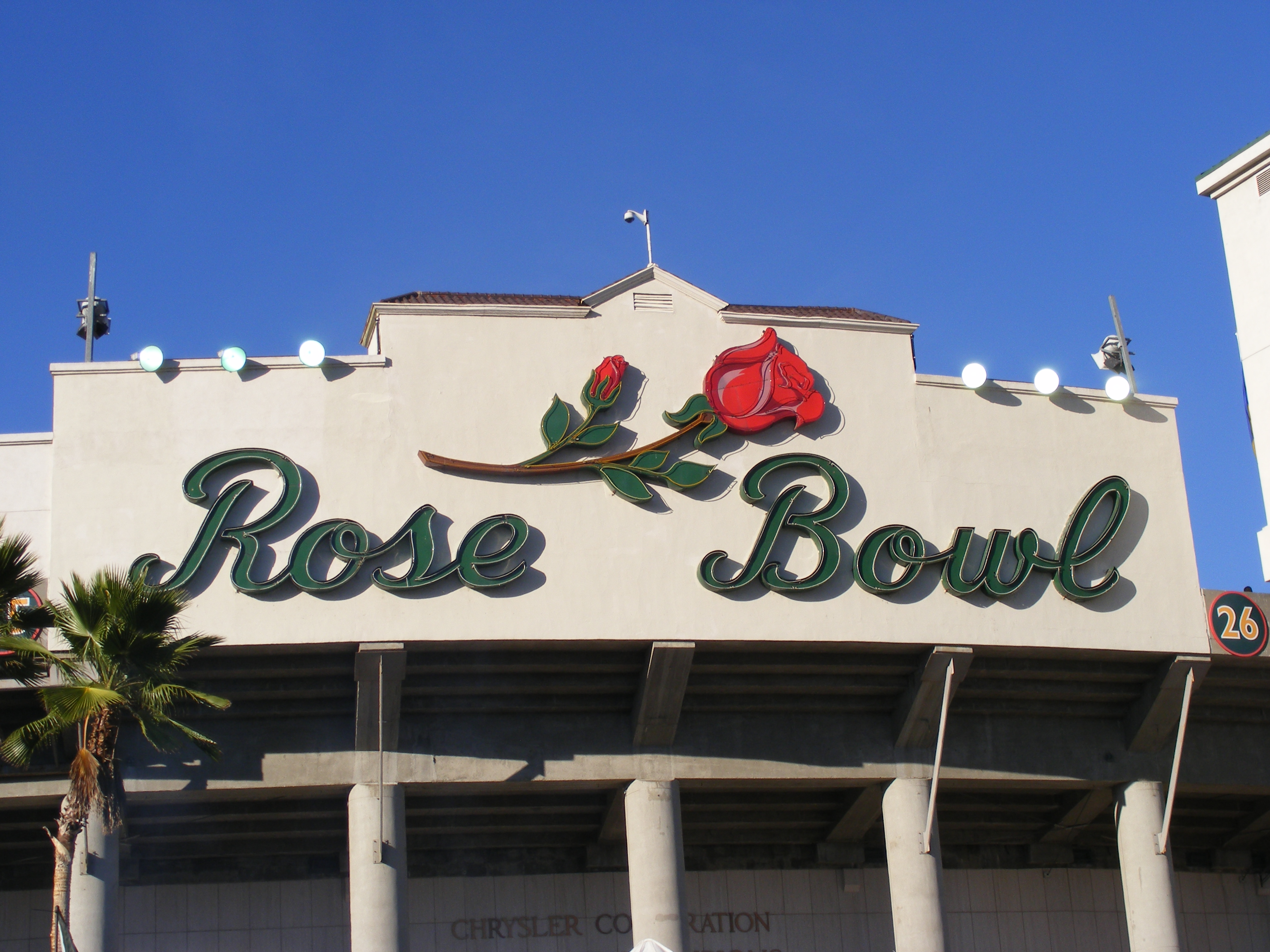
Fifteen sports venues were used for the 1932 Summer Olympics. In order to control costs in the wake of the Great Depression, existing venues were used. They included two golf courses, two city parks, three public highways, and a city road. The Swimming Stadium was the only new venue constructed for these games. The Rose Bowl, constructed in 1921, was made into a temporary velodrome for track cycling events under the auspices of the Union Cycliste Internationale (UCI). The Los Angeles Memorial Coliseum, constructed in 1923, was used as the Olympic Stadium. The Olympic Auditorium was constructed in 1924 in preparation for Los Angeles being awarded the Games; it was modified to meet the specifications of the boxing, weightlifting, and wrestling federations. Elysian Park, the oldest city park in Los Angeles, was founded in 1886, and has been part of the Los Angeles Police Department (LAPD) training academy since 1925. The Riviera Country Club opened in 1926 as the Los Angeles Athletic Club Golf Course and was renamed Riviera by the time of the 1932 Games. The Swimming Stadium, constructed adjacent to the Coliseum in 1932, was intended to be a temporary structure. Riverside Drive, Los Angeles Avenue, Vineyard Avenue, and the Pacific Coast Highway were common driving routes in California at the time of the 1932 Games.
The Coliseum was the first (& temporary) Los Angeles home for the National League (NL) Dodgers baseball team when it moved from Brooklyn, New York before the 1958 season. The following year, it hosted the 2nd 1959 MLB All-Star Game and games 3, 4 & 5 of the 1959 World Series. When Dodger Stadium was completed in 1962, the Dodgers moved there where they have been since. The National Football League (NFL) Los Angeles Rams used the Coliseum as its host stadium from 1946 to 1979 when it moved to Anaheim, located southeast of Los Angeles. It also hosted what became known as Super Bowl I in 1967. Even the American Football League's Chargers used the Coliseum as a venue in 1960 until their move to San Diego the following year. The Coliseum continues to host USC Trojans football games to this day, and also hosted UCLA Bruins football for a number of years. The Rams returned to the Coliseum for a span of four years from 2016 to 2019 while SoFi Stadium was being built.
The track constructed in the Rose Bowl was given to the Tournament of Roses Association upon completion of the 1932 Games. It hosted Super Bowl XI in 1977, where the Oakland Raiders defeated the Minnesota Vikings 32–14. It is the current home of UCLA Bruins football and the Rose Bowl Game, and was the home of the Major League Soccer (MLS) Los Angeles Galaxy from 1996 to 2003.
Elysian Park's shooting range was left intact for the LAPD to use. Sunset Fields Golf Club was renamed Brentwood Country Club in 1941 and is still in use as of 2010. All of the road courses were returned to public usage after the Olympics. until June 2005 when it was bought to be used as a megachurch. Los Angeles Harbor continues to be a major sea port in the Western United States, employing 919,000 people and generating US$39.1 billion in annual wages and tax revenues as of 2007. The Riveria Country Club continues to host golf events, hosting the 1948 U.S. Open and the PGA Championship in 1983 and 1995. The Swim Stadium was renovated in 2003 and continues to be in use as of 2010.
For the 1984 Summer Olympics and 2028 Summer Olympics, the Coliseum and the Rose Bowl were used as venues, making both became the first stadiums to have ever hosted three different Olympiads.
| Venue | Sports | Capacity | Ref. | |
|---|---|---|---|---|
| [160th Regiment State Armory](160th-regiment-state-armory) | Fencing, Modern pentathlon (fencing) | 1,800 | ||
| Los Angeles Harbor | Sailing | Not listed | ||
| Los Angeles Police Pistol Range | Modern pentathlon (shooting), Shooting | Not listed | ||
| Long Beach Marine Stadium | Rowing | 17,000 | ||
| Los Angeles Avenue | Cycling (road) | Not listed | ||
| Olympic Auditorium | Boxing, Weightlifting, Wrestling | 10,000. | ||
| Olympic Stadium | Athletics, Equestrian (eventing, jumping), Field hockey, Gymnastics | 105,000 | ||
| Pacific Coast Highway | Cycling (road) | Not listed | ||
| Riverside Drive at Griffith Park | Athletics (50 km walk) | Not listed | ||
| Riviera Country Club | Equestrian (dressage, eventing), Modern pentathlon (riding) | 9,500 | ||
| Rose Bowl in Pasadena | Cycling (track) | 85,000 | ||
| Sunset Fields Golf Club | Modern pentathlon (running) | Not listed | ||
| Swimming Stadium | Diving, Modern pentathlon (swimming), Swimming, Water polo | 10,000 | ||
| Vineyard Avenue | Cycling (road) | Not listed | ||
| Westchester | Equestrian (cross-country riding) | Not listed |
Participating nations


A total of 37 nations were represented at the 1932 Games. Colombia made its first appearance at the Olympic Games, and the Republic of China competed for the first time after its failed appearance at the 1924 Games.
The nations that participated in the previous games in Amsterdam 1928 but were absent in Los Angeles 1932 was Bulgaria, Chile, Egypt, Lithuania, Luxembourg, Malta, Monaco, Panama, Rhodesia and Romania.
At the time, Australia and New Zealand were dominions of the British Empire. India was also part of the British Empire, but was not a dominion. With the Statute of Westminster 1931 Ireland, Canada and South Africa are recognized as sovereign states in their own right. The whole statute was applied to the three countries without the need for any acts of ratification.
Philippines was an unincorporated territory and commonwealth of the United States.
| Participating National Olympic Committees |
|---|
Number of athletes by National Olympic Committees
| Country | Athletes |
|---|---|
| USA | 474 |
| JPN | 157 |
| GER | 134 |
| ITA | 112 |
| GBR | 108 |
| FRA | 103 |
| CAN | 102 |
| BRA | 82 |
| SWE | 81 |
| MEX | 73 |
| HUN | 58 |
| POL | 51 |
| NED | 45 |
| DEN | 43 |
| FIN | 40 |
| BEL | 36 |
| ARG | 32 |
| NZL | 21 |
| AUT | 19 |
| IND | 19 |
| AUS | 12 |
| RSA | 12 |
| GRE | 10 |
| IRL | 8 |
| PHI | 8 |
| TCH | 7 |
| POR | 6 |
| ESP | 6 |
| SUI | 6 |
| NOR | 5 |
| EST | 2 |
| HAI | 2 |
| LAT | 2 |
| ROC | 1 |
| COL | 1 |
| URU | 1 |
| YUG | 1 |
| **Total** | **1,332** |
Medal count
Main article: 1932 Summer Olympics medal table
These are the top ten nations that won medals at the 1932 Games.
Gallery
File:General view of Los Angeles Olympic Stadium on the opening day of the Games of the Xth Olympiad, while contenders from all nations take the Olympic Athlete's Oath.jpg|The Coliseum during the opening ceremony
Notes
References
Bibliography
References
- (25 June 2024). "Factsheet - Opening Ceremony of the Games of the Olympiad". International Olympic Committee.
- Zarnowski, C. Frank. (Summer 1992). "A Look at Olympic Costs". Citius, Altius, Fortius.
- (April 10, 1923). "Los Angeles gets Olympics of 1932". [[The New York Times]].
- "1932 Los Angeles Olympic Athlete's Village - Baldwin Hills- Baldwin Hills Information".
- link. (November 14, 2007 , National Landmarks Program, National Park Service, ''Accessed November 12, 2007.'')
- Martin, D. E., Martin, D. A., & Gynn, R. W. (2000). The Olympic Marathon. Human Kinetics. p. 146.
- (29 August 2008). "Finland and Sweden renew old rivalry on the athletics track this weekend". [[Helsingin Sanomat]].
- Jalava, Juhani. (15 March 2005). "1925–1935: Yleisurheilu sai Suomen liikkeelle". [[Turun Sanomat]].
- Lynch, Steven. "What was unusual about the 3000-metre steeplechase final at the 1932 Olympics?". www.espn.co.uk.
- "80 metres Hurdles, Women". Olympedia.
- "Javelin Throw, Women". Olympedia.
- "High Jump, Women". Olympedia.
- "1932 Summer Olympics". Olympedia.
- "The Games of the Xth Olympiad Los Angeles 1932 Official Report". Xth Olympiade Committee of the Games of Los Angeles, U.S.A. 1932, Ltd..
- [http://www.rosebowlstadium.com/RoseBowl_history.php History of the Rose Bowl Stadium.] {{webarchive. link. (October 15, 2010 Accessed 13 October 2010.)
- link. (October 27, 2010 Accessed 13 October 2010.)
- Long Beach Marine Stadium was created in 1925 when [[Alamitos Bay]] was dredged, then further dredged seven years later in time for the 1932 Games.[http://www.longbeach.gov/park/parks_and_open_spaces/parks/marine_stadium.asp Long Beach Marine Stadium information.] {{webarchive. link. (October 2, 2010 Accessed 13 October 2010.)
- [http://www.historicechopark.org/id31.html History of Elysian Park.] {{webarchive. link. (December 18, 2005 Accessed 13 October 2010.)
- [http://www.lapdonline.org/search_results/content_basic_view/1134 History of the Los Angeles Department Police Academy.] {{Webarchive. link. (August 19, 2016 Accessed 13 October 2010.)
- link. (March 25, 2010 Accessed 14 October 2010.)
- [https://www.baseball-reference.com/teams/LAD/1958.shtml 1958 Los Angeles Dodgers Baseball-Reference season page.] {{Webarchive. link. (February 18, 2009 Accessed 15 October 2010.)
- [http://www.baseball-almanac.com/asgbox/yr1959as.shtml 1959 All-Star Game Baseball Almanac.] {{Webarchive. link. (January 14, 2020 Accessed 15 October 2010.)
- [https://www.baseball-reference.com/postseason/1959_WS.shtml Baseball-reference.com profile of the 1959 World Series.] {{Webarchive. link. (February 1, 2022 Accessed 15 October 2010.)
- [http://losangeles.dodgers.mlb.com/la/ballpark/history.jsp MLB.com profile of Dodger Stadium.] {{Webarchive. link. (July 25, 2016 Accessed 17 October 2010.)
- ''NFL 2001 Record and Fact Book'', Workman Publishing Co, New York, {{ISBN. 0-7611-2480-2, p. 280.
- [https://www.pro-football-reference.com/teams/ram/1980.htm Pro-Football Reference.com of the 1980 Los Angeles Rams.] {{Webarchive. link. (August 3, 2018 Accessed 15 October 2010.)
- [http://www.nfl.com/superbowl/history/recap/sbi NFL.com history of Super Bowl I.] {{webarchive. link. (September 5, 2015 Accessed 15 October 2010.)
- [http://www.chargers.com/team/history/chronology/1959-1969.html Chronology of the San Diego Chargers: 1959-69.] {{webarchive. link. (October 12, 2009 Accessed 15 October 2010.)
- [http://www.golfcalifornia.com/courses/los-angeles/brentwood-cc/ Golfcalifornia.com profile of the Brentwood Country Club.] {{Webarchive. link. (August 4, 2016 Accessed 15 October 2010.)
- The Olympic Auditorium continued to be of use for boxing and [[roller derby]] events[https://web.archive.org/web/20040911081823/http://www.lasports.org/lafacilities/display.php?s=Arena&id=24 LASports.org profile of the Grand Olympic Auditorium.] Accessed 15 October 2010.
- [http://www.portoflosangeles.org/newsroom/press_kit.asp Electronic Press Kit of the Port of Los Angeles.] {{webarchive. link. (September 27, 2010 Accessed 15 October 2010.)
- [https://web.archive.org/web/20100512192704/http://usga.usopen.com/2010/history/past-champions.html United States Golf Association US Open past champions: 1895-2009.] Accessed 15 October 2010.
- [https://web.archive.org/web/20061023163248/http://www.pgamediaguide.com/pgachampionship_detail.cfm?tournament_id=409&date=1983&tourn_name_id=2 PGA Media Guide of the 1983 PGA Championship.] Accessed 15 October 2010.
- link. (July 17, 2015 Accessed 15 October 2010.)
- [http://www.laparks.org/dos/aquatic/poolsReport04/pdf/condition/JohnAngrueSwimStadium.pdf LaParks.org profile of the LA84 Foundation/ John C. Argue Swim Stadium.] {{webarchive. link. (September 26, 2004 . Accessed 15 October 2010.)
- [http://www.la84foundation.org/6oic/OfficialReports/1984/1984v1pt1.pdf 1984 Summer Olympics official report.] {{webarchive. link. (November 2, 2010 Volume 1. Part 1. pp. 72-9, 129-131. Accessed 15 October 2010.)
- "Games Plan".
- (2018-01-29). "United Airlines Memorial Coliseum to be new name for L.A. landmark".
- "Rose Bowl to Host Men's and Women's Soccer Olympic Semifinals and Finals – Pasadena Now".
- [http://www.la84foundation.org/6oic/OfficialReports/1932/1932s.pdf 1932 Summer Olympics official report.] {{webarchive. link. (April 10, 2008 pp. 67-8, 70, 78, 84.)
- [http://www.la84foundation.org/6oic/OfficialReports/1932/1932s.pdf 1932 Summer Olympics official report.] {{webarchive. link. (April 10, 2008 pp. 76, 78, 585.)
- [http://www.la84foundation.org/6oic/OfficialReports/1932/1932s.pdf 1932 Summer Olympics official report.] {{webarchive. link. (April 10, 2008 p. 74.)
- [http://www.la84foundation.org/6oic/OfficialReports/1932/1932s.pdf 1932 Summer Olympics official report.] {{webarchive. link. (April 10, 2008 pp. 70-73.)
- [http://www.la84foundation.org/6oic/OfficialReports/1932/1932s.pdf 1932 Summer Olympics official report.] {{webarchive. link. (April 10, 2008 p. 87.)
- [http://www.la84foundation.org/6oic/OfficialReports/1932/1932s.pdf 1932 Summer Olympics official report.] {{webarchive. link. (April 10, 2008 p. 70.)
- [http://www.la84foundation.org/6oic/OfficialReports/1932/1932s.pdf 1932 Summer Olympics official report.] {{webarchive. link. (April 10, 2008 pp. 61-8.)
- [http://www.la84foundation.org/6oic/OfficialReports/1932/1932s.pdf 1932 Summer Olympics official report.] {{webarchive. link. (April 10, 2008 p. 86.)
- [http://www.la84foundation.org/6oic/OfficialReports/1932/1932s.pdf 1932 Summer Olympics official report.] {{webarchive. link. (April 10, 2008 pp. 73-4, 572.)
- [http://www.la84foundation.org/6oic/OfficialReports/1932/1932s.pdf 1932 Summer Olympics official report.] {{webarchive. link. (April 10, 2008 p. 574.)
- [http://www.la84foundation.org/6oic/OfficialReports/1932/1932s.pdf 1932 Summer Olympics official report.] {{webarchive. link. (April 10, 2008 pp. 68, 79, 83.)
- [http://www.la84foundation.org/6oic/OfficialReports/1932/1932s.pdf 1932 Summer Olympics official report.] {{webarchive. link. (April 10, 2008 pp. 77, 86-7.)
- "1932 Summer Olympics Overview". Olympedia.
- "Los Angeles 1932 Medal Table". International Olympic Committee.
This article was imported from Wikipedia and is available under the Creative Commons Attribution-ShareAlike 4.0 License. Content has been adapted to SurfDoc format. Original contributors can be found on the article history page.
Ask Mako anything about 1932 Summer Olympics — get instant answers, deeper analysis, and related topics.
Research with MakoFree with your Surf account
Create a free account to save articles, ask Mako questions, and organize your research.
Sign up freeThis content may have been generated or modified by AI. CloudSurf Software LLC is not responsible for the accuracy, completeness, or reliability of AI-generated content. Always verify important information from primary sources.
Report