From Surf Wiki (app.surf) — the open knowledge base
1984 Summer Olympics
Multi-sport event in Los Angeles, California, US
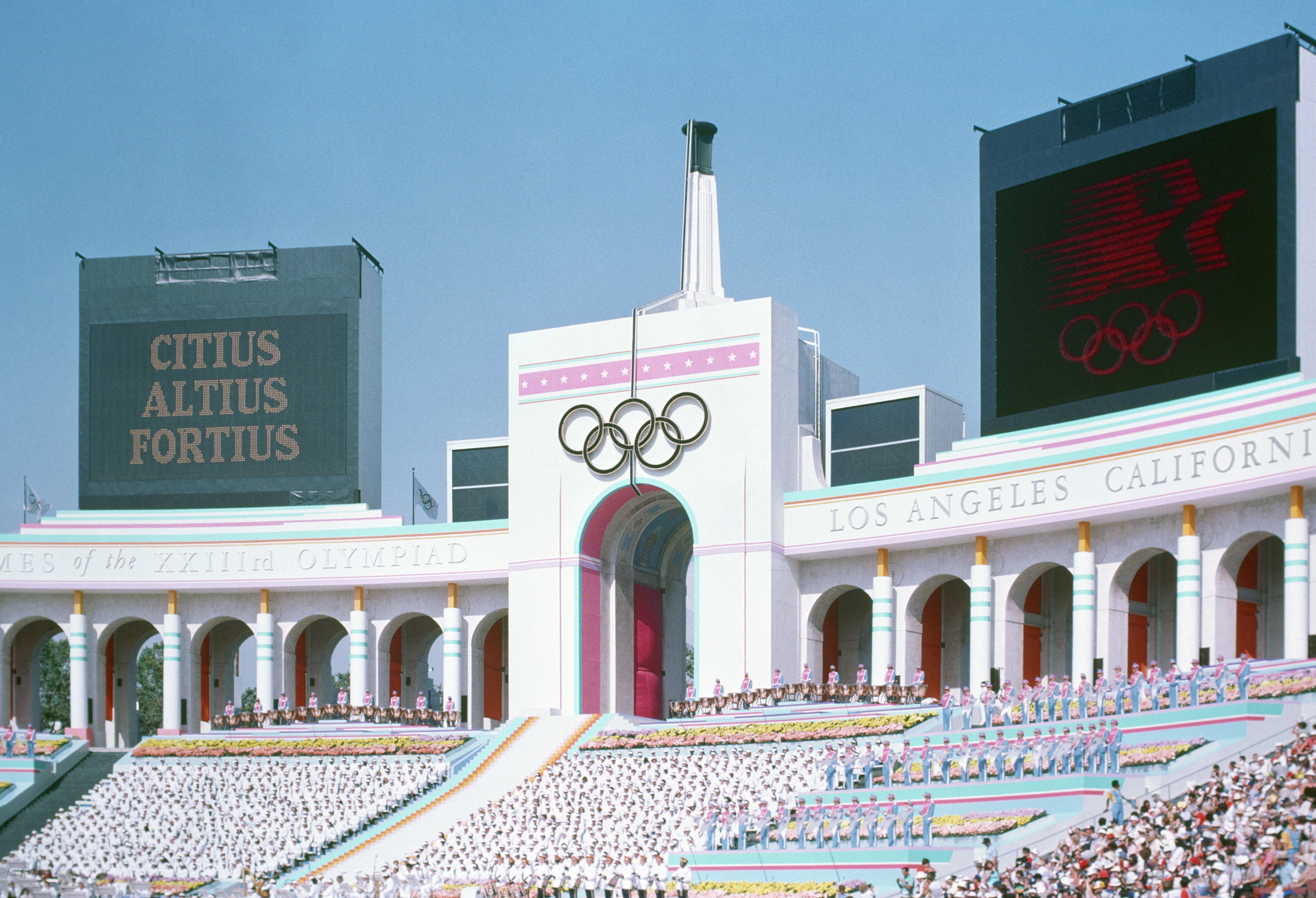
Multi-sport event in Los Angeles, California, US
| Field | Value |
|---|---|
| image | 1984 Summer Olympics logo.svg |
| image_size | 260 |
| host_city | Los Angeles, United States |
| motto | *Play a Part in History* |
| nations | 140 |
| athletes | 6,800 (5,231 men, 1,569 women) |
| events | 221 in 21 sports (29 disciplines) |
| opening | July 28, 1984 |
| closing | August 12, 1984 |
| opened_by | President Ronald Reagan |
| closed_by | IOC President Juan Antonio Samaranch |
| cauldron | Rafer Johnson |
| stadium | Los Angeles Memorial Coliseum |
| summer_prev | [Moscow 1980](1980-summer-olympics) |
| summer_next | [Seoul 1988](1988-summer-olympics) |
| winter_prev | [Sarajevo 1984](1984-winter-olympics) |
| winter_next | [Calgary 1988](1988-winter-olympics) |
The 1984 Summer Olympics (officially the Games of the XXIII Olympiad and commonly known as Los Angeles 1984) were an international multi-sport event held from July 28 to August 12, 1984, in Los Angeles, California, United States. It was the second time that Los Angeles had hosted the Games, the first being in 1932. This was the first of two consecutive Olympic Games to be held in North America, with Calgary, Alberta, Canada, hosting the 1988 Winter Olympics. California was the home state of the incumbent U.S. president Ronald Reagan, who officially opened the Games. These were the first Summer Olympic Games under the IOC presidency of Juan Antonio Samaranch.
The 1984 Games were boycotted by fourteen Eastern Bloc countries, including the Soviet Union and East Germany, in response to the American-led boycott of the 1980 Summer Olympics in Moscow, Russian SFSR, Soviet Union, in protest of the Soviet invasion of Afghanistan; Romania was the only Soviet-aligned state that opted to attend the Games. Albania, Iran, Libya and Upper Volta also chose to boycott the Games, but for unrelated reasons.
Despite the field being depleted in certain sports due to the boycott, 140 National Olympic Committees took part in the 1984 Games, a record number at the time. The United States won the most gold and overall medals, followed by Romania and West Germany.
The 1984 Summer Olympics are widely considered to be the most financially successful modern Olympics, serving as an example on how to run an Olympic Games. As a result of low construction costs, due to the use of existing sport infrastructure, coupled with a reliance on private corporate funding, the 1984 Games generated a profit of over .
On July 18, 2009, a 25th anniversary celebration of the 1984 Games was held at the Los Angeles Memorial Coliseum. The celebration included a speech by former Los Angeles Olympic Organizing Committee president Peter Ueberroth, a short re-enactment of the Flying Rocketman sequence, the presentation of more than 35 (mostly South California-based) gold medal winners from 1984 (which was part of Ceremonies producer David Wolper's original 1984 plans) as well as a re-lighting of the Olympic cauldron.
Los Angeles will host the Summer Olympics for the third time in 2028, becoming the third city in the world—following London and Paris—to do so.
Host selection
Main article: Los Angeles bid for the 1984 Summer Olympics
After the terrorist attack at the 1972 Summer Olympics, the significant financial debts of Montreal (1976), and various boycotts by National Olympic Committees, few cities by the late 1970s were willing to bid for the Summer Olympics. Only two cities (Tehran and Los Angeles) made serious bids for the 1984 Summer Games. Tehran submitted its bid to host the 1984 Summer Olympics to the International Olympic Committee (IOC) on 29 August 1975. The selection of the host city was made at the 80th IOC Session in Athens on 18 May 1978, where Los Angeles was chosen as the host city.
Los Angeles had unsuccessfully bid for the two previous Summer Olympic Games (1976 and 1980, which went to Montreal and Moscow, respectively). The United States Olympic Committee (USOC) had submitted at least one bid for every Olympics since 1944 but had not succeeded since the Los Angeles Olympics in 1932, the previous time only a single bid had been issued for the Summer Olympics.
| City | Nation | Votes |
|---|---|---|
| **Los Angeles** | **** | **Unanimous** |
| Tehran | Iran | Did not advance |
Torch relay
Main article: 1984 Summer Olympics torch relay
The 1984 Olympic Torch Relay began in New York City and ended in Los Angeles, traversing 33 states and the District of Columbia. Unlike later torch relays, the torch was continuously carried by runners on foot. The route covered more than 9,320 mi (15,000 km) and involved 3,636 runners. Noted athlete O. J. Simpson was among the runners, carrying the torch up the California Incline in Santa Monica. Gina Hemphill, a granddaughter of Jesse Owens, carried the torch into the Coliseum, completed a lap around the track, then handed it off to the final runner, Rafer Johnson, winner of the decathlon at the 1960 Summer Olympics. With the torch, he touched off the flame which passed through a specially designed flammable Olympic logo, igniting all five rings. Johnson became the first person of African descent to light the cauldron in Olympic history. The flame then passed up to the cauldron atop the peristyle and remained aflame for the duration of the Games.
Music
John Williams composed the theme for the Olympiad, "Los Angeles Olympic Theme" later also known as "Olympic Fanfare and Theme". This piece won a Grammy for Williams and became one of the most well-known musical themes of the Olympic Games, along with Leo Arnaud's "Bugler's Dream"; the latter is sometimes attached to the beginning of Olympic Fanfare and Theme. Composer Bill Conti also wrote a song to inspire the weightlifters called "Power". An album, The Official Music of the XXIII Olympiad—Los Angeles 1984, featured those three tracks along with sports themes written for the occasion by popular musical artists including Foreigner, Toto, Loverboy, Herbie Hancock, Quincy Jones, Christopher Cross, Philip Glass, Paul Engemann and Giorgio Moroder. "Reach Out" was the main soundtrack and is the official theme song of the 1984 Summer Olympics.
The Brazilian composer Sérgio Mendes also produced a special song for the 1984 Olympic Games, "Olympia," from his 1984 album Confetti. A choir of approximately one thousand voices was assembled of singers in the region. All were volunteers from nearby churches, schools and universities.
Etta James performed "When the Saints Go Marching In" at the Opening Ceremony.
Vicki McClure, along with the International Children's Choir of Long Beach, sang "Reach Out and Touch".
Alongside Williams and the house orchestra, 84 pianists performed an abridged version of George Gershwin's composition Rhapsody in Blue.
Lionel Richie performed a special extended 9-minute version of his hit single "All Night Long" at the closing ceremonies.
Mascot
Main article: Sam (mascot)
The mascot was a bald eagle named Sam the Olympic Eagle.
Highlights

Olympic Arts Festival
The 1984 Summer Olympics was preceded by the 10-week-long adjunct Olympic Arts Festival or the Cultural Olympics, which opened on June 1 and ended on August 12. It provided more than 400 performances by 146 theater, dance, and music companies, representing every continent and 18 countries, as well as art exhibitions and films. It was organized by then-CalArts President Robert Fitzpatrick. Along with many famous American dance companies, such as the Dance Theatre of Harlem, the festival hosted three international debuts: German choreographer Pina Bausch and her Tanztheater Wuppertal, Groupe Emile Dubois from France, and the Japanese Butoh.
General
- This was the first edition in which new rules of coexistence within the Olympic Village were implemented and it was decided that from this edition onwards all athletes would have to stay in the same place, as opposed to being divided by gender and sometimes even political blocs which was the case previously.
- Also for the first time in history, the International Olympic Committee authorized the formal segments of the opening ceremony to be interspersed with the cultural segments. The start of the event featured the arrival of Bill Suitor by means of the Bell Aerosystems rocket pack (also known as a Jet Pack).
- The United States topped the medal count for the first time since 1968, winning a record 83 gold medals and surpassing the Soviet Union's total of 80 golds at the 1980 Summer Olympics.
- As a result of an Nagoya Resolution signed in 1979, and the designating the Republic of China (Taiwan) as Chinese Taipei, the People's Republic of China returned to the Summer Olympics for the first time since Helsinki 1952. The Military anthem of China was played for both teams during the opening ceremony.
- Local Los Angeles artist Rodolfo Escalera was commissioned to create nine paintings depicting the Summer Games that would later be turned into collectible plates and presented as "The Official Gift of the 1984 Olympics". LAOOC also designed Ernie Barnes as "Sports Artist of the 1984 Summer Olympic Games" and Barnes was commissioned to create five Olympic-themed paintings and serve as an official Olympic spokesman to encourage inner-city youth.
Track and field
- Carl Lewis of the United States, making his first of four appearances at the Olympics, equaled the 1936 performance of Jesse Owens by winning four gold medals, in the 100 m, 200 m, 4 × 100 m relay and long jump.
- Edwin Moses of the United States won the gold medal in the 400m hurdles 8 years after winning in 1976.
- Joaquim Cruz of Brazil won the 800 meter run with a time of 1:43.00 to set an Olympic record.
- Nawal El Moutawakel of Morocco became the first female Olympic champion of a Muslim nation—and the first of her country—in the 400 m hurdles.
- Carlos Lopes, from Portugal, won the Marathon at the age of 37, with a time of 2:09:21, an Olympic record that stood for 24 years. It was the first gold medal ever for Portugal. Gold medal favorite, World Record holder and the then World Champion, Robert de Castella from Australia, finished in 5th place, 1:48 behind Lopes.
- A marathon for women was held for the first time at the Olympics (won by Joan Benoit of the U.S.). The event was also remembered for Swiss runner Gabriela Andersen-Schiess, who – suffering from heat exhaustion – entered the stadium for the final lap in a state of almost total exhaustion, barely able to walk but eventually completing the race, collapsing at the finishing line and being immediately treated by medical personnel.
- Daley Thompson of Great Britain apparently missed a new world record in winning his second consecutive gold medal in the decathlon; the next year, his score was retroactively raised to 8847, giving him the record.
- Sebastian Coe of Great Britain became the first man to win consecutive gold medals in the 1500m.
- Maricica Puică of Romania won the 3000 meters, known for the Mary Decker vs. Zola Budd rivalry. World champion and heavy favorite Decker fell after a controversial collision with Budd. However, Puică had the best annual time at the distance, easily run away from silver medalist Wendy Sly of Great Britain and appeared to have more to give if it had been necessary. Puică was injured during the very first Track and Field World Championships in Helsinki the year before, in which Decker had won both the 1500 meters and the 3000 meters.
Other sports
- The first gold medal to be awarded at the Los Angeles Olympics was also the first-ever medal to be won by an athlete from China when Xu Haifeng won the 50 m Pistol event.
- Archer Neroli Fairhall from New Zealand was the first paraplegic Olympian at any Olympic Games, coming 35th in the Women's individual event.
- Synchronized swimming and rhythmic gymnastics debuted in Los Angeles as Olympic events, as did wind surfing.
- Li Ning from the People's Republic of China won 6 medals in gymnastics, 3 gold, 2 silver, and 1 bronze, earning him the nickname "Prince of Gymnasts" in China. Li would later light the Olympic Cauldron at the 2008 Olympics.
- Steve Redgrave of Great Britain won his first title in rowing of the record five he would go on to win in five Olympic competitions.
- Victor Davis of Canada set a new world record in winning the gold medal in the 200-meter breaststroke in swimming.
- Mary Lou Retton of the United States became the first gymnast outside Eastern Europe to win the gymnastics all-around competition.
- In men's gymnastics, the American team won the gold medal.
- France won the Olympic association football (soccer) tournament, defeating Brazil 2–0 in the final. Olympic football was unexpectedly played before massive crowds throughout America, with several sell-outs at the 100,000+ seat Rose Bowl. This interest eventually led to the U.S. hosting the 1994 FIFA World Cup.
- The Soviet-led boycott affected weightlifting more than any other sport: 94 of the world's top 100 ranked lifters were absent, as were 29 of the 30 medalists from the recent world championships. All 10 of the defending world champions in the 10 weight categories were absent. The success of the Eastern Bloc countries might be explained by state-run doping programs that had been developed there.
- Future Dream Team members Michael Jordan, Patrick Ewing, and Chris Mullin were on the team that won the gold medal in basketball. The 1984 U.S. men's Olympic basketball team was coached by Indiana Hoosiers head coach Bobby Knight.
- Connie Carpenter-Phinney of the United States became the first woman to win an Olympic cycling event when she won the women's individual road race.
- In the judo open division, four-time world champion Yasuhiro Yamashita of Japan tore a right calf muscle in the preliminary match against Arthur Schnabel. This put Yamashita at a huge disadvantage since he executed his throws by pivoting on his right leg. Though he managed to win the match with an Okuri-Eri-Jime, the injury caused him to visibly limp during the semi-final match against Laurent Del Colombo. Yamashita was thrown with an Osoto Gari only 30 seconds into the match, but managed to return an Osoto Gari and won the match with a Yoko-Shiho-Gatame (side four-quarter hold). He played the final match against Mohamed Ali Rashwan of Egypt. Yamashita won the final and the gold medal despite his injury. The match witnessed a remarkable fair play act from Rashwan who did not aim for Yamashita's right leg. Rashwan was even given an award from the International Fairplay Committee.
Venues
Main article: Venues of the 1984 Summer Olympics
Venues in the city of Los Angeles
- Los Angeles Memorial Coliseum – opening/closing ceremonies, athletics
- Los Angeles Memorial Sports Arena – boxing
- Dodger Stadium – baseball
- Pauley Pavilion, University of California, Los Angeles – gymnastics
- Eagle's Nest Arena, California State University, Los Angeles – judo
- Olympic Swim Stadium, University of Southern California – swimming, diving, synchronized swimming
- Olympic Village (athlete housing), University of Southern California
- Los Angeles Tennis Center, University of California, Los Angeles – tennis
- Athletes Village, University of California, Los Angeles
- Albert Gersten Pavilion, Loyola Marymount University, Westchester, California – weightlifting
- Streets of Los Angeles – athletics (marathon)
Venues in Southern California
- El Dorado Park, Long Beach, California – archery
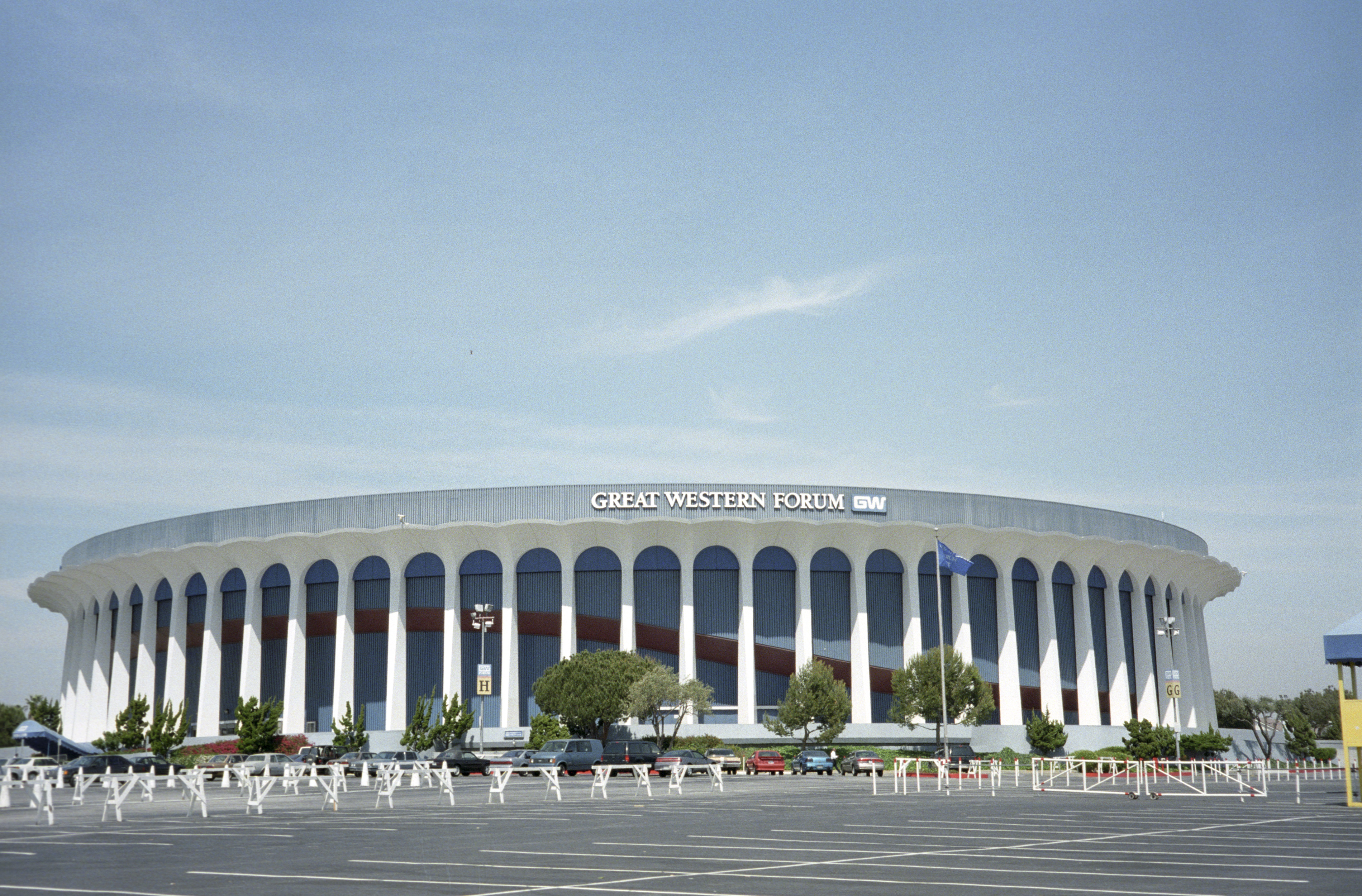
- The Forum, Inglewood, California – basketball and team handball finals
- Lake Casitas, Ventura County, California – canoeing, rowing
- Olympic Velodrome, California State University, Dominguez Hills, Carson, California – cycling (track)
- Mission Viejo, Orange County, California – cycling (individual road race)
- Santa Anita Park, Arcadia, California – equestrian
- Fairbanks Ranch Country Club, Rancho Santa Fe, California, California – equestrian sports (eventing endurance)
- Long Beach Convention Center, Long Beach, California – fencing
- Rose Bowl, Pasadena, California – football (final)
- Titan Gymnasium, California State University, Fullerton, Fullerton, California – handball
- Weingart Stadium, East Los Angeles College, Monterey Park, California – field hockey
- Coto de Caza, Orange County, California – modern pentathlon (fencing, riding, running, shooting)
- Olympic Shooting Range, Prado Recreational Area, Chino, California – shooting
- Long Beach Arena, Long Beach, California – volleyball
- Raleigh Runnels Memorial Pool, Pepperdine University, Malibu, California – water polo
- Anaheim Convention Center, Anaheim, California – wrestling
- Long Beach Shoreline Marina, Long Beach, California – sailing
- Artesia Freeway – cycling (road team time trial)
- Heritage Park Aquatic Center, Irvine, California – modern pentathlon (swimming)
- Santa Monica College, Santa Monica, California – athletics (marathon start)
- Santa Monica, California – athletics (marathon)
Other venues
- Harvard Stadium, Harvard University, Boston, Massachusetts – football preliminaries
- Navy–Marine Corps Memorial Stadium, United States Naval Academy, Annapolis, Maryland – football preliminaries
- Stanford Stadium, Stanford University, Stanford, California – football preliminaries
Sports
The 1984 Summer Olympic program featured 221 events in the following 21 sports:
Aquatics
- Road (3)
- Track (5)
- Dressage (2)
- Eventing (2)
- Show jumping (2)
- Artistic (14)
- Rhythmic (1)
- Freestyle (10)
- Greco-Roman (10)
Demonstration sports
Calendar
:All times are in Pacific Daylight Time (UTC-7); the other two cities, Boston and Annapolis use Eastern Daylight Time (UTC-4)
| ● | Opening ceremony | Event competitions | ● | Event finals | ● | Closing ceremony |
|---|
| Date | July | August | 28th | ||||||||||||||||||||||||||||||||||||||||||||||||||
|---|---|---|---|---|---|---|---|---|---|---|---|---|---|---|---|---|---|---|---|---|---|---|---|---|---|---|---|---|---|---|---|---|---|---|---|---|---|---|---|---|---|---|---|---|---|---|---|---|---|---|---|---|---|
| Sat | 29th | ||||||||||||||||||||||||||||||||||||||||||||||||||||
| Sun | 30th | ||||||||||||||||||||||||||||||||||||||||||||||||||||
| Mon | 31st | ||||||||||||||||||||||||||||||||||||||||||||||||||||
| Tue | 1st | ||||||||||||||||||||||||||||||||||||||||||||||||||||
| Wed | 2nd | ||||||||||||||||||||||||||||||||||||||||||||||||||||
| Thu | 3rd | ||||||||||||||||||||||||||||||||||||||||||||||||||||
| Fri | 4th | ||||||||||||||||||||||||||||||||||||||||||||||||||||
| Sat | 5th | ||||||||||||||||||||||||||||||||||||||||||||||||||||
| Sun | 6th | ||||||||||||||||||||||||||||||||||||||||||||||||||||
| Mon | 7th | ||||||||||||||||||||||||||||||||||||||||||||||||||||
| Tue | 8th | ||||||||||||||||||||||||||||||||||||||||||||||||||||
| Wed | 9th | ||||||||||||||||||||||||||||||||||||||||||||||||||||
| Thu | 10th | ||||||||||||||||||||||||||||||||||||||||||||||||||||
| Fri | 11th | ||||||||||||||||||||||||||||||||||||||||||||||||||||
| Sat | 12th | ||||||||||||||||||||||||||||||||||||||||||||||||||||
| Sun | Total gold medals | 9 | 8 | 13 | 10 | 12 | 16 | 24 | 21 | 10 | 5 | 14 | 11 | 20 | 43 | 4 | Date | 28th | |||||||||||||||||||||||||||||||||||
| Sat | 29th | ||||||||||||||||||||||||||||||||||||||||||||||||||||
| Sun | 30th | ||||||||||||||||||||||||||||||||||||||||||||||||||||
| Mon | 31st | ||||||||||||||||||||||||||||||||||||||||||||||||||||
| Tue | 1st | ||||||||||||||||||||||||||||||||||||||||||||||||||||
| Wed | 2nd | ||||||||||||||||||||||||||||||||||||||||||||||||||||
| Thu | 3rd | ||||||||||||||||||||||||||||||||||||||||||||||||||||
| Fri | 4th | ||||||||||||||||||||||||||||||||||||||||||||||||||||
| Sat | 5th | ||||||||||||||||||||||||||||||||||||||||||||||||||||
| Sun | 6th | ||||||||||||||||||||||||||||||||||||||||||||||||||||
| Mon | 7th | ||||||||||||||||||||||||||||||||||||||||||||||||||||
| Tue | 8th | ||||||||||||||||||||||||||||||||||||||||||||||||||||
| Wed | 9th | ||||||||||||||||||||||||||||||||||||||||||||||||||||
| Thu | 10th | ||||||||||||||||||||||||||||||||||||||||||||||||||||
| Fri | 11th | ||||||||||||||||||||||||||||||||||||||||||||||||||||
| Sat | 12th | ||||||||||||||||||||||||||||||||||||||||||||||||||||
| Sun | July | August | |||||||||||||||||||||||||||||||||||||||||||||||||||
| Archery | ● ● | ||||||||||||||||||||||||||||||||||||||||||||||||||||
| Athletics | ● ● | ● | |||||||||||||||||||||||||||||||||||||||||||||||||||
| ● ● | ● ● | ||||||||||||||||||||||||||||||||||||||||||||||||||||
| ● ● | ● ● ● ● | ||||||||||||||||||||||||||||||||||||||||||||||||||||
| ● ● ● ● | ● ● | ||||||||||||||||||||||||||||||||||||||||||||||||||||
| ● ● | ● | ||||||||||||||||||||||||||||||||||||||||||||||||||||
| ● ● | ● ● | ||||||||||||||||||||||||||||||||||||||||||||||||||||
| ● ● ● | ● ● ● | ||||||||||||||||||||||||||||||||||||||||||||||||||||
| ● ● ● ● | |||||||||||||||||||||||||||||||||||||||||||||||||||||
| ● ● ● ● | ● | ||||||||||||||||||||||||||||||||||||||||||||||||||||
| Basketball | ● | ● | |||||||||||||||||||||||||||||||||||||||||||||||||||
| Boxing | ● ● ● ● | ||||||||||||||||||||||||||||||||||||||||||||||||||||
| ● ● ● ● | |||||||||||||||||||||||||||||||||||||||||||||||||||||
| ● ● ● ● | |||||||||||||||||||||||||||||||||||||||||||||||||||||
| Canoeing | ● ● ● | ||||||||||||||||||||||||||||||||||||||||||||||||||||
| ● ● ● | ● ● ● | ||||||||||||||||||||||||||||||||||||||||||||||||||||
| ● ● ● | |||||||||||||||||||||||||||||||||||||||||||||||||||||
| Cycling | ● ● | ● | ● | ● | |||||||||||||||||||||||||||||||||||||||||||||||||
| ● ● | ● | ||||||||||||||||||||||||||||||||||||||||||||||||||||
| Diving | ● | ● | ● | ● | |||||||||||||||||||||||||||||||||||||||||||||||||
| Equestrian | ● ● | ● | ● | ● | ● | ||||||||||||||||||||||||||||||||||||||||||||||||
| Fencing | ● | ● | ● | ● | ● | ● | ● | ● | |||||||||||||||||||||||||||||||||||||||||||||
| Field hockey | ● | ● | |||||||||||||||||||||||||||||||||||||||||||||||||||
| Football | ● | ||||||||||||||||||||||||||||||||||||||||||||||||||||
| Gymnastics | ● | ● | ● | ● | ● ● ● | ||||||||||||||||||||||||||||||||||||||||||||||||
| ● ● ● | ● ● | ||||||||||||||||||||||||||||||||||||||||||||||||||||
| ● ● | ● | ||||||||||||||||||||||||||||||||||||||||||||||||||||
| Handball | ● | ● | |||||||||||||||||||||||||||||||||||||||||||||||||||
| Judo | ● | ● | ● | ● | ● | ● | ● | ● | |||||||||||||||||||||||||||||||||||||||||||||
| Modern pentathlon | ● ● | ||||||||||||||||||||||||||||||||||||||||||||||||||||
| Rowing | ● ● ● | ||||||||||||||||||||||||||||||||||||||||||||||||||||
| ● ● ● | ● ● ● ● | ||||||||||||||||||||||||||||||||||||||||||||||||||||
| ● ● ● ● | |||||||||||||||||||||||||||||||||||||||||||||||||||||
| Sailing | ● ● ● | ||||||||||||||||||||||||||||||||||||||||||||||||||||
| ● ● ● | |||||||||||||||||||||||||||||||||||||||||||||||||||||
| ● | |||||||||||||||||||||||||||||||||||||||||||||||||||||
| Shooting | ● ● | ● | ● | ||||||||||||||||||||||||||||||||||||||||||||||||||
| ● ● | ● | ● | ● ● | ● | |||||||||||||||||||||||||||||||||||||||||||||||||
| Swimming | ● ● | ||||||||||||||||||||||||||||||||||||||||||||||||||||
| ● ● | ● ● | ||||||||||||||||||||||||||||||||||||||||||||||||||||
| ● ● ● | ● ● | ||||||||||||||||||||||||||||||||||||||||||||||||||||
| ● ● ● | ● ● | ||||||||||||||||||||||||||||||||||||||||||||||||||||
| ● ● ● | ● ● | ||||||||||||||||||||||||||||||||||||||||||||||||||||
| ● ● ● | ● ● | ||||||||||||||||||||||||||||||||||||||||||||||||||||
| ● ● ● | |||||||||||||||||||||||||||||||||||||||||||||||||||||
| Synchronized swimming | ● | ● | |||||||||||||||||||||||||||||||||||||||||||||||||||
| Volleyball | ● | ● | |||||||||||||||||||||||||||||||||||||||||||||||||||
| Water polo | ● | ||||||||||||||||||||||||||||||||||||||||||||||||||||
| Weightlifting | ● | ● | ● | ● | ● | ● | ● | ● | ● | ● | |||||||||||||||||||||||||||||||||||||||||||
| Wrestling | ● | ||||||||||||||||||||||||||||||||||||||||||||||||||||
| ● ● | ● | ||||||||||||||||||||||||||||||||||||||||||||||||||||
| ● ● | ● ● | ||||||||||||||||||||||||||||||||||||||||||||||||||||
| ● ● | ● | ||||||||||||||||||||||||||||||||||||||||||||||||||||
| ● ● | ● | ||||||||||||||||||||||||||||||||||||||||||||||||||||
| ● ● | ● ● | ||||||||||||||||||||||||||||||||||||||||||||||||||||
| ● ● | |||||||||||||||||||||||||||||||||||||||||||||||||||||
| Ceremonies | [●](1984-summer-olympics-opening-ceremony) | [●](1984-summer-olympics-closing-ceremony) |
Medal count
Main article: 1984 Summer Olympics medal table
These are the top ten nations that won medals at the 1984 Games. ;Key Changes in medal standings (see here)
Participating National Olympic Committees
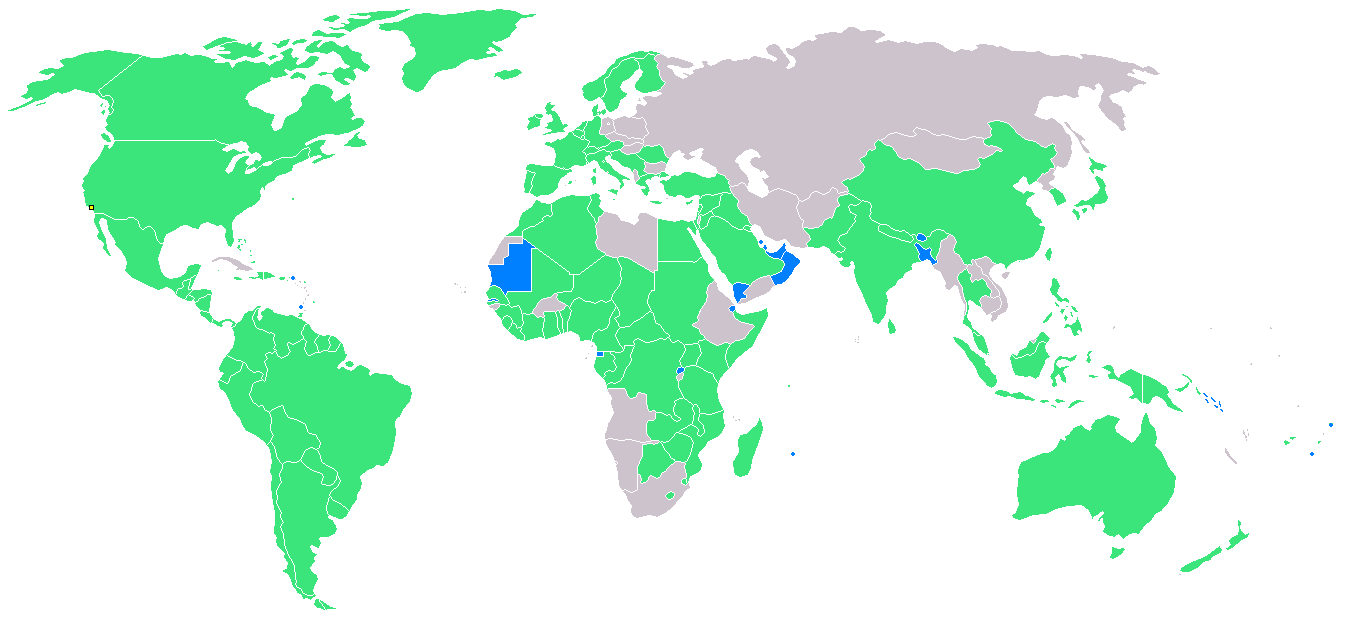

Athletes from 140 states competed at the 1984 Summer Olympics. Eighteen states made their Olympic debut: Bahrain, Bangladesh, Bhutan, British Virgin Islands, Djibouti, Equatorial Guinea, The Gambia, Grenada, Mauritania, Mauritius, North Yemen, Oman, Qatar, Rwanda, Western Samoa, Solomon Islands, Tonga, and the United Arab Emirates. Zaire had previously competed at the 1968 Summer Olympics as Congo-Kinshasa. The People's Republic of China made its first appearance in a Summer Olympics since 1952, while for the first time the Republic of China team participated under the politically contrived name of Chinese Taipei.
The Soviet Union led the Warsaw Pact members and other Communist countries in a boycott of the Los Angeles Olympics, in retaliation for the U.S.-led boycott of the Moscow Olympics four years earlier (over the Soviet Union's invasion of Afghanistan in 1979). The pretexts for the 1984 Soviet-led boycott were concerns over security, "chauvinistic sentiments" and "an anti-Soviet hysteria ... being whipped up" in the United States. However, a handful of communist countries disregarded the boycott and attended the Games anyway, among them Yugoslavia (host of the 1984 Winter Olympics), the People's Republic of China, and Romania (the only Warsaw Pact country that had opted to ignore the Soviet demands). The Romanian team received a particularly warm reception from the United States; when the Romanian athletes entered during the opening ceremonies, they were greeted by a standing ovation from the spectators, who were mostly U.S. citizens. This would turn out to be Romania's most successful Olympic Games – they won 53 medals, including 20 golds.
In the table below, the number of athletes representing each state is shown in parentheses.
| Participating National Olympic Committees |
|---|
Number of athletes by National Olympic Committees
| IOC Letter Code | Country | Athletes |
|---|---|---|
| USA | USA | 522 |
| CAN | CAN | 408 |
| FRG | FRG | 391 |
| GBR | GBR | 337 |
| ITA | ITA | 268 |
| AUS | AUS | 242 |
| FRA | FRA | 238 |
| JPN | JPN | 226 |
| CHN | CHN | 215 |
| ESP | ESP | 179 |
| KOR | KOR | 175 |
| SWE | SWE | 174 |
| BRA | BRA | 147 |
| YUG | YUG | 139 |
| HOL | NED | 136 |
| NZL | NZL | 130 |
| SUI | SUI | 129 |
| ROM | ROM | 124 |
| EGY | EGY | 114 |
| AUT | AUT | 103 |
| NOR | NOR | 103 |
| MEX | MEX | 99 |
| FIN | FIN | 86 |
| ARG | ARG | 81 |
| BEL | BEL | 63 |
| GRE | GRE | 63 |
| KEN | KEN | 61 |
| DEN | DEN | 60 |
| CHI | CHI | 52 |
| PUR | PUR | 51 |
| IND | IND | 48 |
| HKG | HKG | 47 |
| CMR | CMR | 46 |
| TUR | TUR | 46 |
| JAM | JAM | 45 |
| IRL | IRL | 42 |
| COL | COL | 39 |
| POR | POR | 38 |
| TPE | TPE | 38 |
| SAU | KSA | 37 |
| PER | PER | 35 |
| THA | THA | 35 |
| MAR | MAR | 34 |
| ALG | ALG | 33 |
| ISR | ISR | 32 |
| NGR | NGR | 32 |
| PAK | PAK | 31 |
| ISL | ISL | 30 |
| ISV | ISV | 29 |
| CRC | CRC | 28 |
| UGA | UGA | 26 |
| VEN | VEN | 26 |
| GUA | GUA | 24 |
| QAT | QAT | 24 |
| SEN | SEN | 24 |
| IRQ | IRQ | 23 |
| KUW | KUW | 23 |
| TUN | TUN | 23 |
| BAH | BAH | 22 |
| LIB | LIB | 22 |
| GHA | GHA | 21 |
| MAS | MAS | 21 |
| DOM | DOM | 19 |
| PHI | PHI | 19 |
| SMR | SMR | 19 |
| TAN | TAN | 18 |
| URU | URU | 18 |
| BAR | BAR | 16 |
| INA | INA | 16 |
| OMA | OMA | 16 |
| TRI | TRI | 16 |
| ZAM | ZAM | 16 |
| CIV | CIV | 15 |
| MAW | MAW | 15 |
| ZIM | ZIM | 15 |
| ANT | ANT | 14 |
| FIJ | FIJ | 14 |
| PAR | PAR | 14 |
| JOR | JOR | 13 |
| BER | BER | 12 |
| BIZ | BIZ | 11 |
| BOL | BOL | 11 |
| ECU | ECU | 11 |
| BRN | BRN | 10 |
| CYP | CYP | 10 |
| ESA | ESA | 10 |
| GAM | GAM | 10 |
| GUY | GUY | 10 |
| HON | HON | 10 |
| NEP | NEP | 10 |
| IVB | IVB | 9 |
| CGO | CGO | 9 |
| MOZ | MOZ | 9 |
| SEY | SEY | 9 |
| SYR | SYR | 9 |
| CAY | CAY | 8 |
| MON | MON | 8 |
| AHO | AHO | 8 |
| PAN | PAN | 8 |
| SWZ | SWZ | 8 |
| WSM | WSM | 8 |
| ZAI | ZAI | 8 |
| BOT | BOT | 7 |
| LBR | LBR | 7 |
| LIE | LIE | 7 |
| MLT | MLT | 7 |
| NGU | PNG | 7 |
| SLE | SLE | 7 |
| SOM | SOM | 7 |
| SUD | SUD | 7 |
| TON | TGA | 7 |
| UAE | UAE | 7 |
| BHU | BHU | 6 |
| GRN | GRN | 6 |
| TOG | TOG | 6 |
| LUX | LUX | 5 |
| MAD | MAD | 5 |
| NCA | NCA | 5 |
| SIN | SIN | 5 |
| SUR | SUR | 5 |
| GEQ | GEQ | 4 |
| GAB | GAB | 4 |
| LES | LES | 4 |
| MLI | MLI | 4 |
| MRI | MRI | 4 |
| NIG | NIG | 4 |
| SRI | SRI | 4 |
| BEN | BEN | 3 |
| CAF | CAF | 3 |
| CHA | CHA | 3 |
| DJI | DJI | 3 |
| HAI | HAI | 3 |
| RWA | RWA | 3 |
| SOL | SOL | 3 |
| AND | AND | 2 |
| MTN | MTN | 2 |
| YAR | YAR | 2 |
| BAN | BAN | 1 |
| BIR | BIR | 1 |
| GUI | GUI | 1 |
| **Total** | **6,800** |
Boycotting countries
Main article: 1984 Summer Olympics boycott
Fifteen countries took part in the Soviet-led boycott of the 1984 Summer Olympics:
- Afghanistan Afghanistan
- Angola Angola
- Bulgaria Bulgaria
- Cuba Cuba
- Czechoslovakia Czechoslovakia
- East Germany East Germany
- Ethiopia Ethiopia
- Hungary Hungary
- Laos Laos
- Mongolia Mongolia
- North Korea North Korea
- Poland Poland
- Soviet Union Soviet Union
- South Yemen South Yemen
- Vietnam Vietnam
Albania, Iran, Libya and Upper Volta (changed to Burkina Faso following August 4) also missed the Los Angeles Olympics, citing political reasons, but these countries were not a part of the Soviet-led boycott. Albania, Iran and Upper Volta were the only three countries to boycott both the 1980 and 1984 Summer Games.
- Albania Albania
- Iran Iran
- Libya Libya
- Upper Volta/Burkina Faso Upper Volta/Burkina Faso
Soviet doping plan
A document obtained in 2016 by the New York Times revealed the Soviet Union's plans for a statewide doping system in track and field in preparation for the 1984 Summer Olympics in Los Angeles. Dated prior to the country's decision to boycott the Games, the document detailed existing steroids operations of the program, along with suggestions for further enhancements.
Financial success of Los Angeles as host city

Following the news of the massive financial losses of the 1976 Summer Olympics in Montreal, the only two cities to express a genuine interest in hosting the 1984 Games were Los Angeles and New York. Given that only one city per country is allowed to bid for any one Games, the USOC vote for the American bid city was effectively the deciding vote for the 1984 Olympics host city. In this case, the Los Angeles bid received 55 votes compared with New York's 39 votes – this is the closest that the city of New York has ever come to being selected to host the Olympic Games, coming closer in 1984 than they did in their 2012 bid (when they lost to London).
Ambitious construction projects for the two previous Summer Olympics, Montreal 1976 and Moscow 1980, had burdened organizers with substantial debts as expenses greatly exceeded revenues. Furthermore, the 1976 and 1980 Olympics were entirely government-funded. Unlike Montreal and Moscow, Los Angeles 1984 was privately funded, with strict controls imposed on expenditure; rather than constructing new venues with overly ambitious designs, the organizers chose instead to utilize existing venues and facilities wherever possible. The main example of this was the Los Angeles Memorial Coliseum, which was also the Olympic Stadium for the 1932 Summer Olympics. The only two new venues constructed specifically for the 1984 Summer Olympics were secured with the backing of corporate sponsors: the Olympic Velodrome was largely funded by the 7-Eleven corporation and the Olympic Swim Stadium by McDonald's.
In addition to corporate support, the Olympic committee also used the income from the exclusive television rights, and for the first time these contracts would prove to be a significant source of revenue. Adjusted for inflation, the Los Angeles Games secured twice the amount of income received by the 1980 Moscow Summer Olympics and four times that of the 1976 Montreal Summer Olympics.
The low level of interest among potential host cities for the 1984 Games had been viewed as a major threat to the future of the Olympic Games. However, after the financial success of the Los Angeles Games, cities began to show a renewed interest in bidding to become host again. The Los Angeles and Montreal Games are seen as examples of best and worst practice when organizing the Olympics and serve as valuable lessons to prospective host cities.
Following the success of the 1984 Games, the Los Angeles OCOG, led by Peter Ueberroth, used the profits to create the LA84 Foundation for promoting youth sports in Southern California, educating coaches and maintaining a sports library.
In popular culture
The games were the subject of the 1983–84 United States commemorative coin series.
American fast food chain McDonald's ran a promotion titled "When the U.S. Wins, You Win" where customers scratched off a ticket with the name of an Olympic event on it. If the U.S. won a medal in that event, then they would be given a free menu item: a Big Mac for a gold medal, an order of french fries for a silver medal, and a Coca-Cola for a bronze medal. The promotion became more popular than expected due to the Soviet boycott which led to the U.S. winning far more Olympic medals than expected. This promotion was parodied in The Simpsons episode "Lisa's First Word", where Krusty Burger runs a similar offer. The promotion was intended to be rigged so that prizes would only be offered in events dominated by the Eastern Bloc, but the Soviet-led boycott causes Krusty to personally lose $44 million. He vehemently promises "to spit in every fiftieth burger," to which Homer retorts "I like those odds!" Chief Wiggum also exclaims that he could kiss Carl Lewis, who won four gold medals at the Games.
On NCIS, Tim McGee has an obsession with jet packs, stemming from having attended the 1984 Olympic ceremony as a child and having Bill Suitor fly over his head in his jet pack. This storyline is based on the real experience of executive producer and writer Jesse Stern.
Pop-punk band Bowling for Soup references the games in the song "I Can't Stand LA". During a section showing appreciation for the city, the song states, "thank you for hair metal and the '84 Olympics."
Jilly Cooper's novel Riders has a storyline set at the show jumping event at the 1984 Summer Olympics.
In the Seinfeld episode "The Gymnast", Jerry dates a woman who competed in the 1984 Olympics and won a silver medal for Romania.
In American Horror Story: 1984, the characters watch it together on the TV in the girls cabin.
In the same week that the Games began, British pop star Howard Jones released a single called "Like to Get to Know You Well" which eventually made number 4 on the UK Singles Chart and number 49 on the Billboard Hot 100 in the United States. On the sleeve, the record was "dedicated to the original spirit of the Olympic Games".
References
References
- (9 October 2014). "Factsheet - Opening Ceremony of the Games of the Olympiad". International Olympic Committee.
- "List of Olympic Host Cities – Architecture of the Games".
- "NO BOYCOTT BLUES".
- "Games of the XXIII Olympiad". International Olympic Committee.
- Abrahamson, Alan. (July 25, 2004). "LA the Best Site, Bid Group Insists; Olympics: Despite USOC rejection". [[Los Angeles Times]].
- Clarke, Norm. (April 7, 1984). "It's official: Sponsors help pay for Olympics". Spokesman-Review.
- Wharton, David. (September 13, 2017). "L.A. officially awarded 2028 Olympic Games". [[Los Angeles Times]].
- "سند تاریخی: ایران و میزبانی جام جهانی ۹۰".
- "Past Olympic host city election results". [[GamesBids]].
- (December 2, 2020). "Rafer Johnson, the Olympic gold medalist who helped bring the games to L.A., has died".
- (1984). "Official report of the Games of the XXIIIrd Olympiad, Los Angeles, 1984.". Los Angeles Olympic Organizing Committee.
- (December 8, 1984). "Various – The Official Music Of The XXIIIrd Olympiad – Los Angeles 1984 (LP) at Discogs".
- [
- (September 6, 2014). "Los Angeles 1984 Olympic Opening Ceremony Complete". YouTube.
- Malone, MacKenzie. (July 19, 2012). "Tuning into the Games, Watching the Olympics is the next best thing to playing". [[Times Union (Albany).
- "Los Angeles 1984 - The Mascot".
- "Olympic Arts Festival, June 1-August 12, 1984: Prelude to the Olympics".
- Rabkin, Gerald. (1984). "The Olympic Arts Festival". Performing Arts Journal, Inc..
- (23 October 2016). "Olympic Arts Festival, June 1-August 12, 1984: Prelude to the Olympics - A Gala Concert".
- "[https://library.olympics.com/Default/doc/SYRACUSE/161899/olympic-summer-games-villages-from-paris-1924-to-rio-2016-international-olympic-committee-olympic-st Olympic Summer Games Villages from Paris 1924 to Tokyo 2020] {{Webarchive. link. (2023-04-29 ." The Olympic Studies Centre. 2022 June 20.)
- [https://www.guinnessworldrecords.com/world-records/most-gold-medals-won-at-a-single-summer-olympic-games-country Most gold medals won at a single Summer Olympic Games - Country]
- Sky Documentary "Mary Decker vs Zola Budd", aired on Danish [[DR2]], 2.August 2018, 23:30 CEST
- Nick Mulvenney. (August 8, 2008). "Li Ning, "Prince of Gymnasts" and businessman". [[Reuters]].
- (August 13, 2016). "The Soviet Doping Plan: Document Reveals Illicit Approach to '84 Olympics". [[The New York Times]].
- "International Fairplay Committee - Mohamed Ali Rashwan".
- Burns, John F.. (May 9, 1984). "Moscow will keep its team from Los Angeles Olympics; Tass cites peril, U.S. denies it; Protests are issue". [[The New York Times]].
- (July 29, 1984). "'84 Olympics: Gala trumpets in Games". [[Beaver County Times]].
- (23 July 1984). "Romania: No Boycott, A Winning Presence". [[The Washington Post]].
- "1984 Olympics". infoplease.com.
- Genova, James. (November 2022). "Making New People Politics, Cinema, and Liberation in Burkina Faso, 1983-1987". [[Michigan State University Press]].
- Ruiz, Rebecca R.. (13 August 2016). "The Soviet Doping Plan: Document Reveals Illicit Approach to '84 Olympics". [[The New York Times]].
- Andrew H. Levin. (April 27, 2007). "No Olympics, No Problem: New York City's Political Regime after the Bid for the 2012 Games".
- "Let Boston 2024 pay for the Olympics". [[The Boston Globe]].
- Shoval, Noam. "A New Phase in the Competition For The Olympic Gold: The London and New York Bids For The 2012 Games." Journal of Urban Affairs 24.5 (2002): 583–99.
- Hollie, Pamela G.. (August 10, 1984). "Advertising; Big Mac's Olympic Giveaway". [[The New York Times]].
- "Ignition".
- "The Future is Now: NCIS meets the jet pack". CBS Studios.
This article was imported from Wikipedia and is available under the Creative Commons Attribution-ShareAlike 4.0 License. Content has been adapted to SurfDoc format. Original contributors can be found on the article history page.
Ask Mako anything about 1984 Summer Olympics — get instant answers, deeper analysis, and related topics.
Research with MakoFree with your Surf account
Create a free account to save articles, ask Mako questions, and organize your research.
Sign up freeThis content may have been generated or modified by AI. CloudSurf Software LLC is not responsible for the accuracy, completeness, or reliability of AI-generated content. Always verify important information from primary sources.
Report