From Surf Wiki (app.surf) — the open knowledge base
1932 Winter Olympics
Multi-sport event in Lake Placid, New York, US
Multi-sport event in Lake Placid, New York, US
| Field | Value |
|---|---|
| image | 1932 Winter Olympics logo.svg |
| image_size | 170 |
| host_city | Lake Placid, New York, United States |
| nations | 17 |
| athletes | 252 (231 men, 21 women) |
| events | 14 in 4 sports (7 disciplines) |
| opening | February 4, 1932 |
| closing | February 13, 1932 |
| opened_by | Governor Franklin D. Roosevelt |
| stadium | Olympic Stadium Lake Placid |
| winter_prev | [St. Moritz 1928](1928-winter-olympics) |
| winter_next | [Garmisch 1936](1936-winter-olympics) |
| summer_prev | [Amsterdam 1928](1928-summer-olympics) |
| summer_next | [Los Angeles 1932](1932-summer-olympics) |
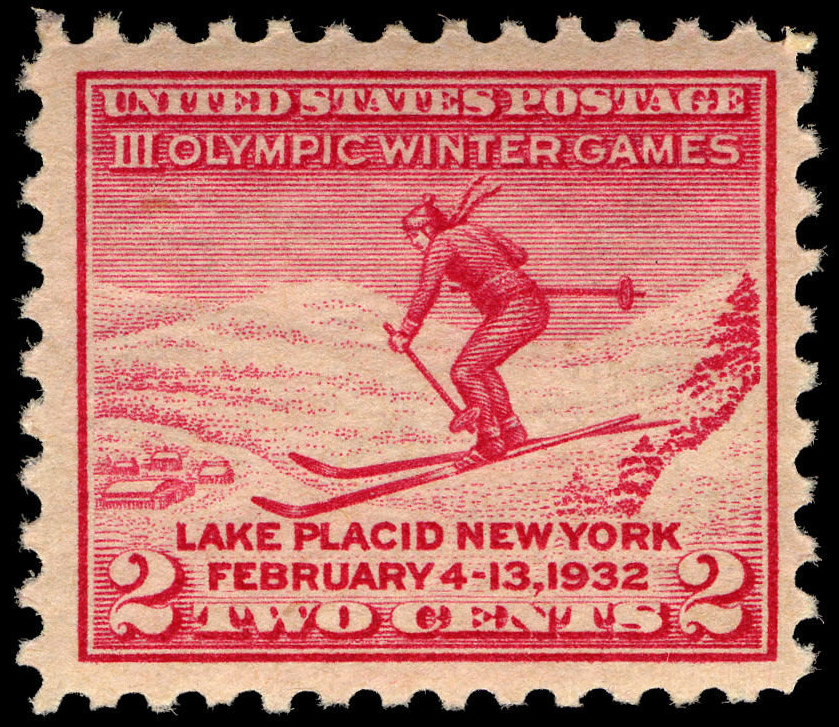
The 1932 Winter Olympics, officially known as the III Olympic Winter Games and commonly known as Lake Placid 1932, were a winter multi-sport event in the United States, held in Lake Placid, New York, United States. The games opened on February 4 and closed on February 13. It was the first time the Winter Games were held outside of Europe and the first of four Winter Olympics held in the United States; Lake Placid hosted again in 1980.
The games were awarded to Lake Placid in part by the efforts of Godfrey Dewey, head of the Lake Placid Club and son of Melvil Dewey, inventor of the Dewey Decimal System. California also had a bid for the 1932 Winter Games. William May Garland, president of the California X Olympiad Association, wanted the games to take place in Wrightwood and Big Pines, California. The world's largest ski jump at the time was constructed in Big Pines for the event, but the games were ultimately awarded to Lake Placid.
The practice of awarding Olympic medals at podium ceremonies was established at the 1932 Winter Olympics, based on pedestals used at the 1930 British Empire Games, as proposed by Melville Marks Robinson.
Highlights
- American company Coca-Cola became the official provider of that games' soft drinks and would remain so for all subsequent winter Olympics (as of 2024).
- The Games were opened by Franklin D. Roosevelt, then the Governor of New York. He would be elected President of the United States nine months later.
- The victory podium was used for the first time at the winter games. Speed skater Jack Shea became the first Olympic champion to receive a gold medal on the podium.
- Billy Fiske (who would win his second gold medal at Lake Placid, having won his first at 16 in the 1928 Winter Olympics), carried the flag for the United States in the opening ceremonies. A planner of a winter resort in Aspen, Colorado, he was killed in 1940 flying in the Battle of Britain.
- Sonja Henie won the second of three consecutive Olympic gold medals in figure skating. She also won gold in 1928 and 1936.
- Irving Jaffee won the 5000 m and the 10000 m speed skating gold medals, beating previous champion and world record holder Ivar Ballangrud in the 10,000 m by 4.5 m.
- Eddie Eagan became the only Olympian to win gold medals at both the summer and winter games in different sports. He won gold in boxing in the 1920 Antwerp summer games and gold in bobsleigh at Lake Placid. The bobsleigh race was held two days after the games' closing ceremonies due to unseasonably warm weather in the region the week prior.
- Georg Gyssling, a member of the Nazi Party, joined a newly created four man bobsledding team after half the German team was injured in several violent crashes on Mount Van Hoevenberg. René Fonjallaz, a future Nazi propagandist on the Swiss team, was also injured and left unconscious for five minutes after a crash during a practice run.
- The United States topped the medal count with a total of 12 medals (6 gold, 4 silver, and 2 bronze). This was the only time the U.S. led the overall medal standings at the Winter Olympics until the 2010 Games in Vancouver, and the only time the United States won the most gold medals.
- Seventeen countries participated.
Events
Medals were awarded in 14 events contested in 4 sports (7 disciplines).
Skating
Demonstration sports
The Games also included events in three demonstration sports.
- Curling
- Sled dog race
- Speed skating (women)
Venues

Main article: Venues of the 1932 Winter Olympics
| Venue | Sports | Capacity | Ref. | |
|---|---|---|---|---|
| Intervales Ski-Hill | Nordic combined (ski jumping), Ski jumping | 9,200 | ||
| Lake Placid | Cross-country skiing, Nordic combined (cross-country skiing) | Not listed. | ||
| Mt. Van Hoevenberg Bob-Run | Bobsleigh | 12,500 | ||
| Olympic Arena | Figure skating, Ice hockey (final) | 3,360 | ||
| Olympic Stadium | Ice hockey, Speed skating | 7,475 |
Participating nations

Athletes from 17 nations competed in these Games, down from 25 nations at the previous Games in 1928. Argentina, Estonia, Latvia, Lithuania, Luxembourg, Mexico, the Netherlands, and Yugoslavia did not send athletes to Lake Placid.
| Participating National Olympic Committees |
|---|
Number of athletes by National Olympic Committees
| IOC Letter Code | Country | Athletes |
|---|---|---|
| USA | USA | 64 |
| CAN | CAN | 42 |
| GER | GER | 20 |
| NOR | NOR | 19 |
| JPN | JPN | 16 |
| POL | POL | 15 |
| ITA | ITA | 12 |
| SWE | SWE | 12 |
| FRA | FRA | 8 |
| AUT | AUT | 7 |
| FIN | FIN | 7 |
| SUI | SUI | 7 |
| TCH | TCH | 6 |
| BEL | BEL | 5 |
| GBR | GBR | 4 |
| HUN | HUN | 4 |
| ROM | ROM | 4 |
| **Total** | **252** |
Medal count
Main article: 1932 Winter Olympics medal table
Podium sweeps
| Date | Sport | Event | NOC | Gold | Silver | Bronze |
|---|---|---|---|---|---|---|
| 11 February | Nordic combined | Individual | NOR | Johan Grøttumsbråten | Ole Stenen | Hans Vinjarengen |
| 12 February | Ski jumping | Normal hill | NOR | Birger Ruud | Hans Beck | Kaare Wahlberg |
References
References
- Hines, James R.. (2011). "Historical Dictionary of Figure Skating". Scarecrow Press.
- Lund, Morten. (January 21, 2014). "How the Olympics Came to a Sleepy Adirondack Village". International Skiing History Association.
- Strege, Dave. (August 21, 2013). "Mountain High makeover". [[Orange County Register]].
- Ogilvie, Claire. (October 18, 2006). "Prof says Olympic podiums have Canadian connection". [[The Province]].
- Martin, D. E., Martin, D. A., & Gynn, R. W. (2000). The olympic marathon. Human Kinetics. p. 146.
- In a letter dated May 1931, the IOC president, Count Henri de Baillet-Latour, advised the organizing committees of both summer and winter games that athletes should "stand on three pedestals, with the centre one higher than the two others." See Martin (2000) and Olympic.org article "1932: THE PODIUM MAKES ITS OLYMPIC DEBUT".
- IOC. (October 20, 2017). "1932: THE PODIUM MAKES ITS OLYMPIC DEBUT".
- Greenspan, Bud, ''100 Greatest Moments in Olympic History,'' General Publishing Group, Inc., 1995, pp. 88
- Johnson, William Oscar, ''The Olympics: A History of the Games,'' Oxmoor House, Inc., 1993, pp. 60-61.
- King, D. (2015). Speed Kings: The 1932 Winter Olympics and the Fastest Men in the World.
- [http://www.la84foundation.org/6oic/OfficialReports/1932/1932w.pdf 1932 Winter Olympics official report.] {{webarchive. link. (April 10, 2008 pp. 141-4. Accessed 12 October 2010.)
- [http://www.la84foundation.org/6oic/OfficialReports/1932/1932w.pdf 1932 Winter Olympics official report.] {{webarchive. link. (April 10, 2008 pp. 145-6, 199. Accessed 12 October 2010.)
- [http://www.la84foundation.org/6oic/OfficialReports/1932/1932w.pdf 1932 Winter Olympic Games official report.] {{webarchive. link. (April 10, 2008 pp. 30, 39-41, 50-1, 141, 157-66. Accessed 12 October 2010.)
- [http://www.la84foundation.org/6oic/OfficialReports/1932/1932w.pdf 1932 Winter Olympics official report.] {{webarchive. link. (April 10, 2008 pp. 141, 150-57. Accessed 12 October 2010.)
- [http://www.la84foundation.org/6oic/OfficialReports/1932/1932w.pdf 1932 Winter Olympics official report.] {{webarchive. link. (April 10, 2008 pp. 141, 147-50. Accessed 12 October 2010.)
This article was imported from Wikipedia and is available under the Creative Commons Attribution-ShareAlike 4.0 License. Content has been adapted to SurfDoc format. Original contributors can be found on the article history page.
Ask Mako anything about 1932 Winter Olympics — get instant answers, deeper analysis, and related topics.
Research with MakoFree with your Surf account
Create a free account to save articles, ask Mako questions, and organize your research.
Sign up freeThis content may have been generated or modified by AI. CloudSurf Software LLC is not responsible for the accuracy, completeness, or reliability of AI-generated content. Always verify important information from primary sources.
Report