From Surf Wiki (app.surf) — the open knowledge base
West Bromwich Albion F.C.
Association football club in West Bromwich, England
Association football club in West Bromwich, England
| Field | Value | |
|---|---|---|
| clubname | West Bromwich Albion | |
| image | West Bromwich Albion.svg | |
| image_size | 170px | |
| fullname | West Bromwich Albion Football Club | |
| nickname | {{plainlist | |
| short name | {{plainlist | |
| founded | ||
| ground | The Hawthorns | |
| capacity | 26,850 | |
| mgrtitle | Head coach | |
| manager | Eric Ramsay | |
| owner | Bilkul Football WBA | |
| chairman | Shilen Patel | |
| league | ||
| season | ||
| position | ||
| website | ||
| pattern_la1 | _wba2526h | |
| pattern_b1 | _wba2526h | |
| pattern_ra1 | _wba2526h | |
| pattern_sh1 | _wba2526h | |
| pattern_so1 | _wba2526hl | |
| leftarm1 | 091453 | |
| body1 | 091453 | |
| rightarm1 | FFFFFF | |
| shorts1 | FFFFFF | |
| socks1 | 091453 | |
| pattern_la2 | _wba2526a | |
| pattern_b2 | _wba2526a | |
| pattern_ra2 | _wba2526a | |
| pattern_sh2 | _wba2526a | |
| pattern_so2 | _wba2526al | |
| leftarm2 | fdef00 | |
| body2 | fdef00 | |
| rightarm2 | fdef00 | |
| shorts2 | 00ab8d | |
| socks2 | 00ab8d | |
| pattern_la3 | _wba2526t | |
| pattern_b3 | _wba2526t | |
| pattern_ra3 | _wba2526t | |
| pattern_sh3 | _wba2526t | |
| pattern_so3 | _wba2526tl | |
| leftarm3 | 1f1f1f | |
| body3 | 1f1f1f | |
| rightarm3 | 1f1f1f | |
| shorts3 | 1f1f1f | |
| socks3 | ffffff | |
| current | 2025–26 West Bromwich Albion F.C. season |
- The Baggies
- The Throstles
- The Albion
- WBA
- West Brom
- Albion
West Bromwich Albion Football Club (), commonly known as West Brom, The Baggies or The Albion, is a professional association football club based in West Bromwich, West Midlands, England. They compete in the EFL Championship, the second level of the English football league. The club was formed in 1878 and has played at its home ground, The Hawthorns, since 1900.
Albion were a founder member of the Football League in 1888, the first professional football league in the world. The club has spent the majority of its existence in the top tier of English football, where it has played for 82 seasons, most recently competing in the Premier League in 2021. They have been champions of England once, in 1919–20, and have been runner-up twice, in 1924–25 and 1953–54. Albion have reached ten FA Cup finals and won the Cup on five occasions. The first win came in 1888, the year the league was founded, followed by wins in 1892, 1931, 1954 and most recently in 1968, the club's last major trophy. Albion also won the Football League Cup at the first attempt in 1966, and have reached a further two finals. The club's longest continuous period in the top division spanned 24 years between 1949 and 1973, and from 1986 to 2002 it had its longest spell out of the top division.
The team have played in navy blue and white stripes for most of the club's history, and the club badge features a throstle perched on a hawthorn branch. Albion have long-standing rivalries with their traditional Aston Villa and Wolverhampton Wanderers. Albion contest the Black Country derby with the latter.
History
Main article: History of West Bromwich Albion F.C.
Early years (1878–1950)
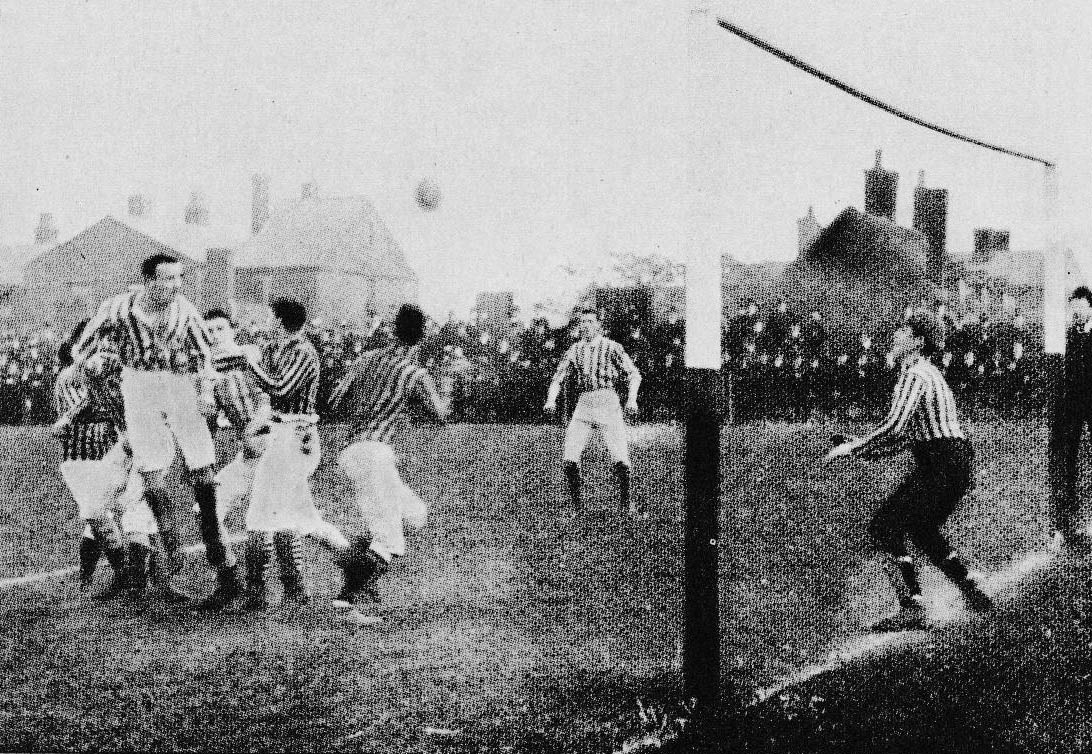
The club was founded as West Bromwich Strollers in 1878 by workers from George Salter's Spring Works in West Bromwich, in the Black Country. They were renamed West Bromwich Albion in 1880, becoming the first team to adopt the Albion suffix; Albion was a district of West Bromwich where some of the players lived or worked, close to what is today Greets Green. The club joined the Birmingham & District Football Association in 1881 and became eligible for their first competition, the Birmingham Cup. They reached the quarter-finals, beating several longer-established clubs on the way. In 1883, Albion won their first trophy, the Staffordshire Cup. Albion joined the Football Association in the same year; this enabled them to enter the FA Cup for the first time in the 1883–84 season. In 1885 the club turned professional, and in 1886 the team reached the FA Cup final for the first time, losing 2–0 to Blackburn Rovers in a replay. They reached the final again in 1887, but lost 2–0 to Aston Villa. In 1888 the team won the trophy for the first time, beating strong favourites Preston North End 2–1 in the final. As FA Cup winners, they qualified to play in a Football World Championship game against Scottish Cup winners Renton, which ended in a 4–1 defeat.
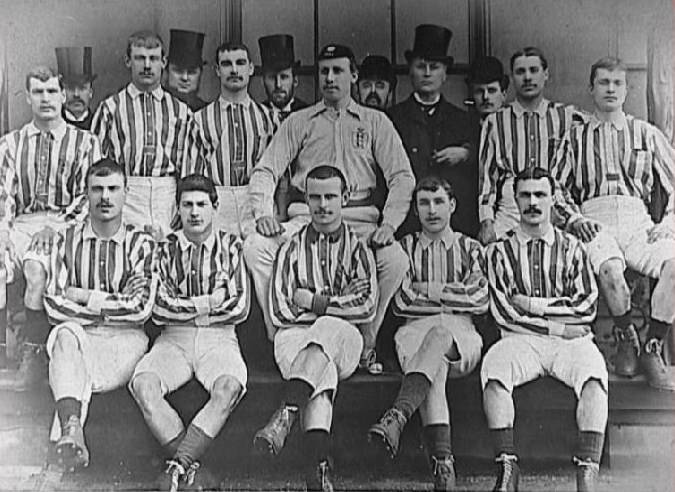
In March 1888, William McGregor wrote to what he considered to be the top five English teams, including Albion, informing them of his intention to form an association of clubs that would play each other home and away each season. Thus when the Football League started later that year, Albion became one of the twelve founder members. Albion's second FA Cup success came in 1892, beating Aston Villa 3–0. They met Villa again in the 1895 final, but lost 1–0. The team suffered relegation to Division Two in 1900–01, their first season at The Hawthorns. They were promoted as champions the following season but relegated again in 1903–04. The club won the Division Two championship once more in 1910–11, and the following season reached another FA Cup Final, where they were defeated by Second Division Barnsley in a replay.
Albion won the Football League title in 1919–20 for the only time in their history following the end of World War I, their totals of 104 goals and 60 points both breaking the previous league records. The team finished as Division One runners-up in 1924–25, narrowly losing out to Huddersfield Town, but were relegated in 1926–27. In 1930–31, they won promotion as well as the FA Cup, beating Birmingham 2–1 in the final. The "double" of winning the FA Cup and promotion has not been achieved before or since. Albion reached the final again in 1935, losing to Sheffield Wednesday, but were relegated three years later. They gained promotion in 1948–49, and there followed the club's longest unbroken spell in the top flight of English football, a total of 24 years.{{cite web | access-date = 18 November 2007 | archive-date = 9 April 2006 | archive-url = https://web.archive.org/web/20060409080924/http://www.bbc.co.uk/blackcountry/sport/clubs/baggies/history.shtml | url-status = live | access-date = 19 November 2007 | archive-date = 12 January 2018 | archive-url = https://web.archive.org/web/20180112214800/http://fchd.info/W-BROMWA.HTM | url-status = live
Success and decline (1950–1992)
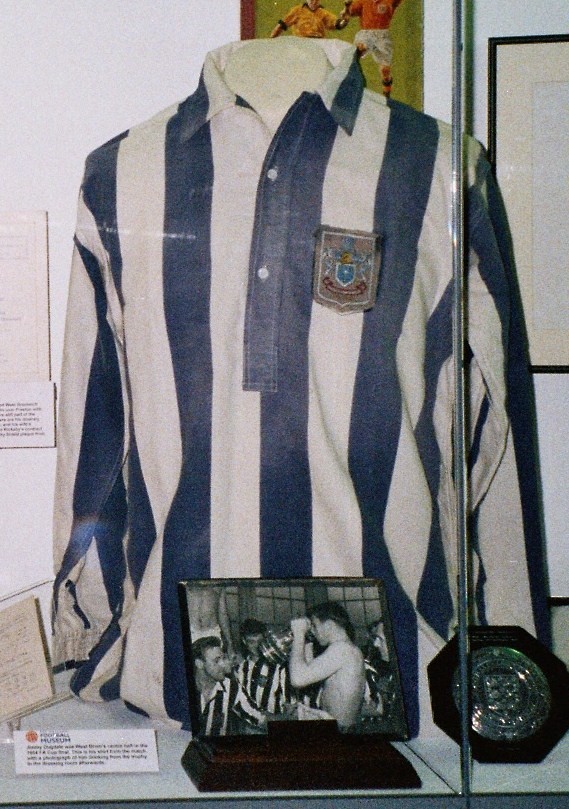
In 1953–54, Albion came close to being the first team in the 20th century to win the League and Cup double. They succeeded in winning the FA Cup, beating Preston North End 3–2, but injuries and a loss of form towards the end of the season meant that they finished as runners-up to fierce rivals Wolverhampton Wanderers in the league. Nonetheless, Albion became known for their brand of fluent, attacking football, with the 1953–54 side being hailed as the "Team of the Century". One national newspaper went so far as to suggest that the team be chosen en masse to represent England at the 1954 FIFA World Cup finals.{{Cite news
Although their league form was less impressive during the 1960s, the second half of the decade saw West Brom establish a reputation as a successful cup side. Albion entered the Football League Cup for the first time in 1965–66 and, under manager Jimmy Hagan, won the final by defeating West Ham United 5–3 on aggregate. That was the last two-legged final and, the following year, Albion reached the final again, the first played at Wembley. They lost 3–2 to Third Division Queens Park Rangers after being 2–0 up at half-time. Albion's cup form continued under Hagan's successor Alan Ashman. He guided the club to their last major trophy to date, the 1968 FA Cup, when they beat Everton in extra time thanks to a single goal from Jeff Astle. Albion reached the FA Cup semi-final and European Cup Winners Cup quarter-final in 1969, and were defeated 2–1 by Manchester City in the 1970 League Cup Final. [[File:The Three Degrees statue - New Square, West Bromwich (48488490306).jpg|thumb|upright|right|Statue of the Three Degrees by [[Graham Ibbeson]], in [[West Bromwich]]]]
The club were less successful during the reign of Don Howe, and were relegated to Division Two at the end of 1972–73, but gained promotion three years later under the guidance of player-manager Johnny Giles. Under Ron Atkinson, Albion reached the 1978 FA Cup semi-final but lost to Ipswich Town. In May of that year, Albion became the first English professional team to play in China, going unbeaten on their five-game trip. In 1978–79, the team finished third in Division One, their highest placing for over 20 years, and also reached the UEFA Cup quarter-final, where they were defeated by Red Star Belgrade. The team around this time was notable for simultaneously fielding three black players: Cyrille Regis, Laurie Cunningham and Brendon Batson; and is considered to be an integral part of the acceptance of black footballers in the English leagues. In his second spell as manager, Ronnie Allen guided the team to both domestic cup semi-finals in 1981–82. The mid-1980s saw the start of Albion's longest and deepest decline. They were relegated in 1985–86 with the worst record in the club's history, beginning a period of 16 years outside the top flight. Five years later, the club were relegated to the Third Division for the first and only time.
Recent years (1992–present)
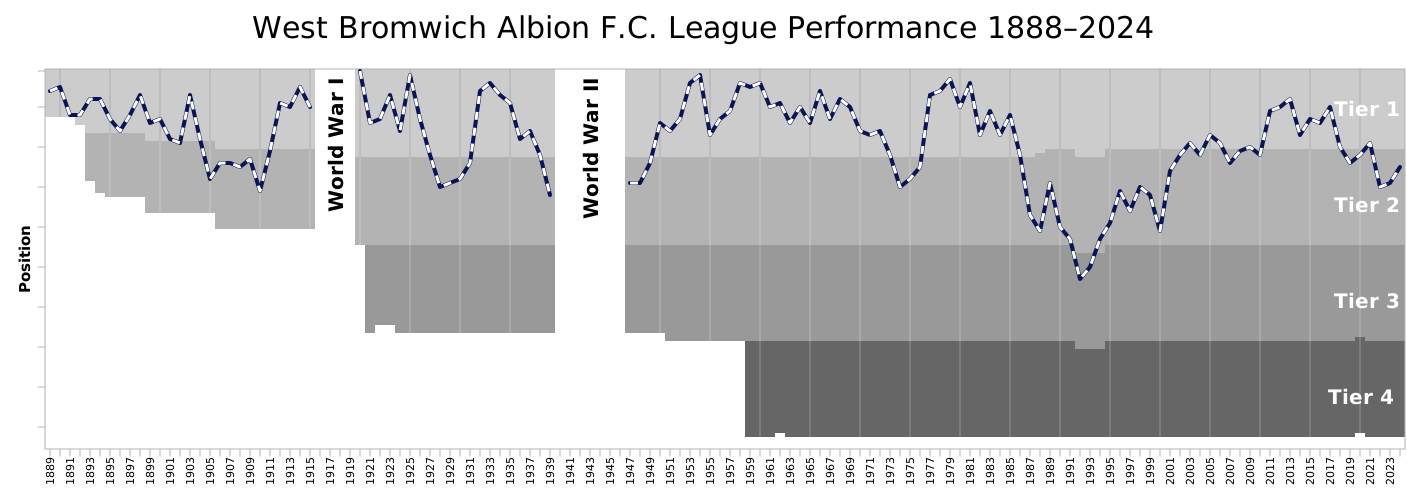
Albion had spent the majority of their history in the top-flight of English football, but when the Premier League was founded in 1992 the club found themselves in the third tier, which had been renamed Division Two. In 1992–93, Albion finished fourth and entered the play-offs for the first time. Albion's first appearance at Wembley for over 20 years – and their last at the original stadium – saw them beat Port Vale 3–0 to return to the second level – now renamed the First Division. Manager Ossie Ardiles then joined Tottenham Hotspur, however, and a succession of managers over the next few seasons saw Albion consolidate their Division One status without mounting a serious promotion challenge.
The appointment of Gary Megson in March 2000 heralded an upturn in the club's fortunes. Megson guided Albion to Division One safety in 1999–2000, and to the play-offs a year later. He went on to lead the club to promotion to the Premier League in 2001–02.{{cite news | access-date = 4 February 2009 | archive-date = 15 December 2003 | archive-url = https://web.archive.org/web/20031215051413/http://news.bbc.co.uk/sport1/hi/football/eng_div_1/1935828.stm | url-status = live | access-date = 11 November 2007 | archive-date = 20 April 2003 | archive-url = https://web.archive.org/web/20030420173321/http://news.bbc.co.uk/sport1/hi/football/eng_prem/2936479.stm | url-status = live | access-date = 11 November 2007 | archive-date = 12 January 2016 | archive-url = https://web.archive.org/web/20160112233419/http://news.bbc.co.uk/sport1/hi/football/eng_div_1/3634667.stm | url-status = live | access-date = 11 November 2007 | archive-date = 12 August 2022 | archive-url = https://web.archive.org/web/20220812184914/http://news.bbc.co.uk/sport2/hi/football/eng_prem/4525119.stm | url-status = live |access-date=11 November 2007 |url-status=dead |archive-url=https://web.archive.org/web/20080511092615/http://www.wba.premiumtv.co.uk/page/News/0%2C%2C10366~823497%2C00.html |archive-date=11 May 2008 | access-date = 1 December 2007 | archive-date = 15 February 2008 | archive-url = https://web.archive.org/web/20080215112119/http://news.bbc.co.uk/sport1/hi/football/teams/w/west_bromwich_albion/6043410.stm | url-status = live | access-date = 11 November 2007 | archive-date = 21 May 2018 | archive-url = https://web.archive.org/web/20180521013841/http://news.bbc.co.uk/sport2/hi/football/eng_div_1/6689971.stm | url-status = live | access-date = 9 April 2008 | archive-date = 12 January 2016 | archive-url = https://web.archive.org/web/20160112233420/http://news.bbc.co.uk/sport1/hi/football/fa_cup/7320356.stm | url-status = live | access-date = 4 May 2008 | archive-date = 13 May 2008 | archive-url = https://web.archive.org/web/20080513230555/http://news.bbc.co.uk/sport1/hi/football/eng_div_1/7368623.stm | url-status = live | access-date = 17 May 2008 | archive-date = 17 May 2009 | archive-url = https://web.archive.org/web/20090517222200/http://news.bbc.co.uk/sport1/hi/football/eng_prem/8038300.stm | url-status = live | access-date = 30 June 2009 | archive-date = 4 July 2009 | archive-url = https://web.archive.org/web/20090704024500/http://www.expressandstar.com/2009/06/30/di-matteo-is-new-albion-boss/ | url-status = dead | access-date = 10 April 2010 | archive-date = 20 June 2017 | archive-url = https://web.archive.org/web/20170620112329/http://news.bbc.co.uk/sport2/hi/football/eng_div_1/8607467.stm | url-status = live | access-date = 25 April 2011 | archive-date = 12 January 2016 | archive-url = https://web.archive.org/web/20160112211926/http://news.bbc.co.uk/sport1/hi/football/teams/w/west_bromwich_albion/9391291.stm | url-status = live
Hodgson guided Albion to an 11th-place finish for the 2010–11 season. Then followed an eight-season continuous run in the Premier League. It included an 8th-place finish in 2012–13 under Steve Clarke, and 10th-place finishes under Roy Hodgson in 2011–12 and Tony Pulis in 2016–17. In August 2016, it was announced that long-term owner Jeremy Peace had sold the club to a Chinese investment group headed up by Lai Guochuan. By this time, the club had begun to fall into a state of torpor, and were relegated at the end of the 2017–18 season, ending their eight-year Premier League stay. Pulis and his replacement Alan Pardew were both dismissed during the season. Albion finished fourth in their first season back in the Championship under the management of Darren Moore, losing the Championship play-off semi-final on penalties.
Slaven Bilić took over as manager in June 2019, and led Albion to automatic promotion back to the Premier League during the 2019–20 season. Back in the Premier League, Bilić was controversially sacked on 16 December 2020, with Sam Allardyce named as his replacement the same day. After Albion were relegated from the Premier League at the end of the 2020–21 season, Allardyce resigned from his position. The club endured disappointing results back in the Championship during the tenures of Valérien Ismaël and Steve Bruce, who left the club in the relegation places in the 2022–23 season. Carlos Corberán was named as successor on 25 October 2022. He guided Albion to a 5th-place finish and the play-off semi-finals at the end of the 2023–24 season.
Crest and colours
Badge

Albion's main club badge dates back to the late 1880s, when club secretary Tom Smith suggested that a throstle (song thrush) sitting on a crossbar be adopted for the badge. The badge has been subject to various revisions since then.{{cite web | access-date = 26 November 2018 | archive-date = 21 April 2023 | archive-url = https://web.archive.org/web/20230421184717/https://trademarks.ipo.gov.uk/ipo-tmowner/page/search?id=51961&domain=1 | url-status = live | access-date = 1 December 2007 | url-status = dead | archive-url = https://web.archive.org/web/20071213091411/http://www.dspace.dial.pipex.com/town/park/yfh45/westbrom.htm | archive-date = 13 December 2007
In 1975, a version of the badge (on a roundel rather than a shield) was granted by the College of Arms to the Football League for licensing to the club. The badge was described in heraldic blazon as, "On a roundel paly of thirteen argent and azure a mistle thrush perched on a raspberry branch leaved and fructed proper." This is the only known occasion on which the branch has been described as a raspberry branch rather than a hawthorn branch: Rodney Dennys, the officer of arms responsible, may have been imperfectly briefed.
The badge was re-designed in 2006, incorporating the name of the club for the first time. The new design aimed to safeguard and consolidate the club's identity.{{cite web | access-date = 11 November 2007 | url-status = dead | archive-url = https://web.archive.org/web/20090112213028/http://www.wba.premiumtv.co.uk/page/News/0%2C%2C10366~777862%2C00.html | archive-date = 12 January 2009
Albion's first regular shirt badge appeared in the late 1960s and early 1970s where it was blue. Although it featured the throstle, it did not include the blue and white striped shield of the club badge. A similar design was also used during the late 1980s and early 1990s. In the mid-1970s, a more abstract version of the throstle was used on the club's shirts, while in the late 1970s through to the mid-1980s, an embroidered WBA logo was displayed, a common abbreviation of the club's name in print. Not until the early 21st century did the full club badge appear on the team's shirts.
Colours
West Brom have played in navy blue and white striped shirts for the majority of their existence, usually with white shorts and white socks. The team is occasionally referred to as the Stripes by supporters.{{cite news | access-date = 14 July 2008 | archive-date = 22 June 2011 | archive-url = https://web.archive.org/web/20110622070844/http://icbirmingham.icnetwork.co.uk/mail/news/tm_headline%3D%26method%3Dfull%26objectid%3D19118105%26siteid%3D50002-name_page.html | url-status = live | access-date = 11 November 2007 | archive-date = 6 August 2013 | archive-url = https://web.archive.org/web/20130806204154/http://historicalkits.co.uk/West_Bromwich_Albion/West_Bromwich_Albion.htm | url-status = live
Like all football clubs, Albion sport a secondary or "change" strip when playing away from home against a team whose colours clash with their own. As long ago as the 1890s, and throughout much of the club's early history, a change strip of white jerseys with black shorts was worn. The away shirt additionally featured a large 'V' during the First World War. In the 1935 FA Cup Final, however, when both of Albion and Sheffield Wednesday's kits clashed, a switch was made to plain navy blue shirts. An all-red strip was adopted at the end of the 1950s, but was dropped following defeat in the 1967 League Cup Final, to be replaced by the all-white design that was worn during the club's FA Cup run of 1967–68. Since then the away strip has changed regularly, with yellow and green stripes the most common of a number of different designs used. In the 1990s and 2000s a third kit has occasionally been introduced.{{cite web | access-date =11 November 2007 |archive-url = https://web.archive.org/web/20071031161637/http://www.kitclassics.co.uk/kits/westbrom.gif |archive-date = 31 October 2007}}
Albion players – along with those of other Football League teams – first wore numbers on the back of their shirts in the abandoned season of 1939–40,{{cite web | access-date = 15 July 2008 | archive-date = 30 July 2012 | archive-url = https://web.archive.org/web/20120730082148/http://www.englandfootballonline.com/TeamUnif/UnifNosNames.html | url-status = live
Kit Sponsors
BSR Housewares became the club's first shirt sponsor during the 1981–82 season. The club's shirts have been sponsored for the majority of the time since then, although there was no shirt sponsor at the end of the 1993–94 season, after local solicitors Coucher & Shaw were closed down by the Law Society of England and Wales. Unusually for a Premier League club, Albion were again without a shirt sponsor for the start of the 2008–09 campaign, as negotiations with a new sponsor were still ongoing when the season began.{{cite news | access-date = 25 August 2008 | archive-date = 18 September 2008 | archive-url = https://web.archive.org/web/20080918130144/http://news.bbc.co.uk/1/hi/business/7563013.stm | url-status = live | access-date = 11 November 2007 | url-status = dead | archive-url = https://web.archive.org/web/20090113042513/http://www.wba.premiumtv.co.uk/page/News/0%2C%2C10366~485609%2C00.html | archive-date = 13 January 2009 | access-date = 3 July 2018
Since June 2024, West Brom's kit has been manufactured by Macron.{{cite news
| Period | Kit manufacturer | Shirt sponsor |
|---|---|---|
| 1974–1981 | Umbro | — |
| 1981–1982 | BSR | |
| 1982–1984 | Swan | |
| 1984–1986 | No Smoking | |
| 1986–1989 | Apollo/Apollo 2000 | |
| 1989–1990 | Scoreline | |
| 1990–1991 | Sandwell Council | |
| 1991–1992 | Influence | |
| 1992–1993 | Albion Collection | |
| 1993–1994 | Pelada | Coucher & Shaw |
| 1994–1995 | Guest Motors | |
| 1995–1997 | Patrick | |
| 1997–2002 | West Bromwich Building Society | |
| 2002–2003 | The Baggies | |
| 2003–2004 | Diadora | |
| 2004–2006 | T-Mobile | |
| 2006–2008 | Umbro | |
| 2008–2009 | — | |
| 2009–2010 | — | |
| 2010–2011 | HomeServe | |
| 2011–2012 | Adidas | bodog |
| 2012–2014 | Zoopla | |
| 2014–2015 | QuickBooks | |
| 2015–2016 | TLCBET | |
| 2016–2017 | K8 | |
| 2017–2018 | Palm Eco-Town Development | |
| 2018–2024 | Puma | Ideal Heating (Groupe Atlantic) |
| 2024– | Macron |
Stadium
Main article: The Hawthorns, Stoney Lane, West Bromwich Albion F.C. former grounds
The speed with which the club became established following its foundation is illustrated by the fact that it outgrew four successive grounds in its first seven years. The first was Cooper's Hill, where they played from 1878 to 1879. From 1879 to 1881, they appear to have alternated between Cooper's Hill and Dartmouth Park. During the 1881–82 season, they played at Bunn's Field, also known as the Birches. This had a capacity of between 1,500 and 2,000, and was Albion's first enclosed ground, allowing the club to charge an entrance fee for the first time. From 1882 to 1885, as the popularity of football increased, Albion rented the Four Acres ground from the well-established West Bromwich Dartmouth Cricket Club. But they quickly outgrew this new home and soon needed to move again. From 1885 to 1900, Albion played at Stoney Lane; their tenure of this ground was arguably the most successful period in the club's history, as they won the FA Cup twice and were runners-up three times.

By 1900, when the lease on Stoney Lane expired, the club needed a bigger ground yet again and so made its last move to date. All of Albion's previous grounds had been close to the centre of West Bromwich, but on this occasion they took up a site on the town's border with Handsworth and Smethwick. The new ground was named The Hawthorns, after the hawthorn bushes that covered the area and were cleared to make way for it. Albion drew 1–1 with Derby County in the first match at the stadium, on 3 September 1900. The record attendance at the Hawthorns was on 6 March 1937, when 64,815 spectators saw Albion beat Arsenal 3–1 in the FA Cup quarter-final. The Hawthorns became an all-seater stadium in the 1990s, in order to comply with the recommendations of the Taylor Report.{{cite web | access-date = 7 January 2013 | archive-date = 16 January 2013 | archive-url = https://web.archive.org/web/20130116060901/http://www.wba.co.uk/club/the_hawthorns.aspx | url-status = dead | access-date = 13 December 2008 | url-status = dead | archive-url = https://web.archive.org/web/20081212175628/http://www.wba.premiumtv.co.uk/page/StadiumPlan/0%2C%2C10366%2C00.html | archive-date = 12 December 2008
.jpg)
The Hawthorns is certificated under the highest UEFA pitch surfaces which means it is ready to host almost any competition if required. The stadium's West Stand has the potential to be developed over the Halfords Lane at the back of the stand to allow for an upper tier, bringing the capacity of The Hawthorns to around 30,000.
West Bromwich Albion own retail outlets around The Hawthorns, including its Stadium Megastore and seasonally a club store in West Bromwich town centre. They also own the former Hawthorns Pub, a Grade II listed building behind the West Stand on the corner of Halfords Lane and the Birmingham Road. This has served as the official club fanzone with licensed bars, live music, fan favourites – such as mascots and children activities – as well as being shared with a high street food outlet. The pub competes with The Vine pub in Roebuck Lane, a popular destination for visiting and home football fans year-round.
Supporters
The Lord's my Shepherd, I'll not want.
He makes me down to lie
In pastures green; he leadeth me
The quiet waters by. |Lyrics to first verse of "The Lord's my Shepherd" from Psalm 23 }}
Fan culture

The official West Bromwich Albion Supporters Club was founded on 4 October 1951. In the years since then, over 30 branches have been established throughout the United Kingdom, and internationally in Jersey, Ireland, Spain, Malta, Croatia, USA, UAE, India, Thailand and Australia. There are also supporters groups for those with disabilities, for mental health support, Punjabi supporters, supporters in the emergency services and armed forces, and LGBT people.{{cite web | archive-url = https://web.archive.org/web/20170316085007/http://prideinfootball.co.uk/index.php/members/ | url-status = dead | archive-date = 16 March 2017 | access-date = 3 January 2018
Albion's "club anthem" is The Lord's my Shepherd, a setting of Psalm 23. The song originated following a rare Sunday game in the 1970s and has been sung at matches ever since.{{cite web | access-date = 23 November 2007 | url-status=dead | archive-url=https://web.archive.org/web/20120509195528/https://www.wba.co.uk/page/News/0,,10366~480525,00.html | archive-date=9 May 2012 | url-status = dead | archive-url = https://web.archive.org/web/20090112213022/http://www.wba.premiumtv.co.uk/page/News/0%2C%2C10366~63609%2C00.html | archive-date = 12 January 2009 | access-date = 12 November 2007 | url-status = dead | archive-url = https://web.archive.org/web/20090113042217/http://www.wba.premiumtv.co.uk/page/News/0%2C%2C10366~523574%2C00.html | archive-date = 13 January 2009
In 2002–03 Albion's fans were voted the best in the Premier League by their peers, while in the BBC's 2002 "national intelligence test" Test the Nation, they were found to be "more likely to be smarter than any other football supporters, registering an average score of 138".{{cite news | access-date = 11 November 2007 | archive-date = 4 December 2003 | archive-url = https://web.archive.org/web/20031204142918/http://news.bbc.co.uk/1/hi/entertainment/tv_and_radio/1984648.stm | url-status = live
Famous fans include goalkeepers Aaron Ramsdale, Hannah Hampton and Ben Foster, comedian Frank Skinner, TV presenters Adrian Chiles, Anne Aston and Cat Deeley, One Direction singer Liam Payne, comedian Lenny Henry, actress Julie Walters, The Rolling Stones guitarist Ronnie Wood, tennis players Ann Jones and Goran Ivanišević, DJ Dave Haslam, boxers Richie Woodhall and Tommy Langford, and guitarist Eric Clapton.
Publications
The club has published an official matchday programme for supporters since 1905.{{Cite news | access-date =11 November 2007 |archive-url = https://web.archive.org/web/20071015122824/http://westbrom.com/0/programmes/overtheyears.html |archive-date = 15 October 2007}} It won Premier League Programme of the Year in 2002–03 and Third Division Programme of the Year in 1991–92.{{cite web | access-date = 11 November 2007 | archive-date = 30 September 2007 | archive-url = https://web.archive.org/web/20070930051230/http://www.pmfc.co.uk/awards_page.php | url-status = live | access-date = 12 April 2008 | url-status = dead | archive-url = https://web.archive.org/web/20080413133113/http://www.wba.premiumtv.co.uk/page/News/0%2C%2C10366~1287194%2C00.html | archive-date = 13 April 2008
"Baggies" nickname

Although known in their early days as "the Throstles", the club's more popular nickname among supporters came to be "the Baggies", a term which the club itself looked down upon for many years but later embraced. The phrase was first heard at the Hawthorns in the 1900s, but its exact origins are uncertain. One suggestion is that the name was bestowed on Albion supporters by their rivals at Aston Villa, because of the large baggy trousers that many Albion fans wore at work to protect themselves from molten iron in the factories and foundries of the Black Country. Club historian Tony Matthews, however, suggests that it derives from the "bagmen", who carried the club's matchday takings in big leather bags from the turnstiles to the cash office on the halfway line.{{cite web | access-date = 11 November 2007 | archive-date = 15 October 2007 | archive-url = https://web.archive.org/web/20071015130354/http://baggies.com/faq/#BAGGIES | url-status = live | access-date = 3 May 2010 | url-status = dead | archive-url = https://web.archive.org/web/20120913060804/http://www.wba.co.uk/page/News/0%2C%2C10366~2006780%2C00.html | archive-date = 13 September 2012
Rivalries
Historically, Albion's greatest rivals were Aston Villa from nearby Birmingham. The two clubs contested three FA Cup Finals between 1887 and 1895 (Villa winning two and Albion one). More recently, however, most Albion fans tend to see Wolverhampton Wanderers as their main rivals, particularly as between 1989 and 2002 Albion and Villa were never in the same division, but Albion were in the same division as Wolves for 11 out of 14 seasons. This had led to Aston Villa supporters now considering Birmingham City to be their fiercest rivals. A less-heated rivalry also exists with Birmingham City, with whom Albion contested the 1931 FA Cup final, as well as a semi-final in 1968.{{cite web |access-date=11 November 2007 |url-status=dead |archive-url=https://web.archive.org/web/20131020074918/http://www.footballfanscensus.com/issueresults/Club_Rivalries_Uncovered_Results.pdf |archive-date=20 October 2013
A number of hooligan firms associate themselves with Albion, including Section 5, Clubhouse and the Smethwick Mob.{{cite news | access-date = 15 November 2013 | archive-date = 3 December 2013 | archive-url = https://web.archive.org/web/20131203030608/http://www.halesowennews.co.uk/news/4730190.Oldbury_man_launches_new_WBA_football_hooligan_book/ | url-status = live
Black Country derby
Main article: Black Country derby
Albion and Wolves contest the Black Country derby, one of the longest standing derbies in world football. It is considered one of the fiercest rivalries in English football. A 2008 survey found it to be the most intense rivalry in the country, with one in four fans from both clubs claiming that their rivalry went much deeper than football. The two sides have played each other 160 times, with their first major clash being an FA Cup tie in 1886. Both Albion and Wolves were founding members of the Football League in 1888, making the derby the joint oldest in English league football.
The rivalry came to prominence when the two clubs contested the league title in 1953–54, and during the 1990s it intensified to new heights among supporters, with both clubs languishing in Division One for much of the decade and only local pride at stake. Moreover, in 2002 Albion came from being 11 points adrift to overhaul Wolves to gain promotion. The rivalry was further heightened after the sides met in the play-offs in 2007. A 2004 survey by Planetfootball.com confirmed that the majority of both Albion and Wolves supporters consider the other to be their main rival. In February 2012 the Baggies beat Wolves 5–1 away from home, with Peter Odemwingie scoring a hat-trick. The game became known as the 'demolition derby', and remains the highest scoring Black Country derby of the 21st century. Despite their geographical location, fellow Black Country club Walsall are seen as lesser rivals, having played in a lower division than Albion for most of their history.
Rivalry with Aston Villa
Main article: Aston Villa F.C.–West Bromwich Albion F.C. rivalry
Ranked by The Daily Telegraph in 2010 as the most fierce in the region, games between Aston Villa and West Brom are particularly ferocious. The two first met on 9 December 1882, in the second round of the Staffordshire Cup: Villa hosted a 3–3 draw in front of 13,900 fans, while in the replay West Brom won by a single goal with an attendance of 10,500. On 3 January 1885, they met for the first time in the third round of the FA Cup: a goalless draw at West Brom was followed by a 3–0 victory for them away at Villa. The following year, both teams became founder members of the Football League. They met first in a league fixture on 19 January 1889, Villa winning 2–0 at home, before a draw the next week ending 3–3. The two teams met in two further FA Cup finals in the 19th century, a 3–0 win for West Brom in 1892 and a 1–0 win for Aston Villa in 1895.
Birmingham City were relegated from the Premier League in 2011 and Wolverhampton Wanderers a season later, leaving Aston Villa and West Brom as the only West Midlands teams in England's top division. Without their respective main rivals and with Albion finishing above their nearest rivals for the second season in a row, the historic rivalry was rekindled to pre-1990s competitiveness. At the end of the 2015–16 season, Aston Villa were relegated, leaving West Brom as the only West Midlands team in the top flight for the 2016–17 season. After Albion's relegation at the end of the 2017–18 Premier League, the teams faced each other in the Championship. In the 2018–19 EFL Championship play-off semi-finals, Villa controversially knocked out Albion on penalties, after the Albion had two men sent-off over both legs.
Ownership and governance
As of 1 September 2024:
Leadership Team
| Position | Name |
|---|---|
| Majority Shareholder and Chairman | Shilen Patel |
| President & Sporting Director | Andrew Nestor |
| Chief Marketing Officer | Ashish Patel |
| Chief Financial Officer | Ethan Gobetz |
| Director of Operations & SHE (Safety, Health & Environment) | Chris Harris |
Club management
| Position | Name |
|---|---|
| Director of Medical | Tony Strudwick |
| Head of Football Operations | Ian Pearce |
| Director of Communications & Fan Engagement | Ian Skidmore |
| Club Secretary | Sarah McGenn |
| Academy Manager | Richard Stevens |
| Director of Finance | Josh Bentley |
| Director of The Albion Foundation | Rob Lake |
History of Albion's ownership and governance
In the club's formative years, West Bromwich Albion were run by a seven-man playing committee, and funded by each member contributing a weekly subscription of 6d (six pence) (2p). Albion's first chairman was Henry Jackson, appointed in 1885, with the club becoming a limited company in June 1891.Matthews (2005) pp. 267–269. Other early chairmen of Albion included Jem Bayliss and Billy Bassett, both of whom had earlier played for the club. Indeed, from 1878 to 1986 there was always an Albion player or ex-player on the club's committee or board of directors. Bassett became an Albion director in 1905, following the resignation of the previous board in its entirety. The club was in deep financial trouble and had had a writ served upon them by their bank, but Bassett and returning chairman Harry Keys rescued the club, aided by local fund-raising activities. Bassett became chairman in 1908, and helped the club to avoid bankruptcy once more in 1910 by paying the players' summer wages from his own pocket. He remains Albion's longest-serving chairman, having held the position until his death in 1937. The club's longest-serving director was Major H. Wilson Keys, during the period 1930–1965, including 15 years as chairman. He became vice-president of the Football Association in 1969. Sir Bert Millichip served as Albion chairman from 1974 to 1983, after which he chose to concentrate on his role as chairman of the Football Association.
In 1996, the club became a public limited company, issuing shares to supporters at £500 and £3,000 each, under the Chairmanship of Paul Thompson.{{cite web | access-date = 11 November 2007 | url-status = dead | archive-url = https://web.archive.org/web/20071214090421/http://www.wba.premiumtv.co.uk/page/History/0%2C%2C10366~1018329%2C00.html | archive-date = 14 December 2007 | access-date = 11 November 2007 | archive-date = 25 November 2007 | archive-url = https://web.archive.org/web/20071125180915/http://www.footballeconomy.com/archive/archive_2004_nov_11.htm | url-status = live | access-date = 11 November 2007 | archive-date = 15 December 2003 | archive-url = https://web.archive.org/web/20031215074327/http://news.bbc.co.uk/sport1/hi/football/teams/w/west_bromwich_albion/1960590.stm | url-status = live
In September 2007, Peace acquired additional shares in West Bromwich Albion Holdings Limited, taking his total stake in the company to 50.56%. This triggered a requirement, under the Takeover Code, for him to make a mandatory cash offer for the remaining shares in both WBA Holdings Ltd and WBA Ltd.{{cite news | access-date = 11 November 2007 | url-status = dead | archive-url = https://web.archive.org/web/20071122043640/http://www.wba.premiumtv.co.uk/page/News/0%2C%2C10366~1113928%2C00.html | archive-date = 22 November 2007 | access-date = 10 May 2008 | url-status = dead | archive-url = https://web.archive.org/web/20080418193934/http://www.wba.premiumtv.co.uk/page/News/0%2C%2C10366~1182978%2C00.html | archive-date = 18 April 2008 | access-date = 14 June 2008 | url-status = dead | archive-url = https://web.archive.org/web/20081015013602/http://www.wba.premiumtv.co.uk/page/News/0%2C%2C10366~1327630%2C00.html | archive-date = 15 October 2008 | access-date = 5 August 2008 | url-status = dead | archive-url = https://web.archive.org/web/20080917121013/http://www.wba.premiumtv.co.uk/page/News/0%2C%2C10366~1357635%2C00.html | archive-date = 17 September 2008
In July 2016, Peace announced that he had found a buyer in the form of a Chinese investment group headed by Lai Guochuan. The figure agreed upon is believed to have been in the region of £175 million – £200 million. The takeover was successfully completed on 15 September the same year. John Williams was originally appointed Chairman of the club before Lai replaced him with associate Li Piyue after the club's relegation in the 2017–18 season. Lai himself took over as Chairman on 2 February 2022. The 2022–23 season saw increased scrutiny of the club's ownership, and the practices of majority shareholder Guochuan Lai. The club's financial situation began to receive national media attention, having already been commented on frequently in local press. Supporter action groups and in-stadium protests by fans to raise awareness of the club's off-field issues took shape during the season, but were briefly paused in April 2023 as the club's fans supported the side's promotion push.
On 15 February 2024, it was announced that Florida-based entrepreneur Shilen Patel and his father, philanthropist Kiran C Patel had reached an agreement to acquire an 87.8% stake in the club, under the name Bilkul Football WBA. Shilen Patel would also be named as the Chairman of the club.
Players
Current squad
Under-23s and Academy
Main article: West Bromwich Albion F.C. Reserves and Academy
Coaching staff
As of 11 January 2026
First team
| Position | Name |
|---|---|
| Head Coach | WAL |
| Assistant Head Coach | TRI |
| Goalkeeping Coach | WAL |
| First Team Coach | SCO |
| First Team Coach / Statistical Analyst | SPA |
| Head Physiotherapist | ENG |
| Physiotherapist | ENG |
| Chief Analyst | ENG |
| Opposition Analyst | ENG |
| Sports Scientist | AUS |
| Kit Manager | IRE |
| Kit Man | ENG |
Academy
| Position | Name |
|---|---|
| Head of Academy Coaching | ENG |
| Loans Manager | NIR |
| U-23s Manager | ENG |
| U-23s Coach | JAM |
| U-18s Coach | ENG |
| Head of Academy Recruitment | ENG |
Main article: West Bromwich Albion F.C. Reserves and Academy
Notable former players
As part of the club's 125th anniversary celebrations in 2004, a survey was commissioned via the official West Bromwich Albion website and the Express & Star newspaper to determine the greatest West Brom players of all time. A modern-day, 16-man squad was compiled from the results; all selected players are depicted on a commemorative mural displayed at The Hawthorns. Fourteen of the sixteen players are English-born, with a fifteenth, Cyrille Regis, a French Guiana-born full England international. The list of 16 is as follows:{{cite news|title=The wraps come off 125th anniversary mural |url=http://www.wba.premiumtv.co.uk/page/News/0,,10366~547701,00.html |publisher=West Bromwich Albion F.C. |date=4 August 2004 |access-date=11 November 2007 |url-status=dead |archive-url=https://web.archive.org/web/20080202125701/http://www.wba.premiumtv.co.uk/page/News/0%2C%2C10366~547701%2C00.html |archive-date= 2 February 2008
| Name | Nat. | Years | Apps | Goals | Position |
|---|---|---|---|---|---|
| England | 1886–99 | 311 | 77 | Outside right | |
| England | 1903–22 | 496 | 0 | Left back | |
| England | 1929–45 | 354 | 228 | Centre forward | |
| England | 1944–60 | 482 | 48 | Left-half | |
| England | 1950–61 | 458 | 234 | Centre forward | |
| England | 1952–64 | 379 | 19 | Right back | |
| England | 1953–63 | 262 | 157 | Centre forward | |
| England | 1963–81 | 720 | 279 | Wing half/Inside forward | |
| England | 1964–74 | 361 | 174 | Centre forward | |
| England | 1967–72 | ||||
| 1973–78 | 312 | 0 | Goalkeeper | ||
| England | 1970–83 | 619 | 29 | Centre-half | |
| Scotland | 1972–79 | 261 | 28 | Outside left | |
| England | 1974–81 | 249 | 46 | Central midfielder | |
| England | 1976–87 | 373 | 11 | Left back | |
| England | 1977–79 | 114 | 30 | Winger | |
| England | 1977–84 | 302 | 112 | Centre forward |
Other notable honours bestowed upon West Brom players include the PFA Young Player of the Year award, which was presented to Cyrille Regis in 1979.{{cite web| title = Young Player of the Year 1974–2007| url = http://www.givemefootball.com/rolls_of_honour/youngplayerroll.html| work=GiveMeFootball.com| publisher=Professional Footballers' Association| access-date =11 November 2007 |archive-url = https://web.archive.org/web/20070927005504/http://www.givemefootball.com/rolls_of_honour/youngplayerroll.html |archive-date = 27 September 2007}} In 1998, Billy Bassett and Bryan Robson were named among the list of Football League 100 Legends, along with Arthur Rowley, Geoff Hurst and Johnny Giles. Bryan Robson was also an inaugural inductee into the English Football Hall of Fame in 2002, to be joined two years later by Geoff Hurst.{{cite web| title = 2004 Inductees| url = http://www.nationalfootballmuseum.com/pages/fame/2004.htm| publisher=National Football Museum| access-date =11 November 2007| archive-url =https://web.archive.org/web/20071116015241/http://www.nationalfootballmuseum.com/pages/fame/2004.htm | archive-date =16 November 2007
Player of the Year
| Year | Winner |
|---|---|
| 1979 | England Bryan Robson |
| 1980 | N/A |
| 1981 | England Tony Godden |
| 1982 | England Cyrille Regis |
| 1983 | N/A |
| 1984 | England Paul Barron |
| 1985 | England Garry Thompson |
| 1986 | England Stephen Hunt |
| 1987 | England Stuart Naylor |
| 1988 | England Carlton Palmer |
| 1989 | England Chris Whyte |
| 1990 | Northern Ireland Bernard McNally |
| 1991 | England Graham Roberts |
| Year | Winner |
|---|---|
| 1992 | England Daryl Burgess |
| 1993 | England Bob Taylor |
| 1994 | England Daryl Burgess |
| 1995 | Wales Paul Mardon |
| 1996 | England Andy Hunt |
| 1997 | England Ian Hamilton |
| 1998 | England Alan Miller |
| 1999 | England Lee Hughes |
| 2000 | Iceland Lárus Sigurðsson |
| 2001 | England Neil Clement |
| 2002 | England Russell Hoult |
| 2003 | Wales Jason Koumas |
| 2004 | Denmark Thomas Gaardsøe |
| Year | Winner |
|---|---|
| 2005 | England Ronnie Wallwork |
| 2006 | England Jonathan Greening |
| 2007 | Senegal Diomansy Kamara |
| 2008 | England Kevin Phillips |
| 2009 | Northern Ireland Chris Brunt |
| 2010 | Scotland Graham Dorrans |
| 2011 | DR Congo Youssouf Mulumbu |
| 2012 | England Ben Foster |
| 2013 | Northern Ireland Gareth McAuley |
| 2014 | England Ben Foster |
| 2015 | Scotland James Morrison |
| 2016 | Scotland Darren Fletcher |
| 2017 | England Ben Foster |
| Year | Winner |
|---|---|
| 2018 | England Ben Foster |
| 2019 | England Dwight Gayle |
| 2020 | Brazil Matheus Pereira |
| 2021 | England Sam Johnstone |
| 2022 | England Matthew Clarke |
| 2023 | Ireland Jayson Molumby |
| 2024 | Ivory Coast Cédric Kipré |
| 2025 | Norway Torbjørn Heggem |
|}
Partial list of managers
The following managers have all led West Bromwich Albion to at least one of the following achievements while in charge of the club: winning a major trophy or reaching the final, achieving a top three league finish in the top flight, winning promotion or reaching the quarter-finals of a major European competition.
| Name | Nat. | Years | P | W | D | L | Achievements |
|---|---|---|---|---|---|---|---|
| England | 1890–92 | 58 | 18 | 10 | 30 | FA Cup winners 1892 | |
| England | 1894–95 | 36 | 14 | 5 | 17 | FA Cup runners-up 1895 | |
| England | 1896–02 | 214 | 86 | 45 | 83 | Division Two champions 1901–02 | |
| England | 1902–48 | 1520 | 656 | 331 | 533 | Promotion as Division Two winners 1910–11, FA Cup runners-up 1912, 1935, Division One winners 1919–20, Division One runners-up 1924–25, Promotion as Division Two runners-up 1930–31, FA Cup winners 1931 | |
| Wales | 1948–52 | 179 | 70 | 46 | 63 | Promotion as Division Two runners-up 1948–49 | |
| England | 1953–59 | 301 | 130 | 78 | 93 | Division One runners-up 1953–54, FA Cup winners 1954 | |
| England | 1963–67 | 201 | 78 | 49 | 74 | League Cup winners 1966, League Cup runners-up 1967 | |
| England | 1967–71 | 182 | 64 | 49 | 69 | FA Cup winners 1968, European Cup Winners Cup quarter-finalists 1968–69, League Cup runners-up 1970 | |
| Ireland | 1975–77, | ||||||
| 1984–85 | 159 | 60 | 42 | 57 | Promotion from Division Two 1975–76 | ||
| England | 1978–81, | ||||||
| 1987–88 | 212 | 85 | 68 | 59 | Division One 3rd place 1978–79, UEFA Cup quarter-finalists 1978–79 | ||
| Argentina | 1992–93 | 55 | 30 | 11 | 14 | Promotion as Division Two play-off winners 1992–93 | |
| England | 2000–04 | 221 | 94 | 50 | 77 | Promotion as Division One runners-up 2001–02, 2003–04 | |
| England | 2006–09 | 140 | 57 | 32 | 51 | Promotion as Championship winners 2007–08 | |
| Italy | 2009–11 | 82 | 40 | 19 | 23 | Promotion as Championship runners-up 2009–10 | |
| Croatia | 2019–20 | 65 | 26 | 22 | 17 | Promotion as Championship runners-up 2019–20 |
Records
Main article: List of West Bromwich Albion F.C. records and statistics
West Bromwich Albion's record victory was their 12–0 league win against Darwen on 4 April 1892.{{cite web | access-date =12 January 2018 | url-status=live | archive-url=https://web.archive.org/web/20180112214617/https://www.wba.co.uk/club/history/records/ | archive-date=12 January 2018}} This is still the widest margin of victory for a game in the top-flight of English football, although the record was equalled by Nottingham Forest when they beat Leicester Fosse by the same scoreline in 1909.{{cite web | access-date = 11 November 2007 | archive-date = 21 April 2020 | archive-url = https://web.archive.org/web/20200421191605/http://footballsite.co.uk/History/Nottingham%20Forest%2012%20Leicester.htm | url-status = live
Tony Brown holds a number of Albion's club records. He has made the most appearances overall for the club (720), as well as most appearances in the league (574), FA Cup (54) and in European competition (17). Brown is the club's top scorer in the league (218), the FA Cup (27) and in Europe (8). He is also the club's record scorer overall, with 279 goals. W. G. Richardson scored 328 goals for the club, but this includes 100 during World War II, which are not normally counted towards competitive totals. Richardson holds the club record for most league goals in a single season, scoring 39 times in 1935–36.
Albion's most capped international player, taking into account only those caps won whilst at the club, is Chris Brunt. He appeared 55 times for Northern Ireland as an Albion player, earning 65 caps in total before retiring from international football in 2017.{{cite news | access-date = 9 March 2014 | url-status = dead | archive-url = https://web.archive.org/web/20140626142246/http://irishfa.com/international/squad-profiles/profile/2008/christopher-brunt/ | archive-date = 26 June 2014 | access-date = 9 March 2015 | archive-date = 2 April 2015 | archive-url = https://web.archive.org/web/20150402092307/http://www.expressandstar.com/sport/west-bromwich-albion-fc/2014/03/05/chris-brunt-set-to-become-west-broms-most-capped-player/ | url-status = live | access-date = 3 June 2018 | archive-date = 22 December 2017 | archive-url = https://web.archive.org/web/20171222015957/https://www.wba.co.uk/club/the-hawthorns/general-information/ | url-status = live
Honours
Reference:


League
- First Division (level 1)
- Second Division / First Division / Championship (level 2)
- Second Division (level 3)
- Play-off winners: 1993
Cup
Footnotes
:A. : Older sources quote the year of formation as 1879, as evidence of a Strollers match from 1878 came to light only as recently as 1993. :B. : Throstle is a colloquial Black Country name for the song thrush. :C. : The town crest remained on the away strip until 2001. :D. : Kevan was joint-top scorer with Ray Crawford of Ipswich Town. :E. : Secretary-manager. Albion did not appoint a full-time manager until 1949. :F. : The Football League First Division was the top division of English football until 1992, when the Premier League became the top division. At the same time, the second, third and fourth tiers of English football became known as the Football League First Division, Second Division and Third Division respectively. These three divisions were renamed again in 2004 as part of a Football League re-branding exercise, becoming known as the Football League Championship, League One and League Two respectively. :G. : This feat was repeated by Sunderland in the 2013–14 season and Leicester the following year.
References
;General
- {{Cite video | access-date =3 December 2007
;Specific
References
- "Premier League Handbook 2020/21". Premier League.
- McOwan pp. 7–10.
- McOwan pp. 13–14.
- (2 February 2012). "In the record book". West Bromwich Albion F.C..
- McOwan p. 20.
- "A Sporting Nation – Renton Crowned World Champions". BBC.
- McOwan pp. 19–21.
- McOwan p. 30.
- McOwan p. 32.
- McOwan pp. 36–37.
- McOwan p. 42.
- McOwan p. 45.
- McOwan pp. 50–51.
- Matthews (2007) p. 23.
- McOwan pp. 53–55.
- McOwan p. 58.
- McOwan pp. 67–68.
- McOwan pp. 87–88.
- McOwan pp. 94–96.
- McOwan pp. 97–99.
- McOwan p. 105.
- McOwan pp. 113–114.
- McOwan p. 120.
- (17 March 2011). "West Bromwich Albion in China 1978". YouTube.
- (13 January 2017). "A trumpet-playing panda and half-time ice cream: West Brom's 1978 tour of China". Wild East Football.
- McOwan pp. 124–127.
- (August 2012). "West Brom's 'Three Degrees' to be honoured by statue". BBC News.
- McOwan pp. 136–138.
- McOwan p. 144.
- McOwan p. 154.
- McOwan pp. 158–159.
- "Premier League 2010/11". Soccerbase.
- "Premier League 2012/13". Soccerbase.
- "Premier League 2011/12". Soccerbase.
- "Premier League 2016/17". Soccerbase.
- "West Bromwich Albion to be sold to Chinese investment group". BBC Sport.
- (8 May 2018). "West Brom relegated from Premier League after Southampton beat Swanea". BBC Sport.
- (20 November 2017). "West Brom sack Tony Pulis as manager after owner joins fans in losing patience". The Guardian.
- (14 May 2019). "Aston Villa beat West Bromwich Albion to reach Championship play-off final". BBC Sport.
- (13 June 2019). "Slaven Bilic: West Bromwich Albion name ex-West Ham manager as head coach". BBC Sport.
- (22 July 2020). "West Bromwich Albion 2–2 Queens Park Rangers".
- (16 December 2020). "Slaven Bilic: West Brom manager sacked after 18 months in charge".
- (16 December 2020). "Sam Allardyce: West Brom appoint former England boss to replace Slaven Bilic".
- (19 May 2021). "A statement from Sam Allardyce". West Bromwich Albion F.C..
- (24 June 2021). "Albion appoint Valérien Ismaël as Head Coach". West Bromwich Albion F.C..
- "West Brom part company with boss Ismael". BBC Sport.
- "West Brom appoint Bruce as manager". BBC Sport.
- "West Brom sack Steve Bruce after poor start to the season". The Guardian.
- (25 October 2022). "Carlos Carlos Corberán Appointed Albion Head Coach". West Bromwich Albion FC.
- McOwan p. 15.
- Matthews (1987) p. 239.
- Phillips, David Llewelyn. (2015). "Badges and 'Crests': the twentieth-century relationship between football and heraldry". Coat of Arms.
- Matthews (2007) p. 64.
- McOwan p. 13.
- McOwan p. 56.
- Matthews (1987) p. 241.
- Matthews (1987) p. 188.
- (9 April 1999). "Put your shirt on squad numbers next season". [[Lancashire Evening Telegraph]].
- Foster, Howard. (6 February 1994). "Solicitors' image soiled by surge of complaints". [[Sunday Times]] (reproduced at CorruptLawyers.co.uk).
- ''Full Throstle'' DVD 0:05:36
- ''Full Throstle'' DVD 0:06:37
- "Matthews (1987) pp.233-234"
- ''Full Throstle'' DVD 0:15:16
- Matthews (2007) p. 79.
- Matthews (2007) pp. 83–84.
- Matthews (2007) p. 72.
- "History of The Hawthorns". West Bromwich Albion F.C..
- (7 June 2011). "Chairman reveals stadium plans". Construction Enquirer.
- (November 2014). "Baggies open West Brom town centre store". Express and Star.
- "Psalm 23: The Lord's my shepherd, I'll not want". Christian Classics Ethereal Library.
- Chapman, Joseph. (20 May 2015). "West Brom players to attend supporters' awards event". Birmingham Mail.
- "Supporters' Club Branches". West Bromwich Albion F.C..
- (26 April 2017). "Fans ready to launch Apna Albion". West Bromwich Albion F.C..
- (7 November 2018). "Introducing Serving Albion".
- (27 March 2014). "Baggies may bring back fans' anthem The Liquidator for crucial relegation scrap". Birmingham Mail.
- (27 July 2016). "BOWLERS DELIVERY: If football be the food of love". West Bromwich Albion F.C..
- (13 August 2004). "Prove you're No.1 again". West Bromwich Albion F.C..
- Lockley, Mike. (5 April 2018). "Tommy Langford to defend British middleweight title against Jason Welborn". BirminghamLive.
- Steve Wollaston. (23 June 2015). "REVEALED: West Bromwich Albion's most famous supporters". Birmingham Mail.
- "Programme Advertising". Albion Business.
- "Baggie Shorts". West Bromwich Albion Supporters Club London Branch.
- McOwan pp. 38–40.
- ''Full Throstle'' DVD 0:08:48
- "Football Rivalries: The Complete Results". Planetfootball.com.
- (27 August 2019). "The top five rivals of English football's top 92 clubs revealed". givemesport.com.
- "West Brom and Wolves top soccer rivalry list". Yorkshire Post.
- "Wolves v Albion top derby list". Express & Star.
- "Head-to-head v Wolves". Soccerbase.
- McOwan p. 162.
- "West Brom take leap into the unknown". The Guardian.
- "Wolves v West Brom, 2011/12 {{!}} Premier League".
- (10 December 2010). "West Midlands derbies: the hierarchy of hostility between Aston Villa, West Brom, Birmingham City and Wolves". [[The Daily Telegraph]].
- "1882–1885".
- "Football League 1888/89". [[ESPN]].
- (25 November 2013). "Preview: Is West Brom-Villa the biggest rivalry?". [[Express & Star]].
- Hawthorns, Stuart James at the. (14 May 2019). "Aston Villa beat West Brom on penalties to reach Championship play-off final". The Guardian.
- "Club Directory | West Bromwich Albion".
- (16 August 2024). "West Bromwich Albion: Andrew Nestor appointed in sporting director role".
- Matthews (2007) p. 10.
- McOwan pp. 33–34.
- McOwan pp. 34–35.
- Matthews (2005) pp. 25–26 & p. 267.
- Matthews (2005) pp. 267–268.
- Matthews (1987) p. 309.
- (8 January 2010). "Davies to stand down". West Bromwich Albion F.C..
- Howell, Bill. (24 July 2015). "West Brom chairman Jeremy Peace ends exclusivity agreement".
- "CLUB STATEMENT: Latest on West Bromwich Albion takeover".
- (September 2024). "Relegated West Brom appoint Li as new club chairman". Reuters.
- (2 February 2022). "Ron Gourlay Appointed Albion CEO". West BRomwich Albion.
- (29 December 2022). "Furious West Brom shareholders demand to see club accounts after £20m loan". Express & Star.
- (31 December 2022). "West Brom: Company owned by chairman Guchuan Lai misses deadline to repay £4.95m loan". BBC.
- (16 December 2022). "How West Brom became a club in decline". The Telegraph.
- (3 January 2023). "Fears for West Brom after owner's new £20m loan". [[The Times]].
- (1 January 2023). ""West Brom board owe us answers," Action For Albion founder". Sports Gazette.
- (20 April 2023). "West Bromwich Albion: Fan protest against owner Guochuan Lai 'paused' with club eyeing play-offs". BBC Sport.
- (15 February 2024). "Bilkul Football WBA Reaches Agreement for West Bromwich Albion Takeover". West Bromwich Albion FC.
- (16 February 2024). "West Bromwich Albion: Shilen Patel set to become chairman after takeover agreed". BBC Sport.
- "First Team". West Bromwich Albion F.C..
- (5 August 1998). "Football Legends list in full". BBC News.
- "2002 Inaugural Inductees". [[National Football Museum]].
- (14 June 2007). "English League Leading Goalscorers 1889–2007".
- (9 July 2007). "'Bomber' enters Centenary Hall of Fame". West Bromwich Albion F.C..
- McOwan p. 319.
- Matthews (2007) pp. 404–405.
- (19 July 2019). "Salomón Rondón leaves West Brom to rejoin Rafael Benítez at Dalian Yifang". [[The Guardian]].
- "Club Honours". wba.co.uk.
- McOwan p. 269.
This article was imported from Wikipedia and is available under the Creative Commons Attribution-ShareAlike 4.0 License. Content has been adapted to SurfDoc format. Original contributors can be found on the article history page.
Ask Mako anything about West Bromwich Albion F.C. — get instant answers, deeper analysis, and related topics.
Research with MakoFree with your Surf account
Create a free account to save articles, ask Mako questions, and organize your research.
Sign up freeThis content may have been generated or modified by AI. CloudSurf Software LLC is not responsible for the accuracy, completeness, or reliability of AI-generated content. Always verify important information from primary sources.
Report