From Surf Wiki (app.surf) — the open knowledge base
Wales national football team
Men's association football team representing Wales
Men's association football team representing Wales
| Field | Value |
|---|---|
| Name | Wales |
| Badge | Wales national football team logo.svg |
| Badge_size | 150px |
| Nickname | The Dragons () |
| Association | Football Association of Wales (FAW) |
| Confederation | UEFA (Europe) |
| Coach | Craig Bellamy |
| Captain | Aaron Ramsey |
| Most caps | Gareth Bale (111) |
| Top scorer | Gareth Bale (41) |
| Home Stadium | Cardiff City Stadium |
| FIFA Trigramme | WAL |
| FIFA Rank | |
| FIFA max | 8 |
| FIFA max date | October 2015 |
| FIFA min | 117 |
| FIFA min date | August 2011 |
| Elo Rank | |
| Elo max | 3 |
| Elo max date | 1876~1885 |
| Elo min | 88 |
| Elo min date | March 2011 |
| pattern_la1 | _wls26h |
| pattern_b1 | _wls26hA |
| pattern_ra1 | _wls26h |
| pattern_sh1 | _wls26h |
| pattern_so1 | _wls26hl |
| leftarm1 | EF0000 |
| body1 | EF0000 |
| rightarm1 | EF0000 |
| shorts1 | EF0000 |
| socks1 | EF0000 |
| pattern_la2 | _wal24a |
| pattern_b2 | _wal24a |
| pattern_ra2 | _wal24a |
| pattern_sh2 | _wal24a |
| pattern_so2 | _wls24al |
| leftarm2 | F0FF91 |
| body2 | F0FF91 |
| rightarm2 | F0FF91 |
| shorts2 | F0FF91 |
| socks2 | 006633 |
| First game | [4–0](1876-scotland-v-wales-football-match) |
| (Glasgow, Scotland; 25 March 1876) | |
| Largest win | 11–0 |
| (Wrexham, Wales; 3 March 1888) | |
| Largest loss | 9–0 |
| (Glasgow, Scotland; 23 March 1878) | |
| World cup apps | 2 |
| World cup first | 1958 |
| World cup best | Quarter-finals ([1958](1958-fifa-world-cup)) |
| Regional name | European Championship |
| Regional cup apps | 2 |
| Regional cup first | 2016 |
| Regional cup best | Semi-finals (2016) |
| website |
the men's senior team
(Glasgow, Scotland; 25 March 1876) (Wrexham, Wales; 3 March 1888) (Glasgow, Scotland; 23 March 1878) The Wales national football team () represents Wales in men's international football. It is controlled by the Football Association of Wales (FAW), the governing body for football in Wales. They have been a member of FIFA since 1946 and a member of UEFA since 1954.
Wales have qualified for the FIFA World Cup twice, in 1958 and 2022. In 1958, they reached the quarter-finals before losing to eventual champions Brazil. They then went 58 years before reaching their second major tournament, when – following a rise of 109 places from an all-time low of 117th to a peak of 8th in the FIFA World Ranking between August 2011 and October 2015 – they qualified for UEFA Euro 2016, where they reached the semi-finals before again losing to the eventual champions, Portugal. A second successive UEFA European Championship followed when Wales reached the round of 16 of UEFA Euro 2020. They also progressed through UEFA Euro 1976 qualifying to the quarter-finals, though this was played on a two-legged, home-and-away basis and is not considered part of the finals tournament.
Historically, the Welsh team has featured a number of players from Wales' top club teams, particularly Swansea City and Cardiff City. These two Welsh clubs play in the English league system alongside fellow Welsh clubs Wrexham, Newport County and Merthyr Town. However, most Welsh football clubs play in the Welsh football league system. As a country of the United Kingdom, Wales is not a member of the International Olympic Committee (as Welsh athletes compete for Great Britain) and therefore the national team does not compete in the Olympic Games.
History
The early years
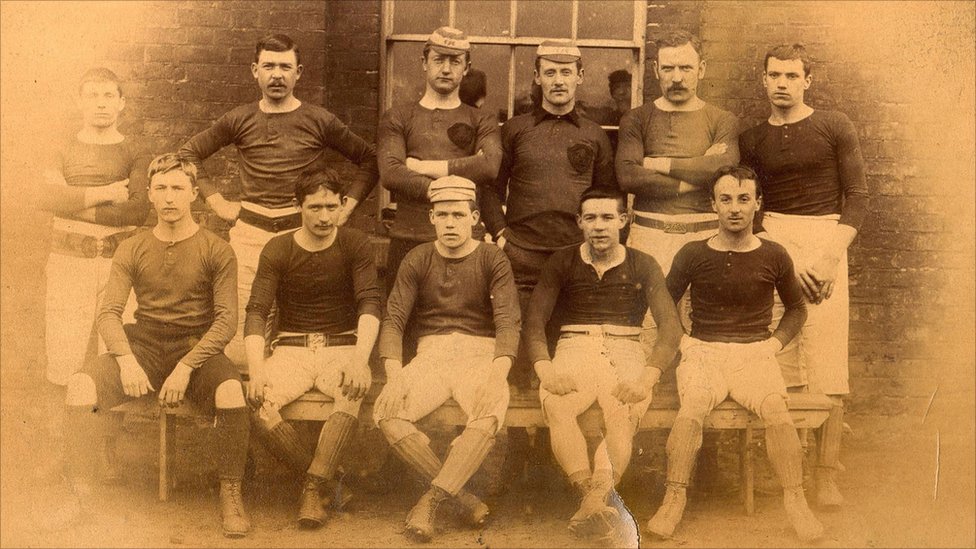
Wales played its first competitive match on 25 March 1876 against Scotland in Glasgow, making it the third-oldest international football team in the world. Although the Scots won the first fixture 4–0, a return match was planned in Wales the following year, and so it was that the first international football match on Welsh soil took place at the Racecourse Ground, Wrexham, on 5 March 1877. Scotland took the spoils winning 2–0. Wales' first match against England came in 1879, a 2–1 defeat at the Kennington Oval, London, and in 1882, Wales faced Ireland for the first time, winning 7–1 in Wrexham.
The associations of the four Home Nations met at the International Football Conference in Manchester on 6 December 1882 to set down a set of worldwide rules. This meeting saw the establishment of the International Football Association Board (IFAB) to approve changes to the rules, a task the four associations still perform to this day. The 1883–84 season saw the formation of the British Home Championship, a tournament which was played annually between England, Scotland, Ireland and Wales until 1983–84. Wales were champions on 12 occasions, winning outright seven times whilst sharing the title five times.
The FAW became members of FIFA, world football's governing body, in 1910, but the relationship between FIFA and the British associations was fraught and the British nations withdrew from FIFA in 1928 in a dispute over payments to amateur players. As a result, Wales did not enter the first three FIFA World Cups. In 1932, Wales played host to the Republic of Ireland, the first time they played against a side from outside the four home nations. One year later, Wales played a match outside the United Kingdom for the first time when they travelled to Paris to play France national football team in a match drawn 1–1. After World War II, Wales, along with the other three home nations, rejoined FIFA in 1946 and took part in the qualifying rounds for the 1950 World Cup, the 1949–50 Home Championships being designated as a qualifying group. The top two teams were to qualify for the finals in Brazil, but Wales finished bottom of the group.
1958 World Cup
The 1950s were a golden age for Welsh football with stars such as Ivor Allchurch, Cliff Jones, Alf Sherwood, Jack Kelsey, Trevor Ford, Ronnie Burgess, Terry Medwin, Mel Charles and John Charles.
Wales made their first World Cup finals tournament appearance in the 1958 FIFA World Cup in Sweden. However, their path to qualification was unusual. Having finished second to Czechoslovakia in qualifying Group 4, the golden generation of Welsh football managed by Jimmy Murphy seemed to have missed out on qualification, but the politics of the Middle East subsequently intervened. In the Asian/African qualifying zone, Egypt and Sudan had refused to play against Israel following the Suez Crisis, while Indonesia had insisted on meeting Israel on neutral ground. As a result, FIFA proclaimed Israel winners of their group. However, FIFA did not want a team to qualify for the World Cup finals without actually playing a match, and so lots were drawn of all the second-placed teams in UEFA. Belgium were drawn out first but refused to participate, and so then Wales was drawn out and awarded a two-legged play-off match against Israel with a place in Sweden for the winners. Having defeated Israel 2–0 at the Ramat Gan Stadium and 2–0 at Ninian Park, Cardiff, Wales went through to a World Cup finals tournament for the first time.
The strong Welsh squad made their mark in Sweden, drawing all the matches in their group against Hungary, Mexico and Sweden before defeating Hungary in a play-off match to reach the quarter-finals against Brazil. However, Wales' chances of victory against Brazil were hampered by an injury to John Charles that ruled him out of the match. Wales lost 1–0 with 17-year-old Pelé scoring his first international goal. The goal made Pelé the youngest World Cup goal scorer and Brazil went on to win the tournament.
Wales' remarkable campaign in Sweden was the subject of the best-selling book When Pele Broke Our Hearts: Wales and the 1958 World Cup (by Mario Risoli, St David's Press) which was published on the 40th anniversary of the World Cup and was also the inspiration for a Bafta Cymru-nominated documentary.
1970s
Wales failed to qualify for the first four finals tournaments of the UEFA European Championship from its inception in 1960. They also did not replicate their success in qualifying for the 1958 FIFA World Cup, although they did achieve a highly creditable draw against then world champions England in the 1970 British Home Championship, weeks before England went to defend their title in Mexico 1970 FIFA World Cup. This helped to give Wales a share of the Home Championship trophy for the year, goal difference not at that stage being used to determine an outright winner. In 1976, the team – managed by Mike Smith – reached the quarter-finals of the UEFA European Championship, having finished top of qualifying Group 2 ahead of Hungary, Austria and Luxembourg, but this was not considered part of the finals. Prior to 1980, only four countries qualified for the finals tournament, and Wales were drawn to play against the winners of Group 3 – Yugoslavia – in a two-legged, home-and-away tie. Wales lost the first leg 2–0 in Zagreb and were eliminated from the competition following a 1–1 draw in a bad-tempered return leg at Cardiff's Ninian Park, which was marred by crowd trouble. This initially led to Wales being banned from the 1980 tournament, but this was reduced on appeal to a four-year ban on qualifying matches being played within 100 miles of Cardiff. Yugoslavia went on to finish fourth in the 1976 tournament.
The following year, Wales defeated England on English soil for the first time in 42 years and secured their only victory to date at Wembley Stadium thanks to a Leighton James penalty. Wales went onto finish second in the 1977 British Home Championship. A few weeks earlier, Wales achieved another noted victory against then European Champions Czechoslovakia with Nick Deacy and James again scoring. This victory in a qualifier strengthened Wales' bid to qualify for the 1978 FIFA World Cup, but six months later, that attempt ended in controversial circumstances. The decisive fixture against Scotland - nominally a home fixture for Wales, although relocated to Anfield amidst security concerns - was swung by a contentious penalty awarded to Scotland, replays suggesting the handball offence may have actually been perpetrated by Scottish striker Joe Jordan. Another notable achievement for Wales however came in the 1980 British Home Championship, as Wales comprehensively defeated England at the Racecourse Ground. Goals from Mickey Thomas, Ian Walsh, Leighton James and an own goal by Phil Thompson saw Wales defeat England 4–1 just four days after England had defeated the then-world champions, Argentina.
1980s
In the 1982 FIFA World Cup qualifiers, the Wales team – managed by Mike England – came extremely close to qualification; a 3–0 defeat against the Soviet Union in their final match meant they missed out on goal difference, but the real damage had been done by their failure to beat Iceland in their last home match, the match eventually finishing 2–2 after several hold-ups due to floodlight failures.
Wales also only narrowly missed out on qualification for the 1984 UEFA European Championship. They were seconds away from qualification when a winning goal by Ljubomir Radanović for Yugoslavia during injury time in the final game of qualifying group 4 against Bulgaria eliminated Wales.
Mark Hughes marked his debut for Wales by scoring the only goal of the match as England were defeated once again in 1984. The following season, Hughes was again on target, scoring a wonder goal as Wales thrashed Spain 3–0 at the Racecourse during qualification for the 1986 World Cup. However, despite defeating Scotland 1–0 at Hampden Park, it was again Iceland that wrecked Welsh hopes by defeating Wales 1–0 in Reykjavík, and for the second World Cup in a row, Wales missed out on goal difference. Wales had to win their last match at home to Scotland to be guaranteed at least a play-off, but were held to a 1–1 draw in a match marred by the death of Scotland manager Jock Stein, who collapsed from a heart attack at the end of the match.
Wales also started strongly in their bid to qualify for the 1988 UEFA European Championship, and were undefeated after four games. But away defeats against Denmark and Czechoslovakia in the last two games in qualifying group 6 saw Mike England's eight-year reign as Welsh coach end in another disappointment.
1990s
Under coach Terry Yorath, Wales achieved a remarkable result on 5 June 1991 when defeating then world champions Germany in a Euro 1992 qualifier, thanks to a goal from Ian Rush. Three months later, on 11 September 1991, Wales achieved a notable double by defeating Brazil for the only time in a friendly international, thanks to a goal from Dean Saunders. At this point, Wales seemed well placed to progress from their qualifying group 5. However, victories for Germany in their three remaining matches in the group, including a 4–1 win in the return fixture against Wales, eliminated the Welsh.
Wales also made a strong showing in their qualifying group for the 1994 World Cup, achieving a noted victory at home to Belgium. Wales thus attained what was then their highest position in the FIFA World Rankings on 27 August 1993. Wales again came close to qualifying for a major championship only to fall short in the closing stages of their campaign. Needing to win the final match of the group at home to Romania on 17 November, Paul Bodin missed a penalty when the scores were level 1–1; the miss was immediately followed by Romania taking the lead and going on to win 2–1.
Following the failure to qualify, Yorath's contract as manager of the national side was not renewed by the FAW, and Real Sociedad manager John Toshack was appointed on a part-time basis. However, Toshack resigned after just one match (a 3–1 defeat to Norway) citing problems with the FAW as his reason for leaving, although he was sure to have been shocked at being booed off the pitch at Ninian Park by the Welsh fans still reeling from the dismissal of Yorath. Mike Smith took the manager role for the second time at the start of the Euro 1996 qualifiers, but Wales slipped to embarrassing defeats against Moldova and Georgia before Bobby Gould was appointed in June 1995.
Gould's time in charge of Wales is seen as a dark period by Welsh football fans. His questionable tactics and public fallings-out with players Nathan Blake, Robbie Savage and Mark Hughes, coupled with embarrassing defeats to club side Leyton Orient and a 7–1 thrashing by the Netherlands in 1996 did not make him a popular figure within Wales. Gould finally resigned following a 4–0 defeat to Italy in 1999, and the FAW turned to two legends of the national team, Neville Southall and Mark Hughes, to take temporary charge of the match against Denmark four days later, with Hughes later being appointed on a permanent basis.
2000s
Under Mark Hughes, Wales came close to qualifying for a place at Euro 2004 in Portugal, being narrowly defeated by Russia in the play-offs. However, the defeat was not without its controversy, as Russian midfielder Yegor Titov tested positive for the use of a banned substance after the first qualifying leg, a scoreless draw in Moscow. Notwithstanding, FIFA opted not to take action against the Football Union of Russia other than instructing them not to field Titov again, and the Russian team went on to defeat Wales 1–0 in Cardiff to qualify for the final tournament.
Following a disappointing start to the 2006 World Cup qualifying campaign, Hughes left his role with the national team to take over as manager of Premier League outfit Blackburn Rovers. John Toshack was appointed manager for the second time in November 2004. In Euro 2008 qualifying, Wales finished 5th in Group D. In 2010 FIFA World Cup qualification – UEFA Group 4, two 2–0 home defeats by Finland and Germany in spring 2009 effectively ended Wales' hopes of qualification.
Wales were drawn in UEFA Euro 2012 qualifying Group G. After a defeat at Montenegro in their opening match, on 9 September 2010, John Toshack stood down as manager after being disappointed at previous results in 2010 against Croatia and the opening Euro 2012 qualifier. Wales under-21 coach Brian Flynn took over from Toshack as caretaker manager.
2010s
Gary Speed was appointed as permanent manager on 14 December 2010. Speed appointed 20-year-old Aaron Ramsey captain, making him the youngest Wales captain. In August 2011, Wales attained their lowest FIFA ranking of 117th. After some promising performances, in October 2011, Wales had rapidly risen to 45th in the FIFA rankings. A 4–1 home win in a friendly match against Norway on 12 November 2011 proved to be Speed's last match in charge of Wales. The match was a culmination of Speed's efforts which led Wales to receive the unofficial award for biggest mover of 2011 in the FIFA rankings. His tenure as manager ended in tragic circumstances two weeks later when he was found dead at his home on 27 November, having apparently committed suicide.
Due to London's successful bid for the 2012 Summer Olympics, a Great Britain team would qualify as of right of being the host nation. However, the FAW stressed it was strongly against the proposal. Despite this, Welsh players Aaron Ramsey and Gareth Bale expressed their interest in representing the Great Britain Olympic football team. Bale withdrew due to injury, but Ramsey was joined by four other Welshmen in Stuart Pearce's 18-man squad: Swansea City's Joe Allen and Neil Taylor, while Manchester United's Ryan Giggs and Liverpool's Craig Bellamy were included as over-age players, with Giggs being made captain.
Chris Coleman was appointed Wales team manager on 19 January 2012. For 2014 World Cup qualification, Wales were drawn in Group A but finished 5th. Wales were placed in Group B for qualifying for Euro 2016. In July 2015, following four wins and two draws, Wales topped the group.
In July 2015, having attained their then highest FIFA ranking of tenth, Wales were placed among the top seeds for the 2018 FIFA World Cup qualification draw. In September 2015, England dropped to tenth in the FIFA rankings, making Wales – in ninth position – the highest-ranked British team for the first time in its history. In October 2015, Wales attained their highest ever FIFA ranking of eighth. On 10 October 2015, Wales lost 2–0 to Bosnia and Herzegovina. However, Wales' qualification for Euro 2016 was confirmed after Cyprus defeated Israel that same evening.
Euro 2016
Wales qualified for Euro 2016 in France, their first European Championship tournament, and were drawn into Group B with Slovakia, Russia and England. On their Euro debut, on 11 June against Slovakia at the Nouveau Stade de Bordeaux, Gareth Bale scored direct from a free-kick to give Wales a 1–0 lead, and Hal Robson-Kanu scored the winner in a 2–1 victory. In their second match, against England in Lens, Wales led 1–0 at half-time through another Bale free-kick, but lost 2–1. Against Russia at the Stadium Municipal in Toulouse, Aaron Ramsey, Neil Taylor and Bale scored in a 3–0 win that made them win the group.
In their round of 16 match at the Parc des Princes in Paris, Wales played Northern Ireland and won 1–0 after an own goal from Gareth McAuley. In the quarter-final against Belgium, Wales went behind to a long-range effort from Radja Nainggolan, but captain Ashley Williams headed an equaliser before Hal Robson-Kanu and Sam Vokes confirmed a 3–1 victory for Wales. This victory advanced Wales to their first major tournament semi-final.
Wales lost 2–0 in the semi-final against Portugal with goals from Cristiano Ronaldo and Nani early in the second half. Wales were welcomed back home on 8 July with an open-top bus parade around Cardiff, starting at Cardiff Castle and going past the Millennium Stadium before finishing at the Cardiff City Stadium.
2018 World Cup qualification and China Cup
Wales finished third in their 2018 World Cup qualifying group, therefore failing to qualify for the final tournament. Chris Coleman resigned as Wales manager on 17 November 2017 to join Sunderland.
Wales were invited to participate in the 2018 China Cup alongside China, Czech Republic and Uruguay. Wales beat China 6–0 in the semi-final but lost 1–0 in the final to Uruguay.
2020s
On 15 January 2018, Ryan Giggs was confirmed as new manager. Despite losing two of the first three qualifiers for UEFA Euro 2020, Wales went unbeaten in the second half of 2019 and ultimately qualified in second place following a 2–0 win over Hungary in their final match on 19 November. Euro 2020 was delayed until 2021 by the COVID-19 pandemic in Europe, which meant Wales' next games came in the 2020–21 UEFA Nations League. They kept five consecutive clean sheets on the way to an unbeaten record in the competition, winning five games and drawing one, despite Giggs not being available for the last two games due to legal troubles. With Rob Page in interim charge, the team beat Finland 3–1 in their final match to finish top of the group and gain promotion to League A for the 2022–23 UEFA Nations League.
UEFA Euro 2020 was played in June and July 2021. Under Page as interim manager, Wales progressed from the group stage after finishing second in the group on goal difference. In the last 16 round Wales lost to Denmark in Amsterdam.
Rob Page remained in interim charge for the 2022 World Cup qualification campaign. Wales finished second in Group E and progressed to the qualification play-off stage. After beating Austria in the play-off semi-final, Wales qualified for the World Cup for the first time since 1958 with a 1–0 win over Ukraine.
Following their promotion in the previous Nations League campaign, Wales were drawn in Group A4 of the 2022–23 UEFA Nations League along with Belgium, the Netherlands and Poland, with Rob Page still interim manager.
On 20 June 2022, Ryan Giggs resigned as Wales manager due to his upcoming court case. Page stayed on as interim manager before being given a four-year contract extension in September 2022, managing Wales at the 2022 World Cup in Qatar. After a 1–1 draw with the United States in the opening match, Wales lost their second match to Iran after conceding two injury time goals. In their final match, Wales were eliminated after losing 3–0 to England, therefore, finishing bottom of the group.
On 9 January 2023, Wales captain Gareth Bale retired from club and international football. At the time of his retirement he was the record goal scorer and record appearance holder for Wales.
During UEFA Euro 2024 qualification, Wales finished 3rd in their group, meaning they would need to qualify via the play-offs. In the play-off semi-final, Wales beat Finland 4–1 but lost the play-off final to Poland on penalties. In June 2024, Rob Page was sacked as Wales' manager following a 0-0 friendly draw to Gibraltar and a 4–0 defeat to Slovakia.
Craig Bellamy was announced as the head coach of the Welsh national team on 9 July 2024. In Wales' first campaign under Bellamy, they finished top of Group B4 in the 2024-25 UEFA Nations League, with Bellamy going unbeaten in his first 9 matches until a 4–3 defeat to Belgium in Brussels.
On 18 November 2025, Wales achieved a 7–1 victory over North Macedonia to secure a second place play-off position in Group J of the 2026 FIFA World Cup qualifiers.
Team image
Media coverage
Live television broadcast rights are held by S4C (Welsh language commentary) and BBC Cymru Wales (English language commentary)
Colours and logo
The primary kit has long been all-red. The crest of the Football Association of Wales features a rampant Welsh Dragon on a white shield. From 1920, the shield was surrounded by a red border, and the letters 'FAW' were added in 1926. The badge was redesigned in 1951, adding a green border with 11 daffodils, as well as the Welsh-language motto Gorau Chwarae Cyd Chwarae ("The best play is team play"). The motto was briefly removed in 1984, but the badge stayed largely the same until 2010, when the shield was changed to feature rounded sides and the motto banner was changed from white to red and green. The dragon also changed from rampant to rampant regardant. The motto was removed again in 2019, following another major redesign of the badge, which saw the top of the shield flattened and the sides changed not to curve outwards; the green border was also thinned and the daffodils removed.
Kit supplier
| Kit provider | Period |
|---|---|
| ENG Admiral | 1976–1980 |
| Germany Adidas | 1980–1987 |
| Denmark Hummel | 1987–1990 |
| ENG Umbro | 1990–1996 |
| Italy Lotto | 1996–2000 |
| Italy Kappa | 2000–2008 |
| United States Champion | 2008–2010 |
| ENG Umbro | 2010–2013 |
| Germany Adidas | 2013– |
Name
The team is sometimes known and branded mononymously as "Cymru", the Welsh language name for Wales, by the Football Association of Wales (FAW; or in ; CBC), as the FAW uses the term in its internal and external communications. In October 2022, the FAW announced it was considering rebranding the team to use only the Welsh name for the country, ditching the term "Wales", following the 2022 FIFA World Cup. The association said it was in discussions with UEFA over how to change the name, and was inspired by Turkey's rebrand to Türkiye and not being the last country alphabetically in some football events. University of Limerick professor Owen Worth said this suggestion was an example of the connection between the team's supporters' clubs and pro-Welsh independence groups such as YesCymru and AUOB Cymru.
Pre-match squad photo routine
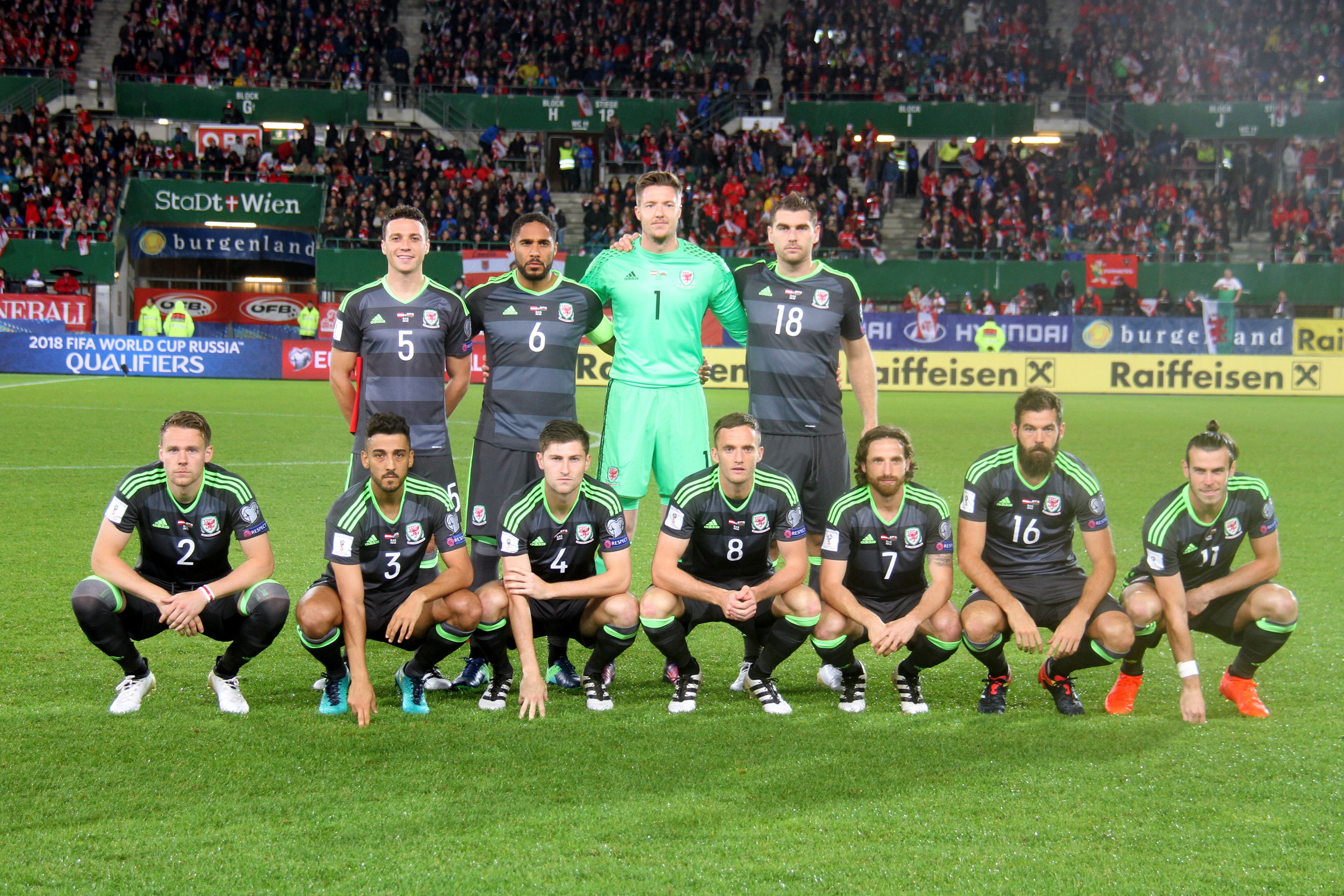
During the Euro 2016 tournament, the squad's pre-match photos went viral due to the players' unsual and awkward arrangement in them. At the time, Joe Ledley noted that they were "just not very good at them" but that it had become a good luck charm to not take a proper photo. In 2025, after the Wales national women's team had done the same during the Women's Euro 2025 tournament, a Welsh team spokesperson stated that it had started by accident but has since become a tradition to pose unconventionally for both national teams. It has also been noted that the awkward arrangement of the Welsh pre-match photo goes as far back as 2002.
Home stadium
Main article: Wales national football team home stadium
From 2000 to 2009, Wales played most of their home matches at the Millennium Stadium, Cardiff. The stadium was built in 1999 on the site of the old National Stadium, known as Cardiff Arms Park, as the Welsh Rugby Union (WRU) had been chosen to host the 1999 Rugby World Cup. Prior to 1989, Wales played their home games at the grounds of Cardiff City, Swansea City and Wrexham, but then came to an agreement with the WRU to use Cardiff Arms Park and, subsequently, the Millennium Stadium.
Wales' first football match at the Millennium Stadium was against Finland on 29 March 2000. The Finns won the match 2–1, with Jari Litmanen becoming the first player to score a goal at the stadium. Ryan Giggs scored Wales' goal in the match, becoming the first Welshman to score at the stadium.
With the opening of the Cardiff City Stadium in 2009, the FAW chose to stage most home friendlies there, with other friendly matches played at the Liberty Stadium in Swansea (now known as the Swansea.com Stadium) and the Racecourse Ground in Wrexham. Qualifying matches continued to be played at the 74,500-capacity Millennium Stadium until the end of 2009, which was typically only around 20–40% full amid poor team results. This led to calls from fans and players for international matches to be held at smaller stadiums. For the Euro 2012 qualifying campaign, the FAW decided Wales would play all of their home matches at either the Cardiff City Stadium or the Liberty Stadium, with the exception of the home tie against England, which was played at the Millennium Stadium. The 2014 World Cup qualifying campaign saw four home matches at the Cardiff City Stadium and one at the Liberty Stadium. Cardiff City Stadium's capacity was increased to 33,000 in 2014 and all home matches for Euro 2016 qualifying were scheduled at the stadium and Wales subsequently qualified for the finals tournament in France. All five home qualifiers for the 2018 FIFA World Cup were held at the stadium as well as both of the team's home 2018–19 UEFA Nations League games. All home games in the Euro 2020 qualifying campaign also took place there. A friendly against Spain was played at the Millennium Stadium on 11 October 2018, which was Wales' first match at the stadium in just over seven-and-a-half years, finishing in a 4–1 defeat. On 20 March 2019, Wales played a friendly against Trinidad and Tobago at the Racecourse Ground, their first match there since 2008.
Results and fixtures
Main article: Wales national football team results (2020–present)
The following is a list of match results in the last 12 months, as well as any future matches that have been scheduled.
2025
-
D. James
-
B. Davies
-
Matondo
-
Tagybergen
-
Miovski
-
Brooks
-
Rodon
-
Wilson
-
Moore
-
Lukaku
-
Tielemans
-
Doku
-
De Bruyne
-
Wilson
-
Thomas
-
Johnson UEFA report
-
Moore
-
Cornelius
-
Rogers
-
Watkins
-
Saka
-
Rodon
-
Broadhead
-
De Bruyne
-
Meunier
-
Trossard
-
J. James
-
Wilson
-
Brooks
-
Johnson
-
D.James
-
Broadhead
-
Miovski
2026
Coaching staff
| Position | Name |
|---|---|
| Head Coach | WAL Craig Bellamy |
| Assistant Coaches | WAL Andrew Crofts |
| WAL James Rowberry | |
| NED Piet Cremers | |
| WAL Ryland Morgans | |
| Head of Performance | WAL Nick Davies |
| Goalkeeping Coach | WAL Martyn Margetson |
| Fitness Coach | WAL Adam Owen |
| Medical Officer | ENG Jon Houghton |
| Performance Psychologist | WAL Ian Mitchell |
| Physiotherapists | ENG Sean Connelly |
| WAL David Rowe | |
| ENG Chris Senior | |
| ENG Paul Harris | |
| Sports Scientist | IRE Ronan Kavanagh |
| Equipment Officers | WAL David Griffiths |
| WAL Kevin McCusker | |
| Performance Analysts | WAL Esther Wills |
| WAL James Turner |
Coaching history
Main article: Wales national football team manager
:Caretaker manager are listed in italics. Prior to 1954 the Welsh team was chosen by a panel of selectors with the team captain fulfilling the role of coach.
- WAL Walley Barnes (1954–1955)
- WAL Jimmy Murphy (1956–1964)
- WAL Dave Bowen (1964–1974)
- WAL Ron Burgess (1965)
- ENG Mike Smith (1974–1979)
- WAL Mike England (1979–1987)
- WAL David Williams (1988)
- WAL Terry Yorath (1988–1993)
- WAL John Toshack (1994)
- ENG Mike Smith (1994–1995)
- ENG Bobby Gould (1995–1999)
- WAL Neville Southall (1999)
- WAL Mark Hughes (1999–2004)
- WAL John Toshack (2004–2010)
- WAL Brian Flynn (2010)
- WAL Gary Speed (2010–2011)
- WAL Chris Coleman (2012–2017)
- WAL Ryan Giggs (2018–2020)
- WAL Rob Page (2020–2024)
- WAL Craig Bellamy (2024–)
Players
Current squad
Wales named the following squad for the 2026 FIFA World Cup qualification – UEFA Group J matches against Liechtenstein and North Macedonia on 15 and 18 November 2025; respectively. On 10 November, Ben Cabango, Ben Davies, and Kieffer Moore withdrew due to injury and was replaced by Rhys Norrington-Davies and Isaak Davies.
Caps and goals are correct as of 18 November 2025, after the match against North Macedonia.
Recent call-ups
The following players have also been called up for the team within the last twelve months. INJ Withdrew due to injury
WD Withdrew from the squad due to non-injury issue
SUS Serving suspension
RET Retired from the national team
Individual records
Main article: List of Wales international footballers
| 2006–2022 |
|---|
| 2 |
| 28 |
| 73 |
|
| 1980–1996 |
|---|
| 23 |
| 38 |
|
| 1947–1957 |
|---|
| 23 |
| 68 |
|
| 1951–1966 |
|---|
| 5 |
| 22 |
| 75 |
|
| 1986–2001 |
|---|
| 6 |
| 21 |
| 86 |
|
| 2008–present |
|---|
| 7 |
| 19 |
| 78 |
|
| 1998–2013 |
|---|
| 8 |
| 17 |
| 67 |
|
| 2013–present |
|---|
| 16 |
| 59 |
|
| 2002–2011 |
|---|
| 16 |
| 59 |
|
| 1954–1970 |
|---|
| 16 |
| 72 |
| |1984–1999 |}
Notable former players
[[Welsh Sports Hall of Fame]] inductees
- Ivor Allchurch
- Horace Blew
- Ronnie Burgess
- John Charles
- Trevor Ford
- Ryan Giggs
- Mark Hughes
- Bryn Jones
- Cliff Jones
- Fred Keenor
- Jack Kelsey
- George Latham
- Billy Meredith
- Jimmy Murphy
- Ivor Powell
- Kevin Ratcliffe
- Ian Rush
- Alf Sherwood
- Neville Southall
- Gary Speed
- John Toshack
- Terry Yorath
Welsh inductees to the [[English Football Hall of Fame]]
- 2002 – John Charles
- 2005 – Ryan Giggs
- 2006 – Ian Rush
- 2007 – Mark Hughes, Billy Meredith
- 2013 – Cliff Jones
- 2015 – Ivor Allchurch
- 2016 – Neville Southall
- 2017 – Gary Speed
Welsh winners of the [[FWA Footballer of the Year]]
- Ian Rush (1984)
- Neville Southall (1985)
- Gareth Bale (2013)
Welsh winners of the [[PFA Players' Player of the Year]]
- Ian Rush (1984)
- Mark Hughes (1989, 1991)
- Ryan Giggs (2009)
- Gareth Bale (2011, 2013)
Team records
-
Biggest win 11–0 (Wrexham, Wales; 3 March 1888)
-
Biggest defeat 9–0 (Glasgow, Scotland; 23 March 1878)
Competitive record
FIFA World Cup
Main article: Wales at the FIFA World Cup
| a | #00B140 | 2px}}" | [ | a | #00B140 | 2px}}" | [ | a | #00B140 | 2px}}" | [ | Year | Round | Position | Pld | W | D* | L | GF | GA | Pld | W | D | L | GF | GA | Pld | W | D | L | GF | GA | Total | Quarter-finals | 2/22 | 8 | 1 | 4* | 3 | 5 | 10 | 138 | 48 | 30 | 60 | 189 | 191 | 4 | 4 | 0 | 0 | 7 | 1 | ||||||||||||||||||||
|---|---|---|---|---|---|---|---|---|---|---|---|---|---|---|---|---|---|---|---|---|---|---|---|---|---|---|---|---|---|---|---|---|---|---|---|---|---|---|---|---|---|---|---|---|---|---|---|---|---|---|---|---|---|---|---|---|---|---|---|---|---|---|---|---|---|---|---|---|---|---|---|---|---|
| URU [1930](1930-fifa-world-cup) | *Not a FIFA member* | *Not a FIFA member* | colspan="6" rowspan="5" | ||||||||||||||||||||||||||||||||||||||||||||||||||||||||||||||||||||||
| ITA [1934](1934-fifa-world-cup) | |||||||||||||||||||||||||||||||||||||||||||||||||||||||||||||||||||||||||
| FRA [1938](1938-fifa-world-cup) | |||||||||||||||||||||||||||||||||||||||||||||||||||||||||||||||||||||||||
| BRA [1950](1950-fifa-world-cup) | *Did not qualify* | 3 | 0 | 0 | 1 | 2 | 1 | 6 | |||||||||||||||||||||||||||||||||||||||||||||||||||||||||||||||||
| SUI [1954](1954-fifa-world-cup) | 3 | 0 | 1 | 2 | 5 | 9 | |||||||||||||||||||||||||||||||||||||||||||||||||||||||||||||||||||
| SWE [1958](1958-fifa-world-cup) | Quarter-finals | 5th | 5 | 1 | 3* | 1 | 4 | 4 | 6 | 4 | 0 | 2 | 10 | 5 | 2 | 2 | 0 | 0 | 4 | 0 | |||||||||||||||||||||||||||||||||||||||||||||||||||||
| CHI [1962](1962-fifa-world-cup) | *Did not qualify* | 2 | 0 | 1 | 1 | 2 | 3 | colspan="6" rowspan="15" | |||||||||||||||||||||||||||||||||||||||||||||||||||||||||||||||||
| ENG [1966](1966-fifa-world-cup) | 6 | 3 | 0 | 0 | 3 | 11 | 9 | ||||||||||||||||||||||||||||||||||||||||||||||||||||||||||||||||||
| MEX [1970](1970-fifa-world-cup) | 4 | 0 | 0 | 4 | 3 | 10 | |||||||||||||||||||||||||||||||||||||||||||||||||||||||||||||||||||
| FRG [1974](1974-fifa-world-cup) | 4 | 1 | 1 | 2 | 3 | 5 | |||||||||||||||||||||||||||||||||||||||||||||||||||||||||||||||||||
| ARG [1978](1978-fifa-world-cup) | 4 | 1 | 0 | 3 | 3 | 4 | |||||||||||||||||||||||||||||||||||||||||||||||||||||||||||||||||||
| ESP [1982](1982-fifa-world-cup) | 8 | 4 | 2 | 2 | 12 | 7 | |||||||||||||||||||||||||||||||||||||||||||||||||||||||||||||||||||
| MEX [1986](1986-fifa-world-cup) | 6 | 3 | 1 | 2 | 7 | 6 | |||||||||||||||||||||||||||||||||||||||||||||||||||||||||||||||||||
| ITA [1990](1990-fifa-world-cup) | 6 | 0 | 2 | 4 | 4 | 8 | |||||||||||||||||||||||||||||||||||||||||||||||||||||||||||||||||||
| USA [1994](1994-fifa-world-cup) | 10 | 5 | 2 | 3 | 19 | 12 | |||||||||||||||||||||||||||||||||||||||||||||||||||||||||||||||||||
| FRA [1998](1998-fifa-world-cup) | 8 | 2 | 1 | 5 | 20 | 21 | |||||||||||||||||||||||||||||||||||||||||||||||||||||||||||||||||||
| KOR JPN [2002](2002-fifa-world-cup) | 10 | 1 | 6 | 3 | 10 | 12 | |||||||||||||||||||||||||||||||||||||||||||||||||||||||||||||||||||
| GER [2006](2006-fifa-world-cup) | 10 | 2 | 2 | 6 | 10 | 15 | |||||||||||||||||||||||||||||||||||||||||||||||||||||||||||||||||||
| RSA [2010](2010-fifa-world-cup) | 10 | 4 | 0 | 6 | 9 | 12 | |||||||||||||||||||||||||||||||||||||||||||||||||||||||||||||||||||
| BRA [2014](2014-fifa-world-cup) | 10 | 3 | 1 | 6 | 9 | 20 | |||||||||||||||||||||||||||||||||||||||||||||||||||||||||||||||||||
| RUS [2018](2018-fifa-world-cup) | 10 | 4 | 5 | 1 | 13 | 6 | |||||||||||||||||||||||||||||||||||||||||||||||||||||||||||||||||||
| QAT [2022](2022-fifa-world-cup) | Group stage | 30th | 3 | 0 | 1* | 2 | 1 | 6 | 10 | 6 | 3 | 1 | 17 | 10 | 2 | 2 | 0 | 0 | 3 | 1 | |||||||||||||||||||||||||||||||||||||||||||||||||||||
| CAN MEX USA [2026](2026-fifa-world-cup) | *To be determined* | 8 | 5 | 1 | 2 | 21 | 11 | *To be determined* | |||||||||||||||||||||||||||||||||||||||||||||||||||||||||||||||||
| MAR POR ESP [2030](2030-fifa-world-cup) | *To be determined* | ||||||||||||||||||||||||||||||||||||||||||||||||||||||||||||||||||||||||
| KSA [2034](2034-fifa-world-cup) |
UEFA European Championship
Main article: Wales at the UEFA European Championship
| a | #00B140 | 2px}}" | [ | a | #00B140 | 2px}}" | [ | a | #00B140 | 2px}}" | [ | Year | Round | Position | Pld | W | D* | L | GF | GA | Pld | W | D | L | GF | GA | Pld | W | D | L | GF | GA | Total | Semi-finals | 2/16 | 10 | 5 | 1* | 4 | 13 | 12 | 116 | 48 | 24 | 44 | 144 | 145 | 6 | 1 | 3 | 2 | 5 | 5 | ||||||||||||||||||||
|---|---|---|---|---|---|---|---|---|---|---|---|---|---|---|---|---|---|---|---|---|---|---|---|---|---|---|---|---|---|---|---|---|---|---|---|---|---|---|---|---|---|---|---|---|---|---|---|---|---|---|---|---|---|---|---|---|---|---|---|---|---|---|---|---|---|---|---|---|---|---|---|---|---|
| FRA [1960](1960-european-nations-cup) | *Did not enter* | *Did not enter* | colspan="6" rowspan="4" | ||||||||||||||||||||||||||||||||||||||||||||||||||||||||||||||||||||||
| ESP [1964](1964-european-nations-cup) | *Did not qualify* | 2 | 0 | 1 | 1 | 2 | 4 | ||||||||||||||||||||||||||||||||||||||||||||||||||||||||||||||||||
| ITA 1968 | 6 | 1 | 2 | 3 | 6 | 12 | |||||||||||||||||||||||||||||||||||||||||||||||||||||||||||||||||||
| BEL 1972 | 6 | 2 | 1 | 3 | 5 | 6 | |||||||||||||||||||||||||||||||||||||||||||||||||||||||||||||||||||
| YUG 1976 | 6 | 5 | 0 | 1 | 14 | 4 | 2 | 0 | 1 | 1 | 1 | 3 | |||||||||||||||||||||||||||||||||||||||||||||||||||||||||||||
| ITA 1980 | 6 | 3 | 0 | 3 | 11 | 8 | colspan="6" rowspan="6" | ||||||||||||||||||||||||||||||||||||||||||||||||||||||||||||||||||
| FRA 1984 | 6 | 2 | 3 | 1 | 7 | 6 | |||||||||||||||||||||||||||||||||||||||||||||||||||||||||||||||||||
| FRG 1988 | 6 | 2 | 2 | 2 | 7 | 5 | |||||||||||||||||||||||||||||||||||||||||||||||||||||||||||||||||||
| SWE 1992 | 6 | 4 | 1 | 1 | 8 | 6 | |||||||||||||||||||||||||||||||||||||||||||||||||||||||||||||||||||
| ENG 1996 | 10 | 2 | 2 | 6 | 9 | 19 | |||||||||||||||||||||||||||||||||||||||||||||||||||||||||||||||||||
| BEL NED 2000 | 8 | 3 | 0 | 5 | 7 | 16 | |||||||||||||||||||||||||||||||||||||||||||||||||||||||||||||||||||
| POR 2004 | 8 | 4 | 1 | 3 | 13 | 10 | 2 | 0 | 1 | 1 | 0 | 1 | |||||||||||||||||||||||||||||||||||||||||||||||||||||||||||||
| AUT SUI 2008 | 12 | 4 | 3 | 5 | 18 | 19 | colspan="6" rowspan="4" | ||||||||||||||||||||||||||||||||||||||||||||||||||||||||||||||||||
| POL UKR 2012 | 8 | 3 | 0 | 5 | 6 | 10 | |||||||||||||||||||||||||||||||||||||||||||||||||||||||||||||||||||
| FRA 2016 | **Semi-finals** | **3rd** | **6** | **4** | **0** | **2** | **10** | **6** | 10 | 6 | 3 | 1 | 11 | 4 | |||||||||||||||||||||||||||||||||||||||||||||||||||||||||||
| EUR 2020 | Round of 16 | 16th | 4 | 1 | 1* | 2 | 3 | 6 | 8 | 4 | 2 | 2 | 10 | 6 | |||||||||||||||||||||||||||||||||||||||||||||||||||||||||||
| GER 2024 | *Did not qualify* | 8 | 3 | 3 | 2 | 10 | 10 | 2 | 1 | 1 | 0 | 4 | 1 | ||||||||||||||||||||||||||||||||||||||||||||||||||||||||||||
| England Scotland Wales Republic of Ireland 2028 | *To be determined* | *To be determined* | *To be determined* | ||||||||||||||||||||||||||||||||||||||||||||||||||||||||||||||||||||||
| ITA TUR 2032 |
Notes
-
Red border colour indicates tournament held on home soil.
-
The Qualifying record section contains only the games played in the qualifying blocks and not those played in the play-offs.
UEFA Nations League
| a | #00B140 | 2px}}" | [ | Season | Division | Group | Round | Pld | W | D* | L | GF | GA | Pts | P/R | Rank | **Total** | Group stage | 22 | 10 | 5* | 7 | 28 | 21 | 35 | 16th |
|---|---|---|---|---|---|---|---|---|---|---|---|---|---|---|---|---|---|---|---|---|---|---|---|---|---|---|
| [2018–19](2018-19-uefa-nations-league) | [B](2018-19-uefa-nations-league-b) | [4](2018-19-uefa-nations-league-b-group-4) | Group stage | 4 | 2 | 0 | 2 | 6 | 5 | 6 | 19th | |||||||||||||||
| [2020–21](2020-21-uefa-nations-league) | [B](2020-21-uefa-nations-league-b) | [4](2020-21-uefa-nations-league-b-group-4) | 6 | 5 | 1* | 0 | 7 | 1 | 16 | 17th | ||||||||||||||||
| [2022–23](2022-23-uefa-nations-league) | [A](2022-23-uefa-nations-league-a) | [4](2022-23-uefa-nations-league-a-group-4) | 6 | 0 | 1* | 5 | 6 | 11 | 1 | 16th | ||||||||||||||||
| [2024–25](2024-25-uefa-nations-league) | [B](2024-25-uefa-nations-league-b) | [4](2024-25-uefa-nations-league-b-group-4) | 6 | 3 | 3* | 0 | 9 | 4 | 12 | 19th |
Honours
Continental
- UEFA European Championship
- Semi-finals (1): 2016
Regional
- British Home Championship
Friendly
- China Cup
- Runners-up (1): 2018
- Kirin Cup
- Runners-up (1): 1992
;Notes:
- Shared titles
References
Bibliography
- Red Dragons: The Story of Welsh Football by Phil Stead ()
References
- Wathan, Chris. (9 July 2015). "How Wales went from 117 to the top 10 in the Fifa World rankings". Media Wales.
- (1 October 2015). "Wales one behind Brazil in Fifa rankings; Northern Ireland 35th".
- (2015-10-10). "Wales seal qualification to Euro 2016 despite loss to Bosnia-Herzegovina".
- (2015-10-10). "Wales secures historic Euro 2016 qualification".
- "Foundation of Wales National Team".
- (2 September 2015). "World Cup 1958 Qualifying". Rec.Sport. Soccer Statistics Foundation.
- (11 August 2011). "Memorable Welsh football fixtures". BBC Sport.
- (September 2010). "BBC Sport archive: 1991 - Wales 1-0 Brazil". BBC Sport.
- Bevan, Chris. (17 November 2013). "Paul Bodin on when Wales were a spot-kick away from the World Cup". BBC Sport.
- (16 November 2023). "When Romania broke Welsh hearts". BBC Sport.
- Hughes, Dewi. (12 November 2004). "Time for Toshack to deliver". BBC.
- "An Englishman over the border". BBC Sport.
- (5 September 1998). "Wales reprieve for Savage". BBC.
- (23 January 2004). "Wales consider Euro 2004 appeal". BBC.
- Ian Walsh. (12 November 2004). "Hughes leaves a void". BBC Sport.
- "World Cup 2006 qualifying". RSSSF.
- (12 November 2004). "Wales plump for Toshack". The Guardian.
- "European Championship 2008". RSSSF.
- (9 September 2010). "John Toshack stands down as Wales boss". BBC.
- (13 September 2010). "Brian Flynn appointed caretaker manager of Wales". The Guardian.
- (14 December 2010). "Wales unveil ex-captain Gary Speed as new manager". BBC Sport.
- Stuart James. (25 March 2011). "Aaron Ramsey makes his case as the quiet captain for Wales". The Guardian.
- Iolo Cheung. (24 August 2021). "From 'worst team ever' to Euros semis, Wales' 10-year journey from lowest ebb". BBC Sport.
- (21 December 2011). "Speed's Wales are FIFA's 2011 "Best Mover"". Reuters.
- (27 November 2011). "The FAW regrets to announce the death of the national team manager Gary Speed". Football Association of Wales.
- Matthew Southcombe. (15 November 2016). "BBC TV host reveals Gary Speed was 'cracking jokes' and talking about the future just hours before tragic suicide". Wales Online.
- (6 December 2005). "Wales oppose GB Olympic football". British Broadcasting Corporation.
- (4 November 2011). "Ramsey wants Olympic role".
- Nabil Hassan. "BBC Sport – London 2012: Gareth Bale to miss Olympics with injury". BBC Sport.
- "BBC Sport – London 2012: Tom Cleverley in Team GB football squad". BBC Sport.
- (19 January 2012). "Chris Coleman – New national team manager". [[Football Association of Wales]].
- "BBC Sport – Fifa rankings: Wales rise 15 places to highest level of 22nd". BBC Sport.
- "World Cup 2014 Qualifying". RSSSF.
- "BBC Sport – Mark Hughes hails 'huge' Wales top seeding boost for World Cup". BBC Sport.
- (13 June 2015). "Wales set to be in top seeding group for 2018 World Cup draw". BBC Sport.
- (3 September 2015). "Euro 2016 qualifiers: Wales above England in Fifa rankings". BBC Sport (British Broadcasting Corporation).
- (1 October 2015). "Wales one behind Brazil in Fifa rankings; Northern Ireland 35th". BBC Sport.
- (10 October 2015). "Bosnia 2 Wales 0". BBC Sport.
- (11 June 2016). "Wales 2–1 Slovakia". BBC Sport.
- (16 June 2016). "England 2–1 Wales". BBC Sport.
- (20 June 2016). "Russia 0 Wales 3". BBC Sport.
- (25 June 2016). "Wales 1 Northern Ireland 0". BBC Sport.
- (1 July 2016). "Wales 3–1 Belgium". BBC Sport.
- McNulty, Phil. (6 July 2016). "Portugal 2–0 Wales". BBC Sport (British Broadcasting Corporation).
- (7 July 2016). "Euro 2016: Wales players to get homecoming celebration". BBC News (British Broadcasting Corporation).
- "World Cup 2018 Qualifying". RSSSF.
- Dafydd Pritchard. (10 October 2017). "Wales fail to qualify for 2018 World Cup: What next for Chris Coleman's side?". BBC Sport.
- (17 November 2017). "Chris Coleman leaves Wales role for Sunderland job".
- (8 November 2017). "Wales invited to participate in 2018 China Cup alongside Uruguay and Czech Republic". ITV.
- Pritchard, Dafydd. (21 March 2018). "China PR 0–6 Wales".
- Dafydd Pritchard. (26 March 2018). "China Cup final: Wales 0–1 Uruguay". BBC Sport.
- (15 January 2018). "Ryan Giggs: Manchester United legend named Wales manager".
- "European Championship 2021". RSSSF.
- "International matches of Wales". RSSSF.
- (19 November 2019). "Wales 2–0 Hungary: Aaron Ramsey double sends Wales to Euros".
- (18 March 2020). "Euro 2020 postponed until next summer". BBC Sport.
- "UEFA Nations League 2020/21". RSSSF.
- (3 November 2020). "Ryan Giggs denies assault allegations after arrest".
- Pritchard, Dafydd. (18 November 2020). "Robert Page and Ryan Giggs proud of Wales' Nations League promotion".
- Dafydd Pritchard. (20 June 2021). "Italy 1–0 Wales: Visitors through to last 16 despite defeat in Rome". BBC Sport.
- "Wales Euro 2020".
- "Wales 1-0 Ukraine".
- (15 November 2021). "Wales world Cup qualification playoffs". BBC Sport.
- (5 June 2022). "Wales qualify for World Cup 2022 with playoff win over Ukraine – live reaction!".
- (16 December 2021). "Nations League: England and Wales get tough group-stage draw".
- (20 June 2022). "Ryan Giggs: Ex-Manchester United winger resigns as Wales manager".
- (12 September 2022). "Robert Page: Wales manager signs new contract before 2022 World Cup in Qatar".
- Dafydd Pritchard. (21 November 2022). "USA 1–1 Wales: Gareth Bale penalty salvages draw in World Cup opener". BBC Sport.
- Dafydd Pritchard. (25 November 2022). "World Cup 2022: Wales 0–2 Iran". BBC Sport.
- Phil McNulty. (29 November 2022). "World Cup 2022: Wales 0–3 England". BBC Sport.
- "Bale retired". BBC Sport.
- (21 November 2023). "Euro 2024: Who has qualified? Who is in the play-offs? Who has failed to qualify?".
- Pritchard, Dafydd. (21 March 2024). "Wales beat Finland to reach Euro play-off final".
- Pritchard, Dafydd. (26 March 2024). "Wales miss out on Euros after Poland shootout defeat".
- Pritchard, Dafydd. (21 June 2024). "Wales sack manager Page".
- (2023-07-09). "Craig Bellamy appointed as Wales Head Coach". FAW.
- (2025-06-09). "Craig Bellamy: How you lose is more important - Wales boss after World Cup defeat in Belgium".
- "Wales 7-1 North Macedonia: Harry Wilson hat-trick inspires thrashing".
- (7 August 2019). "A new identity for football in Wales". Football Association of Wales.
- (31 October 2022). "Wales consider changing name of national teams after World Cup".
- (31 October 2022). "Wales considering name change to Cymru".
- (31 October 2022). "Wales looks to change football team name to Cymru amid 'Welsh language renaissance'".
- Worth, Owen. (18 November 2022). "The Welsh soccer team and the growth of an 'indy-curious' Wales". RTÉ.
- Wathan, Chris. (2016-11-11). "The full story on the Wales team photo gag - and how it started".
- Wathan, Chris. (2016-11-11). "The full story on the Wales team photo gag - and how it started".
- Ewing, Lori. (2025-07-06). "Welsh women carry on tradition of oddball team photo". Reuters.
- (2016-10-10). "Wales and their weirdly evolving football team photo formations". The Guardian.
- (6 June 2025). "Full Time Report Qualifying round – Wales v Liechtenstein". [[UEFA]].
- (5 November 2025). "Cymru squad announced for final World Cup qualifiers". Football Association of Wales.
- Alpuin, Luis Fernando Passo. (20 February 2009). "Wales – Record International Players". [[Rec.Sport.Soccer Statistics Foundation]].
- "Welsh Sports Hall of Fame - Football".
- "National Football Museum Hall of Fame".
- "Football Writers' Footballer of the year".
- "PFA Awards Past Winners".
This article was imported from Wikipedia and is available under the Creative Commons Attribution-ShareAlike 4.0 License. Content has been adapted to SurfDoc format. Original contributors can be found on the article history page.
Ask Mako anything about Wales national football team — get instant answers, deeper analysis, and related topics.
Research with MakoFree with your Surf account
Create a free account to save articles, ask Mako questions, and organize your research.
Sign up freeThis content may have been generated or modified by AI. CloudSurf Software LLC is not responsible for the accuracy, completeness, or reliability of AI-generated content. Always verify important information from primary sources.
Report