From Surf Wiki (app.surf) — the open knowledge base
Parc des Princes
Stadium in Paris, France

Stadium in Paris, France
| Field | Value |
|---|---|
| name | Parc des Princes |
| logo_image | Parc des Princes - Logo.png |
| logo_size | 300px |
| image | Paris Le Parc des Princes.jpg |
| image_size | 300px |
| caption | UEFA |
| location | Paris, France |
| owner | Council of Paris |
| capacity | |
| record_attendance | 50,370 (France vs. Wales, 18 February 1989) |
| opened | |
| expanded | |
| demolished | |
| rebuilt | |
| architect | Roger Taillibert |
| tenants | Paris Saint-Germain FC (1974–Present) |
| website | Parc des Princes |
The Parc des Princes (, ) is an all-seater football stadium in Paris, France. It is located in the southwest of the French capital, within the 16th arrondissement, directly opposite the Stade Jean-Bouin.{{cite news | access-date = 4 August 2025}} The stadium, with a seating capacity of 47,929 spectators, has been the home of French football club Paris Saint-Germain FC (PSG) since July 1974.{{cite news | access-date = 4 August 2025}} The pitch is surrounded by four covered all-seater stands: Tribune Auteuil, Tribune Paris, Tribune Borelli and Tribune Boulogne.{{cite news | access-date = 4 August 2025}}
The stadium's surroundings were once a forest that served as a private recreation area and hunting ground for the king's sons (the princes) for centuries, hence the name Parc des Princes. In 1852, the area was transferred to the Council of Paris.{{cite news | access-date = 8 August 2025}}{{cite news | access-date = 7 July 2016 | url-status = dead | archive-url = https://web.archive.org/web/20160821080144/http://www.infopsg.com/le-club/le-parc-des-princes/ | archive-date = 21 August 2016 | access-date = 8 August 2025}} The first Parc was built there in 1897 as a velodrome, hosting prestigious cycling competitions including the Tour de France. Expanded in 1932, the second Parc adopted a more modern design to focus on other sports such as football, rugby union and rugby league.{{cite news | access-date = 4 August 2025}}{{cite news | access-date = 4 August 2025}}
Instigated by French president Charles de Gaulle and Minister of Sports Maurice Herzog, a project to rebuild the stadium to contemporary standards began on 8 July 1967, under the direction of Roger Taillibert. Georges Pompidou, who succeeded de Gaulle upon his death in 1970, officially inaugurated the stadium on 4 June 1972. The third Parc was one of the most advanced stadiums in Europe at the time, impressing with its futuristic lines, suspended concrete stands and formidable acoustics.{{cite news | access-date = 4 August 2025}}
Before the opening of the Stade de France in 1998, the Parc was the home stadium of the France national football team and the France national rugby union team. PSG's record attendance at the Parc dates back to their 2–0 victory over Waterschei in 1983 in the UEFA Cup Winners' Cup in front of 49,575 spectators.{{cite news | access-date = 23 November 2016 | url-status = live | archive-url = https://web.archive.org/web/20161123133951/http://www.paris-canalhistorique.com/psg-om-record-daffluence-au-parc-des-princes-en-l1/ | archive-date = 23 November 2016 | access-date = 20 August 2025}} However, the 50,370 spectators during French rugby union team's 31–12 victory over Wales in the 1989 Five Nations Championship holds the all-time attendance record at the Parc.{{cite news | access-date = 22 August 2025}}
History
Inauguration and Tour de France
For centuries, the French royal family controlled the Forest of Rouvray, today a public park called the Bois de Boulogne, and used it as a private recreation area and hunting ground for the king's sons (the princes). Following the French Revolution of 1789, the area was taken over by the central government. In 1852, upon the declaration of the Second French Empire, Emperor Napoleon III ceded ownership to the Council of Paris. The Parc des Princes was built there on 18 July 1897, hence its name.{{cite news | access-date = 4 August 2025}} It is the oldest stadium in Paris.{{cite news | access-date = 5 August 2025}}
With a seating capacity for 3,200, the Parc was initially an open-air velodrome for track cycling, the most popular sport in France at the time.{{cite news | access-date = 4 August 2025}} Henri Desgrange, a French cyclist and sports journalist, was appointed director of the stadium. The first match was played on 14 November 1897, pitting rugby union teams Union Athlétique of France and Swindon RFC of England. The first football match took place on 26 December 1897. In front of 500 spectators, Club Français won 3–1 against the English Ramblers. In 1899, the Parc hosted its first major cycling event, the Bol d'Or cycle race, followed by the 1900 UCI Track Cycling World Championships. However, the Vélodrome de Vincennes was chosen instead of the Parc to host the 1900 Summer Olympics.{{cite news | access-date = 20 August 2025}}
Desgrange and his business partner Victor Goddet, who were making a name for themselves managing the Parc, founded the cycling newspaper L'Auto in 1900 to compete with rival sports magazine Le Vélo.{{cite news | access-date = 5 August 2025}} In an attempt to counter the popularity of Le Vélo, Desgrange took up the idea of a colleague, Géo Lefèvre, to organize a large-scale race: the Tour de France. Goddet secured the necessary funding and the first edition of the race was held in July 1903, finishing at the Parc. The Tour was a resounding success and L'Auto dominated the sports press for the next forty years, while Le Vélo ceased publication in November 1904.{{cite news | access-date = 5 August 2025}} From 1903 to 1967, the Tour completed its course on the 666-meter-long pink cycle track of the Parc.{{cite news | access-date = 18 August 2025}}{{cite news | access-date = 20 August 2025}} It also hosted eight further UCI Track Cycling World Championships between 1907 and 1964.{{cite news | access-date = 18 August 2025}}
In September 1902, Racing Paris became the Parc's first tenant.{{cite news | access-date = 23 August 2025}} A year later, a Parisian team lost 11–0 to their English counterparts in front of 984 spectators in the stadium's first international football match. The France national football team played their first match at the Parc on 12 February 1905, beating Switzerland 1–0. On 1 January 1906, the France national rugby union team played their first official match at the same venue. 10,000 spectators watched France lose 38–8 to the New Zealand All Blacks.{{cite news | access-date = 20 August 2025}} Both national sides continued to play regularly there, but their main home stadium was the Stade Yves-du-Manoir until 1972.{{cite news | access-date = 5 August 2025}} During the first decade of the 20th century, the Parc also hosted three Top 14 finals, four USFSA Football Championship finals, the 1905 Coupe Dewar final and several Six Nations Championship matches between 1910 and 1920.{{cite news | access-date = 18 August 2025}}{{cite news | access-date = 18 August 2025}}{{cite news | access-date = 18 August 2025}}
The Parc's capacity was increased to 10,000 seats just before World War I. After the war, the stadium hosted its first Coupe de France final in 1919 between CASG Paris and Olympique de Paris in front of 10,000 spectators. In 1922, the Council of Paris refused funding to convert the Parc into an Olympic Stadium for the 1924 Summer Olympics. It was eventually expanded to 20,000 seats, but was still considered too small by the International Olympic Committee. Thanks to funding from Racing, who had moved there from the Parc in 1920, the Yves-du-Manoir was expanded to 60,000 spectators and was thus chosen to host the event.{{cite news | access-date = 23 August 2025}}
Expansion and 1938 FIFA World Cup
Following the Olympic Games, the Council of Paris signed a 40-year concession contract with L'Auto in 1925. Goddet died shortly after, in 1926, and his shares in the newspaper passed to his sons, Jacques and Maurice. Desgrange and the Goddet brothers began a major expansion of the stadium in 1931. Work was completed nine months later on 23 April 1932, with a capacity of 40,000 spectators, including 26,000 seats, and four stands, two of them covered, surrounding the pitch. These were named Tribune Présidentielle (or Tribune L'Auto), Tribune Paris (or Tribune Tour de France), Tribune Auteuil and Tribune Boulogne. However, the length of the velodrome's pink track was reduced from 666 metres to 454.{{cite news | access-date = 20 August 2025}}
The second Parc was inaugurated by tenants Red Star with a 4–2 win over Spanish side Athletic Bilbao in a friendly match on 9 October 1932.{{cite news | access-date = 17 August 2025}} Racing also moved into the Parc, playing their first Ligue 1 match there on 23 October 1932 against Mulhouse.{{cite news | access-date = 18 August 2025}} Stade Français joined Red Star and Racing later that year, and the three clubs shared the stadium until 1966.{{cite news | access-date = 22 August 2025}} In rugby union, the Parc hosted France's 1937 FIRA Tournament final victory against Italy and two matches of the 1945–46 Victory Internationals.{{cite news | access-date = 20 August 2025 | archive-url = https://web.archive.org/web/20241113142716/http://en.espn.co.uk/scrum/rugby/match/19598.html | archive-date = 2024-11-13}} Several boxing matches were also held at the stadium. The first fight was on 12 June 1932, when French boxer Marcel Thil took the world middleweight title from American Gorilla Jones in front of 70,000 spectators.{{cite news | access-date = 18 August 2025}} On 25 May 1946, the Parc hosted six more bouts, including the main event between French boxers Marcel Cerdan and Robert Charron, won by the former.{{cite news | access-date = 18 August 2025}}
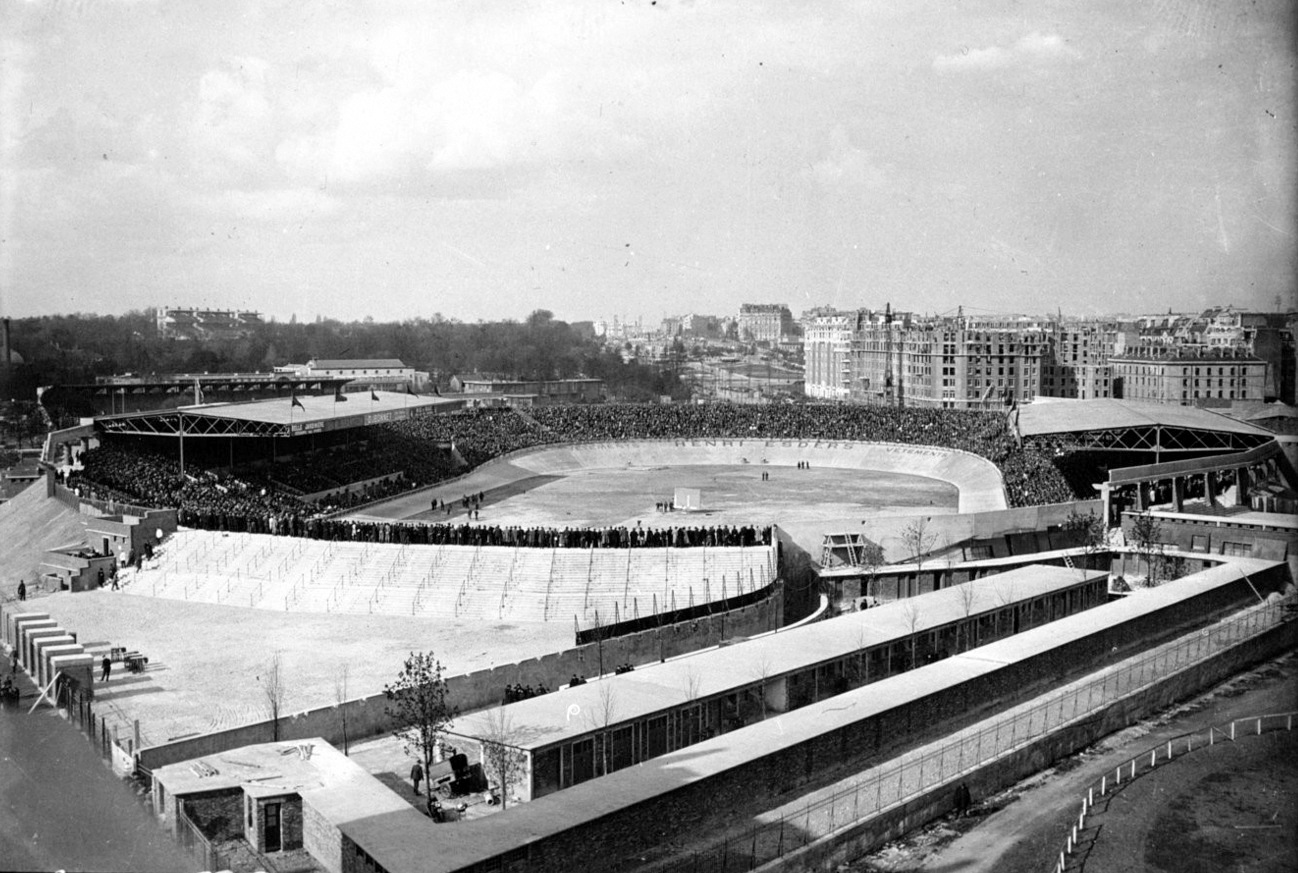
1938 was an eventful year for the Parc, beginning with the 1938 Coupe de France final, its second overall. It would again host the deciding match in 1940 and 1944.{{cite news | access-date = 17 August 2025}} In June, the 1938 FIFA World Cup became the first major tournament held at the Parc since 1900. The stadium hosted the opening match between Switzerland and Germany, as well as Hungary's semi-final victory over Sweden, but the Yves-du-Manoir remained more important and was the venue for the final.{{cite news | access-date = 15 August 2025}} Finally, on 10 December 1938, American soldiers remaining in France after World War I played the first American football game on French soil at the Parc in front of 25,000 spectators.
The 1939 Tour de France marked the last event at the stadium before World War II. It ended shortly before Nazi Germany invaded Poland. Plans were made for a Tour in 1940, and Desgrange hoped to host an American team for the first time, but these plans were put on hold following the German invasion of France. Desgrange died three months later, in August 1940, and full responsibility for L'Auto, the Tour, and the Parc fell to Jacques, his brother Maurice having sold his shares in L'Auto to a group of Nazi-sympathizing businessmen in the late 1930s. During the 1940s, despite the war, the Parc hosted four consecutive Top 14 finals between 1943 and 1946.{{cite news | access-date = 18 August 2025}}{{cite news | access-date = 18 August 2025}}{{cite news | access-date = 18 August 2025}}{{cite news | access-date = 18 August 2025}}
Jacques continued publishing during World War II, showing some sympathy for the occupying Germans. Upon the Liberation of France in 1944, he was accused of collaboration, L'Auto was closed, and its assets confiscated by the state. French publishing magnate Émilien Amaury came to his aid, and Jacques avoided jail. With Amaury's help, he eventually gained permission to launch a new sports newspaper, called L'Équipe, in 1946. Amaury also persuaded the authorities to return control of the Parc and the Tour to Jacques through L'Équipe the following year. In return, he had to cede 50% of his shares in L'Équipe to Amaury, who thus became a co-owner of the Tour. Events returned to the Parc soon after, starting with the 1947 Tour de France, the first edition since 1939. The 1948 Tour de France was another highlight; its finish at the Parc des Princes velodrome on 25 July 1948 was the first live television broadcast of the race.{{cite news | access-date = 17 August 2025}}
First European final and reconstruction
The first night football match at the stadium, a friendly between Racing Paris and Brazilian club Bangu, took place on 23 April 1951. Racing lost 3–2.{{cite news | access-date = 15 August 2025}} On 26 March 1952, the French Football Federation (FFF) organized the first international outdoor night sporting event. Under 120 floodlights, France lost 1–0 to Sweden at the Parc.{{cite news | access-date = 15 August 2025}} The Parc subsequently hosted two Latin Cup in 1952 and 1955, including both finals, in which Spanish teams Barcelona and Real Madrid defeated French sides Nice and Reims.{{cite news | access-date = 15 August 2025}}{{cite news | access-date = 15 August 2025}}{{cite news | access-date = 15 August 2025}} In between, the 1954 Rugby League World Cup final, the inaugural edition of the tournament, was played at the stadium on 13 November 1954. The France national rugby league team lost 16–12 to Great Britain.
The inaugural 1956 European Cup final was also held at the stadium, where Real Madrid again beat Reims on 13 June 1956. During that European campaign, Reims played most of their home matches at the Parc, and continued to do so occasionally until 1963, due to their own stadium being deemed too small.{{cite news | access-date = 15 August 2025}}{{cite news | access-date = 22 August 2025}} In 1960, France hosted the inaugural UEFA European Championship. The stadium saw Yugoslavia eliminate France in the semi-finals and then fall to the Soviet Union in the final.{{cite news | access-date = 15 August 2025}} Between 1953 and 1967, before the stadium was rebuilt, the Parc hosted seven Coupe Charles Drago finals, two Trophée des Champions, the 1965 Coupe de la Ligue final and four Coupe de France finals.{{cite news | access-date = 18 August 2025}}{{cite news | access-date = 20 August 2025}}{{cite news | access-date = 18 August 2025}}

French president Charles de Gaulle and Minister of Sports Maurice Herzog pushed through a project to convert the Parc into a joint national football and rugby stadium, adapted to contemporary standards. Pursuing their vision, the Council of Paris did not renew Jacques's lease on the stadium when it expired in 1965. As a result, Jacques ran into financial difficulties that year and sold his remaining 50% shares in L'Équipe to Amaury, who became the owner of the Tour. In 1967, the state gave the green light to a third version of the Parc, with French architect Roger Taillibert chosen to lead the project, working closely with Iranian artist Siavash Teimouri. The 1967 Tour de France was the 54th and last time that the race was run on the Parc's pink track, which ceased to exist following reconstruction.{{cite news | access-date = 18 August 2025}}
Demolition began on 8 July 1967 and work was completed on 23 April 1972. However, matches continued to be played there, albeit with reduced attendance, including the 1969 Trophée des Champions and the 1970 Championnat de France Amateur final. The latter, played on 14 June 1970 between Pierrots and Montélimar, was the last match at this second incarnation of the Parc. In a stadium surrounded by cranes, Paul Kohler scored the only goal of the match, giving Pierrots their second consecutive title.{{cite news | access-date = 17 August 2025}} The Parc had previously hosted four other Championnat de France Amateur finals between 1965 and 1969.{{cite news | access-date = 20 August 2025}}
With a seating capacity for 47,929 spectators and four covered stands, the third Parc impressed with its futuristic lines, suspended concrete stands and formidable acoustics. Equipped with an integrated video and sound system, it was one of the most advanced stadiums in Europe, also being the first to feature rooftop lighting on the continent. The Parc was the largest stadium in France, home to the national football and rugby union teams (1972–1997), the venue of the Coupe de France (1972–1997), the Top 14 (1974–1997) and the Coupe de la Ligue (1995–1997) finals, and hosted the Six Nations (1973–1997), until the construction of the Stade de France.{{cite news | access-date = 20 August 2025}}
PSG and French national teams
_-_2022-05-28_-_2.jpg)
On 25 May 1972, a friendly between the France Olympic football team and the Soviet Union Olympic football team was the first match played at the Parc. France lost 3–1. De Gaulle, who died in November 1970, did not live to see the final result. It was his successor, Georges Pompidou, who officially inaugurated the new national stadium at the 1972 Coupe de France final on 4 June 1972. The first rugby league match at the Parc was Australia's 9–5 victory over New Zealand in the 1972 Rugby League World Cup on 1 November 1972.{{cite news | access-date = 2 February 2024}}
With Reims no longer among Europe's elite, Racing Paris and Stade Français both in lower divisions, and Red Star at Stade Bauer, the Parc needed a new tenant. Paris FC, fresh from a bitter split with PSG, took over in 1972. PSG played their first match at the Parc on 10 November 1973. They won 3–1 against Ligue 2 promotion rivals Red Star, with the club's first goal at the stadium being scored by Othniel Dossevi.{{cite news | access-date = 3 April 2019}} PSG then won the Ligue 1 promotion play–offs 4–2 against Valenciennes at the Parc on 4 June 1974, coinciding with Paris FC's relegation.{{cite news | access-date = 27 June 2025 | archive-url = https://web.archive.org/web/20080525204327/http://www.psg.fr/fr/Article/003002/Article/38609/1970-1978 | archive-date = 2008-05-25}}{{cite news | access-date = 2 April 2019 | archive-date = 8 June 2017 | archive-url = https://web.archive.org/web/20170608011115/http://psg70.free.fr/historique.htm | url-status = live | access-date = 5 August 2025}}
The 1975 European Cup final, played at the current Parc, went down in history as one of the most famous. Bayern Munich clinched the title by defeating Leeds United 2–0 in a highly controversial match. French referee Michel Kitabdjian did not send off Leeds midfielder Terry Yorath after a brutal foul, but also denied Leeds two clear penalties from Bayern captain Franz Beckenbauer and ruled out another goal for a dubious offside. The referee had to stop the game several times before the Germans scored twice in the final 20 minutes. The English fans began setting fire to the stands and throwing seats at the police. Bayern had to cut short their lap of honor. Twenty people were arrested and almost 50 fans and police officers were injured.{{cite news | access-date = 18 August 2025}} Two more European finals followed. Anderlecht crushed Austria Wien 4–0 in the 1978 European Cup Winners' Cup final, while Liverpool defeated Real Madrid 1–0 in the 1981 European Cup final. It was also at the Parc that France, led by captain Michel Platini, won their first international title, becoming European champions at Euro 1984 after beating Spain 2–0 in the final.
A year earlier, underdogs had won their first major trophy against Platini's reigning Ligue 1 champions Saint-Étienne in the 1982 Coupe de France final at the Parc, one of the most iconic finals in the tournament's history.{{cite news | access-date = 18 August 2025}}{{cite news | access-date = 3 July 2025 | archive-url = https://web.archive.org/web/20080525204332/http://www.psg.fr/fr/Article/003002/Article/38610/1978-1990 | archive-date = 2008-05-25}} Nambatingue Toko opened the scoring for PSG, but Platini forced extra time and then gave Saint-Étienne the lead with his second goal of the night.{{cite news | access-date = 3 April 2019}} Saint-Étienne were cruising towards the title when Dominique Rocheteau scored an unexpected equalizer against his former team in the dying seconds of the match. PSG fans invaded the pitch in joy, while PSG president Francis Borelli knelt and kissed the turf. After a 30-minute interruption, Dominique Baratelli saved Saint-Étienne's final attempt and Dominique Bathenay converted the winning penalty. In 1983, PSG beat Waterschei 2–0 at the Parc in the quarter-finals of the Cup Winners' Cup in front of 49,575 spectators, a club record that still stands today.{{Cite news | access-date = 6 December 2020}}
Stade de France and 1998 FIFA World Cup
During the 1980s, several major non-sporting events were held at the Parc. Pope John Paul II chose the stadium to celebrate Mass during his first visit to France on 1 June 1980, while French politician Jacques Chirac gave his election speech there for his 1981 presidential bid for the conservative Gaullist party Rally for the Republic (RPR). Towards the end of the decade, it also began hosting concerts, with Michael Jackson being the first to perform at the Parc in 1988 for his Bad World Tour, which attracted 130,000 spectators over two days.
The French rugby union team set the all-time attendance record at the Parc in 1989, when 50,370 spectators watched their 31–12 victory over Wales in the 1989 Five Nations Championship. The stadium also hosted England's iconic 19–10 quarter-final victory over France in the 1991 Rugby World Cup, remembered as one of the greatest and bloodiest matches in rugby history.{{cite news | access-date = 23 August 2025}} In 1992, France was named as the host of the 1998 FIFA World Cup, the first on French soil since 1938, and the Stade de France, a new national stadium, was planned for the occasion in Saint-Denis, north of Paris. It was the beginning of the end of the Parc's status as the country's primary venue, although it continued to host several top-flight matches until 1998. PSG even considered moving to the Stade de France, but ultimately decided to stay at the Parc.{{cite news | access-date = 26 August 2025}}
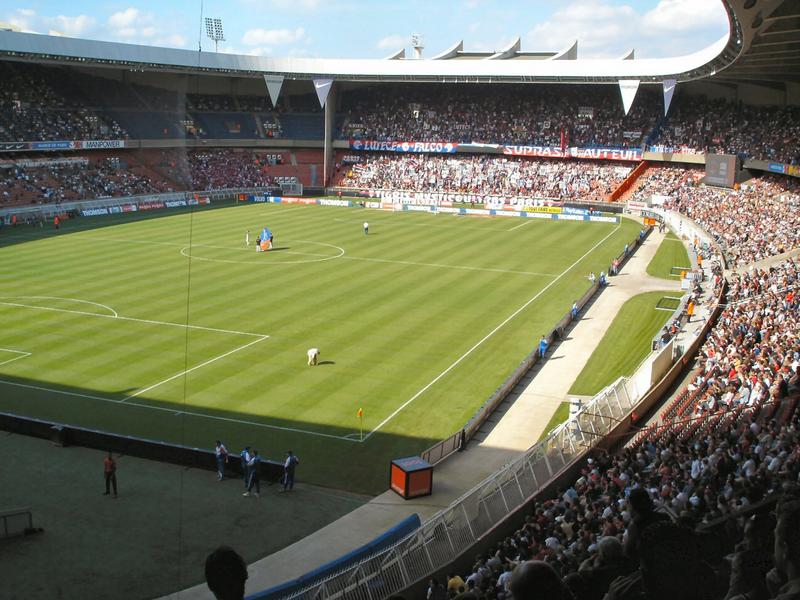
In 1993, French football suffered one of its most painful defeats in front of a team record 48,402 spectators. France needed a draw, while Bulgaria needed to win, to ensure qualification for the 1994 FIFA World Cup in the USA. With the score tied at 1–1 in the dying seconds of the match, French winger David Ginola had the ball by the corner flag. Instead of wasting time and letting the clock run out, he overhit a cross intended for Eric Cantona. The ball was collected by the Bulgarians, who launched a quick counterattack which resulted in Emil Kostadinov scoring the winning goal. France manager Gérard Houllier publicly blamed Ginola for the 2–1 defeat.{{cite news | access-date = 23 August 2025}}
Construction of the Stade de France began in May 1995. In the same month, the Parc hosted Real Zaragoza's victory over Arsenal in the 1995 UEFA Cup Winners' Cup final. The stadium witnessed one of PSG's darkest moments in Europe in January 1997, when they were defeated 6–1 by Juventus in the first leg of the 1996 UEFA Super Cup.{{cite news | access-date = 6 December 2020}} On 11 June 1997, the French football team drew 2–2 against Italy in the 1997 Tournoi de France in their final match at the Parc.{{cite news | access-date = 23 August 2025}} They have returned to the stadium five times, for a total of 132 matches, 127 of them between 1905 and 1997.{{Cite news | access-date = 23 August 2025}} On 22 November 1997, the French rugby union team were crushed 52–10 by South Africa in their final match at the Parc.{{cite news | access-date = 23 August 2025}} They have only played at the stadium once more, in 2007, for a total of 80 matches, 79 of them between 1906 and 1997.
The 81,000-capacity Stade de France opened with a friendly against Spain in January 1998, which France won with a solitary goal from Zinedine Zidane.{{cite news | access-date = 23 August 2025}} In May 1998, just days before the start of the FIFA World Cup at the Stade de France, Inter Milan won the 1998 UEFA Cup final against Lazio. It was the last European football final to be played at the Parc. Two months later, Zidane scored twice at the Stade de France as France defeated Brazil 3–0 in the 1998 FIFA World Cup final to secure their first World Cup title. While the Parc hosted four group stage matches, one round of 16 match and the third-place play-off during the World Cup, it became, above all, the home of PSG after that. In the international stadium scene, the Parc was too small to host a UEFA Champions League final, and whenever the French national football team played outside of Saint-Denis, it was often in other cities.
2024 Summer Olympics and potential PSG move
To date, the 2001 Heineken Cup final was the last European club final held at the Parc. English rugby union team Leicester Tigers were crowned European Rugby Champions Cup winners after defeating French champions Stade Français 34–30.{{cite news | access-date = 23 August 2025}} The stadium also hosted five matches of the 2007 Rugby World Cup, including France's 34–10 defeat by Argentina in the bronze medal final.{{cite news | access-date = 23 August 2025}} In November 2013, PSG reached an agreement with the Council of Paris to extend their lease on their stadium for a further 30 years, until 2043, based on a fixed rent plus a variable share of their revenue. They subsequently completed a three-year renovation of the stadium ahead of UEFA Euro 2016. Its current capacity was kept unchanged, but the seats were improved to be larger and more comfortable.{{cite news | access-date = 25 August 2025}}{{cite news | access-date = 7 July 2016}} During the tournament, four group stage matches and one round of 16 match were played at the Parc.{{cite news | access-date = 25 August 2025}}
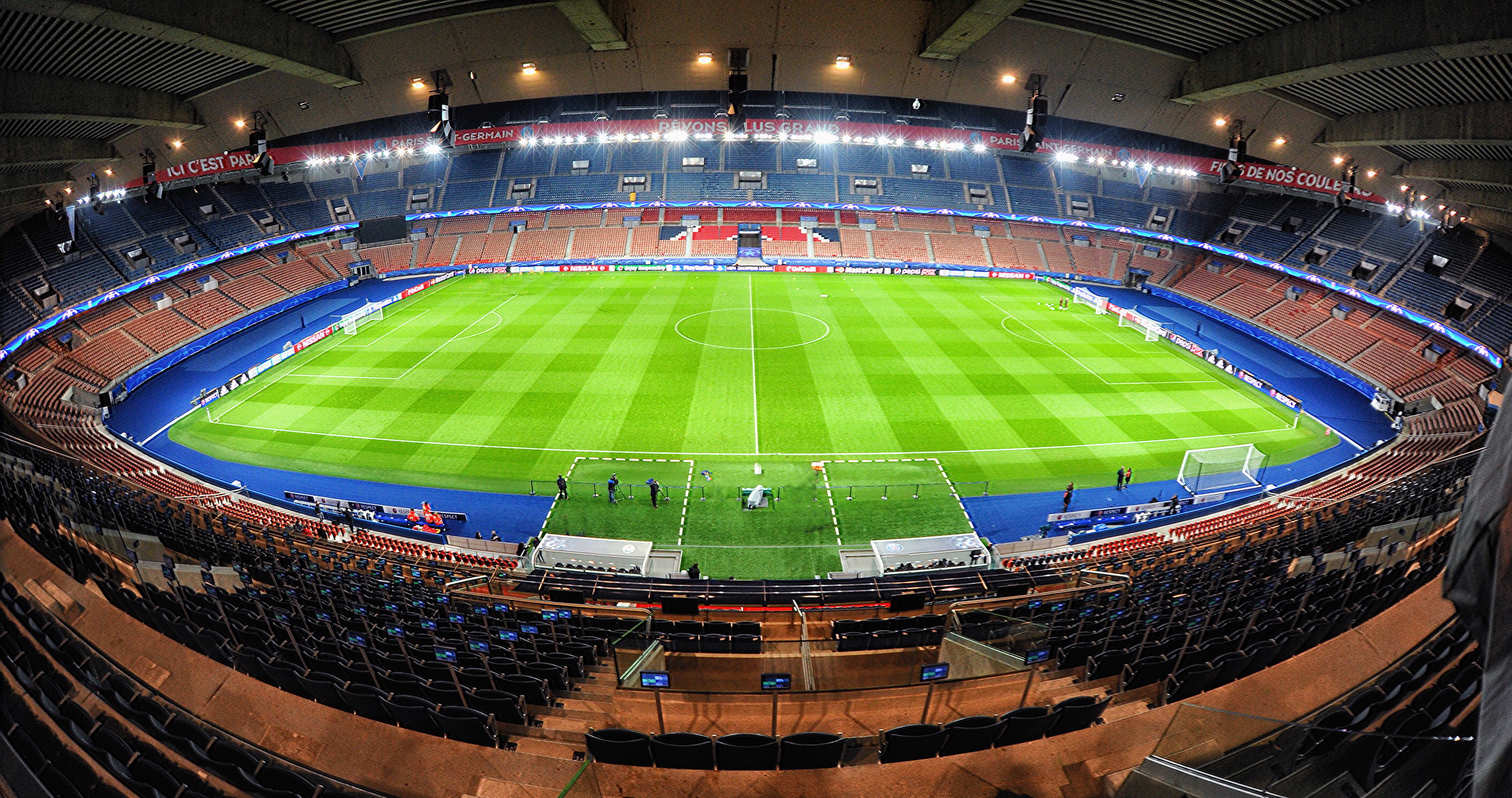
The 2019 FIFA Women's World Cup became the first women's tournament held at the stadium, where France defeated South Korea in the opening match. The Parc then hosted four further group stage matches, a round of 16 match, and France's quarter-final elimination against the United States.{{cite news | access-date = 25 August 2025}} The 2023 Trophée des Champions, won by PSG 2–0 against Toulouse, was the first edition to be played at the Parc since 1969.{{cite news | access-date = 18 August 2025}}
After being snubbed twice in 1900 and 1924, the Parc was selected as the host of the 2024 Summer Olympics. Both the men's and women's football tournaments were held at the stadium. A total of ten matches were played there, including six group stage matches, two quarter-finals, and both finals. In the men's final, Spain secured their second gold medal with a 5–3 extra-time victory over host country France, while the United States clinched their record fifth gold medal by beating Brazil 1–0 in the women's final.{{cite news | access-date = 25 August 2025}}{{cite news | access-date = 25 August 2025}}
The 2016 renovation work increased PSG's stadium revenue from €20 million to €100 million, but the club was interested in purchasing the Parc to increase its capacity to 60,000 in the coming years and establish itself as one of Europe's leading teams. PSG considered three options: expanding the Parc, moving to the Stade de France, or building a new stadium. In 2023, after the Council of Paris rejected the club's bid to acquire the Parc, a purchase of the Stade de France was explored. PSG abandoned the proposal in January 2024, citing logistical, financial, and cultural reasons. The club confirmed its plans to leave the Parc and build a new stadium in February 2024.{{cite news | access-date = 26 August 2025}}
Former and current tenants
| Team | Parc des Princes | Record Attendance | Source |
|---|---|---|---|
| FRA Racing Paris | 1902–1920 | ||
| 1932–1966 | |||
| 1984–1990 | 39,749 vs. Reims, 17 January 1954 | {{cite news | |
| FRA Red Star | 1932–1966 | 33,324 vs. Rouen, 19 April 1953 | |
| FRA Stade Français | 1932–1966 | 38,562 vs. Strasbourg, 16 February 1958 | {{cite news |
| FRA Paris FC | 1972–1974 | ||
| 1978–1979 | 40,650 vs. Saint-Étienne, 27 April 1979 | {{cite news | |
| FRA France national football team | 1972–1997 | 48,402 vs. Bulgaria, 17 November 1993 | |
| FRA France national rugby union team | 1972–1997 | 50,370 vs. Wales, 18 February 1989 | |
| FRA Paris Saint-Germain FC | 1974–Present | 49,575 vs. Waterschei, 13 March 1983 |
Major sporting events
Cycling races
| Event | Editions | Years |
|---|---|---|
| Bol d'Or | 1 | 1899 |
| UCI Track Cycling World Championships | 9 | 1900, 1907, 1922, 1924, 1933, 1947, 1952, 1958, 1964 |
| Tour de France | 54 | 1903–1967 |
Football tournaments
| Event | Editions | Years |
|---|---|---|
| FIFA World Cup | 2 | 1938, 1998 |
| UEFA European Championship | 3 | 1960, 1984, 2016 |
| FIFA Women's World Cup | 1 | 2019 |
| Summer Olympic Games | 2 | 2024 (M), 2024 (W) |
Football finals
| Event | Editions | Years |
|---|---|---|
| USFSA Football Championship | 4 | 1903, 1905, 1907, 1910 |
| Coupe Dewar | 1 | 1905 |
| Coupe de France | 33 | 1919, 1938, 1940, 1944, 1963, 1965, 1966, 1967, 1972–1997 |
| Latin Cup | 2 | 1952, 1955 |
| Coupe Charles Drago | 7 | 1953, 1954, 1955, 1956, 1957, 1959, 1961 |
| Trophée des Champions | 4 | 1956, 1959, 1969, 2023 |
| UEFA Champions League | 3 | 1956, 1975, 1981 |
| UEFA European Championship | 2 | 1960, 1984 |
| Championnat de France Amateur | 5 | 1965, 1966, 1968, 1969, 1970 |
| Coupe de la Ligue | 4 | 1965, 1995, 1996, 1997 |
| UEFA Cup Winners' Cup | 2 | 1978, 1995 |
| UEFA Super Cup | 1 | 1996 |
| UEFA Europa League | 1 | 1998 |
| Summer Olympic Games | 2 | 2024 (M), 2024 (W) |
Rugby tournaments
| Event | Editions | Years |
|---|---|---|
| Six Nations Championship | 31 | 1910, 1911, 1912, 1913, 1914, 1920, 1973–1997 |
| FIRA Tournament | 1 | 1937 |
| Victory Internationals | 1 | 1945–46 |
| Rugby League World Cup | 2 | 1954, 1972 |
| Rugby World Cup | 2 | 1991, 2007 |
Rugby finals
| Event | Editions | Years |
|---|---|---|
| Top 14 | 31 | 1902, 1906, 1910, 1943, 1944, 1945, 1946, 1974–1997 |
| FIRA Tournament | 1 | 1937 |
| Rugby League World Cup | 1 | 1954 |
| European Rugby Champions Cup | 1 | 2001 |
Boxing matches
| Date | Match | Winner | Attendance |
|---|---|---|---|
| 12 June 1932 | Marcel Thil vs. Gorilla Jones | Thil | 70,000 |
| 25 May 1946 | Marcel Cerdan vs. Robert Charron | Cerdan | |
| 25 May 1946 | Laurent Dauthuille vs. Jean Pankowiak | Dauthuille | |
| 25 May 1946 | Baby Day vs. Gustave Degouve | Degouve | |
| 25 May 1946 | Georges Martin vs. Denis Juliani | Martin | |
| 25 May 1946 | Prevost vs. Andre Gonnet | Prevost | |
| 25 May 1946 | Victor Buttin vs. Shali Said Kaddour | Kaddour |
Other uses
Films
Since the 1930s, the Parc des Princes has appeared in several films.{{cite news | access-date = 6 August 2025}}
| Title | Release Date | Director | Genre | Leading Actor | Source |
|---|---|---|---|---|---|
| FRA The Five Cents of Lavarede | 1939 | FRA Maurice Cammage | Comedy | FRA Fernandel | |
| FRA Five Red Tulips | 1949 | FRA Jean Stelli | Crime | FRA René Dary | |
| FRA Rue des prairies | 1959 | FRA Denys de La Patellière | Comedy | FRA Jean Gabin | |
| FRA Moi y'en a vouloir des sous | 1973 | FRA Jean Yanne | Comedy | FRA Jean Yanne | |
| FRA Death of a Corrupt Man | 1977 | FRA Georges Lautner | Crime | FRA Alain Delon | |
| FRA Dead Tired | 1994 | FRA Michel Blanc | Comedy | FRA Michel Blanc | |
| FRA La Belle Verte | 1996 | FRA Coline Serreau | Science fiction | FRA Coline Serreau | |
| FRA Didier | 1997 | FRA Alain Chabat | Comedy | FRA Jean-Pierre Bacri | |
| FRA Paparazzi | 1998 | FRA Alain Berbérian | Comedy | FRA Patrick Timsit | |
| FRA En plein coeur | 1998 | FRA Pierre Jolivet | Crime | FRA Gérard Lanvin | |
| FRA My Wife Is an Actress | 2001 | FRA Yvan Attal | Romance | FRA Charlotte Gainsbourg | |
| FRA Trois Zéros | 2002 | FRA Fabien Onteniente | Comedy | FRA Gérard Lanvin | |
| FRA Monique: toujours contente | 2002 | FRA Valérie Guignabodet | Comedy | FRA Albert Dupontel | |
| FRA Les 11 commandements | 2004 | FRA François Desagnat | Comedy | FRA Michaël Youn | |
| FRA Thomas Sorriaux | |||||
| FRA My Best Friend | 2006 | FRA Patrice Leconte | Comedy | FRA Daniel Auteuil | |
| FRA Micmacs | 2009 | FRA Jean-Pierre Jeunet | Comedy | FRA Dany Boon |
Concerts
Since the 1980s, the Parc des Princes has hosted several major concerts.{{cite news | access-date = 6 August 2025 | archive-date = 12 August 2022 | archive-url = https://web.archive.org/web/20220812193720/https://www.psg.fr/equipes/the-club/content/concerts-au-parc-des-princes-le-retour-paris-saint-germain-2022 | url-status = bot: unknown
| Name | Tour | Date | Attendance | Source |
|---|---|---|---|---|
| USA Michael Jackson | Bad | 27 June 1988 | 63,000 | |
| 28 June 1988 | ||||
| USA Prince | Nude Tour | 16 June 1990 | 45,677 | |
| ENG The Rolling Stones | Steel Wheels/Urban Jungle Tour | 22 June 1990 | ||
| 23 June 1990 | ||||
| 25 June 1990 | ||||
| FRA Johnny Hallyday | Retiens ta nuit | 18 June 1993 | ||
| 19 June 1993 | ||||
| 20 June 1993 | ||||
| ENG David Bowie | Earthling Tour | 14 June 1997 | ||
| USA Michael Jackson | HIStory World Tour | 27 June 1997 | 65,000 | |
| 29 June 1997 | 55,000 | |||
| IRE U2 | PopMart Tour | 6 September 1997 | 53,519 | |
| FRA Johnny Hallyday | Plus près de vous | 10 June 2003 | ||
| 11 June 2003 | ||||
| 14 June 2003 | ||||
| 15 June 2003 | ||||
| USA Red Hot Chili Peppers | Roll on the Red Tour | 15 June 2004 | ||
| USA Metallica | Madly in Anger with the World Tour | 23 June 2004 | ||
| ENG Iron Maiden | Eddie Rips Up the World Tour | 25 June 2005 | ||
| ENG Robbie Williams | Close Encounters Tour | 17 June 2006 | ||
| ENG Muse | Black Holes and Revelations Tour | 23 June 2007 | ||
| ENG Genesis | Turn It On Again: The Tour | 30 June 2007 | 49,606 | |
| USA Red Hot Chili Peppers | Stadium Arcadium World Tour | 6 July 2007 | 48,713 | |
| GER Tokio Hotel | 1000 Hotels World Tour | 21 June 2008 | ||
| USA Bruce Springsteen | Magic Tour | 27 June 2008 | 40,661 | |
| ENG Mika | Dodgy Holiday Tour | 4 July 2008 | 55,000 | |
| UK Coldplay | Viva la Vida Tour | 7 September 2009 | 50,335 | |
| FRA Suprême NTM | 19 June 2010 | 35,000 | ||
| USA Green Day | 21st Century Breakdown World Tour | 26 June 2010 | 35,000 | |
| FRA DJ Snake | 11 June 2022 | 60,000 | ||
| FRA Dadju | 18 June 2022 | 50,000 |
References
References
- (22 January 2022). "Les stades du PSG, historique". The Football Market.
This article was imported from Wikipedia and is available under the Creative Commons Attribution-ShareAlike 4.0 License. Content has been adapted to SurfDoc format. Original contributors can be found on the article history page.
Ask Mako anything about Parc des Princes — get instant answers, deeper analysis, and related topics.
Research with MakoFree with your Surf account
Create a free account to save articles, ask Mako questions, and organize your research.
Sign up freeThis content may have been generated or modified by AI. CloudSurf Software LLC is not responsible for the accuracy, completeness, or reliability of AI-generated content. Always verify important information from primary sources.
Report