From Surf Wiki (app.surf) — the open knowledge base
List of Mac models grouped by CPU type
none
none
This list of Mac models grouped by CPU type contains all central processing units (CPUs) used by Apple for their Mac computers. It is grouped by processor family, processor model, and then chronologically by Mac models.
Motorola 68k
Motorola 68000
The Motorola 68000 was the first Apple Macintosh processor. It has 32-bit CPU registers, a 24-bit address bus, and a 16-bit data path; Motorola referred to it as a "16-/32-bit microprocessor."
| Processor | Model | Clock speed | |||||||||||||||
|---|---|---|---|---|---|---|---|---|---|---|---|---|---|---|---|---|---|
| (MHz) | FSB speed | ||||||||||||||||
| (MT/s) | Introduced | Discontinued | MC68000 | MC68HC000 | |||||||||||||
| Lisa | 5 | 5 | January 1983 | January 1984 | |||||||||||||
| Lisa 2 | 5 | 5 | January 1984 | January 1985 | |||||||||||||
| Macintosh | 8 | 8 | January 1984 | October 1985 | |||||||||||||
| last=Pournelle | first=Jerry | author-link=Jerry Pournelle | date=March 1985 | title=On the Road: Hackercon and COMDEX | url=https://archive.org/stream/byte-magazine-1985-03-rescan/1985_03_BYTE_10-03_Bargain_Computing#page/n325/mode/2up | magazine=BYTE | volume=10 | issue=3 | pages=313–346 | access-date=March 19, 2016}} | 8 | 8 | September 1984 | April 1986 | |||
| Macintosh XL | 5 | 5 | January 1985 | April 1985 | |||||||||||||
| Macintosh Plus | 8 | 8 | January 1986 | October 1990 | |||||||||||||
| Macintosh 512Ke | 8 | 8 | April 1986 | September 1987 | |||||||||||||
| Macintosh SE | 8 | 8 | March 1987 | August 1989 | |||||||||||||
| Macintosh SE FDHD | 8 | 8 | August 1989 | October 1990 | |||||||||||||
| Macintosh Classic | 8 | 8 | October 1990 | September 1992 | |||||||||||||
| Macintosh Portable | 16 | 16 | September 1989 | October 1991 | |||||||||||||
| last=Gruman | first=Galen | date=December 1991 | title=Macintosh Powerbooks 100, 140, and 170 | url=https://vintageapple.org/macworld/pdf/MacWorld_9112_December_1991.pdf | journal=Macworld | page=132}} | 16 | 16 | October 1991 | August 1992 |
Motorola 68020

The Motorola 68020 was the first 32-bit Mac processor, first used on the Macintosh II. The 68020 has many improvements over the 68000, including an instruction cache, and was the first Mac processor to support a paged memory management unit, the Motorola 68851.
The Macintosh LC configured the 68020 to use a 16-bit system bus with ASICs that limited RAM to 10 MB (as opposed to the 32-bit limit of 4 GB).
| Processor | Model | Clock speed | ||||||||
|---|---|---|---|---|---|---|---|---|---|---|
| (MHz) | FSB speed | |||||||||
| (MT/s) | L1 cache | |||||||||
| (bytes) | Data path width/ | |||||||||
| Address width | ||||||||||
| (bits) | PMMU | FPU | Introduced | Discontinued | MC68020 | |||||
| Macintosh II | 16 | 16 | 256 | 32/16 | 68851 (optional) | 68881 | March 1987 | January 1990 | ||
| Macintosh LC | 16 | 16 | 256 | 16/16 | — | — | October 1990 | March 1992 |
Motorola 68030

The Motorola 68030 was the first Mac processor with an integrated paged memory management unit, allowing for virtual memory. Another improvement over the 68020 was the addition of a data cache.
| Processor | Model | Clock speed | |||||||||
|---|---|---|---|---|---|---|---|---|---|---|---|
| (MHz) | FSB speed | ||||||||||
| (MT/s) | L1 cache | ||||||||||
| (bytes) | L2 cache | ||||||||||
| (KB) | Data path width/ | ||||||||||
| Address width | |||||||||||
| (bits) | FPU | Introduced | Discontinued | MC68030 | |||||||
| Macintosh IIx | 16 | 16 | 512 | — | 32/32 | 68882 | September 1988 | October 1990 | |||
| nowrap | Macintosh SE/30 | 16 | 16 | 512 | — | 32/32 | 68882 | January 1989 | October 1990 | ||
| nowrap | Macintosh IIcx | 16 | 16 | 512 | — | 32/32 | 68882 | March 1989 | February 1991 | ||
| nowrap | Macintosh IIci | 25 | 25 | 512 | 0–32 | 32/32 | 68882 | September 1989 | February 1993 | ||
| nowrap | Macintosh IIfx | 40 | 40 | 512 | 32 | 32/32 | 68882 | March 1990 | April 1992 | ||
| nowrap | Macintosh IIsi | 20 | 20 | 512 | — | 32/32 | 68882 (optional) | October 1990 | March 1993 | ||
| nowrap | Macintosh Classic II | ||||||||||
| Performa 200 | 16 | 16 | 512 | — | 16/32 | — | October 1991 | September 1993 | |||
| nowrap | PowerBook 140 | 16 | 16 | 512 | — | 32/32 | — | October 1991 | August 1992 | ||
| nowrap | PowerBook 170 | 25 | 25 | 512 | — | 32/32 | 68882 | October 1991 | October 1992 | ||
| nowrap | Macintosh LC II | ||||||||||
| Performa 400 | |||||||||||
| Performa 405 | |||||||||||
| Performa 410 | |||||||||||
| Performa 430 | 16 | 16 | 512 | — | 16/32 | — | March 1992 | March 1993 | |||
| nowrap | PowerBook 145 | 25 | 25 | 512 | — | 32/32 | — | August 1992 | June 1993 | ||
| nowrap | Performa 600/600CD | 32 | 16 | 512 | 32 | 32/32 | 68882 (optional) | September 1992 | October 1993 | ||
| nowrap | Macintosh IIvi | 16 | 16 | 512 | 32 | 32/32 | 68882 (optional) | October 1992 | February 1993 | ||
| nowrap | Macintosh IIvx | 32 | 16 | 512 | 32 | 32/32 | 68882 | October 1992 | October 1993 | ||
| nowrap | PowerBook 160 | 25 | 25 | 512 | — | 32/32 | — | October 1992 | August 1993 | ||
| nowrap | PowerBook 180 | 33 | 33 | 512 | — | 32/32 | 68882 | October 1992 | May 1994 | ||
| nowrap | PowerBook Duo 210 | 25 | 25 | 512 | — | 32/32 | — | October 1992 | October 1993 | ||
| nowrap | PowerBook Duo 230 | 33 | 33 | 512 | — | 32/32 | — | October 1992 | July 1994 | ||
| nowrap | Macintosh Color Classic | ||||||||||
| Performa 250 | |||||||||||
| Performa 275 | 16 | 16 | 512 | — | 16/32 | 68882 (optional) | February 1993 | May 1994 | |||
| nowrap | Macintosh LC III | ||||||||||
| Performa 450 | 25 | 25 | 512 | — | 32/32 | 68882 (optional) | February 1993 | February 1994 | |||
| nowrap | PowerBook 165c | 33 | 33 | 512 | — | 32/32 | 68882 | February 1993 | December 1993 | ||
| nowrap | Macintosh LC 520 | 25 | 25 | 512 | — | 32/32 | 68882 (optional) | June 1993 | February 1994 | ||
| nowrap | PowerBook 180c | 33 | 33 | 512 | — | 32/32 | 68882 | June 1993 | March 1994 | ||
| nowrap | PowerBook 145B | 25 | 25 | 512 | — | 32/32 | — | July 1993 | July 1994 | ||
| nowrap | PowerBook 165 | 33 | 33 | 512 | — | 32/32 | — | August 1993 | July 1994 | ||
| nowrap | Macintosh LC III+ | ||||||||||
| Performa 460 | |||||||||||
| Performa 466 | |||||||||||
| Performa 467 | 33 | 33 | 512 | — | 32/32 | 68882 (optional) | October 1993 | February 1994 | |||
| nowrap | Macintosh Color Classic II | 33 | 33 | 512 | — | 32/32 | 68882 (optional) | October 1993 | May 1994 | ||
| nowrap | Macintosh TV | 32 | 16 | 512 | — | 32/32 | — | October 1993 | February 1994 | ||
| nowrap | PowerBook Duo 250 | 33 | 33 | 512 | — | 32/32 | — | October 1993 | May 1994 | ||
| nowrap | PowerBook Duo 270c | 33 | 33 | 512 | — | 32/32 | 68882 | October 1993 | April 1994 | ||
| nowrap | Macintosh LC 550 | ||||||||||
| Performa 550 | |||||||||||
| Performa 560 | 33 | 33 | 512 | — | 32/32 | 68882 (optional) | February 1994 | March 1995 | |||
| nowrap | PowerBook 150 | 33 | 33 | 512 | — | 32/32 | — | July 1994 | October 1995 |
Motorola 68040
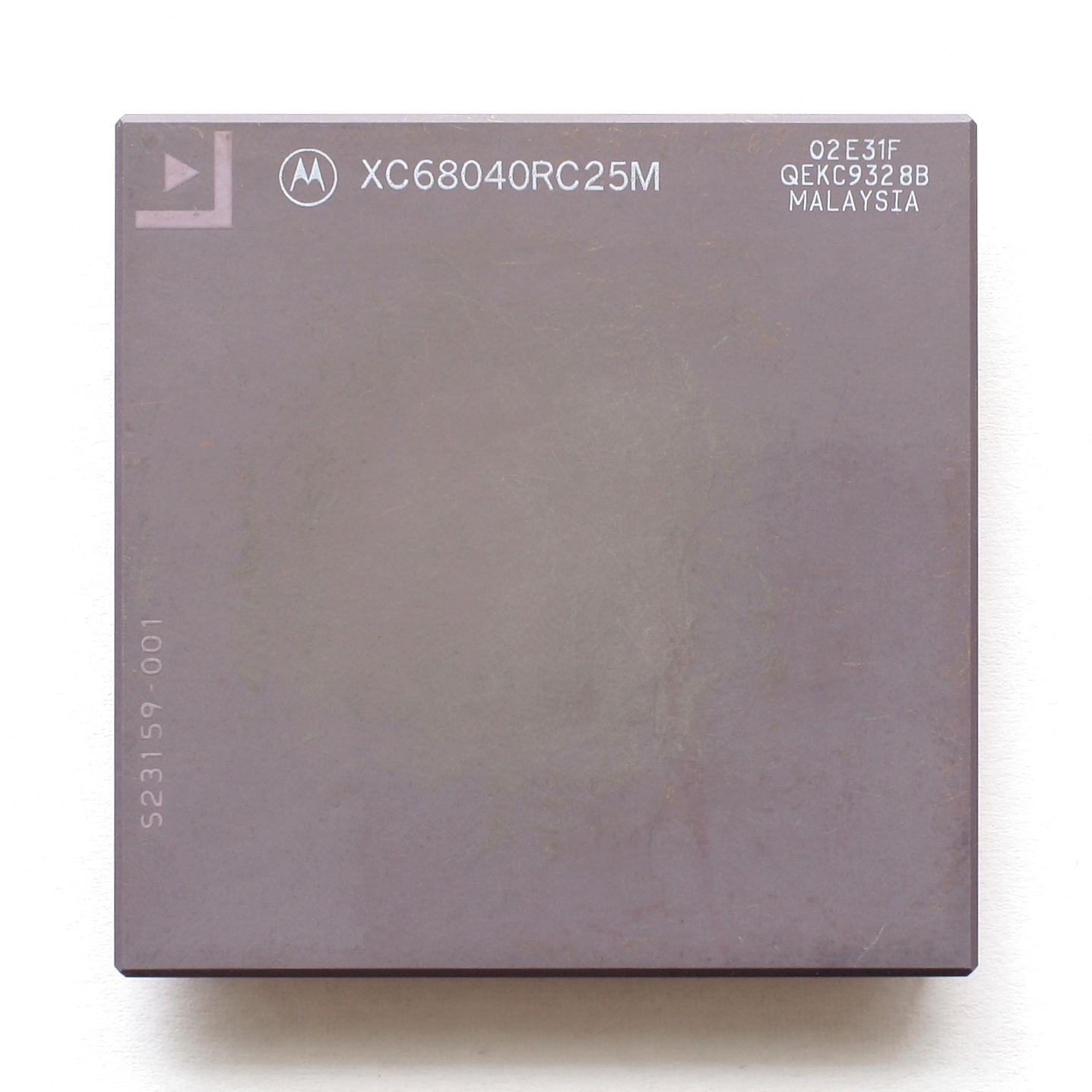
The Motorola 68040 has improved per-clock performance compared to the 68030, as well as larger instruction and data caches, and was the first Mac processor with an integrated floating-point unit.
The MC68LC040 version was less expensive because it omitted the floating-point unit.
| Processor | Model | Clock speed | ||||||
|---|---|---|---|---|---|---|---|---|
| (MHz) | FSB speed | |||||||
| (MT/s) | L1 cache | |||||||
| (KB) | Introduced | Discontinued | MC68040 | MC68LC040 | ||||
| Macintosh Quadra 700 | 25 | 25 | 8 | October 1991 | March 1993 | |||
| Macintosh Quadra 900 | 25 | 25 | 8 | October 1991 | May 1992 | |||
| Macintosh Quadra 950 | 33 | 33 | 8 | May 1992 | October 1995 | |||
| Macintosh Centris 650 | 25 | 25 | 8 | February 1993 | October 1993 | |||
| Macintosh Quadra 800 | ||||||||
| Workgroup Server 80 | 33 | 33 | 8 | February 1993 | March 1994 | |||
| Workgroup Server 95 | 33 | 33 | 8 | March 1993 | April 1995 | |||
| Macintosh Centris 660AV | ||||||||
| Macintosh Quadra 660AV | 25 | 25 | 8 | July 1993 | September 1994 | |||
| Macintosh Quadra 840AV | 40 | 40 | 8 | July 1993 | July 1994 | |||
| Workgroup Server 60 | 20–25 | 20–25 | 8 | July 1993 | October 1994 | |||
| Macintosh Quadra 610 | 25 | 25 | 8 | October 1993 | July 1994 | |||
| Macintosh Quadra 650 | 33 | 33 | 8 | October 1993 | September 1994 | |||
| Macintosh Quadra 630 | 33 | 33 | 8 | July 1994 | October 1995 | |||
| PowerBook 550c | 33 | 33 | 8 | May 1995 | April 1996 | |||
| Macintosh Centris 610 | 20 | 20 | 8 | February 1993 | October 1993 | |||
| Macintosh LC 475 | ||||||||
| Macintosh Quadra 605 | ||||||||
| Performa 475 | ||||||||
| Performa 476 | 25 | 25 | 8 | October 1993 | October 1994 | |||
| Macintosh LC 575 | ||||||||
| Performa 575 | ||||||||
| Performa 576 | ||||||||
| Performa 577 | ||||||||
| Performa 578 | 33 | 33 | 8 | February 1994 | April 1995 | |||
| PowerBook Duo 280 | 33 | 33 | 8 | April 1994 | November 1994 | |||
| PowerBook Duo 280c | 33 | 33 | 8 | April 1994 | January 1996 | |||
| PowerBook 520 | 25 | 25 | 8 | May 1994 | June 1995 | |||
| PowerBook 520c | 25 | 25 | 8 | May 1994 | September 1995 | |||
| PowerBook 540 | 33 | 33 | 8 | May 1994 | October 1994 | |||
| PowerBook 540c | 33 | 33 | 8 | May 1994 | August 1995 | |||
| nowrap | Macintosh LC 630 | |||||||
| Performa 630 | ||||||||
| Performa 630CD | ||||||||
| Performa 631CD | ||||||||
| Performa 635CD | ||||||||
| Performa 636 | ||||||||
| Performa 636CD | ||||||||
| Performa 637CD | ||||||||
| Performa 638CD | ||||||||
| Performa 640CD | 33 | 33 | 8 | July 1994 | February 1996 | |||
| Macintosh LC 580 | ||||||||
| Performa 580CD | ||||||||
| Performa 588CD | 33 | 33 | 8 | April 1995 | April 1996 | |||
| PowerBook 190 | 33 | 33 | 8 | August 1995 | June 1996 | |||
| PowerBook 190cs | 33 | 33 | 8 | August 1995 | October 1996 |
PowerPC
PowerPC 601

The PowerPC 601 was the first Mac processor to support the 32-bit PowerPC instruction set architecture.
| Processor | Model | Clock speed | ||||||||
|---|---|---|---|---|---|---|---|---|---|---|
| (MHz) | FSB speed | |||||||||
| (MT/s) | L1 cache | |||||||||
| (KB) | ||||||||||
| (data/ | ||||||||||
| instr.) | L2 cache | |||||||||
| (KB) | Introduced | Discontinued | PowerPC 601 | PowerPC 601v | ||||||
| nowrap | Power Macintosh 6100 | |||||||||
| Performa 6110CD | ||||||||||
| Performa 6112CD | ||||||||||
| Performa 6115CD | ||||||||||
| Performa 6116CD | ||||||||||
| Performa 6117CD | ||||||||||
| Performa 6118CD | 60–66 | 30.0–33.3 | 16/16 | — | March 1994 | October 1995 | ||||
| nowrap | Power Macintosh 7100 | 66–80 | 33.3–40.0 | 16/16 | — | March 1994 | January 1996 | |||
| nowrap | Power Macintosh 8100 | 80–100 | 33.3–40.0 | 16/16 | 256 | March 1994 | July 1995 | |||
| nowrap | Workgroup Server 6150 | 60–66 | 30.0–33.3 | 16/16 | — | April 1994 | April 1996 | |||
| nowrap | Workgroup Server 8150 | 80–110 | 36.7–40.0 | 16/16 | 256 | April 1994 | April 1996 | |||
| nowrap | Workgroup Server 9150 | 80–120 | 40.0 | 16/16 | 512–1024 | April 1994 | May 1996 | |||
| nowrap | Power Macintosh 7200 | 75–120 | 37.5–40.0 | 16/16 | — | August 1995 | February 1997 | |||
| nowrap | Power Macintosh 7500 | 100 | 50.0 | 16/16 | — | August 1995 | May 1996 | |||
| nowrap | Workgroup Server 7250 | 120 | 40.0 | 16/16 | — | February 1996 | April 1997 | |||
| nowrap | Power Macintosh 8200 | 100–120 | 40.0 | 16/16 | 256 | April 1996 | July 1996 | |||
| nowrap | Power Macintosh 8100 | 110 | 36.7 | 16/16 | 256 | March 1994 | July 1995 |
PowerPC 603

| Processor | Model | Clock speed | |||||||||
|---|---|---|---|---|---|---|---|---|---|---|---|
| (MHz) | FSB speed | ||||||||||
| (MT/s) | L1 cache | ||||||||||
| (KB) | |||||||||||
| (data/ | |||||||||||
| instr.) | L2 cache | ||||||||||
| (KB) | Introduced | Discontinued | PowerPC 603 | PowerPC 603e | PowerPC 603ev | ||||||
| nowrap | Power Macintosh 5200 LC | ||||||||||
| Performa 5200CD | |||||||||||
| Performa 5210CD | |||||||||||
| Performa 5215CD | |||||||||||
| Performa 5220CD | 75 | 37.5 | 8/8 | 256 | April 1995 | April 1996 | |||||
| nowrap | Power Macintosh 6200 | ||||||||||
| Performa 6200CD | |||||||||||
| Performa 6205CD | |||||||||||
| Performa 6210CD | |||||||||||
| Performa 6214CD | |||||||||||
| Performa 6216CD | |||||||||||
| Performa 6218CD | |||||||||||
| Performa 6220CD | |||||||||||
| Performa 6230CD | 75 | 37.5 | 8/8 | 256 | May 1995 | July 1997 | |||||
| nowrap | Power Macintosh 5300 LC | ||||||||||
| Performa 5300CD (DE) | |||||||||||
| Performa 5320CD | 100–120 | 40.0 | 16/16 | 256 | August 1995 | April 1996 | |||||
| nowrap | PowerBook 5300c/ce/cs | 100–117 | 33.3 | 16/16 | — | August 1995 | August 1996 | ||||
| nowrap | PowerBook Duo 2300c | 100 | 33.3 | 16/16 | — | August 1995 | February 1997 | ||||
| nowrap | Power Macintosh 5260 | ||||||||||
| Performa 5260CD | |||||||||||
| Performa 5270CD | |||||||||||
| Performa 5280CD | 100–120 | 40.0 | 16/16 | 256 | April 1996 | March 1997 | |||||
| nowrap | Performa 6260CD | ||||||||||
| Performa 6290CD | |||||||||||
| Performa 6300CD | |||||||||||
| Performa 6310CD | 100 | 40.0 | 16/16 | 256 | May 1996 | July 1997 | |||||
| nowrap | Power Macintosh 6300/120 | ||||||||||
| Performa 6320 | 120 | 40.0 | 16/16 | 256 | May 1996 | July 1997 | |||||
| nowrap | Power Macintosh 4400 | ||||||||||
| Power Macintosh 7220 | 160–200 | 40.0 | 16/16 | 256 | November 1996 | February 1998 | |||||
| nowrap | PowerBook 1400c/cs | 117–133 | 33.3 | 16/16 | — | November 1996 | May 1998 | ||||
| nowrap | Power Macintosh 5400 | ||||||||||
| Performa 5400CD | |||||||||||
| Performa 5410CD | |||||||||||
| Performa 5420CD | |||||||||||
| Performa 5430CD | |||||||||||
| Performa 5440CD | 120–200 | 40.0 | 16/16 | 256 | April 1996 | early 1998 | |||||
| nowrap | Power Macintosh 6400 | ||||||||||
| Performa 6400 | |||||||||||
| Performa 6410 | |||||||||||
| Performa 6420 | 180–200 | 40.0 | 16/16 | 256 | August 1996 | August 1997 | |||||
| nowrap | Performa 6360 | 160 | 40.0 | 16/16 | — | October 1996 | October 1997 | ||||
| nowrap | PowerBook 1400c/cs | 166 | 33.3 | 16/16 | 128 | November 1996 | May 1998 | ||||
| nowrap | Power Macintosh 5500 | 225–275 | 50.0 | 16/16 | 256 | February 1997 | early 1998 | ||||
| nowrap | Power Macintosh 6500 | 225–300 | 50.0 | 16/16 | 256 | February 1997 | March 1998 | ||||
| nowrap | PowerBook 3400 | 180–240 | 40.0 | 16/16 | 256 | February 1997 | November 1997 | ||||
| nowrap | 20th Anniversary Macintosh | 250 | 50.0 | 16/16 | 128 | May 1997 | March 1998 | ||||
| nowrap | PowerBook 2400 | 180–240 | 40.0 | 16/16 | 256 | May 1997 | May 1998 |
PowerPC 604

The PowerPC 604e was the first Mac processor available in a symmetric multiprocessing (SMP) configuration.
| Processor | Model | Clock speed | |||||||||
|---|---|---|---|---|---|---|---|---|---|---|---|
| (MHz) | FSB speed | ||||||||||
| (MT/s) | L2 cache | ||||||||||
| (KB) | CPUs | Introduced | Discontinued | PowerPC 604 | PowerPC 604e | PowerPC 604ev | |||||
| nowrap | Power Macintosh 9500 | 120–150 | 40–50 | 512 | 1 | May 1995 | August 1996 | ||||
| nowrap | Power Macintosh 8500 | 120–150 | 40–50 | 256 | 1 | August 1995 | September 1996 | ||||
| nowrap | Network Server 500 | 132 | 44 | 512 | 1 | February 1996 | April 1997 | ||||
| nowrap | Workgroup Server 8550 | 132 | 44 | 512 | 1 | February 1996 | September 1996 | ||||
| nowrap | Power Macintosh 7600 | 120–132 | 40–44 | 256 | 1 | April 1996 | August 1996 | ||||
| nowrap | Power Macintosh 8500 | 180 | 45 | 256 | 1 | August 1996 | February 1997 | ||||
| nowrap | Power Macintosh 9500 | 180–200 | 45–50 | 512 | 1–2 | August 1996 | February 1997 | ||||
| nowrap | Power Macintosh 7600 | 200 | 50 | 256 | 1 | August 1996 | November 1997 | ||||
| nowrap | Network Server 700 | 150–200 | 50 | 1024 | 1 | September 1996 | April 1997 | ||||
| nowrap | Workgroup Server 8550 | 200 | 50 | 512 | 1 | September 1996 | April 1997 | ||||
| nowrap | Power Macintosh 7300 | 166–200 | 45–50 | 256 | 1 | February 1997 | November 1997 | ||||
| nowrap | Power Macintosh 8600 | 200 | 50 | 512 | 1 | February 1997 | August 1997 | ||||
| nowrap | Power Macintosh 9600 | 200–233 | 50 | 512 | 1–2 | February 1997 | August 1997 | ||||
| nowrap | Workgroup Server 7350 | 180 | 45 | 256 | 1 | April 1997 | March 1998 | ||||
| nowrap | Workgroup Server 9650 | 233 | 50 | 512 | 1 | April 1997 | August 1997 | ||||
| nowrap | Power Macintosh 8600 | 250–300 | 50 | 1024 | 1 | August 1997 | February 1998 | ||||
| nowrap | Power Macintosh 9600 | 300–350 | 50 | 1024 | 1 | August 1997 | March 1998 | ||||
| nowrap | Workgroup Server 9650 | 350 | 50 | 1024 | 1 | August 1997 | March 1998 |
PowerPC G3
Main article: PowerPC 7xx

| Processor | Model | Clock speed | ||||||||||
|---|---|---|---|---|---|---|---|---|---|---|---|---|
| (MHz) | FSB speed | |||||||||||
| (MT/s) | L2 cache | |||||||||||
| (KB) | Introduced | Discontinued | PowerPC 750 | PowerPC 750CX | PowerPC 750CXe | PowerPC 755 | PowerPC 750FX | |||||
| nowrap | Power Macintosh G3 (Beige) | 233–333 | 66 | 512–1024 | November 1997 | January 1999 | ||||||
| nowrap | PowerBook G3 | 233–500 | 50–100 | 512–1024 | November 1997 | January 2001 | ||||||
| nowrap | Macintosh Server G3 (Beige) | 233–333 | 66 | 1024 | March 1998 | December 1998 | ||||||
| nowrap | iMac G3 (original) | |||||||||||
| iMac G3 (Summer 2000) | ||||||||||||
| iMac G3 (Winter 2001) | 233–500 | 66–100 | 512 | August 1998 | July 2001 | |||||||
| nowrap | Power Macintosh G3 (Blue & White) | 300–450 | 100 | 1024 | January 1999 | September 1999 | ||||||
| nowrap | Macintosh Server G3 (Blue & White) | 350–450 | 100 | 1024 | January 1999 | August 1999 | ||||||
| nowrap | iBook (original) | |||||||||||
| iBook (original SE) | 300–366 | 66 | 512 | September 1999 | September 2000 | |||||||
| nowrap | iMac G3 (Winter 2001) | |||||||||||
| iMac G3 (Summer 2001) | 600 | 100 | 256 | September 2000 | May 2001 | |||||||
| nowrap | iBook (FireWire) | |||||||||||
| iBook (FireWire SE) | ||||||||||||
| iBook G3 Dual USB ("Snow" Mid 2001) | ||||||||||||
| iBook G3 Dual USB ("Snow" Late 2001) | 366–500 | 66–100 | 256–512 | September 2000 | May 2002 | |||||||
| nowrap | iMac G3 (Summer 2001) | 500–700 | 100 | 256 | July 2001 | March 2003 | ||||||
| nowrap | iBook G3 Dual USB ("Snow" Late 2001) | |||||||||||
| iBook G3 Dual USB ("Snow" Early 2002) | 600 | 100 | 256 | October 2001 | May 2002 | |||||||
| nowrap | iBook G3 Dual USB ("Snow" Mid 2002) | |||||||||||
| iBook G3 Dual USB ("Snow" Late 2002) | ||||||||||||
| iBook G3 Dual USB ("Snow" Early 2003) | 600–900 | 100 | 512 | May 2002 | October 2003 |
PowerPC G4
Main article: PowerPC G4

The PowerPC 7400 was the first Mac processor to include an AltiVec vector processing unit.
The PowerPC 7455 was the first Mac processor over 1 GHz.
| Processor | Model | Clock speed | |||||||||||||||||
|---|---|---|---|---|---|---|---|---|---|---|---|---|---|---|---|---|---|---|---|
| (MHz) | FSB speed | ||||||||||||||||||
| (MT/s) | L2 cache | ||||||||||||||||||
| (KB) | L3 cache | ||||||||||||||||||
| (MB) | CPUs | Introduced | Discontinued | PowerPC 7400 | PowerPC 7410 | PowerPC 7441 | PowerPC 7445 | PowerPC 7450 | PowerPC 7451 | PowerPC 7455 | PowerPC 7457 | PowerPC 7447 | PowerPC 7447a | ||||||
| nowrap | Power Mac G4 (Graphite) | 350–500 | 100 | 512–1024 | — | 1–2 | September 1999 | January 2001 | |||||||||||
| nowrap | Macintosh Server G4 (Graphite) | 350–500 | 100 | 512–1024 | — | 1–2 | January 2000 | January 2001 | |||||||||||
| nowrap | Power Mac G4 Cube | 450–500 | 100 | 512–1024 | — | 1 | August 2000 | April 2001 | |||||||||||
| nowrap | Power Mac G4 (Digital Audio) | 466–533 | 133 | 1024 | — | 1–2 | January 2001 | July 2001 | |||||||||||
| nowrap | PowerBook G4 (Mercury) | 400–500 | 100 | 1024 | — | 1 | January 2001 | October 2001 | |||||||||||
| nowrap | Macintosh Server G4 (Digital Audio) | 466–533 | 133 | 1024 | — | 1–2 | January 2001 | July 2001 | |||||||||||
| nowrap | Power Mac G4 Cube | 450–500 | 100 | 1024 | — | 1 | April 2001 | July 2001 | |||||||||||
| nowrap | eMac (2002) | 700–800 | 100 | 256 | — | 1 | April 2002 | May 2003 | |||||||||||
| nowrap | eMac (2003) | 800–1000 | 133 | 256 | — | 1 | May 2003 | April 2004 | |||||||||||
| nowrap | Power Mac G4 (Digital Audio) | ||||||||||||||||||
| Power Mac G4 (Quicksilver) | 667–867 | 133 | 256–1024 | 0–2 | 1–2 | January 2001 | January 2002 | ||||||||||||
| nowrap | Macintosh Server G4 (Quicksilver) | 733–1000 | 133 | 256 | 0–2 | 1–2 | September 2001 | August 2002 | |||||||||||
| nowrap | PowerBook G4 (Onyx) | 550–667 | 100–133 | 256 | — | 1 | October 2001 | July 2002 | |||||||||||
| nowrap | iMac G4 (2002) | 700–800 | 100 | 256 | — | 1 | January 2002 | January 2003 | |||||||||||
| nowrap | PowerBook G4 (Ivory) | 667–800 | 133–167 | 256 | — | 1 | January 2002 | June 2004 | |||||||||||
| nowrap | Power Mac G4 (Quicksilver) | 800–1420 | 133–167 | 256 | 1–4 | 1–2 | January 2002 | June 2004 | |||||||||||
| nowrap | PowerBook G4 (Antimony) | 667–1000 | 133–167 | 256 | 0–1 | 1 | April 2002 | September 2003 | |||||||||||
| nowrap | Xserve G4 | 1000–1333 | 133 | 256 | 2 | 1–2 | May 2002 | January 2004 | |||||||||||
| nowrap | Macintosh Server G4 (Quicksilver) | 1000–1250 | 133–167 | 256 | 1–2 | 1–2 | August 2002 | January 2003 | |||||||||||
| nowrap | iMac G4 (2003) | 800–1250 | 100–167 | 256 | — | 1 | February 2003 | July 2004 | |||||||||||
| nowrap | iBook G4 (Original) | 800–1000 | 133 | 256 | — | 1 | October 2003 | April 2004 | |||||||||||
| nowrap | PowerBook G4 (Aluminum) | 1000–1333 | 133–167 | 512 | — | 1 | September 2003 | April 2004 | |||||||||||
| nowrap | PowerBook G4 (Aluminum) | 1333–1667 | 167 | 512 | — | 1 | April 2004 | April 2006 | |||||||||||
| nowrap | iBook G4 (2004, 2005) | 1000–1420 | 133–142 | 512 | — | 1 | April 2004 | May 2006 | |||||||||||
| nowrap | Mac mini G4 | 1250–1500 | 167 | 512 | — | 1 | January 2005 | February 2006 | |||||||||||
| nowrap | eMac (2004) | 1250 | 167 | 512 | — | 1 | April 2004 | May 2005 | |||||||||||
| nowrap | eMac (2005) | 1420 | 167 | 512 | — | 1 | May 2005 | July 2006 |
PowerPC G5
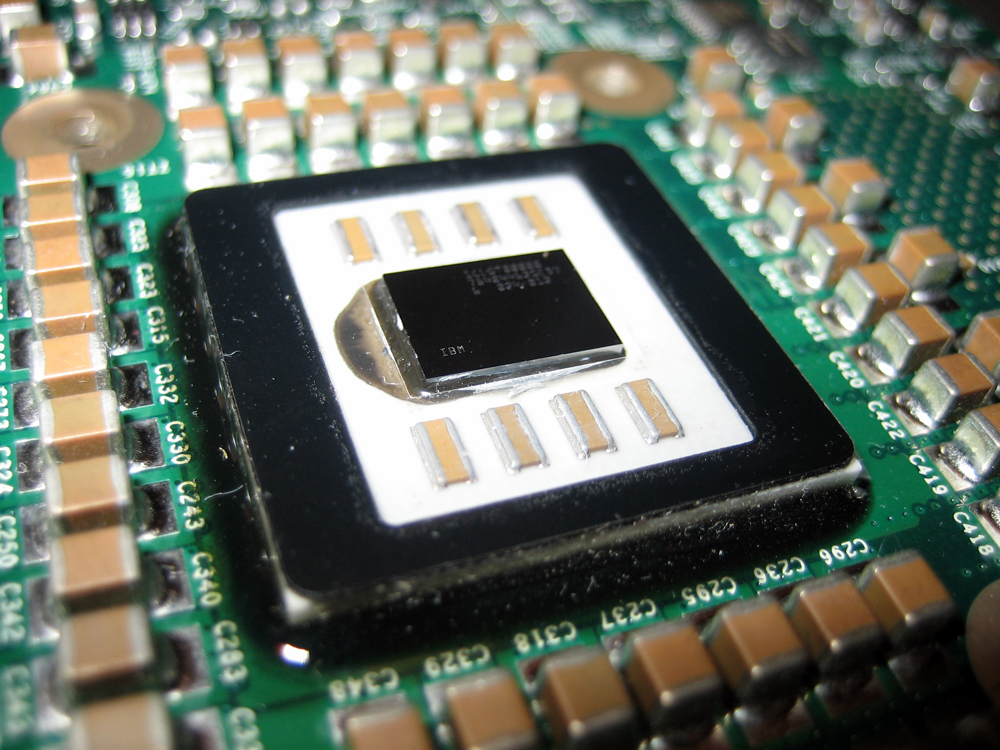
The PowerPC 970 ("G5") was the first 64-bit Mac processor.
The PowerPC 970MP was the first dual-core Mac processor and the first to be found in a quad-core configuration. It was also the first Mac processor with partitioning and virtualization capabilities.
Apple only used three variants of the G5, and soon moved entirely onto Intel architecture.
| Processor | Model | Clock speed | ||||||||||
|---|---|---|---|---|---|---|---|---|---|---|---|---|
| (GHz) | FSB speed | |||||||||||
| (MT/s) | L2 cache | |||||||||||
| (KB) | CPUs | Cores per | ||||||||||
| CPU | Introduced | Discontinued | PowerPC 970 | PowerPC 970FX | PowerPC 970MP | |||||||
| nowrap | Power Mac G5 (original) | 1.6–2.0 | 800–1000 | 512 | 1–2 | 1 | June 2003 | June 2004 | ||||
| nowrap | Xserve G5 | 2.0–2.3 | 1000–1150 | 512 | 1–2 | 1 | January 2004 | August 2005 | ||||
| nowrap | Power Mac G5 (Mid 2004, Early 2005) | 1.8–2.7 | 900–1350 | 512 | 1–2 | 1 | June 2004 | November 2005 | ||||
| nowrap | iMac G5 | 1.6–2.1 | 533–700 | 512 | 1 | 1 | August 2004 | January 2006 | ||||
| nowrap | Power Mac G5 (Late 2005) | 2.0–2.5 | 1000–1250 | 2×1024 | 1–2 | 2 | November 2005 | August 2006 |
Intel x86
Sources: and
Overview
| Processor | |||||||||||||||||||||||||
|---|---|---|---|---|---|---|---|---|---|---|---|---|---|---|---|---|---|---|---|---|---|---|---|---|---|
| family | Process | ||||||||||||||||||||||||
| (nm) | MMX | SSE | SSE2 | SSE3 | SSSE3 | SSE4.1 | SSE4.2 | AVX | DBS/ | ||||||||||||||||
| EIST | XD bit | VT-x | AES | Intel 64 | Quick | ||||||||||||||||||||
| Sync | TXT | QPI | HT | ITB | Yonah | Core | |||||||||||||||||||
| Penryn | Nehalem | ||||||||||||||||||||||||
| Westmere | Sandy Bridge | ||||||||||||||||||||||||
| Ivy Bridge | Haswell | ||||||||||||||||||||||||
| Broadwell | Skylake | ||||||||||||||||||||||||
| Kaby Lake | |||||||||||||||||||||||||
| Coffee Lake | |||||||||||||||||||||||||
| Cascade Lake | |||||||||||||||||||||||||
| Comet Lake | |||||||||||||||||||||||||
| Ice Lake | |||||||||||||||||||||||||
| 65 | |||||||||||||||||||||||||
| 65/45 | |||||||||||||||||||||||||
| 45/32 | |||||||||||||||||||||||||
| 32/22 | |||||||||||||||||||||||||
| 22/14 | |||||||||||||||||||||||||
| 14/10 |
P6
Yonah was the first Mac processor to support the IA-32 instruction set architecture, in addition to the MMX, SSE, SSE2, and SSE3 extension instruction sets.
The Core Solo was a Core Duo with one of the two cores disabled.
| Processor | Model | Clock speed | |||||||||
|---|---|---|---|---|---|---|---|---|---|---|---|
| (GHz) | FSB speed | ||||||||||
| (MT/s) | L2 cache | ||||||||||
| (MB) | CPUs | Cores per | |||||||||
| CPU | Introduced | Discontinued | Core Duo ("Yonah") | Core Solo ("Yonah") | Pentium M ULV ("Crofton") | ||||||
| iMac (Early 2006) | |||||||||||
| iMac (Mid 2006) | 1.83–2.00 | 667 | 2 | 1 | 2 | January 2006 | September 2006 | ||||
| MacBook Pro (Early 2006) | 1.83–2.16 | 667 | 2 | 1 | 2 | February 2006 | October 2006 | ||||
| Mac mini (Early 2006) | |||||||||||
| Mac mini (Late 2006) | 1.66–1.83 | 667 | 2 | 1 | 2 | February 2006 | August 2007 | ||||
| MacBook (Mid 2006) | 1.83–2.00 | 667 | 2 | 1 | 2 | May 2006 | November 2006 | ||||
| Mac mini (Early 2006) | 1.50 | 667 | 2 | 1 | 1 | February 2006 | September 2006 | ||||
| Apple TV (1st generation) | 1.00 | 350 | 2 | 1 | 1 | January 2007 | September 2010 |
Core
Woodcrest added support for the SSSE3 instruction set.
Merom was the first Mac processor to support the x86-64 instruction set, as well as the first 64-bit processor to appear in a Mac notebook.
Clovertown was the first to be found in an 8-core configuration.
| Processor | Model | Clock speed | ||||||||||||||||
|---|---|---|---|---|---|---|---|---|---|---|---|---|---|---|---|---|---|---|
| (GHz) | FSB speed | |||||||||||||||||
| (MT/s) | L2 cache | |||||||||||||||||
| (MB) | CPUs | Cores per | ||||||||||||||||
| CPU | Introduced | Discontinued | Xeon 5100 ("Woodcrest") | Core 2 Duo ("Merom") | Xeon 5300 ("Clovertown") | Core 2 Extreme ("Merom XE") | ||||||||||||
| last=Bangeman | first=Eric | title=Mac Pro review | date=2006-08-11 | url=https://arstechnica.com/gadgets/2006/08/macpro | language=en-us | access-date=2022-05-25}} | 2.00–3.00 | 1333 | 4 | 2 | 2 | August 2006 | January 2008 | |||||
| Xserve (Late 2006) | 2.00–3.00 | 1333 | 4 | 2 | 2 | October 2006 | January 2008 | |||||||||||
| iMac (Late 2006) | ||||||||||||||||||
| iMac (Mid 2007) | 1.83–2.40 | 667–800 | 2–4 | 1 | 2 | September 2006 | April 2008 | |||||||||||
| MacBook Pro (Late 2006) | ||||||||||||||||||
| MacBook Pro (Mid 2007) | ||||||||||||||||||
| MacBook Pro (Late 2007) | 2.16–2.60 | 667–800 | 4 | 1 | 2 | October 2006 | February 2008 | |||||||||||
| MacBook (Late 2006) | ||||||||||||||||||
| MacBook (Mid 2007) | ||||||||||||||||||
| MacBook (Late 2007) | 1.83–2.20 | 667–800 | 2–4 | 1 | 2 | November 2006 | February 2008 | |||||||||||
| Mac mini (Mid 2007) | 1.83–2.00 | 667 | 2–4 | 1 | 2 | August 2007 | March 2009 | |||||||||||
| MacBook Air (Unibody) | 1.60–1.80 | 800 | 4 | 1 | 2 | January 2008 | October 2008 | |||||||||||
| Mac Pro (Mid 2006) | 3.00 | 1333 | 2×4 | 2 | 4 | April 2007 | January 2008 | |||||||||||
| iMac (Mid 2007) | 2.80 | 800 | 4 | 1 | 2 | August 2007 | April 2008 |
Penryn

Penryn added support for a subset for SSE4 (SSE4.1).
| Processor | Model | Clock speed | ||||||||||
|---|---|---|---|---|---|---|---|---|---|---|---|---|
| (GHz) | FSB speed | |||||||||||
| (MT/s) | L2 cache | |||||||||||
| (MB) | CPUs | Cores per | ||||||||||
| CPU | Introduced | Discontinued | Xeon 5400 ("Harpertown") | Core 2 Duo ("Penryn") | Core 2 Duo ("Wolfdale") | Core 2 Duo CULV ("Penryn") | ||||||
| Mac Pro (Early 2008) | 2.80–3.20 | 1600 | 2×6 | 1–2 | 4 | January 2008 | March 2009 | |||||
| Xserve (Early 2008) | 2.80–3.00 | 1600 | 2×6 | 1–2 | 4 | January 2008 | April 2009 | |||||
| MacBook Pro (Early 2008) | ||||||||||||
| MacBook Pro (Late 2008) | ||||||||||||
| MacBook Pro (Early 2009) | ||||||||||||
| MacBook Pro (Mid 2009) | ||||||||||||
| MacBook Pro (Mid 2010) | 2.26–3.06 | 1066 | 3–6 | 1 | 2 | February 2008 | March 2011 | |||||
| MacBook (Early 2008) | ||||||||||||
| MacBook (Late 2008) | ||||||||||||
| MacBook (Early 2009) | ||||||||||||
| MacBook (Mid 2009) | ||||||||||||
| MacBook (Late 2009) | ||||||||||||
| MacBook (Mid 2010) | 2.00–2.40 | 1066 | 3 | 1 | 2 | February 2008 | July 2011 | |||||
| iMac (Early 2008) | ||||||||||||
| iMac (Early 2009) | ||||||||||||
| iMac (Mid 2009) | 2.40–3.06 | 1066 | 6 | 1 | 2 | April 2008 | October 2009 | |||||
| MacBook Air (Unibody) | ||||||||||||
| MacBook Air (Late 2010) | 1.60–2.13 | 1066 | 6 | 1 | 2 | October 2008 | July 2011 | |||||
| Mac mini (Early 2009) | 2.00–2.66 | 1066 | 3 | 1 | 2 | March 2009 | July 2011 | |||||
| Mac mini Server (Late 2009) | 2.53–2.66 | 1066 | 3 | 1 | 2 | October 2009 | July 2011 | |||||
| iMac (Late 2009) | 3.06–3.33 | 1066–1333 | 3–6 | 1 | 2 | October 2009 | July 2010 | |||||
| MacBook Air (Late 2010) | 1.40–1.60 | 800 | 3 | 1 | 2 | October 2010 | July 2011 |
Nehalem
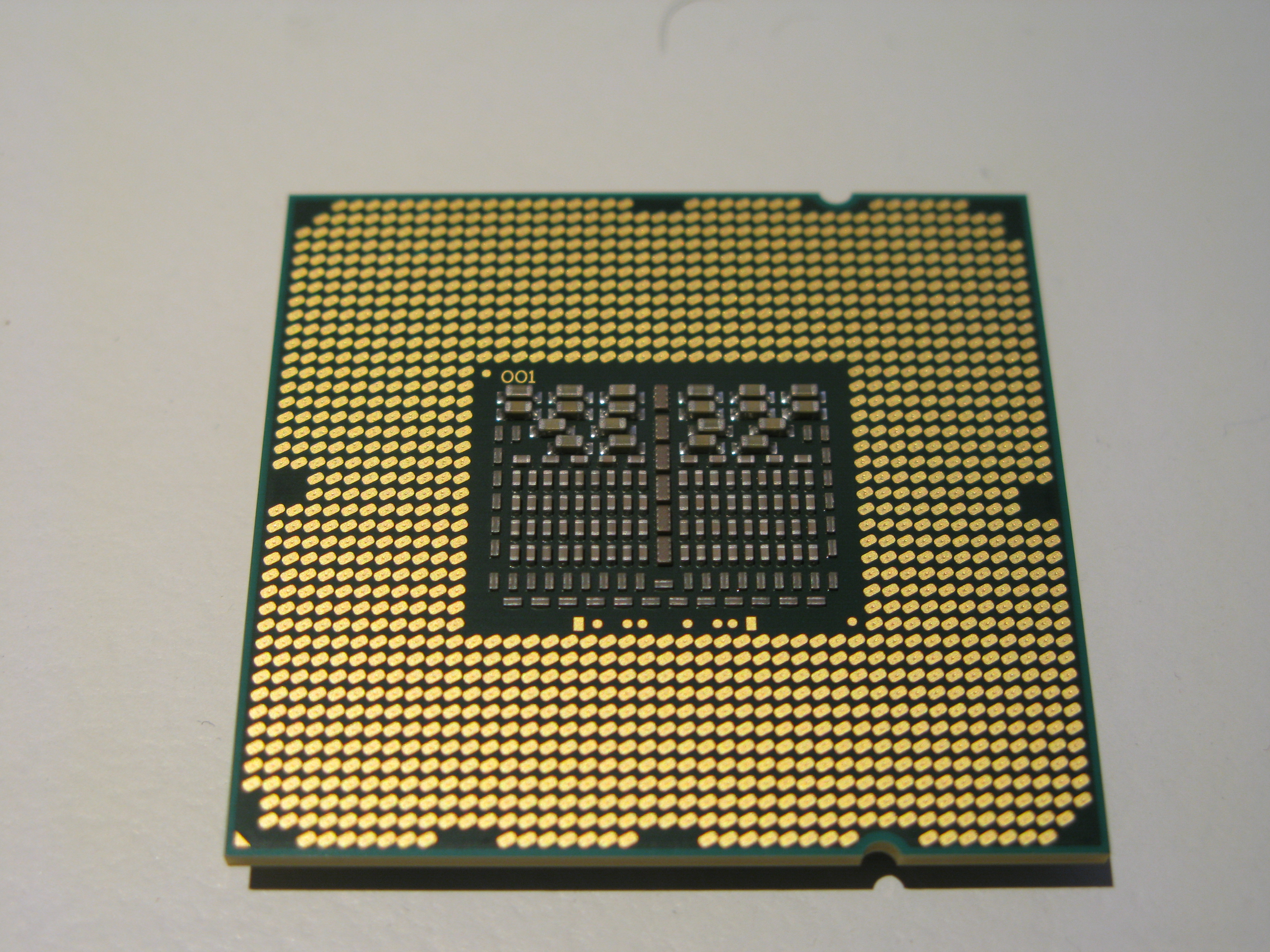
Bloomfield and Gainestown introduced a number of notable features for the first time in any Mac processors:
- Integrated memory controllers (with on-die DMI or QPI).
- Simultaneous multithreading (branded as Hyper-threading).
- Full support for the SSE4 instruction set (SSE4.2).
- Support for Intel Turbo Boost.
- Four cores on a single die rather than a multi-chip module of two dual-core dies.
| Processor | Model | Clock speed | |||||||||||||
|---|---|---|---|---|---|---|---|---|---|---|---|---|---|---|---|
| (GHz) | L2 cache | ||||||||||||||
| (KB) | L3 cache | ||||||||||||||
| (MB) | CPUs | Cores per | |||||||||||||
| CPU | QPI | HT | ITB | Introduced | Discontinued | Xeon 3500 ("Bloomfield") | Xeon 5500 ("Gainestown") | Core i5 ("Lynnfield") | Core i7 ("Lynnfield") | ||||||
| Mac Pro (Early 2009) | 2.66–3.33 | 4×256 | 8 | 1 | 4 | March 2009 | July 2010 | ||||||||
| Mac Pro (Early 2009) | 2.26–2.93 | 4×256 | 8 | 2 | 4 | March 2009 | August 2010 | ||||||||
| Xserve (Early 2009) | 2.26–3.33 | 4×256 | 8 | 1–2 | 4 | April 2009 | January 2011 | ||||||||
| iMac (Late 2009) | 2.66–2.80 | 4×256 | 8 | 1 | 4 | October 2009 | May 2011 | ||||||||
| iMac (Late 2009) | 2.80–2.93 | 4×256 | 8 | 1 | 4 | October 2009 | May 2011 |
Westmere
Arrandale introduced Intel HD Graphics, an on-die integrated GPU.
| Processor | Model | Clock speed | |||||||||||||||
|---|---|---|---|---|---|---|---|---|---|---|---|---|---|---|---|---|---|
| (GHz) | L2 cache | ||||||||||||||||
| (KB) | L3 cache | ||||||||||||||||
| (MB) | CPUs | Cores per | |||||||||||||||
| CPU | QPI | HT | ITB | Introduced | Discontinued | Core i5 ("Arrandale") | Core i7 ("Arrandale") | Core i3 ("Clarkdale") | Core i5 ("Clarkdale") | Xeon 3600 ("Gulftown") | Xeon 5600 ("Gulftown") | ||||||
| MacBook Pro (Mid 2010) | 2.40–2.53 | 2×256 | 3 | 1 | 2 | April 2010 | March 2011 | ||||||||||
| MacBook Pro (Mid 2010) | 2.66 | 2×256 | 4 | 1 | 2 | April 2010 | March 2011 | ||||||||||
| iMac (Mid 2010) | 3.06–3.20 | 2×256 | 4 | 1 | 2 | July 2010 | May 2011 | ||||||||||
| iMac (Mid 2010) | 3.60 | 2×256 | 4 | 1 | 2 | July 2010 | May 2011 | ||||||||||
| Mac Pro (Mid 2010) | |||||||||||||||||
| Mac Pro (Mid 2012) | 3.33 | 6×256 | 12 | 1 | 6 | August 2010 | October 2013 | ||||||||||
| Mac Pro (Mid 2010) | 2.40–3.06 | 4–6×256 | 12 | 2 | 4–6 | August 2010 | October 2013 |
Sandy Bridge
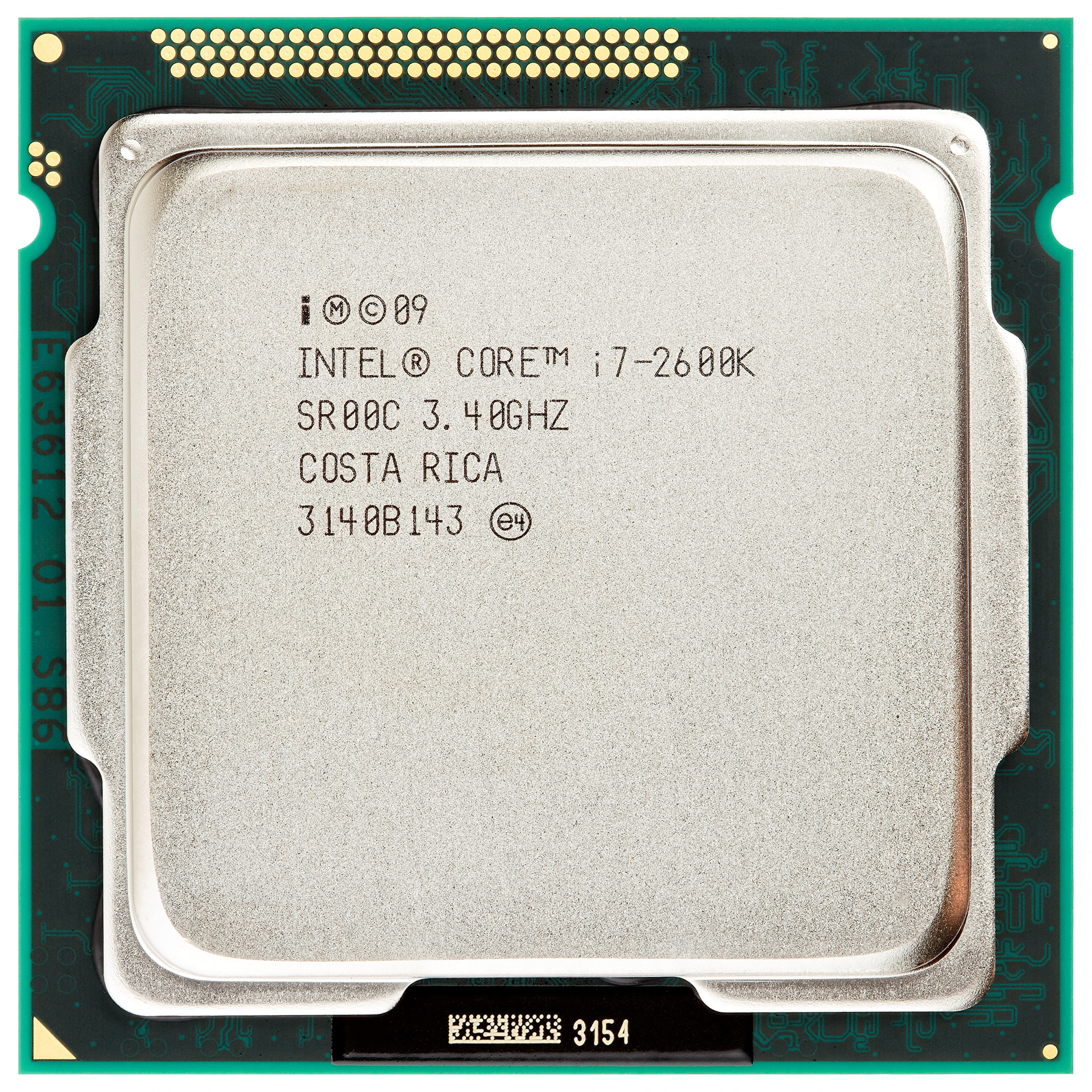
Main article: Sandy Bridge
Sandy Bridge added support for Intel Quick Sync Video, a dedicated on-die video encoding and decoding core. It was also the first quad-core processor to appear in a Mac notebook.
| Processor | Model | Clock speed | ||||||||||||||
|---|---|---|---|---|---|---|---|---|---|---|---|---|---|---|---|---|
| (GHz) | L2 cache | |||||||||||||||
| (KB) | L3 cache | |||||||||||||||
| (MB) | Cores per | |||||||||||||||
| CPU | HT | ITB | Introduced | Discontinued | Core i5 (2-core) | Core i7 (2-core) | Core i7 (4-core) | Core i5 (4-core) | Core i5 CULV (2-core) | Core i7 CULV (2-core) | Core i3 (2-core) | |||||
| MacBook Pro (Early 2011) | ||||||||||||||||
| MacBook Pro (Late 2011) | 2.3 | 2×256 | 3 | 2 | March 2011 | June 2012 | ||||||||||
| Mac mini (Mid 2011) | 2.3–2.5 | 2×256 | 3 | 2 | July 2011 | October 2012 | ||||||||||
| MacBook Pro (Early 2011) | ||||||||||||||||
| MacBook Pro (Late 2011) | 2.7–2.8 | 2×256 | 4 | 2 | March 2011 | June 2012 | ||||||||||
| Mac mini (Mid 2011) | 2.7 | 2×256 | 4 | 2 | July 2011 | October 2012 | ||||||||||
| MacBook Pro (Early 2011) | ||||||||||||||||
| MacBook Pro (Late 2011) | 2.0–2.5 | 4×256 | 6–8 | 4 | March 2011 | June 2012 | ||||||||||
| iMac (Mid 2011) | 2.8–3.4 | 4×256 | 8 | 4 | May 2011 | October 2012 | ||||||||||
| Mac mini Server (Mid 2011) | 2.0 | 4×256 | 6 | 4 | July 2011 | October 2012 | ||||||||||
| iMac (Mid 2011) | 2.5–3.1 | 4×256 | 6 | 4 | May 2011 | October 2012 | ||||||||||
| MacBook Air (Mid 2011) | 1.6–1.7 | 2×256 | 3 | 2 | July 2011 | June 2012 | ||||||||||
| MacBook Air (Mid 2011) | 1.8 | 2×256 | 4 | 2 | July 2011 | June 2012 | ||||||||||
| iMac (Late 2011 education only) | 3.1 | 2×256 | 3 | 2 | August 2011 | March 2013 |
Ivy Bridge
Main article: Ivy Bridge (microarchitecture)
| Processor | Model | Clock speed | |||||||||||||||
|---|---|---|---|---|---|---|---|---|---|---|---|---|---|---|---|---|---|
| (GHz) | L2 cache | ||||||||||||||||
| (KB) | L3 cache | ||||||||||||||||
| (MB) | Cores per | ||||||||||||||||
| CPU | HT | ITB | Introduced | Discontinued | Core i5 (2-core) | Core i7 (2-core) | Core i5 (4-core) | Core i7 (4-core) | Core i5 CULV (2-core) | Core i7 CULV (2-core) | Core i3 (2-core) | Xeon E5 v2 | |||||
| MacBook Pro (Mid 2012) | 2.5 | 2×256 | 3 | 2 | June 2012 | October 2016 | |||||||||||
| Mac mini (Late 2012) | 2.5 | 2×256 | 3 | 2 | October 2012 | October 2014 | |||||||||||
| MacBook Pro (Mid 2012) | 2.9–3.0 | 2×256 | 4 | 2 | June 2012 | October 2016 | |||||||||||
| iMac (Late 2012) | 2.7–3.2 | 2×256 | 6 | 4 | October 2012 | September 2013 | |||||||||||
| MacBook Pro (Mid 2012) | 2.3–2.8 | 4×256 | 6–8 | 4 | June 2012 | October 2013 | |||||||||||
| iMac (Late 2012) | 3.1–3.4 | 4×256 | 8 | 4 | October 2012 | September 2013 | |||||||||||
| Mac mini (Late 2012) | 2.3–2.6 | 4×256 | 6 | 4 | October 2012 | October 2014 | |||||||||||
| MacBook Air (Mid 2012) | 1.7–1.8 | 2×256 | 3 | 2 | June 2012 | June 2013 | |||||||||||
| MacBook Air (Mid 2012) | 2.0 | 2×256 | 4 | 2 | June 2012 | June 2013 | |||||||||||
| iMac (Early 2013 education-only) | 3.3 | 2×256 | 3 | 2 | March 2013 | June 2014 | |||||||||||
| Mac Pro (Late 2013) | 3.7 | 4×256 | 10 | 4 | December 2013 | April 2017 | |||||||||||
| 3.5 | 6×256 | 12 | 6 | December 2013 | December 2019 | ||||||||||||
| 3.0 | 8×256 | 25 | 8 | December 2013 | December 2019 | ||||||||||||
| 2.7 | 12×256 | 30 | 12 | December 2013 | December 2019 |
Haswell
Main article: Haswell (microarchitecture)
The Crystal Well variant used in some MacBook Pros contains an on-package L4 cache shared between the CPU and integrated graphics.
| Processor | Model | Clock speed | ||||||||||||||
|---|---|---|---|---|---|---|---|---|---|---|---|---|---|---|---|---|
| (GHz) | L2 cache | |||||||||||||||
| (KB) | L3 cache | |||||||||||||||
| (MB) | L4 cache | |||||||||||||||
| (MB) | Cores per | |||||||||||||||
| CPU | HT | ITB | Introduced | Discontinued | Core i5 ULT (2-core) | Core i7 ULT (2-core) | Core i5 (4-core) | Core i7 (4-core) | Core i5 (2-core) | Core i7 (2-core) | ||||||
| MacBook Air (Mid 2013) | ||||||||||||||||
| MacBook Air (Early 2014) | 1.3–1.4 | 2×256 | 3 | — | 2 | June 2013 | March 2015 | |||||||||
| iMac (Mid 2014) | 1.4 | 2×256 | 3 | — | 2 | June 2014 | October 2015 | |||||||||
| Mac mini (Late 2014) | 1.4–2.8 | 2×256 | 3 | — | 2 | October 2014 | October 2018 | |||||||||
| MacBook Air (Mid 2013) | ||||||||||||||||
| MacBook Air (Early 2014) | 1.7 | 2×256 | 4 | — | 2 | June 2013 | March 2015 | |||||||||
| Mac mini (Late 2014) | 3.0 | 2×256 | 4 | — | 2 | October 2014 | October 2018 | |||||||||
| iMac (Late 2013) | 2.7–3.5 | 4×256 | 4–6 | — | 4 | September 2013 | October 2015 | |||||||||
| iMac (Late 2013) | 3.1–4.0 | 4×256 | 8 | — | 4 | September 2013 | October 2015 | |||||||||
| MacBook Pro (Late 2013) | ||||||||||||||||
| MacBook Pro (Mid 2014) | ||||||||||||||||
| MacBook Pro (Mid 2015) | 2.0–2.8 | 4×256 | 6 | 128 | 4 | October 2013 | July 2018 | |||||||||
| MacBook Pro (Late 2013) | ||||||||||||||||
| MacBook Pro (Mid 2014) | 2.4–2.8 | 2×256 | 3 | — | 2 | October 2013 | March 2015 | |||||||||
| MacBook Pro (Late 2013) | ||||||||||||||||
| MacBook Pro (Mid 2014) | 2.8–3.0 | 2×256 | 4 | — | 2 | October 2013 | March 2015 |
Broadwell
Main article: Broadwell (microarchitecture)
| Processor | Model | Clock speed | |||||||||||||||
|---|---|---|---|---|---|---|---|---|---|---|---|---|---|---|---|---|---|
| (GHz) | L2 cache | ||||||||||||||||
| (KB) | L3 cache | ||||||||||||||||
| (MB) | L4 cache | ||||||||||||||||
| (MB) | Cores per | ||||||||||||||||
| CPU | HT | ITB | Introduced | Discontinued | Core M | Core i5 ULT (2-core) | Core i7 ULT (2-core) | Core i5 (2-core) | Core i7 (2-core) | Core i5 (4-core) | Core i7 (4-core) | ||||||
| MacBook (Early 2015) | 1.1–1.3 | 2×256 | 4 | — | 2 | April 2015 | April 2016 | ||||||||||
| MacBook Air (Early 2015) | |||||||||||||||||
| MacBook Air (2017) | 1.6–1.8 | 2×256 | 3 | — | 2 | March 2015 | July 2019 | ||||||||||
| iMac (Late 2015) | 1.6 | 2×256 | 3 | — | 2 | October 2015 | June 2017 | ||||||||||
| MacBook Air (Early 2015) | |||||||||||||||||
| MacBook Air (2017) | 2.2 | 2×256 | 4 | — | 2 | March 2015 | July 2019 | ||||||||||
| MacBook Pro (Early 2015) | 2.7–2.9 | 2×256 | 3 | — | 2 | March 2015 | June 2017 | ||||||||||
| MacBook Pro (Early 2015) | 3.1 | 2×256 | 4 | — | 2 | March 2015 | June 2017 | ||||||||||
| iMac (Late 2015) | 2.8–3.1 | 4×256 | 4 | 128 | 4 | October 2015 | June 2017 | ||||||||||
| iMac (Late 2015) | 3.3 | 4×256 | 6 | 128 | 4 | October 2015 | June 2017 |
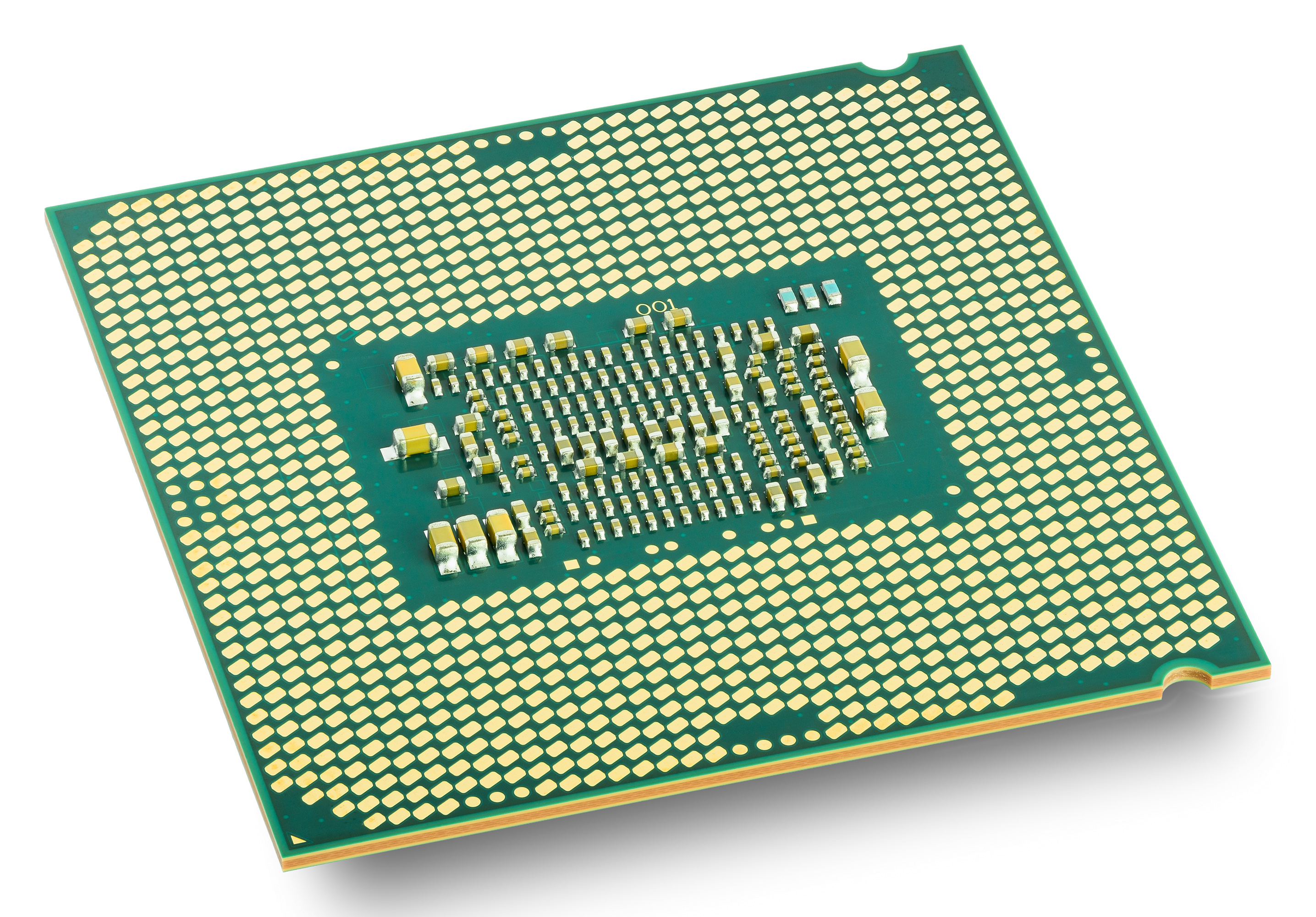
Skylake
Main article: Skylake (microarchitecture)
| Processor | Model | Clock speed | ||||||||||||||
|---|---|---|---|---|---|---|---|---|---|---|---|---|---|---|---|---|
| (GHz) | L2 cache | |||||||||||||||
| (KB) | L3 cache | |||||||||||||||
| (MB) | L4 cache | |||||||||||||||
| (MB) | Cores per | |||||||||||||||
| CPU | HT | ITB | Introduced | Discontinued | Core m3, m5, m7 | Core i5 (4-core) | Core i7 (4-core) | Core i5 (2-core) | Core i7 (2-core) | Xeon W | ||||||
| MacBook (Early 2016) | 1.1–1.3 | 2×256 | 4 | — | 2 | April 2016 | June 2017 | |||||||||
| iMac (Late 2015) | 3.2–3.3 | 4×256 | 6 | — | 4 | October 2015 | June 2017 | |||||||||
| iMac (Late 2015) | 4.0 | 4×256 | 8 | — | 4 | rowspan=2 | rowspan=2 | October 2015 | June 2017 | |||||||
| MacBook Pro (2016) | 2.6–2.9 | 6–8 | November 2016 | |||||||||||||
| MacBook Pro (2016) | 2.0 | 2×256 | 4 | 64 | 2 | rowspan=2 | rowspan=2 | October 2016 | June 2017 | |||||||
| 2.9–3.1 | November 2016 | |||||||||||||||
| MacBook Pro (2016) | 2.4 | 2×256 | 4 | — | 2 | rowspan=2 | rowspan=2 | October 2016 | June 2017 | |||||||
| 3.3 | 64 | November 2016 | ||||||||||||||
| iMac Pro (2017) | 2.3 | 18×1024 | 24.75 | — | 18 | rowspan=4 | rowspan=4 | December 2017 | March 2021 | |||||||
| 2.5 | 14×1024 | 19.25 | 14 | |||||||||||||
| 3.0 | 10×1024 | 13.75 | 10 | |||||||||||||
| 3.2 | 8×1024 | 11 | 8 |
Kaby Lake
Main article: Kaby Lake
| Processor | Model | Clock speed | ||||||||||||||
|---|---|---|---|---|---|---|---|---|---|---|---|---|---|---|---|---|
| (GHz) | L2 cache | |||||||||||||||
| (KB) | L3 cache | |||||||||||||||
| (MB) | L4 cache | |||||||||||||||
| (MB) | TDP | |||||||||||||||
| (W) | Cores per | |||||||||||||||
| CPU | HT | ITB | Introduced | Discontinued | Core m3 | Core i5 (2-core) | Core i7 (2-core) | Core i5 (4-core) | Core i7 (4-core) | |||||||
| MacBook (2017) | 1.2 | 2×256 | 4 | — | 4.5 | 2 | June 2017 | July 2019 | ||||||||
| MacBook (2017) | 1.3 | 2×256 | 4 | — | 4.5 | 2 | rowspan=5 | rowspan=5 | June 2017 | July 2019 | ||||||
| MacBook Air (2018) | ||||||||||||||||
| MacBook Air (2019) | 1.6 | 7 | October 2018 | March 2020 | ||||||||||||
| iMac (2017) | 2.3 | 64 | 15 | June 2017 | October 2021 | |||||||||||
| MacBook Pro (2017) | July 2019 | |||||||||||||||
| 3.1–3.3 | 28 | July 2018 | ||||||||||||||
| MacBook (2017) | 1.4 | 2×256 | 4 | — | 4.5 | 2 | rowspan=3 | rowspan=3 | June 2017 | July 2019 | ||||||
| MacBook Pro (2017) | 2.5 | 15 | ||||||||||||||
| 3.5 | 64 | 28 | July 2018 | |||||||||||||
| iMac (2017) | 3.0–3.8 | 4×256 | 6 | — | 65–91 | 4 | June 2017 | March 2019 | ||||||||
| iMac (2017) | 3.6–4.2 | 4×256 | 8 | — | 65–91 | 4 | rowspan=2 | rowspan=2 | June 2017 | March 2019 | ||||||
| MacBook Pro (2017) | 2.8–2.9 | 6–8 | 45 | July 2018 |
Coffee Lake
Main article: Coffee Lake
Coffee Lake was the first 6-core processor to appear in a Mac notebook.
| Processor | Model | Clock speed | ||||||||||||||||
|---|---|---|---|---|---|---|---|---|---|---|---|---|---|---|---|---|---|---|
| (GHz) | L2 cache | |||||||||||||||||
| (KB) | L3 cache | |||||||||||||||||
| (MB) | L4 cache | |||||||||||||||||
| (MB) | TDP | |||||||||||||||||
| (W) | Cores per | |||||||||||||||||
| CPU | HT | ITB | Introduced | Discontinued | Core i5 (4-core) | Core i7 (4-core) | Core i3 (4-core) | Core i5 (6-core) | Core i7 (6-core) | Core i9 (6-core) | Core i9 (8-core) | |||||||
| MacBook Pro (2018) | ||||||||||||||||||
| MacBook Pro (2019) | 2.3–2.4 | 4×256 | 6 | 128 | 28 | 4 | rowspan=2 | rowspan=2 | July 2018 | May 2020 | ||||||||
| MacBook Pro (2019) | ||||||||||||||||||
| MacBook Pro (2020) | 1.4 | 15 | July 2019 | November 2020 | ||||||||||||||
| MacBook Pro (2018) | ||||||||||||||||||
| MacBook Pro (2019) | 2.7–2.8 | 4×256 | 8 | 128 | 28 | 4 | rowspan=2 | rowspan=2 | July 2018 | May 2020 | ||||||||
| MacBook Pro (2019) | ||||||||||||||||||
| MacBook Pro (2020) | 1.7 | 15 | July 2019 | November 2020 | ||||||||||||||
| Mac Mini (2018) | 3.6 | 4×256 | 6 | — | 65 | 4 | rowspan=2 | rowspan=2 | November 2018 | November 2020 | ||||||||
| iMac (2019) | March 2019 | April 2021 | ||||||||||||||||
| Mac Mini (2018) | 3.0 | 6×256 | 9 | — | 65 | 6 | rowspan=3 | rowspan=3 | November 2018 | January 2023 | ||||||||
| iMac (2019) | 3.0–3.1 | March 2019 | April 2021 | |||||||||||||||
| 3.7 | 95 | August 2020 | ||||||||||||||||
| MacBook Pro (2018) | 2.2–2.6 | 6×256 | 9 | — | 45 | 6 | rowspan=2 | rowspan=2 | July 2018 | May 2019 | ||||||||
| MacBook Pro (2019) | 2.6 | 12 | May 2019 | October 2021 | ||||||||||||||
| Mac Mini (2018) | 3.2 | 6×256 | 12 | — | 65 | 6 | rowspan=2 | rowspan=2 | November 2018 | January 2023 | ||||||||
| iMac (2019) | March 2019 | April 2021 | ||||||||||||||||
| MacBook Pro (2018) | 2.9 | 6×256 | 12 | — | 45 | 6 | July 2018 | May 2019 | ||||||||||
| iMac (2019) | 3.6 | 8×256 | 16 | — | 95 | 8 | rowspan=2 | rowspan=2 | March 2019 | August 2020 | ||||||||
| MacBook Pro (2019) | 2.3–2.4 | 45 | May 2019 | October 2021 |
Cascade Lake
| Processor | Model | Clock speed | |||||||||
|---|---|---|---|---|---|---|---|---|---|---|---|
| (GHz) | L2 cache | ||||||||||
| (KB) | L3 cache | ||||||||||
| (MB) | TDP | ||||||||||
| (W) | Cores per | ||||||||||
| CPU | HT | ITB | Introduced | Discontinued | Xeon W | ||||||
| Mac Pro (2019) | 2.5 | 28×1024 | 38.5 | 205 | 28 | rowspan=5 | rowspan=5 | December 2019 | June 2023 | ||
| 2.7 | 24×1024 | 33 | 24 | ||||||||
| 3.2 | 16×1024 | 22 | 16 | ||||||||
| 3.3 | 12×1024 | 19.25 | 180 | 12 | |||||||
| 3.5 | 8×1024 | 16.5 | 160 | 8 |
Comet Lake
| Processor | Model | Clock speed | |||||||||||
|---|---|---|---|---|---|---|---|---|---|---|---|---|---|
| (GHz) | L2 cache | ||||||||||||
| (KB) | L3 cache | ||||||||||||
| (MB) | TDP | ||||||||||||
| (W) | Cores per | ||||||||||||
| CPU | HT | ITB | Introduced | Discontinued | Core i5 (6-core) | Core i7 (8-core) | Core i9 (10-core) | ||||||
| iMac (2020) | 3.1–3.3 | 6×256 | 12 | 65 | 6 | rowspan=3 | rowspan=3 | August 2020 | March 2022 | ||||
| 3.8 | 8×256 | 16 | 125 | 8 | |||||||||
| 3.6 | 10×256 | 20 | 10 |
Ice Lake
Ice Lake (Sunny Cove) is a 10th generation chip.
| Processor | Model | Clock speed | |||||||||||
|---|---|---|---|---|---|---|---|---|---|---|---|---|---|
| (GHz) | L2 cache | ||||||||||||
| (KB) | L3 cache | ||||||||||||
| (MB) | TDP | ||||||||||||
| (W) | Cores per | ||||||||||||
| CPU | HT | ITB | Introduced | Discontinued | Core i3 (2-core) | Core i5 (4-core) | Core i7 (4-core) | ||||||
| MacBook Air (2020) | 1.1 | 2×512 | 4 | 9 | 2 | March 2020 | November 2020 | ||||||
| MacBook Air (2020) | 1.1 | 4×512 | 6 | 10 | 4 | rowspan=2 | rowspan=2 | March 2020 | November 2020 | ||||
| MacBook Pro (2020) | 2.0 | 28 | May 2020 | October 2021 | |||||||||
| MacBook Air (2020) | 1.2 | 4×512 | 8 | 10 | 4 | rowspan=2 | rowspan=2 | March 2020 | November 2020 | ||||
| MacBook Pro (2020) | 2.3 | 28 | May 2020 | October 2021 |
Apple silicon
Source:
M1
Main article: Apple M1

The M1 is a system on a chip fabricated by TSMC on the 5 nm process and contains 16 billion transistors. Its CPU cores are the first to be used in a Mac processor designed by Apple and the first to use the ARM instruction set architecture. It has 8 CPU cores (4 performance and 4 efficiency), up to 8 GPU cores, and a 16-core Neural Engine, as well as LPDDR4X memory with a bandwidth of 68 GB/s.
The M1 Pro and M1 Max SoCs have 10 CPU cores (8 performance and 2 efficiency) and a 16-core and 32-core GPU, respectively. Both chips were first introduced in the MacBook Pro in October 2021.
The M1 Ultra is a processor combining two M1 Max chips in one package. It was available in the highest-end variants of the Mac Studio, released on March 18, 2022. All parameters of the M1 Max are doubled in M1 Ultra processors; they are, however, packed as one processor package (larger than a Socket AM4 AMD Ryzen processor) and seen as one processor in macOS.
| Processor | Model | CPU Cores | GPU Cores | Neural Engine Cores | Introduced | Discontinued | Apple M1 | Apple M1 Pro | Apple M1 Max | Apple M1 Ultra |
|---|---|---|---|---|---|---|---|---|---|---|
| iMac (24-inch, M1, 2021) | 8 | 7–8 | 16 | May 2021 | October 2023 | |||||
| Mac mini (M1, 2020) | 8 | November 2020 | January 2023 | |||||||
| MacBook Air (M1, 2020) | 7–8 | March 2024 | ||||||||
| MacBook Pro (13-inch, M1, 2020) | 8 | June 2022 | ||||||||
| MacBook Pro (14-inch, 2021) | 8–10 | 14–16 | October 2021 | January 2023 | ||||||
| MacBook Pro (16-inch, 2021) | 10 | 16 | ||||||||
| MacBook Pro (14-inch, 2021) | ||||||||||
| MacBook Pro (16-inch, 2021) | 24–32 | |||||||||
| Mac Studio (2022) | March 2022 | June 2023 | ||||||||
| Mac Studio (2022) | 20 | 48–64 | 32 |
M2
Main article: Apple M2
The M2 is a system on a chip fabricated by TSMC on an enhanced 5 nm process, containing 20 billion transistors. It has 8 CPU cores (4 performance and 4 efficiency), up to 10 GPU cores, and a 16 core Neural Engine, as well as LPDDR5 memory with a bandwidth of 100 GB/s.
The M2 Pro and M2 Max have 12 CPU cores (8 performance and 4 efficiency), and a 19-core and 38-core GPU respectively. Both chips were first introduced in the MacBook Pro in January 2023.
The M2 Ultra is a processor combining two M2 Max dies in one package. It is available in the highest-end variants of the Mac Studio as well as the Mac Pro, both released on June 13, 2023.
| Processor | Model | CPU Cores | GPU Cores | Neural Engine Cores | Introduced | Discontinued | Apple M2 | Apple M2 Pro | Apple M2 Max | Apple M2 Ultra |
|---|---|---|---|---|---|---|---|---|---|---|
| MacBook Air (M2, 2022) | 8 | 8–10 | 16 | July 2022 | March 2025 | |||||
| MacBook Pro (13-inch, M2, 2022) | 10 | June 2022 | October 2023 | |||||||
| Mac mini (2023) | January 2023 | October 2024 | ||||||||
| MacBook Air (15-inch, M2, 2023) | June 2023 | March 2024 | ||||||||
| Mac mini (2023) | 10–12 | 16–19 | January 2023 | October 2024 | ||||||
| MacBook Pro (14-inch, 2023) | October 2023 | |||||||||
| MacBook Pro (16-inch, 2023) | 12 | 19 | ||||||||
| MacBook Pro (14-inch, 2023) | ||||||||||
| MacBook Pro (16-inch, 2023) | 30–38 | |||||||||
| Mac Studio (2023) | June 2023 | March 2025 | ||||||||
| Mac Studio (2023) | 24 | 60–76 | 32 | |||||||
| Mac Pro (2023) | current |
M3
Main article: Apple M3
The M3 is a system on a chip fabricated by TSMC on the 3 nm process, containing 25 billion transistors. It has 8 CPU cores (4 performance and 4 efficiency), up to 10 GPU cores, and a 16 core Neural Engine, as well as LPDDR5 memory with a bandwidth of 100 GB/s.
The M3 Pro has 12 CPU cores (6 performance and 6 efficiency), while the M3 Max has 16 CPU cores (12 performance and 4 efficiency); they have an 18-core and 40-core GPU respectively. Both chips were first introduced in the MacBook Pro in October 2023.
The M3 Ultra is a processor combining two M3 Max dies in one package. It is available in the highest-end variants of the Mac Studio, released on March 12, 2025.
| Processor | Model | CPU Cores | GPU Cores | Neural Engine Cores | Introduced | Discontinued | Apple M3 | Apple M3 Pro | Apple M3 Max | Apple M3 Ultra |
|---|---|---|---|---|---|---|---|---|---|---|
| iMac (24-inch, 2023) | 8 | 8–10 | 16 | November 2023 | October 2024 | |||||
| MacBook Pro (14-inch, M3, 2023) | 10 | |||||||||
| MacBook Air (13-inch, M3, 2024) | 8–10 | March 2024 | March 2025 | |||||||
| MacBook Air (15-inch, M3, 2024) | 10 | |||||||||
| MacBook Pro (14-inch, M3 Pro, 2023) | 11–12 | 14–18 | November 2023 | October 2024 | ||||||
| MacBook Pro (16-inch, 2023) | 12 | 18 | ||||||||
| MacBook Pro (14-inch, M3 Max, 2023) | ||||||||||
| MacBook Pro (16-inch, 2023) | 14–16 | 30–40 | ||||||||
| Mac Studio (2025) | 28–32 | 60–80 | 32 | March 2025 | current |
M4
Main article: Apple M4
The M4 is a system on a chip fabricated by TSMC on an enhanced 3 nm process, containing 28 billion transistors. It has up to 10 CPU cores (4 performance and 6 efficiency), up to 10 GPU cores, and a 16 core Neural Engine, as well as LPDDR5X memory with a bandwidth of 120 GB/s.
The M4 Pro has 14 CPU cores (10 performance and 4 efficiency), while the M4 Max has 16 CPU cores (12 performance and 4 efficiency); they have a 20-core and 40-core GPU respectively. Both chips were first introduced in the MacBook Pro in October 2024.
| Processor | Model | CPU Cores | GPU Cores | Neural Engine Cores | Introduced | Discontinued | Apple M4 | Apple M4 Pro | Apple M4 Max |
|---|---|---|---|---|---|---|---|---|---|
| iMac (24-inch, 2024) | 8–10 | 8–10 | 16 | November 2024 | current | ||||
| MacBook Pro (14-inch, M4, 2024) | 10 | 10 | October 2025 | ||||||
| Mac mini (2024) | current | ||||||||
| MacBook Air (13-inch, M4, 2025) | 8–10 | March 2025 | |||||||
| MacBook Air (15-inch, M4, 2025) | 10 | ||||||||
| Mac mini (2024) | 12–14 | 16–20 | November 2024 | ||||||
| MacBook Pro (14-inch, M4 Pro, 2024) | |||||||||
| MacBook Pro (16-inch, 2024) | 14 | 20 | |||||||
| MacBook Pro (14-inch, M4 Max, 2024) | |||||||||
| MacBook Pro (16-inch, 2024) | 14–16 | 32–40 | |||||||
| Mac Studio (2025) | March 2025 |
M5
Main article: Apple M5
The M5 is a system on a chip fabricated by TSMC on a third-generation 3 nm process. It has up to 10 CPU cores (4 performance and 6 efficiency), up to 10 GPU cores, and a 16 core Neural Engine, as well as LPDDR5X memory with a bandwidth of 153 GB/s. It was first introduced in the MacBook Pro in October 2025.
| Processor | Model | CPU Cores | GPU Cores | Neural Engine Cores | Introduced | Discontinued | Apple M5 |
|---|---|---|---|---|---|---|---|
| MacBook Pro (14-inch, M5, 2025) | 10 | 10 | 16 | October 2025 | current |
Notes
References
Sources
- Specifications, Apple, Inc.
- Ian Page and contributors, MacTracker.
- Glen Sanford, Apple History, apple-history.com.
- Dan Knight, Computer Profiles, LowEndMac, Cobweb Publishing, Inc.
- Product Specifications, Intel, Inc.
References
- Motorola Literature Distribution. (1992). "Motorola M68000 Family Programmer's Reference Manual". motorola.
- Freiberger, Paul. (1981-09-14). "Apple Develops New Computers".
- Markoff, John. (May 10, 1982). "Computer mice are scurrying out of R&D labs".
- Smith, Burrell C.. (February 1984). "Macintosh System Architecture".
- Pournelle, Jerry. (March 1985). "On the Road: Hackercon and COMDEX".
- Joannidi, Christine. (March 15, 2002). "Macintosh Classic: Technical Specifications". [[Apple Inc.]].
- Joannidi, Christine. (June 13, 2007). "Macintosh Classic: Technical Specifications". [[Apple Inc.]].
- (April 19, 2012). "Macintosh Classic: Technical Specifications". Support.apple.com.
- Gruman, Galen. (December 1991). "Macintosh Powerbooks 100, 140, and 170". Macworld.
- "Motorola Semiconductor".
- "PowerBook G3 (Pismo) vs PowerBook G3 (Pismo) - Geekbench Browser".
- "Power Mac G4 Cube".
- Stokes, Jon. (2002-10-29). "Inside the IBM PowerPC 970 ? Part I: Design Philosophy and Front End".
- Bangeman, Eric. (2006-07-17). "Peering inside the aluminum ball: Woodcrest, Conroe, and the "pro" Macs".
- Bangeman, Eric. (2004-09-30). "Dual 2.5GHz Power Mac G5".
- (2012-09-30). "Apple Power Macintosh G5 Quad Core (2.5 gHz)".
- "Intel confirms 'low-voltage, small form factor' chip in Apple TV".
- Bangeman, Eric. (2006-08-11). "Mac Pro review".
- Bangeman, Eric. (2007-08-09). "Aluminum and glass: A review of the new iMac".
- "Introducing M1 Pro and M1 Max: the most powerful chips Apple has ever built".
- "Apple unveils game-changing MacBook Pro".
- (2022-03-19). "Apple M1 Ultra Chip Is Nearly 3 Times Bigger Than AMD's Ryzen CPUs, Benchmarks Show Desktop Intel & AMD CPUs Still Ahead".
- "Apple unveils MacBook Pro featuring M2 Pro and M2 Max".
- "Apple announces Mac Pro with M2 Ultra, starting at $6,999".
- "Apple unveils the new MacBook Pro featuring the M3 family of chips, making the world’s best pro laptop even better".
- "Apple launches new Mac Studios with M4 Max and M3 Ultra chips".
- "Apple’s new MacBook Pro features the incredibly powerful M4 family of chips and ushers in a new era with Apple Intelligence".
- "Apple unveils new 14‑inch MacBook Pro powered by the M5 chip, delivering the next big leap in AI for the Mac".
This article was imported from Wikipedia and is available under the Creative Commons Attribution-ShareAlike 4.0 License. Content has been adapted to SurfDoc format. Original contributors can be found on the article history page.
Ask Mako anything about List of Mac models grouped by CPU type — get instant answers, deeper analysis, and related topics.
Research with MakoFree with your Surf account
Create a free account to save articles, ask Mako questions, and organize your research.
Sign up freeThis content may have been generated or modified by AI. CloudSurf Software LLC is not responsible for the accuracy, completeness, or reliability of AI-generated content. Always verify important information from primary sources.
Report