From Surf Wiki (app.surf) — the open knowledge base
University of Edinburgh
Public university in Scotland
Public university in Scotland
| Field | Value |
|---|---|
| name | University of Edinburgh |
| latin_name | Universitas Academica Edinburgensis |
| image_name | University of Edinburgh ceremonial roundel.svg |
| image_upright | 0.7 |
| motto | |
| established | |
| type | Public research university |
| Ancient university | |
| endowment | £604.8 million (2025) |
| budget | £1.437 billion (2024/25) |
| academic_staff | 5,401 FTE (2024) |
| administrative_staff | 7,207 FTE (2024) |
| head_label | Principal and Vice-Chancellor |
| head | Sir Peter Mathieson |
| rector | Simon Fanshawe |
| chancellor | Anne, Princess Royal |
| students | () |
| FTE () | |
| undergrad | () |
| postgrad | () |
| city | Edinburgh |
| country | Scotland, UK |
| coordinates | |
| campus | Urban, suburban |
| former_names | Tounis College |
| King James' College | |
| academic_affiliation | |
| colours | Red Blue |
| website | |
| logo | University of Edinburgh Corporate Logo Colour.svg |
| logo_upright | 1.1 |
Ancient university FTE () King James' College
The University of Edinburgh (, ; abbreviated as Edin. in post-nominals) is a public research university based in Edinburgh, Scotland. Founded by the town council under the authority of a royal charter from King James VI in 1582 and officially opened in 1583, it is one of Scotland's four ancient universities and the sixth-oldest university in continuous operation in the English-speaking world. The university played a crucial role in Edinburgh becoming a leading intellectual centre during the Scottish Enlightenment and contributed to the city being nicknamed the "Athens of the North".
The three main global university rankings (ARWU, THE, and QS) place the University of Edinburgh within their respective top 40. It is a member of several associations of research-intensive universities, including the Coimbra Group, League of European Research Universities, Russell Group, Una Europa, and Universitas 21. In the fiscal year ending 31 July 2025, the university had a total income of £1.437 billion, with £375.4 million from research grants and contracts. It has the third-largest endowment in the UK, behind only Cambridge and Oxford. The university occupies five main campuses in the city of Edinburgh, which include many buildings of historical and architectural significance, such as those in the Old Town.
Edinburgh is the fourth-largest university in the United Kingdom by total enrolment and the largest university in Scotland, receiving over 66,000 undergraduate applications per year, making it the fifth-most popular university in the UK by application volume. In 2021, Edinburgh had the seventh-highest average UCAS points among British universities for new entrants. The university maintains strong links to the royal family, with Prince Philip, Duke of Edinburgh, serving as its chancellor from 1953 to 2010, and Anne, Princess Royal, holding the position since March 2011.
Notable alumni of the University of Edinburgh include inventor Alexander Graham Bell, naturalist Charles Darwin, philosopher David Hume, physicist James Clerk Maxwell, and writers such as Oliver Goldsmith, Sir J. M. Barrie, Sir Arthur Conan Doyle, Sir Walter Scott, and Robert Louis Stevenson. The university has produced several heads of state and government, including three British prime ministers. Additionally, three UK Supreme Court justices were educated at Edinburgh. As of October 2024, the university has been affiliated with 20 Nobel Prize laureates, four Pulitzer Prize winners, three Turing Award winners, an Abel Prize laureate, and a Fields Medalist. Edinburgh alumni have also won a total of ten Olympic gold medals.
History
Early history
In 1557, Bishop Robert Reid of St Magnus Cathedral made a will containing an endowment of 8,000 merks to build a college in Edinburgh. Unusually for his time, Reid's vision for the college included the teaching of rhetoric and poetry, alongside more traditional subjects such as philosophy.
However, the bequest was delayed by more than 25 years due to the religious revolution that led to the Reformation Parliament of 1560. The plans were revived in the late 1570s through efforts by the Edinburgh Town Council, first minister of Edinburgh James Lawson, and Lord Provost William Little. When Reid's descendants were unwilling to pay out the sum, the town council petitioned King James VI and his Privy Council. The King arranged a monetary compromise and granted a royal charter on 14 April 1582, empowering the town council to create a college of higher education. A college established by secular authorities was unprecedented in newly Presbyterian Scotland, as all previous Scottish universities had been founded through papal bulls.


Named Tounis College (Town's College), the university opened its doors to students on 14 October 1583, with an attendance of 80–90. At the time, the college mainly covered liberal arts and divinity. Instruction began under the charge of a graduate from the University of St Andrews, theologian Robert Rollock, who first served as Regent, and from 1586 as principal of the college. Initially, Rollock was the sole instructor for first-year students, and he was expected to tutor the 1583 intake for all four years of their degree in every subject. The first cohort finished their studies in 1587, and 47 students graduated (or 'laureated') with an M.A. degree. When King James VI visited Scotland in 1617, he held a disputation with the college's professors, after which he decreed that it should henceforth be called the "Colledge [sic] of King James". The university was known as both Tounis College and King James' College until it gradually assumed the name of the University of Edinburgh during the 17th century.
After the deposition of King James II and VII during the Glorious Revolution of 1688, the Parliament of Scotland passed legislation designed to root out Jacobite sympathisers amongst university staff. In Edinburgh, this led to the dismissal of Principal Alexander Monro and several professors and regents after a government visitation in 1690. The university was subsequently led by Principal Gilbert Rule, one of the inquisitors on the visitation committee.
18th and 19th century
The late 17th and early 18th centuries were marked by a power struggle between the university and town council, which had ultimate authority over staff appointments, curricula, and examinations. After a series of challenges by the university, the conflict culminated in the council seizing the college records in 1704. Relations were only gradually repaired over the next 150 years and suffered repeated setbacks.
In 1708 the Principal William Carstares restructured the University, abolishing the regenting system and establishing a Dutch style system of Professors. The newly created Chairs, such as that of Greek and Humanity, were offered to the existing Regents. The university expanded by founding a Faculty of Law in 1707, a Faculty of Arts in 1708, and a Faculty of Medicine in 1726. In 1762, Reverend Hugh Blair was appointed by King George III as the first Regius Professor of Rhetoric and Belles-Lettres. This formalised literature as a subject and marks the foundation of the English Literature department, making Edinburgh the oldest centre of literary education in Britain.
During the 18th century, the university was at the centre of the Scottish Enlightenment.{{cite journal |last=Mullett |first=Charles F. |date=1 February 1968 |title=A Short History of the University of Edinburgh, 1556–1889. By D. B. Horn.
In 1785, Henry Dundas introduced the South Bridge Act in the House of Commons; one of the bill's goals was to use South Bridge as a location for the university, which had existed in a hotchpotch of buildings since its establishment. The site was used to construct Old College, the university's first custom-built building, by architect William Henry Playfair to plans by Robert Adam. During the 18th century, the university developed a particular forte in teaching anatomy and the developing science of surgery, and it was considered one of the best medical schools in the English-speaking world. Bodies to be used for dissection were brought to the university's Anatomy Theatre through a secret tunnel from a nearby house (today's College Wynd student accommodation), which was also used by murderers Burke and Hare to deliver the corpses of their victims during the 1820s.
The Edinburgh snowball riots of 1838 – also known as the *'Wars of the Quadrangle''' – occurred when University of Edinburgh students started a snowball fight in "a spirit of harmless amusement". However, this turned into a two-day 'battle' at Old College with local Edinburgh residents on South Bridge, which led to the Lord Provost asking for an infantry regiment to be brought from Edinburgh Castle to quell the disturbance. The riot was immortalised in a humorous 92-page account written by the students entitled *The University Snowdrop''. In 1853, English landscape artist Sam Bough painted the event in watercolour.

After 275 years of governance by the town council, the Universities (Scotland) Act 1858 gave the university full authority over its own affairs. The act established governing bodies including a university court and a general council, and redefined the roles of key officials like the chancellor, rector, and principal.
The Edinburgh Seven were the first group of matriculated undergraduate female students at any British university. Led by Sophia Jex-Blake, they began studying medicine at the University of Edinburgh in 1869. Although the university blocked them from graduating and qualifying as doctors, their campaign gained national attention and won them many supporters, including Charles Darwin. Their efforts put the rights of women to higher education on the national political agenda, which eventually resulted in legislation allowing women to study at all Scottish universities in 1889. The university admitted women to graduate in medicine in 1893. In 2015, the Edinburgh Seven were commemorated with a plaque at the university, and in 2019 they were posthumously awarded with medical degrees.
.jpg)
Towards the end of the 19th century, Old College was becoming overcrowded. After a bequest from Sir David Baxter, the university started planning new buildings in earnest. Sir Robert Rowand Anderson won the public architectural competition and was commissioned to design new premises for the Medical School in 1877. Initially, the design incorporated a campanile and a hall for examination and graduation, but this was seen as too ambitious. The new Medical School opened in 1884, but the building was not completed until 1888. After funds were donated by politician and brewer William McEwan in 1894, a separate graduation building was constructed after all, also designed by Anderson. The resulting McEwan Hall on Bristo Square was presented to the university in 1897.
The Students' Representative Council (SRC) was founded in 1884 by student Robert Fitzroy Bell. In 1889, the SRC voted to establish Edinburgh University Union (EUU), to be housed in Teviot Row House on Bristo Square. Edinburgh University Sports Union (EUSU) was founded in 1866, and Edinburgh University Women's Union (renamed the Chambers Street Union in 1964) in October 1905. The SRC, EUU and Chambers Street Union merged to form Edinburgh University Students' Association (EUSA) on 1 July 1973.
20th century
During World War I, the Science and Medicine buildings had suffered from a lack of repairs or upgrades, which was exacerbated by an influx of students after the end of the war. In 1919, the university bought the land of West Mains Farm in the south of the city for the development of a new satellite campus specialising in the sciences. On 6 July 1920, King George V laid the foundation of the first new building (now called the Joseph Black Building), housing the Department of Chemistry. The campus was named King's Buildings in honour of George V.
New College on The Mound was originally opened in 1846 as a Free Church of Scotland college, later of the United Free Church of Scotland. Since the 1930s it has been the home of the School of Divinity. Prior to the 1929 reunion of the Church of Scotland, candidates for the ministry in the United Free Church studied at New College, whilst candidates for the Church of Scotland studied in the university's Faculty of Divinity. In 1935 the two institutions merged, with all operations moved to the New College site in Old Town. This freed up Old College for Edinburgh Law School.
The Polish School of Medicine was established in 1941 as a wartime academic initiative. While it was originally intended for students and doctors in the Polish Armed Forces in the West, civilians were also allowed to take the courses, which were taught in Polish and awarded Polish medical degrees. When the school was closed in 1949, 336 students had matriculated, of which 227 students graduated with the equivalent of an MBChB and a total of 19 doctors obtained a doctorate or MD. A bronze plaque commemorating the Polish School of Medicine is located in the Quadrangle of the old Medical School in Teviot Place.
On 10 May 1951, the Royal (Dick) Veterinary College, founded in 1823 by William Dick, was reconstituted as the Royal (Dick) School of Veterinary Studies and officially became part of the university. It achieved full faculty status as Faculty of Veterinary Medicine in 1964.
In 1955 the university opened the first department of nursing in Europe for academic study. This department was inspired by the work of Gladys Beaumont Carter and a grant from the Rockefeller Foundation.
By the end of the 1950s, there were around 7,000 students matriculating annually, more than doubling the numbers from the turn of the century. The university addressed this partially through the redevelopment of George Square, demolishing much of the area's historic houses and erecting modern buildings such as 40 George Square, Appleton Tower and the Main Library.
On 1 August 1998, the Moray House Institute of Education, founded in 1848, merged with the University of Edinburgh, becoming its Faculty of Education. Following the internal restructuring of the university in 2002, Moray House became known as the Moray House School of Education. It was renamed the Moray House School of Education and Sport in August 2019.
21st century
In the 1990s it became apparent that the old Royal Infirmary of Edinburgh buildings in Lauriston Place were no longer adequate for a modern teaching hospital. Donald Dewar, the Scottish Secretary at the time, authorised a joint project between private finance, local authorities, and the university to create a modern hospital and medical campus in the Little France area of Edinburgh. The new campus was named the BioQuarter. The Chancellor's Building was opened on 12 August 2002 by Prince Philip, housing the new Edinburgh Medical School alongside the new Royal Infirmary of Edinburgh. In 2007, the campus saw the addition of the Euan MacDonald Centre as a research centre for motor neuron diseases, which was part-funded by Scottish entrepreneur Euan MacDonald and his father Donald. In August 2010, author J. K. Rowling provided £10 million in funding to create the Anne Rowling Regenerative Neurology Clinic, which was officially opened in October 2013. The Centre for Regenerative Medicine (CRM) is a stem cell research centre dedicated to the development of regenerative treatments, which was opened in 2012. CRM is also home to applied scientists working with the Scottish National Blood Transfusion Service (SNBTS) and Roslin Cells.
In December 2002, the Edinburgh Cowgate fire destroyed a number of university buildings, including some 3,000 m2 of the School of Informatics at 80 South Bridge. This was replaced with the Informatics Forum on Bristo Square, completed in July 2008. Also in 2002, the Edinburgh Cancer Research Centre (ECRC) was opened on the Western General Hospital site. In 2007, the MRC Human Genetics Unit formed a partnership with the Centre for Genomic & Experimental Medicine and the ECRC to create the Institute of Genetics and Molecular Medicine (renamed the Institute of Genetics and Cancer in 2021) on the same site.
In April 2008, the Roslin Institute – an animal sciences research centre known for cloning Dolly the sheep – became part of the Royal (Dick) School of Veterinary Studies. In 2011, the school moved into a new £60 million building on the Easter Bush campus, which now houses research and teaching facilities, and a hospital for small and farm animals.

Edinburgh College of Art, founded in 1760, formally merged with the university's School of Arts, Culture and Environment on 1 August 2011. In 2014, the Zhejiang University-University of Edinburgh Institute (ZJE) was founded as an international joint institute offering degrees in biomedical sciences, taught in English. The campus, located in Haining, Zhejiang Province, China, was established on 15 March 2016.
The university began hosting a Wikimedian in Residence in 2016. The residency was made into a full-time position in 2019, with the Wikimedian involved in teaching and learning activities within the scope of the University of Edinburgh WikiProject.
In 2018, the University of Edinburgh was a signatory to the £1.3 billion Edinburgh and South East Scotland City Region Deal, in partnership with the UK and Scottish governments, six local authorities and all universities and colleges in the region. The university committed to delivering a range of economic benefits to the region through the Data-Driven Innovation initiative. In conjunction with Heriot-Watt University, the deal created five innovation hubs: the Bayes Centre, Edinburgh Futures Institute, Usher Institute, Easter Bush, and one further hub based at Heriot-Watt, the National Robotarium. The deal also included creation of the Edinburgh International Data Facility, which performs high-speed data processing in a secure environment.
In September 2020, the university completed work on the Richard Verney Health Centre at its central area campus on Bristo Square. The facility houses a health centre and pharmacy, and the university's disability and counselling services. The university's largest expansion in the 2020s was the conversion of some of the historic Royal Infirmary of Edinburgh buildings in Lauriston Place, which had been vacated in 2003 and partially developed into the Quartermile. The £120 million project created a home for the Edinburgh Futures Institute (EFI), an interdisciplinary hub linking arts, humanities, and social sciences with other disciplines in the research and teaching of complex, multi-stakeholder societal challenges. The EFI officially opened its doors to the public on 4 June 2024.
Historical links
Edinburgh has several historical links to other universities, chiefly through its influential Medical School and its graduates, who established and developed institutions elsewhere in the world.
- Columbia University: had its Medical School founded by Samuel Bard, an Edinburgh medical graduate.
- Dalhousie University: Edinburgh alumnus George Ramsay, the 22nd Lieutenant Governor of Nova Scotia, wanted to establish a non-denominational college in Halifax open to all. The school was modelled after the University of Edinburgh, which students could attend regardless of religion or nationality.
- Dartmouth College: had its School of Medicine founded by Nathan Smith, an alumnus of Edinburgh Medical School.
- Harvard University: had its Medical School founded by three surgeons, one of whom was Benjamin Waterhouse, an alumnus of Edinburgh Medical School.
- McGill University: had its Faculty of Medicine founded by four physicians, which included Edinburgh alumni Andrew Fernando Holmes and John Stephenson.
- University of Pennsylvania: had its School of Medicine founded by Edinburgh graduate John Morgan, who modelled it after Edinburgh Medical School.
- Princeton University: had its academic syllabus and structure reformed along the lines of the University of Edinburgh and other Scottish universities by its sixth president John Witherspoon, an Edinburgh theology graduate.
- University of Sydney: founded in 1850 by Sir Charles Nicholson, a graduate of Edinburgh Medical School.
- College of William & Mary: the second-oldest college in the US was founded in 1693 by Edinburgh graduate James Blair, who served as the college's founding president for fifty years.
- Yale University: had its School of Medicine co-founded by Nathan Smith, an alumnus of Edinburgh Medical School.
Campuses and buildings
The university has five main sites in Edinburgh:
- Central Area
- King's Buildings
- BioQuarter
- Easter Bush
- Western General
The university is responsible for several significant historic and modern buildings across the city, including St Cecilia's Hall, Scotland's oldest purpose-built concert hall and the second oldest in use in the British Isles; Teviot Row House, the oldest purpose-built students' union building in the world; and the restored 17th-century Mylne's Court student residence at the head of the Royal Mile.
Central Area


The Central Area is spread around numerous squares and streets in Edinburgh's Southside, with some buildings in Old Town. It is the university's oldest area, occupied primarily by the College of Arts, Humanities and Social Sciences and the School of Informatics. The highest concentration of university buildings is around George Square, which includes 40 George Square (formerly David Hume Tower), Appleton Tower, Main Library, and Gordon Aikman Lecture Theatre, the area's largest lecture hall. Around nearby Bristo Square lie the Dugald Stewart Building, Informatics Forum, McEwan Hall, Potterrow Student Centre, Teviot Row House, and old Medical School, which still houses pre-clinical medical courses and biomedical sciences. The Pleasance, one of Edinburgh University Students' Association's main buildings, is located nearby, as is Edinburgh College of Art in Lauriston. North of George Square lies the university's Old College housing Edinburgh Law School, New College on The Mound housing the School of Divinity, and St Cecilia's Hall. Some of these buildings are used to host events during the Edinburgh International Festival and the Edinburgh Festival Fringe every summer.
Pollock Halls
Main article: Pollock Halls of Residence
.jpg)
Pollock Halls, adjoining Holyrood Park to the east, is the university's largest residence hall for undergraduate students in their first year. The complex houses over 2,000 students during term time and consists of ten named buildings with communal green spaces between them. The two original buildings, St Leonard's Hall and Salisbury Green, were built in the 19th century, while the majority of Pollock Halls dates from the 1960s and early 2000s. Two of the older houses in Pollock Halls were demolished in 2002, and a new building, Chancellor's Court, was built in their place and opened in 2003. Self-catered flats elsewhere account for the majority of university-provided accommodation. The area also includes the John McIntyre Conference Centre opened in 2009, which is the university's premier conference space.
Holyrood
The Holyrood campus, just off the Royal Mile, used to be the site for Moray House Institute for Education until it merged with the university on 1 August 1998. The university has since extended this campus. The buildings include redeveloped and extended Sports Science, Physical Education and Leisure Management facilities at St Leonard's Land linked to the Sports Institute on the Pleasance. The £80 million O'Shea Hall at Holyrood was named after the former principal of the university Sir Timothy O'Shea and was opened by Princess Anne in 2017, providing a living and social environment for postgraduate students. The Outreach Centre, Institute for Academic Development (University Services Group), and Edinburgh Centre for Professional Legal Studies are also located at Holyrood.
King's Buildings
Main article: King's Buildings

The King's Buildings campus is located in the south of the city. Most of the Science and Engineering College's research and teaching activities take place at the campus, which occupies a 35-hectare site. It includes the Alexander Graham Bell Building (for mobile phones and digital communications systems), James Clerk Maxwell Building (the administrative and teaching centre of the School of Physics and Astronomy and School of Mathematics), Joseph Black Building (home to the School of Chemistry), Royal Observatory, Swann Building (the Wellcome Trust Centre for Cell Biology), Waddington Building (the Centre for Systems Biology at Edinburgh), William Rankine Building (School of Engineering's Institute for Infrastructure and Environment), and others. Until 2012, the KB campus was served by three libraries: Darwin Library, James Clerk Maxwell Library, and Robertson Engineering and Science Library. These were replaced by the Noreen and Kenneth Murray Library opened for the academic year 2012/13. The campus also hosts the National e-Science Centre (NeSC), Scotland's Rural College (SRUC), Scottish Institute for Enterprise (SIE), Scottish Microelectronics Centre (SMC), and Scottish Universities Environmental Research Centre (SUERC).
BioQuarter
Main article: Edinburgh BioQuarter

The BioQuarter campus, based in the Little France area, is home to the majority of medical facilities of the university, alongside the Royal Infirmary of Edinburgh. The campus houses the Anne Rowling Regenerative Neurology Clinic, Centre for Regenerative Medicine, Chancellor's Building, Euan MacDonald Centre, and Queen's Medical Research Institute, which opened in 2005. The Chancellor's Building has two large lecture theatres and a medical library connected to the Royal Infirmary of Edinburgh by a series of corridors.
Easter Bush
The Easter Bush campus, located seven miles south of the city, houses the Jeanne Marchig International Centre for Animal Welfare Education, Roslin Institute, Royal (Dick) School of Veterinary Studies, and Veterinary Oncology and Imaging Centre.
The Roslin Institute is an animal sciences research institute which is sponsored by BBSRC. The Institute won international fame in 1996, when its researchers Sir Ian Wilmut, Keith Campbell and their colleagues created Dolly the sheep, the first mammal to be cloned from an adult cell. A year later Polly and Molly were cloned, both sheep contained a human gene.
Western General
The Western General campus, in proximity to the Western General Hospital, contains the Biomedical Research Facility, Edinburgh Clinical Research Facility, and Institute of Genetics and Cancer (formerly the Institute of Genetics and Molecular Medicine).
File:Appleton Tower (39773534912).jpg|Appleton Tower File:Edinburgh Architecture - The University of Edinburgh Business School, Buccleuch Place (geograph 2458971).jpg|Business School File:Centre for Regenerative Medicine, University of Edinburgh.jpg|Centre for Regenerative Medicine File:Erskine Williamson Building.jpg|Erskine Williamson Building, King's Buildings File:Informatics Forum University of Edinburgh.JPG|Informatics Forum, School of Informatics File:No Canter Today (geograph 6738087).jpg|Roslin Institute File:Main Entrance, Edinburgh Royal Infirmary - geograph.org.uk - 432996.jpg|Royal Infirmary of Edinburgh, School of Medicine File:Royal (Dick) School of Veterinary Studies Main Building.jpg|Royal (Dick) School of Veterinary Studies
Organisation and administration
Governance
In common with the other ancient universities of Scotland, and in contrast to nearly all other pre-1992 universities which are established by royal charters, the University of Edinburgh is constituted by the Universities (Scotland) Acts 1858 to 1966. These acts provide for three major bodies in the governance of the university: the University Court, the General Council, and the Senatus Academicus.
University Court
The University Court is the university's governing body and the legal person of the university, chaired by the rector and consisting of the principal, Lord Provost of Edinburgh, and of Assessors appointed by the rector, chancellor, Edinburgh Town Council, General Council, and Senatus Academicus. By the Universities (Scotland) Act 1889, it is a body corporate, with perpetual succession and a common seal. All property belonging to the university at the passing of the Act was vested in the Court. The present powers of the Court are further defined in the Universities (Scotland) Act 1966, including the administration and management of the university's revenue and property, the regulation of staff salaries, and the establishment and composition of committees of its own members or others.
General Council
The General Council consists of graduates, academic staff, current and former University Court members. It was established to ensure that graduates have a continuing voice in the management of the university. The Council is required to meet twice per year to consider matters affecting the wellbeing and prosperity of the university. The Universities (Scotland) Act 1966 gave the Council the power to consider draft ordinances and resolutions, to be presented with an annual report of the work and activities of the university, and to receive an audited financial statement. The Council elects the chancellor of the university and three Assessors on the University Court.
''Senatus Academicus''
The Senatus Academicus is the university's supreme academic body, with its core function being the regulation and supervision of teaching and overall planning of the academic work of the institution. It is chaired by the principal and consists of approximately 300 heads of schools and colleges, heads of departments, and elected professorial and non-professorial academic staff; the Senatus also includes 30 elected students. The Senatus elects four Assessors on the University Court. The Senatus typically meets four times per year; most documents for discussion and each meeting's minutes are accessible to all members of the university.
University officials
Main article: Chancellor of the University of Edinburgh, List of principals of the University of Edinburgh, Rector of the University of Edinburgh
The university's three most significant officials are its chancellor, rector, and principal, whose rights and responsibilities are largely derived from the Universities (Scotland) Act 1858.
The office of chancellor serves as the titular head and highest office of the university. Their duties include conferring degrees and enhancing the profile and reputation of the university on national and global levels. The chancellor is elected by the university's General Council, and a person generally remains in the office for life. Previous chancellors include former prime minister Arthur Balfour and novelist Sir J. M. Barrie. Princess Anne has held the position since March 2011 succeeding Prince Philip. She is also Patron of the university's Royal (Dick) School of Veterinary Studies.
The principal is responsible for the overall operation of the university in a chief executive role. The principal is formally nominated by the Curators of Patronage and appointed by the University Court. They are the President of the Senatus Academicus and a member of the University Court ex officio. The principal is also automatically appointed vice-chancellor, in which role they confer degrees on behalf of the chancellor. Previous principals include physicist Sir Edward Appleton and religious philosopher Stewart Sutherland. The current principal is nephrologist Sir Peter Mathieson, who has held the position since February 2018.
The office of rector is elected every three years by the staff and matriculated students. The primary role of the rector is to preside at the University Court. The rector also chairs meetings of the General Council in absence of the chancellor. They work closely with students and Edinburgh University Students' Association. Previous rectors include microbiologist Sir Alexander Fleming, and former Prime Ministers Sir Winston Churchill and David Lloyd George. The current rector is activist and writer Simon Fanshawe, who has held the position since March 2024.
Colleges and schools
In 2002, the university was reorganised from its nine faculties into three 'Colleges'. While technically not a collegiate university, it comprises the Colleges of Arts, Humanities and Social Sciences (CAHSS), Science & Engineering (CSE) and Medicine & Vet Medicine (CMVM). Within these colleges are 'Schools', which either represent one academic discipline such as Informatics or assemble adjacent academic disciplines such as the School of History, Classics and Archaeology. While bound by College-level policies, individual Schools can differ in their organisation and governance. As of 2021, the university has 21 schools in total.
Arts, Humanities and Social Sciences


The College took on its current name of Arts, Humanities and Social Sciences in 2016 after absorbing the Edinburgh College of Art in 2011. CAHSS offers more than 280 undergraduate degree programmes, 230 taught postgraduate programmes, and 200 research postgraduate programmes. Twenty subjects offered by the college were ranked within the top 10 nationally in the 2022 Complete University Guide. It includes the oldest English Literature department in Britain, which was ranked 7th globally in the 2021 QS Rankings by Subject in English Language & Literature. The college hosts Scotland's ESRC Doctoral Training Centre (DTC), the Scottish Graduate School of Social Science. The college is the largest of the three colleges by enrolment, with 26,130 students and 3,089 academic staff.
- Business School
- Edinburgh College of Art
- Moray House School of Education and Sport
- School of Divinity
- School of Economics
- School of Health in Social Science
- School of History, Classics and Archaeology
- School of Law
- School of Literatures, Languages and Cultures
- School of Philosophy, Psychology and Language Sciences
- School of Social and Political Science
- Centre for Open Learning
- Edinburgh Futures Institute
Medicine and Veterinary Medicine
Main article: University of Edinburgh College of Medicine and Veterinary Medicine
Edinburgh Medical School was widely considered the best medical school in the English-speaking world throughout the 18th century and the first half of the 19th century and contributed significantly to the university's international reputation. Its graduates founded medical schools all over the world, including at five of the seven Ivy League universities (Columbia, Dartmouth, Harvard, Pennsylvania, and Yale); those in McGill, Montréal, Sydney, and Vermont; the Royal Postgraduate Medical School (now part of Imperial College London), and the London School of Medicine for Women (both now part of UCL).
In the 21st century, the medical school has continued to excel, and it is associated with 13 Nobel Prize recipients: seven recipients of the Nobel Prize in Physiology or Medicine and six of the Nobel Prize in Chemistry. In 2021, it was ranked third in the UK by The Times University Guide, and the Complete University Guide. In 2022, it was ranked the UK's best medical school by the Guardian University Guide, It also ranked 21st in the world by both the Times Higher Education World University Rankings and the QS World University Rankings in 2021.
The Royal (Dick) School of Veterinary Studies is a world leader in veterinary education, research and practice. The eight original faculties formed four Faculty Groups in August 1992. Medicine and Veterinary Medicine became one of these, and in 2002 became the smallest of the three colleges, with 7,740 students and 1,896 academic staff. The university's teaching hospitals include the Royal Infirmary of Edinburgh, Western General Hospital, St John's Hospital, Livingston, Roodlands Hospital, and Royal Hospital for Children and Young People.
Science and Engineering
Main article: University of Edinburgh College of Science and Engineering
In the 16th century, science was taught as "natural philosophy" in the university. The 17th century saw the institution of the University Chairs of Mathematics and Botany, followed the next century by Chairs of Natural History, Astronomy, Chemistry and Agriculture. It was Edinburgh's professors who took a leading part in the formation of the Royal Society of Edinburgh in 1783. Joseph Black, Professor of Medicine and Chemistry at the time, founded the world's first Chemical Society in 1785. The first named degrees of Bachelor and Doctor of Science was instituted in 1864, and a separate Faculty of Science was created in 1893 after three centuries of scientific advances at Edinburgh. The Regius Chair in Engineering was established in 1868, and the Regius Chair in Geology in 1871. In 1991 the Faculty of Science was renamed the Faculty of Science and Engineering, and in 2002 it became the College of Science and Engineering. The college has 11,745 students and 2,937 academic staff.
- School of Biological Sciences
- School of Chemistry
- School of Engineering
- School of GeoSciences
- School of Informatics
- School of Mathematics
- School of Physics and Astronomy
Sub-units, centres and institutes

Some subunits, centres and institutes within the university are listed as follows:
- Artificial Intelligence Applications Institute (AIAI)
- Bayes Centre
- Centre for the History of the Book (CHB)
- Centre for Regenerative Medicine (CRM)
- Centre for the Study of World Christianity (CSWC)
- Centre for Theology and Public Issues (CTPI)
- Digital Curation Centre (DCC)
- Edinburgh Cancer Research Centre (ECRC)
- Edinburgh Dental Institute (EDI)
- Edinburgh Futures Institute (EFI)
- Edinburgh Parallel Computing Centre (EPCC)
- Edinburgh School of Architecture and Landscape Architecture (ESALA)
- Euan MacDonald Centre
- Institute for Advanced Studies in the Humanities (IASH)
- International Centre for Mathematical Sciences (ICMS)
- Institute for the Study of Science, Technology and Innovation (ISSTI)
- Koestler Parapsychology Unit
- Laboratory for Foundations of Computer Science (LFCS)
- MRC Human Genetics Unit (MRC HGU)
- Nursing Studies
- Roslin Institute
- Scottish Studies
- UK Centre for Astrobiology (UKCA)
Finances
In the financial year ending 31 July 2024, the University of Edinburgh had a total income of £1.386 billion (2022/23 – £1.341 billion) and total expenditure of £1.014 billion (2022/23 – £1.181 billion). Key sources of income included £527.2 million from tuition fees and education contracts (2022/23 – £513.7 million), £208.7 million from funding body grants (2022/23 – £210.9 million), £365.2 million from research grants and contracts (2022/23 – £339.5 million), £62.7 million from investment income (2022/23 – £42.2 million) and £25 million from donations and endowments (2022/23 – £55.7 million).
At year end, Edinburgh had endowments of £580.4 million (2023 – £559.8 million) and total net assets of £3.003 billion (2023 – £2.615 billion). It holds the third-largest endowment of any university in the UK.
Staff, community and networking
As of 3 April 2025, the University employed over 12,600 full time equivalent staff, an increase of 216 over the previous year:
| **University of Edinburgh Total:** | **12,606** |
|---|
As part of the university's support for researchers, each College has Research Staff Societies that include postdoc societies, and organisations specific to each school. Cross-curricula Research Networks bring together researchers working on similar topics.
_holding_Edinburgh_University_Staff_Pride_Network_banner.jpg)
Independently of the College hierarchy, aligned with the university's EDI policy, eight Staff Networks bring together and represent diverse staff groups:
- Disabled Staff Network
- Staff BAME Network
- Edinburgh Race Equality Network
- Jewish Staff Network
- Staff Pride Network
- University & College Unions incorporating the national academic union and the in-house Edinburgh University Union
- Long-term Research Staff Network
- Support for Technicians and Steering Committee
Industrial action
Staff at the university engaged in the sector-wide 2018–2023 UK higher education strikes called by the University and College Union over disputes regarding USS pensions, pay, and working conditions. A Marking and Assessment Boycott that commenced on 20 April 2023 was called off on 6 September 2023. However, the UCU voted to continue strike action throughout the rest of September.
In November 2024, Principal Mathieson warned staff of impending redundancies, citing "a multi-million pound increase to our salary bill" he said had been created by the Labour administration's National Insurance hike. Following Mathieson's announcement of £140 million in cuts on 25 February 2025, the UCU said that 59% of its members had turned out for a consulative ballot, with 75% willing to strike, and a further 10% prepared to work to rule including refusing to cover for absent colleagues. Mathieson's annual salary package exceeding £418,000 and comparable remunerations of other university executive staff also fell under heavy criticism in light of cuts staff were being asked to absorb. The UCU announced strike action for the university's Open Day in June 2025, and further actions to be taken in September 2025. On 28 October, in a re-ballot of members of the UCU at the university, with a turnout of 60%, 85% backed strike action, and 94% backed work to rule.
Academic profile
The university is a member of the Russell Group of research-led British universities, and the Sutton 13 group of top-ranked universities in the UK. It is the only British university to be a member of both the Coimbra Group and the League of European Research Universities, and it is a founding member of Una Europa and Universitas 21, both international associations of research-intensive universities. The university maintains historically strong ties with the neighbouring Heriot-Watt University for teaching and research. Edinburgh also offers a wide range of free online MOOC courses on three global platforms Coursera, Edx and FutureLearn.
Admissions
| 2024 | 2023 | 2022 | 2021 | 2020 |
|---|---|---|---|---|
| **Applications** | 66,293 | 69,377 | 75,438 | 68,954 |
| **Offers** | 31,132 | 27,608 | 25,210 | 32,432 |
| **Offer Rate (%)** | 47.0 | 39.8 | 33.0 | 47.0 |
| **Enrols** | 7,302 | 6,409 | 6,111 | 8,083 |
| **Yield (%)** | 23.5 | 23.2 | 24.2 | 24.9 |
| **Applicant/Enrolled Ratio** | 9.08 | 10.82 | 12.34 | 8.53 |
| **Average Entry Tariff** | 197 | 197 |
| url=https://www.hesa.ac.uk/data-and-analysis/students/table-1 | title=HE student enrolments by HE provider, permanent address, level of study, mode of study, entrant marker, sex and academic year | publisher=HESA | access-date=3 April 2025}} and Ethnicity | Total | Undergraduate Widening Participation Indicators |
|---|---|---|---|---|---|
| British White | {{bartable | 47 | % | 2 | background:red}} |
| British Ethnic Minorities | {{bartable | 11 | % | 2 | background:green}} |
| International EU | {{bartable | 6 | % | 2 | background:blue}} |
| International Non-EU | {{bartable | 36 | % | 2 | background:gray}} |
| Female | {{bartable | 61 | % | 2 | background:purple}} |
| Independent School | {{bartable | 32 | % | 2 | background:orange}} |
| Low Participation Areas | {{bartable | 10 | % | 2 | background:black}} |
In 2021, the University of Edinburgh had the seventh-highest average entry standards amongst universities in the UK, with new undergraduates averaging 197 UCAS points, equivalent to just above AAAA in A-level grades. It gave offers of admission to 33% of its 18 year old applicants in 2022, the fourth-lowest amongst the Russell Group.
In 2022, excluding courses within Edinburgh College of Art, the most competitive courses for Scottish applicants were Oral Health Science (9%), Business (11%), Philosophy & Psychology (14%), Social Work (15%), and International Business (15%). For students from the rest of the UK, the most competitive courses were Nursing (5%), Medicine (6%), Veterinary Medicine (6%), Psychology (8%), and Politics, Philosophy and Economics (10%). For international students, the most competitive courses were Medicine (5%), Nursing (7%), Business (11%), Politics, Philosophy and Economics (12%), and Sociology (13%).
For the academic year 2019/20, 36.8% of Edinburgh's new undergraduates were privately educated, the second-highest proportion among mainstream British universities, behind only Oxford. As of August 2021, it has a higher proportion of female than male students with a male to female ratio of 38:62 in the undergraduate population, and the undergraduate student body is composed of 30% Scottish students, 32% from the rest of the UK, 10% from the EU, and 28% from outside the EU.
Graduation

Graduation ceremonies are held in the purpose-built McEwan Hall. At the ceremonies, graduates are 'capped' with the Geneva Bonnet, which involves the university's principal tapping them on the head with the cap while they receive their graduation certificate. The velvet-and-silk hat has been used for over 150 years, and legend says that it was originally made from cloth taken from the breeches of 16th-century scholars John Knox or George Buchanan. When the hat was restored in the early 2000s, a label dated 1849 was discovered bearing the name of Edinburgh tailor Henry Banks, casting doubt on the supposed 16th-century origin; however, it is unknown whether Banks manufactured or restored the hat. In 2006, a university emblem that had been taken into space by astronaut and Edinburgh graduate Piers Sellers was incorporated into the Geneva Bonnet.
Library system
Main article: Edinburgh University Library
.jpg)
Pre-dating the university by three years, Edinburgh University Library was founded in 1580 through the donation of a large collection by Clement Litill, and today is the largest academic library collection in Scotland. The Brutalist style eight-storey Main Library building in George Square was designed by Sir Basil Spence. At the time of its completion in 1967, it was the largest building of its type in the UK, and today is a category A listed building. The library system also includes many specialised libraries at the college and school level.{{cite web |access-date=2 October 2021 |archive-date=2 October 2021 |archive-url=https://web.archive.org/web/20211002165724/https://www.ed.ac.uk/information-services/library-museum-gallery/using-library/lib-locate |url-status=live
Exchange programmes
The university offers students the opportunity to study abroad at around 300 partner institutions in nearly 40 countries worldwide, with most partner universities being located in Europe, North America, and Asia.
University-wide exchanges are open to most, but not all, students on undergraduate degrees in the College of Arts, Humanities, and Social Sciences, and the College of Science and Engineering; most students in the College of Medicine and Veterinary Medicine are not eligible for exchanges. Students will normally go abroad in their third year. The list of partner institutions is shown as follows (part of):
- Asia-Pacific: Fudan University, University of Hong Kong, University of Melbourne, Seoul National University, University of Sydney, National University of Singapore, Nanyang Technological University
- Europe: University of Amsterdam, University of Copenhagen, University of Helsinki, Lund University, Sciences Po, University College Dublin, Uppsala University
- Latin America: National Autonomous University of Mexico, Pontifical Catholic University of Chile, University of São Paulo
- Northern America: Boston College, Barnard College of Columbia University, University of California (except for Merced and San Francisco), Caltech, University of Chicago, Cornell University, Georgetown University, McGill University, University of North Carolina at Chapel Hill, University of Pennsylvania, University of Texas at Austin, University of Toronto, University of Virginia, Washington University in St. Louis
Subject-specific exchanges are open to students studying in particular schools or subject areas, including exchange programmes with Carnegie Mellon University, Emory University, Ecole du Louvre, EPFL, ETH Zurich, ESSEC Business School, ENS Paris, HEC Paris, Humboldt University of Berlin, Karolinska Institute, Kyoto University, LMU Munich, University of Michigan, Peking University, Rhode Island School of Design, Sorbonne University, TU München, Waseda University, Wharton School of the University of Pennsylvania, and others.
Rankings and reputation
| Times/Sunday_Times = 25
In the 2021 Research Excellence Framework (REF), which evaluated work produced between 2014 and 2021, Edinburgh ranked 4th by research power and 15th by GPA amongst British universities. The university fell four places in GPA when compared to the 2014 REF, but retained its place in research power. 90 per cent of the university's research activity was judged to be 'world leading' (4*) or 'internationally excellent' (3*), and five departments – Computer Science, Informatics, Sociology, Anthropology, and Development Studies – were ranked as the best in the UK.
In the 2015 THE Global Employability University Ranking, Edinburgh ranked 23rd in the world and 4th in the UK for graduate employability as voted by international recruiters. A 2015 government report found that Edinburgh was one of only two Scottish universities (along with St Andrews) that some London-based elite recruitment firms considered applicants from, especially in the field of financial services and investment banking. When The New York Times ranked universities based on the employability of graduates as evaluated by recruiters from top companies in 20 countries in 2012, Edinburgh was placed at 42nd in the world and 7th in Britain.
Edinburgh was ranked 24th in the world and 5th in the UK by the 2021 Aggregate Ranking of Top Universities, a league table based on the three major world university rankings, ARWU, QS and THE. In the 2022 U.S. News & World Report, Edinburgh ranked 32nd globally and 5th nationally. The 2022 World Reputation Rankings placed Edinburgh at 32nd worldwide and 5th nationwide. In 2023, it ranked 73rd amongst the universities around the world by the SCImago Institutions Rankings.
The disparity between Edinburgh's research capacity, endowment and international status on the one hand, and its ranking in national league tables on the other, is largely due to the impact of measures of 'student satisfaction'. Edinburgh was ranked last in the UK for teaching quality in the 2012 National Student Survey, with the 2015 Good University Guide stating that this stemmed from "questions to do with the promptness, usefulness and extent of academic feedback", and that the university "still has a long way to go to turn around a poor position". Edinburgh improved only marginally over the next years, with the 2021 Good University Guide still ranking it in the bottom 10 domestically in both teaching quality and student experience. Edinburgh was ranked 122nd out of 128 universities for student satisfaction in the 2022 Complete University Guide, although it was ranked 12th overall. The 2024 Guardian University Guide ranked Edinburgh 14th overall, but 50th out of 120 universities in teaching satisfaction, and lowest among all universities in satisfaction with feedback.
In the 2022 Complete University Guide, 32 out of the 49 subjects offered by Edinburgh were ranked within the top 10 in the UK, with Asian Studies (4th), Chemical Engineering (4th), Education (2nd), Geology (5th), Linguistics (5th), Mechanical Engineering (5th), Medicine (5th), Music (5th), Nursing (1st), Physics & Astronomy (5th), Social Policy (5th), Theology & Religious Studies (4th), and Veterinary Medicine (2nd) within the top 5. The 2021 THE World University Rankings by Subject ranked Edinburgh 10th worldwide in Arts and Humanities, 15th in Law, 16th in Psychology, 21st in Clinical, Pre-clinical & Health, 22nd in Computer Science, 28th in Education, 28th in Life Science, 43rd in Business & Economics, 44th in Social Sciences, 45th in Physical Sciences, and 86th in Engineering & Technology. The 2023 QS World University Rankings by Subject placed Edinburgh at 10th globally in Arts & Humanities, 23rd in Life Sciences & Medicine, 36th in Natural Sciences, 50th in Social Sciences & Management, and 59th in Engineering & Technology. According to CSRankings, computer science at Edinburgh was ranked 1st in the UK and 36th globally, and Edinburgh was the best in natural language processing (NLP) in the world.
Student life
Students' Association
Main article: Edinburgh University Students' Association
Edinburgh University Students' Association (EUSA) consists of the students' union and the students' representative council. EUSA's buildings include Teviot Row House, The Pleasance, Potterrow Student Centre, Kings Buildings House, as well as shops, cafés and refectories across the various campuses. Teviot Row House is considered the oldest purpose-built student union building in the world. Most of these buildings are operated as Edinburgh Festival Fringe venues during August. EUSA represents students to the university and the wider world, and is responsible for over 250 student societies at the university. The association has five sabbatical office bearers – a president and four vice presidents. EUSA is affiliated with the National Union of Students (NUS).
Debate
The University of Edinburgh is home to the Diagnostic Society of Edinburgh which was founded in 1787. It claims to be the oldest student debating society in the UK. The society is indirectly associated with the university through the students union as an unincorporated society.
Performing arts
Amateur dramatic societies benefit from Edinburgh being an important cultural hub for comedy, amateur and fringe theatre throughout the UK, most prominently through the Edinburgh Festival Fringe.
The Edinburgh University Music Society (EUMS) is a student-run musical organisation, which is Scotland's oldest student's musical society; it can be traced back to a concert in February 1867. It performs three concert series throughout the year whilst also undertaking a programme of charity events and education projects.
The Edinburgh University Theatre Company (EUTC), founded in 1890 as the Edinburgh University Drama Society, is known for running Bedlam Theatre, the oldest student-run theatre in Britain and venue for the Fringe. EUTC also funds acclaimed improvisational comedy troupe The Improverts during term time and the Fringe. Alumni include Sir Michael Boyd, Ian Charleson, Kevin McKidd, and Greg Wise.
The Edinburgh Studio Opera (formerly Edinburgh University Opera Club) is a student opera company in Edinburgh. It performs at least one fully staged opera each year. The Edinburgh University Savoy Opera Group (EUSOG) is an opera and musical theatre company founded by students in 1961 to promote and perform the comic operettas of Sir William Gilbert and Sir Arthur Sullivan, collectively known as Savoy Operas after the theatre in which they were originally staged.
The Edinburgh University Footlights are a musical theatre company founded in 1989 and produce two large scale shows a year. One of the founders is the Theatre Producer Colin Ingram. Theatre Parodok, founded in 2004, is a student theatre company that aims to produce shows that are "experimental without being exclusive". They stage one large show each semester and one for the festival.
Media
The Student is a fortnightly student newspaper. Founded in 1887 by writer Robert Louis Stevenson, it is the oldest student newspaper in the United Kingdom. Former writers of the newspaper include politicians Gordon Brown, Robin Cook, and Lord Steel of Aikwood. It has been independent of the university since 1992, but was forced to temporarily fold in 2002 due to increasing debts. The newspaper won a number of student newspaper awards in the years following its relaunch.
The Journal was an independent publication, established in 2007 by three students and former writers for The Student. It was also distributed to other higher education institutions in the city, such as Heriot-Watt University, Edinburgh Napier University, and Telford College. It was the largest such publication in Scotland, with a print run of 10,000 copies. Despite winning a number of awards for its journalism, the magazine folded in 2015 due to financial difficulties.
FreshAir, launched on 3 October 1992, is an alternative music student radio station. The station is one of the oldest surviving student radio stations in the UK, and won the "Student Radio Station of the Year" award at the annual Student Radio Awards in 2004.
In September 2015, the Edinburgh University Student Television (EUTV) became the newest addition to the student media scene at the university, producing a regular magazine-style programme, documentaries and other special events.
Sport
Main article: Edinburgh University Sports Union
Student sport at Edinburgh consists of clubs covering the more traditional rugby, football, rowing and judo, to the more unconventional korfball, gliding and mountaineering. In 2021, the university had over 65 sports clubs run by Edinburgh University Sports Union (EUSU).
The Scottish Varsity, known as the "world's oldest varsity match", is a rugby match played annually against the University of St Andrews dating back over 150 years. Discontinued in the 1950s, the match was resurrected in 2011 and was staged in London at the home of London Scottish RFC. It is played at the beginning of the academic year, and since 2015 has been staged at Murrayfield Stadium in Edinburgh.
The Scottish Boat Race is an annual rowing race between the Glasgow University Boat Club and the Edinburgh University Boat Club, rowed between competing eights on the River Clyde in Glasgow, Scotland. Started in 1877, it is believed to be the third-oldest university boat race in the world, predated by the Oxford and Cambridge Boat Race and the Harvard–Yale Regatta.
Edinburgh athletes have repeatedly been successful at the Olympic Games: Sprinter Eric Liddell won gold and bronze at the 1924 Summer Olympics. At the 1948 Summer Olympics, alumnus Jackie Robinson won a gold medal with the American Basketball team. Trap shooter Bob Braithwaite secured a gold medal at the 1968 Summer Olympics. Cyclist Sir Chris Hoy won six gold and one silver medal between 2000 and 2012. Rower Dame Katherine Grainger won a gold medal at the 2012 Summer Olympics, and four further silver medals between 2000 and 2016. Edinburgh was the most successful UK university at the 2012 Games with two gold medals from Hoy and one from Grainger.
Student activism
There are a number of campaigning societies at the university, including but not limited to the environment and poverty campaigning group People & Planet and the Amnesty International Society. International development organisations include Edinburgh Global Partnerships, which was established as a student-led charity in 1990. There is also a significant left-wing presence on campus, including an anti-austerity group, Edinburgh University Anarchist Society, Edinburgh University Socialist Society, Edinburgh Young Greens, Feminist Society, LGBT+ Pride, Marxist Society, and Justice for Palestine Society.
Protests, demonstrations and occupations are regular occurrences at the university. The activist group People & Planet took over Charles Stewart House in 2015 and again in 2016 in protest over the university's investment in companies active in arms manufacturing or fossil fuel extraction. In May 2015, a security guard was charged in relation to the occupations.
Gaza protest

In May 2024, student activists set up a protest camp in the Old College Quad, with some also beginning a hunger strike, and demanded divestment from companies they alleged supported the Israeli invasion of the Gaza Strip. The campaign, backed by more than 600 staff and the students' union, specifically targeted the university's investments in Alphabet Inc. and Amazon, and its relationship with investment firm BlackRock. In response, Principal Mathieson emphasised that the university would respect peaceful protest rights, while also defending its investment practices. The university subsequently established a working group to review its investment policies related to "armaments and controversial weapons" and launched a consultation on ethical investing principles. The protest camp was dismantled in June. In March 2025, a student was attacked with a sharp object during a Gaza protest outside the main library; Edinburgh University Students' Association alleged that the university security's slow response was reflective of "the University's attitude towards students showing their support for Palestine." Nevertheless, Vice Principal Colm Harmon condemned the attack, and stated the university was taking the matter seriously. The attacker was arrested and subsequently sentenced to a 22-month jail term.
Student co-operatives
There are three student-run co-operatives associated with the University: Edinburgh Student Housing Co-operative (ESHC), providing affordable housing for 106 students; the Hearty Squirrel Food Cooperative, providing local, organic and affordable food to students and staff; and the SHRUB Coop, a swap and re-use hub aimed at reducing waste and promoting sustainability. Of these, only the Hearty Squirrel Co-operative operates on campus. ESHC is based on the Bruntsfield Links south of the University's central campus, and hosts students from all three city universities and Edinburgh College. The SHRUB co-operative was formed partly by University of Edinburgh students but is now run by interested members from across Edinburgh. The co-operatives form part of the Students for Cooperation network.
Notable people
Main article: List of University of Edinburgh people, List of University of Edinburgh medical people
The university is associated with numerous significant intellectual and scientific advancements, which include: the foundation of Antiseptic surgery (Joseph Lister); Bayesian statistics (Thomas Bayes); Economics (Adam Smith); Electromagnetism (James Clerk Maxwell); Evolution (Charles Darwin); Knot theory (Peter Guthrie Tait); modern Geology (James Hutton); Nephrology (Richard Bright); Endocrinology (Edward Albert Sharpey-Schafer); Hematology (William Hewson); Dermatology (Robert Willan); Epigenetics (C. H. Waddington); Gestalt psychology (Kurt Koffka); Thermodynamics (William Rankine); Colloid chemistry (Thomas Graham); Wave theory (Thomas Young); the discovery of Brownian motion (Robert Brown); Magnesium, carbon dioxide, latent heat and specific heat (Joseph Black); chloroform anaesthesia (Sir James Young Simpson); the Hepatitis B vaccine (Sir Kenneth Murray); the Cygnus X-1 black hole (Paul Murdin); the Higgs mechanism (Sir Tom Kibble) and Higgs boson (Peter Higgs and Sir Tom Kibble); the structure of DNA (Sir John Randall); the HPV vaccine (Ian Frazer); Iridium and Osmium (Smithson Tennant); Nitrogen (Daniel Rutherford); Strontium (Thomas Charles Hope); SARS coronavirus (Zhong Nanshan); the invention of the Stirling engine (Robert Stirling); the Cavity magnetron (Sir John Randall); the ATM (John Shepherd-Barron); the refrigerator and artificial refrigeration (William Cullen); the diving chamber (John Scott Haldane); the reflecting telescope (James Gregory); the hypodermic syringe (Alexander Wood); the kaleidoscope (Sir David Brewster); the pneumatic tyre (John Boyd Dunlop); the telephone (Alexander Graham Bell); the telpherage (Fleeming Jenkin); and the vacuum flask (Sir James Dewar).
Other notable alumni and academic staff of the university have included signatories to the US Declaration of Independence Benjamin Rush, James Wilson and John Witherspoon, actors Ian Charleson, Robbie Coltrane and Kevin McKidd, architects Robert Adam, William Thornton, William Henry Playfair, Sir Basil Spence and Sir Nicholas Grimshaw, astronaut Piers Sellers, biologists Sir Adrian Bird, Sir Richard Owen and Sir Ian Wilmut, business executives Tony Hayward, Alan Jope, Lars Rasmussen and Susie Wolff, composer Max Richter, economists Kenneth E. Boulding and Thomas Chalmers, historians Thomas Carlyle and Neil MacGregor, journalists Laura Kuenssberg and Peter Pomerantsev, judges Lord Reed and Lord Hodge, mathematicians Sir W. V. D. Hodge, Colin Maclaurin and Sir E. T. Whittaker, philosophers Benjamin Constant, Adam Ferguson, Ernest Gellner and David Hume, physicians Thomas Addison, William Cullen, Valentín Fuster, Thomas Hodgkin and James Lind, pilot Eric Brown, surgeons James Barry, Joseph Bell, Robert Liston and B. K. Misra, sociologists Sir Patrick Geddes and David Bloor, writers Sir J. M. Barrie, Sir Arthur Conan Doyle, John Fowles, Oliver Goldsmith, Sir Walter Scott and Robert Louis Stevenson, Chancellors of the Exchequer John Anderson and Lord Henry Petty, Deputy Prime Minister of New Zealand Sir Michael Cullen, Vice President of Syria Najah al-Attar, Director General of MI5 Stella Rimington, First Lords of the Admiralty Henry Dundas, Robert Dundas, Gilbert Elliot-Murray-Kynynmound and George Douglas-Hamilton, Foreign Secretaries Robin Cook and Sir Malcolm Rifkind, acting First Minister of Scotland Jim Wallace, and Olympic gold medallists Bob Braithwaite, Katherine Grainger, Sir Chris Hoy and Eric Liddell.
File:Robert-adam.jpg|Robert Adam, neoclassical architect File:J. M. Barrie, 1892. (7893554540).jpg|J. M. Barrie, novelist and playwright File:James Barry.jpg|James Barry, surgeon File:Thomas Bayes.gif|Thomas Bayes, statistician File:Black Joseph.jpg|Joseph Black, physicist and chemist File:Richard Bright physician.jpg|Richard Bright, physician, father of nephrology File:BrownRobert.jpg|Robert Brown, botanist, discovered Brownian motion File:Portrait of Carlyle in 1876.jpg|Thomas Carlyle, essayist, historian and philosopher File:John Watson Gordon (1788-1864) - Reverend Thomas Chalmers (1780–1847), Preacher and Social Reformer - PG 1094 - National Galleries of Scotland.jpg|Thomas Chalmers, political economist File:Charles Darwin by Julia Margaret Cameron, c. 1868.jpg|Charles Darwin, naturalist and biologist File:ProfAdamFerguson.jpg|Adam Ferguson, philosopher and historian File:David Hume Ramsay.jpg|David Hume, philosopher File:Hutton James portrait Raeburn.jpg|James Hutton, geologist, father of modern geology File:James Clerk Maxwell profile.jpg|James Clerk Maxwell, mathematician and physicist File:Richard Owen 1856.jpg|Richard Owen, biologist, coined the term dinosaur File:William Rankine 1870s.jpg|Macquorn Rankine, engineer, founding contributor to thermodynamics File:Benjamin Rush Painting by Peale 1783.jpg|Benjamin Rush, signatory of the United States Declaration of Independence File:Sir Walter Scott - Raeburn-2.jpg|Walter Scott, novelist and poet File:Simpson James Young signature picture.jpg|James Young Simpson, physician File:Rsl1.jpg|Robert Louis Stevenson, novelist and poet File:DugaldStewart.jpg|Dugald Stewart, philosopher and mathematician File:JusticeJamesWilson.jpg|James Wilson, Founding Father of the United States File:Peale, Charles Willson, John Witherspoon (1723-1794), President (1768-94).jpg|John Witherspoon, Founding Father of the United States File:Thomas Young by Briggs cropped.jpg|Thomas Young, polymath
Nobel and Nobel equivalent prizes
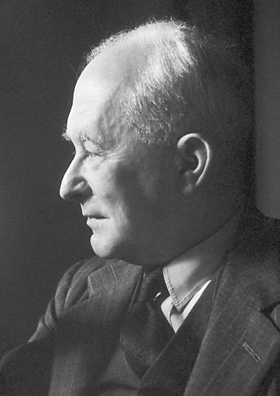

, 20 Nobel Prize laureates, with 20 awards, have been affiliated with the university as alumni, faculty members or researchers (three additional laureates acted as administrative staff), including one of the fathers of quantum mechanics Max Born, theoretical physicist Peter Higgs, Cognitive scientist Geoffrey E. Hinton (also a Turing Award winner), chemist Sir Fraser Stoddart, immunologist Peter C. Doherty, economist Sir James Mirrlees, discoverer of Characteristic X-ray (Charles Glover Barkla) and the mechanism of ATP synthesis (Peter D. Mitchell), and pioneer in cryo-electron microscopy (Richard Henderson) and in-vitro fertilisation (Sir Robert Edwards). Turing Award winners Robin Milner Leslie Valiant, and mathematician Sir Michael Atiyah, Fields Medalist and Abel Prize laureate, are associated with the university.
In the following table, the number following a person's name is the year they received the Nobel prize. In particular, a number with an asterisk (*) means the person received the award while they were working at the university (including emeritus staff). A name underlined implies that this person has been listed previously (i.e., multiple affiliations).
| Category | Alumni | Long-term academic staff | Short-term academic staff |
|---|---|---|---|
| *Physics (5)* | |||
| *Chemistry (6)* | |||
| *Physiology or Medicine (7)* | |||
| *Economics (1)* | |||
| *Peace (1)* |
Heads of state and government
.jpg)
| Leader | State/government | Office | |||||
|---|---|---|---|---|---|---|---|
| Harini Amarasuriya | *Sri Lanka* | Prime Minister (2024–) | |||||
| Hastings Banda | *Malawi* | Prime Minister (1964–1966), President (1966–1994) | |||||
| Sir Robert Black{{cite news | last=Keatley | first=Patrick | date=23 November 1999 | title=Sir Robert Black – Tough Scot sorting out the end of Britain's empire | access-date=21 November 2021 | work=The Guardian}} | *Singapore Colony of Singapore* |
| *British Hong Kong* | Governor (1958–1964) | ||||||
| Sir Thomas Brisbane | *New South Wales* | Governor (1821–1825) | |||||
| Gordon Brown | *United Kingdom* | Prime Minister (2007–2010) | |||||
| Chang Taek-sang (張澤相) | *South Korea* | Prime Minister (1952) | |||||
| John Crawfurd | *East India Company Colonial Singapore* | Resident (1823–1826) | |||||
| Sir Gilbert Elliott | *Corsica Anglo-Corsican Kingdom* | Viceroy (1793–1796) | |||||
| *East India Company British India* | Governor-General (1807–1813) | ||||||
| Sir Dawda Jawara | *Gambia Gambia Colony and Protectorate* | Prime Minister (1962–1965) | |||||
| *Gambia The Gambia* | Prime Minister (1965–1970), President (1970–1994) | ||||||
| Yusuf Lule | *Uganda* | President (1979) | |||||
| Fawzi Mulki | *Jordan* | Prime Minister (1953–1954) | |||||
| Lord Dunrossil | *Australia* | Governor-General (1960–1961) | |||||
| Daniel Chanis Pinzón | *Panama* | President (1949) | |||||
| Julius Nyerere | *Republic of Tanganyika* | Chief Minister (1960–1961), Prime Minister (1961–1962), President (1962–1964) | |||||
| *Tanzania* | President (1964–1985) | ||||||
| Paul Reeves | *New Zealand* | Governor-General (1985–1990) | |||||
| Lord John Russell | *United Kingdom* | Prime Minister (1846–1852; 1865–1866) | |||||
| Sir Ninian Stephen | *Australia* | Governor-General (1982-1989) | |||||
| John Swinney | *Scotland* | First Minister (2024–) | |||||
| Lord Palmerston | *United Kingdom* | Prime Minister (1855–1858; 1859–1865) | |||||
| Sir Charles Tupper | *Canada* | Prime Minister (1896) | |||||
| William Walker | *Nicaragua* | President (1856–1857) | |||||
| Yun Posun (尹潽善) | *South Korea* | President (1960–1962) |
In popular culture
The University of Edinburgh has featured prominently in a number of works of popular culture.
- The events of the Burke and Hare murders, involving Edinburgh lecturer Robert Knox and the anatomical department, have made a wide range of appearances in popular culture. They became the basis for Robert Louis Stevenson's short story The Body Snatcher (1884), and most recently in 2010 for Burke & Hare, a black comedy film starring Simon Pegg and Andy Serkis. Scenes were filmed at the old School of Anatomy.
- Many of Arthur Conan Doyle's works drew inspiration from his mentors at the university. Joseph Bell, a lecturer and surgeon famous for drawing conclusions from minute observations, became the archetype for Conan Doyle's fictional detective Sherlock Holmes. William Rutherford, Conan Doyle's physiology professor, provided the template for Professor Challenger, the protagonist of his science fiction work The Lost World (1912). Edinburgh is also Challenger's alma mater in the books.
- Dr. Fu Manchu, a fictional supervillain created by Sax Rohmer in 1912, stated that "I am a doctor of philosophy from Edinburgh, a doctor of law from Christ's College, a doctor of medicine from Harvard. My friends, out of courtesy, call me 'Doctor'." In 2010, Fu Manchu's connections with the University where he supposedly obtained a doctorate were investigated in a mockumentary by Miles Jupp (also an Edinburgh alumnus) for BBC Radio 4.
- In the movie Journey to the Center of the Earth (1959), an adaptation of Jules Verne's novel of the same name, the protagonist Sir Oliver Lindenbrook is a Professor of Geology at the university. An early scene where Lindenbrook addresses the students is filmed at the central quadrangle of Old College.
- The historical film Chariots of Fire (1981) is based on the story of Olympic runner and Edinburgh graduate Eric Liddell, and includes scenes filmed outside of Assembly Hall, New College. Liddell is played by Ian Charleson, who is also an Edinburgh alumnus.
- In the novel The Last King of Scotland (1998) by Giles Foden, the fictional protagonist Dr. Nicholas Garrigan is a medical doctor recently graduated from Edinburgh. The 2006 film of the same name stars James McAvoy in the role of Dr. Garrigan with the same background.
- In the American television show NCIS (2003–present), the chief medical examiner, Dr. Donald "Ducky" Mallard studied medicine at Edinburgh. Ari Haswari, the show's main antagonist for the first two seasons, also studied medicine at Edinburgh.
- In the novel One Day (2009), the lead characters Dexter and Emma meet at their graduation from Edinburgh. A feature film based on the book, also titled One Day and starring Anne Hathaway and Jim Sturgess was released in August 2011, with some scenes filmed at the university. In 2021, Netflix commissioned a limited series adaptation of the movie, also called One Day, with filming occurring in the grounds of Old College in 2022; the series released in February 2024.
- The BBC legal drama Garrow's Law (2009–2011) was largely filmed in Edinburgh, despite being set in London. Old College and the Playfair Library are prominently featured.
- The thriller television series Clique (2017–2019) produced by BBC Three focuses on two students at the university. The series was shot largely on location in Edinburgh, including The Meadows, Old College, and Potterrow.
- Fast & Furious 9 (2021), partly set in Edinburgh, featured scenes in and around Old College filmed in September 2019.
Notes
References
References
- "Search".
- (December 2024). "Staff Population Statistics - Data as of 20/12/2024". Human Resources, The University of Edinburgh.
- {{HESA citation
- "Edinburgh's core colours". The University of Edinburgh.
- "Opening of Edinburgh University, 1583". The University of Edinburgh.
- Moss, Michael S.. (June 2004). "Reviewed Work: The University of Edinburgh: An Illustrated History by Robert D. Anderson, Michael Lynch, Nicholas Phillipson". The English Historical Review.
- Lowrey, John. (June 2001). "From Caesarea to Athens: Greek Revival Edinburgh and the Question of Scottish Identity within the Unionist State". Journal of the Society of Architectural Historians.
- "Shanghai Ranking - The University of Edinburgh".
- (27 September 2023). "World University Rankings – University of Edinburgh". Times Higher Education.
- "The University of Edinburgh".
- "Affiliations". The University of Edinburgh.
- "Annual Report and Accounts for the Year to 31 July 2025". The University of Edinburgh.
- (24 November 2017). "University Heritage". Edinburgh World Heritage.
- (22 July 2024). "Undergraduate admissions statistics". The University of Edinburgh.
- (December 2024). "UCAS Undergraduate Sector-Level End of Cycle Data Resources 2024". UCAS.
- "New Chancellor elected". The University of Edinburgh.
- "Alumni in history". The University of Edinburgh.
- (14 May 2019). "Commemorative plaques". The University of Edinburgh.
- "Will of Bishop Robert Reid, 1557". The University of Edinburgh.
- "Charter by King James VI". The University of Edinburgh.
- Grant, Alexander. (1884). "The Story of the University of Edinburgh During Its First Three Hundred Years". Longmans, Green & Co..
- Horner, Winifred Bryan. (1993). "Nineteenth-century Scottish Rhetoric: The American Connection". Southern Illinois University Press.
- "University of Edinburgh". Encyclopædia Britannica.
- (1 January 2005). "Charters of Foundation and Early Documents of the Universities of the Coimbra Group". Leuven University Press.
- "Our History – Robert Rollock (1555-1599)". The University of Edinburgh.
- Wormald, Jenny. (1983). "Court, Kirk, and Community: Scotland 1470-1625". Edinburgh University Press.
- "Our History – James VI and I". The University of Edinburgh.
- "Our History – University of Edinburgh". The University of Edinburgh.
- "Our History – Purge of Episcopalian and Jacobite Staff, 1690". The University of Edinburgh.
- "To Thomas Mann Randolph, Jr. Paris, Aug. 27, 1786". University of Groningen.
- "Our History – Town Council". The University of Edinburgh.
- Mijers, Esther. (2012). "'News From the Republick of Letters': Scottish Students, Charles Mackie and the United Provinces, 1650–1750". Brill.
- "Our history". The University of Edinburgh.
- "Foundation of Chair of Rhetoric and Belles Lettres, 1760". The University of Edinburgh.
- (18 October 2011). "250th Anniversary of English Literature". The University of Edinburgh.
- Thornton, Robert. (Fall 1968). "The University of Edinburgh and the Scottish Enlightenment". Texas Studies in Literature and Language.
- Morrell, J. B.. (1971). "The University of Edinburgh in the Late Eighteenth Century: Its Scientific Eminence and Academic Structure". Isis.
- "Scottish Enlightenment". Encyclopædia Britannica.
- Nolan, J. Bennett. (1938). "Benjamin Franklin in Scotland and Ireland 1759 and 1771". University of Pennsylvania Press.
- "From Thomas Jefferson to Dugald Stewart, 21 June 1789". Founders Online.
- "Laying of Foundation Stone of Old College". The University of Edinburgh.
- "Medicine at the University of Edinburgh". The University of Edinburgh.
- (11 November 2005). "Campus curiosities 17: Tunnels". Times Higher Education.
- "Self-guided tour to Central Area". The University of Edinburgh.
- McLean, David. (14 December 2020). "This Edinburgh students' snowball fight ended with the army being sent in". The Edinburgh Evening News - The Scotsman.
- "Edinburgh Snowball Riot of 1838 – Old Weird Scotland".
- "Snowball Fights in Art (1400–1946)".
- "Our History – Universities (Scotland) Act 1858". The University of Edinburgh.
- "Edinburgh Seven". The University of Edinburgh.
- Moore, Wendy. (5 July 2019). "Trailblazing women in medicine: laurels at last for Edinburgh Seven". Lancet.
- "First Graduation of Female Students, 1893". The University of Edinburgh.
- McCullins, Darren. (16 November 2018). "Sophia Jex-Blake: The battle to be Scotland's first female doctor". BBC News.
- (10 September 2015). "'Edinburgh Seven' honoured with plaque in Edinburgh". BBC News.
- (6 July 2019). "Pioneering Edinburgh Seven students awarded honorary degrees". The Herald.
- "Our History – Medical School". The University of Edinburgh.
- "Opening of New Medical School, 1884". The University of Edinburgh.
- (17 August 2017). "William McEwan". The University of Edinburgh.
- "Opening of McEwan Hall, 1897". The University of Edinburgh.
- "Foundation of Students' Representative Council, 1884". The University of Edinburgh.
- Wintersgill, Donald. (8 October 2009). "Bell, Robert Fitzroy (1859–1908)".
- "Opening of University Union, 1889". The University of Edinburgh.
- "Our History – Edinburgh University Women's Union". The University of Edinburgh.
- "Foundation of Edinburgh University Students' Association, 1973". The University of Edinburgh.
- Catto, Iain. (1 January 1989). "'No spirits and precious few women': Edinburgh University Union 1889-1989". Edinburgh University Union.
- "Our History – King's Buildings". The University of Edinburgh.
- (2024-05-20). "The King's Buildings History Exhibition {{!}} College of Science & Engineering".
- "Foundation of New College, 1846". The University of Edinburgh.
- "Faculty of Divinity". The University of Edinburgh.
- Brown, Stewart J.. (1 July 1996). "Disruption to Diversity: Edinburgh Divinity 1846-1996". Bloomsbury Publishing.
- (14 October 2020). "Merger of New College and University Faculty of Divinity". New College Past, Present & Future.
- (23 June 2015). "The Polish School of Medicine at the University of Edinburgh (1941-1949)". The University of Edinburgh.
- "Foundation of Polish School of Medicine, 1941". The University of Edinburgh.
- "The Polish School of Medicine". Polish-Scottish Heritage.
- "William Dick – a pioneer of veterinary education". The University of Edinburgh.
- "Integration of Royal (Dick) Veterinary College, 1951". The University of Edinburgh.
- "Royal (Dick) Veterinary College - Our History".
- Yarwood, Dianne. (2024-01-11). "Carter, Gladys Beaumont (1887–1959), midwife and nurse". Oxford University Press.
- (5 October 1960). "Edinburgh's student roll now 7,400". The Herald.
- (24 November 2017). "George Square". Edinburgh World Heritage.
- "Merger with Moray House Institute of Education, 1998". The University of Edinburgh.
- (1 August 2019). "School of Education name change honours sport". College of Arts, Humanities and Social Sciences.
- "Royal Infirmary of Edinburgh". The Gazetteer for Scotland.
- "Opening of New Medical School, 2002". The University of Edinburgh.
- Donnelly, Brian. (27 June 2007). "Hotel chain's founder gives cash for motor neurone centre". The Herald.
- Anderson, Barry. (4 October 2011). "Motor neurone sufferer gives £1m to create research centre". The Scotsman.
- (31 August 2010). "JK Rowling gives £10m for Edinburgh MS centre". BBC News.
- (8 October 2013). "JK Rowling's MS clinic is officially opened at Edinburgh University". BBC News.
- (28 May 2012). "Princess Royal opens Scottish Centre for Regenerative Medicine". BBC News.
- "Scottish Centre for Regenerative Medicine". Health Science Scotland.
- Seenan, Gerard. (9 December 2002). "Fire devastates Edinburgh's Old Town". The Guardian.
- "Fire Damage to School of Informatics, 2002". The University of Edinburgh.
- (6 December 2002). "Royal launch for cancer centre". BBC News.
- (26 November 2007). "Experts join up for cancer fight". BBC News.
- "Roslin Institute – History". Roslin Institute.
- "Opening of Easter Bush Veterinary Campus, 2011". The University of Edinburgh.
- (9 July 2011). "New home for Roslin Institute". Veterinary Record.
- "Merger with Edinburgh College of Art, 2011". The University of Edinburgh.
- "ECA merger". The University of Edinburgh.
- Morris, Bridget. (21 October 2017). "Edinburgh University teams up with Chinese in joint campus venture". The National.
- "Historical Timeline". Zhejiang University.
- (27 June 2019). "Balance for Better – Teaching Matters". The University of Edinburgh.
- "Wikimedian in Residence". The University of Edinburgh.
- "HOME". The Edinburgh and South East Scotland City Region Deal.
- "Official website". Data-Driven Innovation.
- Forsdick, Sam. (13 August 2018). "Edinburgh's city deal bets £791m on technology". New Statesman.
- Kemp, Kenny. (19 December 2018). "First tranche of Edinburgh City Region deal investment unveiled". Scottish Business Insider.
- (21 September 2020). "New Health and Wellbeing Centre opens". The University of Edinburgh.
- (29 January 2021). "Edinburgh Futures Institute at Quartermile". The University of Edinburgh.
- "Ethos". Edinburgh Futures Institute.
- Johnstone, Neil. (4 June 2024). "Edinburgh Futures Institute: First look at Quartermile building following multi-million-pound restoration".
- "Samuel Bard (1742-1821) - Our History".
- "History and Tradition". Dalhousie University.
- "George Ramsay, 9th Earl of Dalhousie". Dictionary of Canadian Biography Online.
- White, Paul Dudley. (June 1973). "Review of 'Dartmouth Medical School: The First 176 Years'". The New England Quarterly.
- (August 2006). "Benjamin Waterhouse". American Journal of Roentgenology.
- Cruess, Richard L.. (26 November 2007). "Brief history of Medicine at McGill". Mcgill University.
- (8 March 1996). "McGill Medicine, Volume 1: The First Half Century, 1829-1885". McGill-Queen's University Press.
- "School of Medicine: A Brief History, University of Pennsylvania University Archives". University of Pennsylvania.
- Rosner, Lisa. (1 April 1992). "Thistle on the Delaware: Edinburgh Medical Education and Philadelphia Practice, 1800–1825". Social History of Medicine.
- "Edinburgh and the USA". The University of Edinburgh.
- (26 November 2013). "John Witherspoon". Princeton University.
- Michael Turner. (February 2010). "Mystery on the Yorkshire Moors: the humble origins of a great man". Sydney University Museums NEWS, Issue 20.
- "Edinburgh's Links to the USA". The University of Edinburgh.
- "200 Years of Internal Medicine at Yale".
- "Campus maps". The University of Edinburgh.
- (3 July 2020). "St Cecilia's Hall – About The Museum". St Cecilia's Hall Concert Room and Music Museum.
- (23 July 2019). "Edinburgh Festival Fringe". The University of Edinburgh.
- (25 March 2019). "Pollock Halls". The University of Edinburgh.
- Lourie, Emma. (10 November 2019). "John McIntyre Conference Centre celebrates a decade in business". The Edinburgh Reporter.
- "Holyrood Campus – buildings and opening hours". The University of Edinburgh.
- "St Leonard's Land building profile". The University of Edinburgh.
- (12 April 2017). "Halls given royal seal of approval". The University of Edinburgh.
- "Outreach Centre building profile". The University of Edinburgh.
- "Institute for Academic Development". The University of Edinburgh.
- "Edinburgh Centre for Professional Legal Studies". Edinburgh Law School.
- "Self-guided tour to King's Buildings". The University of Edinburgh.
- (3 October 2012). "Noreen and Kenneth Murray Library Open to Students". Austin-Smith:Lord.
- "University of Edinburgh Noreen & Kenneth Murray Library". Austin-Smith:Lord.
- "SRUC Campuses {{!}} King's Buildings, Edinburgh".
- (2024-09-10). "About King's Buildings".
- "Map Development".
- (18 May 2020). "History of the Institute". The University of Edinburgh.
- (7 March 1996). "Sheep cloned by nuclear transfer from a cultured cell line". Nature.
- Firn, David. (March 1999). "Roslin Institute upset by human cloning suggestions". Nature Medicine.
- "Cloning of Dolly the Sheep, 1996". The University of Edinburgh.
- (2022-09-26). "Sites {{!}} Edinburgh Clinical Research Facility".
- (2024-09-23). "Institute of Genetics and Cancer".
- "University Court". The University of Edinburgh.
- "General Council". The University of Edinburgh.
- (2024-07-29). "Conduct of Senate Business".
- "''Senatus Academicus''". The University of Edinburgh.
- (2024-07-29). "Agendas, papers and minutes".
- "Universities (Scotland) Act 1858".
- "Universities (Scotland) Act 1858 - Our History".
- (14 May 2019). "The Chancellor". The University of Edinburgh.
- (2011-04-04). "Princess Anne becomes Edinburgh University chancellor". BBC News.
- (2024-11-12). "The Chancellor {{!}} People".
- "The role of Principal and Vice-Chancellor". The University of Edinburgh.
- "Principal and Vice-Chancellor". The University of Edinburgh.
- (March 2021). "The Rector". The University of Edinburgh.
- (2024-02-12). "Activist Simon Fanshawe named as University of Edinburgh rector". BBC News.
- "Reconstitution of Faculties into Colleges, 2002". The University of Edinburgh.
- (20 May 2019). "Colleges and schools". The University of Edinburgh.
- (28 July 2016). "College renamed to reflect growth in arts". The University of Edinburgh.
- "Undergraduate degree finder".
- "Postgraduate degree finder".
- (10 September 2021). "Teaching and learning". The University of Edinburgh.
- "QS World University Rankings by Subject 2021: English Language and Literature". Quacquarelli Symonds Ltd..
- (September 2021). "Staff Headcount & Full Time Equivalent Statistics (FTE) as at Sep-21". Human Resources, The University of Edinburgh.
- (11 August 2021). "Factsheet of Student Figures". Strategic Planning, The University of Edinburgh.
- Eddy, Matthew D.. (15 November 2016). "The Language of Mineralogy: John Walker, Chemistry and the Edinburgh Medical School, 1750–1800". Routledge.
- "College Overview". The University of Edinburgh.
- Stuart-Harris, C. H.. (1965-05-01). "Sir Francis Fraser". Heart.
- "Buildings For Training Nurses, Doctors… and Mothers! {{!}} Historic England".
- (6 November 2019). "Nobel Prizes". University of Edinburgh.
- (17 September 2021). "Best universities for medicine: The Times league table". The Times.
- (11 September 2021). "University guide 2021: Medicine". The Guardian.
- (2021). "QS World Rankings by Faculty Life Science/Medicine".
- "About The Royal". NHS Lothian's Medical Education Directorate.
- (5 December 2019). "Western General Hospital". The University of Edinburgh.
- "About Child Life and Health".
- "About the College". The University of Edinburgh.
- (30 March 2021). "Sub-units, centres and institutes". The University of Edinburgh.
- "Annual Report and Accounts for the Year to 31 July 2024". The University of Edinburgh.
- (3 April 2025). "Staff Population Statistics".
- [https://support-for-researchers.ed.ac.uk/getting-started/community-networking Community & Networking] {{Webarchive. link. (27 September 2023 . Official site.)
- [https://support-for-researchers.ed.ac.uk/getting-started/community-networking/research-staff-societies Current Research Staff Societies] {{Webarchive. link. (27 September 2023 . Official site.)
- [https://support-for-researchers.ed.ac.uk/getting-started/community-networking/research-networks University Research Networks & Centres] {{Webarchive. link. (27 September 2023 . Official site.)
- [https://equality-diversity.ed.ac.uk/edi-groups/edic-thematic-subcommittees Equality, Diversity and Inclusion Committee (EDIC)]. Official site.
- [https://support-for-researchers.ed.ac.uk/getting-started/community-networking/staff-networks Staff Networks] {{Webarchive. link. (27 September 2023 . Official site.)
- [https://www.ed.ac.uk/equality-diversity/edi-groups/disabled-staff-network Disabled Staff Network] {{Webarchive. link. (23 September 2023 .)
- "Staff BAME Network".
- [https://blogs.ed.ac.uk/eren/ Edinburgh Race Equality Network] {{Webarchive. link. (28 September 2023 ,)
- [https://equality-diversity.ed.ac.uk/edi-groups/jewish-staff-network Jewish Staff Network] {{Webarchive. link. (16 July 2024 .)
- (3 June 2020). "Contacts and Committee".
- [https://www.ucu.org.uk/ University & College Union] {{Webarchive. link. (6 September 2023 .)
- [https://www.ucuedinburgh.org.uk/ UCU] {{Webarchive. link. (28 September 2023 .)
- (28 June 2021). "IAD4RESEARCHERS".
- [https://www.ed.ac.uk/technicians Support for Technicians] {{Webarchive. link. (22 August 2024 .)
- "Technician Steering Committee".
- "Marking and Assessment Boycott FAQs".
- (2023-05-10). "University of Edinburgh staff condemn marking boycott response". BBC News.
- (2023-08-04). "University of Edinburgh pauses pay deductions as strike action called off".
- "More strike action to hit universities as employers refuse to negotiate".
- (2023-09-07). "Industrial Action 2023/24".
- Paterson, Kirsteen. (18 November 2024). [https://www.holyrood.com/news/view,edinburgh-university-issues-redundancies-warning 'Edinburgh University issues redundancies warning']. ''[[Holyrood (magazine)]]''.
- [https://www.ucu.org.uk/article/13929/Edinburgh-university-principal-announces-university-planning-140million-of-cuts 'Edinburgh university principal announces university planning £140 million of cuts']. 26 February 2025.''[[University and College Union]]''
- [https://www.bbc.co.uk/news/articles/cp8y64ggp0zo 'Edinburgh Uni staff ready to strike over cuts - union']. 17 March 2025. ''[[BBC]]''.
- Malizia, Nicholas. (16 March 2025). [https://www.edinburghlive.co.uk/news/edinburgh-news/scots-university-bosses-slammed-over-31210539 'Scots university bosses slammed over "enormous" salaries as staff face the axe']. ''[[Reach plc. Edinburgh Live]]''.
- "Strike dates set at Edinburgh University in dispute over cuts and job losses".
- (2025-10-28). "Edinburgh university staff back industrial action again in longstanding dispute over cuts and redundancies". [[University and College Union]].
- Calder, Jamie. (28 October 2025). [https://thetab.com/2025/10/28/breaking-edinburgh-university-staff-vote-in-favour-of-continued-strike-action 'Edinburgh University staff vote in favour of continued strike action']. ''[[The Tab]]''.
- (20 September 2007). "Old school 'key to student place'". BBC News.
- "European Universities Initiative launches UNA Europa". The University of Edinburgh.
- "The University of Edinburgh Online Courses".
- "EdinburghX – Free online courses from The University of Edinburgh".
- (10 June 2025). "Complete University Guide 2026 – Entry Standards".
- "HE student enrolments by HE provider, permanent address, level of study, mode of study, entrant marker, sex and academic year". [[Higher Education Statistics Agency.
- (3 April 2025). "Who's studying in HE?: Personal characteristics". [[Higher Education Statistics Agency.
- (24 September 2024). "Good University Guide: Social Inclusion Ranking". [[The Times]].
- (8 January 2020). "Sex, area background and ethnic group: E56 The University of Edinburgh". UCAS.
- "Scotland and EU tuition fee status admissions statistics". The University of Edinburgh.
- "Rest of UK (England, Wales and Northern Ireland) tuition fee status admissions statistics". The University of Edinburgh.
- "Overseas (Non-EU) tuition fee status admissions statistics". The University of Edinburgh.
- "Widening participation: UK Performance Indicators 2019/20". Higher Education Statistics Authority.
- (2024-11-12). "Graduations {{!}} Events".
- "Edinburgh Graduations – The real story behind the 'Geneva bonnet'". The University of Edinburgh.
- Thomson, Sarah. (2024-05-16). "Before Harry Potter's Sorting Hat, There Was the 'Medieval Space Bonnet'".
- "Omniana". The University of Edinburgh.
- (18 July 2000). "Gently does it with hat used on 100,000 students". The Herald.
- Luscombe, Richard. (25 June 2006). "One small step for John Knox, one giant leap for university". Scotland on Sunday.
- "Bequest of Clement Litill's Library, 1580". Our History.
- Sturges, Paul. (1983). "Edinburgh University Library 1580-1980: A Collection of Historical Essays by Jean R. Guild, Alexander Law". The Journal of Library History.
- "Our History – Main Library". The University of Edinburgh.
- (2024-06-24). "Where can I go?".
- (2024-06-24). "Eligibility".
- "2025/2026 Exchange Destinations". The University of Edinburgh.
- "Notes of Guidance for University of California". The University of Edinburgh.
- (12 May 2022). "REF 2021: Quality ratings hit new high in expanded assessment".
- (11 May 2022). "REF 2021 Main Online Table".
- (11 May 2022). "Research rankings confirm Edinburgh as world leader".
- (6 November 2015). "Global Employability University Ranking 2015 results". Times Higher Education.
- "A qualitative evaluation of non-educational barriers to the elite professions". Social Mobility and Child Poverty Commission.
- (25 October 2012). "What the job market wants". The New York Times.
- "ARTU 2021". University of New South Wales.
- (26 October 2021). "2022 Best Global Universities Rankings". U.S. News & World Report.
- (12 November 2022). "World Reputation Rankings 2022". Times Higher Education.
- "University Rankings 2021". SCImago Institutions Rankings.
- Turner, Camilla. (9 August 2017). "Two of Britain's leading universities fall well below benchmark for student satisfaction, survey finds". The Telegraph.
- "Edinburgh University worst for teaching". The Sunday Times.
- "Good University Guide 2015 – University of Edinburgh". The Times.
- (18 September 2020). "Good University Guide 2021 – University of Edinburgh". The Times.
- (8 June 2021). "Complete University Guide 2022 – University of Edinburgh". The Complete University Guide.
- (2023-09-09). "The Guardian University Guide 2024 – the rankings".
- "World University Rankings by Subject". Times Higher Education.
- "QS World University Rankings by Subject 2023".
- "CSRankings: Computer Science Rankings".
- (24 November 2017). "Teviot Row House". Edinburgh World Heritage.
- "Edinburgh University Students' Association".
- "Become a member".
- "EUSA: Diagnostic Society of Edinburgh".
- (2024-04-11). ""Obnoxiously posh": The Student investigates the Diagnostic Society".
- (10 February 2008). "Edinburgh festival news and reviews". The Guardian.
- Oakeley, Edward Murray. (1 January 1904). "The Life of Sir Herbert Stanley Oakeley". University of California Libraries.
- "History". Edinburgh University Music Society.
- "Theatrical Gossip". The Era.
- "Fringe 2013 – Bedlam Theatre, Venue 49". Bedlam Fringe.
- "The Improverts – Edinburgh Fringe 2010 – British Comedy Guide". British Comedy Guide.
- "The Improverts". The Edinburgh Festival Fringe Society.
- "Bedlam Theatre - Notable Alumni".
- (1 October 2020). "About". Edinburgh Studio Opera.
- "About us". Edinburgh University Savoy Opera Group.
- "About Footlights".
- "About Footlights". The Edinburgh University Footlights.
- "InTheatre Productions".
- "Theatre Paradok – About us". Edinburgh University Students' Association.
- "About us". The Student.
- Vavasour, Harry. (13 October 2018). "Exclusive: Gordon Brown speaks to The Student". The Student.
- Curtis, Polly. (24 May 2002). "Edinburgh Student newspaper folds". The Guardian.
- (3 September 2015). "The Journal Served with Winding-up Petition". Winding Up Petition Solicitors.
- (24 November 2004). "It's a breeze as Fresh Air is voted best student radio". The Scotsman.
- "Television Society – About us". Edinburgh University Students' Association.
- "Sports Clubs". Edinburgh University Sports Union.
- (26 August 2015). "A renewed rivalry". The University of Edinburgh.
- (19 May 2015). "World's oldest varsity match returns to Scotland". The Herald.
- "Edinburgh Glasgow Boat Race". Walter Scott & Partners Limited.
- (12 August 2012). "Edinburgh tops university medals table". The Daily Telegraph.
- "About us". Edinburgh Global Partnerships.
- (1 April 2012). "EUSA democracy abolished in massive coup". The Journal.
- [https://www.eusa.ed.ac.uk/adviceplace/wellbeing/generalhealth/lgbthealth 'LGBTQ+ Health and Wellbeing'] {{Webarchive. link. (28 September 2023 . [[Edinburgh University Students' Association). EUSA]].
- "Statement on Palestine". [[Edinburgh University Students' Association]].
- (16 September 2011). "Protest students occupy Edinburgh University hall". BBC News.
- (17 December 2010). "Appleton Tower comes under occupation". The Student.
- (26 September 2011). "Students disrupt royal visit in protest over tuition fees". STV News.
- (5 April 2016). "Edinburgh University student protesters occupy building over fossil fuel divestment". The Independent.
- (14 May 2015). "Students vow to continue occupation over fossil fuels". Edinburgh Evening News.
- Learmonth, Andrew. (22 May 2015). "Security guard charged after protest clash". The National.
- Williams, Craig. (8 May 2024). [https://www.heraldscotland.com/news/24306084.edinburgh-students-hunger-strike-gaza-protest/ 'Edinburgh students on hunger strike in Gaza protest'] {{Webarchive. link. (22 August 2024 . ''[[The Herald (Glasgow)). The Herald]]''.
- Jackson, Lucy. (10 May 2024). [https://www.thenational.scot/news/24311552.hundreds-staff-demand-edinburgh-university-sever-ties-israel/ 'Hundreds of staff demand Edinburgh University sever ties with Israel'] {{Webarchive. link. (25 May 2024 . ''[[The National (Scotland)). The National]]''.
- Kerr, Simeon. (17 May 2024). "Edinburgh student hunger strikers demand university divests over Gaza 'complicity'". [[Financial Times]].
- [https://www.ed.ac.uk/news/2024/old-college-protest-a-statement-from-the-principal 'Old College protest: a statement from the Principal'] {{Webarchive. link. (25 May 2024 . [[Peter Mathieson (nephrologist)). Sir Peter Mathieson]]. ''The University of Edinburgh''.
- "Update on student protests and the University's investments".
- Coleman, Angus. (16 May 2024). [https://www.edinburghlive.co.uk/news/edinburgh-news/edinburgh-university-bosses-to-look-29182171 'Edinburgh University bosses "to look at investments" in wake of Gaza protests'] {{Webarchive. link. (27 June 2024 . ''[[Edinburgh Evening News]]''. Scotland.)
- (2024-05-09). "Views sought on responsible investment".
- Sabbatical Officer Team 2024/25. (31 March 2025). [https://www.eusa.ed.ac.uk/newsandblogs/article/Responseviolenceduringprotestoncampus 'Response to the violence during protest on campus']. [[Edinburgh University Students' Association]].
- (2025-09-24). "Drunk Edinburgh knifeman jailed for slashing student across face at protest".
- (22 January 2014). "100 flats at £250 a month: Co-op housing project moves closer to goal". The Student.
- "About us". Hearty Squirrel Food Cooperative.
- "About us". SHRUB Coop.
- "Scotland Co-op List". Students for Cooperation.
- (31 May 2013). "Joseph Lister (1827–1912)". National Records of Scotland.
- Bellhouse, D. R.. (February 2004). "The Reverend Thomas Bayes, FRS: A Biography to Celebrate the Tercentenary of His Birth". Institute of Mathematical Statistics.
- "Adam Smith, 1723–1790". The History of Economic Thought.
- "Who was James Clerk Maxwell?". James Clerk Maxwell Foundation.
- (2 February 2016). "Charles Darwin (1809–1882)". The University of Edinburgh.
- Mann, Rosemary. (7 June 2019). "Darwin in Edinburgh 1825–1827". National Museum of Scotland.
- "Prof. Peter Guthrie Tait 1831–1901". Gazetteer for Scotland.
- (24 August 2016). "James Hutton (1726–1797)". The University of Edinburgh.
- "Richard Bright (b.September 1789 d.16 December 1858)". Royal College of Physicians Museum.
- (2006). "Edward Schafer (1850-1935) and artificial respiration". Journal of Medical Biography.
- (2006). "William Hewson (1739-74): The father of haematology". British Journal of Haematology.
- (1983). "Robert Willan remembered". Journal of the American Academy of Dermatology.
- (2016). "Epigenetics: The origins and evolution of a fashionable topic". Developmental Biology.
- (4 March 2024). "Colloid | Definition & Facts | Britannica".
- (13 August 2015). "Notable alumni – Robert Brown". School of Biological Sciences.
- Doyle, W. P.. "Joseph Black (1728–1799)". School of Chemistry.
- "Magnesium - Element information, properties and uses | Periodic Table".
- (16 October 2015). "James Young Simpson". The University of Edinburgh.
- (24 January 2014). "Sir Kenneth Murray leaves millions in will". BBC News.
- (1972). "P. Cygnus X-1—a Spectroscopic Binary with a Heavy Companion?". Nature.
- Gauntlett, Jerome. (29 June 2016). "Thomas Kibble (1932–2016)". Nature.
- (24 March 2021). "Sir Thomas Walter Bannerman Kibble. 23 December 1932–2 June 2016". Biographical Memoirs of Fellows of the Royal Society.
- (2025-12-18). "What's so special about the Higgs boson?".
- (2014-03-13). "Brief History of the Higgs Mechanism".
- (1987). "John Turton Randall, 23 March 1905 - 16 June 1984". Biographical Memoirs of Fellows of the Royal Society.
- Wisniak, Jaime. (July 2015). "Smithson Tennant". Educación Química.
- (9 February 2017). "Daniel Rutherford (3 November 1749 – 15 November 1819)". Royal College of Physicians of Edinburgh.
- (16 February 2024). "Thomas Charles Hope, MD, FRSE, FRS (1766-1844)". The University of Edinburgh.
- (11 Jan 2021). "Winner of 2020 Being Edinburgh Award". The University of Edinburgh.
- (29 June 2016). "Robert Stirling (1790-1878)".
- (23 March 2021). "John Randall and the Cavity Magnetron".
- Campbell-Kelly, Martin. (23 May 2010). "John Shepherd-Barron obituary". The Guardian.
- "The History of the Refrigerator".
- Bock, Benedikt. (18 August 2014). "Lecturers & Authors – John Scott Haldane". The Gifford Lectures.
- "Gregory, James, 1753-1821 (Professor of medicine, University of Edinburgh) | University of Edinburgh Archive and Manuscript Collections".
- (28 April 2021). "Alexander Wood (1817–1884)". The University of Edinburgh.
- (9 February 2017). "Alexander Wood (10 December 1817 – 26 February 1884)". Royal College of Physicians of Edinburgh.
- "Our History – Sir David Brewster (1781–1868)". The University of Edinburgh.
- MacPherson, Hamish. (20 October 2019). "A tribute to Scottish inventor John Boyd Dunlop". The National.
- "Alexander Graham Bell: Biography". Undiscovered Scotland.
- "Sir James Dewar (1842–1923)". Kincardine Local History Group.
- (13 May 2015). "Benjamin Rush". The University of Edinburgh.
- "A Biography of James Wilson (1742–1798)". University of Groningen.
- (17 November 2020). "John Witherspoon (1723–1794)". The University of Edinburgh.
- (23 October 2017). "Ian Charleson (1949–1990)". The University of Edinburgh.
- (16 October 2015). "Robert Adam". The University of Edinburgh.
- (13 May 2019). "William Henry Playfair". The University of Edinburgh.
- (August 2019). "Notable alumni – Piers Sellers". School of Biological Sciences.
- "Home {{!}} Adrian Bird Lab". University of Edinburgh.
- Carter, Richard. (15 July 2012). "Sir Richard Owen: the archetypal villain". The Friends of Charles Darwin.
- (9 September 2008). "Autobiography of Ian Wilmut". The Shaw Prize Foundation.
- "Kenneth E. Boulding, 1910–1993". The History of Economic Thought.
- (13 May 2015). "Thomas Carlyle". The University of Edinburgh.
- "Biographies of the Justices". The Supreme Court of the United Kingdom.
- "Edinburgh Law School alumni appointed to top positions in UK Supreme Court". Edinburgh Law School.
- Atiyah, Michael. (1 November 1976). "William Vallance Douglas Hodge, 17 June 1903 – 7 July 1975". The Royal Society.
- "Our History – Colin Maclaurin (1698–1746)". The University of Edinburgh.
- "Sir Edmund Taylor Whittaker (1873-1956)". The University of Edinburgh.
- "Our History – Adam Ferguson (1723–1816)". The University of Edinburgh.
- (22 April 2016). "David Hume (1711–1776)". The University of Edinburgh.
- (2004). "Thomas Addison (1793-1860)". Journal of the Royal Society of Medicine.
- Doyle, W. P.. "William Cullen (1710–1790)". School of Chemistry.
- (2005). "Thomas Hodgkin: medical immortal and uncompromising idealist". Proceedings (Baylor University. Medical Center).
- (19 October 2016). "James Lind (1716 – 1794)". The University of Edinburgh.
- Mitchell, Hilary. (21 January 2019). "'A true inspiration': the extraordinary life of legendary Edinburgh pilot Eric 'Winkle' Brown". Edinburgh Live.
- (9 January 2018). "James Barry (1795–1865)". The University of Edinburgh.
- "Joseph Bell". The Royal College of Surgeons of Edinburgh.
- "Robert Liston". The Royal College of Surgeons of Edinburgh.
- "Basant Kumar Misra, President NSI 2008". Neurological Society of India.
- (13 May 2015). "Sir Patrick Geddes". The University of Edinburgh.
- "David Bloor". The University of Edinburgh.
- (30 August 2019). "J M Barrie (1860–1937)". The University of Edinburgh.
- (16 October 2015). "Sir Arthur Conan Doyle". The University of Edinburgh.
- "Arthur Conan Doyle: Biography". The Sir Arthur Conan Doyle Literary Estate.
- (17 September 2021). "Sir Walter Scott (1771–1832)". The University of Edinburgh.
- (31 August 2017). "Robert Louis Stevenson (1850–1894)". The University of Edinburgh.
- Bridges, Edward. (1 November 1958). "John Anderson, Viscount Waverley, 1882–1958". The Royal Society.
- (17 February 1863). "Death of Lord Lansdowne.". The New York Times.
- "Robin Cook (1946—2005) politician". Oxford Reference.
- (10 May 2005). "Profile: Sir Malcolm Rifkind". BBC News.
- (26 August 2020). "Eric Liddell (1902–1945)". The University of Edinburgh.
- (17 April 2019). "Max Born". The University of Edinburgh.
- "Award of Nobel Prize to Peter Higgs, 2013". The University of Edinburgh.
- "Nobel Prizes". The University of Edinburgh.
- "Max Born – Biographical". Nobel Foundation.
- "Peter Higgs – Biographical". Nobel Foundation.
- Haigh, Thomas. "Geoffrey E Hinton: Canada – 2018". Association for Computing Machinery.
- "The Nobel Prize in Physics 2024".
- "Sir J. Fraser Stoddart – Biographical". Nobel Foundation.
- "Peter C. Doherty – Biographical". Nobel Foundation.
- "James A. Mirrlees – Biographical". Nobel Foundation.
- "Charles Glover Barkla – Biographical". Nobel Foundation.
- "Peter Mitchell – Biographical". Nobel Foundation.
- "Richard Henderson – Biographical". Nobel Foundation.
- "Robert G. Edwards – Biographical". Nobel Foundation.
- Fourman, Michael. "Arthur John Robin Gorell: United Kingdom – 1991". Association for Computing Machinery.
- "Leslie Gabriel Valiant: United States – 2010". Association for Computing Machinery.
- Hitchin, Nigel. (2 September 2020). "Sir Michael Atiyah OM. 22 April 1929 – 11 January 2019". The Royal Society.
- "Dr Harini Amarasuriya elected as MP in Sri Lanka {{!}} IASH".
- "Former Fellow becomes Prime Minister of Sri Lanka {{!}} IASH".
- McCracken, John. (2017). "Hastings Kamuzu Banda: the Edinburgh Years". Society of Malawi – Historical and Scientific.
- "Hastings Banda". UncoverED.
- (19 January 2017). "Thomas Brisbane (1773–1860)". The University of Edinburgh.
- "The Rt Hon Gordon Brown".
- Hoare, James E.. (2004). "Historical Dictionary of the Republic of Korea". Rowman & Littlefield.
- "Dr. John Crawfurd 1783–1868". Gazetteer for Scotland.
- "Gilbert Elliot-Murray-Kynynmound (1st Earl of Minto) 1751–1814". Gazetteer for Scotland.
- (2008). "Historical Dictionary of The Gambia". The Scarecrow Press.
- (30 April 2021). "Uncovering University of Edinburgh's black history". The University of Edinburgh.
- Harris M. Lentz. (4 February 2014). "Heads of States and Governments Since 1945". The Routledge.
- "Letters of William Shepherd Morrison, 1st Viscount Dunrossil (1893–1961) to his brother, Dr. Donald John Morrison, and other items". The University of Edinburgh.
- Harris M. Lentz. (4 February 2014). "Heads of States and Governments Since 1945". The Routledge.
- (24 June 2015). "Julius Kambarage Nyerere". The University of Edinburgh.
- "Julius Nyerere". UncoverED.
- "1993". The University of Edinburgh.
- "Lord John Russell (Earl Russell), 1792–1878". The Liberal Democrat History Group.
- "1988: IASH at 50". Institute for Advanced Studies in the Humanities.
- "Deputy First Minister".
- (28 June 2017). "Viscount Palmerston (1784–1865)". The University of Edinburgh.
- (21 February 2008). "Sir Charles Tupper". The Canadian Encyclopedia.
- Bass, John M.. (1898). "William Walker". The American Historical Magazine.
- (5 December 2018). "Yun Posun (1897–1990)". The University of Edinburgh.
- "5 Things You Didn't Know About Burke & Hare".
- "Filmed Here: Burke and Hare". Film Edinburgh.
- "Key Object Page - Surgeons' Hall Museums, Edinburgh".
- Smith, Kenny. (2019-07-26). "The Scot who inspired the creation of Sherlock Holmes".
- Pollock, Donald K.. "An Arthur Conan Doyle Character - Professor Challenger".
- Richards, Stewart. (1986-05-01). "Conan Doyle's 'challenger' unchampioned: William Rutherford, F. R. S. (1839-99), and the origins of practical physiology in Britain". Notes and Records of the Royal Society of London.
- (17 April 2010). "Mysteries of super villain's city past revealed". The Scotsman.
- "Fu Manchu in Edinburgh". BBC Radio 4 Extra.
- "Journey to The Center Of The Earth (1959) filming location: Sir Oliver addresses the students". British Film Locations.
- (13 April 2016). "Edinburgh on screen".
- (1990). "For Ian Charleson: A Tribute". Constable and Company.
- (2015-04-02). "Edinburgh's Fictional Alumni".
- (2015-04-02). "Edinburgh's Fictional Alumni".
- "A Profile of Ducky Mallard of NCIS". Forensic Psychology Online.
- "Filmed Here: One Day". Film Edinburgh.
- (20 July 2022). "New Netflix series One Day spotted filming 'grad ball' at Edinburgh University". edinburghlive.
- Singh, Anita. (2024-02-06). "One Day, review: a bingeable, sentimental romance with all the depth of a puddle". The Telegraph.
- "Garrow's Law Film Locations in Edinburgh". Forever Edinburgh.
- "Clique Moves to BBC One". Film Edinburgh.
- (9 November 2018). "Edinburgh streets to feature in second series of BBC's Clique". Edinburgh Evening News.
- (20 September 2019). "Fast and Furious 9: Police called as drone used in filming crashes at University of Edinburgh set". Edinburgh Evening News.
This article was imported from Wikipedia and is available under the Creative Commons Attribution-ShareAlike 4.0 License. Content has been adapted to SurfDoc format. Original contributors can be found on the article history page.
Ask Mako anything about University of Edinburgh — get instant answers, deeper analysis, and related topics.
Research with MakoFree with your Surf account
Create a free account to save articles, ask Mako questions, and organize your research.
Sign up freeThis content may have been generated or modified by AI. CloudSurf Software LLC is not responsible for the accuracy, completeness, or reliability of AI-generated content. Always verify important information from primary sources.
Report