From Surf Wiki (app.surf) — the open knowledge base
Toyotomi Hideyoshi
Japanese samurai and daimyo (1537–1598)
Japanese samurai and daimyo (1537–1598)
| Field | Value | |
|---|---|---|
| honorific_prefix | Senior First Rank | |
| name | Toyotomi Hideyoshi | |
| native_name | 豊臣 秀吉 | |
| native_name_lang | ja | |
| nickname | "Kozaru" (little monkey) | |
| "Saru" (monkey) | ||
| "Toyokuni daimyōjin" | ||
| image | Toyotomi Hideyoshi c1598 Kodai-ji Temple.png | |
| caption | Portrait by Kanō Mitsunobu, | |
| order | Chief Advisor to the Emperor | |
| (*Kampaku*) | ||
| term_start | 6 August 1585 | |
| term_end | 10 February 1592 | |
| monarch | {{Plainlist | |
| predecessor | Nijō Akizane | |
| successor | Toyotomi Hidetsugu | |
| order2 | Chancellor of the Realm | |
| (*Daijō Daijin*) | ||
| term_start2 | 2 February 1586 | |
| term_end2 | 18 September 1598 | |
| monarch2 | Go-Yōzei | |
| predecessor2 | Konoe Sakihisa | |
| successor2 | Tokugawa Ieyasu | |
| order3 | Head of Toyotomi clan | |
| term_start3 | 1584 | |
| term_end3 | 1598 | |
| successor3 | Toyotomi Hideyori | |
| birth_name | Hiyoshimaru | |
| birth_date | 27 March 1537 | |
| birth_place | Nakamura-ku, Nagoya, Owari Province | |
| death_date | ||
| death_place | Fushimi Castle, Kyoto, Japan | |
| spouse | {{plainlist | |
| partner | Kaihime (concubine) | |
| father | Kinoshita Yaemon | |
| mother | Ōmandokoro | |
| children | {{plainlist | |
| relatives | {{plainlist | |
| allegiance | {{plainlist | |
| battles | Siege of Inabayama | |
| Siege of Kanegasaki | ||
| Battle of Anegawa | ||
| Siege of Nagashima | ||
| Battle of Ichijodani | ||
| Siege of Itami | ||
| Battle of Nagashino | ||
| Siege of Mitsuji | ||
| Battle of Tedorigawa | ||
| Siege of Miki | ||
| Siege of Tottori | ||
| Siege of Takamatsu | ||
| Battle of Yamazaki | ||
| Battle of Shizugatake | ||
| Battle of Komaki and Nagakute | ||
| Negoro-ji Campaign | ||
| Toyama Campaign | ||
| Kyūshū campaign | ||
| Odawara Campaign | ||
| Korean Campaign | ||
| *See below* | ||
| rank | *Daimyō*, *Kampaku*, *Daijō-daijin* | |
| unit | Toyotomi clan | |
| commands | Osaka Castle | |
| blank1 | Religion | |
| data1 | Shinto; Buddhism | |
| blank2 | Other names | |
| data2 | {{plainlist | |
| blank3 | Divine name | |
| data3 | Toyokuni Daimyōjin (豊国大明神) | |
| blank4 | Posthumous | |
| dharma name | ||
| data4 | Kokutai-yūshō-in-den Reizan Shunryū Daikoji (国泰祐松院殿霊山俊龍大居士) | |
| signature | Toyotomi Hideyoshi Kaou.svg | |
| module | {{Infobox Japanese | |
| kyujitai | 豐臣 秀吉 | |
| shinjitai | 豊臣 秀吉 | |
| kana | とよとみ ひでよし or とよとみ の ひでよし | |
| revhep | Toyotomi Hideyoshi *or* Toyotomi no Hideyoshi |
"Saru" (monkey) "Toyokuni daimyōjin" (Kampaku)
- Ōgimachi
- Go-Yōzei}} (Daijō Daijin)
- Nene
- Yodo-dono}}
- Hashiba Hidekatsu (adopted son)
- Toyotomi Tsurumatsu
- Toyotomi Hideyori}}
- Toyotomi Hidenaga (half-brother)
- Asahi no kata (half-sister)
- Tomo (Toyotomi) (sister)
- Toyotomi Hidetsugu (nephew)
- Konoe Sakihisa (adopted father)}}
- Oda clan
- Toyotomi clan
- Imperial Court}} Siege of Kanegasaki Battle of Anegawa Siege of Nagashima Battle of Ichijodani Siege of Itami Battle of Nagashino Siege of Mitsuji Battle of Tedorigawa Siege of Miki Siege of Tottori Siege of Takamatsu Battle of Yamazaki Battle of Shizugatake Battle of Komaki and Nagakute Negoro-ji Campaign Toyama Campaign Kyūshū campaign Odawara Campaign Korean Campaign See below
- Kinoshita Tōkichirō
- Hashiba Hideyoshi dharma name](dharma-name)
Toyotomi Hideyoshi, otherwise known as Kinoshita Tōkichirō and Hashiba Hideyoshi, was a Japanese samurai and daimyō (feudal lord) of the late Sengoku and Azuchi-Momoyama periods and regarded as the second "Great Unifier" of Japan. Although he came from a peasant background, he rose to become the most powerful man in Japan, earning the rank and title of and , the highest official position and title in the nobility class. He was the first person in history to become a Kampaku who was not born a noble. He then passed the position and title of Kampaku to his nephew, Toyotomi Hidetsugu. He remained in power as , the title of a retired Kampaku, until his death.
Hideyoshi rose from a peasant background as a retainer of the prominent lord Oda Nobunaga to become one of the most powerful men in Japanese history. He distinguished himself in many of Nobunaga's campaigns. After Nobunaga's death in the Honnō-ji Incident in 1582, Hideyoshi defeated his assassin Akechi Mitsuhide at the Battle of Yamazaki and became Nobunaga's successor. He then continued the campaign to unite Japan that led to the closing of the Sengoku period. Hideyoshi became the de facto leader of Japan and acquired the prestigious positions of daijō-daijin and kampaku by the mid-1580s. He conquered Shikoku in 1585 and Kyūshū in 1587, and completed the unification by winning the Siege of Odawara in 1590 and crushing the Kunohe rebellion in 1591. With the unification of Japan complete, Hideyoshi launched the Japanese invasions of Korea in 1592 to initial success, but eventual military stalemate damaged his prestige before his death in 1598. Hideyoshi's young son and successor Toyotomi Hideyori was displaced by Tokugawa Ieyasu at the Battle of Sekigahara in 1600 which would lead to the founding of the Tokugawa Shogunate.
Hideyoshi's rule covers most of the Azuchi–Momoyama period of Japan, partially named after his castle, Momoyama Castle. Hideyoshi left an influential and lasting legacy in Japan, including Osaka Castle, the Tokugawa class system, the restriction on the possession of weapons to the samurai (the sword hunt), and the construction and restoration of many temples, some of which are still visible in Kyoto.
Early life (1537–1558)
According to tradition, Hideyoshi was born on February 16, 1537, according to the lunar Japanese calendar (March 17, 1537, according to the Julian calendar; March 27, 1537 (Proleptic Gregorian calendar)) in Nakamura, Owari Province (present-day Nakamura Ward, Nagoya), in the middle of the chaotic Sengoku period under the collapsed Ashikaga Shogunate. Hideyoshi had no traceable samurai lineage, and his father Kinoshita Yaemon was an ashigaru – a peasant employed by the samurai as a foot soldier. Hideyoshi had no surname, and his childhood given name was Hiyoshimaru although variations exist. Yaemon died in 1543 when Hideyoshi was seven years old.
Contemporary writings from Ankokuji Ekei and Kakukane Ue, a retainer of the Shimazu clan, confirm Hideyoshi's poor background, with Ekei noting that Hideyoshi even had to beg on the street.
Many legends describe Hideyoshi being sent to study at a temple as a young man, but he rejected temple life and went in search of adventure. Under the name Kinoshita Tōkichirō, he first joined the Imagawa clan as a servant to a local ruler named .
Service under Nobunaga (1558–1582)
Main article: Battle of Okehazama, Siege of Inabayama, Siege of Kanegasaki (1570), Battle of Anegawa
In 1558, Hideyoshi became an ashigaru for the powerful Oda clan, the rulers of his home province of Owari, now headed by the ambitious Oda Nobunaga. Hideyoshi soon became Nobunaga's sandal-bearer, a position of relatively high status. According to his biographers, Hideyoshi also supervised the repair of Kiyosu Castle, a claim described as "apocryphal", and managed the kitchen.
In 1561, Hideyoshi married One, the adopted daughter of Asano Nagakatsu, a descendant of Minamoto no Yorimitsu. Hideyoshi carried out repairs on Sunomata Castle with his younger half-brother, Hashiba Koichirō, along with Hachisuka Masakatsu, and Maeno Nagayasu. Hideyoshi's efforts were well-received because Sunomata was in enemy territory, and according to legend Hideyoshi constructed a fort in Sunomata overnight and discovered a secret route into Mount Inaba, after which much of the local garrison surrendered.
In 1564, Hideyoshi found success as a negotiator. He managed to convince a number of Mino warlords to desert the Saitō clan, mostly with liberal bribes. This included the Saitō clan's strategist, Takenaka Shigeharu.
Nobunaga's easy victory at the siege of Inabayama Castle in 1567 was largely due to Hideyoshi's efforts, and despite his peasant origins. In 1568, Hideyoshi became one of Nobunaga's most distinguished generals, eventually taking the name Hashiba Hideyoshi. The new surname included two characters, one each from Oda's right-hand men Niwa Nagahide and Shibata Katsuie, and the new given name included characters from Akechi Mitsuhide and Mori Yoshinari.
In 1570, Hideyoshi protected Nobunaga's retreat from Azai-Asakura forces at Kanegasaki. Later, in June 1570, Nobunaga allied with Tokugawa Ieyasu at the Battle of Anegawa to lay siege to two fortresses of the Azai and Asakura clans, and Hideyoshi was assigned to lead Oda troops into open battle for the first time.
In 1573, after victorious campaigns against the Azai and Asakura, Nobunaga appointed Hideyoshi daimyō of three districts in the northern part of Ōmi Province. Initially, Hideyoshi stayed at the former Azai headquarters at Odani Castle, but moved to Kunitomo town and renamed it "Nagahama" in tribute to Nobunaga. Hideyoshi later moved to the port at Imahama on Lake Biwa, where he began work on Imahama Castle and took control of the nearby Kunitomo firearms factory that had been established some years previously by the Azai and Asakura. Under Hideyoshi's administration, the factory's output of firearms increased dramatically. Later, Hideyoshi participated in the 1573 siege of Nagashima.
In 1574, Hideyoshi and Araki Murashige captured Itami Castle, and later in 1575, he fought in the Battle of Nagashino against the Takeda clan.
In 1576, he took part in the Siege of Mitsuji, part of the eleven-year Ishiyama Hongan-ji War. Later, Nobunaga sent Hideyoshi to Himeji Castle to conquer the Chūgoku region from the Mori clan. Hideyoshi then fought in the Battle of Tedorigawa (1577), the siege of Miki (1578), the siege of Tottori (1581) and the siege of Takamatsu (1582).
Death of Nobunaga
Main article: Honnō-ji incident, Battle of Yamazaki
On June 21, 1582, during the Siege of Takamatsu, Oda Nobunaga and his eldest son and heir Nobutada were both killed in the Honnō-ji incident. Their assassination ended Nobunaga's quest to consolidate centralised power in Japan under his authority. Hideyoshi, seeking vengeance for the death of his lord, made peace with the Mōri clan and thirteen days later met Akechi Mitsuhide and defeated him at the Battle of Yamazaki, avenging Nobunaga and taking his authority and power for himself.
Meanwhile, the Hōjō clan and the Uesugi clan invaded Kai and Shinano province when they heard of Nobunaga's death, beginning the Tenshō-Jingo war. When the Oda clan learned of the defeat of Takigawa Kazumasu at the Battle of Kanagawa by the Hōjō clan, Hideyoshi sent a letter to Ieyasu on July 7 giving him authorization to lead military operations to secure the two provinces from the Hōjō and Uesugi clans. As the war turned in Ieyasu's favor and Sanada Masayuki defected to the Tokugawa side, the Hōjō clan negotiated a truce. Hōjō Ujinobu and Ii Naomasa were the Hōjō and Tokugawa representatives for the preliminary meetings. Representatives from the Oda clan such as Oda Nobukatsu, Oda Nobutaka, and Hideyoshi himself mediated the negotiation until the truce officially took effect in October with both Ieyasu and Hōjō Ujinao exchanging family members as hostages as a sign of goodwill.
Rise to power (1582–1585)
In 1582, Hideyoshi began construction of Osaka Castle. Built on the site of the temple Ishiyama Hongan-ji, which was destroyed by Nobunaga, construction was completed in 1597. The castle would become the last stronghold of the Toyotomi clan after Hideyoshi's death.
Conflict with Katsuie
Main article: Battle of Shizugatake
In late 1582, Hideyoshi was in a very strong position. He summoned the powerful daimyō to Kiyosu Castle so that they could determine Nobunaga's heir. Oda Nobukatsu and Oda Nobutaka quarreled, causing Hideyoshi to instead choose Nobunaga's infant grandson Oda Hidenobu.
Shibata Katsuie initially supported Hideyoshi's decision, but later supported Nobunaga's third son Nobutaka, for whom Katsuie had performed the genpuku ritual. He allied with Nobutaka and Takigawa Kazumasu against Hideyoshi. Tension quickly escalated between Hideyoshi and Katsuie, and at the Battle of Shizugatake in the following year, Hideyoshi destroyed Katsuie's forces. Hideyoshi had thus consolidated his own power, dealt with most of the Oda clan, and now controlled some 30 provinces.
Conflict with Ieyasu
Main article: Battle of Komaki and Nagakute
In 1584, Nobukatsu allied himself with Tokugawa Ieyasu, and the two sides fought at the inconclusive Battle of Komaki and Nagakute. This ultimately resulted in a stalemate, although Hideyoshi's forces were delivered a heavy blow. Ieyasu and Hideyoshi never fought against each other in person, but the former managed to check the advance of the latter's allies. After Hideyoshi and Ieyasu heard the news of Ikeda Tsuneoki and Mori Nagayoshi's deaths, both withdrew their troops.

Following this, Ieyasu's general Sakakibara Yasumasa circulated a derogatory manifesto condemning Hideyoshi's conduct as betrayal towards the will of Oda Nobunaga and also insulting Hideyoshi's origins. This infuriated Hideyoshi, who offered a reward of 100,000 Kan (Japanese gold ingot) to anyone who could bring him Yasumasa's head.
Later, Hideyoshi made peace with Nobukatsu and Ieyasu, ending the pretext for war between the Tokugawa and Hashiba clans. However, Ieyasu continued to refuse to become Hideyoshi's vassal. Hideyoshi had begun to move towards attacking Ieyasu, but the 1586 Tenshō earthquake caused extensive damage to Osaka, causing Hideyoshi to abandon the campaign against Ieyasu. Hideyoshi sent his younger sister Asahi no kata and mother Ōmandokoro to Tokugawa Ieyasu as hostages. In response, Ieyasu finally traveled to Osaka and expressed his intention to submit to Hideyoshi.
Toyotomi clan and Imperial Court appointment
Main article: Toyotomi clan
Like Oda Nobunaga before him, Hideyoshi never achieved the title of shōgun. Instead, he arranged to have himself adopted by Konoe Sakihisa, one of the noblest men belonging to the Fujiwara clan, and secured a succession of high court titles. These included Chancellor (Daijō-daijin), and in 1585, the prestigious position of Imperial Regent (kampaku). Also in 1585, Hideyoshi was formally given the new clan name Toyotomi (instead of Fujiwara) by the Imperial Court. He built a lavish palace in 1587, the Jurakudai, and entertained the reigning Emperor Go-Yōzei the following year.

Unification of Japan (1585–1592)

|access-date = November 23, 2009 |url-status = dead |archive-url = https://web.archive.org/web/20100111060042/http://www.horyuji.or.jp/kondo.htm |archive-date = January 11, 2010 |script-title = ja:五重塔 |access-date = November 23, 2009 |url-status = dead |archive-url = https://web.archive.org/web/20100111080456/http://www.horyuji.or.jp/gojyunoto.htm |archive-date = January 11, 2010
Main article: Siege of Negoro-ji, Siege of Ōta Castle
Also in 1585, Hideyoshi launched the siege of Negoro-ji and subjugated Kii Province. The Negoro-gumi, the warrior monks of Negoro-ji, were allied with the Ikkō-ikki and with Tokugawa Ieyasu, whom they supported in the Battle of Komaki and Nagakute the previous year. After attacking a number of other outposts in the area, Hideyoshi's forces attacked Negoro-ji from two sides. Many of the Negoro-gumi had already fled to Ōta Castle by this time, which Hideyoshi later besieged. The complex was set aflame, beginning with the residences of the priests, and Hideyoshi's samurai cut down monks as they escaped the blazing buildings.
In the 1585 Invasion of Shikoku, Toyotomi forces seized Shikoku island, the smallest of Japan's four main islands, from Chōsokabe Motochika. Toyotomi's forces arrived 113,000 strong under Toyotomi Hidenaga, Toyotomi Hidetsugu, Ukita Hideie and the Mōri clan's "Two Rivers", Kobayakawa Takakage and Kikkawa Motoharu. Opposing them were 40,000 men of Chōsokabe's. Despite the overwhelming size of Hideyoshi's army, and the suggestions of his advisors, Motochika chose to fight to defend his territories.
During the late summer of August 1585, Hideyoshi launched an attack on Etchū Province and Hida Province where he besieged Toyama Castle.
1586-1588 activities
Main article: Kyūshū campaign, Sword hunt
In 1586 Hideyoshi conquered Kyūshū, wresting control from the Shimazu clan. Toyotomi Hidenaga, Hideyoshi's half-brother, landed in the south of Bungo Province on Kyūshū's eastern coast. Meanwhile, Hideyoshi took his own forces down a more western route, in Chikuzen Province. Later that year, with a total of 200,000 soldiers against the 30,000 men of the Shimazu forces, the two brothers met in Satsuma Province. They besieged Kagoshima castle, the Shimazu clan's home. The Shimazu surrendered.
In 1588, Hideyoshi forbade ordinary peasants from owning weapons and launched a sword hunt to confiscate all such weapons. The weapons were melted down into building material for the Hall of the Great Buddha at the Hōkō temple in Kyoto. which was built by Hideyoshi. This measure effectively stopped peasant revolts, and ensured greater stability at the expense of freedom of the individual daimyō.
Odawara Campaign
Main article: Siege of Odawara (1590)
In 1590, Hideyoshi carried out the Odawara Campaign against the Later Hōjō clan in the Kantō region, in what historian Stephen Turnbull refers to as "the most unconventional siege lines in samurai history". The samurai were entertained by everything from concubines, prostitutes, and musicians to acrobats, fire-eaters, and jugglers. The defenders slept on the ramparts with their teppō and armor; despite their smaller numbers, they discouraged Hideyoshi from attacking. Hideyoshi had Ishigakiyama Ichiya Castle secretly constructed in a nearby forest. During the siege, Hideyoshi offered Ieyasu the eight Hōjō-ruled provinces in the Kantō region, in exchange for the submission of Ieyasu's five provinces, which Ieyasu accepted.
In late September of the same year, an uprising broke out in the Yokote Basin, Senboku district (Senboku District, Akita in post-Meiji era), in opposition to the Taiko land survey conducted by the Toyotomi government. Although the Senboku rebellion was suppressed later, the result was a disaster for the Onodera clan.{{Cite book|author=Imamura Yoshitaka
1591 activities
Main article: Sen no Rikyū
In February 1591, Hideyoshi ordered Sen no Rikyū to commit suicide, likely in one of his angry outbursts. Following Rikyū's death, Hideyoshi turned his attention from tea ceremony to Noh, which he had been studying since becoming Imperial Regent. During his brief stay in Nagoya Castle in what is today Saga Prefecture, on Kyūshū, Hideyoshi memorised the shite (lead role) parts of ten Noh plays, which he then performed, forcing various daimyō to accompany him onstage as the waki (secondary, accompanying role). He even performed before the emperor.
The Kunohe rebellion, an insurrection that occurred in Mutsu Province from March 13 to September 4, 1591, began when Kunohe Masazane, a claimant to daimyo of the Nanbu clan, launched a rebellion against his rival Nanbu Nobunao which spread across Mutsu Province. Nobunao was backed by Hideyoshi, who along with sent a large army into the Tōhoku region in mid-1591 which quickly defeated the rebels. Hideyoshi's army arrived at Kunohe Castle in early September. Masazane, outnumbered, surrendered Kunohe Castle and was executed with the castle defenders. The Kunohe rebellion was the final battle in Hideyoshi's campaigns during the Sengoku period and completed the unification of Japan.
Taikō (1592–1598)
The future stability of the Toyotomi dynasty after Hideyoshi's eventual death was put in doubt when his only son, three-year-old Tsurumatsu, died in September 1591, which followed his half-brother Hidenaga's death from illness earlier that year in February. Hideyoshi subsequently named his nephew Hidetsugu his heir, adopting him in January 1592. Hideyoshi resigned as kampaku to take the title of taikō (retired regent), and Hidetsugu succeeded him as kampaku.

Hideyoshi adopted Oda Nobunaga's dream of a Japanese conquest of China, and launched the conquest of the Ming dynasty by way of Korea (at the time known as Koryu or Joseon).
In 1592, Hideyoshi began an invasion of Korea with the intent of conquering Korea and eventually Ming China. In 1593, he attempted but failed at compelling Taiwan into a tributary relationship. Hideyoshi's explicit war goal was for Japan to replace China at the top of the international order. Hideyoshi wrote to his adopted son Hidetsugu that "it is not Ming China alone that is destined to be subjugated by us, but India, the Philippines, and many islands in the South Sea will share a like fate."
First campaign against Korea
Main article: Imjin War
In the first campaign, Hideyoshi appointed Ukita Hideie as field marshal and sent him to the Korean Peninsula in April 1592. Konishi Yukinaga occupied Seoul, which was the capital of Joseon, on June 19. After Seoul fell, Japanese commanders held a war council there in June and determined targets of subjugation called Hachidokuniwari, literally Eight(八) Route(道), Country(国) Division(割). Each targeted province was attacked by one of the army's eight divisions:
- Pyeongan Province by the First Division led by Konishi Yukinaga.
- Hamgyong by the Second Division led by Katō Kiyomasa.
- Hwanghae Province by the Third Division led by Kuroda Nagamasa.
- Gangwon Province by the Fourth Division led by Mōri Katsunaga.
- Chungcheong Province by the Fifth Division led by Fukushima Masanori.
- Jeolla Province by the Sixth Division led by Kobayakawa Takakage.
- Gyeongsang Province by the Seventh Division led by Mōri Terumoto.
- Gyeonggi Province by the Eighth Division led by Ukita Hideie.
Within four months, Hideyoshi's forces had a route into Manchuria and had occupied much of Korea. The Korean king Seonjo of Joseon escaped to Uiju and requested military intervention from China. In 1593, the Wanli Emperor of Ming China sent an army under general Li Rusong to block the planned Japanese invasion of China and recapture the Korean peninsula. On January 7, 1593, the Ming relief forces recaptured Pyongyang and surrounded Seoul, but Kobayakawa Takakage, Ukita Hideie, Tachibana Muneshige and Kikkawa Hiroie were able to win the Battle of Byeokjegwan north of Seoul (now Goyang). At the end of the first campaign, Japan's entire navy was destroyed by Admiral Yi Sun-sin of Korea, whose base was located in a part of Korea the Japanese could not control. This destroyed Japan's ability to resupply their troops in Seoul, effectively ending the invasion.
Succession dispute

Following Hideyoshi's appointment of his nephew Hidetsugu to the position of kampaku, tensions started to develop due to the dual power structure between Hidetsugu, who led the court system, and Hideyoshi, who retained actual military power as retired regent. Although Hideyoshi orchestrated Hidetsugu's rise, the regent's position was governed by established court frameworks, limiting Hideyoshi's ability to bypass precedents. This led to the formation of two factions: the "Taiko (Hideyoshi's) group" and the "Kampaku (Hidetsugu's) group," which clashed over political and military issues.
The birth of Hideyoshi's second son in 1593, Hideyori, exacerbated these tensions, as it introduced another potential heir to the Toyotomi dynasty. In July 1595, amidst suspicions of treason and the ongoing Korean invasion, Hidetsugu was stripped of his titles, exiled to Mount Kōya, and then ordered to commit suicide in August 1595. Hidetsugu's family members who did not follow his example, including 31 women and several children, were then beheaded in Kyoto. In the aftermath, Hideyoshi solidified his authority by securing loyalty oaths, signed in blood, from magistrates and daimyos including influential damiyo like Tokugawa Ieyasu, Maeda Toshiie, Ukita Hideie, Mori Terumoto, and Kobayakawa Takakage.
Second campaign against Korea
Main article: Imjin War
After several years of negotiations, which were broken off after envoys from both sides falsely reported that the opposition had surrendered, Hideyoshi appointed Kobayakawa Hideaki to lead a renewed invasion of Korea. This invasion met with less success than the first; Japanese troops remained pinned down in Gyeongsang Province, and although the Japanese forces turned back several Chinese offensives in Suncheon and Sacheon in June 1598, they were unable to make further progress as the Ming army prepared for a final assault. While Hideyoshi's battle at Sacheon, led by Shimazu Yoshihiro, was a major Japanese victory, all three parties to the war were exhausted. He told his commander in Korea, "Don't let my soldiers become spirits in a foreign land.".
Death
Toyotomi Hideyoshi died at Fushimi Castle on September 18, 1598 (Keichō 3, 18th day of the 8th month). His last words, delivered to his closest daimyō and generals, were "I depend upon you for everything. I have no other thoughts to leave behind. It is sad to part from you." His death was kept secret by the Council of Five Elders to preserve morale, and they ordered Japanese forces in Korea to return to Japan.
According to the Tokugawa Jikki record, Hideyoshi held a secret meeting with Koide Hidemasa and Katagiri Katsumoto where he shared his regret of launching invasions of Korea. Hideyoshi also instructed Hidemasa and Katsumoto to guide Hideyori into making an alliance with Ieyasu, as he predicted the power of the Tokugawa clan would grow unchecked after his death, and the only solution for the Toyotomi clan to survive was to not oppose Ieyasu.
After Hideyoshi's death, the other members of the Council of Five Elders were unable to keep Ieyasu's ambitions in check. Two of Hideyoshi's top generals, Katō Kiyomasa and Fukushima Masanori, had fought bravely during the war but returned to find the Toyotomi clan castellan Ishida Mitsunari in power. He held the generals in contempt, and they sided with Ieyasu. Hideyori lost the power his father once held, and Ieyasu's power was consolidated when his Eastern Army defeated the Mitsunari's Western Army at the Battle of Sekigahara in 1600. Ieyasu, who was appointed as a shogun in 1603 and established the Tokugawa shogunate, attacked Osaka Castle twice in 1614 and 1615 (the Siege of Osaka), forcing Hideyoshi's concubine Yodo-dono and Hideyori to commit suicide, destroying the Toyotomi clan.
It is now believed that Hideyoshi's loss of all his adult heirs, leaving only the five-year-old Hideyori as his successor, was the primary reason for the weakening of the Toyotomi regime and its eventual downfall.
Family
- Father: Kinoshita Yaemon (d. 1543)
- Adopted father: Konoe Sakihisa (1536–1612)
- Mother: Ōmandokoro (1513–1592)
- Siblings:
- Toyotomi Hidenaga (1540–1591)
- Tomo (1534–1625), married Soeda Jinbae
- Asahi no kata (1543–1590), married first Soeda Oshinari then Tokugawa Ieyasu
- Siblings:
Wives and concubines

- Wife Nene (between 1541 and 1549–1624), or One, later Kōdai-in
- Minami-dono, daughter of Yamana Toyokuni
- Yodo-dono (1569–1615), or Chacha, later Daikōin, daughter of Azai Nagamasa
- Minami no Tsubone, daughter of Yamana Toyokuni
- Kyōgoku Tatsuko, daughter of Kyōgoku Takayoshi
- Kaga-dono or Maahime, daughter of Maeda Toshiie
- Kaihime, daughter of Narita Ujinaga
- Sonnomaru-dono, adopted daughter of Gamō Ujisato, daughter of Oda Nobunaga
- Kusu no Tsubone, later Hokoin, daughter of Azai Nagamasa
- Sanjo-dono or Tora, daughter of Gamō Katahide
- Himeji-dono, daughter of Oda Nobukane
- Hirozawa no Tsubone, daughter of Kunimitsu Kyosho
- Ōshima or Shimako, later Gekkein, daughter of Ashikaga Yorizumi
- Anrunkin or Otane no Kata
- Ofuku, later Enyu-in, daughter of Miura Noto no Kami and mother of Ukita Hideie
Children
- Hashiba Hidekatsu (Ishimatsumaru) (1570–1576) by Minami-dono
- daughter (name unknown) by Minami-dono
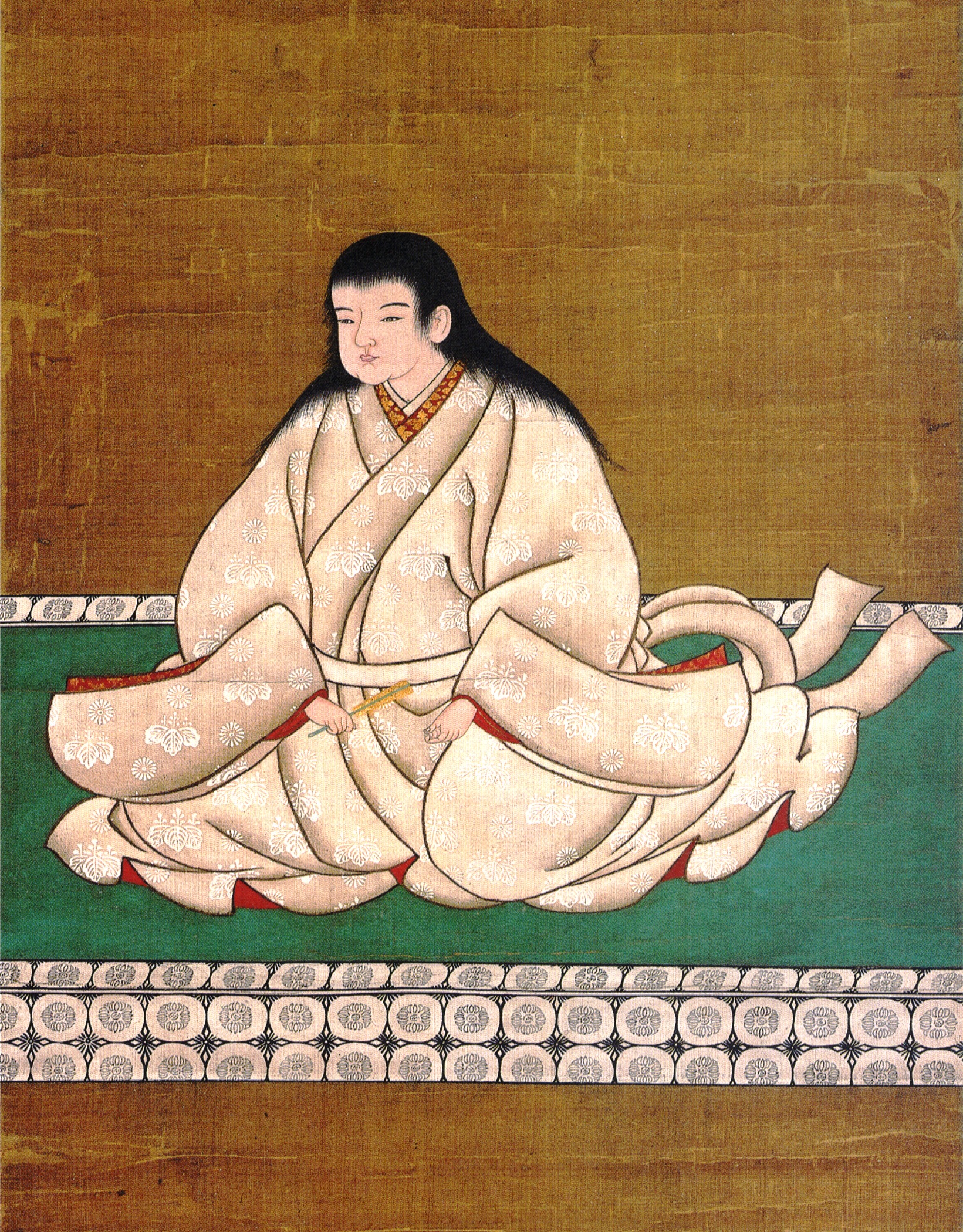
- Toyotomi Tsurumatsu (1589–1591) by Yodo-dono
- Toyotomi Hideyori (1593–1615) by Yodo-dono
Adopted sons
- Hashiba Hidekatsu (Tsugaru) (1567–1586), fourth son of Oda Nobunaga
- Oda Nobutaka, later Toyotomi Takahiro (1576–1602), seventh son of Oda Nobunaga
- Oda Nobuyoshi, later Toyotomi Musashi (1573–1615), eighth son of Oda Nobunaga
- Oda Nobuyoshi (d. 1609), tenth son of Oda Nobunaga
- Ukita Hideie (1572–1655), son of Ukita Naoie
- Toyotomi Hidetsugu (1568–1595), first son of Hideyoshi's sister Tomo with Miyoshi Kazumichi
- Toyotomi Hidekatsu (1569–1592), second son of Hideyoshi's sister Tomo with Miyoshi Kazumichi
- Toyotomi Hideyasu (1579–1595), third son of Hideyoshi's sister Tomo with Miyoshi Kazumichi
- Yūki Hideyasu (1574–1607), Tokugawa Ieyasu's second son
- Ikeda Nagayoshi, third son of Ikeda Nobuteru
- Kobayakawa Hideaki (1577–1602), Hideyoshi's nephew from his wife Nenes family
- Prince Hachijō Toshihito (1579–1629), sixth son of Prince Masahito
Adopted daughters
- Gohime (1574–1634), daughter of Maeda Toshiie, married to Ukita Hideie
- O-hime (1585–1591), daughter of Oda Nobukatsu, married to Tokugawa Hidetada
- Oeyo (1573–1626), daughter of Azai Nagamasa, married to Saji Kazunari, Toyotomi Hidekatsu, Tokugawa Hidetada
- Konoe Sakiko (1575–1630), daughter of Konoe Sakihisa, married to Emperor Go-Yōzei
- Chikurin-in (1579/80–1649), daughter of Ōtani Yoshitsugu. She was also known as Akihime and Riyohime. She was married to Sanada Yukimura. They had two sons, Sanada Daisuke and Sanada Daihachi, and some daughters
- Toyotomi Sadako (1592–1658), daughter of Toyotomi Hidekatsu with Oeyo, later became the adopted daughter of Tokugawa Hidetada and married to Kujō Yukiie
- Daizen-in, daughter of Toyotomi Hidenaga, married to Mōri Hidemoto
- Kikuhime, daughter of Toyotomi Hidenaga, married to Toyotomi Hideyasu
- Maeda Kikuhime (1578–1584), daughter of Maeda Toshiie
Grandchildren
- Toyotomi Kunimatsu (1608–1615)
- Tenshuni (1609–1645)
Character and policy analysis
Described as a "hitotarashi" (a person with natural charisma or a master charmer), Hideyoshi was skilled at winning people over and mastering human psychology. This resulted in favorable views from both his superiors and his subordinates, and for some opposing warlords to open up to him and agree to surrender after meeting him in person. According to Japanese historian Watanabe Daimon, Hideyoshi had a deep inferiority complex which influenced his behavior after he became regent, as he often toyed with or pranked his vassals. This behavior may have stemmed from his humble origin and experiences during Nobunaga's lifetime, such as not being permitted to ride alongside other generals who hailed from samurai class and being required to dismount before bowing.
Religious policy
In 1587, while trying to establish control in some parts of Kyushu, Hideyoshi encountered Buddhist temples that had been sacked by Catholic forces attempting to forcibly convert the island. In response, he issued the Bateren Edict on June 19, 1587, which ordered the expulsion of Christian missionaries from Japan. Promulgated during Hideyoshi's campaign to unify Kyushu, the edict was a response to several perceived threats posed by Christianity,{{Cite book |url=https://openlibrary.org/works/OL5660630W/Nihon_Kirisutoky%C5%8D_shi?edition=key%3A/books/OL21665232M |title=Nihon Kirisutokyō shi |trans-title=History of Christianity in Japan |year=1990 |author=Takashi Gonoi |isbn=978-4642072878 |pages=150–151}} to exert greater control over the Kirishitan daimyō or to prohibit human trafficking. Around that time, at least 50,000 Japanese people were sold overseas as slaves, mainly by Portuguese merchants. This stance was further shown in Hideyoshi's letter sent in 25 July 1590 to Alessandro Valignano, which content are similar the contents of a letter he sent to the ruler of Joseon. In those letters, Hideyoshi expressed his unique religious view that Indian Buddhism, Chinese Confucianism, and Japanese Shinto are fundamentally one unit, while also warned that he would no longer tolerate the propagation of Christianity ("evil religion" in Hideyoshi's letter), and he would no longer allow Christian missionaries to enter the country, albeit he still allowed merchants from Europe (Nanban) to enter and trade.
In January 1597, Toyotomi Hideyoshi had twenty-six Christians arrested as an example to Japanese who wanted to convert to Christianity. They are known as the Twenty-six Martyrs of Japan. They included five European Franciscan missionaries, one Mexican Franciscan missionary, three Japanese Jesuits and seventeen Japanese laymen including three young boys. They were tortured, mutilated, and paraded through towns across Japan. On February 5, they were executed in Nagasaki by public crucifixion.
Legacy
By 18 August 1915 Hideyoshi was given posthumous rank of Senior First Rank.
Toyotomi Hideyoshi changed Japanese society in many ways. These include the imposition of a rigid class structure, restrictions on travel, and surveys of land and production.
Class reforms affected commoners and warriors. During the Sengoku period, it had become common for peasants to become warriors, or for samurai to farm due to the constant uncertainty caused by the lack of centralised government and always tentative peace. Upon taking control, Hideyoshi decreed that all peasants be disarmed completely. Conversely, he required samurai to leave the land and take up residence in the castle towns.
Furthermore, he ordered comprehensive surveys and a complete census of Japan. Once this was done and all citizens were registered, he required all Japanese to stay in their respective han (fiefs) unless they obtained official permission to go elsewhere. This ensured order in a period when bandits still roamed the countryside and peace was still new. The land surveys formed the basis for systematic taxation.
In 1590, Hideyoshi completed construction of the Osaka Castle, the largest and most formidable in all Japan, to guard the western approaches to Kyoto. In that same year, Hideyoshi banned "unfree labour" or slavery in Japan, but forms of contract and indentured labour persisted alongside the period penal codes' forced labour.
Hideyoshi also influenced the material culture of Japan. He lavished time and money on the Japanese tea ceremony, collecting implements, sponsoring lavish social events, and patronizing acclaimed masters. As interest in the tea ceremony rose among the ruling class, so too did the demand for fine ceramic implements, and during the course of the Korean campaigns, not only were large quantities of prized ceramic ware confiscated but many Korean artisans were forcibly relocated to Japan.
Inspired by the dazzling Golden Pavilion in Kyoto, he had the Golden Tea Room constructed, which was covered with gold leaf and lined inside with red gossamer. Using this mobile innovation, he was able to practice the tea ceremony wherever he went, displaying his power and status at all times.
Politically, he set up a governmental system that balanced out the most powerful Japanese warlords (or daimyō). A council was created to include the most influential lords. At the same time, a regent was designated to be in command.
Just before his death, Hideyoshi hoped to set up a system stable enough to survive until his son grew old enough to become the next leader.
Ieyasu left in place the majority of Hideyoshi's decrees and built his shogunate upon them. This ensured that Hideyoshi's cultural legacy remained. In a letter to his wife, Hideyoshi wrote:
Names
The Catholic sources of the time referred to him as Cuambacondono (from kampaku and the honorific -dono) and "emperor Taicosama" (from taikō, a retired kampaku (see Sesshō and Kampaku), and the honorific -sama).
In popular culture
Films
In the 1949 Mexican hagiographic film Philip of Jesus, Luis Aceves Castañeda plays a character corresponding to Hideyoshi but named "Emperor Iroyoshi Taikosama".
In the 2009 Japanese historical fantasy film Goemon, Toyotomi Hideyoshi (played by Eiji Okuda) features as the principal antagonist to the film's protagonist, Ishikawa Goemon. This is based on the tradition that Goemon was executed for his failed attempt to assassinate Toyotomi Hideyoshi in 1594, but the film otherwise bears little resemblance to either historical events or the received tradition. In the film, Goemon murders Hideyoshi's stand-in, avoids his execution by boiling (being replaced by an associate), succeeds in murdering Hideyoshi on a later occasion, and survives to intervene in the Battle of Sekigahara. Goemon is portrayed as the faithful retainer and avenger of Oda Nobunaga, unhistorically depicted as the victim of Toyotomi Hideyoshi. All of this is counter to historical facts; tradition credits Goemon with serving Nobunaga's enemies the Miyoshi clan and his murderer, Akechi Mitsuhide, as well as with failed murder attempts on both Oda Nobunaga and Toyotomi Hideyoshi.
Hideyoshi is portrayed by actor/director Takeshi Kitano in his 2023 film Kubi.
Anime
In the anime series Great Pretender (2020), Hideyoshi is referenced many times by Laurent Thierry, one of the central protagonists of the series.
Documentary
In the Netflix documentary series Age of Samurai: Battle for Japan (2021), Hideyoshi is portrayed by Masami Kosaka. The show depicts his life and rise to power.
Television
Actor Naoto Takenaka portrays Toyotomi Hideyoshi in the 1996 NHK drama Hideyoshi, which shows his life from his time under Oda Nobunaga to his rise as a leader himself who helped to unify Japan. It earned an average TV rating of 30.5% running from January 7 – December 22, 1996. He would reprise this role again in Nioh 2. Additionally, actor Yukijirō Hotaru plays The Taikō (Nakamura Hidetoshi), a character based on Toyotomi Hideyoshi, in the 2024 miniseries Shōgun.
Appendix
Footnotes
References
Bibliography
- Berry, Mary Elizabeth. (1982). Hideyoshi. Cambridge: Harvard UP, ;
- Haboush, JaHyun Kim. (2016) The Great East Asian War and the Birth of the Korean Nation (2016) excerpt
- Jansen, Marius B. (2000). The Making of Modern Japan. Cambridge: Harvard UP. ;
- Joly, H. L., Legend in Japanese Art, London, 1908.
- Nussbaum, Louis-Frédéric and Käthe Roth. (2005). Japan encyclopedia. Cambridge: Harvard University Press. ;
- Thornton, S. A., The Japanese Period Film: A Critical Analysis, Jefferson, NC, 2008.
References
- NHK Publishing. (24 May 2016)
- [[Sanseidō]]. (10 March 2025)
- Nussbaum, Louis-Frédéric. (2005). "''Ōmi''" in {{Google books. p2QnPijAEmEC. ''Japan Encyclopedia'', pp. 993–994
- Richard Holmes, The World Atlas of Warfare: Military Innovations that Changed the Course of History, Viking Press 1988. p. 68.
- link. [[The Asahi Shimbun]]. (September 24, 2023)
- link. Nikkei Business. (January 14, 2017)
- [https://books.google.com/books?id=HQTbDphPKmoC&pg=PA8 Berry 1982, p. 8]
- (2010). "Toyotomi Hideyoshi". Osprey Publishing.
- (Watanabe Daimon). (2025-07-16). "豊臣秀吉の父は貧農ではなく、名主クラスの富農だったのだろうか?".
- Turnbull, Stephen R.. (1977). "The Samurai: A Military History". MacMillan Publishing Co..
- Samurai Archives: [http://www.samurai-archives.com/hideyoshi.html Toyotomi Hideyoshi] {{Webarchive. link. (December 24, 2010)
- [https://books.google.com/books?id=HQTbDphPKmoC&pg=PA38 Berry 1982, p. 38]
- Sansom, George. (1961). "A History of Japan, 1334–1615". Stanford University Press.
- [https://books.google.com/books?id=HQTbDphPKmoC&pg=PA54 Berry 1982, p. 54]
- (2000). "The Samurai Sourcebook". Cassell & Co.
- (1977). "The Samurai". Macmillan Publishing Co., Inc..
- (1982). "日本城郭史研究叢書 第8巻 大坂城の諸研究". 名著出版.
- {{harvtxt. Okamoto Ryoichi (岡本亮一). 1982
- (2016). "天正壬午の乱【増補改訂版】─本能寺の変と東国戦国史". Ebisukosyo.
- Miyagawa Nobuo. (2012). "天正期北関東政治史の一齣 : 徳川・羽柴両氏との関係を中心に". 駒沢史学会.
- (2016). "真田信之 : 父の知略に勝った決断力". PHP研究所.
- (1976). "日本古文書学の諸問題". 名著出版.
- (1989). "藤原氏族系図 6". 展望社.
- {{harvtxt. Kazuhiro Marushima (丸島和洋). 2015
- [https://books.google.com/books?id=HQTbDphPKmoC&pg=PA64 Berry 1982, p. 64]
- Turnbull, Stephen. (2006). "Osaka 1615: The Last Battle of the Samurai". Bloomsbury Publishing PLC.
- [https://books.google.com/books?id=HQTbDphPKmoC&pg=PA74 Berry 1982, p. 74]
- [https://books.google.com/books?id=HQTbDphPKmoC&pg=PA78 Berry 1982, p. 78]
- [https://books.google.com/books?id=HQTbDphPKmoC&pg=PA179 Berry 1982, p. 179]
- Shogun : the life of Tokugawa Ieyasu, A.L Sadler
- (2014). "The Maker of Modern Japan The Life of Tokugawa Ieyasu". Taylor & Francis.
- (2014). "江戸幕府の功労者たちはどんな人生を送ったのか? 徳川四天王". 英和出版社.
- (2023). "豊臣秀吉も高く評価した榊原康政とは、いったい何者なのだろうか".
- (September 2017). "この地震がなければ、家康が2カ月後に秀吉の大軍から総攻撃を受けるはずだった". Nikkei Inc..
- [https://books.google.com/books?id=HQTbDphPKmoC&pg=PA168 Berry 1982, pp. 168–181]
- [https://books.google.com/books?id=HQTbDphPKmoC&pg=PA184 Berry 1982, pp. 184–186]
- [https://books.google.com/books?id=HQTbDphPKmoC&pg=PA85 Berry 1982, pp. 85–86]
- [https://books.google.com/books?id=HQTbDphPKmoC&pg=PA83 Berry 1982, p. 83]
- (1998). "The Samurai Sourcebook". Cassell & Co.
- [https://books.google.com/books?id=HQTbDphPKmoC&pg=PA84 Berry 1982, p. 84]
- [https://books.google.com/books?id=HQTbDphPKmoC&pg=PA87 Berry 1982, pp. 87–93]
- (1998). "The Samurai Sourcebook". Cassell & Co.
- [https://books.google.com/books?id=HQTbDphPKmoC&pg=PA102 Berry 1982, pp. 102–106]
- Hall, John Whitney. (1991). "The Cambridge history of Japan". Cambridge university press.
- (1988–1999). "The Cambridge history of Japan". Cambridge University Press.
- Lu, David J.. (2001). "Collection of Swords". Asia for Educators.
- [https://books.google.com/books?id=HQTbDphPKmoC&pg=PA93 Berry 1982, pp. 93–96]
- (1998). "The Samurai Sourcebook". Cassell & Co.
- "石垣山一夜城". Odawara city official.
- "石垣山一夜城歴史公園". 小田原観光.
- "石垣山城". 攻城団.
- (2022). "だから織田と豊臣はあっさり潰れた…徳川家康が「戦国最後の天下人」になれた本当の理由".
- [https://books.google.com/books?id=HQTbDphPKmoC&pg=PA223 Berry 1982, pp. 223–225]
- [[Ichikawa Danjūrō XII. Ichikawa, Danjūrō XII]]. ''Danjūrō no kabuki annai'' ({{lang. ja. 團十郎の歌舞伎案内, "Danjūrō's Guide to Kabuki"). Tokyo: PHP Shinsho, 2008. pp. 139–140.
- (1998). "The Samurai Sourcebook". Cassell & Co.
- [https://books.google.com/books?id=HQTbDphPKmoC&pg=PA208 Berry 1982, p. 208]
- (2024). "Beyond Power Transitions: The Lessons of East Asian History and the Future of U.S.-China Relations". [[Columbia University Press]].
- Wachman, Alan M.. (2007-08-01). "Why Taiwan?: Geostrategic Rationales for China's Territorial Integrity". [[Stanford University Press]].
- [https://books.google.com/books?id=HQTbDphPKmoC&pg=PA217 Berry 1982, pp. 217–223]
- (2023). "どうする家康」豊臣秀吉が抱いていた豊臣家滅亡を回避する "秘策" とは".
- link. [[National Archives of Japan]]. ()
- link
- link. Japan Knowledge. ()
- link. Toyo Keizai. (May 22, 2016)
- link. Yahoo News. (September 1, 2023)
- (September 29, 2016). "「人たらし」豊臣秀吉のスゴすぎる人心掌握術". Toyo Keizai.
- 渡邊大門. (14 May 2025). "豊臣秀吉は、なぜ家臣を弄(もてあそ)ぶようなことをしたのだろうか?".
- Eckel, Paul E.. (1948). "The Far East since 1500". Harcourt, Brace and Company.
- [https://books.google.com/books?id=HQTbDphPKmoC&pg=PA91 Berry 1982, pp. 91–93]
- (2021). "「大量の日本人女性を、奴隷として本国に持ち帰る」豊臣秀吉がキリスト教追放を決意したワケ". PRESIDENT Inc.
- (2021). "「日本人の奴隷化」を食い止めた豊臣秀吉の大英断". Toyo Keizai.
- (1942). "海外交通史話". 内外書籍.
- "Martyrs List". Twenty-Six Martyrs Museum.
- Elisonas, Jurgis. (2003). "Toyotomi Hideyoshi". Oxford University Press.
- Jansen, Marius. (2000). ''The Making of Modern Japan'', p. 23.
- [https://books.google.com/books?id=HQTbDphPKmoC&pg=PA106 Berry 1982, pp. 106–107]
- Jansen, pp. 21–22.
- [https://books.google.com/books?id=HQTbDphPKmoC&pg=PA111 Berry 1982, pp. 111–118]
- Lewis, James Bryant. (2003). [https://books.google.com/books?id=0YIbNlliRswC&pg=PA31 ''Frontier Contact Between Choson Korea and Tokugawa Japan'', pp. 31]–32.
- "Bateren-tsuiho-rei" (the Purge Directive Order to the Jesuits) Article 10
- [[Takeuchi Rizō. Takeuchi, Rizō]]. (1985). ''Nihonshi shōjiten'', pp. 274–275; Jansen, p. 27.
- 大阪観光局©. (January 29, 2018). "Osaka Castle".
- Tucker, Spencer. (2009). "A Global Chronology of Conflict, From the Ancient World to the Modern Middle East". ABC-CLIO.
- [http://www.imfine.cc/hideyoshi.htm 豊臣秀吉の遺言状] {{webarchive. link. (September 19, 2008)
- Sansom, George. (1943). ''Japan. A Short Cultural History'', p. 410.
- (2013). "Lacas namban: Huellas de Japón en España: IV centenario de la embajada Keichô". Ministerio de Educación, Cultura y Deporte.
- (1986). "Julio Bracho, 1909–1978". Universidad de Guadalajara, Centro de Investigaciones y Enseñanza Cinematográficas.
- H. L. Joly, ''Legend in Japanese Art'', London, 1908: 101–102.
- S. A. Thornton, ''The Japanese Period Film: A Critical Analysis'', Jefferson, NC, 2008, 96–97.
- (June 17, 2023). "Interview: Great Pretender Director Hiro Kaburagi and Writer Ryota Kosawa". Anime News Network.
- "Age of Samurai: Battle for Japan".
- "Additional Characters". FX Networks.
This article was imported from Wikipedia and is available under the Creative Commons Attribution-ShareAlike 4.0 License. Content has been adapted to SurfDoc format. Original contributors can be found on the article history page.
Ask Mako anything about Toyotomi Hideyoshi — get instant answers, deeper analysis, and related topics.
Research with MakoFree with your Surf account
Create a free account to save articles, ask Mako questions, and organize your research.
Sign up freeThis content may have been generated or modified by AI. CloudSurf Software LLC is not responsible for the accuracy, completeness, or reliability of AI-generated content. Always verify important information from primary sources.
Report