From Surf Wiki (app.surf) — the open knowledge base
Sevilla FC
Association football club in Spain
Association football club in Spain
| Field | Value |
|---|---|
| clubname | Sevilla |
| image | Sevilla_FC_logo.svg |
| image_size | 170px |
| fullname | Sevilla Fútbol Club, S.A.D. |
| nickname | *Los Nervionenses* |
| *Los Hispalenses* | |
| *Palanganas* | |
| *Blanquirrojos* | |
| *Rojiblancos* | |
| *Sevillistas* (supporters) | |
| short name | Sevilla |
| founded | |
| as *Sevilla Foot-ball Club* | |
| ground | Estadio Ramón Sánchez-Pizjuán |
| capacity | 42,714 |
| owner | Sevillistas de Nervión S. A. |
| chrtitle | President |
| chairman | José María del Nido Carrasco |
| mgrtitle | Head coach |
| manager | Matías Almeyda |
| league | |
| current | 2025–26 Sevilla FC season |
| season | |
| position | |
| website | |
| pattern_la1 | _sevilla2526h |
| pattern_b1 | _sevilla2526h |
| pattern_ra1 | _sevilla2526h |
| pattern_sh1 | _sevilla2526h |
| pattern_so1 | _adidasonblackl |
| leftarm1 | E20001 |
| body1 | FFFFFF |
| rightarm1 | FFFFFF |
| shorts1 | FFFFFF |
| socks1 | e20000 |
| pattern_la2 | _sevilla2526a |
| pattern_b2 | _sevilla2526a |
| pattern_ra2 | _sevilla2526a |
| pattern_sh2 | _sevilla2526a |
| pattern_so2 | _3_stripes_white |
| leftarm2 | E20001 |
| body2 | E20001 |
| rightarm2 | E20001 |
| shorts2 | E20001 |
| socks2 | E20001 |
| pattern_la3 | _sevilla2526t |
| pattern_b3 | _sevilla2526t |
| pattern_ra3 | _sevilla2526t |
| pattern_sh3 | _sevilla2526t |
| pattern_so3 | _adidasonblackl |
| leftarm3 | 000000 |
| body3 | 000000 |
| rightarm3 | 000000 |
| shorts3 | 000000 |
| socks3 | e20000 |
Los Hispalenses Palanganas Blanquirrojos Rojiblancos Sevillistas (supporters) as Sevilla Foot-ball Club
Sevilla Fútbol Club () is a Spanish professional football club based in Seville, Andalusia, that competes in La Liga, the top flight of Spanish football. The club was formed on 25 January 1890, making it Spain's oldest sporting club solely devoted to football. The Scottish-born Edward Farquharson Johnston was one of Sevilla's founders, also becoming their first president. On 14 October 1905, the club's articles of association were registered in the Civil Government of Seville under the presidency of the Jerez-born José Luis Gallegos Arnosa.
Sevilla are also the most successful football club in Andalusia in terms of titles, with eighteen Andalusian Cups, one La Liga title in 1945–46, five Spanish Cup titles (1935, 1939, 1948, 2007 and 2010), one Spanish Super Cup (2007), a record seven UEFA Cups / UEFA Europa Leagues (2006, 2007, 2014, 2015, 2016, 2020, and 2023) and one UEFA Super Cup (2006). They were also designated by the International Federation of Football History & Statistics as the World's Best Club in 2006 and 2007, thus being the first club to achieve this distinction in two consecutive years.
The youth team Sevilla Atlético, founded in 1958, currently play in . Other clubs related to Sevilla FC include their women's team. The rowing team that defends its crest in the yearly Sevilla-Betis boat race is not a section of the club but a call-up of registered-as-supporters professional rowers from the various rowing clubs of Seville.
The club's home ground is the 43,883-seat Ramón Sánchez Pizjuán Stadium. It is located in the neighborhood of Nervión, Seville, and is named after the late Ramón Sánchez Pizjuán, who was the president of Sevilla for a total of 17 years. Sevilla has a long-standing rivalry with cross-city rival Real Betis.
History
Foundation to Civil War
The practice of football was introduced in Seville at the end of the 19th century by the large British expatriate population in the city, composed by owners or managers of manufacturing companies based in the capital of Andalusia. Sevilla Fútbol Club was founded on 25 January 1890 as Sevilla Foot-ball Club (in English).
Sevilla FC was duly formed on 25 January 1890 while a group of young British, mainly Scots, along with other young men of Spanish origin, celebrated Burns Night in Seville. The club's founding document, published on the ''Dundee Courier'''s edition of 17 March 1890 describes in full detail the formation of the club and how those young founding members decided first to play under Association Rules, secondly to bear the word "football" within its name and thirdly, to elect their "office-bearers". The following paragraph is an extract of that article:
To celebrate the foundation of the club, Isaias White sent a letter to Huelva Recreation Club, to invite them to play a football match in Seville. That letter was published by the Spanish newspaper La Provincia. The Huelva club accepted the invitation and the match took place on 8 March 1890, being thus the first official match ever played in Spain. Sevilla FC won that historical match 2–0, with the first goal in an official match in Spanish football history scored by the Seville team player Ritson. Isaias lived at Calle Bailen 41 in Seville (the house still exists but has since been renumbered) making this the first home of Sevilla FC.
In 1907, Sevilla Balompíe was founded, followed by Betis Football Club in 1909, Recreativo de Sevilla and Español de Sevilla. More clubs were formed as the years passed and more competitive matches were organized between the teams, although Sevilla FC, the oldest club of the city, imposed its supremacy over the other clubs in this early period.
In 1917, Sevilla FC participated in the "Copa de España" for the first time and became the first Andalusian team to reach the final round of the competition. In 1928, when the "Campeonato Nacional de Liga" (National League Championships) was organized, Sevilla FC was not part of the First Division due to their defeat to Racing de Santander in an elimination game that was set-up to decide which of the two teams would compete in the newly formed league.
At the end of the 1933–34 season, Sevilla FC was promoted to the First Division of the "Campeonato Nacional de Liga." In 1935, they were proclaimed "Campeón de Copa" (Cup Champions) for the first time by defeating Sabadell, repeated in 1939 against Racing de Ferrol and again in 1948 against Celta de Vigo. The club participated in two other finals, but conceded defeat to Athletic Bilbao in 1955 and to Real Madrid in 1962. Sevilla FC remained in the First Division from the 1933–34 season until 1968, when they were relegated to the Second Division, a tier from which they have never further been relegated from.
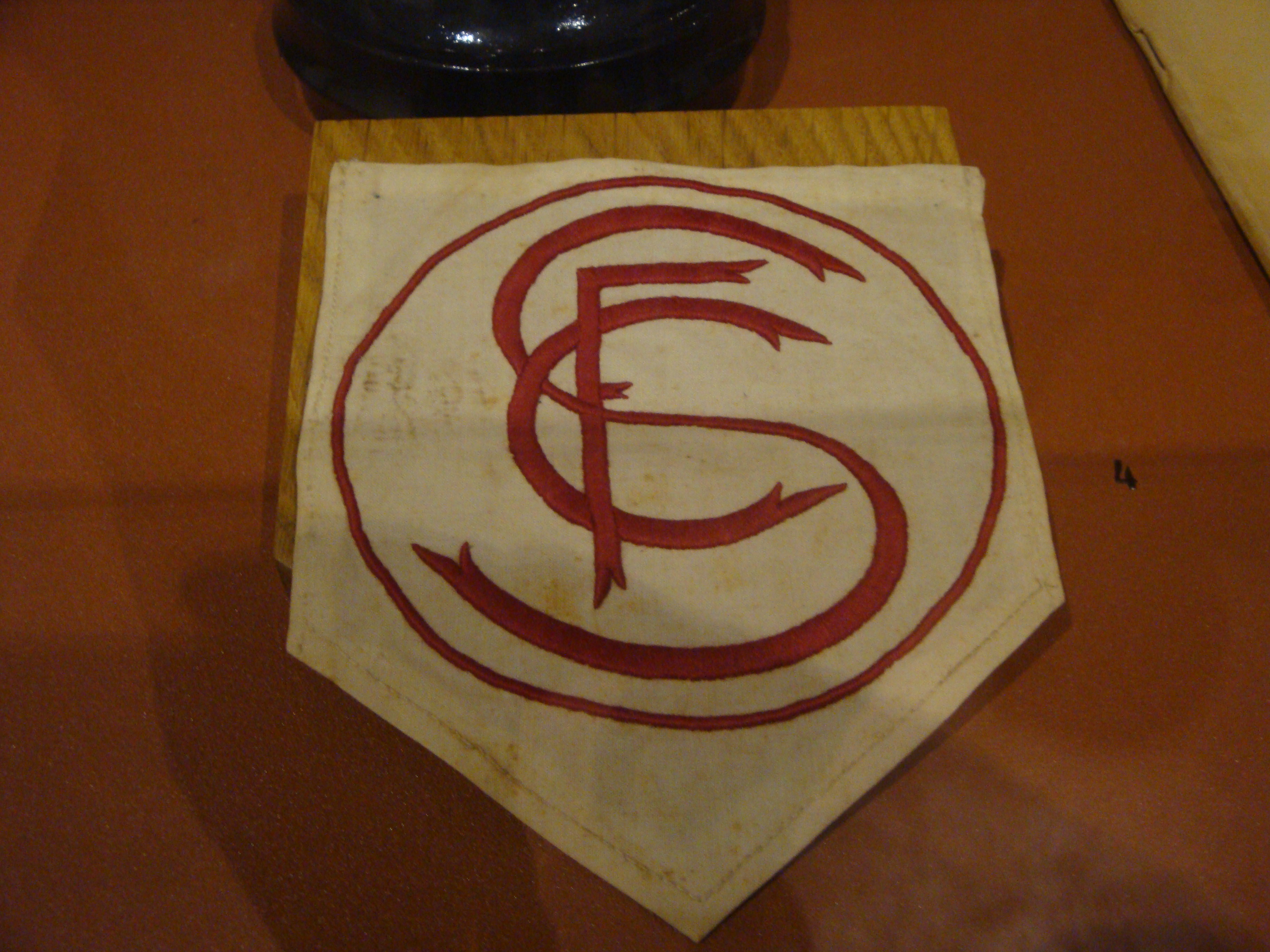
The 1945–46 season was one of high importance in the history of Sevilla, as it marked the first, and to date only, time in which Sevilla FC were League champions. On four other occasions, the club was proclaimed "subcampeón de Liga" (League Runner-up: 1939–40, 1942–43, 1950–51 and 1956–57).
Including the 2021–22 season, Sevilla has participated 78 times in the First Division and 13 in the Second Division, never dropping below the Second Division. Sevilla has also participated in four European tournaments, the "Copa de Europa" (European League Winners Cup) (1957–58); Recopa (Winners Cup) (1962–63) and UEFA Cup on nine occasions (1966–67, 1970–71, 1982–83, 1983–84, 1990–91, 1995–96, 2004–05, 2005–06 and 2006–07). Sevilla also participated in the UEFA Champions League in 2007–08.
There are more than 400 individuals who currently play for the Sevilla FC organization, which includes two semi-professional teams (in Second Division A – second national category) and 12 youth teams.[[File:Balondefutbol1924.JPG|thumb|Club ball in the museum]]
Sevilla has always counted on having international players within its ranks to aid in the pursuit of trophies. The first of these players were Spencer and Herminio in the 1920s. Juan Arza, an international player from the 1940s, was proclaimed top scorer of the Spanish League in the 1954–55 season, with 29 goals. About 30 Sevilla players have been chosen to play for the Spain national football team over the years.
Foreign players have always played an integral part in the success of Sevilla FC with Diego Maradona representing the most well known among them during his spell with the club during the 1992–93 season. During the same season, Sevilla FC was managed by Carlos Salvador Bilardo, a world champion manager.
Historically, Sevilla FC has fielded teams in a variety of other sports including: basketball, rugby, rowing, athletics, and weightlifting or petanca. Presently, Sevilla FC counts twenty-five professional teams on its ledgers (one of these being in the second national category) and a women's football team in the Honor Division.
Sevilla FC's stadium, the Ramón Sánchez Pizjuán, was inaugurated in 1958 and is one of the largest stadiums in Spain, and has the honor of hosting a World Cup semi-final match in 1982. After its final completion, the stadium had a maximum capacity of 75,000 spectators, but since its latest remodelling, the stadium has been converted to an all-seat with a covering added to the main seating area, reducing the capacity to its current count of 45,000 spectators.
First successes

Sevilla had their first spell of national success in the decade following the end of the Civil War, winning the 1945–46 La Liga title and two Copa del Rey titles. In the first season of this (1939–40), Sevilla won the cup on 25 June, beating Racing de Ferrol 6–2 in Barcelona. That same season, the side lost the Liga title on the last day to Atlético Madrid after drawing 3–3 against Hércules. The Sevilla forward line was known as los stukas after the German bomber aircraft, and scored 216 goals over four seasons. It comprised López, Torrontegui, Campanal, Raimundo, Berrocal and Pepillo.
In 1941, President Ramón Sánchez Pizjuán left the club to manage the Spanish Football Federation. After his departure, Antonio Sánchez Ramos occupied temporarily occupied the position until the permanent appointment of Jerónimo Domínguez y Pérez de Vargas, Marquess of Contadero, who was president of the club for six years until the return of Sánchez Pizjuán. Sevilla was runner-up to Athletic Bilbao in the 1942–43 season and came third a season later. Sevilla won its only Liga title in 1945–46, edging FC Barcelona by one point. Two years later, Sevilla won the 1948 Copa del Rey after beating Celta de Vigo 4–1 in Madrid on 4 July.
The most significant signing of those years was the Spanish international striker Juan Arza. There was also the debut of the Campanal's nephew, defender Campanal II, with his uncle as a trainer. During the 1950–51 season, with Campanal acting as the coach, the team finished runner-up in La Liga, two points behind Atlético Madrid. Before the 1953–54 season, Argentinean coach Helenio Herrera was hired. During his time in charge, the club came fifth in the 1953–54 season, fourth in both 1954–55 and 1955–56 and second to Real Madrid in 1956–57.
In 1954, the club put the construction of the new stadium out to tender because Nervión Stadium was becoming too small for the club's fanbase. In the 1954–55 season, Arza won the Pichichi Trophy as La Liga's top scorer, with 28 goals, and the team was runner-up in the Copa del Rey. In 1955, for the club's 50th anniversary, a triangular tournament was organized against the French club Stade de Reims and the Swedish club IFK Norrköping; Sevilla won.
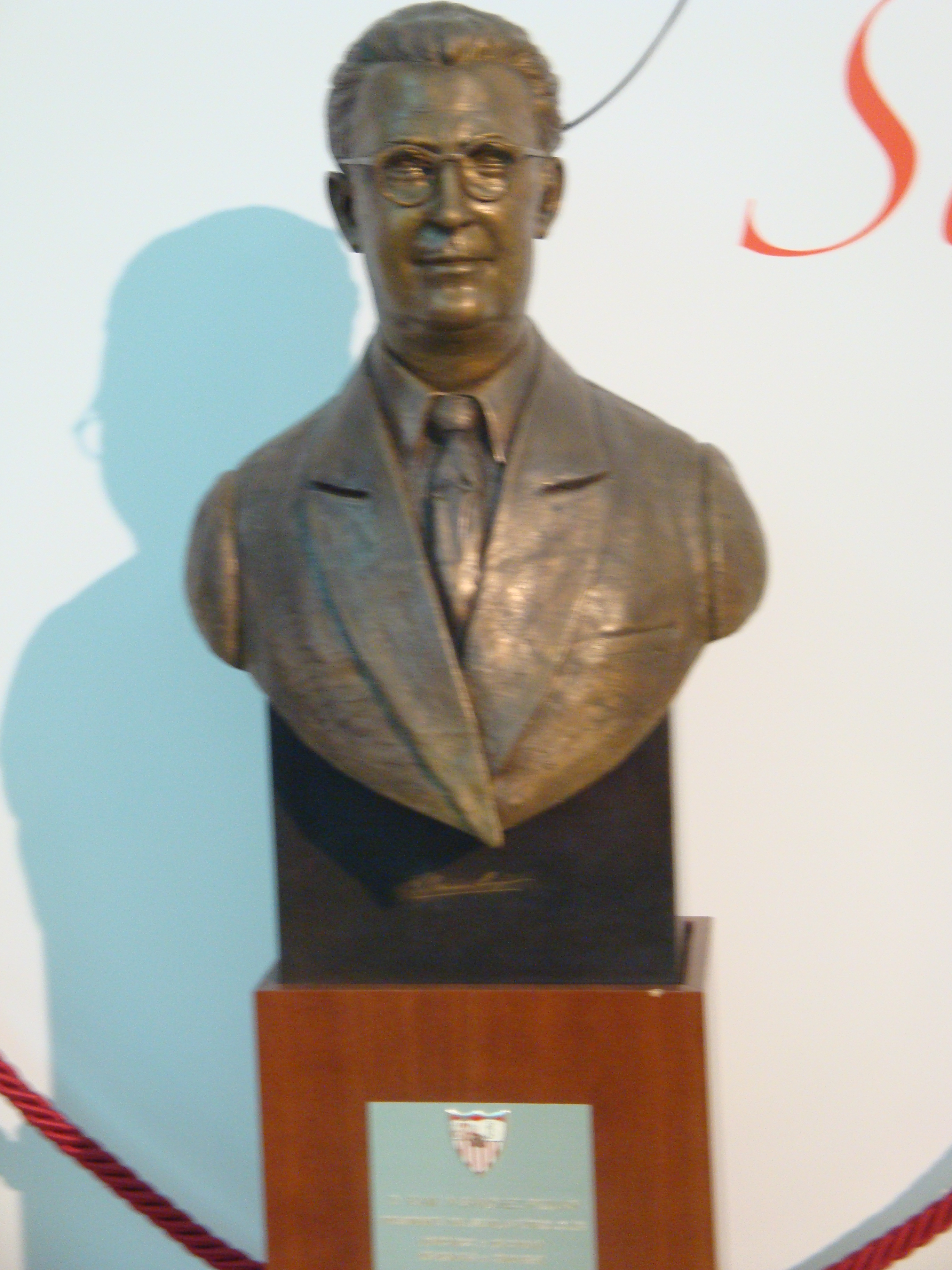
On 28 October 1956, President Sánchez Pizjuán suddenly died. As an appreciation to the deceased leader under whose chairmanship Sevilla had won three Copas del Rey, the fans decided that the club's planned new stadium was to be named in his honour. In the 1956–57 season, the team were Liga runners-up behind Real Madrid, ensuring qualification for the first time to the European Cup. Herrera left the club at the end of the season. The club needed a victory on the final day of the next season to avoid relegation but reached the round of 8 of the European Cup before being knocked out by holders and eventual champions Real Madrid.
After the death of the President, assumed the position for four years. It is said that he spoke these words at Sánchez Pizjuán's tomb:
"Dear Ramón, now your friends, among who I am honored to be one, is going to give you Christian burial, and on the following day, giving your body to the ground, we will start working and your dream that the Sevilla FC has a grand stadium will become a reality. Ramón, go in peace to heaven because your wishes will be fulfilled."
Being true to his words, Carranza made obligation bonds amounting to 50 million pesetas, and a month and a half after Sánchez Pizjuán's death, the first stone in the stadium's construction was placed. The architect was Manuel Muñoz Monasterio, co-designer of the recently built Santiago Bernabéu Stadium, the home of Real Madrid. The Ramón Sánchez Pizjuán Stadium was ultimately opened on 7 September 1958 as Sevilla played an inaugural friendly against fellow Andalusian club Real Jaén. The stadium's first official match was on the opening day of the 1958–59 season, where Sevilla beat cross-city Real Betis 4–2.
Crisis and stability

In the 1970s, Sevilla was forced into selling its top players to pay off debts incurred from the construction of its new stadium; Manuel Ruiz Sosa transferred to Atlético Madrid, Gallego to Barcelona and Juan Batista Agüero to Real Madrid. Moreover, part of the adjacent land to the stadium was also sold to a bank. In the 1967–68 season, Sevilla returned to the Second Division for the first time in 31 years but was promoted back after one season. The next season, Austrian coach Max Merkel, nicknamed "Mr. Whip" for his usage of severe and harsh discipline techniques and training, was hired.
That season, the club finished third in the league. However, the club was relegated again at the end of the 1972–73 season. In 1973, Sevilla signed their first-ever black player, Gambian winger Biri Biri, from the Danish club Boldklubben 1901. He remained at the club until 1978 and became a cult figure, with an ultra group named after him surviving to this day. In the 1974–75 season, with the Argentine Roque Olsen in charge, the club returned to the First Division. In the late 1970s, Sevilla signed Argentinians such as Héctor Scotta and Daniel Bertoni.
Directed first by Miguel Muñoz and later by Manolo Cardo, the team participated in two consecutive seasons of the UEFA Cup from 1981 to 1983. The 75th anniversary of the club was celebrated with a variety of social events and a match against the Brazilian side Santos. In 1982, the World Cup was held in Spain and Sevilla's Ramón Sánchez Pizjuán was the venue for the semi-final match between West Germany and France.{{cite book |last = Basse |first = Pierre-Louis |publisher = Privé |title = Séville 82 |year = 2005 |isbn = 2-35076-003-0
In the 1992–93 season, after several months of negotiations, world-renowned Argentine Diego Maradona signed from Napoli for a fee of $7.5 million. His time at the club, however, was unsuccessful, and he was released in large part due to his periodic injuries and clashes with coach Bilardo. In the following seasons, Luis Aragonés became manager and finished the 1994–95 season with qualification to next season's UEFA Cup.
At the end of the 1994–95 season, despite the pleas of the club's directors, Sevilla, along with Celta de Vigo, were one of two clubs relegated from the top flight on reasons of administration, provoking action from fans. The action resulted in both Sevilla and Celta being reinstated to La Liga.
These events led to an institutional instability, with the season seeing four presidents and three managers take charge. Sevilla was relegated at the end of the 1996–97 season, after 22 years stayed in top division, but returned in 1999. At the beginning of the 21st century, the presidency of the club was assumed by the popular Roberto Alés. The situation of the club was very delicate at the time; the team had dropped back to the Second Division in 2000 and the squad was weakened by player retirements and the sales of key players. The club opted for a relatively unknown trainer, Joaquín Caparrós, who helped the team win the Second Division with three matches to spare in just his first season at the helm.
Successes in the 21st century
In May 2002, Roberto Alés resigned as president, and the Sevillian lawyer José María del Nido assumed the presidency. One of his first decisions was to confirm Caparrós as a coach and Monchi as sporting director.
On 6 October 2002, before a Seville derby against Betis at the Sánchez Pizjuán, four Sevilla fans, including a minor, assaulted a security guard. The attack was punished by Sevilla being forced to play their next four home matches behind closed doors, the longest term ever given to a La Liga side. The club finished sixth in the 2003–04 La Liga, giving the club qualification for the 2004–05 UEFA Cup and marking a return to continental competition for the first time since the 1995–96 season. In the 2004–05 league season, Sevilla finished sixth and qualified for the following season's UEFA Cup, entering the competition in the third qualifying round.
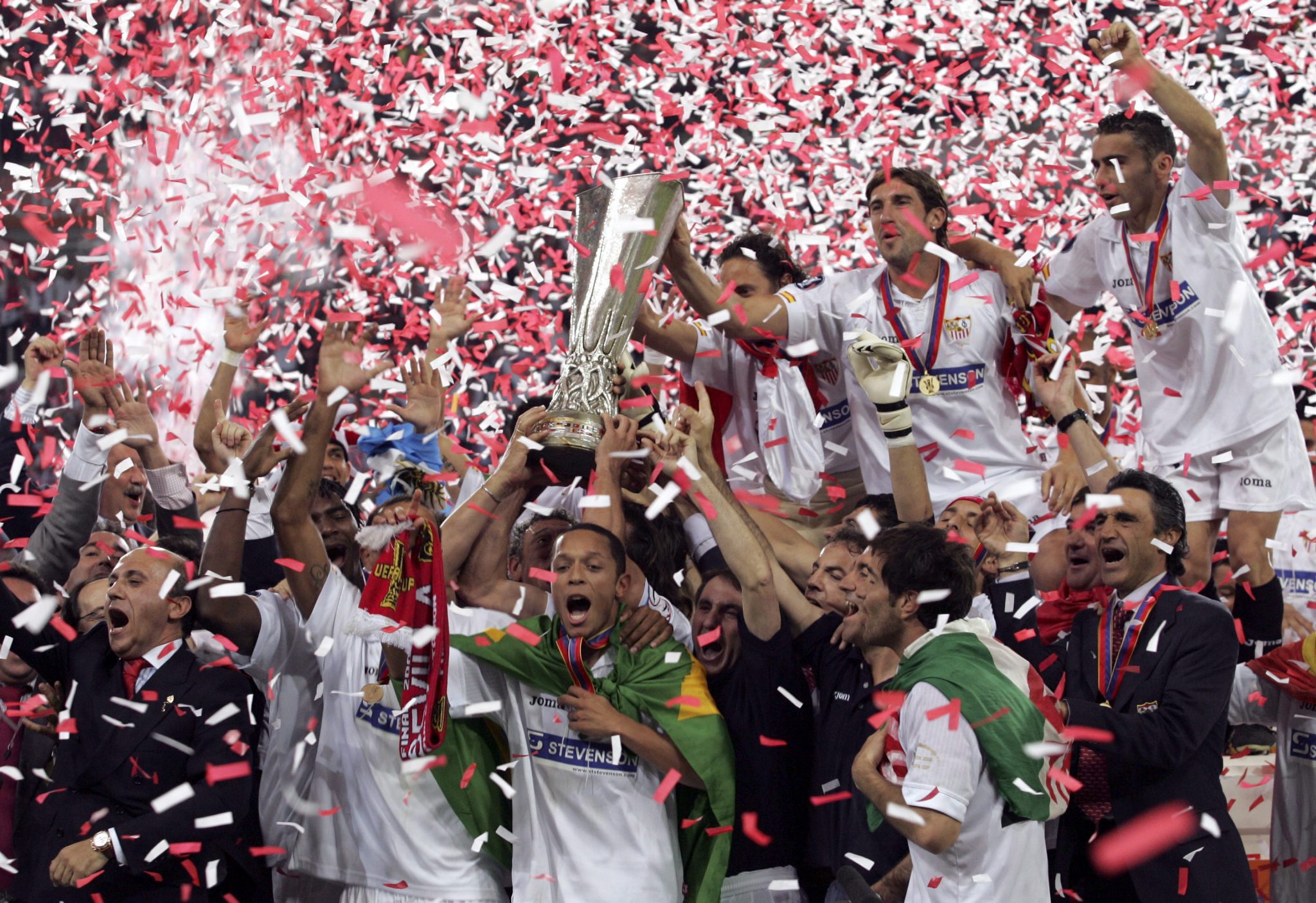
This set up Sevilla's first-ever European triumph in the 2006 UEFA Cup Final at the Philips Stadion in Eindhoven on 10 May 2006. The club defeated English club Middlesbrough 4–0 under new manager Juande Ramos, with the scoring opened by Brazilian striker Luís Fabiano. In the second-half, Italian substitute Enzo Maresca scored twice to be named Man of the Match, and Malian striker Frédéric Kanouté finished the scoring, to give the club its first major title in 58 years on the season of its centenary, which was celebrated in October 2005.
Sevilla opened their 2006–07 season by winning the 2006 UEFA Super Cup on 25 August 2006 with a 3–0 victory over Champions League winners and compatriots Barcelona at the Stade Louis II in Monaco. The goals were scored by Renato, Kanouté and a late penalty by Maresca. The season ended with a second consecutive UEFA Cup win, this time against fellow Spanish club Espanyol at Hampden Park, Glasgow. The match went to penalties after finishing 2–2 after extra-time, with Sevilla goalkeeper Andrés Palop saving three of Espanyol's penalties.

On 12 November 2006, Sevilla played its 2,000th game in La Liga. Sevilla defeated Getafe in the 2007 Copa del Rey Final, with Kanouté scoring the only goal in the game's 11th minute. Sevilla finished third in that season's La Liga to qualify for the 2007–08 Champions League, returning to the competition for the first time in 50 years. As a result of these successes, Sevilla was voted as the IFFHS Team of the Year for the second consecutive season, becoming the first club to achieve this.
Sevilla won the 2007 Supercopa de España against La Liga champions Real Madrid. The season started to derail, however, after defender Antonio Puerta suffered a heart attack in the first game of the season and died three days later on 28 August. Three days after his death, Sevilla then lost 3–1 to Milan in the 2007 UEFA Super Cup in Monaco. Juande Ramos, the individual largely responsible for Sevilla's recent successes, resigned as manager on 27 October to take the post with Tottenham Hotspur; he was replaced by Sevilla Atlético manager Manolo Jiménez. In spite of the personnel issues, Sevilla nonetheless advanced in first place in its Champions League group ahead of Arsenal before later being eliminated in the round of 16 via penalties to Fenerbahçe of Turkey.
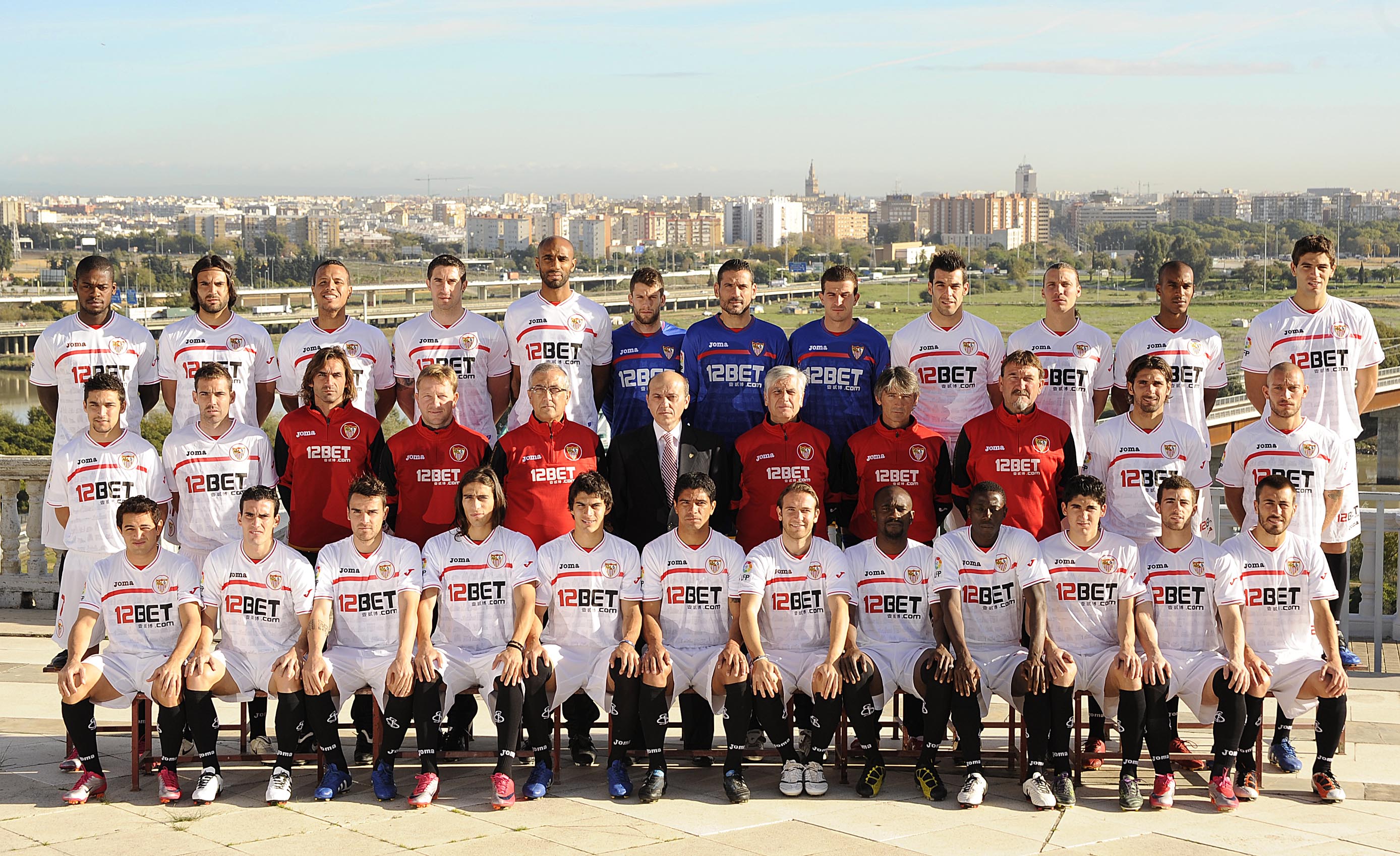
In the summer of 2008, before Jiménez's debut season as first-team manager, Dani Alves and Seydou Keita were both sold to Barcelona, while Christian Poulsen left for Juventus. Sevilla finished third in La Liga with a club record-equalling 21 victories and a club record number of away victories.
The 2009–10 season saw a third-consecutive qualification to the Champions League. On 19 May 2010, Sevilla defeated Atlético Madrid 2–0 in the 2010 Copa del Rey Final at Camp Nou, with goals from Diego Capel and Jesús Navas. Before the 2010–11 season started, Sevilla lost to Barcelona 5–3 on aggregate in the Supercopa and were eliminated in the Champions League playoffs by Portuguese club Braga.
Unai Emery era
On 14 January of the following year, after a 0–2 away loss to Valencia that left the Andalusians in 12th place, Jiménez was relieved of his duties, and was replaced by Spanish manager Unai Emery. The club went through an organizational financial crisis and was forced to sell team stars Álvaro Negredo and Jesús Navas, transactions that gave the club a combined €40 million; the duo was replaced by a contingent of younger players including strikers Carlos Bacca and Kevin Gameiro.
On 14 May 2014, Sevilla defeated Benfica on penalties in the 2014 UEFA Europa League Final to claim their third triumph in the competition. After this season key midfielder Ivan Rakitić was sold to Barcelona for around €16 million (the deal was closed on 16 June 2014). In summer 2015 top scorer Carlos Bacca, who had only joined two years previous, moved to Milan for €30 million. Despite these exits, the club acquired players Grzegorz Krychowiak and Éver Banega to reinforce the squad.
On 27 May 2015, Sevilla were again Europa League champions after defeating Ukrainian club Dnipro Dnipropetrovsk 3–2 in the 2015 Final. The goals for Sevilla were scored by Grzegorz Krychowiak and a brace from Carlos Bacca. By defeating Dnipro, they became the only club to have won the Europa League four times.
The club returned to the Europa League final for a third consecutive time, facing Liverpool in the 2016 Final. After being down 0–1 at half-time, Sevilla bounced back in the second half to eventually win 3–1, with one goal scored from Kevin Gameiro and two from club captain Coke. With its third consecutive Europa League title, Sevilla improved its record of most Europa League titles won, having lifted the trophy five times in the span of ten years.
Post-Emery era
Despite Sevilla's continued success in the Europa League, the 2015–16 season proved to be another finish outside the top four, the side finishing in seventh. In response, Castro decided to engineer a resurrection of the club. Jorge Sampaoli was hired as manager – replacing Paris Saint-Germain-bound Unai Emery – and the club began to invest heavily that summer. Additions to the side included goalkeeper Salvatore Sirigu on loan, playmaker Ganso, forward Luciano Vietto and Wissam Ben Yedder, attacker Franco Vázquez, wide midfielders Hiroshi Kiyotake and Pablo Sarabia, as well as former Arsenal and Manchester City player Samir Nasri on loan.
In December of the 2017–18 La Liga, Vincenzo Montella was named as the third manager since Emery's departure in 2016 replacing Eduardo Berizzo. In the 2017–18 UEFA Champions League season, Sevilla progressed into the knockout stages of the competition, and defeated Manchester United in the Round of 16, reaching the round of 8 for the first time in 60 years, where they ultimately lost to Bayern Munich 2–1 on aggregate.
On 4 June 2019, Sevilla announced the signing of Julen Lopetegui as manager for the next three seasons. On 16 August 2020, Sevilla won 2–1 over Manchester United in the semi-finals of the 2019–20 UEFA Europa League, en route to lifting the trophy for a record sixth time, beating Inter Milan 3–2 in the final.
On 31 May 2023, Sevilla clinched their record-extending 7th Europa League title with a win over Roma, drawing 1–1 after extra time and beating them 4–1 on penalties.
Board and finances
Presidency
Sevilla is governed by a presidential management system, but with a board of directors that discusses and approves those important decisions that must be carried out. The president is supported by a general director sometimes and a sports director.
Throughout its history, Sevilla has had 28 presidents, the first being Edward Farquharson Johnston, a Scotsman. Those who have occupied the presidency for the longest periods have been Ramón Sánchez Pizjuán, Eugenio Montes Cabezas, José María del Nido Benavente, Luis Cuervas Vilches and José Castro Carmona.
In 1992, Sevilla FC became a Sporting Limited Association, following the entry into force of the law that regulated this kind of sporting companies, and therefore the system of election of the president was amended from being elected by the members to be elected by the shareholders of the club.
Ownership
- Sevillistas de Nervion S.A. (José María del Nido Carrasco, Roberto Alés, José Castro, José Martín Baena, Francisco Guijarro, and José Gómez Miñán)
- Rafael Carrión Moreno
- 777 Partners
- Accionistas Unidos (Supporters' Trust / Minor shareholders)
Symbols
Anthems


Sevilla has two official anthems:
- Official Anthem of Sevilla FC: This anthem dates back to the year 1983. The lyrics were written by Ángel Luis Osquiguilea de Roncales and the music was composed by Manuel Osquiguilea de Roncales.
- Centennial Anthem of Sevilla FC: Composed in 2005 by singer Javier Labandón 'El Arrebato' to commemorate the centenary of the registration of the club's articles of association, it became Spain's number one single and the best-selling anthem of a football club in the entire history of Spanish football, reaching the 2nd position of the best-selling albums in 2006. On 9 October 2006, in the Estadio Ramón Sánchez-Pizjuán, 'El Arrebato' was awarded the golden record his anthem.
Crest
From its foundation, the team used a double-circled crest. On the exterior circle, the name of the club and the date of its foundation were written, while in the interior circle on a white background the letters "SFC" were interlaced as they are on the current crest. This first crest was designed by Juan Lafita, who was a close associate of the club and was the son of the Sevillian painter José Lafita y Blanco.
The second crest was designed in 1922 by Pablo Rodríguez Blanco, a draftsman of the Water Company. He divided the shield in three parts and together they formed the silhouette of a heart. The three figures that appear are the Christian saints portrayed on the coat of arms of the city – Isidore of Seville, Ferdinand III of Castile and Leander of Seville. On the right side appear the initials "SFC," which were on the official shield from 1905 to 1922.
Where the three parts meet, a football of the era appears. Regarding the red and white stripes, there are various theories, but it seems that the most coherent is that from the first time, the club wished that the official kit would be red and white. Another version indicates that the lower part is inspired on the flag which King Ferdinand III of Castile carried in the reconquest of Seville in 1248.
Flag
The definition of Sevilla's flag is in the articles of association of 1982, which is a modification of the old ones which were formed and deposited in the Record of Associations and Sports Federations of the Higher Council of Sports. Its title 1, article 6 states that this is a distinctive emblem of the club:
:The flag, which will be rectangular, divided by a diagonal line that goes from the lower left angle to the upper right angle, which divides it into two triangles, the superior is white and the inferior red.
Kit
Sevilla wore shirts with a sponsor logo for the first time in the 1986–87 season, to promote the Seville Expo '92. Previously, before the 1980–81 season, the club signed its first kit-manufacturer deal with the German firm Adidas. From 2022 to 2025 the kit was manufactured by Castore. In June 2025, Sevilla negotiated a ten-year kit contract with Adidas.
| Years | Shirt sponsors |
|---|---|
| 1986–90 | Seville Expo '92 |
| 1990–94 | None |
| 1992–93 | Super NES |
| 1994–96 | Marbella |
| 1996–98 | None |
| 1998–00 | SuperCable & Eurotex Pinturas |
| 2000–02 | Andalucia |
| 2002–03 | OID |
| 2003–04 | None |
| 2004–05 | La Gitana |
| 2005–06 | Stevenson |
| 2006–09 | 888.com |
| 2009–11 | 12bet.com |
| 2011–12 | None |
| 2012–13 | inter wetten.es |
| 2014–15 | Visit Malaysia |
| 2016–17 | SeePuertoRico.com |
| 2017–19 | Playtika |
| 2019–21 | Marathonbet |
| 2021–22 | NAGA |
| 2022–23 | Degiro |
| 2023–24 | None |
| 2024–25 | Midea |
| Years | Kit manufacturers |
|---|---|
| 1980–85 | Adidas |
| 1985–86 | Yama |
| 1986–90 | Puma |
| 1990–92 | Bukta |
| 1992–93 | Front Runner |
| 1993–94 | Hotshot |
| 1994–01 | Umbro |
| 2001–11 | Joma |
| 2011–12 | Li-Ning |
| 2012–13 | Umbro |
| 2013–15 | Warrior |
| 2015–18 | New Balance |
| 2018–22 | Nike |
| 2022–25 | Castore |
| 2025– | Adidas |

Media
Sevilla have several media outlets. Its radio station, SFC Radio, launched in September 2004, broadcasts all day on FM and online, while its television channel SFC TV aired for the first time in the 2005–06 season with a UEFA Cup match against Zenit Saint Petersburg. Since 8 June 2009, the television coverage has been shown on the club website. Sevilla issue a physical and digital newspaper the day after every match and on the same day as an important one, as well as a magazine before home games. The official magazine of the club is released every two months, the first issue being free and issued at a friendly against the Brazil national team to mark the club's centennial in September 2005.
Players
Current squad
Reserve squad
Main article: Sevilla Atlético
Out on loan
Current technical staff
| Position | Name |
|---|---|
| Head coach | Argentina Matías Almeyda |
| Assistant coach | Argentina Daniel Vega |
| Argentina Erik Lamela | |
| Technical assistant | Spain Javi Martínez |
| Fitness coach | Argentina Guido Bonini |
| Spain Juan José del Ojo | |
| Physiotherapist | Argentina Fabio Álvarez |
| Analyst | Argentina Agustín Zalazar |
| Spain Juan Antonio Guzmán | |
| Spain Adrián García | |
| Goalkeeping coach | Spain Arturo González |
Former coaches
*See also *
| Dates | Name |
|---|---|
| 1908–10 | Spain Joaquín Valenzuela |
| 1910–17 | Spain Eugenio Eizaguirre |
| 1917–21 | Spain Pepe Brand |
| 1921–23 | Spain Arturo Ostos |
| 1923–24 | EIR Charles O'Hagan |
| 1924–27 | Spain Ángel Villagrán |
| 1927–30 | Hungary Lippo Hertzka |
| 1930–33 | Spain José Quirante |
| 1933–36 | Spain Ramón Encinas |
| 1939–41 | Spain Pepe Brand |
| 1941–42 | Spain Victoriano Santos |
| 1942 | Spain Pepe Brand |
| 1942–45 | EIR Patrick O'Connell |
| 1945–47 | Spain Ramón Encinas |
| 1947–49 | Spain Patricio Caicedo |
| 1949–53 | Spain Guillermo Campanal |
| 1953–56 | Argentina Helenio Herrera |
| 1956–57 | Spain Satur Grech |
| 1957 | Spain Guillermo Campanal |
| 1957–58 | Spain Diego Villalonga |
| 1958 | Hungary Jenő Kalmár |
| 1958–59 | Spain José Antonio Ipiña |
| 1959 | Spain Guillermo Campanal |
| 1959 | Spain Ramón Encinas |
| 1959–61 | Spain Luis Miró |
| 1961 | Spain Diego Villalonga |
| 1961–63 | Spain Antonio Barrios |
| 1963–64 | Brazil Otto Bumbel |
| 1964–65 | Czechoslovak Socialist Republic Ferdinand Daučík |
| 1965–66 | Spain Ignacio Eizaguirre |
| Dates | Name |
|---|---|
| 1966 | Spain Juan Arza |
| 1966 | Spain Sabino Barinaga |
| 1967 | Spain Juan Arza |
| 1967–68 | Spain Antonio Barrios |
| 1968–69 | Spain Juan Arza |
| 1969–71 | Austria Max Merkel |
| 1971 | Spain Diego Villalonga |
| 1971–72 | Greece Dan Georgiadis |
| 1972 | England Vic Buckingham |
| 1972 | Spain Diego Villalonga |
| 1972–73 | Spain Juan Arza |
| 1973 | Spain Salvador Artigas |
| 1973 | Austria Ernst Happel |
| 1974–76 | Argentina Roque Olsen |
| 1976–79 | Spain Luis Cid "Carriega" |
| 1979–81 | Spain Miguel Muñoz |
| 1981–86 | Spain Manolo Cardo |
| 1986–87 | Scotland Jock Wallace |
| 1987–88 | Spain Xabier Azkargorta |
| 1989 | Argentina Roque Olsen |
| 1989–91 | Argentina Chile Vicente Cantatore |
| 1991–92 | Uruguay Víctor Espárrago |
| 1992–93 | Argentina Carlos Bilardo |
| 1993–95 | Spain Luis Aragonés |
| 1995 | Portugal Toni |
| October 1995 – January 1996 | Spain Juan Carlos Álvarez |
| January 1996 – June 1996 | Uruguay Víctor Espárrago |
| 1 July 1996 – 11 February 1997 | Spain José Antonio Camacho |
| February 1997 | Argentina Carlos Bilardo |
| February 1997 – October 1997 | Spain Julián Rubio |
| Dates | Name |
|---|---|
| October 1997 – December 1997 | Spain Vicente Miera |
| January 1998 | Spain Juan Carlos Álvarez |
| January 1998 – January 1999 | Spain Fernando Castro Santos |
| January 1999 – March 2000 | Spain Marcos Alonso |
| March 2000 – May 2000 | Spain Juan Carlos Álvarez |
| 1 July 2000 – 30 June 2005 | Spain Joaquín Caparrós |
| 1 July 2005 – 26 October 2007 | Spain Juande Ramos |
| 27 October 2007 – 23 March 2010 | Spain Manolo Jiménez |
| 25 March 2010 – 26 September 2010 | Spain Antonio Álvarez |
| 27 September 2010 – 30 June 2011 | Spain Gregorio Manzano |
| 1 July 2011 – 6 February 2012 | Spain Marcelino |
| 7 February 2012 – 14 January 2013 | Spain Míchel |
| 14 January 2013 – 12 June 2016 | Spain Unai Emery |
| 27 June 2016 – 20 May 2017 | Argentina Jorge Sampaoli |
| 27 May 2017 – 22 December 2017 | Argentina Eduardo Berizzo |
| 30 December 2017 – 28 April 2018 | Italy Vincenzo Montella |
| 28 April 2018 – 24 May 2018 | Spain Joaquín Caparrós |
| 28 May 2018 – 15 March 2019 | Spain Pablo Machín |
| 15 March 2019 – 22 May 2019 | Spain Joaquín Caparrós |
| 4 June 2019 – 5 October 2022 | Spain Julen Lopetegui |
| 6 October 2022 – 21 March 2023 | Argentina Jorge Sampaoli |
| 21 March 2023 – 8 October 2023 | Spain José Luis Mendilibar |
| 10 October 2023 – 16 December 2023 | Uruguay Diego Alonso |
| 18 December 2023 – 30 June 2024 | Spain Quique Sánchez Flores |
| 1 July 2024 – 13 April 2025 | Spain Xavier García Pimienta |
| 13 April 2025 – 31 May 2025 | Spain Joaquín Caparrós |
| 16 June 2025 – | Argentina Matías Almeyda |
|}
Presidents
| url=https://sevillafc.es/el-club/historia/presidentes | title=Presidentes | language=es | website=sevillafc.es | accessdate=21 February 2025 | publisher=Sevilla FC }} | Name |
|---|---|---|---|---|---|---|
| 25 January 1890 – 14 October 1905 | SCO Edward F. Johnston | |||||
| 14 October 1905 – 25 October 1908 | Spain José Luis Gallegos | |||||
| 25 October 1908 – 18 December 1912 | Spain Carlos García Martínez | |||||
| 18 December 1912 – 27 June 1914 | Spain José María Miró | |||||
| 27 June 1914 – 23 June 1920 | Spain Francisco Javier Alba | |||||
| 23 June 1920 – 15 June 1921 | Spain Enrique Balbontín | |||||
| 15 June 1921 – 13 May 1922 | Spain Jordi Graells Miró | |||||
| 13 May 1922 – 16 May 1923 | Spain Carlos Piñar y Pickman | |||||
| 16 May 1923 – 14 June 1925 | Spain Manuel Blasco | |||||
| 14 June 1925 – 16 February 1932 | Spain Juan Domínguez Osborne | |||||
| 16 February 1932 – 5 December 1941 | Spain Ramón Sánchez-Pizjuán | |||||
| 5 December 1941 – 7 September 1942 | Spain Antonio Sánchez Ramos | |||||
| 7 September 1942 – 5 May 1948 | Spain Jerónimo Pérez de Vargas | |||||
| 5 May 1948 – 28 October 1956 | Spain Ramón Sánchez-Pizjuán | |||||
| 28 October 1956 – 19 July 1957 | Spain Francisco Graciani | |||||
| 19 July 1957 – 19 August 1961 | Spain Ramón de Carranza | |||||
| 19 August 1961 – 23 July 1963 | Spain Guillermo Moreno | |||||
| 23 July 1963 – 4 May 1966 | Spain Juan López Sánchez | |||||
| 4 May 1966 – 21 June 1966 | Spain Antonio García Carranza |
| Dates | Name |
|---|---|
| 21 June 1966 – 22 August 1968 | Spain Manuel Zafra |
| 22 August 1968 – 11 December 1972 | Spain José Ramón Cisneros |
| 11 December 1972 – 7 February 1984 | Spain Eugenio Montes |
| 7 February 1984 – 23 April 1984 | Spain Rafael Carrión |
| 23 April 1984 – 7 May 1984 | Spain Juan Silverio |
| 7 May 1984 – 2 June 1984 | Spain Francisco Ramos Herrero |
| 2 June 1984 – 29 June 1986 | Spain Gabriel Rojas |
| 29 June 1986 – 19 September 1990 | Spain Luis Cuervas |
| 19 September 1990 – 29 October 1990 | Spain José María Cruz |
| 29 October 1990 – 5 August 1995 | Spain Luis Cuervas |
| 5 August 1995 – 10 October 1995 | Spain José María del Nido Benavente |
| 10 October 1995 – 14 February 1996 | Spain Francisco Escobar |
| 14 February 1996 – 15 May 1997 | Spain José María González |
| 15 May 1997 – 10 February 2000 | Spain Rafael Carrión |
| 10 February 2000 – 27 May 2003 | Spain Roberto Alés |
| 27 May 2003 – 9 December 2013 | Spain José María del Nido Benavente |
| 9 December 2013 – 31 December 2023 | Spain José Castro Carmona |
| 31 December 2023 – present | Spain José María del Nido Carrasco |
|}
Facilities
Stadium
Main article: Ramón Sánchez Pizjuán Stadium

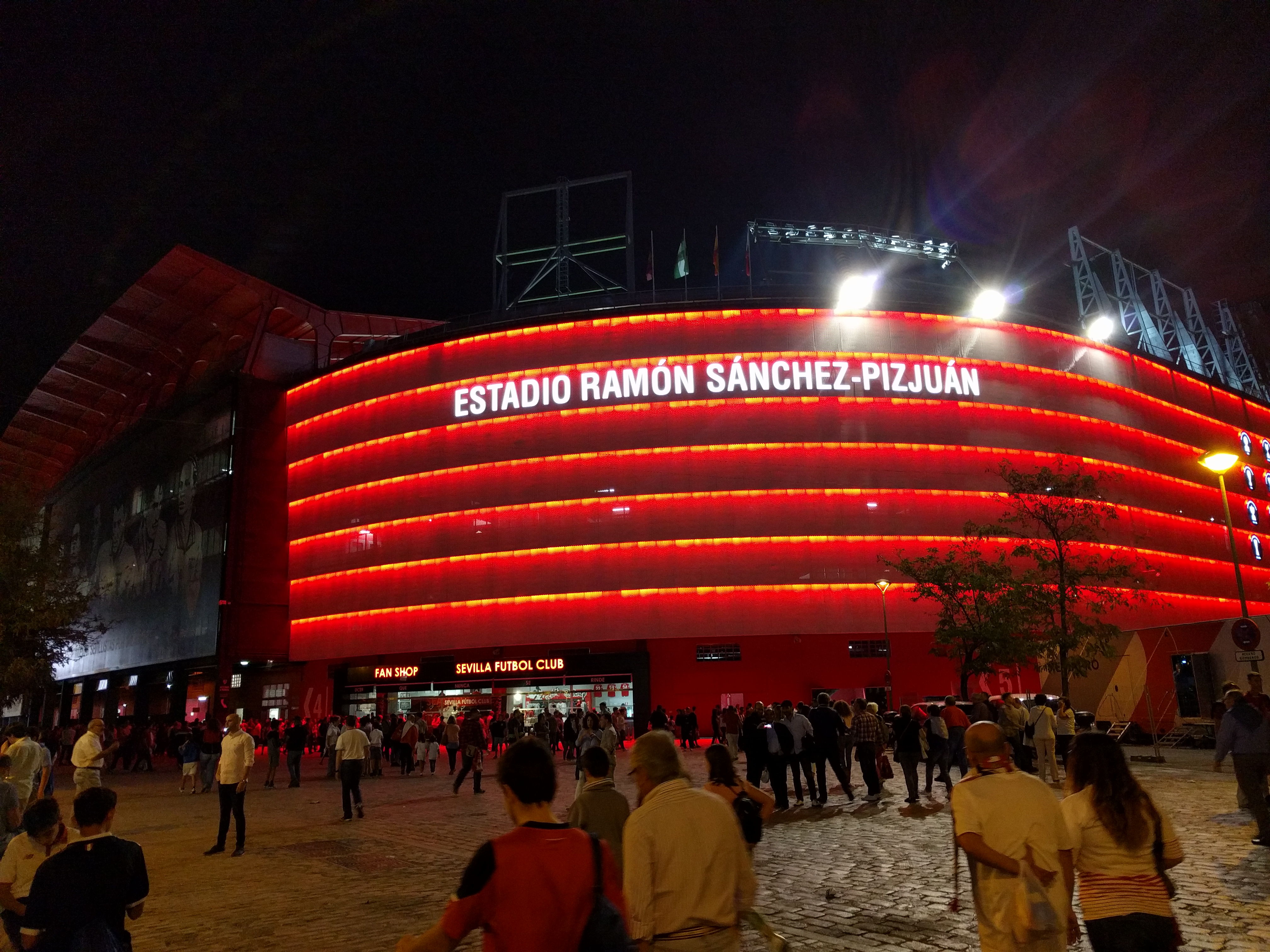
In their first fifty years Sevilla played their home matches in various locations around Seville: la Trinidad Field, the Mercantile Field, 'La Victoria' Stadium and the Estadio de Nervión.
The Ramón Sánchez Pizjuán Stadium was first planned in 1937 when the land was bought near to the then-home of Sevilla, in Nervión, and construction began in 1954. A contest was held for its design, won by the architect Manuel Muñoz Monasterio, who had also designed the home of Real Madrid, the Santiago Bernabéu Stadium.
The construction of the stadium was completed in the summer of 1958 and was inaugurated on 7 September of the same year with a friendly match against Real Jaén. The east and west grandstands to the stadium were finished in 1974 under the presidency of Eugenio Montes Cabezas and increased the stadium's capacity to 70,000. For the 1982 World Cup, capacity was reduced from 70,000 to 66,000, and things were added like new lighting, the visor, and the mosaic on the main façade (by Santiago del Campo). The stadium held two World Cup games; a group match between the Soviet Union and Brazil, as well as a semi-final between France and West Germany.
The 1986 European Cup Final was held in the stadium, and won by Steaua București against Barcelona. The capacity of the stadium was reduced to approximately 60,000. The last big modification was made during the mid-1990s, when according to FIFA rules, all standing areas had to be redeveloped into seating, reducing the capacity to the present 42,714.
The Spain national team have played 26 matches in the stadium since 1961, unbeaten with 21 wins and 5 draws. To mark the club's centenary in 2005, an allegorical mosaic designed by Ben Yessef was built above the southern gate, depicting the history of the city of Seville. Above it, the club's badge floated in the wind. The stadium currently houses the headquarters of the club's media, as well as an official store, club museum and trophy cabinet.
Training facilities
The sporting facilities known as La Ciudad Deportiva (The Sporting City) are used by the first team for training and by the reserve teams and women for matches. These facilities were inaugurated in 1974 and are located on the outskirts of the city on the road to Utrera. It has four natural grass pitches and three artificial pitches, as well as an artificial pitch for the Antonio Puerta Football School, changing rooms, gymnasium, press room, cafeteria, medical center and a recovering room.
League record
Season to season
| Season | Tier | Division | Place | Copa del Rey | Quarter-finals | Round of 16 | Round of 16 | Round of 32 | Round of 16 | Round of 16 | Winners | Round of 16 | Round of 16 | Quarter-finals | Round of 16 | First round | Quarter-finals | Quarter-finals | Semi-finals | Round of 16 | Winners | Round of 16 | Quarter-finals | First round |
|---|---|---|---|---|---|---|---|---|---|---|---|---|---|---|---|---|---|---|---|---|---|---|---|---|
| [1929](1929-segunda-division) | 2 | 2ª | 1st | |||||||||||||||||||||
| [1929–30](1929-30-segunda-division) | 2 | 2ª | 4th | |||||||||||||||||||||
| [1930–31](1930-31-segunda-division) | 2 | 2ª | 2nd | |||||||||||||||||||||
| [1931–32](1931-32-segunda-division) | 2 | 2ª | 8th | |||||||||||||||||||||
| [1932–33](1932-33-segunda-division) | 2 | 2ª | 9th | |||||||||||||||||||||
| [1933–34](1933-34-segunda-division) | 2 | 2ª | 1st | |||||||||||||||||||||
| [1934–35](1934-35-la-liga) | 1 | 1ª | 5th | |||||||||||||||||||||
| [1935–36](1935-36-la-liga) | 1 | 1ª | 10th | |||||||||||||||||||||
| [1939–40](1939-40-la-liga) | 1 | 1ª | 2nd | |||||||||||||||||||||
| [1940–41](1940-41-la-liga) | 1 | 1ª | 5th | |||||||||||||||||||||
| [1941–42](1941-42-la-liga) | 1 | 1ª | 6th | |||||||||||||||||||||
| [1942–43](1942-43-la-liga) | 1 | 1ª | 2nd | |||||||||||||||||||||
| [1943–44](1943-44-la-liga) | 1 | 1ª | 3rd | |||||||||||||||||||||
| [1944–45](1944-45-la-liga) | 1 | 1ª | 10th | |||||||||||||||||||||
| [1945–46](1945-46-la-liga) | 1 | 1ª | 1st | |||||||||||||||||||||
| [1946–47](1946-47-la-liga) | 1 | 1ª | 6th | |||||||||||||||||||||
| [1947–48](1947-48-la-liga) | 1 | 1ª | 5th | |||||||||||||||||||||
| [1948–49](1948-49-la-liga) | 1 | 1ª | 8th | |||||||||||||||||||||
| [1949–50](1949-50-la-liga) | 1 | 1ª | 10th | |||||||||||||||||||||
| [1950–51](1950-51-la-liga) | 1 | 1ª | 2nd |
| Season | Tier | Division | Place | Copa del Rey | First round | Round of 16 | Semi-finals | Runners-up | Round of 16 | Round of 16 | Round of 16 | Round of 32 | Round of 32 | Quarter-finals | Runners-up | Round of 16 | Round of 16 | Round of 32 | Round of 32 | Round of 16 | Round of 16 | Round of 32 | Semi-finals |
|---|---|---|---|---|---|---|---|---|---|---|---|---|---|---|---|---|---|---|---|---|---|---|---|
| [1951–52](1951-52-la-liga) | 1 | 1ª | 6th | ||||||||||||||||||||
| [1952–53](1952-53-la-liga) | 1 | 1ª | 5th | ||||||||||||||||||||
| [1953–54](1953-54-la-liga) | 1 | 1ª | 5th | ||||||||||||||||||||
| [1954–55](1954-55-la-liga) | 1 | 1ª | 4th | ||||||||||||||||||||
| [1955–56](1955-56-la-liga) | 1 | 1ª | 4th | ||||||||||||||||||||
| [1956–57](1956-57-la-liga) | 1 | 1ª | 2nd | ||||||||||||||||||||
| [1957–58](1957-58-la-liga) | 1 | 1ª | 10th | ||||||||||||||||||||
| [1958–59](1958-59-la-liga) | 1 | 1ª | 12th | ||||||||||||||||||||
| [1959–60](1959-60-la-liga) | 1 | 1ª | 4th | ||||||||||||||||||||
| [1960–61](1960-61-la-liga) | 1 | 1ª | 11th | ||||||||||||||||||||
| [1961–62](1961-62-la-liga) | 1 | 1ª | 6th | ||||||||||||||||||||
| [1962–63](1962-63-la-liga) | 1 | 1ª | 11th | ||||||||||||||||||||
| [1963–64](1963-64-la-liga) | 1 | 1ª | 9th | ||||||||||||||||||||
| [1964–65](1964-65-la-liga) | 1 | 1ª | 10th | ||||||||||||||||||||
| [1965–66](1965-66-la-liga) | 1 | 1ª | 8th | ||||||||||||||||||||
| [1966–67](1966-67-la-liga) | 1 | 1ª | 13th | ||||||||||||||||||||
| [1967–68](1967-68-la-liga) | 1 | 1ª | 16th | ||||||||||||||||||||
| [1968–69](1968-69-segunda-division) | 2 | 2ª | 1st | ||||||||||||||||||||
| [1969–70](1969-70-la-liga) | 1 | 1ª | 3rd | ||||||||||||||||||||
| [1970–71](1970-71-la-liga) | 1 | 1ª | 7th |
|}
| Season | Tier | Division | Place | Copa del Rey | Round of 16 | Quarter-finals | Fourth round | Fourth round | Round of 32 | Quarter-finals | Round of 16 | Semi-finals | Fourth round | Semi-finals | First round | Quarter-finals | Second round | Third round | Round of 16 | Third round | Round of 16 | Round of 32 | Second round | Quarter-finals |
|---|---|---|---|---|---|---|---|---|---|---|---|---|---|---|---|---|---|---|---|---|---|---|---|---|
| [1971–72](1971-72-la-liga) | 1 | 1ª | 16th | |||||||||||||||||||||
| [1972–73](1972-73-segunda-division) | 2 | 2ª | 4th | |||||||||||||||||||||
| [1973–74](1973-74-segunda-division) | 2 | 2ª | 9th | |||||||||||||||||||||
| [1974–75](1974-75-segunda-division) | 2 | 2ª | 3rd | |||||||||||||||||||||
| [1975–76](1975-76-la-liga) | 1 | 1ª | 11th | |||||||||||||||||||||
| [1976–77](1976-77-la-liga) | 1 | 1ª | 10th | |||||||||||||||||||||
| [1977–78](1977-78-la-liga) | 1 | 1ª | 8th | |||||||||||||||||||||
| [1978–79](1978-79-la-liga) | 1 | 1ª | 11th | |||||||||||||||||||||
| [1979–80](1979-80-la-liga) | 1 | 1ª | 8th | |||||||||||||||||||||
| [1980–81](1980-81-la-liga) | 1 | 1ª | 8th | |||||||||||||||||||||
| [1981–82](1981-82-la-liga) | 1 | 1ª | 7th | |||||||||||||||||||||
| [1982–83](1982-83-la-liga) | 1 | 1ª | 5th | |||||||||||||||||||||
| [1983–84](1983-84-la-liga) | 1 | 1ª | 8th | |||||||||||||||||||||
| [1984–85](1984-85-la-liga) | 1 | 1ª | 12th | |||||||||||||||||||||
| [1985–86](1985-86-la-liga) | 1 | 1ª | 9th | |||||||||||||||||||||
| [1986–87](1986-87-la-liga) | 1 | 1ª | 10th | |||||||||||||||||||||
| [1987–88](1987-88-la-liga) | 1 | 1ª | 10th | |||||||||||||||||||||
| [1988–89](1988-89-la-liga) | 1 | 1ª | 9th | |||||||||||||||||||||
| [1989–90](1989-90-la-liga) | 1 | 1ª | 6th | |||||||||||||||||||||
| [1990–91](1990-91-la-liga) | 1 | 1ª | 8th |
| Season | Tier | Division | Place | Copa del Rey | Quarter-finals | Round of 16 | Quarter-finals | Fourth round | Quarter-finals | Third round | First round | Fourth round | First round | Round of 64 | Round of 64 | Quarter-finals | Semi-finals | Quarter-finals | Round of 16 | Winners | Round of 16 | Semi-finals | Winners | Semi-finals |
|---|---|---|---|---|---|---|---|---|---|---|---|---|---|---|---|---|---|---|---|---|---|---|---|---|
| [1991–92](1991-92-la-liga) | 1 | 1ª | 12th | |||||||||||||||||||||
| [1992–93](1992-93-la-liga) | 1 | 1ª | 7th | |||||||||||||||||||||
| [1993–94](1993-94-la-liga) | 1 | 1ª | 6th | |||||||||||||||||||||
| [1994–95](1994-95-la-liga) | 1 | 1ª | 5th | |||||||||||||||||||||
| [1995–96](1995-96-la-liga) | 1 | 1ª | 12th | |||||||||||||||||||||
| [1996–97](1996-97-la-liga) | 1 | 1ª | 20th | |||||||||||||||||||||
| [1997–98](1997-98-segunda-division) | 2 | 2ª | 7th | |||||||||||||||||||||
| [1998–99](1998-99-segunda-division) | 2 | 2ª | 4th | |||||||||||||||||||||
| [1999–2000](1999-2000-la-liga) | 1 | 1ª | 20th | |||||||||||||||||||||
| [2000–01](2000-01-segunda-division) | 2 | 2ª | 1st | |||||||||||||||||||||
| [2001–02](2001-02-la-liga) | 1 | 1ª | 8th | |||||||||||||||||||||
| [2002–03](2002-03-la-liga) | 1 | 1ª | 10th | |||||||||||||||||||||
| [2003–04](2003-04-la-liga) | 1 | 1ª | 6th | |||||||||||||||||||||
| [2004–05](2004-05-la-liga) | 1 | 1ª | 6th | |||||||||||||||||||||
| [2005–06](2005-06-la-liga) | 1 | 1ª | 5th | |||||||||||||||||||||
| [2006–07](2006-07-la-liga) | 1 | 1ª | 3rd | |||||||||||||||||||||
| [2007–08](2007-08-la-liga) | 1 | 1ª | 5th | |||||||||||||||||||||
| [2008–09](2008-09-la-liga) | 1 | 1ª | 3rd | |||||||||||||||||||||
| [2009–10](2009-10-la-liga) | 1 | 1ª | 4th | |||||||||||||||||||||
| [2010–11](2010-11-la-liga) | 1 | 1ª | 5th |
|}
| Season | Tier | Division | Place | Copa del Rey | Round of 16 | Semi-finals | Round of 32 | Quarter-finals | Runners-up | Round of 16 | Runners-up | [Quarter-finals](2018-19-copa-del-rey-quarter-finals) | [Round of 16](2019-20-copa-del-rey-round-of-16) | [Semi-finals](2020-21-copa-del-rey-semi-finals) | [Round of 16](2021-22-copa-del-rey-round-of-16) | [Quarter-finals](2022-23-copa-del-rey-quarter-finals) | [Quarter-finals](2023-24-copa-del-rey-quarter-finals) | [Round of 32](2024-25-copa-del-rey-round-of-32) | [Round of 32](2025-26-copa-del-rey-round-of-32) |
|---|---|---|---|---|---|---|---|---|---|---|---|---|---|---|---|---|---|---|---|
| [2011–12](2011-12-la-liga) | 1 | 1ª | 9th | ||||||||||||||||
| [2012–13](2012-13-la-liga) | 1 | 1ª | 9th | ||||||||||||||||
| [2013–14](2013-14-la-liga) | 1 | 1ª | 5th | ||||||||||||||||
| [2014–15](2014-15-la-liga) | 1 | 1ª | 5th | ||||||||||||||||
| [2015–16](2015-16-la-liga) | 1 | 1ª | 7th | ||||||||||||||||
| [2016–17](2016-17-la-liga) | 1 | 1ª | 4th | ||||||||||||||||
| [2017–18](2017-18-la-liga) | 1 | 1ª | 7th | ||||||||||||||||
| [2018–19](2018-19-la-liga) | 1 | 1ª | 6th | ||||||||||||||||
| [2019–20](2019-20-la-liga) | 1 | 1ª | 4th | ||||||||||||||||
| [2020–21](2020-21-la-liga) | 1 | 1ª | 4th | ||||||||||||||||
| [2021–22](2021-22-la-liga) | 1 | 1ª | 4th | ||||||||||||||||
| [2022–23](2022-23-la-liga) | 1 | 1ª | 12th | ||||||||||||||||
| [2023–24](2023-24-la-liga) | 1 | 1ª | 14th | ||||||||||||||||
| [2024–25](2024-25-la-liga) | 1 | 1ª | 17th | ||||||||||||||||
| [2025–26](2025-26-la-liga) | 1 | 1ª |
|}
- 82 seasons in La Liga
- 13 seasons in Segunda División
Since the club was first promoted to La Liga in the 1934–35 season, Sevilla has played all but thirteen seasons in the first division. Sevilla won La Liga in the 1945–46 season, and finished as runners-up four times (1939–40, 1942–43, 1950–51 and 1956–57). While the club has only suffered four short-lived descents to the Segunda División, it won the second division title in 1968–69 and 2000–01.
European competitions record
Main article: Sevilla FC in European football
| UEFA Super Cup | Season | Final | European Cup / UEFA Champions League | Season | Preliminary stages | Round of 32 / Group stage | Round of 16 | Quarter-finals | Semi-finals | Final | UEFA Cup Winners' Cup | Season | Preliminary stages | Round of 32 | Round of 16 | Quarter-finals | Semi-finals | Final | Inter-Cities Fairs Cup / UEFA Cup / UEFA Europa League | Season | Preliminary stages | Round of 32 / Knockout round play-offs | Round of 16 | Quarter-finals | Semi-finals | Final | Season | Round of 32 / Knockout round play-offs | Round of 16 | Quarter-finals | Semi-finals | Final |
|---|---|---|---|---|---|---|---|---|---|---|---|---|---|---|---|---|---|---|---|---|---|---|---|---|---|---|---|---|---|---|---|---|
| [2006](2006-uefa-super-cup) | ESP Barcelona | |||||||||||||||||||||||||||||||
| [2007](2007-uefa-super-cup) | ITA Milan | |||||||||||||||||||||||||||||||
| [2014](2014-uefa-super-cup) | ESP R. Madrid | |||||||||||||||||||||||||||||||
| [2015](2015-uefa-super-cup) | ESP Barcelona | |||||||||||||||||||||||||||||||
| [2016](2016-uefa-super-cup) | ESP R. Madrid | |||||||||||||||||||||||||||||||
| [2020](2020-uefa-super-cup) | GER Bayern | |||||||||||||||||||||||||||||||
| [2023](2023-uefa-super-cup) | ENG Man City | |||||||||||||||||||||||||||||||
| [1957–58](1957-58-european-cup) | POR Benfica | DEN AGF | ESP R. Madrid | |||||||||||||||||||||||||||||
| [2007–08](2007-08-uefa-champions-league) | GRE AEK | CZE Slavia 1 | TUR Fenerbahçe | |||||||||||||||||||||||||||||
| [2009–10](2009-10-uefa-champions-league) | ROM Unirea 1 | RUS CSKA | ||||||||||||||||||||||||||||||
| [2010–11](2010-11-uefa-champions-league) | POR Braga | |||||||||||||||||||||||||||||||
| [2015–16](2015-16-uefa-champions-league) | ITA Juventus 1 | |||||||||||||||||||||||||||||||
| [2016–17](2016-17-uefa-champions-league) | FRA Lyon 1 | ENG Leicester | ||||||||||||||||||||||||||||||
| [2017–18](2017-18-uefa-champions-league) | TUR I. Başakşehir | RUS Spartak 1 | ENG Man. United | GER Bayern | ||||||||||||||||||||||||||||
| [2020–21](2020-21-uefa-champions-league) | RUS Krasnodar 1 | GER Dortmund | ||||||||||||||||||||||||||||||
| [2021–22](2021-22-uefa-champions-league) | AUT Salzburg 1 | |||||||||||||||||||||||||||||||
| [2022–23](2022-23-uefa-champions-league) | GER Dortmund 1 | |||||||||||||||||||||||||||||||
| [2023–24](2023-24-uefa-champions-league) | NED PSV 1 | |||||||||||||||||||||||||||||||
| [1962–63](1962-63-european-cup-winners-cup) | SCO Rangers | |||||||||||||||||||||||||||||||
| [1966–67](1966-67-inter-cities-fairs-cup) | ROM Argeș | |||||||||||||||||||||||||||||||
| [1970–71](1970-71-inter-cities-fairs-cup) | TUR Eskişehirspor | |||||||||||||||||||||||||||||||
| [1982–83](1982-83-uefa-cup) | BUL Levski | GRE PAOK | FRG [Kaiserslautern](1-fc-kaiserslautern) | |||||||||||||||||||||||||||||
| [1983–84](1983-84-uefa-cup) | POR Sporting | |||||||||||||||||||||||||||||||
| [1990–91](1990-91-uefa-cup) | GRE PAOK | URS Torpedo | ||||||||||||||||||||||||||||||
| [1995–96](1995-96-uefa-cup) | BUL Botev | GRE Olympiacos | ESP Barcelona | |||||||||||||||||||||||||||||
| [2004–05](2004-05-uefa-cup) | POR Nacional | RUS Zenit 1 | GRE Panathinaikos | ITA Parma | ||||||||||||||||||||||||||||
| [2005–06](2005-06-uefa-cup) | GER [Mainz](1-fsv-mainz-05) | TUR Beşiktaş 1 | RUS Lokomotiv | FRA Lille | RUS Zenit | GER Schalke | ENG Middlesbrough | |||||||||||||||||||||||||
| [2006–07](2006-07-uefa-cup) | GRE Atromitos | CZE Slovan 1 | ROM Steaua | UKR Shakhtar | ENG Tottenham | ESP Osasuna | ESP Espanyol | |||||||||||||||||||||||||
| [2008–09](2008-09-uefa-cup) | AUT Salzburg | ITA Sampdoria 1 | ||||||||||||||||||||||||||||||
| [2010–11](2010-11-uefa-europa-league) | GER Dortmund 1 | POR Porto | ||||||||||||||||||||||||||||||
| [2011–12](2011-12-uefa-europa-league) | GER Hannover | |||||||||||||||||||||||||||||||
| [2013–14](2013-14-uefa-europa-league) | MNE Mladost | POL Śląsk | GER Freiburg 1 | SVN Maribor | ESP Betis | POR Porto | ESP Valencia | POR Benfica | ||||||||||||||||||||||||
| [2014–15](2014-15-uefa-europa-league) | CRO Rijeka 1 | GER Mönchengladbach | ESP Villarreal | RUS Zenit | ITA Fiorentina | UKR Dnipro | ||||||||||||||||||||||||||
| [2015–16](2015-16-uefa-europa-league) | NOR Molde | SUI Basel | ESP Athletic | UKR Shakhtar | ENG Liverpool | |||||||||||||||||||||||||||
| [2018–19](2018-19-uefa-europa-league) | HUN Újpest | LTU Žalgiris | CZE Olomouc | BEL Standard 1 | ITA Lazio | CZE Slavia | ||||||||||||||||||||||||||
| [2019–20](2019-20-uefa-europa-league) | AZE Qarabağ 1 | ROU CFR Cluj | ITA Roma | ENG Wolverhampton | ENG Man. United | ITA Inter | ||||||||||||||||||||||||||
| [2021–22](2021-22-uefa-europa-league) | CRO D. Zagreb | ENG West Ham | ||||||||||||||||||||||||||||||
| [2022–23](2022-23-uefa-europa-league) | NED PSV | TUR Fenerbahçe | ENG Man. United | ITA Juventus | ITA Roma |
- 1 Group stage. Highest-ranked eliminated team in case of qualification, lowest-ranked qualified team in case of elimination.
UEFA club coefficient ranking
- shared record
Friendly tournament
-
Antonio Puerta Trophy
- Winners (11): 2008, 2009, 2011, 2012, 2013, 2014, 2017, 2019, 2022, 2023, 2024
-
Ramón de Carranza Trophy
- Winners (7): 1955, 1956, 1957, 2004, 2008, 2009, 2013
-
Costa del Sol Trophy
- Winners (2): 1964, 2004
-
Achille & Cesare Bortolotti Trophy
- Winners (1): 2010
-
Ciudad de la Línea Trophy
- Winners (3): 2001, 2002, 2003
-
Teresa Herrera Trophy
- Winners (4): 1946, 1954, 1960, 2011
-
Colombino Trophy
- Winners (4): 1975, 1985, 1996, 2005
-
City of Seville Trophy
- Winners (7): 1972, 1973, 1976, 1978, 1982, 1984, 1994
-
Russian Railways Cup
- Winners (1): 2008
-
Trofeo de la Sal
- Winners (1): 2010
-
Antonio Camacho Memorial
- Winners (1): 2012
-
Costa Brava Trophy
- Winners (1): 2012
-
Supercopa Euroamericana
- Winners (1): 2016
Other awards, records, and recognitions
- Medal of Andalusia (2005), issued by the Junta de Andalucía.
- Best club team of the world in 2006 and 2007 according to the International Federation of Football History & Statistics (IFFHS).
- In 2006, Best team as voted by the Federation of Sports Journalists of Andalucía.
- Prize for the best team of 2006 according to the Spanish Sports Press Association.
- In January 2007, Sevilla were awarded with the 15th Communication Award granted by the Seville Press Association.
- Royal Order of Sports Merit, granted by the Superior Council of Sports.
- Gold medal of the Royal Chamber of Commerce for economic-administrative management.
- The only team to win the UEFA Europa League three times in a row: 2013–14, 2014–15, 2015–16
File: Trofeosramondecarranza.JPG|First Ramón de Carranza trophies (6) File: Trofeocolombino.JPG |Colombino Trophy (4) File: Trofeo Costa del Sol 1964.jpg|Costa del Sol Trophy (2) File: Trofeociudaddesevilla2.JPG|Seville City Trophy (7)
Individual trophies
Team records
- As of 2020–21 season.
General information
| Concept | Times |
|---|---|
| Seasons in La Liga | 77 |
| Seasons in Segunda División | 13 |
| Promotions to La Liga | 5 |
| Participations in the Copa del Rey | 89 |
| Participations in UEFA competitions | 24 |
| All-time position in La Liga | 6th |
| Number of international players contributed to the Spain national team | 37 |
Updated 31 March 2020
Most goals scored in a league match
| Match | Result | Season |
|---|---|---|
| Sevilla – Barcelona | 11–1 | 1940–41 |
| Sevilla – Valencia | 10–3 | 1940–41 |
| Sevilla – Oviedo | 10–0 | 1941–42 |
| Celta Vigo – Sevilla | 1–5 | 1943–44 |
| Las Palmas – Sevilla | 2–5 | 1985–86 |
| Sevilla – Sporting Gijón | 5–1 | 1994–95 |
| Sevilla – Hércules | 5–0 | 1996–97 |
| Sevilla – Racing Santander | 5–2 | 2003–04 |
| Sevilla – Zaragoza | 5–0 | 2007–08 |
| Racing Santander – Sevilla | 1–5 | 2009–10 |
| Sevilla – Rayo Vallecano | 5–2 | 2011–12 |
| Sevilla – Real Betis | 5–1 | 2012–13 |
| Sevilla – Granada | 5–1 | 2014–15 |
| Sevilla – Getafe | 5–0 | 2015–16 |
| Sevilla – Espanyol | 6–4 | 2016–17 |
| Sevilla – Osasuna | 5–0 | 2016–17 |
| Levante – Sevilla | 2–6 | 2018–19 |
| Sevilla – Levante | 5–0 | 2018–19 |
| Sevilla – Real Sociedad | 5–2 | 2018–19 |
| Sevilla – Rayo Vallecano | 5–0 | 2018–19 |
| Sevilla – Levante | 5–3 | 2021–22 |
| Sevilla – Almería | 5–1 | 2023–24 |
Most goals conceded in a league match
| Match | Result | Season |
|---|---|---|
| Sevilla – Oviedo | 0–5 | 1942–43 |
| Sevilla – Real Madrid | 0–5 | 1962–63 |
| Valencia – Sevilla | 8–0 | 1943–44 |
| Real Madrid – Sevilla | 8–0 | 1958–59 |
| Espanyol – Sevilla | 5–1 | 1986–87 |
| Zaragoza – Sevilla | 8–1 | 1987–88 |
| Real Madrid – Sevilla | 5–2 | 1989–90 |
| Real Madrid – Sevilla | 7–0 | 1990–91 |
| Real Madrid – Sevilla | 5–0 | 1992–93 |
| Barcelona – Sevilla | 5–2 | 1993–94 |
| Deportivo La Coruña – Sevilla | 5–1 | 1994–95 |
| Deportivo La Coruña – Sevilla | 5–2 | 1999–2000 |
| Real Madrid – Sevilla | 5–1 | 2003–04 |
| Espanyol – Sevilla | 5–0 | 2005–06 |
| Barcelona – Sevilla | 5–0 | 2010–11 |
| Getafe – Sevilla | 5–1 | 2011–12 |
| Sevilla – Real Madrid | 2–6 | 2010–11 |
| Sevilla – Real Madrid | 2–6 | 2011–12 |
| Real Madrid – Sevilla | 7–3 | 2013–14 |
| Barcelona – Sevilla | 5–1 | 2014–15 |
| Real Madrid – Sevilla | 5–0 | 2017–18 |
| Eibar – Sevilla | 5–1 | 2017–18 |
| Sevilla – Betis | 3–5 | 2017–18 |
| Sevilla – Atlético Madrid | 2–5 | 2017–18 |
| Atlético Madrid – Sevilla | 6–1 | 2022–23 |
| Barcelona – Sevilla | 5–1 | 2024–25 |
Statistics in UEFA competitions
Main article: Sevilla FC in European football
The debut of Sevilla in European competitions took place in the 1957–58 season as a participant in that season's European Cup. Despite finishing runner-up in the league to Real Madrid, Sevilla represented Spain in the competition as Real had already qualified by winning the European Cup the season before.
:Accurate as of 12 December 2023
| Competition | Pld | W | D | L | GF | GA | GD | Total | 249 | 125 | 56 | 68 | 418 | 276 | +142 | ||||||
|---|---|---|---|---|---|---|---|---|---|---|---|---|---|---|---|---|---|---|---|---|---|
| European Cup / UEFA Champions League | 78 | 30 | 21 | 27 | 117 | 115 | +2 | ||||||||||||||
| UEFA Cup / UEFA Europa League | 158 | 92 | 33 | 33 | 283 | 133 | +150 | ||||||||||||||
| UEFA Super Cup | 7 | 1 | 1 | 5 | 12 | 17 | −5 | ||||||||||||||
| UEFA Cup Winners' Cup | 2 | 1 | 0 | 1 | 2 | 4 | −2 | ||||||||||||||
| Inter-Cities Fairs Cup | 4 | 1 | 1 | 2 | 4 | 7 | −3 |
Pld = Matches played; W = Won; D = Drawn; L = Lost; GF = Goals for; GA = Goals against; GD = Goal difference
| Match | Result | Season |
|---|---|---|
| Sevilla – AGF | 4–0 | 1957–58 |
| Sevilla – PAOK | 4–0 | 1982–83 |
| Sevilla – Atromitos | 4–0 | 2006–07 |
| Grasshoppers – Sevilla | 0–4 | 2006–07 |
| Middlesbrough – Sevilla | 0–4 | 2005–06 |
| Rangers – Sevilla | 1–4 | 2009–10 |
| Sevilla – Karpaty Lviv | 4–0 | 2010–11 |
| Sevilla – Porto | 4–1 | 2013–14 |
| Sevilla – Dinamo Zagreb | 4–0 | 2016–17 |
| Sevilla – Standard Liège | 5–1 | 2018–19 |
| Sevilla – Akhisarspor | 6–0 | 2018–19 |
| F91 Dudelange – Sevilla | 2–5 | 2019–20 |
Player records
Sevilla compete in the Seville derby against their cross-city rivals Real Betis. The two played each other for the first time on 8 October 1915 in a match which was won 4–3 by Sevilla. The game is considered one of the most important derbies in Spanish football. Sevilla also has a significant rivalry with Atlético Madrid and Valencia CF.
References
References
- [http://www.sevillafc.es/nuevaweb/el_club/historia Sevilla F. C. Official website «Historia (1890 a 1914)»] {{in lang. es. {{webarchive. link. (29 January 2015 .)
- [https://www.uefa.com/nationalassociations/teams/52714--sevilla/ Sevilla F.C. homepage – Official UEFA website] . Retrieved 15 February 2017.
- [https://www.laliga.es/laliga-santander/sevilla Sevilla F.C. homepage – Official LFP website] {{Webarchive. link. (30 March 2019 . Retrieved 15 February 2017.)
- [https://web.archive.org/web/20170216052043/http://www.fifa.com/news/y=2012/m=12/news=sevilla-from-amateurs-kings-europe-1967525.html FIFA Classic Clubs series on Sevilla F.C. – Official FIFA website]. Retrieved 15 February 2017.
- "Sevilla FC – The Club". Sevilla FC.
- (9 October 2012). "The day Spanish football was born". Marca.
- (11 October 2012). "How Glasgow man Hugh McColl helped set up Spain's oldest football club". Evening Times.
- "Scottish Influence on Spanish Football".
- "Honours".
- (5 October 2012). "Your BNA Stories: Sevilla Football Club – the Oldest Football Club in Spain, Founded in 1905 by British Residents". The British Newspaper Archive.
- (7 February 2013). "Courier proves Seville's claim as Spain's oldest football club". The Courier.
- Juan Castro y Agustín Rodríguez. (2010). "Breve Historia del Sevilla F. C.". Punto Rojo Libros S. L..
- Juan Castro. (2010). "El "Football" y el críquet en la Andalucía del siglo XIX". Centro de Estudios Andaluces. Revista Andalucía en la Historia. nº 29.
- Pablo F. Enríquez, Ángel Cervantes. Documentacion, Juan Castro y Agustín Rodríguez. (2005). "Sevilla F. C. cien años de Historia. Libro del Centenario". Sevilla F. C. S. A. D..
- [http://www.sevillafc.es/nuevaweb/el_club/historia Web oficial del Sevilla F. C. «Historia (1890 a 1914)»] {{webarchive. link. (29 January 2015)
- (7 June 2018). "Sevilla FC commemorate Scottish roots". Scottish Football Association.
- "The day Spanish football was born – MARCA.com (English version)". MARCA.com.
- (5 May 2010). "La calle Bailén".
- "Spain – List of Cup Finals".
- "Spain, Final Tables 1939–1949".
- "Historia del Sevilla 1939–1945". Web oficial del Sevilla F. C..
- "Historia del Sevilla (1939–1948)". [[ABC (España).
- "Campeón de Liga 1945/46". sevillafc.es.Historia.
- "Spain, Final Tables 1949–1959".
- (13 November 2009). "Historia: Trofeo Pichichi de la Liga". cosasdefutbol.es.
- (12 October 2009). "Ramón Sánchez Pizjuán será recordado con un busto". Estadio Deportivo.
- "Historia del Sevilla 1955/1959". Web Oficial del Sevilla F. C..
- "Historia del Sevilla F. C.". [[ABC (Spain).
- La Voz de Asturias. (30 November 2006). "Muere Max Merkel, 'Míster Látigo'". Público.
- "Historia del Sevilla F. C. (1921–1939)".
- "Historia del Sevilla (1971–1995)". Web oficial del Sevilla F. C..
- "Historia del Sevilla (1983–1991)". [[ABC (España).
- "El Mejor amigo de la pelota". edant.clarin.com.
- Basilio García. (1 August 2010). "Se cumplen quince años del descenso administrativo del Sevilla". Periódico El Correo de Anadalucía.es.
- "Historia del Sevilla (1995–1999)". Web oficial del Sevilla F. C..
- Juan Castro y Agustín Rodríguez. (2010). "Breve Historia del Sevilla F. C. Capítulo 39, 2000, llegó el hombre del cosenso. Página 195.". Punto Rojo Libros S. L..
- "Historia del Sevilla 1999/2003". Web oficial del Sevilla F. C..
- (1 June 2006). "2005/06: Un título 58 años después". UEFA.
- (1 June 2006). "2005/06: Un título 58 años después". UEFA.
- (4 August 2009). "Supercopa de Europa 2006 F. C. BARCELONA VS SEVILLA F. C. RESUMEN (CADENA SER) PARTE 1". YouTube.
- "El Sevilla revalidó su título". UEFA.
- (23 June 2007). "El Sevilla cierra la mejor temporada de su historia con la Copa del Rey".
- (23 June 2007). "El Sevilla cierra la mejor temporada de su historia con la Copa del Rey".
- (8 January 2007). "El Sevilla, premio de la IFFHS al mejor equipo del pasado año". El País.
- (19 August 2007). "El Sevilla vence al Real Madrid y se adjudica la Supercopa". cadenaser.com.
- "2007: Milan overcome sombre Sevilla on UEFA.COM".
- (27 October 2007). "Tottenham make Ramos head coach". BBC News.
- (20 May 2010). "Una Copa de pura ley". Periódico Diario de Sevilla.
- (19 May 2010). "Navas, Capel, Zokora y Kanouté decantaron la final". Marca (newspaper).
- (24 August 2010). "Lima hat-trick ensures history for Braga".
- (14 May 2014). "Sevilla 0–0 Benfica (AET, 4–2 on pens)". BBC Sport.
- (14 May 2014). "Sevilla 0–0 Benfica (AET, 4–2 on pens)". BBC Sport.
- (16 June 2014). "Ivan Rakitic: Barcelona sign Croatia midfielder from Sevilla". BBC.
- (27 June 2015). "Bacca se va al Milan".
- "Europa League – Sevilla break Dnipro hearts to defend title".
- UEFA.com. "Dnipro-Sevilla 2015 History".
- (28 May 2015). "Carlos Bacca double breaks Dnipro hearts for Sevilla to make history". The Guardian.
- (18 May 2016). "Sevilla make it three in a row at Liverpool's expense".
- (28 June 2016). "Jorge Sampaoli appointed Sevilla manager on two-year deal".
- (26 August 2016). "Salvatore Sirigu aterrizó en Sevilla esta medianoche".
- Jones, Matt. "Samir Nasri to Sevilla: Latest Loan Details, Comments and Reaction".
- (28 December 2017). "Principio de acuerdo con Montella para dirigir al Sevilla FC".
- "Manchester United 1–2 Sevilla (agg: 1–2) – BBC Sport".
- Smyth, Rob. (11 April 2018). "Bayern Munich 0–0 Sevilla (agg: 2–1): Champions League quarter-final – as it happened". The Guardian.
- "Agreement with Julen Lopetegui for three season deal in the Sevilla FC dugout".
- (16 August 2020). "Sevilla 2–1 Manchester United".
- (21 August 2020 }}{{dead link). "Sevilla beat Inter 3–2 to lift Europa League title".
- (31 May 2023). "Sevilla 1 Roma 1 (Sevilla win 4–1 on penalties)". BBC Sport.
- "Presidentes {{!}} Sevilla FC".
- Corrigan, Dermot. (11 May 2021). "Sevilla FC: The battle in the boardroom". The Athletic.
- (17 January 2007). "Discos más vendidos en España en 2006". jenesaispop.com.
- (22 January 2024). "Behind the crest: Unraveling the history of Sevilla's crest - tacklefrombehind.com".
- "Escudo del Sevilla". sevillafc.es.club.
- Gordillo, José. (10 June 2025). "El Sevilla y adidas hacen oficial su acuerdo durante las próximas diez temporadas".
- "Primer equipo". Sevilla FC.
- "Presidentes". Sevilla FC.
- "Estadios del Sevilla F.C. a lo largo de la historia". sevillafc.com.
- "Resumen partido Alemania Federal-Francia Mundial-82". YouTube.
- "Noches de Copa Final 1985–86.avi". videos.apnicommunity.com.
- "Football venue Estadio Ramón Sánchez Pizjuán, Seville".
- "Estadio Ramón Sánchez Pizjuán". sevillafc.es.
- "Ciudad Deportiva José Ramón Cisneros Palacios". sevillafc.es.
- "Estadísticas del Sevilla F. C.". sevillafc.es.
- "Member associations - UEFA rankings - Club coefficients – UEFA.com".
- "Palmarés de títulos oficiales". sevillafc.es/club.
- Patel, Mahesh. (12 January 2023). "Sevilla Copa Del Rey Trophies". Lootrs.
- (22 December 2010). "El Sevilla se queda en propiedad con la Copa del Rey gracias a España". Marca.
- "Histórico de Medallas de Andalucía". juntadeandalucia.es.
- "About the SJA".
- "El Sevilla, premiado por la Asociación Nacional de la Prensa Deportiva". eldesmarque.es.
- "XV Premio de Comunicación de la Asociación de la Prensa Sevillana". sevillafc.es.
- "Real Orden del Mérito Deportivo otorgada al Sevilla F. C.". eldesmarque.es.
- (18 May 2016). "Sevilla make it three in row at Liverpool's expense". Union of European Football Associations.
- "Perfil del club en la web oficial de la UEFA".
- Marsden, Samuel. (August 2018). "Greatest La Liga Rivalries Outside Barcelona and Real Madrid".
This article was imported from Wikipedia and is available under the Creative Commons Attribution-ShareAlike 4.0 License. Content has been adapted to SurfDoc format. Original contributors can be found on the article history page.
Ask Mako anything about Sevilla FC — get instant answers, deeper analysis, and related topics.
Research with MakoFree with your Surf account
Create a free account to save articles, ask Mako questions, and organize your research.
Sign up freeThis content may have been generated or modified by AI. CloudSurf Software LLC is not responsible for the accuracy, completeness, or reliability of AI-generated content. Always verify important information from primary sources.
Report