From Surf Wiki (app.surf) — the open knowledge base
Salang Tunnel
Road tunnel in northern Afghanistan

Road tunnel in northern Afghanistan
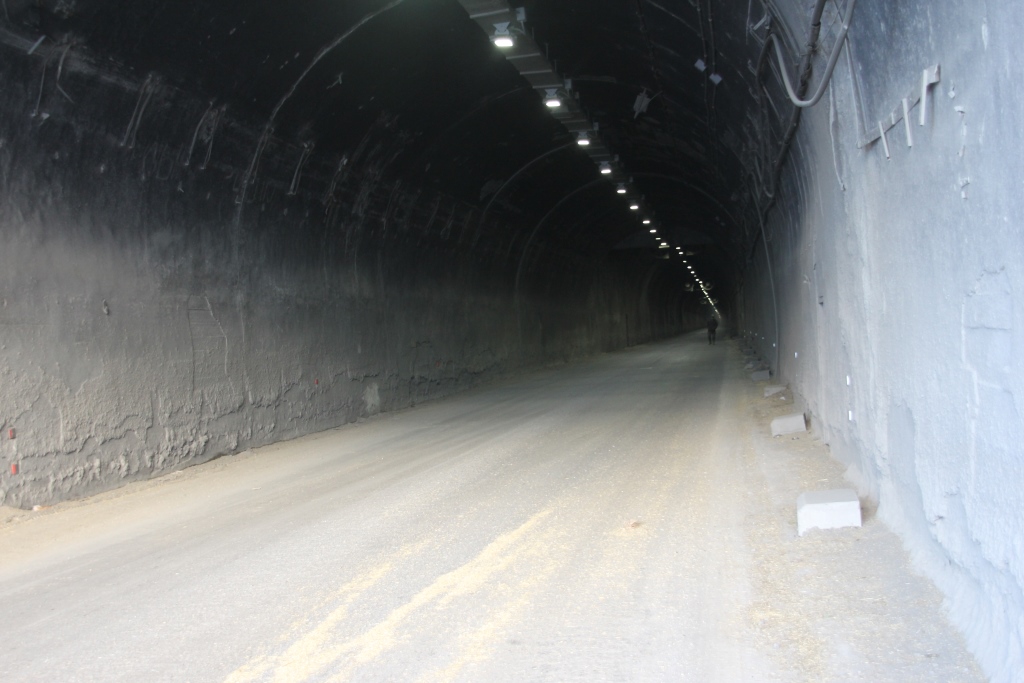
The Salang Tunnel ( Tūnel-e Sālang, Da Sālang Tūnel) is a 2.67 km tunnel located at the Salang Pass in northern Parwan Province of Afghanistan, about 90 km north of the nation's capital, Kabul. At nearly 3400 m above sea level, the tunnel work was originally completed by the Soviet Union in 1964.
The Salang Tunnel is of strategic importance as it connects by road Central Asia with South Asia, and is the only pass going in a north–south direction to remain in use throughout the year, although it is often closed during the cold winters by heavy snowfall.
Overview
The tunnel represents the major north–south connection in Afghanistan, cutting travel time from 72 hours to 10 hours and saving about 300 km. It reaches an altitude of about 3400 m and is 2.6 km long. The width and height of the tunnel tube are 7 m. Other sources say that the tunnel is no more than 20 ft wide at the base and 16 ft high, but only in the centre.
It was noted in 2010 that about 16,000 vehicles pass through the Salang Tunnel daily. Other reports say that the tunnel was designed for 1,000 vehicles a day, but is now handling seven to ten thousand vehicles a day.
It forms part of Highway 1 (Ring Road).
History
In 1955, Afghanistan and the Soviet Union signed an agreement to initiate joint development of the Salang road, initially via the historic Salang Pass route. The tunnel was opened in 1964 and provided a year-round connection from the northern parts of the country to Kabul. The tunnel was the highest road tunnel in the world until 1973, when the United States built the Eisenhower Tunnel — just slightly higher and slightly longer — in Colorado in the Rocky Mountains.
.jpg)
A ventilation system was built in 1976. During the Soviet–Afghan War, the tunnel was a crucial military link to the south, yet was prone to ambushes by the Afghan mujahideen fighters.
After the 1989 Soviet withdrawal from Afghanistan, maintenance suffered, and eventually, in the course of combat between the Northern Alliance and the Taliban in 1997–1998, the tunnel's entrances, lighting and ventilation system were destroyed, so that it could only be transited by foot in the dark. After the overthrow of the Taliban-led government in the 2001 US invasion of Afghanistan, a joint effort of agencies from Afghanistan, France, Russia, the United States and others cleared the mines and debris and reopened the tunnel on January 19, 2002.
In the early 2010s it was still receiving ISAF funding for repair and renovation.
In 2012, the United States Agency for International Development (USAID) made a technical study for a new tunnel reaching from the Olang region in Parwan province (about 6km south) to DoShakh in Baghlan province (about 10km north), going through the mountains of the Hindu Kush, further than the current tunnel. The design shortened travel distance by 30 to.
In 2023, major construction work was done inside and outside the tunnel.
Incidents
1980 accident
On February 23, 1980 as a result of a road collision, a Soviet Army convoy was trapped and 16 of its servicemen suffocated from exhaust gases.
1982 fire
Main article: 1982 Salang Tunnel fire
On November 3, 1982 a deadly fire killed an estimated 64 Soviet soldiers and 112 Afghans based on Soviet sources; apparently after a collision, a tanker truck blew up in the tunnel, and the fire engulfed a military convoy. Western sources estimate as many as 2,700-3,000 fatalities.
2002 avalanche
Several weeks after reopening several hundred people were trapped in the tunnel due to an avalanche at its southern end. While most people were rescued, some died from asphyxiation and freezing. After further rehabilitation in July 2004, the tunnel could carry two-way traffic.
2009 avalanches
Main article: 2009 Afghan avalanches
Avalanches in the approach to the tunnel killed at least ten people in January 2009.
2010 avalanches
Main article: 2010 Salang avalanches
On February 8, 2010, a series of at least seventeen avalanches struck the area around the tunnel, burying miles of road, killing 175 people and stranding hundreds more. Hundreds of cars were buried in the snow. At least 400 injuries were reported.
The Afghan National Army and NATO used their helicopters to rescue at least 2,500 people who were trapped inside their vehicles.
The avalanches were caused by a sudden blizzard that struck the area, closing the tunnel and the roads around it on both side of the tunnel.
The tunnel was reopened on February 12, 2010.
2022 fire
Main article: 2022 Salang Tunnel fire
On 18 December 2022, a fuel tanker exploded, killing at least 31 people and injuring 37 others.
References
References
- (10 February 2010). "Salang Tunnel - Afghanistan's lifeline". BBC News.
- Bauer, Wolfgang. (2022-04-17). "Salang-Tunnel in Afghanistan: Der Riss". Die Zeit.
- "High Up In Afghanistan, A 'Ghostly' Ride Through The Salang Tunnel".
- Nordland, Rod. (2012-06-02). "U.S.-Pakistan dispute chokes Afghan supply route".
- IRINnews. (February 15, 2010). "Lessons from the Salang pass disaster".
- Jerome Starkey. (9 February 2010). "Avalanches kill 28 and injure dozens near Salang tunnel". [[The Times]].
- (2 March 2013). "ISAF finance Salang tunnel renovation". [[The Khaama Press News Agency]].
- "Technical Studies for New Salang Tunnel Underway".
- (26 October 2023). "80pc reconstruction work of Salang tunnel completed". TOLOnews.
- (October 31, 2023). "Mullah Baradar inspects Salang Pass reconstruction project". Ariana News.
- (4 November 2023). "Workers Attempt to Finish Salang Pass Repair Before Winter". TOLOnews.
- "Афганистан".
- (2009-01-18). "Afghanistan avalanches kill 10". [[The Belfast Telegraph]].
- Rod Norland. (2010-02-09). "Avalanches Kill Dozens on Mountain Highway in Afghanistan". [[The New York Times]].
- Faiez. (2010-02-09). "Avalanches swamp Afghan pass: Scores of bodies pulled from cars as coalition joins search for injured". [[Toronto Star]].
- Ahmed Hanayesh, Ron Synovitz. (2010-02-10). "From Afghan Avalanche, Tales Of Tragedy And Survival". [[Radio Free Europe]].
- (9 February 2010). "Officials: Afghan avalanches may have killed over 60". Toronto Sun.
- (9 February 2010). "Afghanistan tunnel avalanches kill 24 in Hindu Kush". BBC News.
- (2022-12-18). "12 killed as oil tanker catches fire in Afghanistan's Salang pass".
- Binesh, Banafsha. (19 December 2022). "Death Toll in Salang Tunnel Fire Increases to 31; Casualties May Rise". [[Tolo News]].
This article was imported from Wikipedia and is available under the Creative Commons Attribution-ShareAlike 4.0 License. Content has been adapted to SurfDoc format. Original contributors can be found on the article history page.
Ask Mako anything about Salang Tunnel — get instant answers, deeper analysis, and related topics.
Research with MakoFree with your Surf account
Create a free account to save articles, ask Mako questions, and organize your research.
Sign up freeThis content may have been generated or modified by AI. CloudSurf Software LLC is not responsible for the accuracy, completeness, or reliability of AI-generated content. Always verify important information from primary sources.
Report