From Surf Wiki (app.surf) — the open knowledge base
2010 Salang avalanches
Disaster in Parwan, Afghanistan
Disaster in Parwan, Afghanistan
| Field | Value |
|---|---|
| name | 2010 Salang avalanches |
| image_name | Salang_tunnel_entrance.jpg |
| caption | Entrance of the Salang Tunnel |
| date | |
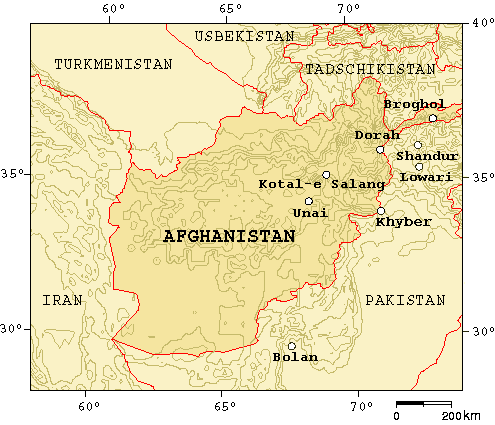
| place | Southern Salang Pass, Parwan Province, Afghanistan |
| reported death(s) | 175 |
|reported death(s) = 175 The 2010 Salang avalanches (, ) consisted of a series of at least 36 avalanches that struck the southern approach to the Salang Tunnel, north of Kabul. |url-status=live
Leading up to the disaster
About 250 avalanches annually strike the road. During the 2008-09 season, 40 people were killed by avalanches in Afghanistan.
On 7 February 2010, the Afghan Red Crescent Society (ARCS) reported that 10 people were killed in Kandahar Province. Najibullah Barith, ARCS's director in Kandahar complained about the lack of local and national resources.
A spokesman for the Afghanistan National Disasters Management Authority said that 11 people were killed by avalanches in Farah, Bamyan, Ghor and Daikundi provinces between 4 and 8 February. Flash floods and avalanches left 20 others dead in the rest of the country on 8 February. The provincial authorities had summoned an emergency meeting and Loya Jurga to discuss responses on 8 February. Shah Wali Kot and Shorandam districts were the worst affected.
Avalanches
A sudden blizzard struck the area shortly before the disaster, closing the tunnel and the roads around it on both sides of the tunnel. Heavy wind and rain in the area just before the incident caused up to 17 avalanches that buried at least 3.5 km of roadway in the Salang Tunnel, trapping thousands of people in their vehicles who were travelling in the tunnel. This also cut off one of the major travel links to northern Afghanistan.
Official reports soon after the avalanche report up to 64 people were feared dead and that more could die. Afghanistan's interior minister Mohammad Hanif Atmar believed that there could be at least 2,500 people trapped in their vehicles. Many vehicles were pushed down the mountains, and hundreds of cars were buried in snow. Among the survivors many injuries were reported.
The tunnel was reopened on 12 February 2010.
Rescue

The Afghan National Army formed the main backbone of the recovery effort with at least 500 troops sent to the area as well as two helicopters and several bulldozers. NATO International Security Assistance Force forces also gave their support providing four Chinook helicopters, as well as using helicopters to drop food and medical supplies to those trapped in their vehicles. The injured had been taken to Charikar Hospital in Parwan Province, and the more seriously injured to Bagram Airfield where they received more advanced medical treatment from coalition doctors.
Beside the direct injuries from the avalanche, there was also the danger of carbon monoxide poisoning inside the poorly-ventilated tunnel, while the traffic was stalled for a long time. By 10 February, about 2,500 people had been rescued, but it was feared that more people were still buried in their snow-trapped vehicles.
Criticism
Institutional authorities including the National Meteorology Authority (NMA) were criticised for allowing the disaster to unfold. Although heavy snowfall had been forecast in the Salang area and structural walls had been weakened in previous avalanches, the pass was not closed and no preparations had been put in place. Officials point out that Afghanistan lacks the resources and infrastructure for the prevention and management of natural disasters and relies to some degree upon help by the United Nations and international forces.
References
References
- [http://nz.news.yahoo.com/a/-/world/6792599/kabul-fears-avalanche-toll-could-rise/ Kabul fears avalanche toll could rise] {{webarchive. link. (31 March 2010)
- (2010-02-13). "The Associated Press: Officials: Afghan avalanches kill 157 people".
- Starkey J. (10 February 2010). "Avalanches kill 64 and injure dozens near Salang tunnel". The Times.
- (8 February 2010). "In Brief: Afghan floods, avalanches leave 20 dead". Reuters.
- (10 February 2010). "Afghanistan avalanches kill at least 165 in Salang Pass". BBC.
- (10 February 2010). "Afghanistan avalanches kill at least 165 in Salang Pass". BBC News.
- "Avalanches Kill Dozens on Mountain Highway in Afghanistan (Published 2010)".
- (9 February 2010). "Officials: Afghan avalanches may have killed over 60". Toronto Sun.
- Trend news agency. (13 February 2010). "Afghanistan reopens Salang Pass after avalanches kill 172".
- ""Afghan Forces Lead Rescue Efforts"".
- [http://www.torontosun.com/news/world/2010/02/09/12803311.html#/news/world/2010/02/09/pf-12802726.html Officials: Afghan avalanches may have killed over 60]
- (15 February 2010). "Lessons from the Salang pass disaster". [[The New Humanitarian.
This article was imported from Wikipedia and is available under the Creative Commons Attribution-ShareAlike 4.0 License. Content has been adapted to SurfDoc format. Original contributors can be found on the article history page.
Ask Mako anything about 2010 Salang avalanches — get instant answers, deeper analysis, and related topics.
Research with MakoFree with your Surf account
Create a free account to save articles, ask Mako questions, and organize your research.
Sign up freeThis content may have been generated or modified by AI. CloudSurf Software LLC is not responsible for the accuracy, completeness, or reliability of AI-generated content. Always verify important information from primary sources.
Report