From Surf Wiki (app.surf) — the open knowledge base
Rajasthan
State in northwestern India

State in northwestern India
| Field | Value |
|---|---|
| name | Rajasthan |
| official_name | State of Rajasthan |
| image_skyline | {{multiple image |
| border | infobox |
| total_width | 280 |
| perrow | 1/2/2/2/1 |
| caption_align | center |
| image1 | Thar Khuri.jpg |
| caption1 | Thar desert |
| image2 | Jodhpur mehrangarh fort (enhanced).jpg |
| caption2 | Mehrangarh |
| image3 | Udaipur-Stadtpalast-42-vom Picholasee-2018-gje.jpg |
| caption3 | City Palace, Udaipur |
| image4 | Baroli temple.jpg |
| caption4 | Ghateshwar Temple |
| image5 | Kumbhalgarh 055.jpg |
| caption5 | Kumbhalgarh |
| image6 | Mahi Bajaj Sagar Dam, Banswara.jpg |
| caption6 | Mahi Bajaj Sagar Dam |
| image7 | Jain Temple Ranakpur.jpg |
| caption7 | Ranakpur Jain temple |
| image8 | Amber palace, Jaipur.jpg |
| caption8 | Amer Fort |
| type | State |
| image_seal | Emblem of India.svg |
| seal_size | 100 |
| etymology | Land of Kings |
| motto | Satyameva Jayate (Sanskrit) |
| (Truth alone triumphs) | |
| image_map | IN-RJ.svg |
| coordinates | |
| region | Northwest India |
| before_was | Rajputana Agency |
| formation_date4 | |
| capital | Jaipur |
| largestcity | capital |
| districts | 41 (7 divisions) |
| Governor | Haribhau Kisanrao Bagde |
| Chief_Minister | Bhajan Lal Sharma |
| party | BJP |
| Deputy_CM | Diya Kumari (BJP) |
| legislature_type | Unicameral |
| assembly | Rajasthan Legislative Assembly |
| assembly_seats | 200 seats |
| rajya_sabha_seats | 10 seats |
| lok_sabha_seats | 25 seats |
| judiciary | Rajasthan High Court |
| area_total_km2 | 342239 |
| area_rank | 1st |
| length_km | 826 |
| width_km | 869 |
| elevation_footnotes | |
| elevation_m | 225 |
| elevation_max_m | 1,722 |
| elevation_max_point | Guru Shikhar |
| elevation_min_m | 100 |
| elevation_min_point | Luni River |
| population_footnotes | |
| population_total | 68,548,437 |
| population_as_of | 2011 |
| population_rank | 7th |
| population_density | 200 |
| population_urban | 24.87% |
| population_rural | 75.13% |
| population_demonym | Rajasthani |
| 0fficial_Langs | Hindi |
| additional_official | English |
| official_script | Devanagari script |
| GDP_footnotes | |
| GDP_total | |
| GDP_year | 2023–24 |
| GDP_rank | 7th |
| GDP_per_capita | |
| GDP_per_capita_rank | 22nd |
| HDI | 0.692 |
| HDI_year | 2022 |
| HDI_rank | 23rd |
| literacy | 75.8% |
| literacy_year | 2024 |
| literacy_rank | 33rd |
| sex_ratio | 1009♀/1000 ♂ |
| sexratio_year | 2021 |
| sexratio_rank | 30th |
| iso_code | IN-RJ |
| registration_plate | RJ |
| website | Rajasthan.gov.in |
| mammal | Camel and Chinkara |
| bird | Godawan |
| flower | Rohida |
| tree | Khejri |
| image_highway | SH IN-RJ.png |
| SH_numbers | RJ SH1 -RJ SH138 |
(Truth alone triumphs)
Prem Chand Bairwa (BJP)
Rajasthan (; lit. 'Land of Kings') It is the largest Indian state by area and the seventh largest by population. It covers 342239 km2 or 10.4 per cent of India's total geographical area. It is on India's northwestern side, where it comprises most of the wide and inhospitable Thar Desert (also known as the Great Indian Desert) and shares a border with the Pakistani provinces of Punjab to the northwest and Sindh to the west, along the Sutlej-Indus River valley. It is bordered by five other Indian states: Punjab to the north; Haryana and Uttar Pradesh to the northeast; Madhya Pradesh to the southeast; and Gujarat to the southwest. Its geographical location is 23°3' to 30°12' North latitude and 69°30' to 78°17' East longitude, with the Tropic of Cancer passing through its southernmost tip.
Its major features include the ruins of the Indus Valley civilisation at Kalibangan and Balathal, the Dilwara Temples, a Jain pilgrimage site at Rajasthan's only hill station, Mount Abu, in the ancient Aravalli mountain range and eastern Rajasthan, the Keoladeo National Park of Bharatpur, a World Heritage Site known for its bird life. Rajasthan is also home to five national tiger reserves, the Ranthambore National Park in Sawai Madhopur, Sariska Tiger Reserve in Alwar, the Mukundra Hills Tiger Reserve in Kota, Ramgarh Vishdhari Tiger reserve and Karauli Dholpur tiger reserve.
The State of Rajasthan was formed on 30 March 1949 when the states of the Rajputana Agency of the erstwhile British Empire in India were merged into the new Indian Union. Its capital and largest city is Jaipur. Other important cities are Jodhpur, Kota, Bikaner, Ajmer, Bhilwara, Sawai Madhopur, Bharatpur and Udaipur. The economy of Rajasthan is the seventh-largest state economy in India with in gross domestic product and a per capita GDP of . Rajasthan ranks 22nd among Indian states in human development index.
Etymology
Rajasthan means "Land of Kings" and is a portmanteau of Sanskrit "Rājā" ('King') and Sanskrit "Sthāna" ('Land') or Persian "Stān", with the same meaning.** The first printed mention of the name Rajasthan appears in the 1829 publication Annals and Antiquities of Rajasthan or the Central and Western Rajpoot States of India, while the earliest known record of Rajputana as a name for the region is in George Thomas's 1800 memoir Military Memories. John Keay, in his book India: A History, stated that Rajputana was coined by the British in 1829, John Briggs, translating Ferishta's history of early Islamic India, used the phrase "Rajpoot (Rajput) princes" rather than "Indian princes".
History
Main article: History of Rajasthan, List of battles of Rajasthan
Ancient times
Parts of what is now Rajasthan were partly part of the Vedic Civilisation and the Indus Valley civilisation. Kalibangan, in Hanumangarh district, was a major provincial capital of the Indus Valley Civilisation. Topsfield writes that the Rajputs first entered India from the north west in the first millennium A.D. They established kingdoms in western India in the region that is now known as Rajasthan.
An archaeological excavation at the Balathal site in Udaipur district shows a settlement contemporary with the Harrapan civilisation dating back to 3000–1500 BCE. Stone Age tools dating from 5,000 to 200,000 years were found in Bundi and Bhilwara districts of the state.
The Matsya kingdom of the Vedic civilisation of India is said to roughly corresponded to the former state of Jaipur in Rajasthan and included the whole of Alwar with portions of Bharatpur. The capital of Matsya was at Viratanagar (modern Bairat), which is said to have been named after its founder King Virata.
Bhargava identifies the two districts of Jhunjhunu and Sikar and parts of Jaipur district along with Haryana districts of Mahendragarh and Rewari as part of Vedic state of Brahmavarta. Bhargava also locates the present day Sahibi River as the Vedic Drishadwati River, which along with Saraswati River formed the borders of the Vedic state of Brahmavarta. Manu and Bhrigu narrated the Manusmriti to a congregation of seers in this area. The ashrams of Vedic seers Bhrigu and his son Chayvan Rishi, for whom Chyawanprash was formulated, were near Dhosi Hill, part of which lies in Dhosi village of Jhunjhunu district of Rajasthan and part of which lies in Mahendragarh district of Haryana.
The Western Kshatrapas (405–35 BCE), the Saka rulers of the western part of India, were successors to the Indo-Scythians and were contemporaneous with the Kushans, who ruled the northern part of the Indian subcontinent. The Indo-Scythians invaded the area of Ujjain and established the Saka era (with their calendar), marking the beginning of the long-lived Saka Western Satraps state.
The Allahabad Pillar Inscription (also known as the Prayaga Pillar Inscription) of Samudragupta, AD 360, records that the Abhiras were a powerful tribe who ruled over the whole of Rajasthan.
Classical era
Gurjara-Pratihara
The Pratiharas ruled for many dynasties in this part of the country; the region was known as Gurjaratra. Up to the 10th century, almost all of North India acknowledged the supremacy of the Imperial Pratiharas, with their seat of power at Kannauj.
The Gurjara Pratihar Empire acted as a barrier for Arab invaders from the 8th to the 11th century. The chief accomplishment of the Gurjara-Pratihara Empire lies in its successful resistance to foreign invasions from the west, starting in the days of Junaid. Historian R. C. Majumdar says that this was openly acknowledged by the Arab writers. He further notes that historians of India have wondered at the slow progress of Muslim invaders in India, as compared with their rapid advance in other parts of the world. Now there seems little doubt that it was the power of the Pratihara army that effectively barred the progress of the Arabs beyond the confines of Sindh, their only conquest for nearly 300 years.
Medieval and early modern eras
The Ghurids had made an attempt to invade India through southern Rajasthan, however they were defeated in the Battle of Kasahrada on 1178 by a confederacy of Rajputs under Mularaja II of the Kingdom of Gujarat. Prithviraj Chauhan led a confederacy of Rajput clans and defeated the invading Ghruids under Muhammad Ghori in the First Battle of Tarain in 1191. In 1192, Muhammad Ghori decisively defeated Prithviraj at the Second Battle of Tarain. After the defeat of Chauhan in the same year, a part of Rajasthan came under Muslim rulers. The principal centres of their powers were Nagaur and Ajmer. Ranthambhore was also under their suzerainty. At the beginning of the 13th century, the most prominent and powerful state of Rajasthan was Mewar. Since the invasion of the Muslim Turks from the 13th century onwards, the Rajputs resisted the Muslim incursions into India, and preserved Hindu culture at their courts.
The Rajputs put up resistance to the Islamic invasions with their warfare and chivalry for centuries. The Ranas of Mewar led other kingdoms in their resistance to outside rule. Rana Hammir Singh defeated the Tughlaq dynasty and recovered a large portion of Rajasthan. The indomitable Rana Kumbha defeated the Sultans of Malwa, Nagaur and Gujarat and made Mewar the most powerful Rajput Kingdom in India. The ambitious Rana Sanga united the various Rajput clans, including the Muslim Khanzadas of Mewat under Raja Hasan Khan Mewati, and fought against the foreign powers in India. Rana Sanga defeated the Afghan Lodi Empire of Delhi and crushed the Turkic Sultanates of Malwa and Gujarat. Rana Sanga then tried to create an Indian empire but was defeated by the first Mughal Emperor Babur at Khanwa. The defeat was due to betrayal by the Tomar King Silhadi of Raisen. After Rana Sanga's death, Marwar rose as a power centre in Rajasthan under Rao Maldeo Rathore. He conquered Jaisalmer, parts of Gujarat, Jalore, Nagaur, Ajmer, Sanchore, Bhinmal, Radhanpur, Bayana, Tonk, Toda and Nabhara. He expanded the territories of Marwar up to Sindh-Cholistan in west and his northern boundary was just fifty kilometres from Delhi. After defeating Humayun, Sher Shah came towards Rajputana. He defeated Chiefs of Rathore army by trickery in Battle of Sammel and captured some territory of Marwar but it was recovered by Rathores in 1545.
Hem Chandra Vikramaditya, the Hindu emperor, was born in the village of Machheri in Alwar District in 1501. He won 22 battles against Afghans, from Punjab to Bengal including the states of Ajmer and Alwar in Rajasthan, and defeated Akbar's forces twice, first at Agra and then at Delhi in 1556 at Battle of Delhi before acceding to the throne of Delhi and establishing the "Hindu Raj" in North India, albeit for a short duration, from Purana Qila in Delhi. Hem Chandra was killed in the battlefield at Second Battle of Panipat fighting against Mughals on 5 November 1556.
During Akbar's reign most of the Rajput kings accepted Mughal suzerainty, but the rulers of Mewar (Rana Udai Singh II) and Marwar (Rao Chandrasen Rathore) refused to have any form of alliance with the Mughals. To teach the Rajputs a lesson Akbar attacked Udai Singh and killed Rajput commander Jaimal of Chitor and the citizens of Mewar in large numbers. Akbar killed 20,000–25,000 unarmed citizens in Chittor on the grounds that they had actively helped in the resistance.
Maharana Pratap took an oath to avenge the citizens of Chittor; he fought the Mughal empire till his death and liberated most of Mewar apart from Chittor itself. Maharana Pratap soon became the most celebrated warrior of Rajasthan and became famous all over India for his sporadic warfare and noble actions. According to Satish Chandra, "Rana Pratap's defiance of the mighty Mughal empire, almost alone and unaided by the other Rajput states, constitutes a glorious saga of Rajput valor and the spirit of self-sacrifice for cherished principles. Rana Pratap's methods of sporadic warfare were later elaborated further by Malik Ambar, the Deccani general, and by Shivaji".
Rana Amar Singh I continued his ancestor's war against the Mughals under Jehangir, he repelled the Mughal armies at Dewar. Later an expedition was again sent under the leadership of Prince Khurram, which caused much damage to life and property of Mewar. Many temples were destroyed, several villages were put on fire and women and children were captured and tortured to make Amar Singh accept surrender.
During Aurangzeb's rule Rana Raj Singh I, Veer Durgadas Rathore and Patshah Akheraj Singh Rajpurohit were chief among those who defied the intolerant emperor of Delhi. They took advantage of the Aravalli hills and caused heavy damage to the Mughal armies that were trying to occupy Rajasthan.
After Aurangzeb's death Bahadur Shah I tried to subjugate Rajasthan like his ancestors but his plan backfired when the three Rajput Rajas of Amber, Udaipur, and Jodhpur made a joint resistance to the Mughals. The Rajputs first expelled the commandants of Jodhpur and Bayana and recovered Amer by a night attack. They next killed Sayyid Hussain Khan Barha, the commandant of Mewat and many other Mughal officers. Bahadur Shah I, then in the Deccan was forced to patch up a truce with the Rajput Rajas. The Jats, under Suraj Mal, overran the Mughal garrison at Agra and plundered the city taking with them the two great silver doors of the entrance of the famous Taj Mahal which were then melted down by Suraj Mal in 1763.
Over the years, the Mughals began to have internal disputes which greatly distracted them at times. The Mughal Empire continued to weaken, and with the decline of the Mughal Empire in the late 18th century, Rajputana came under the influence of the Marathas. The Maratha Empire, which had replaced the Mughal Empire as the overlord of the subcontinent, was finally replaced by the British Empire in 1818.
In the 19th century, the Rajput kingdoms were exhausted financially and in manpower after continuous wars and due to heavy tributes exacted by the Maratha Empire. To save their kingdoms from instability, rebellions and banditry the Rajput kings concluded treaties with the British in the early 19th century, accepting British suzerainty and control over their external affairs in return for internal autonomy.
File:Maharana Kumbhakarna of Mewar.jpg|Rana Kumbha was the vanguard of the fifteenth century Rajput resurgence. File:Maharaja Hemu Bhargava - Victor of Twenty Two Pitched Battles, 1910s.jpg|The emperor Hemu, who rose from obscurity and briefly established himself as ruler in northern India, from Punjab to Bengal, in defiance of the warring Sur and Mughal Empires. File:Durgadas Rathore painting.jpg|Durgadas Rathore, a Rathore Rajput warrior of Jodhpur who played an important role in protecting the Rathore dynasty of Marwar and for his rebellion against Aurangzeb. File:RajaRaviVarma MaharanaPratap.jpg|Maharana Pratap Singh, sixteenth-century Rajput ruler of Mewar, known for his defence of his realm against Mughal invasion. File:Maharaja Suraj Mal.jpg|Suraj Mal was ruler of Bharatpur. Some contemporary historians described him as "the Plato of the Jat people" and by a modern writer as the "Jat Odysseus", because of his political sagacity, steady intellect and clear vision.
Modern era
The State of Rajasthan was formed on 30 March 1949 when the states of the Rajputana Agency of the erstwhile British Empire in India were merged into the new Indian Union. Modern Rajasthan includes most of Rajputana, which comprises the erstwhile nineteen princely states, three chiefships, and the British district of Ajmer-Merwara. Jaisalmer, Marwar (Jodhpur), Bikaner, Mewar (Chittorgarh), Alwar and Dhundhar (Jaipur) were some of the main Rajput princely states. Bharatpur and Dholpur were Jat princely states whereas Tonk was a princely state under Pathans. The three chiefships were Lawa, Neemrana and Kushalgarh.
Geography
Main article: Climate of Rajasthan
The geographic features of Rajasthan are the Thar Desert and the Aravalli Range, which runs through the state from southwest to northeast, almost from one end to the other, for more than 850 km. Mount Abu lies at the southwestern end of the range, separated from the main ranges by the West Banas River. Although a series of broken ridges continues into Haryana in the direction of Delhi where it can be seen as outcrops in the form of the Raisina Hill and the ridges farther north. About three-fifths of Rajasthan lies northwest of the Aravallis, leaving two-fifths on the east and south direction.
The Aravalli Range runs across the state from the southwest peak Guru Shikhar (Mount Abu), which is 1722 m in height, to Khetri in the northeast. This range divides the state into 60% in the northwest of the range and 40% in the southeast. The northwest tract is sandy and unproductive with little water but improves gradually from desert land in the far west and northwest to comparatively fertile and habitable land towards the east. The south-eastern area, higher in elevation (100 to 350 m above sea level) and more fertile, has a very diversified topography. In the south lies the hilly tract of Mewar. In the southeast, a large area within the districts of Kota and Bundi forms a tableland. To the northeast of these districts is a rugged region (badlands) following the line of the Chambal River. Farther north the country levels out; the flat plains of the northeastern Bharatpur district are part of an alluvial basin. Merta City lies in the geographical centre of Rajasthan.
The Aravalli Range and the lands to the east and southeast of the range are generally more fertile and better watered. This region is home to the Khathiar-Gir dry deciduous forests ecoregion, with tropical dry broadleaf forests that include teak, Acacia, and other trees. The hilly Vagad region, home to the cities of Dungarpur, Pratapgarh, and Banswara lies in southernmost Rajasthan, on the border with Gujarat and Madhya Pradesh. With the exception of Mount Abu, Vagad is the wettest region in Rajasthan, and the most heavily forested. North of Vagad lies the Mewar region, home to the cities of Udaipur and Chittaurgarh. The Hadoti region lies to the southeast, on the border with Madhya Pradesh. North of Hadoti and Mewar lies the Dhundhar region, home to the state capital of Jaipur. Mewat, the easternmost region of Rajasthan, borders Haryana and Uttar Pradesh. Eastern and southeastern Rajasthan is drained by the Banas and Chambal rivers, tributaries of the Ganges.
The northwestern portion of Rajasthan is generally sandy and dry. Most of this region is covered by the Thar Desert which extends into adjoining portions of Pakistan. The Aravalli Range does not intercept the moisture-giving southwest monsoon winds off the Arabian Sea, as it lies in a direction parallel to that of the coming monsoon winds, leaving the northwestern region in a rain shadow. The Thar Desert is thinly populated; the City of Jodhpur is the largest city in the desert and a major metropolitan area of India which is known as the gateway of the Thar desert. The desert has some major districts like Jodhpur, Jaisalmer, Barmer, Bikaner, and Nagaur. This area is also important from a defence point of view. Jodhpur airbase is one of the largest airbases in India, BSF and Military bases are also situated here. Currently four civil airports are located here: Jodhpur, Jaisalmer, Bikaner and Nagaur, of which Jodhpur is the major civil airport, being the 44th busiest airport in India and one of the oldest air strips of India, being built in the 1920s.
The Northwestern thorn scrub forests lie in a band around the Thar Desert, between the desert and the Aravallis. This region receives less than 400 mm of rain annually. Temperatures can sometimes exceed 45 °C in the summer months and drop below freezing point in the winter. The Godwar, Marwar, and Shekhawati regions lie in the thorn scrub forest zone, along with the city of Jodhpur. The Luni River and its tributaries are the major river system of Godwar and Marwar regions, draining the western slopes of the Aravallis and emptying southwest into the great Rann of Kutch wetland in neighbouring Gujarat. This river is saline in the lower reaches and remains potable only up to Balotara in Barmer district. The Ghaggar River, which originates in Haryana, is an intermittent stream that disappears into the sands of the Thar Desert in the northern corner of the state and is seen as a remnant of the primitive Sarasvati river. File:Mt. Abu.jpg|Mount Abu is a popular hill station in Rajasthan. File: A sunset on the dunes of the Great Indian Thar Desert Rajasthan India.jpg|The Thar Desert near Jaisalmer. File: An aerial view of Udaipur and Aravali hills Rajasthan India 2012.jpg|Aerial view Udaipur and Aravali hills.
Flora and fauna
Main article: Wildlife of Rajasthan
| **State tree** | Khejadi |
|---|
The Desert National Park in Jaisalmer, spread over an area of 3162 km2, is an excellent example of the ecosystem of the Thar Desert and its diverse fauna. Seashells and massive fossilised tree trunks in this park record the geological history of the desert. The region is a haven for migratory and resident birds of the desert. One can see many eagles, harriers, falcons, buzzards, kestrels and vultures. Short-toed snake eagles (Circaetus gallicus), tawny eagles (Aquila rapax), spotted eagles (Aquila clanga), laggar falcons (Falco jugger) and kestrels are some of the raptor species seen in Desert National Park. Road traffic inside the Park is, however, a threat to several wild species of the park with several species of amphibians, reptiles, birds and mammals reported to have died as roadkill.
The Ranthambore National Park located in Sawai Madhopur, one of the well known tiger reserves in the country, became a part of Project Tiger in 1973.
Tal Chhapar Sanctuary is a very small sanctuary in Sujangarh, Churu District, 210 km from Jaipur in the Shekhawati region. This sanctuary is home to a large population of blackbuck. Desert foxes and the caracal, an apex predator, also known as the desert lynx, can also be spotted, along with birds such as the partridge, harriers, eastern imperial eagle, pale harrier, marsh harrier, short-toed eagle, tawny eagle, sparrow hawk, crested lark, demoiselle crane, skylarks, green bee-eater, brown dove, black ibis, and sand grouse. The great Indian bustard, known locally as the godavan, and which is a state bird, has been classed as critically endangered since 2011.
Wildlife protection

Rajasthan is also noted for its national parks and wildlife sanctuaries. There are four national parks and wildlife sanctuaries: Keoladeo National Park of Bharatpur, Sariska Tiger Reserve of Alwar, Ranthambore National Park of Sawai Madhopur, and Desert National Park of Jaisalmer. A national-level institute, Arid Forest Research Institute (AFRI) an autonomous institute of the ministry of forestry is situated in Jodhpur and continuously works on desert flora and their conservation.
Ranthambore National Park is 7 km from Sawai Madhopur Railway Station. It is known worldwide for its tiger population and is considered by both wilderness lovers and photographers as one of the best places in India to spot tigers. At one point, due to poaching and negligence, tigers became extinct at Sariska, but five tigers have been relocated there. Prominent among the wildlife sanctuaries are Mount Abu Sanctuary, Bhensrod Garh Sanctuary, Darrah Sanctuary, Jaisamand Sanctuary, Kumbhalgarh Wildlife Sanctuary, Jawahar Sagar Sanctuary, and Sita Mata Wildlife Sanctuary.
Governance and administration
Main article: Politics of Rajasthan, Government of Rajasthan, Legislative Assembly of Rajasthan
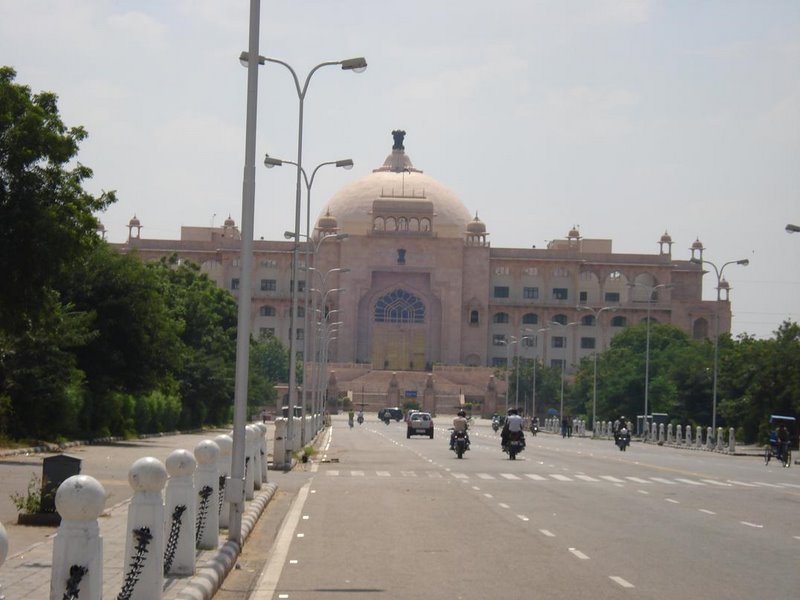
The state is governed by a parliamentary system of representative democracy. The governor serves as the state's constitutional leader, whereas the chief minister assumes the role of both the head of the government and the head of the council of ministers. The Legislative Assembly consists of 200 members who are elected for five-year terms. The state contributes 25 seats to Lok Sabha, the lower house of the Indian Parliament, and 10 seats to Rajya Sabha, the upper house.
The Government of Rajasthan is a democratically elected body in India with the governor as its constitutional head. Governor is appointed by the President of India for a five-year term. The leader of the party or coalition with a majority in the Legislative Assembly is appointed as the chief minister by the governor, and the council of ministers are appointed by the governor on the advice of the chief minister. The governor remains a ceremonial head of the state, while the chief minister and his council are responsible for day-to-day government functions. The council of ministers consists of Cabinet Ministers, Ministers of State (MoS) and Deputy Ministers. The Secretariat headed by the Chief Secretary assists the council of ministers. The Chief Secretary is also the administrative head of the government. Each government department is headed by a minister, who is assisted by an Additional Chief Secretary or a Principal Secretary, who is usually an officer of Indian Administrative Service (IAS), the Additional Chief Secretary/Principal Secretary serve as the administrative head of the department they are assigned to. Each department also has officers of the rank of Secretary, Special Secretary, Joint Secretary etc. assisting the Minister and the Additional Chief Secretary/Principal Secretary.
For the administration purpose, the state is divided into 07 divisions and 41 districts. Divisional Commissioner, is the head of administration on the divisional level. The administration in each district is headed by a District Collector/District Magistrate, who is also an IAS officer, and is assisted by a number of officers belonging to Rajasthan Administrative Services. In Rajasthan, the police force is led by an IPS officer holding the position of Director General of Police. Each district is supervised by a Superintendent of Police, also an IPS officer, who is supported by officers from the Rajasthan Police Services. Their primary responsibility involves maintaining law and order and addressing relevant issues within their respective districts. The management of forests, environment, and wildlife in the district is overseen by the Divisional Forest Officer, who is a member of the Indian Forest Service. This responsibility is carried out with the assistance of officers from the Rajasthan Forest Service and Rajasthan Subordinate Service.

Rajasthan has its High court Jodhpur which has its principal seat at Jodhpur and a bench at Jaipur, with district courts and session courts in each district or Sessions Division, and lower courts at the tehsil level. The president of India appoints the chief justice of the High Court of Rajasthan judiciary on the advice of the Chief Justice of the Supreme Court of India as well as the governor of Rajasthan. In Rajasthan, the Subordinate Judicial Service is an essential component of the state's judiciary, and it is divided into two categories: the Rajasthan Civil Judicial Services and the Rajasthan Higher Judicial Service. The former includes Civil Judges (Junior Division)/Judicial Magistrates and Civil Judges (Senior Division)/Chief Judicial Magistrate. On the other hand, the latter consists of Civil and Sessions Judges. The District Judge has control over the Subordinate Judicial Service in Rajasthan.
The politics of Rajasthan has mainly been dominated mainly by the Bharatiya Janata Party and the Indian National Congress.
Chief Secretary Of Rajasthan is Usha Sharma and Director General of Police or DGP of Rajasthan is Umesh Mishra.
Regions, divisions, districts and cities
Main article: Districts of Rajasthan, List of urban local bodies in Rajasthan


Rajasthan is composed of the following geographical, political and historical regions:
- Bagar
- Hadoti
- Dhundhar
- Gorwar
- Shekhawati
- Mewar
- Marwar
- Vagad
- Mewat
- Brij
- Merwara
Rajasthan is divided into 41 districts within 7 divisions:
| Division | Districts |
|---|---|
| Ajmer | |
| Bharatpur | |
| Bikaner | |
| Jaipur | |
| Jodhpur | |
| Kota | |
| Udaipur |
A district collector and district magistrate, who is appointed by the government from the cadre of Indian Administrative Service or Rajasthan Administrative Service, administer each district. Each district is divided into subdivisions headed by a Sub-Divisional Magistrate (SDM), comprising tehsils under Tehsildars, primarily responsible for land revenue administration. Additionally, districts are further divided into blocks for rural development administration, headed by Block Development Officers (BDOs). A block consists of panchayats (village councils).
Panchayat Samitis are intermediate level panchayat between the Zilla Parishad (district councils) at the district level and gram panchayat (village councils) at the lower level. These Panchayati Raj institutions govern rural areas of districts, with elections held every five years.
Rajasthan has 5 cities with over one million population. The absolute urban population of the state is 17.4 million, which constitutes 24.87% of the total urban population of the state. There are 10 municipal corporations, 34 municipal councils and 172 municipal boards or nagar parishads in the state. Jaipur, Jodhpur, and Kota have two municipal corporations each since October 2019, as their populations have exceeded 1 million.
Communication
Major internet service provider (ISP) and telecom companies are present in Rajasthan including Vodafone Idea, BSNL, Airtel, Jio, Data Infosys Limited, RailTel Corporation of India, Software Technology Parks of India (STPI). Data Infosys was the first ISP to bring the internet to Rajasthan in April 1999 and OASIS was the first private mobile telephone company.
Economy
Main article: Economy of Rajasthan
Rajasthan's economy is primarily agricultural and pastoral. Wheat and barley are cultivated over large areas, as are pulses, sugarcane, and oilseeds. Cotton and tobacco are the state's cash crops. Rajasthan is among the largest producers of edible oils in India and the second-largest producer of oilseeds. Rajasthan is also the biggest wool-producing state in India and the main opium producer and consumer. There are mainly two crop seasons. The water for irrigation comes from wells and tanks. The Indira Gandhi Canal irrigates northwestern Rajasthan.

The main industries are mineral based, agriculture-based, and textile based. Rajasthan is the second-largest producer of polyester fibre in India. Several prominent chemical and engineering companies are located in the city of Kota, in southern Rajasthan. Rajasthan is pre-eminent in quarrying and mining in India. The Taj Mahal was built from white marble which was mined from a town called Makrana. The state is the second-largest source of cement in India. It has rich salt deposits at Sambhar, copper mines at Khetri, Jhunjhunu, and zinc mines at Dariba, Zawar mines and Rampura Agucha (opencast) near Bhilwara. Dimensional stone mining is also undertaken in Rajasthan. Jodhpur sandstone is mostly used in monuments, important buildings, and residential buildings. This stone is termed as Chittar Patthar. Jodhpur leads in the handicraft and guar gum industries. Rajasthan is also a part of the Mumbai-Delhi Industrial corridor set to benefit economically. The state gets 39% of the DMIC, with major districts of Jaipur, Alwar, Kota and Bhilwara benefiting.
Rajasthan also has reserves of low-silica limestone.
Rajasthan connected 100% of its population to electricity power in 2019 (raising the rate of electricity access from 71% of the population in 2015). The renewable energy sector plays the most important role in the increase of generation capacities, with the main focus on solar energy. In 2020, Bhadla Solar Park was recognised as the largest cluster of photovoltaic power plants in a single region in the world, with the installed power exceeding the 2.2 gigawatt peak.
Rajasthan is also a significant producer of silver. The state produced 679.172 tonnes of silver in 2018–19, 609.153 tonnes in 2019–20, and 705.676 tonnes in 2020–21.
Transportation
Rajasthan is connected by many national highways, the most renowned being NH 8, which is India's first 4–8 lane highway. Rajasthan also has an inter-city surface transport system both in terms of railways and bus network. All chief cities are connected by air, rail, and road.
Air
Jaipur International Airport (JAI) in Jaipur, is the state's largest, busiest and only international airport. Jaipur International Airport offers international service to Dubai, Bangkok, Sharjah and Muscat. There are five civilian airports in Rajasthan including Jodhpur Airport, Udaipur Airport, Ajmer Airport, Bikaner Airport and Jaisalmer Airport. Domestic airports are operated by the Airports Authority of India (AAI) and shares its airside with the Indian Air Force. These airports connect Rajasthan with the major cities of India such as Mumbai, Kolkata, Hyderabad, Chennai and Bangalore.
Railway
Railways length in the state constitute 8.66 per cent of all India route length. Jaipur Junction is the headquarters of the North Western Railway. Jaipur, Ajmer, Bikaner are the busiest railway stations in the state. Kota is the only electrified section served by three Rajdhani Expresses and trains to all major cities of India. Jaipur Superfast Express, fastest train under Superfast category of trains; connects the finance capital of India Mumbai to Jaipur. Luxury tourist train Maharajas' Express runs across North-West and Central India, mainly centred on Rajasthan. There is also an international railway, the Thar Express from Jodhpur (India) to Karachi (Pakistan). However, this is not open to foreign nationals. Jaipur Metro is the metro rail system in the city of Jaipur. It is the only metro rail system in Rajasthan and has been operational since 3 June 2015. It is the first metro in India to run on triple-storey elevated road and metro track.
Road
The state is served by a substantial road network, providing links between urban centres, agricultural market-places and rural areas. There are 33 national highways (NH) in the state, covering a total distance of 10004.14 km. The state has a total road length of 269028 km. The Department of Public Works is responsible for maintaining and expanding the state highways system and major district roads. Jaipur–Kishangarh Expressway forms a segment of the NH-8 which is a part of the Golden Quadrilateral project. Rajasthan State Road Transport Corporation (RSRTC) was established in 1964 to provide economical and reliable passenger road transport service in the state with connecting services to adjoining states. For travelling locally, the state, like most of the country, has auto rickshaws and cycle rickshaws. Average speed on state highways varies between 50 and(-) due to the heavy presence of vehicles; in villages and towns, speeds are as low as 25 –.
File:NIGHT - Jaipur International Airport (13-07-2022) 02.jpg|Jaipur International Airport File:Maharajas' Express - Mayur Mahal, dining (4809207224).jpg|Maharajah's Express dining saloon File:Jaipur 03-2016 34 Jaipur Metro.jpg|The Jaipur Metro is an important urban transportation link File:National highway 841.jpg|NH 8 between Udaipur and Ahmedabad
Demographics
Population
According to the 2011 Census of India, Rajasthan has a total population of 68,548,437. The state contributes to 5.66% of India's population. The population density is 201 people per square kilometre. The sex ratio in 2011, at 928 women to 1000 men, was lower than the national figure of 943. The native Rajasthani people make up the majority of the state's population. The state of Rajasthan is also populated by Sindhis, who came to Rajasthan from Sindh province (now in Pakistan) during the India-Pakistan separation in 1947.
Brahmins, according to Outlook constituted 8% to 10% of the population of Rajasthan as per a 2003 report, but only 7% in a 2007 report. According to a 2007 DNA India report, 12.5% of the state are Brahmins. According to a report by Moneycontrol.com at the time of 2018 Rajasthan Legislative Assembly election, the Scheduled Caste (SC) population was 18%, Scheduled Tribe (ST) was 13%, Jats 12%, Gurjars and Rajputs 9% each, Brahmins and Meenas 7% each. A Hindustan Times report from 2019 also agrees to the total ST population of 13%, of which Meenas constitute the biggest group at 7%. According to a Deutsche Welle report, the Jats constitute 12–15% of the population of Rajasthan, followed by Meenas with 10% and Gurjars with 6%. While as per a 2007 BBC Hindi report, Meenas were 14% and Gurjars were 4% of the state's population.
Language
Hindi is the official language of the state, while English is the additional official language.
The languages of Rajasthan primarily belong to the Rajasthani group of Indo-Aryan languages, which most people regard as their own language. In the north are dialects of Punjabi and Bagri, which is a transition between Rajasthani and Punjabi. In the northeast Shekhawati and Dhundari are spoken which gradually merge with Haryanvi. In the east Mewati is spoken in the Mewat region, while in the far east Braj is spoken. To the southeast Haryanvi is spoken. To the west in the heart of the Thar Desert Marwari is spoken, which merges to Gujarati in the southwest. In the south, in the Mewar region, Mewari is spoken, while in the hills of Wagad, Wagdi, a Bhil language, is spoken. Many speakers of Rajasthani languages refer to their language as Hindi, and Standard Hindi is the medium of education and is common in cities. Urdu is also common in cities although the vast majority of Muslims speak one of the Rajasthani languages as their first language. Sindhi is also common in the cities and along the border with Sindh in Pakistan where Dhatki, a transition between Marwari and Sindhi, is the main dialect on both sides of the border. The literacy rate of Rajasthan was 66.11% according to the 2011 census of India.
The languages taught under the three-language formula are:
- First language: Hindi
- Second language: English
- Third language: Gujarati, Punjabi, Sanskrit, Sindhi or Urdu
Religion
Rajasthan's residents are mainly Hindus, who account for 88.49% of the population. Muslims make up 9.07%, Sikhs 1.27% and Jains 0.91% of the population.
Culture
Main article: Culture of Rajasthan
Food

Rajasthani cooking was influenced by both the war-like lifestyles of its inhabitants and the availability of ingredients in this arid region. Food that could last for several days and could be eaten without heating was preferred. Thus, pickles of Rajasthan are quite famous for their tangy and spicy flavour. The Panchkuta delicacy is also a famous one – meaning 5 vegetables – a dish that lasts for several days, and is made out of certain weed plants that only grow in the wild desert. The scarcity of water and fresh green vegetables have all had their effect on cooking. It is known for its snacks like Bikaneri Bhujia. Other famous dishes include bajre ki roti (millet bread) and lahsun ki chutney (hot garlic paste), mawa kachori Mirchi Bada, Pyaaj Kachori and ghevar from Jodhpur, Alwar ka Mawa (milk cake), Kadhi kachori from Ajmer, Malpua from Pushkar, Daal kachori (Kota kachori) from Kota and rassgullas from Bikaner. Originating from the Marwar region of the state is the concept of Marwari Bhojnalaya or vegetarian restaurants, today found in many parts of India, which offer vegetarian food popular among Marwari people. Ghee is an essential ingredient in most Rajasthani cuisines, and dollops of ghee are poured over food as a welcoming gesture for guests.[[File:Rajasthani Dish.jpg|alt=|thumb|Dal Bati Choorma, a traditional Rajasthani Dish]] Dal-baati-churma is very popular in Rajasthan. The traditional way to serve it is to first coarsely mash the baati, and then pour pure ghee on top of it. It is served with daal (lentils) and spicy garlic chutney; it is also served with besan (gram flour) ki kadi. It is commonly served at all festivities, including religious occasions, wedding ceremonies, and birthday parties in Rajasthan.
Music and dance
Main article: Music of Rajasthan, Folk dances of Rajasthan
The Ghoomar dance from Jaipur, Jodhpur, and Kalbelia of the Kalbelia tribe has gained international recognition. Folk music is a large part of the Rajasthani culture. The Manganiyar, Meena and Langa communities from Rajasthan are notable for their folk music. Kathputli, Bhopa, Chang, Teratali, Ghindr, Gair dance, Kachchhi Ghori, and Tejaji are examples of traditional Rajasthani culture. Folk songs are commonly ballads that relate heroic deeds and love stories; and religious or devotional songs known as bhajans and banis which are often accompanied by musical instruments like dholak, sitar, and sarangi are also sung.
Art

Rajasthan is known for its traditional, colourful art. The block prints, tie and dye prints, gota patti (main), Bagaru prints, Sanganer prints, and Zari embroidery are major export products from Rajasthan. Handicraft items like wooden furniture and crafts, carpets, and blue pottery are commonly found here. Shopping reflects the colourful culture, Rajasthani clothes have a lot of mirror work and embroidery. Traditional Rajasthani dress for females consists of an ankle-length skirt and a short top, known as chaniya choli. A piece of cloth is used to cover the head, both for protection from heat and maintenance of modesty. Rajasthani dresses are usually designed in bright colours such as blue, yellow, and orange.
Education
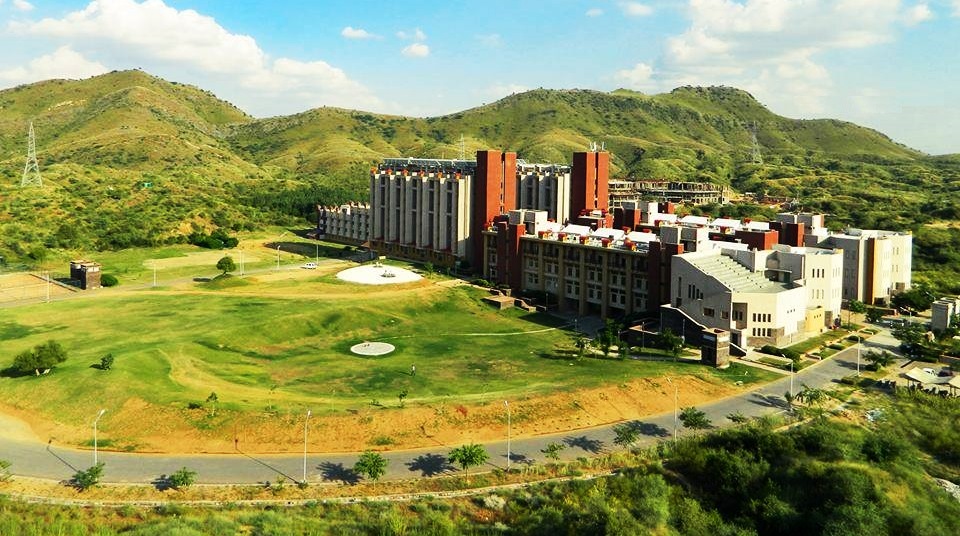
In recent years, Rajasthan has worked on improving education. The state government has been making sustained efforts to raise the education standard.
Schools in the state are either managed by the government or by private trusts. The medium of instruction in most of the schools is mainly English, or Hindi. Under the 10+2+3 plan, after completing secondary school, students typically enroll for two years in a junior college, also known as pre-university, or in schools with a higher secondary facility affiliated with the Board of Secondary Education or any central board. Students choose from one of three streams, namely liberal arts, commerce, or science. Upon completing the required coursework, students may enrol in general or professional degree programs. The secondary schools are affiliated with the Council for the Indian School Certificate Examinations (CISCE), the Central Board for Secondary Education (CBSE), and the National Institute of Open School (NIOS).
Rajasthan has 52 universities, 26 state funded public universities, 7 deemed universities, an IIT in Jodhpur, an IIM in Udaipur, an NIT in Jaipur, a National Law University in Jodhpur, and one central and state-run university. Kota, is renowned for being a hub for training students in various national-level competitive exams that are necessary for securing admission to engineering and medical colleges across the country. In order to promote a reading culture among the rural population, the state has established new libraries up to the panchayat level and computerised all public libraries throughout the state, providing modern amenities to readers and subscriber.
Literacy
In recent decades the literacy rate of Rajasthan has increased significantly. In 1991, the state's literacy rate was only 38.55% (54.99% male and 20.44% female). In 2001, the literacy rate increased to 60.41% (75.70% male and 43.85% female). This was the highest leap in the percentage of literacy recorded in India (the rise in female literacy being 23%). At the Census 2011, Rajasthan had a literacy rate of 67.06% (80.51% male and 52.66% female). Although Rajasthan's literacy rate is below the national average of 74.04% and although its female literacy rate is the lowest in the country, the state has been praised for its efforts and achievements in raising literacy rates.
In rural areas of Rajasthan, the literacy rate is 76.16% for males and 45.8% for females. This has been debated across all the party levels, when the governor of Rajasthan set a minimum educational qualification for the village panchayat elections.
Tourism
Main article: Tourism in Rajasthan
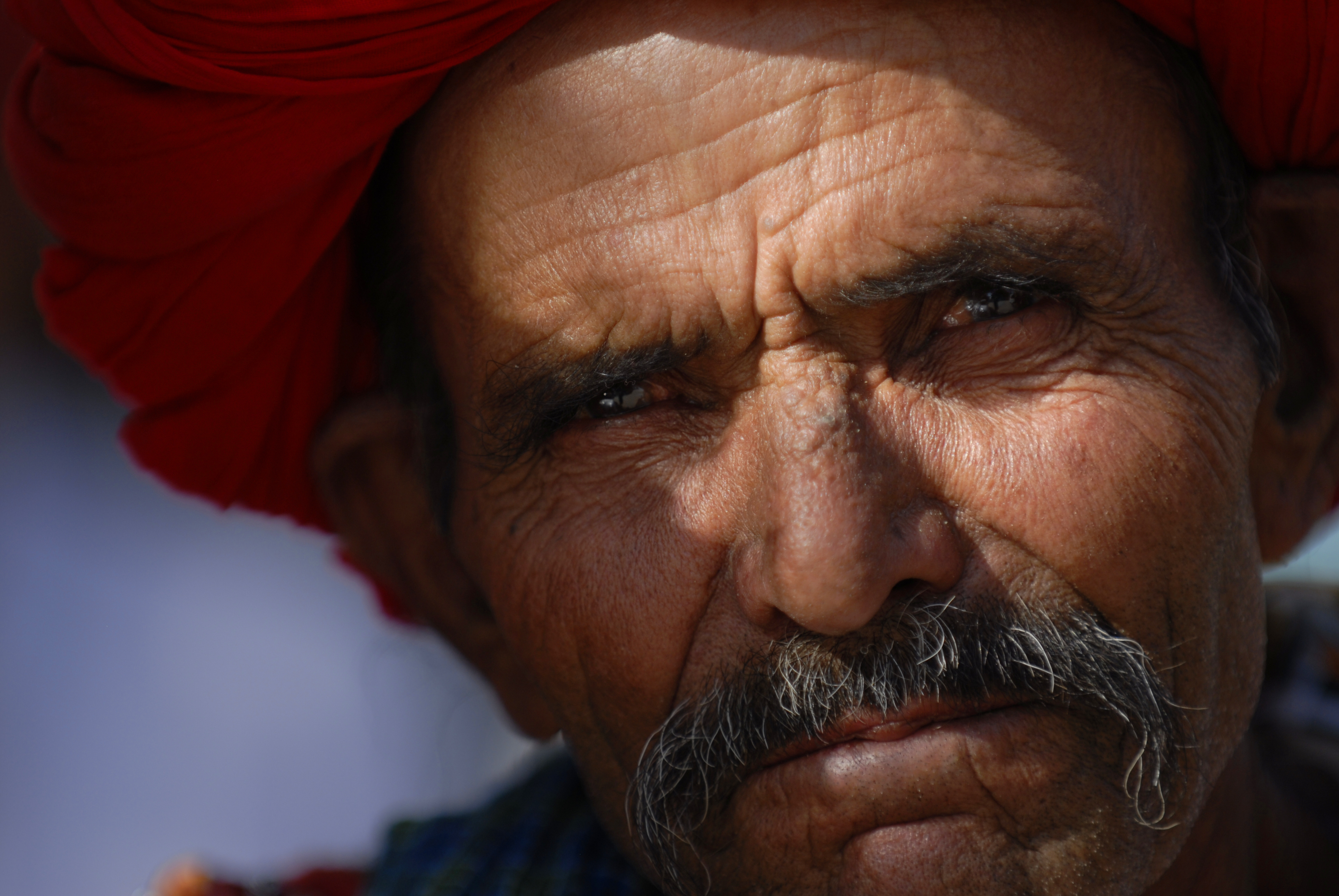
Rajasthan attracted a total of 45.9 million domestic and 1.6 million foreign tourists in 2017, which is the tenth highest in terms of domestic visitors and fifth highest in foreign tourists. The tourism industry in Rajasthan is growing effectively each year and is becoming one of the major income sources for the state government. Rajasthan is home to many attractions for domestic and foreign travellers, including the forts and palaces of Jaipur, the lakes of Udaipur, the temples of Rajsamand and Pali, sand dunes of Jaisalmer and Bikaner, Havelis of Mandawa and Fatehpur, the wildlife of Sawai Madhopur, the scenery of Mount Abu, the tribes of Dungarpur and Banswara, and the cattle fair of Pushkar.
Rajasthan is known for its customs, culture, colours, majestic forts, and palaces, folk dances and music, local festivals, local food, sand dunes, carved temples and Havelis. Rajasthan's Jaipur Jantar Mantar, Mehrangarh Fort and Stepwell of Jodhpur, Dilwara Temples, Chittor Fort, Lake Palace, miniature paintings in Bundi, and numerous city palaces and Havelis are part of the architectural heritage of India. Jaipur, the Pink City, is noted for the ancient houses made of a type of sandstone dominated by a pink hue. In Jodhpur, most houses are painted blue. At Ajmer, there is white marble Bara-dari on the Anasagar lake and Soniji Ki Nasiyan. Jain Temples dot Rajasthan from north to south and east to west. Dilwara Temples of Mount Abu, Shrinathji Temple of Nathdwara, Ranakpur Jain temple dedicated to Lord Adinath in Pali District, Jain temples in the fort complexes of Chittor, Jaisalmer and Kumbhalgarh, Lodurva Jain temples, Mirpur Jain Temple of Sirohi, Sarun Mata Temple at Kotputli, Bhandasar and Karni Mata Temple of Bikaner and Mandore of Jodhpur are some of the best examples. Keoladeo National Park, Ranthambore National Park, Sariska Tiger Reserve, Tal Chhapar Sanctuary, are wildlife attractions of Rajasthan. Mewar festival of Udaipur, Teej festival and Gangaur festival in Jaipur, Desert festival of Jodhpur, Brij Holi of Bharatpur, Matsya festival of Alwar, Kite festival of Jodhpur, Kolayat fair in Bikaner are some of the most popular fairs and festivals of Rajasthan.
File:Camel rides in Thar desert.jpg|Camel rides in Thar desert
File:Temples at Pushkar Lake.jpg|Pushkar Lake and Ghat File:Bhavai is a genre of folk dance popular in Rajasthan. The male or female performers balance a number of earthen pots while dancing.jpg|Kalbelia, a folk dance popular in Rajasthan File:Demoiselle cranes in Khichan near Bikaner (Rajasthan).jpg|Demoiselle cranes in Khichan near Bikaner File:Hawa Mahal 2011.jpg|Hawa Mahal, Jaipur File:20191219 Fort Amber, Amer, Jaipur 0955 9481.jpg|Amber Fort as seen from the bank of Maotha Lake, Jaigarh Fort on the hills in the background File:Nakki Lake during daytime.JPG|Nakki Lake, Mount Abu File:Mehrangarh Fort.jpg|Mehrangarh Fort File:Kalpavruksha page.jpg|Delicate marble carving at Dilwara Temples File:Lake Pichola (1580558921).jpg|Lake Palace, Udaipur File:Kirti Stambha of Fort of Chittaur -Chittaurgarh -Rajasthan -IMG 8307.jpg|Kirti Stambha of Chittor Fort File:A tiger in Ranthambore National Park (2016).jpg|Tiger at Ranthambore National Park File:Jaipur 03-2016 39 Jal Mahal - Water Palace.jpg|Jal Mahal, Jaipur
References
References
- (17 March 2023). "Ahead of Assembly polls, Gehlot announces formation of 19 new districts in Rajasthan". The Hindu.
- (28 July 2024). "BJP's Veteran Haribhau Kisanrao Bagde Named Rajasthan Governor: 5 Points". NDTV.
- "Physiography of Rajasthan". Government of Rajasthan.
- (10 April 2009). "Guru Shikhar...Mount Abu". National Informatics Centre.
- "Rajasthan Profile". [[Census of India]].
- "Report of the Commissioner for linguistic minorities: 52nd report (July 2014 to June 2015)". Commissioner for Linguistic Minorities, Ministry of Minority Affairs, Government of India.
- "Finance Department, GoR".
- "India: Subnational HDI".
- (23 September 2024). "Annual Report, Periodic Labour Force Survey (PLFS) (July 2023 – June 2024)". National Sample Survey Office, Ministry of Statistics and Programme Implementation, Government of India.
- "Sex ratio of State and Union Territories of India as per National Health survey (2019–2021)".
- "Symbols of Rajasthan". Government of Rajasthan.
- "Inter-state Council Secretariat – Ministry of Home Affairs, Government of India". [[Ministry of Home Affairs (India).
- "North Zone Cultural Centre". Ministry of Culture, [[Government of India]].
- "Report of the Commissioner for linguistic minorities: 50th report (July 2012 to June 2013)". Commissioner for Linguistic Minorities, Ministry of Minority Affairs, Government of India.
- "World Heritage List".
- "MOSPI Net State Domestic Product, Ministry of Statistics and Programme Implementation, Government of India.".
- "Sub-national HDI – Area Database".
- (2003). "The Territories and States of India". Routledge.
- F. K. Kapil. (1990). "Rajputana states, 1817–1950". Book Treasure.
- John Keay. (2001). "India: a history". Grove Press.
- "Indus Valley Civilization Related Articles arsenical bronze writing, literature". Amazines.com.
- Pillai, Geetha Sunil. (28 February 2017). "Stone age tools dating back 200,000 years found in Rajasthan". [[The Times of India]].
- (1871). "Archaeological Survey Of India Four Reports Made During The Years 1862 - 63 - 64 - 65 Volume Ii".
- Chatterjee. (1948). "The Modern review". Prabasi.
- (1987). "Krishna Leela theme in Rajasthani miniatures".
- "Rajasthan aajtak".
- Sudhir Bhargava. "Location of Brahmavarta and Drishadwati river is important to find earliest alignment of Saraswati river". Seminar, ''Saraswati river: a perspective'', 20–22 November 2009, Kurukshetra University, Kurukshetra, organized by Saraswati Nadi Shodh Sansthan, Haryana. Seminar report: pages 114–117
- [[Manusmriti]]
- Jain, M. S.. (1 January 1993). "Concise History of Modern Rajasthan". Wishwa Prakashan.
- John Rosenfield, ''The dynastic art of the Kushans'', p. 130.
- Amr̥tarāya. (1991). "A house divided : the origin and development of Hindi-Urdu". Delhi ; New York : Oxford University Press.
- (1994). "The Age of imperial Kanauj". Motilal Banarsidassr.
- Asiatic Society of Bombay. (1904). "Journal of the Asiatic Society of Bombay". Royal Asiatic Society of Great Britain and Ireland. Bombay Branch.
- Radhey Shyam Chaurasia. (2002). "History of Ancient India: Earliest Times to 1000 A.D.". Atlantic.
- Bhatia, P.. (1970). "The Paramāras: (c. 800 - 1305 A.D.) ; a Study in the Political and Cultural History of Their Kingdoms". Munshiram Manoharlal.
- Jain, Kulbhushan. (1998). "Paradigms of Indian Architecture". Routledge.
- Rima Hooja, "The State of Marwar/Jodhpur", in ''History of Rajasthan'', pp. 520–522
- Majumdar, R.C., ed. (2006). ''The Mughul Empire''. Mumbai: Bharatiya Vidya Bhavan. pp. 81–82.
- Mahajan, V. D. (1991, reprint 2007). ''History of Medieval India'', Part II. New Delhi: S. Chand. p. 43.
- Sarkar, Sir Jadunath. (1960). "Military History of India". Orient Longmans.
- (21 October 2013). "Philosophers of War: The Evolution of History's Greatest Military Thinkers". ABC-CLIO.
- Bhardwaj, K. K. ''Hemu: Napoleon of Medieval India''. New Delhi: Mittal Publications, p.25
- (1995). "The Mughal Empire". Cambridge University Press.
- (2000). "Medieval India". National Council of Educational Research and Training.
- Pant, Ashok. (2012). "The Truth of Babri Mosque". iUniverse.
- Dr Prahalad Singh [[Rajpurohit]],"Veer Kesari Singh Rajpurohit ka Jasprakash"
- (2021). "Rājapurohita jāti kā itihāsa".
- [[Niccolò Manucci]], {{lang. it. [[Storia do Mogor]]
- ''Cambridge History of India'', p. 304
- ''The Cambridge History of India'', Volume 3, p. 322
- (1989). "The Jats, Their Role in the Mughal Empire". Arnold Publishers.
- Hallissey, Robert C.. (1977). "The Rajput Rebellion Against Aurangzeb: A Study of the Mughal Empire in Seventeenth-century India". University of Missouri Press.
- Bhargava, Visheshwar Sarup. (1966). "Marwar and the Mughal Emperors (A.D. 1526–1748)". Munshiram Manoharlal.
- Sen, Sailendra. (2013). "A Textbook of Medieval Indian History". Primus Books.
- R. C. Majumdar, H. C. Raychaudhury, ''Kalikaranjan Datta: An Advanced History of India'', 4th ed., 1978, {{ISBN. 0-333-90298-X, p. 535
- (1 January 2008). "Studies in Indian History: Rajasthan Through The Ages The Heritage Of Rajputs (Set Of 5 Vols.)". Sarup & Sons.
- (1 January 2008). "Studies in Indian History: Rajasthan Through the Ages the Heritage of Rajputs". Sarup & Sons.
- (2011). "Rethinking State Politics in India: Regions within Regions". [[Routledge]].
- "Southern Asia: Western India into Pakistan". WWF.
- "Geography of Mount Abu". Mountabu Online.
- "Topographical divisions". Rajasthan Foundation.
- "States and Union Territories Symbols".
- (1 July 2014). "Now the state animal camel". Patrika Group.
- "Desert National Park". UNESCO.
- (2020). "Impact and assessment of wildlife mortalities on road due to vehicular movements in Desert National Park, Rajasthan, India". Asian Journal of Conservation Biology.
- (28 November 2017). "Demography of a small, isolated tiger (Panthera tigris tigris) population in a semi-arid region of western India". BMC Zoology.
- (29 June 2013). "Tal Chhapar Black Buck Sanctuary".
- BirdLife International. (2018). "''Ardeotis nigriceps''".
- (21 March 2012). "A tale of two tiger reserves". [[The Hindu]].
- "MEMBERS OF RAJYA SABHA (STATE WISE LIST)". Rajya Sabha.
- "State-wise Representation Of Members". Lok Sabha.
- "Civil Officer Details". Department of Personnel (DOP), Rajasthan.
- "Judiciary". Government of Rajasthan.
- "History Of The Rajasthan High Court". Rajasthan High Court.
- "Chief Secretary - Rajasthan Government".
- "राजस्थान पुलिस के मुखिया बने उमेश मिश्रा, जानें कौन हैं गहलोत के पसंदीदा IPS अफसर DGP मिश्रा?".
- "Notifications - Revenue Units".
- "State Election Commission, Rajasthan".
- "Rajasthan: Jaipur, Jodhpur and Kota to get additional municipal corporations".
- "Rajasthan's first ISP".
- "Business Opportunities". Government of Rajasthan.
- "Rajasthan state mines and minerals limited".
- (October 2019). "Engaging with India's Electrification Agenda: Powering Rajasthan". Center for Strategic and International Studies (CSIS).
- (Feb 2023). "Indian Minerals Yearbook 2021 - Silver". Indian Bureau of Mines.
- "Rajasthan National Highways – List of Rajasthan Roads and Highway".
- "A comprehensive guide to airports in India". Indigo.
- "North Western Railway / Indian Railways Portal". Indian Railways.
- "Development of Roads and Highways in Rajasthan". Ministry of Road Transport & Highways.
- "rsrtc.gov.in".
- (7 September 2022). "Speed limit on expressways". HT Auto.
- "Census of India Website: Office of the Registrar General & Census Commissioner, India".
- "Census of India".
- (16 June 2003). "Distribution Of Brahmin Population". [[Outlook (Indian magazine).
- (4 June 2007). "Brahmins in India". Outlook.
- (26 June 2007). "Rajasthan's Brahmins now seek job quotas". DNA India.
- (25 October 2018). "Rajasthan Assembly Polls 2018: The caste dynamics in the state and the race for reservations". Moneycontrol.
- (7 July 2019). "In Rajasthan, tribal body acts as family court for ST couples". Hindustan Times.
- "आखिर क्यों भड़कते हैं आरक्षण के आंदोलन {{!}} DW {{!}} 12 February 2019". Deutsche Welle.
- (June 2007). "वसुंधरा के लिए सांप छछूंदर वाली स्थिति". BBC.
- "Language – India, States and Union Territories". Office of the Registrar General.
- Yogesh, Kumar, Ritesh Lahiri, Bornini Alok, Deepak Ojha, Atul Kr. Jain, Mayank Basit, Abdul Dawer. (26 March 2018). "Automatic Identification of Closely-related Indian Languages: Resources and Experiments".
- "Chapter-3 (Literates and Literacy Rate) - Rajasthan". Office of the Registrar General and Census Commissioner of India.
- (15 July 2015). "51st Report of the Commissioner for Linguistic Minorities in India". [[Ministry of Minority Affairs]].
- "Population by religion community – 2011". The Registrar General & Census Commissioner, India.
- (12 September 2022). "It's one of India's tastiest snacks. But there's only one place you can sample the real thing".
- (6 July 2013). "In search of Alwar Ka Kalakand".
- (2 November 2016). "TBI Food Secrets: The Fascinating History Behind Rajasthan's Traditional Dish Dal Baati Churma".
- "Ghoomar Dance – Folk Dance of Rajasthan".
- (16 September 2022). "Rajasthan: अपनी परंपरा और संस्कृति को दर्शाते हैं राजस्थान के ये 8 लोक नृत्य, देशभर में रखते हैं अलग पहचान".
- "Handicraft in Rajasthan".
- (26 March 2018). "Women's Traditional Dress".
- "List of State Funded Universities". Raj Bhawan, Rajasthan.
- (3 February 2023). "Maximum number of universities in Rajasthan, colleges in UP: AISHE Report". Indian Express.
- "Libraries". Government of Rajasthan.
- "Directorate of Literacy and Continuing Education: Government of Rajasthan". Rajliteracy.org.
- (27 April 2011). "Rajasthan literacy rate now 67.06: Census Data | Census 2011 Indian Population".
- "Rajasthan Population 2011 – Growth rate, literacy, sex ratio in Census 2011 "2011 Updates" InfoPiper".
- (22 December 2014). "Rajasthan Governor fixes minimum education qualifications for Panchayat polls". The Indian Express.
- (6 January 2015). "Lok Sabha TV Insights: Educational Qualification and Elections". INSIGHTS.
- "Rajasthan Education".
- "Tourist Visited in India 2017".
- (2004). "The Essence of Tourism Development: Dynamics, Philosophy, and Strategies". Sarup & Sons.
- "Why is Jodhpur Known as the Blue City?".
- "Tourist Places to Visit in Rajasthan – Rajasthan Tourism".
This article was imported from Wikipedia and is available under the Creative Commons Attribution-ShareAlike 4.0 License. Content has been adapted to SurfDoc format. Original contributors can be found on the article history page.
Ask Mako anything about Rajasthan — get instant answers, deeper analysis, and related topics.
Research with MakoFree with your Surf account
Create a free account to save articles, ask Mako questions, and organize your research.
Sign up freeThis content may have been generated or modified by AI. CloudSurf Software LLC is not responsible for the accuracy, completeness, or reliability of AI-generated content. Always verify important information from primary sources.
Report