From Surf Wiki (app.surf) — the open knowledge base
2011 census of India
15th Indian census
15th Indian census
| Field | Value |
|---|---|
| name | 15th census of India |
| logo_caption | Our Census, Our Future |
| image | The Registrar General & Census Commissioner, India, Dr. C. Chandramouli and Additional Registrar General, India, Shri RC Sethi presenting the Report of Census-2011 to the President, Smt. Pratibha Devisingh Patil.jpg |
| image_caption | President of India Pratibha Patil receiving the 2011 census report from the Census Commissioner C. Chandramouli |
| country | India |
| date | 9 to 28 February 2011 |
| population | 1,210,854,977 |
| percent_change | 17.70% |
| region_type | state |
| most_populous | |
| least_populous | |
| additional_label1 | Densest state |
| additional_data1 | Bihar (1102 per km²) |
| additional_label2 | Least dense state |
| additional_data2 | Arunachal Pradesh (17 per km²) |
| previous_census | 2001 census of India |
| previous_year | 2001 |
| next_census | 2025 census of India |
| next_year | 2027 |
| authority | RGCCI |
| website |
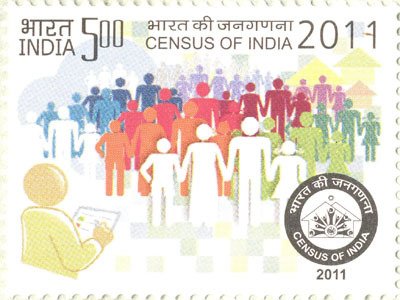
The 2011 census of India or the 15th Indian census was conducted in two phases, house listing and population enumeration. The House listing phase began on 1 April 2010 and involved the collection of information about all buildings. Information for National Population Register (NPR) was also collected in the first phase, which will be used to issue a 12-digit unique identification number to all registered Indian residents by Unique Identification Authority of India. The second population enumeration phase was conducted between 9 and 28 February 2011. Census has been conducted in India since 1872 and 2011 marks the first time biometric information was collected. According to the provisional reports released on 31 March 2011, the Indian population increased to 1.21 billion with a decadal growth of 17.70%. Adult literacy rate increased to 74.04% with a decadal growth of 9.21%. The motto of the census was Our Census, Our Future.
Spread across 28 states and 8 union territories, the census covered 640 districts, 5,924 sub-districts, 7,935 towns and more than 600,000 villages. A total of 2.7 million officials visited households in 7,935 towns and 600,000 villages, classifying the population according to gender, religion, education and occupation. The cost of the exercise was approximately – this comes to less than per person, well below the estimated world average of per person.
Information on castes was included in the census following demands from several ruling coalition leaders including Lalu Prasad Yadav, and Mulayam Singh Yadav supported by opposition parties Bharatiya Janata Party, Shiromani Akali Dal, Shiv Sena and All India Anna Dravida Munnetra Kazhagam. Information on caste was last collected during the British Raj in 1931. During the early census, people often exaggerated their caste status to garner social status and it is expected that people downgrade it now in the expectation of gaining government benefits. Earlier, there was speculation that there would be a caste-based census conducted in 2011, the first time in 80 years (last was in 1931), to find the exact population of the "Other Backward Classes" (OBCs) in India. This was later accepted and the Socio Economic and Caste Census 2011 was conducted whose first findings were revealed on 3 July 2015 by Union Finance Minister Arun Jaitley. Mandal Commission report of 1980 quoted OBC population at 52%, though National Sample Survey Organisation (NSSO) survey of 2006 quoted OBC population at 41%.
There is only one other instance of a caste count in post-independence India. It was conducted in Kerala in 1968 by the Government of Kerala under E. M. S. Namboodiripad to assess the social and economic backwardness of various lower castes. The census was termed Socio-Economic Survey of 1968 and the results were published in the Gazetteer of Kerala, 1971.
History
C. Chandramouli IAS was the Registrar General and Census Commissioner of India for the 2011 Indian census. Census data was collected in 16 languages and the training manual was prepared in 18 languages. In 2011, India and Bangladesh also conducted their first-ever joint census of areas along their border. The census was conducted in two phases. The first, the house-listing phase, began on 1 April 2010 and involved collection of data about all the buildings and census houses. Information for the National Population Register was also collected in the first phase. The second, the population enumeration phase, was conducted from 9 – 28 February 2011 all over the country. The eradication of epidemics, the availability of more effective medicines for the treatment of various types of diseases and the improvement in the standard of living were the main reasons for the high decadal growth of population in India.
Information
House-listings
The House-listing schedule contained 35 questions.
- Building number / Census house number
- Predominant material of floor, wall and roof of the census house
- Ascertain use of actual house
- Condition of the census house
- Household number
- Total number of persons in the household
- Name of the head of the household
- Sex of the head
- Caste status (SC or ST or others)
- Ownership status of the house
- Number of dwelling rooms
- Number of married couples in the household
- Main source of drinking water
- Availability of drinking water source
- Main source of lighting
- Latrine within the premises
- Type of latrine facility
- Waste water outlet connection
- Bathing facility within the premises
- Availability of kitchen
- Fuel used for cooking
- Radio/Transistor
- Television
- Computer/Laptop
- Telephone/Mobile phone
- Bicycle
- Scooter/Motor cycle/Moped
- Car/Jeep/Van
- Availing Banking services
Population enumeration
The Population enumeration schedule contained 30 questions.
- Name of the person
- Relationship to head
- Sex
- Date of birth and age
- Current marital status
- Age at marriage
- Religion
- Scheduled Caste/Scheduled Tribe
- Disability
- Mother tongue
- Other languages known
- Literacy status
- Status of attendance (Education)
- Highest educational level attained
- Working any time during last year
- Category of economic activity
- Occupation
- Nature of industry
- Trade or service
- Class of worker
- Non economic activity
- Seeking or available for work
- Travel to place of work
- Birthplace
- Place of last residence
- Reason for migration
- Duration of stay in the place of migration
- Children surviving
- Children ever born
- Number of children born alive during last one year
National Population Register
The National Population Register household schedule contained 9 questions.
- Name of the person and resident status
- Name of the person as should appear in the population register
- Relationship to head
- Gender
- Date of birth
- Marital status
- Educational qualification
- Occupation/Activity
- Names of father, mother and spouse
Once the information was collected and digitised, fingerprints were taken and photos collected. Unique Identification Authority of India was to issue a 12-digit identification number to all individuals and the first ID have been issued in 2011.
Census report


Provisional data from the census was released on 31 March 2011 (and was updated on 20 May 2013). Transgender population was counted in population census in India for the first time in 2011. The overall sex ratio of the population is 943 females for every 1,000 males in 2011. The official count of the third gender in India is 490,000
| **Child sex ratio (0–6 age group)** | per 1000 males | 919 females |
|---|
Population
The population of India as per 2011 census was . India added 181.5 million to its population since 2001, slightly lower than the population of Brazil. India, with 2.4% of the world's surface area, accounts for 17.5% of its population. Uttar Pradesh is the most populous state with roughly 200 million people. Over half the population resided in the six most populous states of Uttar Pradesh, Maharashtra, Bihar, West Bengal, Andhra Pradesh and Madhya Pradesh. Of the 1.21 billion Indians, 833 million (68.84%) live in rural areas while 377 million stay in urban areas. 453.6 million people in India are migrants, which is 37.8% of total population.
India is home to many religions such as Hinduism, Islam, Christianity, Buddhism, Sikhism and Jainism, while also being home to several indigenous faiths and tribal religions which have been practiced alongside major religions for centuries. According to the 2011 census, the total number of households in India is 248.8 million. Of which 202.4 million are Hindu, 31.2 million are Muslim, 6.3 million are Christian, 4.1 million are Sikh, and 1.9 million are Jain. According to 2011 census, there are around 3.01 million places of worship in India.
| State / | |||||||||||||||||||||||||||||
|---|---|---|---|---|---|---|---|---|---|---|---|---|---|---|---|---|---|---|---|---|---|---|---|---|---|---|---|---|---|
| Union Territory (UT) | Capital | Type | Population | Males | Females | Sex | |||||||||||||||||||||||
| Ratio | |||||||||||||||||||||||||||||
| Literacy | |||||||||||||||||||||||||||||
| rate (%) | Population | Area | |||||||||||||||||||||||||||
| (km2) | Density | ||||||||||||||||||||||||||||
| (1/km2) | Decadal | ||||||||||||||||||||||||||||
| Growth% | |||||||||||||||||||||||||||||
| (2001–11) | number | url=http://www.censusindia.gov.in/Data_Products/Library/Provisional_Population_Total_link/PDF_Links/chapter3.pdf | title=Ranking of States and Union territories by population size: 1991 and 2001 | work=Government of India (2001) | publisher=Census of India | pages=5–6 | access-date=12 December 2008 | archive-date=2 January 2014 | archive-url=https://web.archive.org/web/20140102192159/http://www.censusindia.gov.in/Data_Products/Library/Provisional_Population_Total_link/PDF_Links/chapter3.pdf | url-status=live}} | url=http://censusindia.gov.in/2011-prov-results/paper2/prov_results_paper2_india.html | title=Provisional Population Totals | work=Government of India (2011) | publisher=Census of India | access-date=23 July 2011 | archive-date=13 November 2013 | archive-url=https://web.archive.org/web/20131113152711/http://www.censusindia.gov.in/2011-prov-results/paper2/prov_results_paper2_india.html | url-status=live}} | Urban | India | 1,210,854,977 | 623,724,248 | 586,469,174 | 943 | 833,087,662 | 377,105,760 | 3,287,240 | 382 | 17.64% |
| Uttar Pradesh | Lucknow | State | 199,812,341 | 104,480,510 | 95,331,831 | 912 | 155,111,022 | 44,470,455 | 240,928 | 828 | 20.1% | ||||||||||||||||||
| Maharashtra | Mumbai | State | 112,374,333 | 58,243,056 | 54,131,277 | 929 | 61,545,441 | 50,827,531 | 307,713 | 365 | 16.0% | ||||||||||||||||||
| Bihar | Patna | State | 104,099,452 | 54,278,157 | 49,821,295 | 918 | 92,075,028 | 11,729,609 | 94,163 | 1,102 | 25.1% | ||||||||||||||||||
| West Bengal | Kolkata | State | 91,276,115 | 46,809,027 | 44,467,088 | 950 | 62,213,676 | 29,134,060 | 88,752 | 1,030 | 13.9% | ||||||||||||||||||
| Andhra Pradesh | Hyderabad | State | 84,580,777 | 42,442,146 | 42,138,631 | 993 | 56,361,702 | 28,219,075 | 275,045 | 308 | 10.98% | ||||||||||||||||||
| Madhya Pradesh | Bhopal | State | 72,626,809 | 37,612,306 | 35,014,503 | 931 | 52,537,899 | 20,059,666 | 308,245 | 236 | 20.3% | ||||||||||||||||||
| Tamil Nadu | Chennai | State | 72,147,030 | 36,137,975 | 36,009,055 | 996 | 37,189,229 | 34,949,729 | 130,058 | 555 | 15.6% | ||||||||||||||||||
| Rajasthan | Jaipur | State | 68,548,437 | 35,550,997 | 32,997,440 | 928 | 51,540,236 | 17,080,776 | 342,239 | 201 | 21.4% | ||||||||||||||||||
| Karnataka | Bengaluru | State | 61,095,297 | 30,966,657 | 30,128,640 | 973 | 37,552,529 | 23,578,175 | 191,791 | 319 | 15.7% | ||||||||||||||||||
| Gujarat | Gandhinagar | State | 60,439,692 | 31,491,260 | 28,948,432 | 919 | 34,670,817 | 25,712,811 | 196,024 | 308 | 19.2% | ||||||||||||||||||
| Odisha | Bhubaneshwar | State | 41,974,218 | 21,212,136 | 20,762,082 | 979 | 34,951,234 | 6,996,124 | 155,707 | 269 | 14.0% | ||||||||||||||||||
| Kerala | Thiruvananthapuram | State | 33,406,061 | 16,027,412 | 17,378,649 | 1,084 | 17,445,506 | 15,932,171 | 38,863 | 859 | 4.9% | ||||||||||||||||||
| Jharkhand | Ranchi | State | 32,988,134 | 16,930,315 | 16,057,819 | 948 | 25,036,946 | 7,929,292 | 79,714 | 414 | 22.3% | ||||||||||||||||||
| Assam | Dispur | State | 31,205,576 | 15,939,443 | 15,266,133 | 958 | 26,780,526 | 4,388,756 | 78,438 | 397 | 16.9% | ||||||||||||||||||
| Punjab | Chandigarh | State | 27,743,338 | 14,639,465 | 13,103,873 | 895 | 17,316,800 | 10,387,436 | 50,362 | 550 | 13.7% | ||||||||||||||||||
| Chhattisgarh | Raipur | State | 25,545,198 | 12,832,895 | 12,712,303 | 991 | 19,603,658 | 5,936,538 | 135,191 | 189 | 22.6% | ||||||||||||||||||
| Haryana | Chandigarh | State | 25,351,462 | 13,494,734 | 11,856,728 | 879 | 16,531,493 | 8,821,588 | 44,212 | 573 | 19.9% | ||||||||||||||||||
| Delhi | Delhi | UT | 16,787,941 | 8,887,326 | 7,800,615 | 868 | 944,727 | 12,905,780 | 1,484 | 11,297 | 21% | ||||||||||||||||||
| Jammu and Kashmir | Jammu(winter) | ||||||||||||||||||||||||||||
| Srinagar(summer) | State | 12,541,302 | 6,640,662 | 5,900,640 | 889 | 9,134,820 | 3,414,106 | 222,236 | 56 | 23.7% | |||||||||||||||||||
| Uttarakhand | Dehradun | State | 10,086,292 | 5,137,773 | 4,948,519 | 963 | 7,025,583 | 3,091,169 | 53,483 | 189 | 19.2% | ||||||||||||||||||
| Himachal Pradesh | Shimla | State | 6,864,602 | 3,481,873 | 3,382,729 | 972 | 6,167,805 | 688,704 | 55,673 | 123 | 12.8% | ||||||||||||||||||
| Tripura | Agartala | State | 3,673,917 | 1,874,376 | 1,799,541 | 960 | 2,710,051 | 960,981 | 10,486 | 350 | 14.7% | ||||||||||||||||||
| Meghalaya | Shillong | State | 2,966,889 | 1,491,832 | 1,475,057 | 989 | 2,368,971 | 595,036 | 22,429 | 132 | 27.8% | ||||||||||||||||||
| Manipur | Imphal | State | 2,721,756 | 1,290,171 | 1,280,219 | 992 | 1,899,624 | 822,132 | 22,327 | 122 | 18.7% | ||||||||||||||||||
| Nagaland | Kohima | State | 1,978,502 | 1,024,649 | 953,853 | 931 | 1,406,861 | 573,741 | 16,579 | 119 | −0.5% | ||||||||||||||||||
| Goa | Panaji | State | 1,458,545 | 739,140 | 719,405 | 973 | 551,414 | 906,309 | 3,702 | 394 | 8.2% | ||||||||||||||||||
| Arunachal Pradesh | Itanagar | State | 1,383,727 | 713,912 | 669,815 | 938 | 1,069,165 | 313,446 | 83,743 | 17 | 25.9% | ||||||||||||||||||
| Puducherry | Pondicherry | UT | 1,247,953 | 612,511 | 635,442 | 1,037 | 394,341 | 850,123 | 479 | 2,598 | 27.7% | ||||||||||||||||||
| Mizoram | Aizawl | State | 1,097,206 | 555,339 | 541,867 | 976 | 529,037 | 561,997 | 21,081 | 52 | 22.8% | ||||||||||||||||||
| Chandigarh | Chandigarh | UT | 1,055,450 | 580,663 | 474,787 | 818 | 29,004 | 1,025,682 | 114 | 9,252 | 17.1% | ||||||||||||||||||
| Sikkim | Gangtok | State | 610,577 | 323,070 | 287,507 | 890 | 455,962 | 151,726 | 7,096 | 86 | 12.4% | ||||||||||||||||||
| Andaman and Nicobar Islands | Port Blair | UT | 380,581 | 202,871 | 177,710 | 876 | 244,411 | 135,533 | 8,249 | 46 | 6.7% | ||||||||||||||||||
| Dadra and Nagar Haveli | Silvassa | UT | 343,709 | 193,760 | 149,949 | 774 | 183,024 | 159,829 | 491 | 698 | 55.5% | ||||||||||||||||||
| Daman and Diu | Daman | UT | 243,247 | 150,301 | 92,946 | 618 | 60,331 | 182,580 | 112 | 2,169 | 53.5% | ||||||||||||||||||
| Lakshadweep | Kavaratti | UT | 64,473 | 33,123 | 31,350 | 946 | 14,121 | 50,308 | 32 | 2,013 | 6.2% |
Religious demographics
The religious data on India census 2011 was released by the Government of India on 25 August 2015. Hindus are 79.8% (966.3 million) while Sikhs are 20.8 million comprising 1.72% of the population, Muslims are 14.23% (172.2 million) in India and Christians are 2.30% (28.7 million). According to the 2011 census of India, there are 57,264 Parsis in India. For the first time, a "No religion" category was added in the 2011 census. 2.87 million were classified as people belonging to "No Religion" in India in the 2011 census, 0.24% of India's population of 1.21 billion. Given below is the decade-by-decade religious composition of India until the 2011 census. There are six religions in India that have been awarded "National Minority" status – Muslims, Christians, Sikhs, Jains, Buddhists and Parsis. Sunnis, Shias, Bohras, Agakhanis and Ahmadiyyas were identified as sects of Islam in India. As per 2011 census, six major faiths – Hindus, Muslims, Christians, Sikhs, Buddhists, Jains make up over 99.4% of India's 1.21 billion population, while "other religions, persuasions" (ORP) count is 8.2 million. Among the ORP faiths, six faiths – 4.957 million-strong Sarnaism, 1.026 million-strong Gond, 506,000-strong Sari, Donyi-Polo (302,000) in Arunachal Pradesh, Sanamahism (222,000) in Manipur, Khasi (138,000) in Meghalaya dominate. Maharashtra is having the highest number of non-religious in the country with 9,652 such people, followed by Kerala.
| Year | Hindus | Muslims | Christians | Sikhs | Buddhists | Jains | Zoroastrians | Atheists or |
|---|---|---|---|---|---|---|---|---|
| other religion | ||||||||
| 1951 | ||||||||
| 1961 | ||||||||
| 1971 | ||||||||
| 1981 | ||||||||
| 1991 | ||||||||
| 2001 | ||||||||
| 2011 | ||||||||
| %± | 5.12% | 45.21% | 3.04% | 3.91% | 5.41% | 19.56% | 61.53% | 12.51% |
Language demographics
Main article: Languages of India
,_Kashmiri_(second),_Gujarati_&_Meitei_alias_Manipuri_(third),_Bengali_(fourth)_—_based_on_2011_census_of_India.jpg)
The 2011 Census of India reported 121 languages having over 10,000 speakers, constituting 1.20billion (~99%) of the population, consolidated from 1,369 classified and 1,474 unclassified forms out of 19,569 raw mother tongue entries recorded from respondents. Out of 121 languages, 22 languages designated as scheduled language of India, which spoken by 96.71 percent of population as mother tongue. The language data was released on 26 June 2018. As per census, 57.1% of Indian population know Hindi, in which 43.63% of Indian people have declared Hindi as their native language or mother tongue. However, the census takes the widest possible definition of "Hindi" as a broad variety of "Hindi languages" which is widely spoken language in northern parts of India. Hindi is the fastest growing language of India, followed by Kashmiri in the second place, with Meitei (officially called Manipuri) as well as Gujarati, in the third place, and Bengali in the fourth place, according to the 2011 census of India.
The 2011 census report on bilingualism and trilingualism, which provides data on the two languages in order of preference in which a person is proficient other than the mother tongue, was released in September 2018. The number of bilingual speakers in India is 314.9 million, which is 26% of the population in 2011. 7% of Indian population is trilingual. Hindi, Bengali speakers are India's least multilingual groups.
| Language | First language | ||||||||||||||||||||
|---|---|---|---|---|---|---|---|---|---|---|---|---|---|---|---|---|---|---|---|---|---|
| speakers | Second language | ||||||||||||||||||||
| speakers | Third language | ||||||||||||||||||||
| speakers | Total speakers | url=http://www.censusindia.gov.in/2011Census/C-16_25062018_NEW.pdf | title=Comparative Speakers'strength of Scheduled Languages - 1971, 1981, 1991,2001 and 2011 | work=Census of India 2011 - Paper 1 of 2018 - Language - India, States and Union Territories (Table C-16) | publisher=Census of India | access-date=27 June 2018 | archive-date=27 June 2018 | archive-url=https://web.archive.org/web/20180627064326/http://www.censusindia.gov.in/2011Census/C-16_25062018_NEW.pdf | url-status=live}} | % of total pop. | url=https://www.hindustantimes.com/india-news/how-languagesintersect-in-india/story-g3nzNwFppYV7XvCumRzlYL.html | title=How languages intersect in India | work=Hindustan Times | date=22 November 2018 | first1=Vijdan Mohammad | last1=Kawoosa | access-date=26 November 2018 | archive-date=22 November 2018 | archive-url=https://web.archive.org/web/20181122091352/https://www.hindustantimes.com/india-news/how-languagesintersect-in-india/story-g3nzNwFppYV7XvCumRzlYL.html | url-status=live }} | % of total pop. |
| Hindi | 528,347,193 | 139,207,180 | 24,000,000 | 692,000,000 | |||||||||||||||||
| English | 259,678 | 83,125,221 | 46,000,000 | 129,000,000 | |||||||||||||||||
| Bengali | 97,237,669 | 9,037,222 | 1,000,000 | 107,000,000 | |||||||||||||||||
| Marathi | 83,026,680 | 13,000,000 | 3,000,000 | 99,000,000 | |||||||||||||||||
| Telugu | 81,127,740 | 12,000,000 | 1,000,000 | 95,000,000 | |||||||||||||||||
| Tamil | 69,026,881 | 7,000,000 | 1,000,000 | 77,000,000 | |||||||||||||||||
| Gujarati | 55,492,554 | 4,000,000 | 1,000,000 | 60,000,000 | |||||||||||||||||
| Urdu | 50,772,631 | 11,000,000 | 1,000,000 | 63,000,000 | |||||||||||||||||
| Kannada | 43,706,512 | 14,000,000 | 1,000,000 | 59,000,000 | |||||||||||||||||
| Odia | 37,521,324 | 5,000,000 | 390,000 | 43,000,000 | |||||||||||||||||
| Malayalam | 34,838,819 | 500,000 | 210,000 | 36,000,000 | |||||||||||||||||
| Punjabi | 33,124,726 | 2,230,000 | 720,000 | 36,600,000 | |||||||||||||||||
| Maithili | 13,063,042 | 400,000 | 130,000 | 13,583,464 | |||||||||||||||||
| Sanskrit | 24,821 | {{percentage bar | width=80 | 0.01 | 1,230,000 | 1,960,000 | 3,190,000 |
Literacy
Any individual above age seven who can read and write in any language with an ability to understand was considered literate. In censuses before 1991, children below the age five were treated as illiterates. The literacy rate taking the entire population into account is termed as "crude literacy rate", and taking the population from age seven and above into account is termed as "effective literacy rate". Effective literacy rate increased to a total of 74.04% with 82.14% of the males and 65.46% of the females being literate.
| Effective literacy rate (1901–2011) | S.No. | Census year | Total (%) | Male (%) | Female (%) |
|---|---|---|---|---|---|
| 1 | 1901 | ||||
| 2 | 1911 | ||||
| 3 | 1921 | ||||
| 4 | 1931 | ||||
| 5 | 1941 | ||||
| 6 | 1951 | ||||
| 7 | 1961 | ||||
| 8 | 1971 | ||||
| 9 | 1981 | ||||
| 10 | 1991 | ||||
| 11 | 2001 | ||||
| 12 | 2011 |
Notes
References
References
- (31 May 2011). "Decadal Growth censusindia.gov.in".
- (11 July 2015). "India's population at 5pm today – 127,42,39,769". [[The Times of India]].
- C Chandramouli. (23 August 2011). "Census of India 2011 – A Story of Innovations". Press Information Bureau, Government of India.
- (26 August 2017). "Do we really need the census?". [[The Economic Times]].
- (4 May 2010). "Demand for caste census rocks Lok Sabha". [[The Times of India]].
- (10 May 2010). "India to conduct first record of nation's caste system since days of the Raj". [[The Times]].
- (18 December 2009). "OBC data not in 2011 Census, says Moily". [[The Indian Express]].
- (11 March 2010). "No data since 1931, will 2011 Census be all-caste inclusive?". [[The Times of India]].
- (28 May 2010). "Caste in Census 2011: Is it necessary?". [[The Economic Times]].
- (1 September 2007). "OBCs form 41% of population: Survey". [[The Times of India]].
- (3 July 2015). "Govt releases socio-economic and caste census for better policy-making". [[Hindustan Times]].
- (1 November 2006). "OBc count: 52 or 41%?". [[The Times of India]].
- G.O.K dew1971: Appendix XVIII
- Anbarasan, Ethirajan. (14 July 2011). "Joint Bangladesh and India census". [[BBC News]].
- Bose, Raktima. (19 July 2011). "Census in Indian and Bangladesh enclaves ends". [[The Hindu]].
- Kumar, Vinay. (4 April 2010). "House listing operations for Census 2011 progressing well". [[The Hindu]].
- "Census of India 2011; Houselisting and Housing Census Schedule". Government of India.
- "Census of India 2011; Household Schedule-Side A". Government of India.
- "Census of India 201a1; Household Schedule-Side B". Government of India.
- "National population register; Household Schedule". Government of India.
- (1 April 2010). "Census operation in history kicks off". [[The Hindu]].
- (1 April 2010). "India launches biometric census". [[BBC News]].
- (30 April 2013). "India's total population is now 121 crore". [[Mint (newspaper).
- (30 April 2013). "It's official. We are the second most populous nation in the world at 1.2 billion". [[India Today]].
- (30 April 2013). "India's total population is now 1.21 billion". [[The Economic Times]].
- (30 April 2013). "India's total population is 1.21 billion, final census reveals". [[NDTV]].
- (9 January 2017). "Pakistan counts transgender people in national census for first time". [[The Times of India]].
- (4 July 2015). "Over 70,000 transgenders in rural India, UP tops list: Census 2011". [[India Today]].
- (15 February 2016). "Sex ratio worsens in small families, improves with 3 or more children". [[The Times of India]].
- (30 May 2014). "First count of third gender in census: 4.9 lakh". [[The Times of India]].
- (15 June 2015). "Why activists are upset with Census disability numbers". [[The Indian Express]].
- (2022). "Contemporary India - I". [[NCERT]].
- (15 July 2011). "About 70 per cent Indians live in rural areas: Census report". [[The Hindu]].
- "Rural population (% of total population) | Data".
- (5 December 2016). "Every 3rd Indian migrant, most headed south". [[The Indian Express]].
- (5 December 2016). "Migration in India still largely remains a social rather than an economic phenomenon". [[The Times of India]].
- (10 December 2016). "Migration in India is slowly becoming more urban and driven by economic factors". [[The Times of India]].
- (20 May 2016). "248.8 Million Households Across India; 202 mn Hindus, 31 mn Muslims". [[News18 India]].
- (21 May 2016). "Indian Muslim Family Size Shrinking Rapidly: Census Report". [[The Quint]].
- (5 July 2016). "India has more places of worship than schools or colleges". [[Mint (newspaper).
- "Basic Population Figures of India and States, 2011". Office of the Registrar General & Census Commissioner, India.
- "Population". Census of India.
- "Area ofIndia/state/district". Census of India.
- "Ranking of States and Union territories by population size: 1991 and 2001". Census of India.
- "Provisional Population Totals". Census of India.
- (26 August 2015). "Census 2011: Hindus dip to below 80 per cent of population; Muslim share up, slows down". [[The Indian Express]].
- (25 August 2015). "Muslim population growth slows". [[The Hindu]].
- "India Census 2011". Censusindia.gov.in.
- (26 August 2015). "India's religions by numbers". [[The Hindu]].
- (31 August 2015). "Muslim representation on decline". [[The Times of India]].
- (26 August 2015). "Muslim share of population up 0.8%, Hindus' down 0.7% between 2001 and 2011". [[The Times of India]].
- (24 October 2017). "Where we belong: The fight of Parsi women in interfaith marriages". [[The Indian Express]].
- (26 July 2016). "Parsi population dips by 22 per cent between 2001–2011: study". [[The Hindu]].
- (29 August 2015). "Why a Tinder date is better than 72 virgins in paradise". [[DailyO]].
- (6 September 2015). "Against All Gods: Meet the league of atheists from rural Uttar Pradesh". [[The Indian Express]].
- Daniyal, Shoaib. (7 September 2015). "People without religion have risen in Census 2011, but atheists have nothing to cheer about". [[Scroll.in]].
- (27 August 2015). "2.87 million Indians have no faith, census reveals for first time". [[The Times of India]].
- (27 August 2015). "1.88 lakh people in Tamil Nadu state 'no religion' in 2011 census". [[DNA India]].
- (30 May 2014). "Muslim politics:At a crossroads". [[Mint (newspaper).
- Aariz Mohammed. (1–15 May 2013). "Demographic Dividend and Indian Muslims – i". Milli Gazette.
- Aariz Mohammed. (1–15 May 2013). "Demographic Dividend and Indian Muslims – i". Milli Gazette.
- (20 January 2014). "National minority status for Jains". [[The Telegraph (India)]].
- (21 January 2014). "Jains become sixth minority community". [[DNA India]].
- (4 August 2016). "Ahmadiyyas find place as Islam sect in census". [[The Indian Express]].
- (11 January 2016). "Protest against inclusion of Ahmediyyas in Muslim census". [[The Times of India]].
- (5 August 2016). "Minority in a minority. The census acknowledges Ahmadis as Muslims. It is a recognition long overdue.". [[The Indian Express]].
- (1 August 2016). "Fewer minor faiths in India now, finds Census; number of their adherents up". [[The Indian Express]].
- Kanungo, Soumonty. (10 August 2016). "God versus Atheism, Bengal vouches for believers". [[Mint (newspaper).
- "Hindu Muslim Population in India".
- (2018-06-28). "What census data reveals about use of Indian languages".
- (2018-07-01). "More than 19,500 mother tongues spoken in India: Census".
- "More Than 19,500 Languages Spoken In India: Census".
- (28 June 2018). "Hindi mother tongue of 44% in India, Bangla second most spoken". [[The Times of India]].
- (28 June 2018). "What India speaks: South Indian languages are growing, but not as fast as Hindi". [[The News Minute]].
- Daniyal, Shoaib. (4 July 2018). "Surging Hindi, shrinking South Indian languages: Nine charts that explain the 2011 language census". [[Scroll.in]].
- Sen, Sumant. (4 June 2019). "Hindi the first choice of people in only 12 States". [[The Hindu]].
- "Abstract of Speakers' Strength of Languages and Mother Tongues - 2011". Census of India.
- "C-17 Population by Bilingualism and Trilingualism".
- (2 October 2018). "After mother tongue, city more proficient in English". [[The Tribune (Chandigarh)]].
- "C-18 Population by Bilingualism, Trilingualism, Age and Sex".
- (4 October 2018). "Hindi migrants speaking Marathi rise to 60 lakh". [[The Times of India]].
- (7 November 2018). "52% of India's urban youth are now bilingual, 18% speak three languages". [[The Times of India]].
- (14 November 2018). "Hindi, Bengali speakers India's least multilingual groups". [[The Times of India]].
- "Comparative Speakers'strength of Scheduled Languages - 1971, 1981, 1991,2001 and 2011". Census of India.
- (22 November 2018). "How languages intersect in India". [[Hindustan Times]].
- "How many Indians can you talk to?". [[Hindustan Times]].
- "Census Provional Population Totals". [[Registrar General and Census Commissioner of India.
- (2016-10-13). "Census 2011: Literacy Rate and Sex Ratio in India Since 1901 to 2011".
This article was imported from Wikipedia and is available under the Creative Commons Attribution-ShareAlike 4.0 License. Content has been adapted to SurfDoc format. Original contributors can be found on the article history page.
Ask Mako anything about 2011 census of India — get instant answers, deeper analysis, and related topics.
Research with MakoFree with your Surf account
Create a free account to save articles, ask Mako questions, and organize your research.
Sign up freeThis content may have been generated or modified by AI. CloudSurf Software LLC is not responsible for the accuracy, completeness, or reliability of AI-generated content. Always verify important information from primary sources.
Report