From Surf Wiki (app.surf) — the open knowledge base
Oil shale
Organic-rich fine-grained sedimentary rock containing kerogen
Organic-rich fine-grained sedimentary rock containing kerogen
| Field | Value |
|---|---|
| name | Oil shale |
| type | Sedimentary |
| type_link | Sedimentary rock |
| image | Oilshale.jpg |
| caption | Combustion of oil shale |
| composition | |
| composition_secondary |
Oil shale is an organic-rich fine-grained sedimentary rock containing kerogen (a solid mixture of organic chemical compounds) from which liquid hydrocarbons can be produced. In addition to kerogen, general composition of oil shales constitutes inorganic substance and bitumens. Based on their deposition environment, oil shales are classified as marine, lacustrine and terrestrial oil shales. Oil shales differ from oil-bearing shales, shale deposits that contain petroleum (tight oil) that is sometimes produced from drilled wells. Examples of oil-bearing shales are the Bakken Formation, Pierre Shale, Niobrara Formation, and Eagle Ford Formation. Accordingly, shale oil produced from oil shale should not be confused with tight oil, which is also frequently called shale oil.
A 2016 estimate of global deposits set the total world resources of oil shale equivalent of 6.05 Toilbbl of oil in place. Oil shale has gained attention as a potential abundant source of oil. | access-date =20 October 2007 | archive-url = https://web.archive.org/web/20120108161835/http://www.evi.ee/lib/Security.pdf | archive-date = 8 January 2012 | url-status = dead | access-date =9 February 2014
Oil shale can be burned directly in furnaces as a low-grade fuel for power generation and district heating or used as a raw material in chemical and construction-materials processing. | access-date =9 July 2007 | doi-access = free
Geology
Main article: Oil shale geology
Oil shale, an organic-rich sedimentary rock, belongs to the group of sapropel fuels.{{Cite journal |access-date = 6 May 2011 |archive-date = 29 October 2016 |archive-url = https://web.archive.org/web/20161029172128/http://elibrary.lt/resursai/LMA/Energetika/2007_2/4.pdf |url-status = dead | access-date =16 June 2007}} According to the petrologist Adrian C. Hutton of the University of Wollongong, oil shales are not "geological nor geochemically distinctive rock but rather 'economic' term".{{Cite journal |access-date = 19 December 2012 |archive-url = https://web.archive.org/web/20131004215208/http://www.caer.uky.edu/energeia/PDF/vol5_5.pdf |archive-date = 4 October 2013 |url-status = dead | access-date =22 September 2012}} Geologists can classify oil shales on the basis of their composition as carbonate-rich shales, siliceous shales, or cannel shales.
Oil shale differs from bitumen-impregnated rocks (other so-called unconventional resources such as oil sands and petroleum reservoir rocks), humic coals and carbonaceous shale. While oil sands do originate from the biodegradation of oil, heat and pressure have not (yet) transformed the kerogen in oil shale into petroleum, which means its maturation does not exceed early mesocatagenetic. | access-date = 4 February 2018}} | access-date =19 April 2008}} Oil shales differ also from oil-bearing shales, shale deposits that contain tight oil that is sometimes produced from drilled wells. Examples of oil-bearing shales are the Bakken Formation, Pierre Shale, Niobrara Formation, and Eagle Ford Formation. | access-date = 2016-01-16

| editor1-last = Teh Fu Yen | editor2-last = Chilingar | editor2-first = George V. | chapter-url = https://books.google.com/books?id=qkU7OcVkwaIC&pg=PA56 | access-date = 5 June 2009}} Oil shale contains a lower percentage of organic matter than coal. In commercial grades of oil shale the ratio of organic matter to mineral matter lies approximately between 0.75:5 and 1.5:5. At the same time, the organic matter in oil shale has an atomic ratio of hydrogen to carbon (H/C) approximately 1.2 to 1.8 times lower than for crude oil and about 1.5 to 3 times higher than for coals. The organic components of oil shale derive from a variety of organisms, such as the remains of algae, spores, pollen, plant cuticles and corky fragments of herbaceous and woody plants, and cellular debris from other aquatic and land plants. |access-date = 4 March 2008 |url-status = dead |archive-url = https://web.archive.org/web/20080527234121/http://www.sdnp.jo/International_Oil_Conference/rtos-A117.pdf |archive-date = 27 May 2008
Another classification, known as the van Krevelen diagram, assigns kerogen types, depending on the hydrogen, carbon, and oxygen content of oil shales' original organic matter. The most commonly used classification of oil shales, developed between 1987 and 1991 by Adrian C. Hutton, adapts petrographic terms from coal terminology. This classification designates oil shales as terrestrial, lacustrine (lake-bottom-deposited), or marine (ocean bottom-deposited), based on the environment of the initial biomass deposit. Known oil shales are predominantly of aquatic (marine, lacustrine) origin. Hutton's classification scheme has proven useful in estimating the yield and composition of the extracted oil.
Resource
Main article: Oil shale reserves
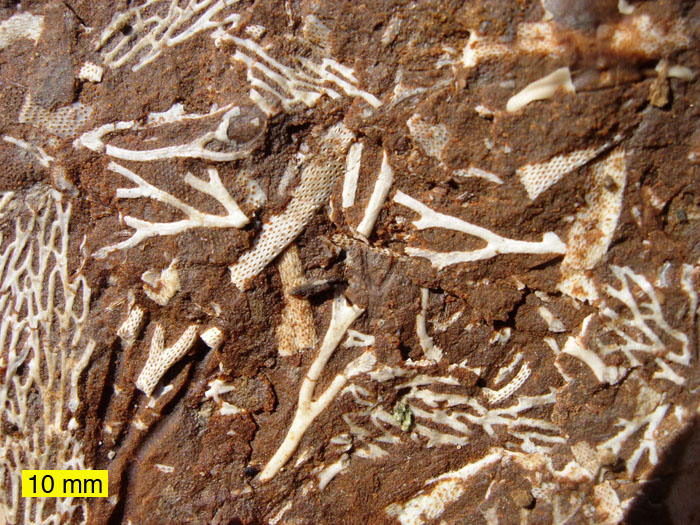
As source rocks for most conventional oil reservoirs, oil shale deposits are found in all world oil provinces, although most of them are too deep to be exploited economically. As with all oil and gas resources, analysts distinguish between oil shale resources and oil shale reserves. "Resources" refer to all oil shale deposits, while "reserves" represent those deposits from which producers can extract oil shale economically using existing technology. Since extraction technologies develop continuously, planners can only estimate the amount of recoverable kerogen. | access-date =17 April 2008}} Although resources of oil shale occur in many countries, only 33 countries possess known deposits of potential economic value. | access-date =21 July 2007}} | access-date =16 June 2007}} Well-explored deposits, potentially classifiable as reserves, include the Green River deposits in the western United States, the Tertiary deposits in Queensland, Australia, deposits in Sweden and Estonia, the El-Lajjun deposit in Jordan, and deposits in France, Germany, Brazil, China, southern Mongolia and Russia. These deposits have given rise to expectations of yielding at least 40 liters of shale oil per tonne of oil shale, using the Fischer Assay.
A 2016 estimate set the total world resources of oil shale equivalent to yield of 6.05 Toilbbl of shale oil, with the largest resource deposits in the United States accounting more than 80% of the world total resource. For comparison, at the same time the world's proven oil reserves are estimated to be 1.6976 Toilbbl. The largest deposits in the world occur in the United States in the Green River Formation, which covers portions of Colorado, Utah, and Wyoming; about 70% of this resource lies on land owned or managed by the United States federal government.{{Cite web |access-date = 20 October 2007 |archive-url = https://web.archive.org/web/20071013075329/http://ostseis.anl.gov/guide/oilshale/index.cfm |archive-date = 13 October 2007 |url-status = dead
History
Main article: History of the oil shale industry

| access-date = 18 April 2012 | archive-url = https://web.archive.org/web/20150106093639/http://www.slb.com/~/media/Files/resources/oilfield_review/ors10/win10/coaxing.ashx | archive-date = 6 January 2015 | url-status = dead Humans have used oil shale as a fuel since prehistoric times, since it generally burns without any processing. Around 3000 BC, "rock oil" was used in Mesopotamia for road construction and making architectural adhesives. Britons of the Iron Age used tractable oil shales to fashion cists for burial, or just polish it to create ornaments. |access-date=9 February 2014}}
In the 10th century, the Arab physician Masawaih al-Mardini (Mesue the Younger) described a method of extraction of oil from "some kind of bituminous shale". The first patent for extracting oil from oil shale was British Crown Patent 330 granted in 1694 to Martin Eele, Thomas Hancock and William Portlock, who had "found a way to extract and make great quantities of pitch, tarr, and oyle out of a sort of stone".
Modern industrial mining of oil shale began in 1837 in Autun, France, followed by exploitation in Scotland, Germany, and several other countries.{{Cite web |author-link = Jean Laherrère |access-date = 17 June 2007 |archive-date = 28 September 2007 |archive-url = https://web.archive.org/web/20070928004607/http://www.hubbertpeak.com/laherrere/OilShaleReview200509.pdf |url-status = dead |access-date=22 April 2008 |archive-url=https://web.archive.org/web/20080421062940/http://encarta.msn.com/encyclopedia_761576221/Petroleum.html |archive-date=21 April 2008 |url-status=dead Fuel oil, lubricating oil and grease, and ammonium sulfate were also produced. |access-date= 4 February 2018}} Scottish production peaked in around 1913, operating 120 oil shale works, producing 3,332,000 tonnes of oil shale, generating around 2% of the global production of petroleum.{{cite web | access-date = 2012-07-07 | archive-date = 25 September 2019 | archive-url = https://web.archive.org/web/20190925175340/http://www.scottishshale.co.uk/HistoryPages/index.html | url-status = dead
Although the Estonian and Chinese oil-shale industries continued to grow after World War II, most other countries abandoned their projects because of high processing costs and the availability of cheaper petroleum. |access-date = 29 June 2007 |url-status = dead |archive-url = https://web.archive.org/web/20070928110915/http://www.sdnp.jo/International_Oil_Conference/rtos-A106.pdf |archive-date = 28 September 2007 Following the 1973 oil crisis, world production of oil shale reached a peak of 46 million tonnes in 1980 before falling to about 16 million tonnes in 2000, because of competition from cheap conventional petroleum in the 1980s.{{cite web | access-date = 28 June 2007 | archive-url = https://web.archive.org/web/20170216041927/https://e-reports-ext.llnl.gov/pdf/243505.pdf | archive-date = 16 February 2017 | url-status = dead
On 2 May 1982, known in some circles as "Black Sunday", Exxon canceled its US$5 billion Colony Shale Oil Project near Parachute, Colorado, because of low oil prices and increased expenses, laying off more than 2,000 workers and leaving a trail of home foreclosures and small business bankruptcies. | access-date = 19 December 2012}} In 1986, President Ronald Reagan signed into law the Consolidated Omnibus Budget Reconciliation Act of 1985, which among other things abolished the United States' Synthetic Liquid Fuels Program. | access-date = 25 June 2007
The global oil-shale industry began to revive at the beginning of the 21st century. In 2003, an oil-shale development program restarted in the United States. Authorities introduced a commercial leasing program permitting the extraction of oil shale and oil sands on federal lands in 2005, in accordance with the Energy Policy Act of 2005. |access-date = 10 July 2007 |url-status = dead |archive-url = https://web.archive.org/web/20080916051633/http://www.blm.gov/wo/st/en/info/newsroom/2005/september/NR_050920.html |archive-date = 16 September 2008 |access-date = 10 July 2007 |archive-url = https://web.archive.org/web/20070703105351/http://ostseis.anl.gov/eis/what/index.cfm |archive-date = 3 July 2007 |url-status = dead
Industry
Main article: Oil shale industry
, oil shale is utilized primarily in Brazil, China, Estonia and to some extent in Germany, and Russia. Several additional countries started assessing their reserves or had built experimental production plants, while others had phased out their oil shale industry. Oil shale serves for oil production in Estonia, Brazil, and China; for power generation in Estonia, China, and Germany; for cement production in Estonia, Germany, and China; and for use in chemical industries in China, Estonia, and Russia.{{Cite report | access-date = 11 June 2017 | archive-date = 13 November 2018 | archive-url = https://web.archive.org/web/20181113065148/http://www.memr.gov.jo/EchoBusV3.0/SystemAssets/PDFs/AR/MineralTR/Oil%20Shale.pdf | url-status = dead
, 80% of oil shale used globally is extracted in Estonia, mainly because Estonia uses several oil-shale-fired power plants, |access-date = 2 September 2009 |url-status = dead |archive-url = https://web.archive.org/web/20110716111423/http://www.mkm.ee/june-8th-2009-oil-shale-conference-in-tallinn-univer/ |archive-date = 16 July 2011 which has an installed capacity of 2,967 megawatts (MW). By comparison, China's oil shale power plants have an installed capacity of 12 MW, and Germany's have 9.9 MW. | archive-url= https://web.archive.org/web/20110912031140/http://www.ceri-mines.org/documents/27symposium/presentations/av02-1qian.pdf | url-status= usurped | archive-date= 12 September 2011 | access-date =6 May 2011}} A 470 MW oil shale power plant in Jordan is under construction as of 2020. Israel, Romania and Russia have in the past run power plants fired by oil shale but have shut them down or switched to other fuel sources such as natural gas. | access-date =9 February 2014}} Other countries, such as Egypt, have had plans to construct power plants fired by oil shale, while Canada and Turkey had plans to burn oil shale along with coal for power generation. Oil shale serves as the main fuel for power generation only in Estonia, where 90.3% of country's electrical generation in 2016 was produced from oil shale. |editor1-last = Beger |editor1-first = Mariliis |access-date = 29 January 2018
According to the World Energy Council, in 2008 the total production of shale oil from oil shale was 930,000 tonnes, equal to 17700 oilbbl/d, of which China produced 375,000 tonnes, Estonia 355,000 tonnes, and Brazil 200,000 tonnes. In comparison, production of the conventional oil and natural gas liquids in 2008 amounted 3.95 billion tonnes or 82.1 Moilbbl/d.
Extraction and processing
Main article: Shale oil extraction
Most exploitation of oil shale involves mining followed by shipping elsewhere, after which the shale is burned directly to generate electricity or undertakes further processing. The most common methods of mining involve open-pit mining and strip mining. These procedures remove most of the overlying material to expose the deposits of oil shale and become practical when the deposits occur near the surface. Underground mining of oil shale, which removes less of the overlying material, employs the room-and-pillar method. | access-date =29 June 2007}}
The extraction of the useful components of oil shale usually takes place above ground (ex-situ processing), although several newer technologies perform this underground (on-site or in-situ processing).{{Cite conference | access-date = 23 June 2007 | archive-url = https://web.archive.org/web/20160213164539/https://e-reports-ext.llnl.gov/pdf/341283.pdf | archive-date = 13 February 2016 | url-status = dead | access-date=21 July 2007}}
In-situ processing involves heating the oil shale underground. Such technologies can potentially extract more oil from a given area of land than ex-situ processes, since they can access the material at greater depths than surface mines can. Several companies have patented methods for in-situ retorting. However, most of these methods remain in the experimental phase. Two in-situ processes could be used: true in-situ processing does not involve mining the oil shale, while modified in-situ processing involves removing part of the oil shale and bringing it to the surface for modified in-situ retorting in order to create permeability for gas flow in a rubble chimney. Explosives rubblize the oil-shale deposit.{{Cite report | access-date=24 September 2017 | archive-url=https://web.archive.org/web/20181113065148/https://library.mines.edu/UserFiles/File/library/PDF/Archive/TEOSR_ONPOSR_strategic_significancev2.pdf | archive-date=13 November 2018 | url-status=dead
Hundreds of patents for oil shale retorting technologies exist; | access-date=3 November 2007}} however, only a few dozen have undergone testing. By 2006, only four technologies remained in commercial use: Kiviter, Galoter, Fushun, and Petrosix. |access-date = 29 June 2007 |url-status = dead |archive-url = https://web.archive.org/web/20080527234146/http://www.sdnp.jo/International_Oil_Conference/rtos-A118.pdf |archive-date = 27 May 2008
Applications and products
Oil shale is utilized as a fuel for thermal power-plants, burning it (like coal) to drive steam turbines; some of these plants employ the resulting heat for district heating of homes and businesses. In addition to its use as a fuel, oil shale may also serve in the production of specialty carbon fibers, adsorbent carbons, carbon black, phenols, resins, glues, tanning agents, mastic, road bitumen, cement, bricks, construction and decorative blocks, soil-additives, fertilizers, rock-wool insulation, glass, and pharmaceutical products. However, oil shale use for production of these items remains small or only in experimental development. Some oil shales yield sulfur, ammonia, alumina, soda ash, uranium, and nahcolite as shale-oil extraction byproducts. Between 1946 and 1952, a marine type of Dictyonema shale served for uranium production in Sillamäe, Estonia, and between 1950 and 1989 Sweden used alum shale for the same purposes. Oil shale gas has served as a substitute for natural gas, but , producing oil shale gas as a natural-gas substitute remained economically infeasible. | access-date = 21 July 2007 | archive-date = 17 August 2014 | archive-url = https://web.archive.org/web/20140817092025/http://www.ene.ttu.ee/maeinstituut/mgis/mapofhistory.htm | url-status = dead
The shale oil derived from oil shale does not directly substitute for crude oil in all applications. It may contain higher concentrations of olefins, oxygen, and nitrogen than conventional crude oil. Some shale oils may have higher sulfur or arsenic content. By comparison with West Texas Intermediate, the benchmark standard for crude oil in the futures-contract market, the Green River shale oil sulfur content ranges from near 0% to 4.9% (in average 0.76%), where West Texas Intermediate's sulfur content has a maximum of 0.42%. The sulfur content in shale oil from Jordan's oil shales may be as high as 9.5%. |publication-date = November 2005 The arsenic content, for example, becomes an issue for Green River formation oil shale. The higher concentrations of these materials means that the oil must undergo considerable upgrading (hydrotreating) before serving as oil-refinery feedstock. Above-ground retorting processes tended to yield a lower API gravity shale oil than the in situ processes. Shale oil serves best for producing middle-distillates such as kerosene, jet fuel, and diesel fuel. Worldwide demand for these middle distillates, particularly for diesel fuels, increased rapidly in the 1990s and 2000s. |access-date=19 December 2012}} However, appropriate refining processes equivalent to hydrocracking can transform shale oil into a lighter-range hydrocarbon (gasoline).
Economics
Main article: Oil shale economics
The various attempts to develop oil shale deposits have succeeded only when the cost of shale-oil production in a given region comes in below the price of crude oil or its other substitutes (break-even price). According to a 2005 survey, conducted by the RAND Corporation, the cost of producing a barrel of oil at a surface retorting complex in the United States (comprising a mine, retorting plant, upgrading plant, supporting utilities, and spent shale reclamation), would range between US$70–95 ($440–600/m3, adjusted to 2005 values). This estimate considers varying levels of kerogen quality and extraction efficiency. In order to run a profitable operation, the price of crude oil would need to remain above these levels. The analysis also discussed the expectation that processing costs would drop after the establishment of the complex. The hypothetical unit would see a cost reduction of 35–70% after producing its first 500 Moilbbl. Assuming an increase in output of 25 koilbbl/d during each year after the start of commercial production, RAND predicted the costs would decline to $35–48 per barrel ($220–300/m3) within 12 years. After achieving the milestone of 1 Goilbbl, its costs would decline further to $30–40 per barrel ($190–250/m3). |access-date = 21 June 2010 |url-status = dead |archive-url = https://web.archive.org/web/20110726011345/http://www.easac.org/fileadmin/PDF_s/reports_statements/Study.pdf |archive-date = 26 July 2011 In 2010, the International Energy Agency estimated, based on the various pilot projects, that investment and operating costs would be similar to those of Canadian oil sands, that means would be economic at prices above $60 per barrel at current costs. This figure does not account carbon pricing, which will add additional cost. According to the New Policies Scenario introduced in its World Energy Outlook 2010, a price of $50 per tonne of emitted adds additional $7.50 cost per barrel of shale oil. As of November 2021, the price of tonne of exceeded $60.
A 1972 publication in the journal Pétrole Informations () compared shale-based oil production unfavorably with coal liquefaction. The article portrayed coal liquefaction as less expensive, generating more oil, and creating fewer environmental impacts than extraction from oil shale. It cited a conversion ratio of 650 L of oil per one ton of coal, as against 150 L of shale oil per one ton of oil shale.
A critical measure of the viability of oil shale as an energy source lies in the ratio of the energy produced by the shale to the energy used in its mining and processing, a ratio known as "energy return on investment" (EROI). A 1984 study estimated the EROI of the various known oil-shale deposits as varying between 0.7–13.3, although known oil-shale extraction development projects assert an EROI between 3 and 10. According to the World Energy Outlook 2010, the EROI of ex-situ processing is typically 4 to 5 while of in-situ processing it may be even as low as 2. However, according to the IEA most of used energy can be provided by burning the spent shale or oil-shale gas. To increase efficiency when retorting oil shale, researchers have proposed and tested several co-pyrolysis processes. | access-date =16 June 2007}} | access-date =16 June 2007}}
Environmental considerations
Main article: Environmental impact of the oil shale industry
Mining oil shale involves numerous environmental impacts, more pronounced in surface mining than in underground mining. | access-date = 22 December 2012}} These include acid drainage induced by the sudden rapid exposure and subsequent oxidation of formerly buried materials; the introduction of metals including mercury into surface-water and groundwater; increased erosion, sulfur-gas emissions; and air pollution caused by the production of particulates during processing, transport, and support activities. |chapter-url= https://www.epa.gov/sites/default/files/2015-09/documents/2000_08_pdfs_amscch.pdf |access-date=21 June 2010}}
Oil-shale extraction can damage the biological and recreational value of land and the ecosystem in the mining area. Combustion and thermal processing generate waste material. In addition, the atmospheric emissions from oil shale processing and combustion include carbon dioxide, a greenhouse gas. Environmentalists oppose production and usage of oil shale, as it creates even more greenhouse gases than conventional fossil fuels. |access-date= 19 April 2008 | access-date=28 June 2007 | archive-url = https://web.archive.org/web/20110721161801/http://www.aspo-usa.com/fall2006/presentations/pdf/Bartis_J_Boston_2006.pdf | archive-date = 21 July 2011 | url-status = usurped}} Among the water contaminants commonly associated with oil shale processing are oxygen and nitrogen heterocyclic hydrocarbons. Commonly detected examples include quinoline derivatives, pyridine, and various alkyl homologues of pyridine, such as picoline and lutidine.
Water concerns are sensitive issues in arid regions, such as the western U.S. and Israel's Negev Desert, where plans exist to expand oil-shale extraction despite a water shortage.{{cite news |access-date = 6 May 2011 |archive-date = 16 November 2010 |archive-url = https://web.archive.org/web/20101116001214/http://www.deseretnews.com/article/695263708/Oil-shale-rush-is-sparking-concern.html |url-status = dead | access-date = 1 April 2008 | archive-url = https://web.archive.org/web/20080618074850/http://www.uswaternews.com/archives/arcsupply/7critchar7.html | archive-date = 18 June 2008}} | access-date = 15 August 2008 | url-status = usurped | archive-url = https://web.archive.org/web/20080603231353/http://www.jordanoilshale.net/page4.aspx | archive-date = 3 June 2008}} A 2008 programmatic environmental impact statement issued by the U.S. Bureau of Land Management stated that surface mining and retort operations produce 2 to of waste water per 1 ST of processed oil shale.{{cite book |chapter-url = http://ostseis.anl.gov/documents/fpeis/vol1/OSTS_FPEIS_Vol1_Ch4.pdf |access-date = 7 August 2010 |archive-url = https://web.archive.org/web/20100527214525/http://ostseis.anl.gov/documents/fpeis/vol1/OSTS_FPEIS_Vol1_Ch4.pdf |archive-date = 27 May 2010 |url-status = dead | archive-url = https://web.archive.org/web/20061109140826/http://worldoil.com/magazine/MAGAZINE_DETAIL.asp?ART_ID=2658&MONTH_YEAR=Aug-2005 | archive-date = 9 November 2006 | access-date=1 April 2008}}
Environmental activists, including members of Greenpeace, have organized strong protests against the oil shale industry. In one result, Queensland Energy Resources put the proposed Stuart Oil Shale Project in Australia on hold in 2004. | access-date=19 May 2008
Extraterrestrial oil shale
Some comets contain massive amounts of an organic material almost identical to high grade oil shale, the equivalent of cubic kilometers of such mixed with other material; for instance, corresponding hydrocarbons were detected in a probe fly-by through the tail of Halley's Comet in 1986.{{cite book | editor1-last = Huebner | editor1-first = Walter F.
References
Bibliography
Books
References
- [[#wec2016. WEC (2016)]], p. 16
- [[#wec. Dyni (2010)]], pp. 103–122
- [[#aeo2006. EIA (2006)]], p. 53
- [[Oil shale#lee. Lee (1990)]], p. 10
- WEC (2013)]], p. 2.46
- [[#we02013. IEA (2013)]], p. 424
- (2016). "Chemostratigraphy and Chemofacies of Source Rock Analogues: A High-Resolution Analysis of Black Shale Successions from the Lower Silurian Formigoso Formation (Cantabrian Mountains, NW Spain)". Stratigraphy & Timescales.
- Dyni (2010)]], p. 94
- [[#vankrevelen. van Krevelen (1993)]], p. ?
- Hutton, A.C.. (1987). "Petrographic classification of oil shales". [[Elsevier]].
- [[#wec. Dyni (2010)]], p. 95
- [[#weo2010. IEA (2010)]], pp. 165–169
- [[#wec2016. WEC (2016)]], p. 14
- Moody, Richard. (20 April 2007). "UK Oil and Gas Shales—Definitions and Distribution in Time and Space". [[Geological Society of London]].
- (1925). "The Rocks of West Lothian. An Account of the Geological and Mining History of the West Lothian District". Oliver and Boyd.
- Forbes, Robert James. (1970). "A Short History of the Art of Distillation from the Beginnings Up to the Death of Cellier Blumenthal". [[Brill Publishers]].
- Mushrush (1995)]], p. 39
- [[#yen. Cane (1976)]], p. 56
- [[#wec. Dyni (2010)]], p. 96
- (1901). "The geology of the oil-shale fields of the Lothians". Transactions of the Edinburgh Geological Society.
- [[#wec. Dyni (2010)]], p. 97
- Al-Khalidi, Suleiman. (2017-03-16). "Jordan moves ahead with $2.1 bln oil shale power plant". Reuters.
- [[#wec. Dyni (2010)]], pp. 101–102
- [[#wec. Dyni (2010)]], pp. 59–61
- [[#wec. Dyni (2010)]], p. 98
- [[#lee. Lee (1990)]], p. 6
- Western Oil Shale Has a High Mercury Content http://www.westernresearch.org/uploadedFiles/Energy_and_Environmental_Technology/Unconventional_Fuels/Oil_Shale/MercuryinOilShale.pdf {{Webarchive. link. (19 July 2011)
- Sims, G. K. and E.J. O'Loughlin. 1989. Degradation of pyridines in the environment. CRC Critical Reviews in Environmental Control. 19(4): 309–340.
- Dr. A. Zuppero, U.S. Department of Energy, Idaho National Engineering Laboratory. [http://www.neofuel.com/zuppero-1995-water-ice-nearly-everywhere-114647.pdf Discovery Of Water Ice Nearly Everywhere In The Solar System]
This article was imported from Wikipedia and is available under the Creative Commons Attribution-ShareAlike 4.0 License. Content has been adapted to SurfDoc format. Original contributors can be found on the article history page.
Ask Mako anything about Oil shale — get instant answers, deeper analysis, and related topics.
Research with MakoFree with your Surf account
Create a free account to save articles, ask Mako questions, and organize your research.
Sign up freeThis content may have been generated or modified by AI. CloudSurf Software LLC is not responsible for the accuracy, completeness, or reliability of AI-generated content. Always verify important information from primary sources.
Report