From Surf Wiki (app.surf) — the open knowledge base
Kuwait City
Capital and largest city of Kuwait
Capital and largest city of Kuwait
| Field | Value |
|---|---|
| name | Kuwait City |
| other_name | |
| native_name | مدينة الكويت |
| nickname | الديرة *Ad-Dirah* |
| settlement_type | Capital city |
| image_skyline | {{multiple image |
| border | infobox |
| total_width | 300 |
| perrow | 1/3/2 |
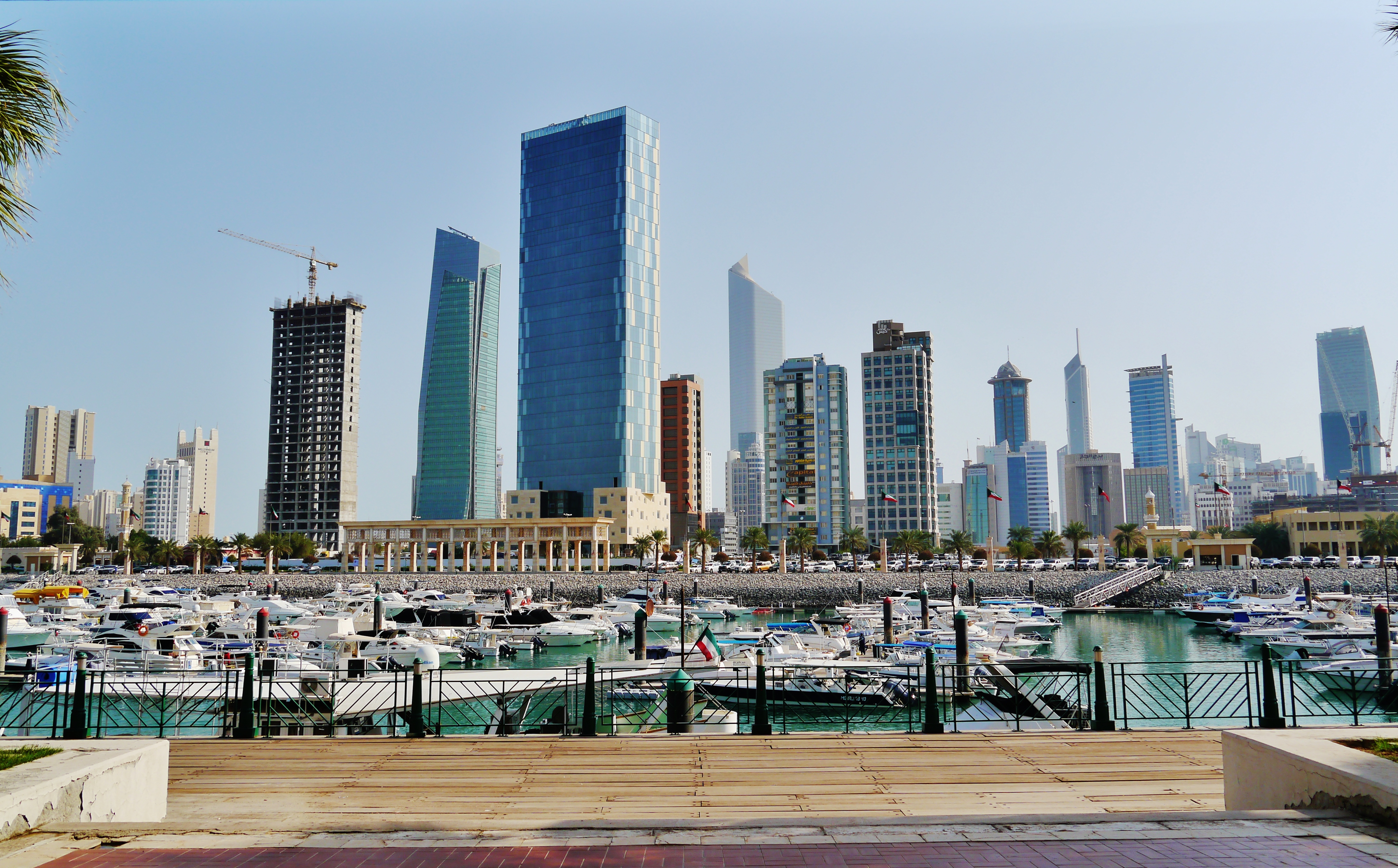
| image1 | Kuwait_City_Skyline_1.jpg |
| alt1 | Skyline of Kuwait City |
| caption1 | Skyline of Kuwait City |
| image2 | Al Hamra Tower.jpg |
| alt2 | Al Hamra Tower |
| caption2 | Al Hamra Tower |
| image3 | Kuwait_Towers_RB.jpg |
| alt3 | Kuwait towers |
| caption3 | Kuwait Towers |
| image4 | Liberation Tower. Kuwait.jpg |
| alt4 | Liberation Tower |
| caption4 | Liberation Tower |
| image5 | Seifpalace.jpg |
| alt5 | Seif palace |
| caption5 | Seif Palace |
| image6 | Kuwait City Souq Sharq 07.jpg |
| alt6 | Souq Sharq |
| caption6 | Souq Sharq |
| imagesize | 270 |
| image_caption | From top left: Kuwait City skyline, Al Hamra Tower, Kuwait Towers, Seif Palace, Souq Sharq port Kuwait Downtown in 2012 Kuwait City Souq Sharq Marina |
| image_flag | Flag_of_Kuwait_City.svg |
| flag_size | 150px |
| image_seal | Emblem_of_Kuwait_City.svg |
| pushpin_map | Kuwait#Asia |
| pushpin_map_caption | Location of Kuwait City in Kuwait |
| pushpin_relief | yes |
| subdivision_type | Country |
| subdivision_name | Kuwait |
| subdivision_type1 | Governorate |
| subdivision_name1 | Capital |
| leader_title1 | |
| established_title | Established |
| established_date | 1752 |
| established_title2 | |
| established_title3 | |
| unit_pref | |
| area_total_km2 | 860 |
| area_land_km2 | |
| population_as_of | 2025 |
| population_total | 3,405,000 |
| population_density_metro_km2 | 3500 |
| timezone | AST |
| utc_offset | +03:00 |
| coordinates | |
| postal_code_type |
5,026,078
Kuwait City (; ) is the capital and largest city of Kuwait. Located at the heart of the country on the south shore of Kuwait Bay on the Persian Gulf, it is the political, cultural and economic centre of the emirate, containing Kuwait's Seif Palace, government offices, and the headquarters of most Kuwaiti corporations and banks.
the metropolitan area had roughly three million inhabitants (more than 70% of the country's population). The city itself has no administrative status. All six governorates of the country contain parts of the urban agglomeration, which is subdivided into numerous areas. In a narrower sense, Kuwait City can also refer only to the town's historic core, which nowadays is part of the Capital Governorate and seamlessly merges with the adjacent urban areas.
Kuwait City's trade and transportation needs are served by Kuwait International Airport, Mina Al-Shuwaik (Shuwaik Port) and Mina Al Ahmadi (Ahmadi Port).
History
In the early to mid 1700s, Kuwait City was a small fishing village. Sometime in the mid 1700s, the Bani Utubs settled in Kuwait. At the time of the arrival of the Utubs, Kuwait was inhabited by a few fishermen. In the eighteenth century, Kuwait gradually became a principal commercial centre for the transit of goods between India, Muscat, Baghdad, Persia, and Arabia. By the late 1700s, Kuwait had already established itself as a trading route from the Persian Gulf to Aleppo.
During the Persian siege of Basra in 1775–1779, Iraqi merchants took refuge in Kuwait and were partly instrumental in the expansion of Kuwait's boat-building and trading activities. As a result, Kuwait's maritime commerce boomed. The East India Company was diverted to Kuwait in 1792. The East India Company secured the sea routes between Kuwait, India and the east coasts of Africa.

Kuwait was the centre of boat building in the Persian Gulf region. During the late eighteenth and nineteenth centuries, ship vessels made in Kuwait carried the bulk of trade between the ports of India, East Africa and the Red Sea. Kuwaiti ship vessels were renowned throughout the Indian Ocean. Regional geopolitical turbulence helped foster economic prosperity in Kuwait in the second half of the 18th century. Kuwait became prosperous due to Basra's instability in the late 18th century. At the time, Kuwait functioned partly as a haven for Basra's merchants fleeing Ottoman persecution. According to Palgrave, Kuwaitis developed a reputation as the best sailors in the Persian Gulf.
During the reign of Mubarak Al-Sabah, Kuwait was dubbed the "Marseille of the Gulf" because its economic vitality attracted a large variety of people.{{cite book |author-last=Peterson |author-first=J. E. |url=https://books.google.com/books?id=ncfIAAAAQBAJ&pg=PA272|title=The Arabian Gulf in History |editor-last=Potter |editor-first=L.
In 1937, Freya Stark wrote about the extent of poverty in Kuwait at the time:
Poverty has settled in Kuwait more heavily since my last visit five years ago, both by sea, where the pearl trade continues to decline, and by land, where the blockade established by Saudi Arabia now harms the merchants.
Some prominent merchant families left Kuwait in the early 1930s due to the prevalence of economic hardship. At the time of the discovery of oil in 1937, most of Kuwait's inhabitants were impoverished.
From 1946 to 1982, Kuwait experienced a period of prosperity driven by oil and its liberal atmosphere. In popular discourse, the years between 1946 and 1982 are referred to as the "Golden Era". In 1950, a major public-works programme began to enable Kuwaitis to enjoy a modern standard of living. By 1952, the country became the largest oil exporter in the Persian Gulf region. In the following year, the country's annual oil income grew to $169 million. This massive growth attracted many foreign workers, especially from Jordan, Egypt and India and helped finance the development of a new master plan, which the state approved in 1952. In June 1961, Kuwait became independent with the end of the British protectorate and the sheikh Abdullah Al-Salim Al-Sabah became an Emir. Under the terms of the newly drafted constitution, Kuwait held its first parliamentary elections in 1963. Kuwait was the first Persian Gulf country to establish a constitution and parliament.
In the 1960s and 1970s, Kuwait was the most developed country in the region. Kuwait was the pioneer in the Middle East in diversifying its earnings away from oil exports. The Kuwait Investment Authority is the world's first sovereign wealth fund. From the 1970s onward, Kuwait scored highest of all Arab countries on the Human Development Index. In 1958, Al Arabi magazine was first published, the magazine went on to become the most popular magazine in the Arab world. Kuwait was a haven for writers and journalists from all parts of the Middle East, with the Iraqi poet Ahmed Matar leaving Iraq in the 1970s to take refuge in the more liberal environment of Kuwait.
Kuwaiti society embraced liberal and Western attitudes throughout the 1960s and 1970s. Most Kuwaiti women did not wear the hijab in the 1960s and 1970s. At Kuwait University, mini-skirts were more common than the hijab.
In the early 1980s, Kuwait experienced a major economic crisis after the Souk Al-Manakh stock market crash and decrease in oil price.
The Kuwait National Assembly Building, a parliament building designed by the works of Jørn Utzon in its elements of Islamic architecture, was completed in 1982 by orders of his son Jan Utzon.
During the Iran–Iraq War, Kuwait supported Iraq. Throughout the 1980s, there were several terror attacks in Kuwait, including the 1983 Kuwait bombings, hijacking of several Kuwait Airways planes and attempted assassination of Emir Jaber in 1985. Kuwait was a leading regional hub of science and technology in the 1960s and 1970s up until the early 1980s, the scientific research sector significantly suffered due to the terror attacks.
After the Iran–Iraq War ended, Kuwait declined an Iraqi request to forgive its US$65 billion debt. An economic rivalry between the two countries ensued after Kuwait increased its oil production by 40 percent. Tensions between the two countries increased further in July 1990, after Iraq complained to OPEC claiming that Kuwait was stealing its oil from a field near the Iraq–Kuwait border by slant drilling of the Rumaila field. In August 1990, Iraqi forces invaded and annexed Kuwait. After a series of failed diplomatic negotiations, the United States led a coalition to remove the Iraqi forces from Kuwait, in what became known as the Gulf War. On 26 February 1991, the coalition succeeded in driving out the Iraqi forces. As they retreated, Iraqi forces carried out a scorched earth policy by setting oil wells on fire. During the Iraqi occupation, more than 1,000 Kuwaiti civilians were killed. In addition, more than 600 Kuwaitis went missing during Iraq's occupation, approximately 375 remains were found in mass graves in Iraq.
In March 2003, Kuwait became the springboard for the US-led invasion of Iraq. Upon the death of the Emir Jaber, in January 2006, Saad Al-Sabah succeeded him but was removed nine days later by the Kuwaiti parliament due to his ailing health. Sabah Al-Sabah was sworn in as Emir.
Geography
Main article: Geography of Kuwait

Kuwait City is located on Kuwait Bay, a natural deep-water harbor. Ninety percent of Kuwait's population live within the Kuwait Bay coast. The country is generally low-lying, with the highest point being 306 m above sea level. It has nine islands, all of which, with the exception of Failaka Island, are uninhabited. With an area of 860 km2, Bubiyan is the largest island in Kuwait and is connected to the rest of the country by a 2380 m bridge. The land area is considered arable and sparse vegetation is found along its 499 km coastline.
Kuwait's Burgan field has a total capacity of approximately 70 Goilbbl of proven oil reserves. During the 1991 Kuwaiti oil fires, more than 500 oil lakes were created covering a combined surface area of about 35.7 km2. The resulting soil contamination due to oil and soot accumulation had made eastern and south-eastern parts of Kuwait uninhabitable. Sand and oil residue had reduced large parts of the Kuwaiti desert to semi-asphalt surfaces. The oil spills during the Gulf War also drastically affected Kuwait's marine resources.
Climate

Kuwait City has a hot desert climate (Köppen: BWh) with extremely hot, very prolonged summers and mild, short winters. It is one of the hottest cities in summer on Earth. Average summer high temperatures are above 45 °C for three months of the year, and during heat waves; the daytime temperature regularly exceeds 50 °C with nighttime lows often remaining above 30 °C. In winter, nighttime temperatures frequently drop below 8 °C. Considering its coastal position and relative distance to the equator in comparison with the hot desert climates in Africa and Saudi Arabia, the heat in the city is rather extreme—being surrounded in almost every direction by the hot desert.
Sand storms occur at times during summer from the shamal wind. Sand storms can occur any time of year but occur mostly during summer, and less frequently during autumn.
|Jan record high C = 30.6 |Feb record high C = 35.8 |Mar record high C = 44.0 |Apr record high C = 44.3 |May record high C = 49.0 |Jun record high C = 51.5 |Jul record high C = 52.1 |Aug record high C = 51.5 |Sep record high C = 49.0 |Oct record high C = 45.2 |Nov record high C = 39.6 |Dec record high C = 30.6 |year record high C = |Jan record low C = -4.0 |Feb record low C = -3.3 |Mar record low C = -0.1 |Apr record low C = 6.9 |May record low C = 14.4 |Jun record low C = 17.3 |Jul record low C = 21.1 |Aug record low C = 20.6 |Sep record low C = 16.0 |Oct record low C = 9.4 |Nov record low C = 0.7 |Dec record low C = -1.5 |year record low C = | access-date = 15 October 2017}}{{cite web | access-date = 4 September 2025}} |access-date=19 February 2014 |archive-date=9 December 2020 |archive-url=https://web.archive.org/web/20201209045928/http://worldweather.wmo.int/113/c01498.htm |url-status=live | archive-url = https://web.archive.org/web/20201209045956/ftp://ftp.atdd.noaa.gov/pub/GCOS/WMO-Normals/TABLES/REG_II/KW/40582.TXT | archive-date = 2020-12-09 | url-status = dead | access-date = 15 January 2015
Economy
Main article: Economy of Kuwait}}Kuwait has a petroleum-based economy, petroleum and fertilisers are the main export products. {{As of, 2024, 06, 15, [Wise]], the [[Kuwaiti dinar]] is the highest-valued currency unit in the world.{{Cite web](wise-the-kuwaiti-dinar-is-the-highest-valued-currency-unit-in-the-world-ref-cite-web)
Transport

There are two airports in Kuwait. Kuwait International Airport serves as the principal hub for international air travel. State-owned Kuwait Airways is the largest airline in the country. A portion of the airport complex is designated as Al Mubarak Air Base, which contains the headquarters of the Kuwait Air Force, as well as the Kuwait Air Force Museum. In 2004, the first private airline of Kuwait, Jazeera Airways, was launched. In 2005, the second private airline, Wataniya Airways was founded.
Culture

Main article: Culture of Kuwait

Museum & Cultural Centre

Kuwait National Museum, Museum of Modern Art, Maritime Museum, Al Shaheed Park Museums, the Al Sabah Collection, Sadu House, Al Salam Palace, and the Sheikh Jaber Al-Ahmad Cultural Centre are considered the most famous museums and cultural centres in Kuwait City.
Theatre
Kuwait is known for its home-grown tradition of theatre. Kuwait is the only Arab country in the Gulf region with a theatrical tradition. The Arabic theatrical movement in Kuwait constitutes a major part of the country's Arabic cultural life. Theatrical activities in Kuwait began in the 1920s when the first spoken dramas were released. Theatre activities are still popular today.
Soap operas
Kuwaiti soap operas (المسلسلات الكويتية) are among the most-watched soap operas in the Arab world. Most Gulf soap operas are based in Kuwait. Although usually performed in the Kuwaiti dialect, they are aired in the majority of Arabic-speaking countries and are highly popular.
Sports
Main article: Sport in Kuwait

The city is home to the Al Kuwait SC, which has traditionally provided Kuwait's national basketball team with key players.
From 13 to 15 February 2020 it held the first Aquabike World Championship Grand Prix of Kuwait.
Notable people
- Abdulhussain Abdulredha (1939–2017), Kuwaiti actor
- Rania Al-Abdullah (born 1970 as Rania Al-Yassin), Kuwaiti-born queen consort of Jordan
- Yasser Al-Masri (1970–2018), Kuwaiti-born Jordanian actor
- Mishary Rashid Alafasy (born 1976), qāriʾ, imam, preacher and nasheed singer
- Adline Castelino (born 1998), model, represented India in the Miss Universe 2020 pageant
- Diana Karazon (born 1983), Kuwaiti-born Jordanian singer
- Saleem Haddad (born 1983), Kuwaiti author and aid worker
- Omar Jarun (born 1983), former footballer and currently an assistant coach for Atlanta United 2
- Abdulfattah Owainat (born 1972), Kuwaiti-born Palestinian singer and songwriter
References
References
- "The World's Cities in 2018. Data Booklet". United Nations.
- "History of Kuwait". Kuwait Embassy to Sweden.
- Mohammad Khalid A. Al-Jassar. (2009). "Constancy and Change in Contemporary Kuwait City: The Socio-cultural Dimensions of the Kuwait Courtyard and Diwaniyya".
- Bell, Sir Gawain. (1983). "Shadows on the Sand: The Memoirs of Sir Gawain Bell". C. Hurst.
- "ʻAlam-i Nisvāṉ – Volume 2, Issues 1–2".
- (31 December 1990). "Beyond the Storm: A Gulf Crisis Reader". Olive Branch Press.
- Mohammad Khalid A. Al-Jassar. (2009). "Constancy and Change in Contemporary Kuwait City".
- (1991). "The Kuwait Crisis: Basic Documents". Cambridge University Press.
- (2009). "Constancy and Change in Contemporary Kuwait City".
- Thabit Abdullah. (2001). "Merchants, Mamluks, and Murder: The Political Economy of Trade in Eighteenth-Century Basra". SUNY Press.
- "The impact of economic activities on the social and political structures of Kuwait (1896–1946)".
- (1970). "Peoples and Cultures of the Middle East: Cultural depth and diversity".
- M. Nijhoff. (1974). "Bijdragen tot de taal-, land- en volkenkunde, Volume 130".
- (1965). "Indian Foreign Affairs".
- Richard Harlakenden Sanger. (1970). "The Arabian Peninsula". Books for Libraries Press.
- (2008). "The Postal Agencies in Eastern Arabia and the Gulf". Lulu.com.
- Mohammad Khalid A. Al-Jassar. "Constancy and Change in Contemporary Kuwait City".
- Hasan, Mohibbul. (2007). "Waqai-i manazil-i Rum: Tipu Sultan's mission to Constantinople". Aakar Books.
- (1997). "The Politics of Regional Trade in Iraq, Arabia, and the Gulf, 1745–1900". SUNY Press.
- (2012). "Seafaring in the Arabian Gulf and Oman: People of the Dhow". Routledge.
- (2009). "Encyclopedia of the Ottoman Empire". Infobase.
- (1995). "Oil and Politics in the Gulf: Rulers and Merchants in Kuwait and Qatar". Cambridge University Press.
- (2014). ["Acquiring Modernity: Kuwait's Modern Era Between Memory and Forgetting"]({{google books). National Council for Culture, Arts and Letters.
- Farid, Alia. (2014). "Acquiring Modernity: Kuwait at the 14th International Architecture Exhibition".
- Gonzales, Desi. (November–December 2014). "Acquiring Modernity: Kuwait at the 14th International Architecture Exhibition". [[Art Papers]].
- "Looking for Origins of Arab Modernism in Kuwait". [[Hyperallergic]].
- (March 2013). "Cultural developments in Kuwait".
- Chee Kong, Sam. (1 March 2014). "What Can Nations Learn from Norway and Kuwait in Managing Sovereign Wealth Funds". Market Oracle.
- "Kuwait Literary Scene A Little Complex".
- (6 June 2013). "News Media in the Arab World: A Study of 10 Arab and Muslim Countries". Bloomsbury Publishing USA.
- (2008). ["Gulf Yearbook 2006-2007"]({{google books). I. B. Tauris.
- Kinninmont, Jane. (15 February 2013). "The Case of Kuwait: Debating Free Speech and Social Media in the Gulf".
- (1990). "Muslim Education Quarterly". Islamic Academy.
- (2010). ["Guide to Islamist Movements"]({{google books). M.E. Sharpe.
- Wheeler, Deborah L.. (2006). ["The Internet In The Middle East: Global Expectations And Local Imaginations"]({{google books). State University of New York Press.
- Osnos, Evan. (11 July 2004). "In Kuwait, conservatism a launch pad to success". [[Chicago Tribune]].
- (23 June 2012). "Kuwait's Souk al-Manakh Stock Bubble". Stock-market-crash.net.
- Hunter, Shireen T.. (1990). "Iran and the world : continuity in a revolutionary decade". Indiana University Press.
- (November 2001). "Frankenstein's Lament in Kuwait".
- "Iraqi Invasion of Kuwait; 1990".
- Derek Gregory. (2004). "The Colonial Present: Afghanistan …". Wiley.
- "Iraq and Kuwait: 1972, 1990, 1991, 1997". Earthshots: Satellite Images of Environmental Change.
- "The Use of Terror During Iraq's Invasion of Kuwait".
- (9 January 2003). "Iraq and Kuwait Discuss Fate of 600 Missing Since Gulf War". Los Angeles Times.
- (10 April 2015). "Kuwait". [[Central Intelligence Agency]].
- "Bubiyan (island, Kuwait)".
- (19 October 2002). ["Structurae en]: Bubiyan Bridge (1983)".
- Pendick, Daniel. "Kuwaiti Oil Lakes".
- "The Economic and Environmental Impact of the Gulf War on Kuwait and the Persian Gulf". American University.
- "Kuwait (country)".
- (22 July 2015). "Where is the world's hottest city?". the Guardian.
- (2024-04-16). "What are the strongest currencies in the world? (2024)".
- "Foreign Trade in Figures".
- (31 October 2005). "First flight for Kuwait's Jazeera Airways". [[The Seattle Times]].
- "Reviving Kuwait's theatre industry". [[BBC News]].
- (2007). "Popular Culture in the Arab World: Arts, Politics, and the Media". American Univ in Cairo Press.
- (January 1999). "The World Encyclopedia of Contemporary Theatre: The Arab world". Taylor & Francis.
- (2000). "The World of Theatre: An Account of the Theatre Seasons 1996–97, 1997–98 and 1998–99". Taylor & Francis.
- "Entertainment gets soapy during Ramadan in Kuwait".
- (1990). "Kuwait: vanguard of the Gulf". Hutchinson.
- [https://www.fiba.basketball/asia/2015/Kuwait tab=roster 2015 FIBA Asia Championship – Kuwait Roster], FIBA.com, accessed 16 February 2016.
- (14 February 2020). "Double delight for Team Abu Dhabi riders at Kuwait Grand Prix". GulfToday.
- Al-Kandari, Mashari. (2020-10-21). "Kuwait's Abdulrazzeq wins ITU Aquabike World Championships' ...". Menafn.Com.
This article was imported from Wikipedia and is available under the Creative Commons Attribution-ShareAlike 4.0 License. Content has been adapted to SurfDoc format. Original contributors can be found on the article history page.
Ask Mako anything about Kuwait City — get instant answers, deeper analysis, and related topics.
Research with MakoFree with your Surf account
Create a free account to save articles, ask Mako questions, and organize your research.
Sign up freeThis content may have been generated or modified by AI. CloudSurf Software LLC is not responsible for the accuracy, completeness, or reliability of AI-generated content. Always verify important information from primary sources.
Report