From Surf Wiki (app.surf) — the open knowledge base
Disposable product
Product designed to be discarded after use
Product designed to be discarded after use
A disposable (also called disposable product) is a product designed for a single use after which it is recycled or is disposed as solid waste. The term is also sometimes used for products that may last several months (e.g. disposable air filters) to distinguish from similar products that last indefinitely (e.g. washable air filters). The word "disposables" is not to be confused with the word "consumables", which is widely used in the mechanical world. For example, welders consider welding rods, tips, nozzles, gas, etc. to be "consumables", as they last only a certain amount of time before needing to be replaced. Consumables are needed for a process to take place, such as inks for printing and welding rods for welding, while disposable products are items that can be discarded after they become damaged or are no longer useful.
Terminology
"Disposable" is an adjective that describes something as non-reusable but is disposed of after use. Many people now use the term as a noun or substantive, i.e. "a disposable" but in reality this is still an adjective as the noun (product, nappy, etc.) is implied.
The UK government included an enquiry about how best to define "single-use plastics" in its 2018 consultation document on "tackling the plastic problem".
Materials
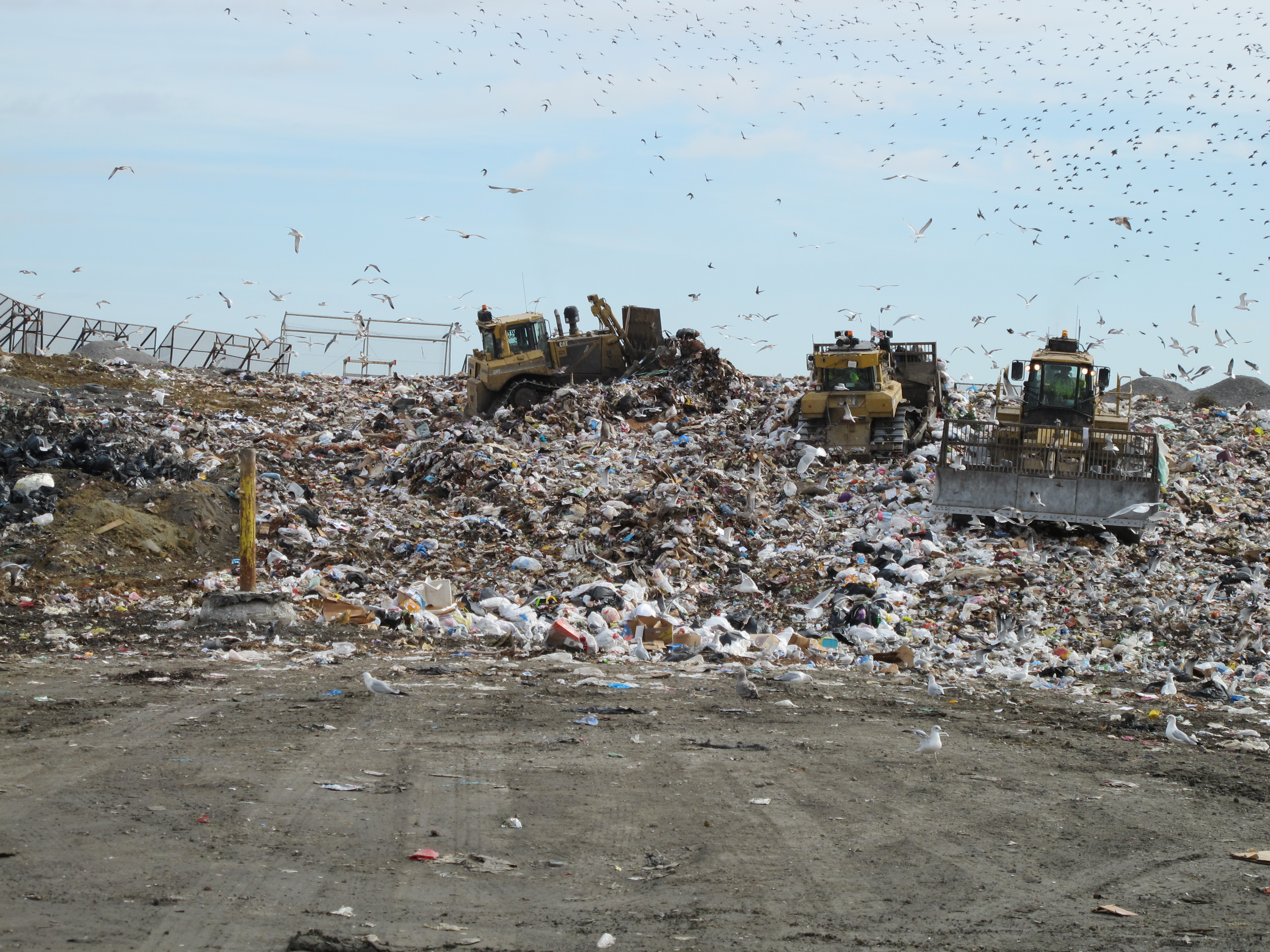
Disposable products are most often made from paper, plastic, cotton, or polystyrene foam. Products made from composite materials such as laminations are difficult to recycle and are more likely to be disposed of at the end of their use. They are typically disposed of using landfills because it is a cheap option. However, in 2004, the European Union passed a law which stopped allowing disposals in landfills.
Single-use plastics
Synthetic plastic products gained popularity during the first half of the twentieth century and was initially marketed as a superior, light but durable material compared to existing materials like glass and metal. However, the plastic industry switched their messaging and strategy in the 1950s. To boost revenue, the plastic industry shifted to producing cheap and expendable plastic, signified by Lloyd Stouffer, an editor of a plastics industry magazine, at the 1956 plastics conference when he said "the future of plastic is in the trash can". The plastic industry, through multiple years of successful marketing campaign, established the norm of disposable, single-use plastic products over the previous norm of re-usability. In 1963, Stouffer commented "The happy day has arrived when nobody any longer considers the plastics package too good to throw away."
Many governments are scaling up their efforts to phase out single-use plastic products and packaging and to manage plastic packaging waste in an environmentally sound manner.
In 2015 the European Union (EU) adopted a directive requiring a reduction in the consumption of single use plastic bags per person to 90 by 2019 and to 40 by 2025. In April 2019, the EU adopted a further directive banning almost all types of single use plastic, except bottles, from the beginning of the year 2021.
In the UK, a 2018 HM Treasury consultation on single-use plastic waste taxation noted that the production process for single-use plastic originates in the conversion of naturally occurring substances into polymers, which vary in their capacity for being re-processed on one or more occasions, meaning that some polymers can be reprocessed and reused only once, and others cannot at present be reprocessed in an economic manner and are therefore destined to have only a single use.
The EU's Single-Use Plastic Directive (SUPD, Directive EU 2019/904) went into effect in EU member states on 3 July 2021.
Also in 2021, Australia's Minderoo Foundation produced a report called the "Plastic Waste Makers Index", which concluded that half of the world's single-use plastic waste is produced by just 20 companies. China is the biggest consumer of single-use plastics.
Examples of disposables
Kitchen and dining products
- Aluminum foil and aluminum pans
- Disposable dishware / drinkware (e.g. plates, bowls, cups)
- Plastic cutlery (e.g. spoons, knives, forks, sporks)
- Disposable table cloths
- Cupcake wrappers, coffee filters are compostable
- Drinking straws
- Wet wipe
Packaging
Main article: Packaging waste
Main article: Reusable packaging
Main article: Sustainable packaging
Packages are usually intended for a single use. The waste hierarchy calls for minimization of materials. Many packages and materials are suited to recycling, although the actual recycling percentages are relatively low in many regions. For example, in Chile, only 1% of plastic is recycled. Reuse and repurposing of packaging is increasing, but eventually containers will be recycled, composted, incinerated, or landfilled.
There are many container forms such as boxes, bottles, jars, bags, etc. Materials used include paper, plastics, metals, fabrics, composites, etc.
A number of countries have adopted legislation to ensure that plastic packaging waste collected from households is sorted, reprocessed, compounded, and reused or recycled. There are also bans on single-use plastic food packaging in many countries.
Food service industry disposables
Main article: Disposable food packaging
.jpg)
In 2002, Taiwan began taking action to reduce the use of disposable tableware at institutions and businesses, and to reduce the use of plastic bags. Yearly, the nation of 17.7 million people was producing 59,000 tons of disposable tableware waste and 105,000 tons of waste plastic bags, and increasing measures have been taken in the years since then to reduce the amount of waste. In 2013 Taiwan's Environmental Protection Administration (EPA) banned outright the use of disposable tableware in the nation's 968 schools, government agencies and hospitals. The ban is expected to eliminate 2,600 metric tons of waste yearly.
In Germany, Austria, and Switzerland, laws banning use of disposable food and drink containers at large-scale events have been enacted. Such a ban has been in place in Munich, Germany, since 1991, applying to all city facilities and events. This includes events of all sizes, including very large ones (Christmas market, Auer-Dult Faire, Oktoberfest and Munich Marathon). For small events of a few hundred people, the city has arranged for a corporation offer rental of crockery and dishwasher equipment. In part through this regulation, Munich reduced the waste generated by Oktoberfest, which attracts tens of thousands of people, from 11,000 metric tons in 1990 to 550 tons in 1999.
China produces about 57 billion pairs of single-use chopsticks yearly, of which half are exported. About 45 percent are made from trees – about 3.8 million of them – mainly cotton wood, birch, and spruce, the remainder being made from bamboo. Japan uses about 24 billion pairs of these disposables per year, and globally the use is about 80 billion pairs are thrown away by about 1.4 million people. Reusable chopsticks in restaurants have a lifespan of 130 meals. In Japan, with disposable ones costing about 2 cents and reusable ones costing typically $1.17, the reusables better at the $2.60 breakeven cost. Campaigns in several countries to reduce this waste are beginning to have some effect.
Israel is considered the world's largest user of disposables food containers and dinnerware. Each month, 250 million plastic cups and more than 12 million paper cups are used, manufactured and disposed. In Israel there are no laws about manufacturing or importing of food disposable containers.
A kulhar is a traditional handle-less clay cup from South Asia that is typically unpainted and unglazed, and meant to be disposable. Since kulhars are made by firing in a kiln and are almost never reused, they are inherently sterile and hygienic. Bazaars and food stalls in the Indian subcontinent traditionally served hot beverages, such as tea, in kuhlars, which suffused the beverage with an "earthy aroma" that was often considered appealing. Yoghurt, hot milk with sugar as well as some regional desserts, such as kulfi (traditional ice-cream), are also served in kulhars. Kulhars have gradually given way to polystyrene and coated paper cups, because the latter are lighter to carry in bulk and cheaper.
Medical and hygiene products


Medical and surgical device manufacturers worldwide produce a multitude of items that are intended for one use only. The primary reason is infection control; when an item is used only once it cannot transmit infectious agents to subsequent patients. Manufacturers of any type of medical device are obliged to abide by numerous standards and regulations. ISO 15223: Medical Devices and EN 980 cite that single use instruments or devices be labelled as such on their packaging with a universally recognized symbol to denote "do not re-use", "single use", or "use only once". This symbol is the numeral 2, within a circle with a 45° line through it.
Examples of single use medical and hygiene items include:
- Hypodermic needles
- Toilet paper
- Disposable towels, paper towels
- Condoms and other contraception products
- Disposable enemas and similar products
- Cotton swabs and pads
- Medical and cleaning gloves
- Medical dust respirators (dust masks)
- Baby and adult diapers, and training pants
- Shaving razors, safety razors, waxing kits, combs, and other hair control products
- Toothbrushes, dental floss, and other oral care products
- Hospital aprons
- Disposable panties in postpartum
- Contact lenses, although reusable contact lenses are also available.
Electronics

- Non-rechargeable batteries are considered hazardous waste and should only be disposed of as such.
- Disposable ink cartridges
- Disposable cameras
- Disposable electronic cigarette devices, coils, cartridges, tanks/pods
Defense and law enforcement
- PlastiCuffs
- Ammunition
- Barricade tape
Other consumer products
- Garbage bags
- Vacuum cleaner bags, water, air, coolant, and other filters
- Ballpoint pens, erasers, and other writing implements
- Movie sets and theater sets
- Gift wrapping paper
- Labels, stickers, and the associated release liners are single use and usually disposed after use.
- Cigarettes and cigars, plus cigarette packets, filters and rolling paper.
- Gasoline
- Natural gas
- Paper products; toilet paper, paper napkin, Newspapers. etc
References
Sources
- {{Free-content attribution
References
- H M Treasury, [https://assets.publishing.service.gov.uk/government/uploads/system/uploads/attachment_data/file/690293/PU2154_Call_for_evidence_plastics_web.pdf Tackling the plastic problem : Using the tax system or charges to address single-use plastic waste], published March 2018, accessed 5 December 2023
- (May 2007). "Carbon fiber: Life Beyond the Landfill".
- "Creating a throw-away culture: How companies ingrained plastics in modern life". NPR.
- (2024-11-16). "How French laws on plastic packaging are changing an industry".
- (29 April 2015). "EU to halve plastic bag use by 2019".
- (16 April 2019). "Single-Use Plastics Will Be Banned in Europe by 2021".
- EUR-Lex, [https://eur-lex.europa.eu/eli/dir/2019/904/oj Directive (EU) 2019/904 of the European Parliament and of the Council of 5 June 2019 on the reduction of the impact of certain plastic products on the environment], accessed 8 August 2021
- {{rp. 10 The sale of single-use plastic cutlery, balloon sticks and polystyrene cups and [[food containers]] was banned in England from 1 October 2023, following an announcement on "some of the most polluting single-use plastic items" published in January 2023. At the same time, restrictions have been introduced concerning the supply of single-use plastic plates, trays and bowls.{{OGL-attribution. [[Department for Environment, Food & Rural Affairs]], [https://www.gov.uk/government/news/new-bans-and-restrictions-on-polluting-single-use-plastics-come-into-force New bans and restrictions on polluting single-use plastics come into force], published 29 September 2023, accessed 11 December 2023
- (18 May 2021). "Half of single-use plastic waste produced by just 20 companies". Reuters.
- (20 May 2021). "20 companies responsible for most single-use plastic waste".
- (3 August 2020). "The Macroproblem of Microplastics". Ohio River Valley Institute.
- (1982). "Prairie Farmer". Prairie Farmer Publishing Company.
- McEachern, D.. (2008). "Big Green Purse: Use Your Spending Power to Create a Cleaner, Greener World". Penguin Publishing Group.
- (2019-11-27). "The 5 worst countries for plastic recycling".
- Environment, U. N.. (2021-10-21). "Drowning in Plastics – Marine Litter and Plastic Waste Vital Graphics".
- link. (2020-08-07 .)
- link. (2014-09-08)
- New York Times. Reus Oct. 24, 2011. [http://green.blogs.nytimes.com/2011/10/24/disposable-chopsticks-strip-asian-forests/?_php=true&_type=blogs&_r=0 Disposable Chopsticks Strip Asian Forests]. By [[Rachel Nuwer]].
- Ecopedia. 2013. [http://www.ecopedia.com/environment/how-wooden-chopsticks-are-killing-nature/ How Wooden Chopsticks Are Killing Nature] {{Webarchive. link. (2020-07-15 . By Alastair Shaw.)
- ליבסקר, ארי. (2018-06-23). "מדינת חד"פ: כך התמכרה ישראל לכלי פלסטיק חד-פעמיים".
- Jasleen Dhamija. (1970). "Indian folk arts and crafts". National Book Trust, India, 1992.
- Nigel B. Hankin. (1997). "Hanklyn-janklin: a stranger's rumble-tumble guide to some words, customs, and quiddities, Indian and Indo-British". Banyan Books.
- (August 2, 2004). "Storm In A Kulhar". Outlook India.
- "Cakes and Desserts". Bittersweet NYC.
- Sonu Jain. (July 6, 2004). "Why Laloo's kulhad isn't as green as he makes it out to be". Indian Express.
- Venkatesh Dutta. (September 4, 2010). "कुल्हड़ में चाय और लस्सी नहीं चली लालू की रेल में (Kulhars for tea and lassi are a flop on Laloo's Railway)". Live Hindustan.
- Engineers, N.B.C.. (2014). "Handbook on Medical and Surgical Disposable Products". Niir Project.
- (2013). "Kinn's The Medical Assistant - E-Book: An Applied Learning Approach". Elsevier Health Sciences.
- Rice, J.. (2002). "Medications and Mathematics for the Nurse". Delmar Thomson Learning.
- (1981). "Occupational health and safety management". J. Wiley.
- Loux, R.. (2008). "Easy Green Living: The Ultimate Guide to Simple, Eco-Friendly Choices for You and Your Home". Rodale Books.
- (2008). "Textbook of Basic Nursing". Lippincott Williams & Wilkins.
- Lussi, A.. (2006). "Dental Erosion: From Diagnosis to Therapy". Karger.
- Blatt, H.. (2011). "America's Environmental Report Card: Are We Making the Grade?". MIT Press.
- (2009). "Textbook of Aging Skin". Springer Berlin Heidelberg.
- (2009). "What to Expect the Toddler Years". Workman Publishing Company, Incorporated.
- Thomas, R.J.. (1995). "New Product Success Stories: Lessons from Leading Innovators". Wiley.
- (1993). "Principles and Techniques for the Beauty Specialist". Nelson Thornes Limited.
- (2017). "Continuous EEG Monitoring: Principles and Practice". Springer International Publishing.
- (2011). "The Royal Marsden Hospital Manual of Clinical Nursing Procedures". Wiley.
- (2006). "Manual of Contact Lens Prescribing and Fitting". Butterworth-Heinemann.
- LensPure, [https://www.lenspure.com/articles/reusable-contact-lenses-as-safe-as-disposable Are Reusable Contact Lenses As Safe As Disposable Contacts?], accessed 21 October 2023
- Wellington, T.. (2009). "The Mom's Guide to Growing Your Family Green: Saving the Earth Begins at Home". St. Martin's Press.
- Warren, L.. (2005). "Encyclopedia of Twentieth-Century Photography, 3-Volume Set". Taylor & Francis.
- Casey, W.. (2009). "Firsts: Origins of Everyday Things That Changed the World". DK Publishing.
- Wherry, T.L.. (2008). "Intellectual Property: Everything the Digital-age Librarian Needs to Know". American Library Association.
- NPCS Board of Consultants & Engineers. (2014). "Disposable Products Manufacturing Handbook". Niir Project.
- Hill, M.K.. (2010). "Understanding Environmental Pollution". Cambridge University Press.
- (2009). "Environmentally Degradable Materials Based on Multicomponent Polymeric Systems". Taylor & Francis.
- (February 23, 2017). "Disposable table cloth: Patent US5084321".
This article was imported from Wikipedia and is available under the Creative Commons Attribution-ShareAlike 4.0 License. Content has been adapted to SurfDoc format. Original contributors can be found on the article history page.
Ask Mako anything about Disposable product — get instant answers, deeper analysis, and related topics.
Research with MakoFree with your Surf account
Create a free account to save articles, ask Mako questions, and organize your research.
Sign up freeThis content may have been generated or modified by AI. CloudSurf Software LLC is not responsible for the accuracy, completeness, or reliability of AI-generated content. Always verify important information from primary sources.
Report