From Surf Wiki (app.surf) — the open knowledge base
2
Natural number
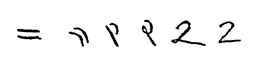
Natural number
| Field | Value | |||||
|---|---|---|---|---|---|---|
| number | 2 | |||||
| ordinal | 2nd (second) | |||||
| numeral | binary | |||||
| gaussian integer factorization | (1 + i)(1 - i) | |||||
| prime | 1st | |||||
| divisor | 1, 2 | |||||
| roman | II, ii | |||||
| greek prefix | di- | |||||
| latin prefix | duo-/bi- | |||||
| old english prefix | twi- | |||||
| lang1 | Greek numeral | |||||
| lang1 symbol | β' | |||||
| lang2 | Arabic, Kurdish, Persian, Sindhi, Urdu | |||||
| lang2 symbol | ||||||
| lang3 | Ge'ez | |||||
| lang3 symbol | ፪ | |||||
| lang4 | Bengali | |||||
| lang4 symbol | ||||||
| lang5 | Chinese numeral | |||||
| lang5 symbol | 二,弍,貳 | |||||
| lang6 | Devanāgarī | |||||
| lang6 symbol | ||||||
| lang7 | Santali | |||||
| lang7 symbol | ||||||
| lang8 | Telugu | |||||
| lang9 | Tamil | |||||
| lang9 symbol | ||||||
| lang10 | Kannada | |||||
| lang10 symbol | ||||||
| lang11 | Hebrew | |||||
| lang11 symbol | ||||||
| lang12 | Armenian | lang12 symbol=Բ | lang13=Khmer | |||
| lang13 symbol | ២ | |||||
| lang14 | Maya numerals | lang14 symbol=•• | lang15=Thai | |||
| lang15 symbol | ๒ | |||||
| lang16 | Georgian | |||||
| lang16 symbol | (Bani) | |||||
| lang17 | Malayalam | |||||
| lang17 symbol | ൨ | |||||
| lang18 | Babylonian numeral | lang18 symbol=𒐖 | lang19=Egyptian hieroglyph, Aegean numeral, Chinese counting rod | lang19 symbol= | lang20=Morse code | lang20 symbol= |
This article is about the number. For the years, see 2 BC and AD 2. For other uses, see 2 (disambiguation), II (disambiguation), and Number Two (disambiguation).
2 (two) is a number, numeral and digit. It is the natural number following 1 and preceding 3. It is the smallest and the only even prime number.
Because it forms the basis of a duality, it has religious and spiritual significance in many cultures.
Mathematics
The number 2 is the second natural number, after 1. Each natural number, including 2, is constructed by succession, that is, by adding 1 to the previous natural number. 2 is the smallest and the only even prime number, and the first Ramanujan prime. It is also the first superior highly composite number, and the first colossally abundant number.
An integer is determined to be even if it is divisible by two. When written in base 10, all multiples of 2 will end in 0, 2, 4, 6, or 8; more generally, in any even base, even numbers will end with an even digit.
A digon is a polygon with two sides (or edges) and two vertices. Two distinct points in a plane are always sufficient to define a unique line in a nontrivial Euclidean space.
A set that is a field has a minimum of two elements.
Binary is a number system with a base of two, it is used extensively in computing.
List of basic calculations
| Multiplication | 1 | 2 | 3 | 4 | 5 | 6 | 7 | 8 | 9 | 10 | 11 | 12 | 13 | 14 | 15 | 16 | 20 | 25 | 50 | 100 | 1000 |
|---|---|---|---|---|---|---|---|---|---|---|---|---|---|---|---|---|---|---|---|---|---|
| '*2 * *x''''' | **2** | [4](4-number) | [6](6-number) | [8](8-number) | [10](10-number) | [12](12-number) | [14](14-number) | [16](16-number) | [18](18-number) | [20](20-number) | [22](22-number) | [24](24-number) | [26](26-number) | [28](28-number) | [30](30-number) | [32](32-number) | [40](40-number) | [50](50-number) | [100](100-number) | [200](200-number) | [2000](2000-number) |
| Division | 1 | 2 | 3 | 4 | 5 | 6 | 7 | 8 | 9 | 10 | 11 | 12 | 13 | 14 | 15 | 16 | 17 | 18 | 19 | 20 |
|---|---|---|---|---|---|---|---|---|---|---|---|---|---|---|---|---|---|---|---|---|
| '*2 ÷ *x''''' | **2** | 1 | 0. | 0.5 | 0.4 | 0. | 0. | 0.25 | 0. | 0.2 | 0. | 0. | 0. | 0. | 0.1 | 0.125 | 0. | 0. | 0. | 0.1 |
| ***x* ÷ 2** | 0.5 | 1 | 1.5 | **2** | 2.5 | 3 | 3.5 | 4 | 4.5 | 5 | 5.5 | 6 | 6.5 | 7 | 7.5 | 8 | 8.5 | 9 | 9.5 | 10 |
| Exponentiation | 1 | 2 | 3 | 4 | 5 | 6 | 7 | 8 | 9 | 10 | 11 | 12 | 13 | 14 | 15 | 16 | 17 | 18 | 19 | 20 |
|---|---|---|---|---|---|---|---|---|---|---|---|---|---|---|---|---|---|---|---|---|
| **2** | **2** | 4 | 8 | [16](16-number) | [32](32-number) | [64](64-number) | 128 | 256 | 512 | 1024 | [2048](2048-number) | [4096](4096) | [8192](8192) | 16384 | 32768 | 65536 | 131072 | 262144 | 524288 | 1048576 |
| ***x*** | 1 | 4 | [9](9-number) | 16 | [25](25-number) | [36](36-number) | [49](49-number) | 64 | [81](81-number) | 100 | 121 | [144](144-number) | 169 | 196 | 225 | 256 | 289 | 324 | 361 | 400 |
As a word
Two is most commonly a determiner used with plural countable nouns, as in two days or I'll take these two. Two is a noun when it refers to the number two as in two plus two is four.
The word two is derived from the Old English words twā (feminine), tū (neuter), and twēġen (masculine, which survives today in the form twain).
Evolution of the Arabic digit
The digit used in the modern Western world to represent the number 2 traces its roots back to the Indic Brahmic script, where "2" was written as two horizontal lines. The modern Chinese and Japanese languages (and Korean Hanja) still use this method. The Gupta script rotated the two lines 45 degrees, making them diagonal. The top line was sometimes also shortened and had its bottom end curve towards the center of the bottom line. In the Nagari script, the top line was written more like a curve connecting to the bottom line. In the Arabic Ghubar writing, the bottom line was completely vertical, and the digit looked like a dotless closing question mark. Restoring the bottom line to its original horizontal position, but keeping the top line as a curve that connects to the bottom line leads to our modern digit.
In science
- The first magic number - number of electrons in the innermost electron shell of an atom.
References
References
- (1912). "''Nature's Harmonic Unity: A Treatise on Its Relation to Proportional Form''". G.P. Putnam's Sons.
- "Sloane's A104272 : Ramanujan primes". OEIS Foundation.
- "A002201 - OEIS".
- "A004490 - OEIS".
- {{Cite OEIS. A005843. The nonnegative even numbers
- Wilson, Robin. (2014). "Four Colors Suffice". Princeton University Press.
- Carrell, Jim. "MATH 307 Applied Linear Algebra".
- "Field Contains at least 2 Elements".
- "How computers see the world - Binary - KS3 Computer Science Revision".
- (2022). "A student's introduction to English grammar". [[Cambridge University Press]].
- {{Cite OED. two, adj., n., and adv.
- Georges Ifrah, ''The Universal History of Numbers: From Prehistory to the Invention of the Computer'' transl. David Bellos et al. London: The Harvill Press (1998): 393, Fig. 24.62
- "The Complete Explanation of the Nuclear Magic Numbers Which Indicate the Filling of Nucleonic Shells and the Revelation of Special Numbers Indicating the Filling of Subshells Within Those Shells". San José State University.
This article was imported from Wikipedia and is available under the Creative Commons Attribution-ShareAlike 4.0 License. Content has been adapted to SurfDoc format. Original contributors can be found on the article history page.
Ask Mako anything about 2 — get instant answers, deeper analysis, and related topics.
Research with MakoFree with your Surf account
Create a free account to save articles, ask Mako questions, and organize your research.
Sign up freeThis content may have been generated or modified by AI. CloudSurf Software LLC is not responsible for the accuracy, completeness, or reliability of AI-generated content. Always verify important information from primary sources.
Report