From Surf Wiki (app.surf) — the open knowledge base
702 Naval Air Squadron
Defunct flying squadron of the Royal Navy's Fleet Air Arm
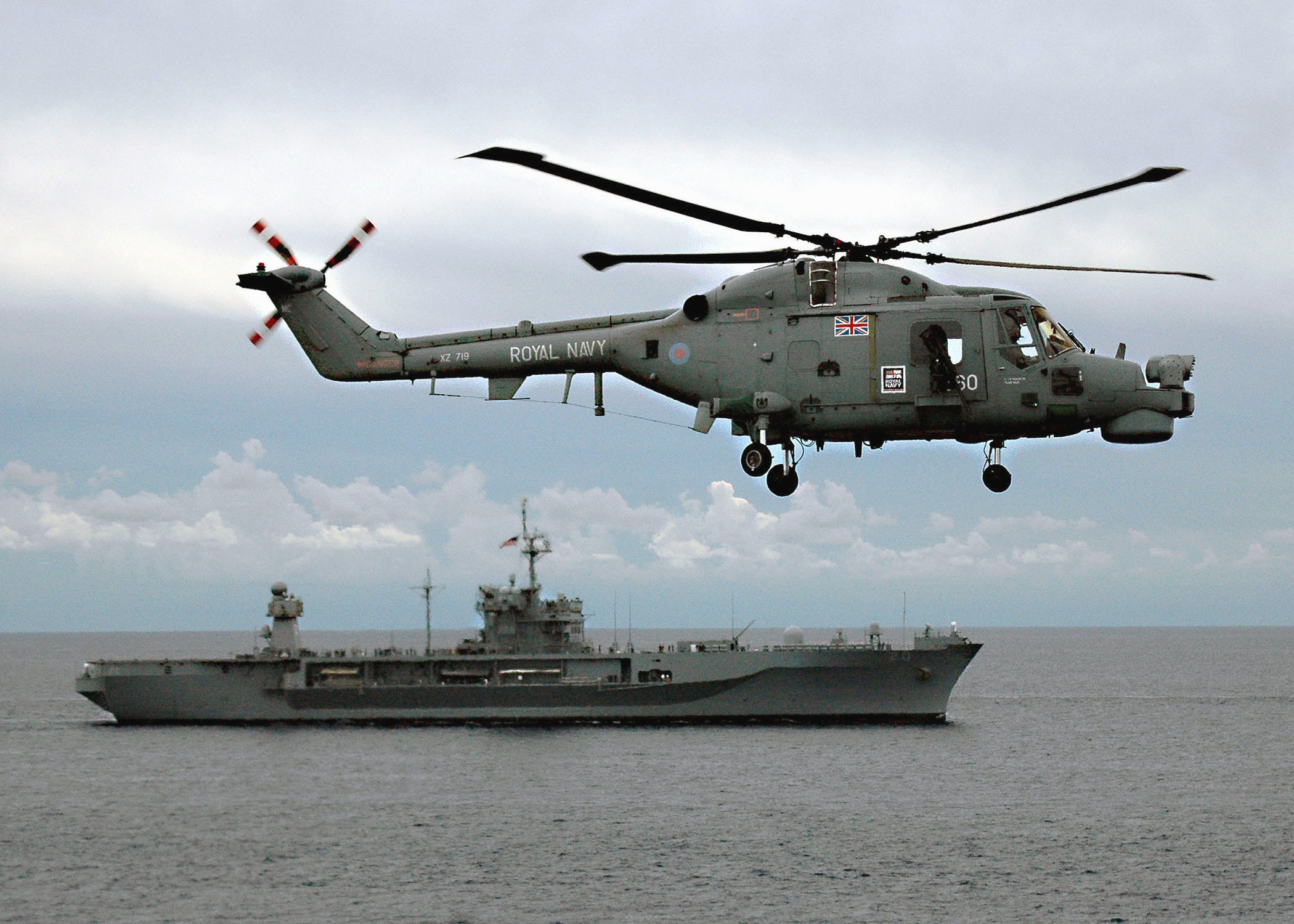
Defunct flying squadron of the Royal Navy's Fleet Air Arm
| Field | Value |
|---|---|
| unit_name | 702 Naval Air Squadron |
| 702 (Catapult) Flight FAA | |
| image | 702 NAS badge.jpg |
| image_size | 200 |
| caption | Squadron Badge |
| dates | **Royal Air Force** |
| 1936–1939 | |
| **Royal Navy** | |
| disbanded | 1 August 2014 |
| country | |
| branch | |
| type | Fleet Air Arm Second Line Squadron |
| role | * Catapult Flights |
| size | Squadron |
| command_structure | Fleet Air Arm |
| garrison | *See Naval air stations section for full list.* |
| garrison_label | Home station |
| equipment | *See Aircraft flown section for full list.* |
| equipment_label | Aircraft |
| motto | |
| identification_symbol | *White, in front of a roundel gyronny blue and white a demi-lynx erased gold armed and langued red (1978)* |
| identification_symbol_label | Squadron Badge Description |
| identification_symbol_2 | |
| identification_symbol_2_label | Identification Markings |
| identification_symbol_3 | |
| identification_symbol_3_label | Fin Shore Codes |
702 (Catapult) Flight FAA 1936–1939 Royal Navy
- Long Range Catapult Squadron
- Instrument Flying Training and Checking Unit
- Naval Jet Evaluation Training Unit
- Junior Officers Air Course
- Lynx Headquarters and Training Squadron
702 Naval Air Squadron (702 NAS), also referred to as 702 Squadron, was a Fleet Air Arm (FAA) naval air squadron of the United Kingdom’s Royal Navy (RN). It most recently operated the Westland Lynx, as the Lynx Headquarters and Training Squadron, between January 1978 and August 2014.
It was last based at HMS Heron, RNAS Yeovilton, Somerset and earlier at HMS Osprey, RNAS Portland, Dorset. As a training squadron it trained all ground and air crew for the sister front-line maritime Lynx unit, 815 Naval Air Squadron. It initially formed during July 1936 as a Catapult Flight for the 2nd Battle Squadron based at RAF Mount Batten and routinely embarking in RN ships such as, HMS Nelson, HMS Rodney and HMS Resolution. By 1939 it was known as 702 Naval Air Squadron but disbanded in January 1940.
It was active twice more during the Second World War, between December 1940 and July 1943 as a Long Range Catapult Squadron and then between June 1945 and September 1946 as an Instrument Flying Training and Checking Unit. A Naval Jet Evaluation Training Unit was the squadron’s next role between April 1949 and August 1952, followed by a Junior Officers Air Course between September 1957 and August 1958. It last reformed as the Lynx Headquarters and Training Squadron at HMS Heron, during January 1978.
History
Formation and Second World War (1936–1945)
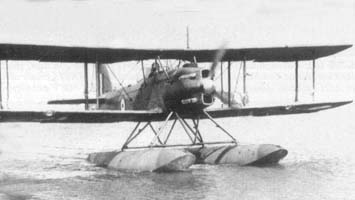
702 Naval Air Squadron was founded on 15 July 1936 to operate aircraft from the ships of the 2nd Battle Squadron. Operating Supermarine Walrus, an amphibious maritime patrol aircraft, and Fairey Seal, a carrier-borne spotter-reconnaissance biplane, from its base at the Royal Air Force station and flying boat base RAF Mount Batten, located in Plymouth Sound, Devon, initially, later these were replaced by the biplane torpedo bomber Fairey Swordfish float-plane variant. Aircraft were attached to the name ship of her class , sister ship and the . Granted Squadron status in 1939, and briefly disbanded in 1940.
Ships' Flights
702 (Catapult) Flight operated a number of ships’ flights between 1936 and 1940 whilst based out of RAF Mount Batten, including the name ship of her class HMS Nelson between 1936–39, the Revenge-class battleship during 1937, the Revenge-class battleship HMS Resolution between 1939–40, the Nelson-class battleship HMS Rodney between 1939–40, and the Revenge-class battleship between 1937–38.
702 Naval Air Squadron reformed as a Long Range Catapult squadron equipped with the biplane Fairey Seafox, a ship-borne reconnaissance seaplane, for duty in armed merchant cruisers (AMCs) for much of the Second World War. It was based out of RNAS Lee-on-Solent (HMS Daedalus), Hampshire, England. The initial ship was , followed by , Canton, and . On 10 May 1942 a Hawker Sea Hurricane flight was formed and used on the CAM ship HMS Maplin. The squadron disbanded in July 1943.
AMC Ships' Flights
702 Long Range Catapult squadron operated a number of armed merchant cruisers ships’ flights between 1941 and 1943: the armed merchant cruiser HMS Alcantara between 1941-42, her sister ship HMS Asturias during 1942–43, HMS Canton 1941–42, the auxiliary cruiser between 1941–42, the converted ocean liner HMS Pretoria Castle between 1941–42, and the converted ocean liner HMS Queen of Bermuda between 1941–42.
Instrument Flying Training & Checking Squadron (1945–1946)
On 1 June 1945 702 Naval Air Squadron reformed as an offshoot of 758 Naval Air Squadron, equipped with Airspeed Oxford, a training aircraft, and North American Harvard, an advanced training aircraft, as an Instrument Flying Training & Checking Squadron. Seven weeks later the squadron personnel took passage to RNAS Schofields in Australia.
It arrived at the airbase on 4 September. The airfield was on loan from the Royal Australian Air Force (RAAF) and was the chosen location for Mobile Operational Naval Air Base III (MONAB III) logistical unit, which was already equipped with a mobile Beam Approach Beacon System (BABS) van, however, the squadron’s training equipment did not materialise so it focused on the instrument flying training until 702 Naval Air Squadron was disbanded at RNAS Schofields in September 1946.
Naval Jet Evaluation Training Unit (1949–1952)
In 1949 the squadron reformed at RNAS Culdrose (HMS Seahawk), Cornwall, England, as the Naval Jet Evaluation Training Unit. Equipped initially with four de Havilland Sea Vampire single-seat jet fighter, it also became the first unit of either the RAF or FAA to fly the Gloster Meteor T.7 jet trainer and was the first unit to achieve jet landings at night on an aircraft carrier, embarked in and later . The squadron received Supermarine Attacker F.l, a British single-seat naval jet fighter, in March 1952, and proceeded converting piston-engined pilots to jets, but in August 1952 the squadron was renumbered as 736 Naval Air Squadron in August 1952.
Junior Officers Air Course (1957–1958)
In September 1957, 702 Naval Air Squadron next reformed at RNAS Lee-on-Solent (HMS Daedalus), Hampshire, England, out of the Junior Officers Air Course Flight of 781 Naval Air Squadron. It was quipped with Boulton Paul Sea Balliol, an advanced trainer aircraft, de Havilland Sea Vampire T.22, a two-seat jet trainer, and a Percival Sea Prince transport aircraft, for training. A fortnight after standing up it moved to RNAS Ford (HMS Peregrine), Sussex, where it disbanded almost twelve months later in August 1958, being absorbed into 727 Naval Air Squadron at RNAS Brawdy (HMS Goldcrest), Pembrokeshire, Wales.
Lynx Headquarters and Training Squadron (1978–2014)
In January 1978, 702 Naval Air Squadron reformed from 700L Naval Air Squadron, the Lynx Intensive Flying Trials Unit (IFTU), at RNAS Yeovilton (HMS Heron), Somerset, England, to become the Lynx headquarters and training squadron.

It operated the Westland Lynx multi-purpose military helicopter, using the Maritime Lynx anti-submarine and anti-surface warfare HAS.2 and HAS.3 and the maritime attack HMA.8 variants. The squadron was tasked to provide Pilot and Observer training, and maintenance personnel, and for advanced and operational flying training, ready for ship's flights.
All RN Westland Lynx Flights were initially parented by 700L Naval Air Squadron from July 1977. This transferred to 702 Naval Air Squadron on its formation in January 1978. These Flights were formed of a single Westland Lynx HAS.2 anti-submarine helicopter, these were later followed with the HAS.3 variant and then eventually the HMA.8. Personnel consisted of a Pilot and an Observer, one as Flight Commander, Chief Petty Officer Senior Maintenance Rating and six Rating technicians.

In January 1981 these roles were split and the headquarters parenting duty became the charge of 815 Naval Air Squadron. The following year both squadrons relocated to RNAS Portland (HMS Osprey), Dorset, England, for a period of eighteen years before returning to its previous home location of RNAS Yeovilton in 1999.
It was one of the initial squadrons within the Lynx Helicopter Force (LHF), which was a previous Royal Navy Fleet Air Arm unit, set up around the operational deployment for the Westland Lynx.
Around 2011, it had a complement of around 160 experienced aircrew and maintainers providing training for approximately just over twelve aircrew and 100 maintainers, per annum, for 815 Naval Air Squadron. It also provided refresher training for an additional 50 aircrew.
Helicopter Display Team
Main article: Wildcat Demo Team
The squadron was also the home of the Black Cats – the Royal Navy’s official helicopter display team. Originally known as "The Lynx Pair" the 'Black Cat' team name derives from the fierce wildcat depicted on 702 Naval Air Squadron’s badge and also the naval slang of "Black Catting" which implies one-upmanship, having something better than anyone else.
702 Naval Air Squadron disbanded at a ceremony held at the Royal Naval Air Station Yeovilton (HMS Heron) on 1 August 2014. Its aircraft transferred to 815 Naval Air Squadron.
Aircraft flown
The squadron operated a variety of different aircraft and versions:
_1951_(cropped).jpg)

- Supermarine Walrus amphibious maritime patrol aircraft (July 1936 - September 1939)
- Fairey Seal FP Spotter-reconnaissance aircraft (February 1937 - October 1938)
- Fairey Swordfish I/FP torpedo bomber (January 1939 - January 1940)
- Fairey Seafox ship-borne reconnaissance seaplane (December 1940 - July 1943)
- Hawker Sea Hurricane Mk la fighter aircraft (May - July 1942)
- Vought Kingfisher observation floatplane (June - November 1942)
- North American Harvard IIB advanced trainer aircraft (September 1945 - February 1946)
- Airspeed Oxford training aircraft (September 1945 - March 1946)
- de Havilland Tiger Moth trainer aircraft (November 1945 - April 1946)
- de Havilland Sea Vampire F.20 fighter-bomber (April 1949 - August 1952)
- de Havilland Vampire FB.5 fighter-bomber (May 1951 - May 1952)
- Gloster Meteor T.7 jet trainer aircraft (June 1949 - August 1952)
- Supermarine Attacker F.1 jet fighter aircraft (March - August 1952)
- de Havilland Vampire T.11 jet trainer aircraft (April - July 1952)
- Boulton Paul Sea Balliol T.21 advanced trainer aircraft (October 1957 - August 1958)
- Percival Sea Prince T.1 anti-submarine training (October 1957 - August 1958)
- de Havilland Sea Vampire T.22 jet trainer aircraft (October 1957 - August 1958)
- Westland Lynx HAS.2 anti-submarine warfare helicopter (January 1978 - September 1988)
- Westland Lynx HAS.3 anti-submarine warfare helicopter(June 1982 - March 2013)
- Westland Lynx HMA.8 maritime attack helicopter (January - August 1996, June 1999 - July 2014)
Ship Flights
702 Naval Air Squadron parented a number of ships' flights between 1978 and 1980 with Westland Lynx HAS.2, by Flight Nos.:
.jpg)
- 200 Flight
- (1978–1980)
- 201 Flight
- (1978–1980)
- 202 Flight
- (1978–1980)
- 203 Flight
- (1978–1980)
- (1978–1980)
- 204 Flight
- (1978–1980)
- 205 Flight
- (1978–1980)
- 206 Flight
- (1978–1980)
- 207 Flight
- (1978–1980)
- 208 Flight
- (1978–1980)
- 209 Flight
- (1978–1980)
- (1978–1980)
- 210 Flight
- (1978–1980)
- 211 Flight
- (1979–1980)
- (1980)
- 212 Flight
- (1979–1980)
- 213 Flight
- (1979–1980)
- 214 Flight
- (1980)
- 215 Flight
- (1979–1980)
- 216 Flight
- (1979–1980)
- 218 Flight
- (1980)
- 219 Flight
- (1980)
- 221 Flight
- (1980)
- 222 Flight
- (1980)
- Trials Flight (1980)
Commanding officers
List of commanding officers of 702 Naval Air Squadron with date of appointment:
1936 – 1940
- Lieutenant S.W.D. Colls, RN, (Flight Lieutenant RAF), from 15 July 1936
- none, from 18 July 1937
- Lieutenant P.E. O'Brien, RN, (Flight Lieutenant RAF), from 14 August 1938
- not identified, from 14 November 1938
- Lieutenant Commander R.A.B. Phillimore, RN, from 24 May 1939
- disbanded – 21 January 1940
1940 – 1943
- not identified, from 27 December 1940
- disbanded – July 1943
1945 – 1946
- Lieutenant Commander(A) G.T. Bertholdt, RNVR, from 1 June 1945
- Lieutenant J.E.G. Essery, RNVR, from 4 September 1945
- disbanded – 10 September 1946
1949 – 1952
- Lieutenant(A) A.B.B. Clark, RN, from 4 April 1949
- Lieutenant N. Perrett, RN, from 3 May 1951 (Lieutenant Commander 1 October 1951)
- disbanded – 26 August 1952
1957 – 1958
- Lieutenant Commander T.V.G. Binney, RN, from 30 September 1957
- disbanded – 11 August 1958
1978 – 2014
- Lieutenant Commander B.F. Prendergast, RN, from 3 January 1978
- Lieutenant Commander R.F. Edmonds, RN, from 29 January 1980 (Commander 30 June 1980)
- Lieutenant Commander D.H.N. Yates, RN, from 29 October 1980
- Lieutenant Commander H.F. Hatton, RN, from 6 January 1981
- Lieutenant Commander T.L. Bailey, RN, from 5 May 1983
- Lieutenant Commander C.D. Ferbrache, RN, from 2 July 1985 (Commander 30 June 1986)
- Lieutenant Commander M. Bishop-Bailey, RN, from 28 July 1986
- Lieutenant Commander R.G. Burrows, RN, from 26 September 1988
- Lieutenant Commander C.L. Palmer, RN, from 27 November 1990
- Lieutenant Commander C.F. Mervik, RN, from 20 June 1991
- Lieutenant Commander P.J. Bryant, RN, from 21 February 1992
- Lieutenant Commander R.N. Wain, RN, from 4 February 1994 (Commander 30 December 1995)
- Lieutenant Commander N.P. Yates, RN, from 13 February 1996
- Lieutenant Commander A. Raggett, , RN, from 26 March 1998
- Lieutenant Commander M.A. Sheehan, RN, from 28 July 2000
- Lieutenant Commander S.E. Kilby, RN, from 19 June 2001
- Lieutenant Commander M.B. Davies, RN, from 1 August 2003 (Commander 1 April 2004)
- Commander K.P. Fleming, RN, from 14 December 2005
- Commander C.D.C. Mahony, RN, from 28 March 2008
- Commander P.J.E. Hoare, RN, from 20 July 2010
- Commander A.K. Rimington, RN, 16 July 2012
- Commander G. Owen, RN, from 18 December 2013
- disbanded – 1 August 2014
Note: Abbreviation (A) signifies Air Branch of the RN or RNVR.
References
Citations
Bibliography
References
- "702 Naval Air Squadron {{!".
- "History of 702 NAS at the Royal Navy website".
- "Hinstock". Royal Navy Research Archive - Fleet Air Arm Bases 1939 - present day.
- "Schofields". Royal Navy Research Archive - Fleet Air Arm Bases 1939 - present day.
- "702 Squadron - Royal Navy".
- (23 July 2010). "Black Cats display team's first female pilot at show". [[BBC News Online]].
- "702 NAS Fleet Air Arm".
- "Lee-on-Solent". Royal Navy Research Archive – Fleet Air Arm Bases 1939 – present day.
This article was imported from Wikipedia and is available under the Creative Commons Attribution-ShareAlike 4.0 License. Content has been adapted to SurfDoc format. Original contributors can be found on the article history page.
Ask Mako anything about 702 Naval Air Squadron — get instant answers, deeper analysis, and related topics.
Research with MakoFree with your Surf account
Create a free account to save articles, ask Mako questions, and organize your research.
Sign up freeThis content may have been generated or modified by AI. CloudSurf Software LLC is not responsible for the accuracy, completeness, or reliability of AI-generated content. Always verify important information from primary sources.
Report