From Surf Wiki (app.surf) — the open knowledge base
50th Flying Training Squadron
| Field | Value | |
|---|---|---|
| unit_name | 50th Flying Training Squadron | |
| image | T-38C Formation.jpg | |
| image_size | 300 | |
| caption | Four T-38Cs from Columbus AFB | |
| dates | 1941-1944; 1947-1949; 1972-2025 | |
| country | ||
| branch | ||
| role | Undergraduate Pilot Training | |
| nickname | Strikin' Snakes | |
| battles | European Theater of Operations | |
| decorations | Air Force Outstanding Unit Award | |
| identification_symbol | [[File:50th Flying Training Squadron.jpg | 165px]] |
| identification_symbol_label | 50th Flying Training Squadron emblem | |
| identification_symbol_2 | [[File:50 Pursuit Sq emblem.png | 165px]] |
| identification_symbol_2_label | 50th Pursuit Squadron emblem | |
| identification_symbol_3 | **CB** | |
| identification_symbol_3_label | Tail Code at Columbus AFB |
The 50th Flying Training Squadron is an inactive squadron of the United States Air Force. It was last active as part of the 14th Flying Training Wing at Columbus Air Force Base, Mississippi, where it was inactivated in July 2025. It operated Northrop T-38C Talon aircraft conducting flight training there from 1972.
The squadron was first activated in January 1941 as the 50th Pursuit Squadron. Following the attack on Pearl Harbor, it participated in the air defense of the Pacific Coast. In August 1942, it moved to Iceland, where it participated in the defense of the North Atlantic as the 50th Fighter Squadron until the summer of 1944, when it moved to England and was disbanded. The squadron was again activated in the reserve in June 1947, but apparently was not fully manned or equipped before inactivating in June 1949.
History
World War II
Initial organization
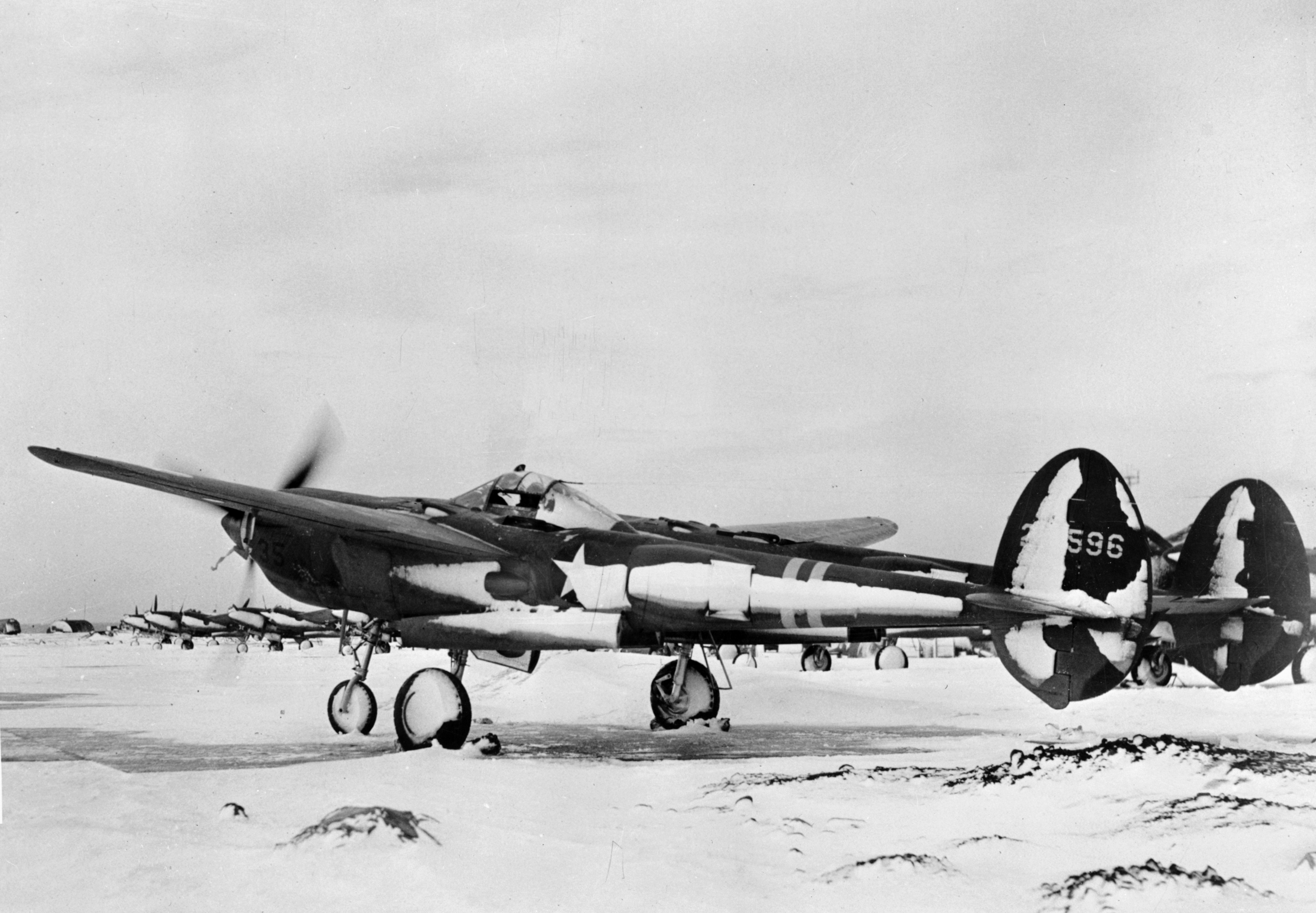
The squadron was first activated at Hamilton Field, California in January 1941 as the 50th Pursuit Squadron, one of the original three sqadrons of the 14th Pursuit Group. It was originally equipped with Curtiss P-40 Warhawks, but by early 1942 converted to Lockheed P-38 Lightnings. Following the attack on Pearl Harbor, it flew patrols with its Lightnings over the West Coast of the United States starting in February 1942, operating from bases in the San Francisco Bay area. It ended air defense patrols in June 1942, and shipped to the European Theater of Operations (ETO) in July.
Air defense of Iceland
The squadron's ground echelon arrived at its ETO station, RAF Atcham on 18 August 1942, but was transferred to the 4th Fighter Group, when the 4th was activated in September. Meanwhile, its air echelon halted its movement to England and began operating from Meeks Field, Iceland after arrival there while ferrying its Lightnings across the Atlantic. This arrangement was formalized in November, when Meeks Field became its official station and it was reassigned to the 342d Composite Group. From Iceland, it intercepted Luftwaffe bomber and reconnaissance aircraft as its primary mission while also performing antisubmarine patrols and escorting ship convoys through the North Atlantic. Squadron pilots downed five enemy aircraft in combat.
After the summer of 1943, little German activity was noted over the North Atlantic skies. The enemy was on the defensive, and American defensive outposts in the Atlantic were shifting to secondary roles. In February 1944 the squadron became non operational and its pilots returned to England. In August 1944, the provisional group was replaced by the 25th Bombardment Group and its Mosquito pilots formed the 653rd and 654th Bombardment Squadrons, while the 50th was disbanded.
Air Force reserves
The squadron activated in the reserve at Offutt Field, Nebraska in June 1947. In September, it was assigned to the 381st Bombardment Group of Air Defense Command (ADC). The squadron was not equipped with operational aircraft, but flew North American AT-6 Texans. The 50th was inactivated in June 1949 when Continental Air Command reorganized its reserve units under the wing base organization system. and the 438th Troop Carrier Wing replaced the 381st Group and its reserve elements at Offutt.
Flying training
In June 1972, the 14th Flying Training Wing absorbed the resources of the 3650th Pilot Training Wing at Columbus Air Force Base, Mississippi as Air Training Command replaced its Major Command controlled flying training units with Air Force controlled units. In this reorganization, the squadron absorbed the mission, personnel and equipment of the 3651st Pilot Training Squadron, which was simutaneously inactivated.
The squadron conducted advanced undergraduate pilot training from June 1972 to July 2025. When Specializedd Undergraduate Pilot Training was introduced in the early 1990s, the squadron provided advanced training to students in the pipeline to become bomber or fighter pilots. With the inactivation of the 50th, its aircraft and personnel were transferred to the 49th Flying Training Squadron, which became Air Education and Training Command's first T-38 "super squadron'. This action will merge the former T-38 advanced Undergraduate Pilot Training program and the Introcuction to Fighter Funamentals course into a course titled Fighter bomber Fundamentals.
Lineage
- Constituted as the 50th Pursuit Squadron (Fighter) on 20 November 1940 : Activated on 15 January 1941 : Redesignated 50th Fighter Squadron (Twin Engine) on 15 May 1942 : Redesignated 50th Fighter Squadron, Two Engine on 28 February 1944 : Disbanded on 9 August 1944
- Reconstituted and redesignated 50th Fighter Squadron (All Weather) on 23 May 1947 : Activated in the reserve on 12 June 1947 : Inactivated on 27 June 1949
- Redesignated 50th Flying Training Squadron on 22 Mar 1972 : Activated on 1 June 1972 : Inactivated c. 2 July 2025
Assignments
- 14th Pursuit Group (later 14th Fighter Group), 15 January 1941
- 342d Composite Group, 14 November 1942
- Eighth Air Force, February – 9 August 1944 (attached to 8th Reconnaissance Group (Provisional) [later, 802d Reconnaissance Group (Provisional)])
- Second Air Force, 12 June 1947
- 381st Bombardment Group, 30 September 1947 – 27 June 1949
- 14th Flying Training Wing, 1 June 1972
- 14th Operations Group, 15 December 1991 – c. 2 July 2025
Stations
- Hamilton Field, California, 15 January 1941
- March Field, California, 10 June 1941
- Metropolitan Oakland Municipal Airport, California, 8 February 1942
- Hamilton Field, California, 9 May – 16 July 1942
- RAF Atcham (Station 342), England, 18 August 1942 (operated from Meeks Field, Iceland)
- Meeks Field, Iceland, 14 November 1942
- RAF Nuthampstead (Station 131), England, February 1944
- RAF Cheddington (Station 113), England, c. 15 March 1944
- RAF Watton (Station 376), England, 12 April – 9 August 1944
- Offutt Field (later Offutt Air Force Base), Nebraska, 12 June 1947 – 27 June 1949
- Columbus Air Force Base, Mississippi, 1 Jun 1972 – c. 2 Jul 2025)
Aircraft
- Curtiss P-40 Warhawk (1941–1942)
- Lockheed P-38 Lightning (1942–1944)
- North American AT-6 (later T-6) Texan (1947–1949)
- Northrop T-38A Talon (1972–2003)
- Northrop T-38C Talon (2002–2025)
Awards and campaigns
| Campaign Streamer | Campaign | Dates | Notes | |
|---|---|---|---|---|
| [[Image:Streamer EAMEC.PNG | 200px]] | Air Offensive, Europe | 18 August 1942–9 August 1944 | 50th Fighter Squadron |
| [[Image:Streamer EAMEC.PNG | 200px]] | Air Combat, EAME Theater | 18 August 1942–9 August 1944 | 50th Fighter Squadron |
References
Notes
; Explanatory notes
; Citations
Bibliography
; Further reading
References
- (July 10, 2025). "Snakes’ Final Strike: 50th Flying Training Squadron Inactivated". The Aviationist.
- (April 3, 2014). "Factsheet 50 Flying Training Squadron (AETC)". Air Force Historical Research Agency.
- Maurer, ''Combat Squadrons'', pp. 215-216
- Maurer, ''Combat Squadrons'', pp. 209-10, 213-16
- Maurer, ''Combat Units'', pp. 57-58
- The air echelon ferried its planes via the [[North Atlantic Ferry Route]], while the ground echelon sailed on the {{USS|West Point}}.Freeman, p. 239
- Conn, Engleman & Fairchild, p. 552
- No byline. "Abstract, History 2473 Air Reserve Training Center Jul-Nov 1948". Air Force History Index.
- Ravenstein, p.30
- ''See'' Mueller, p. 95 (inactivation of 3651st and activation of 50th at Columbus).
- No byline. "Factsheets: 50th Flying Training Squadron". 14th Flying Training Wing Public Affairs.
- Station number in Anderson, p. 24.
- Station number in Anderson, p. 21.
- Station number in Anderson, p. 20.
- Station number in Anderson, p. 26.
- Stations in Robertson, except as noted.
- "Air Force Personnel Services: Unit Awards". Air Force Personnel Center.
This article was imported from Wikipedia and is available under the Creative Commons Attribution-ShareAlike 4.0 License. Content has been adapted to SurfDoc format. Original contributors can be found on the article history page.
Ask Mako anything about 50th Flying Training Squadron — get instant answers, deeper analysis, and related topics.
Research with MakoFree with your Surf account
Create a free account to save articles, ask Mako questions, and organize your research.
Sign up freeThis content may have been generated or modified by AI. CloudSurf Software LLC is not responsible for the accuracy, completeness, or reliability of AI-generated content. Always verify important information from primary sources.
Report