From Surf Wiki (app.surf) — the open knowledge base
313 series
Japanese DC suburban electric multiple unit train type

Japanese DC suburban electric multiple unit train type
| Field | Value | |
|---|---|---|
| name | 313 series | |
| image | Series313 Y110 Y6.jpg | |
| imagesize | 300px | |
| caption | 313-0 series set Y6 (left) and 313-5000 series set Y110 (right), September 2021 | |
| service | 1999–Present | |
| manufacturer | Kinki Sharyo, Nippon Sharyo, Tokyu Car Corporation | |
| replaced | 103 series, 113 series, 115 series, 117 series, 119 series, 165 series | |
| yearconstruction | 1999–2014, 2019 | |
| yearservice | May 1999 | |
| numberbuilt | 541 vehicles | |
| numberservice | 539 vehicles | |
| numberscrapped | 2 vehicles (accident damage) | |
| formation | 2/3/4/6 cars per trainset | |
| operator | ||
| depots | Ōgaki, Jinryō, Shizuoka | |
| lines | {{Plainlist | |
| carbody | Stainless steel | |
| doors | 3 pairs per side | |
| maxspeed | 130 km/h (313-8000 series) | |
| 120 km/h (other series) | ||
| traction | IGBT-VVVF | |
| electricsystem | (overhead catenary) | |
| collectionmethod | Pantograph | |
| brakes | Electronically controlled pneumatic brakes with regenerative or dynamic braking, snow-resistant brake | |
| safety | ATS-ST, ATS-PT | |
| coupling | Shibata Type | |
| multipleworking | 211/213/311 series | |
| gauge |
- [[File:JR Central Tokaido Line.svg|18px]] Tōkaidō Main Line
- [[File:JR Central Chuo Line.svg|18px]] Chūō Main Line
- [[File:JR Central Iida Line.svg|18px]] Iida Line
- [[File:JR Central Minobu Line.svg|18px]] Minobu Line
- [[File:JR Central Gotemba Line.svg|18px]] Gotemba Line
- [[File:JR Central Kansai Line.svg|18px]] Kansai Main Line
- Shinonoi Line
- Shinetsu Main Line 120 km/h (other series)
The 313 series is a DC suburban electric multiple unit (EMU) train type operated by Central Japan Railway Company (JR Central) in Japan since 1999.
The design was introduced from spring 1999 to replace older 113 and 115 series EMUs.
Variants
| Series | Formation | Line(s) used |
|---|---|---|
| 313-0 series | 4-car | Tōkaidō Main Line (Toyohashi – Maibara) |
| 313-300 series | 2-car | |
| 313-1000 series | 4-car | Chūō Main Line (Nagoya – Nakatsugawa) |
| 313-1300 series | 2-car | Tōkaidō Main Line |
| 313-1500 series | 3-car | Chūō Main Line (Nagoya – Nakatsugawa) |
| Kansai Main Line (Nagoya – Kameyama) | ||
| 313-1600 series | ||
| 313-1700 series | Iida Line, Chūō Main Line, Kansai Main Line | |
| 313-2300 series | 2-car | Tōkaidō Main Line, Gotemba Line, Minobu Line |
| 313-2350 series | ||
| 313-2500 series | 3-car | Tōkaidō Main Line (Atami – Toyohashi) |
| 313-2600 series | Tōkaidō Main Line, Gotemba Line, Minobu Line | |
| 313-3000 series | 2-car | Kansai Main Line, Chūō Main Line |
| Gotemba Line, Minobu Line | ||
| 313-3100 series | Gotemba Line, Minobu Line | |
| 313-5000 series | 6-car | Tōkaidō Main Line (Toyohashi – Ōgaki) |
| 313-5300 series | 2-car | Tōkaidō Main Line |
| 313-8000 series | 3-car | Chūō Main Line (Nagoya – Nakatsugawa) (1999–2022) |
313-0 series
15 x 4-car sets (60 vehicles) built by Kinki Sharyo, Nippon Sharyo, and Tokyu Car Corporation between July and September 1999 with flip-over transverse seating.
4-car Ōgaki sets Y1 to Y15
| Designation | Numbering |
|---|---|
| Mc | T |
| KuMoHa 313 | SaHa 313 |
313-300 series

16 x 2-car sets (32 vehicles) built by Kinki Sharyo, Nippon Sharyo, and Tokyu Car Corporation in September 1999 with flip-over transverse seating.
2-car Ōgaki sets Y31 to Y46
| Designation | Numbering |
|---|---|
| Mc | Tc' |
| KuMoHa 313-300 | KuHa 312-300 |
313-1000 series

3 x four-car and 3 x two-car sets (21 vehicles) built by Nippon Sharyo and Tokyu Car Corporation between February and March 1999 with flip-over transverse seating.
A further seven 4-car sets, J1 to J7, were delivered from Nippon Sharyo to Ōgaki depot between August and October 2010.
A further three 4-car sets, J8 to J10, were delivered in 2014.
4-car Jinryō sets B1 to B5
B1 to B3
| Designation | Numbering |
|---|---|
| Mc | T |
| KuMoHa 313-1000 | SaHa 313-1000 |
B4 to B5
| Designation | Numbering |
|---|---|
| Mc | T |
| KuMoHa 313-1100 | SaHa 313-1100 |
4-car Ōgaki sets J1 to J7
| Designation | Numbering |
|---|---|
| Mc | T |
| KuMoHa 313-1100 | SaHa 313-1100 |
3-car Jinryō sets B101 to B107
B101 to B103
| Designation | Numbering |
|---|---|
| Mc | M |
| KuMoHa 313-1500 | MoHa 313-1500 |
B104 to B107
| Designation | Numbering |
|---|---|
| Mc | M |
| KuMoHa 313-1600 | MoHa 313-1600 |
3-car Jinryō sets B151 to B153
| Designation | Numbering |
|---|---|
| Mc | M |
| KuMoHa 313-1700 | MoHa 313-1700 |
Interior
File:Series313-1100 Inside.jpg|Interior view, September 2021 File:Series313-1100 Inside Seat.jpg|General seats, September 2021 File:Series313-1100 Inside Priority-seat.jpg|Priority seats, September 2021 File:Moha313-1113 Inside Priority-seat.jpg|Priority seats (longitudinal), January 2022 File:Series313-1100 Inside Toilet.jpg|Toilet, September 2021
313-1300 series

4 x 2-car 4th-batch sets (8 vehicles) were built by Nippon Sharyo in June 2010. The sets are numbered B401 to B404 and allocated to Jinryō depot. All cars feature flip-over transverse seating. A further four 2-car sets, numbered B501 to B504, were delivered from Nippon Sharyo to Jinryō depot on 3 August 2011.
2-car Jinryō sets B401–B404, B501–B504
| Designation | Numbering |
|---|---|
| Tc' | Mc |
| KuHa 312-1300 | KuMoHa 313-1300 |
313-2000 series
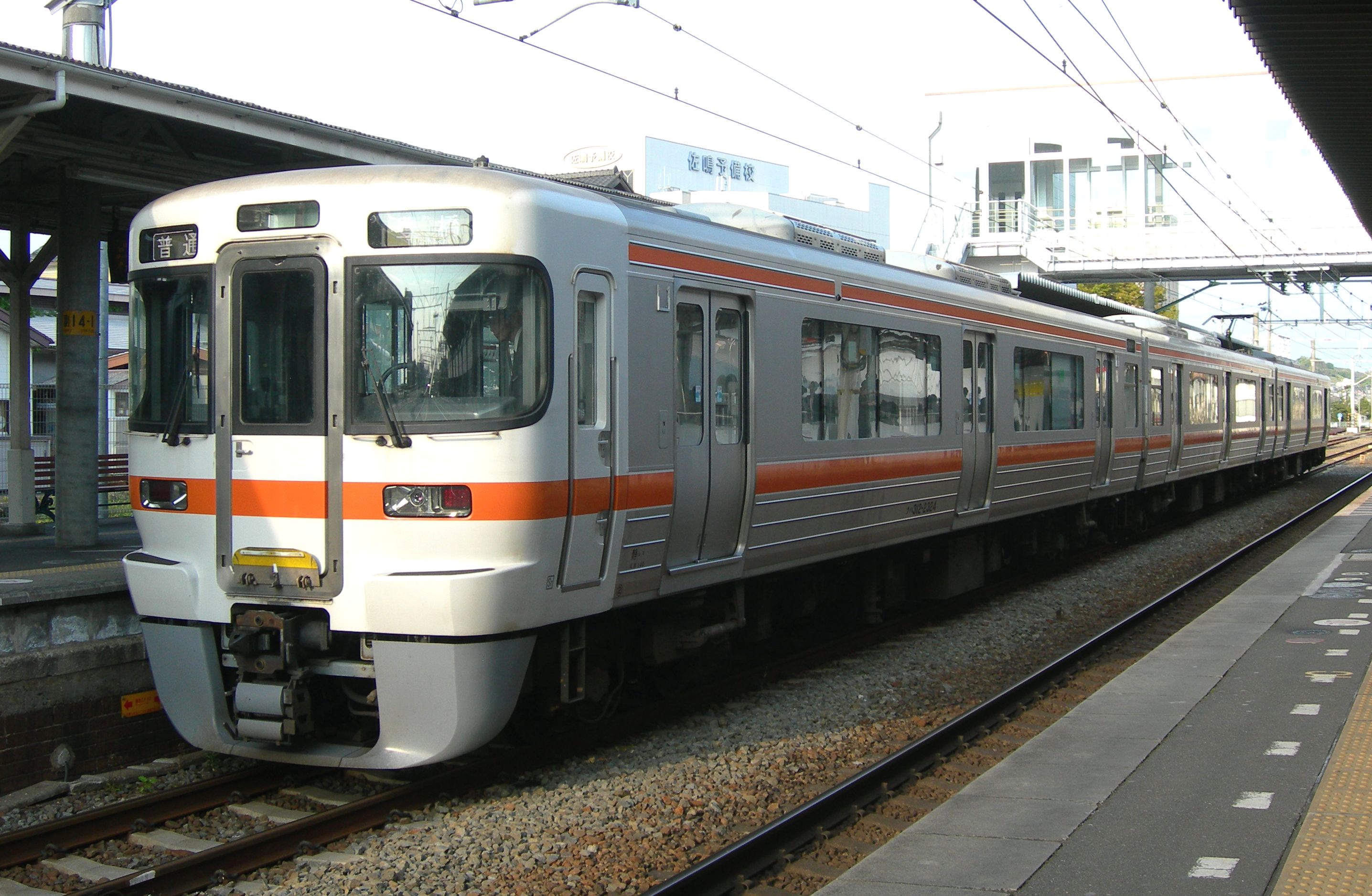
9 x 2-car and 27 x 3-car sets (99 vehicles) built by Kinki Sharyo and Nippon Sharyo between November 2006 and February 2007 with longitudinal seating.
2-car Shizuoka sets W1 to W9
W1–W2
| Designation | Numbering |
|---|---|
| Mc | Tc' |
| KuMoHa 313-2350 | KuHa 312-2300 |
W3–W9
| Designation | Numbering |
|---|---|
| Mc | Tc' |
| KuMoHa 313-2300 | KuHa 312-2300 |
3-car Shizuoka sets T1 to T17
| Designation | Numbering |
|---|---|
| Mc | M |
| KuMoHa 313-2500 | MoHa 313-2500 |
3-car Shizuoka sets N1 to N10
| Designation | Numbering |
|---|---|
| Mc | M |
| KuMoHa 313-2600 | MoHa 313-2600 |
Interior
File:Kuha312-2326 Inside.jpg|313-2000 series interior view showing longitudinal seating, January 2022 File:Kuha312-2326 Inside-Toilet.jpg|Toilet, January 2022
313-3000 series

12 x 2-car and 16 x 2-car sets (56 vehicles) with fixed transverse seating and longitudinal seating.
2-car Shizuoka sets V1 to V14
V1–V12
| Designation | Numbering |
|---|---|
| Mc | Tc' |
| KuMoHa 313-3000 | KuHa 312-3000 |
V13–V14
| Designation | Numbering |
|---|---|
| Mc | Tc' |
| KuMoHa 313-3100 | KuHa 312-3100 |
2-car Jinryō sets B301 to B316
| Designation | Numbering |
|---|---|
| Mc | Tc' |
| KuMoHa 313-3000 | KuHa 312-3000 |
Interior
File:313-3000 interior Kajikazawaguchi 20070127 (1).JPG|313-3000 series interior view, January 2007 File:313-3000 interior Kajikazawaguchi 20070127 (2).JPG|313-3000 series interior view, January 2007
313-5000 series

12 x 6-car sets (72 vehicles) were built by Nippon Sharyo in 2006 with flip-over transverse seating. This was the first conventional (i.e. non-Shinkansen) rolling stock to feature yaw dampers between intermediate cars.
Further (4th-batch) sets were delivered in 2010.
Two cars—designated KuHa 312-5102 and MoHa 313-5402—were built in 2019 to replace KuHa 312-5002 and MoHa 313-5302, respectively. This follows an accident in which set Y102 was involved in 2017.
6-car Ōgaki sets Y101 to Y113
| Designation | Numbering |
|---|---|
| Mc | T |
| KuMoHa 313-5000 | SaHa 313-5300 |
Interior
File:Saha313-5006 Inside.jpg|313-5000 series interior view, January 2022
313-5300 series
One 2-car 4th-batch set was delivered in July 2010 with flip-over transverse seating.
2-car Ōgaki set Z1
| Designation | Numbering |
|---|---|
| Mc | Tc' |
| KuMoHa 313-5300 | KuHa 312-5000 |
313-8000 series
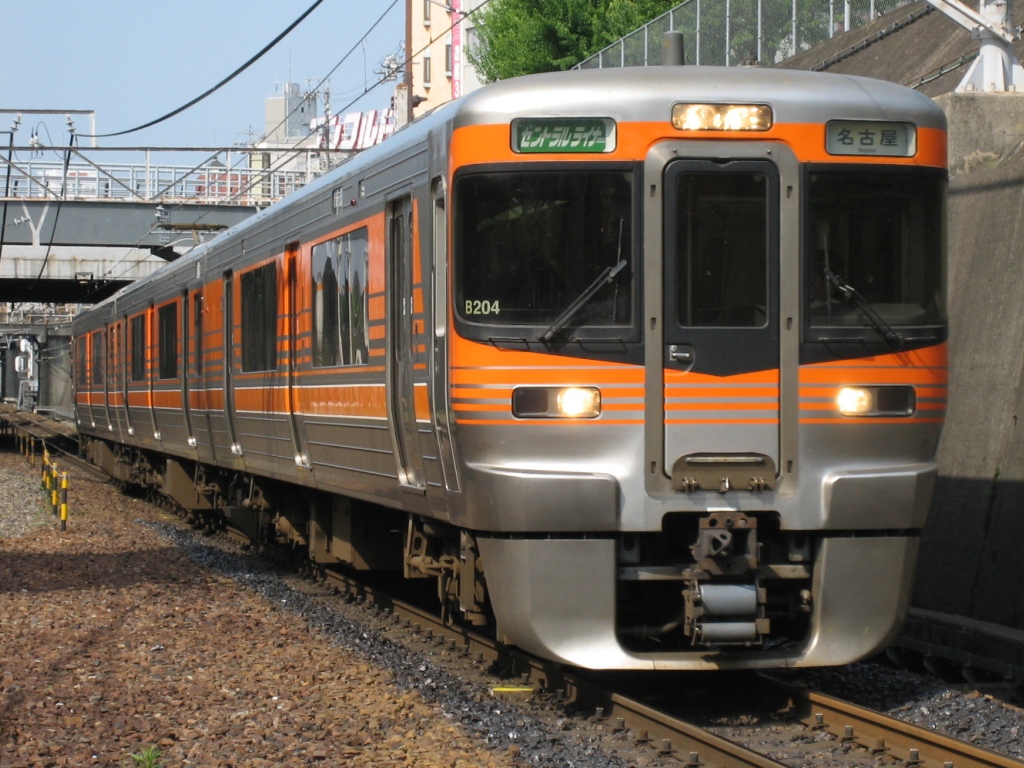
The 313-8000 series fleet consists of six 3-car sets (18 vehicles) with flip-over transverse seating, designed for use on Chūō Main Line Central Liner and Home Liner Nakatsugawa services and built by Kinki Sharyo and Nippon Sharyo between September 1999 and February 2001. Although Central Liner services were discontinued in 2013, the trains continued to be used on Chūō Main Line local and rapid services until JR Central's 12 March 2022 timetable revision, and were transferred from Jinryō to Shizuoka depot from then. The sets were renumbered S1–S6 from B201–B206. From 14 March of that year, the fleet was introduced onto Tōkaidō Main Line services.
3-car Shizuoka sets S1 to S6
| Designation | Numbering |
|---|---|
| Mc | M |
| KuMoHa 313-8500 | MoHa 313-8500 |
Interior
Passenger accommodation consists of flip-over transverse seating throughout. Fixed seating bays with tables are provided at the ends of each car. Some cars are equipped with toilets. File:Kuha312-8003 Inside.jpg|Interior view File:Series313-8000 Box-seat.jpg|End-car transverse seating bay File:Kuha312-8003 Inside Toilet.jpg|Priority seating with toilet
References
References
- (December 2006). "JR電車編成表 '07冬号". JRR.
- (August 2009). "311系・313系 製作の背景と現在までの経緯". Tetsudō Daiya Jōhō.
- (June 2009). "JR電車編成表 2009夏". JRR.
- (May 2010). "JR電車編成表 2011夏". JRR.
- (2020). "JR電車編成表: 2021冬". Kōtsū Shimbun.
- Japan Railfan Magazine Online. Koyusha Co., Ltd.. (4 July 2010). link
- (October 2010). "313系4次車 (313 series 4th-batch sets)". [[Japan Railfan Magazine]].
- link. (4 August 2011). Japan Railfan Magazine Online. Koyusha Co., Ltd.
- Miyashita, Takahiro. (2019-09-14). "313系2両が陸送される". Koyusha Co., Ltd..
- "JR東海道線で電車と車が衝突する踏切事故 車が炎上し運転手の男性が死亡、列車が脱線し一部区間で運転見合わせ続く".
- (2022-03-17). "JR東海313系、元「セントラルライナー」車両が静岡地区で営業運転".
- (2022-03-13). "313系8000番台が名古屋地区での定期運用を終了". Koyusha Co., Ltd..
- (2022-03-15). "". link. Neko Publishing
- (2022-03-16). "313系8000番台が静岡地区で営業運転を開始". Koyusha Co., Ltd..
This article was imported from Wikipedia and is available under the Creative Commons Attribution-ShareAlike 4.0 License. Content has been adapted to SurfDoc format. Original contributors can be found on the article history page.
Ask Mako anything about 313 series — get instant answers, deeper analysis, and related topics.
Research with MakoFree with your Surf account
Create a free account to save articles, ask Mako questions, and organize your research.
Sign up freeThis content may have been generated or modified by AI. CloudSurf Software LLC is not responsible for the accuracy, completeness, or reliability of AI-generated content. Always verify important information from primary sources.
Report