From Surf Wiki (app.surf) — the open knowledge base
2015 AFC Asian Cup

| Field | Value |
|---|---|
| tourney_name | AFC Asian Cup |
| year | 2015 |
| image | 2015 AFC Asian Cup logo.svg |
| size | 200px |
| country | Australia |
| dates | 9–31 January 2015 |
| num_teams | 16 |
| confederations | 1 |
| venues | 5 |
| cities | 5 |
| champion | AUS |
| count | 1 |
| second | KOR |
| third | UAE |
| fourth | IRQ |
| matches | 32 |
| goals | 85 |
| attendance | 705705 |
| top_scorer | UAE Ali Mabkhout |
| (5 goals) | |
| player | AUS Massimo Luongo |
| goalkeeper | AUS Mathew Ryan |
| fair_play | |
| prevseason | [2011](2011-afc-asian-cup) |
| nextseason | [2019](2019-afc-asian-cup) |
(5 goals)
]]
The 2015 AFC Asian Cup was the 16th edition of the men's AFC Asian Cup, a quadrennial international football tournament organised by the Asian Football Confederation (AFC). It was held in Australia from 9 to 31 January 2015. The tournament was won by Australia after defeating South Korea 2–1 in extra time in the final, thereby earning the right to participate in the 2017 FIFA Confederations Cup, which was hosted by Russia. The win was Australia's first Asian title since their move from the Oceania Football Confederation (OFC) in 2006. It was also the first time a men's team has become champions of two confederations, following Australia's four OFC Nations Cup titles: 1980, 1996, 2000 and 2004; right after the Australian women's team won the 2010 AFC Women's Asian Cup. Australia thus became the final and permanent holder of the old AFC Asian Cup trophy, as the new trophy would debut in the tournament four years later.
Australia was chosen as the host on 5 January 2011, after being the sole bidder for the right to host the 2015 tournament. The matches were played in five different stadiums across five cities: Sydney, Melbourne, Brisbane, Canberra and Newcastle. It was the first time that Australia had hosted the tournament, and it was also the first time the Asian Cup had been held outside the continent of Asia. As hosts, Australia automatically qualified for the final tournament, while the remaining 15 finalists (with the exception of Japan and South Korea who qualified via their top three position in the previous Asian Cup) were decided through a qualification process, featuring 44 teams, from February 2013 to March 2014.
The final tournament was played in two stages: the group stage and the knockout stage. In the group stage each team played three games in a group of four, with the winners and runners-up from each group advancing to the knockout stage. In the knockout stage the eight teams competed in single-elimination matches, beginning with the quarter-finals and ending with the final match of the tournament. A third-place match was also played between the two losing teams of the semi-finals (Iraq and the United Arab Emirates). This was also the last time the tournament had a third-place match, as it wasn't played since the 2019 edition.
Japan were the defending champions going into the tournament, having won the previous competition in 2011. They recorded their worst finish in the Asian Cup since the 1996 edition in the United Arab Emirates, being knocked out in the quarter-finals by that team in a penalty shootout.
Host selection
Australia initially put forward its bid to host the 2015 AFC Asian Cup in 2010. As the sole bidder for the hosting rights, Australia was officially named host on 5 January 2011.
Teams
Qualification
Main article: 2015 AFC Asian Cup qualification
The 2015 AFC Asian Cup qualification process determined the 16 participating teams for the tournament. In the initial scheme, ten places were determined by qualification matches, while six places were reserved for the 2015 host nation, top three finishers in the 2011 AFC Asian Cup, and the two winners of the AFC Challenge Cup. Though, as the host nation Australia also finished as runners-up in the 2011 Asian Cup, the initial six automatic qualification spots were reduced to five, with a total of 11 spots eventually determined by the qualification matches, in which 20 AFC members competed.
There were two main competitive paths to the 2015 Asian Cup. The AFC Challenge Cup acted as a qualification competition for eligible countries within the emerging and developing category of member associations. The winners of the AFC Challenge Cup competitions in 2012 and 2014 qualified automatically for the 2015 AFC Asian Cup finals. The remaining spots were available for the teams competing in the main Asian Cup preliminaries. The AFC decided that the 20 teams involved in the qualifiers would be split into five groups of four teams each. The top two teams from each group and one best third-placed team from among all the groups would qualify for the 2015 AFC Asian Cup.
Qualified teams
Out of the sixteen teams that qualified, fourteen had participated in the 2011 tournament. Oman qualified for the first time since 2007. Palestine, winners of the 2014 AFC Challenge Cup, were the only team making their first appearance in the tournament. India and Syria are the only two teams from the 2011 tournament who failed to qualify for the subsequent edition. Excluding hosts Australia, none of the other 11 members of the ASEAN Football Federation qualified, nor did any of the South Asian national teams.
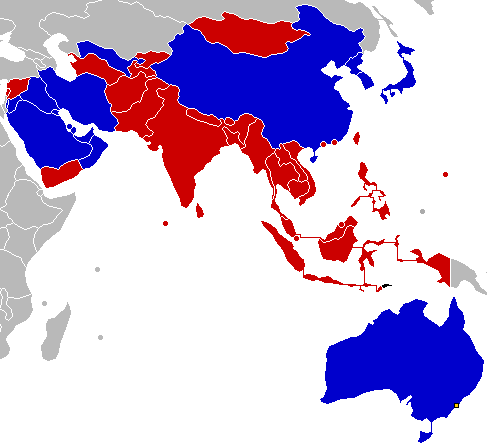
| Team | Method of | ||||
|---|---|---|---|---|---|
| qualification | Date of | ||||
| qualification | Finals | ||||
| appearance | Last | ||||
| appearance | Previous best | ||||
| performance | |||||
| [2011](2011-afc-asian-cup) | Runners-up ([2011](2011-afc-asian-cup)) | ||||
| [2011](2011-afc-asian-cup) | **Winners** ([1992](1992-afc-asian-cup), [2000](2000-afc-asian-cup), [2004](2004-afc-asian-cup), [2011](2011-afc-asian-cup)) | ||||
| [2011](2011-afc-asian-cup) | **Winners** ([1956](1956-afc-asian-cup), [1960](1960-afc-asian-cup)) | ||||
| [2011](2011-afc-asian-cup) | Fourth place ([1980](1980-afc-asian-cup)) | ||||
| [2011](2011-afc-asian-cup) | Fourth place ([2004](2004-afc-asian-cup)) | ||||
| [2011](2011-afc-asian-cup) | Runners-up ([1996](1996-afc-asian-cup)) | ||||
| [2011](2011-afc-asian-cup) | **Winners** ([1984](1984-afc-asian-cup), [1988](1988-afc-asian-cup), [1996](1996-afc-asian-cup)) | ||||
| [2007](2007-afc-asian-cup) | Group stage ([2004](2004-afc-asian-cup), [2007](2007-afc-asian-cup)) | ||||
| [2011](2011-afc-asian-cup) | Fourth place ([2011](2011-afc-asian-cup)) | ||||
| [2011](2011-afc-asian-cup) | Quarter-finals ([2000](2000-afc-asian-cup), [2011](2011-afc-asian-cup)) | ||||
| [2011](2011-afc-asian-cup) | **Winners** ([1968](1968-afc-asian-cup), [1972](1972-afc-asian-cup), [1976](1976-afc-asian-cup)) | ||||
| [2011](2011-afc-asian-cup) | **Winners** ([1980](1980-afc-asian-cup)) | ||||
| [2011](2011-afc-asian-cup) | Quarter-finals ([2004](2004-afc-asian-cup), [2011](2011-afc-asian-cup)) | ||||
| [2011](2011-afc-asian-cup) | **Winners** ([2007](2007-afc-asian-cup)) | ||||
| [2011](2011-afc-asian-cup) | Runners-up ([1984](1984-afc-asian-cup), [2004](2004-afc-asian-cup)) | ||||
| N/A | N/A |
Draw
The draw for the final tournament occurred at the Sydney Opera House on 26 March 2014. The draw procedure involved the 16 participating teams drawn at random into the four groups of the group stage. In preparation for this, the teams were organised into four pots based on a seeding which used the March 2014 FIFA World Rankings (rankings beside the qualified teams). The draw and seeding ensured a fair distribution of teams in the groups, with each of the four groups in the group stage made up of one team from each pot. The host nation (Australia) was automatically placed into Pot 1, with the team having been predetermined to be in Group A. In addition, at the time of the draw, the identity of the 2014 AFC Challenge Cup winners (Palestine) was not known yet, and they were automatically placed into Pot 4.
| Pot 1 | Pot 2 | Pot 3 | Pot 4 |
|---|---|---|---|
| (63) *(hosts)* | |||
| (42) | |||
| (48) | |||
| (55) | (60) | ||
| (61) | |||
| (66) | |||
| (75) | (81) | ||
| (98) | |||
| (101) | |||
| (103) | (106) | ||
| (110) | |||
| (133) | |||
| (167) |
Venues
Stadiums
The five host cities for the 2015 AFC Asian Cup, Sydney, Melbourne, Brisbane, Canberra and Newcastle, were announced on 27 March 2013, with a total five stadiums to be used.
| Sydney | Brisbane | Newcastle | Melbourne | {{location map+ | float=middle | Australia | width=450 | caption= | places= | Canberra | |
|---|---|---|---|---|---|---|---|---|---|---|---|
| Stadium Australia | Brisbane Stadium | Newcastle Stadium | |||||||||
| Capacity: **84,000** | Capacity: **52,500** | url=http://www.smh.com.au/sport/asian-cup-officials-rule-out-moving-semifinal-from-newcastles-hunter-stadium-20150119-12tl7h.html | title=Asian Cup officials rule out moving semi-final from Newcastle's Hunter Stadium | work=The Sydney Morning Herald | date=19 January 2015 | access-date=24 January 2015 | author=Linden, Julian | quote=The second semi is set to be played a day later at Newcastle's Hunter Stadium, which has a capacity of just 23,000.}} | |||
| [[File:Sydney-Galaxy-homebush.jpg | 200px]] | [[File:Suncorpstadium071006a.JPG | 200px]] | [[File:NewcastleKnights.jpg | 200px]] | ||||||
| Melbourne Rectangular Stadium | |||||||||||
| Capacity: **30,050** | |||||||||||
| [[File:Backofamipark.JPG | 200px]] | ||||||||||
| Canberra Stadium | |||||||||||
| Capacity: **25,011** | |||||||||||
| [[File:BruceStadium19032005.JPG | 200px]] |
Ticketing
Tickets for the venues were sold directly by AFC via its website, or distributed by the football associations of the 16 finalists. 500,000 tickets were available for the 31 tournament matches. Over 45,000 international visitors were forecast to visit Australia during the tournament. Prices varied from $10 (for a seat behind the goals at a group match) to $150 (for a seat in the main stand at the final). In addition to individual match tickets, fans could buy packages to see all matches played at one specific venue.
Team base camps
Each team had a "team base camp" for its stay between the matches. From an initial list of 27 potential locations, the national associations chose their locations in 2014. The teams trained and resided in these locations throughout the tournament, travelling to games staged away from their bases.
| Team | Arrival | Last match | Base camp | Group stage venues | QF venues | SF venues | Final venue | |
|---|---|---|---|---|---|---|---|---|
| Melbourne | Melbourne, Sydney & Brisbane | Brisbane | Newcastle | Sydney | ||||
| Ballarat | Melbourne, Canberra & Sydney | |||||||
| Sydney | Brisbane & Canberra | Brisbane | ||||||
| Sydney | Melbourne, Sydney & Brisbane | Canberra | ||||||
| Canberra | Brisbane & Canberra | Canberra | Sydney | Newcastle | ||||
| Cessnock | Newcastle, Brisbane & Melbourne | Sydney | ||||||
| Melbourne | Brisbane & Melbourne | |||||||
| Queanbeyan | Melbourne, Canberra & Newcastle | |||||||
| Canberra | Sydney, Melbourne & Canberra | |||||||
| Sydney | Canberra, Sydney & Newcastle | |||||||
| Brisbane | Newcastle, Melbourne & Canberra | |||||||
| Canberra | Canberra & Sydney | |||||||
| Brisbane | Brisbane & Melbourne | |||||||
| Brisbane | Canberra & Brisbane | Melbourne | Sydney | Sydney | ||||
| Gold Coast | Canberra & Brisbane | Sydney | Newcastle | Newcastle | ||||
| Melbourne | Sydney, Brisbane & Melbourne | Melbourne |
Match ball
Main article: Nike Ordem 2
The Nike Ordem 2 was announced as the official 2015 Asian Cup match ball on 1 October 2014. The ball features the traditional colors of the tournament. The mainly white ball has a distinctive design with a mainly red graphic pattern and yellow details for better visibility. It shows the official 2015 AFC Asian Cup logo as well as a black Swoosh. The ball provided a design for real flight, accuracy and control, and features Nike Aerowtrac grooves and a micro-textured casing. Nike RaDaR (Rapid Decision and Response) technology with a unique graphic upper is also utilised in the design to see the ball faster while the three-layer synthetic upper made for optimal touch.
Ordem 2 was the Asian Cup's last match ball provided by Nike.
Match officials
On 1 January 2015, the AFC named 47 match officials for the tournament, including referees, assistant referees, fourth officials, and reserve assistant referees. Each main refereeing team (of which there were eleven) consisted of three match officials from the same country: one referee and two assistant referees. The AFC decided three match officials from New Zealand would take part in the tournament, despite the country being in the Oceania Football Confederation. Match officials based together in Sydney, during the Asian Cup, where they trained together, had technical meetings, conduct match reviews and previews, and only split when attending appointments at the five Asian Cup stadiums in Canberra, Sydney, Newcastle, Brisbane and Melbourne. Australian referee Chris Beath, who was a fourth official before the start of the tournament, was promoted for one match when Uzbek referee Valentin Kovalenko had to withdraw due to illness.
| Country | Referee | Assistant referees |
|---|---|---|
| Ben Williams | Matthew Cream | |
| Paul Cetrangolo | ||
| Nawaf Shukralla | Yaser Tulefat | |
| Ebrahim Saleh | ||
| Alireza Faghani | Reza Sokhandan | |
| Mohammad Reza Abolfazli | ||
| Ryuji Sato | Toru Sagara | |
| Toshiyuki Nagi | ||
| Peter O'Leary | Jan-Hendrik Hintz | |
| Mark Rule | ||
| Abdullah Al Hilali | Hamad Al-Mayahi | |
| Abu Bakar Al Amri | ||
| Abdulrahman Abdou | Taleb Al-Marri | |
| Ramzan Al-Naemi | ||
| Fahad Al-Mirdasi | Badr Al-Shumrani | |
| Abdulla Al Shalwai | ||
| Kim Jong-hyeok | Jeong Hae-Sang | |
| Yoon Kwang-Yeol | ||
| Abdulla Hassan Mohamed | Mohamed Al Hammadi | |
| Hasan Al Mahri | ||
| Ravshan Irmatov | Abdukhamidullo Rasulov | |
| Bakhadyr Kochkarov () |
Six match officials, who served as fourth officials, and eight reserve assistant referees, who served as fifth officials, were also named:
| Country | Fourth official |
|---|---|
| Chris Beath | |
| Yudai Yamamoto | |
| Mohd Amirul Izwan | |
| Muhammad Taqi Aljaafari | |
| Hettikamkanamge Perera | |
| Ammar Al-Jeneibi |
| Country | Reserve assistant referees |
|---|---|
| Chow Chun Kit | |
| Najah Raham Rashid | |
| Akane Yagi | |
| Mohd Yusri Muhamad | |
| Azman Ismail | |
| Jeffrey Goh | |
| Palitha Hemathunga | |
| Jakhongir Saidov |
Squads
Main article: 2015 AFC Asian Cup squads
As with the 2011 tournament, each team's squad consisted of 23 players (three of whom had to be goalkeepers). Each participating national association had to confirm their final 23-player squad no later than ten days before the start of the tournament. Teams were permitted to make late replacements in the event of serious injury, at any time up to 6 hours before their first game. During a match, all remaining squad members not named in the starting team were available to be one of the three permitted substitutions (provided the player was not serving a suspension).
Group stage
The group stage of the 2015 AFC Asian Cup took place from 9–20 January 2015: each team played three games, with the winners and runners-up from each group advancing to the knockout stage. The group stage was notable for finishing without a draw. In doing so, it became the first major international football tournament since the 1930 FIFA World Cup to record a result for every group stage match. Additionally, it surpassed the record of consecutive results at a tournament – 18 – also set at the 1930 World Cup.
Tiebreakers
| Tiebreaking criteria for group stage |
|---|
| The teams were ranked according to points (3 points for a win, 1 point for a tie, 0 points for a loss). If tied on points, tiebreakers are applied in the following order: |
Group A
.jpg)
Main article: 2015 AFC Asian Cup Group A
-
Cahill
-
Luongo
-
Jedinak
-
Troisi
-
Fadhel
-
Cho Young-cheol
-
Nam Tae-hee
-
McKay
-
Kruse
-
Milligan
-
Jurić
-
Lee Jeong-hyeop
-
Al-Muqbali
Group B
Main article: 2015 AFC Asian Cup Group B
-
Sergeev
-
Yu Hai
-
Ryang Yong-gi
-
Hazazi
-
Al-Sahlawi
-
Al Abed
-
Wu Xi
-
Sun Ke
-
Ahmedov
-
Rashidov
-
Shodiev
-
Al-Sahlawi
-
Sun Ke
-
Gao Lin
Group C
Main article: 2015 AFC Asian Cup Group C
-
Khalil
-
Mabkhout
-
Ibrahim
-
Hajsafi
-
Shojaei
-
Okwunwanne
-
Mabkhout
-
Husain
-
Azmoun
-
Ghoochannejhad
-
Al-Haydos
-
Saeed
-
Ahmed
Group D
Main article: 2015 AFC Asian Cup Group D
- Endō
- Okazaki
- Honda
- Yoshida
-
Ihbeisheh
-
Al-Rawashdeh
-
Al-Dardour
-
Honda
-
Honda
-
Kagawa
-
Mahmoud
-
Yasin
Knockout stage
Main article: 2015 AFC Asian Cup knockout stage
In all matches in the knockout stage, if the score were level at the end of 90 minutes, two 15-minute periods of extra time would take place. If the score were still level after extra time, the match was decided by a penalty shoot-out. Scores after extra time are indicated by (a.e.t.), and penalty shoot-out are indicated by (pen.).
|22 January – Melbourne | |2 | |0 |23 January – Canberra | |3 (6)| |3 (7) |22 January – Brisbane | |0 | |2 |23 January – Sydney | |1 (4) | |1 (5) |26 January – Sydney | |2 | |0 |27 January – Newcastle | |2 | |0 |31 January – Sydney | |1 | |2 |30 January – Newcastle | |2 ||3
Quarter-finals
With a 2–0 victory over Uzbekistan in extra time, South Korea set a tournament record for appearing in ten semi-finals. The host country, Australia, reached the final four for the second consecutive time after overcoming China PR by the same score. Iran were eliminated for the third consecutive time in an Asian Cup quarter-final after Iraq defeated Iran in a penalty shootout. The match had ended 3–3 after extra time, not before a sending off which reduced the Iranians to 10 men late in the first half. The United Arab Emirates eliminated reigning champions Japan through a penalty shoot-out following a 1–1 draw at the end of extra time, marking Japan's worst finish since 1996.
Pouraliganji Ghoochannejhad Mahmoud Ismail Pouraliganji Nekounam Hosseini Ghafouri Jahanbakhsh Teymourian Amiri Salem Ismail Adnan Mahmoud Kasim Hussein Shaker
Hasebe Shibasaki Toyoda Morishige Kagawa Mabkhout Esmaeel Hassan Fardan I. Ahmed
Semi-finals
South Korea reached their first final since 1988, after overcoming Iraq 2–0. With a 2–0 victory against the United Arab Emirates, Australia qualified for their second consecutive final out of only three appearances in the Asian Cup since moving to the Asian Football Confederation from the Oceania Football Confederation in 2006.
Kim Young-gwon
Davidson
Third place match
This was both Iraq's and the United Arab Emirates' second appearances in a third place playoff at the AFC Asian Cup, with the teams contesting in 1976 and 1992 respectively. The United Arab Emirates won the match 3–2 and finished in third-place for the first time.
Kalaf Mabkhout
Final
Main article: 2015 AFC Asian Cup final
South Korea entered the match looking for their third Asian Cup title, whereas Australia attempted to win their first. After a late goal by Australia in the first half and another late goal by South Korea in the second half, the match was taken into extra time. Australia eventually won the match 2–1.
Troisi
Statistics
Goalscorers
Ali Mabkhout of the United Arab Emirates received the Golden Boot award for scoring five goals. In total, 85 goals were scored by 57 different players, with two of them credited as own goals.
;5 goals
- UAE Ali Mabkhout
;4 goals
- JOR Hamza Al-Dardour
- UAE Ahmed Khalil
;3 goals
- AUS Tim Cahill
- CHN Sun Ke
- JPN Keisuke Honda
- KSA Mohammad Al-Sahlawi
- KOR Son Heung-min
;2 goals
- AUS Massimo Luongo
- AUS James Troisi
- IRN Sardar Azmoun
- IRN Reza Ghoochannejhad
- IRQ Younis Mahmoud
- IRQ Ahmed Yasin
- KOR Lee Jeong-hyeop
- UZB Sardor Rashidov
;1 goal
- AUS Jason Davidson
- AUS Mile Jedinak
- AUS Tomi Juric
- AUS Robbie Kruse
- AUS Matt McKay
- AUS Mark Milligan
- AUS Trent Sainsbury
- BHR Sayed Jaafar Ahmed
- BHR Jaycee John Okwunwanne
- BHR Sayed Saeed
- CHN Wu Xi
- CHN Yu Hai
- IRN Ehsan Hajsafi
- IRN Morteza Pouraliganji
- IRN Masoud Shojaei
- IRQ Dhurgham Ismail
- IRQ Amjad Kalaf
- IRQ Yaser Kasim
- IRQ Waleed Salem
- JPN Yasuhito Endō
- JPN Shinji Kagawa
- JPN Shinji Okazaki
- JPN Gaku Shibasaki
- JPN Maya Yoshida
- JOR Yousef Al-Rawashdeh
- KUW Hussain Fadhel
- PRK Ryang Yong-gi
- OMN Abdulaziz Al-Muqbali
- PLE Jaka Ihbeisheh
- QAT Hassan Al-Haydos
- QAT Khalfan Ibrahim
- KSA Nawaf Al Abed
- KSA Naif Hazazi
- KOR Cho Young-cheol
- KOR Kim Young-gwon
- KOR Nam Tae-hee
- UZB Odil Ahmedov
- UZB Igor Sergeev
- UZB Vokhid Shodiev
;1 own goal
- BHR Mohamed Husain (against United Arab Emirates)
- CHN Gao Lin (against North Korea)
Assists
;4 assists
- AUS Massimo Luongo
- UAE Omar Abdulrahman
;3 assists
- BHN Faouzi Aaish
- IRN Andranik Teymourian
;2 assists
- AUS Ivan Franjic
- IRQ Alaa Abdul-Zahra
- JPN Shinji Kagawa
- JOR Abdallah Deeb
- KOR Cha Du-ri
- KOR Kim Jin-su
- UAE Amer Abdulrahman
;1 assist
- AUS Jason Davidson
- AUS Matthew Leckie
- AUS Trent Sainsbury
- AUS Tomi Juric
- CHN Gao Lin
- CHN Zheng Zhi
- CHN Jiang Zhipeng
- IRN Ashkan Dejagah
- IRN Vouria Ghafouri
- IRQ Ali Adnan
- IRQ Dhurgham Ismail
- IRQ Amjad Kalaf
- IRQ Waleed Salem
- IRQ Ahmed Yasin
- JPN Keisuke Honda
- JPN Takashi Inui
- JPN Yoshinori Muto
- JOR Hamza Al-Dardour
- JOR Saeed Murjan
- JOR Oday Zahran
- KUW Abdulaziz Al Misha'an
- OMA Mohammed Al-Siyabi
- KSA Nawaf Al Abed
- KSA Abdullah Al-Zori
- KOR Ki Sung-yueng
- KOR Lee Jeong-hyeop
- KOR Lee Keun-ho
- UZB Server Djeparov
- UZB Jasur Hasanov
- UZB Timur Kapadze
- UZB Shavkat Mullajanov
Discipline
In the final tournament, a player was suspended for the subsequent match in the competition for either getting red card or accumulating two yellow cards in two different matches. The match review panel has the ability to increase the automatic one match ban for a red card (e.g. for violent conduct). Single yellow card cautions were erased at the conclusion of the quarter-finals, and were not carried over to the semi-finals (so that a player could only be suspended for the final by getting a red card in the semi-final). The following players were or are suspended during the final tournament – for one or more games – as a result of red cards or yellow card accumulations:
| Player | Offence | Suspension |
|---|---|---|
| KUW Fahad Awadh | in [qualification](2015-afc-asian-cup-qualification) vs Iran | |
| in [qualification](2015-afc-asian-cup-qualification) vs Iran | Group A vs Australia | |
| UZB Islom Tukhtakhodjaev | in [qualification](2015-afc-asian-cup-qualification) vs United Arab Emirates | Group B vs North Korea |
| PRK Ri Sang-chol | Unsporting conduct towards a match official | Group B vs Uzbekistan |
| Group B vs Saudi Arabia | ||
| Group B vs China PR | ||
| KSA Fahad Al-Muwallad | in [qualification](2015-afc-asian-cup-qualification) vs China PR | |
| in [qualification](2015-afc-asian-cup-qualification) vs Indonesia | Group B vs China PR | |
| CHN Sun Ke | in [qualification](2015-afc-asian-cup-qualification) vs Iraq | |
| in [qualification](2015-afc-asian-cup-qualification) vs Iraq | Group B vs Saudi Arabia | |
| PLE Ahmed Harbi | in [Group D](2015-afc-asian-cup-group-d) vs Japan | Group D vs Jordan |
| JOR Anas Bani Yaseen | in [Group D](2015-afc-asian-cup-group-d) vs Iraq | Group D vs Palestine |
| PRK Ri Yong-jik | in [Group B](2015-afc-asian-cup-group-b) vs Saudi Arabia | Group B vs China PR |
| CHN Ren Hang | in [Group B](2015-afc-asian-cup-group-b) vs Saudi Arabia | |
| in [Group B](2015-afc-asian-cup-group-b) vs Uzbekistan | Group B vs North Korea | |
| IRQ Alaa Abdul-Zahra | in [Group D](2015-afc-asian-cup-group-d) vs Jordan | |
| in [Group D](2015-afc-asian-cup-group-d) vs Japan | Group D vs Palestine | |
| AUS Matthew Spiranovic | in [Group A](2015-afc-asian-cup-group-a) vs Oman | |
| in [Group A](2015-afc-asian-cup-group-a) vs South Korea | Quarter-final vs China PR | |
| UAE Walid Abbas | in [Group C](2015-afc-asian-cup-group-c) vs Qatar | |
| in [Group C](2015-afc-asian-cup-group-c) vs Iran | Quarter-final vs Japan | |
| IRN Mehrdad Pooladi | in [Quarter-final](2015-afc-asian-cup-knockout-stage-iran-vs-iraq) vs Iraq | [World Cup qualifying](2018-fifa-world-cup-qualification-afc-second-round) vs Turkmenistan |
| IRQ Yaser Kasim | in [Group D](2015-afc-asian-cup-group-d) vs Jordan | |
| in [Quarter-final](2015-afc-asian-cup-knockout-stage-iran-vs-iraq) vs Iran | Semi-final vs South Korea | |
| IRQ Ahmad Ibrahim | in [Third place match](2015-afc-asian-cup-knockout-stage-third-place-match) vs United Arab Emirates | [World Cup qualifying](2018-fifa-world-cup-qualification-afc-second-round) vs Chinese Taipei |
Awards
;Most Valuable Player
- AUS Massimo Luongo ;Top Goalscorer
- UAE Ali Mabkhout ;Best Goalkeeper
- AUS Mathew Ryan ;Fair Play Award
;Team of the Tournament Four players from both the winning Australian team and the runner-up South Korean team were selected in the team of the tournament by the organization committee, while the other players included were from a team which progressed to the semi-finals.
| Goalkeeper | Defenders | Midfielders | Forwards |
|---|
Final standings
| - |
|---|
| - |
| - |
| } |
| Source: AFC Technical Report |
Records
The 2015 Asian Cup achieved 26 consecutive matches without a draw, the most of any major football tournament, breaking the previous record of 18 set at the 1930 FIFA World Cup in Uruguay.
Ali Mabkhout broke the record for fastest goal at the AFC Asian Cup, scoring after just 14 seconds for the United Arab Emirates against Bahrain in their group stage match.
Palestine made its first ever appearance in the Asian Cup, and Jaka Ihbeisheh scored the nation's first ever goal in an Asian Cup in their second group match against Jordan. This goal also marked for the first time a Slovene scored in an Asian Cup game, as Jaka's being Slovenian descent.
With the title, Australia became the first men's national team to win titles in two different confederations, having won the OFC Nations Cup four times before moving to the AFC. Tim Cahill and Mark Bresciano became the first men's players to win two different confederation titles, having previously won the 2004 OFC Nations Cup. By winning the Asian Cup, Australia also became the first country to simultaneously hold the AFC Asian Cup and AFC Champions League titles, following the triumph of Western Sydney Wanderers in the 2014 AFC Champions League.
Marketing
Trophy tour

The Trophy Tour commenced in China in September 2014, it then travelled to Qatar, United Arab Emirates, South Korea and Japan before arriving in Australia in December, where the trophy made it to all five 2015 AFC Asian Cup host cities.
Opening ceremony

The opening ceremony of the 2015 AFC Asian Cup took place on 9 January, at the Melbourne Rectangular Stadium, before the opening match of the tournament between hosts Australia and Kuwait. The ceremony was produced by a consortium of sport event specialists Twenty3 Sports + Entertainment and creative technology firm Spinifex Group. The consortium has worked on the main international sporting events including the 2010 Winter Olympics and the 2008 Summer Olympics opening ceremony. The opening ceremony for the Asian Cup directed by Peter Nielson with Musical Direction by Chong Lim, and featured performances by Australian DJ, singer and dancer Havana Brown, Australian indie pop band Sheppard, Indigenous Australian musician Geoffrey Gurrumul Yunupingu, and Australian hip-hop artists L-Fresh The Lion, Joelistics and Mistress of Ceremony. It also featured 80 children from local junior football clubs and a performing cast of more than 120 Australian dancers, acrobats, Indigenous performers and football freestylers.
Logo and mascot

The official logo for the tournament was unveiled at a special event in Melbourne, in October 2012. Designed by Sydney agency, WiteKite. The logo depicts a stylised player, kicking a football from the east coast of Australia across country towards Asia. The ball also represents the Australian summer sun arcing west from Australia to Asia. The four golden bands forming the map of Australia represent the four host cities. The design is embraced by the AFC holding device.
The mascot of the tournament, "Nutmeg the Wombat", was unveiled at the Wild Life Sydney Zoo, on 11 November 2014. The mascot, a wombat native to Australia, wore the colours of the 2015 AFC Asian Cup, red and yellow. It was named after the football trick where a player dribbles the ball through an opponent's legs, known as a nutmeg.
Song
Theme song was Warrior by Havana Brown.
Sponsorship
AFC announced ten official sponsors and six official supporters as shown below.
| Official sponsors | Official supporters |
|---|
Broadcasting
The tournament was broadcast live by around 80 TV channels covering the whole world. 800 million people were expected to watch matches, Below is the list of confirmed broadcasting right holders for 2015 AFC Asian Cup.
| Territory | Channel | Ref | |||||||
|---|---|---|---|---|---|---|---|---|---|
| Arab League | beIN Sports | ||||||||
| Asia-Pacific | Fox International Channels | ||||||||
| Fox Sports, ABC | |||||||||
| SporTV, Band | |||||||||
| CCTV | title=Channels Telecasting Asian Cup 2015 | url=http://www.tsmplay.com/football/tv-channels-broadcasting-asian-cup/ | publisher=tsmplay.com | access-date=22 November 2014 | archive-url=https://web.archive.org/web/20141129070239/http://www.tsmplay.com/football/tv-channels-broadcasting-asian-cup/ | archive-date=29 November 2014 | url-status=dead | df=dmy-all }} | |
| Europe | Eurosport | ||||||||
| Now TV | |||||||||
| Star Sports | |||||||||
| Sindo TV | |||||||||
| IRIB | |||||||||
| TV Asahi, NHK BS1 | |||||||||
| TV3 | |||||||||
| Sky Sport | |||||||||
| North America | ONE World Sports | ||||||||
| SABC | |||||||||
| KBS, SBS, MBC | |||||||||
| Channel 7 | |||||||||
| ABS-CBN Sports+Action | |||||||||
| United States | One World Sports | ||||||||
| SPORT-UZ |
Controversies
Due to a hostage taking in Sydney in December 2014, security was increased for all team bases and stadiums, in addition to police escorts for all official activities.
During a doping test, Jordan's Ahmad Hayel was required to drink so much water to produce a urine sample, that he developed hypothermia and was rendered unconscious. Jordan coach Ray Wilkins was infuriated at Asian Cup officials over the procedure.
On 24 January 2015, following the country's elimination from the tournament, it was revealed that the Iranian Football Federation (FFIRI) had lodged a formal complaint to FIFA against their quarter-final opponent. The complaint was regarding the eligibility of Iraqi midfielder Alaa Abdul-Zahra, with the FFIRI arguing that the player should not have been allowed to play due to him submitting a positive doping test while playing for an Iranian club side in 2014. According to documents seen by Agence France-Presse, the 27-year-old tested positive for the banned stimulant methylhexanamine, in results that were verified by a WADA-approved laboratory in Cologne. In an email exchange dated September 2014, FIFA promised to take action, but there is no record of a suspension for Abdul-Zahra. The Iranian national team remained in Australia whilst awaiting a response from FIFA and a final decision by the AFC disciplinary committee. On 25 January, the AFC disciplinary committee decided that the FFIRI protest was unfounded, and, therefore, dismissed the case, with Iraq, cleared to take its place in their semi-final match against South Korea the following day.
On 29 January 2015, after the defeat of Iraq and the United Arab Emirates during the 2015 AFC Asian Cup, West Asian Football Federation members reportedly sought to remove Australia from the AFC primarily due to "Australia benefiting hugely from Asian involvement without giving much in return", the resentment grew in the aftermath of Australia's conquest of the tournament.
Notes
References
References
- "AFC Asian Cup 2015 venues and schedule unveiled". the-afc.com.
- "The 2015 AFC Asian Cup Remembered".
- "New AFC Asian Cup trophy lands in the UAE after engaging tour".
- "UAE out title defender Japan to enter in asian cup semi-final 2015".
- "Australia's bid to host 2015 AFC Asian Cup". footballaustralia.com.au.
- "Australia to host 2015 AFC Asian Cup". [[FIFA]].
- (5 January 2011). "Australia to host 2015 AFC Asian Cup". [[Asian Football Confederation]].
- (24 January 2011). "Automatic bye to 2015 Finals for top-three". the-afc.com.
- (23 November 2010). "AFC Competitions Committee". [[Asian Football Confederation]].
- (9 October 2012). "AFC Asian Cup Australia 2015 preliminary draw results". the-afc.com.
- (6 December 2013). "AFC Asian Cup draw set for March 26 at Sydney Opera House". AFC.
- (26 March 2014). "AFC Asian Cup Groups Decided". Asian Football Confederation.
- (17 March 2014). "Asian Cup 2015 draw mechanism revealed". AFC.
- (June 2017). "Venues and Match Schedule". footballaustralia.com.au.
- Linden, Julian. (19 January 2015). "Asian Cup officials rule out moving semi-final from Newcastle's Hunter Stadium". The Sydney Morning Herald.
- "Publicity blitz set to boost Asian Cup attendances". theworldgame.sbs.com.au.
- "Qualifying for AFC Asian Cup Australia 2015 begins". footballaustralia.com.au.
- "Tickets". afcasiancup.com.
- "27 more cities keen to join Asian Cup party". footballaustralia.com.au.
- "2015 Asian Cup". nswtaxi.org.au.
- "Nike 2015 AFC Asian Cup Ball Unveiled". footyheadlines.com.
- (January 2015). "2015 AFC Asian Cup (Australia) - selected officials". refereesfifa.com.au.
- "Asian Cup 2015: A-League could have full-time match officials as early as 2017". foxsports.com.au.
- "Competition Regulations – AFC Asian Cup Australia 2015".
- "Wins, losses but no draws as Asian Cup hits record". FIFA.
- (2015-01-20). "Wins, losses but no draws as Asian Cup hits record".
- Davies, Will. "Asian Cup Breaks Record for Most Matches Without a Draw".
- "Asian Cup 2015: Kuwait coach Nabil Maaloul throws pressure on Socceroos for opener". heraldsun.com.au.
- "Defender of Uzbekistan Football team disqualified for 4 games". uzreport.uz.
- "Asian Cup: Uzbekistan opens with 1-0 win over North Korea". usatoday.com.
- "AFC Asian Cup 2015: Saudi Arabia v China PR". the-afc.com.
- (1 February 2015). "AC2015 DREAM TEAM". AFC Asian Cup official twitter.
- (2 February 2015). "2015 Asian Cup Dream Team highlighted by Koreans, Australians". dailymotion.com.
- (19 January 2015). "Asian Cup smashes football tournament world record". The World Game.
- (15 January 2015). "UAE records second straight Asian Cup win with 2-1 defeat of Bahrain". abc.net.au.
- (31 January 2015). "Socceroos lift Asian Cup after dramatic extra-time win over South Korea". The Guardian.
- (31 January 2015). "FIFA.com @ Twitter". Twitter.
- "Australia down South Korea, win Asian Cup". wwos.
- (31 January 2015). "Socceroos crowned kings of Asia in extra-time final thriller". news.
- (13 November 2014). "AFC Asian Cup trophy set for host city tour". socceroos.com.au.
- "Victoria to open Australia's biggest ever international football event". premier.vic.gov.au.
- (July 2014). "Consortium appointed to create Asian Cup opening ceremony". mumbrella.com.au.
- "Sukhdeep Singh L- Fresh The Lion will perform at the Opening Ceremony The 2015 AFC Asian Cup". sbs.com.au.
- "Asian Cup opening ceremony". l-fresh.com.
- "Asian Cup to kick-start Melbourne sporting feast". heraldsun.com.au.
- "2015 AFC Asian Cup logo". designstation.com.au.
- "AFC Asian Cup Australia 2015 Preliminary Draw Conducted and Competition Logo Launched". footballnsw.com.au.
- (11 November 2014). "Nutmeg the Wombat named Cup mascot". AFC Asian Cup.
- (9 January 2015). "Havana Brown faz performance de “Warrior” na Austrália".
- "About Asian Cup". afcasiancup.com.
- "Official broadcasters". afcasiancup.com.
- "Sydney and Newcastle to host 10 countries in AFC Asian Cup pool matches". destinationnsw.com.au.
- "ABC, FOX SPORTS, Asian Cup LOC and FFA announce deal for free to air broadcast of Asian Cup Football". abc.net.au.
- "Channels Telecasting Asian Cup 2015". tsmplay.com.
- (2014-11-29). "TV Channels Broadcasting AFC Asian Cup 2015".
- (16 December 2014). "Asian Cup: Hosts Australia asked to strengthen security". BBC Sport.
- (14 January 2015). "Asian Cup: Doping test 'makes Jordan player sick'". BBC Sport.
- "Jordan coach Ray Wilkins hopping mad over doping fiasco". Zee News.
- (25 January 2015). "Iran's protest over Iraqi player rejected". Yahoo Sports.
- "Iraq's quarter-final win thrown into question after Iran claims ineligible player". theworldgame.sbs.com.au.
- (25 January 2015). "Asian Cup: Iran appeal against Iraq over ineligible player dismissed after quarter-final loss". abc.net.au.
- (29 January 2015). "Angry Gulf nations leading charge to kick Australia out of Asian Football Confederation".
This article was imported from Wikipedia and is available under the Creative Commons Attribution-ShareAlike 4.0 License. Content has been adapted to SurfDoc format. Original contributors can be found on the article history page.
Ask Mako anything about 2015 AFC Asian Cup — get instant answers, deeper analysis, and related topics.
Research with MakoFree with your Surf account
Create a free account to save articles, ask Mako questions, and organize your research.
Sign up freeThis content may have been generated or modified by AI. CloudSurf Software LLC is not responsible for the accuracy, completeness, or reliability of AI-generated content. Always verify important information from primary sources.
Report