From Surf Wiki (app.surf) — the open knowledge base
2011 AFC Asian Cup

| Field | Value |
|---|---|
| tourney_name | AFC Asian Cup |
| year | 2011 |
| other_titles | 2011 كأس آسيا |
| image | File:2011 AFC Asian Cup full logo.svg |
| size | 200px |
| country | Qatar |
| dates | 7–29 January |
| num_teams | 16 |
| confederations | 1 |
| venues | 5 |
| cities | 2 |
| champion | JPN |
| count | 4 |
| second | AUS |
| third | KOR |
| third-flagvar | 1997 |
| fourth | UZB |
| matches | 32 |
| goals | 90 |
| attendance | |
| top_scorer | KOR Koo Ja-cheol (5 goals) |
| player | JPN Keisuke Honda |
| fair_play | |
| prevseason | [2007](2007-afc-asian-cup) |
| nextseason | [2015](2015-afc-asian-cup) |
| third-flagvar = 1997
The 2011 AFC Asian Cup was the 15th edition of the men's AFC Asian Cup, a quadrennial international football tournament organised by the Asian Football Confederation (AFC). The finals were held in Qatar from 7 to 29 January 2011. It was the second time that the tournament was hosted by Qatar, the previous occasion being the 1988 AFC Asian Cup. Japan won the cup for the record-breaking fourth time after a 1–0 win against Australia, and earned the right to compete in the 2013 FIFA Confederations Cup in Brazil as the representative from AFC.
A television viewing audience of 484 million in 80 countries across the Asia-Pacific region, Europe, North America and North Africa witnessed Japan defeat Australia 1–0 in the final.
Host selection
Qatar, India and Iran all lodged interest in hosting the 2011 AFC Asian Cup, while Australia also considered making a late bid. Qatar officially submitted their bid on 19 June 2006, while India withdrew their interest and Iran failed to submit proper documentation for their bid on time.
Qatar was announced as host nation on 29 July 2007, during the 2007 AFC Asian Cup in Jakarta, Indonesia. Due to FIFA regulations stating that confederation events can be hosted either in January or July, and July being peak summer heat in the Middle East, 2011 Asian Cup took place in January of that year.
Qualification
Main article: 2011 AFC Asian Cup qualification
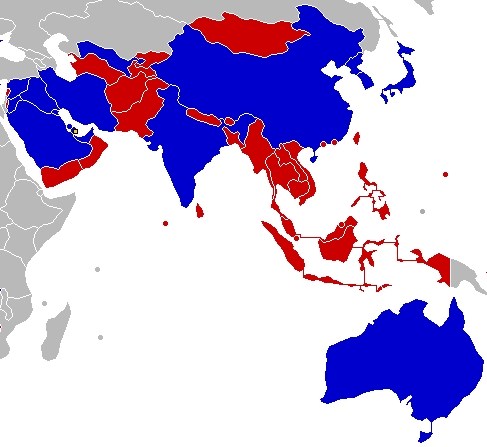
The teams finishing first, second and third in the 2007 AFC Asian Cup, and the host nation for the 2011 competition, received automatic byes to the finals. They were joined by the top two finishers in each of five qualifying groups. The AFC Challenge Cup acted as a further qualification competition for eligible countries within the emerging and developing category of member associations. The winners of the AFC Challenge Cup competitions in 2008 and 2010 qualified automatically to the 2011 AFC Asian Cup finals. These two winners were India and North Korea. It was India's first play for the Asian Cup since 1984, and North Korea's first since 1992.
The final day of qualification was 3 March 2010.
List of qualified teams
| Country | Qualified as | Date qualification was secured | Previous appearances in tournament[1](1), [2](2) | |
|---|---|---|---|---|
| ([1980](1980-afc-asian-cup), [1984](1984-afc-asian-cup), *[1988](1988-afc-asian-cup)*, [1992](1992-afc-asian-cup), [2000](2000-afc-asian-cup), [2004](2004-afc-asian-cup), [2007](2007-afc-asian-cup)) | ||||
| ([1972](1972-afc-asian-cup), [1976](1976-afc-asian-cup), [1996](1996-afc-asian-cup), [2000](2000-afc-asian-cup), [2004](2004-afc-asian-cup), **[2007](2007-afc-asian-cup)**) | ||||
| (**[1984](1984-afc-asian-cup)**, **[1988](1988-afc-asian-cup)**, [1992](1992-afc-asian-cup), **[1996](1996-afc-asian-cup)**, [2000](2000-afc-asian-cup), [2004](2004-afc-asian-cup), [2007](2007-afc-asian-cup)) | ||||
| (**[1956](1956-afc-asian-cup)**, ***[1960](1960-afc-asian-cup)***, [1964](1964-afc-asian-cup), [1972](1972-afc-asian-cup), [1980](1980-afc-asian-cup), [1984](1984-afc-asian-cup), [1988](1988-afc-asian-cup), [1996](1996-afc-asian-cup), [2000](2000-afc-asian-cup), [2004](2004-afc-asian-cup), [2007](2007-afc-asian-cup)) | ||||
| ([1964](1964-afc-asian-cup), [1984](1984-afc-asian-cup)) | ||||
| ([1996](1996-afc-asian-cup), [2000](2000-afc-asian-cup), [2004](2004-afc-asian-cup), [2007](2007-afc-asian-cup)) | ||||
| ([1980](1980-afc-asian-cup), [1984](1984-afc-asian-cup), [1988](1988-afc-asian-cup), [1996](1996-afc-asian-cup)) | ||||
| (***[1968](1968-afc-asian-cup)***, **[1972](1972-afc-asian-cup)**, ***[1976](1976-afc-asian-cup)***, [1980](1980-afc-asian-cup), [1984](1984-afc-asian-cup), [1988](1988-afc-asian-cup), [1992](1992-afc-asian-cup), [1996](1996-afc-asian-cup), [2000](2000-afc-asian-cup), [2004](2004-afc-asian-cup), [2007](2007-afc-asian-cup)) | ||||
| ([1976](1976-afc-asian-cup), [1980](1980-afc-asian-cup), [1984](1984-afc-asian-cup), [1988](1988-afc-asian-cup), [1992](1992-afc-asian-cup), [1996](1996-afc-asian-cup), [2000](2000-afc-asian-cup), *[2004](2004-afc-asian-cup)*, [2007](2007-afc-asian-cup)) | ||||
| ([1988](1988-afc-asian-cup), ***[1992](1992-afc-asian-cup)***, [1996](1996-afc-asian-cup), **[2000](2000-afc-asian-cup)**, **[2004](2004-afc-asian-cup)**, [2007](2007-afc-asian-cup)) | ||||
| ([1988](1988-afc-asian-cup), [2004](2004-afc-asian-cup), [2007](2007-afc-asian-cup)) | ||||
| ([1980](1980-afc-asian-cup), [1984](1984-afc-asian-cup), [1988](1988-afc-asian-cup), [1992](1992-afc-asian-cup), *[1996](1996-afc-asian-cup)*, [2004](2004-afc-asian-cup), [2007](2007-afc-asian-cup)) | ||||
| ([1980](1980-afc-asian-cup), [1992](1992-afc-asian-cup)) | ||||
| ([2007](2007-afc-asian-cup)) | ||||
| ([1972](1972-afc-asian-cup), [1976](1976-afc-asian-cup), ***[1980](1980-afc-asian-cup)***, [1984](1984-afc-asian-cup), [1988](1988-afc-asian-cup), [1996](1996-afc-asian-cup), [2000](2000-afc-asian-cup), [2004](2004-afc-asian-cup)) | ||||
| ([2004](2004-afc-asian-cup)) |
Notes: :1 Bold indicates champion for that year :2 Italic indicates host
Draw
The draw for the AFC Asian Cup 2011 was held on 23 April 2010 in Doha, Qatar. Qatar were seeded among the top group.
Seeding
Seeding was announced on 22 April 2010. Qatar were automatically placed in Group A. FIFA rankings of April 2010 are given in brackets.
| Pot 1 (Host and Seeds) | Pot 2 | Pot 3 | Pot 4 |
|---|---|---|---|
| (96) | |||
| (81) | |||
| (66) | |||
| (47) | (43) | ||
| (20) | |||
| (60) | |||
| (93) | (84) | ||
| (100) | |||
| (69) | |||
| (103) | (98) | ||
| (97) | |||
| (133) | |||
| (106) |
Venues
Main article: List of football stadiums in Qatar
| shape-color1 = maroon | auto-caption = yes
| mark-coord1 = | mark-title1 = Ahmed bin Ali Stadium | mark-description1 = Al Rayyan | mark-coord2 = | mark-title2 = Jassim bin Hamad Stadium | mark-description2 = Al Rayyan | mark-coord3 = | mark-title3 = Khalifa International Stadium | mark-description3 = Al Rayyan | mark-coord4 = | mark-title4 = Thani bin Jassim Stadium | mark-description4 = Al Rayyan | mark-coord5 = | mark-title5 = Suheim bin Hamad Stadium | mark-description5 = Doha
Members of the AFC Organising Committee for AFC Asian Cup 2011 have agreed the use of five stadiums for the 2011 tournament.
Since the tournament, Ahmed bin Ali Stadium was demolished. Khalifa International Stadium have been heavily modified. The Jassim bin Hamad Stadium, Thani bin Jassim Stadium and Suheim bin Hamad Stadium are the only largely unmodified stadium used for this tournament.
| City | Stadium | Capacity | Image | Al Rayyan | Doha | |
|---|---|---|---|---|---|---|
| Ahmed bin Ali Stadium | 21,282 | [[File:ملعب أحمد بن علي قبل مباراة الريان ونادي الشباب السعودي في دوري آبطال آسيا.jpg | 200x200px]] | |||
| Jassim bin Hamad Stadium | 12,946 | [[File:Jassim_bin_Hamad_Stadium.jpg | 200x200px]] | |||
| Khalifa International Stadium | 40,000 | [[File:2009 Emir of Qatar Cup Final - Opening Ceremony (3581763260).jpg | 200x200px]] | |||
| Thani bin Jassim Stadium | 21,175 | [[File:Flag of None.svg | 200x200px]] | |||
| Suheim bin Hamad Stadium | 13,000 | [[File:Interior view of Suheim Bin Hamad Stadium in 2020.jpg | 180x180px]] |
Officials
12 referees and 24 assistants were selected for the tournament, along with three stand-by referees:
| Referee | Assistants |
|---|---|
| AUS Ben Williams | AUS Ben Wilson |
| JPN Yuichi Nishimura | JPN Toru Sagara |
| KOR Kim Dong-jin | KOR Jeong Hae-sang |
| MAS Subkhiddin Mohd Salleh | CHN Mu Yuxin |
| OMA Abdullah Al Hilali | KGZ Bakhadyr Kochkarov |
| QAT Abdulrahman Abdou | QAT Mohammad Darman |
| IRN Mohsen Torky | IRN Hassan Kamranifar |
| SIN Abdul Malik Abdul Bashir | SIN Jeffrey Goh Gek Pheng |
| BHR Nawaf Shukralla | BHR Khaled Al Alan |
| UAE Ali Al Badwawi | UAE Saleh Al Marzouqi |
| UZB Ravshan Irmatov | UZB Abdukhamidullo Rasulov |
Standby referees
| QAT Abdullah Balideh |
|---|
Squads
Main article: 2011 AFC Asian Cup squads
Each country's final squad of 23 players was submitted by 28 December 2010.
Group stage
All times are Arabian Standard Time (AST) – UTC+3
Tie-breaking criteria
The teams are ranked according to points (3 points for a win, 1 point for a tie, 0 points for a loss) and tie breakers are in following order:
- Greater number of points obtained in the group matches between the teams concerned;
- Goal difference resulting from the group matches between the teams concerned;
- Greater number of goals scored in the group matches between the teams concerned;
- Goal difference in all the group matches;
- Greater number of goals scored in all the group matches;
- Kicks from the penalty mark if only two teams are involved and they are both on the field of play;
- Fewer score calculated according to the number of yellow and red cards received in the group matches; (1 point for each yellow card, 3 points for each red card as a consequence of two yellow cards, 3 points for each direct red card, 4 points for each yellow card followed by a direct red card)
- Drawing of lots.
Group A
Main article: 2011 AFC Asian Cup Group A
Djeparov
Deng Zhuoxiang
Djeparov
El-Sayed Fábio César
Hao Junmin Geynrikh
Group B
Main article: 2011 AFC Asian Cup Group B
Honda
Maeda
Al-Saify
Group C
Main article: 2011 AFC Asian Cup Group C
Kewell Holman
Abdullatif Chhetri
Koo Ja-cheol Son Heung-min
Group D
Main article: 2011 AFC Asian Cup Group D
Mobali
M. Nouri W. Abbas
Knockout stage
Main article: 2011 AFC Asian Cup knockout stage
|21 January – Al Rayyan (KIS)||2||1 |22 January – Al Rayyan (JBHS)| |1||0 |21 January – Al Rayyan (TBJS)||3||2 |22 January – Doha||0| |1 |25 January – Al Rayyan (KIS)||0||6 |25 January – Al Rayyan (TBJS)| (pen.)|2 (3)||2 (0) |29 January – Al Rayyan (KIS)||0|**** |1 |28 January – Al Rayyan (JBHS)||2|****|3
All times are Arabian Standard Time (AST) – UTC+3
Quarter-finals
Inoha Fábio César
Semi-finals
Hosogai Hwang Jae-won Okazaki Nagatomo Konno Lee Yong-rae Hong Jeong-ho
Ognenovski Carney Emerton Valeri Kruse
Third place playoff
Ji Dong-won
Final
Main article: 2011 AFC Asian Cup final
Statistics
Goalscorers
With five goals, Koo Ja-cheol was the top scorer in the tournament. In total, 90 goals were scored by 60 different players, with three of them credited as own goals.
5 goals:
- KOR Koo Ja-cheol
4 goals:
- BHR Ismail Abdul-Latif
- KOR Ji Dong-won
3 goals:
- AUS Harry Kewell
- JPN Ryoichi Maeda
- JPN Shinji Okazaki
- UZB Alexander Geynrikh
2 goals:
- AUS Tim Cahill
- AUS Mile Jedinak
- BHR Faouzi Mubarak Aaish
- IND Sunil Chhetri
- JPN Shinji Kagawa
- QAT Yusef Ahmed
- QAT Fábio César Montezine
- SYR Abdelrazaq Al Hussain
- UZB Odil Ahmedov
- UZB Ulugbek Bakayev
- UZB Server Djeparov
1 goal:
- AUS David Carney
- AUS Brett Emerton
- AUS Brett Holman
- AUS Robbie Kruse
- AUS Saša Ognenovski
- AUS Carl Valeri
- CHN Deng Zhuoxiang
- CHN Hao Junmin
- CHN Yu Hai
- CHN Zhang Linpeng
- IND Gouramangi Singh
- IRN Arash Afshin
- IRN Karim Ansarifard
- IRN Iman Mobali
- IRN Mohammad Nouri
- IRN Gholamreza Rezaei
- IRQ Karrar Jassim
- IRQ Younis Mahmoud
- JPN Makoto Hasebe
- JPN Keisuke Honda
- JPN Hajime Hosogai
- JPN Masahiko Inoha
- JPN Tadanari Lee
- JPN Maya Yoshida
- JOR Hassan Abdel Fattah
- JOR Baha'a Abdul-Rahman
- JOR Odai Al-Saify
- JOR Bashar Bani Yaseen
- KUW Bader Al-Mutawa
- QAT Mohamed El Sayed
- QAT Bilal Mohammed
- QAT Sebastián Soria
- KSA Taisir Al-Jassim
- KOR Hwang Jae-won
- KOR Ki Sung-yueng
- KOR Son Heung-min
- KOR Yoon Bit-garam
- SYR Firas Al-Khatib
- SYR Mohamed Al Zeno
- UZB Maksim Shatskikh
1 own goal:
- SYR Ali Diab (for Jordan)
2 own goals:
- UAE Walid Abbas (for Iraq and Iran)
Awards
The AFC selected the MVP, top goalscorer, fair play award and four quality players of the tournament. They didn't officially announce the all-star team of this tournament.
Most Valuable Player
- JPN Keisuke Honda
Top Goalscorer
- KOR Koo Ja-cheol
Fair Play Award
Quality Players
- JPN Keisuke Honda
- KOR Park Ji-sung
- AUS Harry Kewell
- UZB Server Djeparov
Final standings
| - |
|---|
| - |
| - |
| } |
| Source: AFC Technical Report |
Marketing
Official match ball
The Nike Total 90 Tracer was the official match ball of the tournament.
Official mascot
Official mascot were Saboog, Tmbki, Freha, Zkriti and Tranaa. They are a family of Jerboas, a rodent found in the deserts of Qatar. The characters are named after different locations in the north, south, east and west of Qatar.
Official song
For marketing of the event, the organisers opted for the slogan "Yalla Asia" with a song sung by international artists Jay Sean and Karl Wolf, featuring Radhika Vekaria. Yalla Asia was composed and written by Radhika Vekaria, Max Herman and Zoulikha El Fassi. Max Herman produced the record for Zoul Projects 2011. The music video features Football Free Stylers Abbas Farid and Soufiane Touzani.
The music video was released on January 9, 2011.
Sponsorship
Official Sponsors
- Emirates
- Epson
- ING
- Konica Minolta
- Pocari Sweat
- Qatar Petroleum
- Qtel
- Samsung
- Toshiba
- The Asahi Shimbun
Official Supporters
- Alkass Sports Channels
- FamilyMart
- Hyundai Heavy Industries
- Makita
- Nike
- Nikon
Controversies
The 2011 Asian Cup was not without controversies as concerns were risen about the extremely low crowds at most games not featuring hosts Qatar. The average attendance was just 12,006, much lower than the previous AFC Asian Cup tournaments. North Korea and the United Arab Emirates both had the lowest attendance numbers with approximately 3,000 and 6,000 attendances respectively. The final match between Japan and Australia saw as many as 3,000 to 10,000 fans with valid tickets denied entry to the stadium which then allegedly sparked small skirmishes among fans, "It was just incredibly badly handled. There were kids and families, not causing any problem, being confronted by riot police and being told they weren't getting in", according to Andy Richardson, Al Jazeera's sports correspondent. The AFC stated that the gates were closed early for security concerns and organisers did not anticipate an influx of Japanese and Australian fans. The organising committee has offered to refund all tickets not redeemed at the match.
After staging the 2006 Asian Games, this Asian Cup was being closely watched as an indicator to see how Qatar copes with hosting a major international football tournament in preparation for the 2022 FIFA World Cup.
Notes
References
References
- (29 July 2007). "Qatar confirmed as cup host". [[Fox Sports (Australia).
- (29 July 2007). "Qatar to host AFC Asian Cup in 2011". Asian Football Confederation.
- (29 January 2011). "Japan down Aussies to make history". FIFA.com.
- (29 January 2011). "Australia 0 – 1 Japan". ESPN Soccernet.
- (23 April 2012). "Asian Cup final 'rematch' kick-off time set". [[Asian Football Confederation]].
- (14 February 2007). "Nations make Asian Cup bid". [[Fox Sports (Australia).
- (13 February 2007). "Chances to host 2011 Asian Cup fading". The Sydney Morning Herald.
- link. (3 March 2016)
- link. (3 March 2016)
- (25 November 2009). "Unity the theme at AFC Executive Committee meeting". AFC.
- (23 February 2010). "AFC Asian Cup 2011 Finals draw on April 23". AFC.
- (22 April 2010). "AFC Asian Cup 2011 final draw mechanics". Asian Football Confederation.
- "April 2010 FIFA World Rankings".
- (14 July 2009). "AFC Organising Committee for AFC Asian Cup 2011". AFC.
- "2011 AFC Asian Cup referees". Asian Football Confederation.
- "AFC Asian Cup Qatar 2011 Competition Regulations". AFC.
- "AFC Asian Cup Qatar 2011 Technical Report". AFC.
- (13 December 2010). "The Tracer's excitement for AC 2011". Asian Football Confederation.
- "AFC Asian Cup Statistics – ESPN FC". go.com.
- "Asian Cup ticket-holders denied entry to finale". ESPN.com.
- (3 February 2011). "Five things we've learned from Qatar's Asian Cup". CNN.
- (3 February 2011). "Refund offer for Asian Cup final lockout". ABC News.
- "AFP: Qatar puts Middle East football on map".
- "Qatar: From obscure desert kingdom to World Cup host". cnn.com.
This article was imported from Wikipedia and is available under the Creative Commons Attribution-ShareAlike 4.0 License. Content has been adapted to SurfDoc format. Original contributors can be found on the article history page.
Ask Mako anything about 2011 AFC Asian Cup — get instant answers, deeper analysis, and related topics.
Research with MakoFree with your Surf account
Create a free account to save articles, ask Mako questions, and organize your research.
Sign up freeThis content may have been generated or modified by AI. CloudSurf Software LLC is not responsible for the accuracy, completeness, or reliability of AI-generated content. Always verify important information from primary sources.
Report