From Surf Wiki (app.surf) — the open knowledge base
2008 Mumbai attacks
Terror attacks in India
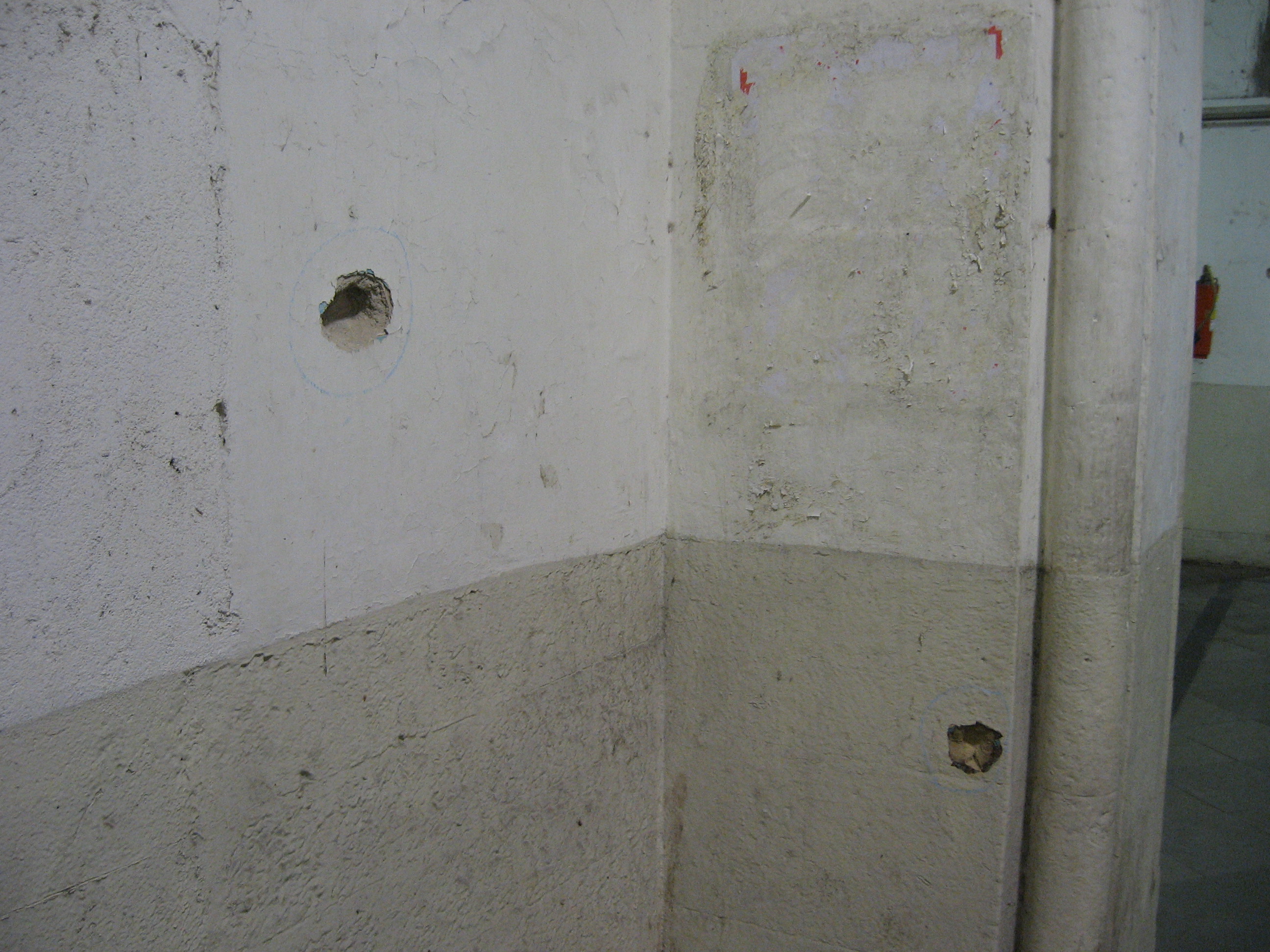
Terror attacks in India
| Field | Value | ||||||||
|---|---|---|---|---|---|---|---|---|---|
| title | 2008 Mumbai attacks | ||||||||
| image | 2008 Mumbai terror attacks Taj dome burned 2.jpg | ||||||||
| caption | The burned dome of the Taj Mahal Palace Hotel on 3 December 2008. | ||||||||
| map | Bombaymapconfirmed attacks.png | ||||||||
| map_caption | Places of the attacks | ||||||||
| location | Mumbai, India | ||||||||
| {{bulleted list | Leopold Café | Chhatrapati Shivaji Maharaj Terminus | The Taj Mahal Palace Hotel | Oberoi Trident | Cama Hospital | Nariman House | Metro Cinema<ref name | "Magnier" | St. Xavier's College}} |
| coordinates | |||||||||
| date | – | ||||||||
| time | 21:30 (26/11) – 08:00 (29/11) | ||||||||
| timezone | IST, UTC+05:30 | ||||||||
| type | Bombings, mass shootings, mass murder, hostage crisis, siege | ||||||||
| fatalities | 175 (including 9 attackers){{Cite journal | ||||||||
| pmid | 22673262 | ||||||||
| year | 2012 | ||||||||
| last1 | Bhandarwar | ||||||||
| first1 | A. H. | ||||||||
| last2 | Bakhshi | ||||||||
| first2 | G. D. | ||||||||
| last3 | Tayade | ||||||||
| first3 | M. B. | ||||||||
| last4 | Chavan | ||||||||
| first4 | G. S. | ||||||||
| last5 | Shenoy | ||||||||
| first5 | S. S. | ||||||||
| last6 | Nair | ||||||||
| first6 | A. S. | ||||||||
| title | Mortality pattern of the 26/11 Mumbai terror attacks | ||||||||
| journal | The Journal of Trauma and Acute Care Surgery | ||||||||
| volume | 72 | ||||||||
| issue | 5 | ||||||||
| pages | 1329–1334; discussion 1334 | ||||||||
| doi | 10.1097/TA.0b013e31824da04f | ||||||||
| s2cid | 23968266 | ||||||||
| issn | 0022-5282 | ||||||||
| injuries | 300+ | ||||||||
| victims | See casualty list for complete list | ||||||||
| perpetrators | Lashkar-e-Taiba led by Zakiur Rehman Lakhvi and Hafiz Saeed | ||||||||
| weapons | AK rifles, RDX, IEDs, grenades | ||||||||
| numparts | 10 | ||||||||
| dfens | |||||||||
| motive | Islamic terrorism |
The 2008 Mumbai attacks, also referred to as the 26/11 attacks, were a series of 12 coordinated terrorist attacks that took place from November 26 to 29 and were carried out by 10 members of Lashkar-e-Taiba, a terrorist organisation. A total of 175 people died, including nine of the attackers, with more than 300 injured.
Eight of the attacks occurred in South Mumbai at Chhatrapati Shivaji Maharaj Terminus, the Oberoi Trident, the Taj Mahal Palace and Tower hotel, the Leopold Cafe, the Cama Hospital, the Nariman House, the Metro Cinema, and in a lane behind the Times of India building and St. Xavier's College. In addition to the mass shootings, an explosion occurred at Mazagaon, in Mumbai's port area, and in a taxi at Vile Parle. By the early morning of 28 November, all sites except for the Taj Hotel had been secured by the Mumbai Police and security forces. On 29 November, India's National Security Guards conducted Operation Black Tornado to flush out the remaining terrorists; it culminated in the death of the last remaining terrorists at the Taj Hotel and ended the attacks.
Before his execution in 2012, Ajmal Kasab, the sole surviving attacker captured by the Mumbai Police stated and confessed that the terrorists were members of the Lashkar-e-Taiba and were controlled from Pakistan, corroborating initial claims from the Indian Government. Initially denying the claims, Pakistan later confirmed that the sole surviving perpetrator of the attacks was a Pakistani citizen. The subsequent capture and interrogation of David Headley, a Pakistani-American DEA informer, and Tahawwur Rana, a Canadian citizen of Pakistani origin and a former Pakistan Army Captain, who was Headley's partner, pointed to the involvement of rogue officials of Pakistan Army and ISI in the terrorist attacks, who provided support to the Lashkar-e-Taiba. Furthermore, Headley was also accused of traveling to Denmark to scout the offices of Danish newspaper Jyllands-Posten, which had published cartoons of Muhammad, and a nearby synagogue. The capture of Zabiuddin Ansari aka Abu Hamza in July 2012, an Indian national radicalised by Lashkar-e-Taiba, provided further clarity to the plot.
On 9 April 2015, the foremost ringleader of the attacks, Zakiur Rehman Lakhvi, was released on bail and disappeared; he was arrested again in Lahore on 2 January 2021. In 2018, former Pakistani prime minister Nawaz Sharif questioned the Pakistani government's allowance of those who committed the attacks to cross into India. In 2022, one of the masterminds of the attack, Sajid Majeed Mir —who had earlier been claimed to be dead by the Pakistan Government— was convicted for funding terrorist activities by an anti-terrorism court in Pakistan. Consequently, several masterminds such as LeT founder Hafiz Saeed and Zakiur Rehman Lakhvi, were convicted for terror financing in 2021–22, as Pakistan went into an economic crisis after the Financial Action Task Force (FATF) threatened the Government of Pakistan to be put in the FATF Blacklist for failure to comply on money laundering and financing of terrorism.
As of December 2025, it is one of the deadliest terrorist attacks that took place in Mumbai, as well as across India. Although the casualties were lower when compared to the 2006 Mumbai train bombings, which was also planned by the Lashkar-e-Taiba and that killed 209 and injured more than 700, the 10 terrorists inflicted massive property damage worth over $1 billion by fire, grenade attacks, and gunfire. The attacks strained diplomatic relations between India and Pakistan, and made a huge impact on law enforcement and security officials to deal with such scenarios in the future. The attacks also caused a major political impact on the then ruling government led by the United Progressive Alliance, as the same year, several other cities suffered from terrorism, which were also perpetrated by Pakistani terror groups.{{cite news |author=Press Trust of India |title=No military action against Pakistan: India |work=Times of India |location=India |date=2 December 2008 |url= http://timesofindia.indiatimes.com/No_military_action_against_Pakistan_India/articleshow/3783853.cms |access-date=9 December 2008}}
Background
Many terrorist attacks had occurred in Mumbai since the 13 coordinated bomb explosions that killed 257 people on 12 March 1993. The 1993 attacks were carried out as revenge for the earlier Bombay riots, in which many Muslims were killed.
On 6 December 2002, a blast in a BEST bus near Ghatkopar station killed two people and injured 28. The bombing occurred on the 10th anniversary of the demolition of the Babri Mosque in Ayodhya. A bicycle bomb exploded near the Vile Parle station in Mumbai, killing one person and injuring 25 on 27 January 2003, a day before the visit of the Prime Minister of India Atal Bihari Vajpayee to the city. On 13 March 2003, a day after the 10th anniversary of the 1993 Bombay bombings, a bomb exploded in a train compartment near the Mulund station, killing 10 people and injuring 70. On 28 July 2003, a blast in a BEST bus in Ghatkopar killed 4 people and injured 32. On 25 August 2003, two bombs exploded in South Mumbai, one near the Gateway of India and the other at Zaveri Bazaar in Kalbadevi. At least 44 people were killed and 150 injured. On 11 July 2006, seven bombs exploded within 11 minutes on the Suburban Railway in Mumbai, killing 209 people, including 22 foreigners and more than 700 injured. According to the Mumbai Police, the bombings were carried out by Lashkar-e-Taiba (LeT) and Students Islamic Movement of India (SIMI).
Training
A group of men said to number between 24 and 26 received training in marine warfare at a remote camp in mountainous Muzaffarabad in Pakistan. Part of the training was said to have taken place on the Mangla Dam reservoir in Pakistan.
The recruits went through extensive training:
- Psychological: Indoctrination to Islamist jihadi ideas, including imagery of atrocities suffered by Muslims in India and globally.
- Basic combat: Lashkar's basic combat training and methodology course, the Daura Aam
- Advanced training: Selected to undergo advanced combat training at a camp near Mansehra, a course the organisation calls the Daura Khaas. According to an unnamed source at the U.S. Defense Department, this includes advanced weapons and explosives training supervised by former members of the Pakistan Army, along with survival training and further indoctrination.
- Commando training: Finally, an even smaller group was selected for specialised commando tactics training, and marine navigation training was given to the Fedayeen unit that was selected, to target Mumbai.
From the recruits, 10 were handpicked for the Mumbai mission. They also received training in swimming and sailing, besides the use of high-end weapons and explosives under the supervision of LeT commanders. According to a media report citing an unnamed former Department of Defense official of the US, the intelligence agencies of the US had determined that former officers from Pakistan's Army and Inter-Services Intelligence agency assisted actively and continuously in training. They were given blueprints of all the four targets – The Taj Mahal Palace Hotel, Oberoi Trident, Nariman House, and Chhatrapati Shivaji Maharaj Terminus.
Attacks
The terrorists first hijacked an Indian fishing boat and killed five people on board. The first events were detailed around 20:00 Indian Standard Time (IST) on 26 November, when 10 men in inflatable speedboats came ashore at two locations in Colaba. They reportedly told local Marathi-speaking fishermen who asked them who they were to "mind their own business" before they split up and went in two different ways. The fishermen's subsequent report to the police department received little response and local police failed to act.
Chhatrapati Shivaji Maharaj Terminus
The Chhatrapati Shivaji Maharaj Terminus (CSMT) was attacked by two gunmen, Ismail Khan and Ajmal Kasab. Kasab was later caught alive by the police and identified by eyewitnesses. The attacks began around 21:30, when the two men entered the passenger hall and opened fire with AK-47 assault rifles. their assault ending at about 22:45. The two gunmen fled the scene and fired at pedestrians and police officers in the streets, killing eight police officers. The attackers passed a police station. Knowing that they were outgunned against the heavily armed terrorists, the police officers at the station, instead of confronting the terrorists, decided to switch off the lights and secure the gates.
The attackers then headed towards Cama Hospital with intent to kill patients, but the hospital staff locked all of the patient wards. A team of the Mumbai Anti-Terrorist Squad, led by Police Chief Hemant Karkare, searched the Chhatrapati Shivaji Terminus and then left in pursuit of Kasab and Khan. Kasab and Khan opened fire on the vehicle in a lane next to the hospital and received return fire in response. Karkare, Vijay Salaskar, Ashok Kamte, and three of their officers were killed. The only survivor, Constable Arun Jadhav, was severely wounded. Kasab and Khan seized the police vehicle but later abandoned it and seized a passenger car instead. They then ran into a police roadblock, which had been set up after Jadhav radioed for help. A gun battle then ensued in which Khan was killed and Kasab was wounded. After a physical struggle, Kasab was arrested. A police officer, Tukaram Omble, was also killed when he tried to disarm Kasab by wrestling his weapon away from him.
Leopold Cafe
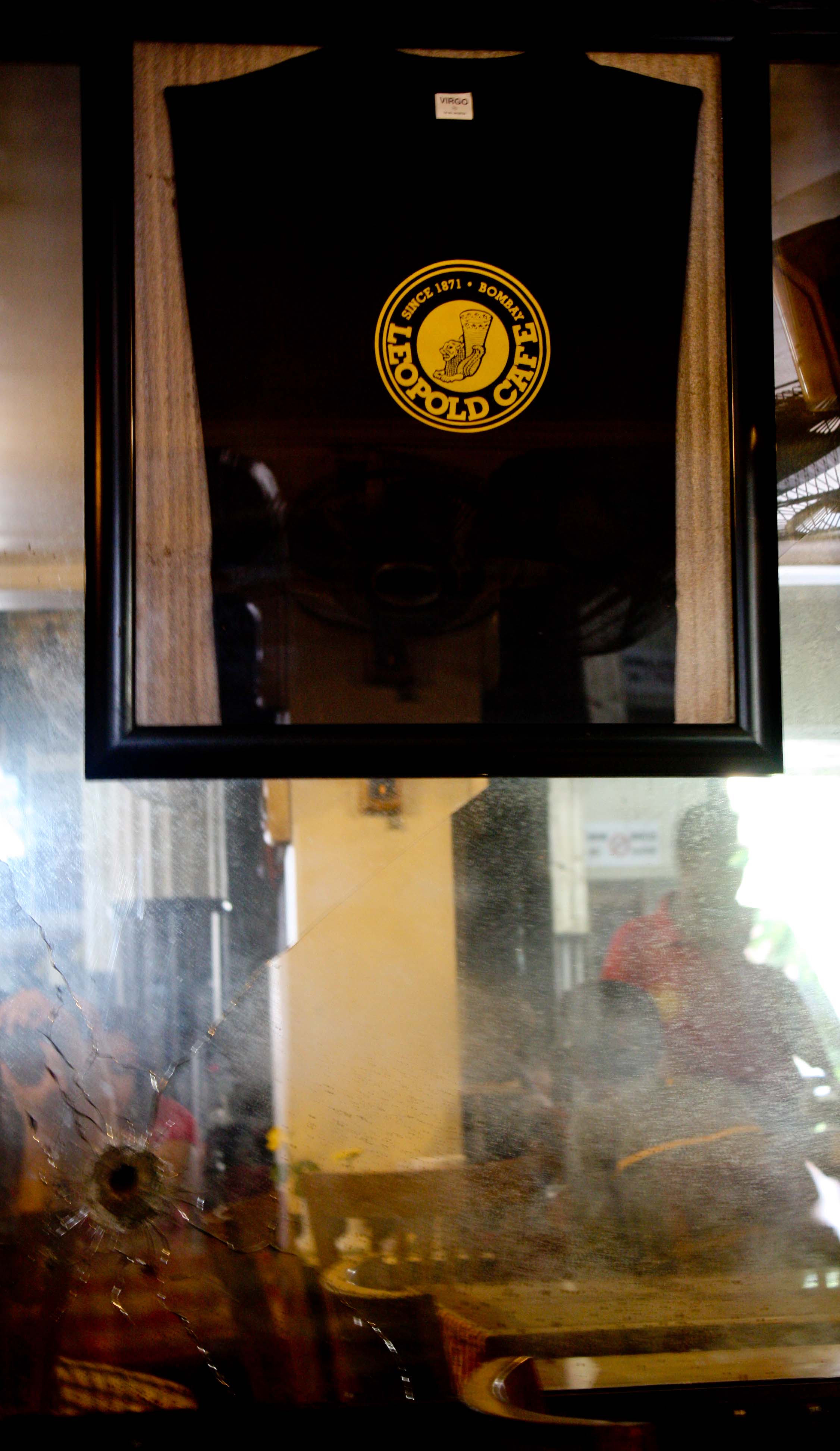
The Leopold Cafe, a popular restaurant and bar on Colaba Causeway in South Mumbai, was one of the first sites to be attacked. Two attackers, Shoaib alias Soheb and Nazir alias Abu Umer, opened fire on the cafe on the evening of 26 November between 21:30 and 21:48, killing 10 people (including some international visitors) and injuring many more.
Bomb blasts in taxis
Two explosions happened in taxis caused by time bombs. The first explosion took place at Wadi Bunder between 22:20 and 22:25. Three people, including the driver of the taxi, were killed, and about 15 others were injured. The second one occurred at 22:40 at Vile Parle, killing the driver and a passenger.
Taj Mahal Palace Hotel and Oberoi Trident
Two hotels, the Taj Mahal Palace Hotel and the Oberoi Trident, were among the four locations targeted. Six explosions were reported at the Taj Hotel – one in the lobby, two in the elevators, and three in the restaurant – and one at the Oberoi Trident. At the Taj, firefighters rescued 200 hostages from windows using ladders during the first night.
CNN initially reported on the morning of 27 November 2008 that the hostage situation at the Taj Hotel had been resolved and quoted the police chief of Maharashtra, stating that all hostages were freed; later that day, though, two attackers were found to be still holding hostages, including foreigners, in the Taj Hotel.

Several members of the European Parliament Committee on International Trade were staying at the Taj Hotel when it was attacked, but none were harmed. British Conservative Member of the European Parliament (MEP) Sajjad Karim (who was in the lobby when attackers initially opened fire there) and German Social Democrat MEP Erika Mann were hiding in different parts of the building. Also reported present was Spanish MEP Ignasi Guardans, who was barricaded in a hotel room. Another British Conservative MEP, Syed Kamall, reported that he along with several other MEPs left the hotel and went to a nearby restaurant shortly before the attack. Kamall also reported that Polish MEP Jan Masiel was thought to have been sleeping in his hotel room when the attacks started, but eventually left the hotel safely. Kamall and Guardans reported that a Hungarian MEP's assistant was shot. Also caught up in the shooting were the President of Madrid, Esperanza Aguirre, while checking in at the Oberoi Trident, and Indian MP N. N. Krishnadas of Kerala and Gulam Noon while having dinner at a restaurant in the Taj Hotel. Gautam Adani, a billionaire business tycoon of India, was having dinner in the Taj on November 26; he hid in the hotel kitchen and later in the toilet, and came out safely the next morning.
Nariman House

Nariman House, a Chabad Lubavitch Jewish centre in Colaba known as the Mumbai Chabad House, was taken over by two attackers, and several residents were held hostage. Police evacuated adjacent buildings and exchanged fire with the attackers, wounding one. Local residents were told to stay inside. The attackers threw a grenade into a nearby lane, causing no casualties. NSG commandos arrived from Delhi, and a naval helicopter took an aerial survey. During the first day, 9 hostages were rescued from the first floor. The following day, the house was stormed by NSG commandos fast-roping from helicopters onto the roof, covered by snipers positioned in nearby buildings. After a long battle, one NSG commando, Sergeant Gajender Singh Bisht was killed, as were both perpetrators. Rabbi Gavriel Holtzberg and his wife Rivka Holtzberg, who was six months pregnant, were shot and killed along with four other hostages inside the house by the attackers.
According to radio transmissions picked up by Indian intelligence, the attackers "would be told by their handlers in Pakistan that the lives of Jews were worth 50 times those of non-Jews". Injuries on some of the bodies indicated that they may have been tortured.
NSG raid
During the attacks, both hotels were surrounded by Rapid Action Force personnel, Marine Commandos (MARCOS), and National Security Guards (NSG) commandos. When reports emerged that attackers were receiving television broadcasts, feeds to the hotels were blocked. Security forces stormed both hotels, and all nine attackers were killed by the morning of 29 November. Major Sandeep Unnikrishnan of the NSG was fatally shot during the rescue of Commando Sunil Yadav, who was hit in the leg by a bullet during the rescue operations at Taj. 32 hostages were killed at the Oberoi Trident.
NSG commandos then took on the Nariman House, and a naval helicopter took an aerial survey. During the first day, nine hostages were rescued from the first floor. The following day, the house was stormed by NSG commandos fast-roping from helicopters onto the roof, covered by snipers positioned in nearby buildings. NSG Commando Sergeant Gajender Singh Bisht, who was part of the team that fast-roped onto Nariman House, died from injuries sustained by a grenade after a long battle in which both perpetrators were also killed. By the morning of 28 November, the NSG had secured the Jewish outreach centre at Nariman House, as well as the Oberoi Trident hotel. They also incorrectly believed that the Taj Palace and Towers had been cleared of attackers, and soldiers were leading hostages and holed-up guests to safety, and removing bodies of those killed in the attacks. However, later news reports indicated that two or three attackers were still in the Taj, with explosions heard and gunfire exchanged. Fires were also reported at the ground floor of the Taj, with plumes of smoke arising from the first floor. The final operation at the Taj Palace hotel was completed by the NSG commandos at 08:00 on 29 November, killing three attackers and resulting in the conclusion of the attacks. The NSG rescued 250 people from the Oberoi, 300 from the Taj, and 60 (members of 12 different families) from Nariman House. In addition, police seized a boat filled with arms and explosives anchored at Mazgaon dock off Mumbai Harbour.
Attribution
Main article: Attribution of the 2008 Mumbai attacks, Erroneous reporting on the 2008 Mumbai attacks
The search regarding the identity of the terrorists started during the first attacks. During the searches, an unknown group calling itself the Mujahideen Hyderabad Deccan claimed responsibility for attacks in an email, which was later traced to Pakistan and was regarded as hoax.
The Mumbai attacks were planned and directed by Lashkar-e-Taiba militants inside Pakistan and carried out by 10 young armed men trained and sent to Mumbai and directed from inside Pakistan by mobile phones and VoIP.
In July 2009, Pakistani authorities confirmed that LeT plotted and financed the attacks from LeT camps in Karachi and Thatta. In November 2009, Pakistani authorities charged seven men they had arrested earlier, of planning and executing the assault.
Mumbai police department originally identified 37 suspects—including two Pakistan Army officers—for their alleged involvement in the plot. All but two of the suspects, many of whom are identified only through aliases, are Pakistani. David Coleman Headley and Tahawwur Hussain Rana, arrested in the United States in October 2009 for other attacks, were also found to have been involved in planning the Mumbai attacks. One of these men, Pakistani American David Headley (born Daood Sayed Gilani), was found to have made several trips to India before the attacks, and gathered video and GPS information on behalf of the plotters.
In April 2011, the United States issued arrest warrants for four Pakistani men as suspects in the attack. Three men, Sajid Mir, Abu Qahafa, and Mazhar Iqbal, alias "Major Iqbal", were believed to be members of Lashkar-e-Taiba, and helped plan and train the attackers.
Negotiations with Pakistan
Pakistani Prime Minister Yousaf Raza Gillani and President Asif Ali Zardari condemned the attacks. Pakistan promised to assist in the investigation, and President Zardari vowed "strong action against any Pakistani elements found involved in the attack". Pakistan initially denied that Pakistanis were responsible for the attacks, blaming plotters in Bangladesh and Indian criminals, a claim refuted by India, and saying they needed information from India on other bombings first. Pakistani authorities finally agreed that Ajmal Kasab was a Pakistani on 7 January 2009, and registered a case against three other Pakistani nationals.
The Indian government supplied evidence to Pakistan and other governments, in the form of interrogations, weapons, and call records of conversations during the attacks. In addition, Indian government officials said that the attacks were so sophisticated that they must have had official backing from Pakistani "agencies", an accusation denied by Pakistan.
Pakistan arrested a few members of Jamaat ud-Dawa and briefly put its founder under house arrest, but he was found to be free a few days later. A year after the attacks, Mumbai police continued to complain that Pakistani authorities were not co-operating by providing information for their investigation. Meanwhile, journalists in Pakistan said security agencies were preventing them from interviewing people from Kasab's village. The then Home Minister P. Chidambaram said the Pakistani authorities had not shared any information about American suspects David Headley and Tahawwur Hussain Rana, but that the FBI had been more forthcoming.
An Indian report, summarising intelligence gained from India's interrogation of David Headley, was released in October 2010. It alleged that Pakistan's intelligence agency (ISI) had provided support for the attacks by providing funding for reconnaissance missions in Mumbai. The report included Headley's claim that Lashkar-e-Taiba's chief military commander, Zaki-ur-Rahman Lakhvi, had close ties to the ISI. He alleged that "every big action of LeT is done in close coordination with [the] ISI."
In 2018, during an interview with newspaper Dawn, Pakistan's former Prime Minister Nawaz Sharif questioned Pakistan's inaction in preventing the Mumbai attacks.

Investigation
According to investigations, the attackers travelled by sea from Karachi, Pakistan, across the Arabian Sea, hijacked the Indian fishing trawler Kuber, killed the crew of four, then forced the captain to sail to Mumbai. After murdering the captain, the attackers entered Mumbai on a rubber dinghy. The captain of Kuber, Amar Singh Solanki, had earlier been imprisoned for six months in a Pakistani jail for illegally fishing in Pakistani waters. The attackers stayed and were trained by the Lashkar-e-Taiba in a safehouse at Azizabad in Karachi before boarding a small boat for Mumbai.
David Headley was a member of Lashkar-e-Taiba, and between 2002 and 2009, Headley travelled extensively as part of his work for LeT. Headley received training in small arms and countersurveillance from LeT, built a network of connections for the group, and lead in scoping out targets for Mumbai attack having allegedly been given $25,000 in cash in 2006 by an ISI officer known as Major Iqbal. The officer also helped him arrange a communications system for the attack and oversaw a model of the Taj Hotel, so that gunmen could know their way inside the target, according to Headley's testimony to Indian authorities. Headley also helped ISI recruit Indian agents to monitor Indian troop levels and movements, according to a US official. At the same time, Headley was also an informant for the US Drug Enforcement Administration, and Headley's wives warned American officials of Headley's involvement with LeT and his plotting attacks, warning specifically that the Taj Hotel may be their target.
US officials believed that the ISI officers provided support to LeT militants who carried out the attacks. Disclosures made by former American intelligence contractor Edward Snowden in 2013 revealed that the Central Intelligence Agency (CIA) had intercepted communications between the Lashkar boat and the LeT headquarters in Pakistan-administered Kashmir and passed the alert on to RAW on 18 November, eight days before the terrorists actually struck Mumbai. In the hours after the attack, the New York City Police Department sent Brandon del Pozo, an official from their intelligence division, to investigate the incident to understand what vulnerabilities its methods posed for New York City.
The arrest of Zabiuddin Ansari, alias Abu Hamza, in June 2012 provided further clarity on how the plot was hatched. According to Abu Hamza, the attacks were previously scheduled for 2006, using Indian youth for the job. However, a huge cache of AK-47s and RDX, which were to be used for the attacks, was recovered from Aurangabad in 2006, thus leading to the dismantling of the original plot. Subsequently, Abu Hamza fled to Pakistan and along with Lashkar commanders, scouted for Pakistani youth to be used for the attacks. In September 2007, 10 people were selected for the mission. In September 2008, these people tried sailing to Mumbai from Karachi, but could not complete their mission due to choppy waters. These men made a second attempt in November 2008, and successfully managed to execute the final attacks. David Headley's disclosures that three Pakistani army officers were associated with the planning and execution of the attack were substantiated by Ansari's revelations during his interrogation.
After Ansari's arrest, Pakistan's Foreign Office claimed they had received information that up to 40 Indian nationals were involved in the attacks.
In his confession, Ajmal Kasab, the only gunman captured, shared the location of LeT's training camps in Muridke, Pakistan, called as Markaz Taiba, and in Muzzafarabad, apart from the routine of their training, which included indoctrination, basic combat, advanced weapons and explosives, and commando tactics. On 7 May 2025, the Muridke camp was destroyed in a missile strike by the Indian Armed Forces in retaliation for the Pahalgam terrorist attack, which was also perpetrated by the Lashkar-e-Taiba. The strikes reportedly killed Lashkar's HQ chief Mudassar aka Abu Jundal (not to be confused with 26/11 co-conspirator Zabiuddin Ansari who used the alias Abu Jundal) among several other terrorists.
Method
The attackers had planned the attack several months ahead of time, and knew some areas well enough to vanish and reappear after security forces had left. Several sources have quoted Kasab telling the police that the group received help from Mumbai residents. The attackers used at least three SIM cards purchased on the Indian side of the border with Bangladesh. There were also reports of a SIM card purchased in the US state of New Jersey. Police had also mentioned that Faheem Ansari, an Indian Lashkar operative who had been arrested in February 2008, had scouted the Mumbai targets for the November attacks. Later, the police arrested two Indian suspects, Mikhtar Ahmad, who is from Srinagar in Kashmir, and Tausif Rehman, a resident of Kolkata. They supplied the SIM cards, one in Calcutta, and the other in New Delhi.
The attackers used a satellite phone and cell phones to talk to each other, as well as their handlers who were based in Pakistan. In transcripts intercepted by Indian authorities between the attackers and their handlers, the handlers provided the attackers with encouragement, tactical advice, and information gained from media coverage. The attackers used both personal cell phones and those obtained from their victims to communicate with each other and the news media. Although the attackers were encouraged to murder hostages, the attackers were in communication with the news media via cell phones to make demands in return for the release of hostages. This was believed to be done to further confuse Indian authorities that they were dealing with primarily a hostage situation.
Type 86 grenades made by China's state-owned Norinco were used in the attacks.
Also, indications arose that the attackers had been taking cocaine. The gunman who survived said that the attackers had used Google Earth to familiarise themselves with the locations of buildings used in the attacks.
Of the 10 gunmen, nine were subsequently shot dead and one was captured by security forces. Witnesses reported that they seemed to be in their early 20s, wore black T-shirts and jeans, and smiled and looked happy as they shot their victims.
Initially, some of the attackers reported to be British citizens, but the Indian government later stated that there was no evidence to confirm this. Similarly, early reports of 12 gunmen were also later shown to be incorrect.
On 9 December, the 10 attackers were identified by Mumbai police, along with their home towns in Pakistan: Ajmal Amir Kasab from Faridkot, Abu Ismail Dera Ismail Khan from Dera Ismail Khan, Hafiz Arshad and Babr Imran from Multan, Javed from Okara, Shoaib from Sialkot, Nazir Ahmed and Nasir from Faisalabad, Abdul Rahman from Arifwalla, and Fahadullah from Dipalpur Taluka. Dera Ismail Khan is in the North-West Frontier Province; the rest of the towns are in Pakistani Punjab.
On 6 April 2010, the Home Minister of Maharashtra, informed the assembly that the bodies of the nine killed Pakistani gunmen from the 2008 attack on Mumbai were buried in a secret location in January 2010. The bodies had been in the mortuary of a Mumbai hospital after Muslim clerics in the city refused to let them be buried on their grounds.
Attackers
Only one of the attackers, Ajmal Kasab, survived the attack. He was hanged in Yerwada Central Jail in 2012.
Arrests
Main article: Ajmal Kasab, Zabiuddin Ansari
Ajmal Kasab was the only attacker arrested by police. At first, he deposed to police inspector Ramesh Mahale that he had come to India "to see Amitabh Bachchan's bungalow", and that he was apprehended by the Mumbai Police outside the bungalow. Much of the information about the attackers' preparation, travel, and movements comes from his subsequent confessions to the Mumbai police.
On 12 February 2009, Pakistani Interior Minister Rehman Malik said that Pakistani national Javed Iqbal, who acquired VoIP phones in Spain for the Mumbai attackers, and Hamad Ameen Sadiq, who had facilitated money transfer for the attack, had been arrested. Two other men known as Khan and Riaz, but whose full names were not given, were also arrested. Two Pakistanis were arrested in Brescia, Italy (east of Milan), on 21 November 2009, after being accused of providing logistical support to the attacks and transferring more than US$200 to Internet accounts using a false ID. They had Red Corner Notices issued against them by Interpol for their suspected involvement and it was issued after the last year's strikes.
In October 2009, two Chicago men were arrested and charged by the FBI for involvement in "terrorism" abroad, David Coleman Headley and Tahawwur Hussain Rana. Headley, a Pakistani American, was charged in November 2009 with scouting locations for the 2008 Mumbai attacks. Headley is reported to have posed as an American Jew and is believed to have links with militant Islamist groups based in Bangladesh. On 18 March 2010, Headley pleaded guilty to a dozen charges against him thereby avoiding going to trial.
In December 2009, the FBI charged Abdur Rehman Hashim Syed, a retired major in the Pakistani Army, for planning the attacks in association with Headley.
On 15 January 2010, in a successful snatch operation, R&AW agents nabbed Sheikh Abdul Khwaja, one of the handlers of the 26/11 attacks, chief of HuJI India operations and a most wanted suspect in India, from Colombo, Sri Lanka, and brought him over to Hyderabad, India, for formal arrest.
On 25 June 2012, the Delhi Police Department arrested Zabiuddin Ansari, alias Abu Hamza, one of the key suspects in the attack at the Indira Gandhi International Airport in New Delhi. His arrest was touted as the most significant development in the case since Kasab's arrest. Security agencies had been chasing him for three years in Delhi. Ansari is a LeT ultra and the Hindi tutor of the 10 attackers who were responsible for the Mumbai attacks in 2008. He was apprehended, after he was arrested and deported to India by Saudi Intelligence officials as per official request by Indian authorities. After Ansari's arrest, investigations revealed that in 2009 he allegedly stayed for a day in a room in Old Legislators's Hostel, belonging to Fauzia Khan, a former MLA and minister in Maharashtra Government. The minister, however, denied having any links with him. Home Minister P. Chidambaram asserted that Ansari was provided a safe place in Pakistan and was present in the control room, which could not have been established without active State support. Ansari's interrogation further revealed that Sajid Mir and a Pakistani Army major visited India under fake names as cricket spectators to survey targets in Delhi and Mumbai for about a fortnight.
Sajid Mir, a Pakistani citizen and key operative of the militant Islamic extremist group LeT, is seen as one of the main organisers of the 2008 attacks. He has been called the "mastermind" and "project manager". Mir is on the U.S. Federal Bureau of Investigation's Most Wanted list and the United States Department of State offers in its Rewards for Justice Program, a reward of up to $5 million for information leading to the arrest and conviction of Mir. Mir has carried out terrorism operations in different parts of the world, including France.
Jason M. Blazakis, professor of practice at Middlebury Institute of International Studies at Monterey, stated in 2018 in The Hill: "A lethal, miasmic mix of bureaucratic inertia, diplomatic dysfunction and misperception has contributed to the fact that LeT members Sajid Mir, Mazhar Iqbal, Abu Qahafa (his nom de guerre), and their ISI handler, Major Iqbal (no relation to Mazhar), roam free."
On April 10, 2025, the NIA formally arrested Tahawwur Rana after his arrival from the U.S.
Casualties and compensation
| Nationality | Deaths | Injured | Total | ||||||||||
|---|---|---|---|---|---|---|---|---|---|---|---|---|---|
| India | 141 | 256 | |||||||||||
| United States | 6 | 2 | |||||||||||
| Israel | 4 | – | |||||||||||
| Germany | 3 | 3 | |||||||||||
| Australia | url=http://www.abc.net.au/news/stories/2008/11/30/2433586.htm?section=justin | title=Aussies in Mumbai accounted for: DFAT | date=30 November 2008 | website=ABC News | access-date=14 December 2008 | archive-date=15 December 2008 | archive-url=https://web.archive.org/web/20081215082303/http://www.abc.net.au/news/stories/2008/11/30/2433586.htm?section=justin | url-status=dead}} | 2 | ||||
| Canada | 2 | ||||||||||||
| France | 2 | – | |||||||||||
| Italy | 1 | ||||||||||||
| United Kingdom | 1 | 7 | |||||||||||
| Netherlands | 1 | 1 | |||||||||||
| Japan | 1 | 1 | |||||||||||
| Jordan | 1 | ||||||||||||
| Malaysia | url=http://thestar.com.my/news/story.asp?file=/2008/11/30/nation/2684733&sec=nation | title=Hema died of smoke inhalation, says consul-general | first=Nelson | last=Benjamin | date=30 November 2008 | newspaper=The Star | location=Kuala Lumpur | access-date=30 November 2008 | url-status=dead | archive-url=https://web.archive.org/web/20081201001200/http://thestar.com.my/news/story.asp?file=%2F2008%2F11%2F30%2Fnation%2F2684733&sec=nation | archive-date=1 December 2008}} | – | |
| Mauritius | 1 | ||||||||||||
| Mexico | 1 | ||||||||||||
| Singapore | 1 | ||||||||||||
| Thailand | 1 | ||||||||||||
| Austria | – | url=http://www.telegraphindia.com/1081129/jsp/jharkhand/story_10182204.jsp | title=13 foreigners died in Mumbai: MHA | first=Raj | last=Kumar | date=29 November 2008 | newspaper=The Telegraph | location=Kolkata | access-date=30 November 2008 | archive-date=20 October 2017 | archive-url=https://web.archive.org/web/20171020074731/https://www.telegraphindia.com/1081129/jsp/jharkhand/story_10182204.jsp | url-status=dead}} | |
| Spain | url=http://www.elpais.com/articulo/espana/matrimonio/espanol/herido/atentado/Bombay/vuelve/casa/elpepuesp/20081130elpepunac_7/Tes | title=El matrimonio español herido en el atentado de Bombay vuelve a casa | trans-title=Spanish couple injured in Bombay attack return home | date=30 November 2008 | newspaper=El País | language=es | access-date=22 October 2015 | archive-date=20 May 2011 | archive-url=https://web.archive.org/web/20110520191733/http://www.elpais.com/articulo/espana/matrimonio/espanol/herido/atentado/Bombay/vuelve/casa/elpepuesp/20081130elpepunac_7/Tes | url-status=live}} | |||
| China | 1 | ||||||||||||
| Oman | 2 | ||||||||||||
| Philippines | 1 | ||||||||||||
| Finland | 1 | ||||||||||||
| Norway | 1 | ||||||||||||
| **166** | **293** |
A total of 175 people, including civilians, security personnel, and nine of the attackers, were killed in the attacks. Among the dead were 29 foreign nationals. One attacker was captured. The bodies of many of the dead hostages showed signs of torture or disfigurement. A number of those killed were notable figures in business, media, and security services.
The chief minister of Maharashtra, Vilasrao Deshmukh, said that 15 policemen and two NSG commandos were killed, including the following officers:
- Assistant Police Sub-Inspector Tukaram Omble, who succeeded in capturing a terrorist alive, with his bare hands.
- Joint Commissioner of Police Hemant Karkare, the Chief of the Mumbai Anti-Terrorism Squad
- Additional Commissioner of Police: Ashok Kamte
- Encounter specialist Senior Inspector Vijay Salaskar
- Senior Inspector Shashank Shinde
- NSG Commando, Major Sandeep Unnikrishnan
- NSG Commando, Hawaldar Gajender Singh Bisht Three railway officials of Chhatrapati Shivaji Maharaj Terminus were also killed.
The casualties occurred in the following locations:
| Location | Type of attack | Dead | Rescued | ||||||||||||
|---|---|---|---|---|---|---|---|---|---|---|---|---|---|---|---|
| Mumbai Harbour | Shootings; hostages. | 4 | none | ||||||||||||
| Chhatrapati Shivaji Terminus (CST) railway station; (express train terminus), (suburban terminus) | Shootings; grenade attacks. | url=https://news.yahoo.com/s/ap/20081130/ap_on_re_as/as_india_three_days_of_terror;_ylt=Av6QjVu3WBqaVaIH9i.lpL1vaA8F | title=India terror begins with corpses on train platform | last1=Sullivan | first1=Tim | first2=Ravi | last2=Nessman | date=30 November 2008 | agency=Associated Press | publisher=Yahoo! News | access-date=9 November 2008 | url-status=dead | archive-url=https://archive.today/20081203151635/http://news.yahoo.com/s/ap/20081130/ap_on_re_as/as_india_three_days_of_terror;_ylt=Av6QjVu3WBqaVaIH9i.lpL1vaA8F | archive-date=3 December 2008}} | |
| Leopold Cafe, a popular tourist restaurant in Colaba; | Shootings; grenade explosion. | 10 | |||||||||||||
| The Taj Mahal Palace Hotel near the Gateway of India; | Shootings; six explosions; fire on ground, first, and top floors; hostages; RDX found nearby. | 31 | |||||||||||||
| (including 1 commando) | around 250 | ||||||||||||||
| Oberoi Trident at Nariman Point; | Shootings; explosions; hostages; fire. | 30 | 143 | ||||||||||||
| Metro Cinema | Shooting from carjacked police jeep. | around 10 | none | ||||||||||||
| Cama and Albless Hospital; | Shootings; hostages. | 5 policemen | |||||||||||||
| Nariman House (Chabad House) Jewish outreach centre; | Siege; shootings; hostages. | url=http://www.thaindian.com/newsportal/politics/slain-nsg-commando-paid-tributes-at-special-ceremony-in-delhi_100125076.html | title=Slain NSG commando paid tributes at special ceremony in Delhi | date=29 November 2008 | agency=Indo-Asian News Service | website=Thaindian News | access-date=22 September 2019 | archive-date=26 February 2019 | archive-url=https://web.archive.org/web/20190226071605/http://www.thaindian.com/newsportal/politics/slain-nsg-commando-paid-tributes-at-special-ceremony-in-delhi_100125076.html | url-status=live}} | 9 | ||||
| Vile Parle suburb near the airport, North Mumbai | Car bomb blast. | 1 | none | ||||||||||||
| Badruddin Tayabji Lane behind the Times of India building. | Police killed by gunfire. | 9 policemen | |||||||||||||
| Mazagaon docks in Mumbai's port area; | Explosion; boat with armaments seized. | none |
The government of Maharashtra announced about as compensation to the kin of each of those killed in the terror attacks and about to the seriously injured. In August 2009, the Indian Hotels Company and the Oberoi Group received about US$28 million as part-payment of the insurance claims, on account of the attacks on Taj and Trident, from General Insurance Corporation of India.
Aftermath
Main article: Aftermath of the 2008 Mumbai attacks
The attacks are sometimes referred to in India as "26/11", after the date in 2008 that the attacks began. The Pradhan Inquiry Commission, appointed by the Maharashtra government, produced a report that was tabled before the legislative assembly more than a year after the events. The report said the "war-like" attack was beyond the capacity to respond of any police force, but also found fault with the Mumbai Police Commissioner Hasan Gafoor's lack of leadership during the crisis.
The Maharashtra government planned to buy 36 speed boats to patrol the coastal areas and several helicopters for the same purpose, along with installation of surveillance cameras citywide. It also planned to create an anti-terror force called "Force One" and upgrade all the weapons that Mumbai police had prior to the attack. Prime Minister Manmohan Singh on an all-party conference declared that legal framework would be strengthened in the battle against terrorism and a federal anti-terrorist intelligence and investigation agency, like the FBI, will be set up soon to co-ordinate action against terrorism. The government strengthened anti-terror laws with UAPA 2008, and the federal National Investigation Agency was formed.
A Public Interest Litigation was filed by social activist Ketan Tirodkar to demand equal justice for all the police who were killed in the terror attack; especially for the members of the Bomb Disposal Squad of Mumbai Police. During the hearing of the petition, the Government informed the High Court that the Union Government of India rejected the proposal to award the Bomb Disposal Squad of the city police for their contribution in defusing grenades in the terror attack.
The attacks also resulted in the suspension of peace talks between India and Pakistan, significantly increasing tensions between the two countries. India's then External Affairs Minister Pranab Mukherjee declared that India may indulge in military strikes against terror camps in Pakistan to protect its territorial integrity. There were also after-effects on the United States's relationships with both countries, the US-led NATO war in Afghanistan, and on the global war on terror. FBI chief Robert Mueller praised the "unprecedented cooperation" between American and Indian intelligence agencies over the Mumbai terror attack probe. However, Interpol secretary general Ronald Noble said that Indian intelligence agencies did not share any information with Interpol.
A new National Counter Terrorism Centre (NCTC) was proposed to be set up by the then-Home Minister P. Chidambaram as an office to collect, collate, summarise, integrate, analyse, co-ordinate and report all information and inputs received from various intelligence agencies, state police departments, and other ministries and their departments.
The attack led to an increase in anti-Pakistan sentiments across India, especially from right wing political groups, which continued in the aftermath. Similar sentiments were echoed elsewhere, most notably in the United States of America, as 6 American citizens were killed in the attack. Following the attack, as well as raid in Abbottabad in May 2011 that killed 9/11 mastermind Osama bin Laden, anti-Pakistan views and hate crimes against Pakistani origin people surged in the United States. Consequently, due to such hate crimes and views, many Pakistanis and Pakistani-Americans have identified themselves as Indians to avoid discrimination and obtain jobs.
The attacks caused a major economic loss to the city of Mumbai worth ₹40 billion ($818.33 million in 2008 exchange rates), as hotels, businesses, and shops were closed during that period, along with the temporary suspension of trading at the Bombay Stock Exchange. In addition, insurance claims worth over ₹6 billion ($122 million) were settled, due to loss of lives and property damage caused by the terrorists. The attacks took place at a time, when the 2008 financial crisis caused major economic impact worldwide, despite India's economy being noted as second fastest growing during that period. In addition to the economic losses, several airlines like Delta, Continental (now United), Lufthansa, and several others temporarily cancelled international flights towards Mumbai International Airport in the interest of passenger and crew safety, and later resuming after the last terrorist was killed, while some airlines like British Airways, Emirates and Air India maintained their flight schedules during the attacks.
Movement of troops
Main article: 2008 India–Pakistan standoff
Pakistan moved troops towards the border with India voicing concerns about the Indian government's possible plans to launch attacks on Pakistani soil if it did not co-operate. After days of talks, the Pakistan government, however, decided to start moving troops away from the border.
Reactions
Main article: Reactions to the 2008 Mumbai attacks
Indians criticised their political leaders after the attacks, saying that their ineptness was partly responsible. The Times of India commented on its front page that "Our politicians fiddle as innocents die." Political reactions in Mumbai and India included a range of resignations and political changes, including the resignations of Minister for Home Affairs Shivraj Patil, Chief Minister Vilasrao Deshmukh and deputy chief minister R. R. Patil for controversial reactions to the attack including taking the former's son and Bollywood director Ram Gopal Varma to tour the damaged Taj Hotel and the latter's remarks that the attacks were not a big deal in such a large city. Indian Muslims condemned the attacks and refused to allow burial of the bodies of the attackers in their graveyards. Groups of Muslims marched against the attacks and mosques observed silence. Prominent Muslim personalities such as Bollywood actor Aamir Khan appealed to their community members in the country to observe Eid al-Adha as a day of mourning on 9 December. The business establishment also reacted, with changes to transport, and requests for an increase in self-defence capabilities. The attacks also triggered a chain of citizens' movements across India such as the India Today Group's "War Against Terror" campaign. There were vigils held across all of India with candles and placards commemorating the victims of the attacks. The NSG commandos based in Delhi also met criticism for taking ten hours to reach the three sites under attack.
Additionally, anti-Pakistan protests took place in Mumbai and nationwide in the aftermath of the attack. During the protests, demonstrators shouted Pakistan Murdabad (meaning Down with Pakistan), and many demanding cutting any ties with Pakistan. The sentiments against Pakistan surged after the attack in Mumbai, especially among Indian diaspora worldwide, and largely intensified after the 2019 Pulwama attack and the 2025 Pahalgam attack.
On 28 December 2010, 2 years after the attack, UPA leader Digvijaya Singh was criticised for attending a book launch which described that the Rashtriya Swayamsevak Sangh had conspired the attack. The book RSS ki Saazish (meaning Conspiracy by RSS), written by Aziz Burney, was extremely condemned by RSS members and opposition leaders. Furthermore, the Congress party was also slammed for coining the terms of Hindu terrorists and Saffron terror, relating to several terror attacks across the nation before the November 2008 attack in Mumbai, most notably the bombings in Jaipur, Bangalore, Ahmedabad, and Delhi.
International reaction for the attacks was widespread, with many countries and international organisations condemning the attacks and expressing their condolences to the civilian victims. Many important personalities around the world also condemned the attacks.
Media coverage highlighted the use of social media and social networking tools, including Twitter and Flickr, in spreading information about the attacks. In addition, many Indian bloggers offered live textual coverage of the attacks. A map of the attacks was set up by a web journalist using Google Maps. The New York Times, in July 2009, described the event as "what may be the most well-documented terrorist attack anywhere".
In November 2010, families of American victims of the attacks filed a lawsuit in Brooklyn, New York, naming Lt. Gen. Ahmed Shuja Pasha, chief of the ISI, as being complicit in the Mumbai attacks. On 22 September 2011, the attack on the American Embassy in Afghanistan was attributed to Pakistan via cell phone records identical to the attacks in Mumbai, also linked to Pakistan.
On 30 September 2025, P. Chidambaram, who was appointed as home minister in the aftermath of the attack during the UPA Government following the resignation of Shivraj Patil due to mishandling the event, revealed that in the aftermath of the attack, the government had decided not to retaliate against Pakistan for sponsoring the attack, due to intense international pressure, although they were ready to act. Several BJP leaders condemned the admission and accused the Congress party for being soft on Pakistan, commenting that the statement came too little, too late.
Trials
In India
Trial of Ajmal Kasab
Kasab's trial was delayed due to legal issues, as many Indian lawyers were unwilling to represent him. A Mumbai Bar Association passed a resolution proclaiming that none of its members would represent Kasab. However, the Chief Justice of India stated that Kasab needed a lawyer for a fair trial. A lawyer for Kasab was eventually found, but was replaced due to a conflict of interest. On 25 February 2009, Indian investigators filed an 11,000-page chargesheet, formally charging Kasab with murder, conspiracy, and waging war against India among other charges.
Kasab's trial began on 23 March 2009, and he pled not guilty on 6 May 2009. On 10 June 2009, Devika Rotawan, a child who had been shot in her leg during the attack, identified Kasab as one of the attackers during her testimony. He pled guilty on 20 July 2009. The judge found many of the 86 charges were not addressed in his confession, and therefore the trial continued 23 July 2009. Kasab initially apologised for the attacks and said he deserved the death penalty for his crimes, but on 18 December 2009, retracted his confession, and said he had been forced by police to make his confession.
Kasab was convicted of all 86 charges on 3 May 2010. He was found guilty of murder for directly killing seven people, conspiracy to commit murder for the deaths of the 164 people killed in the three-day terror siege, waging war against India, causing terror, and of conspiracy to murder two high-ranking police officers. On 6 May 2010, he was sentenced to death by hanging. However, he appealed his sentence at high court. On 21 February 2011, the Bombay High Court upheld the death sentence of Kasab, dismissing his appeal.
On 29 August 2012, the Indian Supreme Court upheld the death sentence for Kasab. The court stated, "We are left with no option but to award death penalty. The primary and foremost offence committed by Kasab is waging war against the Government of India". The verdict followed 10 weeks of appeal hearings, and was decided by a two-judge Supreme Court panel, which was led by Judge Aftab Alam. The panel rejected arguments that Kasab was denied a free and fair trial.
Kasab filed a mercy petition with the President of India, which was rejected on 5 November. On November 21, 2012, at 7:30PM, Kasab was hanged in Pune's Yerwada jail. The Indian embassy in Islamabad informed the Pakistani government of Kasab's hanging via letter. Pakistan refused to take the letter, which was then faxed to them. His family in Pakistan was sent news of his hanging via a courier.
Trial of Zabiuddin Ansari
Zabiuddin Ansari, also known as Abu Hamza, a radicalized Indian national working for the Lashkar-e-Taiba, who was extradited from Saudi Arabia in June 2012, was interrogated by authorities in India on his role in the attack. While he revealed that the plot was planned for 2006 using Indian youth, the huge cache of arms and ammunition to be used for the attacks were seized in Aurangabad. On 2 August 2016, he was sentenced to life imprisonment in relation to the arms haul case by the special MCOCA court.
In Pakistan
Indian and Pakistani police exchanged DNA evidence, photographs and items found with the attackers to piece together a detailed portrait of the Mumbai plot. Police in Pakistan arrested seven people, including Hammad Amin Sadiq, a homoeopathic pharmacist, who arranged bank accounts and secured supplies. Sadiq and six others began their formal trial on 3 October 2009 in Pakistan. Indian authorities said the prosecution stopped well short of top Lashkar leaders. In November 2009, Indian Prime Minister Manmohan Singh said that Pakistan had not done enough to bring the perpetrators of the attacks to justice.
An eight-member commission comprising defence lawyers, prosecutors and a court official was allowed to travel to India on 15 March 2013 to gather evidence for the prosecution of seven suspects linked to the 2008 Mumbai attacks. However, the defence lawyers were barred from cross-examining the four prosecution witnesses in the case including Ajmal Kasab. On the eve of the first anniversary of 26/11, a Pakistani anti-terror court formally charged seven accused, including LeT operations commander Zaki ur Rehman Lakhvi. However, the actual trial started on 5 May 2012. The Pakistani court conducting trial of Mumbai attacks accused, reserved its judgement on the application filed by Lakhvi, challenging the report of the judicial panel, to 17 July 2012. On 17 July 2012, the court refused to take the findings of the Pakistani judicial commission as part of the evidence. However, it ruled that if a new agreement, which allows the panel's examination of witnesses, is reached, the prosecution may make an application for sending the panel to Mumbai. The Indian Government, upset over the court ruling, however, contended that evidence collected by the Pakistani judicial panel has evidential value to punish all those involved in the attack. On 21 September 2013, a Pakistani judicial commission arrived in India to carry out the investigation and to cross examine the witnesses. This is the second such visit: the one in March 2012 was not a success as its report was rejected by an anti-terrorism court in Pakistan due to lack of evidence.
On 17 July 2019, Hafiz Saeed, the founder of Lashkar-e-Taiba and one of the co-conspirators of the attack, was arrested in Gujranwala by the Punjab Counter Terrorism Department (CTD) on the charges of terror financing, after it was found that Saeed's group Jamat-ud-Dawa (JuD) was financing terrorism from the funds collected by several non-profit organisations. Saeed was sentenced to serve 15 years in December 2020 on several charges of terror financing, which was extended to 31 years in April 2022. The following month, on 2 January 2021, Zakiur Rehman Lakhvi, another mastermind of the attack, was arrested on the same charges of terror financing, and handed a 15-year sentence. The arrests and sentencing were carried out after the Financial Action Task Force (FATF) threatened the Government of Pakistan to be put in the FATF Blacklist for failure to comply on money laundering and financing of terrorism, as Pakistan suffered from an economic crisis in 2022 after being put on the FATF grey list in 2018.
On 24 June 2022, Sajid Mir, a co-plotter of the attack and a Pakistan Army Officer, was sentenced to 15 years for terror financing. Mir was earlier declared dead and Pakistan had denied his presence, but due to compliance of FATF actions, Pakistan was forced to admit about his existence. An interrogation with Sayed Zabiuddin Ansari revealed that Mir scouted targets in 2005 with a fake name and passport under the cricket diplomacy to watch the India-Pakistan ODI Cricket match at Mohali. Additionally, Ansari stated that after visiting several places in India, Mir prepared the Taj Hotel's miniature model to familiarise the attackers with the hotel. Mir was reportedly poisoned in prison in December 2023. Following the conviction of Mir, Lakhvi and Saeed, the Financial Action Task Force removed Pakistan from the greylist in October 2022.
On 15 November 2024, 11 days before the 16th anniversary of the attack, a video verified through facial recognition revealed about co-conspirator Zakiur Rehman Lakhvi participating in a fitness test, which questioned about Pakistan's compliance with international sanctions from the FATF. Despite his conviction, Lakhvi was reported to move freely in Lahore, Rawalpindi, and Okara. India Today's intelligence sources described his arrest as a pseudo-event and cover-up, with no genuine enforcement of restrictions and pretense on seriousness to tackle terrorism.
In the United States
The LeT operative David Headley (born Daood Sayed Gilani) in his testimony before a Chicago federal court during co-accused Tahawwur Rana's trial revealed that Mumbai Chabad House was added to the list of targets for surveillance given by his Inter Services Intelligence handler Major Iqbal, though the Oberoi Hotel, one of the sites attacked, was not originally on the list. On 10 June 2011, Tahawwur Rana was acquitted of plotting the 2008 Mumbai attacks but was held guilty on two other charges. He was sentenced to 14 years in federal prison on 17 January 2013. In May 2023, a US court approved his extradition to India where he is sought for his involvement in the 2008 Mumbai terror attacks.
David Headley pleaded guilty to 12 counts related to the attacks, including conspiracy to commit murder in India and aiding and abetting in the murder of six Americans. On 23 January 2013, he was sentenced to 35 years in federal prison. His plea that he not be extradited to India, Pakistan or Denmark was accepted.
Extradition of Tahawwur Rana
On 13 February 2025, US President Donald Trump confirmed the extradition of Rana to India, which was confirmed by the Supreme Court of the United States in May 2023, after the Government of India renewed its request for his extradition. On 8 April 2025, after Rana's last plea to stop his extradition was rejected by the Supreme Court of the United States, a team of National Investigation Agency officers arrived in the United States to take Rana into custody. He arrived in Delhi on 10 April 2025.
Memorials
On the first anniversary of the event, the state paid homage to the victims of the attack. Force One—a new security force created by the Maharashtra government—staged a parade from Nariman Point to Chowpatty. Other memorials and candlelight vigils were also organised at the various locations where the attacks occurred.
On the second anniversary of the event, homage was again paid to the victims.
On the 10th anniversary of the 26/11 Mumbai terror attacks, Nariman House, one of the several establishments that were targeted by the Lashkar-e-Taiba terrorists, were to be declared a memorial and renamed as Nariman Light House.
The Indian Express group hosts an annual memorial event, 26/11 – Stories of Strength, in Mumbai to pay homage to those killed in the ghastly terror attacks in the city in 2008. The memorial event started in 2016, is now organised at the Gateway of India and brings forth the inspiring stories of courage and strength of more than 100 survivors that the Indian Express has interviewed over the past decade. Actor Amitabh Bachchan has been the brand ambassador for the event over the years.
On 22 November 2025, 4 days before the 17th anniversary of the attack, actor Shah Rukh Khan, along with prominent public figures and Maharashtra Chief Minister Devendra Fadnavis paid tribute to the victims at the Global Peace Awards held the Gateway of India in Mumbai, near to the Taj Hotel, one of the sites of the attack. In his speech, Khan also paid tribute to the security personnel who were martyred in the attacks, while stating that when peace prevails, nothing can shake or defeat India, or break the spirit of its people.
Published accounts
Main article: :Category:Works based on the 2008 Mumbai attacks
Documentaries
- Mumbai Massacre (2009), television documentary film by Victoria Midwinter Pitt about survivors of the attack. Originally broadcast by the Australian Broadcasting Corporation, it was re-edited for PBS' Secrets of the Dead as the episode "Mumbai Massacre", it was also shown in Four Corners as the twenty-sixth episode of season 49.
- Terror in Mumbai (2009), British television documentary film by Dan Reed, broadcast by HBO which features audio tapes of the intercepted phone calls between the young gunmen and their controllers in Pakistan, and testimony from the sole surviving gunman.
- Mumbai Terror Attacks (2010), Indian television documentary film by Ashish R. Shukla produced by Miditech and broadcast by Nat Geo India.
- "City Under Siege" (2012), directed by Matthew Hinchcliffe, first episode of the television documentary series Black Ops with a focus on the rescue operation during the attacks.
- "Terror in Mumbai" (2011), directed by Mike Phillips, fourth episode of the American television docudrama series Got Home Alive, about foreign tourists caught in the attacks.
- "Mumbai Massacre" (2012), directed by Stan Griffin, sixth episode of season 5 of the television docudrama series Seconds from Disaster, focusing on intelligence failures which lead to the attacks.
- "Operation Black Tornado" (2018), third episode of the Indian television documentary series Battle Ops on the online channel Veer by Discovery.
- Rubaru Roshni (2019), Indian documentary film by Svati Chakravarty Bhatkal broadcast by Star India, about survivors of the attacks.
Films
- Crackers (2011), Indian animated film by Anil Goyal, inspired by the attacks.
- Operation Mumbai (2012), Indian action film by Ajit Varma which dramatises the events of the attacks including the motivations of Ajmal Kasab.
- Shahid (2012), Indian biographical drama film by Hansal Mehta, based on the life of lawyer and human rights activist Shahid Azmi – assassinated in 2010 after agreeing to defend Faheem Ansari who was accused of abetting the terrorists (was later found not-guilty by the courts).
- The Attacks of 26/11 (2013), Indian action thriller film directed by Ram Gopal Varma, depicting the attacks based on the book Kasab: The Face of 26/11 by Rommel Rodrigues with a focus on Ajmal Kasab.
- Arrambam (2013), Indian action-thriller film by Vishnuvardhan about counter-terrorism operations in India, inspired by the attacks.
- Phantom (2015), Indian action-thriller film by Kabir Khan, an alternative-historical account about the assassination of Lashkar-e-Taiba chief Hafiz Saeed.
- Taj Mahal (2015), French-Belgian thriller-drama film directed and written by Nicolas Saada. It was screened in the Horizons section at the 72nd Venice International Film Festival. The film is about an 18-year-old French girl who was alone in her hotel room when the terrorists attacked the hotel.
- Mumbai Siege: 4 Days of Terror (also known as One Less God) (2017), independent Australian film directed by Lliam Worthington, featuring the situation of some foreigners inside Taj Hotel.
- Hotel Mumbai (2019), Indian action thriller film directed by Anthony Maras and written by John Collee and Maras. It has come under criticism for omitting any reference to the role of Pakistan in the terror strikes.
- Punha 26/11 (Again 26/11), Indian action film set in the aftermath of the attacks with efforts to avert another strike on Mumbai.
- The Interview (2021), Indian thriller film written and directed by Laurence Postma, about a journalist who foregoes the coverage of the attacks to interview a Bollywood actress.
- Sooryavanshi (2021), Indian action film by Rohit Shetty set in the aftermath of the counter-terrorism operations following the attacks.
- Major (2022), Indian biographical-action film directed by Sashi Kiran Tikka. Shot simultaneously in Telugu and Hindi languages, the film is based on the life of Major Sandeep Unnikrishnan, who was killed while rescuing hostages during the attacks.
- Dhurandhar (2025), Indian spy action thriller by Aditya Dhar. The plot revolves around several terror incidents in India such as the 1999 IC-814 hijacking, the 2001 Indian Parliament attack and the 2008 Mumbai attacks.
Television
- Operation 26/11 (2021), Indian Hindi-language television miniseries by Ajit Varma, set in the aftermath of the attacks and focusing on counterterrorism operations therein.
- State of Siege: 26/11 (2020), Indian Hindi-language web series released on ZEE5, showing the attacks from the perspective of NSG Commandos. It is based on the book Black Tornado: The Three Sieges of Mumbai 26/11 by journalist Sandeep Unnithan.
- Mumbai Diaries 26/11 (2021), Indian Hindi-language medical drama series on Amazon Prime Video. The series is directed by Nikhil Advani and Nikhil Gonsalves. It follows the staff of Bombay General Hospital during the night of the attacks.
Books
- Kasab: The Face of 26/11 (2010), by Rommel Rodrigues focuses on Ajmal Kasab, the sole terrorist who was caught. It is the basis of the aforementioned film The Attacks of 26/11.
- 26/11: RSS Ki Saazish? (2010; ), by journalist Aziz Burney forwarded a conspiracy theory that the Rashtriya Swayamsevak Sangh (RSS) was somehow linked to the attack. He launched the book in the presence of Indian National Congress leader Digvijaya Singh. Burney later apologised after the RSS pursued a legal case against him.
- The Siege: The Attack on the Taj (2013), non-fiction book by Cathy Scott-Clark and Adrian Levy. It is an account of the 2008 Mumbai attacks and was published by Penguin Books.
- Black Tornado: The Three Sieges of Mumbai 26/11 (2016), non-fiction book by Indian journalist Sandeep Unnnithan presenting a blow-by-blow account of the terrorist attack and how it was thwarted by India's security forces including the efforts of the Indian Navy's Marine Commandos as well as an ill-equipped yet valiant Mumbai Police. Its primary focus is on the 51 Special Action Group of National Security Guard, commanded by the decorated Indian Army Special Forces officer Brigadier Sunil Sheoran. The book delves into the reasons for the delayed arrival of the NSG, including home minister Shivraj Patil wanting to fly in the NSG aircraft and coming an hour late to board the plane which inturn delayed the NSG's arrival into the city and Southern Army Commander Lt. General. Noble Thamburaj touring the Taj Mahal Hotel with his wife while the NSG operation was still on. It was adapted into the aforementioned web series State of Siege: 26/11 (2020).
- Let Me Say It Now (2020), memoir by Indian police officer Rakesh Maria who was given the responsibility of investigating the attacks and personally interrogated Ajmal Kasab. He revealed the extent to which terrorists had gone to ensure their bodies would be mis-identified as Hindus, to lend credence to the conspiracy theory that the attack was the handiwork of Hindu extremists, and thus provide the Pakistani authorities with plausible deniability. According to Maria, Lashkar-e-Taiba wanted Kasab to be killed as a Bengaluru resident named "Samir Dinesh Chaudhari", with a "red (sacred) thread" tied around his wrist to portray the attack as a case of "Hindu terror", but their plan apparently did not succeed and the police nabbed Kasab. LeT had even given each terrorist a fake identity card listing an Indian address, to further strengthen the circumstantial narrative. If everything went according to plan, Kasab would have died as Chaudhari and the media would have blamed 'Hindu terrorists' for the attack. Kasab, in his confessional account, acknowledged this plot, as did David Headley, who corroborated this account by confirming that the sacred threads to be worn around the terrorists' wrists to identify them as Hindus, were procured from Mumbai's Siddhivinayak Temple.
Notes
References
References
- Magnier, Mark. (3 December 2008). "Facing attackers with little more than courage". Los Angeles Times.
- (27 November 2008). "Terror attacks ravage Mumbai". [[Los Angeles Times]].
- "Mumbai terrorist attacks of 2008".
- Masood, Salman. (12 February 2009). "Pakistan Backtracks on Link to Mumbai Attacks". [[The New York Times]].
- Nelson, Dean. (8 July 2009). "Pakistani president Asif Zardari admits creating terrorist groups". [[The Daily Telegraph]].
- . (12 February 2009). ["Pakistan admits Mumbai terror link"](https://www.thenationalnews.com/world/mena/pakistan-admits-mumbai-terror-link-1.537744). *[[The National (Abu Dhabi)*.
- (27 November 2008). "Army preparing for final assault, says Major General Hooda". [[The Times of India]].
- . (29 November 2008). ["India Blames Pakistan as Mumbai Siege Ends"](http://www.dw-world.de/dw/article/0,2144,3835517,00.html). *[[Deutsche Welle]]*.
- (30 November 2008). ""War level" security in India after Mumbai attacks". [[Reuters]].
- Black, Ian. (28 November 2008). "Attacks draw worldwide condemnation". [[The Guardian]].
- Kahn, Jeremy. (2 December 2008). "Jews of Mumbai, a Tiny and Eclectic Group, Suddenly Reconsider Their Serene Existence". The New York Times.
- (24 November 2018). "Ten years after 26/11 Chabad House continues to stand tall". The Economic Times.
- (27 November 2008). "Wave of Terror Attacks Strikes India's Mumbai, Killing at Least 182". Fox News.
- (10 December 2008). "Tracing the terror route". [[The Indian Express]].
- (29 November 2008). "Police declare Mumbai siege over".
- Bajoria, Jayshree. (14 January 2010). "Profile: Lashkar-e-Taiba (Army of the Pure) (aka Lashkar e-Tayyiba, Lashkar e-Toiba; Lashkar-i-Taiba)".
- (3 December 2008). "Ex-US Official Cites Pakistani Training for India Attackers". The New York Times.
- (8 January 2009). "Mumbai siege: 'Kill all the hostages – except the two Muslims'".
- Waraich, Omar. (8 January 2009). "Pakistan Continues to Resist India Pressure on Mumbai".
- (November 18, 2009). "Ex-Military Officer in Pakistan Is Linked to 2 Chicago Terrorism Suspects". The New York Times.
- Sebastian Rotella. (October 31, 2009). "In alleged terror plot, a troubling twist". Chicago Tribune.
- Chauhan, Neeraj (27 June 2012). [https://archive.today/20130103075057/http://articles.timesofindia.indiatimes.com/2012-06-27/india/32440860_1_abu-jundal-control-room-lashkar At the end of 26/11 terror attacks, Karachi control room wore a celebratory look: Abu Jundal]. The Times of India
- [http://www.ndtv.com/article/india/isi-destroyed-26-11-control-room-in-karachi-after-zaki-ur-rehman-lakhvi-s-arrest-abu-jundal-236977 ISI destroyed 26/11 control room in Karachi after Zaki-ur Rehman Lakhvi's arrest: Abu Jundal], Surabhi Malik, Prasad Sanyal, 28 June 2012, ndtv.com
- (10 April 2015). "Mumbai attack suspect Lakhvi released on bail in Pakistan". BBC News.
- Tanveer, Asim. (2 January 2021). "Pakistan arrests key militant on terror financing charges". Associated Press.
- Bukhari, Mubasher. (2 January 2021). "Pakistan arrests alleged militant group leader Zaki ur Rehman Lakhvi on terrorism financing charge". [[Reuters]].
- Imran, Mohammad. (14 May 2018). "'What did I say that was wrong?': Nawaz responds to controversy around remarks on Mumbai attacks". [[Dawn News.
- (25 June 2022). "Pakistan quietly jails 26/11 handler Sajid Mir for 15 years". The Times of India.
- (2022-06-25). "Following are the top foreign stories at 1700 hours".
- (2018-11-26). "Pakistan Court Sentences 26/11 Terror Attack Mastermind to 15 Years in Jail".
- "Pakistani court jails Islamist Hafiz Saeed for an extra 31 years".
- Gabol, Imran. (2021-01-02). "LeT leader Lakhvi arrested from Lahore on terrorism financing charge: CTD".
- Arya, Avni. (11 April 2025). "Rs 120,000,000,000 Worth Property Damage: Mumbai Paid A Heavy Price In 26/11 Terror Attack".
- (1 December 2008). "Mumbai attacks probed as India-Pakistan relations strained". CNN.
- (2018-11-16). "How the 26/11 attacks gave rise to Maharashtra's newest commando unit".
- [http://www.ibnlive.com/news/bangalore-ahmedabad-blasts-uncannily-similar/69675-3.html Bangalore, Ahmedabad blasts uncannily similar]
- (12 March 1993). "1993: Bombay hit by devastating bombs".
- (30 July 2015). "How the 1993 blasts changed Mumbai forever".
- (6 December 2002). "Blast outside Ghatkopar station in Mumbai, 10 killed". [[Rediff.com]].
- (6 December 1992). "1992: Mob rips apart mosque in Ayodhya".
- (28 January 2003). "1 killed, 25 hurt in Vile Parle blast". [[The Times of India]].
- (14 March 2003). "Fear after Bombay train blast".
- (29 July 2003). "Blast in Ghatkopar in Mumbai, 4 killed and 32 injured". [[Rediff.com]].
- (25 August 2003). "2003: Bombay rocked by twin car bombs".
- (11 July 2008). "For the record: The 11/7 chargesheet". [[Rediff.com]].
- (30 October 2008). "India: A major terror target". The Times of India.
- (27 November 2008). "Gunfire heard at two Mumbai hotels". CNN.
- (19 November 2007). "Terror Threat: International and Homegrown Terrorists and Their Threat to Canada". Dundurn Press Ltd..
- (21 July 2006). "Rs 50,000 not enough for injured". [[The Indian Express]].
- Jaishankar, K.. (2007). "India's 26/11: From Communal Violence to Communal Terrorism to Terrorism". International Journal of Criminal Justice Sciences.
- (1 October 2006). "India police: Indian Government spy agency behind Mumbai bombings". CNN.
- (30 September 2006). "Mumbai Police blames ISI, LeT for 7/11 blasts". The Times of India.
- Blakely, Rhys. (2 December 2008). "City fears five terrorists are missing". [[The Times]].
- (1 December 2008). "Rumours abound as inquiry begins its search for truth". [[The Guardian]].
- Swami, Praveen. (2 December 2008). "A journey into the Lashkar". [[The Hindu]].
- Williams, Matthias. (29 November 2008). "Militants in Mumbai wanted an Indian 9/11". Reuters.
- Lakshmi, Rama. (3 December 2008). "Indian Investigators Reveal Details Culled From Arrested Gunman". [[The Washington Post]].
- (2013-09-19). "Mumbai Terror Attacks Fast Facts".
- (3 December 2021). "Mumbai Terror Attacks Fast Facts".
- (27 November 2008). "India-Pakistan Tensions Grow in Wake of Attacks". [[Newsweek]].
- (14 December 2008). "Meet the men who attacked Mumbai".
- (17 June 2009). "3 witnesses identify Kasab, court takes on record CCTV footage". [[The Economic Times]].
- (16 June 2009). "Photographer recalls Mumbai attacks". [[The News International]].
- (24 November 2010). "26/11 attacks: Two years on, rail announcer Vishnu Zende has moved on". [[Daily News and Analysis]].
- Rao, Raghavendra. (14 December 2008). "CST announcer who saved lives rewarded". The Indian Express.
- "Judgement, The High Court of Judicature at Bombay, The Judgment Reserved : 7 February 2011; The Order Is Pronounced: 21 February 2011". The Times of India.
- (3 December 2008). "Info from cop in Karkare's jeep led to Kasab's arrest". [[Mid-Day]].
- (4 May 2010). "Mumbai gunman guilty of 'act of war'". [[The National (Abu Dhabi).
- Kroll-Zaidi, Rafil. (July 2010). "Jukeboxes on the Moon".
- (1 December 2008). "Defiant Leopold café shows that Mumbai is not afraid". [[The Times]].
- Ray, Kalyan. (1 December 2008). "Leopold Cafe reopens amidst desolation". [[Deccan Herald]].
- (27 November 2008). "Mumbai attack: Timeline of how the terror unfolded". [[Daily Mirror]].
- (27 November 2008). "Taj Hotel Burns, 2 Terrorists Killed".
- (27 November 2008). "Taj Hotel Attacked".
- "In Pics: facts, twists, turns about Kasab trial".
- (27 November 2008). "Fighting reported at Mumbai Jewish center". CNN.
- Charter, David. (27 November 2008). "Tory MEP flees for his life as gunman starts spraying the hotel bar with bullets". [[The Times]].
- Nagpal, Sahil. (27 November 2008). "EU trade delegation in Mumbai safe, delegate says".
- (27 November 2008). "EU parliament staff member wounded in India shootout".
- Runner, Philippa. (8 December 2008). "MEP attacks EU consular reaction in Mumbai".
- (27 November 2008). "Relacja Polaka z piekła".
- (27 November 2008). "EU parliament staff member wounded in India shootout". The Economic Times.
- (27 November 2008). "200 people held hostage at Taj Hotel". [[NDTV]].
- (27 November 2008). "Sir Gulam Noon, British 'Curry King': how I escaped bombed hotel". [[The Times]].
- (13 December 2020). "Billionaire Survivor of Ransom, Terror Attacks Now Rivals Ambani". Bloomberg.com.
- (28 November 2008). "Gautam Adani felt safe in Taj toilet". [[The Times of India]].
- (3 April 2022). "Throwback: Gautam Adani, India's richest man survived 2008 Mumbai terror attack, kidnapping".
- Lappin, Vaakov. (27 November 2008). "Consulate: Unspecified number of Israelis missing in Mumbai". [[The Jerusalem Post]].
- (29 November 2008). "NSG ends reign of terror at Nariman". The Times of India.
- (29 November 2008). "Siege at Nariman House ends, two terrorists killed". The Hindu.
- Trotta, Daniel. (28 November 2008). "Rabbi killed in Mumbai had gone to serve Jews". Reuters.
- Gee, Alastair. (1 November 2009). "Mumbai terror attacks: And then they came for the Jews". [[The Times]].
- Gee, Alastair. "And then they came for the Jews". [[Samoa Observer]].
- Pasricha, Anjana. (27 November 2008). "Commandos Launch Operations to Clear Luxury Hotels Seized by Gunmen in Mumbai". Voice of America.
- (27 November 2008). "We want all Mujahideen released: Terrorist inside Oberoi". The Times of India.
- Frater, Patrick. (30 November 2008). "Indian journalists in media firestorm".
- (29 November 2008). "Mumbai operation appears nearly over". CNN.
- (28 November 2008). "Oberoi standoff ends". CNN.
- (30 November 2008). "Terrorists had no plan to blow up Taj: NSG DG".
- "NSG commando recounts gunfight with terrorists".
- Blakely, Rhys. (22 December 2008). "A taste of defiance as massacre hotel opens for high tea". [[The Times]].
- (25 January 2009). "Ashoka Chakra awardees and their saga of gallantry". Press Information Bureau, Government of India.
- (28 November 2008). "Indian forces battle pockets of militants". [[International Herald Tribune]].
- (28 November 2008). "Mumbai takes back control from terrorists".
- (28 November 2008). "Gunbattle enters third day, intense firing at Taj hotel". NDTV.
- (29 November 2008). "Taj operation over, three terrorists killed". Hindustan Times.
- (29 November 2008). "Battle for Mumbai ends, death toll rises to 195". The Times of India.
- (27 November 2008). "Timeline: one night of slaughter and mayhem". [[Evening Standard]].
- (2024-09-11). "Mumbai terrorist attacks of 2008: Events, Death Toll, & Facts".
- (3 December 2008). "US and India See Link to Militants in Pakistan". The New York Times.
- (27 July 2009). "Terror Ties Run Deep in Pakistan, Mumbai Case Shows". The New York Times.
- Hussain, Zahid. (28 July 2009). "Islamabad Tells of Plot by Lashkar". [[The Wall Street Journal]].
- Schifrin, Nick. (25 November 2009). "Mumbai Terror Attacks: 7 Pakistanis Charged – Action Comes a Year After India's Worst Terrorist Attacks; 164 Die".
- Blakely, Rhys. (26 February 2009). "Pakistani Army colonel 'was involved' in Mumbai terror attacks". [[The Times]].
- (17 November 2009). "Who are David Headley, Tahawwur Rana?".
- (7 November 2009). "Headley link traced to Pak, 2 LeT men arrested". The Times of India.
- (27 April 2011). "Four more men charged in Mumbai attack". [[The Japan Times]].
- (27 November 2008). "PM Gilani denounces Mumbai attacks". [[The News International]].
- (27 November 2008). "PM Gilani expresses condolences for slain ISI men". The News International.
- (4 December 2008). "Mumbai attacks: Pakistan's Asif Ali Zardari vows 'action' against militants". The Daily Telegraph.
- (9 February 2009). "Investigators see Bangladesh link in Mumbai terror attacks". [[Dawn (newspaper).
- (9 February 2009). "Chidambaram asserts 26/11 originated from Pak soil". The Hindu.
- Ahmad, Shakeel. (16 February 2009). "Samjhota, Mumbai attacks linked, says Qureshi". [[Dawn (newspaper).
- (7 January 2009). "Gunman in Mumbai Siege a Pakistani, Official Says". [[The New York Times]].
- Zaidi, Mubashir. (7 January 2009). "Surviving gunman's identity established as Pakistani". [[Dawn (newspaper).
- (12 February 2009). "Part of 26/11 plan made on our land, admits Pakistan". [[NDTV]].
- Sengupta, Somini. (6 January 2009). "Dossier From India Gives New Details of Mumbai Attacks". The New York Times.
- Bhaumik, Anirban. (4 January 2009). "PC heads for US with 26/11 proof". Deccan Herald.
- Rupert, James. (28 January 2009). "Pakistan's Partial Crackdown Lets Imams Preach Jihad".
- Swami, Praveen. (23 November 2009). "Missing evidence mars Mumbai massacre probe". The Hindu.
- (13 November 2009). "Two journalists held after helping media probe Mumbai attacker's background".
- Subramanian, Nirupama. (24 November 2009). "Kasab's village remains a no-go area for journalists". The Hindu.
- (1 December 2009). "No information on Headley, Rana from Pakistan, says Home Minister Chidambaram". The Times of India.
- (19 October 2010). "Indian gov't: Pakistan spies tied to Mumbai siege". Yahoo! News.
- (19 October 2010). "Report: Pakistan Spies Tied to Mumbai Siege". Fox News.
- (12 May 2018). "Nawaz Sharif Admits Pak Terrorists Carried Out 26/11 Mumbai Attacks". NDTV.
- (5 October 2018). "Treason Trial for Pakistani Journalist Signals New Pressure on Media". [[The New York Times]].
- Hashim, Asad. (2018-05-14). "Ex-Pakistan PM Sharif slammed for Mumbai attack remark".
- (30 September 2008). "Slain navigator of Porbandar trawler was imprisoned in Pak". The Economic Times.
- (10 December 2008). "Terror boat was almost nabbed off Mumbai". The Economic Times.
- (16 October 2010). "US Had Warnings on Plotter of Mumbai Attack". The New York Times.
- Rotella, Sebastian. (15 October 2010). "FBI Was Warned Years in Advance of Mumbai Attacker's Terror Ties".
- (17 December 2010). "Pakistani Role Is Suspected in Revealing U.S. Spy's Name". The New York Times.
- Unnithan, Sandeep. (26 October 2015). "Why India didn't strike Pakistan after 26/11".
- (6 December 2008). "Mumbai Attacks Offer Clues to Security".
- "26/11 had been planned originally for 2006, reveals Abu Hamza".
- Ali, S. Ahmed. (3 July 2012). "26/11: Abu Jundal names same Pak army officers as Headley did". The Times of India.
- Rajput, Rashmi. (26 June 2012). "26/11 had been planned originally for 2006, reveals Abu Hamza". NDTV.
- (2 July 2012). "26/11: Pakistan says Mumbai attackers were helped by 40 Indians". The Times of India.
- "Transcript: Mumbai terrorist confession".
- "Terror group supporters posted on TikTok, YouTube and Google from site targeted in Indian airstrikes".
- "Lashkar's Muridke HQ chief among 140 terrorists killed in Operation Sindoor".
- (30 November 2008). "Mumbai locals helped us, terrorist tells cops". The Times of India.
- Bhatt, Sheela. (27 November 2008). "LeT terrorist Ismail arrested in Mumbai". [[Rediff.com]].
- Tharoor, Ishaan. (4 December 2008). "Pakistani Involvement in the Mumbai Attacks".
- Blakely, Rhys. (4 December 2008). "Mumbai gunman says he was paid $1,900 for attack – as new CCTV emerges". [[The Times]].
- (6 December 2008). "Indian 'scouted attack' in Mumbai". [[Herald Sun]].
- (6 December 2008). "Two men accused of providing SIM cards to Mumbai attackers". [[CBC News]].
- (2009). "The Lessons of Mumbai". [[RAND Corporation]].
- Chang, Gordon G.. (13 August 2009). "India's China Problem".
- McElroy, Damien. (3 December 2008). "Mumbai attacks Terrorists took cocaine to stay awake during assault". The Daily Telegraph.
- Bedi, Rahul. (9 December 2008). "Mumbai attacks: Indian suit against Google Earth over image use by terrorists". The Daily Telegraph.
- (29 November 2008). "India Faces Reckoning as Terror Toll Eclipses 170". The New York Times.
- Prakash, Rakesh. (29 November 2008). "Please give me saline". [[Bangalore Mirror]].
- (28 November 2008). "They were in no hurry. Cool and composed, they killed and killed". The Guardian.
- Balakrishnan, Angela. (28 November 2008). "Claims emerge of British terrorists in Mumbai". The Guardian.
- Morgan, Tom. (28 November 2008). "Arrested Mumbai gunmen 'of British descent'". The Independent.
- Swaine, Jon. (28 November 2008). "Mumbai attack: Government 'has no evidence of British involvement'". The Daily Telegraph.
- McElroy, Damien. (6 December 2008). "Mumbai attacks: police admit there were more than ten attackers". The Daily Telegraph.
- (9 December 2008). "Mumbai Attackers Called Part of Larger Band of Recruits". The New York Times.
- Chandran, Rina. (6 April 2010). "Bodies of nine Mumbai gunmen buried secretly in January". [[Reuters]].
- "Bodies of 9 terrorists of 26/11 disposed of". The Times of India.
- Singh, Divyesh. (26 November 2018). "Amitabh Bachchan and RAW: How Ajmal Kasab spun a tale to escape punishment for 26/11 attacks".
- (29 November 2008). "Planned 9/11 at Taj, reveals caught terrorist".
- Haider, Kamran. (12 February 2009). "Pakistan says it arrests Mumbai attack plotters". [[Reuters]].
- (21 November 2009). "Italy arrests two for Mumbai attacks". The Hindu.
- (21 November 2009). "Two Pakistanis arrested in connection with Mumbai attacks". France 24.
- (22 November 2009). "Pak mum on 26/11 terror duo held in Italy". The Times of India.
- (8 November 2009). "Mumbai police probe David Headley's links to 26/11 attacks". Daily News and Analysis.
- (8 December 2009). "India Plans to Try Chicago Man For Mumbai Attacks". The New York Times.
- Joseph, Josy. (9 November 2009). "David Headley posed as Jew in Mumbai". Daily News and Analysis.
- (9 December 2009). "FBI nails Pak Major for Mumbai attacks". [[The Economic Times]].
- (18 January 2010). "26/11 attacks handler arrested". [[Hindustan Times]].
- (25 June 2012). "Key 26/11 conspirator Abu Hamza arrested at IGI airport in Delhi".
- (25 June 2012). "Key Mumbai terror attack handler arrested in Delhi". The Times of India.
- Swami, Praveen. (25 June 2012). "Key 26/11 terrorist arrested". [[The Hindu]].
- (28 June 2012). "26/11 suspect Abu Jundal in Delhi Police net".
- Tiwary, Deeptimaan. (30 June 2012). "Pakistan used cricket diplomacy to survey terror targets". The Times of India.
- (29 June 2012). "Jundal had a very safe haven in Pakistan: Chidambaram". Hindustan Times.
- (26 June 2012). "Maharashtra minister denies links with Jundal, says ready for probe". Hindustan Times.
- (27 April 2011). "Four more men charged in Mumbai attack". [[The Japan Times]].
- Ahuja, Namrata Biji. (26 November 2020). "Sajid Mir alias 'Uncle Bill' – FBI's most wanted terrorist and the man behind 26/11".
- Nanjappa, Vicky. (29 June 2020). "De-coding the myth called Sajid Mir, the ISI's top asset".
- Tiwary, Deeptimaan. (30 June 2012). "Pakistan used cricket diplomacy to survey terror targets". [[The Times of India]].
- Rotella, Sebastian. (22 November 2011). "A Perfect Terrorist – Transcript".
- "Rewards for Justice – Wanted for Terrorism – Sajid Mir".
- "Most Wanted: SAJID MIR".
- "Country Reports on Terrorism 2019: Pakistan".
- Tolliver, Sandy. (9 November 2018). "10 years after Mumbai attacks, where are they now?".
- "NIA formally arrests 26/11 Mumbai terror attacks accused Tahawwur Rana on arrival at Delhi airport".
- (28 November 2008). "Israel: 6 bodies removed from Jewish center". International Herald Tribune.
- (1 December 2008). "Six US citizens killed in Mumbai attacks: State Dept".
- Pfeffer, Anshel. (28 November 2008). "9 Dead in Mumbai Chabad House Attack; Israel to Help Identify Bodies". [[Haaretz]].
- (30 November 2008). "Aussies in Mumbai accounted for: DFAT".
- (30 November 2008). "Identity of 2nd Canadian killed in Mumbai attacks confirmed". CBC News.
- (29 November 2008). "As it happened: Mumbai attacks – 28 November".
- Montanari, Laura. (28 November 2008). "Ucciso da una granata era in in viaggio col figlio". [[la Repubblica]].
- Batty, David. (27 November 2008). "Briton killed in Mumbai". The Guardian.
- (1 December 2008). "In Mumbai vermiste Nederlander overleden".
- (27 November 2008). "Nederlander gewond in Mumbai".
- (29 November 2008). "List of those known to have died in the Mumbai attacks". The Daily Telegraph.
- Andhale, Santosh. (February 22, 2010). "'˜Thank you', say kin of Japanese 26/11 victim".
- Benjamin, Nelson. (30 November 2008). "Hema died of smoke inhalation, says consul-general". [[The Star (Malaysia).
- (27 November 2008). "CEO of Mauritian bank reported missing in Mumbai".
- Raghunath, Pamela. (29 November 2008). "Commandos free Mumbai". [[Gulf News]].
- (30 November 2008). "Mexican national among Mumbai victims: Mexican Foreign Ministry". The Economic Times.
- (28 November 2008). "S'porean hostage killed". [[The Straits Times]].
- (29 November 2008). "Thai woman shot dead by militants in Mumbai". [[Bangkok Post]].
- Kumar, Raj. (29 November 2008). "13 foreigners died in Mumbai: MHA". [[The Telegraph (Kolkata).
- (30 November 2008). "El matrimonio español herido en el atentado de Bombay vuelve a casa". [[El País]].
- (30 November 2008). "Los dos españoles heridos en los atentados de Bombay regresarán a España en un avión-ambulancia".
- (27 November 2008). "Filipino tourist injured in Mumbai hotel attack".
- Solholm, Rolleiv. (28 November 2008). "Norway condemns terrorist attacks in India". [[Norwegian Broadcasting Corporation]].
- "One Japanese killed, another wounded in Mumbai shootings". [[Channel NewsAsia]].
- Suryanarayana, P.S.. (27 November 2008). "Caught in the crossfire, 9 foreign nationals killed". [[The Hindu]].
- (29 November 2008). "Indian official: Terrorists wanted to kill 5,000". CNN.
- (30 November 2008). "Doctors shocked at hostages's torture". [[Rediff.com]].
- Naughton, Philippe. (27 November 2008). "British yachting tycoon Andreas Liveras killed in Bombay terror attacks". [[The Times]].
- (27 November 2008). "Three top cops die on duty". The Times of India.
- (30 November 2008). "Indian victims include financier, journalist, actor's sister, police". CNN.
- (9 December 2008). "How we caught the fidayeen alive". Rediff.com.
- (27 November 2008). "Three railway men killed in CST encounter". [[Mid-Day]].
- (30 November 2008). "India terror begins with corpses on train platform". [[Yahoo! News]].
- Dasgupta, Devraj. (2 December 2008). "Of 58 killed at terminus, 22 were Muslims". [[The Times of India]].
- (27 November 2008). "Scores killed in Mumbai attacks". [[Al Jazeera English.
- (January 2018). "Topic Galleries". [[Chicago Tribune]]}}{{dead link.
- (28 November 2008). "Nariman secured, Taj ops on". TaraTV.
- (27 November 2008). "India under attack". [[The Economist]].
- (27 November 2008). "Mumbai terror kills 65". Deccan Herald}}{{dead link.
- (27 November 2008). "One terrorist killed at Nariman House".
- (29 November 2008). "Slain NSG commando paid tributes at special ceremony in Delhi".
- "Terror Takes Over Mumbai".
- (27 November 2008). "Key developments in Mumbai terror attacks". The Hindu.
- (15 August 2009). "Taj, Oberoi get Rs 140 cr as terror insurance claims so far". [[Business Line]].
- (21 December 2009). "Pradhan Committee finds serious lapses on Gafoor's part". The Hindu.
- Agarwal, Sapna. (27 December 2008). "No consensus on security plan even a month after Mumbai attacks". [[Business Standard]].
- (1 December 2008). "PM for federal agency, better legal framework". [[NDTV]].
- (13 January 2015). "Challenge refusal of gallantry awards to Mumbai cops, HC tells petitioner".
- (5 September 2014). "Bombay High Court admits PIL seeking bravery awards for officers during 26/11". The Economic Times.
- (9 August 2014). "Govt ruthless, ignoring its brave officers, says PIL". The Hindu.
- (1 December 2008). "Mumbai attacks 'were a ploy to wreck Obama plan to isolate al-Qaeda'". [[The Times]].
- (16 December 2008). "Don't look at Mumbai attacks through prism of Kashmir". [[Rediff.com]].
- (3 March 2009). "FBI chief hails India cooperation after Mumbai attacks". The Economic Times.
- (23 December 2008). "Interpol 'not given Mumbai data'".
- (16 July 2012). "Shiv Sena vows to oppose Pak cricket tour".
- (19 October 2016). "Bollywood Becomes India and Pakistan's Latest Battleground". The New York Times.
- "2014 BBC World Service poll".
- (2 May 2011). "Suspicions grow over whether Pakistan aided Osama bin Laden".
- (7 May 2010). "Pakistanis pose as Indians after NY bomb scare".
- (29 November 2008). "Over Rs 4,000 cr loss during the Mumbai terror attacks". The Times of India.
- "Mumbai attacks may cost insurers Rs 500 cr".
- (December 2008). "Mumbai attacks may have cost Rs 50,000 crore". The Economic Times.
- Prada, Paulo. (27 November 2008). "Mumbai Notebook: Squeeze to India's Cash-Strapped Carriers". Wall Street Journal.
- (16 June 2009). "Pak might soon move troops from border with India". [[The Times of India]].
- Gopalakrishnan, Raju. (1 December 2008). "India directs anger at politicians after Mumbai attacks".
- Pai, Aditi. (4 December 2008). "Vilasrao Deshmukh quits as Maharashtra CM".
- (1 December 2008). "Maharashtra Deputy CM RR Patil resigns".
- Worth, Robert F.. (7 December 2008). "Muslims in India Put Aside Grievances to Repudiate Terrorism". [[The New York Times]].
- (4 December 2008). "Muslims Condemn Mumbai Attacks, Call for Black Eid".
- Kinetz, Erika. (17 December 2008). "Mumbai attack dents business travel". Yahoo! News.
- (9 January 2009). "Be the change".
- Sharma, Aman. (29 November 2008). "Red tape delays NSG by 6 hours".
- (30 November 2008). "Why did NSG take 10 hours to arrive?". The Economic Times.
- (3 December 2008). "Thousands protest as anger grows in Mumbai". ABC News.
- (3 December 2008). "In Mumbai, Residents Protest Response To Attacks".
- (27 November 2020). "Indian-Americans protest outside Pakistani Consulate demanding justice for 26/11 victims".
- (15 February 2019). "Pulwama terror attack aftermath: Massive anti-Pakistan protests rock Jammu".
- (24 April 2025). "Video: Protest outside Pak High Commission in Delhi after J&K terror attack".
- Pandey, Raghav. (13 May 2018). "After Nawaz Sharif's admission of Pakistan role in 26/11, time Congress apologised to RSS, India".
- (28 December 2010). "RSS & 26/11: Digvijaya flags it off again,this time in Mumbai".
- (7 July 2018). "Manufacturing a Fake Hindu Terror Narrative – Bold Book by Insider Implicates Congress".
- Rivers, Tom. (27 November 2008). "Mumbai Attacks Draw Worldwide Condemnation". Voice of America.
- Beaumont, Claudine. (27 November 2008). "Mumbai attacks: Twitter and Flickr used to break news". The Daily Telegraph.
- Mackey, Robert. (26 November 2008). "Tracking the Mumbai Attacks". The New York Times.
- (26 November 2008). "Map of Mumbai attacks". Google Maps.
- (20 July 2009). "Suspect Stirs Mumbai Court by Confessing". The New York Times.
- (30 September 2025). "'US stopped us from acting against Pak': Chidambaram's big 26/11 confession; BJP reacts – 'too little, too late' {{!}} Watch".
- (3 October 2025). "UPA government's decision not to act against Pakistan after 26/11 amounted to treachery: Eknath Shinde". The Hindu.
- (15 May 2012). "Kasab's lawyer Waghmare removed".
- ET Bureau. (26 February 2009). "Mumbai terror chargesheet names 47". The Economic Times.
- (12 November 2012). "Twists and turns of Mumbai court drama". [[BBC News]].
- (10 June 2009). "Girl 'identifies Mumbai gunman'". [[BBC News]].
- (26 November 2010). "The girl who identified Qasab". [[BBC News]].
- (3 May 2010). "26/11: Kasab guilty; Ansari, Sabauddin Shaikh acquitted". The Times of India.
- (6 May 2010). "Mumbai attack gunman Qasab sentenced to death".
- Chamberlain, Gethin. (3 May 2010). "Mumbai gunman convicted of murder over terror attacks". The Guardian.
- (3 May 2010). "26/11 Kasab held guilty 2 Indians walk free". The Times of India.
- (22 February 2011). "With HC order, Kasab one step closer to gallows". The Times of India.
- (29 August 2012). "Indian Supreme Court upholds death penalty for Kasab". Dawn.
- Patnaik, Pratap. (29 August 2012). "Death Sentence for Mumbai Gunman Upheld by India's Supreme Court".
- (21 November 2012). "Ajmal Kasab hanged at Yerwada Jail in Pune at 7:30 am". The Times of India.
- (26 June 2012). "26/11 had been planned originally for 2006, reveals Abu Hamza". NDTV.
- Rebecca Samervel. (2 August 2016). "2006 Aurangabad arms haul case: Abu Jundal, six others sentenced for life". Times of India.
- (30 September 2009). "Militant Network Is Intact Long After Mumbai Siege". The New York Times.
- Zakaria, Fareed. (23 November 2009). "Pakistan has not done enough on attacks". The Wall Street Journal.
- Raja, Mudassir. (29 April 2012). "2008 Mumbai attacks: India's refusal to allow cross-examination challenged". [[The Express Tribune]].
- Malik, Maqbool. (14 March 2015). "Pakistan, India trade demarches over Lakhvi trial". [[The Nation (Pakistan).
- (14 July 2012). "26/11 trial: Pak court reserves decision on Lakhvi plea".
- (17 July 2012). "Mumbai terror attacks: Pak court calls judicial panel's report illegal". The Indian Express.
- (17 July 2012). "26/11: Upset over Pak court ruling, India says will talk to govt". Hindustan Times.
- Rana, Yudhvir. (22 September 2013). "Pakistani judicial panel to grill 26/11 witnesses". [[The Times of India]].
- "Chronology of indictment of JuD chief Hafiz Saeed". outlookindia.com.
- (25 December 2020). "Hafiz Saeed awarded 15-year jail in terror-financing case".
- (2 January 2021). "Pakistan arrests key militant on terror financing charges". ABC News.
- (24 June 2022). "Pakistan holds 'dead' alleged mastermind of 2008 Mumbai attacks". [[The Nikkei]].
- (25 June 2022). "26/11 planner Sajid Mir is in Pak custody, years after it claimed he died". [[The Indian Express]].
- (30 June 2012). "Pakistan used cricket diplomacy to survey terror targets". The Times of India.
- (2023-12-05). "Pak 'Fools' FATF: 26/11 Plotter, Lashkar Commander Sajid Mir 'Poisoned' In Jail {{!}} Watch".
- "Sajid Mir, key conspirator of Mumbai 26/11 attacks poisoned inside Pakistan's jail {{!}} TOI Original - Times of India Videos".
- (21 October 2022). "Pakistan is out of FATF grey list after four years — here's what it took".
- (2024-11-15). "'Naya' Pakistan wants to host Team India while terrorists roam freely in Lahore".
- Kumar, Ajit. (2024-11-15). "Zakir Rehman Lakhvi, Mumbai attack mastermind, moving freely in Pakistan with changed look {{!}} Viral video".
- (15 June 2011). "How Oberoi hotel accidentally became a 26/11 target". Rediff.com.
- (10 June 2011). "Rana acquitted on terror plot". Deccan Herald.
- Muskal, Michael. (17 January 2013). "Businessman Tahawwur Rana gets 14 years for role in terrorism plots". Los Angeles Times.
- (18 May 2023). "US court approves extradition of 26/11 Mumbai attack accused Tahawwur Rana to India". The Times of India.
- Yaccino, Steven. (24 January 2013). "Planner Of Mumbai Attacks is Given a 35-Year Sentence". The New York Times.
- (18 May 2023). "Tahawwur Rana: US court approves extradition of 26/11 Mumbai attack accused".
- "Trump Clears Mumbai Terror Attack Accused Tahawwur Rana's Extradition To India".
- "Rana loses his last ditch bid to thwart extradition to India".
- "Mumbai terror attacks accused extradited by US arrives in India". BBC.
- "Mumbai bustles but also remembers 26/11 victims".
- Shah Singh, Harmeet. (26 November 2010). "India remembers Mumbai dead". CNN.
- Shaikh, Mustafa. (25 November 2018). "Nariman House to be turned into memorial for all 26/11 victims".
- "26/11 Stories of Strength".
- "26/11 Stories of Strength: A memorial to mark 11th anniversary of Mumbai attacks".
- (26 November 2019). "26/11 Stories of Strength".
- "Shah Rukh Khan Pays Tribute To 26/11, Pahalgam, Delhi Blast Victims: "Nothing Can Shake India"".
- "'Peace is the real revolution': Shah Rukh Khan pays tribute to terror attack victims".
- (24 November 2009). "Mumbai Massacre ~ Background Information: Secrets of the Dead".
- (3 August 2009). "Terror in Mumbai". [[Australian Broadcasting Corporation]].
- (18 November 2009). "Using Tapes and a Timeline to Trace the Mumbai Massacre".
- "Mumbai Terror Attacks".
- "Black OPS Season 1 Episode 1 – City Under Siege".
- "Got Home Alive! - Season 1".
- "Seconds From Disaster Season 5".
- Alexander, Deepa. (25 January 2018). "This R-Day, get ready for Discovery channel's 'Battle Ops'". [[The Hindu]].
- Veer by Discovery. (13 February 2018). "9:56 Operation Black Tornado: How 26/11 Mumbai Attack Started".
- "Rubaru Roshni".
- (2011-07-15). "Kasab on celluloid". The Hindu.
- (16 September 2012). "Hansal Mehta's 'Shahid' a gritty expose of deep-rooted prejudices".
- (19 October 2013). "Rumors on Aarambam Storyline".
- (28 August 2015). "Phantom Review".
- (9 August 2020). "Agat films & Cie – ex nihilo".
- "One Less God".
- Bhattacharyya, Anirudh. (9 September 2018). "Movie on Mumbai attacks criticised for not mentioning role of Pakistan". [[Hindustan Times]].
- "Punha 26/11".
- (28 July 2021). "The Interview: Night of 26/11 Official Trailer {{!}} Jackie Shroff {{!}} Anjum Nayar {{!}} Laurens Postma".
- "Sooryavanshi".
- "Major".
- (2025-11-20). "Inside Operation Lyari, Pakistan’s crackdown on gangs, which inspired Ranveer Singh’s ‘Dhurandhar'". Firstpost.
- "Ajit Varma".
- "State of Siege: 26/11".
- (26 August 2021). "Mumbai Diaries 26/11 trailer out. Amazon series shows doctors' struggle during attack".
- (25 August 2021). "Mumbai Diaries 26/11 trailer: Amazon series shows the night of terror, as lived by doctors who did not give up".
- (18 February 2013). "The Attacks Of 26/11".
- Chishti, Seema. (29 January 2011). "For linking RSS to 26/11, Aziz Burney says sorry on front page". The Indian Express.
- (1 February 2011). "RSS rejects Aziz Burney apology, to pursue case against him". [[Daily News and Analysis]].
- "The Siege takes the reader into the heart of the 26/11 attack". [[CNN-IBN]].
- (4 November 2016). "Book Review: Black Tornado: The Three Sieges of Mumbai 26/11".
- "26/11 Mumbai terror attacks: Films, books and documentaries that encapsulate the horrors of a city under siege". Firstpost.
- "26/11: Southern Army Commander's terror tourism during Mumbai attack". DailyO.
- (10 May 2019). "Sandeep Unnithan's book on 26/11 attacks to be made into a web series". India Today.
- Bose, Mritunjay. (18 February 2020). "Ajmal Kasab was given Hindu identity to make it appear Hindu terror". Deccan Herald.
- (18 February 2020). "LeT planned to project 26/11 attack as ''Hindu terror'': Rakesh Maria". The Economic Times.
This article was imported from Wikipedia and is available under the Creative Commons Attribution-ShareAlike 4.0 License. Content has been adapted to SurfDoc format. Original contributors can be found on the article history page.
Ask Mako anything about 2008 Mumbai attacks — get instant answers, deeper analysis, and related topics.
Research with MakoFree with your Surf account
Create a free account to save articles, ask Mako questions, and organize your research.
Sign up freeThis content may have been generated or modified by AI. CloudSurf Software LLC is not responsible for the accuracy, completeness, or reliability of AI-generated content. Always verify important information from primary sources.
Report