From Surf Wiki (app.surf) — the open knowledge base
1st millennium
Millennium spanning the years 1 to 1000
Millennium spanning the years 1 to 1000
File:1st millennium montage.png|From top left, clockwise: Depiction of Jesus, the central figure in Christianity; The Colosseum, a landmark of the once-mighty Roman Empire; Kaaba, the Great Mosque of Mecca, the holiest site of Islam; Chess, a new board game, becomes popular around the globe; The Western Roman Empire falls, ushering in the Early Middle Ages; The skeletal remains of a young woman, known as the "ring lady", killed by the eruption of Mount Vesuvius in AD 79; Attila the Hun, leader of the Hunnic Empire, which takes most of Eastern Europe (Background: Reproduction of ancient mural from Teotihuacan, National Museum of Anthropology, Mexico City)|400px|thumb rect 9 6 182 173 Jesus Christ rect 192 5 411 169 Roman Empire rect 420 16 560 101 Great Mosque of Mecca rect 416 112 561 212 Chess rect 13 189 171 356 Attila the Hun rect 184 177 308 346 Eruption of Mount Vesuvius in 79 AD rect 313 222 559 352 Early Middle Ages rect 1 1 566 394 Teotihuacan rect 1 1 566 394 Pilate's court
The 1st millennium of the anno Domini or Common Era was a millennium spanning the years 1 to 1000 (1st to 10th centuries; in astronomy: JD – ). The world population rose more slowly than during the preceding millennium, from about 200 million in the year 1 to about 300 million in the year 1000.Klein Goldewijk, K., A. Beusen, M. de Vos and G. van Drecht (2011). The HYDE 3.1 spatially explicit database of human induced land use change over the past 12,000 years, Global Ecology and Biogeography20(1): 73-86. (pbl.nl). Goldewijk et al. (2011) estimate 188 million as of the year 1, citing a literature range of 170 million (low) to 300 million (high). Out of the estimated 188 million, 116 million are estimated for Asia (East Asia, South Asia, Southeast Asia, and Central Asia, excluding Western Asia), 44 million for Europe and the Near East, 15 million for Africa (including Roman Egypt and Roman North Africa), 12 million for Mesoamerica and South America. North America and Oceania were at or below one million. For 1000, they estimate the world population at 295 million. https://geo.public.data.uu.nl/vault-hyde-data/HYDE%203.1%5B1655214378%5D/original/supplementary.zip
In Western Eurasia (Europe and Near East), the first millennium was a time of great transition from Classical Antiquity to the Middle Ages. The 1st century saw the peak of the Roman Empire, followed by its gradual decline during the period of Late Antiquity, the rise of Christianity and the Great Migrations. The second half of the millennium is characterized as the Early Middle Ages in Europe, and marked by the Viking expansion in the west, and the continuation of the Byzantine Empire (Eastern Roman Empire) in the east.
In East Asia, the first millennium was also a time of great cultural advances, notably the spread of Buddhism to East Asia. In China, the Han dynasty is replaced by the Jin dynasty and later the Tang dynasty until the 10th century sees renewed fragmentation in the Five Dynasties and Ten Kingdoms period. In Japan, a sharp increase in population followed when farmers' use of iron tools increased their productivity and crop yields. The Yamato court was established. The North Indian subcontinent was divided among numerous kingdoms throughout the first millennium, until the formation of the Gupta Empire. Islam expanded rapidly from Arabia to western Asia, India, North Africa and the Iberian Peninsula, culminating in the Islamic Golden Age (700–1200).
In Mesoamerica, the first millennium was a period of enormous growth known as the Classic Era (200–900). Teotihuacan grew into a metropolis and its empire dominated Mesoamerica. In South America, pre-Incan, coastal cultures flourished, producing impressive metalwork and some of the finest pottery seen in the ancient world. In North America, the Mississippian culture rose at the end of the millennium in the Mississippi and Ohio river valleys. Numerous cities were built; Cahokia, the largest, was based in present-day Illinois. The construction of Monks Mound at Cahokia was begun in 900–950.
In Sub-Saharan Africa, the Bantu expansion reaches Southern Africa by about the 5th century. The trans-Saharan slave trade spans the Sahara and the Swahili coast by the 9th century.
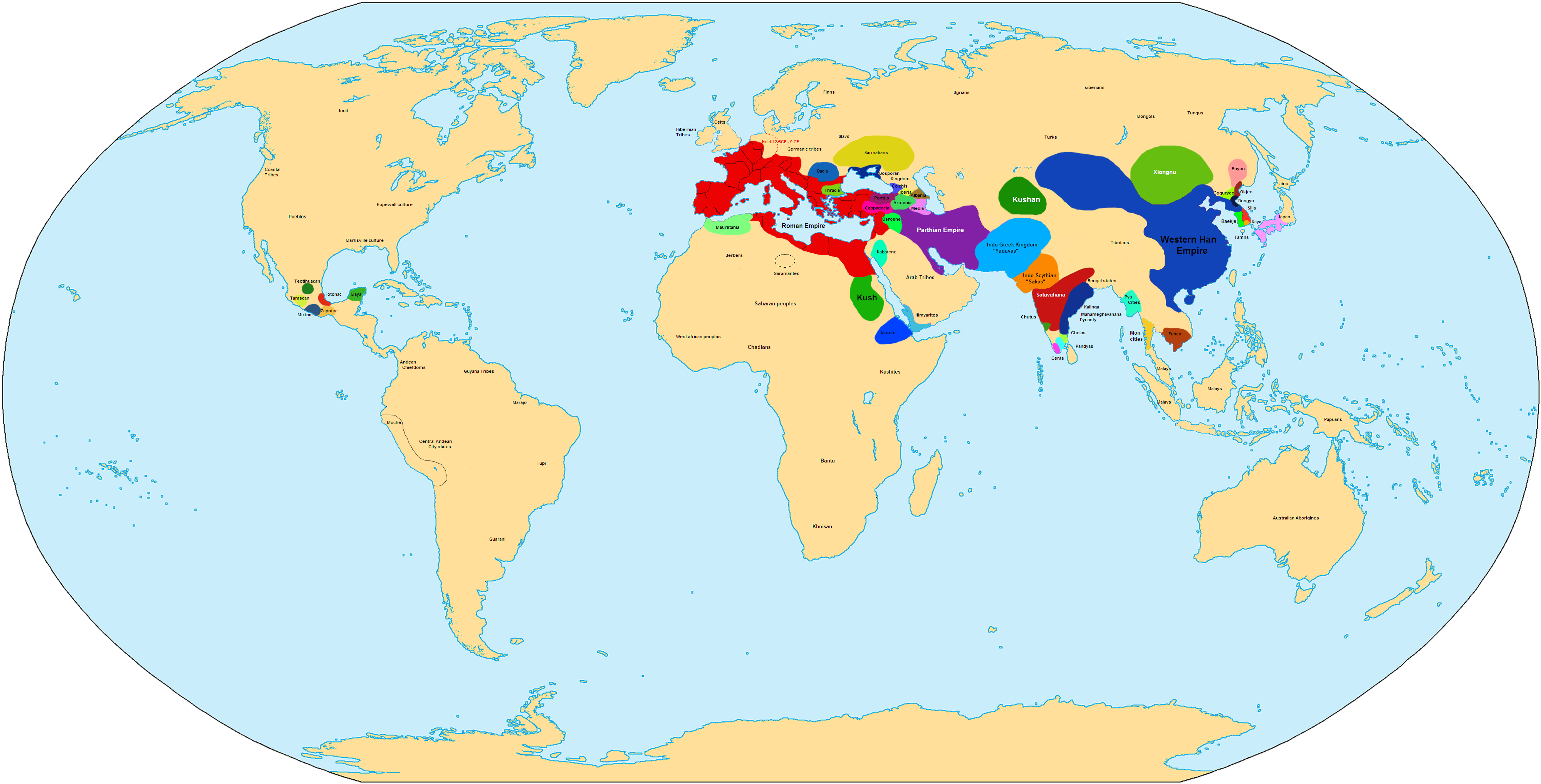
Civilizations, kingdoms and dynasties
| Africa | Asia / Oceania | Europe | Pre-Columbian Americas |
|---|
Events
The events in this section are organized according to the United Nations geoscheme
| Africa | Americas | Asia | Europe | Oceania | [1st century](1st-century) | [2nd century](2nd-century) | [3rd century](3rd-century) | [4th century](4th-century) | [5th century](5th-century) | [6th century](6th-century) | [7th century](7th-century) | [8th century](8th-century) | [9th century](9th-century) | [10th century](10th-century) | |||||
|---|---|---|---|---|---|---|---|---|---|---|---|---|---|---|---|---|---|---|---|
| **AD 70** Amanikhatashan sends Kushite cavalry to aid Roman Emperor in Jerusalem revolt | |||||||||||||||||||
| **AD 100** Rise of the Kingdom of Aksum | |||||||||||||||||||
| **AD 100** Khoekhoe reach southern coast of Africa | title=World Timeline of the Americas 200 BC - AD 600 | publisher=The British Museum | year=2005 | url=http://www.worldtimelines.org.uk/world/americas/200BC-AD600 | access-date=2009-04-01 | archive-url=https://web.archive.org/web/20090227042137/http://www.worldtimelines.org.uk/world/americas/200BC-AD600 | archive-date=2009-02-27 | url-status=dead }} | |||||||||||
| **AD 50** Pyramid of the Sun began | **AD 25** Han dynasty reestablished under Guangwu | ||||||||||||||||||
| **AD 33** Christianity begins | |||||||||||||||||||
| **AD 70** Jewish diaspora | title=World Timeline of Europe 200 BC-AD 400 Roman | publisher=The British Museum | year=2005 | url=http://www.worldtimelines.org.uk/world/europe/200BC-AD400 | access-date=2009-04-06 | archive-url=https://web.archive.org/web/20090313034346/http://www.worldtimelines.org.uk/world/europe/200BC-AD400 | archive-date=2009-03-13 | url-status=dead }} | |||||||||||
| **AD 47** Londinium founded | |||||||||||||||||||
| **AD 58** Alpes Cottiae becomes a Roman province | |||||||||||||||||||
| **AD 79** Pompeii destroyed | title=World Timeline of the Oceania 1500 BC-AD 1 | publisher=The British Museum | year=2005 | url=http://www.worldtimelines.org.uk/world/oceania/1500BC-AD1 | access-date=2009-04-02 | archive-url=https://web.archive.org/web/20081121015652/http://www.worldtimelines.org.uk/world/oceania/1500BC-AD1 | archive-date=2008-11-21 | url-status=dead }} | |||||||||||
| **150** Rhapta, hint of pre-Swahili, Periplus of the Erythraean Sea | |||||||||||||||||||
| **[200](200)** Bantu reach east Africa | |||||||||||||||||||
| **[200](200)** Nok culture ends | **150** Cahuachi becomes dominant ceremonial site in southern Peru | **[184](184)** Yellow Turban Rebellion | **106** Dacia becomes a Roman province | ||||||||||||||||
| **[166](166)** Siege of Aquileia | |||||||||||||||||||
| **[180](180)** End of the Macromannic Wars | |||||||||||||||||||
| Aksum]] wars with Himyar and Saba alliance | |||||||||||||||||||
| **[300](300)** Aksum prints own coins | **[250](250)** Rise of Laguna de los Cerros | ||||||||||||||||||
| **[292](292)** Stela 29 inscribed | |||||||||||||||||||
| **[300](300)** Tikàl conquers El Mirador | **[208](208)** Battle of Red Cliffs during the decline of the Han dynasty | ||||||||||||||||||
| **[280](280)** Jin reunifies China | **[212](212)** Roman citizenship extended to all free people in the empire | ||||||||||||||||||
| **[214](214)** Hispania divided into Gallaecia, Tarraconensis, Baetica and Lusitania | |||||||||||||||||||
| **[286](286)** Diocletian divides the empire East and West | **[300](300)** Eastern Polynesian culture develops | ||||||||||||||||||
| **[333](333)** Aksum converts to Christianity | |||||||||||||||||||
| **[350](350)** Meroe comes to an end | |||||||||||||||||||
| **[350](350)** King of Anwar, Kaja Maja | **[378](378)** Teotihuacan conquers Waka, Tikal, and Uaxactun, the beginning of its conquest of the Maya | **[319](319)** Rise of Gupta Empire in South Asia | |||||||||||||||||
| **383** Battle of Fei River | |||||||||||||||||||
| **[393](393)** Last Olympic Games | |||||||||||||||||||
| **[401](401)** c. camel main transport for trans-Sahara | |||||||||||||||||||
| **[429](429)** Vandal invasion | |||||||||||||||||||
| **500** Nubia split into Nobadia, Makuria, Alodia | **420** Northern and Southern dynasties period begins | title=World Timeline of Europe AD 400-800 Early medieval | publisher=The British Museum | year=2005 | url=http://www.worldtimelines.org.uk/world/europe/AD400-800 | access-date=2009-04-06 | archive-url=https://web.archive.org/web/20090227014820/http://worldtimelines.org.uk/world/europe/AD400-800 | archive-date=27 February 2009 | url-status=dead }} | ||||||||||
| **[421](421)** Romans defeat Persians | |||||||||||||||||||
| **[476](476)** Fall of the Western Roman Empire | **500** Settlement of Hawaii, Easter Island, Society Islands, Tuamotus and Mangareva | ||||||||||||||||||
| **[520](520)** Kaleb attacks Yemen | |||||||||||||||||||
| **[533](533)** Belisarius invades Africa | |||||||||||||||||||
| **[540](540)** Nubia converts to monophysite Christianity | title = World Timeline of the Americas AD 600-1000 | publisher = The British Museum | year = 2005 | url = http://www.worldtimelines.org.uk/world/americas/AD600-1000 | access-date = 2009-04-01 | archive-url = https://web.archive.org/web/20090227034310/http://www.worldtimelines.org.uk/world/americas/AD600-1000 | archive-date = 27 February 2009 | url-status = dead }} | |||||||||||
| **[600](600)** Construction of Palenque | **[538](538)** Buddhism introduced in Japan. | ||||||||||||||||||
| **[570](570)** Birth of the Islamic prophet Muhammad | **[507](507)** Battle of Vouillé | ||||||||||||||||||
| **[535](535)** Byzantine army invades Italy | |||||||||||||||||||
| **[585](585)** Visigoths conquer Suevi kingdom | |||||||||||||||||||
| **[641](641)** Muslims invade Africa | |||||||||||||||||||
| **[690](690)** Za dynasty founded | |||||||||||||||||||
| **[697](697)** Carthage destroyed | **[650](650)** Settlement of Xochitecatl and Cacaxtla | ||||||||||||||||||
| **[700](700)** Teotihuacan destroyed | **[618](618)** Tang dynasty established | ||||||||||||||||||
| **[632](632)** Rise of Islam | |||||||||||||||||||
| **[651](651)** Islamic conquest of Persia | c.**[680](680)** First Bulgarian Empire is founded | **[700](700)** Settlement of the Cook Islands | |||||||||||||||||
| **[702](702)** Aksum attacks Arabia | |||||||||||||||||||
| **[706](706)** Arabic in Egypt | |||||||||||||||||||
| **[789](789)** Independent Morocco | **[738](738)** Quiriguá becomes independent of Copan | **[738](738)** Caliphate campaigns in India and invasion of India by Umayyad Caliphate is averted | |||||||||||||||||
| **[755](755)** An Shi Rebellion | **[717](717)** Siege of Constantinople | ||||||||||||||||||
| **[718](718)** Muslim conquest of the Iberian Peninsula | |||||||||||||||||||
| **[801](801)** c. Kanem Empire founded | |||||||||||||||||||
| **[801](801)**c. Aksum declines, capital moved to interior | |||||||||||||||||||
| **[900](900)**c. Igbo-Ukwu founded | c.**[830](830)** Classic Maya collapse | **[835](835)** Ganlu Incident | **[872](872)** Battle of Hafrsfjord helped unified Norway | ||||||||||||||||
| c.**[874](874)** Settlement of Iceland | |||||||||||||||||||
| **[896](896)** Hungarian conquest of the Carpathian Basin | |||||||||||||||||||
| title=Ṭūlūnid Dynasty Arabic Caliphate, Abbasid Rule, Egypt Britannica | url=https://www.britannica.com/topic/Tulunid-dynasty | access-date=2025-02-04 | website=www.britannica.com | language=en}} | |||||||||||||||
| **[909](909)** Fatimid established | |||||||||||||||||||
| **[969](969)** Fustat captured | **[950](950)** Great Serpent Mound constructed | ||||||||||||||||||
| **[990](990)** Toltecs conquer Chichen Itza | **[907](907)** Political upheaval of the Five Dynasties begins | ||||||||||||||||||
| **[960](960)** Song dynasty established | **[958](958)** Denmark unites | ||||||||||||||||||
| **[985](985)** Erik the Red founds colony in Greenland | **AD 1000** Polynesians build stone temples |
Inventions, discoveries, introductions
| Communication | Math and Science | Agriculture | Transportation | Warfare |
|---|
Centuries and decades
| **[10th century](10th-century)** | [900s](900s-decade) | [910s](910s) | [920s](920s) | [930s](930s) | [940s](940s) | [950s](950s) | [960s](960s) | [970s](970s) | [980s](980s) | [990s](990s) |
|---|
References
References
- "Julian Day Number from Date Calculator".
- Aldenderfer, Mark. (2007). "Discoveries in Western Tibet and the Western Himalayas: Essays on History, Literature, Archaeology and Art". Brill.
- Jr Ph D Grant Bishop Williams(2009). Abraham's Other Sons. AuthorHouse: pp. 50,51. {{ISBN. 9781438997094
- Ehret, Christopher. (2002). "The civilizations of Africa: a history to 1800". Univ. Press of Virginia.
- (2005). "World Timeline of the Americas 200 BC - AD 600". The British Museum.
- (2005). "World Timeline of Europe 200 BC-AD 400 Roman". The British Museum.
- (2005). "World Timeline of the Oceania 1500 BC-AD 1". The British Museum.
- (2005). "World Timeline of Africa 332 BC-AD 400". The British Museum.
- (2005). "World Timeline of Oceania AD 1-1100". The British Museum.
- "National Geographic Magazine".
- (2005). "World Timeline of Europe AD 400-800 Early medieval". The British Museum.
- (2005). "World Timeline of the Americas AD 600-1000". The British Museum.
- (2005). "World Timeline of Africa AD 600-1500". The British Museum.
- Coquery-Vidrovitch, Catherine. The History of African Cities South of the Sahara. Princeton: Markus Wiener Publishers, 2005, p. 45, {{ISBN. 1-55876-303-1
- (19 September 2017). "Norway: Earliest Peoples - The Vikings".
- "Ṭūlūnid Dynasty {{!}} Arabic Caliphate, Abbasid Rule, Egypt {{!}} Britannica".
- (2008). "Who Built it First". A&E Television Networks.
- Urton, Gary. (2011). "Tying the Archive in Knots, or: Dying to Get into the Archive in Ancient Peru
- "The Compendious Book on Calculation by Completion and Balancing - Wikisource, the free online library".
- Mahathevan, Iravatham. (24 June 2010). "An epigraphic perspective on the antiquity of Tamil". The Hindu Group.
- "Horseshoe." ''Encyclopædia Britannica''. 15th edn. Vol. 20. 2005. 651–51. Print.
This article was imported from Wikipedia and is available under the Creative Commons Attribution-ShareAlike 4.0 License. Content has been adapted to SurfDoc format. Original contributors can be found on the article history page.
Ask Mako anything about 1st millennium — get instant answers, deeper analysis, and related topics.
Research with MakoFree with your Surf account
Create a free account to save articles, ask Mako questions, and organize your research.
Sign up freeThis content may have been generated or modified by AI. CloudSurf Software LLC is not responsible for the accuracy, completeness, or reliability of AI-generated content. Always verify important information from primary sources.
Report