From Surf Wiki (app.surf) — the open knowledge base
1991 Pacific typhoon season
none
none
| Field | Value |
|---|---|
| Basin | WPac |
| Year | 1991 |
| Track | 1991 Pacific typhoon season summary map.png |
| First storm formed | March 5, 1991 |
| Last storm dissipated | December 5, 1991 |
| Strongest storm name | Yuri |
| Strongest storm pressure | 895 |
| Strongest storm winds | 120 |
| Average wind speed | 10 |
| Total depressions | 39 |
| Total storms | 30 |
| Total hurricanes | 17 |
| Total intense | 5 |
| Fatalities | 5,964 total |
| Damages | 17440 |
| ACE | 414.3 units |
| five seasons | [1989](1989-pacific-typhoon-season), [1990](1990-pacific-typhoon-season), **1991**, [1992](1992-pacific-typhoon-season), [1993](1993-pacific-typhoon-season) |
| Atlantic season | 1991 Atlantic hurricane season |
| East Pacific season | 1991 Pacific hurricane season |
| North Indian season | 1991 North Indian Ocean cyclone season |
The 1991 Pacific typhoon season was a slightly above-average season with 29 tropical storms, 17 typhoons and five super typhoons forming. It was quite a catastrophic season – Typhoon Yunya impacted the Philippines in mid June while in the same time experiencing a volcanic eruption, Typhoon Mireille severely impacting Japan, which became known for being the costliest typhoon on record until it was surpassed by Typhoon Doksuri in 2023, and Tropical Storm Thelma on November which became one of the deadliest storms to strike the Philippines, killing at least over 5,000 people. The season was deadliest since 1975.
It ran year-round in 1991, although most tropical cyclones tended to form in the northwestern Pacific Ocean between May and November 1991. These dates conventionally delimit the period of each year when most tropical cyclones form in the northwestern Pacific Ocean. However, the first named storm, Sharon, did not develop until. March 8. The last named storm, Zelda, dissipated on December 5.
The scope of this article is limited to the Pacific Ocean, north of the equator and west of the International Date Line. Storms that form east of the date line and north of the equator are called hurricanes; see 1991 Pacific hurricane season. Tropical Storms formed in the entire west pacific basin were assigned a name by the Joint Typhoon Warning Center. Tropical depressions in this basin have the "W" suffix added to their number. Tropical depressions that enter or form in the Philippine area of responsibility are assigned a name by the Philippine Atmospheric, Geophysical and Astronomical Services Administration or PAGASA. This can often result in the same storm having two names.
Season summary
ImageSize = width:1000 height:290 PlotArea = top:10 bottom:80 right:20 left:20 Legend = columns:2 left:30 top:58 columnwidth:270 AlignBars = early DateFormat = dd/mm/yyyy Period = from:01/03/1991 till:01/01/1992 TimeAxis = orientation:horizontal ScaleMinor = grid:black unit:month increment:1 start:01/03/1991 Colors = id:canvas value:gray(0.88) id:GP value:red id:TD value:rgb(0.43,0.76,0.92) legend:Tropical_Depression_=≤62_km/h(≤39_mph) id:TS value:rgb(0.3,1,1) legend:Tropical_Storm_=62–88_km/h(39–54_mph) id:ST value:rgb(0.75,1,0.75) legend:Severe_Tropical_Storm_=89–117_km/h(55–72_mph) id:TY value:rgb(1,0.85,0.55) legend:Typhoon_=118–156_km/h(73–96_mph) id:VSTY value:rgb(1,0.45,0.54) legend:Very_Strong_Typhoon_=157–193_km/h(97–119_mph) id:VITY value:rgb(0.55,0.46,0.90) legend:Violent_Typhoon_=≥194_km/h(≥120_mph) Backgroundcolors = canvas:canvas BarData = barset:Hurricane bar:month PlotData= barset:Hurricane width:10 align:left fontsize:S shift:(4,-4) anchor:till from:05/03/1991 till:16/03/1991 color:ST text:"Sharon" from:20/03/1991 till:27/03/1991 color:TY text:"Tim" from:23/04/1991 till:28/04/1991 color:TS text:"Vanessa" from:05/05/1991 till:17/05/1991 color:VSTY text:"Walt" from:20/05/1991 till:20/05/1991 color:TD text:"TD" from:12/06/1991 till:17/06/1991 color:TY text:"Yunya" from:14/06/1991 till:19/06/1991 color:TD text:"TD" from:18/06/1991 till:19/06/1991 color:TD text:"TD" from:09/07/1991 till:15/07/1991 color:TY text:"Zeke" from:14/07/1991 till:20/07/1991 color:VSTY text:"Amy" from:14/07/1991 till:18/07/1991 color:TD text:"TD" from:19/07/1991 till:25/07/1991 color:ST text:"Brendan" from:21/07/1991 till:30/07/1991 color:TY text:"Caitlin" from:31/07/1991 till:01/08/1991 color:TD text:"Enrique" barset:break from:02/08/1991 till:02/08/1991 color:TD text:"TD" from:08/08/1991 till:11/08/1991 color:TD text:"Doug" from:10/08/1991 till:19/08/1991 color:TY text:"Ellie" from:11/08/1991 till:18/08/1991 color:TY text:"Fred" from:11/08/1991 till:13/08/1991 color:TD text:"13W" from:15/08/1991 till:24/08/1991 color:ST text:"Gladys" from:19/08/1991 till:24/08/1991 color:TD text:"TD" from:26/08/1991 till:30/08/1991 color:TS text:"15W" from:28/08/1991 till:31/08/1991 color:TS text:"Harry" from:02/09/1991 till:10/09/1991 color:VSTY text:"Ivy" from:03/09/1991 till:08/09/1991 color:TS text:"Joel" from:10/09/1991 till:14/09/1991 color:TY text:"Kinna" from:13/09/1991 till:28/09/1991 color:VSTY text:"Mireille" from:14/09/1991 till:19/09/1991 color:ST text:"Luke" barset:break from:14/09/1991 till:03/10/1991 color:TY text:"Nat" from:03/10/1991 till:14/10/1991 color:VSTY text:"Orchid" from:04/10/1991 till:13/10/1991 color:VSTY text:"Pat" from:19/10/1991 till:31/10/1991 color:VITY text:"Ruth" from:01/11/1991 till:15/11/1991 color:VSTY text:"Seth" from:01/11/1991 till:08/11/1991 color:TS text:"Thelma" from:05/11/1991 till:12/11/1991 color:ST text:"Verne" from:14/11/1991 till:20/11/1991 color:TS text:"Wilda" from:22/11/1991 till:01/12/1991 color:VITY text:"Yuri" from:27/11/1991 till:05/12/1991 color:ST text:"Zelda"
bar:Month width:5 align:center fontsize:S shift:(0,-20) anchor:middle color:canvas from:01/03/1991 till:01/04/1991 text:March from:01/04/1991 till:01/05/1991 text:April from:01/05/1991 till:01/06/1991 text:May from:01/06/1991 till:01/07/1991 text:June from:01/07/1991 till:01/08/1991 text:July from:01/08/1991 till:01/09/1991 text:August from:01/09/1991 till:01/10/1991 text:September from:01/10/1991 till:01/11/1991 text:October from:01/11/1991 till:01/12/1991 text:November from:01/12/1991 till:01/01/1992 text:December
Systems
32 tropical cyclones formed this year in the Western Pacific, of which 30 became tropical storms. 17 storms reached typhoon intensity, of which 5 reached super typhoon strength.
Severe Tropical Storm Sharon (Auring)
|1-min winds=60 |10-min winds=50 Severe Tropical Storm Sharon existed between March 5 and March 16, 1991. Sharon hit the Philippines.
Typhoon Tim
|1-min winds=70 |10-min winds=65 On March 17, a cluster of thunderstorms grouped together which formed a low pressure area far east of the Mariana islands. The low pressure area rapidly intensified and became a tropical storm 4 days after formation. Favorable conditions allowed the system to continue to intensify into a Category 1 typhoon. High wind shear on March 25 caused the system to weakened, and it transitioned into an extratropical cyclone.
Tropical Storm Vanessa (Bebeng)
|1-min winds=45 |10-min winds=45 Vanessa deepened over the South China Sea.
Typhoon Walt (Karing)
|1-min winds=140 |10-min winds=100 On May 3 an area of disturbed area formed south east of the Mariana Islands. A day later the system strengthened into a tropical depression, and continued to intensify into typhoon status four days later. The system showed annular characteristics on May 11, showing an axisymmetric shape. Walt reached peak intensity on May 12, before showing a distinct eyewall replacement cycle lasting four hours from late May 13 to May 14. When the eyewall replacement cycle was over, a new, larger eye measuring 65 kilometers across formed. Walt soon turned north east, becoming extratropical on May 17, before merging with another extratropical cyclone north east of Japan.
Typhoon Yunya (Diding)
|1-min winds=105 |10-min winds=80 Main article: Typhoon Yunya (1991)
After a month without any activity in the Western Pacific, a weak tropical depression (with winds of only 10 knots) developed just east of the Philippines and south of the Tropical Upper Tropospheric Trough on June 11. Located in an area of little wind shear, it headed southwestward, developing spiral-band outflow and becoming a tropical storm on the 12th. As a small central dense overcast (CDO) developed over Yunya, it rapidly developed, becoming a typhoon on the 13th as it paralleled the eastern Philippines. The mid-level ridge forced Yunya westward, where it briefly reached a peak intensity of 195 km/h winds on the 14th. Subsequently, the eastward building of the subtropical ridge produced unfavorable vertical wind shear that weakened Yunya to a minimal typhoon before hitting Dingalan, Luzon early on the 15th. Yunya left Luzon as a minimal tropical storm at Lingayen Gulf. It turned northward due to a break in the ridge, and dissipated on the 17th near southern Taiwan due to the vertical shear.
Yunya would likely have been an uneventful cyclone had it not struck Luzon on the same day as the climactic eruption of Mount Pinatubo. The ash cloud that normally would have been dispersed across the oceans was redistributed over Luzon by the cyclonic winds of the typhoon, greatly exacerbating the damage caused by the eruption. The water-laden ash fell over the evacuated Clark Air Base, as well as the rest of Luzon, resulting in downed power lines and the collapse of flat-roofed buildings. In some areas it was practically raining mud.
Yunya exited Luzon through Lingayen Gulf as a weak tropical storm and then turned north toward a break in the subtropical ridge. The system continued to weaken due to the strong vertical wind shear. It then brushed the southern coast of Taiwan as a tropical depression and finally dissipated before it could complete full recurvature into the mid-latitude westerlies. Yunya directly caused one death from the flooding and heavy rainfall it left.
Typhoon Zeke (Etang)
Main article: Typhoon Zeke
|1-min winds=80 |10-min winds=65 At least 23 people were killed by Zeke on Hainan Island.
Typhoon Amy (Gening)
|1-min winds=125 |10-min winds=95 Main article: Typhoon Amy (1991)
145 mph Typhoon Amy, having developed on July 12 over the open Western Pacific, brushed southern Taiwan on the 18th. Its outflow became restricted, and Amy hit southern China on the 19th as a 120 mph typhoon. It caused heavy flooding, resulting in 99 casualties, 5000 people injured, and 15,000 people homeless. In addition, Amy caused the sinking of the freighter in a river, resulting in an additional 31 deaths.
Severe Tropical Storm Brendan (Helming)
Main article: Tropical Storm Brendan (1991)
|1-min winds=70 |10-min winds=60 Brendan was the third consecutive tropical cyclone to strike China during the month of July.
Typhoon Caitlin (Ising)
Main article: Typhoon Caitlin
|1-min winds=95 |10-min winds=80 Typhoon Caitlin developed from a disturbance in the eastern Caroline Islands. A tropical depression formed on July 23 as the system moved towards the northwest. Tropical Storm Caitlin was named the on the 24th and was upgraded to a typhoon the next day. Typhoon Caitlin though several hundred miles away increased the monsoonal flow over the Philippines. Heavy rains caused landslides in the Mt. Pinatubo region killing 16 people. As Caitlin turned to the north the storm passed 60 mi to the west of Kadena AB, Okinawa at peak intensity of 110 mph. The heavy rains from Caitlin helped to relieve the ongoing drought on the island, one death was reported. Typhoon Caitlin then began to accelerate northwards and passed through the Korea Strait before turning extratropical in the Sea of Japan. Heavy flooding in South Korea killed 2 people and caused $4 million in damage.
Tropical Depression Enrique
|1-min winds=35
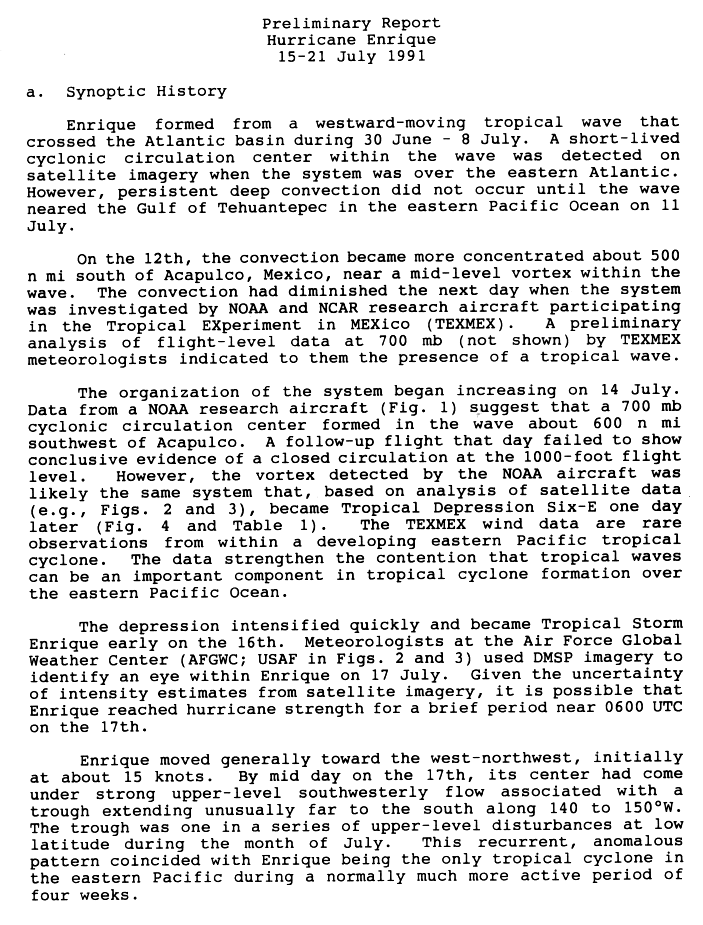
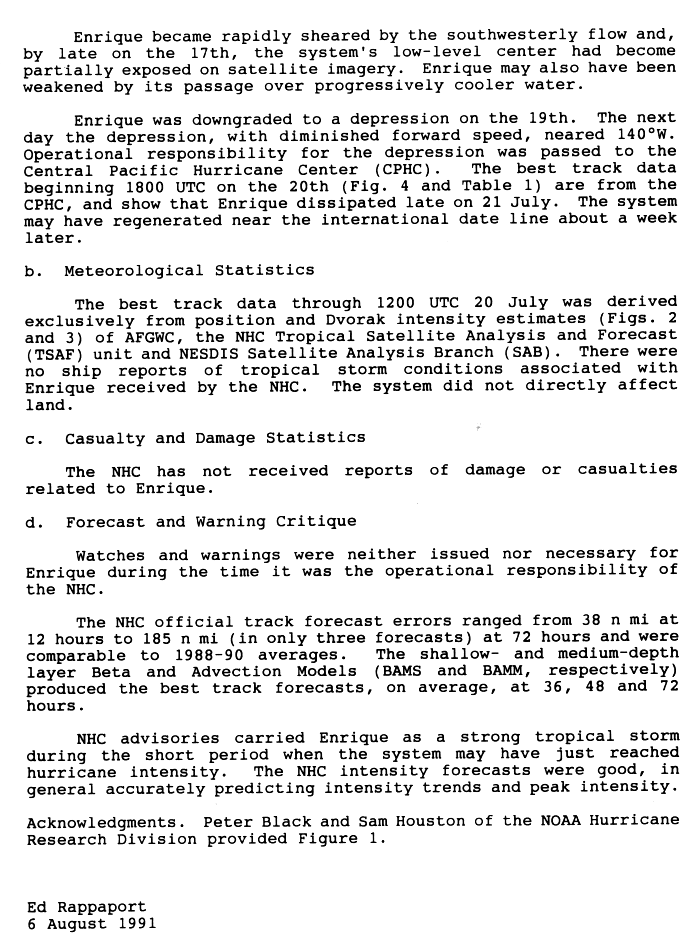
Tropical Storm Enrique formed in the eastern Pacific basin, where it reached its peak intensity as a category 1 Hurricane, becoming Hurricane Enrique. Enrique lasted for several days drifting north of the Hawaiian Islands as a weak system. As Enrique approached the International Dateline, the system started to redevelop. Shortly after crossing the dateline, Enrique became a tropical storm again on August 1. It lasted for less than 24 hours before strong upper-level wind shear dissipated its convection, exposing the cyclone's circulation. No damages or casualties were caused by Enrique. It is one of only eight tropical cyclones to exist in all three tropical cyclone basins in the Pacific Ocean. 1994's Li and John, 1999's Dora, 2014's Genevieve, 2018's Hector and 2023's Dora.
Tropical Depression Doug
|1-min winds=35 Doug was a tropical storm according to the JTWC.
Typhoon Ellie (Mameng)
|1-min winds=85 |10-min winds=70 Ellie was an unusually small typhoon which hit Taiwan as a tropical storm.
Typhoon Fred (Luding)
|1-min winds=95 |10-min winds=75 Typhoon Fred organized from a monsoon trough situated to the east of the Central Philippines, a depression formed on August 11. The depression moved across northern Luzon Island, upon entering the South China Sea the depression was upgraded to Tropical Storm Fred. Fred reached typhoon intensity on August 14 as the storm moved south of Hong Kong. Fred reached peak intensity of 110 mi/h shortly before moving across Hainan Island. Fred then turned to the southwest across the Gulf of Tonkin and made a final landfall in northern Vietnam before dissipating. The observed minimum atmospheric pressure value in Kỳ Anh (Hà Tĩnh) during the storm reached 976.9 hPa. As Fred moved south of Hong Kong the oil rig support barge DB29 sank with 195 people on board; 22 people on board the ship were killed. In Guangdong, 90,000 homes were damaged and 9,400 homes were destroyed. Losses in Hong Kong reached 350 million RMB (US$64.8 million). On Hainan Island heavy flooding and landslides from Fred's rains killed 16 people. Losses on Hainan Island reached 304 million RMB (US$56.3 million). Tropical storm Fred left 5 people dead and 16 injured in Vietnam.
Tropical Depression 13W
|1-min winds=25 13W lasted two days.
Severe Tropical Storm Gladys
Main article: Tropical Storm Gladys (1991)
|1-min winds=65 |10-min winds=60 Minimal typhoon Gladys brushed by southern Japan on August 22. It moved to the northwest, and hit the Korean Peninsula on the 23rd. It caused more than 20 million yen of damage in Japan, more than 270 million won of damage in South Korea, and in South Korea, it left 103 dead or missing and more than 20,000 homeless.
Tropical Storm 15W
|1-min winds=30 |10-min winds=35 15W was a long-lived depression that moved northwest.
Tropical Storm Harry
|1-min winds=45 |10-min winds=40 Harry originally formed from a small cluster of thunderstorms in mid August.it moved over the Pacific Ocean and became better organized. On August 29, it was given the name “Harry”. It then moved north and made landfall on Japan a few days later. Harry then weakened because of the land and also because when it moved out to sea again, it moved over colder waters and dissipated on August 31.
Typhoon Ivy
|1-min winds=115 |10-min winds=95 Typhoon Ivy formed from a broad monsoon trough situated near Kosrae in the eastern Caroline Islands. A tropical depression formed on September 2 as the system moved towards the northwest, the next day the depression strengthened into Tropical Storm Ivy. Ivy began to rapidly intensify and reached typhoon strength as the storm passed 130 mi east of Tinian and Saipan in the Northern Mariana Islands. On Saipan one drowning death was reported, but only minor damage was reported in the Northern Marianas. Typhoon Ivy continued on a northwesterly path and reached peak strength of 130 mi/h on September 7 prior to recurving to the northeast. Ivy paralleled the southeastern Japan coastline and turned extratropical 600 mi to the east of Tokyo. As Typhoon Ivy made its closest approach to Honshū, Tokyo and surrounding areas were buffeted by high winds and heavy rains. Over 200 landslides were reported and one person was killed with 4 others missing. Losses totaled to ¥1.6 billion (US$12 million).
Tropical Storm Joel
|1-min winds=55 |10-min winds=45 Joel hit southern China. Joel killed five people and injured 75 people. 8,680 homes were flooded and 4,000 homes were destroyed. 78,000 hectares of farmland were affected. 130 bridges, 257 irrigation facilities and 70 hectares of fish ponds were damaged. Economic losses reached 400 million RMB (US$74.1 million).
Typhoon Kinna (Neneng)
Main article: Typhoon Kinna
|1-min winds=90 |10-min winds=80 Typhoon Kinna formed in a monsoon trough in the western Caroline Islands. A tropical depression began to organize on September 10 to the west of Guam, Tropical Storm Kinna was named later the same day. As Kinna moved towards the northwest the storm began to gather strength and reached typhoon intensity on September 12 just prior to turning north threatening Japan. On the 12th Typhoon Kinna made a direct landfall on southern Okinawa Island at peak strength of 105 mi/h. Kinna maintained peak intensity after recurving to the north-northeast and making landfall on Kyūshū Island. Typhoon Kinna's eyewall passed directly over Nagasaki and Sasebo cities on September 13, both cities reported wind gusts of 115 mi/h. Kinna continued moving across Japan and became extratropical near the northern coast of Honshū Island. On Okinawa Kinna dropped more than 8 in of rain, in Japan most of the damage occurred near Nagasaki. Throughout Japan and Okinawa 9 deaths were attributable to Typhoon Kinna's passage.
Typhoon Mireille (Rosing)
|1-min winds=130 |10-min winds=100 Main article: Typhoon Mireille
Severe Tropical Storm Luke (Pepang)
Main article: Tropical Storm Luke
|1-min winds=50 |10-min winds=55 Tropical Storm Luke formed from a disturbance that moved through the Northern Marianas and became a tropical depression on September 14 just to the west of the islands. The depression began to slowly intensify as it moved towards the west-northwest and Tropical Storm Luke was named on September 15. Luke reached peak intensity of 60 mi/h prior to recurving to the northeast and weakening due to increased shear. Tropical Storm Luke then paralleled the southeastern Japan coastline, dropping heavy rains. The resulting flooding and landslides killed 8 people and left 10 others missing prior to Luke turning extratropical east of central Honshū Island.
Typhoon Nat (Oniang)
|1-min winds=110 |10-min winds=80 Forming on September 14, Nat took an erratic track for over two weeks, making a Category 3 landfall in extreme southern Taiwan and a Category 1 landfall in southeastern China after interacting with Super Typhoon Mireille. Nat eventually dissipated over China on October 3. In Shantou, two people were killed, seven were reported missing, and 22 were injured. 500 homes were destroyed and 21,500 hectares of farmland were affected. Losses were at 90 million RMB (US$16.7 million).
Typhoon Orchid (Sendang)
Main article: Typhoon Orchid (1991)
|1-min winds=115 |10-min winds=95 Typhoon Orchid formed from a broad monsoon trough that moved through the Northern Marianas and became a tropical depression on October 4 to the west of the islands. The depression moved on a westerly path and strengthened into Tropical Storm Orchid later the same day. Orchid then began to rapidly intensify and reach peak strength on 130 mi/h on October 7 prior to turning to the northeast and accelerating. Typhoon Orchid paralleled the southeast coast of Shikoku and Honshū Islands. As Orchid brushed the islands 96 landslides and heavy flooding were reported in and around the Tokyo region, one person was reported killed due to flooding. Though a great distance away the waves from Orchid and Typhoon Pat combined to produce tremendous waves resulting in the deaths of 2 people on Guam.
Typhoon Pat
|1-min winds=125 |10-min winds=95 Pat stayed at sea.
Typhoon Ruth (Trining)
|1-min winds=145 |10-min winds=115 Main article: Typhoon Ruth (1991)
Super Typhoon Ruth formed from a tropical disturbance the originated between Chuuk and Pohnpei, as the disturbance moved on a westerly path, a tropical depression formed on October 20. Tropical Storm Ruth was named on the 21st as the storm moved to the southwest of Guam and began to steadily intensity. Ruth reached typhoon strength on October 22 and became a super typhoon on the 24th as the storm reached peak intensity of 165 mi/h. Ruth began to slowly decline in strength as it neared the northern Philippines. Ruth made landfall on October 27 on northern Luzon Island with winds of 115 mi/h before weakening to a tropical storm. Heavy flooding and numerous landslides were reported on Luzon Island as a result 12 people were killed. After departing Luzon Island Ruth recurved south of Taiwan and dissipated. Heavy seas caused the freighter Tung Lung to sink west of Taiwan, all 18 aboard were killed.
Typhoon Seth (Warling)
|1-min winds=130 |10-min winds=100 A Category 4 Super Typhoon that affected the northern part of the Philippines. During most of Seth's early life, Seth remained a Tropical Storm, until it encountered warmer waters, where it began to reach its peak intensity on November 5. Seth peaked as a strong category 4 storm, but considerably weakened under typhoon strength when it made landfall in the Philippines as a Tropical Storm. After crossing through the Philippines near the end of its life, Seth stalled and dissipated about halfway between the Philippines and mainland Asia. Seth did feature a well defined eye, and struck the same area of the Philippines right after Super Typhoon Ruth did.
Tropical Storm Thelma (Uring)
|10-min winds=40 |1-min winds=45 Main article: Tropical Storm Thelma
50 mi/h Tropical Storm Thelma hit the central Philippines on November 4. It slowly tracked across the Archipelago, bringing heavy flooding across the islands. Vertical shear weakened it as it continued westward, and it dissipated on November 8 just after hitting southern Vietnam. Thelma, though a weak storm, caused dam failures, landslides, and flash flooding, resulting in a horrendous death toll of 6,000 people. Due to the massive casualties, the name Thelma was retired and replaced with Teresa.
Severe Tropical Storm Verne
|1-min winds=55 |10-min winds=55 Verne curved away from land.
Tropical Storm Wilda (Yayang)
|1-min winds=45 |10-min winds=45 Wilda hit the Philippines.
Typhoon Yuri
|1-min winds=150 |10-min winds=120 Main article: Typhoon Yuri (1991)
Super Typhoon Yuri was the most powerful storm during the season, with winds reaching up to 120 knots (220 km/h), and a minimum recorded pressure of 895 mbar. This made Yuri the third most intense tropical cyclone on record at the end of 1991. Yuri caused $3 million (1991 USD) in damage to Pohnpei, including the loss of a radio tower. In Guam, the storm caused extensive beach erosion and destroyed between 60 and 350 buildings. There, damage totaled to $33 million (1991 USD). It is one of the most closely observed storms ever. Its eye was studied for research.
Severe Tropical Storm Zelda
|1-min winds=80 |10-min winds=60 Main article: Tropical Storm Zelda (1991)
Tropical Storm Zelda was the last storm of the 1991 Pacific typhoon season.
Storm names
During the season 29 named tropical cyclones developed in the Western Pacific and were named by the Joint Typhoon Warning Center, when it was determined that they had become tropical storms. These names were contributed to a revised list from mid-1989.
| Joel | Kinna | Luke | Mireille | Nat | Orchid | Pat | Ruth | Seth | Thelma | Verne | Wilda | Yuri | Zelda |
|---|
Philippines
| Auxiliary list |
|---|
The Philippine Atmospheric, Geophysical and Astronomical Services Administration uses its own naming scheme for tropical cyclones in their area of responsibility. PAGASA assigns names to tropical depressions that form within their area of responsibility and any tropical cyclone that might move into their area of responsibility. Should the list of names for a given year prove to be insufficient, names are taken from an auxiliary list, the first 10 of which are published each year before the season starts. Names not retired from this list will be used again in the 1995 season. This is the same list used for the 1987 season. PAGASA uses its own naming scheme that starts in the Filipino alphabet, with names of Filipino female names ending with "ng" (A, B, K, D, etc.). Names that were not assigned/going to use are marked in .
Retirement
Due to extensive damage and a high death toll, the JTWC retired the names Mireille and Thelma, which were replaced by Melissa and Teresa. Both names were first used in the 1994 season. PAGASA also retired the name Uring with similar reasons and was replaced by Ulding for the 1995 season.
Season effects
This table summarizes all the systems that developed within or moved into the North Pacific Ocean, to the west of the International Date Line during 1991. The tables also provide an overview of a systems intensity, duration, land areas affected and any deaths or damages associated with the system.
|- | Sharon (Auring) || || bgcolor=#| || bgcolor=#| || bgcolor=#| || Caroline Islands, Philippines || None || None || |- | Tim || || bgcolor=#| || bgcolor=#| || bgcolor=#| || Philippines, Japan || None || None || |- | Vanessa (Bebeng) || || bgcolor=#| || bgcolor=#| || bgcolor=#| || Philippines, Vietnam, China || None || None || |- | Walt (Karing) || || bgcolor=#| || bgcolor=#| || bgcolor=#| || Caroline Islands, Mariana Islands, Philippines, Taiwan, Ryukyu Islands || None || None || |- | TD || || bgcolor=#| || bgcolor=#| || bgcolor=#| || None || None || None || |- | Yunya (Diding) || || bgcolor=#| || bgcolor=#| || bgcolor=#| || Philippines || None || (320) || |- | TD || || bgcolor=#| || bgcolor=#| || bgcolor=#| || Caroline Islands || None || None || |- | TD || || bgcolor=#| || bgcolor=#| || bgcolor=#| || Mariana Islands || None || None || |- | Zeke (Etang) || || bgcolor=#| || bgcolor=#| || bgcolor=#| || Philippines, South China || || || |- | Amy (Gening) || || bgcolor=#| || bgcolor=#| || bgcolor=#| || Philippines, Taiwan, China || || || |- | TD || || bgcolor=#| || bgcolor=#| || bgcolor=#| || Philippines || None || None || |- | Brendan (Helming) || || bgcolor=#| || bgcolor=#| || bgcolor=#| || Philippines, Taiwan, South China || || || |- | Caitlin (Ising) || || bgcolor=#| || bgcolor=#| || bgcolor=#| || Philippines, Taiwan, Japan, South Korea || || || |- | Enrique || || bgcolor=#| || bgcolor=#| || bgcolor=#| || None || None || None || |- | TD || || bgcolor=#| || bgcolor=#| || bgcolor=#| || None || None || None || |- | Doug || || bgcolor=#| || bgcolor=#| || bgcolor=#| || None || None || None || |- | Ellie (Mameng) || || bgcolor=#| || bgcolor=#| || bgcolor=#| || Ryukyu Islands, Taiwan, East China || None || None || |- | Fred (Luding) || || bgcolor=#| || bgcolor=#| || bgcolor=#| || Philippines, South China, Vietnam, Laos, Thailand || || || |- | 13W || || bgcolor=#| || bgcolor=#| || bgcolor=#| || None || None || None || |- | Gladys || || bgcolor=#| || bgcolor=#| || bgcolor=#| || Japan, Korean Peninsula, Northeast China || || || |- | TD || || bgcolor=#| || bgcolor=#| || bgcolor=#| || None || None || None || |- | 15W || || bgcolor=#| || bgcolor=#| || bgcolor=#| || Japan, South Korea || None || None || |- | Harry || || bgcolor=#| || bgcolor=#| || bgcolor=#| || Japan, South Korea || None || None || |- | Ivy || || bgcolor=#| || bgcolor=#| || bgcolor=#| || Caroline Islands, Mariana Islands, Japan || || || |- | Joel || || bgcolor=#| || bgcolor=#| || bgcolor=#| || Philippines, China, Taiwan || || 5 || |- | Kinna (Neneng) || || bgcolor=#| || bgcolor=#| || bgcolor=#| || Japan, Korean Peninsula || || || |- | Mireille (Rosing) || || bgcolor=#| || bgcolor=#| || bgcolor=#| || Marshall Islands, Mariana Islands, Japan, Korean Peninsula, Russia Far East || || || |- | Luke (Pepang) || || bgcolor=#| || bgcolor=#| || bgcolor=#| || Mariana Islands, Japan || || || |- | Nat (Oniang) || || bgcolor=#| || bgcolor=#| || bgcolor=#| || Philippines, Taiwan, China || || 2 || |- | Orchid (Sendang) || || bgcolor=#| || bgcolor=#| || bgcolor=#| || Guam, Japan || || || |- | Pat || || bgcolor=#| || bgcolor=#| || bgcolor=#| || Mariana Islands || None || None || |- | Ruth (Trining) || || bgcolor=#| || bgcolor=#| || bgcolor=#| || Caroline Islands, Mariana Islands, Taiwan, Philippines || || || |- | Seth (Warling) || || bgcolor=#| || bgcolor=#| || bgcolor=#| || Marshall Islands, Caroline Islands, Mariana Islands, Philippines || Unknown || None || |- | Thelma (Uring) || || bgcolor=#| || bgcolor=#| || bgcolor=#| || Philippines, Vietnam || || || |- | Verne || || bgcolor=#| || bgcolor=#| || bgcolor=#| || Marshall Islands, Caroline Islands, Mariana Islands || None || None || |- | Wilda (Yayang) || || bgcolor=#| || bgcolor=#| || bgcolor=#| || Philippines || None || None || |- | Yuri || || bgcolor=#| || bgcolor=#| || bgcolor=#| || Marshall Islands, Caroline Islands, Mariana Islands || || None || |- | Zelda || || bgcolor=#| || bgcolor=#| || bgcolor=#| || Marshall Islands || None || None || |-
References
References
- Joint Typhoon Warning Center. [http://www.usno.navy.mil/NOOC/nmfc-ph/RSS/jtwc/atcr/1991atcr/pdf/wnp/05w.pdf Typhoon Yunya.] {{Webarchive. link. (June 7, 2011 Retrieved on January 10, 2006.)
- "Earthweek: A Diary of the Planet for the week ending July 19/1991".
- "Archived copy".
- Central Pacific Hurricane Center. "CPHC Rebest 1966-2003".
- Edward Rappaport. (1991). "Preliminary Report Hurricane Enrique". [[National Hurricane Center]].
- Edward Rappaport. (1991). "Preliminary Report Hurricane Enrique". [[National Hurricane Center]].
- "Tropical Storm Enrique (06E)". [[Joint Typhoon Warning Center]].
- "The 1991 Central Pacific Tropical Cyclone Season". [[Central Pacific Hurricane Center]].
- (1992). "Hoạt động của bão và áp thấp nhiệt đới năm 1991".
- {{London Gazette. (May 22, 1992)
- Joint Typhoon Warning Center. [http://www.usno.navy.mil/NOOC/nmfc-ph/RSS/jtwc/atcr/1990atcr/pdf/chapter3.pdf] {{Webarchive. link. (June 7, 2011 Retrieved on December 26, 2007.)
- "Tropical Cyclones in 1991".
- Joint Typhoon Warning Center. [http://www.usno.navy.mil/NOOC/nmfc-ph/RSS/jtwc/atcr/1990atcr/pdf/chapter3.pdf] {{Webarchive. link. (June 7, 2011 Retrieved on December 27, 2007.)
- "Digital Typhoon: Typhoon Damage List".
- Joint Typhoon Warning Center. [http://www.usno.navy.mil/NOOC/nmfc-ph/RSS/jtwc/atcr/1991atcr/pdf/wnp/30w.pdf Super Typhoon Yuri.] {{webarchive. link. (June 7, 2011 Retrieved on May 18, 2007.)
This article was imported from Wikipedia and is available under the Creative Commons Attribution-ShareAlike 4.0 License. Content has been adapted to SurfDoc format. Original contributors can be found on the article history page.
Ask Mako anything about 1991 Pacific typhoon season — get instant answers, deeper analysis, and related topics.
Research with MakoFree with your Surf account
Create a free account to save articles, ask Mako questions, and organize your research.
Sign up freeThis content may have been generated or modified by AI. CloudSurf Software LLC is not responsible for the accuracy, completeness, or reliability of AI-generated content. Always verify important information from primary sources.
Report