From Surf Wiki (app.surf) — the open knowledge base
1990 German federal election
none
none
| Field | Value |
|---|---|
| country | Germany |
| type | parliamentary |
| previous_year | [1987 (West)](1987-west-german-federal-election) |
| ← [1990 (East)](1990-east-german-general-election) | |
| election_date | |
| next_election | 1994 German federal election |
| next_year | 1994 |
| outgoing_members | List of members of the 11th Bundestag |
| elected_members | List of members of the 12th Bundestag |
| seats_for_election | All 662 seats in the Bundestag |
| majority_seats | 332 |
| registered | 60,436,560 ( 33.3%) |
| turnout | 77.8% ( 6.5 pp) |
| image1 | |
| candidate1 | Helmut Kohl |
| party1 | CDU/CSU |
| last_election1 | 44.3%, 223 seats |
| seats_before1 | 297 |
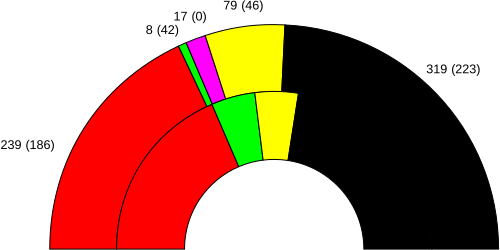
| seats1 | **319** |
| seat_change1 | 14 |
| popular_vote1 | **20,358,096** |
| percentage1 | **43.8%** |
| swing1 | 0.5 pp |
| image2 | |
| candidate2 | Oskar Lafontaine |
| party2 | Social Democratic Party of Germany |
| last_election2 | 37.0%, 186 seats |
| seats_before2 | 226 |
| seats2 | 239 |
| seat_change2 | 13 |
| popular_vote2 | 15,545,366 |
| percentage2 | 33.5% |
| swing2 | 3.5 pp |
| image3 | |
| candidate3 | Otto Graf Lambsdorff |
| party3 | Free Democratic Party (Germany) |
| last_election3 | 9.1%, 46 seats |
| seats_before3 | 57 |
| seats3 | 79 |
| seat_change3 | 22 |
| popular_vote3 | 5,123,233 |
| percentage3 | 11.0% |
| swing3 | 1.9 pp |
| image4 | |
| candidate4 | Gregor Gysi |
| party4 | Party of Democratic Socialism (Germany) |
| last_election4 | *Did not exist* |
| seats_before4 | 24 |
| seats4 | 17 |
| seat_change4 | 7 |
| popular_vote4 | 1,129,578 |
| percentage4 | 2.4% |
| swing4 | *New party* |
| image5 | **B90** |
| candidate5 | *None* |
| party5 | Greens (East) |
| last_election5 | *Did not exist* |
| seats_before5 | 7 |
| seats5 | 8 |
| seat_change5 | 1 |
| popular_vote5 | 559,207 |
| percentage5 | 1.2% |
| swing5 | *New party* |
| map_image | 1990 German federal election.svg |
| map_size | 400px |
| map_caption | Results of the election. The main map shows constituency winners, and results for the proportional list seats are shown in the bottom left. |
| title | Government |
| before_election | Third Kohl cabinet |
| before_party | CDU/CSU/DSU–FDP |
| posttitle | Government after election |
| after_election | Fourth Kohl cabinet |
| after_party | CDU/CSU-FDP |
A federal election was held in recently united Germany on 2 December 1990 to elect the members of the 12th Bundestag, within the regular time of nearly four years after the January 1987 West German federal election. Due to the accession of the former East German states on 3 October, after which the Bundestag was expanded with East German Volkskammer delegates, the elections were the first democratic all-German elections since the early 1930s.
The result was a comprehensive victory for Chancellor Helmut Kohl and his governing coalition of the Christian Democratic Union/Christian Social Union and the Free Democratic Party (FDP), which was reelected to a third term (and a fourth in 1994). The second vote (preferred national party, first vote is for a local candidate) result of the CDU/CSU, 20,358,096 votes, remains the highest ever total vote count in a democratic German election.
The elections marked the first since 1957 that a party other than CDU/CSU and the Social Democratic Party (SPD) won a constituency seat (Direktmandat), breaking up the dominance of the two Volksparteien. The first (and only) time since 1957 that FDP won a constituency seat was by Uwe Lühr in Halle, home of Hans-Dietrich Genscher, the "architect of German reunification". In addition, Gregor Gysi (PDS) won Berlin-Marzahn – Hellersdorf.
Campaign
This was the first election conducted after German reunification which took place on 3 October. Previously, the Volkskammer had selected 144 of its members which were then co-opted as Members of the German Bundestag and served until the end of the 11th Bundestag.
Almost 150 seats had been added to represent the re-established eastern states of Germany, without reducing the number of western members. The euphoria following the reunification gave the ruling CDU/CSU–FDP coalition a dramatic advantage in both Western and Eastern Germany throughout the campaign.
For this election only, the country was divided into two areas for the purposes of the five-percent threshold: the former West German states and West Berlin, and the former East German states and East Berlin. Second votes were counted separately in each area, and passing the threshold in either area was sufficient to enter the Bundestag and receive list seats. As a result, while the Western Greens (4.8% of western second votes) did not gain representation, their ideologically-similar Eastern Alliance 90 (6.2% of eastern second votes) did, with both merging to form Alliance 90/The Greens in 1993. The Party of Democratic Socialism also entered the Bundestag with 11.1% of eastern second votes, despite receiving just 0.3% of the western second vote (and only 2.4% nationwide). However, the distribution of seats to state lists was not divided in this manner and still calculated on the national level, which resulted in the PDS receiving a list seat (Ulla Jelpke) in the most populous state of North Rhine-Westphalia.
The German Social Union (DSU) under leader Hansjoachim Walther, a right-wing party modeled after the Bavarian CSU running only in former East Germany, failed to achieve the separate five percent hurdle, only receiving around 1% of the vote in the eastern states, mostly in the southeast. As part of the co-option, the DSU had previously had eight Members of the Bundestag, who sat as guests in the CDU/CSU caucus. The CSU, which had heavily supported the DSU financially, severed its ties in 1993 and the party fell into irrelevancy. After a law allowing a linkage of the lists of the CSU and DSU was overturned by the Federal Constitutional Court, the CSU tried to convince the CDU to stand down in several single-member constituencies to enable the DSU to enter the Bundestag separate from the 5% threshold, but Kohl adamantly refused.
Results
All change figures are relative to the pre-existing West German Bundestag.

Results by state
Second vote (Zweitstimme, or votes for party list)
| State | CDU/CSU | SPD | FDP | Grüne | PDS | REP | Others | CDU/CSU}};" | Social Democratic Party of Germany}};" | Free Democratic Party (Germany)}};" | Alliance 90/The Greens}};" | Party of Democratic Socialism (Germany)}};" | The Republicans (Germany)}};" | ||||||
|---|---|---|---|---|---|---|---|---|---|---|---|---|---|---|---|---|---|---|---|
| Baden-Württemberg | **46.5** | 29.1 | 12.3 | 5.7 | 0.3 | 3.2 | 2.9 | ||||||||||||
| Bavaria | **51.9** | 26.7 | 8.7 | 4.6 | 0.2 | 5.0 | 2.9 | ||||||||||||
| Berlin | **39.4** | 30.6 | 9.1 | 7.2 | 9.7 | 2.5 | 0.7 | ||||||||||||
| Brandenburg | **36.3** | 32.9 | 9.7 | 6.6 | 11.0 | 1.7 | 1.8 | ||||||||||||
| Bremen | 30.9 | **42.5** | 12.8 | 8.3 | 1.1 | 2.1 | 2.3 | ||||||||||||
| Hamburg | 36.6 | **41.0** | 12.0 | 5.8 | 1.1 | 1.7 | 1.8 | ||||||||||||
| Hesse | **41.3** | 38.0 | 10.9 | 5.6 | 0.4 | 2.1 | 1.7 | ||||||||||||
| Lower Saxony | **44.3** | 38.4 | 10.3 | 4.5 | 0.3 | 1.0 | 1.2 | ||||||||||||
| Mecklenburg-Vorpommern | **41.2** | 26.5 | 9.1 | 5.9 | 14.2 | 1.4 | 1.7 | ||||||||||||
| North Rhine-Westphalia | 40.5 | **41.1** | 11.0 | 4.3 | 0.3 | 1.3 | 1.5 | ||||||||||||
| Rhineland-Palatinate | **45.6** | 36.1 | 10.4 | 4.0 | 0.2 | 1.7 | 2.0 | ||||||||||||
| Saarland | 38.1 | **51.2** | 6.0 | 2.3 | 0.2 | 0.9 | 1.3 | ||||||||||||
| Saxony | **49.5** | 18.2 | 12.4 | 5.9 | 9.0 | 1.2 | 3.8 | ||||||||||||
| Saxony-Anhalt | **38.6** | 24.7 | 19.7 | 5.3 | 9.4 | 1.0 | 1.3 | ||||||||||||
| Schleswig-Holstein | **43.5** | 38.5 | 11.4 | 4.0 | 0.3 | 1.2 | 1.1 | ||||||||||||
| Thuringia | **45.2** | 21.9 | 14.6 | 6.1 | 8.3 | 1.2 | 2.7 | ||||||||||||
| Old states (West) | **44.3** | 35.7 | 10.6 | 4.8 | 0.3 | 2.3 | 2.0 | ||||||||||||
| New states (East) | **41.8** | 24.3 | 12.9 | 6.2 | 11.1 | 1.5 | 2.3 |
Constituency seats
| State | Total | ||||||||||||||||||||||||||||||||||||||||||||||||||||||
|---|---|---|---|---|---|---|---|---|---|---|---|---|---|---|---|---|---|---|---|---|---|---|---|---|---|---|---|---|---|---|---|---|---|---|---|---|---|---|---|---|---|---|---|---|---|---|---|---|---|---|---|---|---|---|---|
| seats | Seats won | CDU | SPD | CSU | FDP | PDS | Christian Democratic Union of Germany}};" | Social Democratic Party of Germany}};" | Christian Social Union in Bavaria}};" | Free Democratic Party (Germany)}};" | Party of Democratic Socialism (Germany)}};" | Baden-Württemberg | 37 | Bavaria | 45 | Berlin | 13 | Brandenburg | 12 | Bremen | 3 | Hamburg | 7 | Hesse | 22 | Lower Saxony | 31 | Mecklenburg-Vorpommern | 9 | North Rhine-Westphalia | 71 | Rhineland-Palatinate | 16 | Saarland | 5 | Saxony | 21 | Saxony-Anhalt | 13 | Schleswig-Holstein | 11 | Thuringia | 12 | Total | 328 | 192 | 91 | 43 | 1 | 1 | |||||
| 36 | 1 | ||||||||||||||||||||||||||||||||||||||||||||||||||||||
| 2 | 43 | ||||||||||||||||||||||||||||||||||||||||||||||||||||||
| 8 | 4 | 1 | |||||||||||||||||||||||||||||||||||||||||||||||||||||
| 7 | 5 | ||||||||||||||||||||||||||||||||||||||||||||||||||||||
| 3 | |||||||||||||||||||||||||||||||||||||||||||||||||||||||
| 1 | 6 | ||||||||||||||||||||||||||||||||||||||||||||||||||||||
| 13 | 9 | ||||||||||||||||||||||||||||||||||||||||||||||||||||||
| 20 | 11 | ||||||||||||||||||||||||||||||||||||||||||||||||||||||
| 8 | 1 | ||||||||||||||||||||||||||||||||||||||||||||||||||||||
| 33 | 38 | ||||||||||||||||||||||||||||||||||||||||||||||||||||||
| 12 | 4 | ||||||||||||||||||||||||||||||||||||||||||||||||||||||
| 5 | |||||||||||||||||||||||||||||||||||||||||||||||||||||||
| 21 | |||||||||||||||||||||||||||||||||||||||||||||||||||||||
| 12 | 1 | ||||||||||||||||||||||||||||||||||||||||||||||||||||||
| 9 | 2 | ||||||||||||||||||||||||||||||||||||||||||||||||||||||
| 12 |
List seats
| State | Total | ||||||||||||||||||||||||||||||||||||||||||||||||||||||||||
|---|---|---|---|---|---|---|---|---|---|---|---|---|---|---|---|---|---|---|---|---|---|---|---|---|---|---|---|---|---|---|---|---|---|---|---|---|---|---|---|---|---|---|---|---|---|---|---|---|---|---|---|---|---|---|---|---|---|---|---|
| seats | Seats won | SPD | FDP | CDU | PDS | CSU | B90/Gr. | Social Democratic Party of Germany}};" | Free Democratic Party (Germany)}};" | Christian Democratic Union of Germany}};" | Party of Democratic Socialism (Germany)}};" | Christian Social Union in Bavaria}};" | Alliance 90}};" | Baden-Württemberg | 36 | Bavaria | 41 | Berlin | 15 | Brandenburg | 10 | Bremen | 3 | Hamburg | 7 | Hesse | 26 | Lower Saxony | 34 | Mecklenburg-Vorpommern | 7 | North Rhine-Westphalia | 75 | Rhineland-Palatinate | 18 | Saarland | 6 | Saxony | 19 | Saxony-Anhalt | 13 | Schleswig-Holstein | 13 | Thuringia | 11 | Total | 334 | 148 | 78 | 76 | 16 | 8 | 8 | ||||||
| 23 | 10 | 3 | |||||||||||||||||||||||||||||||||||||||||||||||||||||||||
| 24 | 9 | 8 | |||||||||||||||||||||||||||||||||||||||||||||||||||||||||
| 5 | 3 | 4 | 2 | 1 | |||||||||||||||||||||||||||||||||||||||||||||||||||||||
| 2 | 2 | 1 | 3 | 2 | |||||||||||||||||||||||||||||||||||||||||||||||||||||||
| 1 | 2 | ||||||||||||||||||||||||||||||||||||||||||||||||||||||||||
| 2 | 5 | ||||||||||||||||||||||||||||||||||||||||||||||||||||||||||
| 11 | 6 | 9 | |||||||||||||||||||||||||||||||||||||||||||||||||||||||||
| 16 | 7 | 11 | |||||||||||||||||||||||||||||||||||||||||||||||||||||||||
| 3 | 1 | 2 | 1 | ||||||||||||||||||||||||||||||||||||||||||||||||||||||||
| 27 | 17 | 30 | 1 | ||||||||||||||||||||||||||||||||||||||||||||||||||||||||
| 9 | 4 | 5 | |||||||||||||||||||||||||||||||||||||||||||||||||||||||||
| 1 | 1 | 4 | |||||||||||||||||||||||||||||||||||||||||||||||||||||||||
| 8 | 5 | 4 | 2 | ||||||||||||||||||||||||||||||||||||||||||||||||||||||||
| 6 | 4 | 2 | 1 | ||||||||||||||||||||||||||||||||||||||||||||||||||||||||
| 8 | 3 | 2 | |||||||||||||||||||||||||||||||||||||||||||||||||||||||||
| 5 | 3 | 2 | 1 |
Post-election
The governing CDU/CSU-FDP coalition was returned to office with a landslide majority, and Helmut Kohl remained chancellor. The CDU did exceptionally well in the former East Germany, which had been the heartland of the SPD before the Nazi era.
Notes
References
Sources
This article was imported from Wikipedia and is available under the Creative Commons Attribution-ShareAlike 4.0 License. Content has been adapted to SurfDoc format. Original contributors can be found on the article history page.
Ask Mako anything about 1990 German federal election — get instant answers, deeper analysis, and related topics.
Research with MakoFree with your Surf account
Create a free account to save articles, ask Mako questions, and organize your research.
Sign up freeThis content may have been generated or modified by AI. CloudSurf Software LLC is not responsible for the accuracy, completeness, or reliability of AI-generated content. Always verify important information from primary sources.
Report