From Surf Wiki (app.surf) — the open knowledge base
1984 Atlantic hurricane season
none
none
| Field | Value |
|---|---|
| Basin | Atl |
| Year | 1984 |
| Track | 1984 Atlantic hurricane season summary map.png |
| First storm formed | June 11, 1984 |
| Last storm dissipated | December 24, 1984 |
| Strongest storm name | Diana |
| Strongest storm pressure | 949 |
| Strongest storm winds | 115 |
| Average wind speed | 1 |
| Total depressions | 20 |
| Total storms | 13 |
| Total hurricanes | 5 |
| Total intense | 1 |
| Fatalities | 41–44 total |
| Damages | 233.74 |
| Season timeline | Timeline of the 1984 Atlantic hurricane season |
| East Pacific season | 1984 Pacific hurricane season |
| West Pacific season | 1984 Pacific typhoon season |
| North Indian season | 1984 North Indian Ocean cyclone season |
| five seasons | [1982](1982-atlantic-hurricane-season), [1983](1983-atlantic-hurricane-season), **1984**, [1985](1985-atlantic-hurricane-season), [1986](1986-atlantic-hurricane-season) |
The 1984 Atlantic hurricane season was the most active since 1971, though the season was below average in hurricanes and major hurricanes. It officially began on June 1, 1984, and lasted until November 30, 1984. These dates conventionally delimit the period of each year when most tropical cyclones form in the Atlantic basin. Although the first tropical depression developed northeast of the Bahamas on June 11, no tropical cyclones intensified into a tropical or subtropical storm until August 19, an unusually late date. The final system, Hurricane Lili, dissipated near the north coast of the Dominican Republic on December 24. The 1984 season was an active one in terms of named storms, but most of them were weak and stayed at sea. Most of the cyclones tracked through the northwest subtropical Atlantic west of the 50th meridian to near the Eastern coast of the United States between mid-August and early October.
The most intense tropical cyclone of the season was Hurricane Diana, which peaked as a Category 4 hurricane on the Saffir–Simpson scale. Meandering erratically offshore the Carolinas, Diana weakened to a Category 2 hurricane before making landfall in North Carolina. Diana was the first hurricane to strike a nuclear power plant, but without incident. Hurricane Klaus, the most damaging storm of the season, caused $157 million (1984 USD) in damage in the Lesser Antilles, with a vast majority of that total in the British Virgin Islands. Also of note, Tropical Storm Fran became the second-deadliest cyclone in the history of the Cabo Verde Islands, killing 29 to 32 people. Overall, the systems of the 1984 season caused about $233.74 million in damage and 41-44 fatalities. Unusually, no hurricanes developed directly from tropical waves in 1984, which usually are the source of the strongest storms in an Atlantic hurricane season.
Seasonal forecasts
Forecasts of hurricane activity are issued before each hurricane season by noted hurricane experts such as Dr. William M. Gray and his associates at Colorado State University (CSU). A normal season, as defined by the National Oceanic and Atmospheric Administration (NOAA) in the period from 1981 to 2010, has approximately 12 named storms, with 6 of those reaching hurricane status. About 3 hurricanes strengthen into major hurricanes, which are tropical cyclones that reach at least Category 3 intensity on the Saffir–Simpson scale.
On July 23, 1983, forecasters at CSU predicted an above-average season in 1984 with a total of 11 tropical storms developing, 8 of which would reach hurricane status, under the assumption that sea-level pressures over the Caribbean Sea and Gulf of Mexico would be normal. Early in 1984, the Weather Research Center (WRC) forecast on the other hand called for a below-average season with seven named storms, with four of those strengthening into a hurricane. on May 24, 1984, forecasters at CSU revised their prediction downwards to a total of 10 tropical storms, 7 of which would reach hurricane status, as the easterly Quasi-biennial oscillation cycle had lasted longer than expected and the previously expected La Niña event in 1984 had yet to form and was now not expected until the autumn or winter, On the other hand, sea-level pressures over the Caribbean Sea and Gulf of Mexico were more favorable than expected. These numbers were unchanged in CSU's next season outlook, issued on July 30. None of these predictions included a forecast for the number of major hurricanes. Ultimately, the predictions issued by CSU proved to be too high for hurricanes and too low for tropical storms, with 13 subtropical or tropical storms forming in 1984 and 5 of those reaching hurricane status. CSU attributed the overforecast of hurricanes to the easterly QBO cycle not changing during the hurricane season as was expected and the sea-level pressures from August to October being less favorable than expected, and the underforecast of tropical storms to the unusual amount of formation in the subtropics from mid-latitude residual frontal activity.
Seasonal summary
ImageSize = width:800 height:210 PlotArea = top:10 bottom:80 right:20 left:20 Legend = columns:3 left:30 top:58 columnwidth:270 AlignBars = early
DateFormat = dd/mm/yyyy Period = from:01/06/1984 till:01/01/1985 TimeAxis = orientation:horizontal ScaleMinor = grid:black unit:month increment:1 start:01/06/1984
Colors = id:canvas value:gray(0.88) id:GP value:red id:TD value:rgb(0.43,0.76,0.92) legend:Tropical_Depression_=≤38_mph(≤62_km/h) id:TS value:rgb(0.3,1,1) legend:Tropical_Storm_=39–73_mph(63–117_km/h) id:C1 value:rgb(1,1,0.85) legend:Category_1_=74–95_mph(118–153_km/h) id:C2 value:rgb(1,0.85,0.55) legend:Category_2_=96–110_mph(154–177_km/h) id:C3 value:rgb(1,0.62,0.35) legend:Category_3_=111–129_mph(178–208_km/h) id:C4 value:rgb(1,0.45,0.54) legend:Category_4_=130–156_mph(209–251_km/h) id:C5 value:rgb(0.55,0.46,0.90) legend:Category_5_=≥157_mph(≥252_km/h) Backgroundcolors = canvas:canvas
BarData = barset:Hurricane bar:Month
PlotData=
barset:Hurricane width:10 align:left fontsize:S shift:(4,-4) anchor:till from:11/06/1984 till:14/06/1984 color:TD text:"One (TD)" from:18/06/1984 till:20/06/1984 color:TD text:"Two (TD)" from:25/07/1984 till:26/07/1984 color:TD text:"Three (TD)" from:06/08/1984 till:08/08/1984 color:TD text:"Unnumbered (TD)" from:18/08/1984 till:21/08/1984 color:TS text:"One (SS)" from:28/08/1984 till:05/09/1984 color:TS text:"Arthur (TS)" from:30/08/1984 till:04/09/1984 color:TS text:"Bertha (TS)" from:31/08/1984 till:02/09/1984 color:TS text:"Cesar (TS)" barset:break from:06/09/1984 till:08/09/1984 color:TD text:"Seven (TD)" from:08/09/1984 till:16/09/1984 color:C4 text:"Diana (C4)" from:14/09/1984 till:15/09/1984 color:TS text:"Edouard (TS)" from:15/09/1984 till:20/09/1984 color:TS text:"Fran (TS)" from:16/09/1984 till:19/09/1984 color:TS text:"Gustav (TS)" from:23/09/1984 till:02/10/1984 color:C1 text:"Hortense (C1)" from:25/09/1984 till:02/10/1984 color:TS text:"Isidore (TS)" from:07/10/1984 till:18/10/1984 color:C2 text:"Josephine (C2)" barset:break from:25/10/1984 till:28/10/1984 color:TD text:"Unnumbered (TD)" from:05/11/1984 till:13/11/1984 color:C1 text:"Klaus (C1)" from:22/11/1984 till:29/11/1984 color:TD text:"Unnumbered (TD)" from:12/12/1984 till:24/12/1984 color:C1 text:"Lili (C1)" bar:Month width:5 align:center fontsize:S shift:(0,-20) anchor:middle color:canvas from:01/06/1984 till:01/07/1984 text:June from:01/07/1984 till:01/08/1984 text:July from:01/08/1984 till:01/09/1984 text:August from:01/09/1984 till:01/10/1984 text:September from:01/10/1984 till:01/11/1984 text:October from:01/11/1984 till:01/12/1984 text:November from:01/12/1984 till:31/12/1984 text:December
TextData = pos:(570,30) text:"(From the" pos:(617,30) text:"Saffir-Simpson scale)"
The 1984 Atlantic hurricane season officially began on June 1 and ended on November 30. On June 11, the first tropical depression developed northeast of the Bahamas. However, no tropical cyclones attained tropical or subtropical storm status until August 19, an unusually late date. Of the 20 cyclones that formed in the Atlantic basin in 1984, 13 strengthened into a tropical or subtropical storm, slightly above-average and the highest number in a season since 1971. However, a below-average number intensified into a hurricane or major hurricane, five and three, respectively. Six storms during the season had subtropical characteristics at some point in their track, those being Subtropical Storm One, Tropical Storm Cesar, Hurricane Hortense, Hurricane Josephine, Hurricane Klaus, and Hurricane Lili. Unusually, no hurricanes developed from tropical waves in 1984, which usually are the source of the strongest storms in an Atlantic hurricane season. The last storm of the season, Hurricane Lili, dissipated on December 24 near the north coast of the Dominican Republic. Collectively, the cyclones of the 1984 season caused about $233.74 million in damage and 41-44 fatalities.{{collapsible list|title=View expanded list of sources|1=
- }}
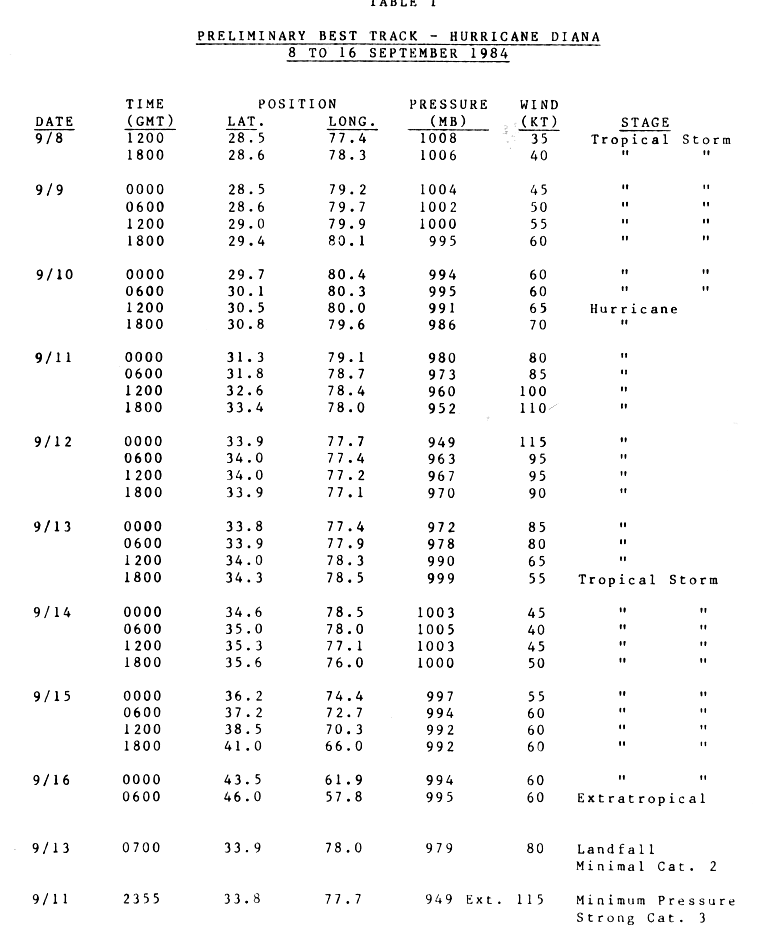
Tropical cyclogenesis began with two short-lived tropical depressions in June, the first of which developed on June 11. After the second one dissipated on June 20, Tropical Depression Three did not form until July 24, more than a month later. August featured five cyclones, a tropical depression, Subtropical Storm One, and tropical storms Arthur, Bertha, and Cesar. Seven systems developed in September, including a tropical depression and six named storms, Diana, Edouard, Fran, Gustav, Hortense, and Isidore. Diana became the most intense tropical cyclone of the season, peaking as a Category 4 hurricane with maximum sustained winds of 130 mph (215 km/h) and a minimum atmospheric pressure of 949 mbar. A tropical depression and Hurricane Josephine formed in October. Similarly, another tropical depression and Hurricane Klaus developed in November. The season's final system, Hurricane Lili, developed on December 12 and dissipated on December 24.
The season's activity was reflected with a cumulative accumulated cyclone energy (ACE) rating of 84, which is classified as "near normal". ACE is, broadly speaking, a measure of the power of the hurricane multiplied by the length of time it existed, so storms that last a long time, as well as particularly strong hurricanes, have high ACEs. It is only calculated for full advisories on tropical systems at or exceeding 39 mph (63 km/h), which is the threshold for tropical storm strength.
Systems
Tropical Depression One
|1-min winds=30 By June 11, an upper-level low caused thunderstorm development off the Florida coast, which caused the formation of a tropical depression. Moving westward, the depression moved into St. Augustine, causing a total of 5.02 in of rainfall at Jacksonville Beach, Florida, as its main thunderstorm activity was concentrated north of the center. It dissipated as a tropical cyclone on June 14 while moving through the Florida panhandle. The small remnant low continued moving westward inland of the Gulf coast, causing occasional redevelopment of thunderstorm activity as the system moved into Louisiana, before both the thunderstorm activity and low-pressure area dissipated by June 17.
Tropical Depression Two
|1-min winds=30 An upper-level low-pressure area traversing the southern Gulf of Mexico spawned convective activity over the Isthmus of Tehuantepec on June 16. This convective area waxed and waned somewhat in intensity, until becoming a larger disturbance on June 18. A surface low soon formed, and around 12:00 UTC that day, the system developed into a tropical depression over the Bay of Campeche. With vertical wind shear preventing significant further intensification, the depression made landfall near Tampico, Tamaulipas, with winds of 35 mph (55 km/h). The depression quickly dissipated over the mountainous terrain of eastern Mexico. The cyclone and its precursor dropped heavy rainfall in some areas, including a peak total of 11.43 in of precipitation in San Lucas Ojitlán, Oaxaca.
Tropical Depression Three
|1-min winds=30 A tropical depression formed about 800 mi east of the Windward Islands on July 24. Moving west-northwestward, the depression passed between Martinique and Saint Lucia early on the following day. On the latter, the storm dropped up to 8 in of precipitation. The Castries River overflowed its banks, washing away three homes in the eastern section of Castries. Two commercial fisherman were reported missing. Barbados recorded up to 6 in of rainfall in association with the system. The depression entered the Caribbean Sea and failed to intensify further, dissipating about halfway between the Dominican Republic and Venezuela late on July 26.
Subtropical Storm One
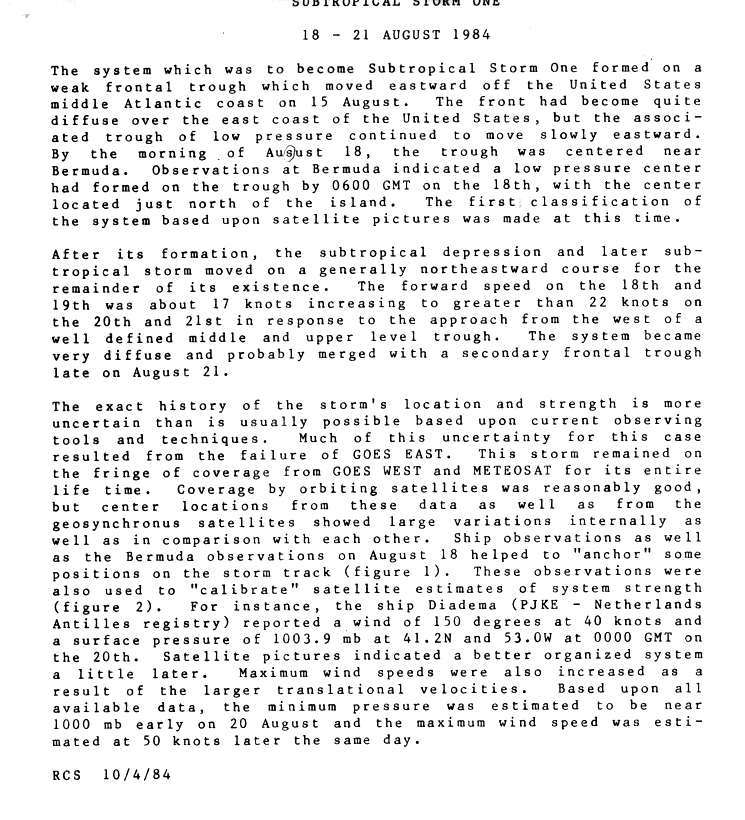
|1-min winds=50 A weak frontal trough generated a low-pressure system that organized into a subtropical depression north of Bermuda on August 18. The depression headed northeast and strengthened to a subtropical storm. It is believed to have merged with a front on August 21. The history of Subtropical Storm One is not entirely certain, as satellite images were largely unavailable due to a failure of the VISSR unit on GOES EAST (then GOES-5), and this system remained at the fringe of the GOES WEST and Meteosat throughout its existence. Wind gusts up to 65 mph were reported on the southwest coast of Newfoundland. In addition, a weather office on the island reported rainfall at 2.1 in.
Tropical Storm Arthur
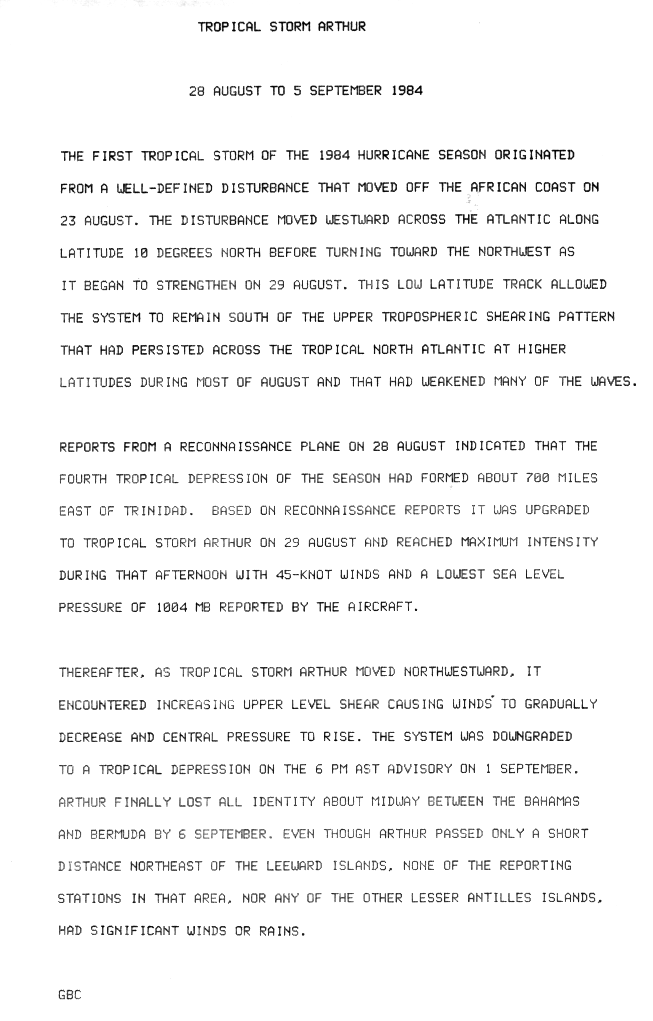
|1-min winds=45 A well-defined tropical wave emerged into the Atlantic from the west coast of Africa on August 23. Moving westward and later northwestward, the system remained to the south of a persistent shearing pattern that inhibited the development of several tropical waves. A reconnaissance aircraft flight indicated that a tropical depression formed late on August 28 roughly 700 mi east of Trinidad. On the next day, another reconnaissance flight recorded tropical storm conditions, and thus, the depression intensified into Tropical Storm Arthur. The cyclone attained its peak intensity several hours later with maximum sustained winds of 50 mph (85 km/h) and a minimum barometric pressure of 1004 mbar. Arthur was downgraded to a depression on September 1 after being negatively impacted by vertical wind shear, and dissipated on September 5 about halfway between the Bahamas and Bermuda. Despite its close proximity to the Lesser Antilles, Arthur caused no significant impact on land as it was a tropical depression at the time.
Tropical Storm Bertha
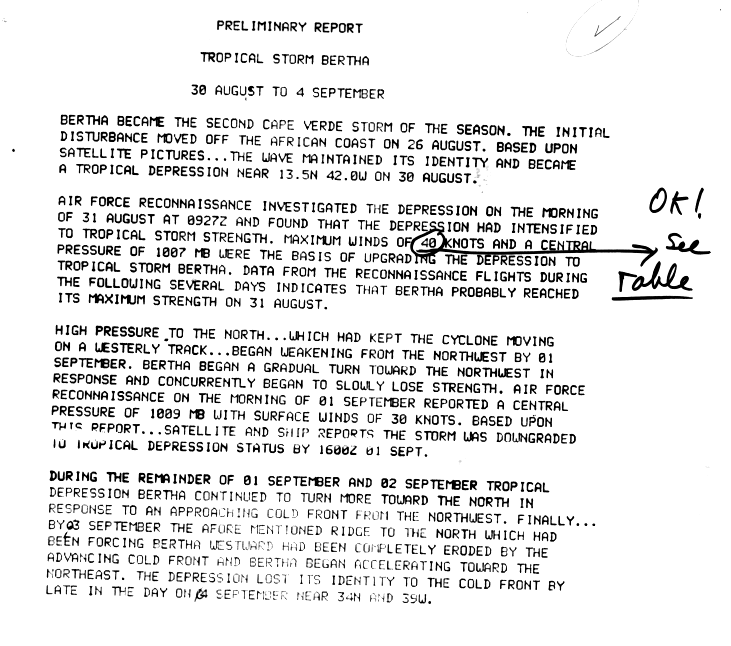
|1-min winds=35 On August 26, a tropical wave emerged into the Atlantic from the west coast of Africa. Tracking westward, the wave developed into a tropical depression about 1170 mi west-southwest of the southwesternmost islands of Cabo Verde and in close proximity to the east of Arthur. A reconnaissance flight into the depression on August 31 indicated that it strengthened into Tropical Storm Bertha. Later that day, Bertha peaked as a minimal tropical storm with maximum sustained winds of 40 mph (65 km/h) and a minimum barometric pressure of 1007 mbar. The system moved northwestward due to a weakening high pressure ridge to the north. Based on observations from reconnaissance flights on September 1, Bertha was downgraded to a tropical depression. On September 2, Bertha turned north-northeastward into response to an approaching cold front. The cold front then eroded the high pressure ridge, causing the cyclone to accelerate northeastward. Bertha later merged with the cold front on September 4.
Tropical Storm Cesar
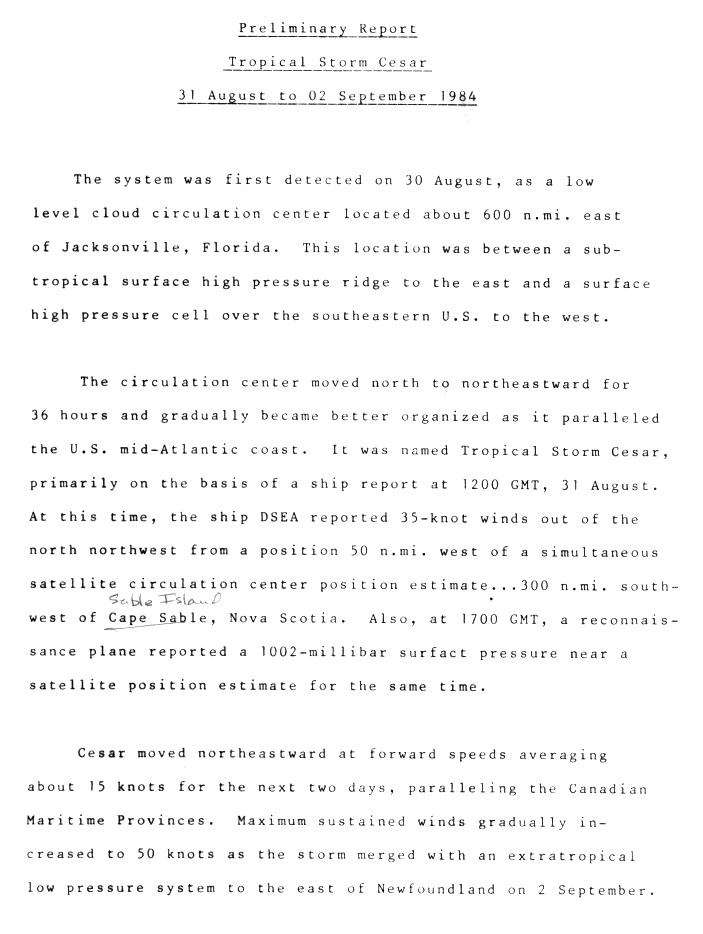
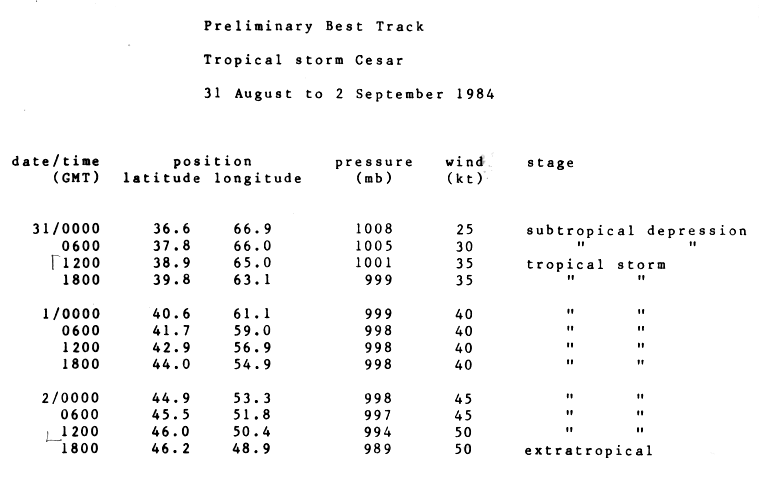
|1-min winds=50 The National Hurricane Center detected a low-level cloud circulation east of Jacksonville, Florida, on August 30. Moving north to northeastward due to a high pressure ridge to the east and a surface high pressure cell to the west, the system organized into a subtropical depression early on August 31 approximately 200 mi northwest of Bermuda. Based on a ship report of sustained winds of 40 mph (65 km/h), the subtropical depression transitioned into a tropical system and intensified into a tropical storm, receiving the name Cesar. On September 2, Cesar peaked with winds of 60 mph (95 km/h) and a minimum atmospheric pressure of 994 mbar, but soon merged with an extratropical low east of Newfoundland.
Tropical Depression Seven
|1-min winds=30 A tropical wave moved across Central America into the far eastern north Pacific Ocean by August 28. The system moved westward with no signs of development until September 1, when an upper-level low to its north across the Gulf of Mexico caused an area of thunderstorms to form just south of the Mexican coastline. An upper trough developed across the southern Plains of the United States, which slowly lured the northern portion of this increasingly large disturbance northward through the Mexican Isthmus. The southern portion moved westward, developing into Hurricane Marie. For a short while, Marie acted as a source of vertical wind shear from the west for this system, halting further development.
By September 6, the disturbance had emerged into the southwest Gulf of Mexico and consolidated into a smaller system which had enough organization to be classified as a tropical depression, the seventh of the season. The depression moved north-northwest into northeast Mexico on the afternoon of September 7, dissipating completely on September 8. Heavy rains fell over parts of Mexico, with a peak total of 34.65 in in Chicontepec de Tejeda, Veracruz. This precipitation contributed to ongoing floods, especially in Tamaulipas and Veracruz.
Hurricane Diana
|1-min winds=115 Main article: Hurricane Diana (1984)
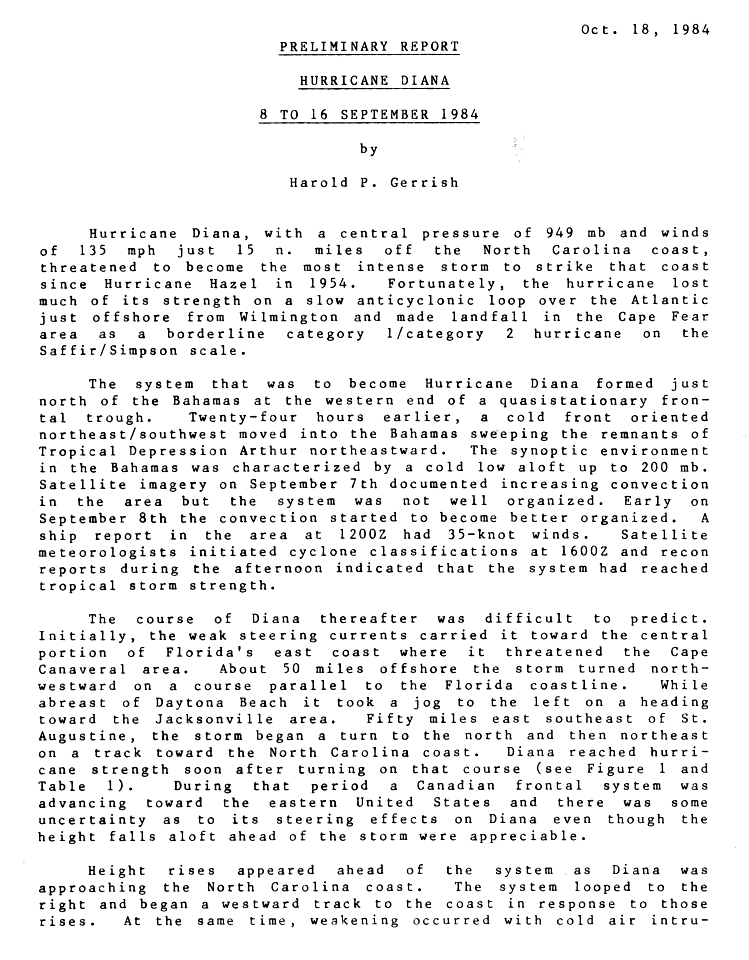
On September 8, an extratropical cyclone organized into Tropical Storm Diana north of the Bahamas. Diana proved difficult for meteorologists to forecast, initially moving westward towards Cape Canaveral, but then turned to the north and paralleled the coastline. On September 11, the storm reached hurricane strength, and continued to intensify to a Category 4 hurricane, peaking with maximum sustained winds of 130 mph (215 km/h) and a minimum barometric pressure of 949 mbar. Diana moved north-northeast, and performed a small anti-cyclonic loop before striking near Cape Fear, North Carolina, as a minimal Category 2 hurricane on September 13. A weakened Diana curved back out to sea and headed northeast until it became extratropical near Newfoundland on September 16.
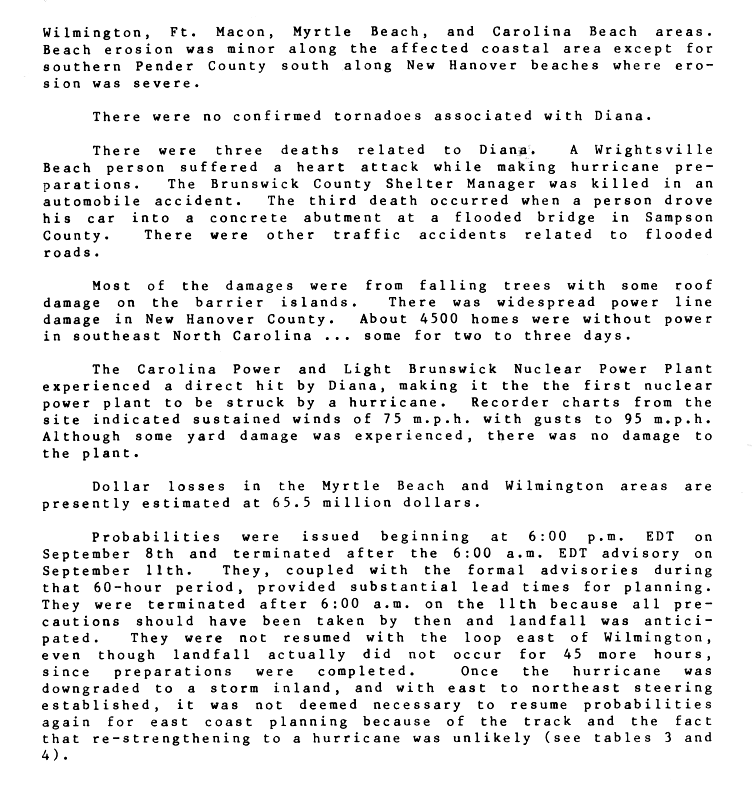
Severe beach erosion impacted Horry County, South Carolina, damaging 90 residences, 40 multi-family dwellings, 8 mobile homes, and a few businesses. In North Carolina, precipitation peaked at 18.98 in near Southport. Many areas in southeastern North Carolina reported freshwater flooding, with parts of Duplin, Pender, and Sampson counties experiencing 100-year flood events. High winds damaged some buildings and homes, especially in coastal areas of Brunswick and New Hanover counties. Throughout the state, Diana destroyed 68 homes and substantially damaged 325 others. Damage estimates were set at $65.5 million, with about $26.5 million of that figure dealt to agriculture. Six deaths, five due to indirect causes, occurred in relation to the storm. Diana became the first hurricane to strike a nuclear power plant — the Brunswick Nuclear Generating Station, which recorded sustained hurricane-force winds but no damage to the facility.
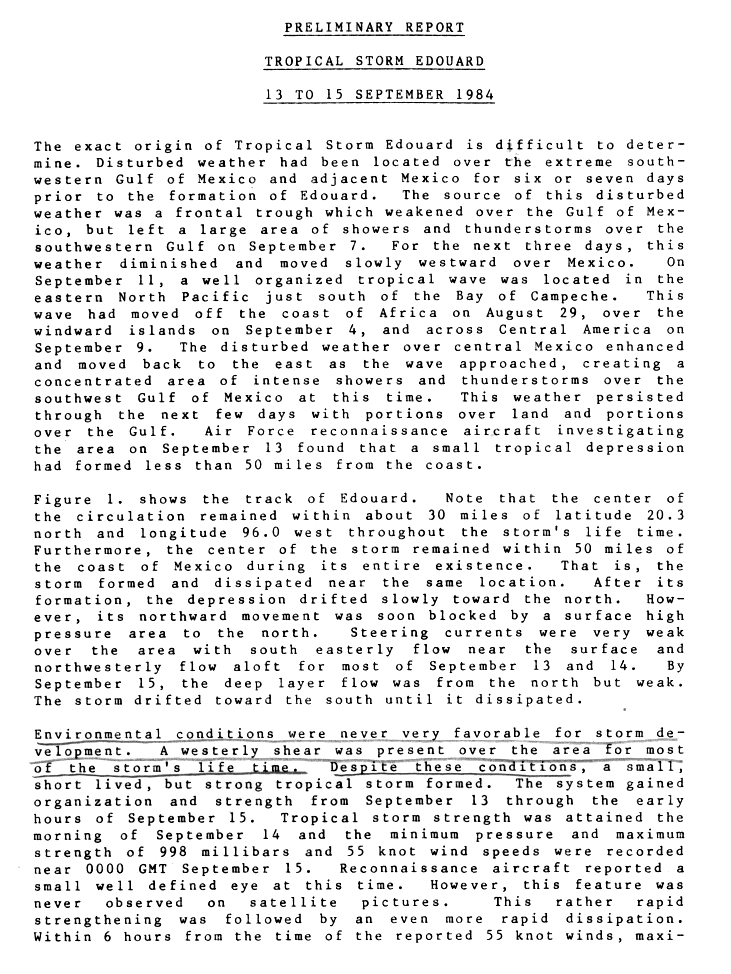
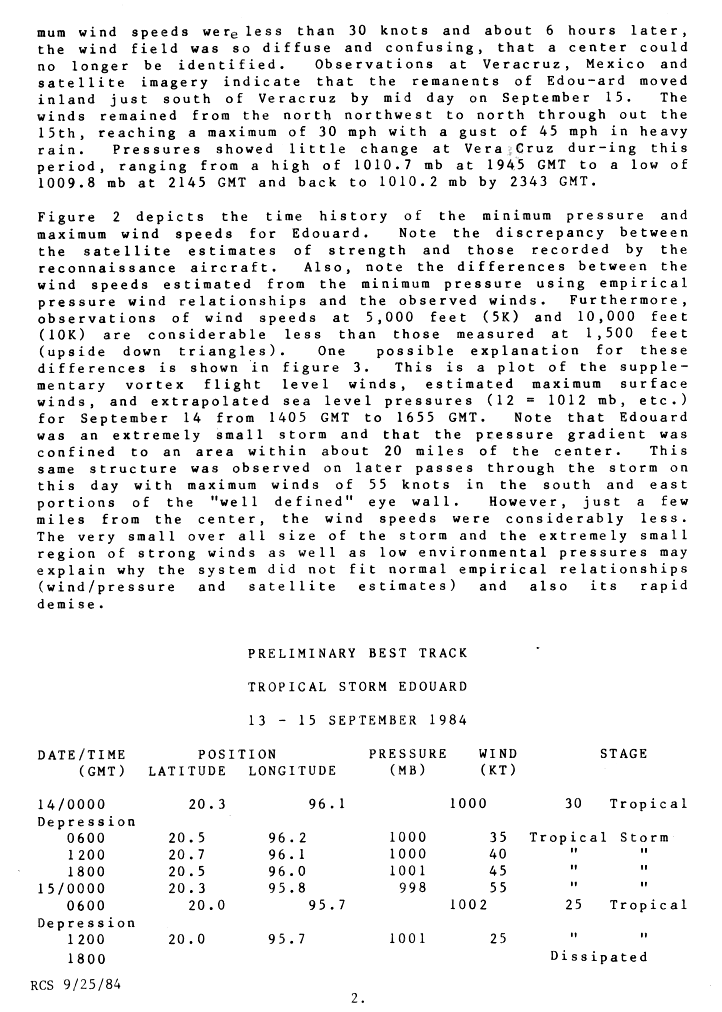
Tropical Storm Edouard
|1-min winds=55 The origins of Tropical Storm Edouard are unclear, but an area of persistent organized storms existed over the Gulf of Mexico for six or seven days prior to September 14 after a frontal system weakened. A tropical wave that crossed Central America on September 9 also enhanced convection. Based on a reconnaissance aircraft investigation, a tropical depression formed at 00:00 UTC on September 14 about 60 mi east-southeast of Tecolutla, Veracruz. Despite westerly wind shear, the depression strengthened, becoming Tropical Storm Edouard six hours later and peaking with winds of 65 mph (100 km/h) and a barometric pressure of 998 mbar early on September 15. Additionally, reconnaissance aircraft reported a small well-defined eye. However, Edouard then rapidly weakened, falling to tropical depression and then dissipating later that day about 60 mi northeast of Veracruz, Veracruz. The remnants of Edouard produced heavy rains, sustained winds of 30 mph (50 km/h), and gusts up to 45 mph (70 km/h) in the city of Veracruz.
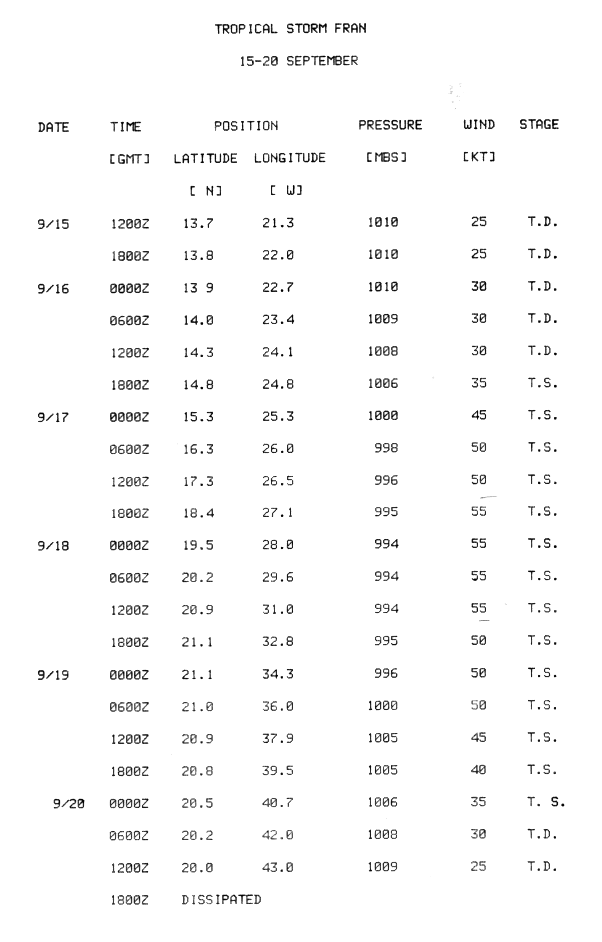
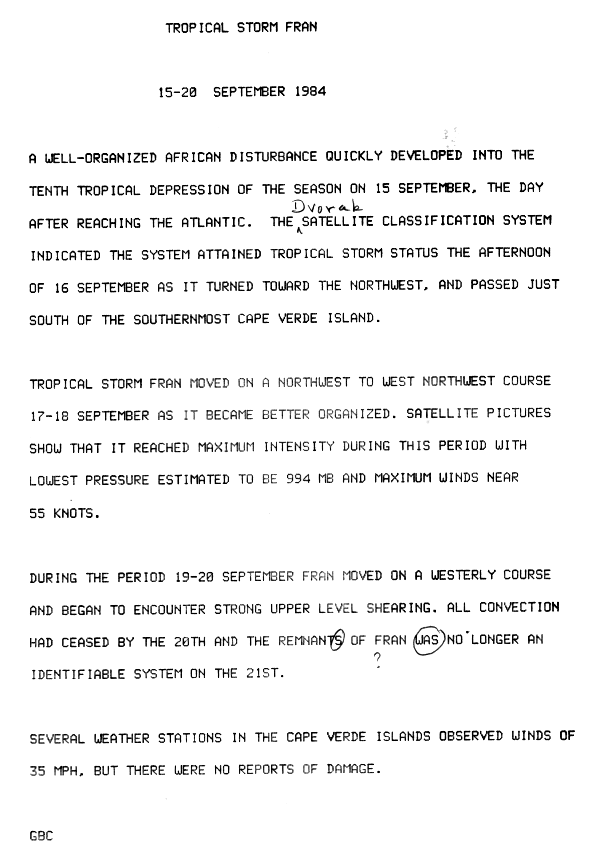
Tropical Storm Fran
Main article: Tropical Storm Fran (1984)
|1-min winds=55 On September 14, a well-defined tropical wave exited the coast of Africa. The next day, it had rapidly organized into a tropical depression. At 18:00 UTC on September 16, the depression attained tropical storm strength, and it was given the name Fran. It turned to the northwest, and passed very near the Cabo Verde Islands. Fran moved northwest to west-northwest on September 17–18 as it continued to organize. During this period satellite imagery indicated that Fran peaked with maximum sustained winds of 65 mph and a minimum surface pressure of 994 mbar. Between September 19 and September 20, the cyclone turned westward and encountered strong upper-level wind shear, which caused Fran to dissipate on September 20.
As Fran passed the Cape Verde islands weather stations reported 35 mph winds, leading to little wind damage, if any. However, torrential rainfall caused extensive flooding, severely damaging almost 1,100 dwellings and leaving at least 2,100 people homeless. Damage totaled approximately $2.84 million and 29-32 people died in the Cabo Verde Islands, making it the country's second-deadliest cyclone, behind only Hurricane Debbie in 1961.
Tropical Storm Gustav
|1-min winds=45
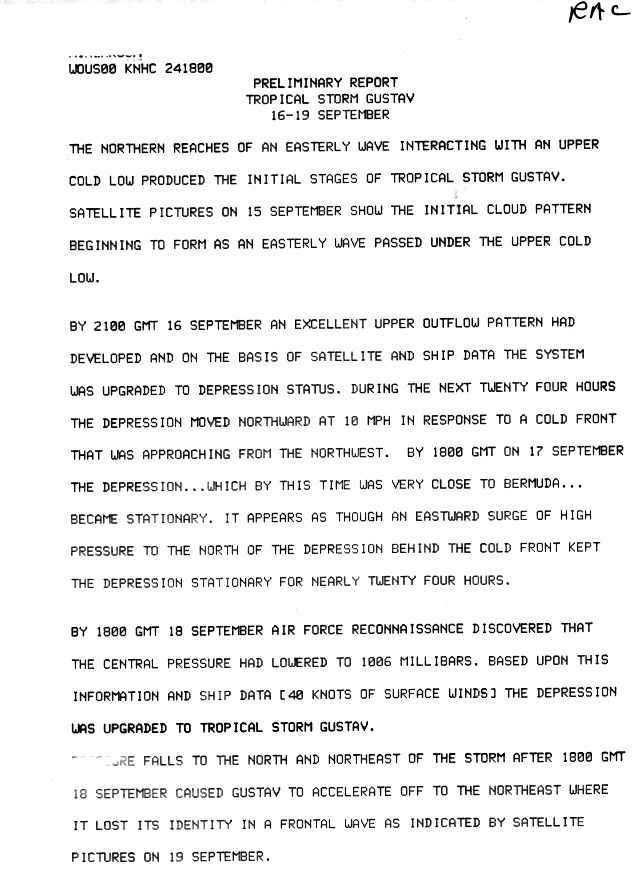
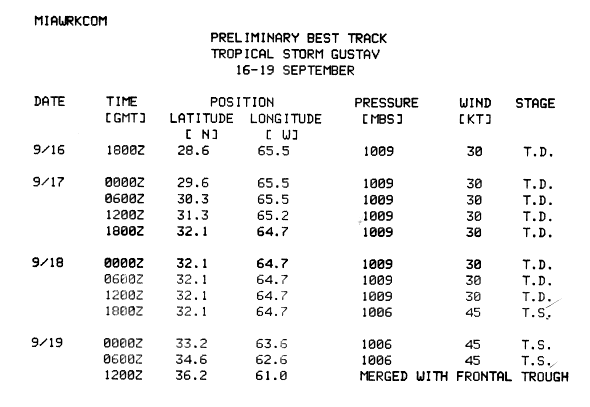
A tropical wave and an upper cold low interacted over the southwestern Atlantic in mid-September. Satellite and ship data led to the formation of a tropical depression late on September 16, then situated about 250 mi south of Bermuda. The depression drifted northward due to an approaching cold front and passed near Bermuda late on September 17. About 24 hours later, a reconnaissance flight observed a barometric pressure of 1006 mbar and a ship recorded sustained winds of 45 mph (70 km/h), leading the depression to be upgraded to Tropical Storm Gustav, with winds of 50 mph (85 km/h). Falling pressures to the north and northeast of Gustav caused the storm to accelerate. Around 12:00 UTC on September 19, Gustav merged with a frontal system about 335 mi northeast of Bermuda.
Hurricane Hortense
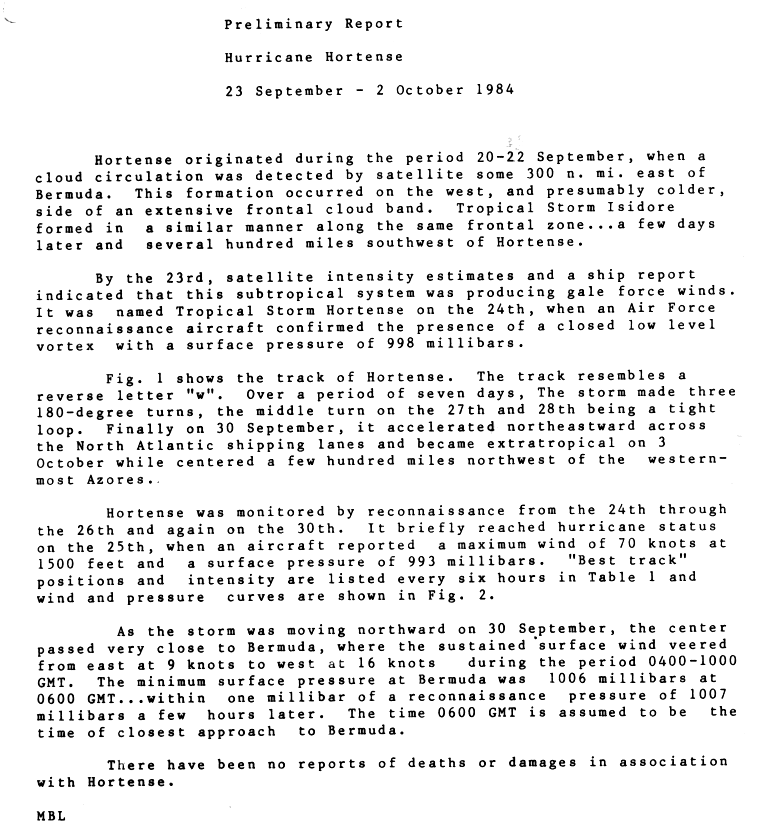
|1-min winds=65 A large frontal system spawned a subtropical depression early on September 23, about 385 mi (620 km) east of Bermuda. Ship and satellite data confirmed its development, and indicated the system intensified into a subtropical storm later on September 23. Initially the cyclone moved toward the south-southwest, although on September 24 it turned to the west. That day, the hurricane hunters reported that the system transitioned into a tropical cyclone; as such, it was named Tropical Storm Hortense. The newly-tropical storm quickly intensified while turning to the northwest, and late on September 25 Hortense attained hurricane status, about 300 mi (475 km) southeast of Bermuda.
Twelve hours after reaching hurricane status, Hortense began a sharp weakening trend while passing east of Bermuda. By September 27 it was a minimal tropical storm, and subsequently it executed a clockwise loop to the southwest. The intensity of Hortense fluctuated slightly over the subsequent few days, although it never regained its former intensity. On September 30, after turning to the west and later to the north, the storm passed just 7 mi west of Bermuda. As the storm was so weak, the island only reported winds of 18 mph. Hortense accelerated to the northeast, moving rapidly across the North Atlantic before being absorbed by a larger extratropical storm late on October 2, northwest of the Azores.
Tropical Storm Isidore
Main article: Tropical Storm Isidore (1984)
|1-min winds=50
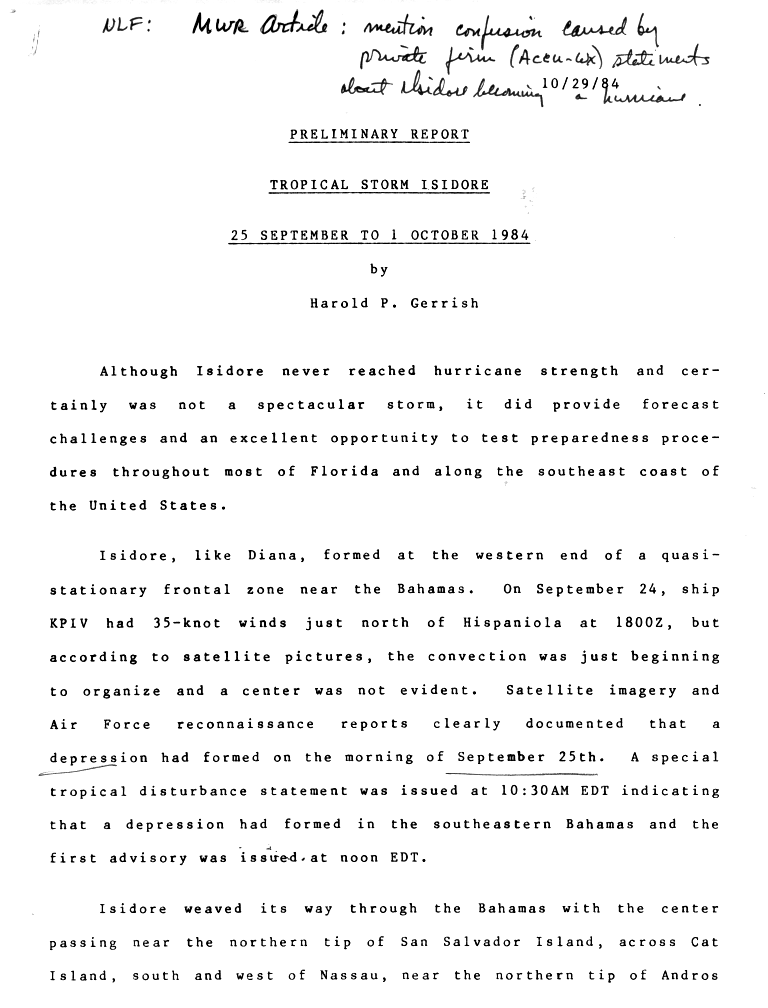
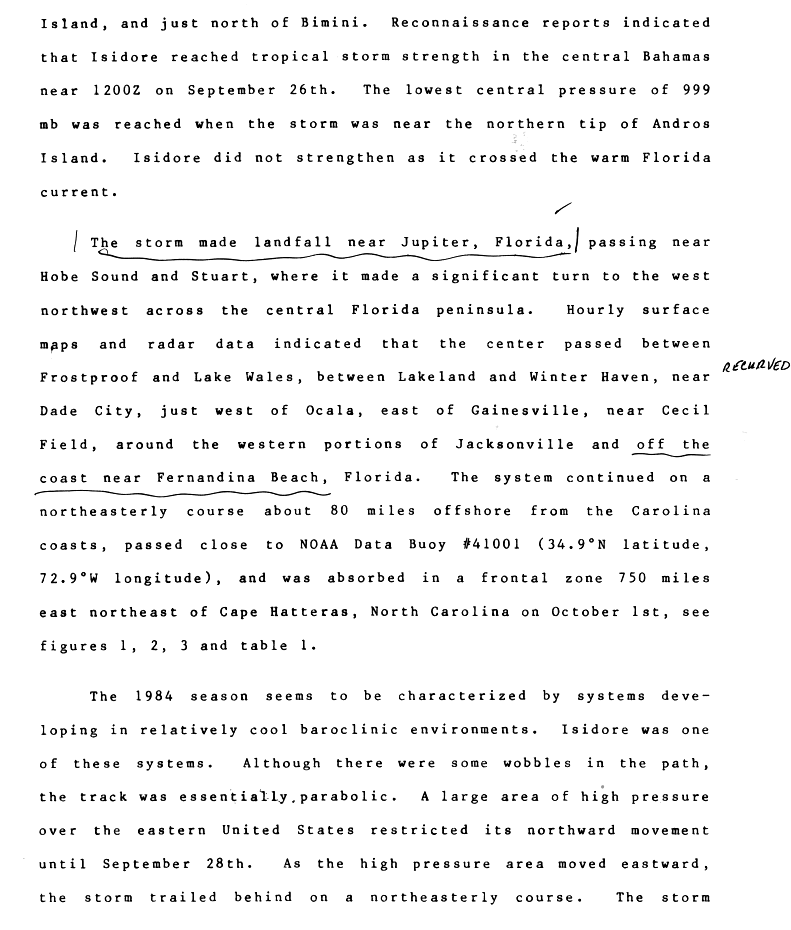
On September 24, a disturbance formed along the western periphery of a semi-stationary frontal zone close to the Bahamas. This disturbance developed into a tropical depression around 12:00 UTC on September 25 near Samana Cay. Moving generally west-northwestward, the depression intensified into Tropical Storm Isidore about 24 hours later and passed near or over several Bahamian islands. Early on September 27, Isidore attained its lowest barometric pressure of 999 mbar near Andros, shortly before peaking with sustained winds of 60 mph (95 km/h). Just after 1200 UTC that day, the cyclone made landfall near Jupiter, Florida. Retaining tropical storm strength, Isidore curved northeastward, emerging over water near Jacksonville, Florida. The system was absorbed by a front on October 1 about 330 mi northeast of Bermuda.
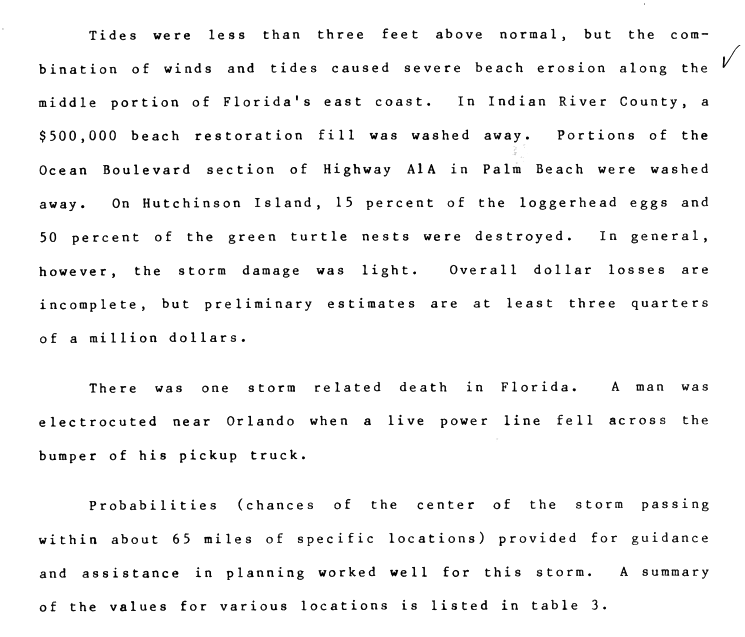
Isidore produced heavy rains in the Bahamas, but no serious damage. High tides along the east coast of Florida caused beach erosion, damaged segments of State Road A1A, and damaged or destroyed sea turtle nests. Winds mainly only caused scattered power outages. However, one person died near Orlando after a live wire fell on his pickup truck. Total damages in Florida were estimated at over $750,000. Additionally, a tornado in Brunswick, Georgia, caused about $250,000 in damage.
Hurricane Josephine
|1-min winds=90 Main article: Hurricane Josephine (1984)
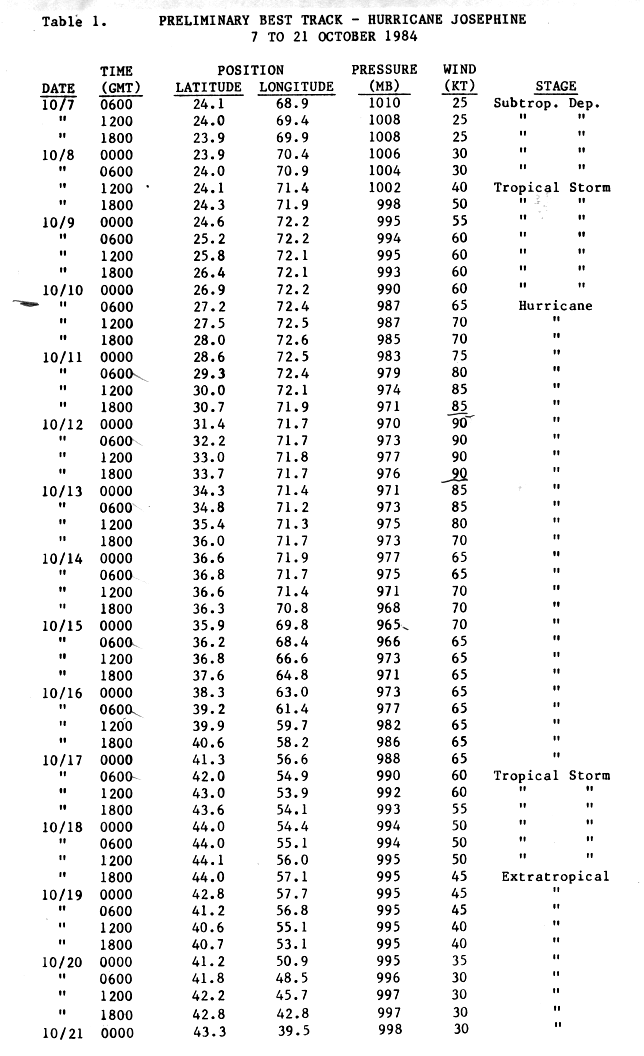
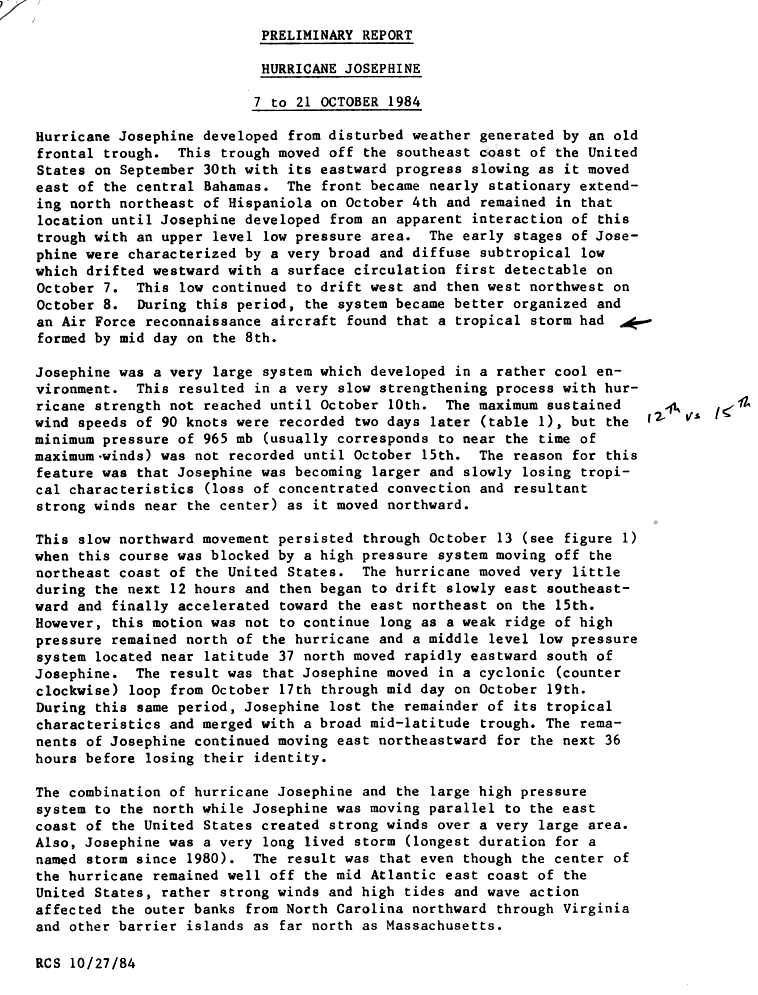
In early October, an old frontal trough interacted with an upper-level low north of Hispaniola, leading to the formation of a subtropical depression about 235 mi northeast of the Turks and Caicos Islands on October 7. The subtropical depression intensified and transitioned into Tropical Storm Josephine on October 8. The storm intensified into a hurricane on October 10 and peaked as a Category 2 hurricane with winds of 105 mph (165 km/h) on October 12. Moving generally northward, Josephine briefly jogged to the west, but turned southeastward on October 14 when it passed 36°N latitude (roughly level with Norfolk, Virginia). Turning northeast on October 15, Josephine's barometric pressure fell to 965 mbar as it continued on this path until it made a cyclonic loop beginning on October 17. The cyclone became extratropical on October 19 about 125 mi east of Sable Island, Nova Scotia and lost its identity on October 21.
While it stayed well away from the U.S. coast, Josephine was a large storm and sustained tropical storm winds were measured at the Diamond Shoals of Cape Hatteras. The hurricane caused wave damage to coastal areas, but primarily posed a threat to the shipping lanes of the North Atlantic. Offshore, a sailboat with six crewmen on it became disabled due to high waves, estimated to have exceeded 15 ft, produced by the hurricane. All of the people on the ship were quickly rescued after issuing a distress signal by a nearby tanker vessel. In Massachusetts, one man drowned after falling off his boat on the North River amidst large swells produced by the storm. In Long Island, New York and parts of New Jersey, tides between 2 and above normal resulted in minor coastal flooding.
October Tropical Depression
|1-min winds=30 This system was recognized as the seventeenth tropical depression of the season by the National Hurricane Center after the season ended. A retrograding upper-level low spurred the development of a low east of the Bahamas on October 25. The system tracked westward with limited shower and thunderstorm activity, crossing Florida on October 26 before moving into the Gulf of Mexico. Once the system moved into the north-central Gulf, deep convection began to develop near its center, expanding in intensity and coverage near and after landfall in extreme southeast Mississippi. The small system accelerated rapidly to the north and northeast ahead of an approaching cold front, moving across the Tennessee Valley and central Appalachians before linking up with the front and becoming a weak extratropical cyclone. The non-tropical cyclone then moved through coastal New England. The depression dropped rains across the eastern United States, though precipitation peaked at 4.83 in near Pascagoula, Mississippi.
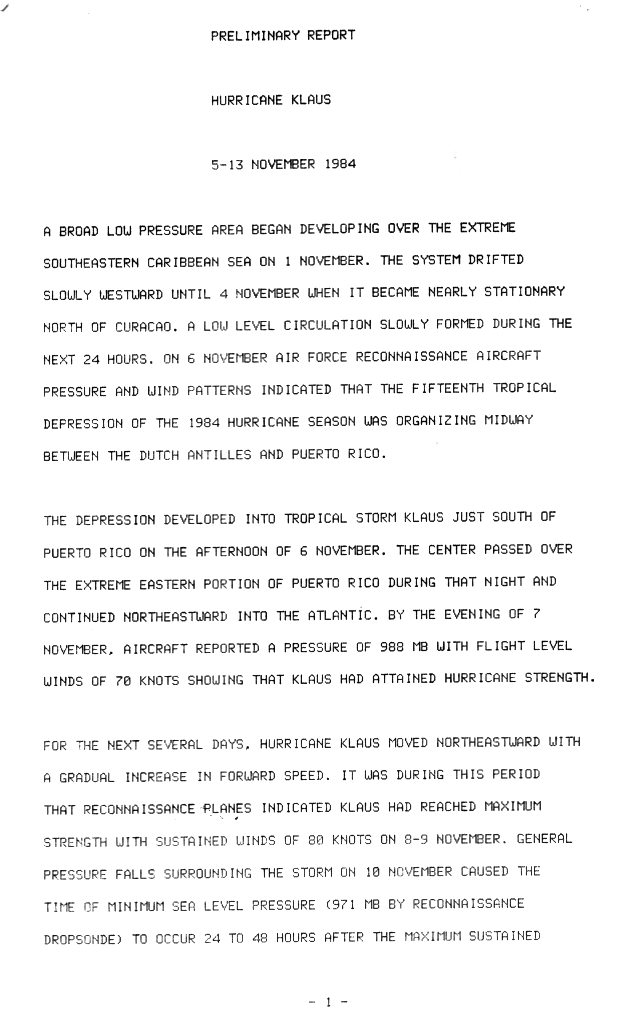
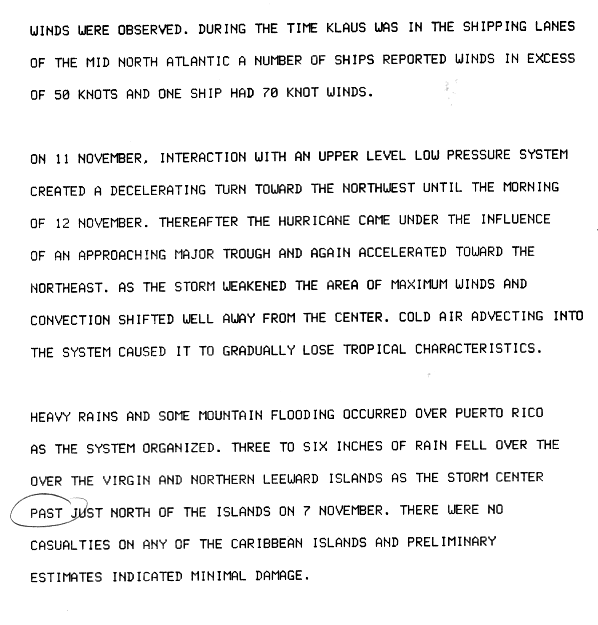
Hurricane Klaus
|1-min winds=80 Main article: Hurricane Klaus (1984)
A broad low formed over the eastern Caribbean on November 1, which developed into a tropical depression north of Curaçao on November 5. The cyclone maintained a northeast movement throughout much of its path and intensifed into Tropical Storm Klaus on the following day. After making landfall on extreme eastern Puerto Rico, it passed to the north of the Leeward Islands, resulting in strong southwesterly winds and rough seas. Klaus attained hurricane status on November 8 and peaked with maximum sustained winds of 90 mph (150 km/h) that day. The hurricane's barometric pressure decreased to 971 mbar on November 11, before becoming extratropical over cooler waters two days later, then situated about 430 mi southeast of Cape Race, Newfoundland.
The storm dropped heavy rainfall in Puerto Rico, causing numerous landslides, drowning one person, and damaging some homes and crops. Klaus inflicted heavy marine damage in the Leeward Islands, including wrecking at least three ships. Dominica reported two deaths and about $2 million in damage. Heavy damage occurred in the British Virgin Islands, totaling $152 million, while the United States Virgin Islands had about $3 million in damage.
November Tropical Depression
|1-min winds=30 On November 20, a quasi-stationary cold front extended from the northern Yucatán Peninsula to Grand Bahama. Several low pressure areas formed along the front, including one that developed into a tropical depression at 12:00 UTC on November 23 about 35 mi (55 km/h) east of Boynton Beach, Florida. The depression crossed the northern Bahamas and then moved out to sea, dissipating about 880 mi east of Bermuda on November 28. There has been evidence that the November storm may have become a subtropical cyclone east of Bermuda. The cyclone contributed to the formation of a potent nor'easter.
Strong winds and abnormally high tides impacted the east coast of Florida from North Miami Beach to Fernandina Beach. Numerous homes, piers, and seawalls were damaged or destroyed, and at least 600 people were ordered to evacuate due to erosion. Heavy rains also fell, with West Palm Beach recording 7.41 in on November 22, a record for that calendar day. About 100 people evacuated from low-lying areas in Palm Beach County. Overall, the system caused at least $7.4 million in damage and one fatality.
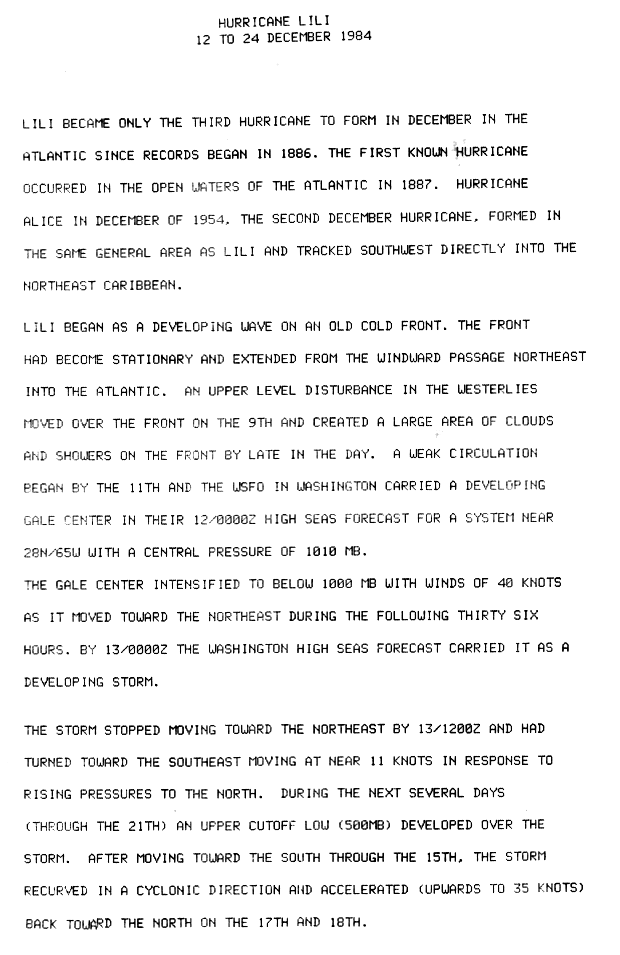
Hurricane Lili
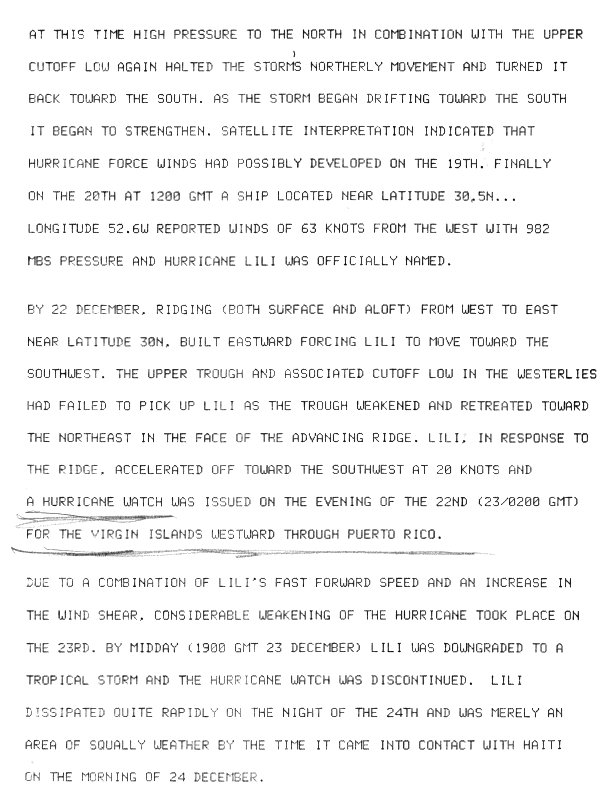
|1-min winds=70 In the second week of December, a frontal trough stalled south of Bermuda. An upper-level disturbance moved over the area on December 9, and produced widespread convection along the frontal wave. The system moved to the northeast, and based on a developing circulation within the convection, the NHC classified it as a subtropical cyclone on December 12 while located 275 mi northeast of Bermuda. A day later, a ridge forced the storm to the southeast and later to the south for a few days. A break in the ridge allowed the storm to turn back to the northeast on December 16, followed by a turn northwestward a day later. Another ridge halted the storm's movement, turning it back to the southwest on December 18, and later to the south. During this time, the subtropical storm intensified, with satellite-estimated hurricane-force winds by December 19. On the next day, a nearby ship recorded winds of 72 mph (117 km/h), along with a minimum pressure of 982 mbar. Based on the observations, as well as the appearance of a well-defined eye, the NHC reclassified the storm as Hurricane Lili on December 20, estimating peak winds of 80 mph (130 km/h) and a pressure of 980 mbar. At the time, Lili was located about 730 mi east of Bermuda. Lili was only one of six Atlantic hurricanes on record during the month of December.
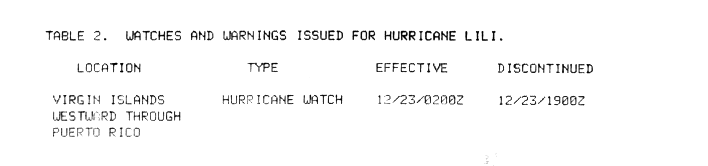
After becoming a tropical cyclone, Lili accelerated to the southwest, completing a large cyclonic loop by December 22, after crossing over the same location one week prior. That day, a hurricane watch was issued for Puerto Rico and the Virgin Islands on December 22. However, Lili weakened due to increased wind shear, degrading to a tropical storm on December 23 while 430 mi northeast of Antigua. The storm rapidly lost organization as it approached the Leeward Islands, dissipating near the northern coast of the Dominican Republic on December 24. The storm brought light rainfall to the region.
Storm names
The following list of names was used for named storms that formed in the North Atlantic in 1984. Most names were used for the first time, except for Bertha and Fran,{{cite journal|author=Paul J. Herbert|author2=Neil L. Frank|publisher=National Hurricane Center|location=Miami, Florida|page=280|date=January 28, 1974|journal=Monthly Weather Review|access-date=February 9, 2024|title=Atlantic Hurricane Season of 1973|volume=27 |issue=1 |url=https://www.aoml.noaa.gov/general/lib/lib1/nhclib/mwreviews/1973.pdf|doi= 10.1080/00431672.1974.9931675|bibcode=1974Weawi..27a..10H}} which were previously used under previous naming conventions. No names were retired following the season, so the list was used again in the 1990 season.
Season effects
This is a table of all of the storms that formed in the 1984 Atlantic hurricane season. It includes their name, duration, peak classification and intensities, areas affected, damage, and death totals. Deaths in parentheses are additional and indirect (an example of an indirect death would be a traffic accident), but were still related to that storm. Damage and deaths include totals while the storm was extratropical, a wave, or a low, and all of the damage figures are in 1984 USD.
|- | One || || bgcolor=#| || || || Florida || || || |- | Two || || bgcolor=#| || || || northern Mexico || || || |- | Three || || bgcolor=#| || || || None || || || |- | Unnumbered || || bgcolor=#| || || Unknown || None || || || |- | One || || bgcolor=#| || || || None || || || |- | Arthur || || bgcolor=#| || || || None || || || |- | Bertha || || bgcolor=#| || || || None || || || |- | Cesar || || bgcolor=#| || || || None || || || |- | Seven || || bgcolor=#| || || Unknown || northern Mexico || || || |- | Diana || || bgcolor=#|Category 4 hurricane || || || Southeastern United States, Atlantic Canada || || 1 (5) || |- | Edouard || || bgcolor=#| || || || northern Mexico || || || |- | Fran || || bgcolor=#| || || || Cape Verde Islands || || – || |- | Gustav || || bgcolor=#| || || || Bermuda || || || |- | Hortense || || bgcolor=#|Category 1 hurricane || || || None || || || |- | Isidore || || bgcolor=#| || || || Bahamas, Southeastern United States || || 0 (1) || |- | Josephine || || bgcolor=#|Category 2 hurricane || || || East Coast of the United States || Minor || || |- | Unnumbered || || bgcolor=#| || || || Southeastern United States || || || |- | Klaus || || bgcolor=#|Category 1 hurricane || || || Puerto Rico, Leeward Islands || || || |- | Unnumbered || || bgcolor=#| || || || Bahamas, Florida, Bermuda || || || |- | Lili || || bgcolor=#|Category 1 hurricane || || || Puerto Rico, Hispaniola || || || |-
Notes
References
References
- (May 2024). "North Atlantic Hurricane Basin (1851-2023) Comparison of Original and Revised HURDAT". [[National Oceanic and Atmospheric Administration]].
- (August 9, 2012). "Background Information: The North Atlantic Hurricane Season". National Oceanic and Atmospheric Administration.
- "North Atlantic Ocean Historical Tropical Cyclone Statistics". Colorado State University.
- William M. Gray. (May 24, 1984). "Forecast of Atlantic Seasonal Hurricane Activity for 1984". Colorado State University.
- Jill F. Hasling. (May 1, 2008). "Comparison of Weather Research Center's OCSI Atlantic Annual Seasonal Hurricane Forecasts with Colorado State Professor Bill Gray's Seasonal Forecast". Weather Research Center.
- William M. Gray. (July 30, 1984). "Updated (as of 30 July 1984) Forecast of Atlantic Seasonal Hurricane Activity for 1984". Colorado State University.
- William M. Gray. (November 30, 1984). "Summary of 1984 Atlantic Seasonal Tropical Cyclone Activity and Verification of Author's Forecast". Colorado State University.
- (December 1, 1984). "'84 hurricane season over". The Houston Post.
- William M. Gray. (November 28, 1984). "Summary of 1984 Atlantic Seasonal Tropical Cyclone Activity and Verification of Author's Forecast". Colorado State University.
- Harold P. Gerrish. (October 18, 1984). "Preliminary Report Hurricane Diana: 8 to 16 September 1984". National Hurricane Center.
- (June 13, 1984). "Tropical Depression Hits Florida Coast". [[Philadelphia Daily News]].
- (June 14, 1984). "Harbinger of Hurricane Fading Fast". [[Miami Herald]].
- David M. Roth. (August 4, 2008). "Tropical Depression One – June 12–17, 1984". [[Hydrometeorological Prediction Center]].
- "Daily Weather Maps: June 11–17, 1984". [[National Oceanic and Atmospheric Administration]].
- David M. Roth. (March 8, 2010). "Tropical Depression Two — June 16–20, 1984". Hydrometeorological Prediction Center.
- Arnold Markowitz. (July 28, 1984). "Storm Weakens In Caribbean Two Fishermen Missing After Ignoring Warnings". [[Miami Herald]].
- Arnold Markowitz. (July 26, 1984). "Tropical Depression Hits Caribbean". Miami Herald.
- Robert C. Sheets. (October 4, 1984). "Subtropical Storm One: 18–21 August 1984". National Hurricane Center.
- (September 14, 2010). "1984-Subtrop 1". [[Environment Canada]].
- Gilbert B. Clark. (1984). "Tropical Storm Arthur: 28 August to 5 September 1984". National Hurricane Center.
- "Preliminary Report Tropical Storm Bertha: 30 August to 4 September". National Hurricane Center.
- "Preliminary Report Tropical Storm Cesar: 31 August to 02 September 1984". National Hurricane Center.
- "Preliminary Report Tropical Storm Cesar: 31 August to 02 September 1984". National Hurricane Center.
- David M. Roth. (March 9, 2010). "Tropical Depression Seven — September 1–8, 1984". Hydrometeorological Prediction Center.
- (September 21, 1984). "Floods play havoc in Mexico; long rainy season predicted". Corpus Christi Caller.
- Harold P. Gerrish. (October 18, 1984). "Preliminary Report Hurricane Diana: 8 to 16 September 1984". National Hurricane Center.
- David M. Roth. (2008). "Hurricane Diana - September 7-16, 1984". Hydrometeorological Prediction Center.
- (September 1984). "Storm Data and Unusual Weather Phenomena". Storm Data.
- Jim Brady. (September 16, 1984). "Diana left some vivid memories". Greensboro News and Record.
- "1984-Diana". Environment Canada.
- Harold P. Gerrish. (October 18, 1984). "Preliminary Report Hurricane Diana: 8 to 16 September 1984". National Hurricane Center.
- Robert C. Sheets. (September 25, 1984). "Preliminary Report Tropical Storm Edouard: 13 to 15 September 1984". National Hurricane Center.
- Robert C. Sheets. (September 25, 1984). "Preliminary Report Tropical Storm Edouard: – 13 to 15 September 1984". National Hurricane Center.
- Gilbert B. Clark. (1984). "Tropical Storm Fran: 15-20 September 1984". National Hurricane Center.
- Gilbert B. Clark. (1984). "Tropical Storm Fran: 15-20 September 1984". National Hurricane Center.
- UN Department of Humanitarian Affairs. (October 12, 1984). "Cape Verde - Heavy Rains/Floods Sep 1984 UNDRO Situation Reports 1-2". [[ReliefWeb]].
- United States Agency for International Development. (July 29, 1993). "Country: Cape Verde Is.".
- Robert A. Case. (September 25, 1984). "Preliminary Report Tropical Storm Gustav: 16 - 19 September 1984". National Hurricane Center.
- Robert A. Case. (September 25, 1984). "Preliminary Report Tropical Storm Gustav: 16 - 19 September 1984". National Hurricane Center.
- Miles B. Lawrence. (1984). "Preliminary Report Hurricane Hortense: 23 September - 2 October 1984". National Hurricane Center.
- Miles B. Lawrence and Gilbert B. Clark. (July 1985). "Atlantic Hurricane Season of 1984". Monthly Weather Review.
- Harold P. Gerrish. (October 29, 1984). "Preliminary Report Tropical Storm Isidore: – 25 September to 1 October 1984". National Hurricane Center.
- Harold P. Gerrish. (October 29, 1984). "Preliminary Report Tropical Storm Isidore: – 25 September to 1 October 1984". National Hurricane Center.
- (September 27, 1984). "New Storm Strengthens, May Head for Miami". Lexington Herald-Leader.
- Harold P. Gerrish. (October 29, 1984). "Preliminary Report Tropical Storm Isidore: – 25 September to 1 October 1984". National Hurricane Center.
- (September 28, 1984). "Tropical storm Isidore brushes Florida coast". Galveston Daily News.
- (1984). "Event Record Details: Tornado". National Climatic Data Center.
- Robert C. Sheets. (October 27, 1984). "Preliminary Report Hurricane Josephine: 7 to 21 October 1984". National Hurricane Center.
- Robert C. Sheets. (October 27, 1984). "Preliminary Report Hurricane Josephine: 7 to 21 October 1984". National Hurricane Center.
- (October 11, 1984). "Hurricane Josephine scaring mariners now". The Day.
- (October 15, 1984). "Hurricane Josephine moves away from land". The Free Lance–Star.
- David M. Roth. (May 11, 2008). "Tropical Depression: October 25–29, 1984". Hydrometeorological Prediction Center.
- (1984). "Preliminary Report Hurricane Klaus: 5-13 November 1984". National Hurricane Center.
- (1984). "Preliminary Report Hurriane Klaus: 5-13 November 1984". National Hurricane Center.
- (1984). "Preliminary Report Hurriane Klaus: 5-13 November 1984". National Hurricane Center.
- "Chapter 12- Hurricane Hazards". Organization of American States.
- (2003). "Disaster Management: A Policy Framework". British Virgin Islands Deputy Governor's Office.
- Raymond Biedinger. "The Florida East Coast Thanksgiving Holiday Storm of 1984". National Weather Service Melbourne, Florida.
- Danielle Manning. (April 2006). "Using ERA40 in Cyclone Phase Space to Refine the Classification of Historical Tropical Storms".
- (November 1984). "Storm Data and Unusual Weather Phenomena". Storm Data.
- (November 26, 1984). "Florida's Storm Ends, Leaving Damage Behind". The New York Times.
- (1985). "Hurricane Lili: 12 to 24 December 1984". National Hurricane Center.
- (1985). "Hurricane Lili: 12 to 24 December 1984". National Hurricane Center.
- (December 21, 1984). "Post-Season Atlantic Hurricane Stalls". Martinsville Bulletin.
- James L. Franklin. (January 6, 2006). ["Tropical Cyclone Report: Hurricane Epsilon"]({{NHC TCR url). National Hurricane Center.
- (1985). "Hurricane Lili: 12 to 24 December 1984". National Hurricane Center.
- (December 25, 1984). "Hurricane Lili now a tropical storm". Associated Press.
- (May 1984). "National Hurricane Operations Plan". [[NOAA]] Office of the Federal Coordinator for Meteorological Services and Supporting Research.
- Paul L. Moore. (December 1, 1957). "The Hurricane Season of 1957". [[National Weather Service.
- "Tropical Cyclone Naming History and Retired Names". National Hurricane Center.
- (May 1990). "National Hurricane Operations Plan". [[NOAA]] Office of the Federal Coordinator for Meteorological Services and Supporting Research.

This article was imported from Wikipedia and is available under the Creative Commons Attribution-ShareAlike 4.0 License. Content has been adapted to SurfDoc format. Original contributors can be found on the article history page.
Ask Mako anything about 1984 Atlantic hurricane season — get instant answers, deeper analysis, and related topics.
Research with MakoFree with your Surf account
Create a free account to save articles, ask Mako questions, and organize your research.
Sign up freeThis content may have been generated or modified by AI. CloudSurf Software LLC is not responsible for the accuracy, completeness, or reliability of AI-generated content. Always verify important information from primary sources.
Report