From Surf Wiki (app.surf) — the open knowledge base
1982 Atlantic hurricane season
none
none
| Field | Value |
|---|---|
| Basin | Atl |
| Year | 1982 |
| Track | 1982 Atlantic hurricane season summary map.png |
| First storm formed | June 2, 1982 |
| Last storm dissipated | October 3, 1982 |
| Strongest storm name | Debby |
| Strongest storm pressure | 950 |
| Strongest storm winds | 115 |
| Average wind speed | 1 |
| Total depressions | 9 |
| Total storms | 6 |
| Total hurricanes | 2 (record low in the satellite era, tied with [2013](2013-atlantic-hurricane-season)) |
| Total intense | 1 |
| Fatalities | 30 total |
| Damages | 100 |
| East Pacific season | 1982 Pacific hurricane season |
| West Pacific season | 1982 Pacific typhoon season |
| North Indian season | 1982 North Indian Ocean cyclone season |
| five seasons | [1980](1980-atlantic-hurricane-season), [1981](1981-atlantic-hurricane-season), **1982**, [1983](1983-atlantic-hurricane-season), [1984](1984-atlantic-hurricane-season) |
| Season timeline | Timeline of the 1982 Atlantic hurricane season |
The 1982 Atlantic hurricane season was a well-below average Atlantic hurricane season with five named tropical storms and one subtropical storm. Two storms became hurricanes, one of which reached major hurricane status. The season officially began on June 1, 1982, and lasted until November 30, 1982. These dates conventionally delimit the period of each year when most tropical cyclones form in the Atlantic basin. Activity started early with Hurricane Alberto forming on the first day of the season. Alberto threatened the Southwestern Florida coast as a tropical storm, meadering offshore in the southeastern Gulf of Mexico and causing 23 fatalities in Cuba. The next system, a subtropical storm, formed later in June and affected the same area as Alberto, causing $10 million in damage.
Tropical Storm Beryl formed on August 28, after a quiet July in the open Atlantic Ocean. Beryl grazed Cape Verde, killing 3 people. Tropical Depression Three formed just behind Beryl, tracking east and north of the Caribbean sea in early September. Soon after the dissipation of Beryl, Tropical Storm Chris formed in the Gulf of Mexico on September 9. Chris stayed a weak storm, making landfall near Sabine Pass, Texas, and dissipating over land on September 13. Hurricane Debby was the next storm and the strongest of the season. The formative stage of Debby produced rainfall in Puerto Rico, causing one death on the island, and soon strengthened into a Category 4 major hurricane. Debby passed by Newfoundland on September 18 and merged with a non-tropical low on September 20. In mid-September, Tropical Depression Six formed west of Africa, and tracked west-northwest, dissipating before reaching the Leeward Islands on September 20. Its remnant thunderstorm activity continued moving west-northwest, forming Tropical Depression Seven which moved near Bermuda on September 25 before dissipating offshore Nova Scotia. The final storm of the season, Tropical Storm Ernesto, was the shortest-lasting system and stayed out to sea, dissipating on October 3.
Season summary
ImageSize = width:800 height:200 PlotArea = top:10 bottom:80 right:20 left:20 Legend = columns:3 left:30 top:58 columnwidth:270
AlignBars = early DateFormat = dd/mm/yyyy Period = from:01/06/1982 till:01/11/1982 TimeAxis = orientation:horizontal ScaleMinor = grid:black unit:month increment:1 start:01/06/1982 Colors = id:canvas value:gray(0.88) id:GP value:red id:TD value:rgb(0.43,0.76,0.92) legend:Tropical_Depression_=≤38_mph(≤62_km/h) id:TS value:rgb(0.3,1,1) legend:Tropical_Storm_=39–73_mph(63–117_km/h) id:C1 value:rgb(1,1,0.85) legend:Category_1_=74–95_mph(118–153_km/h) id:C2 value:rgb(1,0.85,0.55) legend:Category_2_=96–110_mph(154–177_km/h) id:C3 value:rgb(1,0.62,0.35) legend:Category_3_=111–129_mph(178–208_km/h) id:C4 value:rgb(1,0.45,0.54) legend:Category_4_=130–156_mph(209–251_km/h) id:C5 value:rgb(0.55,0.46,0.90) legend:Category_5_=≥157_mph(≥252_km/h) Backgroundcolors = canvas:canvas BarData = barset:Hurricane bar:Month
PlotData= barset:Hurricane width:11 align:left fontsize:S shift:(4,-4) anchor:till from:01/06/1982 till:06/06/1982 color:C1 text:"Alberto (C1)" from:18/06/1982 till:20/06/1982 color:TS text:"One (SS)" from:28/08/1982 till:06/09/1982 color:TS text:"Beryl (TS)" from:06/09/1982 till:09/09/1982 color:TD text:"Three (TD)" from:09/09/1982 till:12/09/1982 color:TS text:"Chris (TS)" from:13/09/1982 till:20/09/1982 color:C4 text:"Debby (C4)" from:16/09/1982 till:20/09/1982 color:TD text:"Six (TD)" barset:break from:25/09/1982 till:27/09/1982 color:TD text:"Seven (TD)" from:30/09/1982 till:03/10/1982 color:TS text:"Ernesto (TS)" bar:Month width:5 align:center fontsize:S shift:(0,-20) anchor:middle color:canvas from:01/06/1982 till:01/07/1982 text:June from:01/07/1982 till:01/08/1982 text:July from:01/08/1982 till:01/09/1982 text:August from:01/09/1982 till:01/10/1982 text:September from:01/10/1982 till:01/11/1982 text:October
TextData = pos:(570,30) text:"(From the" pos:(617,30) text:"Saffir-Simpson scale)"
The 1982 Atlantic hurricane season officially began on June 1 and ended on November 30. The season was very inactive because of strong vertical wind shear due to stronger than normal westerly winds aloft. The wind shear was contributed by a variety of factors including a very strong El Niño. Vertical wind shear was strong enough to disrupt convection in areas of disturbed weather so they could not develop further. The El Niño which affected this hurricane season extended into the 1983 Atlantic hurricane season. Higher than average values of African mineral dust during the most active portion of the hurricane season could have also suppressed tropical cyclone activity.
The season's activity was reflected with a cumulative accumulated cyclone energy (ACE) rating of 32, which is classified as "below normal". ACE is, broadly speaking, a measure of the power of the hurricane multiplied by the length of time it existed, so storms that last a long time, as well as particularly strong hurricanes, have high ACEs. ACE is only calculated for full advisories on tropical systems at or exceeding 34 kn or tropical storm strength. Although officially, subtropical cyclones are excluded from the total, the figure above includes periods when fully tropical storms were in a subtropical phase.
Systems
Hurricane Alberto
|1-min winds=75 Main article: Hurricane Alberto (1982)
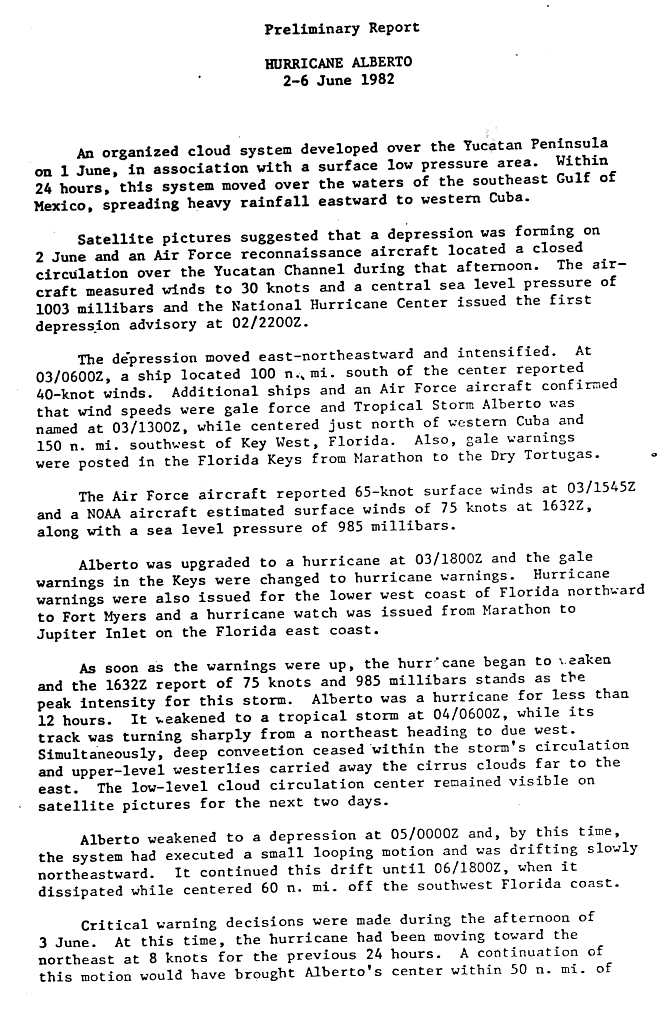
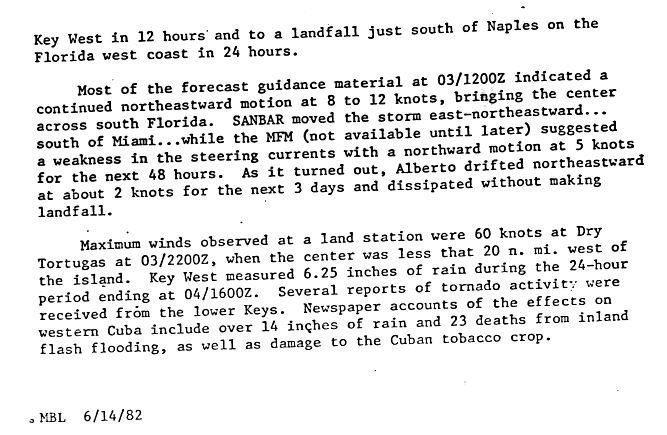
A surface low-pressure area developed an organized cloud system, leading to the formation of a tropical depression off the northeastern Yucatán Peninsula on June 2. It moved slowly northeastward through the Gulf of Mexico, and strengthened into Tropical Storm Alberto on the next day. Alberto traveled generally northeast on an erratic course, and briefly intensified to a Category 1 hurricane, one of the earliest hurricanes of June, and the earliest date for a hurricane in the Atlantic Ocean since Hurricane Alma in May 1970. Due to strengthening vertical wind shear, Alberto then quickly weakened into a tropical storm, doubled back to the west, and dissipated near the Florida Keys on June 6. Alberto is an example of a storm to enter the Gulf of Mexico and dissipating while never making landfall, which is an unusual event.
Though Alberto never made landfall, the storm dropped more than 14 in of rain over western Cuba. This led to severe flooding, considered the worst in that part of the country since 1950. Over 50,000 people were forced to evacuated and approximately 9,000 homes in Pinar del Río Province alone suffered damaged. Severe crop and agricultural losses also occurred, particularly to bananas and tobacco. Overall, Alberto caused 23 deaths and an estimated $85 million in damage in Cuba. Southern Florida experienced moderate rainfall, with a peak of 16.47 in occurring in Tavernier. The storm also spawned a few tornadoes and a waterspout in the Florida Keys, collectively causing approximately $275,000 in damage.
Subtropical Storm One
|1-min winds=60 Main article: 1982 Florida subtropical storm
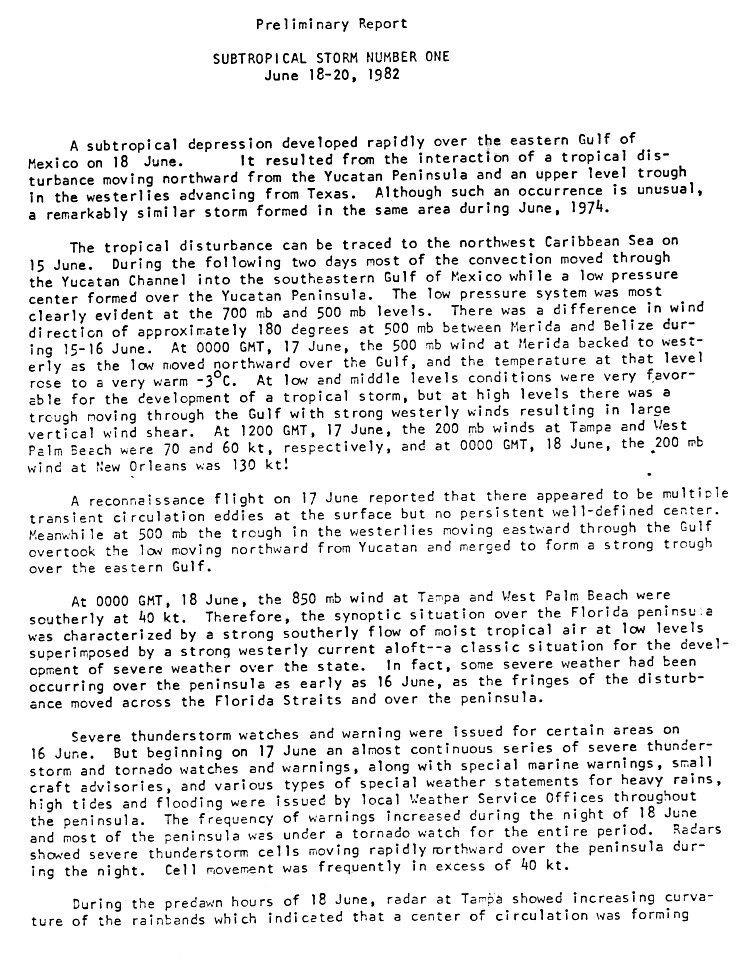
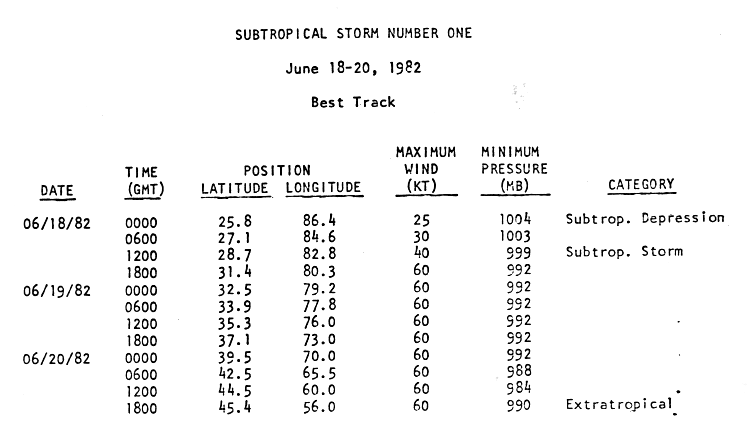
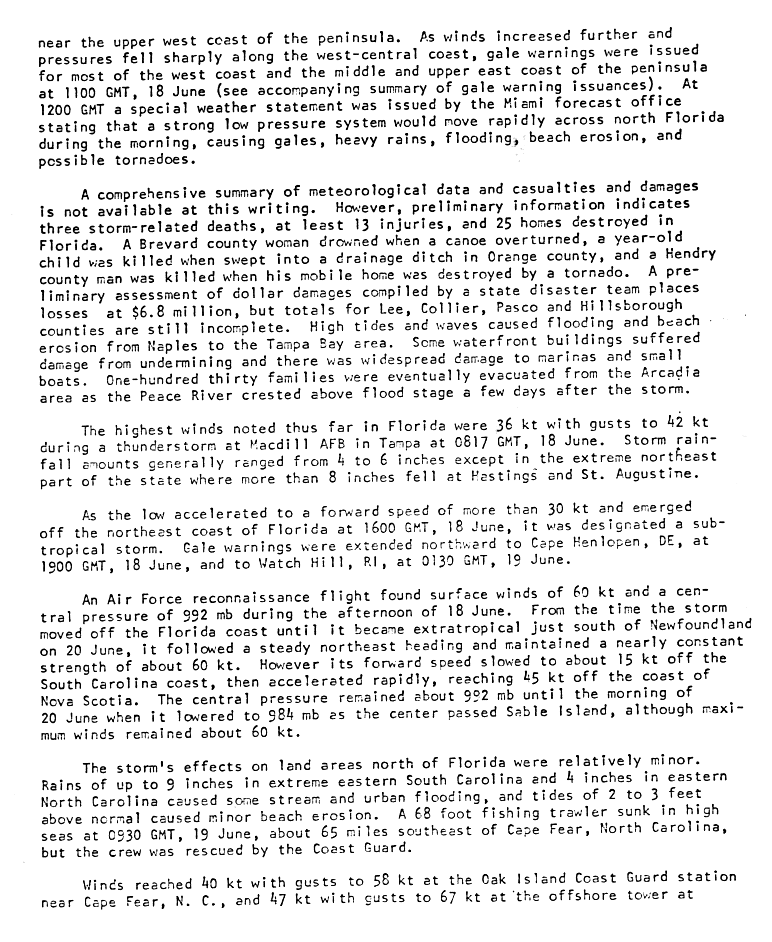
In mid-June, a tropical disturbance over the Yucatán Peninsula interacted with an upper-level trough, leading to the development of a low-pressure center. After emerging into the Gulf of Mexico, the low organized into a subtropical depression at 00:00 UTC on June 18 about 285 mi west-southwest of Naples, Florida. Twelve hours later, the system intensified into a subtropical storm shortly before making landfall near Homosassa, Florida. Moving quickly northeastward, the subtropical storm crossed the peninsula in only about four hours and emerged into the Atlantic from the First Coast. Late on June 18, sustained winds associated with the storm peaked at 70 mph (110 km/h). The system crossed the Outer Banks of North Carolina on the following day. Paralleling the coast of Nova Scotia on June 20, the storm's minimum pressure fell to 984 mbar, shortly before becoming extratropical about 100 mi south of Saint Pierre and Miquelon.
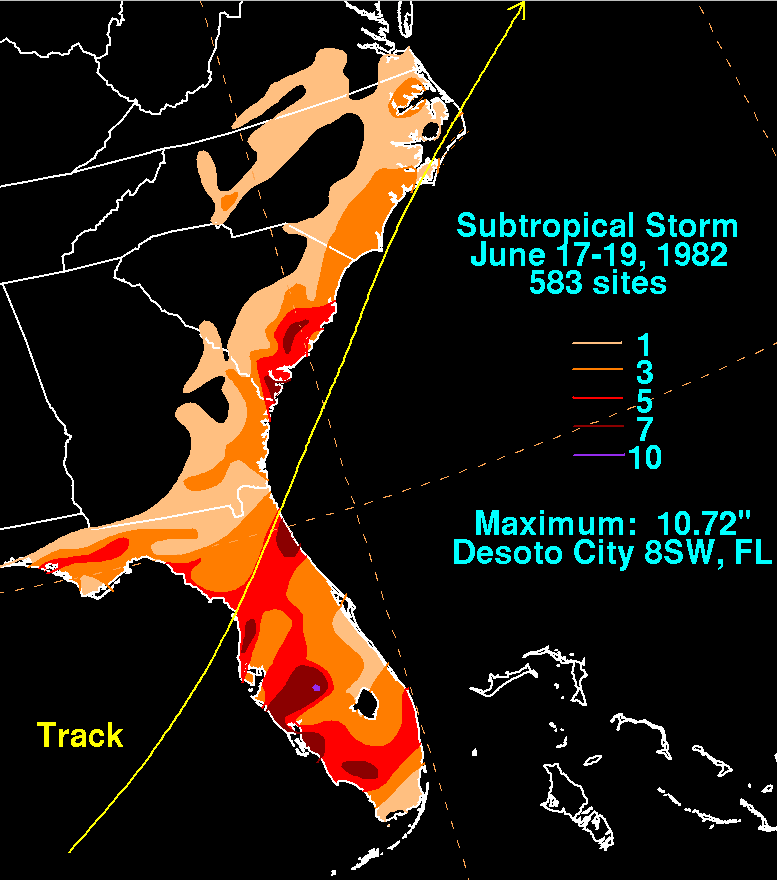
As the subtropical storm crossed Florida on June 18, numerous severe thunderstorm and tornado warnings were issued. The cyclone also dropped heavy rainfall, peaking at 10.72 in 8 mi southwest of DeSoto County. In that county, 130 families evacuated from Arcadia after the Peace River rose significantly. A total of 25 homes were destroyed in Florida, while some buildings, boats, and marinas from Naples to the Tampa Bay area suffered damage. The cyclone also killed three people in the state. In North Carolina, stream and urban flooding and minor beach erosion occurred. A fishing trawler also capsized offshore. Overall, the storm caused about $10 million in damage. This was the only subtropical or tropical cyclone to impact the Eastern seaboard this season.
Tropical Storm Beryl
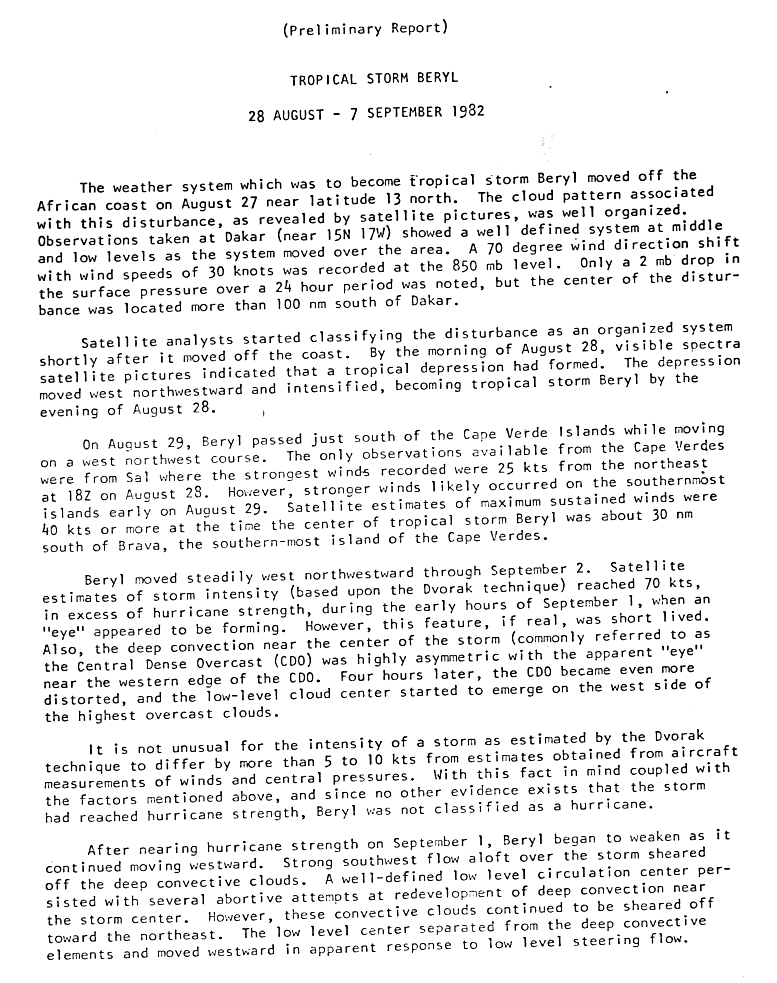
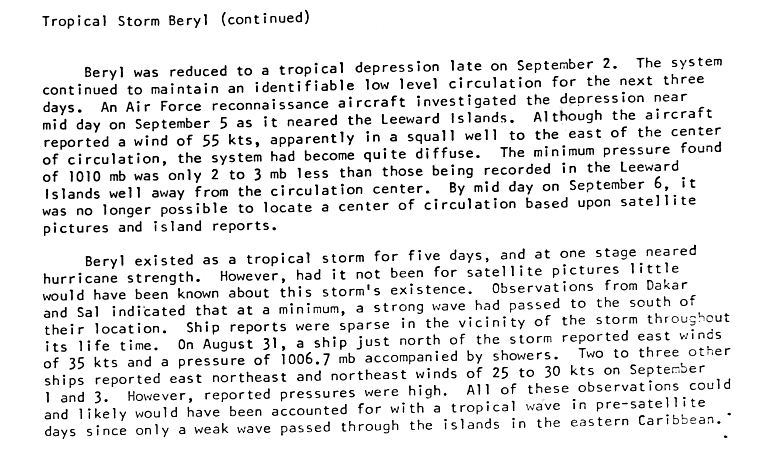
|1-min winds=60 Tropical Storm Beryl originated from a well developed tropical wave which was first noted off the eastern coast of Africa on August 27. The wave quickly organized and strengthened into Tropical Depression Two on the morning of August 28. The depression continued to intensify while moving towards the west-northwest, and was upgraded to a tropical storm that night, receiving the name Beryl. Tropical Storm Beryl that night while moving towards the west-northwest. On the morning of August 29, Beryl passed about 35 mi (55 km) south of the island of Brava, Cape Verde with winds of 45 mph. After passing by the Cape Verde Islands, Beryl gradually intensified while moving steadily towards the northwest. On August 31, satellites depicted an eye feature developing within the deep convection of the storm. However, there was uncertainty in the intensity of the storm as the Dvorak technique—a system used to estimate the intensity of a tropical cyclone—rendered a T4.2, which corresponds to an intensity of 80 mph. But, since the eye feature was located on the western side of the deep convection and the storm was slightly asymmetric, the intensity was held just below hurricane status. Beryl peaked just below hurricane status, with winds reaching 70 mph, and a minimum central pressure of 988 mbar. Only four hours later, strong wind shear from the west displaced the convection east of the center, leaving the low-level circulation exposed. Beryl weakened to a tropical depression the next day due to the lack of convection. The depression continued moving towards the west for the next three days without reintensification. However, on September 5, a reconnaissance flight into the depression found winds of 65 mph. This was determined to have been unrepresentative of the storms actual intensity as it was recorded in a squall line, a band of heavy rain and high winds, associated with Beryl. The depression became disorganized once more and by September 6, it was no longer identifiable on satellites.
Beryl produced heavy rains and gusty winds on the Cabo Verde Islands. The storm rendered approximately 2,100 people homeless and caused about $3 million in damage. Additionally, at least 3 people died and another 122 others suffered injuries. In the period after the storm's passage, the United States provided humanitarian aid and economic assistance to the country, helping the archipelago to reverse the effects of Beryl.
Tropical Depression Three
|1-min winds=30 This system formed about 525 mi east of the Lesser Antilles on September 6 and to the southeast of Tropical Storm Beryl. Due to unfavorable conditions, the National Hurricane Center (NHC) did not expect the cyclone to intensify significantly. The depression failed to strengthen beyond maximum sustained winds of 35 mph (55 km/h) and moved northwestward to west-northwestward until dissipating about 380 mi north of Puerto Rico on September 9.
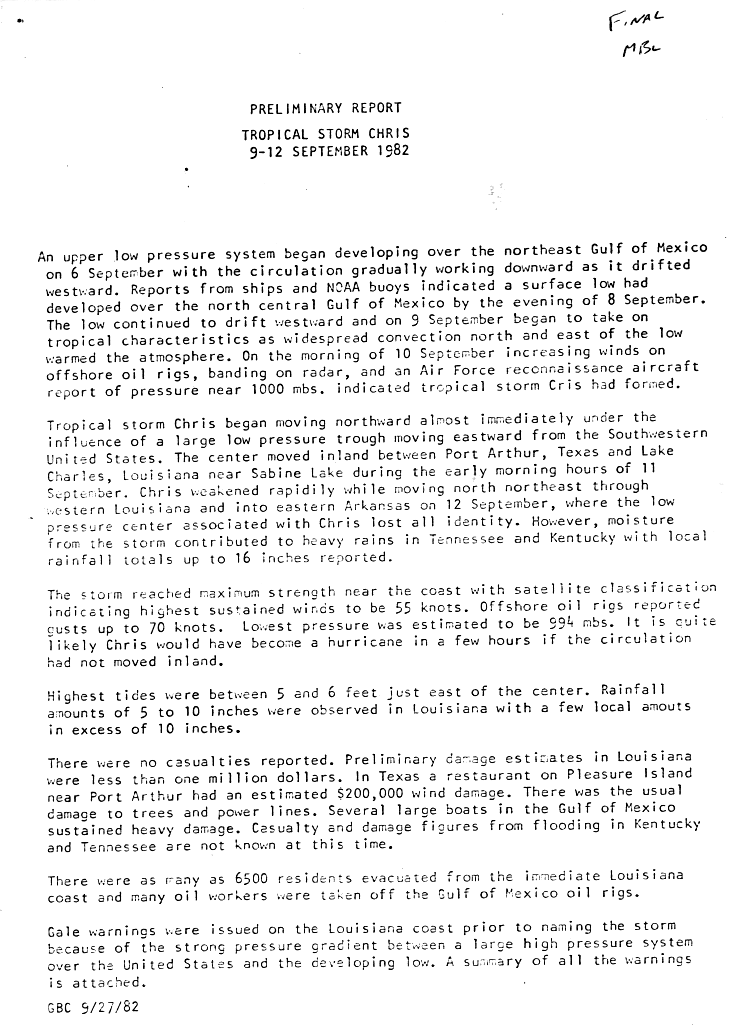
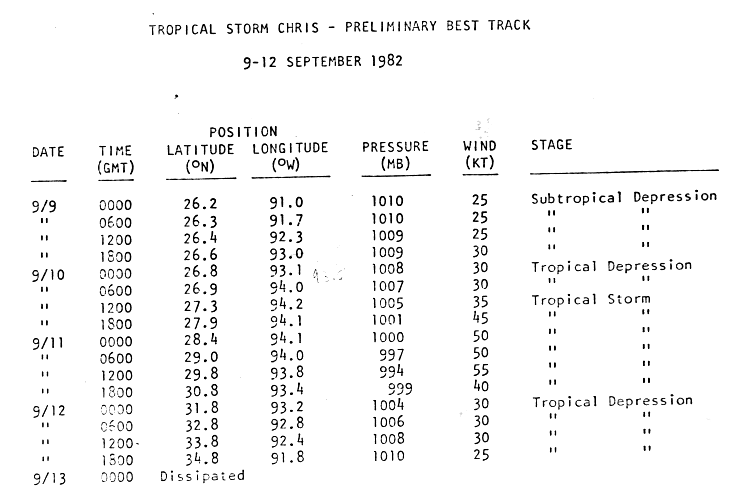
Tropical Storm Chris
|1-min winds=55 Main article: Tropical Storm Chris (1982)
A surface low-pressure area developed on September 8 in the Gulf of Mexico. It drifted westward and organized into a subtropical depression on the following day about 200 mi south of the coast of Louisiana. Under the influence of a trough of low pressure, the storm turned northward and transitioned into a tropical depression early on September 10. Several hours later, the depression intensified into Tropical Storm Chris. The storm attained peak winds of 65 mph (100 km/h) and a minimum pressure of 994 mbar before moving ashore near Sabine Pass in Texas. Chris continued inland until it dissipated over central Arkansas on September 13.
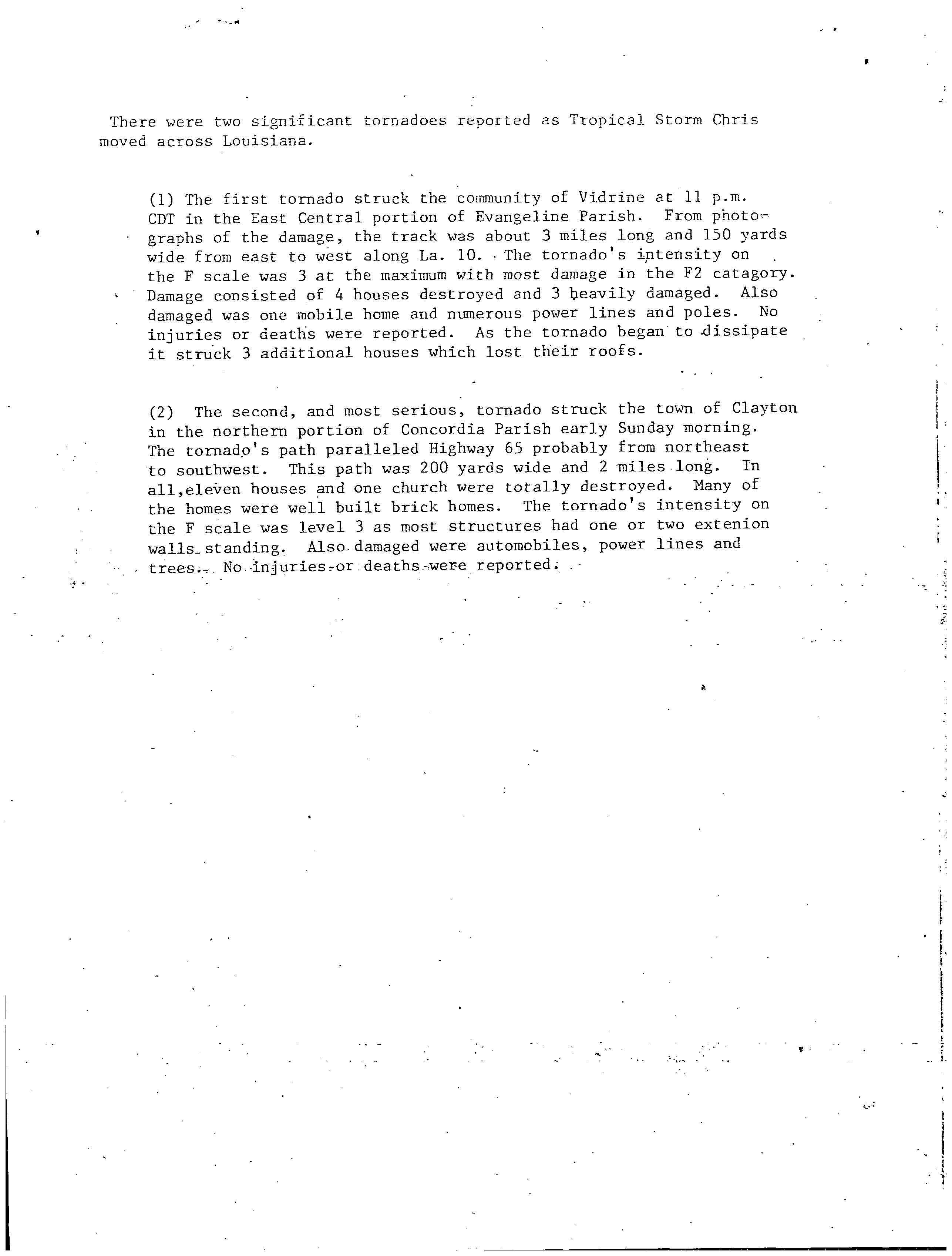
Prior to making landfall, as many as 6,500 people evacuated from southern Louisiana, while offshore many oil workers were evacuated inland. Chris produced moderate rainfall along its path, peaking at 16 in in Delhi, Louisiana, with totals of over 10 in in Mississippi and Tennessee. The rainfall caused locally severe flooding as far inland as Tennessee and Kentucky, with flooding of some rivers reported.{{cite report|year=2007|title=Summary of Significant Floods in the United States, Puerto Rico, and the Virgin Islands, 1970 Through 1989 – 1982 |publisher=U.S. Geological Survey Kansas Water Science Center|access-date=March 28, 2007|url=https://ks.water.usgs.gov/Kansas/pubs/reports/wsp.2502.sum82.html#HDR1|archive-url=https://web.archive.org/web/20070325100001/http://ks.water.usgs.gov/Kansas/pubs/reports/wsp.2502.sum82.html|archive-date=March 25, 2007|url-status=live
Hurricane Debby
|1-min winds=115 Main article: Hurricane Debby (1982)
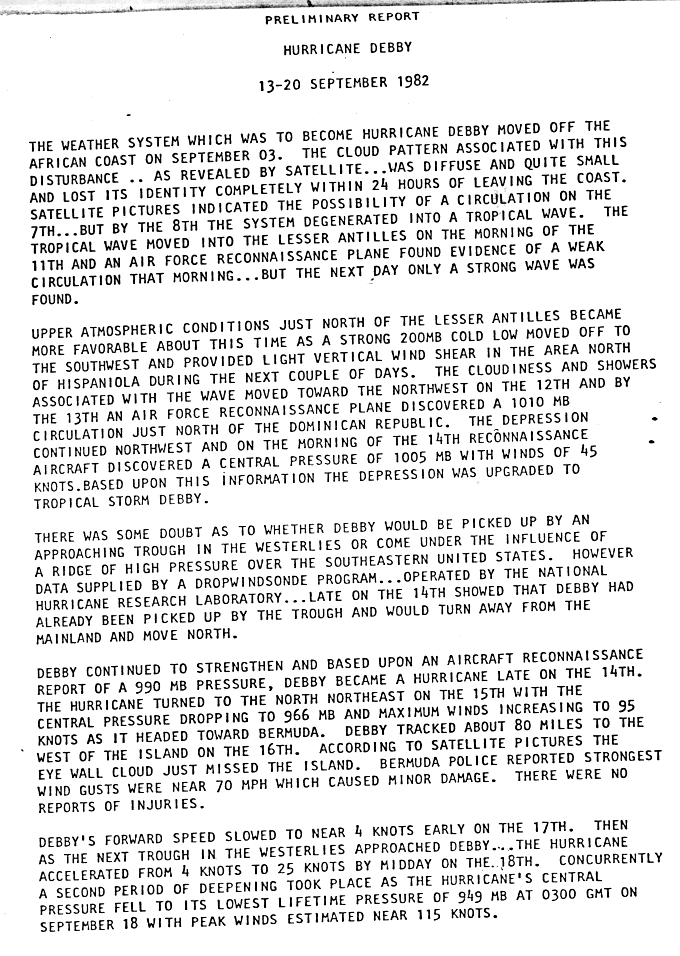
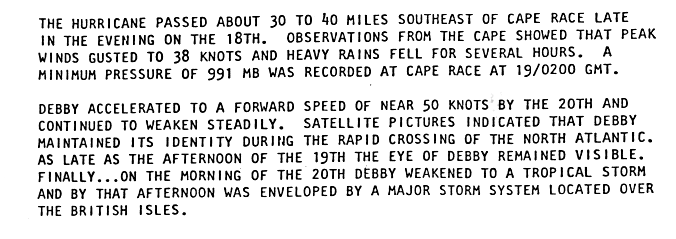
A tropical depression organized into a tropical depression near the northern coast of the Dominican Republic on September 13. Initially moving northwestward, the depression turned north and strengthened into Tropical Storm Debby on September 14, before becoming a hurricane early the next day. Debby moved north-northeastward, passing just east of Bermuda. Debby continued strengthening as it moved north, peaking as a Category 4 hurricane with winds of 130 mph and a minimum pressure of 950 mbar. The storm weakened significantly before passing to the southeast of Newfoundland on September 18, by which time Debby was a Category 2. The storm accelerated and weakened to a tropical storm on September 20 over the colder waters of the north Atlantic. Debby became extratropical over the far north Atlantic about 365 mi west of Ireland and merged with a strong non-tropical system which was developing over British Isles later that day.
The precursor disturbance to Debby dropped heavy rainfall across Puerto Rico, peaking at 12.86 in in the southwestern portion of the island. Consequently, some rivers and streams overflowed and landslides occurred, while floodwaters entered some businesses and homes in Guayanilla. One person died after the car he was a passenger accidentally drove into an overflowing stream. Wind gusts on Bermuda approached 70 mph, leaving minor damage. Debby had little effect on Atlantic Canada, outside of heavy rainfall. Tropical storm-force winds were also recorded at Cape Race. A storm development related to Debby left two dead in Finland.
Tropical Depression Six
|1-min winds=30 This tropical depression formed 900 mi west of the Cape Verde Islands on September 16, after a low-level circulation developed in association with an area of disturbed weather. Due to intense wind shear, the NHC did not initially anticipate strengthening as the depression moved west-northwestward across the Atlantic. The system moved within 750 mi east of the Leeward Islands before dissipating on September 20.
Tropical Depression Seven
|1-min winds=30 The remnant area of disturbed weather from Tropical Depression Six continued moving west-northwest into the southwest north Atlantic. A tropical depression formed from this area 275 mi west of Bermuda on September 25. The system recurved off the north and northeast, dissipating in north Atlantic shipping lanes southeast of Nova Scotia on September 27.
Tropical Storm Ernesto
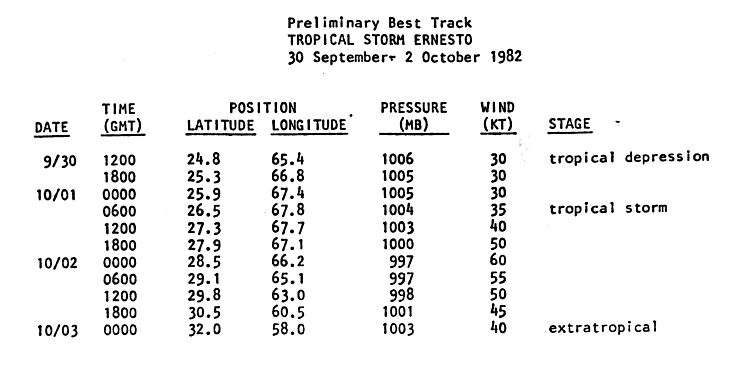
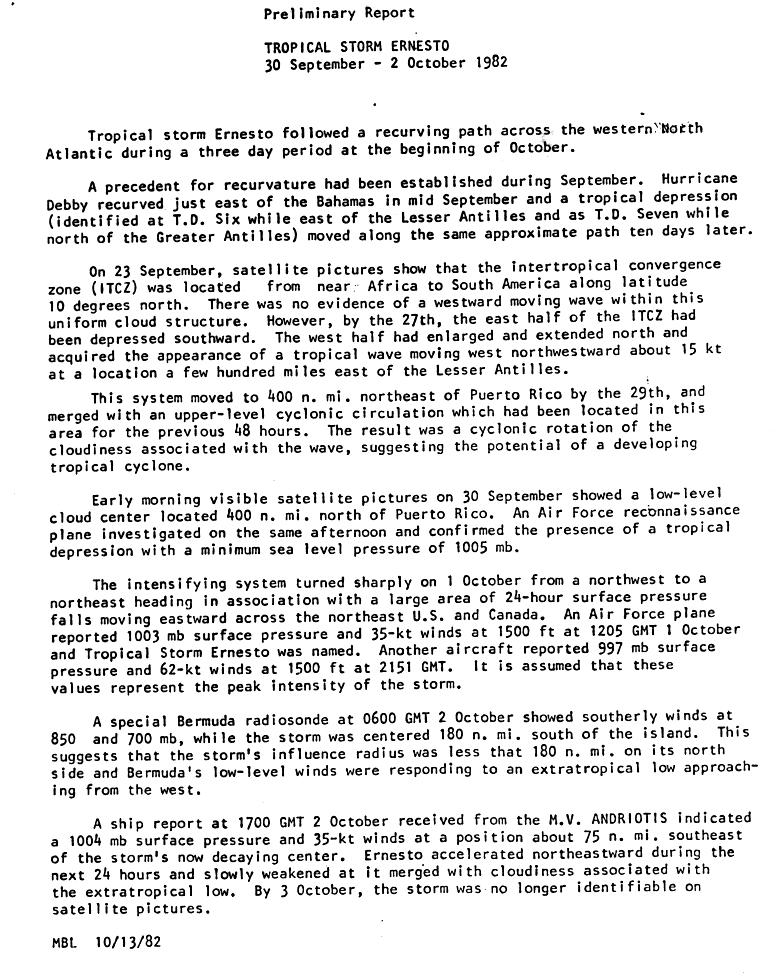
|1-min winds=60 A tropical wave emerged into the Atlantic from the west coast of Africa on September 23. The west side of the wave expanded and was designated Tropical Depression Eight on September 30 approximately 440 mi north of Puerto Rico. The depression intensified and curved sharply northeastward on October 1. A reconnaissance flight found 40 mph winds with a pressure of 1003 mbar and the depression was given the name Ernesto. A second reconnaissance flight on October 1 recorded sustained winds of 71 mph with a pressure of 997 mbar. However, on October 2, Ernesto rapidly weakened and by the next day, the cyclone became unidentifiable after merging with an extratropical low about 390 mi east of Bermuda.
Storm names
The following list of names was used for storms that formed in the North Atlantic in 1982. Each name used this season was utilized for the first time, except for the name Debby as it has previously been used on the old naming lists, but spelled as Debbie. No names were retired from this list following the season, thus it was used again for the 1988 season.
Season effects
This is a table of all of the storms that formed in the 1982 Atlantic hurricane season. It includes their name, duration, peak classification, and intensities, areas affected, damage, and death totals. Deaths in parentheses are additional and indirect (an example of an indirect death would be a traffic accident), but were still related to that storm. Damage and deaths include totals while the storm was extratropical, a wave, or a low, and all of the damage figures are in 1982 USD. |- | Alberto || || bgcolor=#|Category 1 hurricane || || || Cuba, Florida || || || |- | One || || bgcolor=#| || || || Southeastern United States, Atlantic Canada || || || |- | Beryl || || bgcolor=#| || || || Cape Verde Islands || || || |- | Three || || bgcolor=#| || || || None || || || |- | Chris || || bgcolor=#| || || || Southern United States || || || |- | Debby || || bgcolor=#|Category 4 hurricane || || || Puerto Rico, Hispaniola, Bermuda, Newfoundland || || || |- | Six || || bgcolor=#| || || Unknown || None || || || |- | Seven || || bgcolor=#| || || || None || || || |- | Ernesto || || bgcolor=#| || || || || || || |-
References
References
- (November 29, 1982). "Quietest Hurricane Season In 50 Years Drawing to End". The Palm Beach Post.
- Gilbert B. Clark. (May 1983). "Atlantic Hurricane Season of 1982". Monthly Weather Review.
- William S. Kessler (1999). [http://faculty.washington.edu/kessler/ENSO/soi-1950-98.gif Southern Oscillation Index.] University of Washington. Retrieved on May 23, 2008.
- (2006). "New Evidence For a Relationship Between Atlantic Tropical Cyclone Activity and African Dust Outbreaks". Geophysical Research Letters.
- Hurricane Research Division. (March 2011). "Atlantic basin Comparison of Original and Revised HURDAT". National Oceanic and Atmospheric Administration.
- [[National Oceanic and Atmospheric Administration]]. (May 27, 2010). "Background information: the North Atlantic Hurricane Season". [[Climate Prediction Center]].
- David Levinson. (August 20, 2008). "2005 Atlantic Ocean Tropical Cyclones". National Climatic Data Center.
- Miles B. Lawrence. (June 14, 1982). "Preliminary Report Hurricane Albert 2-6 June 1982". National Hurricane Center.
- Ken Kaye. (June 12, 2018). "June hurricane is possible but not likely". Sun-Sentinel.
- Paul J. Hebert. (July 1980). "Atlantic Hurricane Season of 1979". Monthly Weather Review.
- Miles B. Lawrence. (June 14, 1982). "Preliminary Report Hurricane Albert 2-6 June 1982". National Hurricane Center.
- (June 11, 1982). "Cuba/Hurricane". Latin America Weekly Report.
- (June 5, 1982). "Alberto termed tropical depression". [[Indiana Gazette]].
- Alfonso Chardy. (June 5, 1982). "Cuba reports 11 deaths, heavy damage from storm". [[Miami Herald]].
- Les Kjos. (June 5, 1982). "Alberto, the season's first hurricane that killed at least...". United Press International.
- EM-DAT: the International Disaster Database. (2007). "Disaster List for Cuba". Centre for Research on the Epidemiology of Disasters.
- David M. Roth. (May 12, 2022). "Hurricane Alberto - June 2-6, 1982". [[Hydrometeorological Prediction Center]].
- (1982). "Event Report for Florida". National Climatic Data Center.
- (1982). "Event Report for Florida". National Climatic Data Center.
- Joseph M. Pelissier. (July 15, 1982). "Subtropical Storm Number One June 18-20, 1982". National Hurricane Center.
- Joseph M. Pelissier. (July 15, 1982). "Subtropical Storm Number One June 18-20, 1982". National Hurricane Center.
- Joseph M. Pelissier. (July 15, 1982). "Subtropical Storm Number One June 18-20, 1982". National Hurricane Center.
- David M. Roth. (2009). "Rainfall from Subtropical Storm One". Hydrometeorological Prediction Center.
- [[National Hurricane Center]]. (1983). "Tropical Storm Beryl Preliminary Report, Page One". [[National Hurricane Center]].
- Dan Vietor. (2005). "Tropical Storm Beryl 1982 trackfile (Unisys)". Unisys Corporation.
- [[National Hurricane Center]]. (1983). "Tropical Storm Beryl Preliminary Report, Page Two". [[National Hurricane Center]].
- (1992). "Disaster History: Major Disasters Worldwide 1900 – present". [[United States Agency for International Development]].
- (2007). "U.S.-Cape Verdean Relations". Geography I.Q..
- "Third Tropical Depression Of Season Takes Shape". The Asheville Citizen.
- Gilbert B. Clark. (September 27, 1982). "Preliminary Report Tropical Storm Chris 9-12 September 1982". National Hurricane Center.
- Gilbert B. Clark. (September 27, 1982). "Preliminary Report Tropical Storm Chris 9-12 September 1982". National Hurricane Center.
- David M. Roth. (2007). "Tropical Cyclone Rainfall: Tropical Storm Chris". Hydrometeorological Prediction Center.
- Tom Grazulis of The Tornado Project and Bill McCaul of USRA Huntsville. (2007). "List of Known Tropical Cyclones Which Have Spawned Tornadoes". Tornado Project.
- (1982). "Tropical Storm Chris - Tornadoes". National Hurricane Center.
- "Preliminary Report Hurricane Debby 13-20 September 1982". National Hurricane Center.
- "Preliminary Report Hurricane Debby 13-20 September 1982". National Hurricane Center.
- Terhi K. Laurila. (16 October 2019). "The Extratropical Transition of Hurricane Debby (1982) and the Subsequent Development of an Intense Windstorm over Finland". Monthly Weather Review.
- David M. Roth. (2006). "Incipent Stage of Debby - September 12-14, 1982". Hydrometeorological Prediction Center.
- (September 1982). "Storm Data and Unusual Weather Phenomena". Storm Data.
- "1982-Debby". Environment Canada.
- (September 17, 1982). "Hurricane brushes past Bermuda". [[Galveston Daily News]].
- Paul J. Hebert. (September 16, 1982). "Tropical Depression Discussion Depression Number Six".
- (September 19, 1982). "Hurricane Debby threatens shipping interests". Galveston Daily News.
- (September 20, 1982). "Debby weakens; depression forms". Galveston Daily News.
- (September 26, 1982). "Tropical Winds Threaten Shipping". [[Syracuse Herald Journal]].
- (September 27, 1982). "Tornado kills one". Galveston Daily News.
- (September 27, 1982). "Tropical storm loses ferocity". Indiana Gazette.
- Miles B. Lawrence. (October 13, 1982). "Preliminary Report Tropical Storm Ernesto 30 September - 2 October 1982". National Hurricane Center.
- Miles B. Lawrence. (October 13, 1982). "Preliminary Report Tropical Storm Ernesto 30 September - 2 October 1982". National Hurricane Center.
- (May 1982). "National Hurricane Operations Plan". [[NOAA]] Office of the Federal Coordinator for Meteorological Services and Supporting Research.
- "Tropical Cyclone Naming History and Retired Names". National Hurricane Center.
- (May 1988). "National Hurricane Operations Plan". [[NOAA]] Office of the Federal Coordinator for Meteorological Services and Supporting Research.

This article was imported from Wikipedia and is available under the Creative Commons Attribution-ShareAlike 4.0 License. Content has been adapted to SurfDoc format. Original contributors can be found on the article history page.
Ask Mako anything about 1982 Atlantic hurricane season — get instant answers, deeper analysis, and related topics.
Research with MakoFree with your Surf account
Create a free account to save articles, ask Mako questions, and organize your research.
Sign up freeThis content may have been generated or modified by AI. CloudSurf Software LLC is not responsible for the accuracy, completeness, or reliability of AI-generated content. Always verify important information from primary sources.
Report