From Surf Wiki (app.surf) — the open knowledge base
1971 Indianapolis 500
55th running of the Indianapolis 500
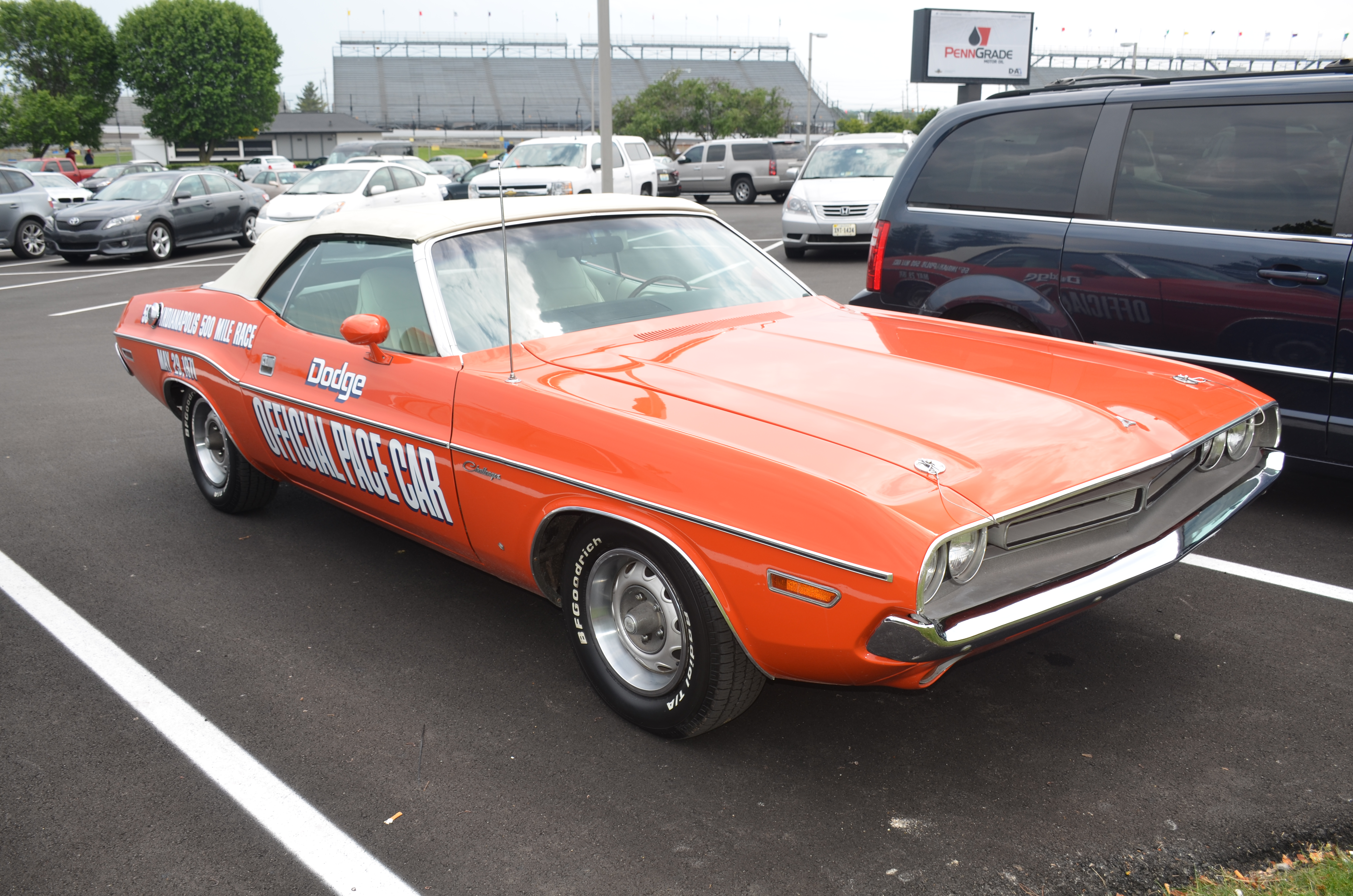
55th running of the Indianapolis 500
| Field | Value |
|---|---|
| race_name | 55th Indianapolis 500 |
| race_logo | Indy500winningcar1971.JPG |
| sanction | USAC |
| season | [1971 USAC Trail](1971-usac-championship-car-season) |
| team | Vel's Parnelli Jones Racing |
| date | May 29, 1971 |
| winner | Al Unser, Sr. |
| mph | 157.735 mph |
| pole | Peter Revson |
| pole_speed | 178.696 mph |
| fast_time | Peter Revson |
| rookie | Denny Zimmerman |
| leader | Al Unser, Sr. (103) |
| anthem | Purdue Band |
| back_home | Peter DePaolo |
| start_engines | Tony Hulman |
| pace_car | Dodge Challenger |
| pace_driver | Eldon Palmer |
| starter | Pat Vidan |
| attendance | 261,000 |
| network | ABC |
| announcers | Jim McKay, Jackie Stewart |
| previous | [1970](1970-indianapolis-500) |
| next | [1972](1972-indianapolis-500) |
The 55th 500 Mile International Sweepstakes was a motor race held at the Indianapolis Motor Speedway in Speedway, Indiana on Saturday, May 29, 1971. Al Unser Sr. won for the second consecutive year, dominating most of the race. Unser became the fourth driver to win the Indy 500 in back-to-back years, and it was his second of a record-tying four Indy victories.
The race was marred by a crash involving the pace car at the start. Eldon Palmer, a local Indianapolis-area Dodge dealer, lost control of the Dodge Challenger pace car at the south end of the pit area, and it crashed into a photographers' stand, injuring 29 people, two seriously.
Peter Revson started on the pole with a record speed of 178.696 mph, more than a mile per hour faster than any other qualifier, with defending Indy 500 winner and USAC National Champion Al Unser in the middle of the second row. Mark Donohue, who qualified in the middle of the front row, took the lead at the start of the race and led the first 50 laps. A mechanical issue ended his day, however, on lap 66, at which time Unser assumed the lead. He and Joe Leonard swapped the lead several times during the middle portion of the race, but Unser led for the final 83 laps, giving him a win for the second year in a row. He was the first to successfully defend his title since Bill Vukovich won in 1953–1954.
Unser became the first and only driver to-date to win the race on his birthday (32nd); which was also coincidentally the first time the race had ever been held on May 29, and he also became the first winner to celebrate in the new victory lane. The new winner's area, now featuring black and white checkered ramps, was moved from the south end of the pits to the "horseshoe" area immediately below the Master Control Tower, near the start/finish line.
The 1971 Indy 500 was part of the newly re-organized USAC Marlboro Championship Trail, in which dirt tracks were separated from the paved ovals and road courses. From then on, the Gold Crown championship schedule would consist solely of paved tracks (both ovals and road courses), giving the national championship a decidedly new look for the 1970s and beyond. In addition, with 500-mile races at Ontario and Pocono now on the schedule, Indy car racing formed its first "triple crown."
The city of Indianapolis celebrated its Sesquicentennial in 1971, and the occasion was reflected on the bronze and silver pit badges for the month of May. During the week leading up to the race, Indianapolis was also the site of 1971 NATO International Conference of Cities.
Race schedule
In the days leading up to the race, Speedway officials announced that female reporters would be allowed in the pit area and garage area for the first time.
For this race, and again in 1972, the race was scheduled for the Saturday of Memorial Day weekend. The Uniform Monday Holiday Act had taken effect in 1971, and the Speedway moved the race off of its original traditional fixed date of May 30. Through 1970, Memorial Day was a fixed date holiday observed on May 30 regardless of the day of the week. From 1911 to 1970, the race was scheduled for May 30, regardless of the day of the week, unless May 30 fell on a Sunday. In those cases, the race would be scheduled for Monday May 31. In 1973, it was scheduled for Monday (but rain delayed it until Wednesday), and from 1974 onward, it was scheduled for the Sunday of Memorial Day weekend.
For 1971, the traditional Carburetion Day practice, held on Wednesday May 26, was officially open to the public for the first time.
| Race schedule — May, 1971 | Sun | Mon | Tue | Wed | Thu | Fri | Sat |
|---|---|---|---|---|---|---|---|
| 1 | |||||||
| Practice | |||||||
| 2 | |||||||
| Practice | 3 | ||||||
| Practice | 4 | ||||||
| Practice | 5 | ||||||
| Practice | 6 | ||||||
| Practice | 7 | ||||||
| Practice | 8 | ||||||
| Practice | |||||||
| 9 | |||||||
| Practice | 10 | ||||||
| Practice | 11 | ||||||
| Practice | 12 | ||||||
| Practice | 13 | ||||||
| Practice | 14 | ||||||
| Practice | 15 | ||||||
| Pole Day | |||||||
| 16 | |||||||
| Time Trials | 17 | ||||||
| Practice | 18 | ||||||
| Practice | 19 | ||||||
| Practice | 20 | ||||||
| Practice | 21 | ||||||
| Practice | 22 | ||||||
| Time Trials | |||||||
| 23 | |||||||
| Bump Day | 24 | ||||||
| 25 | |||||||
| 26 | |||||||
| Carb Day | 27 | ||||||
| 28 | |||||||
| Parade | 29 | ||||||
| Indy 500 | |||||||
| 30 | |||||||
| 31 | |||||||
| Memorial Day | |||||||
| Color | Notes |
|---|---|
| Green | Practice |
| Dark Blue | Time trials |
| Silver | Race day |
| Red | Rained out* |
| Blank | No track activity |
- Includes days where track activity was significantly limited due to rain |} |}
Time trials
For the first time, USAC firmed up the rules regarding pole day qualifying. As had been done in previous years, a blind draw would be held to determine the order of qualifying on pole day. However, starting in 1971, all drivers/cars in the original qualifying draw order would be allowed the opportunity to make at least one attempt in the pole round regardless if rain halted the session and pushed it off to another day. Previously, if rain interrupted the qualifying line on pole day, any cars left in the original qualifying order at the time the track closed because of weather or the track closing at 6:00 p.m. were deemed to qualify on the next round.
During practice, McLaren arrived at the track with the new M16 chassis, drawing attention and some controversy due to presence of a large rear wing affixed to the engine cover. USAC rules through 1971 required that any aerodynamic devices were to be an integral part of the bodywork. After inspection, officials ultimately approved the device, as McLaren argued it was part of the engine cover. The engine cover was not much more than a flat, plate-like shape that ran along the top of the engine, with the wing affixed to the rear. As practice began, the McLaren entries quickly established themselves as favorites for the pole position.
Pole Day - Saturday May 15
McLaren M16 cars dominated qualifying during a record-shattering afternoon. The chassis took 1st, 2nd, and 4th starting positions, but the results were not without some surprise. Mark Donohue in the Penske-owned McLaren had broken the 180 mph barrier during practice on Thursday, establishing himself as the favorite for the pole. Donohue lucked out with an early draw on Pole Day, going out third in line. He posted a four-lap average of 177.087 mph to sit on the provisional pole. It was a new track record, but a little disappointing compared to the 180 mph lap he had two days earlier.
Later in the day, Peter Revson, driving a works McLaren, bumped Donohue from the pole with a four-lap average of 178.696 mph. This made the pole position far out of reach for the rest of the field. Donohue reportedly suffered handling problems with his car during his run, purportedly as a result of his crew refusing to dial it in as he requested. Donohue then confided with his friend Revson, who then clandestinely borrowed Donohue's chassis set-up advice to knock him off the pole. Bobby Unser in an Eagle chassis, squeezed between the three McLaren cars by qualifying third.
Second Day - Sunday May 16
Three drivers completed runs, with Bud Tingelstad (170.156 mph) the fastest of the afternoon. Mike Mosley returned after two crashes the previous day, and qualified solidly over 169 mph.https://news.google.com/newspapers?id=DrxeAAAAIBAJ&sjid=7DAMAAAAIBAJ&pg=6202,3629866&dq=indianapolis+time+trials&hl=en
Third Day - Saturday May 22
A busy day saw the field filled to 33 cars car. The day concluded with Steve Krisiloff bumping out rookie Sam Posey.https://news.google.com/newspapers?id=lbRVAAAAIBAJ&sjid=L-EDAAAAIBAJ&pg=4689,5249382&dq=indianapolis+time+trials&hl=en https://news.google.com/newspapers?id=dE0fAAAAIBAJ&sjid=kdEEAAAAIBAJ&pg=2637,6570061&dq=indianapolis+time+trials&hl=en
Bump Day - Sunday May 23
Strong winds kept speeds down, and only three drivers successfully bumped their way into the field. The windy conditions led to six crashes, and hopefuls waited until the final 45 minutes before they took to the track. The session started out with Mel Kenyon bumping out Carl Williams. Bob Harkey bumped Dick Simon, and Art Pollard got back into the field by bumping Jim McElreath.https://news.google.com/newspapers?id=j69OAAAAIBAJ&sjid=twkEAAAAIBAJ&pg=4215,4182455&dq=indianapolis+time+trials&hl=en
Jim Hurtubise once again tried to qualify his front-engined roadster, but on his second lap, hit the outside wall at the head of the main stretch. His first two laps would not have been fast enough to bump his way in. The day ended as Dick Simon (waved off) and Jerry Grant (waved off) made unsuccessful attempts.
After qualifying, car owner Dick Simon announced he was going to take over the machine qualified by John Mahler. By rule, the car must move to the rear of the grid (33rd) on race day.
Starting grid
| Row | Inside | Middle | Outside | 1 | 2 | 3 | 4 | 5 | 6 | 7 | 8 | 9 | 10 | 11 |
|---|---|---|---|---|---|---|---|---|---|---|---|---|---|---|
| 86 | USA Peter Revson | 66 | USA Mark Donohue | 2 | USA Bobby Unser | |||||||||
| 85 | NZL Denny Hulme | 1 | USA Al Unser | 9 | USA A. J. Foyt | |||||||||
| 12 | USA Lloyd Ruby | 15 | USA Joe Leonard | 5 | USA Mario Andretti | |||||||||
| 42 | USA Jim Malloy | 32 | USA Bill Vukovich II | 7 | USA Gordon Johncock | |||||||||
| 16 | USA Gary Bettenhausen | 21 | USA Cale Yarborough | 95 | USA Bentley Warren | |||||||||
| 68 | GBR David Hobbs | 58 | USA Bud Tingelstad | 38 | USA Rick Muther | |||||||||
| 4 | USA Mike Mosley | 84 | USA Donnie Allison | 80 | USA George Snider | |||||||||
| 6 | USA Roger McCluskey | 22 | USA Wally Dallenbach Sr. | 18 | USA Johnny Rutherford | |||||||||
| 98 | USA Sammy Sessions | 45 | USA Larry Dickson | 20 | USA Steve Krisiloff | |||||||||
| 43 | USA Denny Zimmerman | 41 | USA George Follmer | 23 | USA Mel Kenyon | |||||||||
| 64 | USA Art Pollard | 99 | USA Bob Harkey | 44 | USA Dick Simon |
John Mahler qualified 27th. A few days before the race, Dick Simon took over the machine, and the car was moved the rear of the field.
Alternates
- First alternate: Jim McElreath (#14, #46)
Failed to Qualify
- Tony Adamowicz **** (#17)
- Ronnie Bucknum (#17, #97)
- Larry Cannon **** (#47)
- Jimmy Caruthers **** (#64)
- Jerry Grant (#17, #78, #92)
- Jim Hurtubise (#56)
- Bruce Jacobi **** (#71)
- Bobby Johns (#97)
- Dee Jones **** (#51)
- Jerry Karl **** (#71)
- Arnie Knepper (#19, #29, #30, #65)
- Al Loquasto **** (#26, #31)
- John Mahler **** (#44) - Replaced by Dick Simon
- John Martin **** (#69)
- Sam Posey **** (#78)
- Bill Puterbaugh **** (#30)
- Les Scott **** (#50)
- Bill Simpson **** (#28)
- Jigger Sirois **** (#65)
- Dave Strickland **** (#50)
- Bruce Walkup (#94, #97, #98)
- Salt Walther **** (#77) - Failed rookie test
- Greg Weld (#31, #35)
- Carl Williams (#77)
- LeeRoy Yarbrough (#42, #48)
Pace car crash
For 1971, none of the Big Three auto manufacturers chose to supply a pace car for the Indianapolis 500, as the muscle car market had dried up and marketing efforts were shifted elsewhere. Four local Indianapolis-area Dodge dealers, spearheaded by Eldon Palmer, stepped up to supply the fleet of pace cars. The vehicle chosen was the Dodge Challenger 383-4V. Palmer was chosen to drive the pace car at the start of the race.
In preparation for the race, Palmer or an aide supposedly set up an orange flag (sometimes reported as an orange traffic cone) in the pit lane to provide himself with a braking reference point. However, there has been some dispute regarding the existence of the marker at all. One account claimed it had not been there for several days. During the parade and pace lap, Tony Hulman, ABC broadcaster Chris Schenkel, and John Glenn served as passengers in the car. Palmer practiced the run the day before the race.
As the field came down the main stretch for the start, Palmer pulled into the pits and accelerated down the pit lane. Palmer continued to accelerate, under the impression that he was required to cross the start/finish line in the pit area prior to, or at the same time, as the race cars doing so out on the track. His reference flag (or cone) had been removed and he missed his planned braking spot. Moving upwards of perhaps 125 mph, Palmer realized he was going too fast, and rather than perilously veering back on to the racing surface, he braked heavily and lost control. Palmer had refused to blame the car, stating afterwards that "the equipment was good, disc brakes. I just didn't have enough track to stop." However, testimony during a 1974 civil trial stated that the pace car was supposed to be ordered with power disc brakes, but was built and delivered to the track with only manual drum brakes. Furthermore, Palmer's attorney added that a security guard running out of the way effectively blocked the exit to the pits.
The car swerved and skidded to the end of the pit lane, and crashed into a photographers' stand. The stand toppled and collapsed, injuring 29 people, but no one was killed. Dr. Vicente Alvarez, a freelance photographer from Argentina, was one of two on the stand who were seriously injured. Alvarez survived, and died in the late 1990s. Tony Hulman suffered a sprained ankle, and a shaken Schenkel sat out the remainder of the ABC broadcast.
Palmer maintained possession of the car, and eventually it was repaired and restored. Ultimately, Palmer himself was largely exonerated. Indiana businessman Steven Cage purchased the vehicle in 2006, and it currently is displayed at his RPM Collection in Fishers, Indiana. Reactions of the accident were very critical afterwards, and for the next several years, the pace car drivers selected were either former Indy drivers or people with racing experience.
Race details
First half
Despite the pace car crash near the exit of the pits, the green light came on, and the race continued underway. Mark Donohue grabbed the lead from the middle of the front row.
On lap 12, Steve Krisiloff blew an engine, spilling oil in turn three. Mel Kenyon slid in the oil making contact with the turn three wall. Gordon Johncock and Mario Andretti continued to race each other through three yellow lights. When they arrived at turn three, track workers were on the scene beside the Kenyon machine. Having not heeded the yellow lights, both Johncock and Andretti slid in the oil with Johncock crashing into the Kenyon car, running over the top of it and destroying both cars. Kenyon, fortunately, had seen Johncock coming and dropped back down into the cockpit of his race car. Johncock's car left a tire mark on the top of Kenyon's helmet. The only injury received by Kenyon was a small cut on his shin from the dash board being pushed down onto his legs. All four cars were out of the race, and the yellow light was on for 19 minutes to clean up the accident.
Donohue led the first 50 laps, then the lead traded hands during pit stops between Joe Leonard, Bobby Unser, as well as Al Unser. After leading a total of 52 laps, Mark Donohue dropped out on lap 66 with broken gears. He came to a stop in turn four, and parked the car in the infield, just north of the entrance to the pits.
Lloyd Ruby led at the halfway point.
Second half
On lap 111, David Hobbs blew an engine on the main stretch. Rick Muther spun in the oil, his car veered to the inside wall, then bounced across the track, hitting Hobbs, and lifting up on two wheels. Hobbs' car was pushed head-on into the wall, but he was not seriously injured. Both cars slid down the main stretch, and came to a rest just beyond the start/finish line. The track was blocked except for a narrow portion on the inside where other cars were able to skirt by. The incident happened right in front of Al Unser, who was the leading the race at the moment. The yellow light came on for 12 minutes to clean up the crash.
After a series of pit stops by the leaders under the yellow, the green eventually came back out with Al Unser leading.
With less than 40 laps to go, Al Unser continued to lead, with Peter Revson second, Bobby Unser third, and A. J. Foyt fourth.
On lap 167, Mike Mosley lost a wheel in turn 4. He smacked the outside wall in turn four hard, then bounced across the track and hit the inside wall. Leader Al Unser was ahead of the crash, and second place Peter Revson just slipped by. Third place Bobby Unser spun to avoid Mosley, and hit the outside wall. Mosley's car then crashed into the parked cars of Mark Donohue and Steve Krisiloff, that were sitting near the entrance to the pits. A fire broke out, at which time 8th running Gary Bettenhausen stopped his car, and ran to the scene to help. Fire crews quickly doused the flames, and Mosley suffered a broken leg. Bill Vukovich II also spun to avoid the crash, but he was able to continue. The yellow remained on for 22 minutes to clean up the crash.
The green light came back on with less than 20 laps to go. Al Unser held a comfortable lead, and won his second 500 in a row. Despite four yellows for 53 minutes (about 48 laps), the average speed of 157.735 mph was a new record at the time. Bettenhausen, who finished 10th, was given a cheer at the finish for stopping to help Mosley and Unser on lap 164.
Box score
| Finish | Start | No | Name | Chassis | Engine | Tires | Qual | Laps | Status | 1 | 2 | 3 | 4 | 5 | 6 | 7 | 8 | 9 | 10 | 11 | 12 | 13 | 14 | 15 | 16 | 17 | 18 | 19 | 20 | 21 | 22 | 23 | 24 | 25 | 26 | 27 | 28 | 29 | 30 | 31 | 32 | 33 |
|---|---|---|---|---|---|---|---|---|---|---|---|---|---|---|---|---|---|---|---|---|---|---|---|---|---|---|---|---|---|---|---|---|---|---|---|---|---|---|---|---|---|---|
| 5 | 1 | USA Al Unser **** | Colt | Ford V-8 | 174.621 | 200 | 157.735 mph | |||||||||||||||||||||||||||||||||||
| 1 | 86 | USA Peter Revson | McLaren M16 | Offenhauser | 178.695 | 200 | +22.91 | |||||||||||||||||||||||||||||||||||
| 6 | 9 | USA A. J. Foyt **** | Coyote | Ford V-8 | 174.317 | 200 | +2:01.82 | |||||||||||||||||||||||||||||||||||
| 10 | 42 | USA Jim Malloy | Eagle | Offenhauser | 171.838 | 200 | +3:53.14 | |||||||||||||||||||||||||||||||||||
| 11 | 32 | USA Bill Vukovich II | Brabham | Offenhauser | 171.674 | 200 | +3:54.19 | |||||||||||||||||||||||||||||||||||
| 20 | 84 | USA Donnie Allison | Coyote | Ford V-8 | 171.903 | 199 | Flagged (-1 lap) | |||||||||||||||||||||||||||||||||||
| 17 | 58 | USA Bud Tingelstad | Brabham | Offenhauser | 170.156 | 198 | Flagged (-2 laps) | |||||||||||||||||||||||||||||||||||
| 28 | 43 | USA Denny Zimmerman **** | Vollstedt | Offenhauser | 169.755 | 189 | Flagged (-11 laps) | |||||||||||||||||||||||||||||||||||
| 22 | 6 | USA Roger McCluskey | Kuzma | Ford V-8 | 171.241 | 188 | Flagged (-12 laps) | |||||||||||||||||||||||||||||||||||
| 13 | 16 | USA Gary Bettenhausen | Gerhardt | Offenhauser | 171.233 | 178 | Flagged (-22 laps) | |||||||||||||||||||||||||||||||||||
| 7 | 12 | USA Lloyd Ruby | Mongoose | Ford V-8 | 173.821 | 174 | Gears | |||||||||||||||||||||||||||||||||||
| 3 | 2 | USA Bobby Unser **** | Eagle | Offenhauser | 175.816 | 164 | Crash T4 | |||||||||||||||||||||||||||||||||||
| 19 | 4 | USA Mike Mosley | Eagle Watson | Ford V-8 | 169.579 | 159 | Crash T4 | |||||||||||||||||||||||||||||||||||
| 33 | 44 | USA Dick Simon | Vollstedt | Ford V-8 | 170.165 | 151 | Flagged (-23 laps) | |||||||||||||||||||||||||||||||||||
| 29 | 41 | USA George Follmer | Kingfish | Offenhauser | 169.205 | 147 | Piston | |||||||||||||||||||||||||||||||||||
| 14 | 21 | USA Cale Yarborough | Mongoose | Ford V-8 | 170.770 | 140 | Cam Cover | |||||||||||||||||||||||||||||||||||
| 4 | 85 | NZL Denis Hulme | McLaren M16 | Offenhauser | 174.910 | 137 | Valve | |||||||||||||||||||||||||||||||||||
| 24 | 18 | USA Johnny Rutherford | Eagle | Offenhauser | 171.152 | 128 | Flagged (-46 laps) | |||||||||||||||||||||||||||||||||||
| 8 | 15 | USA Joe Leonard | Colt | Ford V-8 | 172.761 | 123 | Turbocharger | |||||||||||||||||||||||||||||||||||
| 16 | 68 | GBR David Hobbs **** | Lola | Ford V-8 | 169.571 | 107 | Crash FS | |||||||||||||||||||||||||||||||||||
| 18 | 38 | USA Rick Muther | Brawner | Offenhauser | 169.972 | 85 | Crash FS | |||||||||||||||||||||||||||||||||||
| 32 | 99 | USA Bob Harkey | Gerhardt | Offenhauser | 169.197 | 77 | Gears | |||||||||||||||||||||||||||||||||||
| 15 | 95 | USA Bentley Warren **** | Eagle | Offenhauser | 169.627 | 76 | Gears | |||||||||||||||||||||||||||||||||||
| 23 | 22 | USA Wally Dallenbach Sr. | Kuzma | Offenhauser | 171.159 | 69 | Valve | |||||||||||||||||||||||||||||||||||
| 2 | 66 | USA Mark Donohue | McLaren M16 | Offenhauser | 177.087 | 66 | Gears | |||||||||||||||||||||||||||||||||||
| 31 | 64 | USA Art Pollard | Scorpion | Ford V-8 | 169.499 | 45 | Valve | |||||||||||||||||||||||||||||||||||
| 25 | 98 | USA Sammy Sessions | Lola | Ford V-8 | 170.357 | 43 | Valve | |||||||||||||||||||||||||||||||||||
| 26 | 45 | USA Larry Dickson | Kingfish | Offenhauser | 170.285 | 33 | Engine | |||||||||||||||||||||||||||||||||||
| 12 | 7 | USA Gordon Johncock | McLaren M15 | Offenhauser | 171.388 | 11 | Crash T3 | |||||||||||||||||||||||||||||||||||
| 9 | 5 | USA Mario Andretti **** | McNamara | Ford V-8 | 172.612 | 11 | Crash T3 | |||||||||||||||||||||||||||||||||||
| 27 | 20 | USA Steve Krisiloff **** | McNamara | Ford V-8 | 169.835 | 10 | Oil Leak | |||||||||||||||||||||||||||||||||||
| 30 | 23 | USA Mel Kenyon | Kuzma | Ford V-8 | 170.205 | 10 | Crash T3 | |||||||||||||||||||||||||||||||||||
| 21 | 80 | USA George Snider | Eagle | Offenhauser | 171.600 | 6 | Stalled |
**** Former Indianapolis 500 winner
**** Indianapolis 500 Rookie
Race statistics
| Lap Leaders | Laps | Leader |
|---|---|---|
| 1–50 | Mark Donohue | |
| 51–52 | Joe Leonard | |
| 53–64 | Bobby Unser | |
| 65–66 | Mark Donohue | |
| 67–72 | Al Unser Sr. | |
| 73–82 | Joe Leonard | |
| 83–87 | Al Unser Sr. | |
| 88–94 | Joe Leonard | |
| 95–98 | Al Unser Sr. | |
| 99–101 | Lloyd Ruby | |
| 102–110 | Bobby Unser | |
| 111–115 | Al Unser Sr. | |
| 116–117 | Joe Leonard | |
| 118–200 | Al Unser Sr. |
| Total laps led | Driver | Laps |
|---|---|---|
| Al Unser Sr. | 103 | |
| Mark Donohue | 52 | |
| Bobby Unser | 21 | |
| Joe Leonard | 21 | |
| Lloyd Ruby | 3 |
| Yellow Lights: 4 for 53 minutes (48 laps) | Laps* | Reason |
|---|---|---|
| 4–5 | Dennis Hulme spun in turn 4 ( | |
| 9–10 | Rick Muther stalled in turn 4 ( | |
| 12–28 | Steve Krisloff blew engine in turn 3 | |
| Johncock, Andretti, Kenyon crashed (19 minutes) | ||
| 113–120 | David Hobbs, Rick Muther crash on frontstretch (12 minutes) | |
| 167–187 | Mike Mosley, Bobby Unser crash in turn 4 (22 minutes) | |
| * - *Approximate lap counts* |
| Tire participation chart | Supplier | No. of starters |
|---|---|---|
| **Goodyear** | **15** | |
| **Firestone** | **18*** | |
| * - *Denotes race winner* |
Qualifying chronology
| Att | ||||||||||||||||||||||||||||||||||||||||||||||||||||||||||||||||||||||||||||
|---|---|---|---|---|---|---|---|---|---|---|---|---|---|---|---|---|---|---|---|---|---|---|---|---|---|---|---|---|---|---|---|---|---|---|---|---|---|---|---|---|---|---|---|---|---|---|---|---|---|---|---|---|---|---|---|---|---|---|---|---|---|---|---|---|---|---|---|---|---|---|---|---|---|---|---|---|
| # | Time | Car | ||||||||||||||||||||||||||||||||||||||||||||||||||||||||||||||||||||||||||
| # | Driver | Laps | Qual | |||||||||||||||||||||||||||||||||||||||||||||||||||||||||||||||||||||||||
| Time | Qual | |||||||||||||||||||||||||||||||||||||||||||||||||||||||||||||||||||||||||||
| Speed | Rank | Start | Comment | Saturday, May 15, 1971 | 1 | 2 | 3 | 4 | 5 | 6 | 7 | 8 | 9 | 10 | 11 | 12 | 13 | 14 | 15 | 16 | 17 | 18 | 19 | 20 | 21 | 22 | 23 | 24 | 25 | 26 | 27 | 28 | 29 | 30 | 31 | 32 | 33 | Sunday May 16, 1971 | 34 | 35 | 36 | Saturday May 22, 1971 | 37 | 38 | 39 | 40 | 41 | 42 | 43 | 44 | 45 | 46 | 47 | 48 | 49 | 50 | 51 | 52 | 53 | 54 | 55 | Sunday May 23, 1971 | 56 | 57 | 58 | 59 | 60 | 61 | 62 | |||||||
| 4 | Mike Mosley | 0 | — | — | — | — | accident | |||||||||||||||||||||||||||||||||||||||||||||||||||||||||||||||||||||
| 9 | A. J. Foyt | 4 | 3:26.52 | 174.317 | 6 | 6 | ||||||||||||||||||||||||||||||||||||||||||||||||||||||||||||||||||||||
| 66 | Mark Donohue | 4 | 3:23.29 | 177.087 | 2 | 2 | ||||||||||||||||||||||||||||||||||||||||||||||||||||||||||||||||||||||
| 32 | Billy Vukovich II | 4 | 3:29.70 | 171.674 | 12 | 11 | ||||||||||||||||||||||||||||||||||||||||||||||||||||||||||||||||||||||
| 10 | Dick Simon | 4 | 3:33.14 | 168.903 | — | — | Bumped by #99 | |||||||||||||||||||||||||||||||||||||||||||||||||||||||||||||||||||||
| 14 | Jim McElreath | 3 | — | — | — | — | Waved off | |||||||||||||||||||||||||||||||||||||||||||||||||||||||||||||||||||||
| 16 | Gary Bettenhausen | 4 | 3:30.24 | 171.233 | 16 | 13 | ||||||||||||||||||||||||||||||||||||||||||||||||||||||||||||||||||||||
| 68 | David Hobbs | 4 | 3:32.30 | 169.571 | 30 | 16 | ||||||||||||||||||||||||||||||||||||||||||||||||||||||||||||||||||||||
| 1 | Al Unser | 4 | 3:26.16 | 174.622 | 5 | 5 | ||||||||||||||||||||||||||||||||||||||||||||||||||||||||||||||||||||||
| 7 | Gordon Johncock | 4 | 3:30.05 | 171.388 | 14 | 12 | ||||||||||||||||||||||||||||||||||||||||||||||||||||||||||||||||||||||
| 42 | Jim Malloy | 4 | 3:29.50 | 171.838 | 11 | 10 | ||||||||||||||||||||||||||||||||||||||||||||||||||||||||||||||||||||||
| 86 | Peter Revson | 4 | 3:21.46 | 178.696 | 1 | 1 | ||||||||||||||||||||||||||||||||||||||||||||||||||||||||||||||||||||||
| 77 | Carl Williams | 1 | — | — | — | — | Waved off | |||||||||||||||||||||||||||||||||||||||||||||||||||||||||||||||||||||
| 8 | Art Pollard | 3 | — | — | — | — | Waved off | |||||||||||||||||||||||||||||||||||||||||||||||||||||||||||||||||||||
| 18 | Johnny Rutherford | 0 | — | — | — | — | Blown engine | |||||||||||||||||||||||||||||||||||||||||||||||||||||||||||||||||||||
| 15 | Joe Leonard | 4 | 3:28.38 | 172.761 | 8 | 8 | ||||||||||||||||||||||||||||||||||||||||||||||||||||||||||||||||||||||
| 2 | Bobby Unser | 4 | 3:24.76 | 175.816 | 3 | 3 | ||||||||||||||||||||||||||||||||||||||||||||||||||||||||||||||||||||||
| 83 | Donnie Allison | 1 | — | — | — | — | Waved off | |||||||||||||||||||||||||||||||||||||||||||||||||||||||||||||||||||||
| 28 | Bill Simpson | 4 | 3:33.94 | 168.271 | — | — | Bumped by #45 | |||||||||||||||||||||||||||||||||||||||||||||||||||||||||||||||||||||
| 12 | Lloyd Ruby | 4 | 3:27.11 | 173.821 | 7 | 7 | ||||||||||||||||||||||||||||||||||||||||||||||||||||||||||||||||||||||
| 5 | Mario Andretti | 4 | 3:28.56 | 172.612 | 9 | 9 | ||||||||||||||||||||||||||||||||||||||||||||||||||||||||||||||||||||||
| 85 | Denis Hulme | 0 | — | — | — | — | Pulled off | |||||||||||||||||||||||||||||||||||||||||||||||||||||||||||||||||||||
| 45 | Larry Dickson | 3 | — | — | — | — | Accident | |||||||||||||||||||||||||||||||||||||||||||||||||||||||||||||||||||||
| 14 | Jim McElreath | 3 | — | — | — | — | Waved off | |||||||||||||||||||||||||||||||||||||||||||||||||||||||||||||||||||||
| 83 | Donnie Allison | 4 | 3:34.12 | 168.130 | — | — | Withdrawn 5/22 | |||||||||||||||||||||||||||||||||||||||||||||||||||||||||||||||||||||
| 85 | Denis Hulme | 4 | 3:25.82 | 174.910 | 4 | 4 | ||||||||||||||||||||||||||||||||||||||||||||||||||||||||||||||||||||||
| 92 | Jerry Grant | 4 | 3:33.66 | 168.492 | — | — | Bumped by #78 | |||||||||||||||||||||||||||||||||||||||||||||||||||||||||||||||||||||
| 21 | Cale Yarborough | 4 | 3:30.81 | 170.770 | 19 | 14 | ||||||||||||||||||||||||||||||||||||||||||||||||||||||||||||||||||||||
| 14 | Jim McElreath | 4 | 3:34.52 | 167.817 | — | — | Bumped by #6; Reinstated by #83; Bumped by #84 | |||||||||||||||||||||||||||||||||||||||||||||||||||||||||||||||||||||
| 38 | Rick Muther | 3 | — | — | — | — | Blown engine | |||||||||||||||||||||||||||||||||||||||||||||||||||||||||||||||||||||
| 77 | Carl Williams | 4 | 3:33.29 | 168.784 | — | — | Bumped by #23 | |||||||||||||||||||||||||||||||||||||||||||||||||||||||||||||||||||||
| 8 | Art Pollard | 4 | 3:33.82 | 168.366 | — | — | Bumped by #46 | |||||||||||||||||||||||||||||||||||||||||||||||||||||||||||||||||||||
| 95 | Bentley Warren | 4 | 3:32.23 | 169.627 | 28 | 15 | ||||||||||||||||||||||||||||||||||||||||||||||||||||||||||||||||||||||
| 4 | Mike Mosley | 0 | 3:32.29 | 169.579 | 29 | 19 | ||||||||||||||||||||||||||||||||||||||||||||||||||||||||||||||||||||||
| 38 | Rick Muther | 0 | 3:31.80 | 169.972 | 25 | 18 | ||||||||||||||||||||||||||||||||||||||||||||||||||||||||||||||||||||||
| 58 | Bud Tingelstad | 0 | 3:31.57 | 170.156 | 24 | 17 | ||||||||||||||||||||||||||||||||||||||||||||||||||||||||||||||||||||||
| 80 | George Snider | 4 | 3:29.79 | 171.600 | 13 | 21 | ||||||||||||||||||||||||||||||||||||||||||||||||||||||||||||||||||||||
| 43 | Denny Zimmerman | 4 | 3:32.07 | 169.755 | 27 | 28 | ||||||||||||||||||||||||||||||||||||||||||||||||||||||||||||||||||||||
| 44 | John Mahler | 3 | — | — | — | — | ||||||||||||||||||||||||||||||||||||||||||||||||||||||||||||||||||||||
| 98 | Sam Sessions | 4 | 3:31.32 | 170.358 | 20 | 25 | ||||||||||||||||||||||||||||||||||||||||||||||||||||||||||||||||||||||
| 22 | Wally Dallenbach | 4 | 3:30.33 | 171.160 | 17 | 23 | ||||||||||||||||||||||||||||||||||||||||||||||||||||||||||||||||||||||
| 94 | Bruce Walkup | 2 | — | — | — | — | Waved off | |||||||||||||||||||||||||||||||||||||||||||||||||||||||||||||||||||||
| 45 | Larry Dickson | 3 | — | — | — | — | Waved off | |||||||||||||||||||||||||||||||||||||||||||||||||||||||||||||||||||||
| 41 | George Follmer | 4 | 3:32.76 | 169.205 | 32 | 29 | ||||||||||||||||||||||||||||||||||||||||||||||||||||||||||||||||||||||
| 44 | John Mahler | 4 | 3:31.56 | 170.164 | 23 | 33 | Replaced by Dick Simon | |||||||||||||||||||||||||||||||||||||||||||||||||||||||||||||||||||||
| 18 | Johnny Rutherford | 4 | 3:30.34 | 171.151 | 18 | 24 | ||||||||||||||||||||||||||||||||||||||||||||||||||||||||||||||||||||||
| 6 | Roger McCluskey | 2 | — | — | — | — | Out of fuel | |||||||||||||||||||||||||||||||||||||||||||||||||||||||||||||||||||||
| 6 | Roger McCluskey | 4 | 3:30.23 | 171.241 | 15 | 22 | Bumps #14 | |||||||||||||||||||||||||||||||||||||||||||||||||||||||||||||||||||||
| 20 | Steve Krisiloff | 0 | — | — | — | — | Pulled off | |||||||||||||||||||||||||||||||||||||||||||||||||||||||||||||||||||||
| 84 | Donnie Allison | 4 | 3:29.42 | 171.903 | 10 | 20 | Bumps #14 | |||||||||||||||||||||||||||||||||||||||||||||||||||||||||||||||||||||
| 45 | Larry Dickson | 4 | 3:31.41 | 170.285 | 21 | 26 | Bumps #28 | |||||||||||||||||||||||||||||||||||||||||||||||||||||||||||||||||||||
| 46 | Jim McElreath | 4 | 3:32.81 | 169.165 | — | — | Bumps #8; Bumped by #64 | |||||||||||||||||||||||||||||||||||||||||||||||||||||||||||||||||||||
| 94 | Bruce Walkup | 1 | — | — | — | — | Pulled off | |||||||||||||||||||||||||||||||||||||||||||||||||||||||||||||||||||||
| 78 | Sam Posey | 4 | 3:33.30 | 168.776 | — | — | Bumps #92; Bumped by #20 | |||||||||||||||||||||||||||||||||||||||||||||||||||||||||||||||||||||
| 20 | Steve Krisiloff | 4 | 3:31.97 | 169.835 | 26 | 27 | Bumps #78 | |||||||||||||||||||||||||||||||||||||||||||||||||||||||||||||||||||||
| 23 | Mel Kenyon | 4 | 3:31.51 | 170.205 | 22 | 30 | Bumps #77 | |||||||||||||||||||||||||||||||||||||||||||||||||||||||||||||||||||||
| 99 | Bob Harkey | 4 | 3:32.77 | 169.197 | 33 | 32 | Bumps #10 | |||||||||||||||||||||||||||||||||||||||||||||||||||||||||||||||||||||
| 17 | Jerry Grant | 1 | — | — | — | — | Waved off | |||||||||||||||||||||||||||||||||||||||||||||||||||||||||||||||||||||
| 64 | Art Pollard | 4 | 3:32.39 | 169.500 | 31 | 31 | Bumps #46 | |||||||||||||||||||||||||||||||||||||||||||||||||||||||||||||||||||||
| 56 | Jim Hurtubise | 2 | — | — | — | — | Accident | |||||||||||||||||||||||||||||||||||||||||||||||||||||||||||||||||||||
| 33 | Dick Simon | 1 | — | — | — | — | Waved off | |||||||||||||||||||||||||||||||||||||||||||||||||||||||||||||||||||||
| 17 | Jerry Grant | 1 | — | — | — | — | Waved off |
Broadcasting
Radio
The race was carried live on the IMS Radio Network. It was carried on over 1,200 affiliates, including shortwave transmission to Europe, Asia, and Vietnam. The broadcast reached an estimated 100 million listeners worldwide. Sid Collins served as chief announcer and Len Sutton served as "driver expert." At the conclusion of the race, Lou Palmer reported from victory lane.
The entire on-air crew remained mostly consistent from 1966 to 1970. Bob Forbes joined the crew and was assigned a "wireless" microphone, covering the garages and roving reports. The pre-race coverage was 30 minutes long. In a departure from previous years, Sid Collins decided to eliminate booth interviews with celebrities during the race. The only exception was an interview with Hugh Downs, but that was during the post-race coverage. In addition, Luke Walton interviewed Evel Knievel in the pit area during the early stages of the race. Knievel was making his first visit to the 500, as a guest of the A. J. Foyt team.
| Indianapolis Motor Speedway Radio Network | Booth Announcers | Turn Reporters | Pit/garage reporters |
|---|---|---|---|
| Chuck Marlowe (north) | |||
| Luke Walton (center) | |||
| Lou Palmer (south) | |||
| Bob Forbes (wireless) **** |
Television
For the first time, the race was carried in the United States the same day the race was held, on ABC Sports on a same-day tape delay basis. The race was held in the afternoon, and the broadcast aired in prime time later in the day.
The broadcast totaled two hours, and came on-air at 8:30 p.m. (eastern). Among the notable appearances, was David Letterman, at the time employed by then-ABC Indianapolis affiliate WLWI, who served as a roving turn reporter. Letterman interviewed Mario Andretti after he dropped out of the race.
Chris Schenkel began what would be a decade-long tenure as host, while Jim McKay anchored the broadcast as play-by-play announcer. But Schenkel's day as host was short. Riding in (and broadcasting from) the pace car at the start of the race, he was slightly injured when the pace car crashed after coming into the pits at the start of the race.
The broadcast was re-aired numerous times on ESPN Classic from February 2002 until the network's shutdown at the end of 2021.
| ABC Television | Booth Announcers | Pit/garage reporters |
|---|---|---|
| Chris Economaki | ||
| Bill Flemming | ||
| Keith Jackson | ||
| David Letterman (turns) |
Notes
References
- Fox, Jack C.. (1994). "The Illustrated History of the Indianapolis 500 1911-1994". Carl Hungness Publishing.
- Marquette, Ray. (May 30, 1971). "Defending Champion Garners Biggest Birthday Gift-$$$". The Indianapolis Star.
- (May 30, 1971). "Unser triumphs again". Eugene Register-Guard.
- Woolford, Dave. (May 30, 1971). "Al Unser captures second 500 in a row". Toledo Blade.
- (May 29, 1971). "Pace car accident mars Indy race; Al Unser first". The Bulletin.
- Jones, Robert F.. (June 7, 1971). "Johnny Lightning drives through the wreckage".
- "National Indy 500 Collectors Club: Indianapolis 500 Pit Badges 1970-1979".
- "NATO'S Third Dimension".
- (May 24, 1971). "Pit Pass". The Indianapolis Star.
- "The Talk of Gasoline Alley" 1070 WIBC, May 11, 2002
- {{cite episode. 1070 WIBC-AM]]
- {{cite episode. 1070 WIBC-AM]]
- "The Rochester Sentinel - Google News Archive Search".
- {{cite episode. 1070 WIBC-AM]]
- "1971 International 500 Mile Sweepstakes".
- Piurkowski, Eugene. "The 1971 Dodge Challenger Pace Car". allpar.com.
- {{cite episode
- Ito, Craig S.. (January 16, 1974). "1971 Indy 500 - Pace Car crash - Newspapers.com". The Indianapolis Star.
- George, Vecsey. (1971-05-30). "Crash at Start: 20 Injured". The New York Times.
- Ito, Craig S.. (February 8, 1974). "1971 Indy 500 Pace Car Crash - Newspapers.com". The Indianapolis Star.
- "The 1971 Challenger Pace Car Crash at the Indianapolis 500". The 1970 Hamtramck Registry.
- "Al Blixt Auto Racing History".
- (February 17, 1974). "Clipping from The Indianapolis Star - Newspapers.com". The Indianapolis Star.
- (2011-05-27). "Collector Recounts Pace Car Crash 40 Years Later". [[WRTV.
- Mel Kenyon
- Barnet, Bob. (May 30, 1971). "For the Unsers - Victory and Survival". The Star Press.
- UPI. (May 30, 1971). "He Deserves a Cheer - And Crowd Gave It!". The Star Press.
- (May 31, 1971). "Official '500' Finish". [[The Indianapolis Star]].
- (May 28, 1971). "Here's Your 500-Mile Race Scorecard". [[Indianapolis News]].
- (May 29, 1971). "Race Scorecard". [[The Indianapolis Star]].
This article was imported from Wikipedia and is available under the Creative Commons Attribution-ShareAlike 4.0 License. Content has been adapted to SurfDoc format. Original contributors can be found on the article history page.
Ask Mako anything about 1971 Indianapolis 500 — get instant answers, deeper analysis, and related topics.
Research with MakoFree with your Surf account
Create a free account to save articles, ask Mako questions, and organize your research.
Sign up freeThis content may have been generated or modified by AI. CloudSurf Software LLC is not responsible for the accuracy, completeness, or reliability of AI-generated content. Always verify important information from primary sources.
Report