From Surf Wiki (app.surf) — the open knowledge base
1966 United States Senate election in Oregon
none
none
| Field | Value |
|---|---|
| election_name | 1966 United States Senate election in Oregon |
| country | Oregon |
| type | presidential |
| ongoing | no |
| previous_election | 1960 United States Senate election in Oregon |
| previous_year | 1960 |
| next_election | 1972 United States Senate election in Oregon |
| next_year | 1972 |
| election_date | November 6, 1966 |
| image1 | File:Mark Hatfield – 1967 (cropped).jpg |
| nominee1 | **Mark Hatfield** |
| party1 | Republican Party (United States) |
| popular_vote1 | **354,391** |
| percentage1 | **51.75%** |
| image2 | File:Robert B. Duncan.jpg |
| nominee2 | Robert B. Duncan |
| party2 | Democratic Party (United States) |
| popular_vote2 | 330,374 |
| percentage2 | 48.25% |
| map_image | 1966 United States Senate election in Oregon results map by county.svg |
| map_size | 260px |
| map_caption | County results |
| title | U.S. Senator |
| before_election | Maurine Neuberger |
| before_party | Democratic Party (United States) |
| after_election | Mark Hatfield |
| after_party | Republican Party (United States) |
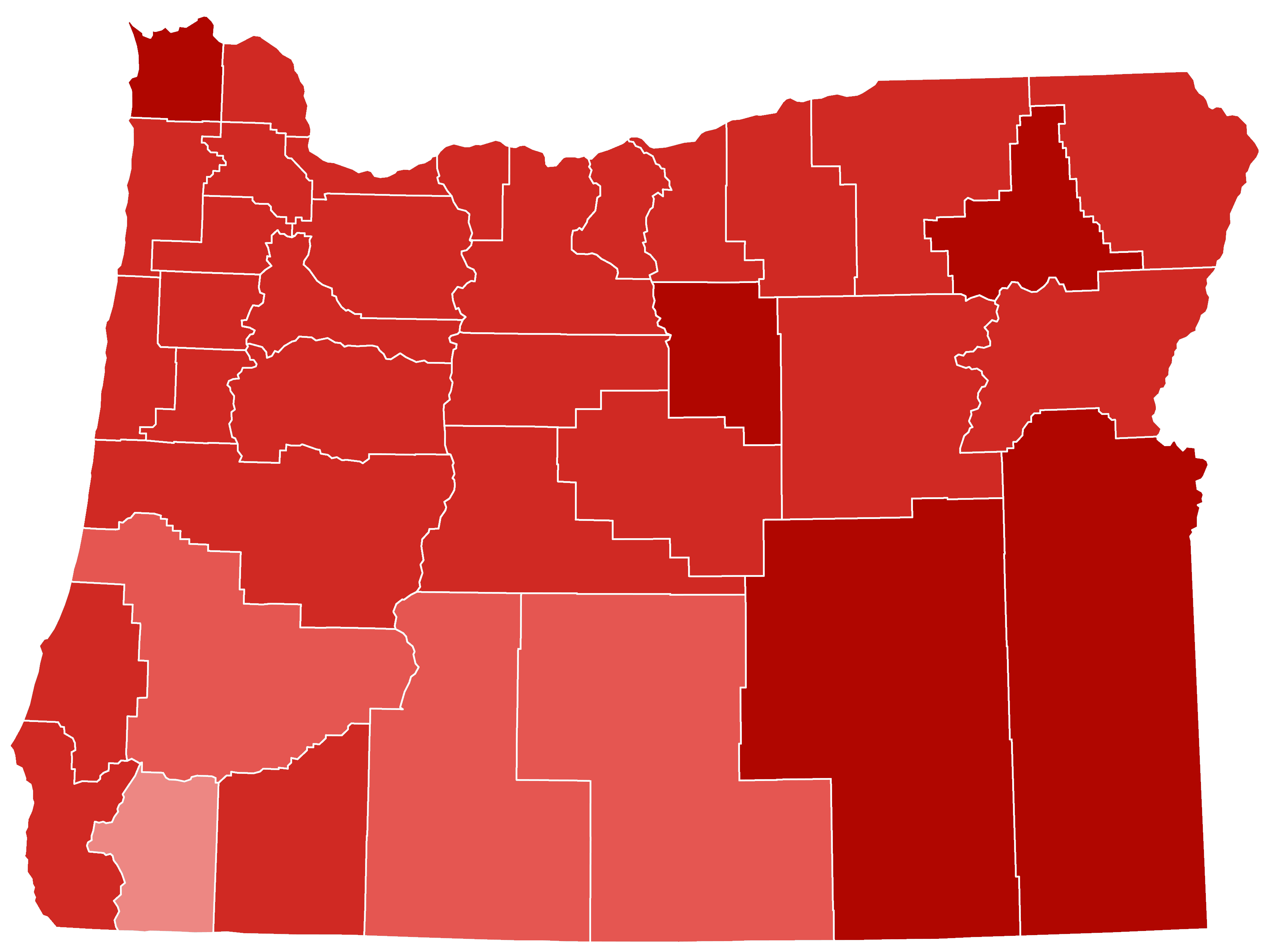
Hatfield:
Duncan:
The 1966 Oregon United States Senate election was held on November 6, 1966 to select the U.S. Senator from the state of Oregon. Incumbent Senator Maurine Brown Neuberger did not seek re-election. Held during the escalation of United States involvement of the Vietnam War, the race was between Republican candidate and incumbent Governor of Oregon Mark Hatfield, who opposed the war, and Democratic congressman Robert B. Duncan, who supported the war. In an unusual move, Oregon's other Senator, Democrat Wayne Morse, who also opposed the war, crossed party lines to endorse Hatfield, who won in a close election, his first of five terms in the United States Senate.
Background
In March 1960, first-term U.S. Senator Richard L. Neuberger died in office. Despite calls to appoint his widow, Maurine Brown Neuberger, to the position, Governor Mark Hatfield instead appointed Oregon Supreme Court justice Hall S. Lusk to fill the position until a November special election. Hatfield stated that he intended to have appointed Neuberger, but that he wanted to appoint someone who would be focused on completing the remaining eight months of the term and not running in the regular-term Senate election as Neuberger had announced she would.{{cite news |access-date=June 17, 2011 |access-date=June 17, 2011 |archive-url=https://web.archive.org/web/20110723034037/http://womenincongress.house.gov/member-profiles/profile.html?intID=183#foot8 |archive-date=July 23, 2011 |url-status=dead
Neuberger went on to win the special election over former Oregon governor Elmo Smith, but despite the urging of Oregon congressman Robert B. Duncan,{{cite news |access-date=June 17, 2011
Primaries
Republican primary
Campaign
On the seventh anniversary of his inauguration as Oregon's 29th governor, Hatfield announced his candidacy for the Republican nomination.{{cite news |access-date=June 17, 2011 |access-date=June 17, 2011 Hatfield's views on the war had been strongly affected by his own experiences: as a U.S. Navy ensign in World War II, he had been among the first to walk through the devastation caused by the atomic bombing of Hiroshima; in a later assignment in Vietnam, he saw first-hand how imperialism led to incredible disparity, with countless Vietnamese living in poverty next to opulent French mansions. The war issue gave Hatfield competition from several minor candidates on the right, but Hatfield nonetheless won by a wide margin, besting his nearest competitor, conservative evangelist Walter Huss, by a nearly 6–1 margin.{{cite news |access-date=June 17, 2011
Results
|access-date=June 17, 2011}}}}
Democratic primary
Campaign
In March 1966, Duncan announced his candidacy for the Democratic nomination, which was quickly endorsed by Neuberger.{{cite news |access-date=June 17, 2011 |author-link=Julius Duscha |access-date=June 17, 2011 |access-date=June 17, 2011 |access-date=June 17, 2011 |access-date=June 17, 2011

Results
|access-date=June 17, 2011}}}}
General election
Campaign
The general election was now set up between two participants whose views on the Vietnam War were in direct opposition to many in their party: Duncan, a pro-war Democrat and Hatfield, an anti-war Republican.{{cite journal
Hatfield, whose popularity as Governor had made him the favorite in the race, soon found his campaign in trouble. Morse's support backfired among many Republicans; Morse had left their party in 1952 to join the Democrats a few years later, and many worried that Hatfield would follow the same path.{{cite news |author-link=Wallace Turner |access-date=June 17, 2011 |author-link=Rowland Evans |author-link2=Robert Novak |access-date=June 17, 2011 |access-date=June 17, 2011
While Hatfield did not back away from his war stance, he sought to focus his campaign on other issues, chiefly focusing on the Johnson administration's economic policies that, in Hatfield's view, had created a recession that was creating unemployment in Oregon's timber industry. As the election neared in early fall, Hatfield had pulled even with Duncan with momentum on his side. Hatfield won in 27 of Oregon's 36 counties en route to a solid but narrow 52%–48% victory.{{cite news |access-date=June 17, 2011 |access-date=June 17, 2011
Results
|access-date=June 17, 2011}}
Aftermath
Hatfield would be re-elected to four more terms, most comfortably, before retiring from the Senate in 1996. Duncan sought revenge against Morse in the Democratic primary of the 1968 Senate election but came in second in a close three-way primary that he might have won had not a third candidate drawn off some anti-Morse votes. After Morse's loss to Bob Packwood in the 1968 general election, Duncan and Morse again squared off for the Democratic nomination in the 1972 Senate election to face Hatfield. Morse won again and lost to Hatfield in the general election. In 1974, Duncan was re-elected to the House of Representatives. He served three terms before being defeated in the Democratic primary by Ron Wyden in 1980.{{cite news| url=https://select.nytimes.com/mem/archive/pdf?res=F0091FF6385C12728DDDAB0A94DD405B8084F1D3 |access-date=June 17, 2011
References
This article was imported from Wikipedia and is available under the Creative Commons Attribution-ShareAlike 4.0 License. Content has been adapted to SurfDoc format. Original contributors can be found on the article history page.
Ask Mako anything about 1966 United States Senate election in Oregon — get instant answers, deeper analysis, and related topics.
Research with MakoFree with your Surf account
Create a free account to save articles, ask Mako questions, and organize your research.
Sign up freeThis content may have been generated or modified by AI. CloudSurf Software LLC is not responsible for the accuracy, completeness, or reliability of AI-generated content. Always verify important information from primary sources.
Report