From Surf Wiki (app.surf) — the open knowledge base
1894 in science
none

none
The year 1894 in science and technology involved some significant events, listed below.
Astronomy
- March 21 (23:00 GMT) – Syzygy: Mercury transits the Sun as seen from Venus, and Mercury and Venus both simultaneously transit the Sun as seen from Saturn.
Biology
- Patrick Manson develops the thesis that malaria is spread by mosquitoes.
- Jean Pierre Mégnin publishes La faune des cadavres application de l'entomologie à la médecine légale in Paris, an important text in forensic entomology.
- Alexandre Yersin and Kitasato Shibasaburō independently identify the bacterium later called Yersinia pestis in the 1894 Hong Kong plague.
Chemistry
- Argon identified by Lord Rayleigh and Sir William Ramsay.
- Viscose, a form of artificial silk or rayon, is patented by Charles Frederick Cross with Edward John Bevan and Clayton Beadle.
Physiology and medicine
- Otto Binswanger describes what will become known as Binswanger's disease.
Psychology
- Psychological Review established in the United States by James Mark Baldwin and James McKeen Cattell.
Technology
- August 13 – The first Allan truss bridge, designed by Percy Allan, is completed in New South Wales.
- August 14 – Oliver Lodge demonstrates "Hertzian waves" i.e. radio transmission (of Morse code) in the University of Oxford from the Clarendon Laboratory to the University Museum (200 ft) for the British Association for the Advancement of Science using a modified Branly coherer.
- November 6 – William C. Hooker of Abingdon, Illinois is granted a United States patent for a spring-loaded mousetrap.
- Construction of the first oil-engined rail locomotive, an experimental unit designed by William Dent Priestman and built by his company, Priestman Brothers of Hull, England.
- John Joly of Dublin devises the Joly colour screen, an additive colour photographic process for producing images from a single photographic plate.
- Corn flakes are created by Will Kellogg and family for patients at their Battle Creek Sanitarium in the United States.
- Astronomical photographer Julius Scheiner devises a film speed measurement system.
Awards
- Copley Medal: Edward Frankland
- Wollaston Medal for Geology: Karl von Zittel
Births
- January 1 – S. N. Bose (died 1974), Indian physicist.
- January 13 – Dorothée Pullinger (died 1986), French-born British production engineer.
- February 11 – Izaak Kolthoff (died 1993), Dutch 'father of analytical chemistry'.
- February 16 – Constance Tipper, née Elam (died 1995), English metallurgist.
- April 29 – Marietta Blau (died 1970), Austrian physicist.
- May 5 – August Dvorak (died 1975), American educational psychologist.
- June 13 – Leo Kanner (died 1981), Austrian-born clinical child psychiatrist.
- June 14 – W. W. E. Ross (died 1966), Canadian geophysicist and poet.
- June 23 – Alfred Kinsey (died 1956), American biologist, professor of entomology and zoology, and sexologist, founder of the Institute for Sex Research at Indiana University (Bloomington) in 1947.
- July 8 – Pyotr Kapitsa (died 1984), Russian physicist, Nobel Prize laureate.
- July 17 – Georges Lemaître (died 1966), Belgian physicist.
- August 2 – Bertha Lutz (died 1976), Brazilian herpetologist and women's rights campaigner.
- November 19 – Heinz Hopf (died 1971), German mathematician.
Deaths
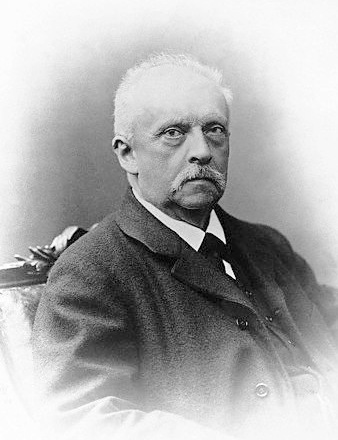
- January 1 – Heinrich Hertz (born 1857), German physicist.
- February 3 – Edmond Frémy (born 1814), French chemist.
- March 29 – Georges Pouchet (born 1833), French comparative anatomist.
- April 2 – Charles-Édouard Brown-Séquard (born 1817), Mauritian-born physiologist and neurologist.
- April 9 – Arthur Hill Hassall (born 1817), English physician, microbiologist and chemical analyst.
- April 27 – Birdsill Holly (born 1820), American hydraulic engineer.
- November 26 – Pafnuty Chebyshev (born 1821), Russian mathematician.
- October 7 – Oliver Wendell Holmes Sr. (born 1809), American physician and writer.
- September 8 – Hermann von Helmholtz (born 1821), German physicist.
References
References
- Benecke, Mark. (2001). "A brief history of forensic entomology". Forensic Science International.
- Yersin, Alexandre. (1894). "La peste bubonique à Hong-Kong". Annales de l'Institut Pasteur.
- Bockemühl, J.. (April 1994). "100 years after the discovery of the plague-causing agent — importance and veneration of Alexandre Yersin in Vietnam today". Immunitat und Infektion.
- (May 1894). "Argon, a New Constituent of the Atmosphere". [[Proceedings of the Royal Society]].
- Emsley, John. (2001). "Nature's Building Blocks: an A–Z Guide to the Elements". Oxford University Press.
- (December 1998). "Timber Truss Bridges". Roads and Traffic Authority.
- Display in University Museum.
- "Animal-Trap". [[Google Patents]].
- Webb, Brian. (1973). "The British Internal Combustion Locomotive 1894–1940". David & Charles.
- Hirsch, Robert. (2005). "Exploring Colour Photography: A Complete Guide". Laurence King Publishing.
- Markel, Howard. (2018). "The Kelloggs: The Battling Brothers of Battle Creek". Vintage.
- "Copley Medal {{!}} British scientific award".
- Halpen, Leopold E.. (1997). "A Devotion to Their Science: Pioneer Women of Radioactivity". McGill-Queen's University Press.
This article was imported from Wikipedia and is available under the Creative Commons Attribution-ShareAlike 4.0 License. Content has been adapted to SurfDoc format. Original contributors can be found on the article history page.
Ask Mako anything about 1894 in science — get instant answers, deeper analysis, and related topics.
Research with MakoFree with your Surf account
Create a free account to save articles, ask Mako questions, and organize your research.
Sign up freeThis content may have been generated or modified by AI. CloudSurf Software LLC is not responsible for the accuracy, completeness, or reliability of AI-generated content. Always verify important information from primary sources.
Report