From Surf Wiki (app.surf) — the open knowledge base
1537
1537

Year 1537 (MDXXXVII) was a common year starting on Monday of the Julian calendar.
Events
January–March
- January 1 – Princess Madeleine of Valois, the 16-year-old daughter of François I, King of France, is married to King James V of Scotland in a ceremony at the cathedral of Notre-Dame de Paris. Already in ill health at the time of the marriage, Madaleine lives only six more months before dying at the Holyrood Palace in Edinburgh on July 7.
- January 6 – Alessandro de' Medici, Duke of Florence is assassinated by Lorenzino de' Medici, a distant cousin, who claims that he wants to reintroduce republican rule but has to flee to Venice. Instead Cosimo I of the junior branch of the Medici becomes the new duke.
- January 16 – Bigod's Rebellion, an uprising by Roman Catholics, led by Francis Bigod against Henry VIII of England and Protestant Rebellion, begins with an unsuccessful attempt to seize Scarborough Castle in Yorkshire.
- January 19 – Most of Bigod's forces are captured by the English Army at a dawn raid of their camp at Beverley, Yorkshire, but Bigod escapes to Mulgrave and then to what is then the County of Cumberland.
- January – At the battle of Ollantaytambo, the Inca Emperor Manco Inca Yupanqui defeats the Spanish led by Hernando Pizarro and the Spaniards' Indian allies
- February 10 – Francis Bigod, leader of Bigod's rebellion is captured at Cumberland by the English Army and imprisoned at Carlisle Castle. He is hanged at Tyburn on June 2.
- March 8 – Chipatá, now in the Santander Department of the Republic of Colombia, is founded by the Spanish conquistadors Gonzalo Jiménez de Quesada and his brother Hernán Pérez de Quesada as the first settlement in what will become the Spanish colony of Nueva Granada, which will later be divided into the nations of Colombia and Venezuela.
- March 12 – Recife is founded by the Portuguese, in Brazil.
April–June
- April 1 – The Archbishop of Norway, Olav Engelbrektsson, flees from Trondheim to Lier, Belgium.
- April 18 – Diego de Almagro successfully charges Manco Inca's siege of Cuzco, thereby saving his antagonists, the Pizarro brothers.
- April 20 – Spanish conquest of the Muisca: Bacatá, the main settlement of the Muisca Confederation, is conquered by Gonzalo Jiménez de Quesada, effectively ending the Confederation in the Colombian Eastern Andes.
- May 17 –
- The siege by Norwegian and Danish Protestants of Steinvikholm Castle in Norway, the former residence of the last Roman Catholic Archbishop of Norway, ended after a month when the Catholic defenders surrendered to the Danish commander, Tord Roed.
- The Ottoman Empire invaded southern Italy, attacking the cities of Apulia, Otranto and Brindisi, in a campaign that would last until November 22.
- June 2 – Pope Paul III publishes the encyclical Sublimis Deus, which declares the natives of the New World to be rational beings with souls, who must not be enslaved or robbed.
- June 23 – The Siege of Hamar ends with the arrest of Bishop Mogens Lauritssøn, and the Catholic rebellion is definitively ended in Norway.
July–September
- July 12– Rodrigo Orgóñez occupies and sacks the Inca center of Vitcos at the battle of Abancay, but Manco Inca Yupanqui escapes and establishes the independent Neo-Inca State elsewhere in Vilcabamba, Peru.
- July 22 – Upon the death of his father, Bhim Singh, Ratan Singh becomes the new ruler of the Kingdom of Amber with a capital at Amber in what is now the Rajasthan state in India
- July 23 – The third Ottoman–Venetian War begins as the Ottoman Sultan Suleiman the Magnificent leads an invasion of the Republic of Venice. The war will continue until October 2, 1540.
- August 2 – The battle of Montemurlo, an attempt by residents of the former Republic of Florence to overthrow Cosimo I de' Medici, Duke of Florence and restore the republican government, ends in failure. The Medici family then takes revenge on the supporters of the Republic, including the Republic commander, General Piero Strozzi.
- August 12 – The coronation of Christian III as King of Denmark and King of Norway takes place at Copenhagen.
- August 15 – The city of Asunción, now the capital of the South American nation of Paraguay, is founded by Juan de Salazar de Espinosa.
- August 25 – The Honourable Artillery Company, the oldest surviving regiment in the British Army, and the second most senior, is formed.
- August 26–The siege of the island of Corfu is started by the Ottoman Empire Navy, commanded by Suleiman the Magnificent. Suleiman abandons the siege in September after an outbreak of plague, and the Ottoman troops return home.
- September 2 – King Christian III of Denmark and Norway appoints Gjeble Pederssøn as Norway's first Lutheran bishop for the Church of Norway.
- September 12 – King Carlos I of Spain (who is also the Holy Roman Emperor) issues a royal decree providing for the first election in the New World, allowing he citizens of the Province of Rio de la Plata (now Paraguay) to elect a replacement for the late Captain-General Pedro de Mendoza. Domingo Martínez de Irala is elected the new Captain-General in 1538.
October–December
- October 15 – Following the baptism of her son, the future Edward VI of England, Jane Seymour begins suffering from puerperal fever. The Queen consort dies nine days later.
- November 1 – In what is now the Central American nation of Honduras, the Spanish conquistadore Alonso de Cáceres arrives at the Peñol de Cerquín, the mountaintop fortress of King Lempira of the Lencas, the indigenous leader of the resistance against European rule. Cáceres sends envoys to request Lempira to surrender. In response, Lempira has the Spanish messengers executed.
- November 27 – Alfonso d'Avalos, the Marquis of Vasto in Italy, enters into a three-month truce with the French Duke of Montmorency to negotiate a peace for which areas would be under French control.
- December 9 – Petar Keglević takes office as the new Ottoman Governor of Croatia and of Slavonia.
- December 28 – The Ordonnance de Montpellier, establishing the first system in Europe for all writers to submit copies of their printed work to the government for review and maintenance in a library, is signed into law by King François I of France. The law provides that a book cannot be legally sold until a copy has been deposited in the royal library.
Date unknown
- Spanish counquistadors in what are now Peru and Colombia become the first Europeans to discover the potato, one of the staple foods for the indigenous residents, while exploring the houses of who have fled from their homes. Pedro Cieza de León, part of the expedition to Colombia, mentions the potato in a book that he publishes 16 years later while Don Juan Castellanos refers to the edible plant as part of a military report on raiding an Inca village in Peru. The potato is introduced to Europe more than 30 years later, in 1570.
- Kashmiri sultan Muhammad Shah dies and he is succeeded by Shams al-Din Shah II as sultan of Kashmiri Shah Mir Sultanate in 1537.
- Kiritimati (Acea or "Christmas Island") is probably sighted by the Spanish mutineers from Hernando de Grijalva's expedition.
- The Indian city of Bangalore is first mentioned in print. .
- The dissolution of the monasteries takes place in Norway, as religious organizations are dissolved by King Christian III; these include Bakke Abbey, Munkeby Abbey, Tautra Abbey, Nidarholm Abbey, Gimsøy Abbey and Utstein Abbey.
- Publication is made of two complete Bible translations into English, both based on Tyndale's. Myles Coverdale's 1535 text is the first to be printed in England (by James Nicholson in Southwark, London) The Matthew Bible, edited by John Rogers under the pseudonym "Thomas Matthew" and printed in Antwerp.
Ongoing
- Dissolution of the monasteries in England: Religious organizations dissolved by Henry VIII of England include: Bisham Priory, Castle Acre Priory, Chertsey Abbey, Furness Abbey, London Charterhouse and Valle Crucis Abbey.
Births

- January 16 – Albrecht VII, Count of Schwarzburg-Rudolstadt (d. 1605)
- January 21 – Antonio Maria Salviati, Italian Catholic cardinal (d. 1602)
- February 26 – Christopher II, Margrave of Baden-Rodemachern (d. 1575)
- March 4 or January 23 – Longqing Emperor, Emperor of China (d. 1572)
- May 18 – Guido Luca Ferrero, Italian Catholic cardinal (d. 1585)
- May 20 – Hieronymus Fabricius, Italian anatomist (d. 1619)
- May 27 – Louis IV, Landgrave of Hesse-Marburg, son of Landgrave Philip I (d. 1604)
- May 31 – Shah Ismail II of Persia (d. 1577)
- June 3 – João Manuel, Prince of Portugal, Portuguese prince (d. 1554)
- July 20 – Arnaud d'Ossat, French diplomat and writer (d. 1604)
- July 29 – Pedro Téllez-Girón, 1st Duke of Osuna, Spanish duke (d. 1590)
- July 30 – Christopher, Duke of Mecklenburg and administrator of Ratzeburg (d. 1592)
- August 9 – Francesco Barozzi, Italian mathematician (d. 1604)
- August 15 – Shimazu Toshihisa, Japanese samurai (d. 1592)
- October – Lady Jane Grey, claimant to the throne of England (d. 1554)
- October 12 – King Edward VI of England (d. 1553)
- November 21 – Fadrique Álvarez de Toledo, 4th Duke of Alba, Spanish military leader (d. 1583)
- December 5 – Ashikaga Yoshiaki, Japanese shōgun (d. 1597)
- December 20 – King John III of Sweden (d. 1592)
- December 24 – Willem IV van den Bergh, Stadtholder of Guelders and Zutphen (d. 1586)
- December 26 – Albert, Count of Nassau-Weilburg (d. 1593)
- date unknown
Deaths
_-_Santa_Maria_della_Salute_-_Venice_2016_(2).jpg)
- January 6
- January 12 – Lorenzo di Credi, Florentine painter and sculptor (b. 1459)
- February 2 – Johann Carion, German astrologer and chronicler (b. 1499)
- February 3 – Thomas FitzGerald, 10th Earl of Kildare, Anglo-Irish noble, rebel (executed) (b. 1513)
- February 8
- January 11 – John, Hereditary Prince of Saxony, German prince (b. 1498)
- March 25 – Charles, Duke of Vendôme, French noble (b. 1489)
- March 28 – Francesco of Saluzzo, Marquess of Saluzzo (b. 1498)
- May 10 – Andrzej Krzycki, Polish archbishop (b. 1482)
- May 24 – Sophie of Brandenburg-Ansbach-Kulmbach, German princess (b. 1485)
- June 2
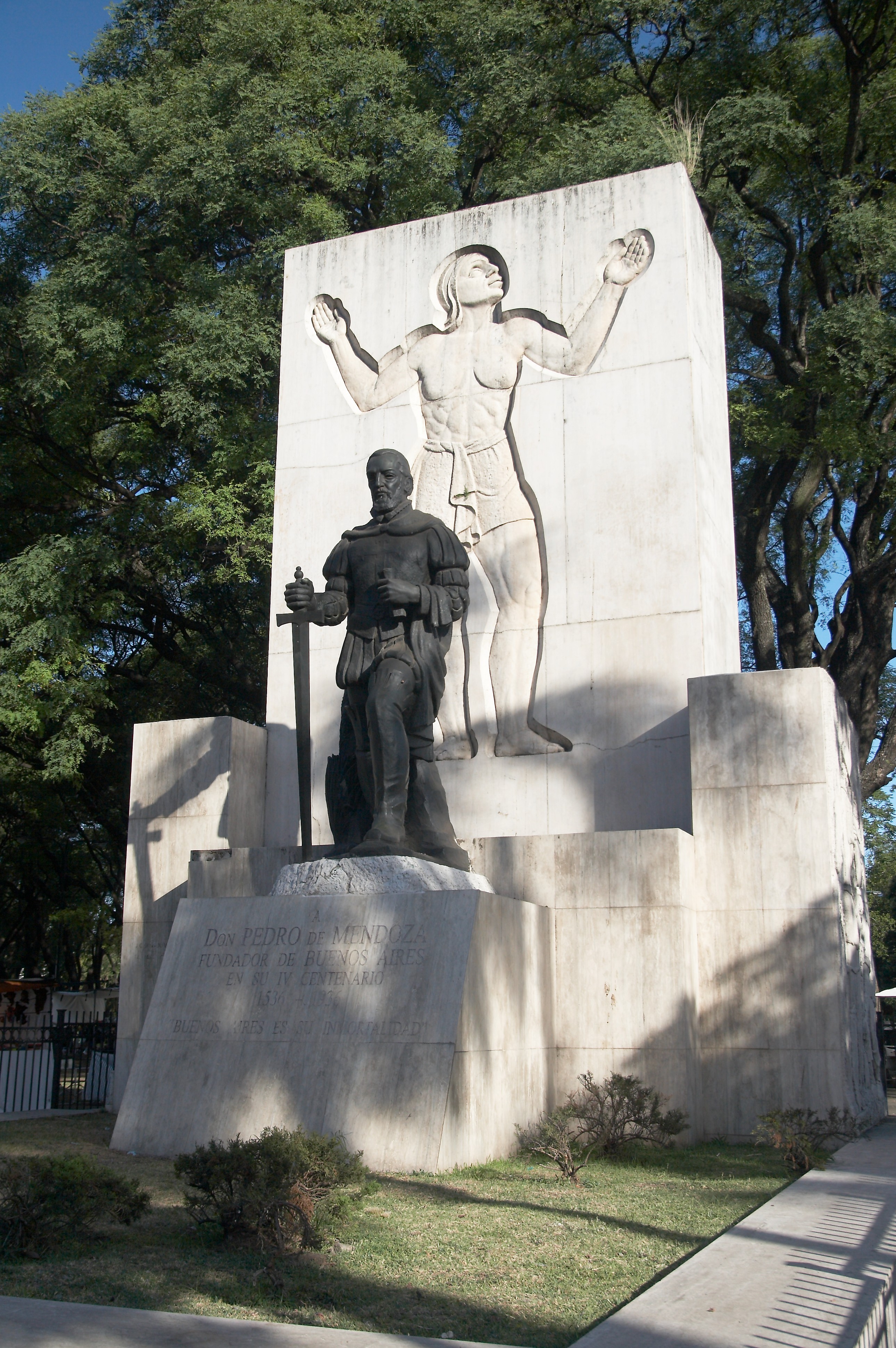
- June 23 – Pedro de Mendoza, Spanish conquistador (b. 1487)
- June 29 – Henry Percy, 6th Earl of Northumberland, English noble (b. 1502)
- July 7 – Madeleine of Valois, queen of James V of Scotland (b. 1520)
- July 12 – Robert Aske, English lawyer, rebel (executed) (b. 1500)
- September 4 – Johann Dietenberger, German theologian (b. c. 1475)
- September 7 – Nikolaus von Schönberg, German Catholic cardinal (b. 1472)
- September 20 – Pavle Bakić, last Serb Despot and medieval Serb monarch
- September 25 – William Framyngham, English author
- October 24 – Jane Seymour, 3rd queen consort of Henry VIII of England (complications of childbirth) (b. c. 1508)
- October 29 – Elizabeth Lucar, English calligrapher (b. 1510)
- December 10 or December 11 – Andrey of Staritsa, son of Ivan III of Russia the Great (b. 1490)
- date unknown – John Kite, Archbishop of Armagh and Bishop of Carlisle
- probable – Thomas Murner, German satirist (b. 1475)
References
References
- Seward, Desmond. (1973). "Prince of the Renaissance: The Golden Life of François I". Macmillan Publishing Co.
- Hicks, Michael. (2004). "Bigod, Sir Francis (1507–1537)".
- (2011). "O MANGUEZAL E A SOCIEDADE PERNAMBUCANA-BRASI". Revista Geográfica de América Centra.
- "Da Cartografia dos Antigos Engenhos à Cartografia Holandesa e Portuguesa".
- Ekroll, Øystein. (2015). "The Octagonal Shrine Chapel of St Olav at Nidaros Cathedral". Nσorwegian University of Science and Technology.
- (2014). "Erkebiskop Olav Engelbrektsson taler sin sak. En analyse av erkebiskopens politiske korrespondanse og utvalgte notater 1523-1533". University of Oslo.
- Hemming, John. (1993). "The Conquest of the Incas". Macmillan.
- Kathleen Romoli. (1944). "Colombia: Gateway to South America". Doubleday, Doran, Incorporated.
- Beek, Dag Johan. (2013). "I erkebiskopens tid". Beek.
- Turnbull, Stephen R.. (2003). "The Ottoman Empire, 1326–1699". Osprey Publishing Ltd.
- (1975). "Slavery and the Catholic Church". Barry Rose Publishers.
- (2012). "New worlds : a religious history of Latin America". Yale University Press.
- (1993). "The conquest of the Incas". Papermac.
- Sarkar, Jadunath. (1984). "A History of Jaipur: C. 1503-1938". Orient Longman Limited.
- Aksin Somel, Selcuk. (2010). "The A to Z of the Ottoman Empire". [[Scarecrow Press]].
- [http://kongehuset.dk/english/the-monarchy-in-denmark/The-Royal-Lineage The Royal Lineage] {{Webarchive. link. (2015-03-14)
- (1929). "Paraguay. Land, Volk, Geschichte, Wirtschaftsleben und Kolonisation". Strecker u. Schröder.
- Garnier, Edith. (2008). "L'Alliance Impie". Editions du Felin.
- (1976). "The Papacy and the Levant, 1204-1571". American Philosophical Society.
- (1 January 1981). "Mediaeval Greece". Yale University Press.
- "Gjeble Pederssøn". Norsk nettleksikon.
- Rivarola, Juan Bautista. (1952). "La Ciudad de Asunción y la Cédula Real del 12 Setiembre de 1537: Una Lucha por la Libertad". A. G., Impr. Militar.
- Abente, Diego. (1989). "The Liberal Republic and the Failure of Democracy". The Americas.
- (3 November 2016). "A Biographical Encyclopedia of Early Modern Englishwomen: Exemplary Lives and Memorable Acts, 1500-1650". Taylor & Francis.
- Robert S. Chamberlain, ''The Conquest and Colonization of Honduras: 1502–1550''(Octagon Books, 1953) p.53 {{OCLC. 640057454
- Christine Shaw, (2019).''The Italian Wars 1494-1559: War, State and Society in Early Modern Europe'' (Routledge, 2019) p.222
- [https://www.enciklopedija.hr/clanak/keglevic-petar-hrvatsko-slavonsko-dalmatinski-ban Hrvatska enciklopedija- Keglević, Petar]
- Larivière, Jules. (2000). "Guidelines for Legal Deposit Legislation". United Nations Educational, Scientific and Cultural Organization (UNESCO).
- "Texte intégral de l'ordonnance de Montpellier".
- Carolyn A. Nadeau, ''Food Matters: Alonso Quijano's Diet and the Discourse of Food in Early Modern Spain'' (University of Toronto Press, 2015) p.95
- Redcliffe N. Salaman, ''The History and Social Influence of the Potato'' (Cambridge University Press, 1949, reprinted 1985) p.36
- Barry Walker and Huw Lloyd, with Gerald Cheshire, ''Peruvian Wildlife: A Visitor's Guide to the Central Andes'' (Bradt Travel Guides, 2007) p.34
- (1959). "Spanish Discoveries in the Central Pacific: A Study in Identification". The Journal of the Polynesian Society.
- (1885). "The Imperial Gazetteer of India". Trübner & Company.
- (1893). "S. Paul's Cathedral Library: A Catalogue of Bibles, Rituals, and Rare Books". E. Stock.
- "Houses of Austin canons: The priory of Bisham".
- "Houses of Cluniac monks: The priory of Castle Acre".
- "House of Benedictine monks: Abbey of Chertsey".
- (1888). "The Coucher Book of Furness Abbey". Chetham Society.
- (1912). "The Charterhouse of London: Monastery, Palace, and Thomas Sutton's Foundation". J.M. Dent & sons, Limited.
- "Religious Houses: House of Carthusian monks".
- (1890). "Das Haus Kevernburg-Schwarzburg von seinem Ursprunge bis auf unsere Zeit". Bertram.
- "The Cardinals of the Holy Roman Church - Biographical Dictionary - Consistory of December 12, 1583".
- (1896). "Badische Geschichte". A. Bielefeld.
- "隆庆皇帝".
- "The Cardinals of the Holy Roman Church - Biographical Dictionary - Consistory of March 12, 1565".
- (2019). "Clinical Embryology: An Atlas of Congenital Malformations". Springer International Publishing.
- (1842). "Handbuch der geschichte beider Hessen". N.G. Elwert.
- "ESMĀʿIL II".
- (5 July 2019). "Kahkaha Kalesi'nin 20 Yıllık Mahpusu: İsmail Mirza Safevi". Akademik Tarih ve Düşünce Dergisi.
- (1923). "História de Portugal".
- (1875). "Descripção geral e histórica das moedas cunhadas em nome dos reis, regentes e governadores de Portugal, por A.C. Teixeira de Aragão". Impr. nacional.
- (1894). "Le cardinal d'Ossat, évêque de Rennes et de Bayeux (1537-1604); sa vie, ses négociations à Rome. Thèse, Bordeaux". V. Lecoffre.
- (1883). "Nuovi saggi della Imperiale regia Accademia di scienze, lettere ed arti in Padova". Tip G.B. Randi.
- David Mathew. (1972). "Lady Jane Grey: the Setting of the Reign". Eyre Methuen Limited.
- "BBC - History - Historic Figures: Lady Jane Grey (1537 - 1554)".
- (1948). "Memorial histórico español: colección de documentos, opúsculos y antigüedades que publica la Real Academia de la Historia". la Real Academia de la historia.
- (2006). "Encyclopedia Americana: Jefferson to Latin". Scholastic Library Pub..
- (1998). "Biografisch woordenboek Gelderland: bekende en onbekende mannen en vrouwen uit de Gelderse geschiedenis". Uitgeverij Verloren.
- (1864). "Geschichte Nassau's von der Reformation bis zum Anfang des 30jährigen Krieges". Limbarth.
- (24 October 2011). "The Broadview Anthology of Sixteenth-Century Poetry and Prose". Broadview Press.
- (1988). "日本重要人物辞典". 教育社.
- (1884). "Złota księga szlachty polskiéj". Heroldium.
- (1989). "Hideyoshi". Harvard Univ Asia Center.
- (1847). "Storia del risorgimento, de'progressi, del decadimento e della rovina della libertà in Italia". Ruggia.
- (1875). "Album di storia patria bozzetti repubblicani senesi". Mucci.
- (1911). "Storia dell'arte italiana". U. Hoepli.
- (22 August 2019). "The Reformation of Historical Thought". Brill.
- (1987). "The Revolt of Silken Thomas: A Challenge to Henry VIII". Wolfhound.
- (1914). "Reformationsgeschichtliche Studien und Texte". Aschendorffsche Verlagsbuchhandlung.
- (1858). "Biografia di San Carlo Borromeo". Liberia Arcivescovile.
- (1883). "Martin Luther: Sein Leben und Seine Schriften". R.L. Friderichs.
- (1848). "Atlas historique français". Dantier.
- (1835). "Statistica della provincia di Saluzzo: 2". D. Lobetti-Bodoni.
- (2005). "Andrzej Krzycki: poeta, dyplomata, prymas". Officina TUM.
- (1911). "Hohenzollern-jahrbuch". Giesecke and Devrient..
- (1915). "The Pilgrimage of Grace, 1536-1537, and the Exeter Conspiracy, 1538". Cambridge University Press.
- (1992). "Los indios de Argentina". Editorial Abya Yala.
- (1879). "Some Notices of the Life of Henry, Lord Percy, Sixth Earl of Northumberland, and of the Parish Church of St. Augustine, Afterwards St. John at Hackney". Billing and Sons.
- Anne Commire. (12 December 2000). "Women in World History". Gale.
- (1979). "Tudor York". Oxford University Press.
- (1905). "Erläuterungen und ergänzungen zu Janssens Geschichte des deutschen volkes". Herder.
- (1997). "Schriftkultur und Landesgeschichte: Studien zum südlichen Ostseeraum vom 12. bis zum 16. Jahrhundert". Böhlau.
- (1981). "Istorija srpskog naroda: pt. 1-2. Srbi pod tudinskom vlashdu 1537-1699". Srpska knjiiževna zadruga.
- {{acad
- (1984). "The Publications of the Harleian Society". Harleian Society.
- (2002). "Ivan the Terrible". Rowman & Littlefield.
- (1997). "Храмы Московского Кремля: святыни и древности". МАИК "Наука".
- (1900). "The Cathedral Church of Carlisle: A Description of Its Fabric and a Brief History of the Episcopal See". G. Bell.
- (1971). "Schriften Thomas Murners (1475-1537) als volksmusikalische Quelle". Studia Musicologica Academiae Scientiarum Hungaricae.
This article was imported from Wikipedia and is available under the Creative Commons Attribution-ShareAlike 4.0 License. Content has been adapted to SurfDoc format. Original contributors can be found on the article history page.
Ask Mako anything about 1537 — get instant answers, deeper analysis, and related topics.
Research with MakoFree with your Surf account
Create a free account to save articles, ask Mako questions, and organize your research.
Sign up freeThis content may have been generated or modified by AI. CloudSurf Software LLC is not responsible for the accuracy, completeness, or reliability of AI-generated content. Always verify important information from primary sources.
Report