From Surf Wiki (app.surf) — the open knowledge base
1513

1513
Year 1513 (MDXIII) was a common year starting on Saturday of the Julian calendar.
Events
January–March
- January 20 – Spanish conquistador Vasco Núñez de Balboa writes a letter to King Ferdinand II of Aragon advocating genocide against the native peoples of on the Caribbean islands, and begins the killing of hundreds of residents of Caribbean villages.
- February 18 – Pope Julius II issues the papal bull Exigit contumaciam, declaring queen Catherine of Navarre and king John III of Navarre to be heretics for their refusal to participate with other Roman Catholic nations in the anti-French Holy League of 1511.
- February 20 – Hans, King of Denmark dies at the age of 58 from injuries sustained in being thrown from a horse. He is succeeded by his 32-year-old son Christian II as ruler of Denmark-Norway.
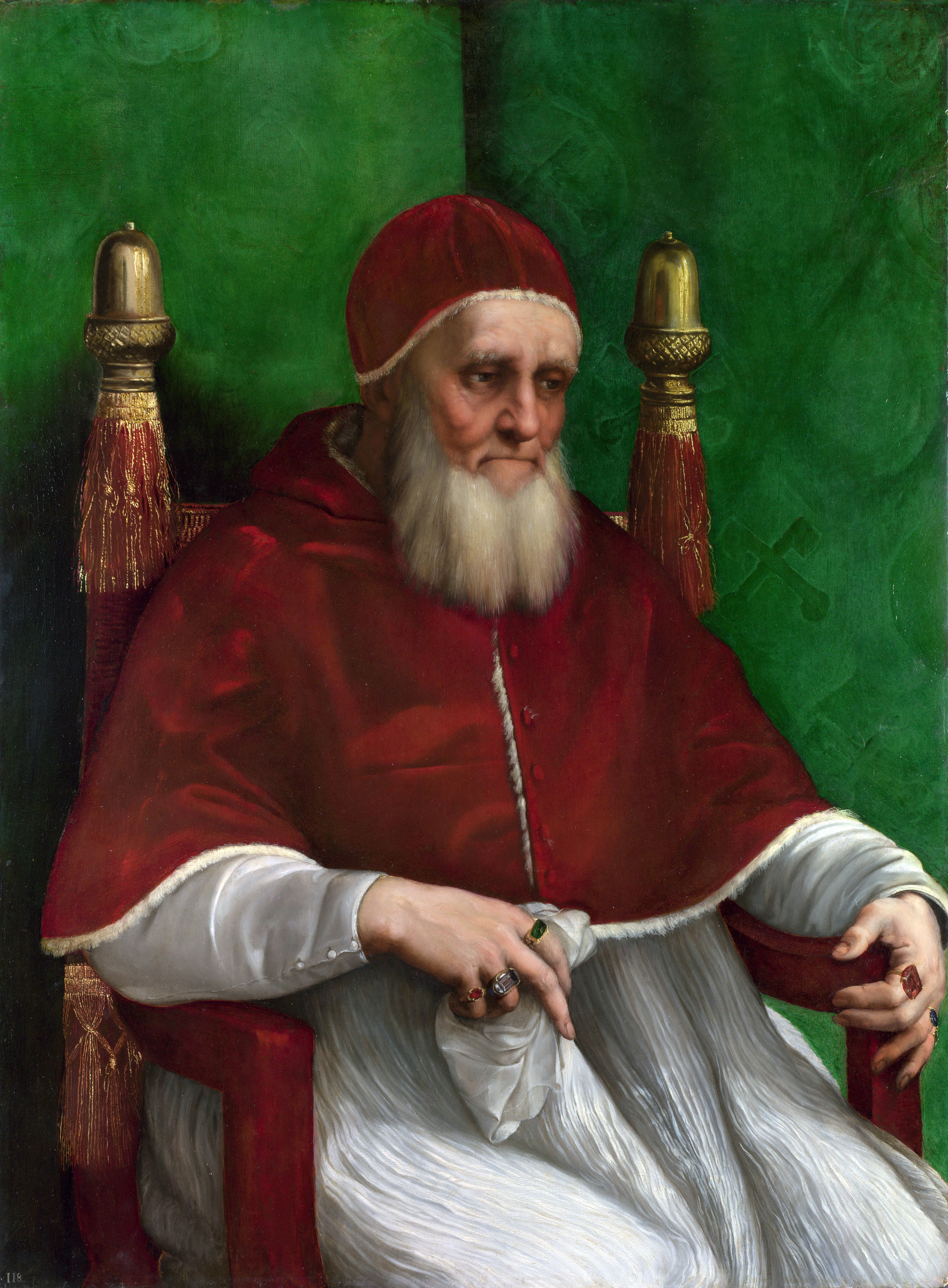
- February 21 – Pope Julius II dies in Rome.
- March 4 – The conclave of the Roman Catholic Cardinals begins at the Niccoline Chapel in the Apostolic Palace in Rome, with 25 of the 31 Cardinals participating. In the first round of balloting, none of the Cardinals receives the required 17 votes necessary for a three-fourth's majority, though Cardinal Jaime Serra I Cau of Spain, Bishop of Albano, receives 13.
- March 9 – Cardinal Giovanni di Lorenzo de' Medici, the Apostolic Administrator of Amalfi but not ordained as a priest, is selected to succeed the late Pope Julius II as the 217th Pope of the Roman Catholic Church. After two days, the selection is announced to the public and Medici takes the name of Pope Leo X, despite a strong challenge by Italian cardinal Raffaele Riario and his group of seniors, or cardinals that were elected by Sixtus IV and Innocent VIII, who are opposed to the relatively newer juniors that includes Medici.
- March 15 – In the Taino Rebellion on the island of Puerto Rico, Spanish conquistador Diego Guilarte de Salazar attacks the Taino towns of Yauco and Coxiguex.
- March 23 – At Blois, king Louis XII concludes a new alliance with the Republic of Venice, while the doge Leonardo Loredan ratifies the same Franco-Venetian treaty on April 12.
- March 26 – On Easter Sunday, Afonso de Albuquerque, Governor of Portuguese India, makes an unsuccessful attempt to capture the port city of Aden, on the Arabian Peninsula, from the Mamluk Sultanate, using 20 ships and 2,500 soldiers. The 1,700 Portuguese, along with 800 mercenaries from Malabar, lose at least 100 killed during the attack and retreat.
- March 27 – Juan Ponce de León becomes the first European definitely known to sight Florida, mistaking it for another island.
April–June
- April 2 – Juan Ponce de León and his expedition become the first Europeans known to visit Florida, landing somewhere on the east coast. One of the expedition, Juan Garrido, becomes the first African known to visit North America.
- May 25 – Giano II di Campofregoso resigns as Doge of the Republic of Genoa as plots by two opposing families restore the influence of France. Campogregoso leaves the city on a ship to serve the Republic of Venice in its war against the Duchy of Milan.
- May – Portuguese explorer Jorge Álvares and his crew land on Lintin Island, in the Pearl River estuary, near Guangzhou, becoming the first Europeans to arrive in China by sea.
- June 6 – Italian Wars: Battle of Novara – Swiss mercenaries defeat the French under Louis II de la Trémoille, forcing the French to abandon Milan and Italy.
- June 20 – Ottaviano Fregoso becomes the new Doge of the Republic of Genoa, replacing Giano II di Campofregoso.
- June 28 – Pope Leo X sends a letter to Scotland's King James IV, threatening him with ecclesiastical censure or excommunication for breaking his peace treaties with England.
July–September
- July 22 – Christian II becomes King of Denmark-Norway.
- July 25 – Scotland's Earl of Arran departs from the Firth of Forth with 22 ships on a plan to join France in cutting off England's communications with the rest of Europe.
- August 16
- Battle of Dubica (part of the Hundred Years' Croatian–Ottoman War): Croatian troops under Petar Berislavić, Ban (Viceroy) of Croatia, defeat an Ottoman army under Sanjak-bey Junuz-aga.
- Battle of the Spurs (or Battle of Guinegate, part of the War of the League of Cambrai): English and allied troops under Henry VIII defeat French cavalry under Marshal La Palice.
- August 5 – A force of 7,000 Scottish border troops, commanded by Lord Home, invades England and begins the destruction and pillaging of villages in Northumberland.
- August 23 – Thérouanne in the north of France is given to Henry VIII of England after a treaty is concluded in the aftermath of the Battle of the Spurs.
- September 9
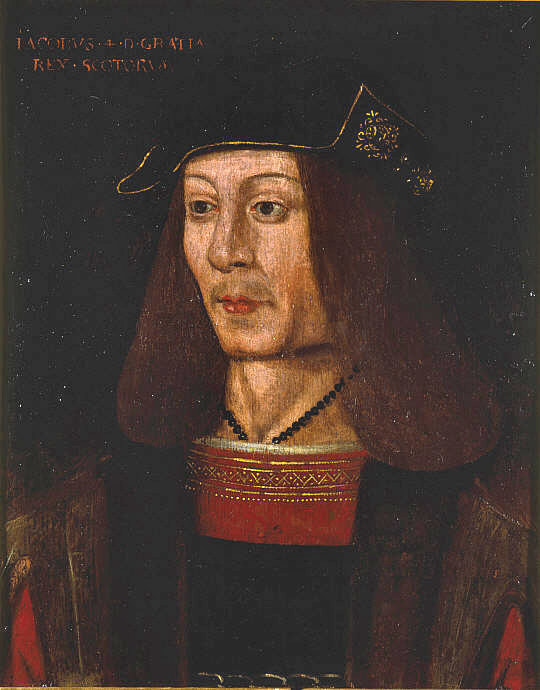
- Battle of Flodden: King James IV of Scotland is defeated and killed by an English army under Thomas Howard, Earl of Surrey. James's infant son, the Duke of Rothesay, becomes James V, King of Scots. At least 5,000 Scots and 1,500 English troops are killed.
- Johann Reuchlin is summoned for an inquisition trial, initiated by Jacob van Hoogstraaten. The verdict of the trial is never revealed, as when it is about to be announced on October 12, the archbishop of Mainz orders the court to go into recess on threat of resigning the court, and the trial never continues. Eventually, in March 1514, an ecclesiastical court presided over by George, Bishop of Speyer clears Reuchlin of any charges and orders Hoogstraten to pay the cost of 111 guldens, although this is overturned by Leo X in a papal decision in 1520.
- September 19 – Upon confirming that King James IV of Scotland has been killed in battle, the 35 Lords of Council of the Realm meet at Stirling Castle and agree to rule Scotland in the name of James's widow, Margaret Tudor, and his son, the infant James V.
- September 25 – Vasco Núñez de Balboa first sees what will become known as the Pacific Ocean from the Isthimus of Darién. This moment is later referenced in a poem by John Keats called "On First Looking into Chapman's Homer" with the line "silent upon a peak in Darién" although he mistakenly references Hernán Cortés as the one who saw the Pacific from Darién.
- September 30 – A major rock avalanche occurs in the Southern side of the Swiss Alps at Monte Crenone, which destroys the village of Biasca, floods Bellinzona, and forms a lake of 390 m.a.s.l.
- September – The dispute between Johann Reuchlin and Johannes Pfefferkorn concerning the Talmud and other Jewish books, is referred to Pope Leo X.
October–December
- October 7 – Battle of La Motta (War of the League of Cambrai): Spanish and imperial troops under Ramón de Cardona decisively defeat those of the Republic of Venice under Bartolomeo d'Alviano in Schio.
- October 17 – At Edirne, the Ottoman sultan Selim II confirms the renewal of peace treaties with Venice, under terms that are accepted by the Venetian government on December 3.
- October 21 – The coronation of James V, 17 months old, as King of Scotland takes place in the Chapel Royal at Stirling Castle.
- November 5 – Pope Leo X issues the decree Dum suavissimos, reviving Sapienza University of Rome.
- November – Gazapati, becomes the new King of Burma as his father, King Raza, abdicates the throne at the capital of Arakan, Mrauk U.
- December 17
- The Canton of Appenzell becomes a member of the Swiss Confederacy.
- Louis XII makes peace with the Papal States by issuing a decree disavowing the Council of Pisa and promising his future adherence to the Lateran Council.
- December – Louis attempts to make peace with Spain by offering King Ferdinand the hand of his daughter Renée for one of his grandsons along with renouncing his claims on Naples. The proposal is never accepted.
Undated
- Niccolò Machiavelli is suspected of trying to overthrow the House of Medici and is arrested and tortured. He is soon after released and moves to his farm in San Casciano, and writes The Prince.
- Leo Africanus visits Timbuktu, second city of the Songhai Empire.
- Paracelsus begins studying at Ferrara University.
Births
_effigy_2007.jpg)
- February 14 – Domenico Ferrabosco, Italian composer (d. 1573)
- March 15 – Hedwig Jagiellon, Electress of Brandenburg (d. 1573)
- April 22 – Tachibana Dōsetsu, Japanese Daimyō (d. 1585)
- June 10 – Louis, Duke of Montpensier (1561–1582) (d. 1582)
- August 3 – John, Margrave of Brandenburg-Küstrin (d. 1571)
- September 23 – Hans Buser, Swiss noble (d. 1544)
- September 24 – Catherine of Saxe-Lauenburg, queen of Gustav I of Sweden (d. 1535)
- October 30 – Jacques Amyot, French writer (d. 1593)
- December 3 – Lorenzo Strozzi, Italian Catholic cardinal (d. 1571)
- December 23 – Thomas Smith, English scholar and diplomat (d. 1577)
- date unknown
Deaths
- January – Hans Folz, German author (b. c. 1437)
- January 20 – Helena of Moscow, Grand Duchess consort of Lithuania and queen consort of Poland (b. 1476)
- February 20 – Hans, King of Denmark (also king of Norway and former king of Sweden) (b. 1455)
- February 21 – Pope Julius II (b. 1443)
- March 10 – John de Vere, 13th Earl of Oxford, English general (b. 1443)
- April 24 – Şehzade Ahmet, oldest son of Sultan Bayezid II (executed) (b. 1465)
- April 30 – Edmund de la Pole, 3rd Duke of Suffolk, Duke of Suffolk (b. 1471)
- August 3 – Ernst II of Saxony, Archbishop of Magdeburg (1476–1513) and Administrator of Halberstadt (b. 1464)
- September 9 (killed at the Battle of Flodden)
- James IV of Scotland (b. 1473)
- George Douglas, Master of Angus (b. 1469)
- William Douglas of Glenbervie (b. 1473)
- William Graham, 1st Earl of Montrose, Scottish politician (b. 1464)
- George Hepburn, Scottish bishop
- Adam Hepburn, 2nd Earl of Bothwell, Scottish politician, Lord High Admiral of Scotland
- Adam Hepburn of Craggis
- David Kennedy, 1st Earl of Cassilis, Scottish soldier (b. 1478)
- Alexander Lauder of Blyth, Scottish politician
- Alexander Stewart, Scottish archbishop (b. 1493)
- Matthew Stewart, 2nd Earl of Lennox, Scottish politician (b. 1488)
- October 27 – George Manners, 11th Baron de Ros, English nobleman
- date unknown
References
References
- Kiernan, Ben. (2007). "Blood and Soil: A World History of Genocide and Extermination from Sparta to Darfur". [[Yale University Press]].
- Heise, Arnold. (1892). "[[Dansk biografisk Lexikon]]".
- Creighton, Mandell. (1887). "The Italian Princes, 1464-1518". Longmans, Green, and Company.
- (1712). "Lettres du roi Louis XII et du cardinal Georges d'Amboise: depuis 1504 à 1514". Foppens.
- (1864). "Histoire diplomatique des Conclaves". Librairie Internationale.
- "Sede Vacante 1513".
- Badillo, Jalil Sued. (2008). "Agüeybana El Bravo: La recuperación de un símbolo". Ediciones Puerto.
- Setton, Kenneth M.. (1984). "The Papacy and the Levant (1204-1571)". American Philosophical Society.
- Vogel, Theodore (1877). ''[https://books.google.com/books?id=0UABAAAAQAAJ&pg=PA125 A Century of Discovery: Biographical Sketches of the Portuguese and Spanish Navigators from Prince Henry to Pizarro]''. London: Seeley, Jackson, & Halliday. p. 125.
- (10 May 2003). "The First European Charting of Florida and the Adjacent Shores". The Florida Geographer.
- (2013). "Juan Ponce de León and the Discovery of Florida Reconsidered". The Florida Historical Quarterly.
- "Juan Garrido (U.S. National Park Service)".
- (22 November 2022). "Civilization and the Chinese Body Politic". Taylor & Francis.
- (1891). "La patria; geografia dell' Italia: pte. 1 Introduzione generale. 1890.". Unione tipografico-editrice.
- (23 December 2009). "A Global Chronology of Conflict: From the Ancient World to the Modern Middle East". ABC-CLIO.
- James France. (1992). "The Cistercians in Scandinavia". Cistercian Publications.
- (7 January 1975). "The Correspondence of Erasmus: Letters, 142 to 297". University of Toronto Press.
- "Henry VIII: August 1513, 21-31".
- Derrik Mercer. (February 1993). "Chronicle of the Royal Family". Chronicle Communications.
- (3 November 2010). "Johannes Reuchlin and the Campaign to Destroy Jewish Books". Oxford University Press.
- (3 November 2010). "Johannes Reuchlin and the Campaign to Destroy Jewish Books". Oxford University Press.
- (1907). "Historia de la gobernación de Popayán: seguida de la cronología de los gobernadores durante la dominación española". Impr. del Departamento.
- (1914). "A Century in the Pacific". William H. Beale.
- (11 January 2022). "The 1513 Monte Crenone rock avalanche: numerical model and geomorphological analysis". Geographica Helvetica.
- (1982). "A History of Venice". Knopf Doubleday Publishing Group.
- Setton, Kenneth M.. (1984). "The Papacy and the Levant (1204-1571)". American Philosophical Society.
- (1985). "A History of Switzerland: The First 100,000 Years: Before the Beginnings to the Days of the Present". Society for the Promotion of Science and Scholarship.
- [https://www.google.com/books/edition/The_Catholic_Encyclopedia/JoRPAQAAIAAJ?hl=en&gbpv=1&dq=%22Louis+XII%22++%22December+1513%22&pg=PA19&printsec=frontcover "Lateran Council"], by Henri Laeclerq in ''The Catholic Encyclopedia'', Volume IX (Robert Appleton Company, 1910), p. 14
- (1908). "The History of the Popes, from the Close of the Middle Ages: Drawn from the Secret Archives of the Vatican and Other Original Sources". J. Hodges.
- (1966). "The prince, and selected discourses". Bantam Books.
- (5 October 2011). "A History of World Societies, Volume 2: Since 1450". Macmillan.
- (1982). "Paracelsus. An Introduction To Philosophical Medicine In The Era Of The Renaissance". Karger.
- (1977). "La musica vocale nel Rinascimento: studi sulla musica vocale profana in Italia nei secoli XV e XVI". ERI.
- (1825). "Histoire Généalogique Et Chronologique de la Maison Royale de Bourbon". Mansut.
- (1881). "Allgemeine deutsche Biographie". Duncker & Humblot.
- (1920). "Histoire de littérature française". A. Hatier.
- "The Cardinals of the Holy Roman Church - Biographical Dictionary - Consistory of March 15, 1557".
- (1964). "Sir Thomas Smith: A Tudor Intellectual in Office". Athlone Press.
- (1983). "Jinbutsu refarensu jiten". Nichigai Asoshiētsu.
- (1924). "Svenskt biografiskt lexikon". A. Bonnier.
- (1869). "Annales du Cercle archéologique de Mons". Cercle archéologique.
- (1996). "Humanism and the rhetoric of toleration". Pennsylvania State University Press.
- (2004). "Fitzgerald, Thomas [called Silken Thomas], tenth earl of Kildare [known as Lord Offaly] (1513–1537), nobleman and rebel".
- (1993). "Deutsche Dichter der frühen Neuzeit (1450-1600): Ihr Leben und Werk". Erich Schmidt Verlag GmbH & Co KG.
- (2003). "Иван III". Молодая Гвардия.
- (1920). "Danmark, land og folk: historisk-topografisk-statistisk haandbog". Gyldendal, Nordisk Forlag.
- (1936). "The history of the popes : from the close of the middle ages". Routledge & Kegan Paul.
- (2015). "The Foremost Man of the Kingdom: John de Vere, Thirteenth Earl of Oxford (1442-1513)". Boydell & Brewer Ltd.
- (1969). "Osmanlı devletinde kim kimdi". Küğ Yayını.
- (1978). "A History of Kingston Upon Hull: From the Earliest Times to the Present Day". Phillimore.
- (1905). "The Manors of Suffolk: The hundreds of Babergh and Blackbourn". T.F. Unwin.
- (1906). "Geschichte der Stadt Aschersleben". K. Kinzenbach.
- (February 24, 2011). "The Oxford companion to Scottish history". Oxford University Press.
- (1982). "The Genealogist". Association for the Promotion of Scholarship in Genealogy.
- Robert JONES (Vicar of Branxton.). (1869). "The Battle of Flodden Field, fought Sept. 9, 1513. With notes, etc".
- (1905). "The Scots Peerage". D. Douglas.
- (1767). "A General History of Scotland: From the Earliest Accounts to the Present Time". Robinson and Roberts.
- (1891). "The exchequer rolls of Scotland = Rotuli scaccarii regum Scotorum". General Register House.
- (27 March 2019). "The Shroud at Court: History, Usages, Places and Images of a Dynastic Relic". BRILL.
- (10 October 2014). "A History of Chinese Science and Technology: Volume 2". Springer.
This article was imported from Wikipedia and is available under the Creative Commons Attribution-ShareAlike 4.0 License. Content has been adapted to SurfDoc format. Original contributors can be found on the article history page.
Ask Mako anything about 1513 — get instant answers, deeper analysis, and related topics.
Research with MakoFree with your Surf account
Create a free account to save articles, ask Mako questions, and organize your research.
Sign up freeThis content may have been generated or modified by AI. CloudSurf Software LLC is not responsible for the accuracy, completeness, or reliability of AI-generated content. Always verify important information from primary sources.
Report