From Surf Wiki (app.surf) — the open knowledge base
Zizhi Tongjian
1084 Chinese chronicle covering 403 BC – 959 AD
1084 Chinese chronicle covering 403 BC – 959 AD
| Field | Value | |
|---|---|---|
| image | Zizhi Tongjian by Sima Guang.jpg | |
| alt | Draft of the Zizhi Tongjian | |
| caption | Section from one of the original scrolls of the *Zizhi Tongjian* | |
| author | Sima Guang et al. | |
| language | Classical Chinese | |
| subject | History of China | |
| pub_date | 1084 | |
| media_type | Scrolls | |
| orig_lang_code | zh | |
| native_wikisource | 資治通鑑 | |
| module | {{Infobox Chinese | child=yes |
| t | 資治通鑑 | |
| s | 资治通鉴 | |
| mc | ||
| l | "Comprehensive Mirror in Aid of Governance" | |
| p | Zīzhì tōngjiàn | |
| w | ||
| mi | ||
| j | Zi1zi6 tung1gaam3 | |
| y | Jī-jih tūng-gaam | |
| ci | ||
| tl | Tsu-tī thong-kàm |
The Zizhi Tongjian is a chronicle published in 1084 during the Northern Song dynasty. It provides a record of Chinese history from 403 BC to 959 AD, covering 16 dynasties and spanning almost 1400 years. The main text is arranged into 294 scrolls (), each equivalent to a chapter—totaling around 3 million Chinese characters.
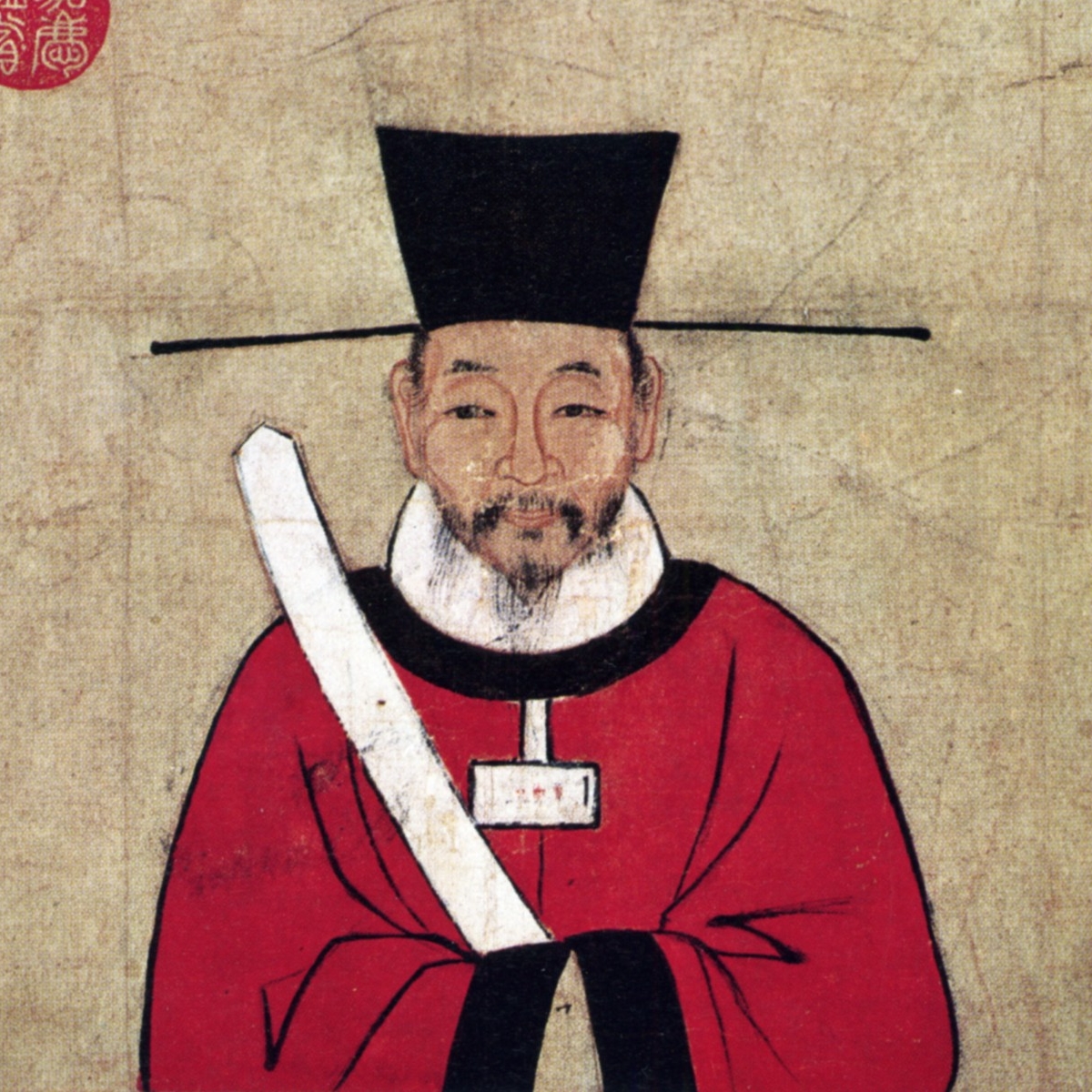
In 1065, Emperor Yingzong of Song commissioned his official, Sima Guang (1019–1086), to lead a project to compile a universal history of China, and granted him funding and the authority to appoint his own staff. His team took 19 years to complete the work and in 1084 it was presented to Emperor Yingzong's successor Emperor Shenzong of Song. It was well-received and has proved to be immensely influential among both scholars and the general public. Endymion Wilkinson regards it as reference quality: "It had an enormous influence on later Chinese historical writing, either directly or through its many abbreviations, continuations, and adaptations. It remains an extraordinarily useful first reference for a quick and reliable coverage of events at a particular time", while Achilles Fang wrote "[Zizhi Tongjian], and its numerous re-arrangements, abridgments, and continuations, were practically the only general histories with which most of the reading public of pre-Republican China were familiar."
The text
The principal text of the Zizhi Tongjian comprises a year-by-year narrative of the history of China over 294 scrolls, sweeping through many Chinese historical periods (Warring States, Qin, Han, Three Kingdoms, Jin and the Sixteen Kingdoms, Southern and Northern dynasties, Sui, Tang, and Five Dynasties), supplemented with two sections of 30 scrolls each—'tables' () and 'critical analysis' ().
Sima Guang departed from the format used in traditional Chinese dynastic histories, consisting primarily of 'annals' () of rulers and 'biographies' () of officials. Instead, Sima shifted from a 'biographical style' () to a 'chronological style' (). Guang wrote in a memorandum to the Emperor:
Since I was a child I have ranged through histories. It has appeared to me that in the annal-biography form the words are so diffuse and numerous that even an erudite scholar who reads them, again and again, cannot comprehend and sort them out. ... I have constantly wished to write a chronological history roughly in accordance with the form of the Tso-chuan (左傳), starting with the Warring States and going down to the Five Dynasties, drawing on other books besides the Official Histories and taking in all that a ruler ought to know—matters which are related to the rise and fall of dynasties and connected with the joys and sorrows of the people, and of which the good can become a model and the evil a warning.
Initially, Sima Guang hired Liu Shu () and Zhao Junxi as his main assistants, but Zhao was soon replaced by Liu Ban (), a Han history expert. In 1070 Emperor Shenzong approved Guang's request to add Fan Zuyu (), a Tang history expert. Because the Zizhi Tongjian is a distillation from 322 disparate sources, the selection, drafting, and editing processes used in creating the work as well as potential political biases of Sima Guang, in particular, have been the subject of academic debate.
Derivative and commented works
In the 12th century, Zhu Xi produced a reworked, condensed version of the Zizhi Tongjian, known as the Zizhi Tongjian Gangmu. This version was itself later translated into Manchu as , upon the request of the Qing Kangxi Emperor. This Manchu version was itself translated into French by Jesuit missionary Joseph-Anne-Marie de Moyriac de Mailla. His 12-volume translation Histoire générale de la Chine, ou Annales de cet Empire; traduit du Tong-kien-kang-mou par de Mailla (1777–1783) was published posthumously in Paris. The condensed Zizhi Tongjian Gangmu was also the main source for Textes historiques, a political history of China from antiquity to 906, published in 1929 by the French Jesuit missionary Léon Wieger.
The Zhonghua Book Company edition contains textual criticism made by Yuan dynasty historian Hu Sanxing. The philosopher Wang Fuzhi also wrote a commentary on Tongjian, titled Comments After Reading the Tongjian ().
Historian Rafe de Crespigny has published annotated translations of chapters 44 to 69 in three successive works under the titles A Hundred Years of Han (2025), Emperor Huan and Emperor Ling (1989), and To Establish Peace (1996), altogether covering 57–220 AD, building upon the publication of Achilles Fang's 1952 annotated translation of the next ten chapters (70–79) covering up to 265 AD. There are also self-published translations into English of chapters 1–8, covering the years 403–207 BC and some additional sections pertaining to the Xiongnu people.
Contents
The book consisted of 294 chapters, of which the following number describe each respective dynastic era:
- 5 chapters – Zhou (1046–256 BC)
- 3 chapters – Qin (221–207 BC)
- 60 chapters – Han (206 BC – 220 AD)
- 10 chapters – Wei (220–265)
- 40 chapters – Jin (266–420)
- 16 chapters – Liu Song (420–479)
- 10 chapters – Qi (479–502)
- 22 chapters – Liang (502–557)
- 10 chapters – Chen (557–589)
- 8 chapters – Sui (589–618)
- 81 chapters – Tang (618–907)
- 6 chapters – Later Liang (907–923)
- 8 chapters – Later Tang (923–936)
- 6 chapters – Later Jin (936–947)
- 4 chapters – Later Han (947–951)
- 5 chapters – Later Zhou (951–960)
Notes
Citations
Sources
- {{cite web | script-title = zh:通鑑綱目 | trans-title = Chinese Literature: Tongjian gangmu | archive-url = https://web.archive.org/web/20071011132303/http://www.chinaknowledge.de/Literature/Historiography/tongjiangangmu.html | access-date = 9 February 2022 | archive-date = October 11, 2007
- {{Cite thesis| type = Doctoral dissertation| title = Historiography and narrative construction of the Five Dynasties Period (907-960) in the Zizhi tongjian and its sources
- {{cite journal | title = The Historiography of the Tzu-chih t'ung-chien: A Survey
- {{cite encyclopedia| title = Zizhi Tongjian ("Comprehensive Mirror to Aid in Government")
- {{Cite book| chapter = Universal Histories | editor1-last = Leslie | editor1-first = Donald D. | editor2-last = Mackerras | editor2-first = Colin | editor3-last = Gungwu | editor3-first = Wang
- {{cite book| title = The Chronicle of the Three Kingdoms
- {{Cite book| title = Science and Civilisation in China
- {{Cite book| title = A History of Greek Fire and Gunpowder
- {{Cite book| chapter = Textual Liberties and Restraints in Rewriting China's Histories The Case of Ssu-ma Kuang's Re-construction of Chu-ko Liang's Story | editor-last = Lee | editor-first = Thomas H.C.
- {{cite book| title = Chinese History: a manual | edition = Revised and enlarged
- {{Cite book| chapter = Mirror for Government: Ssu-ma Kuang's Thought on Politics and Government | editor-last = Lee | editor-first = Thomas H.C.
- {{cite thesis| type = Doctoral dissertation| title = Historical development of the pre-dynastic Khitan
- {{Cite book| title = Modern Chinese Edition of Zizhi Tongjian
- {{cite book| title = Wars With The Xiongnu, A Translation from Zizhi tongjian
- {{cite book| title = Zizhi tongjian: Warring States and Qin by Sima Guang Volume 1 to 8 - 403-207 BCE | translator-last = Yap | translator-first = Joseph P.
References
- Crespigny, Rafe de. (2025-04-14). "A Hundred Years of Han (vol. 1): Being the Chronicle of the Later Han Dynasty for the Years 57 to 156 AD as Recorded in Chapters 44 to 53 of the Zizhi tongjian of Sima Guang". Brill.
- Crespigny, Rafe de. (2025-04-14). "A Hundred Years of Han (vol. 2): Being the Chronicle of the Later Han Dynasty for the Years 57 to 156 AD as Recorded in Chapters 44 to 53 of the Zizhi tongjian of Sima Guang". Brill.
- de Crespigny, Rafe. (1989). "Emperor Huan and Emperor Ling: being the Chronicle of the Later Han dynasty for the years 157 to 189 AD as recorded in Chapters 54 to 59 of the Zizhi tongjian of Sima Guang". Faculty of Asian Studies, Australian National University.
- de Crespigny, Rafe. (2020). "To Establish Peace: being the Chronicle of the Later Han dynasty for the years 189 to 200 AD as recorded in Chapters 59 to 69 of the Zizhi tongjian of Sima Guang". Australia Centre on China in the World, The Australian National University.
This article was imported from Wikipedia and is available under the Creative Commons Attribution-ShareAlike 4.0 License. Content has been adapted to SurfDoc format. Original contributors can be found on the article history page.
Ask Mako anything about Zizhi Tongjian — get instant answers, deeper analysis, and related topics.
Research with MakoFree with your Surf account
Create a free account to save articles, ask Mako questions, and organize your research.
Sign up freeThis content may have been generated or modified by AI. CloudSurf Software LLC is not responsible for the accuracy, completeness, or reliability of AI-generated content. Always verify important information from primary sources.
Report