From Surf Wiki (app.surf) — the open knowledge base
Zika virus
Species of flavivirus
Species of flavivirus
the virus
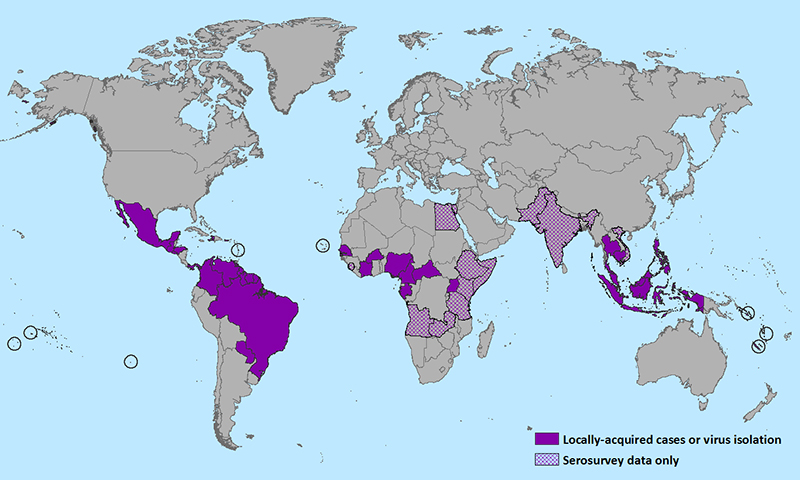
Zika virus (ZIKV; pronounced or ) is an arbovirus which is a member of the virus family Flaviviridae. It is spread by daytime-active Aedes mosquitoes, such as A. aegypti and A. albopictus. Its name comes from the Ziika Forest of Uganda, where the virus was first isolated in 1947. Zika virus shares a genus with the dengue, yellow fever, Japanese encephalitis, and West Nile viruses. Since the 1950s, it has been known to occur within a narrow equatorial belt. From 2007 to , the virus spread westward, across the Pacific Ocean to the Americas, leading to the 2015–2016 Zika virus epidemic.
The infection, known as Zika fever or Zika virus disease, often causes no or only mild symptoms, similar to a very mild form of dengue fever. There is no treatment for the disease , but paracetamol (acetaminophen) and rest may help with the symptoms. Zika can spread from a pregnant woman to her baby. This can result in microcephaly, severe brain malformations, and other birth defects. Zika infections in adults may rarely cause Guillain–Barré syndrome.
In January 2016, the United States Centers for Disease Control and Prevention (CDC) issued travel guidance on affected countries, including the use of enhanced precautions, and guidelines for pregnant women including considering postponing travel. Other governments or health agencies also issued similar travel warnings, while Colombia, the Dominican Republic, Puerto Rico, Ecuador, El Salvador, and Jamaica advised women to postpone becoming pregnant until more is known about the risks.
Virology
Zika virus belongs to the family Flaviviridae and the genus Flavivirus, thus is related to the dengue, yellow fever, Japanese encephalitis, and West Nile viruses. Like other flaviviruses, Zika virus is enveloped and icosahedral and has a nonsegmented, single-stranded, 10 kilobase, positive-sense RNA genome. It is most closely related to the Spondweni virus and is one of the two known viruses in the Spondweni virus clade.
A positive-sense RNA genome can be directly translated into viral proteins. As in other flaviviruses, such as the similarly sized West Nile virus, the RNA genome encodes seven nonstructural proteins and three structural proteins in the form of a single polyprotein (). One of the structural proteins encapsulates the virus. This protein is the flavivirus envelope glycoprotein, that binds to the endosomal membrane of the host cell to initiate endocytosis. The RNA genome forms a nucleocapsid along with copies of the 12-kDa capsid protein. The nucleocapsid, in turn, is enveloped within a host-derived membrane modified with two viral glycoproteins. Viral genome replication depends on the making of double-stranded RNA from the single-stranded, positive-sense RNA (ssRNA(+)) genome followed by transcription and replication to provide viral mRNAs and new ssRNA(+) genomes.
A longitudinal study shows that 6 hours after cells are infected with Zika virus, the vacuoles and mitochondria in the cells begin to swell. This swelling becomes so severe, it results in cell death, also known as paraptosis. This form of programmed cell death requires gene expression. IFITM3 is a trans-membrane protein in a cell that is able to protect it from viral infection by blocking virus attachment. Cells are most susceptible to Zika infection when levels of IFITM3 are low. Once the cell has been infected, the virus restructures the endoplasmic reticulum, forming the large vacuoles, resulting in cell death.
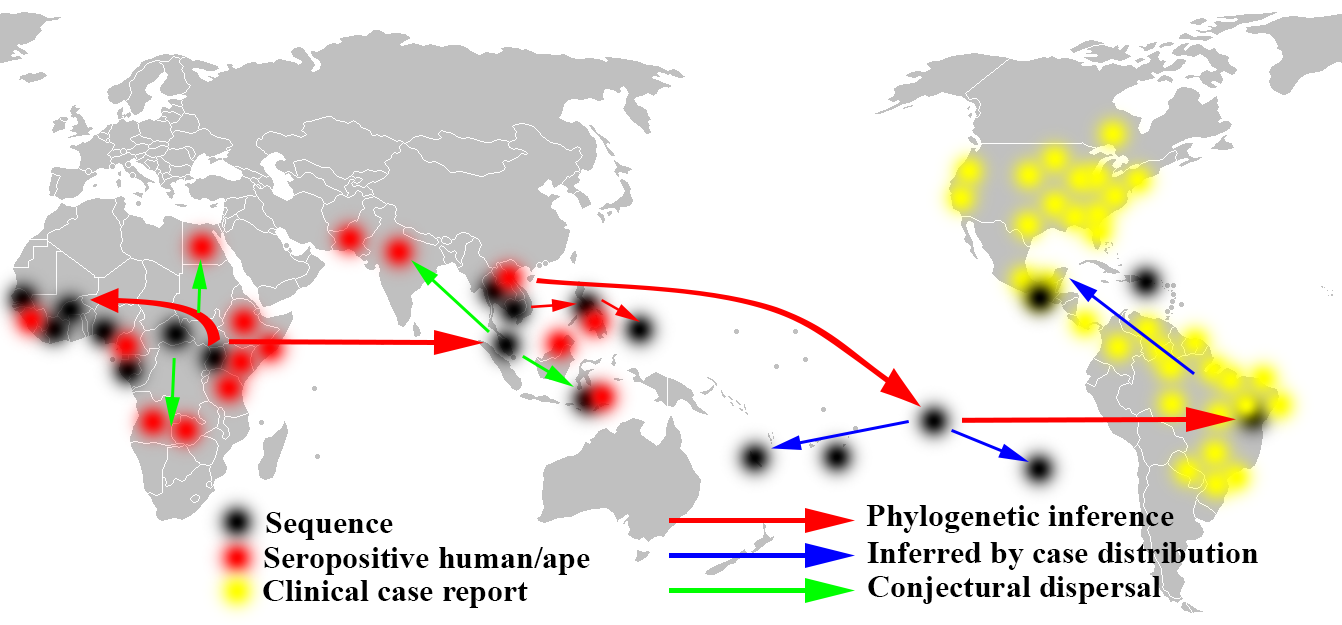
There are two Zika lineages: the African lineage and the Asian lineage. Phylogenetic studies indicate that the virus spreading in the Americas is 89% identical to African genotypes, but is most closely related to the Asian strain that circulated in French Polynesia during the 20132014 outbreak.
The Asian strain appears to have first evolved around 1928.
Transmission
The vertebrate hosts of the virus were primarily monkeys in a so-called enzootic mosquito-monkey-mosquito cycle, with only occasional transmission to humans. Before 2007, Zika "rarely caused recognized 'spillover' infections in humans, even in highly enzootic areas". Infrequently, however, other arboviruses have become established as a human disease and spread in a mosquito–human–mosquito cycle, like the yellow fever virus and the dengue fever virus (both flaviviruses), and the chikungunya virus (a togavirus). Though the reason for the pandemic is unknown, dengue, a related arbovirus that infects the same species of mosquito vectors, is known in particular to be intensified by urbanization and globalization. Zika is primarily spread by Aedes aegypti mosquitoes, and can also be transmitted through sexual contact or blood transfusions. The basic reproduction number (R0, a measure of transmissibility) of Zika virus has been estimated to be between 1.4 and 6.6 .
In 2015, news reports drew attention to the rapid spread of Zika in Latin America and the Caribbean. At that time, the Pan American Health Organization published a list of countries and territories that experienced "local Zika virus transmission" comprising Barbados, Bolivia, Brazil, Colombia, the Dominican Republic, Ecuador, El Salvador, French Guiana, Guadeloupe, Guatemala, Guyana, Haiti, Honduras, Martinique, Mexico, Panama, Paraguay, Puerto Rico, Saint Martin, Suriname, and Venezuela. By August 2016, more than 50 countries had experienced active (local) transmission of Zika virus.
Mosquito
Zika is primarily spread by the female Aedes aegypti mosquito, which is active mostly in the daytime. The mosquitos must feed on blood to lay eggs. The virus has also been isolated from a number of arboreal mosquito species in the genus Aedes, such as A. africanus, A. apicoargenteus, A. furcifer, A. hensilli, A. luteocephalus, and A. vittatus, with an extrinsic incubation period in mosquitoes around 10 days.
Zika has been detected in many more species of Aedes, along with Anopheles coustani, Mansonia uniformis, and Culex perfuscus, although this alone does not incriminate them as vectors. To detect the presence of the virus usually requires genetic material to be analysed in a lab using the technique RT-PCR. A much cheaper and faster method involves shining a light at the head and thorax of the mosquito, and detecting chemical compounds characteristic of the virus using near-infrared spectroscopy.
Transmission by A. albopictus, the tiger mosquito, was reported from a 2007 urban outbreak in Gabon, where it had newly invaded the country and become the primary vector for the concomitant chikungunya and dengue virus outbreaks. New outbreaks can occur if a person carrying the virus travels to another region where A. albopictus is common.
The potential societal risk of Zika can be delimited by the distribution of the mosquito species that transmit it. The global distribution of the most cited carrier of Zika, A. aegypti, is expanding due to global trade and travel. A. aegypti distribution is now the most extensive ever recorded – on parts of all continents except Antarctica, including North America and even the European periphery (Madeira, the Netherlands, and the northeastern Black Sea coast). A mosquito population capable of carrying Zika has been found in a Capitol Hill neighborhood of Washington, DC, and genetic evidence suggests they survived at least four consecutive winters in the region. The study authors conclude that mosquitos are adapting for persistence in a northern climate. Zika virus appears to be contagious via mosquitoes for around a week after infection. The virus is thought to be infectious for a longer period of time after infection (at least 2 weeks) when transmitted via semen.
Research into its ecological niche suggests that Zika may be influenced to a greater degree by changes in precipitation and temperature than dengue, making it more likely to be confined to tropical areas. However, rising global temperatures due to climate change would allow for the disease vector to expand its range further north, allowing Zika to follow. It is predicted that climate change will expose more than 1.3 billion new people to Zika virus by 2050.
Sexual
Zika can be transmitted from men and women to their sexual partners; most known cases involve transmission from symptomatic men to women. As of 2016, sexual transmission of Zika had been documented in six countries – Argentina, Australia, France, Italy, New Zealand, and the United States – during the 2015 outbreak. ZIKV can persist in semen for several months, with viral RNA detected up to one year. The virus replicates in the human testis, where it infects several cell types including testicular macrophages, peritubular cells and germ cells, the spermatozoa precursors. Semen parameters can be altered in patients for several weeks post-symptoms onset, and spermatozoa can be infectious. Since October 2016, the CDC has advised men who have traveled to an area with Zika should use condoms or not have sex for at least six months after their return as the virus is still transmissible even if symptoms never develop.
Pregnancy
Zika virus can spread by vertical (or "mother-to-child") transmission, during pregnancy or at delivery. An infection during pregnancy has been linked to changes in neuronal development of the unborn child. Severe progressions of infection have been linked to the development of microcephaly in the unborn child, while mild infections potentially can lead to neurocognitive disorders later in life. Congenital brain abnormalities other than microcephaly have also been reported after a Zika outbreak. Studies in mice have suggested that maternal immunity to dengue virus may enhance fetal infection with Zika, worsen the microcephaly phenotype and/or enhance damage during pregnancy, but it is unknown whether this occurs in humans. It is also not known if the virus can pass through a mother's breast milk to the child.
Blood transfusion
, two cases of Zika transmission through blood transfusions have been reported globally, both from Brazil, after which the US Food and Drug Administration (FDA) recommended screening blood donors and deferring high-risk donors for 4 weeks. A potential risk had been suspected based on a blood-donor screening study during the French Polynesian Zika outbreak, in which 2.8% (42) of donors from November 2013 and February 2014 tested positive for Zika RNA and were all asymptomatic at the time of blood donation. Eleven of the positive donors reported symptoms of Zika fever after their donation, but only three of 34 samples grew in culture.
Pathogenesis
Zika virus replicates in the mosquito's midgut epithelial cells and then its salivary gland cells. After 5–10 days, the virus can be found in the mosquito's saliva. If the mosquito's saliva is inoculated into human skin, the virus can infect epidermal keratinocytes, skin fibroblasts in the skin and the Langerhans cells. The pathogenesis of the virus is hypothesized to continue with a spread to lymph nodes and the bloodstream. Flaviviruses replicate in the cytoplasm, but Zika antigens have been found in infected cell nuclei.
The viral protein numbered NS4A may lead to small head size (microcephaly) because it disrupts brain growth by hijacking a pathway which regulates growth of new neurons. Specifically, Link et al. reported in 2019 that NS4A disrupted the asymmetric division of neuronal precursors by the third larval instar in Drosophila fruit flies, and that these defects could be suppressed by heterologous expression of human ANKLE2, which NS4A interacts with, or by reducing expression of the VRK1 homologue Bällchen or the LLGL1 homologue lethal (2) giant larvae. Additionally, in fruit flies, both NS4A and the neighboring NS4B restrict eye growth.
Zika fever
Main article: Zika fever

Zika fever (also known as Zika virus disease) is an illness caused by Zika virus. Around 80% of cases are estimated to be asymptomatic, though the accuracy of this figure is hindered by the wide variance in data quality, and figures from different outbreaks can vary significantly. Symptomatic cases are usually mild and can resemble dengue fever. Symptoms may include fever, red eyes, joint pain, headache, and a maculopapular rash. Symptoms generally last less than seven days. It has not caused any reported deaths during the initial infection. Infection during pregnancy causes microcephaly and other brain malformations in some babies. Infection in adults has been linked to Guillain–Barré syndrome (GBS) and Zika virus has been shown to infect human Schwann cells.
Diagnosis
Diagnosis is by testing the blood, urine, or saliva for the presence of Zika virus RNA when the person is sick. In 2019, an improved diagnostic test, based on research from Washington University in St. Louis, that detects Zika infection in serum was granted market authorization by the FDA.
Prevention
Prevention involves decreasing mosquito bites in areas where the disease occurs, and proper use of condoms. This highlights the importance of sexual health education and safe sex practices in areas like these. Efforts to prevent bites include the use of DEET or picaridin - based insect repellent, covering much of the body with clothing, mosquito nets, and getting rid of standing water where mosquitoes reproduce. there is no vaccine. Health officials recommended that women in areas affected by the 2015–2016 Zika outbreak consider putting off pregnancy and that pregnant women not travel to these areas. Although unavailable to people of impoverished areas, using house screens, air-conditioning and removing yard/house debris help with prevention.
Genetically modified mosquitoes
There has been an innovation of genetically modified Ae. aegypti mosquitoes containing an anti-Zika virus transgene. This transgene contains a group of small synthethic RNAs that are used to target the genome of Zika virus. The use of this modification has been found to reduce viral infection, dissemination and also transmission rates of this virus. There have been trials conducted using these mosquitoes in countries like the Cayman Islands, Malaysia and Brazil. A company called Oxitec Ltd, which genetically engineered this mosquito, set up a field study in Brazil in 2018 that resulted in suppression of up to 96% of disease-transmitting mosquitoes.
Treatment
While there is no treatment for the disease, paracetamol (acetaminophen) and rest may help with the symptoms. Admission to a hospital is rarely necessary.
Treatment of Zika includes getting plenty of rest, drinking a lot of fluids to stay hydrated, and over-the-counter medicines such as acetaminophen to relieve fever and pain. It is not recommended to take aspirin or other non-steroidal anti-inflammatory drugs until after dengue infection is ruled out. If the patient is taking treatment for another medical condition the attending physician can advise about any other drug or additional treatment.
Vaccine development
Main article: Zika virus vaccine
The World Health Organization has suggested that priority should be given to developing inactivated vaccines and other non-live vaccines, which are safe for pregnant women to use.
, 18 companies and institutions were developing vaccines against Zika, but they stated that a vaccine was unlikely to be widely available for about 10 years; there was none .
In June 2016, the FDA granted the first approval for a human clinical trial for a Zika vaccine. In March 2017, a DNA vaccine was approved for phase-2 clinical trials. This vaccine consists of a small, circular piece of DNA, known as a plasmid, that expresses the genes for the Zika virus envelope proteins. As the vaccine does not contain the full sequence of the virus, it cannot cause infection. Since 2022, this DNA vaccine sponsored by the National Institute of Allergy and Infectious Diseases has completed phase 2.
As of April 2017, both subunit and inactivated vaccines have entered clinical trials. However, for epidemics that appear sporadically and unpredictably such as caused by Zika and several other arboviruses, precautionary vaccination of large populations may be prohibitively expensive, but distribution of vaccine in response to a sudden explosive epidemic may be too slow.
Complications
Although Zika virus is mostly known for its association with birth defects such as microcephaly, it can also cause other pregnancy issues such as fetal loss, stillbirth and preterm birth. Furthermore, it has also been linked to a neurological disorder called Guillain-Barré syndrome. This disorder results in damage to nerve cells that may cause muscle weakness and even paralysis. Although these symptoms last temporarily and most people fully recover, some people affected may end up with permanent damage. Additionally, it is known that Zika viruses can rarely cause encephalitis, meningitis, or myelitis. It may also rarely result in a blood disorder which can affect clotting time and cause increased bleeding.
History

Virus isolation in monkeys and mosquitoes, 1947
The virus was first isolated in April 1947 from a rhesus macaque monkey placed in a cage in the Ziika Forest of Uganda, near Lake Victoria, by the scientists of the Yellow Fever Research Institute. A second isolation from the mosquito A. africanus followed at the same site in January 1948. When the monkey developed a fever, researchers isolated from its serum a "filterable transmissible agent" which was named Zika in 1948.
First evidence of human infection, 1952
Zika was first known to infect humans from the results of a serological survey in Uganda, published in 1952. Of 99 human blood samples tested, 6.1% had neutralizing antibodies. As part of a 1954 outbreak investigation of jaundice suspected to be yellow fever, researchers reported isolation of the virus from a patient, but the pathogen was later shown to be the closely related Spondweni virus. Spondweni was also determined to be the cause of a self-inflicted infection in a researcher reported in 1956.
Spread in equatorial Africa and to Asia, 1951–present
Subsequent serological studies in several African and Asian countries indicated the virus had been widespread within human populations in these regions. The first true case of human infection was identified by Simpson in 1964, who was himself infected while isolating the virus from mosquitoes. From then until 2007, there were only 13 further confirmed human cases of Zika infection from Africa and Southeast Asia. A study published in 2017 showed that the Zika virus, despite only a few cases were reported, has been silently circulated in West Africa for the last two decades when blood samples collected between 1992 and 2016 were tested for the ZIKV IgM antibodies. In 2017, Angola reported two cases of Zika fever. Zika was also occurring in Tanzania as of 2016.
Micronesia, 2007
Main article: 2007 Yap Islands Zika virus outbreak
In April 2007, the first outbreak outside of Africa and Asia occurred on the island of Yap in the Federated States of Micronesia, characterized by rash, conjunctivitis, and arthralgia, which was initially thought to be dengue, chikungunya, or Ross River disease. Serum samples from patients in the acute phase of illness contained RNA of Zika. There were 49 confirmed cases, 59 unconfirmed cases, no hospitalizations, and no deaths.
2013–2014
Main article: 2013–2014 Zika virus outbreaks in Oceania
After October 2013 Oceania's first outbreak showed an estimated 11% population infected for French Polynesia that also presented with Guillain–Barre syndrome (GBS). The spread of ZIKV continued to New Caledonia, Easter Island, and the Cook Islands and where 1385 cases were confirmed by January 2014. During the same year, Easter Island acknowledged 51 cases. Australia began seeing cases in 2012. Research showed it was brought by travelers returning from Indonesia and other infected countries. New Zealand also experienced infections rate increases through returning foreign travelers. Oceania countries experiencing Zika today are New Caledonia, Vanuatu, Solomon Islands, Marshall Islands, American Samoa, Samoa, and Tonga.
Between 2013 and 2014, further epidemics occurred in French Polynesia, Easter Island, the Cook Islands, and New Caledonia.
Americas, 2015–present
Main article: 2015–2016 Zika virus epidemic
There was an epidemic in 2015 and 2016 in the Americas. The outbreak began in April 2015 in Brazil, and spread to other countries in South America, Central America, North America, and the Caribbean. In January 2016, the WHO said the virus was likely to spread throughout most of the Americas by the end of the year; and in February 2016, the WHO declared the cluster of microcephaly and Guillain–Barré syndrome cases reported in Brazil – strongly suspected to be associated with the Zika outbreaka Public Health Emergency of International Concern. It was estimated that 1.5 million people were infected by Zika in Brazil, with over 3,500 cases of microcephaly reported between October 2015 and January 2016.
A number of countries issued travel warnings, and the outbreak was expected to significantly impact the tourism industry. Several countries took the unusual step of advising their citizens to delay pregnancy until more was known about the virus and its impact on fetal development. With the 2016 Summer Olympics hosted in Rio de Janeiro, health officials worldwide voiced concerns over a potential crisis, both in Brazil and when international athletes and tourists returned home and possibly would spread the virus. Some researchers speculated that only one or two tourists might be infected during the three-week period, or approximately 3.2 infections per 100,000 tourists. In November 2016, the World Health Organization declared that Zika virus was no longer a global emergency while noting that the virus still represents "a highly significant and a long-term problem".
As of August 2017 the number of new Zika virus cases in the Americas had fallen dramatically.
India, Bangladesh
On 22 March 2016, Reuters reported that Zika was isolated from a 2014 blood sample of an elderly man in Chittagong in Bangladesh as part of a retrospective study.
On May 15, 2017, three cases of Zika virus infection in India were reported in the state of Gujarat. By late 2018, there had been at least 159 cases in Rajasthan and 127 in Madhya Pradesh.
In July 2021, the first case of Zika virus infection in the Indian state of Kerala was reported. After the first confirmed case, 19 other people who had previously presented symptoms were tested, and 13 of those had positive results, showing that Zika had been circulating in Kerala since at least May 2021. By August 6th 2021, there had been 65 reported cases in Kerala.
On October 22, 2021, an officer in the Indian Air Force in Kanpur tested positive for Zika virus, making it the first reported case in the Indian state of Uttar Pradesh.
East Asia
Between August and November 2016, 455 cases of Zika virus infection were confirmed in Singapore.
In 2023, 722 Zika virus cases were reported in Thailand. From 2019-2022 the Robert Koch-Institut reported 29 imported Zikavirus cases imported into Germany. Of the altogether 16 imported Zika virus cases in 2023, 10 were diagnosed after a trip to Thailand with 62% of all Zika virus cases a significant relative and absolute increase.
One Health and Zika Virus
In order to understand and effectively respond to the spread of Zika virus, it is important to consider a One Health approach. This approach includes strategies produced through the collaboration of experts in different disciplines.
Specifically, the integrated surveillance of human, animal, and environmental factors can help mitigate Zika virus. A One Health perspective recognizes that human health is greatly impacted by the health of their environment around them, enforcing a multidisciplinary approach to disease prevention and control.
In August 2016, Singapore had an increase in cases of Zika virus causing rapid intervention by public health officials. Some researchers at that time endorsed that taking on a One Health approach is the best way to come up with ethical and effective solutions to contain the spread.
References
References
- (18 March 2005). "TEM image of the Zika virus". [[Centers for Disease Control and Prevention]].
- (April 2016). "The 3.8 Å resolution cryo-EM structure of Zika virus". Science.
- "How to pronounce Zika". HowToPronounce.com.
- (June 2014). "Zika virus". Emerging Infectious Diseases.
- (March 2016). "Zika Virus: Medical Countermeasure Development Challenges". PLOS Neglected Tropical Diseases.
- (11 February 2016). "The Emergence of Zika Virus as a Global Health Security Threat: A Review and a Consensus Statement of the INDUSEM Joint working Group (JWG)". Journal of Global Infectious Diseases.
- (2017-01-01). "Is Zika Virus an Emerging TORCH Agent? An Invited Commentary". Virology.
- (3 March 2016). "Symptoms, Diagnosis, & Treatment". Centers for Disease Control and Prevention.
- (May 2016). "Zika Virus and Birth Defects--Reviewing the Evidence for Causality". The New England Journal of Medicine.
- (13 April 2016). "CDC concludes Zika causes microcephaly and other birth defects".
- (7 April 2016). "Zika virus microcephaly and Guillain–Barré syndrome - Situation report". World Health Organization.
- (15 January 2016). "Zika Virus in the Caribbean". Centers for Disease Control and Prevention.
- (January 2016). "Interim Guidelines for Pregnant Women During a Zika Virus Outbreak--United States, 2016". MMWR. Morbidity and Mortality Weekly Report.
- (22 January 2016). "Zika virus: Advice for those planning to travel to outbreak areas". [[ITV News]].
- (22 January 2016). "Pregnant Irish women warned over Zika virus in central and South America". RTÉ News.
- (24 January 2016). "Zika: Olympics plans announced by Rio authorities". British Broadcasting Corporation.
- (23 January 2016). "Zika virus triggers pregnancy delay calls". BBC News.
- (2007). "Fields Virology". Lippincott Williams & Wilkins.
- (9 January 2014). "Molecular evolution of Zika virus during its emergence in the 20(th) century". PLOS Neglected Tropical Diseases.
- (June 2014). "Zika virus, French polynesia, South pacific, 2013". Emerging Infectious Diseases.
- (1 January 2007). "Full-length sequencing and genomic characterization of Bagaza, Kedougou, and Zika viruses". Archives of Virology.
- (2016). "Zika Virus". RCSB Protein Data Bank.
- (August 2015). "Predicting Zika virus structural biology: Challenges and opportunities for intervention". Antiviral Chemistry & Chemotherapy.
- (May 2016). "Structures of the Zika Virus Envelope Protein and Its Complex with a Flavivirus Broadly Protective Antibody". Cell Host & Microbe.
- "ViralZone: Zika virus (strain Mr 766)". SIB Swiss Institute of Bioinformatics.
- (April 2012). "Degrees of maturity: the complex structure and biology of flaviviruses". Current Opinion in Virology.
- (June 2017). "Zika virus induces massive cytoplasmic vacuolization and paraptosis-like death in infected cells". The EMBO Journal.
- (January 2016). "Zika virus genome from the Americas". Lancet.
- (June 2015). "First report of autochthonous transmission of Zika virus in Brazil". Memórias do Instituto Oswaldo Cruz.
- (May 2016). "Phylogeny of Zika Virus in Western Hemisphere, 2015". Emerging Infectious Diseases.
- (July 2017). "Comparative analysis of protein evolution in the genome of pre-epidemic and epidemic Zika virus". Infection, Genetics and Evolution.
- (February 2016). "Zika Virus in the Americas--Yet Another Arbovirus Threat". The New England Journal of Medicine.
- (December 2011). "Dengue, Urbanization and Globalization: The Unholy Trinity of the 21(st) Century". Tropical Medicine and Health.
- (22 July 2016). "Zika virus found in common house mosquitoes in Brazil".
- (12 August 2016). "Assessing the global threat from Zika virus".
- (22 January 2016). "FACTBOX – Zika virus spreads rapidly through Latin America, Caribbean".
- (18 January 2016). "As the Zika virus spreads, PAHO advises countries to monitor and report birth anomalies and other suspected complications of the virus". Pan American Health Organization.
- (2 February 2016). "PAHO Statement on Zika Virus Transmission and Prevention". Pan American Health Organization.
- (24 February 2016). "5 things you need to know about Zika". CNN.
- "Zika Virus". Centers for Disease Control and Prevention.
- (November 2016). "An updated review of Zika virus". Journal of Clinical Virology.
- Division of Vector-Borne Diseases, Dengue Branch. "Dengue and the ''Aedes aegypti'' mosquito". Centers for Disease Control and Prevention.
- (September 2009). "Zika virus outside Africa". Emerging Infectious Diseases.
- (March 2016). "Identification of Zika virus vectors and implications for control". The Lancet. Infectious Diseases.
- (July–August 2018). "Shining a light on Zika". New Zealand Geographic.
- (February 2014). "Zika virus in Gabon (Central Africa)--2007: a new threat from Aedes albopictus?". PLOS Neglected Tropical Diseases.
- (February 2015). "Zika virus infections imported to Italy: clinical, immunological and virological findings, and public health implications". Journal of Clinical Virology.
- (June 2015). "The global distribution of the arbovirus vectors Aedes aegypti and Ae. albopictus". eLife.
- "Aedes aegypti". European Centre for Disease Protection and Control.
- (26 January 2016). "Mosquitoes capable of carrying Zika virus found in Washington, D.C.". University of Notre Dame.
- (21 January 2016). "Zika outbreak: What you need to know". BBC News.
- (10 June 2013). "How to Avoid Mosquito Bites in Florida".
- (August 2016). "An Ecological Assessment of the Pandemic Threat of Zika Virus". PLOS Neglected Tropical Diseases.
- (9 October 2020). "Warming temperatures could expose more than 1.3 billion new people to Zika virus risk by 2050". Global Change Biology.
- (April 2016). "Update: Interim Guidance for Prevention of Sexual Transmission of Zika Virus--United States, 2016". MMWR. Morbidity and Mortality Weekly Report.
- (January 2017). "Zika Virus -10 Public Health Achievements in 2016 and Future Priorities". MMWR. Morbidity and Mortality Weekly Report.
- (29 July 2016). "WHO chief going to the Olympics, says Zika risk low". Reuters.
- (July 2020). "From Ancient to Emerging Infections: The Odyssey of Viruses in the Male Genital Tract". Physiological Reviews.
- (October 2018). "Zika virus infects human testicular tissue and germ cells". The Journal of Clinical Investigation.
- (November 2017). "Effect of acute Zika virus infection on sperm and virus clearance in body fluids: a prospective observational study". The Lancet. Infectious Diseases.
- (October 2016). "Update: Interim Guidance for Preconception Counseling and Prevention of Sexual Transmission of Zika Virus for Persons with Possible Zika Virus Exposure - United States, September 2016". MMWR. Morbidity and Mortality Weekly Report.
- (15 April 2016). "CDC Zika: Transmission". Centers for Disease Control and Prevention.
- (August 2016). "Time Lags between Exanthematous Illness Attributed to Zika Virus, Guillain-Barré Syndrome, and Microcephaly, Salvador, Brazil". Emerging Infectious Diseases.
- (February 2021). "Developmental outcomes in children exposed to Zika virus in utero from a Brazilian urban slum cohort study". PLOS Neglected Tropical Diseases.
- (March 2016). "Zika Virus and Microcephaly". The New England Journal of Medicine.
- (October 2018). "Male offspring born to mildly ZIKV-infected mice are at risk of developing neurocognitive disorders in adulthood". Nature Microbiology.
- (November 2018). "Congenital brain abnormalities during a Zika virus epidemic in Salvador, Brazil, April 2015 to July 2016". Euro Surveillance.
- (February 2019). "Maternal immunity and antibodies to dengue virus promote infection and Zika virus-induced microcephaly in fetuses". Science Advances.
- https://www.cdc.gov/zika/about/index.html
- (April 2016). "Survey of Blood Collection Centers and Implementation of Guidance for Prevention of Transfusion-Transmitted Zika Virus Infection--Puerto Rico, 2016". MMWR. Morbidity and Mortality Weekly Report.
- (February 2016). "Recommendations for Donor Screening, Deferral, and Product Management to Reduce the Risk of Transfusion-Transmission of Zika Virus". [[Food and Drug Administration]].
- (25 May 2015). "Zika virus infection outbreak, Brazil and the Pacific region". [[European Centre for Disease Prevention and Control]].
- (April 2014). "Potential for Zika virus transmission through blood transfusion demonstrated during an outbreak in French Polynesia, November 2013 to February 2014". Euro Surveillance.
- (May 2016). "Zika fever and congenital Zika syndrome: An unexpected emerging arboviral disease". The Journal of Infection.
- (August 1988). "Detection of virus-specific antigen in the nuclei or nucleoli of cells infected with Zika or Langat virus". The Journal of General Virology.
- (14 November 2019). "How maternal Zika virus infection results in newborn microcephaly". ScienMag.
- (2019). "Mutations in ''ANKLE2'', a ZIKA Virus Target, Disrupt an Asymmetric Cell Division Pathway in ''Drosophila'' Neuroblasts to Cause Microcephaly". Developmental Cell.
- (April 2020). "Zika virus non-structural protein NS4A restricts eye growth in ''Drosophila'' through regulation of JAK/STAT signaling". Disease Models & Mechanisms.
- (January 2016). "Zika virus". World Health Organization.
- (June 2018). "Prevalence of asymptomatic Zika virus infection: a systematic review". Bulletin of the World Health Organization.
- (3 September 2010). "Factsheet for health professionals". European Centre for Disease Prevention and Control.
- (October 2014). "Rapid spread of emerging Zika virus in the Pacific area". Clinical Microbiology and Infection.
- (July 2019). "Human Schwann cells are susceptible to infection with Zika and yellow fever viruses, but not dengue virus". Scientific Reports.
- (2019-09-03). "Zika diagnostic test granted market authorization by FDA".
- (May 2016). "Zika Virus: Rapid Spread in the Western Hemisphere". Annals of Internal Medicine.
- (April 2016). "Update: Interim Guidance for Prevention of Sexual Transmission of Zika Virus--United States, 2016". MMWR. Morbidity and Mortality Weekly Report.
- (31 January 2025). "Treatment and Prevention of Zika Virus Disease". CDC.
- (24 December 2015). "Brazil warns against pregnancy due to spreading virus". CNN.
- (2016-02-18). "Zika Virus in the Americas — Yet Another Arbovirus Threat". New England Journal of Medicine.
- (2022-10-25). "New self-sexing Aedes aegypti strain eliminates barriers to scalable and sustainable vector control for governments and communities in dengue-prone environments". Frontiers in Bioengineering and Biotechnology.
- (2014-11-05). "Treatment for Zika Virus".
- (June 2016). "Zika virus outbreak: an overview of the experimental therapeutics and treatment". VirusDisease.
- (9 March 2016). "WHO and experts prioritize vaccines, diagnostics and innovative vector control tools for Zika R&D". World Health Organization.
- (27 January 2016). "Zika virus: US scientists say vaccine '10 years away'". BBC News.
- (21 June 2016). "Inovio set for first Zika vaccine human trial". fiercepharma.com.
- (31 March 2017). "Phase 2 Zika vaccine trial begins in U.S., Central and South America".
- (2022-10-28). "Current Advances in Zika Vaccine Development". Vaccines.
- (April 2017). "Vaccination strategies against Zika virus". Current Opinion in Virology.
- (2016-02-18). "Zika Virus in the Americas — Yet Another Arbovirus Threat". New England Journal of Medicine.
- CDC. (2025-01-30). "Zika Symptoms and Complications".
- (2014-11-05). "Geographic Distribution". Centers for Disease Control and Prevention.
- (February 2016). "Zika virus: a previously slow pandemic spreads rapidly through the Americas". The Journal of General Virology.
- "Zika virus in the United States". Centers for Disease Control and Prevention.
- (8 February 2016). "Zika's long, strange trip into the limelight". American Association for the Advancement of Science.
- (2012). "Genetic characterization of Zika virus strains: geographic expansion of the Asian lineage". PLOS Neglected Tropical Diseases.
- (July 2016). "Zika virus: history of a newly emerging arbovirus". The Lancet. Infectious Diseases.
- (September 1952). "Zika virus. II. Pathogenicity and physical properties". Transactions of the Royal Society of Tropical Medicine and Hygiene.
- (March 1954). "Zika virus: a report on three cases of human infection during an epidemic of jaundice in Nigeria". Transactions of the Royal Society of Tropical Medicine and Hygiene.
- (January 2017). "First published report of Zika virus infection in people: Simpson, not MacNamara". The Lancet. Infectious Diseases.
- (September 1956). "Zika virus infection experimentally induced in a human volunteer". Transactions of the Royal Society of Tropical Medicine and Hygiene.
- (July 1964). "Zika virus infection in man". Transactions of the Royal Society of Tropical Medicine and Hygiene.
- (10 February 2016). "Experts Study Zika's Path From First Outbreak in Pacific". [[The New York Times]].
- (24 May 2017). "Zika virus found to be circulating in Africa for decades". Harvard T.H.Chan School of Public Health.
- (2017-01-11). "Angola reports first two cases of Zika virus". Reuters.
- "Blood samples show presence of Zika virus in Tanzania".
- (3 July 2007). "Little-Known Virus Challenges a Far-Flung Health System". The New York Times.
- (June 2009). "Zika virus outbreak on Yap Island, Federated States of Micronesia". The New England Journal of Medicine.
- (2016-04-19). "Zika Virus: the Latest Newcomer". Frontiers in Microbiology.
- (25 January 2016). "WHO sees Zika outbreak spreading through the Americas". [[Reuters]].
- (1 February 2016). "WHO Director-General summarizes the outcome of the Emergency Committee regarding clusters of microcephaly and Guillain–Barré syndrome". [[World Health Organization]].
- (1 February 2016). "Zika-linked condition: WHO declares global emergency". BBC News.
- (2 February 2016). "Zika virus sparks 'public health emergency'". [[CNN]].
- (18 February 2016). "U.S., Brazil researchers join forces to battle Zika virus". [[Reuters]].
- (25 November 2015). "Microcephaly in Brazil potentially linked to the Zika virus epidemic, ECDC assesses the risk". [[European Centre for Disease Prevention and Control]].
- (3 February 2016). "Zika Fears Imperil Brazil's Tourism Push". [[The Wall Street Journal]].
- (26 May 2016). "Rio Olympics 2016: why athletes and fans aren't likely to catch Zika".
- "World Health Organization declares end of Zika emergency". The Irish Times.
- (16 August 2017). "Zika has all but disappeared in the Americas. Why?".
- (22 March 2016). "Bangladesh Confirms First Case of Zika Virus". [[Newsweek]].
- (2017-05-26). "2017 - India".
- (November 2017). "Zika virus: Current concerns in India". The Indian Journal of Medical Research.
- (May 2019). "Zika's passage to India". The Lancet. Infectious Diseases.
- (2021-10-14). "Zika Virus Disease – India".
- (2021-08-06). "65 Zika virus cases reported in Kerala as on August 2, 2021: Health minister Mansukh Mandaviya".
- (2021-10-24). "Zika virus case detected in Kanpur, first in Uttar Pradesh".
- (August 2017). "Outbreak of Zika virus infection in Singapore: an epidemiological, entomological, virological, and clinical analysis". The Lancet. Infectious Diseases.
- "Zika Virus in Singapore".
- (21 December 2023). "Zika in Thailand".
- Epidemiologisches Bulletin. (2024-01-18). "Vermehrte Zikavirus-Fälle bei Thailandreisenden".
- (2020-01-10). "Implementing One Health approaches to confront emerging and re-emerging zoonotic disease threats: lessons from PREDICT". One Health Outlook.
- (October 2016). "Zika in Singapore: insights from One Health and social medicine". Singapore Medical Journal.
This article was imported from Wikipedia and is available under the Creative Commons Attribution-ShareAlike 4.0 License. Content has been adapted to SurfDoc format. Original contributors can be found on the article history page.
Ask Mako anything about Zika virus — get instant answers, deeper analysis, and related topics.
Research with MakoFree with your Surf account
Create a free account to save articles, ask Mako questions, and organize your research.
Sign up freeThis content may have been generated or modified by AI. CloudSurf Software LLC is not responsible for the accuracy, completeness, or reliability of AI-generated content. Always verify important information from primary sources.
Report