From Surf Wiki (app.surf) — the open knowledge base
Zarf
Holder for a coffee cup without a handle
_made_for_export_to_Turkey,_c._1830,_enameled_gold,_porcelain.jpg)
Holder for a coffee cup without a handle
A zarf (plural: zarfs, zarves; ; Arabic: ar) is a cup holder, usually of ornamented metal, for a coffee cup without a handle (demitasse or fincan).
History

Although coffee was probably discovered in Ethiopia, it was in Turkey around the 13th century that it became popular as a beverage. As with the serving of tea in China and Japan, the serving of coffee in Turkey was a complex, ritualized process. It was served in small cups without handles (known as fincan, pronounced /finˈd͡ʒan/), which were placed in holders known as zarf (from the ; plural ظُرُوف ar, meaning "container" or "envelope") to protect the cup and also the fingers of the drinker from the hot liquid.
Cups were typically made of porcelain, but also of glass and wood. However, because the holder was more visible, it was typically more heavily ornamented.
When coffee began to be served in cardboard cups in the late 20th century, the zarf became disposable as well. The corrugated coffee cup sleeve was invented in 1991.
Styles
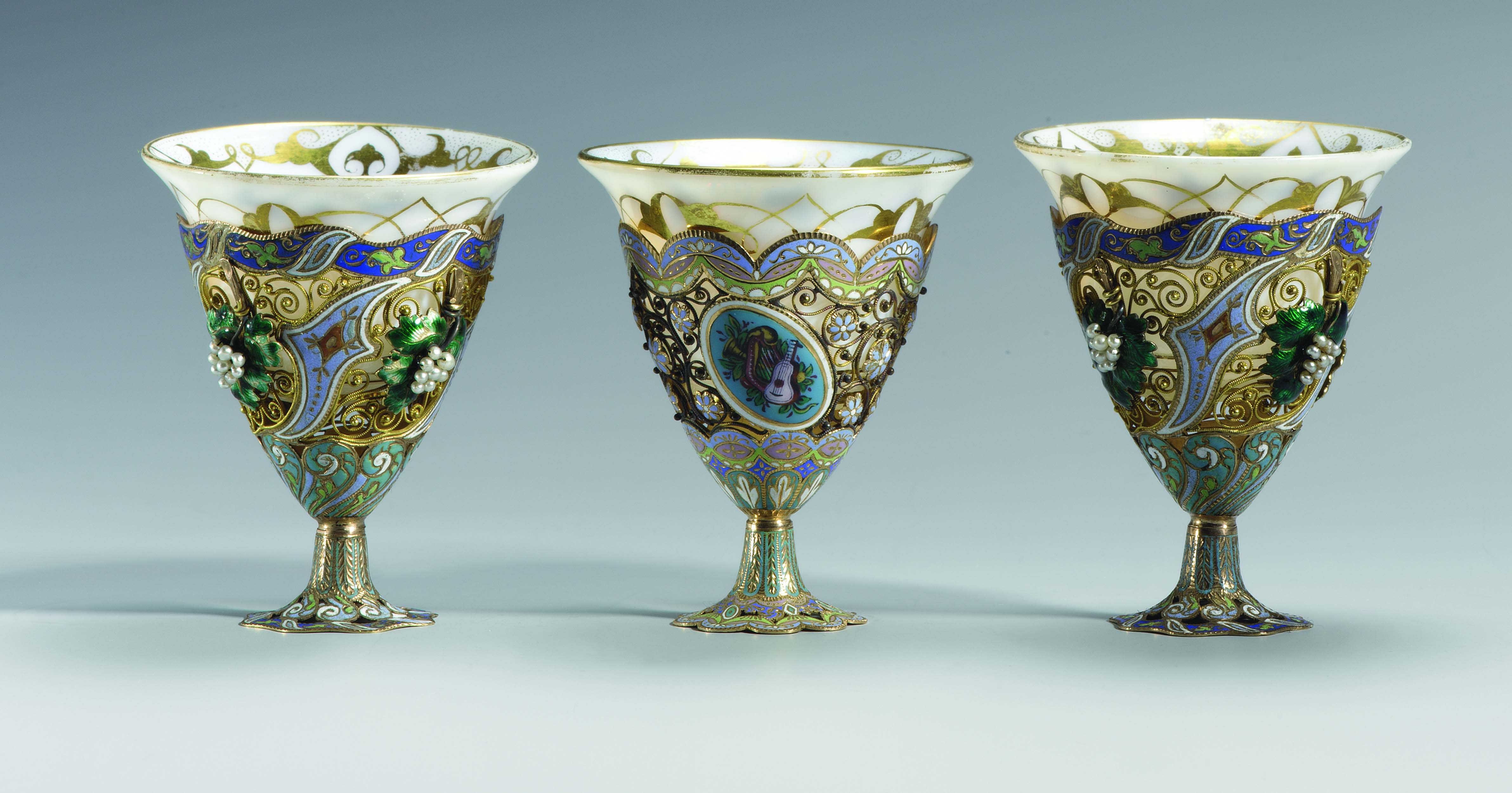
The zarf was often made from metal, with silver, gold, copper, and brass being the most common materials used. Others were also made of woods such as coconut, ebony or other hardwoods, or of ivory, bone, horn, or tortoiseshell. Today, zarf can be the name of a cardboard coffee cup sleeve.
Metal zarfs were sometimes filigreed, decorated with chasing, niello, engraving, or set with precious stones.
Sets of zarfs, decorated with enamel and gems, were popular across the Islamic world. During the 19th century, Enamel workshops in Geneva produced large quantities of zarf sets for this market. These were decorated with brightly coloured enamel and motifs that included musical instruments or military trophies.
Wooden zarfs, of which very few remain, were favored because of the natural aroma of the wood from which they were fashioned. They were very fragile.
Tortoiseshell, horn and ivory zarfs required special skill to make. In the first two cases, sheets of the material in question were softened in hot water and then clamped in a mold to create the required shape. Ivory was carved in the same way as wood; however, its greater value meant that more care was needed to avoid mistakes.
References
References
- "Zarf- Coffee Cup Holder on Silvercollection".
- Mark Davis. (February 7, 2009). "Obituaries: Deborah Sapot, 69, whiz at Scrabble". [[The Atlanta Journal-Constitution]].
- "How the Coffee Cup Sleeve Was Invented".
- (2009). "Enamels of the world, 1700-2000 : the Khalili collections". Khalili Family Trust.
This article was imported from Wikipedia and is available under the Creative Commons Attribution-ShareAlike 4.0 License. Content has been adapted to SurfDoc format. Original contributors can be found on the article history page.
Ask Mako anything about Zarf — get instant answers, deeper analysis, and related topics.
Research with MakoFree with your Surf account
Create a free account to save articles, ask Mako questions, and organize your research.
Sign up freeThis content may have been generated or modified by AI. CloudSurf Software LLC is not responsible for the accuracy, completeness, or reliability of AI-generated content. Always verify important information from primary sources.
Report