From Surf Wiki (app.surf) — the open knowledge base
Yazd
City in Yazd province, Iran

City in Yazd province, Iran
| Field | Value | |
|---|---|---|
| <!-- Basic info ----------------> | official_name | Yazd |
| native_name | یزد | |
| settlement_type | City | |
| other_name | Kath, Isatis | |
| image_skyline | {{multiple image | |
| perrow | 1/2/2/2 | |
| border | infobox | |
| total_width | 280 | |
| image1 | Iran 1343 Yazd (8665215641).jpg | |
| caption1 | Amir Chakhmaq Complex | |
| image2 | Zoroastrian Fire Temple (8906007289).jpg | |
| caption2 | Zoroastrian Fire Temple | |
| image3 | 2017-04-06 12.44.27 Dolat Abad Garden.jpg | |
| caption3 | Dowlatabad Garden | |
| image4 | Jame mosque in yazd2.jpg | |
| caption4 | Jame Mosque | |
| image5 | Yazd-Mohsen salari- 20.jpg | |
| caption5 | Markar Clock Tower | |
| image6 | Moshir Caravansary 03.jpg | |
| caption6 | ||
| image7 | Tomb of Seyed Roknildin -Negin Mohamadi Fard.jpg | |
| caption7 | Tomb of Sayyed Rukn ad-Din | |
| image_seal | Yazd government logo.svg | |
| motto | ||
| pushpin_map | Iran | |
| pushpin_map_caption | ||
| coordinates | ||
| coordinates_footnotes | ||
| subdivision_type | Country | |
| subdivision_name | Iran | |
| subdivision_type1 | Province | |
| subdivision_type2 | County | |
| subdivision_type3 | District | |
| subdivision_name1 | Yazd | |
| subdivision_name2 | Yazd | |
| subdivision_name3 | Central | |
| established_title | ||
| government_type | ||
| leader_title | Mayor | |
| leader_name | Abolghasem Mohiodini Anari | |
| leader_title1 | City Council Chairman | |
| leader_name1 | Gholam Hossein Dashti | |
| <!-- Area ---------------------> | unit_pref | |
| elevation_m | 1216 | |
| population_total | 529673 | |
| population_as_of | 2016 | |
| population_footnotes | ||
| population_blank1_title | Population Rank in Iran | |
| population_blank1 | 15th | |
| population_density_km2 | auto | |
| population_demonym | Yazdi (en) | |
| postal_code_type | ||
| area_code | 035 | |
| website | ||
| timezone | IRST | |
| utc_offset | +3:30 | |
| <!-- Area/postal codes & others --------> | blank_name | Climate |
| blank_info | BWh | |
| footnotes | {{designation list | embed=yes |
| designation1 | WHS | |
| designation1_offname | Historic City of Yazd | |
| designation1_date | 2017 (41st session) | |
| designation1_type | Cultural | |
| designation1_criteria | iii, v | |
| designation1_number | [1544](https://whc.unesco.org/en/list/1544) | |
| designation1_free1name | Region | |
| designation1_free1value | Asia and the Pacific |
Yazd (; ) is a city in the Central District of Yazd County, Yazd province, Iran, serving as capital of the province, the county, and the district. At the 2016 census, its population was 529,673. Since 2017, the historical city of Yazd is recognized as a World Heritage Site by UNESCO.
Because of generations of adaptations to its desert surroundings, Yazd is known for its Persian architecture. It is nicknamed the "City of Windcatchers" (شهر بادگیرها Shahr-e Badgirha) from its many examples. It is also very well known for its Zoroastrian fire temples, ab anbars (cisterns), qanats (underground channels), yakhchals (coolers), Persian handicrafts, handwoven cloth (Persian termeh), silk weaving, Persian cotton candy, and its time-honored confectioneries. Yazd is also known as City of Bicycles, because of its early adoption of cycling, and its boasting the highest number of bicycles per capita in Iran. It is reported that bicycle culture in Iran originated in Yazd as a result of contact with European visitors and tourists in the nineteenth century.
Etymology
Yazd means "pure" and "holy"; Yazd City means "City of the Holy [One, i. e., God]". Former names of this city: Kath, Isatis.
History
Archeological evidence 12 kilometers north of Yazd suggests that the area has been populated since the period of the Achaemenid Empire (550 BC–330 BC). In his Natural History, Pliny the Elder (died 79 AD) mentions a town in the Parthian Empire (247 BC–224 AD) named "Issatis", which is seemingly connected to the name of the Asagarta/Istachae/Sagartians. As a result, some scholars have suggested that the name of Yazd was derived from Issatis (also transliterated as Isatichae, Ysatis, Yasatis), and that the latter name started to be used in the Median or Achaemenid eras.
The area encompassing Yazd first started to gain prominence in the Late antiquity, namely under the Sasanian Empire (224–651). Under Yazdegerd I (), a mint was established in Yazd (under the mint abbreviation of "YZ"), which demonstrates its increasing importance. According to the New Persian chronicle Tarikh-i Yazd ("History of Yazd") of 1441, Yazd was re-founded by "Yazdegerd, son of Bahram", i.e. Yazdegerd II (). The word yazd means God. After the Muslim conquest, many Zoroastrians migrated to Yazd from neighboring provinces. By paying a levy, Yazd was allowed to remain Zoroastrian even after its conquest, and Islam only gradually became the dominant religion in the city.
Due to its secluded desert setting and challenging access, Yazd was mostly spared from major conflicts and the devastation and havoc of warfare. For instance, it was a haven for those fleeing from destruction in other parts of the Khwarazmian Empire during the Mongol invasion. In 1272 it was visited by Marco Polo, who remarked on the city's fine silk-weaving industry. In the book The Travels of Marco Polo, he described Yazd in the following way:
Yazd briefly served as the capital of the Muzaffarid Dynasty in the fourteenth century, and was unsuccessfully besieged in 1350–1351 by the Injuids under Abu Ishaq Inju. The Friday mosque, arguably the city's greatest architectural landmark, as well as other important buildings, date to this period. During the Qajar Empire (18th century AD) it was ruled by the Bakhtiari Khans.
Under the rule of the Safavid Empire (16th century), some people migrated from Yazd and settled in an area that is today on the Iran-Afghanistan border. The settlement, which was named Yazdi, was located in what is now Farah City in the province of the same name in Afghanistan. Even today, people from this area speak with an accent very similar to that of the people of Yazd.
One of the notable things about Yazd is its family-centered culture. According to official statistics from Iran's National Organization for Civil Registration, Yazd is among the three cities with the lowest divorce rates in Iran.
Demographics
Language and ethnicity
The majority of the people of Yazd are Persians. They speak Persian with a Yazdi accent, which is different from the Persian accent of Tehran.
During the Pahlavi era, a large group of Kurds from the Gulbaghi tribe were moved from the north of Kurdistan province to the city of Yazd and the cities of Isfahan, Kashan, and Nayin. Today, the Gulbaghi tribe are mostly assimilated elements in the population of these cities.
Religion
The majority of people in Yazd are Shia Muslims. Yazd is a strongly religious, traditionalist and conservative city. Several city traditions are the Muslim parades and gatherings, which are mainly processions called Azadari held to commemorate the events experienced by the main Islamic martyrs and other important figures. These huge public gatherings created a series of spaces which, since most are near important urban monuments, are used at other times as hubs from which visitors can tour the main spots in the city.
There is also a sizable population of Zoroastrians in the city. In 2013, Sepanta Niknam was elected to the city council of Yazd and became the first Zoroastrian councillor in Iran. The Pir-e-Naraki sanctuary is one of the important pilgrimage destinations for Zoroastrians, where an annual congregation is held and frequent visits are made during the year; it is now also a famous tourist spot. The story of the last Persian prince to come to Yazd before the arrival of Islam adds to its importance. Such a transformation has occurred several times.
There was once a relatively large Jewish-Yazdi community, however, after the creation of Israel, many have moved there for varying reasons. Former president of Israel Moshe Katsav is an example.
Population
At the time of the 2006 National Census, the city's population was 423,006 in 114,716 households. The following census in 2011 counted 486,152 people in 141,572 households. The 2016 census measured the population of the city as 529,673 people in 158,368 households.
Geography
Climate
Yazd has a hot desert climate (Köppen climate classification BWh). It is the driest major city in Iran, with a yearly precipitation amount that is less than 60 mm, and has only 11.5 days of precipitation. Summer temperatures are frequently above 40 C in blazing sunshine with low humidity, on 35.3 days per year the maximum daily temperature reaches or exceeds 40 C. Even at night the temperatures in summer are rather uncomfortable. In the winter, the days remain mild and sunny, but in the morning the thin air and low cloudiness cause cold temperatures, with 24.3 days per year in which the minimum temperature falls below 0 C.
Dust events are not uncommon in Yazd, as they happen 52 days per year. Thick haze is much more common (135.8 days annually) and is more frequent in winter.
| Jan record high C = 27.0 | Feb record high C = 29.4 | Mar record high C = 35.2 | Apr record high C = 38.0 | May record high C = 41.4 | Jun record high C = 44.5 | Jul record high C = 46.1 | Aug record high C = 45.6 | Sep record high C = 42.0 | Oct record high C = 36.4 | Nov record high C = 32.6 | Dec record high C = 28.5 | Jan record low C = −14.0 | Feb record low C = −10.1 | Mar record low C = −7.0 | Apr record low C = 0.0 | May record low C = 2.0 | Jun record low C = 11.0 | Jul record low C = 16.0 | Aug record low C = 12.0 | Sep record low C = 2.0 | Oct record low C = −3.0 | Nov record low C = −10.0 | Dec record low C = −16.0
| Jan dew point C =-5.1 | Feb dew point C =-5.5 | Mar dew point C =-4.6 | Apr dew point C =-1.0 | May dew point C =0.1 | Jun dew point C =-0.8 | Jul dew point C =0.7 | Aug dew point C =-0.8 | Sep dew point C =-2.8 | Oct dew point C =-2.3 | Nov dew point C =-3.2 | Dec dew point C =-4.3
| Jan record high C = 27.0 | Feb record high C = 29.4 | Mar record high C = 35.2 | Apr record high C = 38.0 | May record high C = 41.0 | Jun record high C = 44.1 | Jul record high C = 45.6 | Aug record high C = 45.6 | Sep record high C = 42.0 | Oct record high C = 36.4 | Nov record high C = 30.8 | Dec record high C = 28.5 | Jan record low C = −14.0 | Feb record low C = −10.1 | Mar record low C = −7.0 | Apr record low C = 0.0 | May record low C = 2.0 | Jun record low C = 11.0 | Jul record low C = 16.0 | Aug record low C = 12.0 | Sep record low C = 2.0 | Oct record low C = −3.0 | Nov record low C = −10.0 | Dec record low C = −16.0 |access-date = December 29, 2012}}
Historical sites
Yazd is an important centre of Iranian architecture. Because of its climate, it has one of the largest networks of qanats (underground water supply systems) in the world, and Yazdi qanat makers are considered the most skilled in Iran.
To deal with the extremely hot summers, many old buildings in Yazd have magnificent wind towers and large underground areas.

The city is also home to prime examples of yakhchals, which were used to store ice retrieved from glaciers in the nearby mountains. Yazd is also one of the largest cities built almost entirely out of adobe.
Yazd's heritage as a center of Zoroastrianism is also important. There is a Tower of Silence on the outskirts, and the city has an ateshkadeh which holds a fire that has been kept alight continuously since 470 AD. Zoroastrians make up a small minority of the population of Yazd, around 1,000 out of 600,000.

The 11th-century brick mausoleum and shrine Davāzdah Imām is the oldest dated building in the city.
Built in 12th century and still in use, Jame Mosque of Yazd is an example of the finest Persian mosaics and excellent architecture. Its minarets are the highest in the country. Tomb of Sayyed Rukn ad-Din is nearby the mosque.
Economy
Always known for the quality of its silk and carpets, Yazd today is one of Iran's industrial centers for textiles. There is also a considerable ceramics and construction materials industry and unique confectionery and jewellery industries. A significant portion of the population is also employed in other industries including agriculture, dairy, metal works, and machine manufacturing. There are a number of companies involved in the growing information technology industry, mainly manufacturing primary materials such as cables and connectors. Currently Yazd is the home of the largest manufacturer of fibre optics in Iran.
Yazd's confectioneries have a tremendous following throughout Iran and have been a source of tourism for the city. Confectioners workshops (khalifehs, or experts) keep their recipes a guarded secret, and there are many that have remained a private family business for many generations. Baklava, ghotab and pashmak are the most popular sweets made in the city.
In 2000 the Yazd Water Museum opened; it features exhibits of water storage vessels and historical technologies related to water.
Yazd has expanded its industrial fields since the 1980s. With at least three main industrial areas each containing over 70 different factories, Yazd has become one of the most technologically advanced cities of Iran.
Transportation
In addition to its connection with major Iranian cities via Iranian Railways, Yazd is served by the Shahid Sadooghi Airport.
Politics
- Eskandar Aslani (circa 1979)
- Muhammad-Ali Vahdati
- Ali-Akbar Farshi
- Muhammad-Hassan Khorshidnam
- Hosseyn A'laii
- Muhammad-Mahdi Sherafat
- Ali-Akbar Aramun
- Morteza Shayeq
- Ali-Akbar Mirvakili
- Mohammad Azim Zadeh (circa 2017)
Famous residents
- Mohammad Khatami, former president of Iran; born in Ardakan
- Mohammad Ali Jafari, the commander of the Army of the Guardians of the Islamic Revolution of Iran
- Mohammad Reza Aref, Vice President of Iran from 2001 to 2005
- Mirza Mohammad Farrokhi Yazdi, poet and politician
- Vahshi Bafghi, poet
- Habibollah Bitaraf, former Minister of Energy
- Moshe Katsav, former President of Israel
- Mohammad-Ali Eslami Nodooshan, Iranian author
- Mehdi Azar Yazdi, author of children's stories
- Reza Amrollahi, Head of Atomic Energy Organization of Iran 1981–1997
- Iraj Afshar, bibliographer, historian, and an iconic figure in the field of Persian studies
- Ahmad Fardid, prominent Iranian philosopher and an inspiring and dedicated professor
- Sharaf ad-Din Ali Yazdi, 15th-century Persian historian.
- Zia'eddin Tabatabaee, Iranian politician and the Prime Minister of Iran
- Reza Ardakanian, Iranian professor, politician and the former Minister of Energy of Iran
- Sems Kesmai, poet
Education
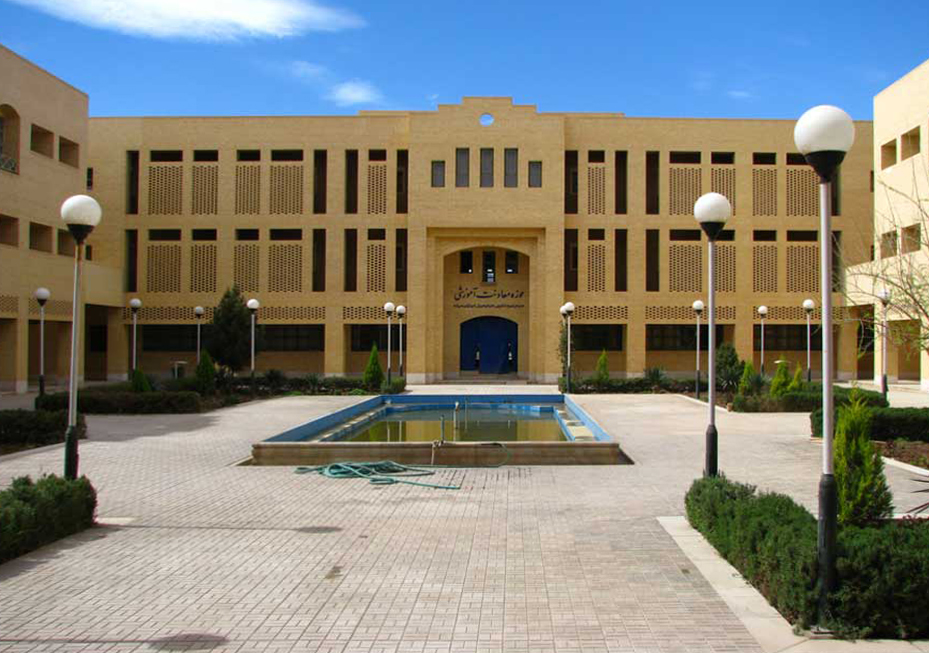
The University of Yazd was established in 1988. It has a college of architecture specializing in traditional Persian art and architecture. Yazd and its nearby towns contain the following institutes of higher education:
- Yazd Science and Research
- Yazd University
- Shahid Sadoughi University of Medical Sciences and Health Services
- Payam e Nour University of Yazd
- Yazd Institute of Higher Education (ACECR)
- Islamic Azad University of Bafq
- Islamic Azad University of Maybod
- Islamic Azad University of Yazd
- Yazd Sampad Information Center
- Yazd Science and Technology Park
- Applied Science University of Yazd
- Imam Java University College
- Barazande muqadam High School (Tizhushan)
- Shahid Sadoughi High School (Tizhushan)
- Shahid Sadoughi Middle School (Tizhushan)
- Farzanegan Middle School (Tizhushan)
- Bahadori High School
- Farzanegan High School (Tizhushan)
- Iranshahr High School
Twin towns – sister cities
Yazd is twinned with:
- CUB Holguín, Cuba
- SYR Homs, Syria
- HUN Jászberény, Hungary
- GEO Poti, Georgia
Gallery
File:Yazd entrance.JPG|Yazd Entrance File:Amir Chakhmaq Complex, Yazd.jpg|Amir Chakhmaq Complex File:Mezquita del Viernes, Yazd, Irán, 2016-09-21, DD 11.jpg|Jameh Mosque File:Dolat Abad Garden - Pavilion 01.jpg|Dowlatabad Garden pavilion with wind tower File:Zurkhaneh, Yazd 01.jpg|A Zurkhaneh in Yazd File:Casa Lari, Yazd, Irán, 2016-09-21, DD 19.jpg|Lari House in Yazd File:971117-DadHotel-Yazd-Pan02.jpg|alt=Dad Hotel|Dad Hotel, Yazd, Iran File:باغ خوشنویس.jpg|Khoshnevis Garden
Notes
References
Citations
Bibliography
- .
References
- ((OpenStreetMap contributors)). (14 November 2024). "Yazd, Yazd County".
- {{GEOnet3. -3088569
- (c. 2023). "Approval of the organization and chain of citizenship of the elements and units of the national divisions of Yazd province centered on Yazd city". Ministry of the Interior, Defense Political Commission of the Government Council.
- (9 July 2017). "Historical City of Yazd Inscribed as World Heritage Site".
- (11 February 2009). "Bicycle history in Yazd".
- JadvalYab.ir. "یزد".
- Steingass, Francis Joseph. [http://dsalsrv02.uchicago.edu/cgi-bin/philologic/getobject.pl?c.7:1:7557.steingass A Comprehensive Persian-English dictionary, including the Arabic words and phrases to be met with in Persian literature]{{Dead link. (July 2025)
- [http://www.citypopulation.de/en/iran/cities/ Iran: Provinces and Cities population statistics]
- (2022). "سیاست های ایلیاتی پهلوی اول برابر گلباغی ها". The Scientific Journal of Cihan University – Sulaimanyia.
- (8 May 1402). "کینه رضا شاه از طوایف و عشایر گهلواخی/ نه گلباغی ماند اینجا نه همدانی آنجا".
- Michael M. J. Fischer. (2003). "[[Iran: From Religious Dispute to Revolution]]".
- (2013-12-04). "همشهری آنلاین: آشنایی با برخی آئینهای عزاداری در استان یزد". Hamshahrionline.ir.
- (9 October 2017). "Iran Suspends Zoroastrian Member of Yazd City Council". The New York Times.
- Ed Eduljee. "Pir-e Seti. Pir-e Naraki. Pilgrimage in Zoroastrianism". Heritageinstitute.com.
- (2 March 1392). "پیرنارکی مهریز در لیست مهمترین جاذبههای دینی جهان - سایت خبری یزدفردا". Yazdfarda.com.
- "Census of the Islamic Republic of Iran, 1385 (2006): Yazd Province". The Statistical Center of Iran.
- "Census of the Islamic Republic of Iran, 1390 (2011): Yazd Province". The Statistical Center of Iran.
- "Census of the Islamic Republic of Iran, 1395 (2016): Yazd Province". The Statistical Center of Iran.
- "World Meteorological Organization Climate Normals for 1991-2020: Yazd". [[NOAA]].
- "World Meteorological Organization Climate Normals for 1981-2010: Yazd". [[NOAA]].
- Anisi, Alireza. (2009). "The Davāzdah Imām Mausoleum at Yazd: A Re-Examination". Iran.
- {{usurped
- "Train Stations in Yazd {{!}} railcc".
- Tourist, Virtual. (2017-02-23). "Yazd Transportation – Taxi, Train, Bus, and Airport Tips".
- "شهرداران يزد پس از انقلاب اسلامي". Municipality of Yazd.
- "شهـردار يــزد". Municipality of Yazd.
- Admin. (2021-11-24). "Yazd University Scholarship 2021 [Updated]".
- (2016-08-18). "Testvérvárosi kapcsolataink". Berény Café.
- "დამეგობრებული ქალაქები". Poti.
This article was imported from Wikipedia and is available under the Creative Commons Attribution-ShareAlike 4.0 License. Content has been adapted to SurfDoc format. Original contributors can be found on the article history page.
Ask Mako anything about Yazd — get instant answers, deeper analysis, and related topics.
Research with MakoFree with your Surf account
Create a free account to save articles, ask Mako questions, and organize your research.
Sign up freeThis content may have been generated or modified by AI. CloudSurf Software LLC is not responsible for the accuracy, completeness, or reliability of AI-generated content. Always verify important information from primary sources.
Report