From Surf Wiki (app.surf) — the open knowledge base
Yaranga
Tent-like traditional dwelling structure

Tent-like traditional dwelling structure
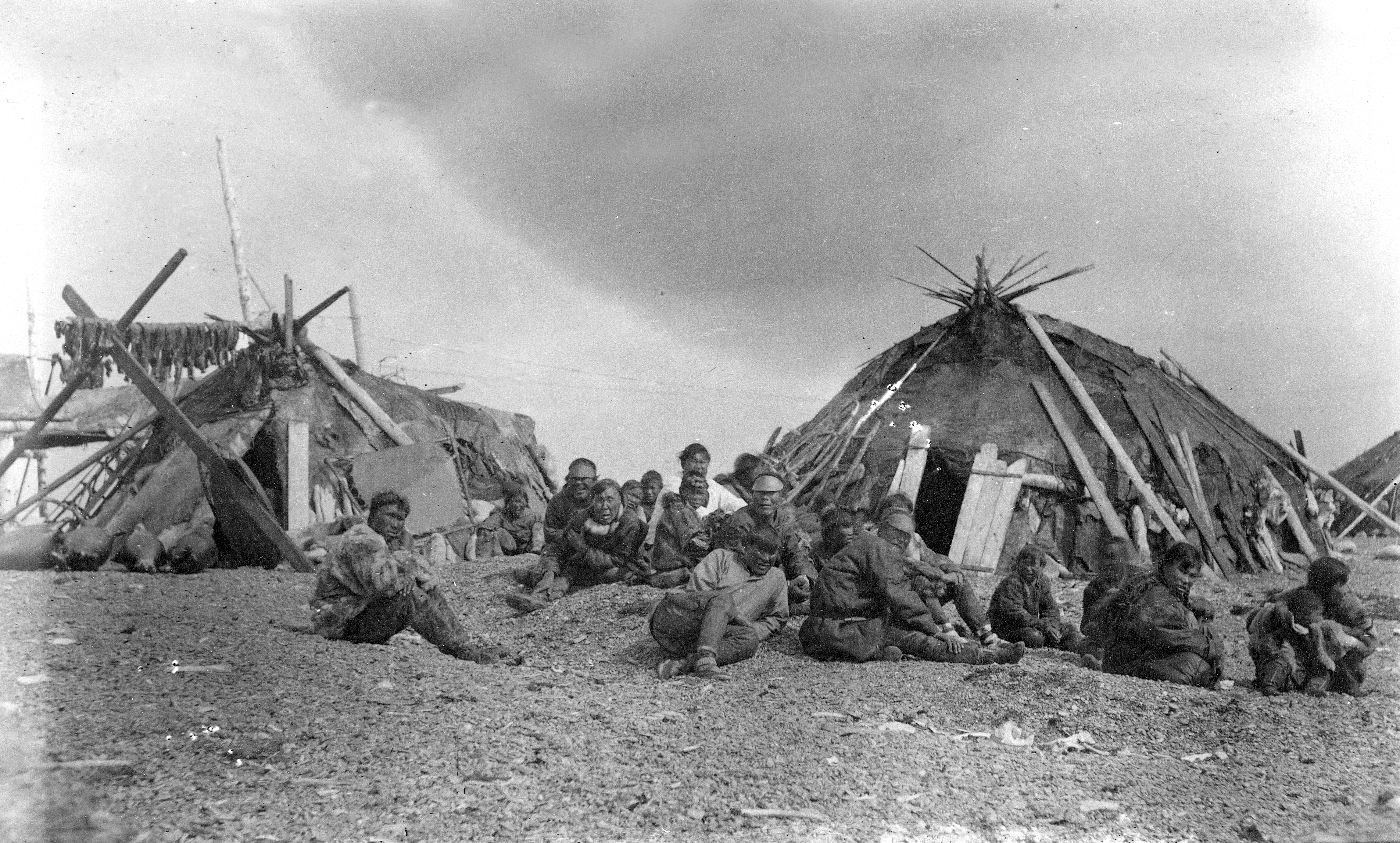
A Yaranga (Chukchi: Яраӈы, Yarangy) is a tent-like traditional mobile home of some nomadic Northern indigenous peoples of Russia, such as Chukchi and Siberian Yupik.
A Yaranga is a cone-shaped or rounded reindeer-hide tent. It is built of a light wooden frame covered with reindeer skins or canvas sewn together.
The word yaranga comes from the Chukchi word for house: jaraŋə (Cyrillic: яраӈы). In Russian use, the terms chum, yurt and yaranga may be used interchangeably.
Chauchu Chukchi
It is built of a light wooden frame covered with reindeer skins sewn together. A medium-size yaranga requires about 50 skins.
A large yaranga is hard to completely heat up. There is a smaller cabin called a polog built inside it, that can be kept warm and cozy.
Siberian Yupik and Anqallyt Chukchi
The most numerous of the Siberian Yupik peoples, the Chaplino Eskimos (Ungazigmit) had a round, dome-shaped building for winter. Literature refers to it as a "yaranga", the same term which the Chukchi people use, but the term used in the Chaplino Eskimos' language is mengteghaq (, extended Cyrillic: мыӈтыӷаӄ). Its framework was made of posts. Tarpaulins were used for covering the framework. The yaranga was surrounded by sod or planking around the base. There was a smaller cabin within the yaranga at the rear, used for sleeping and living. It was separated from the outer, cooler parts of the yaranga with haired reindeer skins and grass, supported by a cage-like framework. In the language of Chaplino Eskimos, it was called , a word borrowed from the Chukchi language. Household duties were done in the larger outer room of the yaranga in front of this inner building. In winter storms, and also at night, the dogs were there. This room for economical purposes was called .
There were also other types of buildings among Chaplino Eskimos: was a modernized type, and was used for summer.
Notes
References
Latin
Cyrillic
- The transliteration of author's name, and the rendering of title in English:
References
- Countries and Their Cultures - ''Chukchi:'' [http://www.everyculture.com/wc/Norway-to-Russia/Chukchi.html ''Living Conditions'']
- Collis, Dirmid R. F. "''Arctic Languages: An Awakening''". [[Unesco]], 1990. [http://unesdoc.unesco.org/images/0008/000861/086162e.pdf ''page 72'']
- "Chukchi art".
- [[#Руб54. Рубцова 1954]]: 514
- [[#Руб54. Рубцова 1954]]: 515
- [[#Руб54. Рубцова 1954]]: 100–101
- [[#Руб54. Рубцова 1954]]: 518–520
- [[#Руб54. Рубцова 1954]]: 521
This article was imported from Wikipedia and is available under the Creative Commons Attribution-ShareAlike 4.0 License. Content has been adapted to SurfDoc format. Original contributors can be found on the article history page.
Ask Mako anything about Yaranga — get instant answers, deeper analysis, and related topics.
Research with MakoFree with your Surf account
Create a free account to save articles, ask Mako questions, and organize your research.
Sign up freeThis content may have been generated or modified by AI. CloudSurf Software LLC is not responsible for the accuracy, completeness, or reliability of AI-generated content. Always verify important information from primary sources.
Report