From Surf Wiki (app.surf) — the open knowledge base
Weehawken Street
Street in Manhattan, New York
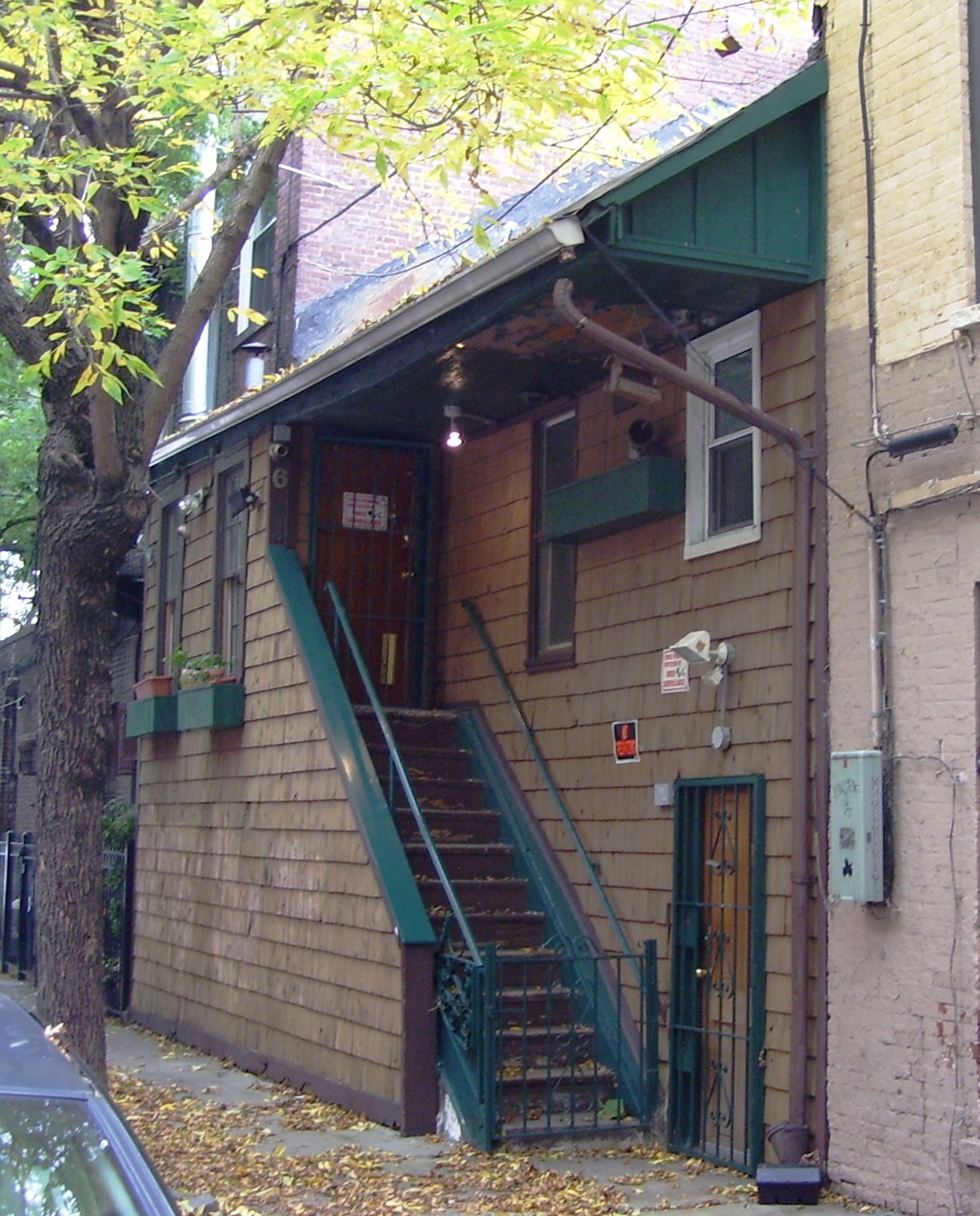
Street in Manhattan, New York

Weehawken Street is a short street located in New York City's West Village, in the borough of Manhattan, one block from and parallel to West and Washington Streets, running between Christopher Street and West 10th Street. It takes its name from a colonial-era ferry landing and connection across the Hudson River to Weehawken, New Jersey.
The land around Weehawken Street was at one time part of Newgate State Prison, built in 1796–97, until the prison was closed and razed and the city in 1829 sold the prison property off in lots. It held on to a strip of property, creating Weehawken Street and opening a produce market on the site, building the Market House in 1834. The market—officially the Greenwich Market, but informally referred to as "Weehawken Market"—was unsuccessful and was closed in 1844, with the property sold to private buyers. Over the years, the area's buildings were used for dwellings, stables, boarding houses, maritime-related businesses, transportation-related businesses, clothing and supply stores and other miscellaneous industries, but a dominant use was for saloons and liquor stores, including bars and clubs catering to a "rough trade" gay clientele in the late 20th century.
Historic district
On May 2, 2006, the New York City Landmarks Preservation Commission designated all the buildings on Weehawken Street, plus additional properties on West Street and Christopher Street, as the Weehawken Street Historic District:
The picturesque enclave of fourteen buildings and the street plan that together comprise the Weehawken Street Historic District represents several phases of construction spanning a century of development along Greenwich Village's Hudson River waterfront, from 1830 to 1938. The architecture illustrates the area's long history as a place of dwelling, industry, and commerce, much of it maritime-related, and is a rare surviving example of this once typical development pattern on Manhattan's west side waterfront. Many of the properties in the historic district were associated with the families of prominent long-term owners, such as former Mayor Stephen Allen, Cornelius V.S. Roosevelt, lawyer Edmund R. Terry, brewer-distiller Patrick Skelly, and linen merchant James Dean. In addition, several significant maritime-related industries were located within the historic district for a century, between 1884 and 1984.
The creation of the district was largely due to the efforts of the Greenwich Village Society for Historic Preservation, a preservation advocacy group active in the area.
References
;Notes
References
- Apmann, Sarah Bean. [https://www.villagepreservation.org/2016/01/11/weehawken-street-historic-district-part-i/ "Weehawken Street Historic District, Part I"], Village Preservation, January 11, 2016. Accessed February 16, 2023. "Speculative New Yorkers bought lots on the east side of the planned Weehawken Street (named for the ferry connection to the New Jersey town) in anticipation of the market"
- [http://www.nyc.gov/html/lpc/downloads/pdf/reports/weehawken.pdf Weehawken Street Historic District: Designation Report] {{Webarchive. link. (2013-06-29 from the [[New York City Landmarks Preservation Commission]], dated May 2, 2006)
This article was imported from Wikipedia and is available under the Creative Commons Attribution-ShareAlike 4.0 License. Content has been adapted to SurfDoc format. Original contributors can be found on the article history page.
Ask Mako anything about Weehawken Street — get instant answers, deeper analysis, and related topics.
Research with MakoFree with your Surf account
Create a free account to save articles, ask Mako questions, and organize your research.
Sign up freeThis content may have been generated or modified by AI. CloudSurf Software LLC is not responsible for the accuracy, completeness, or reliability of AI-generated content. Always verify important information from primary sources.
Report