From Surf Wiki (app.surf) — the open knowledge base
Volva (mycology)
Cup-like structure at the base of a mushroom
Cup-like structure at the base of a mushroom
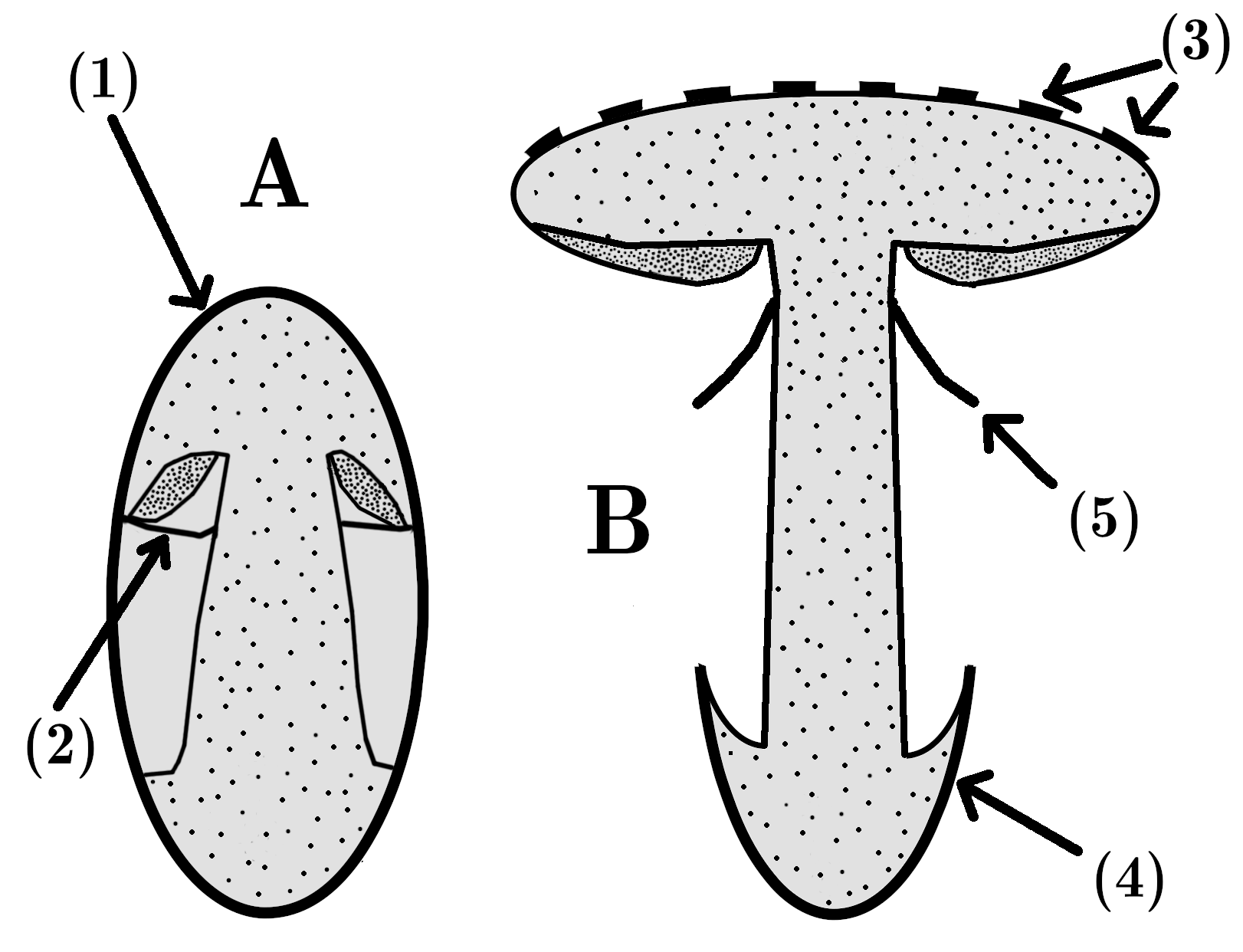
In mycology, a volva is a cup-like structure at the base of a mushroom that is a remnant of the universal veil, or the remains of the peridium that encloses the immature fruit bodies of gasteroid fungi. This macrofeature is important in wild mushroom identification because it is an easily observed, taxonomically significant feature that frequently signifies a member of Amanitaceae. This has particular importance due to the disproportionately high number of deadly poisonous species contained within that family.
A mushroom's volva is often partially or completely buried in the ground, and therefore care must be taken to check for its presence when identifying mushrooms. Cutting or pulling mushrooms and attempting to identify them later without having noted this feature could be a fatal error.
Whilst a volva is a feature best known from Amanita species and stinkhorns such as the Phallaceae family and others in the Phallales order, it may also occur with other genera including:
- Volvariella
- Volvopluteus
- Volvanarius
- Battarrea
Some other species such as Leucocoprinus amanitoides, Leucoagaricus volvatus and Leucoagaricus bivelatus also display a volva despite this not being a typical trait for these genera.
The majority of the almost 300 species described In the Conocybe genus do not have a volva but there are a small number of species in Conocybe section Singerella which possess a small volva, though in some it may not be immediately evident as they can remain buried in dung. Conocybe species with a volva include: C. anthuriae, C. corneri, C hornana, C. locellina, C. vaginata, C. volvata, C. volviornata, C. volviradicata. | Volvariella bombycina Volva.jpg| Volvariella bombycina | Volvariella surrecta.jpg| Volvariella surrecta growing parasitically | Volvopluteus gloiocephalus Volva.jpg| Volvopluteus gloiocephalus
References
References
- Akers, Brian P.. (2005). "Leucoagaricus bivelatus, a new volvate leptoid species". Mycotaxon.
- Watling, Roy. (1997). "Conocybe anthuriae, a new volvate species from Mauritius (Africa)". Österreichische Zeitschrift für Pilzkunde.
- Watling, Roy. (1979). "Observations on the Bolbitiaceae XVII Volvate Species of Conocybe". Sydowia Beihefte.
- Watling, Roy. (1979). "Observations on the Bolbitiaceae XVII Volvate Species of Conocybe". Sydowia Beihefte.
- Agretious Thomas, K.. (2001). "Bolbitiaceae of Kerala State, India: New species and new and noteworthy records.". Österreichische Zeitschrift für Pilzkunde.
- Horak, Egon. (2002). "Notes on extra-European taxa of Bolbitiaceae (Agaricales, Basidiomycota)". Österreichische Zeitschrift für Pilzkunde.
- Watling, Roy. (2011-02-11). "Observations on the Bolbitiaceae 31. Conocybe volviradicata sp. nov.". Mycotaxon.
- (2008). "Dictionary of the Fungi". CAB International.
- Kuo M.. (2007). "100 Edible Mushrooms". The University of Michigan Press.
- (1988). "Gasteromycetes: Morphological and Developmental Features, with Keys to the Orders, Families, and Genera". Mad River Press.
This article was imported from Wikipedia and is available under the Creative Commons Attribution-ShareAlike 4.0 License. Content has been adapted to SurfDoc format. Original contributors can be found on the article history page.
Ask Mako anything about Volva (mycology) — get instant answers, deeper analysis, and related topics.
Research with MakoFree with your Surf account
Create a free account to save articles, ask Mako questions, and organize your research.
Sign up freeThis content may have been generated or modified by AI. CloudSurf Software LLC is not responsible for the accuracy, completeness, or reliability of AI-generated content. Always verify important information from primary sources.
Report