From Surf Wiki (app.surf) — the open knowledge base
Voice of America
International US-owned broadcaster
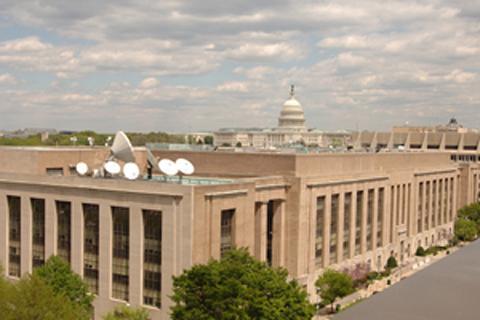
International US-owned broadcaster
| Field | Value |
|---|---|
| logo | VOA logo.svg |
| type | State-funded international broadcaster |
| abbreviation | VOA or VoA |
| leader_title | Director |
| leader_name | Michael Abramowitz |
| founded | |
| headquarters | Wilbur J. Cohen Federal Building |
| location_city | Washington, D.C. |
| location_country | United States |
| budget | US$267.5 million |
| budget_year | Fiscal year 2023 |
| staff | ~200 |
| staff_year | 2025 |
| website | (Old) |
https://editorials.voa.gov/ (Current) Voice of America (VOA or VoA) is an international broadcaster funded by the United States federal government and established in 1942. It is the largest and oldest of the USA's existing international broadcasters, producing digital, TV, and radio content in 48 languages for affiliate stations around the world.*
- by
- Its targeted and primary audience is non-Americans outside the American borders, especially those living in countries without press freedom or independent journalism.
VOA was established in 1942, during World War II. Building on American use of shortwave radio during the war, it initially served as an anti-propaganda tool against Axis misinformation but expanded to include other forms of content like American music programs for cultural diplomacy. During the Cold War, its operations expanded in an effort to fight communism and played a role in the decline of communism in several countries. Throughout its operations, it has aimed to broadcast uncensored information to residents under restrictive regimes, even airing behind the Iron Curtain. In response, some countries began investing in technology to jam VOA broadcasts. In 2017, Russia designated VOA a foreign agent, requiring it to establish a Russian legal entity. It was blocked in Russia along with some other western international broadcasters in 2022. Its programming can be accessed by Russian listeners using VPNs and other software. Its journalists often take substantial risks reporting inside repressive regimes.
It is headquartered in Washington, D.C., and overseen by the U.S. Agency for Global Media (USAGM), an independent agency of the U.S. government funded with Congressional approval, which also oversees Radio Free Europe/Radio Liberty. Funds are appropriated annually under the budget for embassies and consulates. As of 2022, VOA had a weekly worldwide audience of approximately 326 million (up from 237 million in 2016) and employed 961 staff with an annual budget of $267.5 million.
The VOA served its propaganda function by pursuing objective journalism, demonstrating that the US has free press and free speech and providing a contrast for people living in countries where the state exerts tight control over the media. Policies have been implemented to try to preserve its accuracy and independence, including the 1976 VOA charter, which mandates its reporting be "accurate, objective, and comprehensive", and the 1994 U.S. International Broadcasting Act, which prohibits editorial interference by government officials. The agency refers to these laws as its "firewall".
Under the first Trump administration, leadership at the agency was replaced with Trump allies and there were several allegations, both internal and external, of interference in hiring and coverage to be loyal to Trump. In his second administration, Trump signed an executive order cutting funding to the USAGM. On March 14, 2025, almost all of VOA's 1,300 journalists, producers and assistants were placed on administrative leave. The next day, many VOA foreign language broadcasts replaced news and other regularly scheduled programming with music and the VOA website ceased being updated. On May 6, 2025, Kari Lake announced that One America News (OAN), a far-right, pro-Trump network known for promoting conspiracy theories, will provide news coverage for VOA.
On June 20, 2025, layoff notices were sent to 639 VOA employees, completing an 85% reduction in staff at the U.S. Agency for Global Media since the beginning of Trump's second term, and effectively shutting down the service. Of the entire USAGM, 250 employees remain in staff, close to the statutory minimum, with approximately 200 of those at VOA.
History
American private shortwave broadcasting before World War II
Before World War II, all American shortwave radio stations were in private hands. Privately controlled shortwave networks included the National Broadcasting Company's International Network (or White Network), which broadcast in six languages, the Columbia Broadcasting System's Latin American international network, which consisted of 64 stations located in 18 countries, the Crosley Broadcasting Corporation in Cincinnati, Ohio, and General Electric which owned and operated WGEO and WGEA, both based in Schenectady, New York, and KGEI in San Francisco, all of which had shortwave transmitters. Experimental programming began in the 1930s, but there were fewer than 12 transmitters in operation.
In 1939, the U.S. Federal Communications Commission set the following policy, which was intended to enforce the US State Department's Good Neighbor Policy, but which some broadcasters felt was an attempt to direct censorship:
A licensee of an international broadcast station shall render only an international broadcast service which will reflect the culture of this country and which will promote international goodwill, understanding and cooperation. Any program solely intended for, and directed to an audience in the continental United States does not meet the requirements for this service.
Around 1940, shortwave signals to Latin America were regarded as vital to counter Nazi propaganda. Initially, the US Office of the Coordinator of Information sent releases to each station, but this was seen as an inefficient means of transmitting news. The director of Latin American relations at the Columbia Broadcasting System was Edmund A. Chester, and he supervised the development of CBS's extensive La Cadena de las Américas radio network to improve broadcasting to South America during the 1940s.
World War II
Even before the December 1941 Japanese attack on Pearl Harbor, the U.S. government's Office of the Coordinator of Information (COI) had already begun providing war news and commentary to the commercial American shortwave radio stations for use on a voluntary basis, through its Foreign Information Service (FIS) headed by playwright Robert E. Sherwood, who served as President Franklin Delano Roosevelt's speech writer and information advisor. Direct programming began a week after the United States' entry into World War II in December 1941, with the first broadcast from the San Francisco office of the FIS via General Electric's KGEI transmitting to the Philippines in English (other languages followed). The next step was to broadcast to Germany, which was called Stimmen aus Amerika ("Voices from America") and was transmitted on February 1, 1942. It was introduced by the “Battle Hymn of the Republic" and included the pledge: "Today, and every day from now on, we will be with you from America to talk about the war... The news may be good or bad for us – We will always tell you the truth." Roosevelt approved this broadcast, which then-Colonel William J. Donovan (COI) and Sherwood (FIS) had recommended to him. It was Sherwood who actually coined the term "The Voice of America" to describe the shortwave network that began its transmissions on February 1, from 270 Madison Avenue in New York City.
The Office of War Information, when organized in the middle of 1942, officially took over VOA's operations. VOA reached an agreement with the British Broadcasting Corporation to share medium-wave transmitters in Great Britain, and expanded into Tunis in North Africa and Palermo and Bari, Italy, as the Allies captured these territories. The OWI also set up the American Broadcasting Station in Europe. Asian transmissions started with one transmitter in California in 1941; services were expanded by adding transmitters in Hawaii and, after recapture, the Philippines.
By the end of the war, VOA had 39 transmitters and provided service in 40 languages. Programming was broadcast from production centers in New York and San Francisco, with more than 1,000 programs originating from New York. Programming consisted of music, news, commentary, and relays of U.S. domestic programming, in addition to specialized VOA programming. About half of VOA's services, including the Arabic service, were discontinued in 1945. In late 1945, VOA was transferred to the US Department of State.
Also included among the cultural diplomacy programming on the Columbia Broadcasting System was the musical show Viva America (1942–49) which featured the Pan American Orchestra and the artistry of several noted musicians from both North and South America, including Alfredo Antonini, Juan Arvizu, Eva Garza, Elsa Miranda, Nestor Mesta Chaires, Miguel Sandoval, John Serry Sr., and Terig Tucci.{{Cite book |editor1=Bronfman, Alejandra |url=https://books.google.com/books?id=ehN4sM0Xy_UC&pg=PA49 |title=Media Sound & Culture in Latin America|editor2=Wood, Andrew Grant|publisher=University of Pittsburgh Press
Cold War
The VOA ramped up its operations during the Cold War. Foy Kohler, the director of VOA from 1949 to 1952, strongly believed that the VOA was serving its purpose, which he identified as aiding in the fight against communism. He argued that the numbers of listeners they were getting such as 194,000 regular listeners in Sweden, and 2.1 million regular listeners in France, was an indication of a positive impact. As further evidence, he noted that the VOA received 30,000 letters a month from listeners all over the world, and hundreds of thousands of requests for broadcasting schedules. There was an analysis done of some of those letters sent in 1952 and 1953 while Kohler was still director. The study found that letter writing could be an indicator of successful, actionable persuasion. It was also found that broadcasts in different countries were having different effects. In one country, regular listeners adopted and practiced American values presented by the broadcast. Age was also a factor: younger and older audiences tended to like different types of programs, no matter the country. Kohler used all of this as evidence to claim that the VOA helped to grow and strengthen the free world. It also influenced the UN in their decision to condemn communist actions in Korea, and was a major factor in the decline of communism in the "free world, including key countries such as Italy and France. In Italy, the VOA contributed to the decline of communism and a process of "Westernization". The VOA also had an impact behind the Iron Curtain. Practically all defectors during Kohler's time said that the VOA helped in their decision to defect. Another indication of impact, according to Kohler, was the Soviet response. Kohler argued that the Soviets responded because the VOA was having an impact. Based on Soviet responses, it can be presumed that the most effective programs were ones that compared the lives of those behind and outside the Iron Curtain, questions on the practice of slave labor, as well as lies and errors in Stalin's version of Marxism.
In 1947, VOA started broadcasting to the Soviet citizens in Russia under the pretext of countering "more harmful instances of Soviet propaganda directed against American leaders and policies" on the part of the internal Soviet Russian-language media, according to John B. Whitton's treatise, Cold War Propaganda. The Soviet Union responded by initiating electronic jamming of VOA broadcasts on April 24, 1949.
Charles W. Thayer headed VOA in 1948–49. Over the next few years, the U.S. government debated the best role of Voice of America. The decision was made to use VOA broadcasts as part of U.S. foreign policy to counter the propaganda of the Soviet Union and other countries. The Arabic service resumed on January 1, 1950, with a half-hour program. This program grew to 14.5 hours daily during the Suez Crisis of 1956, and was six hours a day by 1958. Between 1952 and 1960, Voice of America used a converted U.S. Coast Guard cutter, Courier, as its first mobile broadcasting ship.
Control of VOA passed from the State Department to the U.S. Information Agency when the latter was established in 1953 to transmit worldwide, including to the countries behind the Iron Curtain and to the People's Republic of China. From 1955 until 2003, VOA broadcast American jazz on the Voice of America Jazz Hour. Hosted for most of that period by Willis Conover, the program had 30 million listeners at its peak. A program aimed at South Africa in 1956 broadcast two hours nightly, and special programs such as The Newport Jazz Festival were also transmitted. This was done in association with tours by U.S. musicians, such as Dizzy Gillespie, Louis Armstrong, and Duke Ellington, sponsored by the State Department. From August 1952 through May 1953, Billy Brown, a high school senior in Westchester County, New York, had a Monday night program in which he shared everyday happenings in Yorktown Heights, New York. Brown's program ended due to its popularity: his "chatty narratives" attracted so much fan mail, VOA couldn't afford the $500 a month in clerical and postage costs required to respond to listeners' letters. In 1953, VOA personnel were subjected to McCarthyist policies, where VOA was accused by Senator Joseph McCarthy, Roy Cohn, and Gerard David Schine of intentionally planning to build weak transmitting stations to sabotage VOA broadcasts. The charges were dropped after one month of court hearings in February and March 1953.
Sometime around 1954, VOA's headquarters were moved from New York to Washington, D.C. The arrival of cheap, low-cost transistors enabled the significant growth of shortwave radio listeners. During the Hungarian Revolution of 1956, VOA's broadcasts were deemed controversial, as Hungarian refugees and revolutionaries thought that VOA served as a medium and insinuated the possible arrival of Western aid.
Throughout the Cold War, many of the targeted countries' governments sponsored jamming of VOA broadcasts, which sometimes led critics to question the broadcasts' actual impact. For example, in 1956, the Polish People's Republic stopped jamming VOA transmissions, but the People's Republic of Bulgaria continued to jam the signal through the 1970s. Edward R. Murrow said that: "The Russians spend more money jamming the Voice of America than we have to spend for the entire program of the entire Agency. They spend about $125 million [$ in ] a year jamming it." Chinese-language VOA broadcasts were jammed beginning in 1956 and extending through 1976. Following the collapse of the Warsaw Pact and the Soviet Union, interviews with participants in anti-Soviet movements verified the effectiveness of VOA broadcasts in transmitting information to socialist societies. The People's Republic of China diligently jams VOA broadcasts. Cuba has also been reported to interfere with VOA satellite transmissions to Iran from its Russian-built transmission site at Bejucal. David Jackson, former director of Voice of America, noted: "The North Korean government doesn't jam us, but they try to keep people from listening through intimidation or worse. But people figure out ways to listen despite the odds. They're very resourceful."
Throughout the 1960s and 1970s, VOA covered some of the era's most important news, including Martin Luther King Jr.'s 1963 "I Have a Dream" speech, the Assassination of John F. Kennedy, and Neil Armstrong's 1969 first walk on the Moon, which drew an audience estimated at between 615 and 750 million people. In 1973, due to the détente policies in the Cold War, Soviet jamming of the VOA ceased; it restarted in 1979.
.jpg)
In the early 1980s, VOA began a $1.3 billion rebuilding program to improve broadcasting with better technical capabilities. During the implementation of Martial law in Poland between 1981 and 1983, VOA's Polish broadcasts expanded to seven hours daily. Throughout the 1980s, VOA focused on covering events from the "American hinterland", such as 150th anniversary of the Oregon Trail. Also in the 1980s, VOA also added a television service, as well as special regional programs to Cuba, Radio Martí and TV Martí. Cuba has consistently attempted to jam such broadcasts and has vociferously protested U.S. broadcasts directed at Cuba. In September 1980, VOA started broadcasting to Afghanistan in Dari and in Pashto in 1982. In 1981, VOA opened a bureau in Beijing, China. The next year, it began regular exchanges with Radio Peking.
In 1985, VOA Europe was established as a special service in English that was relayed via satellite to AM, FM, and cable affiliates throughout Europe. With a contemporary format including live disc jockeys, the network presented top musical hits as well as VOA news and features of local interest (such as "EuroFax") 24 hours a day. VOA Europe was closed down without advance public notice in January 1997 as a cost-cutting measure. It was followed by VOA Express, which from July 4, 1999, was revamped into VOA Music Mix. Since November 1, 2014, stations have been offering VOA1 (which is a rebranding of VOA Music Mix).
In 1989, Voice of America expanded its Mandarin and Cantonese programming to reach millions of Chinese and inform the country about the pro-democracy movement within the country, including the demonstration in Tiananmen Square. Starting in 1990, the U.S. consolidated its international broadcasting efforts with the establishment of the Bureau of Broadcasting.
Post–Cold War
With the breakup of the Soviet bloc in Eastern Europe, VOA added many additional language services to reach those areas. This decade was marked by the additions of services in Standard Tibetan, Kurdish (to Iran and Iraq), Serbo-Croatian (Croatian, Serbian, Bosnian), Macedonian, and Rwanda-Rundi.
In 1993, the Clinton administration advised cutting funding for Radio Free Europe/Radio Liberty, as it believed post-Cold War information and influence were not needed in Europe. This plan was not well received, and US president Bill Clinton then proposed the compromise of the International Broadcasting Act, which he signed into law in 1994. This law established the International Broadcasting Bureau as a part of the United States Information Agency (USIA), and established the Broadcasting Board of Governors (BBG) with oversight authority, which took control from the Board for International Broadcasters, which previously had overseen funding for RFE/RL. In 1998, the Foreign Affairs Reform and Restructuring Act was signed into law, and mandated that the BBG become an independent federal agency as of October 1, 1999. This act also abolished the USIA and merged most of its functions into those of the State Department.
The Arabic Service was abolished in 2002 and replaced by a new radio service, called the Middle East Radio Network or Radio Sawa, with an initial budget of $22 million. Radio Sawa offered mostly Western and Middle Eastern popular songs with periodic brief news bulletins. It then expanded to television with Alhurra in February 2004 (and later to various social media and websites). In May 2004, the US government's international English-language TV service Worldnet became part of VOA as "VOA TV".
As part of an effort to allocate resources to broadcasts in the Islamic world, radio programs in Russian, Hindi, Ukrainian, Serbian, Macedonian, and Bosnian ended in 2008. In September 2010, VOA began radio broadcasts in Sudan. As U.S. interests in South Sudan grew, there was a desire to provide people with free information. In 2013, budget cuts led VOA to end foreign-language transmissions on shortwave and medium wave to Albania, Georgia, Iran, and Latin America, as well as English-language broadcasts to the Middle East and Afghanistan. Then, in 2014, most of its English-language transmissions to Asia were cut, as well as shortwave transmissions in Azerbaijani, Bengali, Khmer, Kurdish, Lao, Uzbek, and Greek.
Internet era
In 1994, Voice of America became the first broadcast news organization to offer continuously updated programs on the Internet.
From 1948 until its amendment in 2013, Voice of America was forbidden to broadcast directly to American citizens, pursuant to § 501 of the Smith–Mundt Act. The intent of the 1948 legislation was to protect the American public from propaganda by its own government and to avoid any competition with private American companies. The act was amended via the passage of the Smith-Mundt Modernization Act provision of the National Defense Authorization Act for 2013. The amendment was intended to adapt the law to the Internet and to allow American citizens access to VOA content.
VOA Radiogram was an experimental Voice of America program that began in March 2013 and ended in June 2017, which transmitted digital text and images via shortwave radiograms. There were 220 editions of the program, transmitted each weekend from the Edward R. Murrow transmitting station. The audio tones that comprised the bulk of each 30-minute program were transmitted via an analog transmitter and could be decoded using a basic AM shortwave receiver with freely downloadable software of the Fldigi family. This software was available for Windows, macOS, Linux, and FreeBSD systems. Broadcasts could also be decoded using the free TIVAR app from the Google Play Store using any Android device. The mode used most often on VOA Radiogram, for both text and images, was MFSK32, but other modes were also occasionally transmitted. The final edition of VOA Radiogram was transmitted during the weekend of June 17–18, 2017, a week before the retirement of the program producer from VOA. An offer to continue the broadcasts on a contract basis was declined, so a follow-on show called Shortwave Radiogram began transmission on June 25, 2017, from the WRMI transmitting site in Okeechobee, Florida.
In 2021, Voice of America launched 52 Documentary, a series that publishes weekly films about human experiences. The series is presented on the streaming app, VOA+, and YouTube. Films average 10–15 minutes and are translated with captions in several languages, including Russian, Persian, Mandarin, Urdu, and English. Euna Lee directs the program.
Change under the First Trump administration
Following the January 2017 inauguration of U.S. president Donald Trump, tweets by Voice of America appeared to support debunked claims by White House press secretary Sean Spicer about the crowd size and related media coverage. This raised concerns over possible attempts by Trump to politicize VOA. An Obama-era law gave the powers of the board of the Broadcasting Board of Governors to a CEO appointed by the president, and Trump's selection of aides to work with the CEO - a former writer for the right-wing website The Daily Surge and a field director from Americans for Prosperity - during the presidential transition, raised concerns about VOA being transformed into a more traditional state propaganda platform. VOA officials responded with assurances that they would not become "Trump TV", citing existing laws that prevent interference in editorial processes.
During the COVID-19 pandemic, claims and messaging from the Trump administration diverged from that of public health experts and journalists. In April 2020, the White House published an article in its daily newsletter critical of VOA coverage of the coronavirus pandemic. Centers for Disease Control and Prevention (CDC) press official Michawn Rich sent a memo to agency employees telling them to deny interview requests by VOA. When VOA reported that Vice President Mike Pence's office required the press to wear masks to cover his visit to the Mayo Clinic, his office then threatened retaliation against the reporter, according to the Washington Post.
On June 3, 2020, the U.S. Senate confirmed Michael Pack, a conservative documentarian and close ally of Steve Bannon, to serve as head of the US Agency for Global Media, which oversees VOA. Subsequently, Director Bennet and Deputy Director Sandy Sugawara resigned from VOA. On June 17, the heads of VOA's Middle East Broadcasting, Radio Free Asia, Radio Free Europe/Radio Liberty, and the Open Technology Fund were all fired, their boards were dissolved, and external communications from VOA employees required approval from senior agency personnel in what one source described as an "unprecedented" move. Four former members of the advisory boards filed suit challenging Pack's standing to fire them. On July 9, NPR reported VOA would not renew the work visas of dozens of non-resident reporters, many of whom could face repercussions in their home countries. In late July, four contractors and the head of VOA's Urdu-language service were suspended after a video featuring extensive clips from a Muslim-American voter conference, including a campaign message from then-Democratic presidential candidate Joe Biden, was determined not to meet editorial standards and taken down. The Post reported that VOA Spanish-language service White House correspondent's Brigo Segovia's interview with an official about the administration's response to Pack's personnel and other moves had been censored and his own access to VOA's computer system restricted.
In response to Pack's August 27 interview with The Federalist website, a group of VOA journalists sent a letter to VOA Acting Director Elez Biberaj complaining that Pack's "comments and decisions 'endanger the personal security of VOA reporters at home and abroad, as well as threatening to harm U.S. national security objectives. VOA's response indicated the journalists may be punished for sending the letter.
On September 29, six senior USAGM officials filed a whistleblower complaint in which they alleged that Pack or one of his aides had ordered research conducted into the voting history of at least one agency employee, which would be a violation of laws protecting civil servants from undue political influence. NPR reported that two Pack aides had compiled a report on VOA White House bureau chief Steven L. Herman's social media postings and other writings in an attempt to charge him with a conflict of interest, and that the agency released a conflict of interest policy stating in part that a "journalist who on Facebook 'likes' a comment or political cartoon that aggressively attacks or disparages the President must recuse themselves from covering the President." A preliminary injunction issued on November 20 barred Pack "from making personnel decisions involving journalists at the networks; from directly communicating with editors and journalists employed by them; and from investigating any editors or news stories produced by them," and characterized the investigation of Herman as an "unconstitutional prior restraint" of his, his editors', and fellow journalists' free speech.
Suspended officials from Voice of America sued the agency's news outlet on October 8. They accused Pack of using Voice of America as a vehicle to promote the personal agenda of President Trump and of violating a statutory firewall intended to prevent political interference with the agency, and they sought their reinstatement. In November 2020, US District Court Judge Beryl Howell found Pack violated the First Amendment rights of Voice of America journalists.
In December 2020, The Washington Post reported that Pack was refusing to cooperate with President-elect Biden's transition team and, in an end run around the court order, had persuaded VOA Acting Director Biberaj to step down, replacing him with Robert Reilly, a former VOA director who had written critically of Muslims, gays, and lesbians. On December 19, 33 days before President-elect Biden's inauguration, Pack named Ted Lipien, a former VOA veteran journalist who had since become an outspoken critic of the platform, as head of RFE/RL, and Breitbart writer Jeffrey Scott Shapiro as head of the Office of Cuba Broadcasting. Pack attempted to add contractual language that would make it impossible to fire the broadcasting board members he had installed for two years, but it was withdrawn after inquiries from the media and Congress.
On January 11, 2021, VOA interim director Reilly ordered veteran reporter Patsy Widakuswara off the White House beat. Secretary of State Mike Pompeo gave a speech critical of VOA and conducted an interview with VOA Director Robert Reilly about the dangers of censorship, then did not take permit press questions to Widakuswara, followed Pompeo out, trying to ask questions. In response, dozens of VOA journalists, including Widakuswara, wrote and circulated a petition calling on Reilly and public affairs specialist Elizabeth Robbins to resign. In a statement, U.S. House Foreign Affairs Committee Chairman Gregory Meeks and ranking member Michael McCaul supported her reinstatement.
As of 2024, the audience was larger than the next-largest international broadcaster, the BBC World Service.
On January 19, the last full day of the Trump presidency, Pack named a slate of five directors to head each of the three USAGM boards for RFE/RL, Radio Free Asia, and Middle East Broadcasting Networks: conservative radio talk show host Blanquita Cullum, Liberty Counsel officer Johnathan Alexander, former White House staffer Amanda Milius, conservative writer Roger Simon, and Center for the National Interest Fellow Christian Whiton. The following day, Pack resigned at the request of the Biden administration. On January 21, Shapiro resigned from the Office of Cuba Broadcasting. Biden named veteran VOA journalist Kelu Chao to replace Pack. Chao, in turn, dismissed Riley and Robbins from VOA, naming Yolanda Lopez, another VOA veteran, as acting director; Lopez had also been reassigned in the wake of the Pompeo interview. On January 22, the Biden administration fired Victoria Coates and her deputy, Robert Greenway, from the Middle East Broadcasting Networks, naming Kelley Sullivan as acting head.
Change under the Second Trump administration
In December 2024, Donald Trump, as president-elect, announced Kari Lake would be his choice for VOA Director. Lake had called for imprisoning journalists whose reporting she called "lies", called for imprisoning a political opponent, advanced false claims around both her and Trump's election losses, and left her previous job as a newscaster for the Phoenix, Arizona television station KSAZ-TV after controversies, including spreading COVID-19 misinformation. Though the president may make a nomination, under the International Broadcasting Act, only the International Broadcasting Advisory Board has the authority to approve the appointment or removal of the VOA Director.
In February 2025, Elon Musk, the functional leader of DOGE, called for VoA and Radio Free Europe to shut down, coming after previously made suggestions by other government officials to shutter the agency. In February and March 2025, it was reported that a chief national correspondent of VOA was placed on paid leave, and veteran reporter Patsy Widakuswara was reassigned from the White House beat. Widakuswara had been given the same reassignment during the first Trump administration, which was reversed under Biden. At the same time, it was also reported that at least two articles containing criticism of Trump were not published or were changed after publication. A Trump administration official, Richard Grenell, called the VOA chief correspondent's comments "treasonous" in a post on X.
On the night of March 14, Trump signed an executive order, labeling the agency "the Voice of Radical America" and reducing the functions of several agencies, including the U.S. Agency for Global Media, to the minimum required by law. The next day, all employees could not access VOA headquarters, and many VOA foreign language broadcasts replaced news and other regularly scheduled programming with music. More than 1,300 Voice of America employees were placed on leave. VOA has also set about ending contracts with the Associated Press, Reuters, and Agence France-Presse. Kari Lake, the special advisor to the USAGM selected by Trump, estimated that ending these contracts would save $53 million. Michael Abramowitz, the director of VOA, said in a Facebook post on March 15 that he was also placed on leave, along with "virtually the entire staff" of 1,300. The announcement came exactly 24 hours after President Trump signed an executive order to gut VOA's parent agency, as well as the network having a move to terminate contracts with The Associated Press, Reuters, and Agence France-Presse. Some of VOA's local-language radio stations have stopped broadcasting news reports and switched over to music automation to fill the airtime.
Writing for The Atlantic, Toluse Olorunnipa reported:
The decision to cut the service, which has primarily served to counter propaganda in authoritarian countries, was met with praise from Russian and Chinese state media pundits and condemnation by Reporters Without Borders, who said it sends a "chilling signal" to China and Russia that they "now have free rein to spread their propaganda unchecked." Since the cuts, China Radio International added more than 80 new frequencies, including some that VOA formerly used.
In response, lawsuits were filed against the Trump administration in March 2025. One lawsuit noted that some VOA employees were foreign nationals with J-1 visas and faced risks to their safety if they were forced to return to their home countries if their visas were to be revoked due to loss of employment. In March 2025, the District Court for the Southern District of New York issued a temporary restraining order, preventing the Trump administration from carrying out any further actions resulting from the executive order, including terminating staff, ending contracts, or closing offices. At the defendants' request, this case was transferred to the District of Columbia district court.
On April 22, 2025, a preliminary injunction from the U.S. District Court for the District of Columbia ordered the Trump administration to 1) restore VOA and return its employees and contractors to work, 2) restore VOA's 2025 grants to Radio Free Asia and Middle East Broadcasting Networks, and 3) restore VOA as "a consistently reliable and authoritative source of news." On May 3, a three-judge panel of the Court of Appeals for the District of Columbia Circuit stayed the first two parts of the injunction in a 2-1 decision, citing a lack of jurisdiction by the district court, one judge (appointed by Barack Obama) dissenting from the decision of the other two (who were both appointed by Donald Trump). The third part of the district court's injunction remains in effect. On August 25, the district court ordered Lake and two other defendants to sit for depositions before September 15 as "one final opportunity, short of a contempt trial" to show they were complying with the third part of the injunction.
On May 6, 2025, Kari Lake announced that One America News (OAN), a far-right, pro-Trump network known for promoting conspiracy theories, will provide news coverage for VOA. Following the June 2025 Israeli strikes on Iran, several dozen Farsi-speaking VOA staffers were called back to work.
On June 20, 2025, layoff notices were sent to 639 VOA employees, effectively shutting down the service. On June 29, the layoffs were rescinded by Kari Lake due to errors in the notices.
Mass layoffs forced many VOA journalists on J-1 visas to leave the U.S. within 30 days of losing their jobs. In July, referring to former VOA employees, Lake told the right-wing Real America's Voice media channel that "If you overstay your visa, ICE is going to find you."
In late August 2025, the Trump administration announced further reductions, paring the staff to 108 persons. Two areas that are not being eliminated are Farsi-speaking staff and those in its Office of Cuba Broadcasting division.
On August 29, Lake announced on social media that all but about 100 VOA employees would receive layoff notices. From broadcasting in 49 languages daily to 360 million people, as of that date, VOA broadcast in only four languages (Persian, Mandarin, and the Afghan languages Dari and Pashto).
Subsequently, 532 full-time VOA employees received layoff notices. However, on September 30, the district court ordered the layoff suspended and the defendants to provide information, including a plan to restore VOA as a reliable and authoritative news source by October 14. In its order, the court noted the "concerning disrespect" the defendants had shown toward its earlier orders that it said "would more than support a trial on civil contempt."
Operations
.jpg)
List of directors
- 1941–1942 Robert E. Sherwood (Foreign Information Service)
- 1942–1943: John Houseman
- 1943–1945: Louis G. Cowan
- 1945–1946: John Ogilvie
- 1948–1949: Charles W. Thayer
- 1949–1952: Foy D. Kohler
- 1952–1953: Alfred H. Morton
- 1953–1954: Leonard Erikson
- 1954–1956: John R. Poppele
- 1956–1958: Robert E. Burton
- 1958–1965: Henry Loomis
- 1965–1967: John Chancellor
- 1967–1968: John Charles Daly
- 1969–1977: Kenneth R. Giddens
- 1977–1979: R. Peter Straus
- 1980–1981: Mary G. F. Bitterman
- 1981–1982: James B. Conkling
- 1982: John Hughes
- 1982–1984: Kenneth Tomlinson
- 1985: Gene Pell
- 1986–1991: Dick Carlson
- 1991–1993: Chase Untermeyer
- 1994–1996: Geoffrey Cowan
- 1997–1999: Evelyn S. Lieberman
- 1999–2001: Sanford J. Ungar
- 2001–2002: Robert R. Reilly
- 2002–2006: David S. Jackson
- 2006–2011: Danforth W. Austin
- 2011–2015: David Ensor
- 2016–2020: Amanda Bennett
- 2020–2021: Robert R. Reilly
- 2021–2024: vacant
- 2024–present: Michael Abramowitz
The current director, Michael Abramowitz, assumed the position in July 2024. He previously served as president of Freedom House and spent nearly 25 years as a reporter and editor for The Washington Post.
In December 2024, president-elect Trump announced he would name former news anchor Kari Lake to be the director of VOA. Under the International Broadcasting Act only the International Broadcasting Advisory Board has the authority to approve the appointment or removal of the VOA Director. But in the first week of his second presidency, Trump fired all IBAB members except the Secretary of State Marco Rubio and in March 2025, Trump signed an executive order to shutting down the USAGM and its child agencies.
Agencies
Voice of America has been a part of several agencies. From its founding in 1942 to 1945, it was part of the Office of War Information, and then from 1945 to 1953 as a function of the State Department. VOA was placed under the U.S. Information Agency in 1953. When the USIA was abolished in 1999, VOA was placed under the BBG which is an autonomous U.S. government agency, with bipartisan membership. The Secretary of State has a seat on the BBG. The BBG was established as a buffer to protect VOA and other U.S.-sponsored, non-military, international broadcasters from political interference. It replaced the Board for International Broadcasting (BIB) that oversaw the funding and operation of Radio Free Europe/Radio Liberty, a branch of VOA.
Editorial policies
Voice of America's editorial policies are intended to cultivate a reputation for accuracy. It has enacted several policies over time to reduce the ability of politicians to interfere.
Under the Eisenhower administration in 1959, VOA Director Henry Loomis commissioned a formal statement of principles to protect the integrity of VOA programming and define the organization's mission, and was issued by Director George V. Allen as a directive in 1960 and was endorsed in 1962 by USIA director Edward R. Murrow. VOA's charter was signed into law by President Gerald Ford. The charter requires it to "present the policies of the United States clearly and effectively." Academics including Téwodros W. Workneh have described this as a public diplomacy function. VOA's charter also requires it to be "a reliable and authoritative source of news" which "shall be accurate, objective, and comprehensive". According to former VOA correspondent Alan Heil, the internal policy of VOA News is that any story broadcast must have two independently corroborating sources or have a staff correspondent witness an event.
The Voice of America "Firewall" was put into place with the 1976 VOA Charter and laws passed in 1994 and 2016. The firewall's aim is to guard against propaganda while promoting unbiased and objective journalistic standards in the agency.
Despite the firewall, some VOA employees have emphasized how their work serves the goals of the U.S. government. In one instance, a VOA employee told another journalist that "I always keep the best U.S. interests in mind when explaining official policies and why democracy is the best political system to foreign audiences."
Transmission facilities
The Bethany Relay Station, operational from 1944 to 1994, was based on a 625 acre site in Union Township (now West Chester Township) in Butler County, Ohio, near Cincinnati. Major transmitter upgrades first were undertaken around 1963, when shortwave and medium-wave transmitters were built, upgraded, or rebuilt. The site is now a recreational park with a Voice of America museum. Other former sites include California (Dixon and Delano), Hawaii, Okinawa, Liberia (Monrovia), Costa Rica, Belize, and at least two in Greece (Kavala and Rhodos).
Between 1983 and 1990, VOA made significant upgrades to transmission facilities in Botswana (Selebi-Phikwe), Morocco, Thailand (Udon Thani), Kuwait, and São Tomé (Almas). Some of them are shared with Radio Liberty and Radio Free Asia.
VOA and USAGM continue to operate shortwave radio transmitters and antenna farms at International Broadcasting Bureau Greenville Transmitting Station (known as "Site B") in the United States, close to Greenville, North Carolina. They do not use FCC-issued call signs, since the FCC does not regulate communications by other federal government agencies. The International Broadcasting Bureau also operates transmission facilities on São Tomé and Tinang, Concepcion, Tarlac, Philippines, for VOA.
Languages
The Voice of America website had five English-language broadcasts as of 2014 (worldwide, Learning English, Cambodia, Zimbabwe, and Tibet). Additionally, the VOA website has versions in 48 foreign languages.
Radio programs are marked with an "R"; television programs with a "T":
- Afan Oromo R
- Albanian R, T
- Amharic R
- Armenian T
- Azerbaijani T
- Bambara R
- Bangla R, T
- Bosnian T
- Burmese R, T
- Cantonese R, T
- Dari Persian R, T
- English R, T
- French R, T
- Georgian R
- Haitian Creole R
- Hausa R
- Indonesian R, T
- Khmer R, T
- Kinyarwanda R
- Kirundi
- Korean R
- Kurdish R
- Lao R
- Lingala R
- Macedonian T
- Mandarin R, T
- Ndebele
- Pashto T
- Persian R, T
- Portuguese R
- Rohingya
- Russian T
- Sango R
- Serbian T
- Shona R
- Sindhi
- Somali R
- Spanish R, T
- Swahili R
- Thai R
- Tibetan R, T
- Tigrinya R
- Turkish T
- Ukrainian T
- Urdu R, T
- Uzbek R, T
- Vietnamese R, T
- Wolof
The number of languages varies according to the priorities of the United States government and the world situation.
Region-specific reception
Voice of America is seen by some as having a positive impact and serving the foreign policy of the United States. Others see it as American propaganda. Voice of America has attended to more remote areas that are poorly covered by other media, helping to boost democracy efforts by shining a spotlight on autocrats so the people can make them accountable.
China
A study was done on Chinese students in America. It found that through the VOA, they disapproved of the actions of the Chinese government. Another study was done on Chinese scholars in America, and found that the VOA had an effect on their political beliefs. Their political beliefs did not change in relation to China, though, as they did not tend to believe the VOA's reports on China.
In February 2013, a documentary released by China Central Television interviewed a Tibetan alleged self-immolator who survived his suicide attempt. The interviewee said he was motivated by Voice of America's broadcasts of commemorations of people who committed suicide in political self-immolation. VOA denied instigating self-immolations and demanded that the Chinese station retract its report.
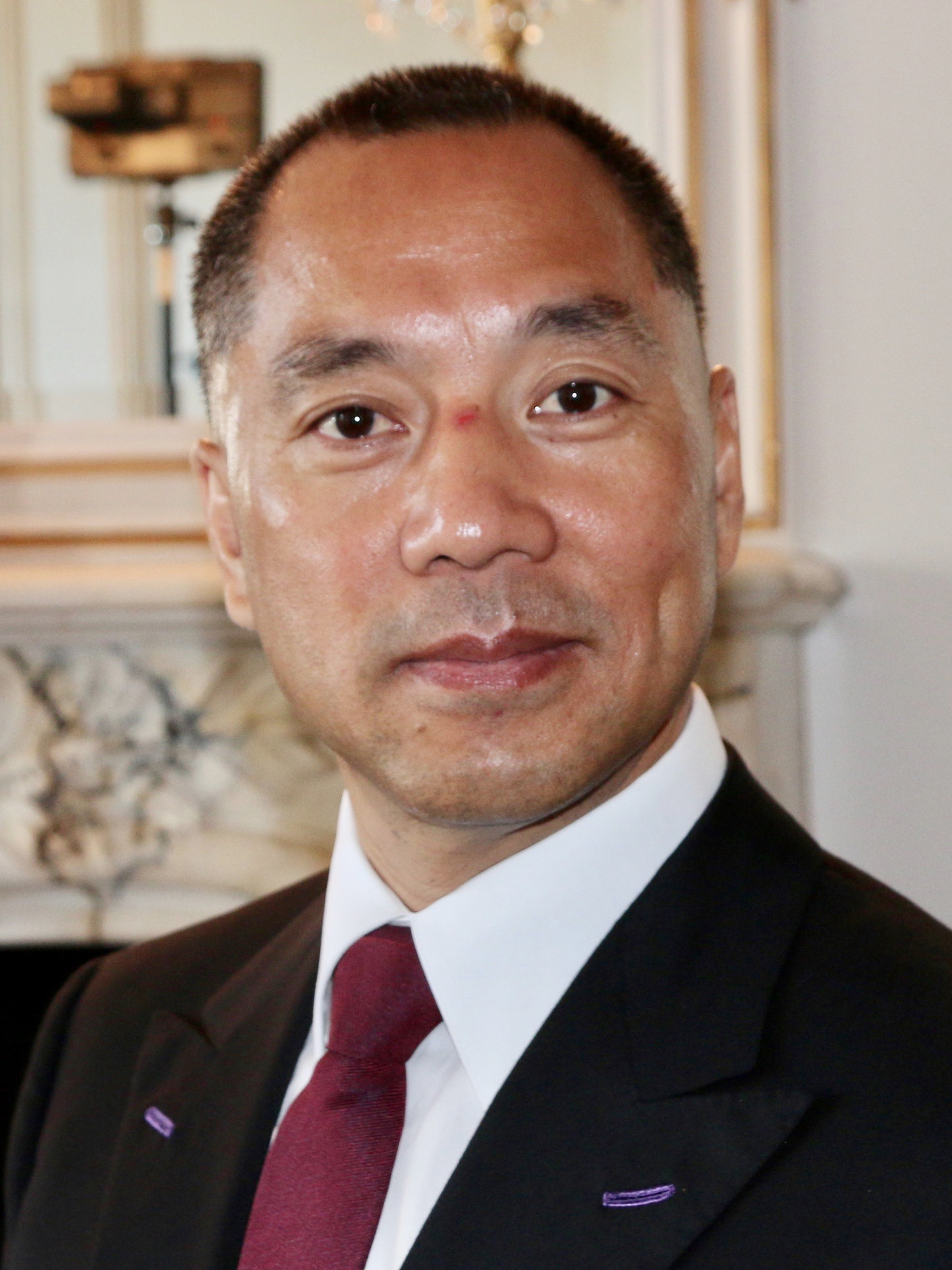
On April 19, 2017, the VOA Mandarin Service interviewed Chinese real estate tycoon Guo Wengui in a live broadcast. The government of China warned VOA representatives not to interview Guo about his "unsubstantiated allegations". During the interview, Guo said he had evidence of corruption among the members of the Politburo Standing Committee of China, the highest political authority of China. It was then abruptly halted by VOA leadership less than half-way into the three-hour interview. Guo's allegations involved Fu Zhenhua and Wang Qishan (a member of the Politburo Standing Committee, and the leader of the anti-graft movement). The following August, four U.S. Congressmen requested an investigation into the event, with the Office of Inspector General (OIG) concluding that the VOA leadership decision to curtail the Guo interview was based solely on journalistic best practices, rather than due to any pressure from the Chinese government. Another investigation by Mark Feldstein, Chair of Broadcast Journalism at the University of Maryland, College Park, came to similar conclusions, criticizing the VOA Mandarin Service interview team for not following instructions by VOA leadership.
Horn of Africa service
Peter Heinlein led the service from 2012 to 2014. In 2013, he wrote a complaint about the service, citing role confusion whereby non-journalist translators took on the role of journalists. The service was mostly seen as anti-Ethiopian government until 2018, when Negussie Mengesha, the head of the VOA Africa division for several years, met the newly appointed Ethiopian prime minister Abiy Ahmed. In May 2021, several former employees accused VOA's Amharic service, under Mengesha, of being biased in favor of the government of Ahmed and failing to report on atrocities committed during the Tigray War. VOA journalist Jason Patinkin reported the problems "at every level of the VOA hierarchy" and resigned, saying it had "sided with the perpetrators both by commission and omission" of "potential crimes against humanity, ethnic cleansing and perhaps even genocide". In June 2021, Mail & Guardian reported on an investigation which found that during the Tigray War, the only major foreign news service that was not harassed by Ethiopian security services was VOA. VOA frequently covered the Mai Kadra massacre, mostly attributed to Tigrayan youth and documented by Amnesty International, while later focusing on the Ethiopian government's dismissal of Amnesty International's report on the Axum massacre rather than on the methods and content of the report itself. A majority of the stories about the war only showed government or military officials' points of view. Instructions emailed to staff stated that the terms "civil war" and "war" were forbidden in reporting on the Tigray War, with Scott Stearns writing on November 14, according to Mail & Guardian, "There are to be no deviations from these instructions by any member of any Africa division language service on any platform."
Israel and Palestine
After the October 7, 2023, Hamas attack on Israel, an email was sent to Voice of America staff from the associate editor for news standards with guidance related to how to refer to the actions ("terrorist acts" or "acts of terror") and advice about how to refer to individual members of Hamas, i.e. to use the term "terrorist" only in direct quotes from sources. At the time, VOA was not the only news outlet with journalists discussing how to objectively refer to the Israeli–Palestinian conflict. Six Republican members of Congress signed a letter sent by Senator Bill Hagerty, which criticized and strongly objected to the editorial guidance about how to refer to individual members of Hamas. USAGM chief executive Amanda Bennett sent a letter to the senators to clarify that the VOA email was guidance only, and "There is no policy prohibiting the use of the words 'terror,' 'terrorism,' or 'terrorist at VOA, and stating the news organizations within USAGM "counsel care and attention in the use of the words but do not place any restrictions on the appropriate use." The controversy prompted Congress to reduce the budget of VOA's parent organization, USAGM.
Kurdistan and Iran
VOA's service in Iran had a negative impact on Kurds and Kurdistan according to the publication Kurdish Life in 2000. They claimed that the VOA exacerbated the conflict between the Talabani and the Barzani. They further claimed that the VOA covered up wrongful imprisonments, wrongful arrests, and the building of extremist mosques. According to the same publication, Kurds were being turned into fanatics, and a new generation of terrorists was forming because of the VOA. They claimed the VOA was doing this to help PUK.
On April 2, 2007, Abdul Malik Rigi, the leader of Jundullah, an Iranian Muslim Sunni Salafi militant group with possible links to al-Qaeda, appeared on Voice of America's Persian-language service. The interview was condemned by the Iranian government. He also alleges he had American support in an official TV broadcast. Jundullah was linked to attacks on both Iranian military and civilians. Rigi was captured by the Iranian security services and executed in 2010 in Evin Prison in Tehran.
Pakistan
The VOA's DEEWA Radio airs in Pakistan. Although in 2015 some listeners were suspicious that the program was promoting an American agenda, others said they were experiencing a positive effect. Some listeners felt that the programs were giving a voice to the voiceless, giving them a sense of empowerment. In 2018, the Pakistani authorities blocked the website of VOA's Pashto and Urdu language radio service.
Russia
In January 2016, upon his arrival in Moscow, Russian authorities detained and then deported Jeff Shell, the chairman of the Broadcasting Board of Governors that oversees the Voice of America, despite his having a valid Russian visa. Russian authorities did not explain their actions.
Round-the-clock broadcasting of Current Time began on February 7, 2017.
In December 2017, under a new directive from Russia's Kremlin after a new law was passed by the State Duma (Russia's lower house of parliament) and the upper house Federation Council and signed by Russian president Vladimir Putin, Voice of America was deemed a "foreign agent" under the Russian foreign agent law. In June 2021, the Russian news agency TASS reported that Russia's state communications watchdog Roskomnadzor complained that the foreign agent Voice of America radio station challengingly refused to observe Russian law because it had not established a Russian legal entity. Roskomnadzor also said that VOA was as a foreign agent "obliged to mark their content and provide information about all aspects of their activity, including a detailed description of contacts with the authorities."
In March 2022, VOA and other news broadcasters, including the BBC, Radio Free Europe/Radio Liberty, and Deutsche Welle were blocked in Russia, as after the Russian invasion of Ukraine in February 2022, Russian authorities increased censorship of independent journalism, anti-war protests, and dissenting voices. Nevertheless, many Russians have used VPNs and other software to get around Russian government blocks. As of March 2022, VOA broadcasts were reaching people in Russia and the region through TV, FM and medium wave radio, digital, and direct-to-home satellite. In May 2023, Russia banned then-acting VOA chief Yolanda Lopez from ever entering the country.
Azerbaijan
From 2019 to 2025, Azerbaijani journalist and human rights activist Ulviyya Ali worked with the Azerbaijani Service of Voice of America, where she authored and broadcast over 1000 news-pieces and reports. Her work often focused on politically sensitive topics such as political trials in Azerbaijan, human rights violations, protests, rallies, and civil disobedience actions against the regime of Ilham Aliyev. During her journalistic activities, she faced multiple instances of detention, police obstruction, and ill-treatment. In February 2025, Voice of America journalist's accreditations in Azerbaijan were revoked. Ulviyya Ali was arrested in May 2025.
Turkey
On June 30, 2022, the Turkish media watchdog, Radio and Television Supreme Council (RTÜK), blocked access to VOA's website amerikaninsesi.com in Turkey because VOA had not applied for the necessary license, which would subject VOA to certain obligations. The RTÜK regulation requires foreign news outlets that publish in Turkey to apply for publication licenses, mandates that at least half of the media organization be owned by a Turkish citizen, and would force VOA to remove content deemed inappropriate by RTÜK. VOA Turkish subsequently broadcast over a different VOA website domain name, voaturkce.com, which in August 2023 was blocked as well. VOA said that "Given VOA's status as a public service international broadcaster legally required to provide 'accurate, objective, and comprehensive' news coverage to its global audience, VOA cannot comply with any directive intended to enable censorship." VOA Turkey, after it was blocked, shared instructions on its social media accounts as to how to use a VPN to access its content.
Historical list of languages
| Language | Target audience | from | to | Website | Remarks | |
|---|---|---|---|---|---|---|
| English | Worldwide | 1942 | present | [www.voanews.com](https://www.voanews.com/) | ||
| Mandarin Chinese | Republic of China (1912–1949) (1941–1949) | |||||
| People's Republic of China (1949–present) | 1941 | [美国之音](https://www.voachinese.com/) | see also Radio Free Asia | |||
| Cantonese | Guangdong | |||||
| Guangxi | ||||||
| Hong Kong (1997–present) | ||||||
| Macau (1999–present) | 1941 | |||||
| 1949 | ||||||
| 1987 | 1945 | |||||
| 1963 | ||||||
| present | [美國之音](https://www.voacantonese.com/) | |||||
| Brazilian Portuguese | Brazil | 1941 | ||||
| 1946 | ||||||
| 1961 | 1945 | |||||
| 1948 | ||||||
| 2001 | – | |||||
| Amoy | Fujian (1941–1945, 1951–1963) | |||||
| [[File:Flag of Japan (1870–1999).svg | 24px]] *Japanese Taiwan* (1941–1945) | |||||
| Taiwan (1951–1963) | 1941 | |||||
| 1951 | 1945 | |||||
| 1963 | – | |||||
| Tagalog/Filipino | *Commonwealth of the Philippines* (1941–1942, 1945–1946) | |||||
| [[File:Flag of Japan (1870–1999).svg | 24px]] *Philippine Executive Commission* (1942–1943) | |||||
| [[File:Flag of the Philippines (1943-1945).svg | 24px]] Republic of the Philippines (1943–1945) | 1941 | 1946 | – | ||
| Korean | [[File:Flag of Japan (1870–1999).svg | 24px]] *Japanese Korea* (1942–1945) | ||||
| [[File:Flag of the People's Committee of Korea.svg | 24px]] People's Republic of Korea (1945) | |||||
| [[File:Flag of the Provisional People's Committee for North Korea.svg | 24px]] *Soviet Civil Administration in North Korea* (1945–1948) | |||||
| North Korea (1948–present) | ||||||
| [[File:Flag of South Korea (1945–1948).svg | 24px]] *United States Army Military Government in Korea* (1945–1948) | |||||
| South Korea (1948–2025) | 1942 | present | [VOA 한국어](https://www.voakorea.com/) | see also Radio Free Asia | ||
| Indonesian | [[File:Flag of Japan (1870–1999).svg | 24px]] *Japanese-occupied Dutch East Indies* (1942–1945) | ||||
| *Dutch East Indies* (1945–1949) | ||||||
| *Netherlands New Guinea* (1949–1962) | ||||||
| [[File:Flag of the United Nations.svg | 24px]] *West New Guinea (UN Protectorate)* (1962–1963) | |||||
| [[File:Flag of Indonesia.svg | 24px]] Republic of Indonesia (1945–1949) | |||||
| [[File:Flag of Indonesia.svg | 24px]] United States of Indonesia (1949–1950) | |||||
| Indonesia (1950–present) | [VOA Indonesia](https://www.voaindonesia.com) | see also Voice of America Indonesia | ||||
| Turkish | Turkey | 1942 | ||||
| 1948 | 1945 | |||||
| present | [Amerika'nın Sesi](https://www.amerikaninsesi.com/) | |||||
| [VOA Türkçe](https://www.voaturkce.com/) | ||||||
| Spanish | Latin America | 1942 | ||||
| 1946 | ||||||
| 1953 | ||||||
| 1961 | 1945 | |||||
| 1948 | ||||||
| 1956 | ||||||
| present | [Voz de América](https://www.voanoticias.com/) | see also Radio y Televisión Martí | ||||
| Persian | [[File:State flag of Iran (1964–1980).svg | 24px]] Imperial State of Iran (1942–1945, 1949–1960, 1964–1966) | ||||
| Islamic Republic of Iran (1979–present) | 1942 | |||||
| 1949 | ||||||
| 1964 | ||||||
| 1979 | 1945 | |||||
| 1960 | ||||||
| 1966 | ||||||
| present | [صدای آمریکا](https://ir.voanews.com/) | see also Radio Farda | ||||
| Thai | Thailand | 1942 | ||||
| 1962 | ||||||
| 1988 | 1958 | |||||
| 1988 | ||||||
| present | [วอยซ์ ออฟ อเมริกา](https://www.voathai.com/) | |||||
| Greek | [[File:Flag of Greece (1822-1978).svg | 24px]] Hellenic State (1942–1944) | ||||
| *Axis-occupied Greece* (1942–1944) | ||||||
| [[File:Flag of Italy (1861-1946) crowned.svg | 24px]] *Italian Islands of the Aegean* (1942–1945) | |||||
| [[File:State Flag of Greece (1863-1924 and 1935-1973).svg | 24px]] Kingdom of Greece (1944–1973) | |||||
| Hellenic Republic (1973–2014) | 1942 | 2014 | [Φωνή της Αμερικής](https://web.archive.org/web/20120601222838/http://gr.voanews.com/) (no longer active, kept for historical reasons) | |||
| Bulgarian | Kingdom of Bulgaria (1942–1946) | |||||
| People's Republic of Bulgaria Bulgarian People's Republic (1946–1989) | ||||||
| Bulgaria (1989–2004) | 2004 | – | see also Radio Free Europe | |||
| Czech | *Protectorate of Bohemia and Moravia* (1942–1945) | |||||
| Czech-inhabited lands of [[File:Flag of the Czech Republic.svg | 24px]] Czechoslovak Republic (1945–1960) | |||||
| Czech-inhabited lands of [[File:Flag of the Czech Republic.svg | 24px]] Czechoslovak Socialist Republic (1960–1969) | |||||
| Czech Socialist Republic Czech SR (1969–1990) | ||||||
| Czech Republic (1990–2004) | – | |||||
| Hungarian | [[File:Flag of Hungary (1915-1918, 1919-1946).svg | 24px]] Kingdom of Hungary | ||||
| [[File:Flag of Hungary (1946-1949, 1956-1957; 1-2 aspect ratio).svg | 24px]] Hungarian Republic (1946–1949) | |||||
| Hungarian People's Republic (1949–1989) | ||||||
| Hungary (1989–1993) | – | |||||
| Polish | [[File:Flag of Germany (1935–1945).svg | 24px]] *General Government of Polish Region* (1942–1944) | ||||
| *Polish areas annexed by Nazi Germany* | ||||||
| [[File:Flag of Poland (1928–1980).svg | 24px]] Republic of Poland (1944–1945) | |||||
| [[File:Flag of Poland (1928–1980).svg | 24px]] Republic of Poland (1945–1947) | |||||
| Polish People's Republic (1947–1989) | ||||||
| Poland (1990–2004) | – | |||||
| Romanian | Kingdom of Romania (1942–1947) | |||||
| [[File:Flag of Romania (1952-1965).svg | 24px]] Romanian People's Republic (1947–1965) | |||||
| Socialist Republic of Romania (1965–1989) | ||||||
| Romania (1989–2004) | – | |||||
| Slovak | [[File:Flag of Slovakia (1939–1945).svg | 24px]] Slovak Republic (1942–1945) | ||||
| Slovak-inhabited lands of [[File:Flag of the Czech Republic.svg | 24px]] Czechoslovak Republic (1945–1960) | |||||
| Slovak-inhabited lands of [[File:Flag of the Czech Republic.svg | 24px]] Czechoslovak Socialist Republic (1960–1969) | |||||
| Slovak Socialist Republic Slovak SR (1969–1990) | ||||||
| Slovakia (1990–2004) | – | |||||
| Arabic | [[File:Flag of the Arab League.svg | 24px]] | ||||
| Arab World | 1942 | |||||
| 1950 | 1945 | |||||
| 2002 | – | see also Radio Sawa and Alhurra | ||||
| Spanish | Spanish State (1942–1955, 1955–1975) | |||||
| Spain (1975–1993) | 1942 | |||||
| 1955 | 1955 | |||||
| 1993 | – | |||||
| (for local radio stations) | ||||||
| Portuguese | [[File:Flag of Portugal.svg | 24px]] Portugal (1942–1945, 1951–1953) | ||||
| Portugal (1976–1987, 1987–1993) | 1942 | |||||
| 1951 | ||||||
| 1976 | ||||||
| 1987 | 1945 | |||||
| 1953 | ||||||
| 1987 | ||||||
| 1993 | ||||||
| German | [[File:Flag of Germany (1935–1945).svg | 24px]] German Reich (1942–1943) | ||||
| *[[File:Flag of Germany (1935–1945).svg | 24px]] German-occupied Austria* (1942–1945) | |||||
| [[File:Flag of Germany (1935–1945).svg | 24px]] Greater German Reich (1943–1945) | |||||
| *Allied-occupied Germany* (1945–1949) | ||||||
| *Saar Protectorate* (1947–1956) | ||||||
| [[File:Flag of Germany.svg | 24px]] Federal Republic of Germany (1949–1960) | |||||
| *Berlin Allied-occupied Berlin* (1949–1960) | ||||||
| German Democratic Republic (1949–1960) | ||||||
| Germany (1991–1993) | 1942 | |||||
| 1991 | 1960 | |||||
| 1993 | – | |||||
| Japanese | Empire of Japan (1942–1945) | |||||
| [[File:Flag of Allied Occupied Japan.svg | 24px]]*Occupied Japan* (1951–1952) | |||||
| Japan (1952–1962) | 1942 | |||||
| 1951 | 1945 | |||||
| 1962 | – | |||||
| French | [[File:Flag of France (1794–1815, 1830–1958).svg | 24px]] French State (1942–1944) | ||||
| Free France (1942–1944) | ||||||
| [[File:War Ensign of Germany (1938–1945).svg | 24px]] *Military Administration in France* (1942–1944) | |||||
| French- and Walloon-inhabited lands of [[File:War Ensign of Germany (1938–1945).svg | 24px]] *Military Administration in Belgium and Northern France* (1942–1944) | |||||
| French- and Walloon-inhabited lands of [[File:Flag of Germany (1935–1945).svg | 24px]] *Reichskommissariat of Belgium and Northern France* (1944) | |||||
| [[File:Flag of Italy (1861-1946) crowned.svg | 24px]] *Italian Military Administration in France* (1942–1943) | |||||
| [[File:Flag of Italy (1861-1946) crowned.svg | 24px]] *Occupied Corsica* (1942–1943) | |||||
| [[File:Flag of France (1794–1815, 1830–1958).svg | 24px]] French Republic (1944–1946) | |||||
| [[File:Flag of France (1794–1815, 1830–1958).svg | 24px]] French Republic (1946–1958) | |||||
| France French Republic (1958–1961) | 1942 | 1961 | – | |||
| Italian | Kingdom of Italy (1942–1945) | |||||
| Italian Republic (1951–1957) | ||||||
| [[File:Free Territory Trieste Flag.svg | 24px]] *Free Territory of Trieste* (1951–1954) | 1942 | ||||
| 1951 | 1945 | |||||
| 1957 | – | |||||
| Finnish | Finland | 1945 | ||||
| 1953 | – | |||||
| Afrikaans | Union of South Africa | 1942 | 1949 | – | ||
| Danish | Denmark | 1945 | – | |||
| Flemish | Flemish-inhabited lands of [[File:War Ensign of Germany (1938–1945).svg | 24px]] *Military Administration in Belgium and Northern France* (1942–1944) | ||||
| Flemish-inhabited lands of [[File:Flag of Germany (1935–1945).svg | 24px]] *Reichskommissariat of Belgium and Northern France* (1944) | |||||
| [[File:Flag of Germany (1935–1945).svg | 24px]] *Reichsgau Flandern* (1944–1945) | – | ||||
| Norwegian | [[File:Flag of Germany (1935–1945).svg | 24px]] *Reichskommissariat Norwegen* | – | |||
| Serbian | [[File:War Ensign of Germany (1938–1945).svg | 24px]] *Territory of the Military Commander in Serbia* + [[File:Flag of Germany (1935–1945).svg | 24px]] *German-occupied Montenegro* (1943–1944) | |||
| [[File:Flag of Serbia (1947–1992).svg | 24px]] Federated State of Serbia + [[File:Flag of Montenegro (1946–1993), Flag of Serbia (1947–1992).svg | 24px]] Federated State of Montenegro (1944–1946) | ||||
| [[File:Flag of Serbia (1947–1992).svg | 24px]] People's Republic of Serbia + [[File:Flag of Montenegro (1946–1993), Flag of Serbia (1947–1992).svg | 24px]] People's Republic of Montenegro (1946–1963) | ||||
| Socialist Republic of Serbia + [[File:Flag of Montenegro (1946–1993), Flag of Serbia (1947–1992).svg | 24px]] Socialist Republic of Montenegro (1963–1992) | |||||
| Federal Republic of Yugoslavia (1992–2003) | ||||||
| State Union of Serbia and Montenegro (2003–2006) | ||||||
| Serbia (2006–present) | ||||||
| Montenegro (2006–present) | 1943 | present | [Glas Amerike](https://www.glasamerike.net/) | see also Radio Free Europe | ||
| Albanian | [[File:Flag of Albania (1943–1944).svg | 24px]] Albanian Kingdom (1943–1944) | ||||
| [[File:Flag of Albania (1944–1946).svg | 24px]] Democratic Government of Albania (1944–1945) | |||||
| People's Republic of Albania (1951–1976) | ||||||
| People's Socialist Republic of Albania (1976–1998) | ||||||
| Republic of Albania (1998–present) | ||||||
| 1943 | ||||||
| 1951 | 1945 | |||||
| present | [Zëri i Amerikës](https://www.zeriamerikes.com/) | |||||
| Burmese | State of Burma (1943–1945) | |||||
| Union of Burma (1951–1974) | ||||||
| Socialist Republic of the Union of Burma (1974–1988) | ||||||
| Union of Myanmar (1988–2011) | ||||||
| Myanmar (2011–present) | [ဗွီအိုအေ မြန်မာဌာန](https://burmese.voanews.com/) | see also Radio Free Asia | ||||
| Vietnamese | French Indochina (1943–1945) | |||||
| [[File:Flag of the Empire of Vietnam (1945).svg | 24px]] Empire of Vietnam (1945) | |||||
| *[[File:Flag of Colonial Annam.svg | 24px]] Protectorate of Tonkin + [[File:First flag of the Nguyen Dynasty.svg | 24px]] Protectorate of Annam + [[File:Flag of Republic of Cochinchina.svg | 24px]] French Cochinchina* (1945–1946) | |||
| State of Vietnam (1951–1955) | ||||||
| North Vietnam (1955–1976) | ||||||
| South Vietnam (1955–1975) | ||||||
| [[File:FNL Flag.svg | 24px]] *Occupied South Vietnam* (1969–1976) | |||||
| Vietnam (1976–present) | 1946 | |||||
| present | [Ðài Tiếng nói Hoa Kỳ](https://www.voatiengviet.com/) | |||||
| Croatian | Independent State of Croatia (1943–1945) | |||||
| [[File:Flag of Croatia (1947–1990).svg | 24px]] Federated State of Croatia (1945–1946) | |||||
| [[File:Flag of Croatia (1947–1990).svg | 24px]] People's Republic of Croatia (1946–1963) | |||||
| [[File:Flag of Croatia (1947–1990).svg | 24px]] Socialist Republic of Croatia (1963–1990) | |||||
| [[File:Flag of Croatia (1990).svg | 24px]] Republic of Croatia (1990–1991) | |||||
| Croatia (1991–2011) | 1943 | 2011 | – | see also Radio Free Europe | ||
| Swedish | Sweden | 1945 | – | |||
| Slovene | Slovenian-inhabited lands of [[File:Flag of Germany (1935–1945).svg | 24px]] *Reichsgau Steiermark*, *Reichsgau Kärnten* and *Operational Zone of the Adriatic Littoral* (1944–1945) | ||||
| [[File:Flag of Slovenia (1945–1991).svg | 24px]] People's Republic of Slovenia (1949–1963) | |||||
| [[File:Flag of Slovenia (1945–1991).svg | 24px]] Socialist Republic of Slovenia (1963–1990) | |||||
| Slovenia (1990–2004) | 1944 | |||||
| 1949 | 1945 | |||||
| 2004 | – | |||||
| Wu Chinese | Shanghai | 1944 | 1946 | – | ||
| Dutch | [[File:Flag of Germany (1935–1945).svg | 24px]] *Reichskommissariat Niederlande* | 1945 | – | ||
| Icelandic | Kingdom of Iceland | 1944 | – | |||
| Russian | Russian Soviet Federative Socialist RepublicRussian SFSR (1947–1991) | |||||
| Russia (1991–present) | 1947 | present | [Голос Америки](https://www.golosameriki.com/) | see also Radio Liberty | ||
| Ukrainian | Ukrainian Soviet Socialist RepublicUkrainian SSR (1949–1991) | |||||
| Ukraine (1991–present) | 1949 | [Голос Америки](https://www.holosameryky.com/?utm_medium=referral&utm_campaign=redirect&utm_source=ukrainian-voanews-com/) | ||||
| Armenian | Armenian Soviet Socialist RepublicArmenian SSR (1951–1991) | |||||
| Armenia (1991–present) | 1951 | present (web) | [Ամերիկայի Ձայն](https://www.amerikayidzayn.com/) | |||
| Georgian | Georgian Soviet Socialist RepublicGeorgian SSR (1951–1991) | |||||
| Georgia (1991–present) | – | |||||
| Urdu | Pakistan | 1951 | ||||
| 1954 | 1953 | |||||
| present | [وائس آف امریکہ](https://www.urduvoa.com/) | |||||
| Azerbaijani | Azerbaijan Soviet Socialist RepublicAzeri SSR (1951–1953, 1982–1991) | |||||
| Azerbaijan (1991–present) | 1951 | |||||
| 1982 | 1953 | |||||
| present (web) | [Amerikanın Səsi](https://www.amerikaninsesi.org/) | see also Radio Liberty | ||||
| Hindi | Northern India | 1951 | ||||
| 1954 | 1953 | |||||
| 2008 | – | |||||
| Estonian | Estonian Soviet Socialist Republic Estonian SSR (1951–1990) | |||||
| Estonia (1990–2004) | 1951 | 2004 | – | see also Radio Liberty | ||
| Latvian | Latvian Soviet Socialist Republic Latvian SSR (1951–1990) | |||||
| Latvia (1990–2004) | – | |||||
| Lithuanian | Lithuanian Soviet Socialist Republic Lithuanian SSR (1951–1990) | |||||
| Lithuania (1990–2004) | – | |||||
| Malayan | [[File:Flag of Malaya.svg | 24px]] Federation of Malaya | 1955 | – | ||
| Hakka | Hakka-inhabited lands of Southern People's Republic of China | 1954 | – | |||
| Hebrew | Israel | 1953 | – | |||
| Swatow | Shantou | – | ||||
| Tatar | [[File:Flag of the Tatar ASSR.svg | 24px]] Tatar ASSR | – | see also Radio Liberty | ||
| Tamil | Madras State (1954–1969) | |||||
| [[File:..Tamil Nadu Flag(INDIA).png | 24px]] Tamil Nadu (1969–1970) | |||||
| Dominion of Ceylon (Sri Lanka, ex-Ceylon) | 1954 | 1970 | – | |||
| Khmer | [[File:Flag of Cambodia.svg | 24px]] Kingdom of Cambodia (1955–1957, 1962–1970) | ||||
| Khmer Republic (1970–1975) | ||||||
| [[File:Flag of Democratic Kampuchea.svg | 24px]] Democratic Kampuchea (1975–1979) | |||||
| People's Republic of Kampuchea (1979–1989) | ||||||
| [[File:Flag of the State of Cambodia.svg | 24px]] State of Cambodia (1989–1993) | |||||
| [[File:Flag of Cambodia.svg | 24px]] Kingdom of Cambodia (1993–present) | 1955 | ||||
| 1962 | 1957 | |||||
| present | [វីអូអេ](https://khmer.voanews.com/) | |||||
| [www.voacambodia.com](https://www.voacambodia.com/) | see also Radio Free Asia | |||||
| Malayalam | [[File:..Kerala Flag(INDIA).png | 24px]] Kerala | ||||
| Laccadive, Minicoy and Amindivi Islands | 1956 | 1961 | – | |||
| Gujarati | Gujarati-inhabited lands of Bombay State | 1958 | – | |||
| Telugu | Andhra Pradesh | – | ||||
| Belarusian | Byelorussian Soviet Socialist RepublicByelorussian SSR | 1957 | – | see also Radio Liberty | ||
| Bengali | Bangladesh | |||||
| India | 1958 | present | [ভয়েস অফ আমেরিকা](https://www.voabangla.com/) | |||
| French (to Africa) | 1960 | [VOA Afrique](https://www.voaafrique.com/) | ||||
| Sindhi | Pakistan | 2022 July | [VOA Sindhi](https://www.urduvoa.com/z/7020) | |||
| Lao | Kingdom of Laos (1962–1975) | |||||
| Lao People's Democratic Republic (1975–present) | 1962 | [ສຽງອາເມຣິກາ ວີໂອເອ](https://lao.voanews.com/) | see also Radio Free Asia | |||
| Swahili | [Sauti ya Amerika](https://www.voaswahili.com/) | |||||
| English (to Africa) | 1963 August 4 | [www.voaafrica.com](https://www.voanews.com/p/5749.html) | ||||
| [www.voazimbabwe.com](https://www.voazimbabwe.com/) | ||||||
| Uzbek | Uzbek Soviet Socialist RepublicUzbek SSR (1972–1991) | |||||
| Uzbekistan (1991–present) | ||||||
| 1972 | [Amerika Ovozi](https://www.amerikaovozi.com/) | see also Radio Liberty | ||||
| Portuguese (to Africa) | 1976 | [Voz da América](https://www.voaportugues.com/) | ||||
| Hausa | Nigeria | 1979 January 21 | [Muryar Amurka](https://www.voahausa.com/) | |||
| Dari | [[File:Flag of Afghanistan (1980–1987).svg | 24px]] Democratic Republic of Afghanistan (1980–1987) | ||||
| Republic of Afghanistan (1987–1992) | ||||||
| Islamic State of Afghanistan (1992–1996, 2001–2002) | ||||||
| *Islamic Emirate of Afghanistan* (1996–2001) | ||||||
| [[File:Flag of Afghanistan (2002–2004).svg | 24px]] Transitional Islamic State of Afghanistan (2002–2004) | |||||
| Islamic Republic of Afghanistan Islamic Republic of Afghanistan (2004–2021) | 1980 | [صدای امریکا](https://www.darivoa.com/) | ||||
| Amharic | Ethiopia | 1982 September | [የአሜሪካ ድምፅ](https://amharic.voanews.com/) | |||
| Pashto | Pashtun-inhabited lands of Afghanistan | 1982 | [اشنا راډیو](https://www.pashtovoa.com/) | |||
| Creole | Haiti | 1987 | [Lavwadlamerik](https://www.voanouvel.com/) | |||
| Tibetan | Tibet Autonomous Region | |||||
| Qinghai | ||||||
| Bhutan | 1991 | [ཨ་རིའི་རླུང་འཕྲིན་ཁང་།](https://www.voatibetan.com/) | ||||
| [www.voatibetanenglish.com](https://www.voatibetanenglish.com/) | see also Radio Free Asia | |||||
| Kurdish | [[File:Flag of Kurdistan.svg | 24px]] Iraqi Kurdistan | ||||
| [[File:De facto SA-NES Flag.svg | 24px]] Autonomous Administration of North and East Syria | |||||
| Kurdish inhabited lands of Turkey | ||||||
| Kurdish inhabited lands of Iran | 1992 | [دهنگی ئهمهریکا](https://www.dengiamerika.com/) | ||||
| [Dengê Amerîka](https://www.dengeamerika.com/) | ||||||
| Somali | Somalia | 1992 | ||||
| 2007 | 1995 | |||||
| present | [VOA Somali](https://www.voasomali.com/) | |||||
| Nepali | Kingdom of Nepal | 1992 | 1993 | – | ||
| Afaan Oromo | [[File:Flag of the Oromia Region.svg | 24px]] Oromia Region | 1996 July | present | [Sagalee Ameerikaa](https://www.voaafaanoromoo.com/) | |
| Bosnian | Bosnia and Herzegovina | 1996 | [Glas Amerike](https://ba.voanews.com/) | see also Radio Free Europe | ||
| Kinyarwanda/Kirundi | Rwanda | |||||
| Burundi | ||||||
| Eastern Democratic Republic of the Congo | ||||||
| Southern Uganda | ||||||
| Northwestern Tanzania | 1996 July | [Ijwi ry'Amerika](https://www.radiyoyacuvoa.com/) | ||||
| Tigrinya | Eritrea | [ድምፂ ረድዮ ኣሜሪካ](https://tigrigna.voanews.com/) | ||||
| Macedonian | North Macedonia Republic of Macedonia | 1999 | 2008 | – | see also Radio Free Europe | |
| Ndebele | Zimbabwe | 2003 | present | [VOA Ndebele](https://www.voandebele.com/) | ||
| Shona | Zimbabwe | |||||
| Mozambique | [VOA Shona](https://www.voashona.com/) | |||||
| Pashto | Pashtun-inhabited lands of Pakistan | 2006 | [ډیوه ریډیو](https://www.voadeewaradio.com/) | |||
| Bambara | Mali | 2013 March | [VOA Bambara](https://www.voabambara.com/) |
References
Notes
Citations
Bibliography
- Pomar, Mark G. (2022) Cold War Radio: The Russian Broadcasts of the Voice of America and Radio Free Europe/Radio Liberty (University of Nebraska Press, 2022) online scholarly book review
References
- "The Voice of America, the largest U.S. international broadcaster, provides a consistently reliable and authoritative source of news, tells America's story and presents a balanced and comprehensive projection of significant American thought and institutions".
- (2025-03-19). "Donald Trump cuts funding to international US public media".
- (2025-10-26). "Under Trump, Voice of America Is Down but Not Out".
- (March 19, 2025). "Inside the scramble to save America's pro-democracy media outlets from Trump".
- Farmer, Brit McCandless. (March 30, 2025). "The history of Voice of America - CBS News".
- Knauth, Dietrich. (March 28, 2025). "US judge temporarily blocks Trump from firing Voice of America staff". Reuters.
- (July 1, 2022). "VOA Launches Programming in Sindhi".
- Heil, Alan L.. (2003). "Voice of America: A History". [[Columbia University Press]].
- Farhi, Paul. "Trump appointee sweeps aside rule that ensured 'firewall' at Voice of America". [[The Washington Post]].
- Farmer, Brit McCandless. (March 30, 2025). "The history of Voice of America - CBS News".
- Grynbaum, Michael M.. (March 28, 2025). "U.S. Judge Orders Halt to Trump's Effort to Dismantle Voice of America". The New York Times.
- Kumar, Raksha. (April 4, 2025). "What's Lost if Voice of America Disappears: Watchdog Spirit, Intrepid Reporters, and Focus on the Global South".
- "VOA Charter". Voice of America Public Relations.
- Borchers, Callum. (January 26, 2017). "Voice of America says it won't become Trump TV". [[The Washington Post]].
- VOA Public Relations. (December 5, 2016). "The Largest U.S. International Broadcaster". Voice of America.
- "Mission and Values".
- [https://www.gpo.gov/fdsys/pkg/STATUTE-90/pdf/STATUTE-90-Pg823.pdf 90 Stat. 823] {{Webarchive. link. (October 9, 2017 , [https://www.gpo.gov/fdsys/pkg/STATUTE-108/pdf/STATUTE-108-Pg4299.pdf 108 Stat. 4299])
- (March 15, 2025). "Trump sharpens attacks on US media as Voice of America employees put on administrative leave". [[The Guardian]].
- (March 15, 2025). "Voice of America staff put on leave, Trump ally says agency 'not salvageable'". [[Reuters]].
- (March 15, 2025). "Voice of America channels fall silent as Trump administration guts agency and cancels contracts". [[CNN]].
- (March 16, 2025). "As Voice of America Goes Dark, Some Broadcasts Are Replaced by Music". [[The New York Times]].
- (May 7, 2025). "Embattled Voice of America to use newsfeed from hard-right network". [[The Guardian]].
- Stelter, Brian. (May 7, 2025). "MAGA outlet OAN to provide content for hollowed-out Voice of America, says Kari Lake".
- (June 20, 2025). "Layoff notices delivered to hundreds of Voice of America employees". [[Associated Press]].
- (June 20, 2025). "Voice of America parent terminates over 600 more staff in likely death knell". [[Yahoo News]].
- Berg, Jerome S.. (1999). "On the Short Waves, 1923–1945: Broadcast Listening in the Pioneer Days of Radio". McFarland.
- Chamberlain, A.B. "CBS International Broadcast Facilities". ''Proceedings of the IRE'', Volume 30, Issue 3, March 1942 pp. 118–129.
- Library of Congress. "NBC Resources Held by the Recorded Sound Section." [https://www.loc.gov/rr/record/recnbc.html Library of Congress] {{Webarchive. link. (July 2, 2018)
- {{harvp. Dizard. 2004
- "NABusiness".
- Rose, Cornelia Bruère. ''National Policy for Radio Broadcasting.'' 1971, Ayer Publishing. {{ISBN. 0-405-03580-2. p. 244
- link. (April 6, 2023 Deborah R. Vargas. University of Minnesota Press, Minneapolis, 2012 {{ISBN). 978-0-8166-7316-2 pp. 152–153 Edmund Chester, CBS, Franklin Roosevelt and "La Cadena De Las Americas"
- Roberts, Walter R.. "The Voice of America: Origins and Recollections".
- Kern, Chris. (April 26, 2018 }} See also: {{Cite web). "A Belated Correction: The ''Real'' First Broadcast of the Voice of America".
- {{harvp. Dizard. 2004
- {{harvp. Dizard. 2004
- (2001). "Stay Tuned: a History of American Broadcasting". Lawrence Erlbaum Associates.
- {{harvp. Rugh. 2006
- Settel, Irving. (1967). "A Pictorial History of Radio". [[Grosset & Dunlap]].
- Anthony, Edwin D.. (1973). "Records of the Office of Inter-American Affairs". National Archives and Record Services – General Services Administration.
- link. (April 6, 2023 Deborah R. Vargas. University of Minnesota Press, Minneapolis, 2012 pp. 152–155 {{ISBN). 978-0-8166-7316-2 OCIAA (Office of the Coordinator of Inter-American Affairs), FDR's Good Neighbor Policy, CBS, Viva America, La Cadena de las Americas
- (February 24, 2023). "Voice of America". Ohio History Connection, State Library of Ohio.
- Kohler, Foy. (1951). "The Effectiveness of the Voice of America". The Quarterly of Film Radio and Television.
- Kohler, Foy. (1951). "Voice Of America". Naval War College Information Service for Officers.
- Herzog, H.. (1952). "Listener Mail to the Voice of America". The Public Opinion Quarterly.
- Tobia, S. (2013). "Did the RAI buy it? The role and limits of American broadcasting in Italy in the Cold War". Cold War History.
- "Russian Defector Gives Witness to the Effectiveness of Voice of America".
- John B. Whitton. (1951). "Cold War propaganda". [[American Journal of International Law]].
- (July 18, 2018). "Charles Thayer (1948–1949)".
- Andrew Glass. (February 17, 2016). "Voice of America begins broadcasts to the Soviet Union, Feb. 17, 1947".
- Appy, Christian G. Cold ''War Constructions: The Political Culture of United States Imperialism''. 2000, [[University of Massachusetts Press]]; {{ISBN. 1-55849-218-6, p. 126.
- Folsom, Merrill. (May 28, 1953). "'Voice' to Drop Boy's Broadcasts; Can't Afford to Answer Fan Mail". [[The New York Times]].
- Timothy Garton Ash. (2010). "Cold War broadcasting: impact on the Soviet Union and Eastern Europe : a collection of studies and documents". Central European University Press.
- Uttaro, Ralph A.. (1982). "The Voices of America in International Radio Propaganda". Law and Contemporary Problems.
- Varis, Tapio. (1970). "The Control of Information by Jamming Radio Broadcasts". Cooperation and Conflict.
- Service, United States Congress Senate Committee on Post Office and Civil. (February 12, 1962). "Postal Rate Revision of 1962: Hearings Before the Committee on Post Office and Civil Service, United States Senate, Eighty-seventh Congress, Second Session, on H.R. 7927, an Act to Adjust Postal Rates, and for Other Purposes, March 6, 13, 22; April 3, 10, 17; May 1, 21, 28; June 26; July 3, 10, 17, 24, 31; August 2, 7, 9, 14, 16, 21, and 23, 1962". U.S. Government Printing Office.
- ''Broadcasting Yearbook'', 1976 and 1979 editions.
- Conference Report, ''Cold War Impact of VOA Broadcasts,'' Hoover Institution and the Cold War International History Project of the Woodrow Wilson International Center for Scholars, Oct. 13–16, 2004
- Bihlmayer, Ulrich. (September 12, 2006). "Fighting the Chinese Government "Firedragon" – Music Jammer AND "Sound of Hope" Broadcasting (SOH), Taiwan". IARU Region 1 Monitoring System.
- "U.S.: Cuba Jamming TV Signals To Iran – Local News Story – WTVJ".
- Jackson, David. "The Future of Radio II." ''World Radio TV Handbook'', 2007 ed., Billboard Books. {{ISBN. 0-8230-5997-9. p 38.
- Heil, Alan L.. (2003). "Voice of America: A History". [[Columbia University Press]].
- "Jamming and the Law of International Communications".
- Byrne, Dave. (July 8, 2019). "Apollo 11 Image Library".
- "VOA Broadcasting to Afghanistan".
- Li, Hongshan. (2024). "Fighting on the Cultural Front: U.S.-China Relations in the Cold War". [[Columbia University Press]].
- Holland, Bill. (March 8, 1997). "VOA Europe: A Victim of Bureaucracy?".
- Heil, Alan L.. (2003). "Voice of America: A History". [[Columbia University Press]].
- "Listen to VOA1".
- United States. Congress. Senate. Committee on Foreign Relations.. (1992). "The Radio Free China Act, S. 2985 : hearing before the Committee on Foreign Relations, United States Senate, One Hundred Second Congress, second session, September 15, 1992". U.S. G.P.O..
- "USAGM".
- (1998). "VOA Guide: Voice of America English Broadcasts Worldwide". VOA.
- "VOA Language Service Fact Sheets". Voice of America Public Relations.
- Raghavan, Sudarsan V., Stephen S. Johnson, and Kristi K. Bahrenburg. "Sending cross-border static: on the fate of Radio Free Europe and the influence of international broadcasting," Journal of International Affairs, Vol. 47, 1993, access on March 25, 2011.
- (August 15, 2016). "Records of the United States Information Agency (RG 306)".
- "USAGM".
- Lakshmi, Rama. (September 12, 2008). "India Set to Lose Voice of America". [[The Washington Post]].
- (July 3, 2008). "Voice of America to Cut Language Services". propublica.org.
- Abedje, Ashenafi. "Voice of America Expands its Sudan Programming," Voice of America News, September 17, 2010. Retrieved on March 25, 2011
- (March 26, 2013). "VOA Reducing Radio Frequencies". insidevoa.com.
- (July 1, 2014). "Voice of America Makes More Cuts to International Shortwave Broadcast Schedule". arrl.org.
- (August 11, 2014). "Voice of America Ends Greek Broadcasts". bbg.gov.
- (August 12, 2014). "After 72 years on air, VOA's Greek Service goes silent". [[Kathimerini]].
- Kern, Chris. "The Voice of America: First on the Internet".
- Chuck, Elizabeth. (July 20, 2013). "Taxpayer money at work: US-funded foreign broadcasts finally available in the US". [[NBC News]].
- Broderick, James F., and Darren W. Miller. ''Consider the Source: A Critical Guide to 100 prominent news and information sites on the Web.'' Medford, NJ: Information Today, 2007. {{ISBN. 978-0-910965-77-4, p. 388.
- Hudson, John. (July 14, 2013). "U.S. Repeals Propaganda Ban, Spreads Government-Made News to Americans". [[Foreign Policy]].
- (April 3, 2017). "VOA Through the Years".
- "VOA Radiogram".
- "VOA Radiogram". VOA Radiogram.
- "VOA Radiogram, 20–21 May 2017: Special doomed edition".
- [http://swradiogram.net/post/162168963047/shortwave-radiogram-25-june-2017-first-show Shortwave Radiogram, 25 June 2017: First show. Holding my breath.] {{Webarchive. link. (June 26, 2017 VOA Radiogram Official Site)
- (December 9, 2021). "VOA Launches New Documentary Series".
- Shahbaz, Ali. "Looking For Diverse Human Stories? Watch This Compelling New Documentary".
- [https://www.washingtonpost.com/news/the-fix/wp/2017/01/26/voice-of-america-says-it-wont-become-trump-tv/ Voice of America says it won't become Trump TV] {{Webarchive. link. (August 18, 2018, ''The Washington Post'')
- [https://www.politico.com/story/2017/01/donald-trump-voice-america-234078 Trump moves to put his own stamp on Voice of America], ''Politico''
- [https://www.latimes.com/opinion/op-ed/la-ol-voice-of-america-cold-war-bennett-20170215-htmlstory.html Can Donald Trump turn Voice of America into his own private megaphone?] {{Webarchive. link. (March 8, 2021, ''LA Times'')
- [http://www.salon.com/2017/01/24/donald-trump-sends-two-aides-to-voice-of-america-studios-raising-fears-hes-going-to-politicize-the-outlet/ Donald Trump sends two aides to Voice of America studios, raising fears he's going to politicize the outlet] {{Webarchive. link. (March 31, 2017, ''Salon'')
- (March 4, 2020). "A disconnect between Trump and health officials on COVID-19". [[Associated Press]].
- (April 27, 2020). "All the President's Lies About the Coronavirus". [[The Atlantic]].
- (April 10, 2020). "Amid a Pandemic, Voice of America Spends Your Money to Promote Foreign Propaganda".
- Jerreat, Jessica. (June 14, 2020). "CDC Media Guidance Blacklists VOA Interview Requests". Voice of America.
- Farhi, Paul. (April 30, 2020). "Pence's staff threatens action against reporter who tweeted about visit to clinic without surgical mask". [[The Washington Post]].
- Edmondson, Catie. (June 4, 2020). "Senate Confirms Conservative Filmmaker to Lead U.S. Media Agency". [[The New York Times]].
- (June 18, 2020). "'Wednesday night massacre' as Trump appointee takes over at global media agency". [[CNN]].
- Folkenflik, David. (June 26, 2020). "Citing A Breached 'Firewall,' Media Leaders Sue U.S. Official Over Firings". [[NPR]].
- Folkenflik, David. (July 9, 2020). "U.S. Broadcasting Agency Will Not Extend Visas For Its Foreign Journalists". [[NPR]].
- Lippman, Daniel. (July 30, 2020). "Deleted Biden video sets off a crisis at Voice of America". [[Politico]].
- (September 2, 2020). "New Voice of America overseer called foreign journalists a security risk. Now the staff is revolting.". [[The Washington Post]].
- Folkenflik, David. (August 31, 2020). "Voice of America Journalists: New CEO Endangers Reporters, Harms U.S. Aims". [[NPR]].
- Lippman, Daniel. (September 30, 2020). "6 whistleblowers allege misconduct by government media boss". [[Politico]].
- Folkenflik, David. (October 4, 2020). "VOA White House Reporter Investigated For Anti-Trump Bias By Political Appointees". [[NPR]].
- Farhi, Paul. (November 20, 2020). "Judge slaps down Trump appointee who has sought to reshape Voice of America and related agencies". [[The Washington Post]].
- ''[https://apnews.com/article/donald-trump-politics-michael-pack-lawsuits-district-of-columbia-15dcdd15d92bd8ce2c07fab82a6c6070 Suspended officials sue agency that runs Voice of America] {{Webarchive. link. (October 9, 2020'', [[Associated Press]] (AP), October 9, 2020)
- Robertson, Nicky. (November 22, 2020). "Judge rules Voice of America head curbed First Amendment rights of journalists".
- Farhi, Paul. (December 9, 2020). "Voice of America interim director pushed out by Trump-appointed overseer in final flurry of actions to assert control". [[The Washington Post]].
- Farhi, Paul. (December 8, 2020). "Trump appointee who oversees Voice of America refuses to cooperate with Biden transition team". [[The Washington Post]].
- Folkenflik, David. (January 22, 2021). "USAGM Chief Fires Trump Allies Over Radio Free Europe And Other Networks". [[NPR]].
- USAGM. (December 18, 2020). "Ted Lipien returns to U.S. international broadcasting as head of RFE/RL".
- Farhi, Paul. (December 18, 2020). "Trump appointee names conservative allies to run Radio Free Europe and Cuba broadcast agency". [[The Washington Post]].
- Matthew Lee. (December 18, 2020). "Pro-Trump shakeups continue at VOA's parent agency". [[Associated Press]].
- Folkenflik, David. (December 30, 2020). "Trump Appointee Seeks Lasting Control Over Radio Free Europe, Radio Free Asia". [[NPR]].
- (January 13, 2021). "Voice of America reassigns White House reporter who tried to ask Mike Pompeo a question". [[CNN]].
- Folkenflik, David. (January 12, 2021). "Voice Of America White House Reporter Reassigned After Questioning Pompeo". [[NPR]].
- Oktavianti, Tri Indah. (January 16, 2021). "Patsy Widakuswara: Jakarta native asking Trump administration tough questions". [[The Jakarta Post]].
- Farhi, Paul. (January 12, 2021). "Voice of America reassigns White House reporter after she sought to question Mike Pompeo". MSN News.
- Farhi, Paul. (January 14, 2021). "Voice of America journalists demand resignation of news agency's top leadership". [[The Washington Post]].
- (March 19, 2025). "Donald Trump shoots his own global mouthpiece". [[The Economist]].
- "USAGM CEO Michael Pack names Board of Directors". US Agency for Global Media.
- Lee, Matthew. (January 20, 2021). "Trump global broadcasting chief quits amid VOA staff revolt". [[Associated Press]].
- Farhi, Paul. (January 21, 2021). "At Voice of America, a sweeping ouster of Trump officials on Biden's first full day". [[The Washington Post]].
- Lippman, Daniel. (January 21, 2021). "Biden administration ousts Victoria Coates, who was falsely accused of being 'Anonymous'". [[Politico]].
- Lee, Matthey. (January 23, 2021). "More heads roll at US-funded international broadcasters". [[Associated Press]].
- Dale, Daniel. (October 16, 2021). "Fact-checking Kari Lake, serial promoter of election lies and early frontrunner in GOP primary for Arizona governor". [[CNN]].
- (December 12, 2024). "Trump says Kari Lake will lead Voice of America. He attacked it during his first term". [[NPR]].
- "Statute, ByLaws, and Functions". International Broadcasting Advisory Board.
- "Trump names Kari Lake as choice for VOA director". Voice of America.
- (February 20, 2025). "Trump appears to contradict White House, says Elon Musk in charge of DOGE".
- (February 9, 2025). "Elon Musk calls for Radio Free Europe and Voice of America to be shut down". Yahoo! Finance.
- (February 11, 2016). "Shut Down the Voice of America?". USC Center on Public Diplomacy.
- (February 11, 2017). "The Fate of VOA in the Balance". USC Center on Public Diplomacy.
- Beitsch, Rebecca. (January 22, 2021). "VOA reinstates White House reporter reassigned after questioning Pompeo". [[The Hill (newspaper).
- (February 28, 2025). "Voice of America Journalists Face Investigations for Trump Comments". [[The New York Times]].
- Folkenflik, David. (March 1, 2025). "Voice of America bias inquiry sparks concerns of political meddling". [[NPR]].
- (March 15, 2025). "Trump signs order to gut staff at Voice of America and other US-funded media organizations".
- (March 15, 2025). "Continuing the Reduction of the Federal Bureaucracy".
- (March 17, 2025). "Voice of America's full-time staff and contractors placed on leave following Trump directive".
- Bauder, David. (March 14, 2025). "Voice of America ending contracts with Associated Press, Reuters and Agence France Presse".
- Stelter, Brian. (March 15, 2025). "Voice of America channels fall silent as Trump administration guts agency and cancels contracts".
- Sanger, David E.. (March 22, 2025). "How Elon Musk's DOGE Cuts Leave a Vacuum That China Can Fill". [[The New York Times]].
- (March 17, 2025). "Russian TV celebrates Trump's "awesome" move to shut down Voice of America".
- (March 17, 2025). "VOA journalists sound off on 'betrayal' after Trump dismantles broadcaster".
- (26 October 2025). "Under Trump, Voice of America Is Down but Not Out". New York Times.
- (April 10, 2025). "Unpacking the Voice of America Litigation".
- {{Cite court. link
- (April 4, 2025). "ORDER". United States District Court, Southern District of New York.
- Feng, Emily. (April 22, 2025). "Judge blocks Trump administration plans to dismantle Voice of America". [[NPR]].
- (April 22, 2025). "ORDER". United States District Court for the District of Columbia.
- Shepardson, David. (May 3, 2025). "US court halts ruling ordering Voice of America employees back to work".
- (May 3, 2025). "ORDER". United States Court of Appeals for the District of Columbia Circuit.
- (August 25, 2025). "Order". United States District Court for the District of Columbia.
- Stelter, Brian. (June 14, 2025). "Voice of America brings back Farsi-speaking staff amid Israel-Iran conflict".
- Kim, Minho. (June 28, 2025). "Trump Administration Rescinds Voice of America Layoffs after Errors in Notices". The New York Times.
- (August 12, 2025). "Kari Lake's Attempt to Deport Her Own Employees".
- (August 30, 2025). "Trump administration moves to fire most Voice of America staff".
- Kim, Minho. (August 29, 2025). "Trump Officials Move to Fire Most Voice of America Journalists". New York Times.
- "Memorandum Order". United States District Court for the District of Columbia.
- Kim, Minho. (September 30, 2025). "Judge Reinstates over 500 Voice of America Journalists and Staff". New York Times.
- Robertson, Katie. (April 19, 2024). "Voice of America Will Get a New Director". [[The New York Times]].
- (December 12, 2024). "Trump picks hardline Republican Kari Lake to lead Voice of America".
- (7 October 2025). "Donald Trump Suffers Legal Blow in Bid To Fire VOA Director".
- {{harvp. Rugh. 2006
- "Voice of America Goes Quiet. And, Apocalypse Now? {{!}} On the Media".
- (January 17, 2025). "Voice of America is required by law to report the news accurately. Could Donald Trump change that?".
- {{harvp. Rugh. 2006
- Workneh, Téwodros W.. (June 26, 2019). "Journalistic Autonomy in Voice of America's Amharic Service: Actors, Deterrents, and Safeguards". Journalism Studies.
- Columbia University Press. [http://www.columbia.edu/cu/cup/publicity/heilinterview.html Interview with Alan Heil, author of ''Voice of America''] {{webarchive. link. (July 6, 2007)
- (July 2, 2019). "VOA and the Firewall – Law for More than 40 Years".
- Beitsch, Rebecca. (April 6, 2021). "In departure from Trump, State affirms editorial freedom of Voice of America". [[The Hill (newspaper).
- Schick, Camilla. (March 17, 2025). "Voice of America's full-time staff and contractors placed on leave following Trump directive". [[CBS News]].
- "Voice of America – Ohio History Central".
- "VOA Through the Years". VOA.
- (September 2007). "Report of Inspection: The International Broadcasting Bureau's Philippines Transmitting Station". United States Department of State and the Broadcasting Board of Governors Office of Inspector General.
- "USAGM".
- "FAQs, How do you make decisions to cut or add languages or programs?". bbg.gov.
- "VOA Languages". Voice of America.
- Robinson, Dan. (March 30, 2017). "Spare the indignation: Voice of America has never been independent".
- Grynbaum, Michael M.. (March 28, 2025). "U.S. Judge Orders Halt to Trump's Effort to Dismantle Voice of America". [[The New York Times]].
- (March 28, 2025). "Voice of America wins in court, for now, as judge blocks Trump administration from firing staff".
- Zhang, Lena Liqing. (2002). "Are They Still Listening? Reconceptualizing the Chinese Audience of the Voice of America in the Cyber Era.". Journal of Radio Studies.
- (1998). "Penetrating the Great Wall: the ideological impact of Voice of America newscasts on young Chinese intellectuals of the 1980s". Journal of Radio Studies.
- Flanagan, Ed. (February 7, 2013). "Chinese documentary alleges US broadcaster incites Tibetan self-immolations". [[NBC News]].
- Shih, Gerry. (April 20, 2017). "China says Interpol notice issued for outspoken tycoon Guo".
- (April 20, 2017). "China says Interpol notice issued for outspoken tycoon Guo". [[Associated Press]].
- [https://qz.com/968941/what-you-need-to-know-about-chinas-most-wanted-man/ China's most wanted man is in the United States] {{Webarchive. link. (August 31, 2019. ''Quartz''.)
- (September 30, 2017). "Members of Congress request OIG investigation of VOA and BBG handling of Guo Wengui interview".
- "VOA fires journalist over interview with Chinese exile". [[The Washington Post]].
- "VOA Dismisses Mandarin Service Chief Over Interview With Chinese Exile". Voice of America.
- {{cite Q. Q122546796
- Nick Turse. (May 21, 2021). "Propaganda Machine: Voice of America Is Accused of Ignoring Government Atrocities in Ethiopia". [[The Intercept]].
- (November 29, 2023). "GOP senators blast Voice of America for Hamas 'militants' terminology". [[The Washington Post]].
- (July 3, 2024). "Darrell Issa: Congress Cut Voice of America's Budget over Hamas Controversy".
- (2000). "The Kurdish Disservice". Kurdish Life.
- "Revisiting the Kurdish Disservice". Kurdish Life.
- "Iranian speaker says U.S. supports 'terrorists'". swissinfo.
- link
- (February 26, 2010). "Iran 'militant' claims US support".
- M. Hersh, Seymour. (June 28, 2008). "Preparing the Battlefield".
- Massoud, Ansari. (January 16, 2006). "Sunni Muslim group vows to behead Iranians". [[The Washington Times]].
- (June 20, 2010). "Iran hangs Sunni militant leader Abdolmalek Rigi". [[BBC News]].
- (June 20, 2010). "Iran hangs Sunni group leader".
- Jan, F. (2015). "International Broadcasting as Component of U.S. Public Diplomacy (A Case Study of Voice of America's DEEWA Radio)". Dialogue.
- Mehmood, Rabia. "2018: A year of media suppression and rights abuses in Pakistan".
- Junaidi, Ikram. (December 13, 2018). "Urdu, Pashto VOA websites inaccessible in Pakistan".
- (July 14, 2016). "Russia detains, deports U.S. Voice of America official | Arkansas Democrat Gazette".
- "Current Time TV Channel Новости, видео и репортажи из России, Украины, стран Азии – Настоящее Время".
- "Current Time TV".
- (February 12, 2019). "Current Time celebrates two years of impact and growth".
- "Russia labels VOA and RFE as 'foreign agents' – DW – 12/06/2017".
- [https://www.npr.org/sections/thetwo-way/2017/12/05/568502826/russia-slaps-restrictions-on-voice-of-america-and-radio-free-europe "Russia Slaps Restrictions On 'Voice Of America' And 'Radio Free Europe'"]
- "Voice of America, Radio Liberty ignore Russian laws — watchdog".
- (March 4, 2022). "Russia blocks access to BBC and Voice of America websites". [[Reuters]].
- (March 4, 2022). "Russia Takes Censorship to New Extremes, Stifling War Coverage". [[The New York Times]].
- (March 10, 2022). "Russia: Kremlin's ruthless crackdown stifles independent journalism and anti-war movement".
- (March 7, 2022). "Russia, Blocked From the Global Internet, Plunges Into Digital Isolation". [[The New York Times]].
- Klar, Rebecca. (March 8, 2022). "Grassroots effort uses shortwave radio to broadcast VOA in Ukraine, Russia". [[The Hill (newspaper).
- (March 12, 2022). "How Russians are evading the internet blockade". [[Axios (website).
- Bicknell, John. (June 21, 2022). "Radio to Russia: Can Old Technologies Make a Dent in Putin's Information Blockade?".
- Weprin, Alex. (May 19, 2023). "Russia Bans Late Night Hosts Stephen Colbert, Jimmy Kimmel, Seth Meyers From Entering the Country".
- (May 10, 2025). "Состояние азербайджанской журналистки Ульвии Али ухудшилось в СИЗО". DOXA.
- (May 15, 2025). "She covered human rights for VOA in Azerbaijan. Now she's in jail.". The Washington Post.
- (May 16, 2025). "Another Courageous Journalist Jailed in Azerbaijan". Human Rights Watch.
- Buyuk, Hamdi Firat. (August 23, 2023). "US 'Concerned' by Turkey's Threat to Silence VOA Turkish".
- (June 30, 2022). "Turkey blocks access to Deutsche Welle, Voice of America for not getting licenses – official". [[Reuters]].
- (October 11, 2023). "Turkey's media watchdog RTÜK once again orders DW to apply for license". Duvar English.
- (August 29, 2023). "VOA Website Banned in Turkey for Lack of Broadcast License".
- Minute, Turkish. (August 23, 2023). "US, press organizations slam impending access ban on VOA Turkish".
- [http://tedlipien.com/blog/2012/03/06/voice-of-america-history/ Voice of America History] {{Webarchive. link. (September 3, 2017, [https://www.insidevoa.com/a/voa-fact-sheets/3780820.html VOA Language Service Fact Sheets] {{Webarchive). link. (September 3, 2017)
This article was imported from Wikipedia and is available under the Creative Commons Attribution-ShareAlike 4.0 License. Content has been adapted to SurfDoc format. Original contributors can be found on the article history page.
Ask Mako anything about Voice of America — get instant answers, deeper analysis, and related topics.
Research with MakoFree with your Surf account
Create a free account to save articles, ask Mako questions, and organize your research.
Sign up freeThis content may have been generated or modified by AI. CloudSurf Software LLC is not responsible for the accuracy, completeness, or reliability of AI-generated content. Always verify important information from primary sources.
Report