From Surf Wiki (app.surf) — the open knowledge base
Vladimir Solovyov (philosopher)
Russian philosopher and Christian mystic (1853–1900)
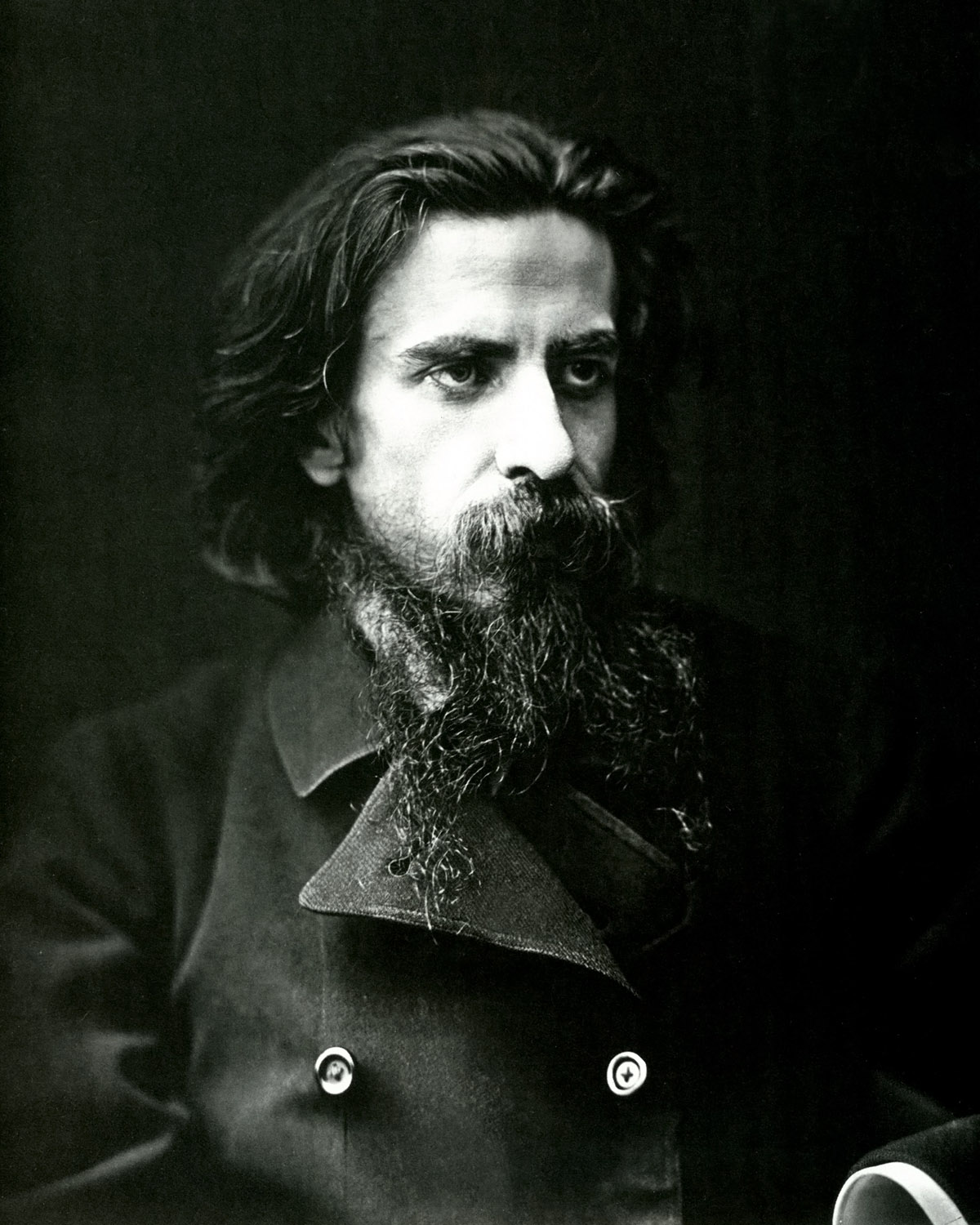
Russian philosopher and Christian mystic (1853–1900)
| Field | Value |
|---|---|
| region | Russian philosophy |
| era | [19th-century philosophy](19th-century-philosophy) |
| image | VS Solovyov.jpg |
| name | Vladimir Solovyov |
| birth_name | Vladimir Sergeyevich Solovyov |
| birth_date | |
| birth_place | Moscow, Russian Empire |
| death_date | |
| death_place | Uzkoye, Moscow Governorate, Russian Empire |
| school_tradition | Christian philosophy, Sophiology, Christian mysticism, Russian symbolism, Russian Schellingianism |
| main_interests | Philosophy of religion |
| notable_ideas | God-manhood, whole unity, Sophiology, Christian universalism, proto-ecumenism |
| alma_mater | Imperial Moscow University |
| thesis_title | Critique of Abstract Principles (Kritika otvlechennykh nachal) 1880 |
| caption | Portrait of Vladimir Solovyov, |
the Russian philosopher
Vladimir Sergeyevich Solovyov (; – ) was a Russian philosopher, theologian, poet, pamphleteer, and literary critic, who played a significant role in the development of Russian philosophy and poetry at the end of the 19th century and in the spiritual renaissance of the early 20th century.
Life and work
Vladimir Solovyov was born in Moscow; the second son of the historian Sergey Mikhaylovich Solovyov (1820–1879); his elder brother Vsevolod (1849-1903), became a historical novelist, and his younger sister, Polyxena (1867–1924), became a poet. Vladimir Solovyov's mother Polyxena Vladimirovna (née Romanova, d. 1909) belonged to a family of Polish and Ukrainian origin and among her ancestors was the philosopher Gregory Skovoroda (1722–1794).
In his teens, he renounced Eastern Orthodoxy for nihilism, but later his disapproval of positivism saw him begin to express some views that were in line with those of the Orthodox Church. From 1869 to 1873 Solovyov studied at the Imperial Moscow University, where his philosophy professor was Pamfil Yurkevich (1826–1874).
In his 1874 work The Crisis of Western Philosophy: Against the Positivists (, Solovyov discredited the positivists' rejection of Aristotle's essentialism, or philosophical realism. In Against the Positivists he took the position of intuitive noetic comprehension, or insight. He saw consciousness as integral (see the Russian term sobornost) and requiring both phenomenon (validated by dianoia) and noumenon validated intuitively. Positivism, according to Solovyov, validates only the phenomenon of an object, denying the intuitive reality that people experience as part of their consciousness. As Solovyov's basic philosophy rests on the idea that the essence of an object (see essentialism) can be validated only by intuition and that consciousness as a single organic whole is done in part by reason or logic but in completeness by (non-dualist) intuition. Solovyov was partially attempting to reconcile the dualism (subject-object) found in German idealism.
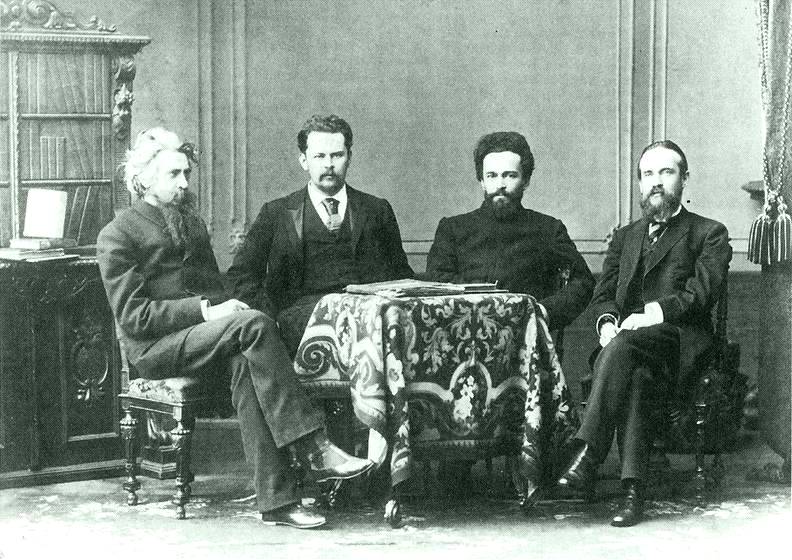
In 1877, Solovyov moved to Saint Petersburg, where he became a friend and confidant of the writer Fyodor Dostoyevsky (1821–1881). In opposition to his friend, Solovyov was sympathetic to the Catholic Church. He favoured the healing of the schism (ecumenism, sobornost) between the Orthodox and Catholic Churches. It is clear from Solovyov's work that he accepted papal primacy over the Universal Church. There is evidence that he converted to Catholicism in a ceremony on February 18, 1896. The testimony is signed by the Russian Greek Catholic priest Nikolay Tolstoy and two Catholic laypeople—Princess Olga Vasilievna Dolgorukova and Dmitry Sergeevich Novskiy. As an active member of Society for the Promotion of Culture Among the Jews of Russia, he spoke Hebrew and struggled to reconcile Judaism and Christianity. Politically, he became renowned as the leading defender of Jewish civil rights in tsarist Russia in the 1880s. Solovyov also advocated for his cause internationally and published a letter in The London Times pleading for international support for his struggle. The Jewish Encyclopedia describes him as "a friend of the Jews" and states that "Even on his death-bed he is said to have prayed for the Jewish people".
Solovyov's attempts to chart a course of civilization's progress toward an East–West Christian ecumenism developed an increasing bias against Asian cultures—which he had initially studied with great interest. He dismissed the Buddhist concept of Nirvana as a pessimistic nihilistic "nothingness", antithetical to salvation and no better than Gnostic dualism. Solovyov spent his final years obsessed with fear of the "Yellow Peril", warning that soon the Asian peoples, especially the Chinese, would invade and destroy Russia.
Solovyov further elaborated this theme in his apocalyptic short-story "Tale of the Antichrist" (published in the Nedelya newspaper on 27 February 1900), in which China and Japan join forces to conquer Russia. His 1894 poem Pan-Mongolism, whose opening lines serve as epigraph to the story, was widely seen as predicting the coming Russo-Japanese War of 1904–1905.
Solovyov never married or had children, but he pursued idealized relationships as immortalized in his spiritual love-poetry, including with two women named Sophia. He rebuffed the advances of the Christian mystic Anna Nikolayevna Schmidt, who claimed to be his divine partner. In his later years, Solovyov became a vegetarian, but ate fish occasionally. He often lived alone for months without a servant and would work into the night.
Influence
It is widely held that Solovyov was one of the sources for Dostoevsky's characters Alyosha Karamazov and Ivan Karamazov in The Brothers Karamazov. In Janko Lavrin's opinion, Solovyov has not left a single work which can be considered an epoch-making contribution to philosophy as such, and yet his writings have proved one of the most stimulating influences to the religious-philosophic thought of his country. Solovyov's influence can also be seen in the writings of the Symbolist and Neo-Idealist writers of the later Russian Soviet era. His book *The * can be seen as one of the philosophical sources of Leo Tolstoy's The Kreutzer Sonata (1889). It was also the work in which he introduced the concept of 'syzygy', to denote 'close union'.
Sophiology
Main article: Sophiology
Solovyov synthesized a philosophy based on Hellenistic philosophy (see Plato, Aristotle and Plotinus) and early Christian tradition with Buddhist and Hebrew Kabbalistic elements (Philo of Alexandria). He also studied Gnosticism and the works of the Gnostic Valentinus. His religious philosophy was syncretic and fused philosophical elements of various religious traditions with Orthodox Christianity and his own experience of Sophia.
Solovyov described his encounters with the entity Sophia in his works, such as Three Encounters and Lectures on Godmanhood. His fusion was driven by the desire to reconcile and/or unite with Orthodox Christianity the various traditions by the Russian Slavophiles' concept of sobornost. His Russian religious philosophy had a very strong impact on the Russian Symbolist art and poetry movements of the Silver Age and his written arguments in favor of the reunion of the Russian Orthodox Church with the Holy See played an instrumental role in the formation of the Russian Greek Catholic Church. His teachings on Sophia, conceived as the merciful unifying feminine wisdom of God comparable to the Hebrew Shekinah or various goddess traditions, have been deemed a heresy by Russian Orthodox Church Outside Russia and as unsound and unorthodox by the Patriarchate of Moscow. This condemnation, however, was not agreed upon by other jurisdictions of the Orthodox church and was directed specifically against Sergius Bulgakov who continued to be defended by his own hierarch Metropolitan Evlogy until his death.
In his 2005 foreword to Solovyov’s Justification of the Good, the Orthodox Christian theologian David Bentley Hart wrote a defense of Sophiology including a specific defense of Solovyov's later thought:
Sobornost
Main article: Sobornost
Solovyov sought to create a philosophy that could through his system of logic or reason reconcile all bodies of knowledge or disciplines of thought, and fuse all conflicting concepts into a single system. The central component of this complete philosophic reconciliation was the Russian Slavophile concept of sobornost (organic or spontaneous order through integration, which is related to the Russian word for 'catholic'). Solovyov sought to find and validate common ground, or where conflicts found common ground, and, by focusing on this common ground, to establish absolute unity and/or integral fusion of opposing ideas and/or peoples.
Death
Intense mental work shattered Solovyov's health. He died at the Moscow estate of Nikolai Petrovitch Troubetzkoy, where a relative of the latter, Sergei Nikolaevich Trubetskoy, was living.
By 1900, Solovyov was apparently a homeless pauper. He left his brother, Mikhail Sergeevich, and several colleagues to defend and promote his intellectual legacy. He is buried at Novodevichy Convent.
Quotes
Works
Original Russian
- Мифологический процесс в древнем язычестве (1873)
- Кризис западной философии (против позитивистов) (1874)
- Кризис западной философии. По поводу «Философии бессознательного» Гартмана. (Статья первая) — Moscow: Ed. Orthodox Review, 1874.
- Теория Огюста Конта о трёх фазисах в умственном развитии человечества
- О философских трудах П. Д. Юркевича (1874)
- Метафизика и положительная наука (1875)
- Странное недоразумение (ответ г. Лесевичу) (1874)
- О действительности внешнего мира и основании метафизического познания (ответ Кавелину)
- Три силы (1877)
- Опыт синтетической философии
- Философские начала цельного знания (1877)
- Чтения о богочеловечестве (1878)
- Критика отвлечённых начал (1880)
- Историческия дела философии (1880)
- Три речи в память Достоевского (1881—1883)
- Заметка в защиту Достоевского от обвинения в «новом» христианстве
- О духовной власти в России (1881)
- О расколе в русском народе и обществе (1882–188З)
- На пути к истинной философии (1883)
- Некролог. Кн. К. М. Шаховская (1883)
- Духовные основы жизни (1882—1884)
- Содержание речи, произнесённой на высших женских курсах в Петербурге 13 марта 1881 года
- Великий спор и христианская политика. (1883)
- Соглашение с Римом и московские газеты. (1883)
- О церковном вопросе по поводу старокатоликов. (1883)
- Еврейство и христианский вопрос. (1884)
- Взгляд первого славянофила на церковный раздор. (1884)
- Любовь к народу и русский народный идеал (открытое письмо к И. С. Аксакову) 1884
- Ответ Н. Я. Данилевскому. (1885)
- Как пробудить наши церковные силы?·(открытое письмо к С. А. Рачинскому). (1885)
- Новозаветный Израиль (1885)
- Государственная философия по программе Министерства Народного Просвещения. 1885
- Учение XII апостолов. (Введение к русскому изданию Διδαχή τῶν δώδεκα ἀποστόλων.) (1886)
- История и будущностъ теократии (исследование всемирно-исторического пути к истинной жизни). (1885—1887)
- Ответ анонимному критику по вопросу о догматическом развитии в церкви. (1886)
- Русская идея [translated from Fr. G. A. Rachinsky]. — Moscow, 1911.
- Россия и Вселенская церковь (1889)
- Красота в природе (1889)
- Общий смысл искусства (1890)
- Г. Ярош и истина (1890)
- Китай и Европа (1890)
- Иллюзия поэтического творчества (1890)
- Мнимая борьба с западом 1890
- Об упадке средневекового миросозерцания (1891)
- Идолы и идеалы (1891)
- Из философии истории (1891)
- Запоздалая вылазка из одного литературного лагеря. (Письмо в редакцию.) (1891)
- Народная беда и общественная помощь. (1891)
- Наши грехи и наша обязанность. (1891)
- Враг с Востока (1892)
- Заметка о Е. П. Блавацкой (1892)
- Кто прозрел? (Письмо в редакцию «Русской мысли»). (1892)
- Мнимые и действительные меры к подъёму народного благосостояния. (1892)
- Вопрос о самочинном умствовании Л. Тихомирова, Духовенство и общество в современном религиозном движении (1893)
- Из вопросов культуры (1893): I. Ю. Ф. Самарин в письме к баронессе Э. Ф. Раден
- Из вопросов культуры (1893): II. Исторический сфинкс.
- Смысл любви (1894)
- Некролог. А. М. Иванцов-Платонов (1894)
- Некролог. Ф. М. Дмитриев (1894)
- Некролог. Франциск Рачкий (1894)
- Византизм и Россия (1896)
- Магомет, его жизнь и религиозное учение. — tip. of the "Public Benefit" company, 1896. – 80 с. – (Life of Remarkable People. Biographical Library of Florentiy Pavlenkov)
- Когда жили еврейские пророки? (1896)
- Мир Востока и Запада (1896)
- Духовные основы жизни. — СПб., 1897.
- Замечание на статью проф. Г. Ф. Шершеневича (1897)
- Из Московской губернии. Письмо в редакцию «Вестника Европы» (1897)
- Импрессионизм мысли (1897)
- Мнимая критика (ответ В. Н. Чичерину) (1897)
- Жизненная драма Платона (1898)
- Мицкевич (1898)
- Оправдание добра (1897, 1899)
- Тайна прогресса (1898)
- Идея человечества у Августа Конта (1898)
- Некролог. Я. П. Полонский (1898)
- Значение поэзии в стихотворениях Пушкина (1899)
- Идея сверхчеловека (1899)
- Лермонтов (1899)
- Некролог. В. Г. Васильевский (1899)
- Некролог. И. Д. Рабинович (1899)
- Некролог. Л. И. Поливанов (1899)
- Некролог. М. С. Корелин (1899)
- Некролог. Н. Я. Грот (1899)
- Три разговора о войне, прогрессе и конце всемирной истории (1900)
- Некролог. В. В. Болотов (1900)
- Некролог. В. П. Преображенский (1900)
- Последняя лекция Владимира Сергеевича Соловьёва в С.-Петербургском университете в 1882 г. : (Лекция 25 февр.). — St. Petersburg: Printing house of M. Alisov and A. Grigoriev, [1882].
English translations
- The Heart of Reality: Essays on Beauty, Love, and Ethics. University of Notre Dame Press, 2020.
- The Burning Bush: Writings on Jews and Judaism, Compiled 2016 by Lindisfarne Books,
- The Crisis of Western Philosophy: Against the Positivists, 1874. Reprinted 1996 by Lindisfarne Books,
- The Philosophical Principles of Integral Knowledge (1877)
- The Critique of Abstract Principles (1877–80)
- Lectures on Divine Humanity (1877–91)
- The Russian Idea, 1888. Translation published in 2015 by CreateSpace Independent Publishing Platform,
- A Story of Anti-Christ (novel), 1900. Reprinted 2012 by Kassock Bros. Publishing Co.,
- The Justification of the Good, 1918. Reprinted 2010 by Cosimo Classics,
- The Meaning of Love. Reprinted 1985 by Lindisfarne Books,
- War, Progress, and the End of History: Three Conversations, Including a Short Story of the Anti-Christ, 1915. Reprinted 1990 by Lindisfarne Books,
- Russia and the Universal Church. Reprinted 1948 by G. Bles. (Abridged version: The Russian Church and the Papacy, 2002, Catholic Answers, )
- 103 pages
Notes
References
Citations
Works cited
- {{cite book |editor1-last=Kornblatt |editor1-first=Judith Deutsch |editor2-last=Gustafson |editor2-first=Richard F.
- {{cite book
- {{cite book |author-link=:de:Helmut Dahm (Slawist) |translator-last=Wright |translator-first=Kathleen
- {{cite journal |author-link=:be:Алена Мікалаеўна Космач
- {{cite book |author-link=Alan Jacobs (academic) |editor1-last=Felch |editor1-first=Susan M. |editor2-last=Contino |editor2-first=Paul J.
- {{cite book |url-access=registration
- {{cite book
- {{cite book |author-link=Nikolay Lossky |publication-date=1970
- {{cite book |contributor-last=Milosz |contributor-first=Czeslaw |contributor-link=Czesław Miłosz
- {{cite book |orig-year=2001
- {{cite book |editor-last=Jakim |editor-first=Boris |translator1-last=Jakim |translator1-first=Boris |translator2-last=Magnus |translator2-first=Laury
- {{cite book |editor1-last=Witte |editor1-first=John Jr. |editor1-link=John Witte Jr. |editor2-last=Alexander |editor2-first=Frank S.
References
- "Symbolism".
- ''[[Routledge Encyclopedia of Philosophy]]'' (1998): [https://www.rep.routledge.com/articles/thematic/schellingianism-russian/v-1/sections/schellingian-philosophies-of-history "Schellingianism, Russian"].
- (16 March 2018). "Дочь своего века, или Изменчивая Allegro". Крымский ТелеграфЪ.
- Vladimir Sergeyevich Solovyov, ''Russia and the Universal Church'', trans. William G. von Peters (Chattanooga, TN: Catholic Resources, 2013).
- Vladimir Sergeyevich Solovyov, ''The Russian Church and the Papacy: An Abridgment of Russia and the Universal Church'', ed. Ray Ryland (San Diego: Catholic Answers, 2001).
- Ryland, Ray. (2003). "Soloviev's Amen: A Russian Orthodox Argument for the Papacy".
- Kmita, Robert Lazu. (2025-04-30). "The Greatest Eastern Apologist for Pontifical Authority: Vladimir Solovyov".
- Falk S. J., Heinrich. (1949). ""Wladimir Solowjows Stellung zur katholischen Kirche", Stimmen der Zeit, vol. 144".
- Grigorieff, Maxim. (2024-05-13). "The Father of Russian Philosophy Died a Catholic".
- Solovyov, Vladimir. (2016). "The Burning Bush: Writings on Jews and Judaism". [[University of Notre Dame Press]].
- "SOLOVYEV, VLADIMIR SERGEYEVICH".
- Masaryk, Tomáš Garrigue. (1919): [https://en.wikisource.org/wiki/Page:The_Spirit_of_Russia_by_T_G_Masaryk,_volume_2.pdf/254 ''The Spirit of Russia: Studies in History, Literature and Philosophy, Volume 2'']. Allen & Unwin. p. 228
- Zouboff, Peter, Solovyov on Godmanhood: Solovyov's Lectures on Godmanhood Harmon Printing House: Poughkeepsie, New York, 1944; see {{harvnb. Milosz. 1990.
- (2004). "Transformations of Eros: An Odyssey from Platonic to Christian Eros". [[Grailstone Press]].
- Fr. Paul Mailleux, S.J. (2017), ''Blessed Leonid Feodorov: First Exarch of the Russian Catholic Church; Bridgebuilder between Rome and Moscow'', [[Loreto Publications]]. Pages 11–13.
- "SOPHIAN HERESY".
- (23 September 2021). "The Living Christ: The Theological Legacy of Georges Florovsky". T&T Clark.
- (31 August 2005). "The Justification of the Good: An Essay on Moral Philosophy". Wm. B. Eerdmans.
- Zouboff, Peter P. (1944). ''Vladimir Solovyev's Lectures on Godmanhood''. International University Press. p. 14. "The passionate intensity of his mental work shattered his health. On the thirty-first of July, in "Uzkoye", the country residence of Prince P. N. Troubetskoy, near Moscow, he passed away in the arms of his close friend, Prince S. N. Troubetskoy."
- Oberländer, Erwin; Katkov, George. (1971). ''Russia Enters the Twentieth Century, 1894–1917''. Schocken Books. p. 248; {{ISBN. 978-0805234046 "Vladimir Solovyev died in the arms of his friend Sergey Nikolayevich Trubetskoy (1862–1905), on the estate of Uzkoye."
- Solovyov, Vladimir. (1948). "Russia and the Universal Church". Geoffrey Bles Ltd..
- (1948). "Russia and the Universal Church".
This article was imported from Wikipedia and is available under the Creative Commons Attribution-ShareAlike 4.0 License. Content has been adapted to SurfDoc format. Original contributors can be found on the article history page.
Ask Mako anything about Vladimir Solovyov (philosopher) — get instant answers, deeper analysis, and related topics.
Research with MakoFree with your Surf account
Create a free account to save articles, ask Mako questions, and organize your research.
Sign up freeThis content may have been generated or modified by AI. CloudSurf Software LLC is not responsible for the accuracy, completeness, or reliability of AI-generated content. Always verify important information from primary sources.
Report