From Surf Wiki (app.surf) — the open knowledge base
Vaseline
Brand of petroleum jelly-based products
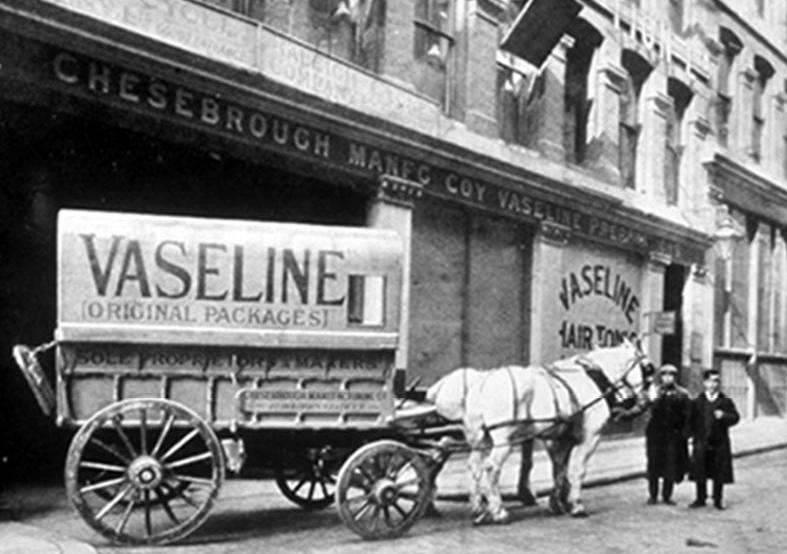
Brand of petroleum jelly-based products
| Field | Value |
|---|---|
| name | Vaseline |
| logo | Vaseline new logo.png |
| producttype | Petroleum jelly, body lotion |
| currentowner | Unilever |
| country | United States |
| introduced | |
| markets | Worldwide |
| tagline | *The Healing Power of Vaseline* |
| website |
In many languages, the word "vaseline" is used as generic for petroleum jelly.
History
In 1859, Robert Chesebrough, a chemist who formerly clarified lamp oil from sperm oil, a waxy oil from the heads of sperm whales, was losing business as whale oil was replaced by coal oil. He traveled to the oil fields in Titusville, Pennsylvania, to research what new materials might be created from this new fuel. There he learned of a residue called rod wax that had to be periodically removed from oil rig pumps. The oil workers had been using the substance to heal cuts and burns. Chesebrough took samples of the rod wax back to Brooklyn, extracted the usable petroleum jelly, and began manufacturing a medicinal product he called Vaseline.
The first known reference to the name Vaseline was by the Chesebrough Manufacturing Company in the U.S. patent (U.S. Patent 127,568) in 1872. "I, Robert Chesebrough, have invented a new and useful product from petroleum which I have named Vaseline..."
The name "vaseline" is said by the manufacturer to be derived from German Wasser "water" + Greek έλαιον (elaion) "oil".
Vaseline was made by the Chesebrough Manufacturing Company until the company, which merged with Pond's in 1955, was purchased by Unilever in 1987.
Uses
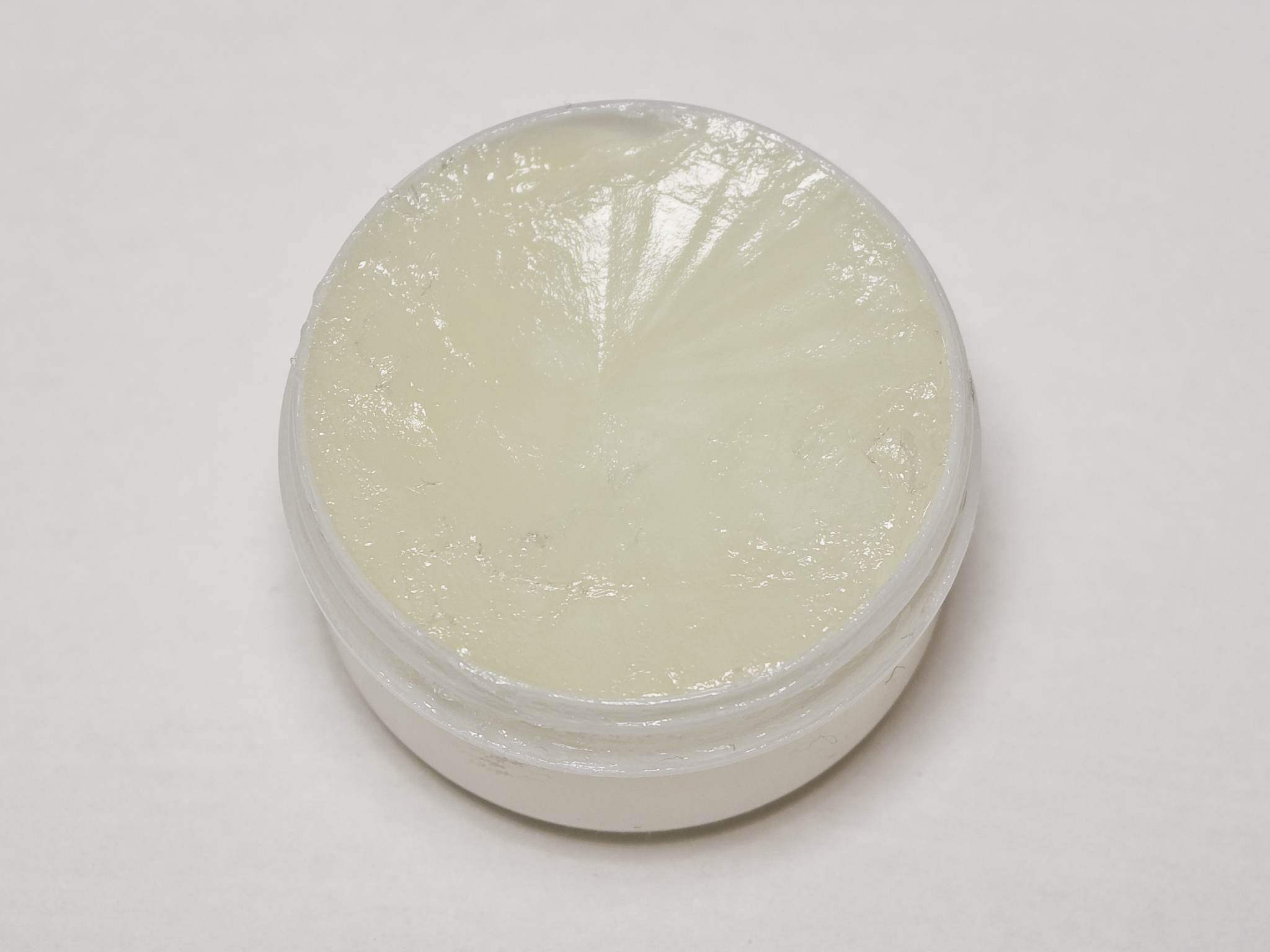
Vaseline can be used as a lubricant for metallic and plastic surfaces. It can also be used as a moisture insulator for local skin conditions characterized by dry skin, such as atopic dermatitis and eczema. Vaseline should not be used as a sexual lubricant, as it may increase the risk for bacterial vaginosis, damage latex condoms, and is not recommended for internal use.
Topical application
As a petrolatum product, Vaseline is used as a topical moisturizer which assists with skin water retention by acting as an occlusive agent that prevents evaporation of water from the stratum corneum (outermost skin layer) and seals out external water. Vaseline is intended for external use only, and is not recommended for deep skin cuts or punctures, animal bites, or serious burns.
Vaseline contains mineral oils. When used topically (as is recommended with Vaseline), dermal absorption of PAHs is insignificant. No link between topical petroleum jelly-based moisturizers and cancer has been found in large studies over many years.
References
Notes
Citations
References
- "Definition of Vaseline". The Free Dictionary.
- "Define Vaseline". Dictionary.com.
- Speser, Phyllis L.. (2012). "The Art and Science of Technology Transfer". John Wiley & Sons.
- The History of Vaseline Petroleum Jelly began in the Pennsylvania Oil Fields!, Drake Well Museum pamphlet, copyright 1996 by Holigan Group Ltd, Dallas, Texas
- [[Webster's Unabridged Dictionary]] (1913)
- (23 February 2021). "Petrolatum topical". Drugs.com.
- (11 March 2016). "Motivations for Intravaginal Product Use among a Cohort of Women in Los Angeles". PLOS ONE.
- (23 July 2021). "Sexually Transmitted Infections Treatment Guidelines, 2021". MMWR. Recommendations and Reports.
- (January 1989). "Mineral oil lubricants cause rapid deterioration of latex condoms". Contraception.
- (February 1993). "The effectiveness of condom use in heterosexual prostitution in The Netherlands". AIDS.
- (2014). "Guidelines of care for the management of atopic dermatitis". Journal of the American Academy of Dermatology.
- (2016-03-11). "Emollients and moisturisers for eczema". Cochrane Database Syst Rev.
- (7 October 2019). "Mineral oils and waxes in cosmetics: an overview mainly based on the current European regulations and the safety profile of these compounds". Journal of the European Academy of Dermatology and Venereology.
- (21 October 2019). "Mineral oil in food, cosmetic products, and in products regulated by other legislations". Critical Reviews in Toxicology.
This article was imported from Wikipedia and is available under the Creative Commons Attribution-ShareAlike 4.0 License. Content has been adapted to SurfDoc format. Original contributors can be found on the article history page.
Ask Mako anything about Vaseline — get instant answers, deeper analysis, and related topics.
Research with MakoFree with your Surf account
Create a free account to save articles, ask Mako questions, and organize your research.
Sign up freeThis content may have been generated or modified by AI. CloudSurf Software LLC is not responsible for the accuracy, completeness, or reliability of AI-generated content. Always verify important information from primary sources.
Report