From Surf Wiki (app.surf) — the open knowledge base
Vaporizer (inhalation device)
Device to vaporize substances for inhalation

Device to vaporize substances for inhalation
A vaporizer or vaporiser, colloquially known as a vape, is a device used to vaporize substances for inhalation. Plant substances can be used, commonly cannabis, tobacco, or other herbs or blends of essential oil. However, they are most commonly filled with a combination propylene glycol, glycerin, and drugs such as nicotine from tobacco or tetrahydrocannabinol (THC) from cannabis as a liquid solution.
Vaporizers contain various forms of extraction chambers including straight bore, venturi, or sequential venturi, and are made of materials such as metal or glass. The extracted vapor may be collected in an inflatable bag, or inhaled directly through a hose or pipe. When used properly, cooler temperatures due to lack of combustion result in significantly more efficient extraction of the ingredients. Hence, the irritating and harmful effects of smoking are heavily reduced, |archive-url=https://web.archive.org/web/20100718043235/http://www.aids.org/atn/a-327-02.html |archive-date=2010-07-18 |access-date=2008-07-28 as is its secondhand smoke.
Cannabis vaporizers
Cannabis flower is commonly consumed using a dry-herb vaporizer. The cannabis may be heated in a chamber via indirect flame exposure or an electrical heating element, allowing users to inhale the resulting vapor. The temperatures reached are cooler than the combustion temperature of cannabis, which is around 230–315 °C (445–600 °F).
Cannabis is also consumed via the vaporization of cannabis concentrates or oils extracted from the plant, commonly referred to as "dabbing". Users typically employ a torch to heat a small cup shaped quartz or titanium attachment on a bong before dabbing the oil onto the heated surface and inhaling the vapors through the bong. This route of consumption is generally much more potent than smoking or vaporizing marijuana flower due to the increased concentration of cannabinoids. Users typically report that the effects of dabbing are much more intense than regular cannabis, while also being shorter lived.
Cannabis concentrate is also commonly used in e-cigarette style vaporizer pens in the form of liquid containers known as cartridges. A battery connected to the atomizer is used to heat the cannabis oil, creating a vapor that is inhaled by the user. Cartridges typically contain different preparations of cannabis oil mixed with cannabinoids, terpenes, solvents (primarily Propylene glycol and Glycerol) used for thinning, fatty acids, and flavonoids. Natural or artificial terpenes are frequently added by manufacturers to enhance flavor, often using blends that mimic popular cannabis strains or sugary foods such as candy or pastries.
File:Aromatherapy 2.0.JPG|Vaporizer with water-cooling File:Vaporizer 01.JPG|A conduction-style vaporizer File:Vaporization-pipe-w-flame-filter2.png|A passive-convection "vaporization pipe" with flame filter File:Dabbing.JPG|A man inhaling cannabis concentrate vapor from a dab rig File:Fenix Mini Vaporizer.jpg|Cannabis vaporizer File:VFIRE.jpg|Cannabis vape pen File:Weed vaporizer.jpg|Cannabis vaporizer File:Ijerph ecig variants.jpg|An image of various kinds of cannabis vape pen components and the various forms of cannabis that can be used in them
Of the studies that have investigated cannabis vaporization, few have addressed the quality of the vapor extracted and delivered; instead, studies usually focus on the mode of usage of the vaporizers. However, those that have addressed vapor quality have demonstrated promising results. Such studies suggest that the absence of combustion results in an aerosol that contains significantly lower amounts of harmful substances found in smoke, such as tar, carbon monoxide, and carcinogenic compounds known as polynuclear aromatic hydrocarbons (PAH). One study found that cannabis smoke contains 111 compounds (including several carcinogenic PAHs) in addition to the cannabinoids, whereas only 3 additional compounds were identified in cannabis vapor, other than the cannabinoids. This suggests that the vaporization of cannabis may be a safer alternative to combusted cannabis. On the other hand, a study in the UK (where cannabis is illegal) found that some illicitly distributed cannabis vaporizers contained harmful levels of xylazine, an animal sedative which can lead to overdose.
Vaporizing cannabis exposes the user to lower levels of harmful substances than smoking cannabis. These findings are important for it is estimated that 10–20% of patients with chronic pain, multiple sclerosis, epilepsy, and HIV/AIDS have admitted to smoking cannabis for therapeutic purposes. For patients, a study found that smoking cannabis sativa reduced daily pain by 34%, a statistically significant amount.
In a study published in the Journal of Psychopharmacology in May 2008, it was stated that vaporizers were a "suitable method for the administration of THC". A 2007 study by the University of California, San Francisco, published in the Journal of the American Academy of Neurology, found that "there was virtually no exposure to harmful combustion products using the vaporizing device". A 2006 study performed by researchers at Leiden University found that vaporizers were "safe and effective cannabinoid delivery system(s)". The study stated that the amount of THC delivered by vaporizers were equivalent to the amount delivered by smoking. Because of those studies and other studies, vaporizers are considered medically sound devices for delivering THC.
Efficiency
The proposed factors affecting output include:
- Temperature
- Specimen density
- Weight, content of water and essential oils
- Consistency of material in the filling chamber
- Storage time of the vapor
- Inhalation method (breathing technique)
Not all those have been scientifically tested. Research using vaporizers found the delivery efficiency highest at around 226 C, falling to about half efficiency at 150 to depending on material. The purest preparations produced the highest efficiencies, about 56% for pure THC versus 29% for plant material (female flower tops) with 12% THCA content. Besides THC, several other cannabinoids as well as a range of other plant components including terpenoids were detected in the plant material. Using pure THC in the vaporizer, no degradation products (delta-8-THC (D8-THC), cannabinol (CBN), or unknown compounds) were detected by HPLC analysis. The longer vapor is stored, the more THC is lost as it condenses on the surface of the vaporizer or the balloon. This loss may be negligible over a few minutes but may exceed 50% after 90 minutes. The Leiden University study found that as much as 30–40% of inhaled THC was not absorbed by the lungs but simply exhaled. However, they did not find large individual differences in the amounts exhaled.
E-cigarette vaporizers
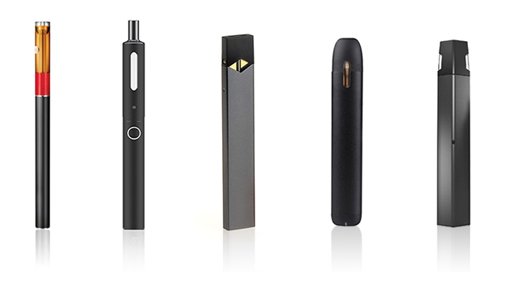
An electronic cigarette is a handheld battery-powered vaporizer that simulates smoking by providing some of the behavioral aspects of smoking, including the hand-to-mouth action of smoking, but without combusting tobacco. Using an e-cigarette is known as "vaping" and the user is referred to as a "vaper." Instead of cigarette smoke, the user inhales an aerosol, commonly called vapor. E-cigarettes typically have a heating element that atomizes a liquid solution called e-liquid. E-cigarettes may be automatically activated by taking a puff; others turn on manually by pressing a button. but they come in many variations. There are first-generation, second-generation, third-generation, and fourth-generation devices. E-liquids usually contain propylene glycol, glycerin, nicotine, flavorings, additives, and differing amounts of contaminants. E-liquids are also sold without propylene glycol, nicotine, or flavors.
There is tentative evidence they may help people quit smoking. There is concern with the possibility that non-smokers and children may start nicotine use with e-cigarettes at a rate higher than anticipated than if they were never created. Following the possibility of nicotine addiction from e-cigarette use, there is concern children may start smoking cigarettes. Youth who use e-cigarettes are more likely to go on to smoke cigarettes. Their part in tobacco harm reduction is unclear, while another review found they appear to have the potential to lower tobacco-related death and disease. Regulated US Food and Drug Administration nicotine replacement products may be safer than e-cigarettes, It is estimated their safety risk to users is similar to that of smokeless tobacco. The long-term effects of e-cigarette use are unknown. The risk from serious adverse events was reported in 2016 to be low. Less serious adverse effects include abdominal pain, headache, blurry vision, throat and mouth irritation, vomiting, nausea, and coughing. Nicotine itself is associated with some health harms. In 2019 and 2020, an outbreak of severe lung illness throughout the US was linked to the use of contaminated black market THC vape cartridges.
Other drug
Vaporizers can be used to inhale other recreational drugs as well. A wide variety can be consumed this way, either dissolved in e-liquid or vaporized directly. The use of e-cigarettes to inhale the psychedelic drug DMT has been reported.
Culinary application
Vaporizers are sometimes used by chefs as a method of applying controlled heat to herbs and spices to release flavors that are otherwise difficult to titrate or apply, or that might be spoiled by overheating during cooking. Grant Achatz, chef-proprietor of Alinea in Chicago, "uses the aroma-filled bags as place-mats, punctured when plates are placed in front of the customer".
Bibliography
Notes
References
References
- (2021). "Toxicology of flavoring- and cannabis-containing e-liquids used in electronic delivery systems". Pharmacology & Therapeutics.
- (2020). "Effects of propylene glycol, vegetable glycerin, and nicotine on emissions and dynamics of electronic cigarette aerosols". Aerosol Science and Technology.
- "Hand-held personal vaporizer".
- Stephen A. Greene. (2002). "Veterinary Anesthesia and Pain Management Secrets". Elsevier Health Sciences.
- (2007). "Decreased respiratory symptoms in cannabis users who vaporize". Harm Reduction Journal.
- Grotenhermen F. (June 2001). "Harm Reduction Associated with Inhalation and Oral Administration of Cannabis and THC". Journal of Cannabis Therapeutics.
- (November 2007). "Vaporization as a smokeless cannabis delivery system: a pilot study". Clinical Pharmacology and Therapeutics.
- (August 1948). "The Centennial Celebration – Washington, D.C. September 13–17, 1948". Science.
- (2020). "Vaping & Marijuana Concentrates".
- (2021-08-26). "Are vaporizers a lower-risk alternative to smoking cannabis?". Canadian Journal of Public Health.
- (21 June 2021). "Major Constituents of Cannabis Vape Oil Liquid, Vapor and Aerosol in California Vape Oil Cartridge Samples". Front Chem..
- (2007). "Vaporization as a Smokeless Cannabis Delivery System: A Pilot Study". Clinical Pharmacology & Therapeutics.
- (2015). "No smoke, no fire: What the initial literature suggests regarding vapourized cannabis and respiratory risk". Canadian Journal of Respiratory Therapy.
- Hall, Rachel. (2024-04-10). "Animal tranquilliser found in cannabis vapes and illicit sedatives in UK". The Guardian.
- (9 February 2004). "Cannabis Vaporizer Combines Efficient Delivery of THC with Effective Suppression of Pyrolytic Compounds". Journal of Cannabis Therapeutics.
- (2007-05-16). "Marijuana Vaporizer Provides Same Level Of THC, Fewer Toxins, Study Shows", Official Journal of the American Academy of Neurology (summarized by Science Daily) (2007-05-16)". Sciencedaily.com.
- "Cal NORML/MAPS Study Shows Vaporizer Can Drastically Reduce Toxins in Marijuana Smoke". Canorml.org.
- (June 2006). "Evaluation of a vaporizing device (Volcano) for the pulmonary administration of tetrahydrocannabinol". Journal of Pharmaceutical Sciences.
- Barohn, Richard. (2013). "Peripheral Neuropathies, An Issue of Neurologic Clinics". Elsevier.
- Zuurman L. (September 2008). "Effect of intrapulmonary tetrahydrocannabinol administration in humans". [[Journal of Psychopharmacology]].
- Gieringer DH. (June 2001). "Cannabis 'Vaporization'". Journal of Cannabis Therapeutics.
- (2012). "The emerging phenomenon of electronic cigarettes". Expert Review of Respiratory Medicine.
- (2015). "Electronic cigarettes-a narrative review for clinicians". The American Journal of Medicine.
- (2014). "Chemical evaluation of electronic cigarettes". Tobacco Control.
- (2014). "Electronic Cigarettes". Journal of Addiction Medicine.
- (2014). "Electronic cigarettes: patterns of use, health effects, use in smoking cessation and regulatory issues". [[Tobacco Induced Diseases]].
- (2013). "Electronic nicotine delivery system (electronic cigarette) awareness, use, reactions and beliefs: a systematic review". Tobacco Control.
- (24 August 2014). "Electronic Cigarettes: A Policy Statement From the American Heart Association". Circulation.
- Hayden McRobbie. (2014). "Electronic cigarettes". National Centre for Smoking Cessation and Training.
- (2014). "Nicotine absorption from electronic cigarette use: Comparison between first and new-generation devices". Scientific Reports.
- "Electronic cigarette evolution from the first to fourth generation and beyond". Global Forum on Nicotine.
- (2015). "Nicotine and the Developing Human". American Journal of Preventive Medicine.
- (December 2014). "Do electronic cigarettes impart a lower potential disease burden than conventional tobacco cigarettes?: Review on e-cigarette vapor versus tobacco smoke". The Laryngoscope.
- (2016). "Is there a role for e-cigarettes in smoking cessation?". Therapeutic Advances in Respiratory Disease.
- Hartmann-Boyce, Jamie. (2016-09-14). "Electronic cigarettes for smoking cessation". The Cochrane Database of Systematic Reviews.
- (2016). "E-Cigarette Use Among Youth and Young Adults A Report of the Surgeon General: Fact Sheet". Surgeon General of the United States.
- (February 2014). "Electronic cigarettes. Potential harms and benefits.". Annals of the American Thoracic Society.
- (February 2011). "Electronic cigarettes as a harm reduction strategy for tobacco control: a step forward or a repeat of past mistakes?". Journal of Public Health Policy.
- (2014). "The electronic cigarette: the new cigarette of the 21st century?". Jornal Brasileiro de Pneumologia.
- (9 January 2014). "Peering through the mist: systematic review of what the chemistry of contaminants in electronic cigarettes tells us about health risks". BMC Public Health.
- (Mar 2013). "Electronic cigarette: a possible substitute for cigarette dependence.". Monaldi Archives for Chest Disease.
- (2021-04-29). "Electronic cigarettes for smoking cessation". The Cochrane Database of Systematic Reviews.
- (2019). "Electronic Cigarette Policy Recommendations: A Scoping Review". American Journal of Health Behavior.
- (2019). "Electronic cigarettes: a task force report from the European Respiratory Society". European Respiratory Journal.
- (2016). "Corneoscleral Laceration and Ocular Burns Caused by Electronic Cigarette Explosions". Cornea.
- (2014). "Science and Electronic Cigarettes". Journal of Addiction Medicine.
- Grana, R. (13 May 2014). "E-cigarettes: a scientific review.". Circulation.
- Edgar, Julie. (12 November 2013). "E-Cigarettes: Expert Q&A With the CDC". [[WebMD]].
- (28 January 2020). "Outbreak of Lung Illness Associated with Using E-cigarette Products". Centers for Disease Control and Prevention.
- (December 2016). "Drug Vaping: From the Dangers of Misuse to New Therapeutic Devices". Toxics.
- Power, Mike. (2020-06-05). "I Sell DMT Vape Pens So People Can 'Break Through' at Their Own Speed".
- Bob Gledhill. (22 August 2007). "Alinea restaurant uses Volcano as flavorizer". Caterersearch.com.
- (2007-01-18). "Tools for creating aromatic flavors". Chow.com.
- "Volcano used to release nutmeg aroma". Rimag.com.
This article was imported from Wikipedia and is available under the Creative Commons Attribution-ShareAlike 4.0 License. Content has been adapted to SurfDoc format. Original contributors can be found on the article history page.
Ask Mako anything about Vaporizer (inhalation device) — get instant answers, deeper analysis, and related topics.
Research with MakoFree with your Surf account
Create a free account to save articles, ask Mako questions, and organize your research.
Sign up freeThis content may have been generated or modified by AI. CloudSurf Software LLC is not responsible for the accuracy, completeness, or reliability of AI-generated content. Always verify important information from primary sources.
Report